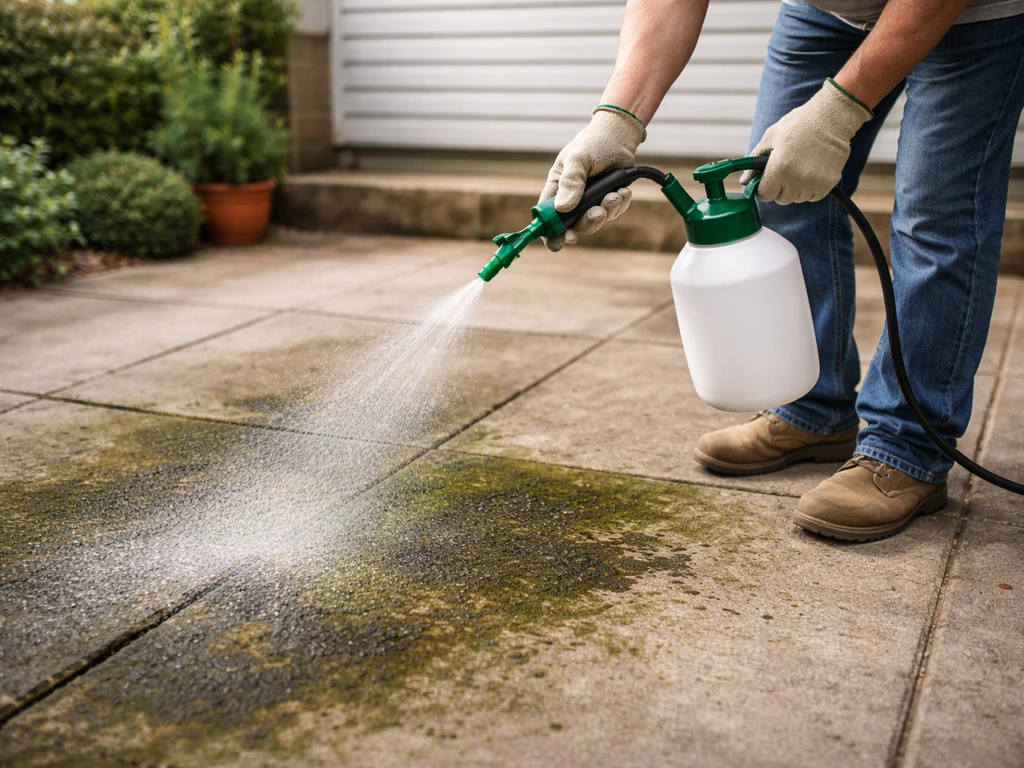
For most patios, standard unscented chlorine bleach (sodium hypochlorite) diluted roughly 1:10 with water is the most effective and affordable option for killing algae, mold, and moss. If you have a more delicate surface like sandstone, slate, or porcelain, oxygen bleach is the safer choice. Either way, bleach genuinely works on patios for biological growth, but it's not a magic fix for rust, grease, or ground-in grime. Here's exactly what to use, how to use it, and where to be careful.
Best Bleach for Cleaning Patio: Pick and Use Safely
Rhea Lang
23 May 2026
Does bleach actually clean patios?
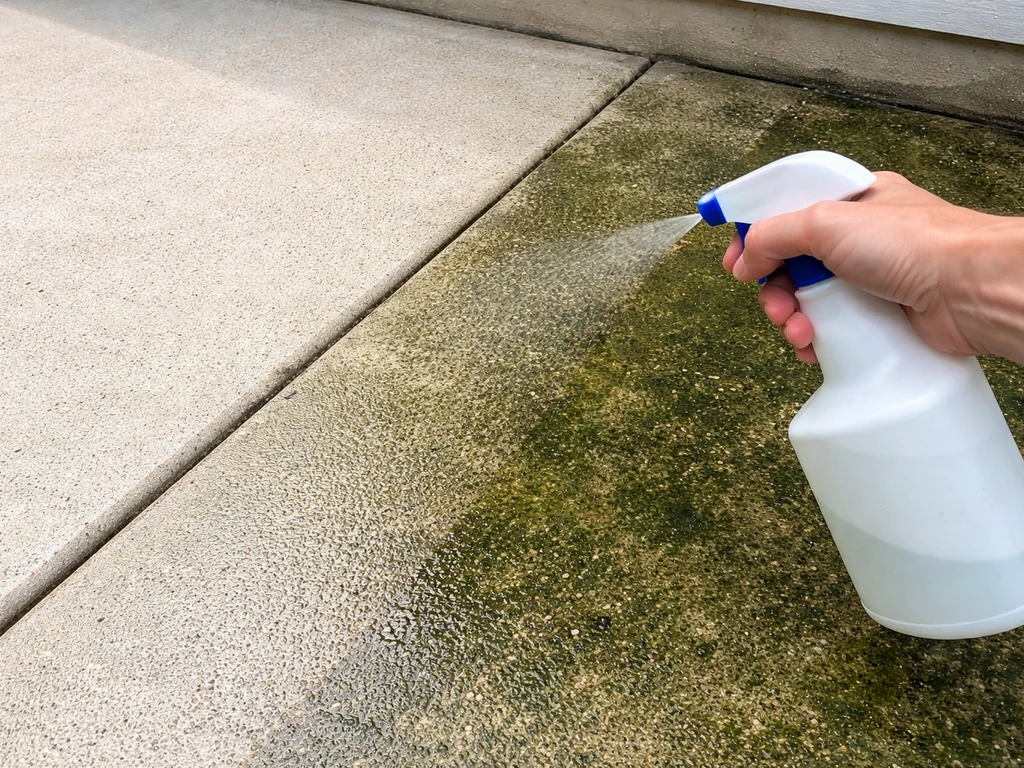
Yes, it does, but within limits. Bleach is excellent at one specific job: killing biological growth. Algae, green mold, black mold, moss, and lichen all respond well to sodium hypochlorite. The chlorine attacks the cell structure of these organisms and breaks them down, which is why a bleach-treated patio often looks noticeably cleaner within 20 to 30 minutes of application, even before you scrub. For slabs that have turned green or black over winter, it's genuinely one of the fastest and cheapest solutions available.
Where bleach falls short is everything else. If you want a wider range of cleaning power beyond algae and mold, dedicated patio cleaners or a targeted detergent approach are often what is good for cleaning patios. Rust stains, cooking grease, oil, pet waste residue, and mineral deposits won't shift with bleach. Those need dedicated removers, detergents, or a combination of methods. So if your patio looks green and slippery, bleach is likely your best starting point. Because chlorine bleach is mainly effective against biological growth, the answer to does chlorine clean patios is yes for algae and mold, but not for rust, grease, or grime. If it looks stained with rust rings or greasy patches, bleach alone won't do it.
Choosing the right bleach for your patio surface
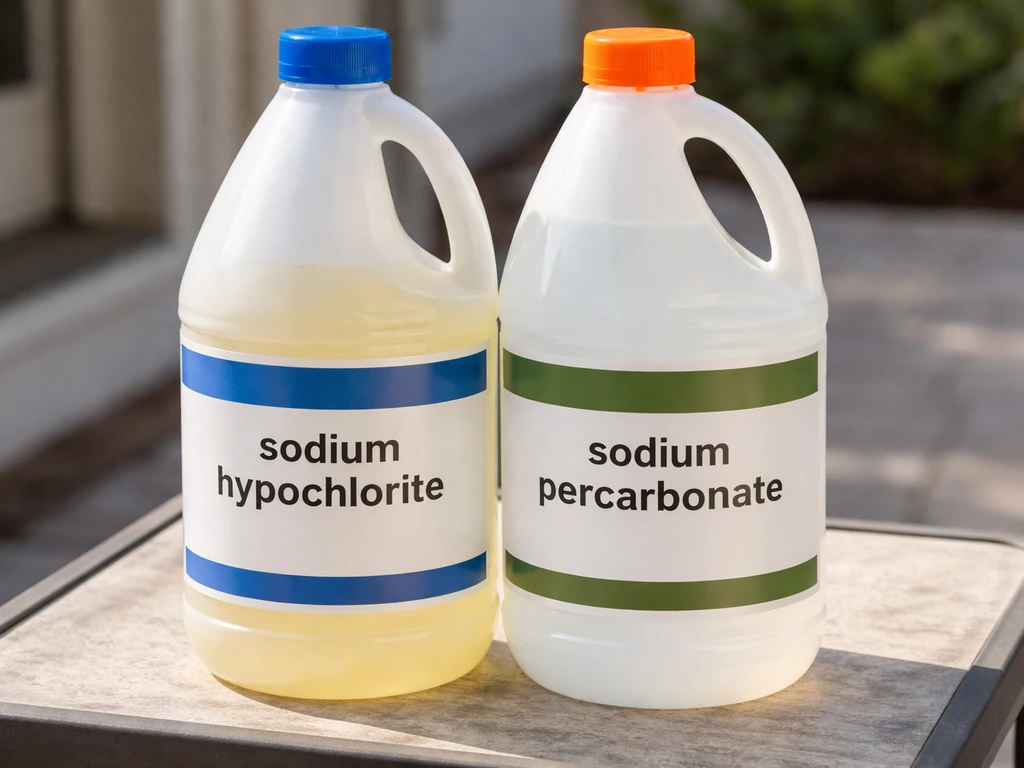
There are two types worth knowing about: chlorine bleach (sodium hypochlorite) and oxygen bleach (sodium percarbonate). They behave quite differently on outdoor surfaces.
| Bleach Type | Best For | Avoid On | Strength Needed | Plant Risk |
|---|---|---|---|---|
| Chlorine bleach (sodium hypochlorite) | Concrete, brick, heavy algae/mold/moss | Sandstone, coloured grout, unsealed natural stone | 5–10% solution (1:10 dilution of household bleach) | High — must protect and rinse thoroughly |
| Oxygen bleach (sodium percarbonate) | Natural stone, sandstone, slate, porcelain, delicate surfaces | Not recommended for sealed surfaces without testing | Follow product label; usually 2–4 tbsp per litre | Low — generally safer around plants |
For chlorine bleach, you want plain unscented household bleach. In the US, standard household bleach is roughly 5.25% to 6.15% sodium hypochlorite. In the UK, look for products labeled 'thick bleach' or 'original bleach' at around 4–5% sodium hypochlorite. Avoid anything scented, gel-based, or marketed as a splash-free formula because those additives reduce effectiveness on outdoor surfaces and can leave residue. For patio work, a 1:10 dilution (one part bleach to ten parts water) gives you a strong working solution without burning through sealers faster than necessary. CDC notes that because typical household bleach is about 5.25%, 6.15% sodium hypochlorite, a 1:10 dilution corresponds to roughly 5,250, 6,150 ppm available chlorine (about illustrating concentration and dilution relationships) 1:10 dilution (one part bleach to ten parts water).
Oxygen bleach products like Sodium Percarbonate powder or branded options are better for sensitive surfaces. They release hydrogen peroxide when dissolved in water, which breaks down organic staining gently. They're slower than chlorine bleach but much less likely to cause discoloration or damage on natural stone. The trade-off is that they need longer dwell time (sometimes up to an hour) and multiple applications on heavy algae growth.
On the question of strength: more isn't always better. I've seen people use neat bleach straight from the bottle expecting faster results, and the main outcome is burned grass, white streaks on brickwork, and a nasty fume situation. A 1:10 dilution is the practical working strength. For lighter maintenance cleaning you can go as mild as 1:20. Neat bleach should only ever be considered for extreme, isolated biological growth and never on natural stone.
How to clean your patio with bleach, step by step
Before you start, pick a dry day with no rain forecast for at least four hours. Rain washing your bleach solution away before it has time to work defeats the whole exercise. Overcast is actually ideal since direct sun can cause the bleach to evaporate too quickly.
- Protect nearby plants and grass: soak the soil and plants around your patio with water before you start. This dilutes any bleach splash-off at the roots. Cover particularly delicate plants with plastic sheeting if they're within a metre of the treated area.
- Sweep the patio: remove loose debris, leaves, and dirt first. Bleach doesn't penetrate through physical debris, and organic material will just neutralise the active chlorine before it does any useful work.
- Mix your solution: for chlorine bleach, combine 1 part bleach with 10 parts cold water in a bucket or garden sprayer. For oxygen bleach, follow the packet but typically 2 to 4 tablespoons per litre of warm water.
- Wet the surface first: this prevents the bleach soaking straight into porous surfaces and causing uneven patchy results.
- Apply the bleach solution: use a stiff brush, a watering can with a rose head, or a garden sprayer. Apply evenly and make sure you cover edges and grout lines where mold tends to concentrate.
- Leave it to dwell: for chlorine bleach, 20 to 30 minutes is usually enough. For oxygen bleach, 45 to 60 minutes. Don't let it dry out, especially in warm weather. If it starts drying, apply more solution.
- Scrub: use a stiff-bristle deck brush for large areas. For grout lines and corners, a hand brush or old grout brush works well. You'll often see the green and black growth lifting easily at this point.
- Rinse thoroughly: this is the most important step. Use a garden hose or pressure washer on a low setting and rinse the entire area fully. Make sure you're rinsing run-off away from flower beds and lawns. Once the patio is rinsed, water the surrounding plants and soil again.
- Repeat if needed: heavy moss or black spot mold may need a second application the same day or a follow-up session after the surface dries.
Personal protective equipment matters here: wear rubber gloves, eye protection, and old clothes. Even diluted bleach splashes will ruin fabric. Keep pets and children off the area until it's fully rinsed and dry.
Surface-specific guidance: what works and what to watch out for
Concrete and cement patios
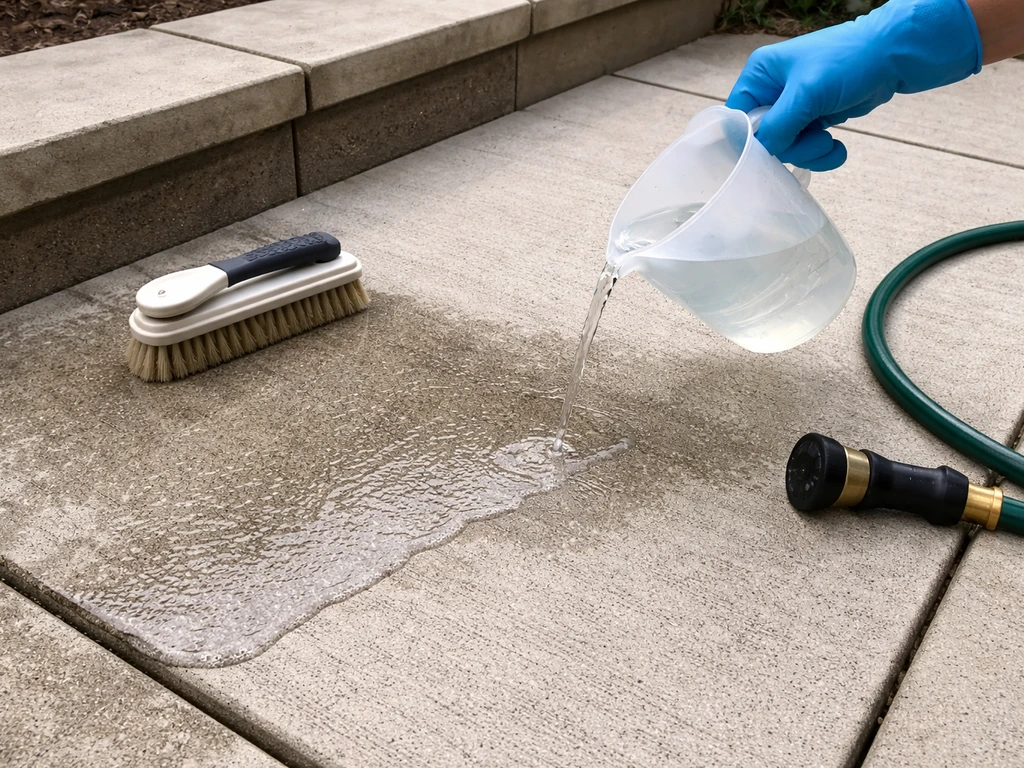
Concrete handles chlorine bleach well. A 1:10 dilution applied and left for 20 to 30 minutes before scrubbing and rinsing is a reliable approach. The main risk on concrete is not the bleach itself but using it repeatedly without resealing. Bleach can gradually break down concrete sealers over time, leaving the surface more porous and actually more prone to future algae growth. If you're treating concrete annually, reseal every two to three years.
Brick patios
Brick can handle diluted chlorine bleach but watch the mortar joints carefully. Bleach can soften and degrade old mortar, particularly if it's already in poor condition. If your mortar is crumbling or has gaps, use oxygen bleach instead and apply carefully, avoiding joints as much as possible. Also note that bleach can fade some coloured or stained brick surfaces, so test a small hidden area first.
Natural stone: sandstone, limestone, and slate
This is where I'd steer people away from chlorine bleach. Sandstone and limestone are both calcium-based materials and will react badly to the chlorine in bleach, which can cause etching, bleaching of colour, and surface pitting over time. Slate is more robust but still susceptible to discoloration. For all natural stone, oxygen bleach is the safe call. Apply it at the manufacturer's recommended strength, allow a long dwell time, and scrub gently with a soft-bristle brush rather than a stiff deck brush. If you've already used chlorine bleach on sandstone and noticed a white residue or washed-out patches, those are likely permanent.
Porcelain paving
Porcelain itself is non-porous and very resistant to bleach. The tile surface won't be damaged by diluted chlorine bleach. The issue is with the grout or jointing compound between tiles. Chlorine bleach can bleach out coloured grout and degrade standard grout compounds. If you have porcelain paving with dark or coloured grout, use oxygen bleach. If the jointing is a sand-based or brush-in compound rather than traditional grout, apply bleach carefully to avoid washing it out.
Tackling specific patio problems with bleach
Mold and algae
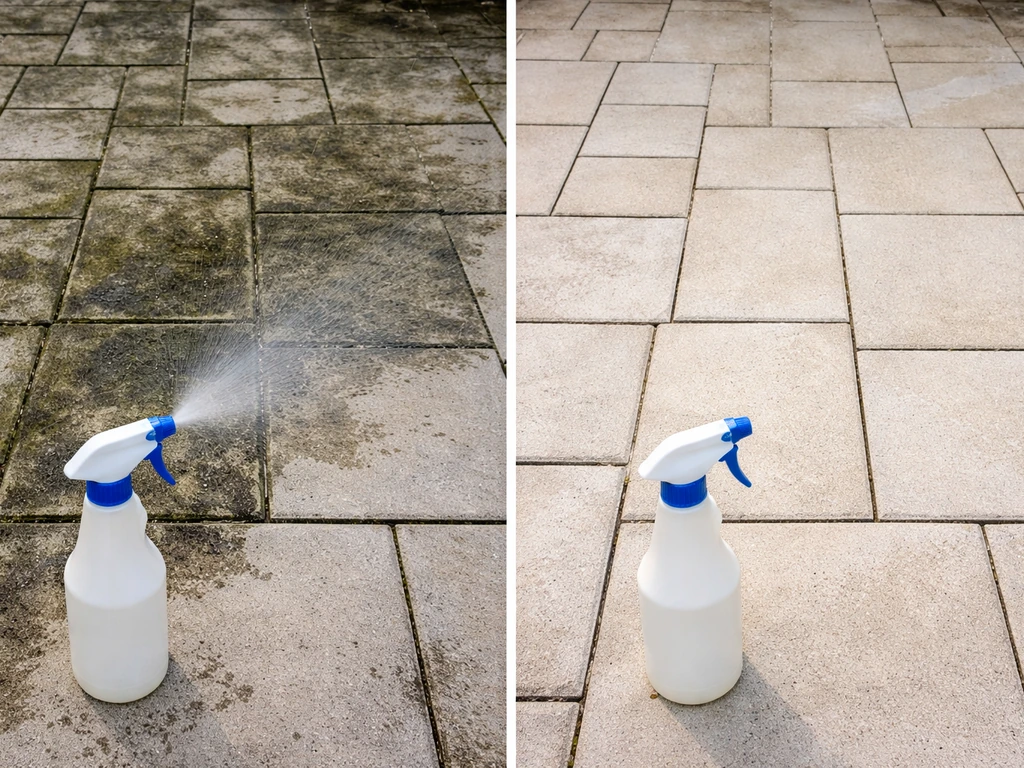
This is bleach's strongest suit. Green algae and dark mold both respond reliably to chlorine bleach at 1:10 dilution. The key is dwell time: don't rush to scrub. Let the bleach sit and kill the growth before you agitate it. I've found that scrubbing too early just spreads the material rather than removing it. After rinsing, the surface should look noticeably lighter. Residual black staining that remains after the first treatment is usually dead mold embedded in porous surfaces and will often fade further over the following days as it dries and weathers out.
Moss
Bleach kills moss effectively but you need to remove the physical bulk of it first. Use a stiff brush or a flat scraper to clear the visible moss growth, then apply your bleach solution. This is because thick moss acts as a barrier and the bleach can't penetrate to the root system and the paving surface underneath. After treatment, leave the dead moss to dry and brush off. Wet moss debris on patios is extremely slippery, so don't skip the final sweep.
Rust stains
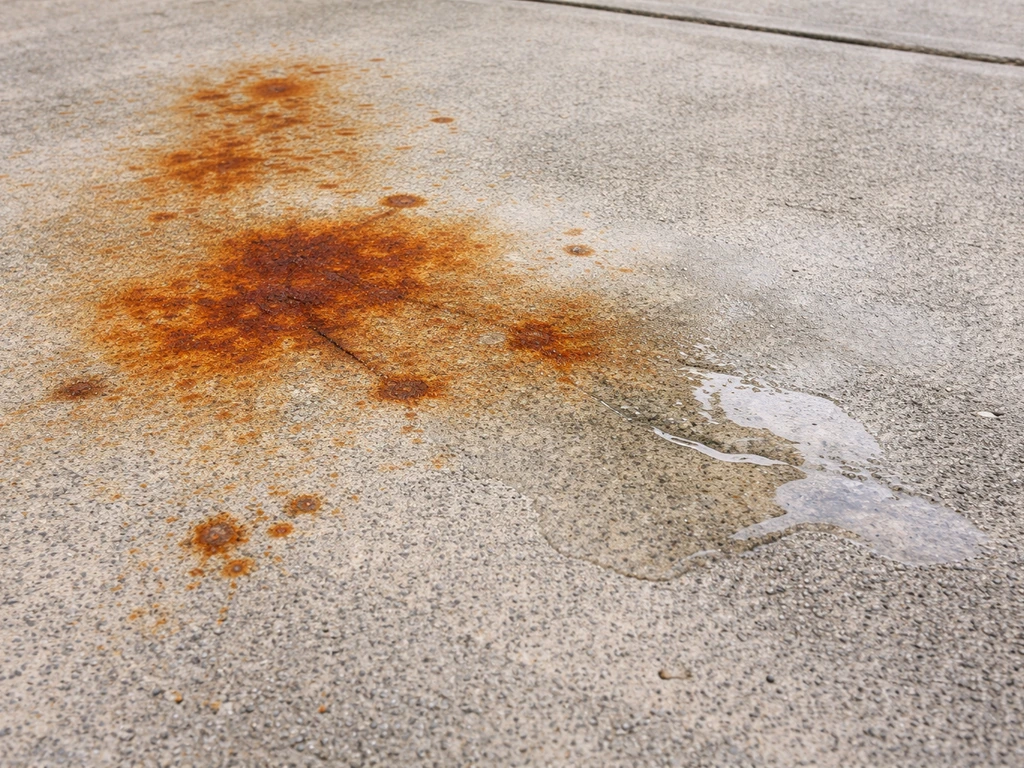
Bleach will not remove rust. In fact, chlorine bleach can sometimes make rust stains look worse by oxidising the iron further. For rust on concrete or stone, use an oxalic acid-based rust remover. Apply, allow it to work, then rinse. This is one situation where reaching for the bleach bottle is the wrong instinct.
Grease and oil
Bleach won't shift grease from barbecue splatter or cooking oil. These need a degreasing detergent or a dedicated alkaline patio cleaner. For general patio grime, the best detergent to clean patio surfaces is a dedicated degreasing detergent or alkaline patio cleaner, especially for greasy spots. Once you've removed the grease with a detergent, you can follow up with a diluted bleach rinse if there's any biological staining underneath. A washing soda or dish soap solution applied, left to dwell, and scrubbed before rinsing is usually more effective on greasy patio spots than bleach alone. Using washing soda can be a helpful part of a patio cleaning routine, but it is different from bleach and works best for grime and greasy patches.
Pet stains
Bleach will neutralise the odour compounds in pet urine on non-porous surfaces like concrete and porcelain. For urine staining on porous surfaces, rinse the area first with cold water to dilute the urine, then apply a diluted bleach solution. Avoid using undiluted bleach: it can react with ammonia in urine to produce chloramine gas, which is harmful. Always dilute first. For pet faeces residue, remove physically first, then clean with diluted bleach and rinse well. If you have a dog that regularly uses the patio, consider a dedicated enzymatic pet cleaner for ongoing maintenance rather than regular bleach use.
When not to use bleach, and what to use instead
There are situations where bleach is genuinely the wrong tool. Avoid it entirely on unsealed sandstone, limestone, and marble-effect surfaces where chemical etching is a real risk. Skip it if you have extensive rusty or oil staining that needs completely different chemistry. Don't rely on bleach as a regular patio maintenance routine either: the CDC and EPA both note that routine biocide use isn't the recommended approach for mold and biological growth management. The CDC advises that routine biocide use is not the recommended approach for mold and biological growth management routine biocide use isn't the recommended approach for mold and biological growth management. Using bleach every few months actually selects for more resistant biological growth over time and degrades surface sealers.
For delicate natural stone, oxygen bleach or a specialist natural stone patio cleaner is the right call. These are widely available and much safer on calcium-based surfaces. Branded patio cleaners marketed specifically for stone often contain surfactants and buffered bleach alternatives that clean without etching.
Pressure washing is a strong alternative, particularly for annual deep cleaning where no specific staining is present. A pressure washer on a 1500 to 2000 PSI setting will physically remove algae, moss, and loose mold growth without any chemicals at all. The limitation is that it doesn't kill organisms at the root, so regrowth can happen faster than with bleach treatment. The most effective approach I've found combines both: pressure wash to clear the bulk of the growth, then apply a diluted bleach or oxygen bleach solution and leave it to kill off what's left.
Dedicated patio cleaners are worth considering if you're dealing with mixed staining (some biological growth plus general grime). If you’re wondering whether are patio cleaners any good, this is where a product designed for mixed staining can make a noticeable difference Dedicated patio cleaners. These products typically combine an algaecide with surfactants to handle both problems in one application. They're more expensive than bleach but more practical for patios with complex staining. If you're unsure which approach fits your situation, it's worth looking at how dedicated patio cleaners compare to DIY bleach solutions, since the right choice really does depend on your surface type and what you're trying to clean. If you meant Pink Stuff cleaning paste, it is generally better for scrubbing grime than for killing algae or mold.
Quick reference: which bleach to use and when
| Problem | Surface | Best Bleach Option | Notes |
|---|---|---|---|
| Green algae | Concrete, brick | Chlorine bleach 1:10 dilution | 20-30 min dwell, scrub, rinse well |
| Black mold/mildew | Concrete | Chlorine bleach 1:10 dilution | May need two applications |
| Moss | Any hard surface | Chlorine bleach 1:10 (concrete/brick) or oxygen bleach (stone) | Remove bulk moss first before applying |
| Algae/mold | Sandstone, slate, limestone | Oxygen bleach only | Never use chlorine bleach on these surfaces |
| Algae/mold | Porcelain | Either; chlorine only if grout is neutral-coloured or absent | Protect coloured grout |
| Rust stains | Any | Neither | Use oxalic acid-based rust remover |
| Grease/oil | Any | Neither alone | Use degreasing detergent first |
| Pet urine odour | Concrete, porcelain | Chlorine bleach diluted 1:10 | Always dilute; never use neat bleach on urine |
FAQ
Can I use a bleach patio treatment and then pressure wash right after?
Yes, but only if you rinse and dry thoroughly afterward. Chlorine bleach can keep reacting with leftover organic matter, so a post-rinse with plenty of clean water (and letting the surface dry fully) reduces residues that can attract new growth.
What should I never mix with bleach when cleaning a patio?
Avoid mixing bleach with acids (including vinegar, descalers, and toilet cleaners) or with ammonia-based products. Those combinations can create hazardous gases. If you previously used any acidic cleaner, wait until the patio is fully rinsed and neutralized by time and water, then test a small area.
What do I do if algae returns within a couple of weeks?
If the algae comes back quickly, first check whether the patio stays shaded and stays damp. Then consider improving drainage and doing a more complete removal of moss bulk (scrape first, then treat). For repeated cycles, switch to oxygen bleach or a dedicated patio cleaner to reduce damage to sealers and grout.
Why is my patio still slippery after bleaching?
If the surface stays slick after treatment, it usually means you disturbed living material or there is dead buildup embedded in pores. Give it extra dwell time before scrubbing, and consider a second round after the patio has fully dried, then brush off residue.
How do I tell whether bleach will damage my patio because of the surface or the grout/mortar?
Start by identifying the “material above the slab” and the joints. For most stone and pavers, the biggest bleach risk is grout and mortar, not the main surface. Test in a hidden area, and if grout is dark or crumbling, lean toward oxygen bleach and apply while avoiding joint flooding.
How often should I reseal a concrete patio after using bleach?
For concrete, you can reseal earlier if your patio is exposed to heavy weather or you used bleach repeatedly. As a rule of thumb, if water stops beading evenly after cleaning or the surface darkens quickly when wet, it is time to reseal.
My patio has rust stains, will bleach help?
Don’t rely on bleach for rust removal. If you see orange or brown rings, stop bleaching and use an oxalic acid-based rust remover instead, then rinse well. Bleaching can sometimes make rust appear darker by further oxidizing iron.
What water temperature should I use when diluting bleach for patio cleaning?
Use cold to cool water for dilution to reduce fumes and minimize uneven reaction. Avoid adding bleach to dry powder surfaces or spreading it from a soaked mop, and keep the dilution fresh so it retains strength during the job.
Can I use diluted bleach as a regular maintenance routine?
Yes, and it can be beneficial for maintenance if the goal is biology control on a mostly clean surface. Use a milder dilution (for example 1:20), keep dwell time adequate, and treat less frequently than you would for heavy staining to avoid accelerating seal breakdown.
What if I already used chlorine bleach on sandstone and now there is white residue?
If you get white residue on porous stone, that residue is often permanent. Let it dry, then avoid repeated chlorine applications. For natural stone, switch to oxygen bleach or a stone-safe cleaner, and consider a specialist natural stone cleaner if the patching does not fade.
Next Article
How to Use Wet and Forget Patio Cleaner Step by Step
Step by step guide to apply Wet and Forget patio cleaner, prep and safety, dwell time, rinse or no rinse, and troublesho