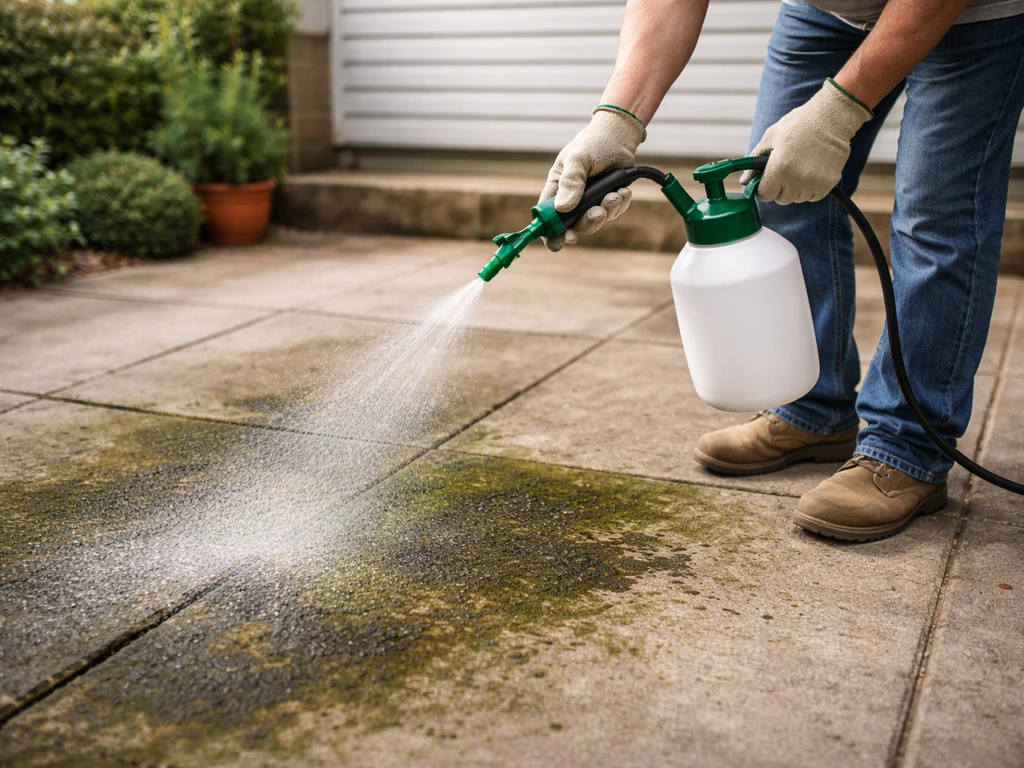
For most patios, a electric jet washer rated between 1,800 and 2,500 PSI with a flow rate of at least 1.4 GPM is the sweet spot. That gives you enough grunt to shift algae, mold, and ground-in grime from concrete, brick, and natural stone without blowing out your mortar joints or etching soft surfaces. A good selection of the best patio cleaning machines will match your patio size, surface type, and water flow needs so you can clean faster without damaging grout or delicate materials. If you have a large patio (think 50 square metres or more), bump up to 2,000–2,500 PSI and prioritise flow rate (GPM) over raw pressure, because it's the water volume that cuts cleaning time in half. And yes, the same machine can absolutely wash your car too, provided you swap to a 40-degree nozzle or a foam cannon attachment.
Best Jet Washer for Patio: Buyer Guide and Top Picks
What exactly is a jet washer and what specs actually matter
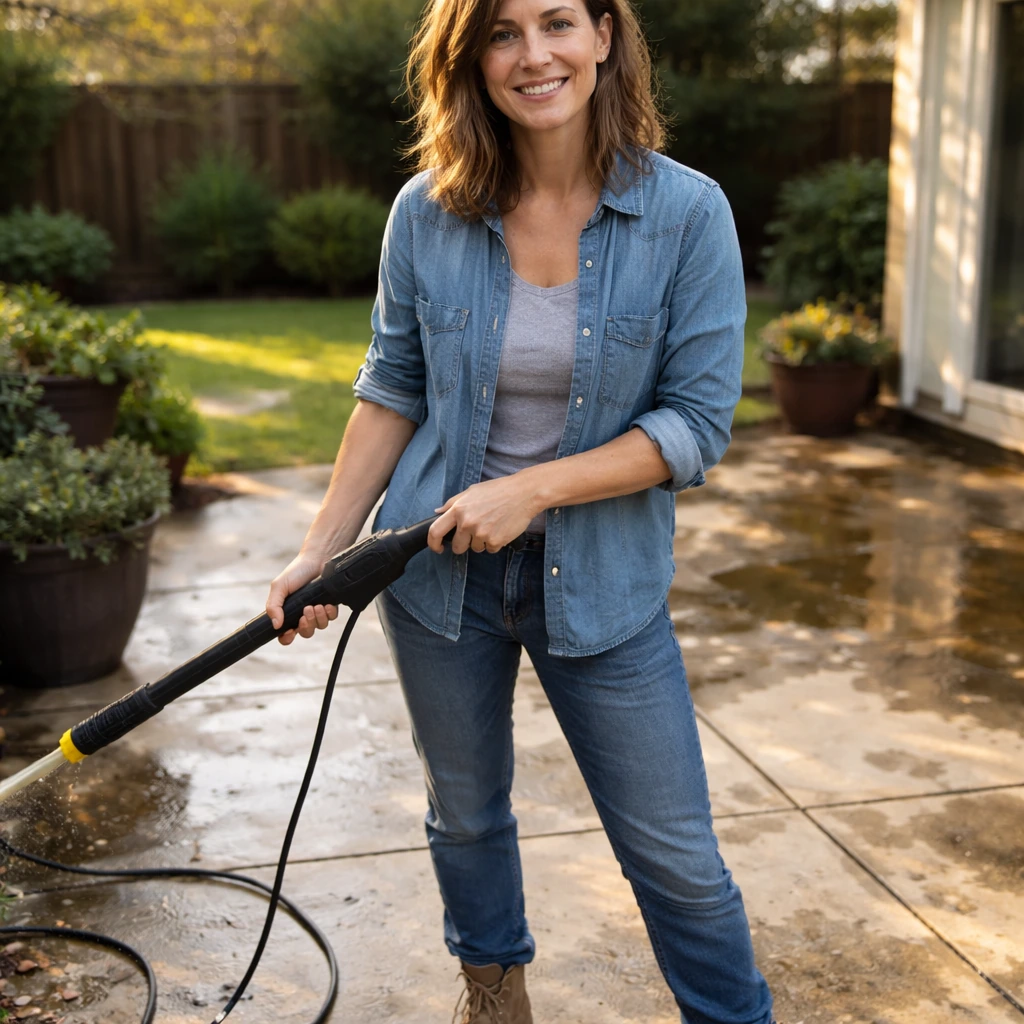
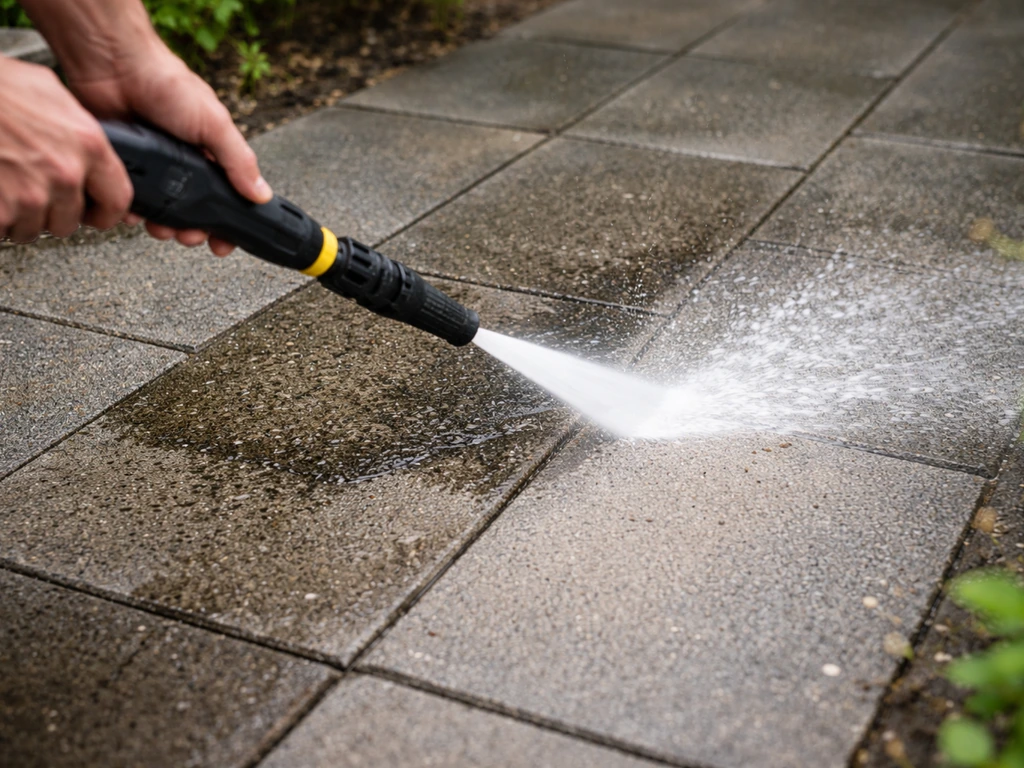
A jet washer and a pressure washer are the same thing. The terms are used interchangeably, with "jet washer" being more common in the UK and "pressure washer" dominating in the US. Either way, you're looking at a pump that forces water through a narrow nozzle at high speed to blast dirt off surfaces. The machine you pick for your patio needs to balance three core specs: PSI (pounds per square inch, measuring pressure), GPM (gallons per minute, measuring water flow), and Cleaning Units (CU). CU is calculated as PSI × GPM and gives you a single number that reflects total cleaning power. A machine with 2,000 PSI and 2 GPM delivers 4,000 Cleaning Units, which is a solid benchmark for patio work.
When you're shopping, don't get fixated on PSI alone. A high-pressure but low-flow machine will shift dirt slowly and leave you working in narrow strips for hours. The real-world performance you feel comes from the combination. For patio cleaning, aim for at least 1,800 CU for light seasonal maintenance, and 3,500–5,000 CU for heavy-duty grime, thick algae coverage, or large surface areas.
Beyond PSI and GPM, pay attention to hose length (10 metres minimum for a medium patio), onboard detergent tanks (useful for pre-soaking mossy areas), cable length for electric models, and whether the machine has variable pressure control. Variable pressure is genuinely useful because concrete and porcelain tiles don't need the same treatment, and being able to dial back on the fly without swapping nozzles saves time.
Matching power and flow to your patio size
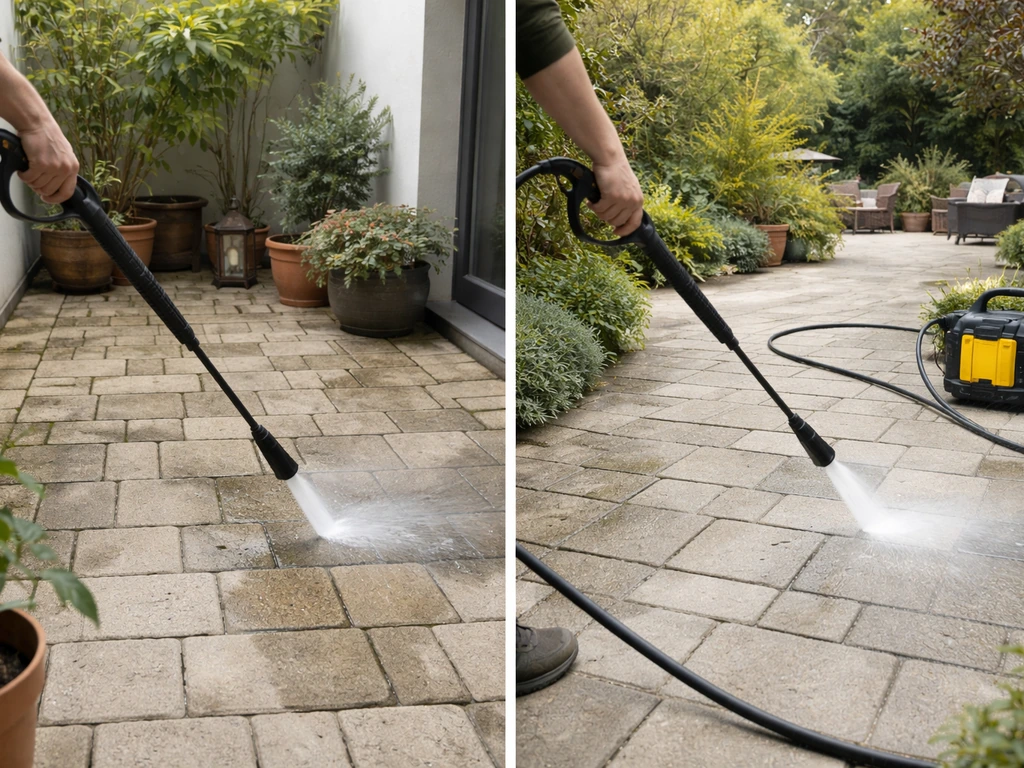
Patio size changes everything about which machine you should buy. A compact courtyard and a sprawling garden terrace are completely different jobs, and buying the wrong power level either means tedious slow cleaning or unnecessary surface risk.
| Patio Size | Recommended PSI | Recommended GPM | Cleaning Units Target | Best Machine Type |
|---|---|---|---|---|
| Small (up to 20 sq m) | 1,300–1,800 PSI | 1.2–1.5 GPM | 1,500–2,700 CU | Compact electric |
| Medium (20–50 sq m) | 1,800–2,200 PSI | 1.4–1.8 GPM | 2,500–4,000 CU | Mid-range electric |
| Large (50–100 sq m) | 2,000–2,500 PSI | 1.8–2.5 GPM | 3,600–6,000 CU | Heavy-duty electric or petrol |
| Very large (100+ sq m) | 2,500–3,000 PSI | 2.5+ GPM | 6,000+ CU | Petrol or professional electric |
For large patios, prioritise GPM as much as PSI. More water flow means you're rinsing a wider path with each pass, which cuts your total cleaning time significantly. A surface cleaner attachment (the rotating disc head that looks like an upside-down wok) is a game-changer here. It covers about 45 cm width per pass versus the narrow strip from a lance, and it prevents the tiger-stripe pattern you get from inconsistent overlapping. If you have more than 30 square metres to clean regularly, a surface cleaner attachment is worth buying alongside the machine itself.
Hose length matters more than people expect on large patios. Most entry-level machines come with 5–7 metre hoses, which forces you to drag the whole unit across the patio every few minutes. Look for at least 10 metres, or budget for an extension hose. For petrol machines, portability becomes an advantage since you're not tethered to a power outlet, which makes covering large irregular shapes much easier.
Getting the pressure right for your patio material
This is where most people go wrong. They buy a machine rated for concrete and then use it full-throttle on sandstone or porcelain, and within a few minutes they've etched the surface or blown the pointing out of the joints. Different materials need very different pressure settings and nozzle choices.
Concrete and tarmac
Concrete is the most forgiving surface for jet washing. You can run 2,500–3,000 PSI on standard concrete without worrying about surface damage, and for oil stains, rust, or thick algae you'll want that pressure. Use a 25-degree nozzle or a surface cleaner attachment. For deeply ingrained rust or grease, pre-treat with a suitable degreaser, let it dwell for 10 minutes, then wash. The pressure does the mechanical work but the chemistry loosens the bond first.
Brick and block paving
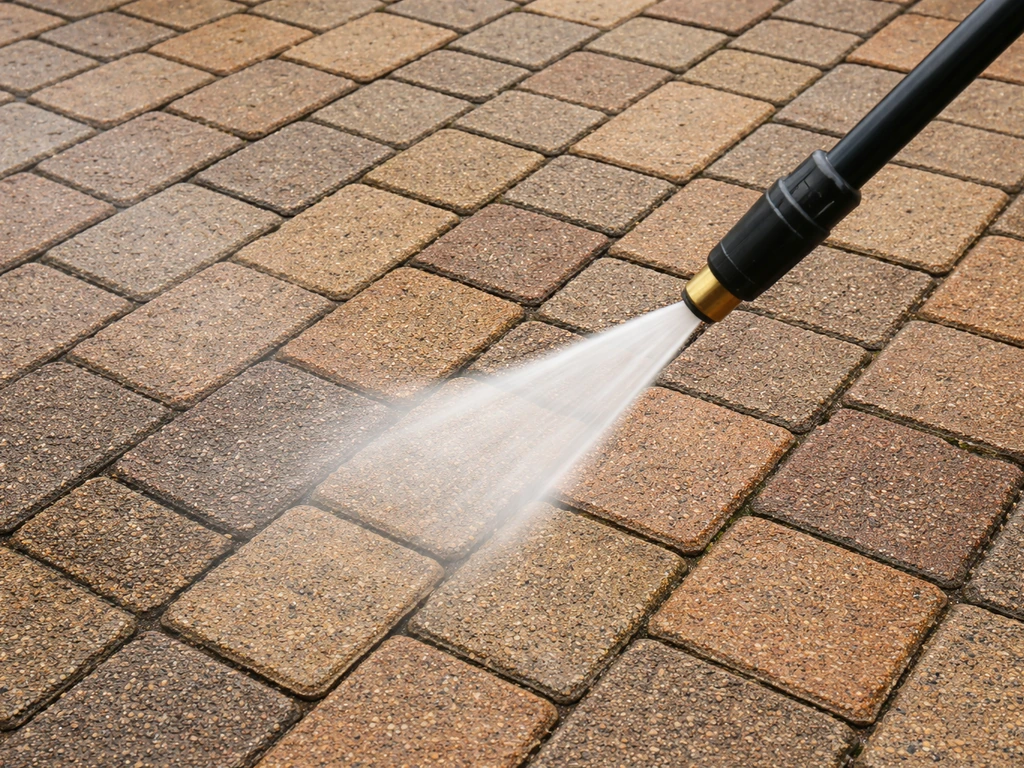
Brick is tougher than people think, but the mortar joints are vulnerable. Stick to 1,500–2,000 PSI and keep the nozzle at a 25–40 degree angle. Never aim directly into the joints at close range. If you're dealing with block paving that has kiln-dried sand in the joints, be aware that high pressure will strip it out and you'll need to re-sand afterwards. Point the spray along the surface rather than into the cracks.
Natural stone: sandstone and slate
Sandstone and slate are the surfaces where I'd urge real caution. Sandstone in particular is porous and soft, and high pressure will pit the surface and accelerate weathering. Keep pressure below 1,500 PSI and use a 40-degree nozzle, holding the lance further back than you normally would. For stubborn algae on sandstone, a specialist stone cleaner left to dwell for 15–20 minutes will do more work than ramping up the pressure. Slate can handle slightly more pressure but is prone to surface delamination if you hit it with a rotary/turbo nozzle.
Porcelain and ceramic tiles
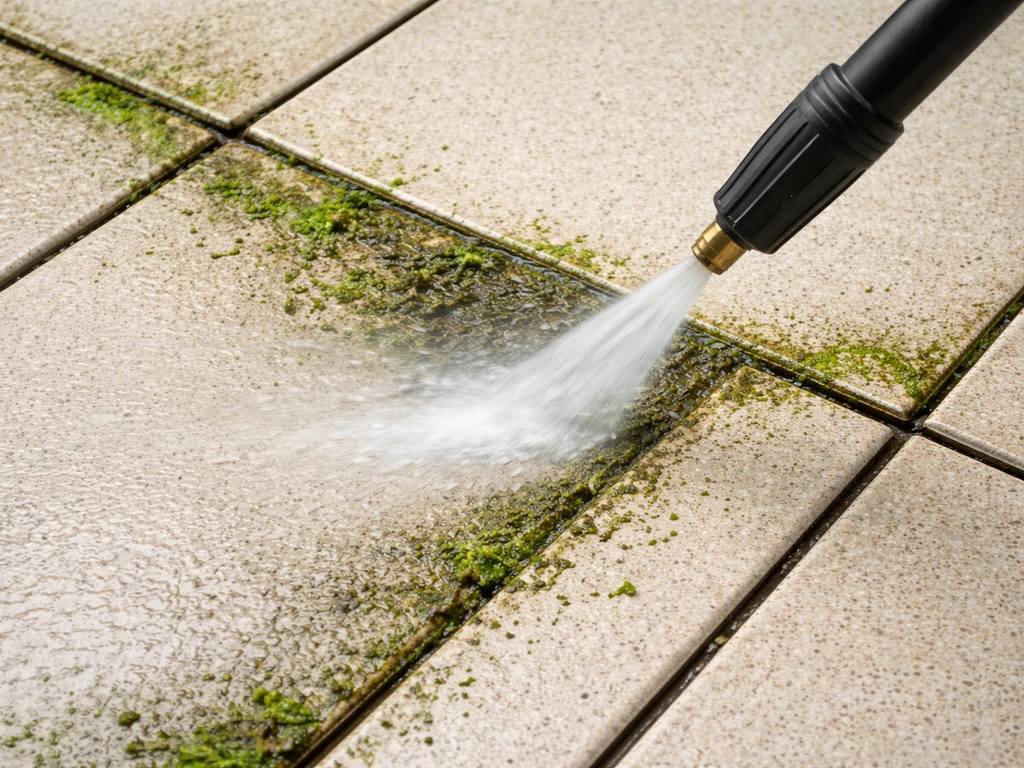
Porcelain tiles are actually harder and denser than concrete, so the tile faces can handle reasonable pressure. The weak point is the grout lines between tiles. Use a 25-degree nozzle at 1,800–2,200 PSI and always spray at a diagonal to the grout rather than directly along it. Avoid rotary turbo nozzles on porcelain, not because of tile damage but because the rotating jet can undercut grout lines and pop tiles loose over time.
Dealing with specific stain types
- Algae and green slime: a 25-degree nozzle at medium pressure usually shifts this in one pass. Pre-treat thick growth with a patio cleaner or diluted bleach solution first.
- Moss: scrape off the bulk with a stiff brush first. The jet washer removes the residue and kills what's embedded in surface texture.
- Mold (black mold): this needs a chemical treatment first. Pressure alone won't kill mold spores, just move them. Use a fungicidal patio cleaner, let it work, then rinse.
- Rust stains: use an oxalic-acid-based rust remover before jet washing. Pressure alone won't shift rust chemistry.
- Grease and oil: a degreaser or hot-water pressure washer is what you need. Cold-water machines struggle with oily residue without a chemical pre-treatment.
- Pet stains: enzyme-based cleaners work best before rinsing. The jet washer flushes the residue away but enzymes break down the odour-causing compounds.
Can you use the same jet washer for cars and the patio?
Yes, absolutely, provided you have the right nozzles. The machine itself doesn't need to change. What you change is the attachment and the pressure setting. For car washing, you should never use the same 25-degree nozzle and full pressure you'd use on concrete. Car paintwork wants a 40-degree fan nozzle, held at least 30–40 cm from the surface, or ideally a foam cannon attachment that applies a thick layer of soap before any contact washing.
A machine in the 1,800–2,000 PSI range with a variable pressure dial handles both jobs well. At full pressure with a 25-degree nozzle, it cleans the patio. Dialled back with a 40-degree nozzle or foam cannon, it's gentle enough for bodywork. The key accessory to look for is a detergent tank or a downstream injector port, which lets you apply car shampoo or patio cleaner without a separate pump. Northern Tool's nozzle guidance describes the 40-degree spray as specifically suited for cars, boats, and delicate outdoor surfaces, which matches what you'd expect from the physics of the wider fan angle.
One nozzle to avoid on cars entirely: the rotary or turbo nozzle. It's brilliant for blasting heavy dirt from concrete but the spinning jet concentrates force in a way that can strip lacquer and damage trim. STIHL's own safety guidance calls out that rotating nozzles should not be used on sensitive surfaces, and car bodywork absolutely fits that description. Stick to a standard 40-degree tip or foam lance for vehicles.
Recommended nozzle setup for dual use
| Task | Nozzle Type | Spray Angle | Pressure Setting |
|---|---|---|---|
| Heavy patio grime (concrete) | 25-degree tip | 25° | Full / 2,000–2,500 PSI |
| General patio cleaning (stone, brick) | 25–40 degree tip | 25°–40° | Medium / 1,500–2,000 PSI |
| Soft stone (sandstone, slate) | 40-degree tip | 40° | Low / 1,000–1,500 PSI |
| Car bodywork | 40-degree tip or foam cannon | 40° | Low / under 1,500 PSI |
| Large area fast coverage | Surface cleaner attachment | N/A | Manufacturer recommended |
| Tough stains (concrete only) | Rotary/turbo nozzle | Rotating | Full (hard surfaces only) |
Top jet washer picks by cleaning need
Rather than listing a fixed set of models (which go in and out of stock and change spec year to year), here are the categories and specs to look for in 2026, with the kind of machines that hit those marks.
Light duty: occasional cleaning, small patio, or soft surfaces
Look for a compact electric in the 1,300–1,600 PSI range, around 1.3–1.5 GPM. These are typically lightweight (under 10 kg), easy to store, and suitable for seasonal algae removal from patios up to around 20 square metres. Kärcher's entry-level K-series and Nilfisk's Core range consistently hit these specs. They're not going to strip grease from concrete, but for regular maintenance cleaning they're perfectly capable and easier to handle than mid-range machines.
Mid-range: the best all-rounder for most homeowners
This is where most people should be spending their money. A machine rated 1,800–2,300 PSI with 1.5–2.0 GPM and a 10-metre hose will handle 80% of residential patio jobs, including annual deep cleans on concrete and brick, moss removal, and car washing. For most homeowners, the best patio washer is one that balances pressure and flow for your surface size, while letting you choose the right nozzle. Machines from Kärcher (K4–K5 range), Nilfisk (Core 130–140), and Ryobi's mid-range electric lineup regularly come in at this spec. Look for models that include a surface cleaner attachment in the box, or buy one separately, as it transforms coverage speed on medium and large patios.
Heavy duty: large patios, serious grime, or commercial-grade use
Above 2,500 PSI you're into heavy-duty territory. Electric machines at this level exist but tend to be bulkier and more expensive. Petrol pressure washers in this range (brands like Honda, Hyundai, or STIHL's petrol lineup) are genuinely useful if you have a very large area, no convenient power outlet, or are tackling years of built-up grime on commercial-grade concrete. The trade-off is noise, fumes, and maintenance. For most domestic patios, you won't need this category, but if you're regularly cleaning 100+ square metres or running a patio cleaning side business, it makes sense.
How to actually use your jet washer safely and effectively
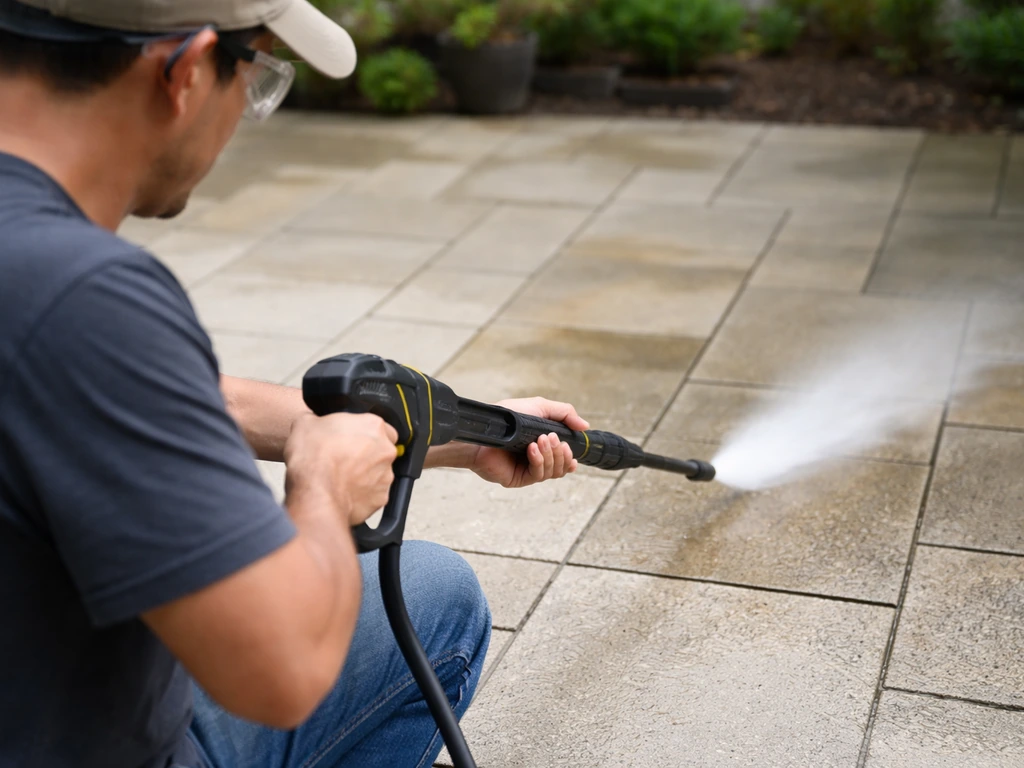
The machine is only half the job. Technique makes a huge difference to results, surface safety, and how quickly you finish.
Before you start
- Clear the patio of furniture, plant pots, and any loose items. The spray will send lightweight objects flying.
- Sweep off loose debris first. Jet washing wet leaves into drains blocks them quickly.
- Check the water supply pressure at your tap. Most pressure washers need at least 0.2 bar inlet pressure to run properly.
- If using a corded electric machine, check the GFCI (or RCD in the UK) protection built into the plug before starting. Test the trip button and reset it before connecting to the water supply.
- Apply any chemical pre-treatment (algae killer, degreaser, patio cleaner) and let it dwell according to the product instructions, typically 10–20 minutes.
Technique during cleaning
Start at the highest point of the patio and work downwards so dirty water runs away from clean areas. Hold the lance at roughly 30–45 cm from the surface for general cleaning. Moving closer increases cutting power but also increases the risk of surface damage and that classic tiger-stripe pattern. Keep your movements consistent and overlapping, like mowing a lawn. Aim slightly away from grout lines and mortar joints rather than directly into them. Never hold the spray stationary on one spot, especially on softer surfaces like sandstone.
Wear safety glasses. This isn't optional. The spray kicks up grit, algae, and chemical residue at eye level, and I've seen people need medical attention from reflected debris. Waterproof boots are also worthwhile because you will get wet. Keep pets and children well away from the working area.
Chemicals and when to use them
Jet washing alone shifts a lot of grime, but chemicals significantly improve results on organic growth and staining. A top tech patio cleaner can help boost results on organic growth when used alongside your jet washer technique. A dedicated patio cleaner or algaecide applied before washing will kill moss and algae at the root, meaning it doesn't grow back as fast. For natural stone, always check the cleaner is pH-neutral or stone-safe. Acidic cleaners will etch limestone and sandstone. Bleach-based products work on mold and algae on concrete but should not be used near planted borders or on coloured block paving where they can strip colour.
Rinsing and finishing
After cleaning, do a final rinse pass with clean water on a wide fan angle. This flushes chemical residue and loosened debris to the drain. If you've treated with a long-acting algaecide or moss preventer, check the product instructions before rinsing, as some need to remain on the surface to cure. After jet washing block paving, check the joints and top up with kiln-dried sand where the pressure has displaced it. Finally, consider applying a patio sealer to natural stone or sandstone once dry. It dramatically slows algae and moss regrowth and makes future cleaning much easier.
Your buying checklist and how to start today
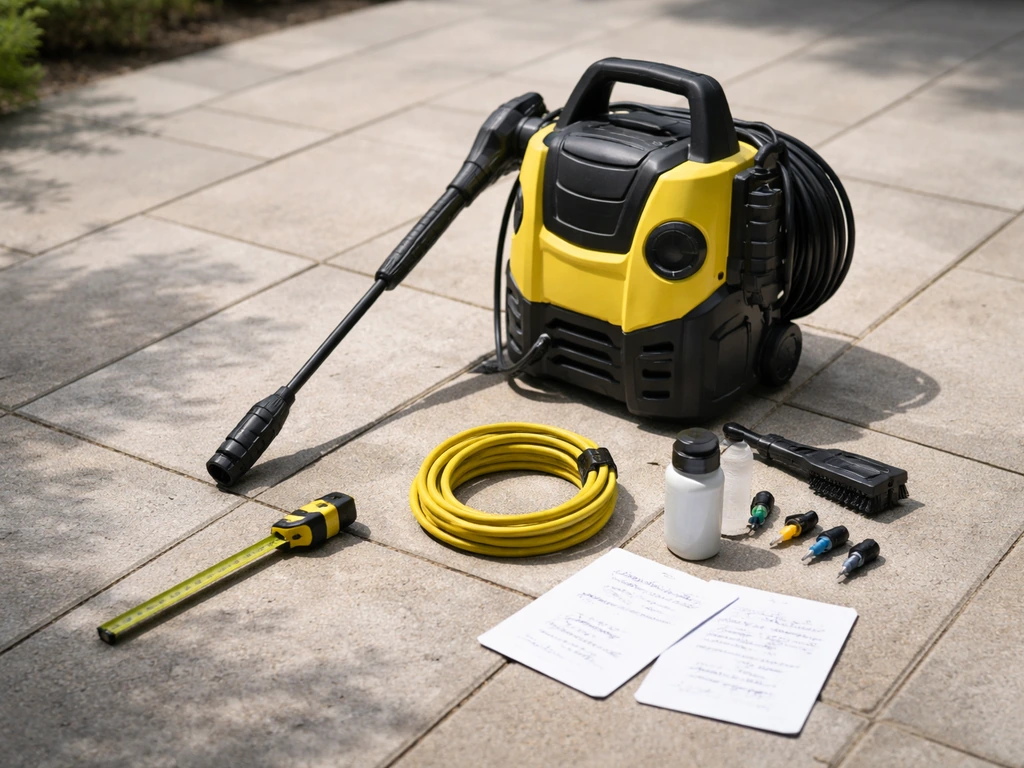
Before you buy, run through this checklist. It takes two minutes and stops you from returning a machine that wasn't right for your situation.
- Patio size: under 20 sq m (compact electric is fine), 20–50 sq m (mid-range electric), over 50 sq m (heavy-duty electric or petrol).
- Surface type: concrete or brick (medium to high PSI fine), natural stone or sandstone (keep below 1,500 PSI, use 40° nozzle), porcelain tiles (medium PSI, avoid rotary nozzle).
- Grime level: seasonal algae (mid-range electric handles it), thick moss or oil stains (go heavier and add chemical pre-treatment).
- Dual use for cars: make sure the machine has variable pressure or comes with a 40° nozzle and ideally a foam cannon port.
- Power source: electric is quieter and lower-maintenance for most domestic jobs; petrol if you're away from outlets or doing very large areas.
- Hose length: minimum 10 metres for anything over 25 sq m.
- Accessories to add: surface cleaner attachment, patio cleaner chemical, 40° nozzle if not included, foam cannon if you want car washing capability.
If you're still deciding between specific machine categories, the related guides on best patio power washers, best patio cleaning machines, and best electric patio cleaners on this site go deeper into individual model comparisons by surface type and budget, which is worth checking once you know which power band you're shopping in.
The fastest way to start today: decide your patio size and dominant surface material, use the table above to pick your target PSI and GPM range, then filter products in that range by hose length and available accessories. Don't overthink it. A mid-range electric at 1,800–2,200 PSI with a surface cleaner attachment handles the vast majority of residential patio cleaning jobs in the UK and US. If you want the best patio jet wash results, match your PSI and GPM to your patio size and surface material patio cleaning. Buy the machine, pick up a bottle of patio algae treatment, and you can have a clean patio by the end of the weekend.
FAQ
Do I really need a specific PSI rating, or is a strong GPM more important for patios?
For most residential patios, you need a balance, but GPM tends to decide how fast you finish. A machine with the same PSI but higher GPM rinses a wider path each pass, reducing the number of passes you need. If your patio is mostly flat concrete or brick, prioritize hitting the article’s 1,800–2,200 PSI band and then maximize GPM within that range, since too much pressure without enough flow can leave you working in narrow strips.
What’s the difference between “cleaning units” and just choosing PSI and GPM?
Cleaning Units (PSI × GPM) helps compare total output at a glance, but it does not account for nozzle type, hose losses, or whether the machine can maintain flow under load. If two washers have similar Cleaning Units, choose the one with a compatible nozzle set and adequate hose length, because real-world performance can drop noticeably when the hose is too short for patio reach.
Can I use the patio jet washer on decking or timber fences?
It’s risky unless the machine is specifically controllable and you use the right distance and nozzle. Timber can lift grain and cause swelling if you get too close or use high pressure. If you do attempt it, use the gentlest fan angle you have (around the “40-degree” style fan guidance), keep the lance farther back than on concrete, and test a small hidden section first to check for raised grain or surface damage.
How do I stop streaking or “tiger stripes” beyond using the right overlap?
Streaking usually comes from inconsistent overlap, drying too fast, or uneven nozzle angle relative to the surface. Work in sections from top down, keep your travel speed consistent, and avoid letting the surface dry between passes. If you notice lines returning after drying, switch to a surface cleaner attachment (if applicable) or increase the rinse frequency rather than increasing pressure.
What nozzle angle should I use for block paving joints, and do I need to re-sand every time?
To protect kiln-dried sand in joints, avoid blasting directly into the gaps, keep the nozzle angled along the surface, and use moderate pressure (the article notes the risk of stripping sand). Whether you need to re-sand every time depends on how deep the grime is and how close you spray; treat it as “check after cleaning,” top up only where joints look hollow or sand is missing.
Is it safe to use bleach or acid cleaners with a jet washer on patios?
It depends on the surface and proximity to plants and finishes. Bleach-based products can damage nearby planting and can strip color on some block paving, and acidic cleaners can etch limestone and sandstone. If you’re unsure, choose a stone-safe or pH-neutral cleaner for natural stone, and do a small test area before committing to the full patio.
Can I clean my car with the same detergent injector or tank I use for patio chemicals?
It’s better to keep them separated or thoroughly flushed. Patio chemicals and algaecides can leave residues that are not ideal for paint and can cause streaking if they dry on the bodywork. If your machine has a downstream injector or detergent tank, flush the system with clean water between patio and car use, and use a car-specific shampoo afterwards.
Do I need to pre-soak before jet washing, or can I blast straight away?
Pre-soaking can significantly improve results, especially for oily, greasy, or deeply embedded organic staining. The article recommends using chemistry that dwells before washing for rust or grease. Even on lighter algae, wetting first can soften deposits and reduce the pressure you need, which lowers the chance of damaging mortar joints or pitting softer stone.
How far should I keep the nozzle from the surface, and what if I need more cleaning power?
Use distance as your first lever, not pressure. The article suggests roughly 30–45 cm for general patio cleaning, and bringing the nozzle closer increases impact and damage risk. If you need more power, switch to the correct nozzle and ensure correct chemistry and dwell time, because raising pressure alone is more likely to cause etching or grout displacement.
After washing, should I rinse immediately, and how do I handle algaecides that need curing?
A final rinse pass helps remove chemical residue and loosened debris, but some long-acting preventers or algaecides need to remain on the surface to work properly. Follow the product instructions for rinse timing, and only rinse early if the label says so. For best results, avoid power-washing off products that are designed to cure and stay.
What safety precautions matter most beyond wearing eye protection?
Eye protection is essential, and the next high-impact step is controlling splashback by keeping bystanders away and wearing waterproof footwear since you will get wet. Also avoid working near open power outlets, use cable management to prevent trips, and protect nearby plants when using detergents or bleach-based products, because drift can damage foliage.
How do I choose between electric and petrol for a large patio?
Electric models are usually easier for domestic use, but cable length and outlet access can limit how much of the patio you can clean without repositioning. Petrol is advantageous when you have 100+ square metres, irregular layouts, or no convenient power outlet, but it adds noise, fumes, and upkeep. If you’re staying domestic and can reach with a 10 m hose plan, mid-range electric is typically simpler.
What extension hose length or setup mistakes should I avoid?
Using an undersized or overly long extension can reduce delivered flow and make the washer perform weaker than expected. If you need to extend, choose an extension that matches the washer’s power requirements and keep connections secure to prevent leaks. Plan your cleaning path so you don’t repeatedly change direction mid-pass, which increases streaking and time.
How to Use Wet and Forget Patio Cleaner Step by Step
Step by step guide to apply Wet and Forget patio cleaner, prep and safety, dwell time, rinse or no rinse, and troublesho