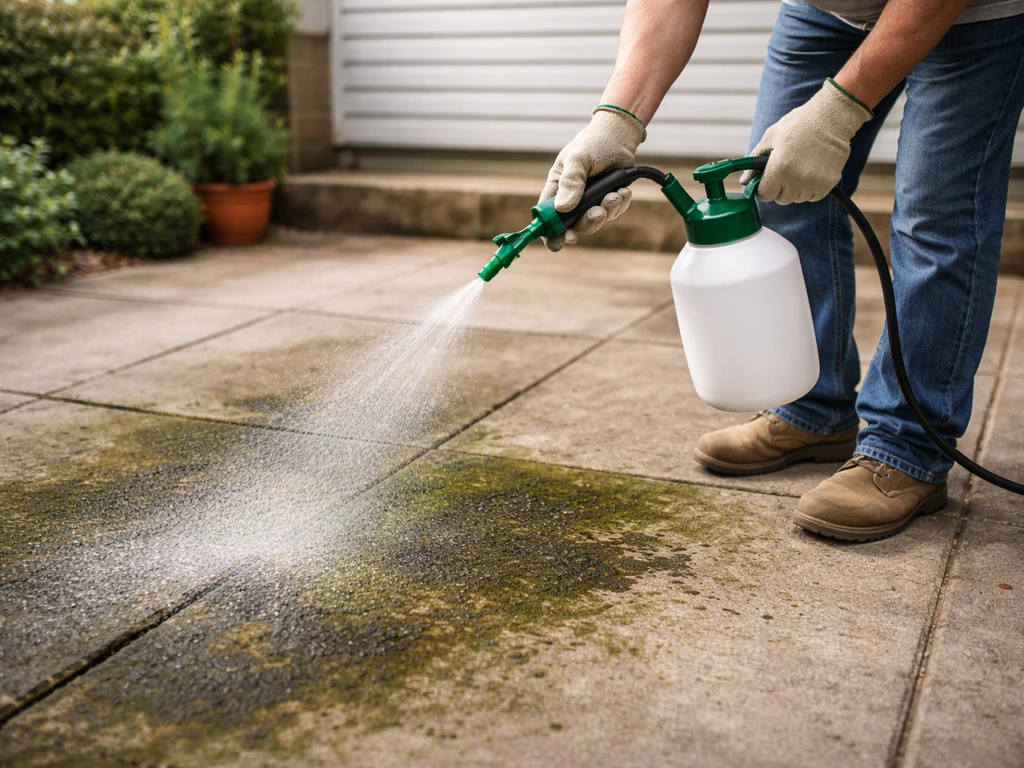
For most brick patio problems, a dedicated acidic masonry cleaner like Prosoco Sure Klean 600 (for general grime and efflorescence) or Wet & Forget Outdoor (for mold, algae, and moss) is the best starting point. Which one you need depends on two things: the type of brick you have and the type of mess you're dealing with. Get those two variables right and you'll clean your patio without damaging the surface or killing the plants around it.
Best Patio Brick Cleaner: How to Choose and Use It

Rhea Lang
3 May 2026
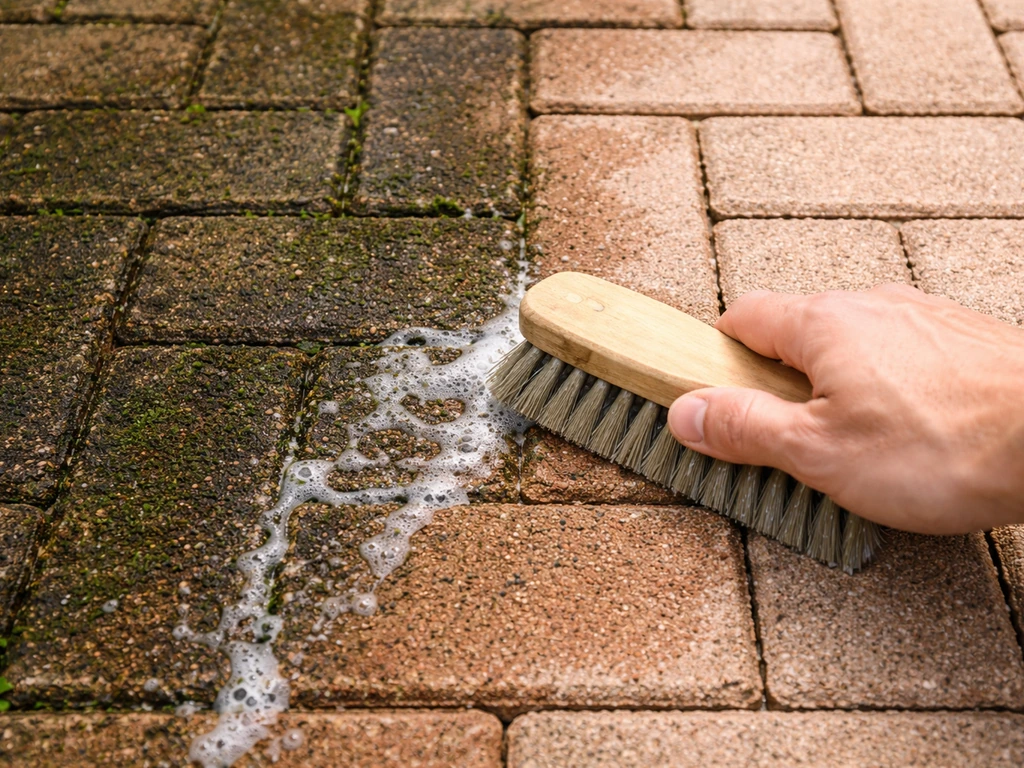
How to pick the right cleaner for your brick and your problem
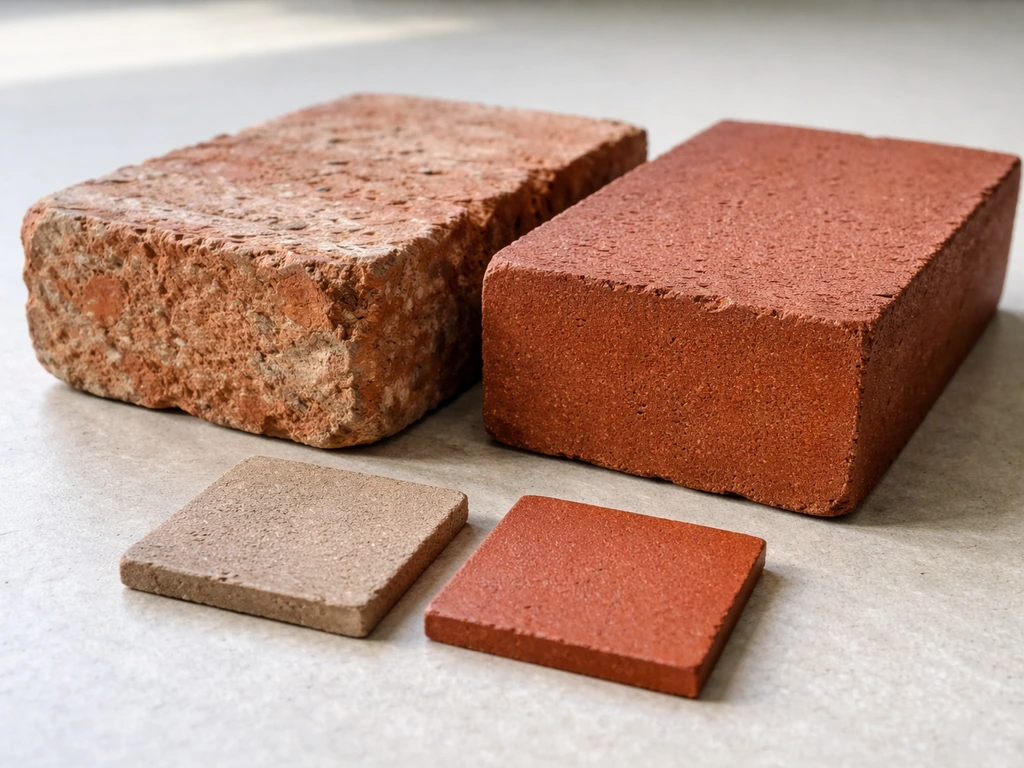
Brick patios aren't all the same. Old reclaimed bricks are often softer and more porous than modern engineering bricks, and handmade bricks can have surface irregularities that trap more grime. The type of mortar matters too, because some acidic cleaners will attack old lime mortar faster than modern cement-based pointing. Before you buy anything, press your fingernail into an inconspicuous mortar joint. If it crumbles or feels chalky, stick to pH-neutral or low-concentration acidic cleaners and keep dwell times short.
Then think about what you're actually trying to remove. The grime type changes everything. Efflorescence (white powdery salt deposits) needs an acid-based cleaner to dissolve the salts. Mold, algae, and moss are biological growth that responds to biocidal or surfactant-based cleaners. Rust stains need an oxalic or phosphoric acid product. Grease needs a degreaser or alkaline cleaner. Using the wrong product on the wrong problem just makes more work for yourself.
| Problem | Cleaner Type Needed | Avoid |
|---|---|---|
| Efflorescence (white salt deposits) | Acidic masonry cleaner (phosphoric or hydrochloric acid-based) | Bleach-based products (won't dissolve salts) |
| Mold, algae, black staining | Biocidal or surfactant cleaner (bleach-free or sodium hypochlorite) | Strong acids (overkill, risk of damage) |
| Moss | Biocidal cleaner or fatty-acid salt-based moss killer | Pressure washing alone (spreads spores) |
| Rust stains | Oxalic or phosphoric acid cleaner | Bleach (fixes rust stains permanently) |
| Grease or oil | Alkaline degreaser or dish soap pre-treatment | Acid cleaners (won't cut grease) |
| General dirt and organic grime | Diluted acidic masonry cleaner or pH-neutral patio cleaner | Undiluted acid (risks etching brick face) |
One more thing worth checking: if you have sandstone or Indian sandstone edging or mixed materials on your patio, acid-based cleaners can permanently stain or etch those surfaces. If your patio includes Indian sandstone edging or mixed materials, choosing the best patio cleaner for Indian sandstone matters because acidic cleaners can leave permanent staining or etching. There are specific guides covering the best sandstone patio cleaner and best cleaner for Indian sandstone that are worth reading before you treat a mixed-material patio.
The best store-bought brick patio cleaners
Prosoco Sure Klean 600 (best all-round acidic masonry cleaner)
Sure Klean 600 is a professional-grade acidic cleaner designed specifically for brick, tile, and masonry. It's the product I reach for first when dealing with general post-build dirt, mortar smears, and early-stage efflorescence on outdoor brick. It's a concentrate that you dilute with 4 to 12 parts clean water depending on the severity of the staining, which gives you a lot of control over the strength. At a 1:4 dilution its pH drops to around 0.28, so this is a genuinely strong acid product. That means it works fast, but you also need to respect the dwell time: leave it on for 3 to 5 minutes maximum and do not let it dry into the brick. Sure Klean 600 fact sheet guidance says the product can be allowed to dwell on the surface and scrubbed if needed blank" rel="noopener noreferrer">dwell time: leave it on for 3 to 5 minutes maximum and do not let it dry into the brick. Rinse thoroughly with clean water immediately after. Pre-wetting the surface before applying is essential. It stops the brick absorbing the acid too quickly and helps the cleaner work at the surface level where the staining actually is.
Wet & Forget Outdoor (best for mold, algae, moss, and low-effort cleaning)
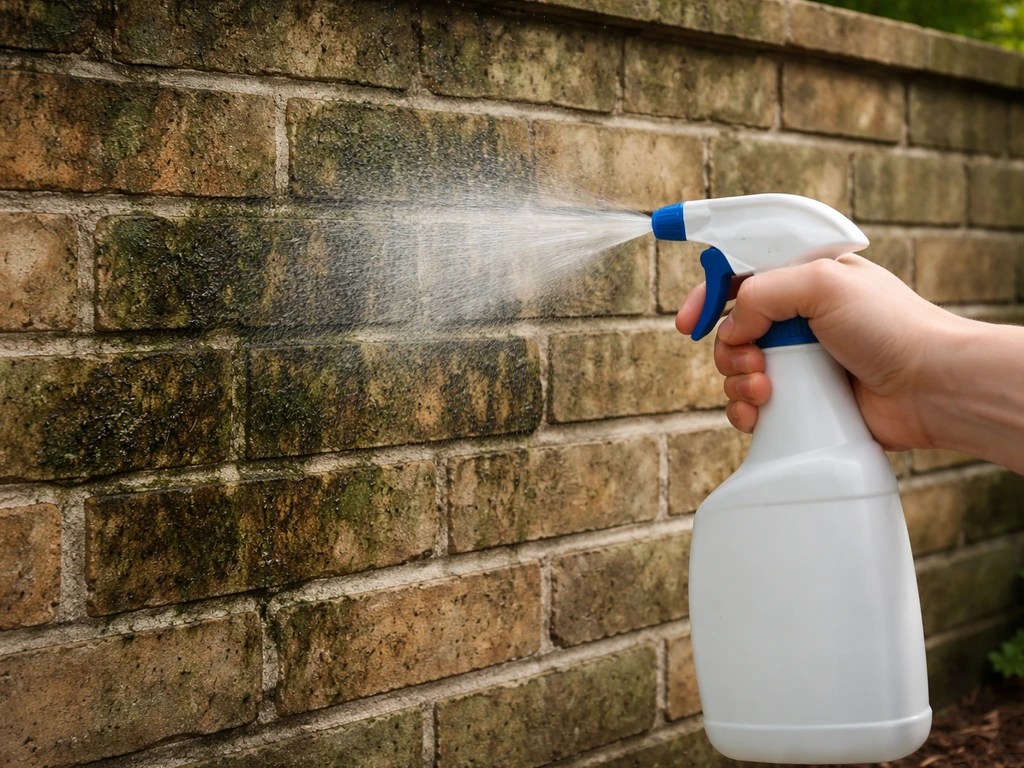
Wet & Forget is the opposite approach to Sure Klean. Instead of a short, intense dwell time, you apply it diluted (1 part concentrate to 5 parts water) and let it work over days and weeks, with rain doing most of the rinsing. It's bleach-free and uses a surfactant chemistry rather than sodium hypochlorite, which makes it much safer around plants and pets. If you accidentally hit a plant with it, the label says to switch to rinse mode and wet the plant down thoroughly. I've used this on brick walls and patios with heavy green algae and black mold staining, and after two to three rainfall events the results are genuinely impressive. The trade-off is patience: you're not getting an instant result the way you do with a pressure washer and acid. But for regular maintenance or treating a patio you don't want to scrub, it's excellent.
Rust-Oleum RockSolid Efflorescence Remover (best for white salt deposits)
If your brick patio has that characteristic white powdery bloom of efflorescence, RockSolid Efflorescence Remover is a straightforward and widely available option. You mix 2 quarts of the concentrate with enough water to reach 2 gallons total, apply it to the affected areas, and then rinse thoroughly with water or a pressure washer to remove all residue. It's worth understanding that efflorescence will come back if the underlying moisture problem isn't fixed. The cleaner removes the deposits at the surface but it can't stop salts from migrating through the brick if there's ongoing water ingress. Treat the symptom with the cleaner, then address the cause.
Foundation Armor ER100 (specialist efflorescence cleaner)
ER100 is another solid choice for efflorescence specifically on brick and pavers. The brand is upfront that performance depends on how severe the build-up is, how porous the brick is, and how carefully you follow the dilution instructions. That's honest and accurate. I'd lean toward this for heavier or older efflorescence deposits where the RockSolid product isn't cutting it.
Natural and DIY cleaners that actually work on brick
If you'd rather avoid commercial chemicals, you have a few genuinely useful DIY options. They won't match the performance of dedicated masonry cleaners on heavy staining, but for maintenance cleaning and mild organic growth they do the job.
- White vinegar diluted 50/50 with water: The mild acetic acid in vinegar will dissolve light efflorescence and cut through surface grime. Apply with a brush, leave for 5 minutes, then scrub and rinse. Don't use it on natural stone or if you have lime mortar joints, as even mild acid can cause slow deterioration over repeated applications.
- Baking soda paste: Mix baking soda with just enough water to make a paste and scrub it into grease spots or light organic staining. It's mildly alkaline and abrasive, which makes it better for greasy grime than acid-based options.
- Dish soap and warm water: Underrated for general dirt and surface-level organic staining. A stiff brush and soapy water removes a lot more than people expect, especially on bricks that are cleaned regularly.
- Boiling water: Pouring boiling water directly onto moss and some weeds between bricks kills them effectively without chemicals. Combine with a stiff brush afterward and it's a solid low-impact option.
- Salt solution: A strong salt solution can suppress moss and weed growth between bricks over time, though it's not an instant kill and can affect nearby soil.
I want to be honest here: DIY options work best as part of a regular maintenance routine rather than a rescue operation for a badly neglected patio. If you're dealing with years of moss, black algae, or heavy efflorescence, you'll save yourself a lot of time and effort by going straight to a purpose-made product.
How to clean a brick patio step by step
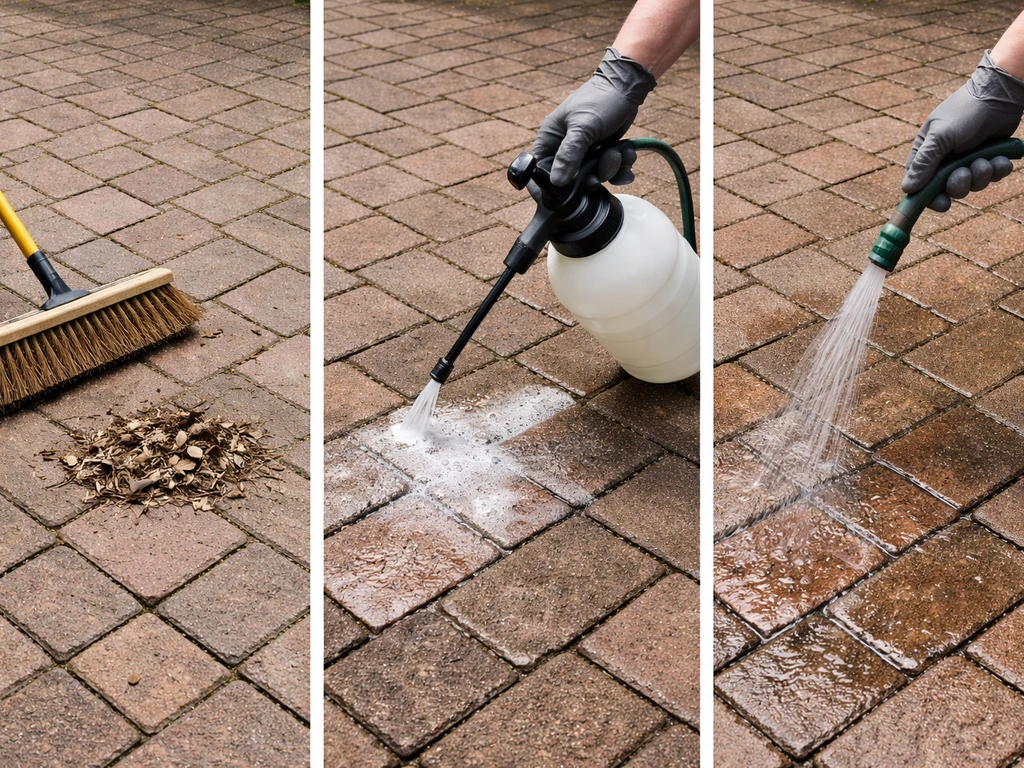
The actual cleaning process matters as much as the product you choose. I've seen people buy the right cleaner and still damage their bricks or kill their border plants because they skipped the prep stages.
- Clear and sweep the patio: Remove all furniture, pots, and debris. Sweep off loose dirt and leaves. The cleaner should be working on staining and grime, not shifting surface dust.
- Protect surrounding plants and surfaces: Wet plants, lawn edges, and borders with plain water before you apply any cleaner. This dilutes any product that splashes onto them. Cover particularly vulnerable plants with plastic sheeting. If you're using an acid cleaner near other patio materials like sandstone or Indian sandstone, mask those areas or treat them separately with an appropriate cleaner.
- Do a test patch: Apply your chosen cleaner to a small, inconspicuous area first. Wait for it to dry fully and check for colour change, etching, or any reaction with the mortar. This is non-negotiable with older or reclaimed brick. I learned this the hard way when a slightly too-strong acid dilution left a visible tide mark on a dark engineering brick.
- Pre-wet the brick surface: Wet the entire patio with a hose before applying chemical cleaners. This is especially important with acidic products like Sure Klean 600. Pre-wetting limits absorption into the brick and keeps the cleaner working at the surface.
- Mix and apply the cleaner at the correct dilution: Follow the product instructions exactly. With Sure Klean 600, dilute 1 part concentrate in 4 to 12 parts water depending on stain severity. With Wet & Forget, dilute 1:5. Apply with a watering can, garden sprayer, or stiff brush. Work in sections of a few square metres so you can control dwell time.
- Agitate with a stiff brush: Use a stiff-bristled brush (not a wire brush, which can leave metal deposits that rust later) to scrub the cleaner into the surface. Work along the mortar joints rather than across them to avoid widening gaps.
- Respect the dwell time: For acidic cleaners like Sure Klean 600, 3 to 5 minutes is the maximum. Do not let the cleaner dry into the brick. On warm or sunny days you may need to work faster or mist the surface to keep it wet.
- Rinse thoroughly: Rinse with a strong garden hose or low-pressure washer. Make sure all product residue is removed, especially from mortar joints where trapped acid can continue to work and cause damage. Rinse surrounding plants again after you're done.
Pressure washing vs chemical cleaning: which one to use on brick
Pressure washing feels like the obvious shortcut on a dirty patio, and it does work well on some surfaces. But brick is one where you need to think carefully before you reach for the pressure washer, especially at high settings.
The GSA guidelines on high-pressure cleaning of masonry are pretty clear: high-pressure cleaning is not recommended for porous surfaces like brick. High pressure (above 800 psi) can erode the face of softer bricks, blast out mortar from joints, drive water and contaminants deeper into porous surfaces, and actually make algae and moss problems worse by spreading spores. If you have older brick, handmade brick, or brick with any existing mortar deterioration, be very cautious.
That said, a pressure washer used correctly can be a great rinsing tool after chemical treatment, and at lower pressures (below 800 psi) with a wide fan nozzle it can remove loose surface grime without causing damage. The combination approach works well: apply a chemical cleaner, let it dwell, scrub with a brush, then rinse with a low-to-medium pressure washer to flush everything away. If you are also working on patio grout, it's worth checking brush-based patio grout reviews for guidance on the right bristle type and technique brush in patio grout reviews. I also recommend using a stiff grout brush to work the cleaner into the joints for more effective results, which is usually the best brush in patio grout scrub with a brush. For comparison, this is essentially how I'd also approach cleaning patio slabs, though the cleaner chemistry differs. If you're wondering about the best patio slab cleaner overall, focus on the right chemistry for the stain or growth you actually have.
| Approach | Best For | Avoid When |
|---|---|---|
| Chemical cleaner + brush only | Older or soft brick, lime mortar joints, delicate surfaces, targeted stain treatment | Large areas of heavy mud or loose debris (too slow) |
| Low-pressure wash (under 800 psi, wide nozzle) | Rinsing after chemical treatment, removing loose surface dirt from modern hard brick | Crumbling mortar joints, handmade or very old brick |
| High-pressure wash (800–1200 psi) | Concrete slabs, hard modern engineering brick with solid mortar (test patch first) | Porous brick, reclaimed brick, lime mortar, any brick showing surface wear |
| Chemical cleaner + low-pressure rinse (combined) | Most brick patios as general best practice | Situations where plant protection isn't possible |
My general rule: use chemistry to do the heavy lifting and pressure washing just for rinsing. You'll get better results and won't risk damaging the surface.
How to tackle specific stains and growth on brick
Mold and algae (black, green, or brown slippery patches)
Black algae and green mold are the most common complaints on shaded or north-facing brick patios. Wet & Forget Outdoor is my go-to here because it's bleach-free, low effort, and won't harm surrounding planting. For faster results, a sodium hypochlorite-based cleaner (standard patio black spot remover) applied with a brush and rinsed after 15 to 20 minutes works well, but you need to be much more careful around plants. Always pre-wet plants and rinse them down afterwards.
Moss (thick green growth, especially in joints)
Moss needs a biocidal treatment, not just scraping off. Products like Moss Out contain ferrous sulfate monohydrate or zinc sulfate, and some specialist products like Neudorff's Moss-Aside use potassium salts of fatty acids. Apply the treatment, let it kill the moss over a few days (it'll turn brown and dry out), then brush it off and rinse. Scraping live green moss just spreads fragments that regrow. After removal, improving drainage and increasing light to the area will slow regrowth significantly.
Rust stains
Rust stains on brick usually come from metal furniture, fixings, or wire brushes left in contact with the surface. Use an oxalic acid or phosphoric acid-based rust remover. Apply carefully, let it dwell for 5 to 10 minutes, scrub, and rinse thoroughly. Do not use bleach on rust stains: it chemically sets them and makes them much harder to remove. Phosphoric acid products are often found in hardware stores under the label 'rust remover' or 'metal prep.'
Grease and oil
For BBQ grease or oil spills, start with neat dish soap worked into the stain with a stiff brush before you add any water. Water and grease don't mix, so adding water first just dilutes the soap prematurely. Let the soap sit for 10 minutes, scrub hard, then rinse with hot water. For older or set-in grease, use a dedicated alkaline degreaser from a janitorial or hardware supplier. Acidic masonry cleaners will not cut grease effectively.
Efflorescence (white powdery deposits)
Efflorescence is a salt deposit that forms when water moves through brick or mortar, dissolves soluble salts, and carries them to the surface where they crystallize as the water evaporates. It's very common on new brick patios, especially along mortar joints. Use Rust-Oleum RockSolid Efflorescence Remover or Foundation Armor ER100, following the dilution instructions carefully. The critical thing to understand is that efflorescence will keep recurring as long as there's both moisture and soluble salt present. Cleaning removes the surface deposit, but if there's a drainage issue or moisture ingress behind the brickwork, it will return. After cleaning, sealing the brick can help slow moisture penetration and reduce recurrence.
Keeping your brick patio cleaner for longer
Prevention is genuinely much easier than cure with brick patios, and a few simple habits make a significant difference.
Sealing after cleaning
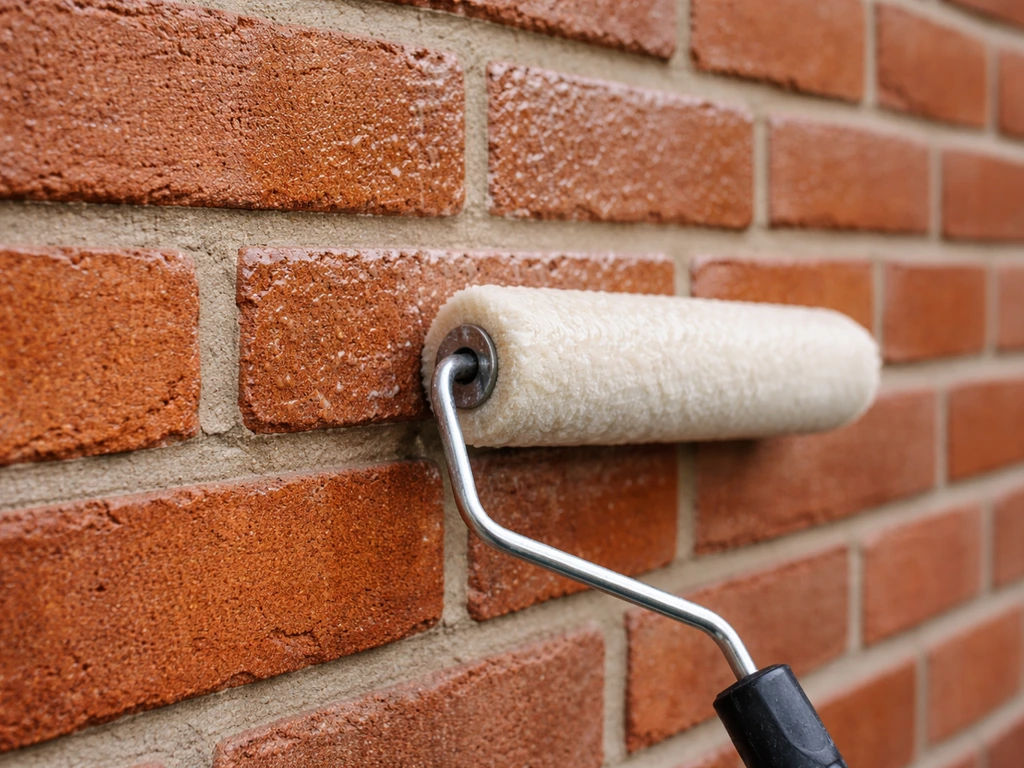
Sealing clean, dry brick with a penetrating masonry sealer is one of the best things you can do. A good sealer reduces water absorption, which slows efflorescence, inhibits moss and algae growth (they need moisture to get established), and makes the surface easier to clean. Apply sealers only to clean, dry brick: sealing over damp or dirty brick traps problems beneath the surface. Most penetrating sealers last 3 to 5 years before they need reapplying. Avoid film-forming sealers on outdoor brick as they can trap moisture and cause spalling in freeze-thaw conditions.
Maintenance habits that reduce cleaning workload
- Sweep the patio regularly to remove leaves and organic debris before it decomposes and feeds algae and moss growth.
- Treat the patio with Wet & Forget or a similar low-concentration biocidal spray at the start of autumn, before spores really get established over winter.
- Improve drainage if water pools on the surface or along edges: standing water accelerates every type of staining and growth.
- Lift pots and furniture occasionally to allow air circulation and prevent moisture trapping underneath, which creates perfect conditions for moss and algae.
- Re-point crumbling mortar joints: open joints let water in, which drives efflorescence and makes the whole patio harder to clean. If you're planning re-pointing work, it's worth looking into brush-in patio grout options designed for this kind of repair.
- Check that metal furniture and fittings have rubber or plastic feet to prevent rust transfer to the brick surface.
A brick patio that gets a quick sweep every week, a biocidal treatment once a year, and a re-seal every few years will look dramatically better with far less intensive cleaning effort. The cleaners covered in this guide do their best work when they're not having to fight years of accumulated neglect.
FAQ
What’s the safest “best patio brick cleaner” to start with if I’m not sure what stain or growth I have?
Start with a pH-neutral or low-concentration masonry cleaner, test in a hidden spot, and only move to stronger acidic or biocidal products after you identify the issue (efflorescence looks like powdery salt, algae looks slick and dark green/black). This prevents etching on older or soft reclaimed brick and reduces the chance of killing nearby plants unnecessarily.
Can I use one cleaner for everything (mold, efflorescence, rust, and grease)?
Usually no, because each problem responds to different chemistry. For example, acidic cleaners target salts and some discoloration but won’t reliably remove grease, and bleach or biocides won’t dissolve efflorescence crystals. If you have multiple issues, clean by category (deposits first, then biological growth) and rinse thoroughly between products.
How do I know if my brick is too soft or my mortar will be damaged before I use an acidic cleaner?
Besides the fingernail test, check a mortar joint for loose, chalky material and look for existing mortar washout or crumbling. If you see active deterioration, use pH-neutral products or reduce concentration and dwell time, because stronger acids can accelerate lime mortar breakdown and leave rough, uneven joints.
Is it okay to clean in hot sun or on a very dry day?
Be careful. Even when the label allows a dwell time, heat and wind can make the cleaner dry too fast, increasing the risk of staining or uneven etching. Pre-wet the surface, avoid midday, and plan to rinse immediately once the recommended dwell window ends.
What dwell time should I follow when using an acidic brick cleaner?
Use the product’s stated maximum dwell time, then err on the shorter side if the brick is older, porous, or reclaimed. In general terms from common practice, do not let acid sit until fully dry, and rinse right after the dwell window to stop continued reaction.
Can I spot-treat only the stained areas, or do I need to clean the whole patio?
Spot-treating is fine for localized stains, but rinsing can create visible “edges” if only part of the area is flushed. For large sections, consider treating and rinsing in a consistent pattern (work in zones) so water flow and residue removal are uniform across brick and mortar joints.
Will sealing after cleaning help, or should I wait?
Seal only when the brick is fully clean and dry, and allow extra drying time if you used a strong acid or pressure rinse. Sealing too soon can trap moisture or residual salts, which can lead to renewed efflorescence or a blotchy appearance.
What should I do if efflorescence returns quickly after cleaning?
Treating the deposit removes what’s visible, but recurrence usually means ongoing moisture movement or salts behind the face. Look for drainage issues, leaking joints, poor grading toward the house, or capillary rise, then fix the cause before repeating chemical cleaning. Otherwise you may keep repeating the cycle.
Can I pressure wash before using chemical cleaners?
It’s often better to avoid blasting first, especially on porous brick. If you need to remove loose debris, use a low-to-medium pressure and a wide fan nozzle, then let the surface dry slightly before applying the right cleaner. Chemical dwell works best when the product can contact the brick face and mortar without being immediately forced deeper by high pressure.
How do I protect plants and grass during cleaning, especially with biocides or acids?
Pre-wet surrounding plants, keep runoff controlled (work away from beds where possible), and rinse plants promptly with plenty of water if they were exposed. If you use sodium-hypochlorite-based products, be extra cautious because it can cause visible damage to foliage and discoloration of nearby materials.
What’s the best way to clean mortar joints without damaging them?
Use a stiff brush to work the cleaner into the joints, then rinse thoroughly. Avoid aggressive tools like wire brushes on brick faces, and avoid high-pressure nozzles aimed directly at joints, since mortar erosion and joint blowout are common after over-aggressive rinsing.
Do DIY cleaners work, and when should I stop and use a dedicated brick cleaner?
DIY is most effective for light maintenance and early organic staining, not for years of moss and heavy salt bloom. If you see persistent efflorescence, thick moss coverage, or set-in grime that doesn’t respond after one carefully controlled attempt, switching to a purpose-made masonry cleaner will save time and reduce the chance of repeated scrubbing damage.
How can I prevent regrowth after moss removal?
After the biocidal treatment and brushing, improve drainage and increase light exposure if possible (trim overhanging growth, address shaded corners, and ensure water doesn’t pool). Moss fragments can regrow if live material remains, so full kill and thorough brushing are key before you wait for the area to dry and change conditions.
What’s the safest approach for rust stains caused by metal furniture or wire contact?
Use an oxalic or phosphoric acid rust remover and keep it localized with careful application. Don’t use bleach, since it can react with rust residues and make later removal much harder. After scrubbing, rinse thoroughly to remove dissolved iron compounds from the brick face and joints.
How should I handle grease or BBQ oil stains on brick so they actually lift?
Start with a degreasing step first. Work dish soap thoroughly into the stain, let it sit, then scrub, and rinse with hot water. If it’s older or set-in, switch to an alkaline degreaser rather than relying on acidic masonry cleaners, because acids are not effective at breaking down fats and oils.
Next Article
How to Use Wet and Forget Patio Cleaner Step by Step
Step by step guide to apply Wet and Forget patio cleaner, prep and safety, dwell time, rinse or no rinse, and troublesho