The best patio cleaner for most homeowners is a dedicated biocidal wash or bleach-based patio cleaner for organic growth like moss, algae, and lichen, and an acid-based or alkaline cleaner for mineral stains, rust, and grime. There is no single "best" product for every situation, but once you match the right cleaner type to your surface and your specific mess, the answer becomes straightforward. If you want quick recommendations, our patio cleaner best picks help you choose the right option for your surface and stains. This guide walks you through exactly that, plus the tools and steps to get the job done safely.
Best Patio Cleaner: Buyer Guide by Surface and Stain
Rhea Lang
3 May 2026
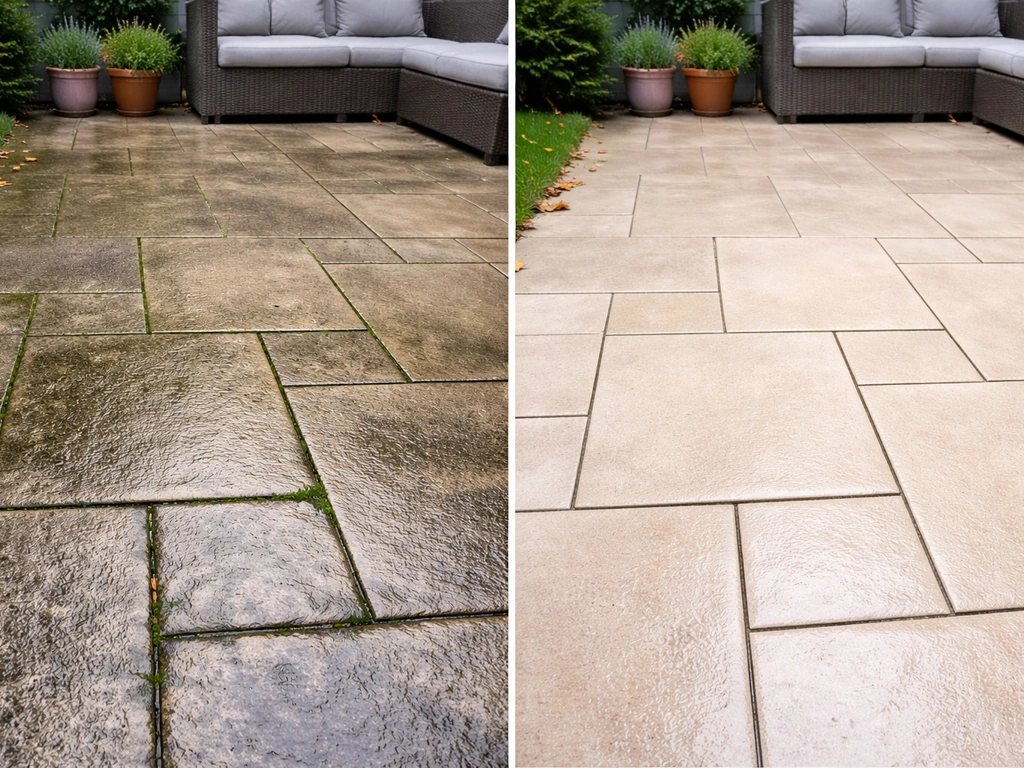
Choosing the right patio cleaner for your surface
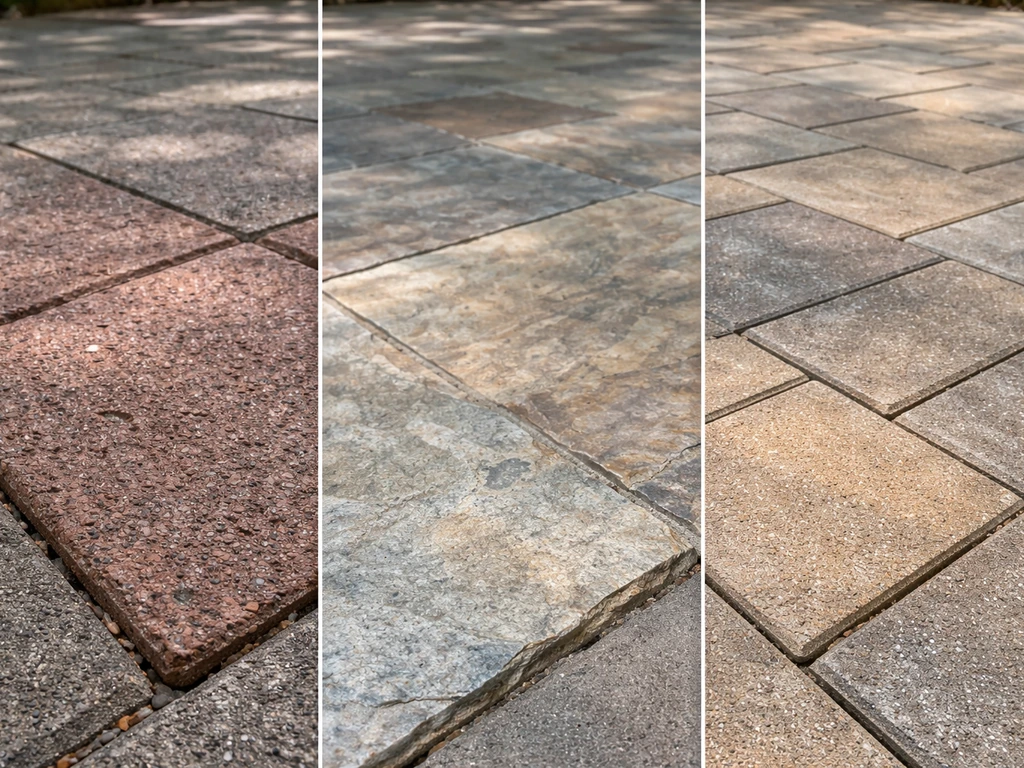
Surface type is the first thing you need to nail down before buying anything. The wrong cleaner can etch stone, bleach the colour from sandstone, or strip the protective finish from porcelain. Here is a quick breakdown of what works on what.
| Surface | Safe cleaner types | What to avoid |
|---|---|---|
| Concrete | Acid-based, alkaline, bleach-based, biocidal wash | Very high-strength acids without dilution |
| Brick | Diluted acid-based (e.g. Sika Brick & Patio Cleaner at 1:2), alkaline degreasers | Undiluted hydrochloric acid, harsh bleach at full strength |
| Natural stone (granite, limestone) | pH-neutral or gentle biocidal washes, natural fruit-acid formulas | Strong acids (will etch limestone/marble), neat bleach |
| Sandstone | pH-neutral cleaners, gentle biocidal washes | Acids, strong alkalis, pressure washing at high PSI |
| Slate | pH-neutral, mild alkaline, biocidal wash | Acids, abrasive scrubbing |
| Porcelain | pH-neutral, mild alkaline, diluted bleach | Abrasive pads, strong acids |
If you are not sure what your patio is made from, err on the side of a pH-neutral product or a natural fruit-acid formula. Products like Franmar's BLUE BEAR EBC Exterior Building Cleaner, which uses natural fruit acids and surfactants, sit in a sweet spot: effective on concrete, brick, metal, and natural stone without the aggressive bite of hydrochloric acid. I use products like this as my default when I am working on a surface I have not cleaned before, simply to avoid any nasty surprises.
Best patio cleaning chemicals and liquids, matched to your problem
Different stains and growths need different chemistry. Using a moss killer on a rust stain or an acid on algae is a waste of time and money. Here is how to match the active ingredient to the problem.
Moss, algae, and lichen
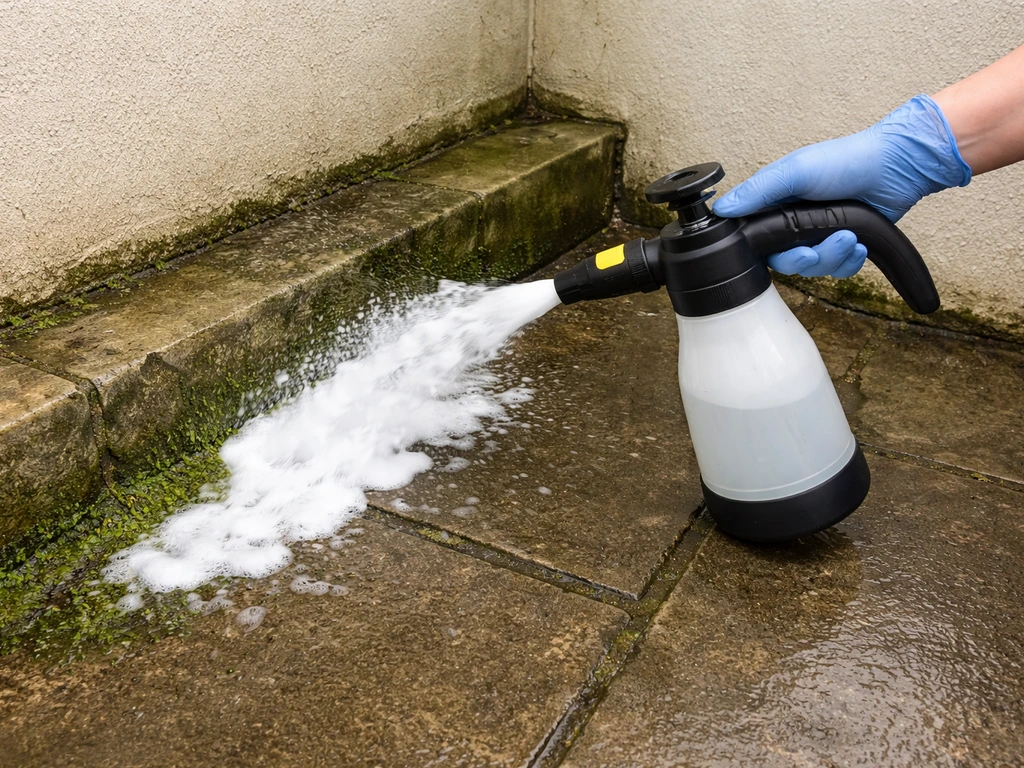
Biocidal washes containing quaternary ammonium compounds (quats), benzalkonium chloride, or blank" rel="noopener noreferrer">didecyl dimethyl ammonium chloride are the most effective options here. They do not just scrub the growth off physically; they kill it at the root so regrowth is slower. Trion Tensid's BPS 7111 is a good example of a specialist product in this category, explicitly formulated for algae, mould, and lichen on brick, concrete, granite, limestone, sandstone, and mineral surfaces. Sodium hypochlorite (bleach) solutions also work well and are cheaper, but they tend to bleach surrounding plant life and can discolour some stones. For a detailed look at the best options specifically for these growths, the guides on the best patio cleaner for moss and algae and the best patio algae cleaner cover individual products in much more depth.
Rust and mineral staining
Rust stains respond to oxalic acid or citric acid-based cleaners. Avoid phosphoric acid on natural stone, as it can cause etching. For brick and concrete, a diluted hydrochloric acid cleaner like Sika Brick and Patio Cleaner (mixed at 1 part cleaner to 2 parts water, as per the manufacturer's instructions) works very effectively on efflorescence and mineral deposits. Just know that the active ingredient is hydrochloric acid, which means you absolutely need PPE and good ventilation. More on that below.
Grease and oil
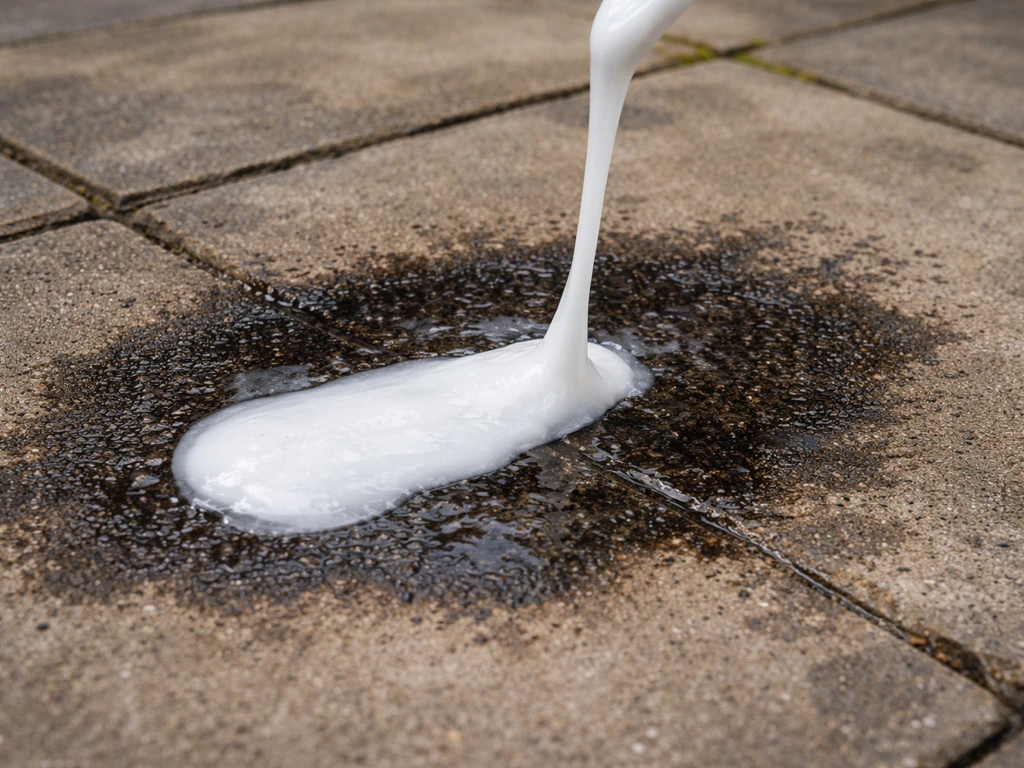
Alkaline degreasers break down oil and grease far better than acids or biocides. Look for products with sodium hydroxide or potassium hydroxide in the ingredients, or labelled as heavy-duty degreasers. A good alkaline degreaser applied, left for 10 to 15 minutes, and then scrubbed with a stiff brush will shift most BBQ grease and cooking oil spills from concrete or porcelain.
Pet stains and organic odours
Enzyme-based cleaners are the most effective option for pet urine and organic odours. They actually break down the urea and proteins causing the smell rather than just masking them. Standard bleach will sanitise the area but will not remove the odour source properly. For porcelain and concrete, an enzyme cleaner diluted and left to dwell for 20 to 30 minutes before rinsing gives the best results.
General grime and weathering
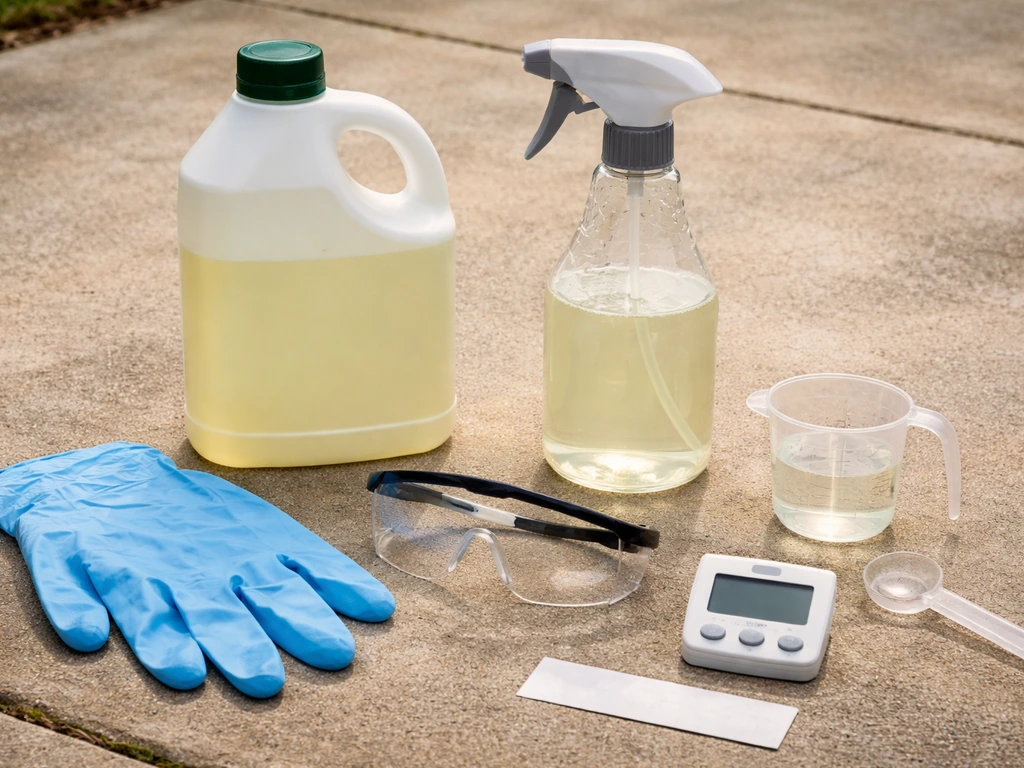
For everyday dirt, grime, and general weathering, a good all-purpose patio cleaner with surfactants is all you need. These are the easiest to find and the safest across most surfaces. If you want to go the DIY route, a mix of washing-up liquid, white vinegar, and warm water can handle light grime on most surfaces, though it will not touch moss or serious staining. The guide on the best homemade patio cleaner options covers DIY recipes in more detail if you want to avoid buying a specialist product. If you want DIY options, compare the recipes and mixing ratios so you can choose the best patio cleaner homemade for your specific mess.
Top patio cleaning products and solutions worth buying
Based on what is actually available and what I have seen work in practice, here are the product types and specific examples worth shortlisting. I have grouped them by use case so you can go straight to what you need.
- Sika Brick and Patio Cleaner: Best for brick and concrete with mineral deposits, efflorescence, or heavy grime. Dilute at 1:2 with water. Hydrochloric acid base means it is powerful but needs careful handling. Not for use on natural stone like sandstone or limestone.
- Trion Tensid BPS 7111: A specialist biocidal cleaner for algae, mould, and lichen across a wide range of surfaces including sandstone, granite, and limestone. Good choice when you need something safe on sensitive stone but still effective on organic growth.
- Franmar BLUE BEAR EBC Exterior Building Cleaner: Natural fruit acid and surfactant formula, suitable for concrete, brick, metal, and natural stone. A solid pick if you want a gentler product that still has genuine cleaning action rather than just water and soap.
- Sodium hypochlorite-based patio washes (e.g. Patio Magic, Pro-Kleen): Widely available, effective on algae and moss, and usually ready-diluted for easy application. Great for large areas where you want to treat and leave without scrubbing. Check concentration before buying as cheaper products are often very dilute.
- Enzyme-based cleaners (look for pet-safe labels): Best for pet urine, organic stains, and odour removal on any surface. Slow-acting but thorough.
- Alkaline degreasers (industrial kitchen or driveway cleaners): Best for grease and oil on concrete and porcelain. Often found in automotive or trade cleaning sections and generally cheaper than branded patio versions.
If lichen specifically is your main problem, it is worth knowing that lichen is significantly harder to kill than moss or algae and requires longer dwell times or specialist formulations. The guide on the best patio cleaner for lichen covers this in detail.
Best patio cleaning tools and equipment
Even the best cleaner will underperform without the right tool behind it. Here is what I actually reach for, depending on the job.
Stiff-bristle deck brush
A stiff-bristle brush on a long handle is the single most useful tool for patio cleaning. It works the cleaner into the surface, agitates the growth, and requires no special equipment. For textured surfaces like riven slate or sandstone, a brush is often better than a pressure washer because it does not blast out the jointing sand. Look for brushes with polypropylene or nylon bristles; natural fibre bristles deteriorate quickly in chemical cleaners. For example, McMaster-Carr lists polypropylene bristles on push broom products, which you can use as a sourcing option for chemical-resistant patio scrubbing brushes.
Garden pump sprayer
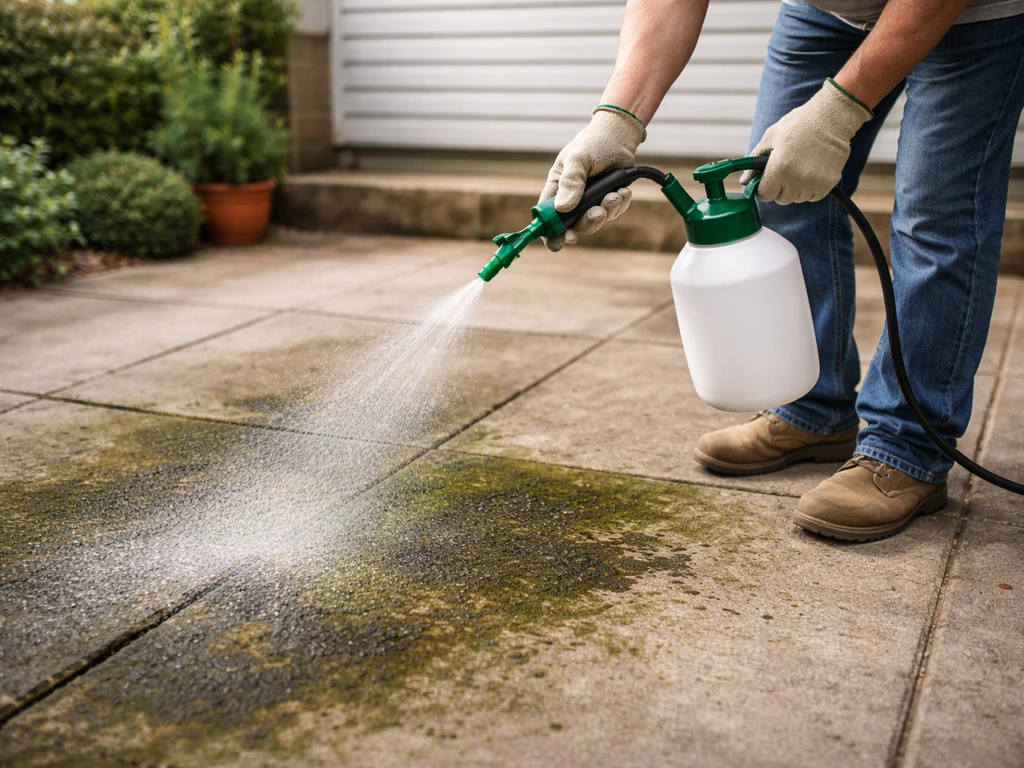
A 5 to 15-litre pump sprayer is the most efficient way to apply biocidal washes and patio cleaners to large areas. Pre-mix your diluted cleaner in the tank, pump it up, and spray evenly across the surface. This gives a much more even coverage than pouring from a watering can and uses less product overall. It is also safer for acid-based cleaners since you are not pouring liquid close to your feet.
Pressure washer
A pressure washer speeds up rinsing and can do a lot of the mechanical work of removing loosened growth. For most domestic patios, a machine in the 1,400 to 2,000 PSI range is plenty. Higher than that and you risk blasting out grout and joint sand, or damaging softer stones like sandstone. Always use a fan tip rather than a zero-degree pencil tip on paving. If you have a patio cleaner attachment (a rotating surface cleaner disc), use it: it gives a far more even clean than a lance and prevents the striping pattern you get from wand cleaning. On sandstone or slate, keep the pressure low and work with a wide fan tip.
Handheld scrubbing brush
For joints, edges, and stubborn spots, a smaller handheld brush with stiff bristles gets into places a deck brush cannot. This is also what you want for scrubbing individual stains rather than the whole surface.
Garden hose with adjustable nozzle
For rinsing off biocidal treatments and gentle cleaners, a standard garden hose is sufficient and much safer on sensitive surfaces than a pressure washer. A spray nozzle with a jet setting gives enough force to clear residue without risk.
How to use patio cleaner safely and effectively
This is where most people go wrong: they buy a good product and then apply it too quickly, rinse too soon, or skip the PPE. Here is the process I follow, which works across most cleaner types.
- Read the label first. Check the dilution rate, the dwell time, and the surface compatibility. This takes two minutes and can save you from damaging an expensive patio. Hydrochloric acid-based cleaners like Sika require a 1:2 dilution with water; applying neat will etch concrete and destroy natural stone.
- Put on your PPE. Minimum: nitrile gloves, safety goggles, and old clothing. For acid-based or strong alkaline cleaners, add an acid-rated apron. Do not skip this for 'quick jobs'. I learned this the hard way when a splash of diluted hydrochloric acid cleaner hit a pair of jeans I thought were worth saving.
- Protect plants and surfaces you are not cleaning. Wet down nearby soil, grass, and plants before you start. Cover any surfaces you do not want exposed to overspray. Many patio cleaners, especially biocides and bleach-based products, will kill plants on contact.
- Sweep or blow debris off the surface. Removing loose dirt, leaves, and debris before applying cleaner means your product is working on the actual stain or growth, not the leaf litter on top of it.
- Pre-wet the surface (for most cleaners). Damp surfaces help cleaners spread more evenly and prevent them from soaking in too fast. Exception: some concentrated acid cleaners perform better on dry surfaces, so check the label.
- Apply the cleaner evenly. Use a pump sprayer for large areas or pour from a watering can for smaller sections. Work in manageable sections so the product does not dry out before you scrub or rinse.
- Allow the correct dwell time. Biocidal washes typically need 15 to 30 minutes minimum; some treatment products say to leave overnight or 24 hours for the best kill rate on lichen and deep moss. Acid cleaners usually need only 5 to 10 minutes. Do not let any cleaner dry on the surface.
- Scrub if needed. For stubborn stains and thick growth, work the cleaner in with a stiff deck brush after the dwell time. This mechanical action makes a significant difference.
- Rinse thoroughly. Use a hose or pressure washer to rinse all cleaner residue off the surface and away from drains and planted areas. Acid cleaners especially should be rinsed well to neutralise any remaining residue.
- Repeat if necessary. Thick lichen and heavy organic growth often need a second application. Apply, wait, rinse, and reassess before deciding whether to escalate.
How to pick the most effective option: what to look for on labels
Standing in a shop or scrolling through products online, the labelling can feel overwhelming. Here is a simple decision framework I use to cut through it quickly.
Check the active ingredient first
The active ingredient tells you what the product actually does. Hydrochloric acid means strong descaling and mineral stain removal. Sodium hypochlorite means bleaching action for organic growth. Quaternary ammonium compounds mean biocidal action against moss, algae, and mould. Oxalic or citric acid means rust and tannin removal. Natural fruit acids (as in the Franmar BLUE BEAR EBC formula) mean a gentler multi-surface action. If the label does not list an active ingredient at all, it is likely a light-duty surfactant cleaner only suitable for general dirt.
Look for the dilution rate
Products that require dilution are almost always more economical and more controllable than ready-to-use sprays. A label that says "dilute 1:10" means one bottle makes ten times its volume of working solution. This matters a lot for large patios. If no dilution rate is listed and the product is described as ready-to-use, check the active ingredient concentration. Very dilute bleach solutions sold as patio cleaners can be poor value compared to mixing your own from a concentrated product.
Confirm surface compatibility
Any decent patio cleaner label will explicitly list compatible surfaces. If your surface is not on the list, do not assume it is safe. This is especially important for natural stone: acid-based cleaners suitable for brick and concrete will damage sandstone, limestone, and marble. Products like BPS 7111 that specifically list sandstone and limestone alongside concrete and brick are the exception, not the rule.
Check the dwell time and application method
Longer dwell times generally mean better results for biocidal products, but they also mean more planning. If a product says leave for 24 hours, you need to know rain is not coming. Short dwell times (5 to 10 minutes) are more practical for a quick clean but are usually only suitable for surface-level dirt and staining.
Check whether it is safe around drains and plants
Biocidal and acid-based cleaners can have environmental restrictions. The product label should state whether it is safe to rinse into storm drains. In many regions, strong biocides are not permitted to enter watercourses. If your patio drains into a garden border or near a pond, look for a product explicitly described as plant-safe or environmentally friendly once diluted and rinsed.
Once you have matched the active ingredient to your stain type, confirmed surface compatibility, and checked the dwell time and dilution rate, you have everything you need to make a confident decision. Pick the smallest available size to test on a hidden area first, then scale up once you know the product works on your specific surface without any adverse reaction.
FAQ
Can I use one “best patio cleaner” for every stain and surface?
Start by identifying the surface and the stain type, then buy around the active ingredient. If you only want one product for everything, choose a pH-neutral or natural fruit-acid cleaner that is labeled for your exact surface, but understand it will not reliably kill established moss or remove heavy rust without targeted chemistry.
Should I pressure wash before applying a patio cleaner?
Yes, but only for loosening and removing residue, not for the chemical work. Apply your cleaner first (with the correct dwell time), then rinse. If you pressure wash first, you often spread algae and moss fragments deeper into joints, which can lead to faster return.
How do I know a patio cleaner will not damage my patio after I buy it?
Test it with your intended dilution and wait for the full dwell and rinse cycle. Then check for color change, surface dulling, or joint sand loss over 24 to 48 hours, because some etching and bleaching effects show up after the area dries completely.
Is it safe to mix patio cleaners or use them back-to-back without rinsing?
Avoid mixing different cleaner types, especially acids with bleach (or any “growth killer” that contains strong oxidizers or chlorine). If you need to switch products, fully rinse, let the area dry, and only then apply the next cleaner.
Why does my patio cleaner work for a day and then the growth comes back?
For biocidal products, focus on coverage and dwell time rather than scrubbing immediately. Make sure the surface stays wet for the label dwell period, and work in smaller sections if the patio dries fast in sun or wind.
What pressure washer settings and attachments are safest for patio cleaning?
Choose an attachment based on the job: a rotating surface cleaner disc gives more even rinsing than a wand, while a fan tip is safer for paving. For areas with jointing sand, keep pressure lower and avoid prolonged passes in one spot.
Is a pump sprayer better than a watering can for applying patio cleaner?
Pump sprayers are usually better than watering cans for concentrated or acid-based products because they reduce splashing and give more uniform coverage. For small stains, switch to a handheld brush or small sprayer so you do not treat areas that do not need it.
How much patio cleaner should I use, and what happens if I overapply?
Using too much is a common mistake, especially with bleach-based or acid-based cleaners. Follow the dilution ratio, apply evenly, and avoid oversaturation, because excess product can leave residue that attracts dirt and can discolor some stones.
Should I leave the cleaner on longer than the label says if the moss is stubborn?
Biocidal treatments are typically meant to be left to dwell and then rinsed, but you should not assume “more time” is always better. If a label specifies a maximum time or requires specific rinsing steps, follow it, because over-dwell can increase staining or streaking on porous surfaces.
Can I rinse patio cleaner into the storm drain or grass?
Yes, but check the label for drainage and local restrictions. If your runoff goes to a storm drain, look for products that state it is safe to rinse once diluted, or use a contained method for small areas and collect runoff where practical.
Will enzyme patio cleaners remove pet urine odor completely, or will it return?
For pet urine and organic odors, an enzyme cleaner should be used after removing visible soil, and it needs enough dwell time to contact the substrate. Rinse thoroughly after dwell, then allow full drying before you evaluate odor, because trapped moisture can keep the smell active.
What should I do if my stone type is not listed on the product label?
If the label lists only “general surfaces” but does not mention your stone type, assume it is not safe. Natural stone like sandstone, limestone, or marble often needs gentler chemistry or products explicitly compatible with those minerals.
Next Article
How to Use Wet and Forget Patio Cleaner Step by Step
Step by step guide to apply Wet and Forget patio cleaner, prep and safety, dwell time, rinse or no rinse, and troublesho