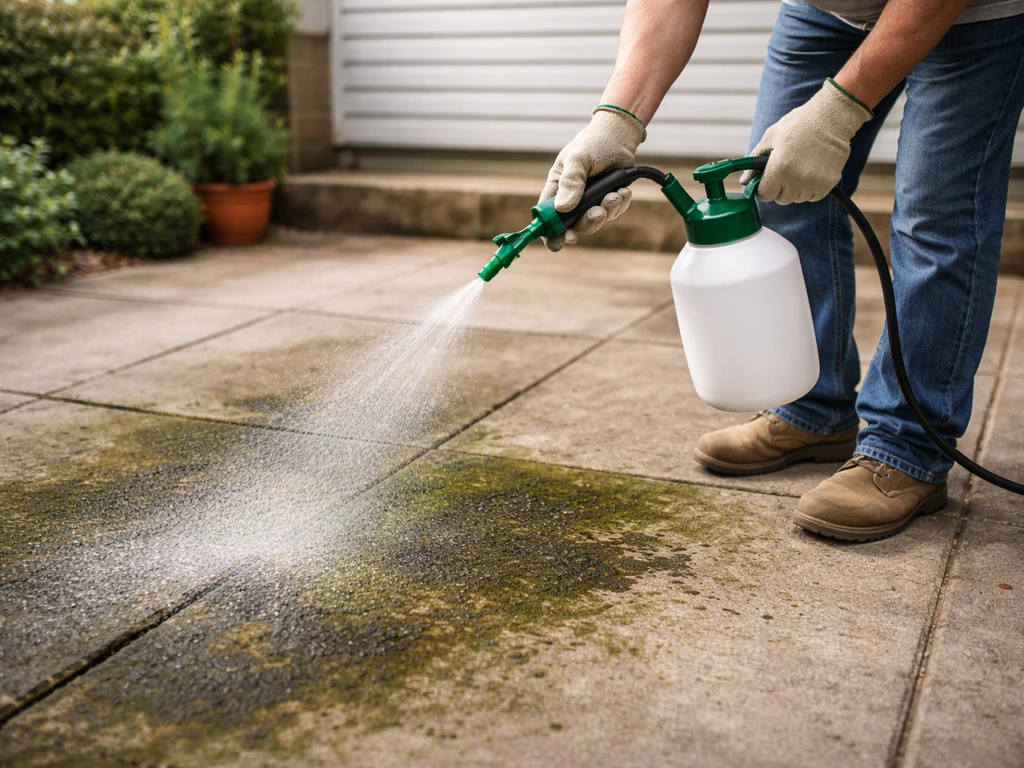
The best patio cleaner for most UK homeowners is a sodium hypochlorite-based formula (like Floorseal Patio Cleaner Plus or Jeyes Patio & Decking Cleaner) for organic growth like mold, algae, and moss, diluted 1:1 with water and left to dwell for 15 to 60 minutes before rinsing. For grease, you want a dedicated degreaser. For rust, you need an acid-based or chelating rust remover. The surface you're working on changes everything too: what's safe on concrete can permanently etch sandstone. This guide walks through exactly which product and method to use for your specific problem and surface.
Best Patio Cleaner UK: Choose the Right Product for Your Patio
Rhea Lang
7 May 2026
First, figure out what you're actually dealing with
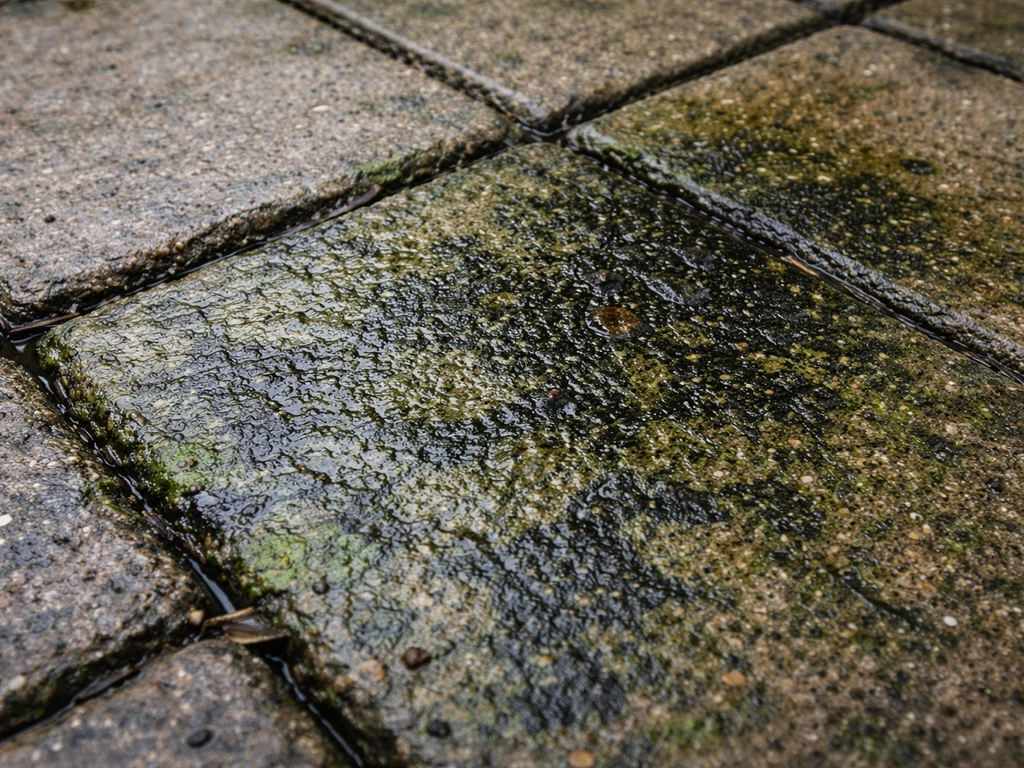
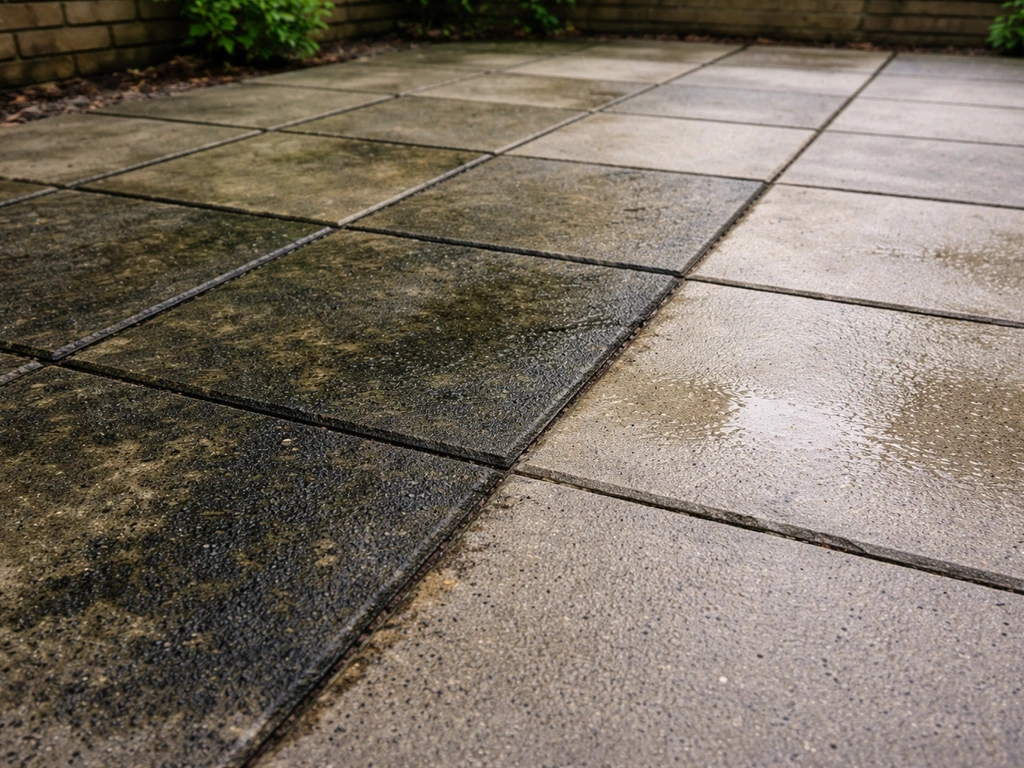
Before you buy anything, spend two minutes identifying what's on your patio. The wrong cleaner won't just underperform, it can lock stains in deeper or damage the surface. Here's a quick breakdown of the most common culprits:
- Green or black slippery film: This is usually algae or mold. It thrives in shaded, damp spots and is the most common complaint on UK patios. It responds well to bleach-based or biocidal cleaners.
- Fuzzy green or dark cushion growth: Classic moss. Needs a biocidal treatment to kill the root structure, not just scrub it off (it'll be back within weeks if you don't).
- Black spots or patches that won't shift with brushing: Black spot lichen. This is stubborn and needs a specialist black spot remover or a strong bleach-based formula with a longer dwell time.
- Greasy or oily marks near a BBQ or kitchen door: These need a degreaser, not a general patio cleaner. A biocidal formula won't touch oil.
- Orange or brown staining: Rust. Could be from metal furniture, plant pots, or iron in the water. Needs a dedicated rust remover (oxalic acid or acid-free converter chemistry).
- Yellow or brown patches near a pet's usual spots: Pet urine staining. An enzymatic cleaner or a diluted bleach solution works, but check your surface type first.
- General grey/brown grime and dirt: Everyday traffic dirt. Most standard patio cleaners handle this fine.
If you've got a combination (say, moss plus rust staining), tackle them separately rather than hoping one product does both. I've made that mistake before and ended up with patchy results that took twice as long to sort out.
Which type of patio cleaner works for which problem
Chemical cleaners (the reliable workhorse)
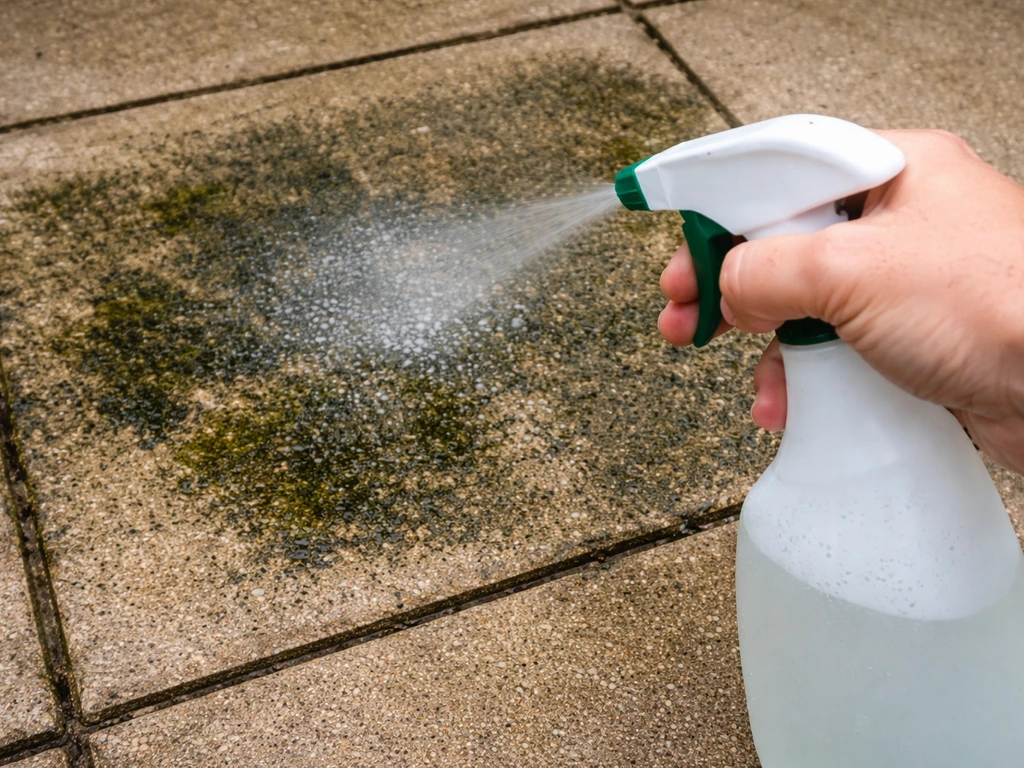
For organic growth (mold, algae, moss, black spot), sodium hypochlorite-based cleaners are the most effective option available to UK homeowners. Products like Floorseal Patio Cleaner Plus use chlorine bleach chemistry to kill the biological contamination at root level rather than just bleaching the surface colour. The key is dwell time: you need to keep the surface wet for 15 minutes up to an hour depending on how bad the growth is. A 1:1 dilution with clean water is the standard starting point. For lighter jobs you can go weaker; for stubborn black lichen, go full strength or extend the dwell time.
For grease and oil stains, skip the general patio cleaners entirely and reach for a dedicated degreaser. Products like Watco Bio-D Degreaser or Cillit Bang's degreaser formulas work by breaking down the oil molecules. Dwell time is shorter here (5 to 15 minutes is typical) and you rinse off with water or a pressure washer. For heavy grease build-up around a BBQ area, apply undiluted and let it sit the full 15 minutes before rinsing.
For rust stains, you need either an oxalic acid-based remover or an acid-free rust converter like Easy4Rust, which works by chemically converting the rust into a soluble compound that rinses away. Oxalic acid is more aggressive and requires proper PPE (gloves, eye protection), but it's effective on deep staining. Easy4Rust is marketed as pet-safe once dry, which is useful if you've got animals using the garden. Kingdom Products' Rust Remover gives you the flexibility of using it neat on tough stains or diluted up to 1:3 for lighter marks.
Natural and DIY options (when they work and when they don't)
White vinegar (diluted 50/50 with water) can shift light moss and some surface grime on robust surfaces like concrete. It's cheap and reasonably plant-safe. However, do not use it on sandstone, limestone, marble, or any calcareous stone because the acid will etch and permanently dull the surface. Similarly, bicarbonate of soda makes a reasonable light scrub paste for surface dirt on hard-wearing surfaces but it won't kill biological growth. Natural options are genuinely useful for maintenance cleaning in between proper treatments, but if you've got an established moss or algae problem, you need a biocidal product to actually kill the growth.
Product type comparison at a glance
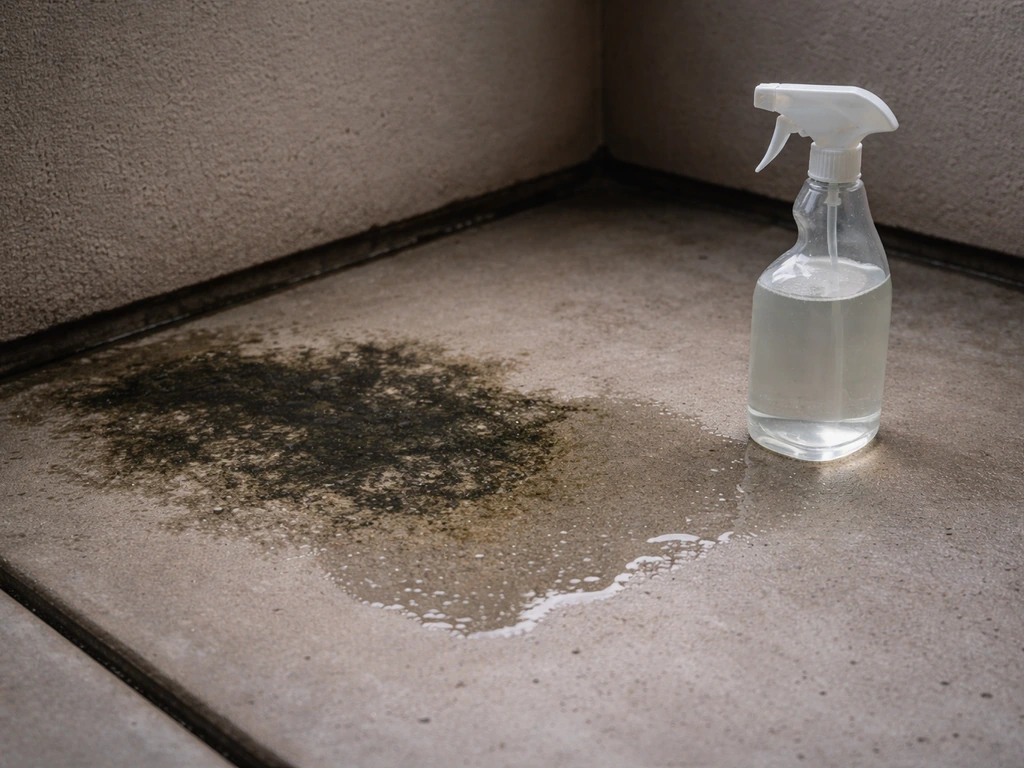
| Problem | Best product type | Typical dwell time | Notes |
|---|---|---|---|
| Mold, algae, moss | Sodium hypochlorite-based patio cleaner | 15 to 60 minutes | Keep surface wet throughout dwell |
| Black spot lichen | Strong bleach formula or specialist black spot remover | 30 to 60+ minutes | May need repeat treatment |
| Grease and oil | Alkaline degreaser | 5 to 15 minutes | Apply undiluted for heavy build-up |
| Rust stains | Oxalic acid or acid-free rust converter | 5 to 20 minutes | Rinse very thoroughly afterwards |
| Pet stains (urine) | Enzymatic cleaner or diluted bleach solution | 10 to 20 minutes | Test on small area first |
| General grime and traffic dirt | General patio cleaner or diluted detergent | 10 to 15 minutes | Good brush and rinse usually enough |
What to use on different patio surfaces
This is where most people go wrong. The surface type should drive your product choice as much as the stain type. Get this wrong and you can permanently damage an expensive patio.
Concrete and block paving
Concrete is the most forgiving surface to clean. It handles bleach-based cleaners, degreasers, pressure washing, and even mild acid treatments reasonably well. Almost every general patio cleaner on the UK market is suitable for concrete. For moss and algae, a diluted sodium hypochlorite cleaner with a 20 to 30 minute dwell works well. For block paving with oil stains from a car or bike, a strong degreaser applied neat is your best bet. The main thing to watch with concrete is avoiding wire brushes (they scratch the surface and create more places for moss to take hold).
Natural stone: sandstone, limestone, and slate
These surfaces need more careful handling. Sandstone and limestone are both calcareous (calcium-based) stones, meaning acid-based cleaners (including vinegar) will etch them on contact. Never use oxalic acid directly on these surfaces for rust removal without diluting heavily and testing in an inconspicuous spot first. For organic growth on sandstone and limestone, a pH-neutral or mild alkaline biocidal cleaner is the safest choice.
Floorseal Patio Cleaner Plus specifically lists sandstone, limestone, and slate in its compatibility range. Applying cleaner to dry porous stone is a real risk: the stone absorbs the product quickly rather than letting it dwell on the surface, so you can end up with deeper penetration than you want. Lightly dampen the surface first on very porous stone to slow absorption.
Slate is harder and less porous than sandstone, so it's more tolerant of cleaning products. A standard biocidal patio cleaner works well. Avoid anything with a very high pH on polished slate as it can affect the surface sheen over time.
Brick
Brick responds well to biocidal patio cleaners for organic growth. The bigger issue with brick is the mortar joints: harsh acids or pressure washing at too high a setting will erode the pointing. Use a medium-stiff brush rather than a pressure washer where possible, and keep acid-based products well away from the joints. For general brick cleaning, the Pavestone Patio Cleaner range is specifically listed as suitable for brick alongside sandstone, slate, quarry tiles, and concrete.
Porcelain
Outdoor porcelain tiles are tough, low-porosity, and handle most cleaning products well. Both Floorseal Patio Cleaner Plus and Pavestone's range specifically list outdoor porcelain as compatible. The main consideration is keeping cleaners away from any grout lines, which can be more porous than the tile itself. For general maintenance cleaning, porcelain is easy: a diluted patio cleaner, short dwell, and rinse. Because porcelain is non-porous, stains tend to sit on the surface rather than soak in, which is good news.
How to pick the right patio cleaner in a UK shop or online
With dozens of products on the market and plenty of vague marketing claims, here's what to actually look for when choosing:
- Check the label for surface compatibility: The label must state which surfaces the product is suitable for. If your specific surface type (especially sandstone or porcelain) isn't mentioned, don't assume it's safe. Floorseal, Pavestone, and Azpects all list their compatible surfaces clearly.
- Look for the dilution rate: A good product will give you a specific dilution ratio. The 1:1 dilution is standard for most bleach-based patio cleaners. Products that just say 'apply as directed' without a ratio are a yellow flag.
- Check the coverage area: This matters for value. Azpects Easy Patio & Deck Cleaner gives you 4 to 5 square metres per litre of solution. A 5-litre container covering 20 to 25 square metres is typical for a medium-sized patio.
- Read the HSE biocide status: If a product is marketed as killing moss, algae, or mold (biocidal activity), it should be registered as a biocidal product in the UK. The label must include instructions for safe use, PPE requirements, and operator guidance. Follow these, not YouTube workarounds.
- Check pet and plant safety before buying: Products with sodium hypochlorite (bleach chemistry) will harm plants if they drift or run off. Floorseal explicitly warns against letting the product mist onto adjacent planting. If your patio is surrounded by borders, look for a plant-safe formula or plan to cover/soak plants before treating.
- Consider concentrate vs ready-to-use: Concentrates offer better value per square metre and let you adjust strength. Ready-to-use sprays are convenient for spot treatment but expensive for whole-patio jobs.
If you're buying from Screwfix or a builder's merchant, product availability varies by region and stock changes frequently. To find the best patio cleaner screwfix options for your surface and stain type, check the product label for compatibility and dwell time. It's worth checking both trade outlets and garden centres since the garden centre ranges often include specialist stone-safe formulas you won't find on trade shelves.
How to clean your patio: step by step
Step 1: Prep the area
Move furniture, planters, and anything else off the patio. Cover or thoroughly soak any plants, borders, or lawn edges adjacent to the area you're treating. If it's a bright, windy day, be extra careful about chemical drift from spray application. Put on gloves and eye protection before you open the product, regardless of what the marketing says about it being 'gentle'.
The HSE is clear: read the label before you start and follow its PPE guidance exactly. HSE guidance on bleach-related safety notes that some concentrates contain sodium hypochlorite and you should never add other chemicals to bleach-containing concentrates due to risks such as chlorine gas [HSE advises never mixing other chemicals with bleach-containing concentrates because of risks such as chlorine gas](https://www. hse. gov.
uk/pubns/guidance/sr4. pdf).
Step 2: Remove loose debris
Sweep or blow off all loose leaves, soil, and debris. If you're dealing with heavy moss, scrape off as much bulk growth as you can with a plastic scraper before applying any chemical. This isn't just tidiness: a thick mat of moss will absorb your cleaner before it can get to the surface underneath, wasting product and reducing effectiveness.
Step 3: Mix and apply the cleaner
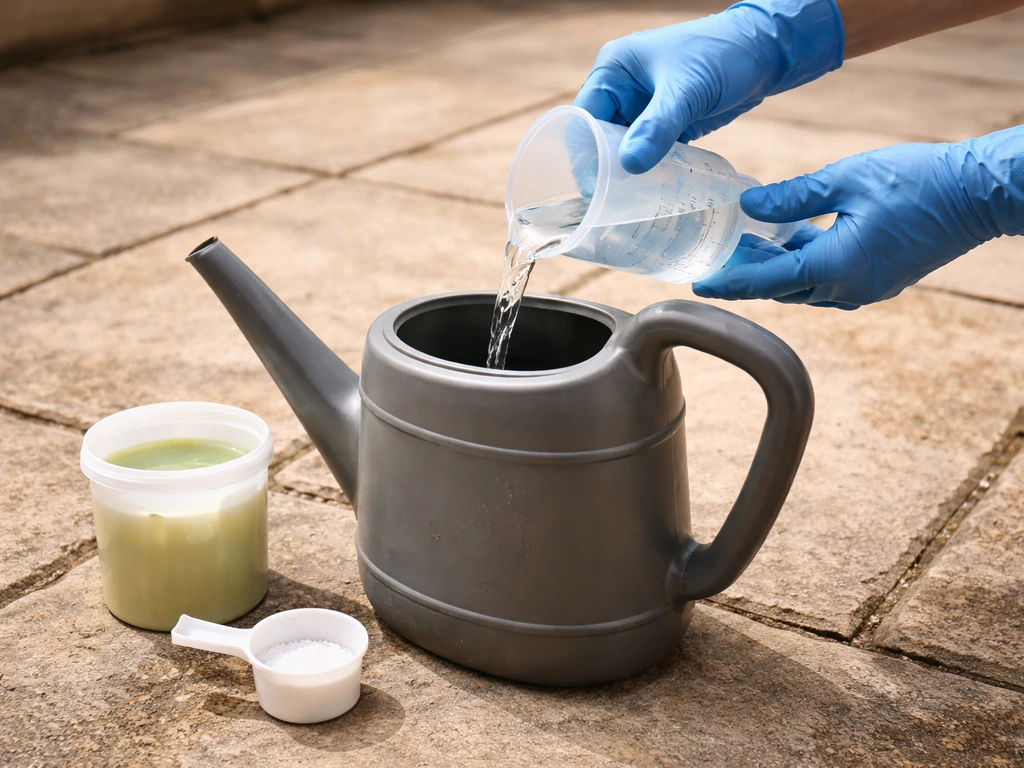
Mix your cleaner at the label's recommended dilution rate (usually 1:1 for bleach-based products). Apply to a dry surface for most patio cleaners, as the Azpects instructions specify. The exception is very porous stone like sandstone, where a light pre-damping slows absorption. Apply generously and evenly using a watering can with a rose head or a garden sprayer. Work in sections on larger patios so you can keep track of dwell time.
Step 4: Allow dwell time
This is the step most people rush, and it's why they get disappointing results. For organic growth, you need at least 15 minutes and ideally closer to 30 to 60 minutes for established moss or black spot. Keep the surface wet throughout the dwell period: if it dries out, the chemistry stops working. On a hot day you may need to re-apply to keep it active. Don't walk on the surface during this time.
Step 5: Scrub
Use a stiff-bristled deck or patio brush. Do not use a wire brush: it scratches stone and concrete surfaces, opening up more pores for future contamination. Scrub in circular motions on textured surfaces and along the grain on sawn or riven stone. For grease spots, more pressure and additional product on the spot will help shift stubborn residue.
Step 6: Rinse thoroughly
Rinse with plenty of clean water. This step is non-negotiable: residual bleach-based cleaners can continue reacting with the surface and affect sealers applied later, while acid residues from rust removers need to be fully neutralised by dilution. HSE disinfectant guidance warns that chlorine-releasing disinfectants can release toxic chlorine gas when they contact acid or oxidising detergents, so neutralising and rinsing are important acid residues from rust removers need to be fully neutralised by dilution. Bosch's guidance recommends a final rinse with clear, clean water after any chemical treatment. A garden hose works for most patios; a pressure washer on a low setting speeds things up on larger areas.
Pressure washing: when it helps and when it causes damage
A pressure washer isn't always the right tool, and it definitely isn't a substitute for the right cleaner. On concrete and block paving, pressure washing is very effective when combined with a chemical pre-treatment: apply the cleaner, let it dwell, then use the pressure washer to rinse rather than relying on water pressure alone to do the cleaning work. This approach is faster and gentler on the surface than pressure washing cold.
On natural stone (especially sandstone), pressure washing carries real risk. Sandstone is softer than it looks and high-pressure water can cause surface erosion, rounding off edges, and blasting out mortar joints. Keep the pressure low and use a wide-angle fan nozzle rather than a pencil jet. As a rough guide, stay well below 1,500 PSI (around 100 bar) on natural stone and keep the nozzle moving constantly rather than holding it in one spot. Slate and porcelain are tougher and handle more pressure, but you should still avoid pointing the jet directly at grout lines or joints.
Where drainage is poor or the patio area is enclosed, pressure washing can also spread contaminated water into places you don't want it, including onto plants, into drains, or under doors. Manual cleaning with a brush and controlled rinsing is often the lower-risk method for awkward areas. I learned this the hard way clearing a shaded courtyard patio: the pressure washer sent green water everywhere and I spent as long cleaning up the splash as I did cleaning the actual paving.
- Do use pressure washing: on concrete and block paving after chemical pre-treatment, on porcelain tiles, on robust brick surfaces away from pointing
- Use with caution: on slate (keep pressure low), on brick with ageing mortar joints, near plant borders
- Avoid or minimise: on sandstone and limestone (high erosion risk), on any surface with cracked or missing pointing, in enclosed areas with poor drainage
Keeping your patio clean after you've done the hard work
Once you've cleaned properly, the single most effective thing you can do to slow down the return of moss and algae is to apply a patio sealer. Sealers work by reducing surface porosity, giving biological growth less to grip onto and making future cleaning faster. Both Toolstation and industry guidance consistently recommend sealing after cleaning as part of a proper aftercare routine. Make sure the surface is fully clean and completely dry before applying sealer (ideally leave it 24 to 48 hours after cleaning).
Beyond sealing, a few habits make a real difference to how quickly your patio gets dirty again:
- Sweep regularly to remove leaf debris and soil (organic matter is the food source for moss and algae)
- Improve drainage where possible: standing water after rain is the main reason for rapid regrowth
- Trim back overhanging plants and trees to increase sunlight on shaded areas where moss thrives
- Apply a diluted biocidal solution once or twice a year (spring and autumn) as a preventative treatment rather than waiting for a full outbreak
- Move heavy planters and furniture periodically to prevent permanent damp patches underneath
- For pet owners: rinse urine spots promptly with clean water to prevent staining and odour build-up
Timing matters too. Spring cleaning makes sense because you're removing winter's build-up and treating before the warm growing season kicks off moss and algae growth. Autumn treatment is equally worthwhile because it reduces the biological load going into damp winter conditions. Cleaning in the middle of summer works fine for light jobs but bleach-based products evaporate faster in direct sun, shortening your effective dwell time.
If you're researching specific products in more detail, the best patio cleaner reviews section of this site covers individual products head-to-head with real-world testing notes. Use these best patio cleaner reviews to compare options for mold, grease, and rust so you pick the right chemistry for your surface. If you're based in Ireland rather than mainland Britain, formulation availability and product ranges differ slightly, so the dedicated best patio cleaner Ireland guide is worth checking. And if you'd rather hand the whole job to someone else, the best patio cleaning services guide covers what to look for when hiring a professional.
FAQ
Can I mix patio cleaners together (for example bleach and vinegar) to save time?
If you are using a sodium hypochlorite cleaner, do not mix it with acids, vinegar, toilet cleaners, or other descalers. Only top up with clean water to the label dilution, and rinse thoroughly before switching to any rust remover.
How long should I wait before sealing after using a bleach-based patio cleaner?
Yes, but only if the surface is fully neutralised and rinsed. After bleach-based treatment, wait until the patio is completely dry before applying a sealer, typically 24 to 48 hours, and check the sealer instructions for compatibility with residues.
What should I do if my patio cleaner dries out before the full dwell time?
For sodium hypochlorite, dwell depends on how established the growth is, but a key rule is to keep the surface visibly wet. If it dries early, re-apply rather than increasing concentration, because uneven drying is a common cause of patchy results.
What tools are safest for removing thick moss before applying cleaner?
Choose a plastic scraper, stiff nylon brush, or a deck brush for established moss. Avoid wire brushes because they scratch, create micro-grooves, and help new growth latch on again, especially on textured paving.
Is pressure washing a good substitute for patio cleaner?
Not always. A pressure washer can be useful after a chemical pre-treatment on concrete and block paving, but for sandstone it can erode the surface and damage mortar joints. If you see sandy dust or rounded edges after rinsing, stop and switch to a low-risk brush-and-rinse approach.
Will pressure washing or rinsing push dirty water into drains or onto plants?
Metal fixtures and nearby drainage paths need extra protection. Rinse thoroughly, keep solution off railings and valves where possible, and avoid spraying into storm drains. For enclosed courtyards, use controlled application (watering can or targeted sprayer) to reduce contaminated runoff.
Which is safer for rust removal, oxalic acid or a rust converter, if I have pets?
For rust on general paving, oxalic acid products work but require proper PPE and complete rinsing. If you have animals or small children, an acid-free converter is often a safer operational choice because it converts rust to a removable compound once it has reacted.
How do I stop a cleaner from soaking too fast into sandstone?
On very porous sandstone, pre-dampening helps slow absorption. The practical approach is to lightly dampen until the surface stops soaking instantly, then apply cleaner generously and keep track of dwell time, since fast absorption can make results inconsistent.
Should I always do a spot test on natural stone before cleaning?
Do a spot test when there is rust risk and when the stone is calcareous (sandstone, limestone). Pick an inconspicuous area, apply the diluted product at the label rate, then wait for full dwell and rinse before committing to the whole patio.
My patio has greasy BBQ stains, will a biocidal patio cleaner remove them?
Yes. General patio cleaners are usually designed for organic growth, not grease. If grease is the main issue, use a dedicated degreaser, apply it directly to the stained area, and allow a short soak (often 5 to 15 minutes) rather than relying on bleach chemistry.
Why does moss come back quickly even after I cleaned it?
If your patio returns to green or black quickly, the most common causes are incomplete removal (moss mat not scraped off), not keeping the surface wet for dwell, and no aftercare. Add sealing once the patio is fully clean and dry, and consider timing your treatment for spring or autumn to reduce regrowth pressure.
What’s the best way to improve results on stubborn black lichen?
If algae or lichen is entrenched, weaker solutions and short dwell often underperform. Focus on the dwell, keep the surface wet, and consider full strength for stubborn black lichen rather than trying a different chemical prematurely.
Can I use the same patio cleaner on polished slate as I would on other slate?
Not unless you confirm compatibility. Very high pH can affect the sheen and long-term finish of polished slate, even if the slate is otherwise tough. Use a standard biocidal cleaner intended for patio surfaces, and rinse well.
Next Article
How to Use Wet and Forget Patio Cleaner Step by Step
Step by step guide to apply Wet and Forget patio cleaner, prep and safety, dwell time, rinse or no rinse, and troublesho