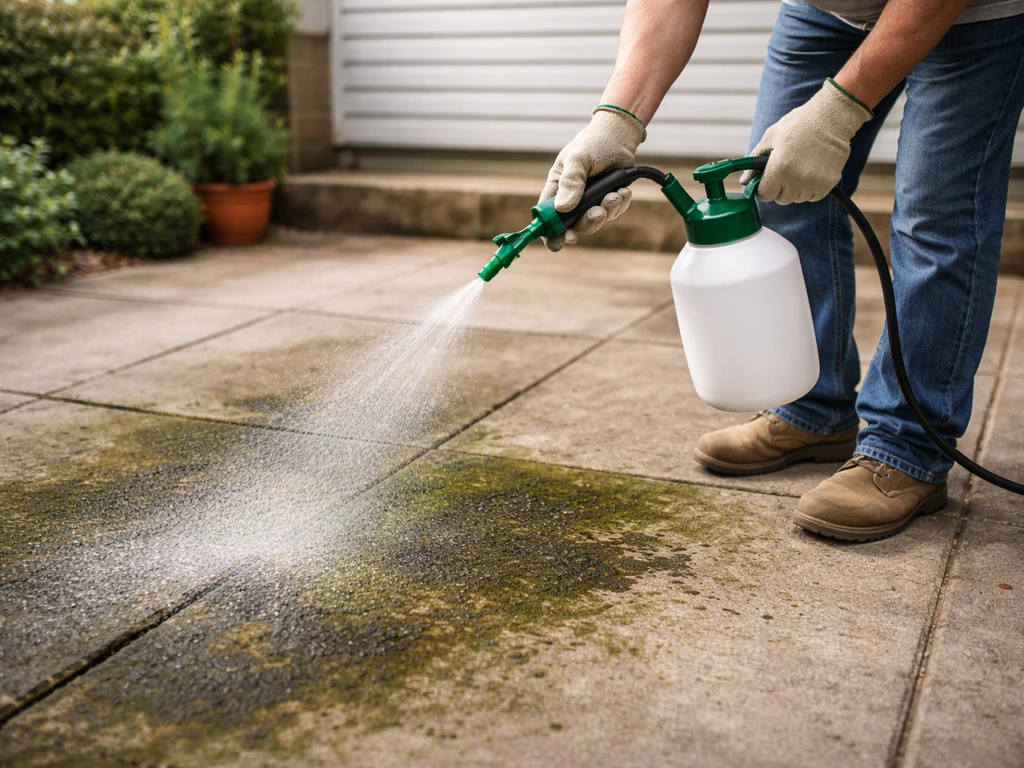
For most stone patios, you want an electric pressure washer delivering 1,200–1,500 PSI with a GPM of around 1.4–1.8, a 25-degree or 40-degree nozzle, and a surface cleaner attachment. That combination cleans effectively without etching softer stones like sandstone or travertine. If you want a single recommendation that works for the widest range of stone types, the Sun Joe SPX3000 (14.5 amp, 2,030 PSI max but easily dialed down) or blank" rel="noopener noreferrer">the Greenworks GPW1501 (1,500 PSI) are the go-to choices for most homeowners. For larger patios or heavier grime, a gas unit in the 2,000–2,200 PSI range with a variable pressure gun gives you more headroom. But the machine is only half the answer. How you use it matters just as much as what you buy, and stone patios punish the wrong technique faster than concrete or brick does. For brick patios, the safest way to pick the best power washer is to match the pressure and detergent approach to how porous and stained the brick is.
Best Pressure Washer for Stone Patio: Choose and Use Today
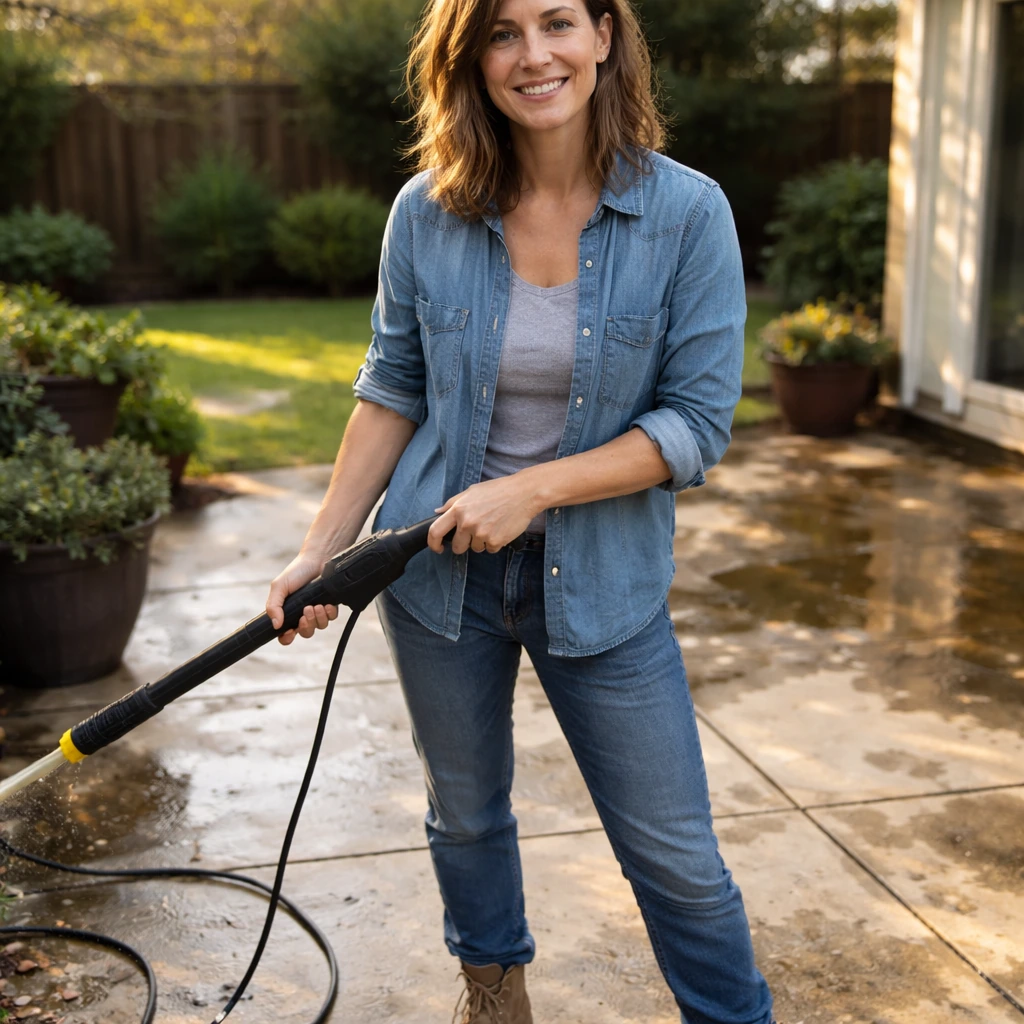
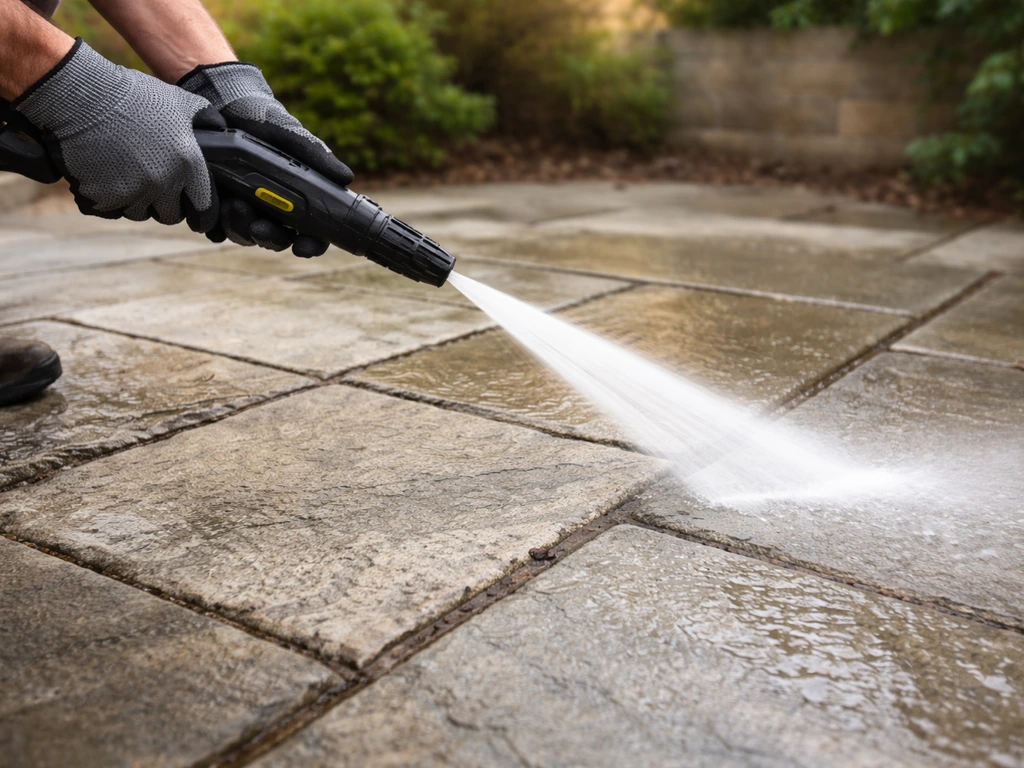
How to Choose the Right Pressure Washer for Stone
Stone is not forgiving. Get the pressure wrong and you can pit the surface, erode the texture, or blast out the sand in your joints in a single pass. The good news is that the numbers you actually need to care about are pretty simple.
PSI: The Number That Really Matters for Stone
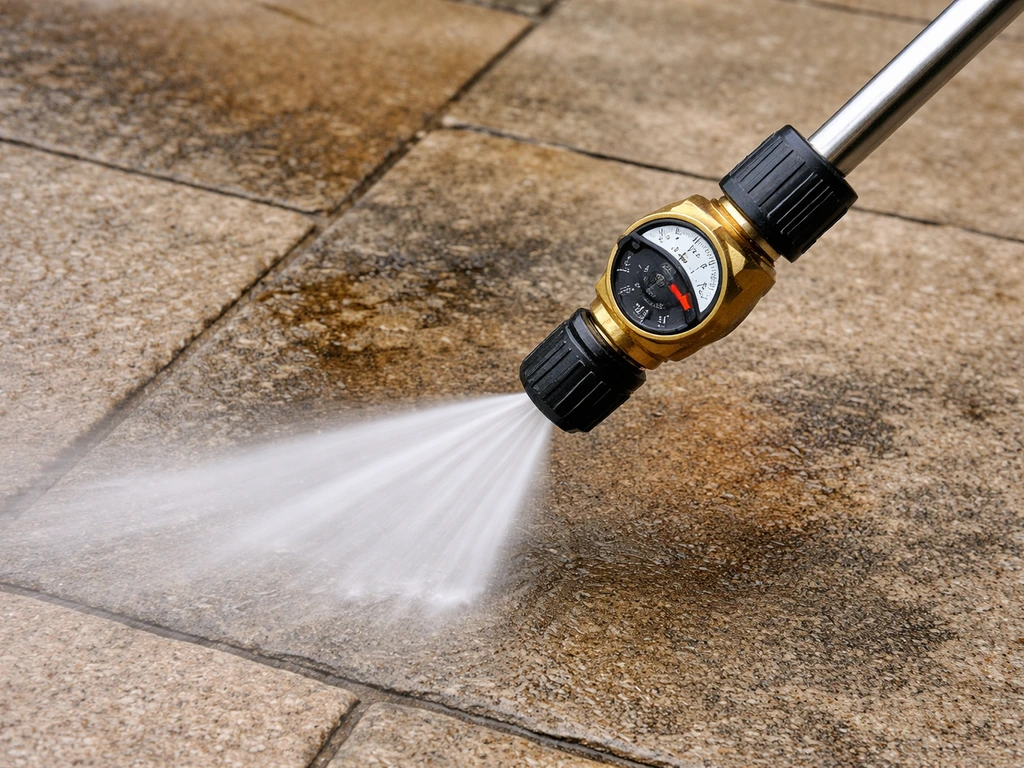
Surface care professionals recommend staying between 800 and 1,200 PSI for most natural stone. That is well below what most machines advertise on the box, which is why adjustable pressure or an unloader valve is non-negotiable. A machine rated at 2,000 PSI is fine as long as you can reliably run it at half that. If a machine only has nozzle changes to control pressure (no variable wand or dial), it is harder to fine-tune for delicate stone, so look for units with a genuine pressure adjustment, not just a wide-angle nozzle as a workaround. For sandstone specifically, even the rinse step should stay between 400 and 600 PSI, so having precise low-end control is a real practical requirement, not a nice-to-have.
GPM: Flow Rate and Cleaning Efficiency
GPM (gallons per minute) controls how quickly you flush grime away. A higher GPM at moderate PSI is actually more effective and safer for stone than high PSI at low flow. Aim for at least 1.4 GPM. The cleaning units formula (PSI x GPM) gives a useful comparison: 1,200 PSI at 1.6 GPM equals 1,920 cleaning units, which is genuinely effective for algae, moss, and dirt on stone without the destructive force of a 3,000 PSI blast.
Electric vs. Gas: Which Makes More Sense for a Stone Patio?
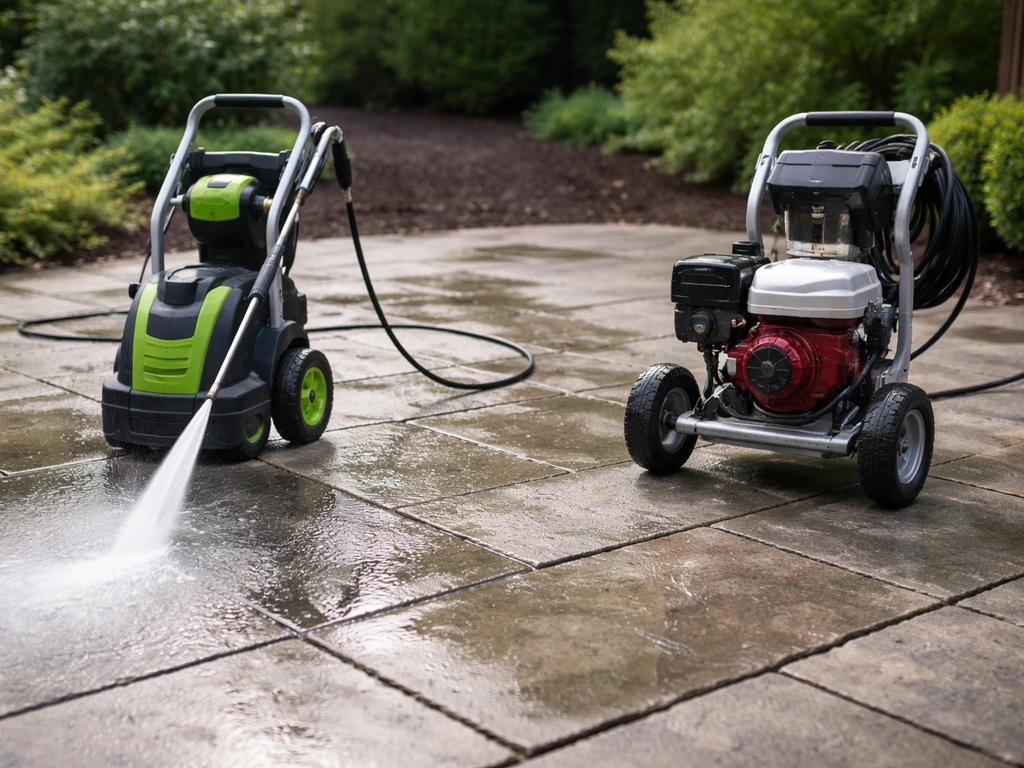
For most residential stone patios, electric wins. You get consistent, controllable pressure, no fumes to worry about in an enclosed patio space, lighter weight to move around, and easier storage. Gas units produce more raw power and are better for large areas or heavily soiled commercial-style pavers, but the added pressure is also more likely to cause damage if your technique slips for a second. If your patio is under 500 square feet and made of natural stone, electric is the smarter choice. For larger flagstone terraces or heavily stained slate courtyards, a gas unit in the 2,000–2,200 PSI range with a reliable pressure dial gives you flexibility. I have used both and honestly reach for the electric unit 90% of the time for stone work.
Detergent Compatibility
Check that your machine has a downstream detergent injector or an on-board soap tank. Many entry-level units use a siphon hose you dip into a bucket, which works fine. The key is that you apply detergent at low pressure (soap nozzle, typically black) so the chemical does the cleaning work rather than relying on pure mechanical force. Stone-specific or pH-neutral cleaners work best here. Avoid acidic cleaners on limestone-based stones like travertine or sandstone. Bleach-based cleaners are effective on algae but need thorough rinsing and should be used cautiously near planted borders.
Stone Patio Types and What Each One Needs
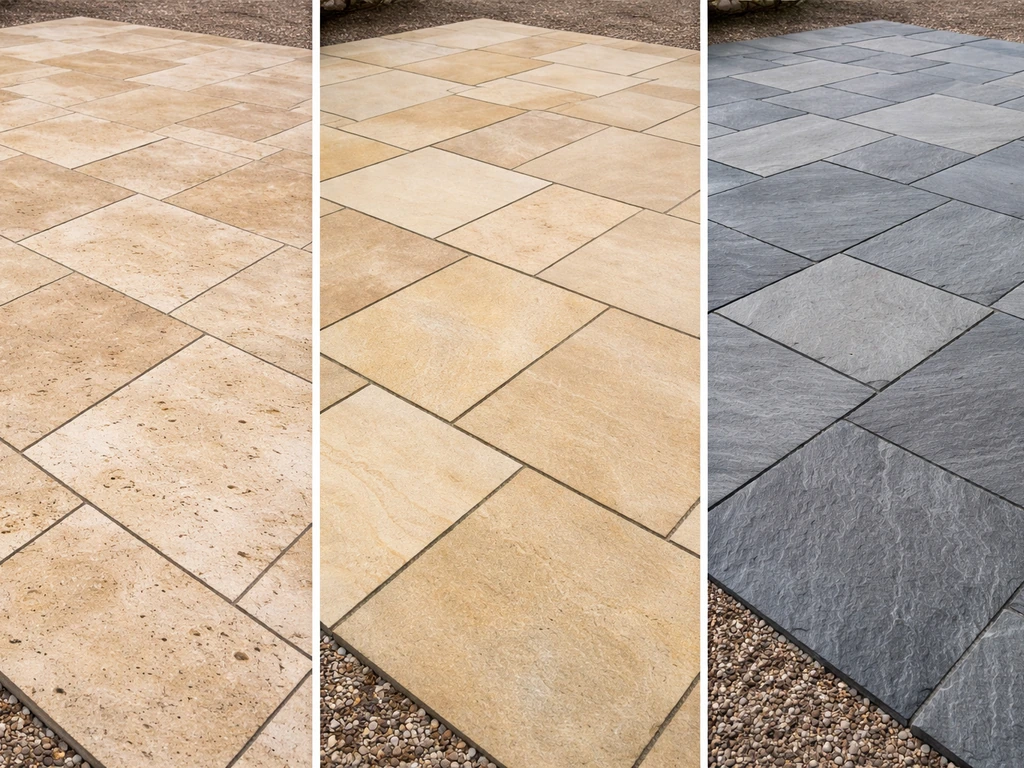
Not all stone is equal. What is safe for dense slate will damage soft sandstone, so knowing what you are working with before you turn the machine on is genuinely important. Here is how I approach each common type.
| Stone Type | Recommended PSI | Nozzle | Special Notes |
|---|---|---|---|
| Travertine | 800–1,000 PSI | 40-degree or surface cleaner | Very porous, pre-soak well, avoid acids, seal after cleaning |
| Flagstone | 1,000–1,200 PSI | 25-degree or surface cleaner | Check joint integrity before washing, varies by stone type |
| Sandstone | 400–600 PSI (rinse step) | 40-degree only | Softest common patio stone, hand-brush with low pressure preferred |
| Slate | 1,000–1,500 PSI | 25-degree or surface cleaner | Dense and durable, but check for delamination on older pieces |
| Concrete/Porcelain Pavers | 1,500–2,000 PSI | 25-degree or surface cleaner | Most tolerant of pressure, still protect grout joints |
Travertine
Travertine is beautiful and fragile. Its natural pores absorb water and cleaning solutions quickly, which means pressure too easily forces grime deeper or strips the surface. Stay at 800–1,000 PSI maximum, always pre-soak the stone thoroughly before applying any cleaner (this helps prevent chemicals from soaking directly into the pores), and use a 40-degree wide-angle nozzle or a gentle surface cleaner. Never use acidic cleaners. After cleaning, sealing is essentially mandatory to protect those pores.
Flagstone
Flagstone is a category, not a single material. It can be sandstone, limestone, bluestone, or quartzite laid in irregular pieces. Bluestone and quartzite can handle 1,200 PSI reasonably well. Limestone and softer flagstone variants need to be treated closer to the sandstone guidelines. Always inspect the mortar or sand joints first. If joints are already thin or crumbling, even moderate pressure will blow them out. Consider a hand brush or 40-degree nozzle for those areas.
Sandstone
Sandstone is the one that catches people out. It looks solid but is a relatively soft, porous stone that erodes surprisingly easily under pressure. The GSA recommends keeping the rinse step between 400 and 600 PSI for sandstone, which is well below what most pressure washers even register as useful. In practice, I get better results on sandstone with a stiff brush, a suitable pH-neutral cleaner applied at low pressure, and a gentle rinse than I do trying to blast it clean. If you do use a pressure washer, stick to the 40-degree nozzle, stay at least 12 inches from the surface, and keep moving at all times.
Slate
Slate is one of the more pressure-washer-friendly natural stones. It is dense and relatively non-porous, which means it resists staining and handles moderate pressure well. You can go up to 1,500 PSI safely on good quality slate. The one thing to watch for is delamination on older or cheaper slate tiles. If you see layers starting to separate or peel at the edges, treat it like sandstone and keep the pressure low. A surface cleaner attachment works very well on flat slate areas.
Concrete and Porcelain Pavers
Concrete pavers and porcelain pavers are the most forgiving. Both can handle 1,500–2,000 PSI, and a surface cleaner attachment will leave a very consistent, streak-free result. The main thing to watch is the jointing sand between pavers. High pressure aimed directly at joints will remove the sand efficiently, so keep the surface cleaner moving and avoid dwelling in one spot. Replacing jointing sand after cleaning is often necessary and is a good maintenance step anyway. For detailed guidance on concrete specifically, the approach overlaps with what we cover for concrete patios more broadly.
Features and Attachments That Actually Make a Difference
Nozzle Selection
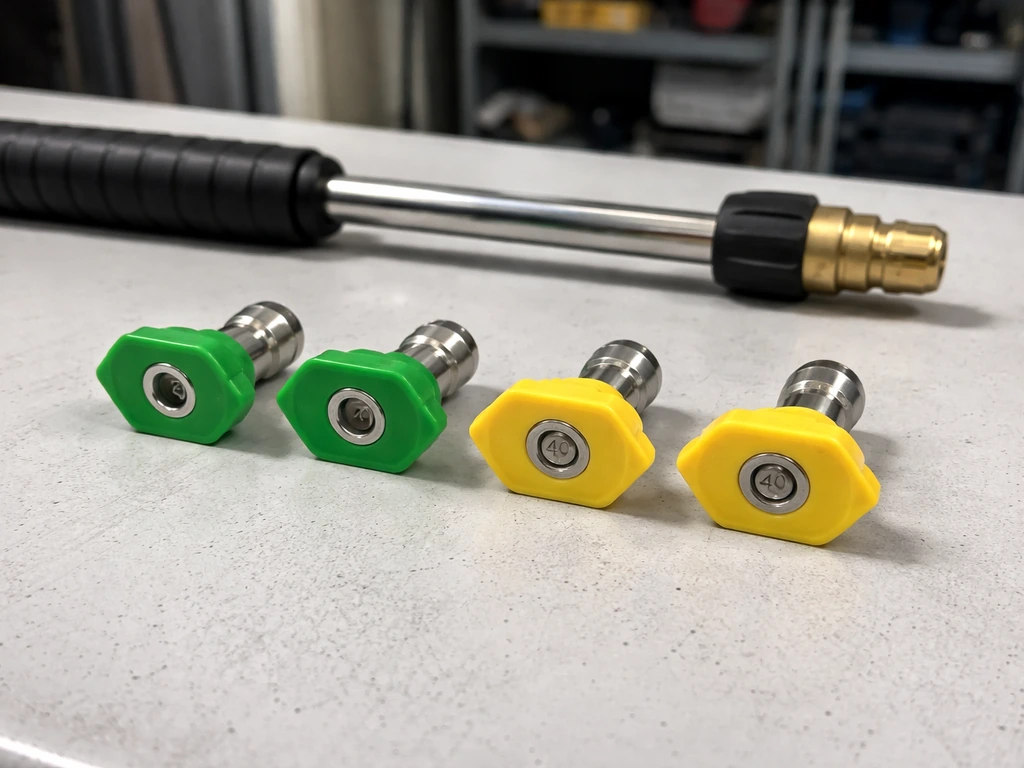
The nozzle is where the real control happens. For stone patios, you need a 25-degree (green) nozzle for general cleaning on harder stones and a 40-degree (white) nozzle for softer stones or delicate areas. The 0-degree (red) nozzle should stay in the bag for stone work entirely. The black soap nozzle is essential for applying detergent at low pressure. If your machine comes with a turbo/rotary nozzle, avoid using it on natural stone. It delivers a rotating concentrated jet that can etch and streak stone surfaces even at lower overall PSI.
Surface Cleaner Attachment
A surface cleaner is honestly the single best upgrade you can add. It uses two rotating nozzles inside a circular housing that sits close to the surface, producing even coverage with no streaking or zebra-stripe marks. It also keeps the spray contained so you are not blasting joint sand or blowing debris back at yourself. Most 11-inch or 12-inch models fit machines from 1,200–2,000 PSI. Look for one with brush skirts to keep debris from spraying out the sides. I never clean a large stone patio without one. If you are shopping for a pressure washer for your patio, pressure washer patio cleaner reviews can help you compare real-world results before you buy.
Adjustable Pressure Wand
A variable pressure wand lets you dial down pressure at the trigger rather than swapping nozzles. This is particularly useful on stone patios where you may be switching between a robust slate area and a more fragile sandstone border in the same session. The Sun Joe SPX3000 and similar units have a pressure selector on the machine body, while premium models like the Ryobi 1,800 PSI electric unit have trigger-based adjustment. Either works.
Brushes and Scrubbing Attachments
Some pressure washers accept a rotating brush attachment that combines water flow with mechanical scrubbing action at very low pressure. These are genuinely excellent for sandstone and travertine where you want cleaning action without high-pressure risk. A standalone stiff-bristle deck brush used in combination with low-pressure rinsing is also a completely valid approach for these softer stones. Do not underestimate manual scrubbing as part of your process.
Matching Your Cleaning Approach to the Problem
Different stains and growths need different strategies. Throwing high pressure at everything is the amateur approach and often makes things harder, not easier.
Mold and Algae
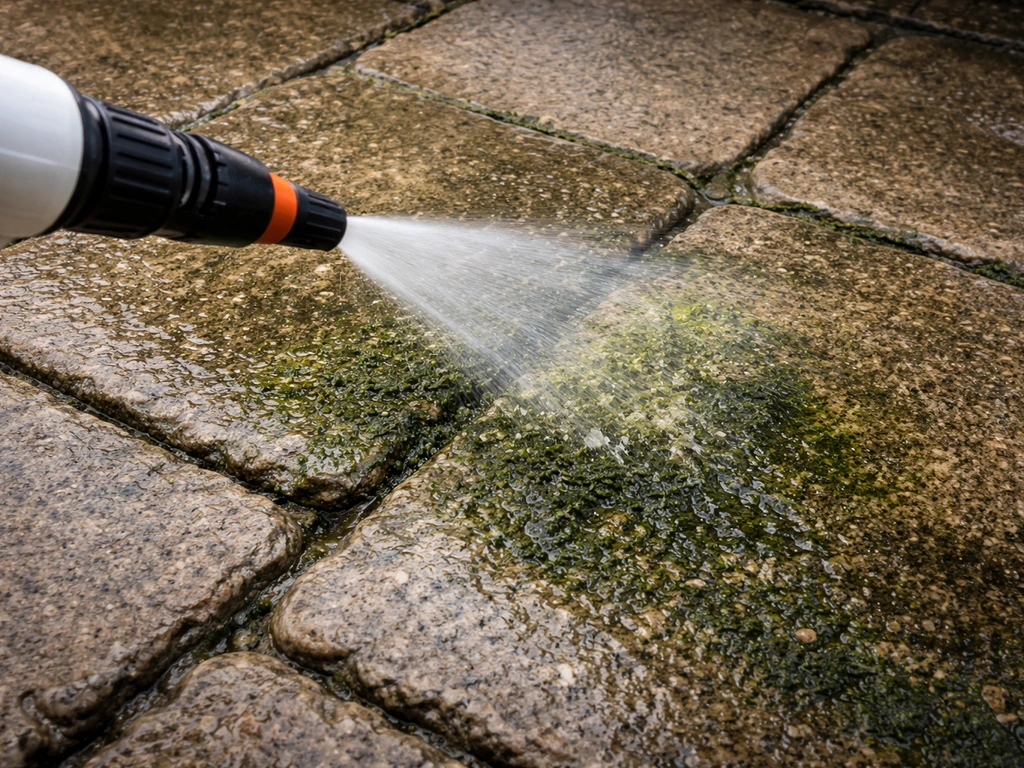
Mold and algae are the most common problem on stone patios, especially in shaded or damp spots. Pressure alone will remove the visible growth but leave spores behind, meaning it comes back within weeks. The better approach is to apply a mold and algae killer or a dilute bleach solution (1 part bleach to 4 parts water) at low pressure using the soap nozzle, let it dwell for 10–15 minutes, then rinse at your stone's appropriate PSI. This kills the spores rather than just moving them. For a more plant-friendly option, sodium percarbonate-based cleaners (like Wet and Forget or Patio Magic in the UK) work well and are safer around borders.
Moss
Moss on stone needs pre-treatment even more than algae does. Trying to pressure wash thick moss directly just shreds it and spreads it. Apply a moss killer, wait 24–48 hours for it to die and loosen, then use a stiff brush to break it up before pressure washing. This approach means you use less pressure and get cleaner results. A 25-degree nozzle at 1,000–1,200 PSI handles the residue fine once the moss is dead and loosened.
Grease and Food Grime
BBQ grease and food stains on stone need a degreasing pre-treatment. Apply a degreaser or a strong dish soap solution directly to the stain, work it in with a brush, and let it sit for 5–10 minutes before pressure washing. Skipping the pre-treatment and relying on pressure alone spreads the grease across a wider area. On porous stones like travertine, grease that has soaked in may need a poultice treatment rather than surface washing.
Rust and Iron Stains
Rust stains are the one problem that pressure washing genuinely cannot fix on its own. You need a dedicated rust remover, typically an oxalic acid-based product. Apply it to the stain, let it work, then rinse thoroughly at low to moderate pressure. Important note: do not use oxalic acid on calcium-based stones like limestone, travertine, or some sandstones. It will etch the surface. For those stones, look for a rust remover specifically labelled safe for natural stone.
Pet Stains and Organic Marks
Pet urine on porous stone is tricky because urine salts soak in and can cause long-term discolouration and odour. An enzyme-based cleaner applied before pressure washing breaks down the organic compounds properly. Standard pressure washing without pre-treatment just moves the surface residue. Apply the enzyme cleaner, allow the dwell time, then rinse with a 40-degree nozzle at low to moderate pressure.
Step-by-Step Pressure Washing Technique for Stone Patios
- Inspect the surface first. Walk the patio and check for cracked stones, loose or thin mortar joints, delaminating slate, or lifted pavers. Pressure washing over structural damage makes it worse. Note which areas need lower pressure or hand treatment.
- Clear debris. Sweep or blow off all loose leaves, dirt, and debris. Pressure washing over leaf debris just creates a muddy mess and reduces cleaning effectiveness.
- Protect vulnerable areas. Cover nearby plants with plastic sheeting if you are using chemical cleaners. Wet down any planted borders before you start so any chemical splashback is diluted immediately. Remove or protect any outdoor furniture.
- Pre-soak the stone. Wet the entire surface thoroughly with a low-pressure rinse before applying any detergent. This is especially important for porous stones like travertine and sandstone. Pre-soaking prevents cleaning chemicals from being drawn directly into the stone pores.
- Test in an inconspicuous area. Before committing to the whole patio, test your pressure and nozzle choice on a small hidden area, like a corner or under furniture. Confirm the surface handles it without any surface change, discolouration, or joint erosion.
- Apply pre-treatment or detergent if needed. Use the black soap nozzle at low pressure to apply your chosen cleaner. Let it dwell according to the product instructions, typically 5–15 minutes. Do not let it dry on the stone.
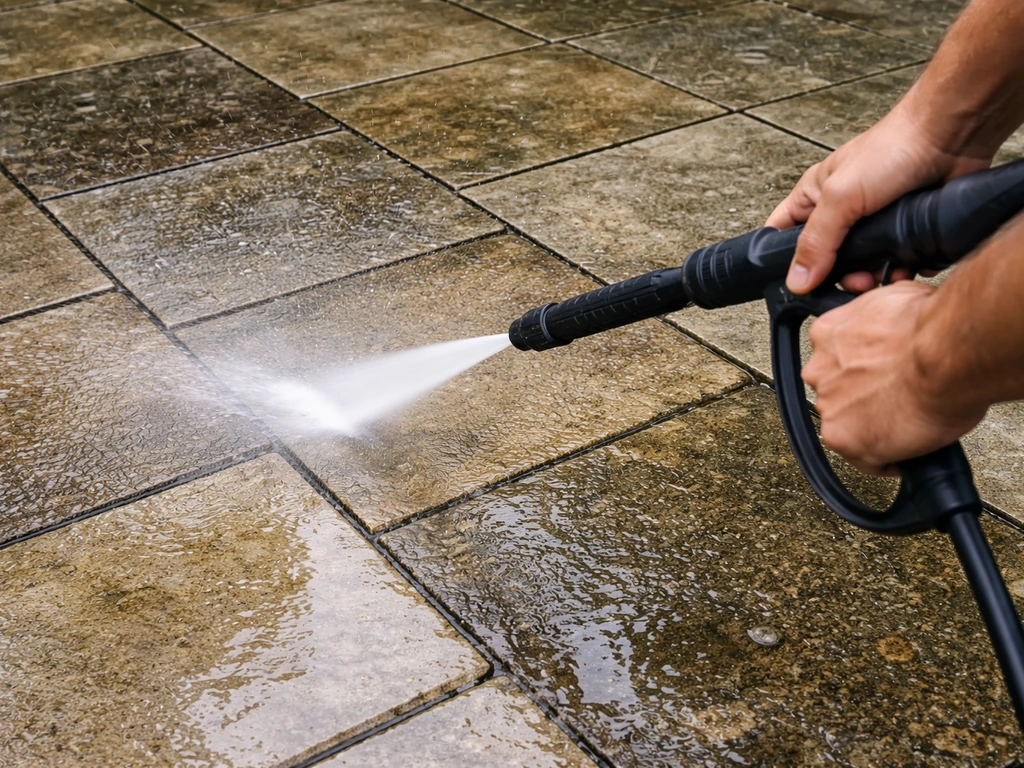
- Pressure wash with controlled technique. Hold the nozzle tip a minimum of 12 inches from the surface (as specified by GSA guidance for masonry). Use smooth, overlapping passes and keep moving at a steady pace. Never hold the spray in one spot. Work in sections and keep the nozzle angle consistent. Use a surface cleaner attachment for large open areas.
- Rinse thoroughly. Switch to your clean-water nozzle and rinse the entire area twice, working from the highest point down to flush all detergent residue off the surface and away from planted areas.
- Allow proper drying. Let the patio dry fully before walking on it heavily or applying any sealant. Stone can look dry at the surface while moisture remains below. In cooler weather, allow at least 24–48 hours before sealing.
Top Pressure Washer Picks for Stone Patios
These are the machines I recommend based on practical performance for stone patio cleaning, not just spec sheet numbers. I have grouped them by patio size and budget to make the decision easier.
Best for Small Patios and Delicate Stone (Budget Pick)
The Greenworks GPW1501 (1,500 PSI, 1.2 GPM) is an excellent entry point. It is light, easy to manoeuvre around furniture and planters, and the lower maximum PSI means you are less likely to accidentally damage softer stone if you misjudge distance for a second. It does not have a built-in detergent tank but accepts a siphon hose. Pair it with a 12-inch surface cleaner attachment and a set of coloured nozzles. Cost is typically around $100–$130. Best for: travertine, sandstone, smaller flagstone areas under 200 square feet.
Best All-Rounder for Medium Patios (Mid-Range Pick)
The Sun Joe SPX3000 is the machine I recommend most often for general stone patio cleaning. For most homeowners, the best pressure washer for patio slabs is an electric unit with adjustable pressure so you can clean effectively without damaging softer stone. Concrete patio cleaning often needs the same low-pressure control principles, but you can typically go a bit higher to tackle embedded grime best pressure washer for concrete patio. It runs at up to 2,030 PSI but has a dual detergent tank, a selection of nozzles, and consistent pressure delivery that makes it easy to work with. Running it at reduced pressure with a 25-degree or 40-degree nozzle handles most stone types well. It weighs around 31 pounds and the hose reel is a genuine quality-of-life improvement. Priced around $160–$190. Best for: slate, flagstone, concrete pavers, mixed stone patios up to 400 square feet.
Best for Large Patios and Heavier Grime (Premium Electric Pick)
The Ryobi RY142022 (2,000 PSI, 1.2 GPM with a cold water electric motor) or the Westinghouse ePX3050 (2,050 PSI, 1.76 GPM) give you more flow rate and consistent sustained performance for larger areas. The higher GPM on the Westinghouse in particular means faster cleaning with fewer passes. Both have total stop systems that cut the pump when you release the trigger, extending pump life. Priced between $180–$250. Best for: large slate or porcelain paver areas, heavily soiled patios, 400–800 square feet.
Best Gas Option for Maximum Power
If you have a very large stone terrace or are dealing with years of built-up grime, a gas unit like the Simpson Cleaning MegaShot (2,300 PSI, 1.2 GPM) or the Generac 2,800 PSI unit gives you more sustained power. For stone, you will be deliberately throttling back on pressure, but gas units handle that well with proper nozzle selection and distance control. STIHL USA advises that pressure washers can have very hot engine or motor components after extended use, so use caution during and after operation. The trade-off is weight (around 70 pounds), fumes, and maintenance. For most homeowners with stone patios, this is more machine than necessary. Best for: large terraces over 800 square feet, commercial-style concrete or porcelain pavers, or if you are also cleaning a driveway, deck, and siding in the same session.
| Model | PSI / GPM | Best For | Approx. Price | Key Feature |
|---|---|---|---|---|
| Greenworks GPW1501 | 1,500 PSI / 1.2 GPM | Small patios, delicate stone | $100–$130 | Lightweight, safe max PSI |
| Sun Joe SPX3000 | 2,030 PSI / 1.76 GPM | Medium patios, mixed stone | $160–$190 | Dual detergent tanks |
| Westinghouse ePX3050 | 2,050 PSI / 1.76 GPM | Large patios, heavy grime | $200–$250 | High GPM for flow efficiency |
| Simpson MegaShot (Gas) | 2,300 PSI / 1.2 GPM | Very large areas, tough grime | $280–$350 | Sustained power, no cord |
Safety, Sealing, and Keeping Your Patio Clean Longer
Safety During the Job
Pressure washing stone creates two immediate hazards: the wet surface becomes extremely slippery, and the spray kicks up debris at speed. Wear non-slip boots or shoes (not flip-flops), safety glasses or goggles, and waterproof gloves, especially when working with chemical cleaners. Never point the spray wand at people, pets, or plants. Keep the minimum 12-inch distance from the stone surface and never use the 0-degree nozzle on stone patios. If you are using bleach or acid-based cleaners, work in a ventilated area and wear a basic respirator.
Sealing Stone After Cleaning
Sealing is one of the most effective things you can do to slow down regrowth of algae and moss and protect the stone from staining. Porous stones like travertine, sandstone, and flagstone benefit most from sealing. Dense stones like slate and porcelain pavers are less porous and do not need sealing as urgently, though a penetrating sealer still helps. Use a breathable, penetrating impregnator sealer rather than a topical coating sealer, which sits on the surface and can peel. Apply sealer only when the stone is completely dry and clean. Most sealers last 2–5 years depending on traffic and weather exposure.
Preventing Regrowth and Reducing Future Cleaning
- Apply a post-cleaning algae and moss inhibitor treatment. Products like Wet and Forget work by continuing to suppress growth for months after a single application, particularly in damp climates.
- Improve drainage around the patio. Standing water is the main driver of moss and algae. Check that water drains away from the surface rather than pooling in low spots.
- Trim back overhanging plants and trees. Shade and leaf litter are the two biggest contributors to algae and moss growth on stone. More sun and airflow dramatically slows regrowth.
- Sweep or blow the patio regularly. Removing leaf debris and organic matter before it breaks down into the stone surface reduces staining and reduces the food source for moss and algae.
- Top up jointing sand after cleaning. Replacing the kiln-dried sand in paver joints stabilises the patio surface and prevents weed growth between stones.
- Clean annually or biannually rather than waiting for heavy buildup. A light clean each spring is far easier than removing three years of algae.
Stone patios cleaned and sealed properly can look excellent for decades. The pressure washer is just one tool in that process, not a substitute for the right pre-treatment, the right technique, and the follow-up maintenance that keeps regrowth from taking hold within weeks of cleaning. Get the machine spec right for your stone type, work at the correct pressure, and back it up with a sealer, and you will spend a lot less time re-cleaning the same problems year after year.
FAQ
Do I need a surface cleaner attachment for the best pressure washer for stone patio results?
Not always. Use a surface cleaner for most flat areas, then switch to a 25-degree or 40-degree nozzle for edges, step risers, and around furniture. If you can’t keep the spray contained, you are more likely to blast joint sand out or leave streaks.
What’s the correct order to clean a stone patio with detergent and a pressure washer?
Yes, but the right order matters. Pre-soak with clean water, then apply your cleaner (soap nozzle or low-pressure application), let it dwell, and only then rinse using the appropriate stone-safe PSI. Rinsing first can make stains and organic growth “lock in” as the chemical evaporates.
How do I set pressure correctly if my washer’s rated PSI is much higher than the stone-safe PSI?
For most natural stones, don’t treat PSI on the box as usable PSI. Set the machine to its lowest pressure setting before you start, then do a 1 square foot test from the recommended distance. If you see pitting, chalking, or joint erosion, lower pressure, increase distance, or switch to the gentler nozzle.
Can I just use high pressure and a stiff brush for sandstone instead of careful low-pressure rinsing?
Typically no. On sandstone and other very porous stones, high-pressure “fence spraying” is the most common mistake. Brush or enzyme/chemical pre-treatment, then gentle rinse, gives better results with less erosion. If you must use pressure, use a 40-degree nozzle, keep moving, and back off the distance.
How long can I leave detergent on stone patio before rinsing?
Even if you use soap, you should avoid letting chemicals dry on the stone. Work in sections, keep dwell times within the product instructions, and rinse promptly. Drying can leave residues that attract dirt and make the patio look worse later.
Is diluted bleach always safe for stone patios?
Bleach can work on algae, but don’t expect it to be a one-and-done. It needs dwell time, thorough rinsing, and protection of nearby plants. For calcium-based stones like limestone and travertine, avoid acidic or strong chemical cleaners that can etch.
Why should I avoid turbo or rotary nozzles on natural stone patio cleaning?
No. Turbo or rotating nozzles concentrate force into a narrow rotating stream, which can etch, etch-streak, and cause faster joint erosion on natural stone. Use the recommended color nozzles (25-degree or 40-degree) and keep the turbo-style attachments for other surfaces if you use them at all.
What’s the best way to protect stone joints when my pressure washer only has nozzle swapping (no pressure dial)?
If you have a variable pressure wand or trigger-based adjustment, dial down pressure and increase cleaning time rather than fighting with distance. If you only have fixed nozzles, start with the gentlest (usually 40-degree) and keep the nozzle angle flatter, 30 to 45 degrees, to reduce the direct impact on joints.
Will pressure washing remove the sand in the joints between pavers, and should I plan to re-sand?
Yes, and it’s often the biggest “hidden” cost. Joint sand and polymeric sand can wash out, especially under a surface cleaner if you dwell or aim at joints. Plan to re-sand after cleaning, and avoid filling joints with fresh sand until the stone is fully dry.
How should I choose and apply a sealer after pressure washing stone patio?
Use a penetrating sealer, not a film-forming “topical” coating, for most porous stones. Apply only when the patio is completely dry, and test in a small area first because some sealers darken stone temporarily. Also, sealing too soon after cleaning can trap leftover moisture and cause uneven look or faster buildup.
What changes if my stone patio is already sealed?
Yes. If the stone is sealed already, soaps and mold killers may not penetrate correctly, and runoff can bead. You may need a milder cleaner, more dwell time, and extra rinsing until the surface stops repelling water.
What’s the most effective approach for grease, rust, and pet urine stains on stone patio?
Pre-treatment matters for stubborn stains because pressure alone spreads the stain. For grease, scrub and dwell first, then rinse at low to moderate pressure. For rust, switch to a stone-safe rust remover, and for urine, use an enzyme product first so salts and odor-causing compounds break down rather than being displaced.
If my stone patio looks worse after washing, how do I troubleshoot the cause?
Discoloration can be a sign of etching, efflorescence, or residue. First, try a thorough rinse with gentle pressure and confirm the stone is fully dry. If it’s chalky or rough-feeling, you likely over-pressured, and the fix may be a stain remover or rebalancing with a stone-specific professional process, not more pressure.
What should I do if algae or moss won’t come off, even with a careful pressure setting?
A surface is “too dirty” is usually a pre-treatment and dwell time issue, not a PSI issue. Reduce pressure, use the soap nozzle, and let chemicals do the work. For moss, kill first and brush after it loosens, then do a gentle rinse. This prevents you from shredding moss and spreading it.
How long should I keep people and pets off the patio after pressure washing?
Wet stone is slippery, so treat drying time as part of the job. Start early in the day, rinse in long passes, and keep people and pets off until it’s fully dry. If possible, do the final rinse and allow airflow, fans, or time rather than immediately walking back on it.
How to Use Wet and Forget Patio Cleaner Step by Step
Step by step guide to apply Wet and Forget patio cleaner, prep and safety, dwell time, rinse or no rinse, and troublesho