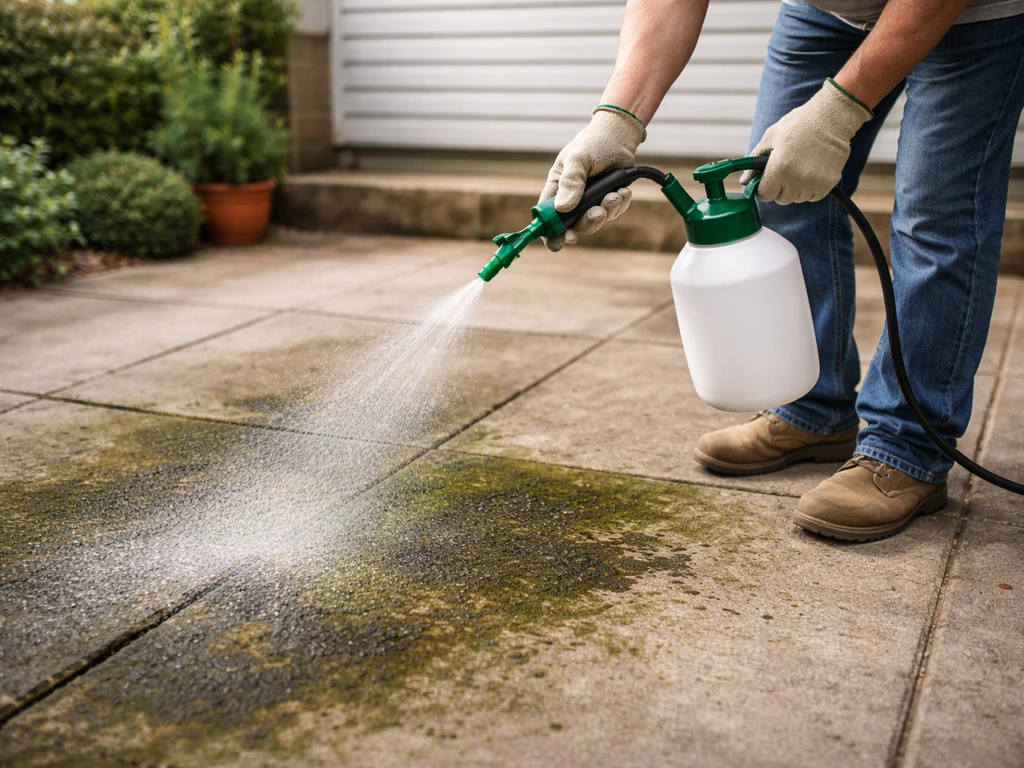
The best time of year to power wash your patio is late spring, typically late April through May, when temperatures are consistently above 50°F (10°C), there's little chance of frost, humidity is moderate, and you still have a full day of daylight and dry weather ahead of you. That window gives you ideal cleaning conditions, time for the surface to dry properly, and a head start before the peak outdoor season kicks in. That said, early fall (September to early October) runs a close second, and with a little planning, you can get good results almost any time of year except the depths of winter.
Best Time of Year to Power Wash Patio for Clean Results

Rhea Lang
4 May 2026
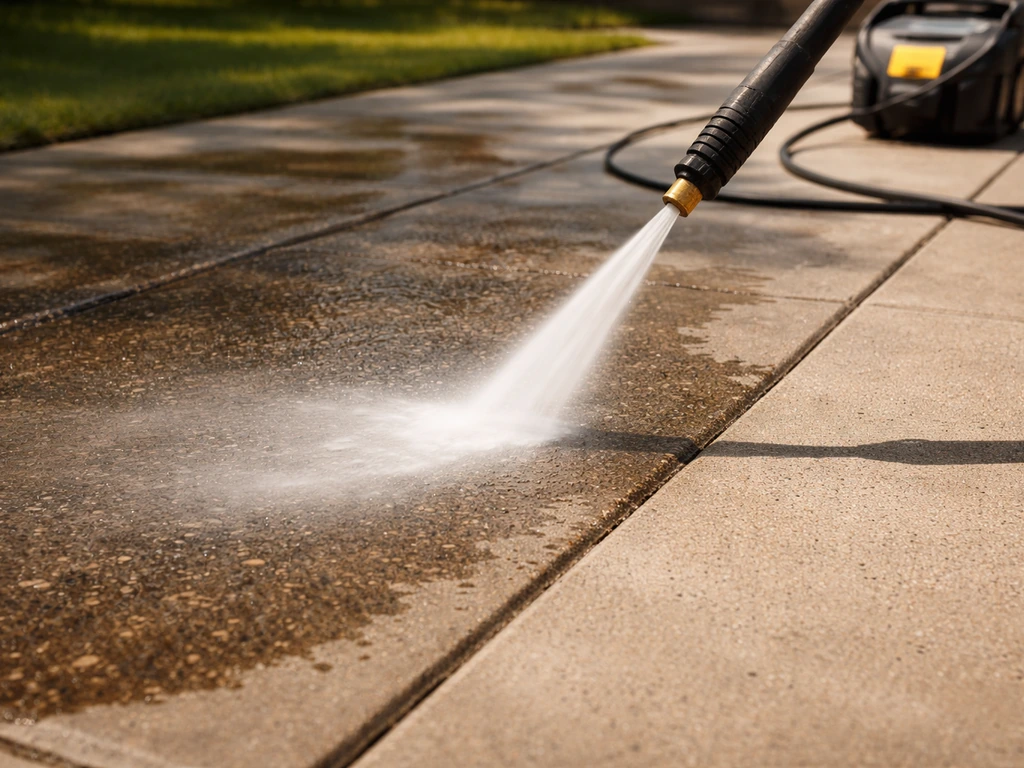
Weather conditions that make power washing actually work
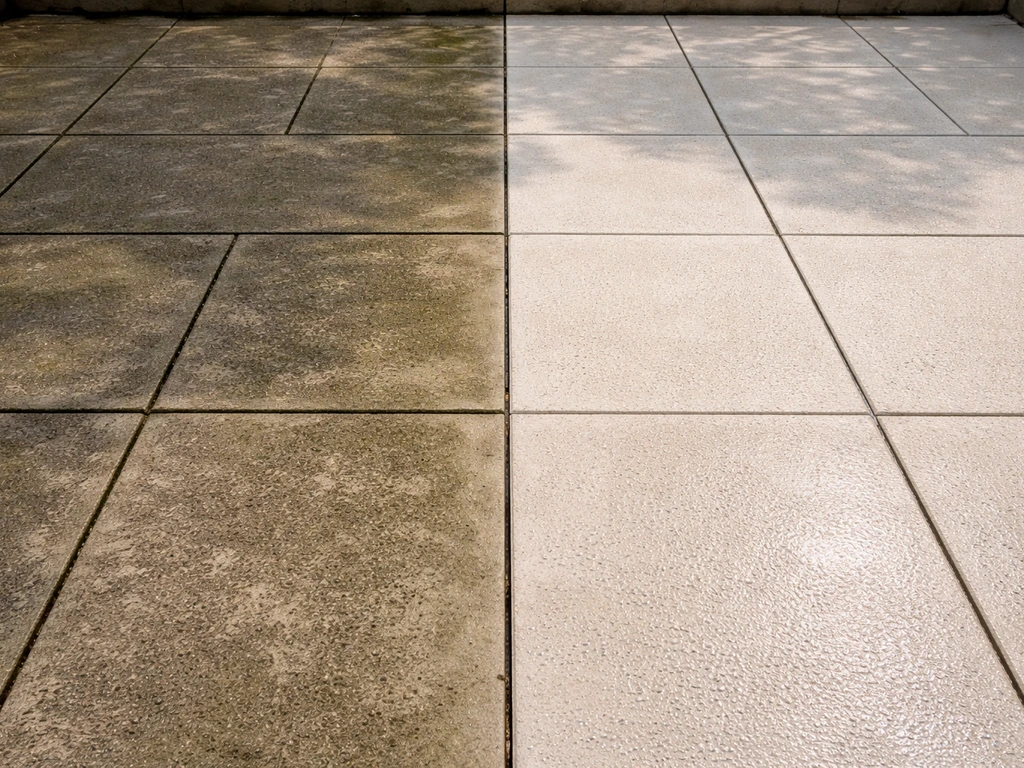
Temperature is the biggest factor most people overlook. You want the air temperature to be at least 50°F (10°C) and ideally between 55°F and 75°F (13°C to 24°C). Below 50°F, cleaning detergents lose a lot of their effectiveness, and if temperatures drop close to freezing before the surface dries, water sitting in cracks or joints can expand and cause surface damage, especially on natural stone, brick, and concrete. Above 85°F (30°C), the water can flash-dry before it rinses properly, leaving streaks and residue behind.
You also want to avoid washing right after heavy rain. A surface that's already saturated won't absorb cleaning solution evenly, and you'll end up with inconsistent results. Aim to wash at least 24 to 48 hours after the last significant rainfall. On the flip side, a slight pre-wet of the patio about 10 minutes before you start is actually helpful, especially on porous surfaces like concrete or sandstone, because it prevents the detergent from soaking in too fast and drying before it can work.
Wind matters more than people think. A calm or lightly breezy day is ideal. High winds will blow spray back at you, dry out your cleaning solution too quickly on hot days, and make it genuinely unpleasant to work. Avoid washing in direct intense midday sun for the same reason: you want conditions where the detergent has time to dwell and do its job before you rinse. Overcast but dry days are honestly the best scenario for power washing.
- Air temperature: 50°F to 75°F (10°C to 24°C) is the sweet spot
- No rain for at least 24 to 48 hours before washing
- Low to moderate humidity (not excessively dry and hot)
- Little to no wind, or a light breeze at most
- Overcast skies preferred over intense direct sun
- At least 4 to 6 hours of dry weather after washing for the surface to cure
Season by season: when to do it and what to watch for
Spring (March to May): the prime window
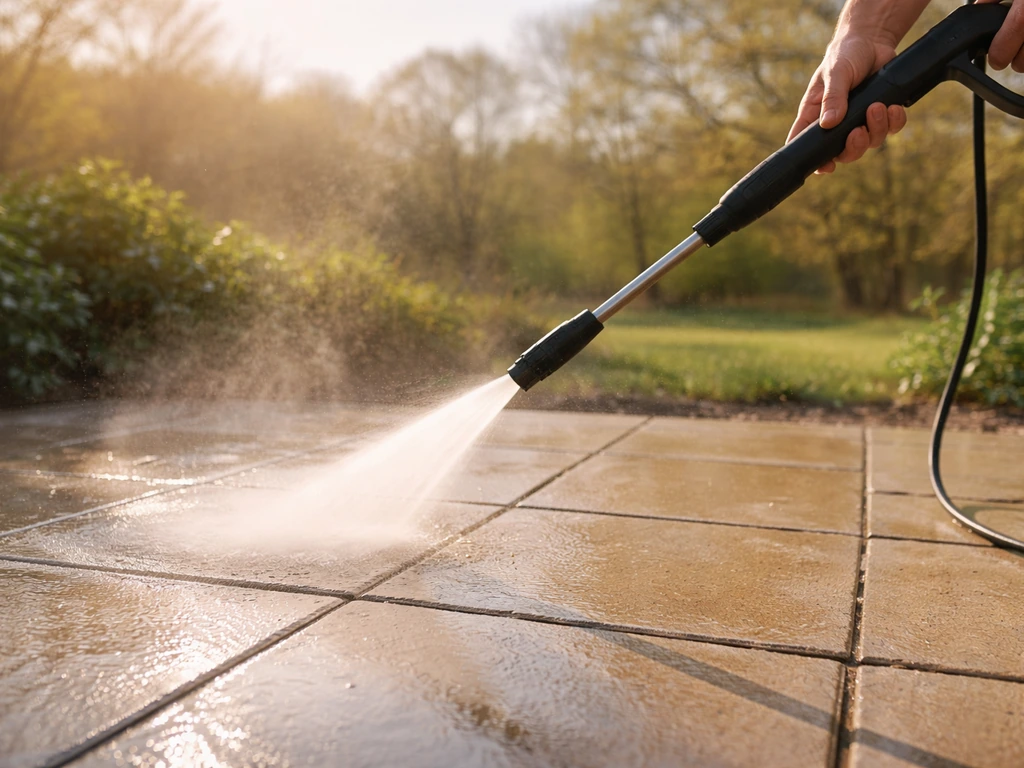
Spring is the best season for most homeowners. When deciding how often to jet wash a patio, the easiest rule of thumb is to do it seasonally during the spring or early fall windows, then only spot-clean or re-wash if you notice algae, mold, or heavy grime building up Spring is the best season for most homeowners. .
Frost risk drops off, temperatures creep into that ideal range, and your patio has had a whole winter of leaf debris, green algae growth, and general grime building up. Clearing all of that before summer means you'll actually enjoy using the space, and the patio will look its best right when you need it most. Late April to May is the peak of this window in most US regions.
In the UK, this shifts to May through June, when rain is slightly less constant and temperatures are more cooperative.
One thing to watch in early spring: don't rush it in March if your region is still getting overnight frosts. Power washing a patio and then having a hard frost roll in that night is one of the fastest ways to damage porous surfaces. Check the 5-day forecast and confirm no frost before you start.
Summer (June to August): doable with some adjustments
Summer works, but you need to plan around the heat. On very hot days, schedule the job for the morning before the sun hits the patio directly, or in the late afternoon once the surface has cooled down. A common question is when is the best time of day to pressure wash your patio, and the timing can depend on temperature and sun exposure schedule the job for the morning.
Avoid washing at midday in summer when a 90°F day causes water to evaporate faster than you can rinse, leaving detergent residue baked onto the surface. I learned this the hard way on a concrete patio one July afternoon and spent twice as long fixing the streaks. The upside of summer is you have long days, low frost risk, and surfaces dry fast, which is useful if you're planning to apply a sealer afterward.
Fall (September to October): almost as good as spring
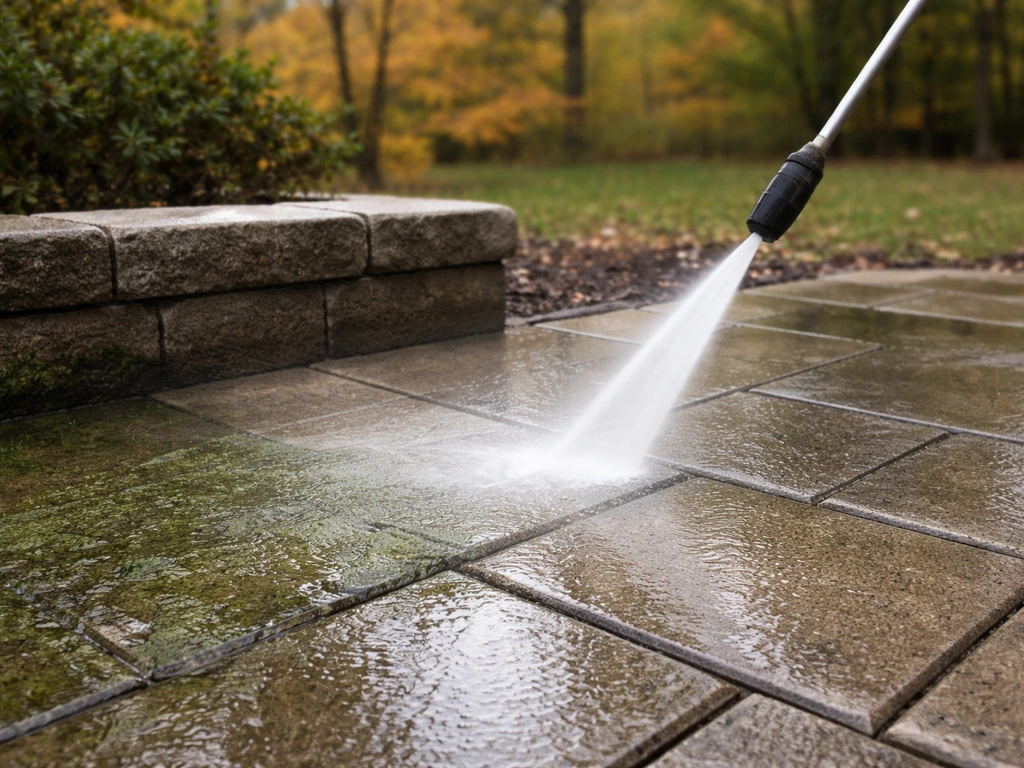
Early fall is an underrated time to power wash. Temperatures drop back into that comfortable range, summer algae and mold growth is at its peak accumulation, and a good clean before winter prevents that biological growth from taking deeper root over the cold months. Aim for September or early October before leaves start falling heavily, because wet leaf tannins can stain your patio quickly after a fresh clean. Also factor in drying time: fall days are shorter, so start earlier in the day than you would in summer.
Winter (November to February): generally avoid it
Winter is the one season where I'd usually say wait. Below 40°F, detergents barely work, water in joints and cracks freezes and causes spalling or cracking, and drying times stretch out so long that you're essentially leaving a wet patio overnight in cold conditions. If you absolutely must wash in winter (maybe you have guests coming and the patio is a genuine mess), stick to a dry day well above freezing, use the minimum pressure needed, skip chemical treatments, and accept that you won't get a deep clean. In most cases it's better to just brush off debris and wait for spring. Most homeowners only need to pressure wash their patio once or twice a year, adjusting the schedule based on how quickly dirt, algae, and mold build up how often to pressure wash patio.
How your patio material changes the timing equation
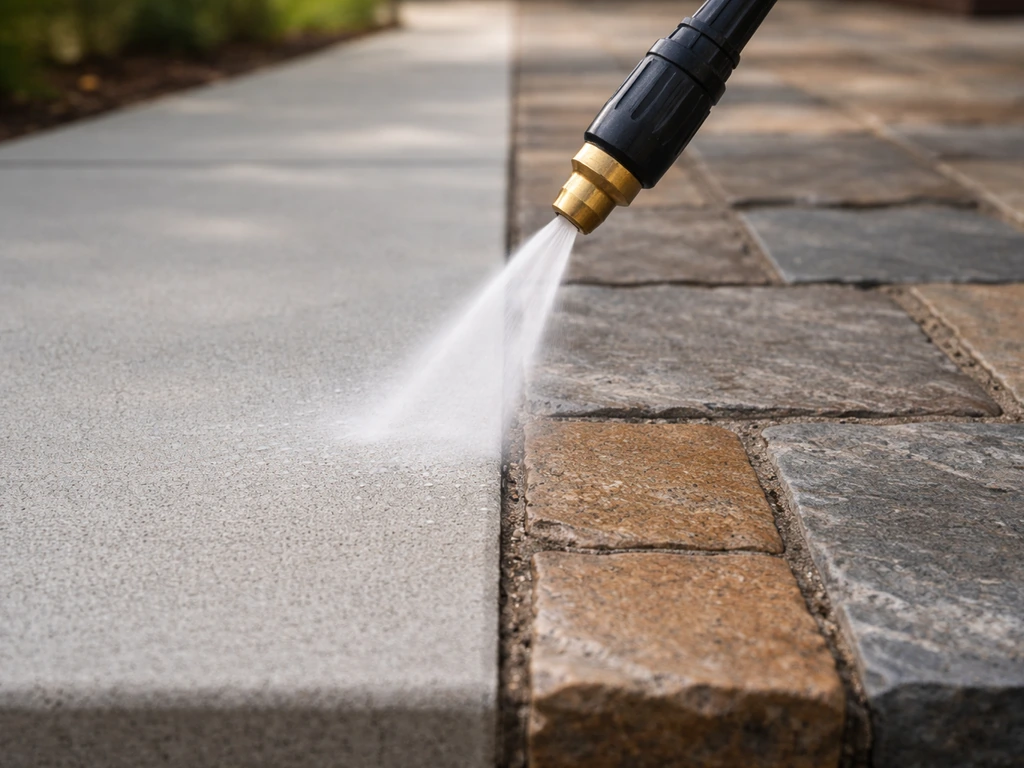
Surface type has a huge influence on when and how aggressively you should wash. What works for a sealed concrete patio can crack the face of a slate slab if you get the timing or pressure wrong. Here's how each major material type plays into the timing decision.
| Material | Ideal Season | Key Timing Cautions | Recommended PSI Range |
|---|---|---|---|
| Concrete | Spring or fall | Avoid hard frosts within 48 hours; re-seal after washing | 1500 to 3000 PSI |
| Brick | Spring or early fall | Avoid washing in cold temperatures; watch for efflorescence after | 1200 to 1500 PSI |
| Natural stone (flagstone, limestone) | Late spring or early fall | Very cold temps risk cracking; allow extra drying time for porous stone | 800 to 1200 PSI |
| Sandstone | Late spring only (avoid summer heat) | Extremely porous; flash-drying causes streaks; never use acid-based cleaners | 600 to 1000 PSI |
| Slate | Late spring or early fall | Splits easily with high pressure; cold-wet cycles cause delamination | 600 to 1000 PSI |
| Porcelain | Spring, summer, or fall | Most forgiving; avoid direct high-pressure on grout lines in freeze risk periods | 1200 to 2000 PSI |
Sealed surfaces (sealed concrete, sealed porcelain) are more forgiving about seasonal timing because the sealer reduces water ingress. Unsealed porous materials like sandstone, natural limestone, and older brick are the ones that need the most careful seasonal planning. If you're not sure whether your patio is sealed, do the water drop test: drop a small amount of water on the surface. If it beads up, it's sealed. If it soaks in within a minute, it's unsealed, and you need to be extra careful about temperature and drying time.
Mold, algae, moss, and rust: when they're easiest to tackle
Timing your wash to the lifecycle of what's growing on your patio can make a significant difference in how much effort you spend. Algae and mold are most active in warm, damp conditions, meaning they tend to peak in late summer and early fall. But here's the thing: the best time to remove them is actually before they peak, in late spring when the growth is still relatively superficial and hasn't fully bonded to the surface. If you wait until fall after a full summer of growth, you'll need more pressure and likely a chemical treatment to get them off cleanly.
Moss is a different story. Moss grows in cooler, wetter conditions and is typically at its worst in late winter and early spring in shaded areas. The good news is that a hard spray in spring loosens it effectively when it's still hydrated and hasn't dried and hardened. Dry moss that's baked onto a surface in summer is actually harder to shift. So if moss is your main issue, early spring is your moment.
Rust stains from garden furniture, brackets, or fixings don't have a seasonal cycle per se, but they respond best when the surface is dry enough to let a rust-specific cleaner dwell for 5 to 10 minutes before rinsing. A warm, low-humidity spring or fall day is ideal for this. Applying a rust treatment to a wet or very cold surface reduces its effectiveness significantly. Grease stains from BBQ season are best tackled in fall, right after summer entertaining, before they've had months to penetrate deeper into porous surfaces.
Surface-specific cautions and how long to allow for drying
Drying time is often the thing that catches people out. You need the surface to dry fully before cold weather rolls in, before you apply any sealer, and before heavy foot traffic. Here's a realistic breakdown by material and conditions.
| Material | Dry Day Drying Time | Humid/Overcast Drying Time | Before Sealing |
|---|---|---|---|
| Sealed concrete | 2 to 4 hours | 4 to 8 hours | 24 to 48 hours |
| Unsealed concrete | 4 to 6 hours | 8 to 12 hours | 48 to 72 hours |
| Brick | 4 to 6 hours | 8 to 24 hours | 48 to 72 hours |
| Sandstone | 6 to 12 hours | 24 to 48 hours | 72 hours minimum |
| Slate | 4 to 8 hours | 12 to 24 hours | 48 to 72 hours |
| Porcelain | 1 to 2 hours | 2 to 4 hours | 24 to 48 hours (grout)] |
Sandstone and natural limestone take the longest to dry by a considerable margin because they're so porous. If you wash these on a day that turns damp or rainy, you're looking at a surface that stays wet overnight and can attract mold re-colonization very quickly. For these materials especially, pick a day with a clear 48-hour weather window if you can. Slate needs attention to the bedding underneath: if the sub-base stays wet too long, you can get salt migration and efflorescence appearing on the surface weeks later. Porcelain dries fastest and is the most forgiving all-round.
Your step-by-step plan for the best power washing day
Step 1: check the forecast and prep the area
Start with a 5-day forecast. You want the day of washing and at least two days afterward to be dry and above 50°F. Clear the patio completely: furniture, plant pots, rugs, everything. Cover any nearby drains or protect them before you start. This is important: local regulations in many areas prohibit washing wastewater carrying detergent, dirt, or biological material from entering storm drains. Block drains with a drain plug or use absorptive material around them, and direct runoff to a grassed or gravel area where it can soak in rather than running into the road or a drain.
Step 2: pre-treat with the right chemical (or don't)
For a patio with active mold, algae, or moss, pre-treating with an appropriate biocide or patio cleaner before pressure washing will get you dramatically better results than pressure alone. Apply the treatment, allow it to dwell for the time specified on the label (usually 10 to 30 minutes), and don't let it dry out on the surface. For a lightly soiled patio or routine maintenance, plain water with a surface cleaner attachment is often enough and avoids any chemical runoff concerns. For rust stains, use a dedicated rust remover and treat the stain specifically before the full wash.
Step 3: choose the right nozzle and pressure
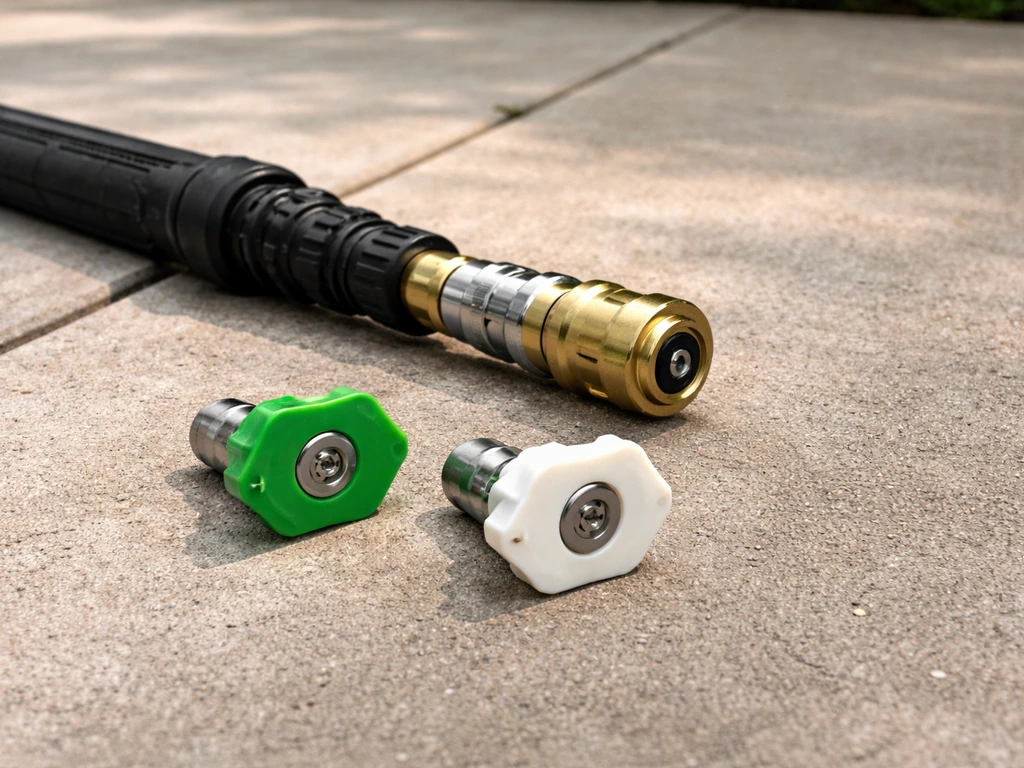
This is where a lot of damage happens. For most patios, a 25-degree (green) or 40-degree (white) fan nozzle is the right starting point. The 25-degree nozzle gives more cleaning power for concrete and durable brick. Go to 40-degree for natural stone, sandstone, and slate.
Never use a 0-degree (red) nozzle on a patio surface: the concentrated stream will etch concrete, cut grout lines, and destroy softer stone. A rotary surface cleaner attachment is one of the best investments you can make for patio washing: it uses rotating jets in a shrouded head that cleans evenly, avoids the classic striping pattern from a single wand, and keeps the pressure consistent.
Keep the nozzle or surface cleaner 6 to 12 inches from the surface, adjust based on how the surface responds, and always keep the wand moving.
Step 4: wash systematically, then rinse thoroughly
Work in sections from the furthest corner back toward your exit point, so you're not walking through the dirty water you've just created. Overlap each pass slightly to avoid missed strips. When you've done the full surface, rinse the entire area with clean water, moving from the top of any slope toward the drain or runoff point. Rinse thoroughly: any residual detergent left on the surface attracts dirt and can damage sealers. Pay particular attention to rinsing around grout lines and joints on brick and porcelain, where soap can settle and cause efflorescence if left.
Step 5: let it dry and decide on sealing
Resist the urge to put furniture back immediately. Let the surface dry fully based on the timelines above. If you're planning to seal afterward (which I strongly recommend for concrete, sandstone, and natural stone), wait the full 48 to 72 hours the surface needs to cure before applying sealer. Sealing a surface that's still damp traps moisture underneath, which causes efflorescence, flaking, and in some climates, frost damage later on.
Safety, equipment, and runoff: the practical bits
Pressure washers push out water at force. That sounds obvious, but it means a few things worth taking seriously. Wear rubber-soled shoes, not trainers: this provides both grip and electrical insulation, especially relevant when using an electric pressure washer on a wet surface. Keep any electrical cord connections well away from pooling water and away from the stream. If you're using an extension lead, make sure it's fully unwound and rated for outdoor use.
Eye protection is non-negotiable. Debris, grit, and cleaning chemicals ricochet off hard surfaces, and a direct hit at washing distances is genuinely dangerous. Wear safety glasses or goggles. If you're using any chemical treatments, nitrile gloves are worth adding too.
On the runoff question: I mentioned it in the prep step, but it's worth reiterating here because the rules are real and the fines can be significant. Allowing wash water carrying detergent, algae, or dirt to flow directly into a storm drain or onto public roads can violate local environmental codes.
The City of Wilmington, NC pressure washing stormwater brochure explains that under the Clean Water Act, discharging soap or washing wastewater containing chemicals into storm drains is prohibited and recommends proper BMPs like covering storm drains and using vacuuming methods storm drain or onto public roads.
The sensible approach is to direct all runoff to a planted or gravel area, use drain plugs on nearby storm drains during washing, and collect and dispose of heavily contaminated water (from rust treatment or biocide use) appropriately rather than just hosing it away.
For equipment choice: a gas or electric pressure washer delivering 1500 to 2500 PSI handles the vast majority of residential patio jobs. For delicate materials like sandstone and slate, look for a machine that lets you dial pressure down to 600 to 1000 PSI, or use a variable nozzle set at lower intensity and a greater standoff distance. A surface cleaner attachment costs around $30 to $80 and is genuinely worth it for any patio larger than about 10 square meters: the results are more even, the job goes faster, and you avoid the wand-striping problem entirely. The total time to pressure wash a patio depends on the size of the area, the level of grime, and how long you need for it to dry afterward job goes faster.
If you've also been wondering about how often to power wash your patio, or whether there's a specific best time to jet wash depending on your surface type, those questions come up naturally alongside the timing and seasonal guidance here. The best answer is to match the day to the weather and your patio’s growth cycle best time to jet wash. The same weather principles apply regardless of whether you call it pressure washing or jet washing: temperature, drying time, and growth cycle of whatever you're trying to remove are the three factors that matter most. Get those right, pick your window in late spring or early fall, and you'll spend less time chasing results and more time actually using your outdoor space.
FAQ
What if my patio is shaded most of the day, does late spring still work best?
Yes, but you should prioritize earlier in the window (late April to May) because shaded areas stay damp longer, which encourages moss and algae. Plan for extra drying time, and expect to use lower pressure or a surface cleaner on porous stone since it can stay wet around grout and joints.
Can I power wash if rain is expected soon after, like 12 to 24 hours?
Ideally no. Your cleaning results depend on full drying before moisture returns, especially on sandstone, natural limestone, and older brick. If rain is within 24 hours, delay the job or target only spot-cleaning, because repeated wetting can re-start algae growth and can worsen efflorescence later.
How do I tell whether the patio is sealed if the water drop test is mixed results?
If water beads in some areas but soaks in others, you likely have partial sealing or worn spots. Treat it as unsealed for timing and technique, use a gentler pressure setting, and give the longest drying window. For sealing afterward, test a small area first to confirm adhesion and avoid trapping moisture.
Do I need to pre-wet every time, or only for certain surfaces?
Pre-wetting helps most on highly porous surfaces (concrete, sandstone, limestone) because it slows detergent absorption and reduces streaking from rapid dry-out. For sealed porcelain or sealed concrete, you can usually use a lighter pre-wet or skip it if you’re working under cool, overcast conditions.
What’s the safest way to avoid damaging plants and landscaping during the wash?
Clear furniture and rugs, but also cover or protect beds close to the runoff path. Use tarps or plastic sheeting to shield delicate plants from detergent and bio-cleaners, and direct runoff toward a landscaped or gravel area that can absorb water. If you use biocides, treat it like a chemical application, not just water.
Can I use a surface cleaner attachment on natural stone like slate or sandstone?
Sometimes, but start cautious. Many rotary surface cleaners are great for sealed or tougher surfaces, yet slate and sandstone can etch or loosen bedding if pressure is too high or the nozzle is too close. Use the lowest effective pressure, keep more standoff distance, and do a small test patch first.
What should I do if I see streaks or residue after power washing?
First, wait until the surface fully dries, then assess. If residue remains, it’s usually detergent not fully rinsed or flash-dried. Re-rinse thoroughly with clean water, and if streaks persist, use a light cleaner formulated for pressure-washed residue (avoid harsh acids on stone). Avoid re-pressuring at higher PSI, which can drive residue deeper.
Is it better to use stronger detergent or higher PSI for stubborn mold and grime?
Use the approach that matches the problem. For algae and mold, a biocide or patio cleaner that dwells for the label time often works better than increasing pressure, which mainly redistributes grime and can damage surfaces. Reserve higher PSI for durable, sealed materials, and test in a small inconspicuous area.
How long should I wait before I apply a sealer, and what if I can’t wait 48 to 72 hours?
The safest rule is to wait until the surface is fully dry, not just visually dry. If you can’t reach 48 to 72 hours, delay sealing because trapped moisture can lead to efflorescence, flaking, or later frost-related damage. In a pinch, confirm dryness with a small tape test or moisture check, and follow the sealer manufacturer’s minimum cure guidance.
What’s the biggest mistake people make with pressure and nozzles on patios?
Using a zero-degree tip or holding the wand too close for too long. That can etch concrete, cut into grout lines, and gouge softer stone. Stick to a fan tip (often 25-degree for durable surfaces, 40-degree for natural stone) and maintain a consistent standoff, then adjust gradually.
Can I pressure wash the same day I remove rust stains, or should I do a separate step?
In most cases, treat rust first and let the rust-specific product dwell, then rinse, and only then complete the full patio wash. This sequencing helps the treatment work on the stain itself rather than getting diluted by general runoff. If your rust cleaner has specific directions for rinsing, follow those dwell and rinse times precisely.
What PSI should I use if I’m unsure what my patio can handle?
Start conservative. For sealed concrete or brick, you can usually begin around 1500 to 2000 PSI with a fan tip, but for slate, sandstone, and older porous brick start lower and increase only if your test area shows effective cleaning. Always do a small test patch because surface condition matters more than the general PSI range.
Next Article
How to Use Wet and Forget Patio Cleaner Step by Step
Step by step guide to apply Wet and Forget patio cleaner, prep and safety, dwell time, rinse or no rinse, and troublesho