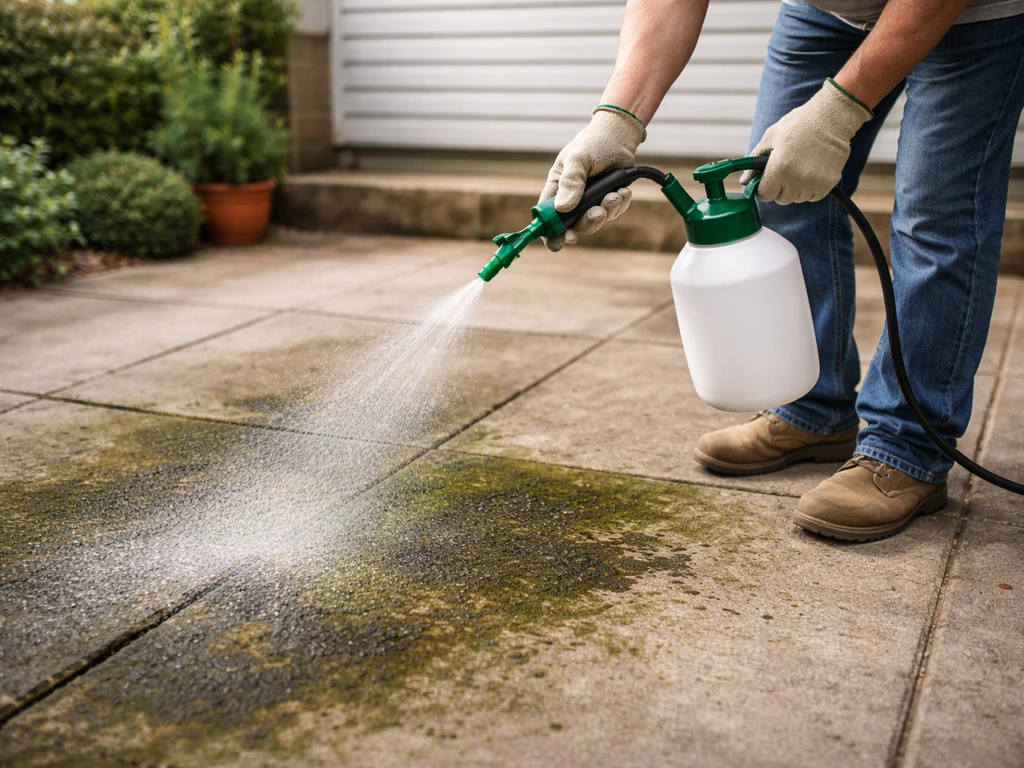
Yes, WD-40 can stain your patio, but not in the way most people expect. It won't leave a bright dye mark like paint or ink. What it does is deposit an oily residue that darkens porous surfaces, leaves a greasy film on sealed or smooth ones, and can attract dirt that makes the mark worse over time. Whether it becomes a permanent problem depends almost entirely on your patio material, how porous it is, how much WD-40 landed on it, and how quickly you dealt with it.
Does WD-40 Stain a Patio? How to Remove Oily Marks

Rhea Lang
5 May 2026
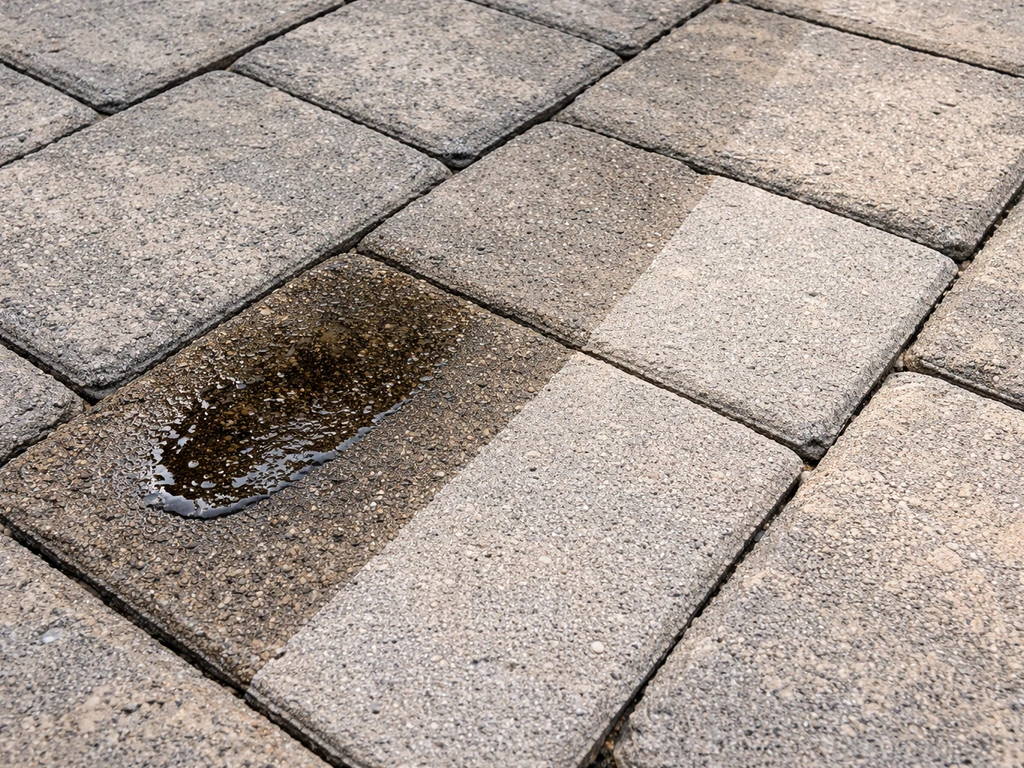
Does WD-40 actually leave a stain on patio surfaces?
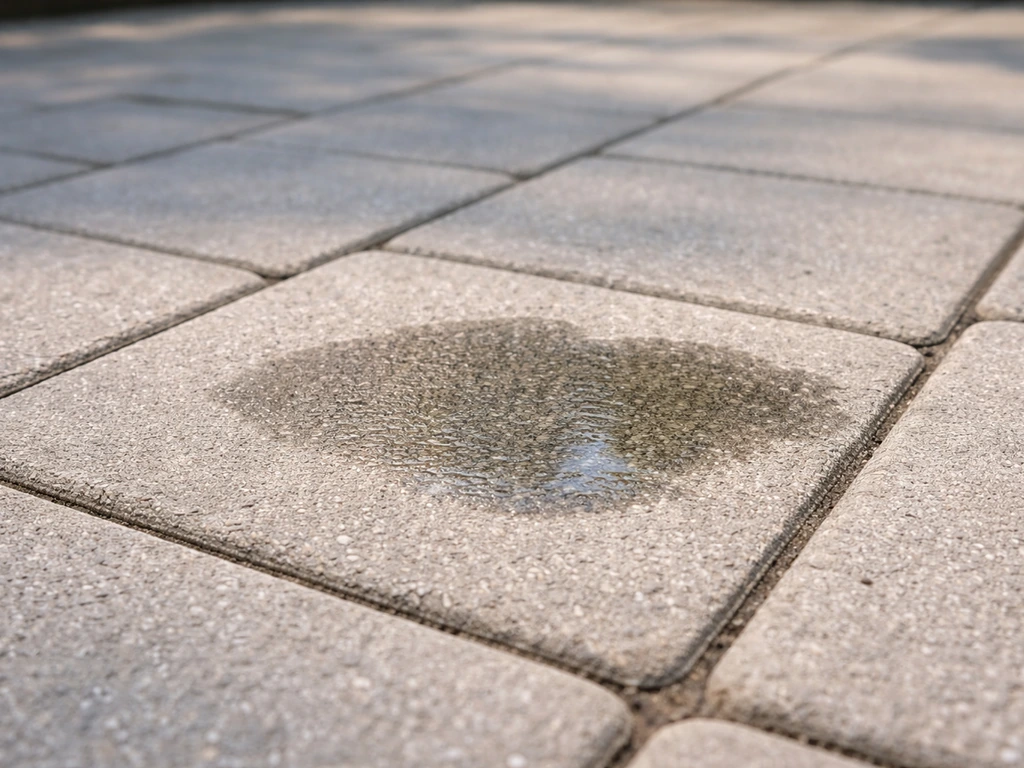
WD-40 is an oil-based product, and oil interacts with patio surfaces the same way any cooking oil or engine grease would: it either sits on the surface as a film or gets drawn into the pores of the material. On a smooth, sealed concrete or porcelain patio, you'll mostly see a greasy sheen that wipes away without too much drama. On something porous like sandstone, brick, natural slate, or unsealed concrete, the oil carrier in WD-40 can move into the capillaries of the stone fairly fast and produce a dark, wet-looking patch. Once oil has soaked into porous stone, it's not just sitting on top anymore and simple wiping won't fix it.
The key distinction worth knowing: WD-40 doesn't chemically etch or permanently dye most patio materials. The darkening or greasy spotting it causes is technically reversible with the right approach. But if you leave it long enough, the oil oxidises and the ingrained residue becomes genuinely stubborn. A fresh spill you deal with in the first few minutes is a completely different situation from a smear you didn't notice for a week.
Which patio materials are most at risk
Not all patio surfaces react the same way to an oil-based product, and knowing your surface type tells you how urgently you need to act.
| Patio Material | Stain Risk | Why | Urgency |
|---|---|---|---|
| Sandstone | High | Extremely porous, oil absorbs deeply and fast | Act within minutes |
| Unsealed concrete | High | Open pores draw oil in quickly, darkening is immediate | Act within minutes |
| Brick / clay pavers | High | Porous surface, oil stains and attracts further dirt | Act within minutes |
| Natural slate | Medium–High | Porous depending on finish, can darken noticeably | Act quickly |
| Limestone / travertine | High | Very porous, oil soaks in and is hard to remove | Act within minutes |
| Granite (natural) | Medium | Less porous than sandstone but still at risk unsealed | Act promptly |
| Sealed concrete | Low–Medium | Sealer resists penetration but film still sits on surface | Clean same day |
| Porcelain / ceramic | Low | Non-porous, WD-40 sits on surface, wipes away easily | Clean when noticed |
| Composite decking | Medium | Can absorb into textured surface, may leave residue | Clean same day |
If your patio is sandstone or any other natural, unsealed stone, treat a WD-40 spill like a small emergency. These materials are genuinely thirsty and will pull oil in within a few minutes. I've seen sandstone pavers develop a dark patch you can spot from across a garden within 15 minutes of an accidental spray.
How to test WD-40 on your patio before you start cleaning
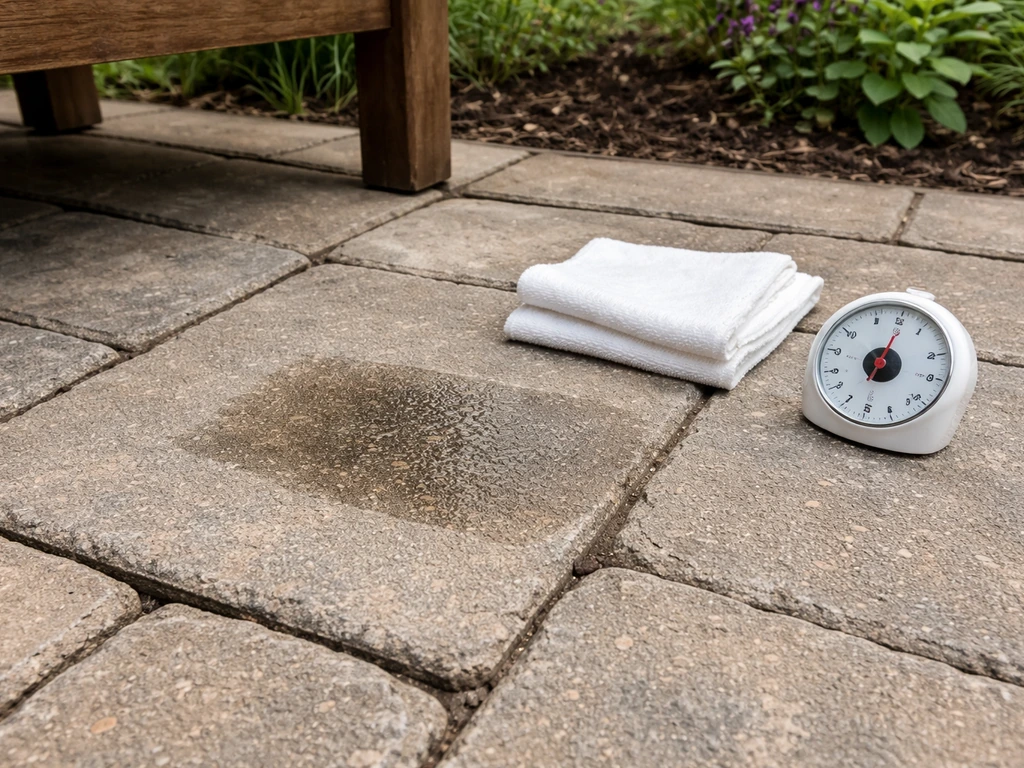
Before you reach for any cleaner, it's worth doing a quick spot test, especially if you're about to use a degreaser or chemical cleaner you haven't used on this surface before. This is particularly important for natural stone because some solvents can actually drive oil deeper into porous materials rather than lifting it, or they can react with the stone itself. The Home Depot recommends this for any concrete cleaner, and the same logic applies to every patio surface.
- Choose a small, hidden area, somewhere like under a garden bench, in a corner, or along the back edge of the patio where a mark won't matter.
- Apply a tiny amount of your intended cleaning product (dish soap, degreaser, or whatever you plan to use) and work it in with a soft brush.
- Wait 2 to 3 minutes, then rinse thoroughly with plain water.
- Let it dry completely, ideally for an hour or two, before inspecting for discolouration, surface damage, or any change in sheen.
- Only proceed with the full cleaning once you're confident the product hasn't affected the surface.
If you're spot-testing for WD-40 staining behaviour before using it as a cleaner (some people do use it intentionally to remove rust marks from concrete), apply a very small amount to the hidden area, leave it for 5 minutes, then blot away the excess and rinse. Check back after the surface dries to see if any darkening or greasy residue remains. This tells you exactly what you're dealing with on your specific surface before you risk a visible area.
How to remove WD-40 stains from your patio (step-by-step by surface)
The removal method depends heavily on whether you're dealing with a fresh spill or a dried, aged residue, and what material you're working with. Here's what actually works for each common scenario. If you're dealing with actual rust spots on a patio surface, the best patio rust remover can help tackle the discoloration without damaging the surrounding material.
Fresh WD-40 spill (any surface): first response
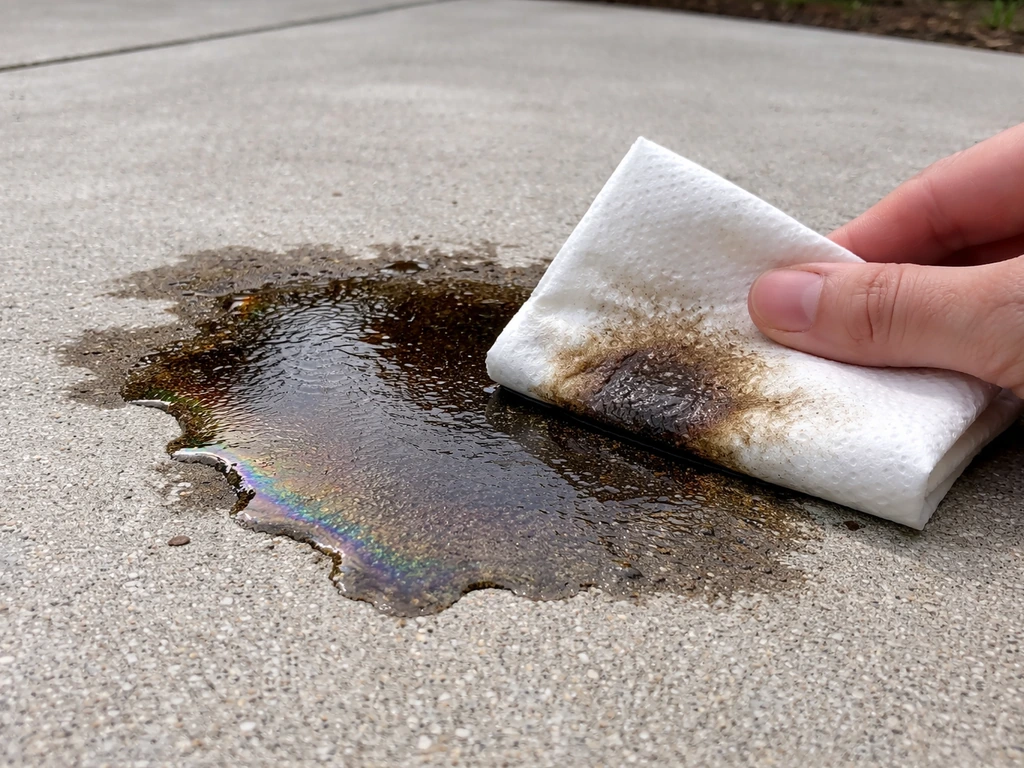
- Do not wipe. This is counterintuitive but important, especially on stone. Wiping spreads the oil into a larger area and pushes it further into pores. The Natural Stone Institute specifically advises blotting rather than wiping.
- Blot the excess immediately using a paper towel, dry cloth, or absorbent material like cat litter or baking soda. Press down and lift, don't rub.
- If you have cat litter, fine sand, or cornstarch available, pour it over the spill and leave for 10 to 15 minutes to absorb as much oil as possible before sweeping away.
- Follow up with the surface-specific steps below.
Concrete (unsealed or sealed)
- After blotting the fresh spill, apply a good squirt of washing-up liquid or a dedicated degreaser directly to the stain. Don't dilute it at this stage.
- Work it in with a stiff-bristled brush, scrubbing in circular motions for a minute or two.
- Leave the soap or degreaser to dwell for 5 to 10 minutes. This is the contact time that does the heavy lifting.
- Scrub again, then hose off thoroughly. Hunker's guidance on WD-40 and concrete specifically stresses acting fast and rinsing thoroughly after degreasing.
- Repeat once or twice if the mark is still visible.
- If the stain has dried in and basic degreasing isn't shifting it, move to a commercial concrete degreaser or a poultice (see below).
Natural stone (sandstone, limestone, slate, granite, travertine)
- Blot immediately, apply an absorbent powder (cat litter, baking soda, or cornstarch), and leave for at least 15 minutes before sweeping away.
- Flush the area with plain water and a small amount of mild dish soap. The Natural Stone Institute recommends flushing and rinsing several times rather than scrubbing hard.
- For a stain that has already darkened the stone, you'll likely need a poultice. Mix an absorbent powder (diatomaceous earth, kaolin clay, or even baking soda) with a small amount of mineral spirits or acetone to form a paste roughly the consistency of peanut butter.
- Apply the poultice about 6 to 12mm (1/4 to 1/2 inch) thick, extending it at least 25mm (1 inch) beyond the edges of the stain.
- Cover with cling film, tape the edges down, and leave for 24 to 48 hours. The drying process is what draws the oil out of the stone.
- Remove the dried poultice, rinse thoroughly, and let the surface dry completely before assessing. You may need up to five applications for a deep stain.
- PROSOCO Oil & Grease Stain Remover is a ready-mixed poultice product that works well on stone and concrete if you'd rather not make your own. It typically needs 5 to 8 hours of dwell time.
Brick and clay pavers
- Blot and apply absorbent as with stone.
- Apply neat washing-up liquid or a dedicated brick degreaser, scrub with a stiff brush, and rinse well.
- If the brick has absorbed oil and shows a dark patch, a poultice works here too. The same 24 to 48 hour approach applies.
- Avoid using strong acids like muriatic acid to try and shift an oil stain on brick. It won't help with oil and can damage the brick surface.
Porcelain, ceramic, or sealed smooth surfaces
- Wipe away the excess WD-40 with a dry cloth.
- Apply washing-up liquid to the area, scrub lightly with a soft brush or sponge, and rinse with warm water.
- For a greasy film that's been left to dry, a diluted multi-surface degreaser sprayed on and left for a few minutes before rinsing usually does the job.
- These surfaces are non-porous so there's no real penetration risk. You're just lifting a surface film.
Using a pressure washer to help
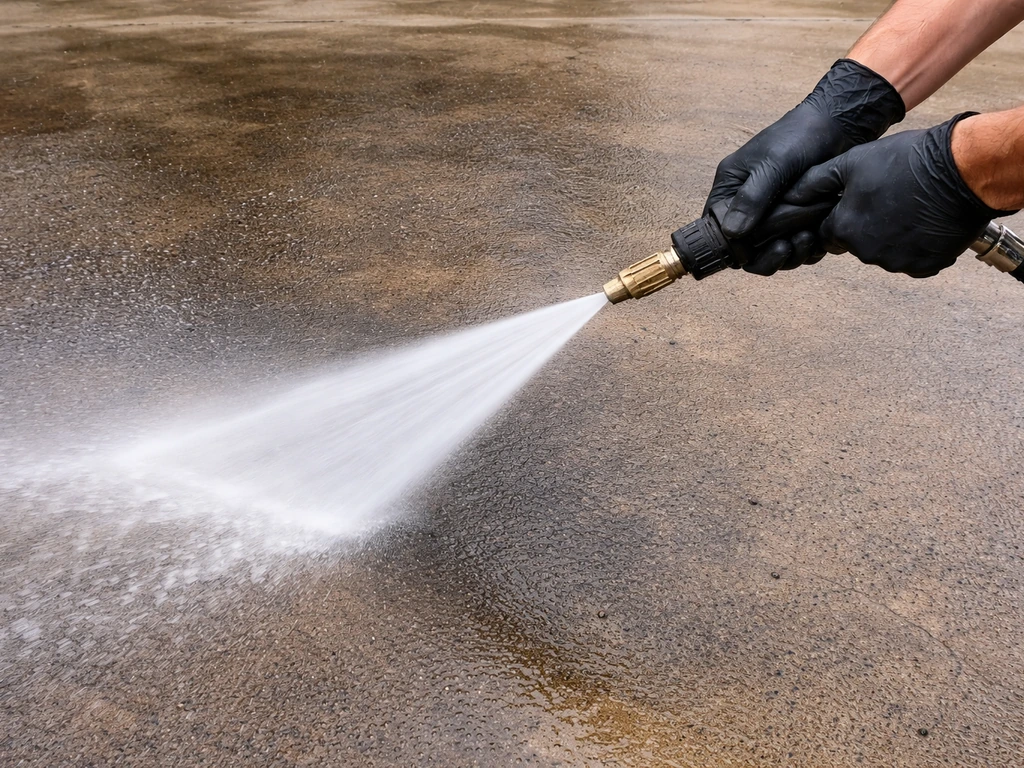
Pressure washing alone won't remove an oil stain effectively, but it's a useful final rinse step after you've applied a degreaser and let it dwell. For concrete, keep the nozzle about 30 to 60cm from the surface if you're using a machine under 2,000 PSI. If you're running something in the 2,000 to 3,000 PSI range, stay 30 to 60cm away. On natural stone, keep the pressure lower (under 1,500 PSI) and use a wide fan tip to avoid blasting into the surface and opening up more pores. Never pressure wash directly into grout lines on sandstone or limestone.
Preventing future WD-40 marks and handling spills
A little forward planning saves a lot of work. Most WD-40 staining happens during maintenance jobs in the garden, things like lubricating gate hinges, garden furniture bolts, or BBQ lid joints, where an accidental overspray lands on the patio beneath. Here's how to avoid the problem in the first place.
- Put down an old piece of cardboard, a plastic sheet, or newspaper under and around whatever you're lubricating before you spray. It takes 10 seconds and saves a lot of cleaning.
- Use the straw applicator nozzle that comes with most WD-40 cans. It gives you a directed spray and dramatically reduces overspray.
- If you do spill, treat it immediately. Even 10 minutes makes a meaningful difference on porous stone.
- Keep cat litter or baking soda in your garden shed. Both are excellent at absorbing oil fast from patio surfaces.
- Consider sealing porous patio surfaces like sandstone, slate, or unsealed concrete. A good quality patio sealer creates a barrier that slows oil penetration significantly and makes future spills much easier to clean. This is especially worth doing if your patio sees regular use with equipment, machinery, or BBQ grease.
- Rinse the area thoroughly after cleaning. Any residual soap or degreaser left on the surface can attract dirt or cause its own staining over time.
If your patio is already sealed, oil and WD-40 will generally bead on the surface rather than sink in, giving you much more time to clean it up. Sealers recommended for natural stone should help resist water and oil-based stains by acting as oil- and stain-repellent barriers, which reduces stain penetration into the stone blank" rel="noopener noreferrer">oil- and stain-repellent sealer that helps reduce stain penetration into natural stone. Applying a quality sealer is one of the best defences against all kinds of oil-based staining, including WD-40, cooking oil splashes from the BBQ, and similar mishaps.
Stubborn stains and when to bring in a professional
Most WD-40 stains on patios respond to the steps above, especially if you caught them early. But occasionally you'll have a case where the oil has soaked deep into a very porous material, been left for weeks, or where multiple DIY attempts have spread or set the stain. Here's how to recognise when you're dealing with a genuinely difficult situation.
Signs the stain has gone deep
- The dark patch doesn't lighten even after the surface has been dry for several hours following cleaning.
- You've done two or three rounds of degreasing and poulticing with no visible improvement.
- The stain appears to have spread or migrated slightly from its original position (this suggests oil is still moving through the material).
- The surface feels tacky or greasy even after thorough rinsing and drying.
Signs of possible surface damage
- The surface appears lighter or paler in the stained area compared to the surrounding patio (this can indicate the surface finish has been affected).
- You can see micro-cracking or a change in texture around where a solvent was applied.
- On sealed surfaces, the sealer appears cloudy, lifted, or discoloured around the stain area.
If you're seeing any of these signs, stop adding more cleaning products. Multiple solvents layered on top of each other can make things worse by driving the oil or residue further in, or by reacting with the stone. GSA guidance specifically warns that some stain-removal liquids and solvents can actually drive a stain deeper into porous concrete if the wrong combination is used.
When professional cleaning is worth the cost
A professional outdoor cleaning company has access to commercial-strength alkaline degreasers, steam cleaning equipment, and specialist poultice products that simply aren't available off the shelf. Natural Stone Institute explains that a poultice stain-removal method involves spreading the poultice over the stained area to about a 1/4 to 1/2 inch thickness, covering it with plastic, and leaving it for 24 to 48 hours to draw out the stain blank" rel="noopener noreferrer">spreading a poultice over the stained area to a 1/4 to 1/2 inch thickness, covering it with plastic, and leaving it for 24 to 48 hours. If you need a reliable solution, look for the best patio stain remover designed for oil and grease. For valuable natural stone patios, sandstone flagging, or expensive porcelain tiles where the appearance genuinely matters, the cost of a professional clean is usually far less than the cost of replacement. It's worth getting a quote if you have a high-value surface and the stain has resisted two or three proper DIY attempts.
If the stain has permanently darkened the stone after all cleaning attempts, re-sealing is sometimes the best practical solution. If you decide to re-seal, it helps to look at wet look patio sealer reviews so you choose a product that matches your surface and won’t trap new residue re-sealing. A wet-look or impregnating sealer applied across the whole patio can even out the appearance and protect against future staining. Similarly, if the original sealer on your patio has been compromised by the WD-40 or the cleaning process, stripping it back and reapplying is often the right next step rather than continuing to try to remove the underlying oil mark. If your sealer has been compromised, follow sika patio seal instructions to reapply the right type of sealant for your surface.
FAQ
How long after a WD-40 spill can I still remove it before it becomes permanent?
Oil-based products usually need time to be broken down, but you should not keep reapplying cleaners repeatedly in short intervals. After a degreaser, give it the manufacturer’s dwell time (often 10 to 20 minutes for many household degreasers), then rinse. If you keep layering solvents, you can drive the residue deeper on porous stone.
Does WD-40 stain a sealed concrete patio differently than unsealed stone?
For sealed patios, start with warm water and a detergent degreaser, blot and rinse, then use pressure washing only as a final step. Avoid strong acids or aggressive solvents, they can dull coatings. If it beads and smears instead of soaking in, sealed surface behavior usually means it is much easier to lift.
Can I use bleach or household toilet cleaners to remove a WD-40 oily mark?
Yes, “bleach it” approaches often backfire. Chlorine bleach and many household cleaners do not dissolve oil, they can also discolor some pavers and may react with grime so the area looks worse. Use an oil-targeting degreaser or alkaline cleaner instead, then rinse thoroughly.
Why does the stain look worse after cleaning, even when the WD-40 is gone?
If the patio is damp, you may see a darker area temporarily even after the oil is removed. Wait until the surface is fully dry before judging results. For natural stone, recheck after drying overnight because oil can migrate to the surface as it dries.
Is it safe to use WD-40 intentionally to remove rust marks from concrete or should I worry about staining?
Do a small hidden spot test first, especially on natural slate, sandstone, limestone, or older concrete. Some solvents can increase spread by carrying oil deeper, even if they look like they are “working.” Your test should include blotting excess, rinsing, and letting it dry.
Will pressure washing alone remove a WD-40 stain?
It can, depending on the machine and nozzle. Even if you use a pressure washer, the oil is still an oily film, so pressure alone may spread it. Always degrease first, let it dwell, then use a gentle rinse. Keep distance and avoid directly blasting grout lines on porous stone.
What should I do immediately after an accidental WD-40 overspray, while it is still wet?
Dry, then scrape or blot off any excess before it gets worked in. If it is still wet, absorb with paper towels or a clean rag, do not rub. After that, use a degreaser and rinse. Rubbing a fresh overspray can push oil into pores much faster.
Why does the mark look bigger days later even if I tried to clean it right away?
Yes, product type matters. WD-40 can be darker or more noticeable if it is mixed with dirt, pollen, or grease already on the patio, and that contamination can make the mark look deeper over time. After treating the oil, you may need a light surface clean to remove the dirt it attracted.
When should I consider using a poultice instead of repeating degreaser and rinse steps?
A poultice can help when oil has penetrated deeper, because it pulls residue upward rather than just washing it across the surface. Look for an oil-and-grease patio poultice or professional-grade alkaline products for heavy cases. For sealed surfaces, poultices can still work but should be tested to avoid coating damage.
How can I tell if the problem is remaining oil versus a damaged sealer?
If a patio stain keeps coming back, it often means residue is still present below the surface or the sealer is compromised. In that case, stop mixing new cleaners and switch to either targeted removal (including poultice or professional treatment) or stripping and re-sealing the correct sealer type for your surface.
Next Article
How to Use Wet and Forget Patio Cleaner Step by Step
Step by step guide to apply Wet and Forget patio cleaner, prep and safety, dwell time, rinse or no rinse, and troublesho