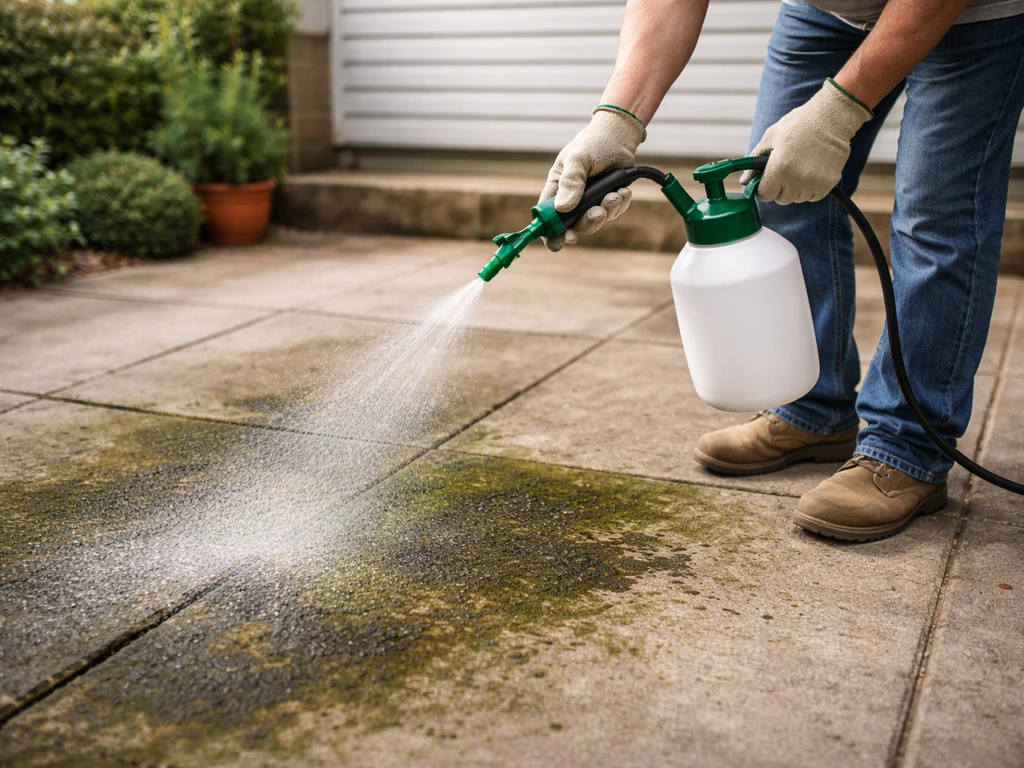
Yes, you can absolutely powerwash a patio yourself, and for most concrete patios it's the fastest and most effective way to shift years of built-up grime, algae, and staining. The key is using the right pressure (around 2,500 to 3,000 PSI for concrete), the right nozzle (25 or 40 degree fan tip, or a surface cleaner attachment), and keeping the wand at least 12 inches from the surface at a 45-degree angle. Get those three things right and you'll end up with a clean patio rather than a pitted or etched one. A good set of tips for pressure washing patio work is to match the PSI to your surface, use the right nozzle angle, and keep the wand at a safe distance to avoid etching.
How to Powerwash a Patio: Step-by-Step for Concrete
Rhea Lang
13 May 2026
Can you powerwash your patio? (And should you?)
For concrete and brick patios, powerwashing is usually the right call. It's quick, doesn't require harsh chemicals for general cleaning, and the results speak for themselves. Where you need to be more careful is with softer natural stones like limestone or sandstone, where high-pressure water can literally eat into the surface and damage mortar joints over time. If you've got those materials, lower pressure and wider fan nozzles are non-negotiable, and honestly you might be better off with a dedicated stone cleaner and a scrub brush for regular maintenance. For a standard concrete patio, though, powerwashing is a perfectly sensible DIY job. how to jet wash a patio powerwashing.
Choosing the right power washer and attachments
The machine you choose matters a lot. If you prefer to avoid high-pressure water blasting, you can also consider a steam cleaner for patios, which can lift grime and kill surface-level algae with less risk of etching. Residential electric pressure washers typically put out 1,300 to 2,000 PSI, which is on the low end for concrete but workable if you're dealing with light dirt and algae.
For a concrete patio with real grime, moss, or staining, you want at least 2,500 PSI and ideally closer to 3,000 PSI. Mid-grade gas units sit in the 2,500 to 3,500 PSI range and handle most concrete jobs comfortably. You don't need anything above 3,000 PSI for a residential patio, and pushing higher than that increases your risk of etching or spalling the surface, especially on older concrete.
Flow rate (GPM) matters just as much as PSI. A higher GPM means more water moving through, which flushes dirt off the surface more efficiently. For concrete cleaning, aim for at least 4 GPM if you can. A pressure washer with 3,000 PSI and 4 GPM will clean faster and more evenly than one with the same PSI but 2 GPM.
Nozzles and attachments: what to actually use
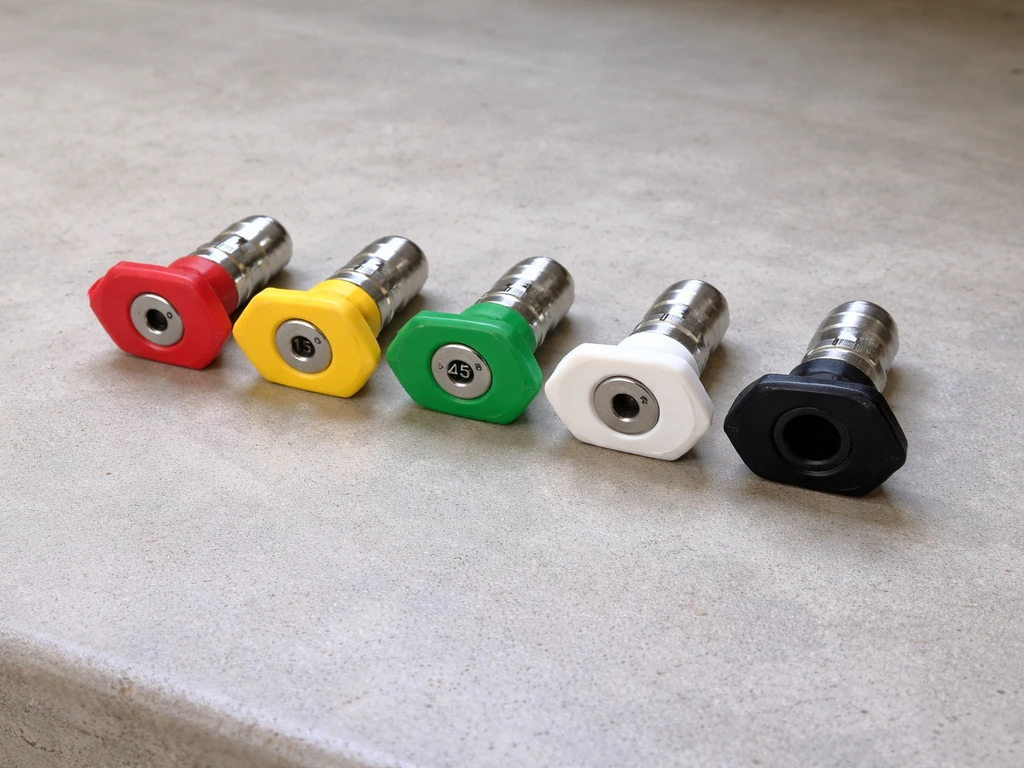
Standard pressure washers come with color-coded nozzle tips at 0, 15, 25, 40, and soap settings. For patio cleaning, use the 25-degree (green) tip as your workhorse, or the 40-degree (white) tip for more delicate areas or older concrete. Never use the 0-degree (red) tip on a patio surface, and avoid the 15-degree (yellow) tip too unless you're stripping paint or tackling an extremely stubborn spot in a very controlled way. Some guides mention turbo or rotary nozzles as a shortcut, but these can badly scar concrete and paving surfaces, so skip them entirely.
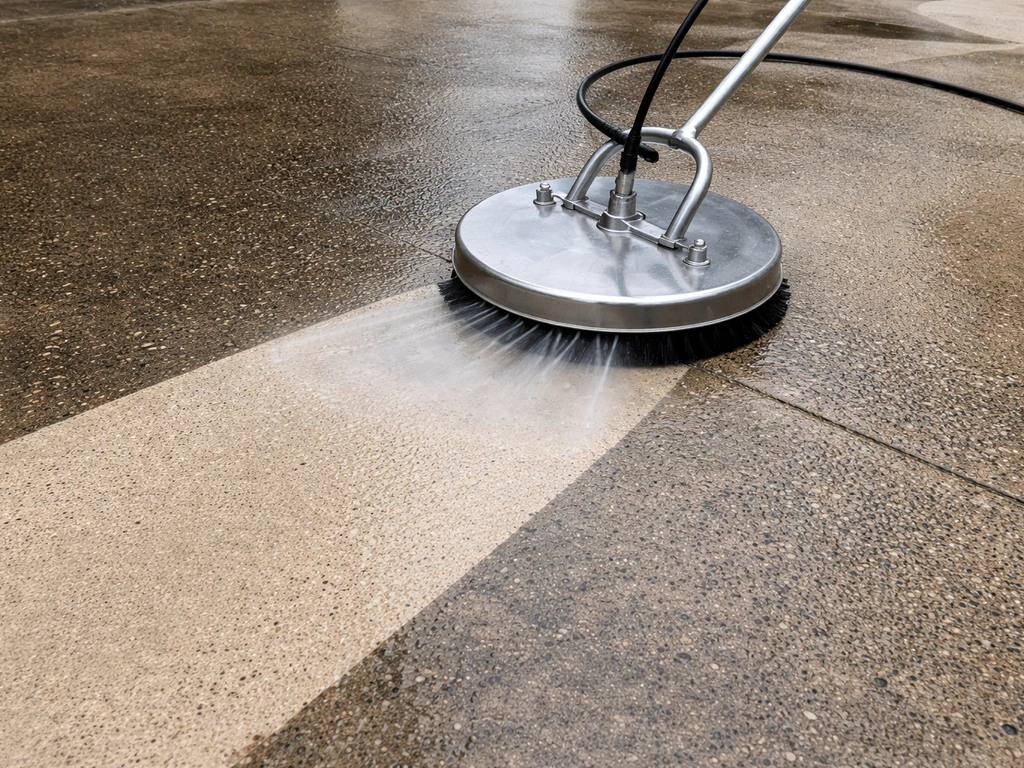
The best attachment for a patio is a rotating surface cleaner, typically 12 to 15 inches wide. It keeps the spray at a consistent distance and angle across the full width, which means no streaking and no accidental etching from holding the wand too close in one spot. I learned this the hard way when I ended up with faint parallel lines across a section of concrete from holding the wand wand unevenly. A surface cleaner solves that problem completely and covers ground much faster than a handheld wand.
| Nozzle/Attachment | Spray Angle | Best For | Use on Patio? |
|---|---|---|---|
| Red tip | 0 degrees | Stripping rust, very heavy buildup | No, too aggressive |
| Yellow tip | 15 degrees | Stripping paint, heavy concrete stains | Rarely, with extreme caution |
| Green tip | 25 degrees | General concrete cleaning | Yes, main cleaning nozzle |
| White tip | 40 degrees | Delicate surfaces, rinsing | Yes, for older/softer concrete |
| Black/Soap tip | 65 degrees | Applying detergent | Yes, for pre-treatment |
| Surface cleaner attachment | Rotating heads | Large flat areas like patios | Yes, best option overall |
Step-by-step: how to powerwash a patio
- Clear the patio completely. Move all furniture, plant pots, rugs, and anything else off the surface. You want an unobstructed area to work across in systematic passes.
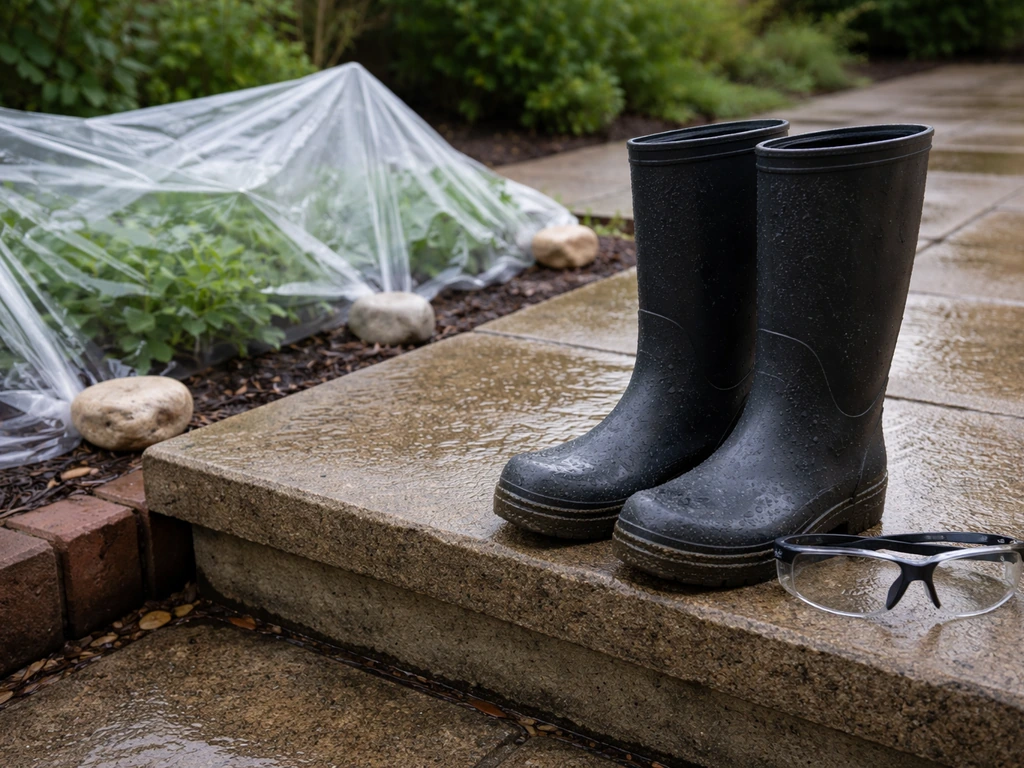
- Cover nearby plants and garden beds. Lay plastic sheeting or an old tarp over any planting areas right next to the patio. Detergent runoff and high-pressure overspray can stress or damage plants.
- Sweep or blow off loose debris. Remove leaves, grit, and loose dirt with a stiff broom or leaf blower before you start. This stops debris from clogging your surface cleaner or getting blasted into gaps.
- Pre-treat with detergent if needed. For algae, moss, grease, or heavy staining, apply a concrete-specific detergent or degreaser using the soap nozzle (low pressure). Let it dwell for 5 to 10 minutes but don't let it dry on the surface.
- Connect and test your pressure washer. Check all connections, attach your chosen nozzle or surface cleaner, and do a quick test spray on an inconspicuous corner of the patio. This lets you confirm the pressure and distance are safe before you commit to the main area.
- Start washing from one end and work methodically. Hold the wand or surface cleaner at roughly 12 inches from the surface at a 45-degree angle. Use overlapping, sweeping passes and work toward a drain or edge so dirty water flows away from the area you've already cleaned.
- Rinse thoroughly with clean water. Switch to a 40-degree tip or increase the distance and do a full rinse pass across the entire patio to flush away detergent residue and loosened grime. Leaving soap residue behind can cause new staining.
- Let the patio dry before walking on it or replacing furniture. Concrete typically needs a few hours to dry fully in good weather. Replacing furniture too soon can leave marks and trap moisture.
Getting concrete patios right
Concrete looks tough, and it is, but it can be damaged by pressure washing if you get the technique wrong. The two most common mistakes are getting the nozzle too close (under 8 to 12 inches) and using too narrow a tip. Either one can etch or pit the surface, which looks terrible and makes the concrete more porous and harder to keep clean in future. On older concrete that's already showing signs of spalling or cracking, drop your pressure to the lower end of the safe range, around 2,000 to 2,500 PSI, and use a 40-degree tip.
Decorative concrete and exposed aggregate finishes need even more care. The aggregate sits proud of the surface matrix and can be knocked loose by aggressive washing. If you have exposed aggregate, test a hidden patch first, use a 40-degree tip, keep the wand at least 18 inches away, and consider whether you actually need a pressure washer at all for routine maintenance. Linea recommends testing a hidden patch first and matching the PSI and technique to help prevent costly concrete damage when pressure washing patio surfaces test a hidden patch first.
For standard sealed or unsealed concrete patios, the sweet spot is 2,500 to 3,000 PSI with a 25-degree tip or a surface cleaner attachment, nozzle kept 12 inches from the surface, spray at a 45-degree angle, and slow overlapping passes. If you want more jet wash patio tips for avoiding common mistakes and getting an even finish, follow the guidance on nozzle choice and safe distance. That combination will shift virtually anything short of deeply embedded oil staining without leaving a mark on the concrete.
Surface prep, cleaning products, and tackling common grime
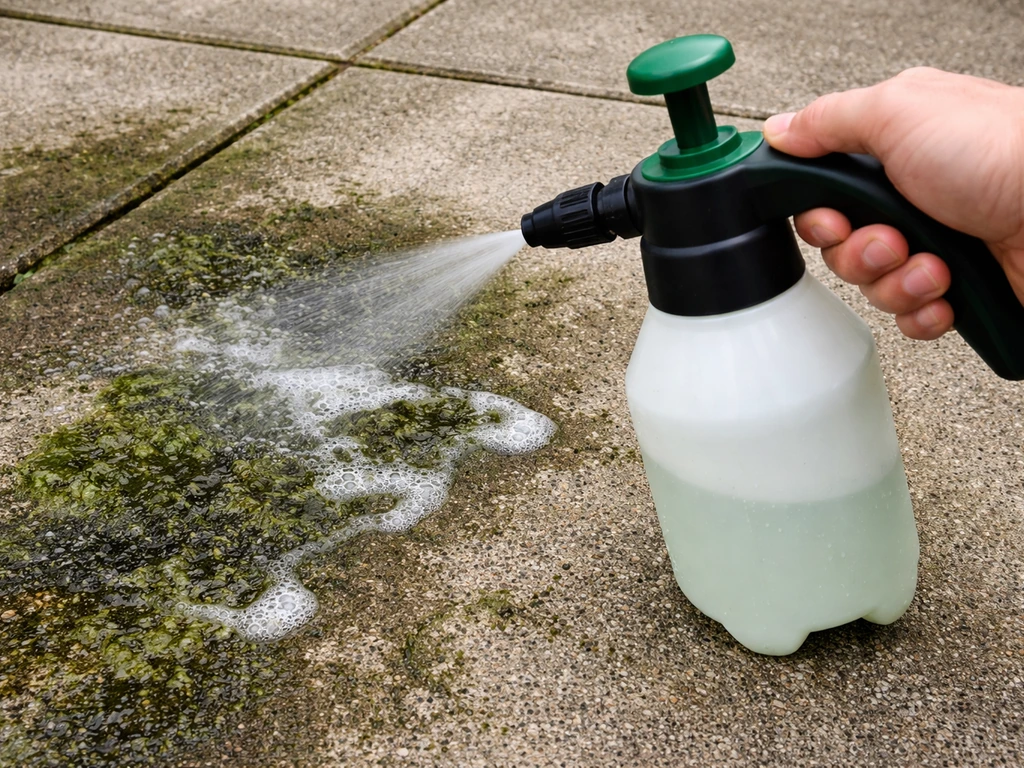
Plain water does a lot of work on a patio, but for specific problems you'll get far better results with the right cleaner applied before you pressure wash. Here's how to match the product to the problem.
Algae, moss, and mildew
These are the most common patio problems and also the most satisfying to shift. A sodium percarbonate-based patio cleaner (sometimes sold as oxygenated or oxygen-activated cleaner) works well here. Apply it diluted with water, let it dwell for 5 to 10 minutes while it breaks down the growth, then pressure wash. For heavier green or black algae, a dedicated patio algaecide or a diluted bleach solution (sodium hypochlorite) applied before washing speeds up the process significantly. Rinse thoroughly afterward to clear chemical residue.
Grease and oil stains
Pressure washing alone won't budge oil stains. You need a degreaser or concrete-specific cleaner applied directly to the stain and worked in with a stiff brush before you wash. Leave it for at least 10 minutes, then hit it with the pressure washer at 2,500 to 3,000 PSI. Repeat if the stain is deep-set. For really stubborn old oil stains, a poultice method using absorbent material and degreaser can pull more of the oil out before washing.
Efflorescence (white powdery deposits)
Efflorescence is the white chalky residue you sometimes see on concrete and brick, caused by water-soluble salts migrating to the surface. Pressure washing alone shifts some of it, but for stubborn efflorescence you need an acidic cleaner. SureKlean 600 is a concentrated acidic cleaner recommended for masonry and construction dirt, including efflorescence (listed pH is about 0.1 at 1:9 dilution) stubborn efflorescence you need an acidic cleaner. Products like sulfamic-acid-based etch and clean formulas or diluted phosphoric acid solutions are effective and safer to handle than muriatic acid. Apply, let dwell for the time specified on the product, then rinse thoroughly with the pressure washer. Always test on a small area first, especially on coloured or decorative concrete.
Rust stains
Rust stains from metal furniture legs or pots are notoriously stubborn. A dedicated rust remover containing oxalic acid or a similar acid-based formula is your best option here. Apply, allow dwell time, and rinse well. Pressure washing alone will not remove rust discolouration.
Safety, protecting your garden, and aftercare
Electrical safety with electric pressure washers
Electric pressure washers are convenient but they introduce electrical hazards in a wet environment. If you do need to jet wash your patio in damp conditions, focus on safety and use a careful technique so water and electricity risks are managed jet wash patio in the rain.
Always plug into a GFCI-protected outlet (a residual current device in the UK), check that your extension cord is rated for outdoor and wet-location use, and keep all cord connections off wet ground. If your pressure washer doesn't have built-in GFCI protection and your outdoor outlet doesn't have it either, add a portable GFCI adapter. This isn't optional, there are documented fatalities linked to pressure washers and missing GFCI protection.
Gas machines sidestep the electrical risk but have their own handling requirements around fuel.
Personal protective equipment
Wear waterproof boots with grip (not sandals or trainers), safety glasses to protect against debris and chemical splash, and waterproof gloves when applying cleaners. The spray from a pressure washer at 2,500 PSI can break skin if directed at a person, so always be aware of where the nozzle is pointing and keep bystanders and pets well clear.
Protecting plants and landscaping
Cover any garden beds or planters immediately adjacent to the patio with plastic sheeting before you start, especially if you're using chemical cleaners. Even 'patio-safe' detergents can stress plants if they pool around roots in large quantities. After washing, rinse any soil or planting areas that got overspray with clean water to dilute any detergent residue. Most established garden plants will be fine with incidental overspray, but concentrated detergent runoff directly into a flowerbed is worth avoiding.
Aftercare and keeping the patio cleaner for longer
Once the patio is clean and fully dry (give it at least 24 to 48 hours in decent weather), consider applying a concrete sealer. A good penetrating sealer reduces porosity, which means algae, moss, and staining have less to grip onto, making your next cleanup significantly easier. For concrete in particular, sealing after a thorough powerwash is one of the most effective low-effort maintenance steps you can take. If you skipped sealing in previous years and the patio has greened up quickly each spring, this is probably why.
Finally, a quick note on timing: avoid pressure washing in very cold weather when there's a risk of frost. Water forced into porous concrete that then freezes will expand and can cause surface spalling. Early spring or late summer are ideal, giving the concrete time to dry and, if you're sealing, for the sealer to cure properly before cold weather arrives.
FAQ
What’s the best way to avoid streaks or patchiness when powerwashing a patio?
A rotating surface cleaner (around 12 to 15 inches wide) usually gives the most even results, especially if you are prone to keeping one spot too close. If you are working without one, plan on slower overlapping passes and hold the wand at a consistent height, aiming to keep the distance and angle unchanged across the whole section.
Can I use a narrow tip or turbo nozzle to speed things up if some stains remain?
Do not use a 0-degree (red) tip on concrete or any paving surface. For “almost clean” spots, start with a 25-degree (green) tip, then adjust only one variable at a time (slightly move closer within the safe range, or increase dwell time with a cleaner) rather than switching to the narrowest or highest impact tips.
Will powerwashing damage a sealed concrete patio?
Yes, you can powerwash a sealed concrete patio, but you must be careful because strong pressure can dull or prematurely wear the sealer. Keep to the lower end of the safe range (around 2,000 to 2,500 PSI) and prefer a 40-degree tip or a surface cleaner, then test in a hidden corner first.
How do I tell whether my patio is sealed before I powerwash it?
If water beads up, the sealer may still be intact. If it soaks in quickly or the surface looks darker after wetting, the sealer may be degraded. A simple test is to sprinkle water in an inconspicuous area, wait a few minutes, and check whether it absorbs before you choose higher PSI or stronger chemical dwell times.
What’s the safest approach for algae or moss so it does not come back quickly?
Moss and algae can spread spores if you blast them without chemical help. For best results, apply an oxygenated patio cleaner or an algae-targeted product first, allow the dwell time, then powerwash. After rinsing, give the surface time to fully dry so regrowth does not restart immediately.
Why doesn’t high pressure remove oil stains even after several tries?
For oil stains, pressure washing alone often just pushes oil deeper or spreads it. Use a concrete-specific degreaser, scrub it in with a stiff brush, let it dwell at least 10 minutes, and only then powerwash. For deep-set stains, a poultice method with absorbent material typically works better than repeating high-pressure passes.
How long should I wait after powerwashing before applying a concrete sealer?
Let the patio dry longer in damp or shaded areas. Sealing is most reliable when the concrete is fully dry (often 24 to 48 hours in decent weather), and you should avoid sealing if temperatures will drop soon after washing because moisture trapped in pores can interfere with curing.
Do I always need acid treatment for white chalky efflorescence?
If efflorescence is visible, pressure washing may only partially remove it because it is driven by salts within the concrete. Use an acidic cleaner such as a sulfamic-acid or diluted phosphoric-acid-based product as directed, test a small area first, and rinse thoroughly to stop residue from remaining on the surface.
Is it okay to powerwash in winter or near freezing temperatures?
In very cold weather, water can be driven into pores and then freeze, which can contribute to surface spalling. If freezing risk is possible, postpone until temperatures are consistently above freezing and the patio can dry fully before cold snaps.
What’s the best way to remove rust from concrete patio surfaces?
Rust staining generally will not lift with normal patio cleaners or pressure alone. Use an oxalic-acid or dedicated rust remover, allow the dwell time, and rinse well. Also avoid letting the solution run into nearby soil, because concentrated chemicals can affect plants.
Can I powerwash a patio if the ground is damp or it might rain?
Yes, but electrical safety is the priority. Use a GFCI-protected outdoor outlet (or a portable GFCI adapter if needed), keep all cord connections off wet ground, and ensure the extension cord is rated for outdoor wet locations. If your setup lacks GFCI protection, do not proceed until it is addressed.
Next Article
How to Use Wet and Forget Patio Cleaner Step by Step
Step by step guide to apply Wet and Forget patio cleaner, prep and safety, dwell time, rinse or no rinse, and troublesho