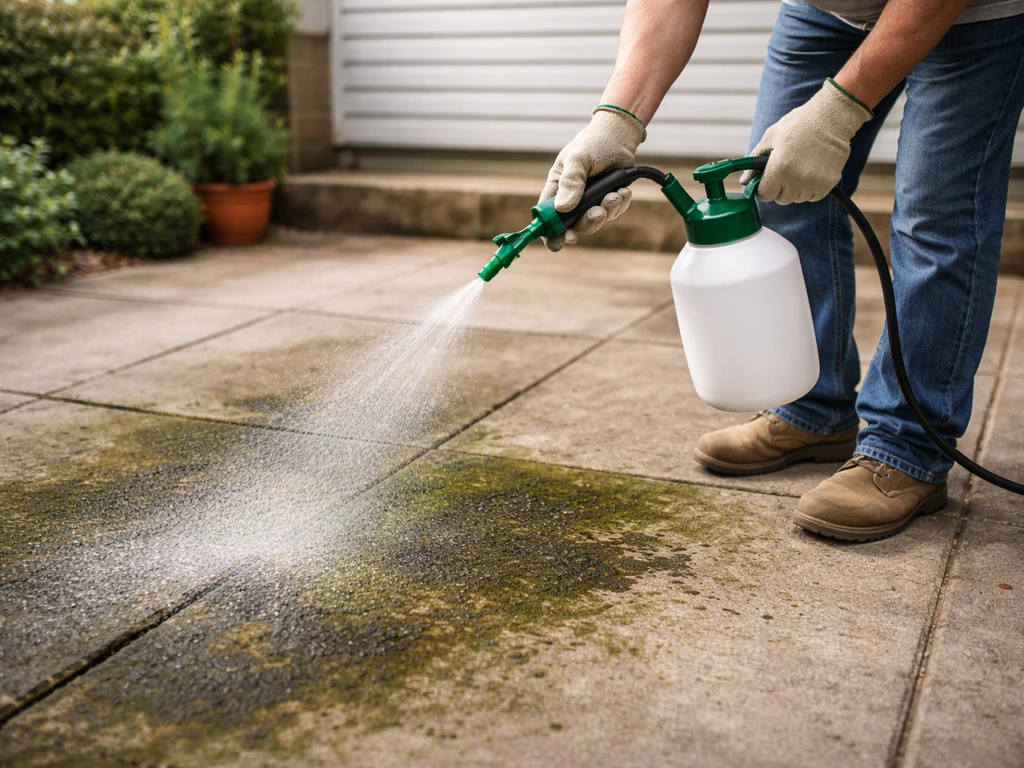
Yes, the Kärcher K3 works with patio cleaner attachments. The T-Racer surface cleaner (T 5, part no. 2.644-084.0) is officially compatible with K2 through K5 machines, so your K3 connects straight up with no adapter needed on any modern model. The basic workflow is: connect your water supply, attach the patio cleaner head to the K3's high-pressure hose, set the machine to high-pressure mode, and move the cleaner in slow, overlapping passes about 15 cm (6 inches) from the surface. That's the core of it, but the details below will save you from streaks, etching, and a lot of frustration.
How to Use a Patio Cleaner with a Karcher K3 Pressure Washer
Rhea Lang
7 May 2026
Confirming compatibility: K3 and patio cleaner attachments
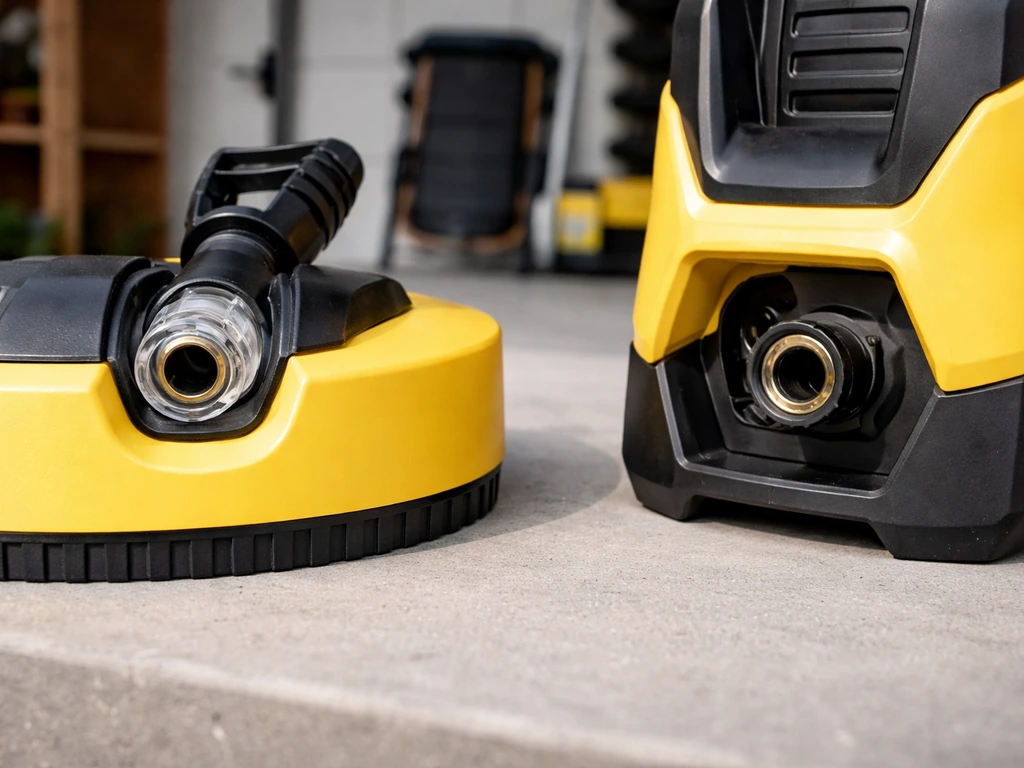
The Kärcher T 5 T-Racer (2.644-084.0) is the most common patio cleaner attachment for K-series machines, and it fits all Kärcher Home & Garden pressure washers from K2 upward, which puts every current K3 model squarely in range. The connection is Kärcher's standard quick-release coupling, so if your K3 already has a lance and nozzle attached, the T-Racer swaps in exactly the same way. No tools required.
The one edge case worth knowing: very old Kärcher machines made before 1991 may need an adapter. If you have a K3 from the last decade (or even the last 20 years), you won't be in that category. If you're using a third-party surface cleaner rather than the official T-Racer, check that it uses a Kärcher-compatible quick-release fitting and is rated for the K3's maximum pressure output (up to 120 bar / 1740 psi depending on the K3 variant). Most reputable aftermarket heads state this clearly on the box.
The T-Racer comes in different sizes (T 5, T 7, T 7 Plus). For a K3, the T 5 is the right match by flow rate and pressure. The larger T 7 Plus is better suited to K5 and above. If you're deciding between the K3 and K4 for a bigger job, there's a separate guide covering the K4 setup that's worth a read before you upgrade.
Setting up your K3 before you start
Water supply
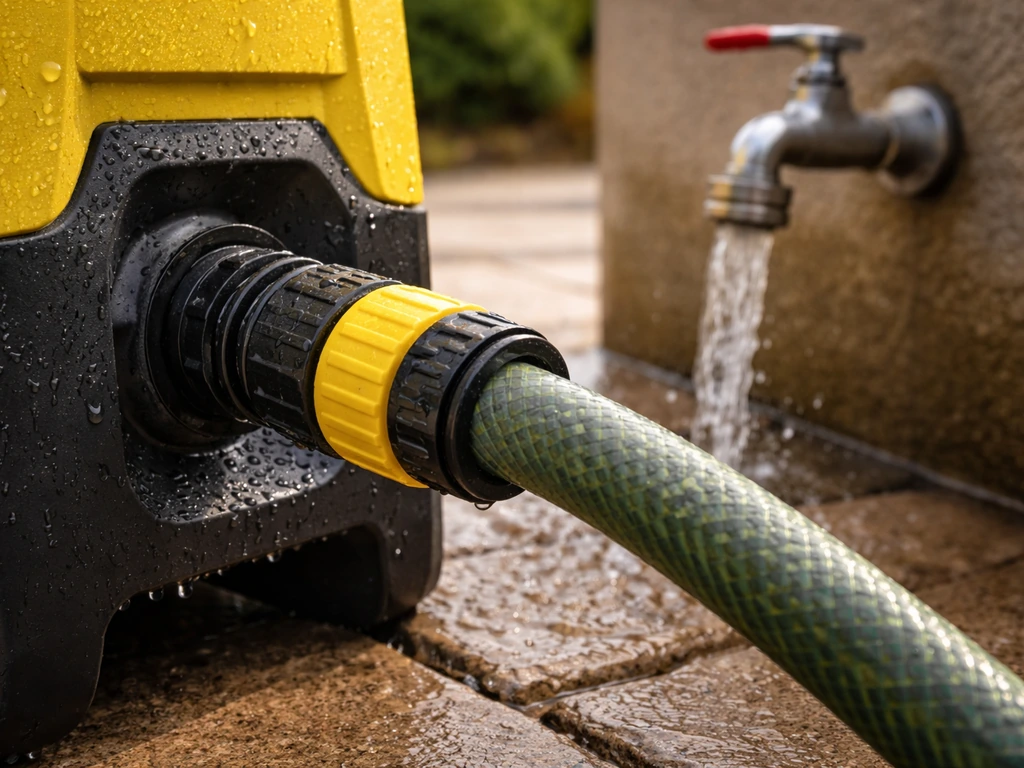
A solid water supply is the single biggest factor in whether your K3 performs properly with a patio cleaner. Use a garden hose at least 13 mm (1/2 inch) in diameter and run a full mains cold-water supply. Check the hose for kinks, leaks, and blockages before you start, and make sure the inlet filter on the K3 is clean. A partially blocked inlet filter will kill your pressure and make the surface cleaner spin unevenly or stall. I've been caught out by a clogged filter more than once and spent ten minutes troubleshooting what turned out to be a two-minute fix.
Pressure mode
Run the K3 in high-pressure mode when using the patio cleaner attachment. This is important: the surface cleaner relies on high pressure to spin the internal rotor and create the rotating jet that scrubs the patio evenly. If your K3 has an Eco mode, avoid it for this task. Eco mode reduces pressure and flow, which means the T-Racer won't spin properly and you'll get patchy, uneven results.
Detergent setup
On the K3, blank" rel="noopener noreferrer">detergent can only be applied in low-pressure mode using the black low-pressure nozzle or the detergent suction mode, not through the patio cleaner attachment itself. If you need the exact steps for detergent, see how to use the Karcher K2 patio cleaner setup as a guide for low-pressure pre-treating detergent can only be applied in low-pressure mode. The attachment doesn't have a detergent port, and the high-pressure setting bypasses the detergent siphon entirely. So your workflow is: pre-treat with detergent in low-pressure mode, let it dwell, then switch to the patio cleaner for the cleaning pass. More on exactly when and how to do this is in the detergent section below.
Attaching and using the patio cleaner for streak-free results
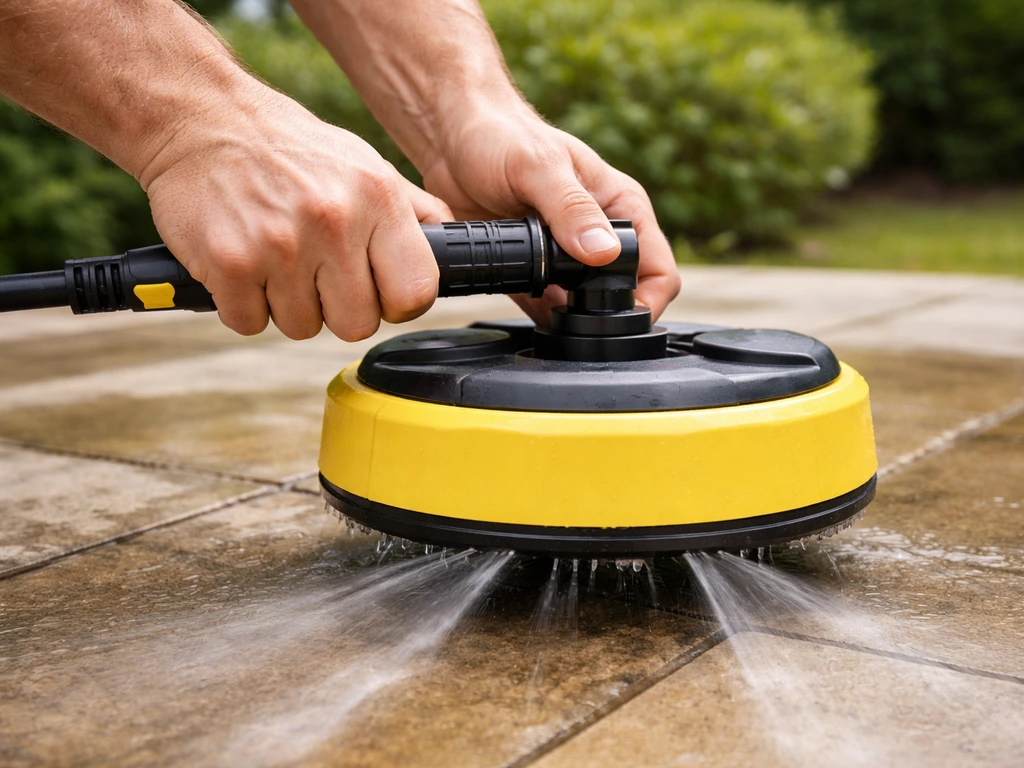
- Connect the high-pressure hose to your K3, then click the T-Racer onto the hose end using the quick-release coupling. Give it a firm push and twist until it locks.
- Turn on the water supply first, then start the K3. Let it run briefly with the trigger pressed to purge any air.
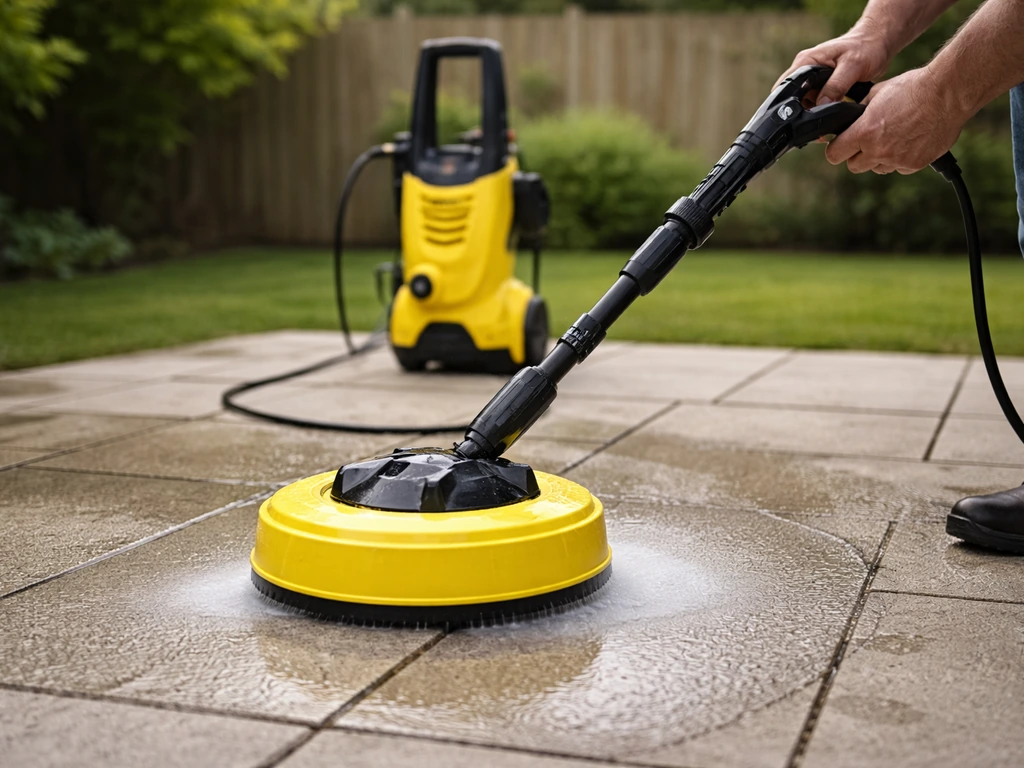
- Hold the handle of the T-Racer and position the cleaning head flat on the surface. Keep it level, not tilted, so the rotating jet cleans evenly. The base of the head should sit about 15 cm (6 inches) from the surface. In practice this means it rests on the patio with its own weight, which is exactly how it's designed to be used.
- Move in slow, overlapping passes. Think of it like mowing a lawn: work in straight lines, overlap each pass by about 5–10 cm, and maintain a consistent walking pace. Too fast and you get light stripes. Too slow and you risk over-cleaning one strip next to an under-cleaned one.
- At edges and corners, guide the head so the edge of the cleaning disc runs along the corner rather than tilting the tool. Tilting lifts one side of the cleaning head off the surface and creates a visible stripe.
- When you stop mid-job, don't release the trigger while the head is sitting on the surface. Move the head slightly off the patio edge or onto an already-cleaned section, release, and then restart. This prevents a concentrated pressure mark.
- Work away from doors, drains, and plant beds where possible to control where the dirty water runs.
Streak-free results come almost entirely from consistent speed and full overlap. If you find yourself with visible stripes after drying, the fix is usually slower movement and a second pass at 90 degrees to the first.
Getting the pressure right for different patio surfaces
| Surface type | Risk level | Recommended approach | Key watch-out |
|---|---|---|---|
| Concrete | Low | Full K3 pressure, standard T-Racer height (15 cm), overlapping passes | Pre-test on a hidden corner first to check for soft/porous concrete |
| Brick and natural stone | Medium | Full K3 pressure, keep head flat, avoid dwelling in one spot | Check for loose mortar joints before starting; pressure can dislodge them |
| Sandstone and slate | High | Reduce effective pressure by slightly increasing standoff height; test a small area first | Sandstone etches easily; a single slow pass is better than multiple fast ones |
| Porcelain and composite pavers | Low-medium | Full K3 pressure works well; check for unsealed grout joints | Unsealed grout can be disturbed; seal after cleaning |
| Block paving / clay brick | Medium | Standard pressure, watch kiln-fired vs. concrete block (concrete is softer) | Re-sand joints after cleaning as sand washes out |
Always pre-test in an inconspicuous area on any surface you haven't cleaned with a pressure washer before. This is especially important on sandstone and older natural stone. I learned this the hard way on a client's sandstone terrace years ago: what looked like solid stone had a thin surface layer that lifted under pressure. One test patch before you start saves a lot of grief.
Tackling specific stains and growth
Mold and algae
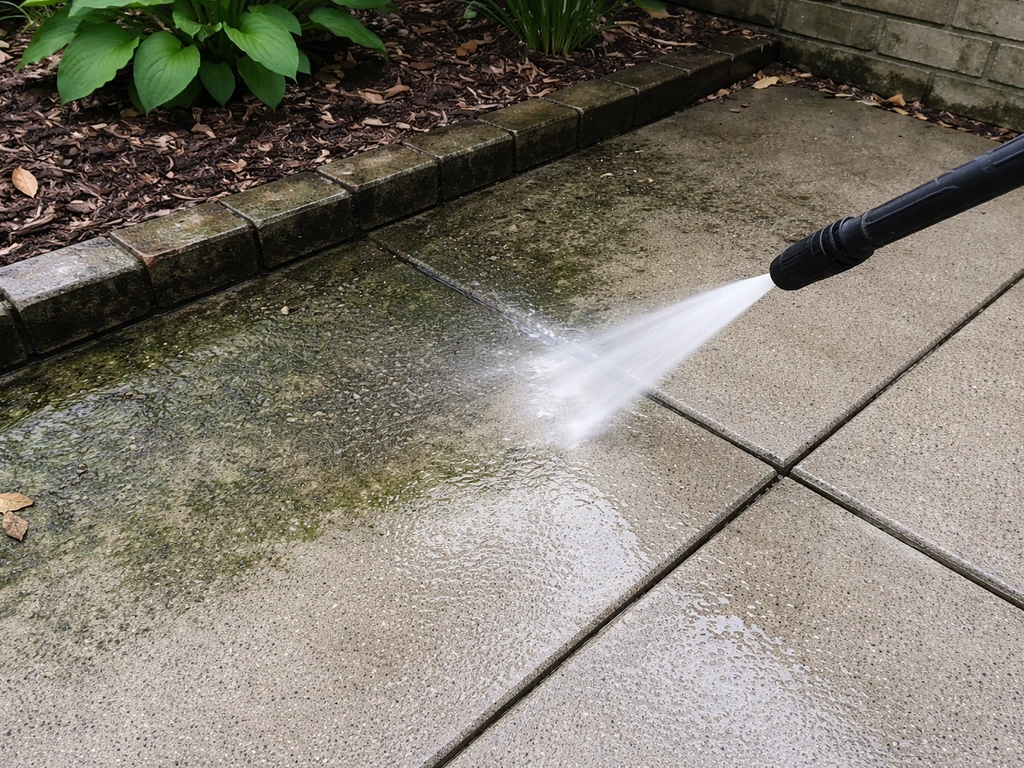
Green or black biological growth responds very well to a patio cleaner pass, but for heavy coverage you'll get better results with a pre-treatment. Apply a diluted patio biocide or Kärcher's own patio cleaning fluid in low-pressure mode, let it sit for at least 5 minutes (more if the growth is thick), then go over it with the T-Racer. Apply a diluted patio biocide or Kärcher's own patio cleaning fluid in low-pressure mode, let it sit for at least 5 minutes (more if the growth is thick), then go over it with the T-Racer Kärcher patio cleaner fluid. The detergent breaks down the biological structure so the surface cleaner doesn't just push it around. Without pre-treatment on heavy algae, you often end up redistributing a thin smear rather than removing it.
Moss
Thick moss needs physical removal first. Pull or scrape off the bulk of it before you start the pressure washer, otherwise it clogs under the T-Racer head and blocks the nozzle. Once the surface layer is gone, a pre-treat with a moss killer followed by the T-Racer pass works well. For ongoing prevention, treat with a long-lasting moss inhibitor after cleaning and before resealing.
Grease and ground-in grime
Grease doesn't respond to water pressure alone. You need a degreaser pre-treatment applied in low-pressure mode, left to dwell for the full 1 to 3 minutes (or longer for cooking grease), then worked with the T-Racer. On concrete BBQ areas or drive-through sections, you may need two detergent applications and two surface-cleaner passes to fully cut through years of built-up grime. A purpose-made patio degreaser will outperform general patio cleaner here.
Rust spotting
Rust stains from metal furniture, planters, or iron-rich water don't come off with pressure alone. You need an oxalic acid-based rust remover applied directly to the stain and left to work before cleaning. Apply it with a brush, not through the K3 detergent system, as it's too aggressive for the machine's internal components. After the rust lifts, rinse the area with the K3 in standard mode, then follow up with the T-Racer on the surrounding surface.
Pet stains
Urine and organic pet waste can leave both a stain and an odor that survives standard pressure washing. Use an enzymatic cleaner as a pre-treatment, let it dwell for at least 5 minutes, then use the T-Racer to clean and rinse thoroughly. The enzyme breaks down the organic material rather than just pushing it into the patio surface. After cleaning, keep pets off the area until fully dry and consider applying a surface sealant to reduce future absorption.
Detergent vs. no detergent: when to pre-treat and how to do it
For lightly soiled patios, dry dirt, and fresh general grime, the T-Racer alone with clean water is often enough. You don't always need detergent, and on porous surfaces like sandstone, adding chemicals increases the risk of surface staining if not rinsed thoroughly.
When detergent is worth using: biological growth (mold, algae, lichen), grease, heavy organic staining, and anything that has been building up over multiple seasons. The Kärcher K3 applies detergent in low-pressure mode only. If you are using a Karcher K4 instead, the key point is still to apply patio cleaner detergent on low pressure and then switch back for the surface-cleaning pass K3 applies detergent in low-pressure mode only. Switch to the low-pressure black nozzle (or use the detergent suction tube if your K3 has a detergent tank), apply the solution evenly across the area, and let it dwell for 1 to 3 minutes as Kärcher recommends for cement, brick, and stone surfaces. For cement, brick, and stone surfaces, Kärcher’s operating instructions include letting the detergent solution dwell for 1 to 3 minutes before switching to cleaning blank" rel="noopener noreferrer">dwell for 1 to 3 minutes as Kärcher recommends. Don't let it dry on the surface. For stubborn organic growth, push toward the full 3 minutes.
After detergent application: switch back to high pressure, attach the T-Racer, and work the surface with overlapping passes. The patio cleaner pass both agitates the loosened dirt and rinses the detergent simultaneously. Once you've finished the cleaning pass, do a final rinse of the whole area with the high-pressure lance (without the T-Racer) to remove any detergent residue from grout joints and edges the surface cleaner might have missed.
After any session using detergent, run the K3 briefly with clean water through the detergent siphon system to flush residue from the internal lines. This prevents buildup that can clog the detergent siphon tube over time, which is a common cause of the machine stopping delivering detergent in future sessions.
Troubleshooting problems and staying safe
Uneven cleaning and striping
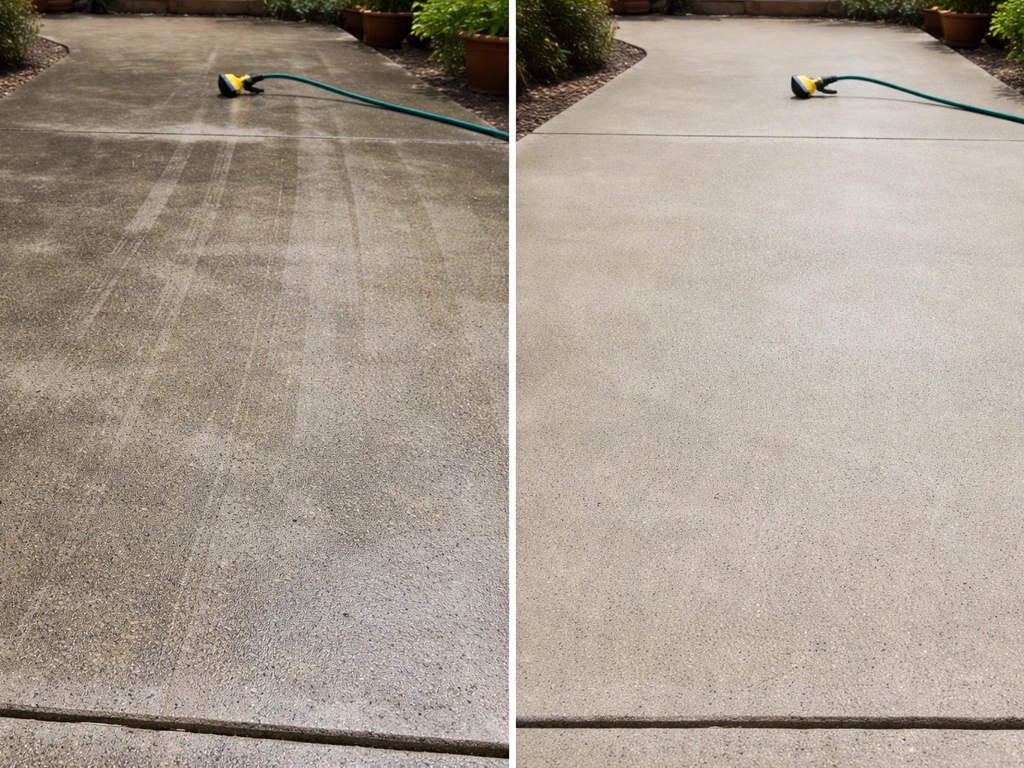
Visible stripes after the surface dries are almost always a technique issue: moving too fast, not overlapping passes, or tilting the T-Racer head. Go back over the area with a second pass at 90 degrees to the first, moving slower than you think you need to. If stripes persist, check that the T-Racer nozzles aren't partially blocked (more on that below).
Etching on softer surfaces
If you see surface texture being removed or a rough white haze appearing on stone, you're etching the surface. Stop immediately. The fix is to increase the standoff height (lift the cleaner slightly off the surface), reduce your dwell time in any one spot, and work faster. On sandstone and soft natural stone, consider whether you actually need the T-Racer at all: a wide fan nozzle at lower pressure sometimes gives better results without the risk. Etching can't be reversed without professional resurfacing.
Patio cleaner not spinning or clogged
If the T-Racer doesn't spin or spray evenly, the most likely causes are a blocked inlet filter on the K3 or a clogged nozzle on the T-Racer head itself. If the patio cleaner attachment still won't spin, the next check is the garden hose and inlet water supply, since a restricted supply can cause uneven spinning or stalling. Check the K3 inlet filter first: turn off and disconnect, remove the filter screen from the water inlet, rinse under a tap, and reinstall. If the T-Racer still won't spin properly, inspect the nozzle openings on the rotating arm for debris and rinse them clear. Thick moss debris and grit from patio surfaces are the most common culprits.
Low pressure or poor performance
Check the garden hose for kinks and make sure the tap is fully open. A partially restricted supply drops the K3's output pressure noticeably. Also confirm you're not accidentally in Eco mode or low-pressure mode while expecting full cleaning power. If pressure drops partway through a session, it can be a sign of cavitation from the water supply not keeping up with the pump: try reducing the hose run length or checking for a partially closed stopcock.
Safety and protecting your patio and garden
- Wear waterproof footwear with grip: the surface will be wet and slippery throughout.
- Use safety glasses when working on dusty or gritty surfaces. Debris ejects from under the T-Racer head at speed.
- Move garden furniture, pots, and anything fragile away from the work area before starting.
- Cover or move nearby plants and shrubs: patio detergents and biocides can damage soft foliage, and high-pressure overspray can shred leaves.
- Check where your runoff is going. Detergent-laden water running into a pond or planted border is a problem. Direct it toward a drain if possible.
- On patios with sand-filled joints (block paving, natural stone sets), expect to lose joint sand. Have a bag of kiln-dried sand ready to re-fill joints after the patio dries.
- After cleaning, once the surface is completely dry, consider applying a patio sealer to lock out water and make future cleaning easier. This is especially worth doing on porous surfaces like sandstone, concrete, and clay brick.
Quick compatibility check if your attachment looks different
Not all patio cleaner heads look identical to the T-Racer, and if you've bought an aftermarket surface cleaner or inherited one with an old machine, run through this quick check before you connect it to your K3:
- Does it use Kärcher's standard quick-release fitting? If yes, it will physically connect to the K3. If it uses a different thread or coupling, you need a compatible adapter.
- Is the surface cleaner rated for at least 100–120 bar maximum pressure? The K3 operates up to this range and an under-rated head can fail.
- Does the manufacturer state compatibility with K2–K5 or 'Kärcher Home and Garden' range? This is the standard compatibility claim for T-Racer-style heads.
- Is the cleaning disc diameter reasonable for your patio size? The T 5 (28 cm disc) is a solid all-rounder for standard home patios. Larger discs clean faster but need more water flow than the K3 comfortably delivers.
- If in doubt, Kärcher's own T-Racer line is always the safest choice for a K3. Third-party heads vary in build quality significantly.
If you're running into issues with your specific attachment regardless of brand, the guide on Kärcher patio cleaner attachment problems covers the most common failure points in more detail, and there's also a dedicated troubleshooting article for when the spinning action stops entirely.
FAQ
Can I use the patio cleaner attachment on a Karcher K3 in low-pressure mode to save water?
No. The surface cleaner needs full high-pressure operation to spin properly and scrub evenly. If you run low-pressure, you can get patchy cleaning and poor detergent rinsing, even if the head moves.
How do I know which patio cleaner size (T 5, T 7, T 7 Plus) is right for my K3?
Use the T 5 for a K3. The larger heads (T 7 and T 7 Plus) require higher flow and are better matched to higher-output machines, so with a K3 they may not spin at the correct speed or can leave uneven bands.
Do I need to add detergent every time I use the patio cleaner attachment?
Not usually. For light grime and dry dirt, plain water is often enough. Use detergent mainly for algae, mold, lichen, grease, or long-term buildup, then do the final high-pressure rinse with the lance to prevent residue.
What should I do if the patio cleaner leaves lines right after I finish, but they fade later?
That usually indicates momentary speed or overlap issues rather than etching. Rework with slower movement and full overlap, keep the head flat, and avoid stopping mid-pass, then do a quick second pass at 90 degrees.
Can I use the patio cleaner attachment to apply oxalic acid rust remover through the machine?
No. Oxalic acid is too aggressive for the K3’s internal components and detergent siphon system. Apply it directly with a brush to the rust, let it dwell as directed on the product, then rinse using high-pressure (and then use the surface cleaner on nearby areas if needed).
Will using a patio sealer right after cleaning affect the results?
Yes, if the patio is not fully dry. Sealants bond poorly to damp surfaces, and leftover detergent can also interfere. Let the area dry completely, then if you pre-treated with chemicals, consider a thorough final rinse and waiting period before sealing.
How often should I flush the detergent siphon if I used detergent before?
After each detergent session, flush briefly with clean water to clear residue from the siphon lines. If you skip this, you can get delayed detergent flow or clogging that causes the machine to stop delivering detergent later.
What if the patio cleaner attachment spins, but the spray pattern looks weak or inconsistent?
Check for partial nozzle blockage on the rotating arm, then verify the inlet filter on the K3 is clean. Also confirm the tap is fully open and the garden hose is not kinked or undersized, since restricted supply can reduce spinning pressure.
Is it safe to use the T-Racer on sandstone and other soft natural stone?
Be cautious. Pre-test in an inconspicuous area because soft stone can lift its surface layer or etch under high pressure. If you notice a white haze or roughening, stop immediately and use a lower-risk method like a fan nozzle at lower pressure.
How do I prevent clogs when cleaning moss or thick organic buildup?
Remove bulk moss first by scraping or pulling it off, then pre-treat with a moss killer in low-pressure mode and let it dwell. This reduces the amount of debris that can get drawn under the T-Racer head and block its nozzle openings.
What’s the best way to clean around patio edges and grout joints with the surface cleaner?
Use the patio cleaner for the main flat areas, then finish with a standard lance pass around edges and between slabs. This catches detergent and loosened dirt the surface cleaner can miss, especially in grout lines.
If my K3 pressure drops during the job, what are the likely causes?
Most commonly the water supply is restricted (hose kink, partially closed tap, or not enough hose diameter), or the pump is experiencing cavitation from insufficient flow. Try a shorter hose run, check the stopcock, and confirm the inlet filter is clean.
Next Article
How to Use Wet and Forget Patio Cleaner Step by Step
Step by step guide to apply Wet and Forget patio cleaner, prep and safety, dwell time, rinse or no rinse, and troublesho