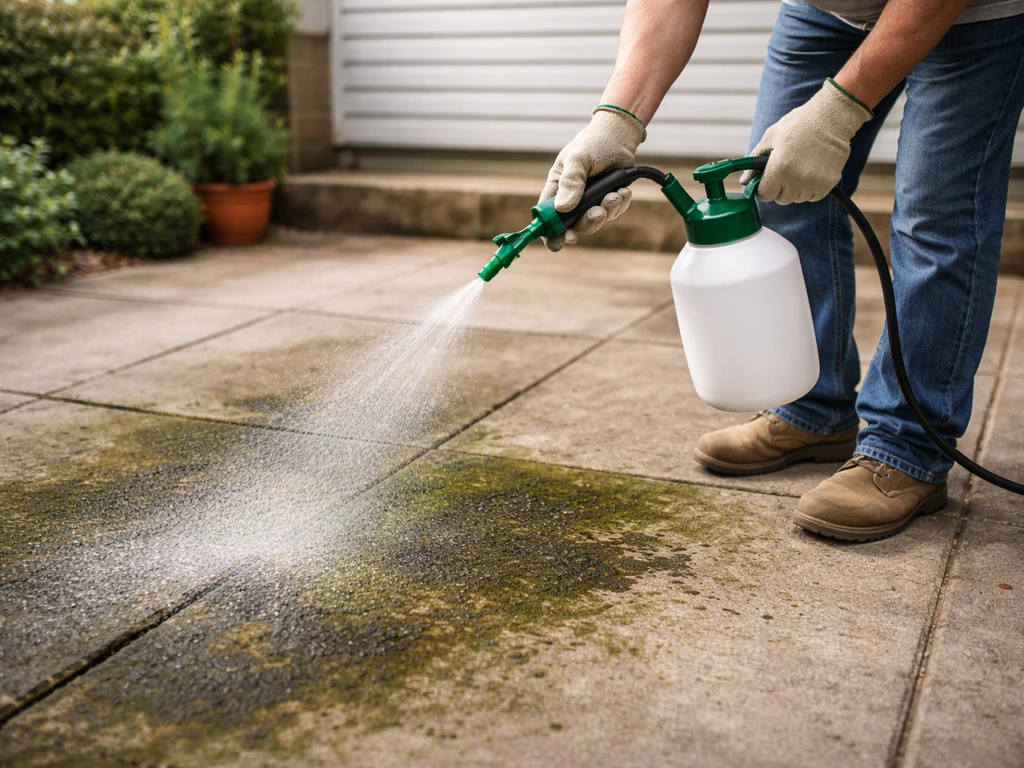
The Ryobi 18V ONE+ cordless patio cleaner is a genuinely useful tool for light-to-moderate grime on hard outdoor surfaces, and the wire brush version adds real capability against embedded dirt, weeds between joints, and moss. It won't replace a pressure washer on heavily soiled concrete, but for regular maintenance cleaning on most patios it works well, takes about ten minutes to set up the first time, and runs off the same battery as the rest of the Ryobi ONE+ range. Whether you're buying the standard P2904BTL, the wire brush kit P2950, or trying to find the right UK model number, here's exactly what you need to know.
Ryobi Patio Cleaner Review UK: Wire Brush, Setup and Tips

Rhea Lang
3 May 2026
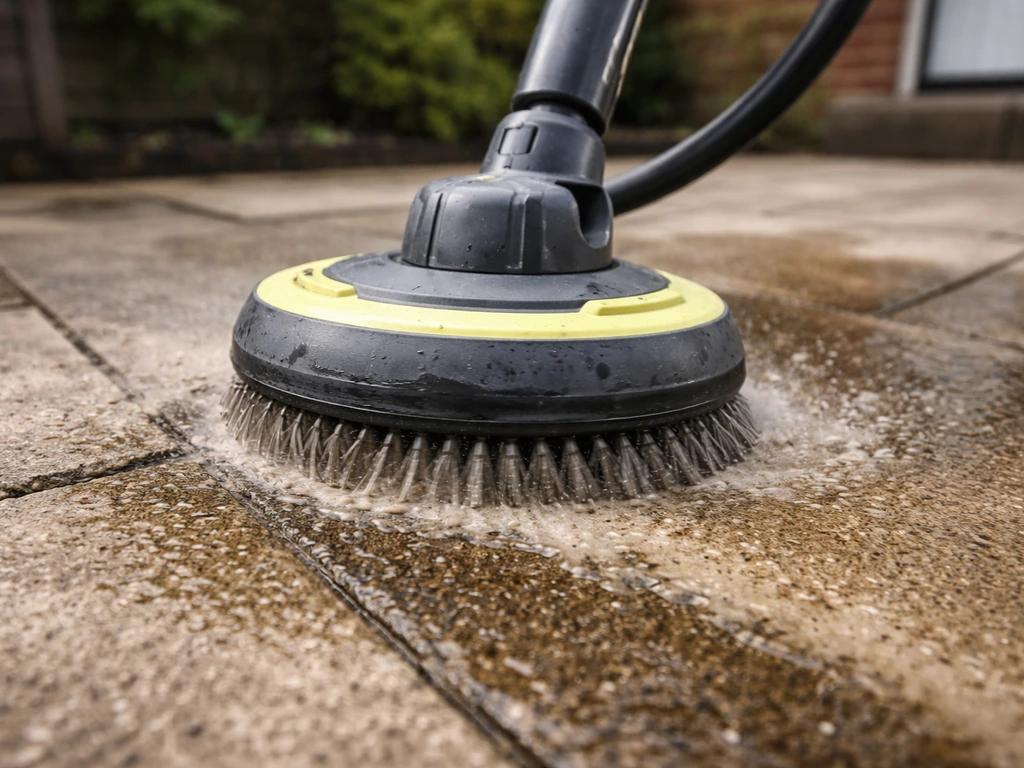
The Ryobi patio cleaner lineup: which models actually exist
Ryobi keeps this range fairly tight, which makes choosing simpler than it looks. There are essentially two cordless versions built around the 18V ONE+ battery platform, plus a wire brush add-on arrangement.
| Model | What's included | Key difference |
|---|---|---|
| P2904BTL (Tool Only) | Patio cleaner unit, rotating brush head — no battery or charger | Entry-level, standard rotating brush, 4-inch brush diameter, 6.3-inch total sweeping width |
| P2905BTL (Tool Only) | Wire brush patio cleaner unit — no battery or charger | Wire brush head designed for more aggressive scrubbing and joint/edge cleaning |
| P2950 (Kit) | Wire brush patio cleaner + 2.0 Ah battery + charger | Best value for new Ryobi ONE+ users — everything in the box |
| RY18PCA-120 (UK) | Wire brush patio cleaner + 1 x 2Ah battery (UK-specific naming) | UK model — same core tool, different part number and regional voltage/plug compliance |
The P2904BTL is the standard rotating-brush cleaner, designed for sweeping and scrubbing patio surfaces using a 4-inch brush on a rotating head with a 6.3-inch total sweeping width. The wire brush variants (P2905BTL and the bundled P2950) swap in a stiffer wire brush that bites harder into surface deposits and gets into joints and edges. In the UK, you'll see this sold under the RY18PCA family rather than P-series numbers, so don't be thrown off, the underlying tool is the same concept.
There's no corded version in Ryobi's current patio cleaner range. This is entirely a cordless, battery-powered lineup. If you're comparing it against corded competitors like the Nilfisk patio cleaner range, the main trade-off is the lack of unlimited runtime versus the freedom of no cable on a large patio. For cordless alternatives, some Nilfisk patio cleaner models are worth comparing too, especially if you need more continuous runtime on larger areas Nilfisk patio cleaner range.
General Ryobi patio cleaner reviews: what users actually think
Across retailer reviews and independent write-ups, the pattern is pretty consistent. People are genuinely pleased with how quickly the Ryobi patio cleaner handles light algae staining, surface dirt, and general discolouration on moderately soiled patios. The claim that you can restore a patio in minutes without manual scrubbing holds up for patios that get regular attention, maybe once or twice a season. For a patio that's been neglected for a couple of years, expectations need to be managed.
One thing that comes up repeatedly in reviews is the direction the brush spins and how it affects the cleaning pattern. Because the brush rotates in a fixed direction, you'll get better coverage by working in deliberate overlapping passes rather than just pushing it around randomly. A few reviewers who said it didn't work well were likely just walking it across the patio without any real technique, which undersells what the tool can do. Slow, methodical passes make a noticeable difference.
Ease of use is consistently rated well. The tool is light, the handle is comfortable, and if you already have Ryobi ONE+ batteries from a drill, circular saw, or leaf blower, you're not paying extra for battery and charger when buying the tool-only variants. The value case is strong when you factor that in.
- Works well on lightly-to-moderately soiled patios, especially with a patio cleaning solution applied first
- Fast to get started — no hose connection, no pressure washer setup time
- Compatible with the whole Ryobi ONE+ battery ecosystem (18V)
- Rotating brush direction affects results — overlapping passes are essential
- Struggles on very heavy, caked-on staining or long-neglected surfaces without pre-treatment
- Genuinely saves effort compared to hand scrubbing for maintenance cleaning
Ryobi patio cleaner with wire brush: does it actually work?
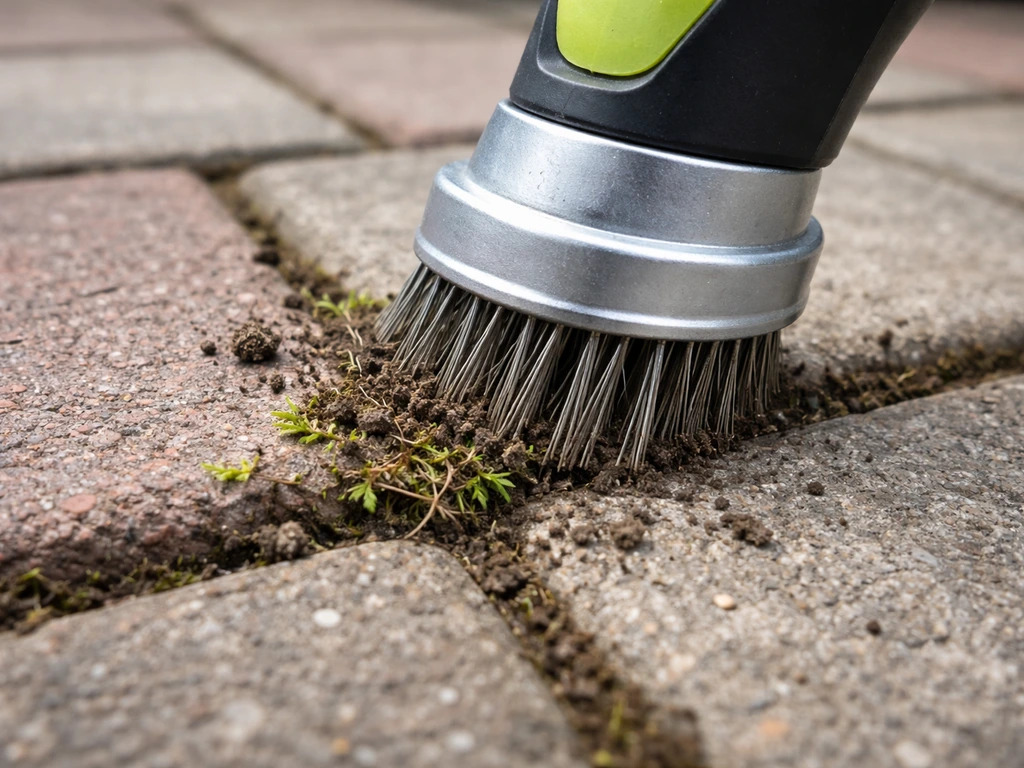
The wire brush versions (P2905BTL / P2950 / UK: RY18PCA) are worth the upgrade if your patio has the kinds of problems the standard brush can't shift. Wire bristles cut through embedded grime differently to a nylon or polyester rotating brush, they don't just sweep, they dig in and break up deposits. That said, user feedback on the wire brush variant is thinner than the standard model, so a lot of what we know comes from retailer reviews and hands-on testing rather than a large pool of user data.
Where the wire brush performs best
- Embedded dirt and compacted surface grime on concrete or brick that a soft brush just polishes over
- Weed and moss growth in paving joints — the wire tips get into gaps a flat brush can't reach
- Algae and green deposit removal where the stain has penetrated the surface slightly
- Edging and border lines where you need precision and scrubbing power in a tight area
Where the wire brush causes problems
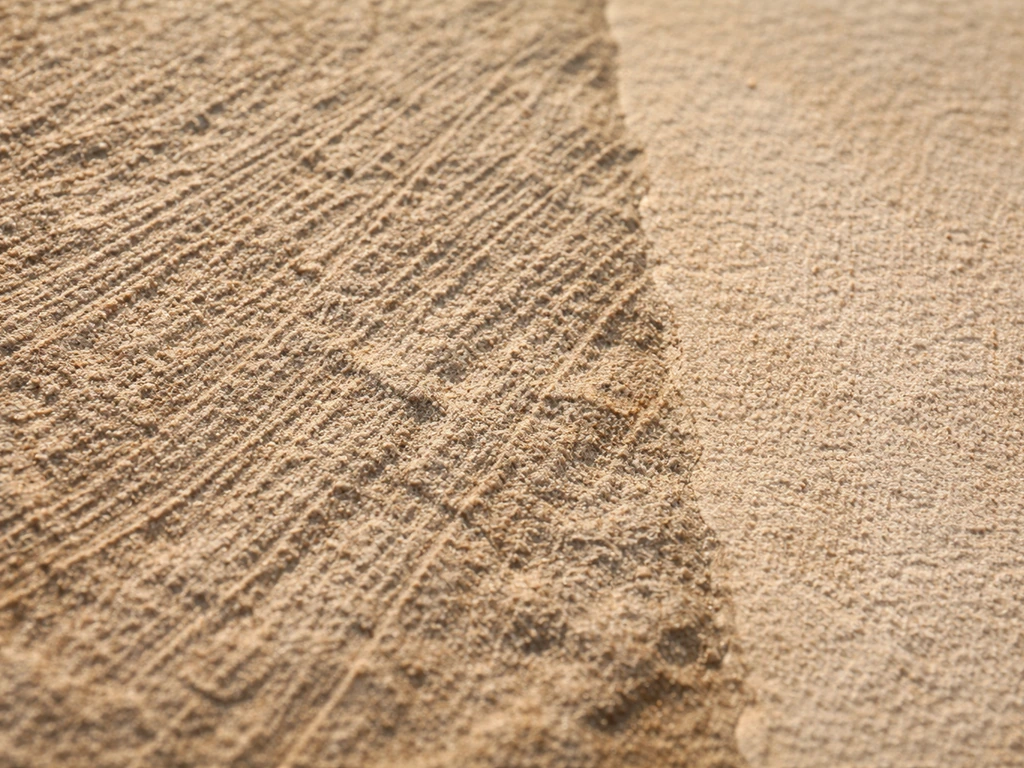
Wire bristles are aggressive, and that aggressiveness is the problem on softer or more delicate surfaces. Sandstone, limestone, and soft natural stone can be scratched or surface-etched by wire brushing. Porcelain and glazed tiles can lose their surface finish. Even on harder materials like slate, if there's a textured or riven finish, the wire can catch and score it in ways that look fine close-up but show up badly in certain light. The rule is: if the surface scratches with a fingernail, don't use the wire brush on it. And always test a small, hidden area first.
Rust stains and grease deposits are harder for any rotating brush system to fully resolve. Wire brushes will reduce the visible deposit, but for rust specifically you'll get much better results by pre-treating with a dedicated rust remover or oxalic acid-based cleaner and then using the wire brush to agitate and lift what remains.
Cordless vs corded: the honest take on power and runtime
Since Ryobi's patio cleaner is cordless-only, the relevant comparison is really about what you should expect from battery power versus what a corded patio cleaner (like certain Nilfisk models) can deliver. The Ryobi runs on an 18V 2.0 Ah battery in the P2950 kit, and in practice that gives you around 20 to 30 minutes of continuous runtime under typical use. For a standard UK patio of around 20 to 30 square metres with moderate soiling, that's usually enough for one full clean pass, possibly two if you're efficient.
Where battery runtime becomes a real issue is on larger patios, anything above 40 square metres, or when you're dealing with stubborn deposits that require slow, repeated passes. In those situations, you'll either want a second battery on standby (the ONE+ platform makes that easy if you have other tools) or you'll be stopping mid-job to charge. Some reviewers have flagged this as the tool's biggest practical limitation, and it's fair. If you're cleaning a large area regularly, a corded option or a pressure washer attachment will serve you better.
| Factor | Ryobi Cordless (18V ONE+) | Corded Patio Cleaner |
|---|---|---|
| Runtime | 20-30 min per charge (2Ah battery) | Unlimited |
| Freedom of movement | Full — no cable restriction | Limited by cord length |
| Setup time | Seconds — no hose or plug needed | Moderate — cable management needed |
| Power consistency | Drops slightly as battery depletes | Consistent throughout |
| Best patio size | Up to ~30-35 sq metres per charge | Any size |
| Battery cost to add runtime | Buy extra ONE+ batteries if you have other tools | Not applicable |
If you already own Ryobi ONE+ tools and have spare batteries, the cordless patio cleaner makes a lot of sense. If you're starting from scratch and have a large or heavily soiled patio, think hard about whether the cordless runtime fits your needs. For everything else, it's a solid, practical choice.
How to attach and use the Ryobi patio cleaner: step-by-step setup
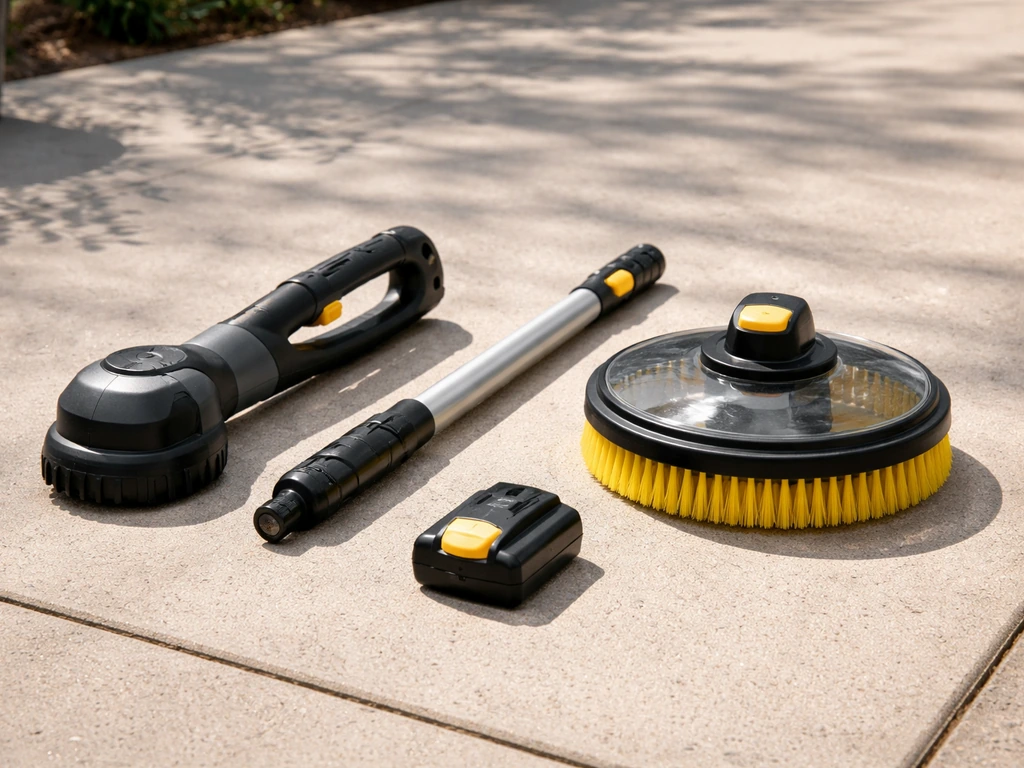
Setting up the Ryobi patio cleaner for the first time takes about ten minutes. The process is the same whether you're using the standard rotating brush (P2904BTL) or the wire brush version (P2905BTL / P2950). Here's how to do it correctly, including the safety steps that actually matter. To connect it to a pressure washer, you still need the correct pressure-washer attachment and a compatible inlet fitting before you start cleaning attach Ryobi patio cleaner to a pressure washer. To really get the best results, follow the step-by-step setup and use overlapping passes rather than pushing it around randomly how to use Ryobi patio cleaner.
Assembly and attachment
- Lay out all parts before you start: the main handle/motor unit, the extension wand, the brush head (standard or wire brush), and your battery.
- Connect the extension wand to the motor unit by aligning the collar and twisting or pressing until it clicks into the locked position. Do not force it — it should seat with firm, positive engagement.
- Attach the brush head to the bottom of the wand. On wire brush models, the wire brush attaches at the wand end and secures with a lock mechanism. Check the brush is flush and secure before use.
- Insert the 18V ONE+ battery into the battery slot on the motor unit. You'll hear or feel it click into position. Do not insert the battery until the brush head is fully attached.
- Adjust the handle height to a comfortable position so you're not hunched over — this matters more than it sounds on a 30-minute clean.
- Put on safety glasses or goggles before switching on. The wire brush especially throws debris, grit, and small stone particles. Gloves are also recommended.
- Press the safety lock-off button first, then press the trigger to start. The brush will begin rotating — allow it to reach full speed before placing it on the surface.
Using it effectively
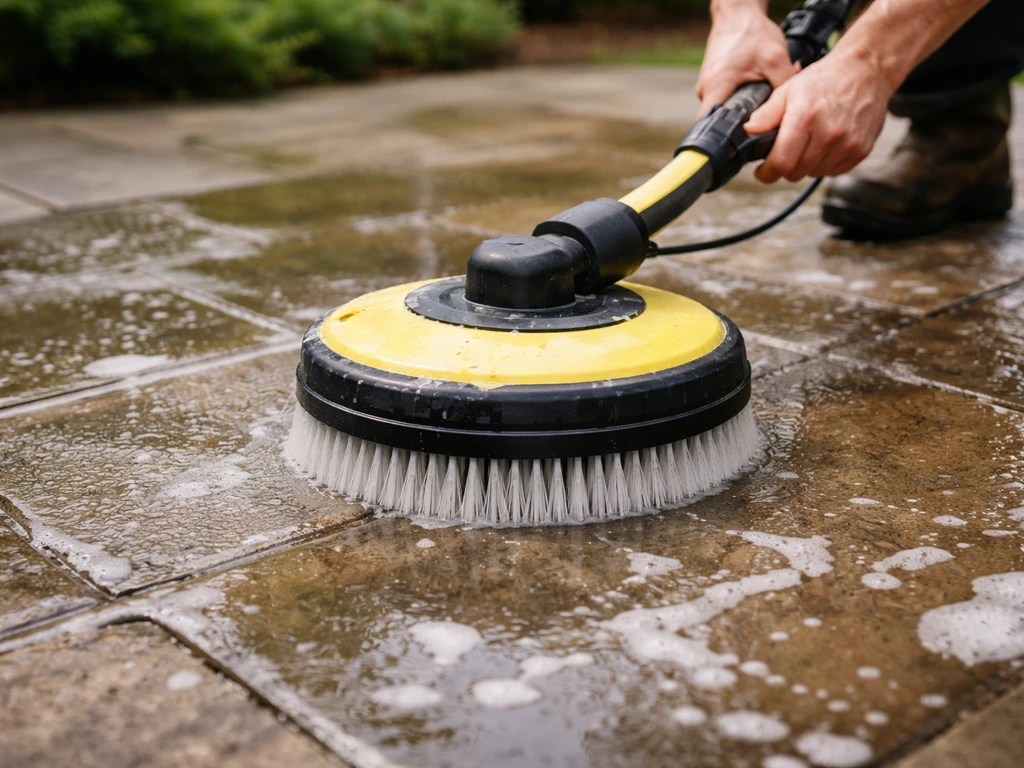
- Apply your chosen cleaning solution to the patio surface first and let it dwell for 5 to 10 minutes. The Ryobi patio cleaner is designed to work with cleaning solutions or water — pre-treating makes a significant difference on algae and organic staining.
- Start at one end of the patio and work in straight, overlapping passes. Don't rush — slow passes let the rotating brush do the work. Think of it like mowing a lawn, not sweeping a floor.
- On stubborn areas, make a second pass at a 90-degree angle to the first. This cross-hatch technique catches deposits the first pass lifts but doesn't fully remove.
- Keep the brush head flat on the surface throughout — tilting it reduces contact area and cleaning effectiveness.
- For wire brush models working on joints and edges, tilt the head very slightly to direct the wire tips into the gap. Don't press hard — let the rotation do the work.
- Rinse the surface with a garden hose after cleaning to wash away loosened debris and any cleaning solution residue.
- After use, remove the battery before cleaning or inspecting the brush head. Rinse the brush head and wand with clean water and leave to dry before storage.
One safety note from the official P2905 manual: never use attachments that aren't specified for the tool. The wire brush is aggressive enough that an improperly fitted or incompatible attachment could become a projectile hazard. Stick to Ryobi-specified parts, replacement wire brushes are available (including from Home Depot Canada as a standalone part), so wear isn't a dead end.
How results change depending on your patio surface
This is where generic reviews fall short. The Ryobi patio cleaner doesn't behave the same way on every surface, and choosing the wrong brush type or technique for your material is how you end up with scratches or disappointing results.
Concrete
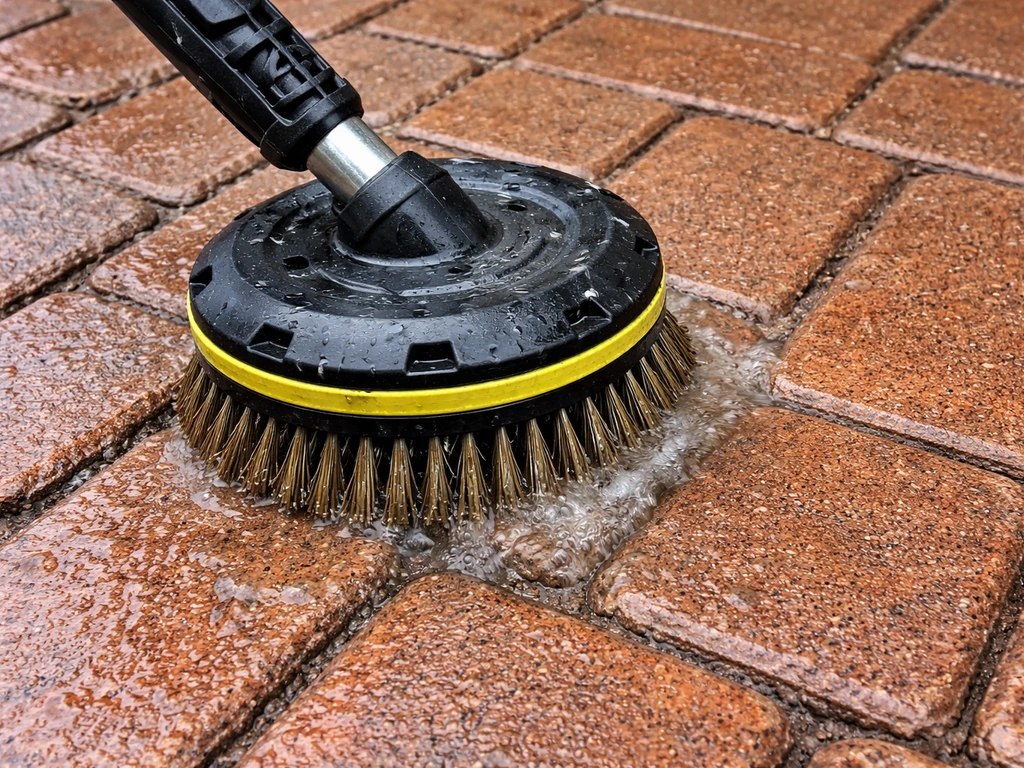
Concrete is the most forgiving surface for both the standard brush and the wire brush. It's hard, relatively porous, and can take aggressive scrubbing without surface damage. The wire brush works well here for embedded dirt and algae staining. For very heavy moss or weed growth in concrete joints, apply a moss killer or weed control treatment a few days before cleaning and let it die back first, the wire brush then clears the dead material much more easily.
Brick
Brick paving handles the wire brush reasonably well on the face of the brick, but be careful around the mortar joints. If your mortar is old or friable, the wire brush can pull it out and widen the joints over time. Use the standard brush for general cleaning and switch to the wire brush only for spot treatment of specific problem areas. Pre-treat with a brick patio cleaner or diluted patio acid wash for heavy staining before brushing.
Natural stone (limestone, sandstone)
Avoid the wire brush entirely on sandstone and soft limestone. These surfaces scratch easily and the wire bristles will leave visible marks, especially on lighter-coloured stone. Use the standard rotating brush with a pH-neutral stone cleaner. Sandstone in particular should never be cleaned with acidic products, they eat into the surface. Gentle mechanical action plus the right cleaner is the approach here.
Slate
Slate is harder than sandstone but can still be scratched by wire bristles, particularly on riven (textured, uneven) surfaces where the brush tip can catch and score raised edges. The standard brush works fine. If you're dealing with algae or moss on slate, a dedicated algae remover left to dwell and then rinsed off will do more than mechanical scrubbing. Use the Ryobi with the standard brush for the final agitation pass.
Porcelain paving
Porcelain is non-porous and very hard, but the surface finish is the concern. Wire brushing porcelain risks leaving fine scratches that dull the tile's appearance over time, especially on lighter or highly polished tiles. The standard rotating brush is fine for surface cleaning. Because porcelain doesn't absorb stains the way natural stone does, most grime sits on the surface and a good patio cleaner with the standard brush removes it well. Save the wire brush for the joints between porcelain tiles, where you may have algae or weed growth.
Block paving
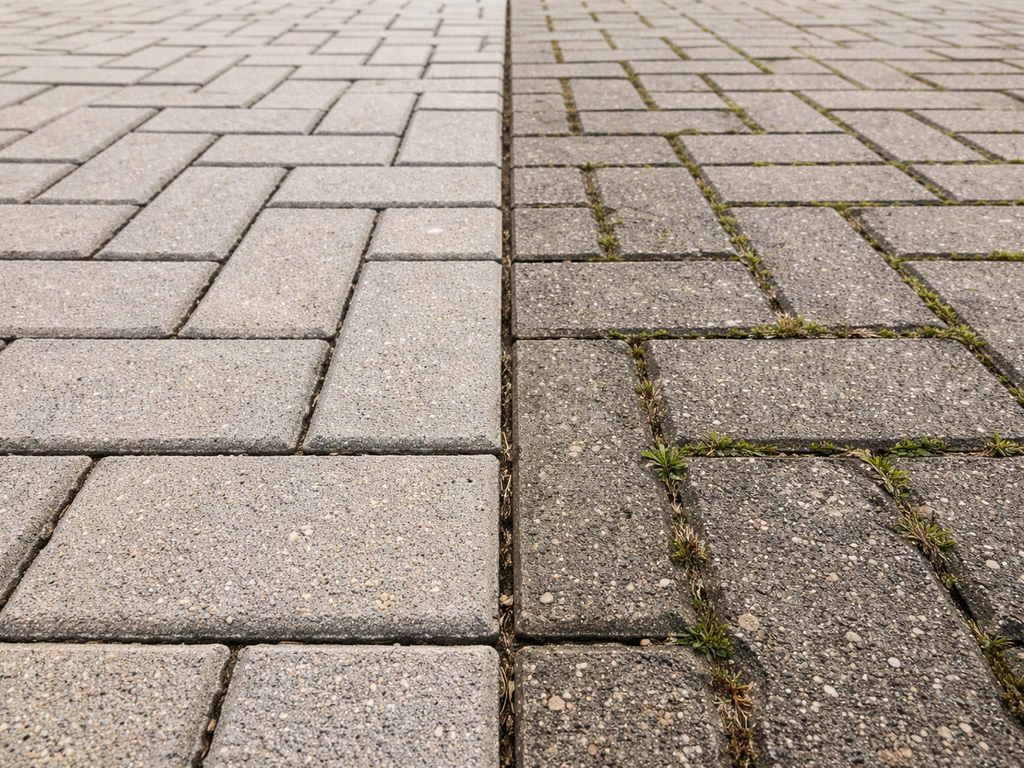
Block paving is where the wire brush arguably delivers the most value. The edges between blocks and the joints are exactly where weeds, moss, and embedded grime accumulate, and the wire brush's ability to work into those edges makes a genuine difference. Work along the joint lines deliberately and follow up with a kiln-dried sand re-application to refill any joints that have been cleaned out.
Buying in the UK: what to check before you order
If you're in the UK, the first thing to sort out is the model naming. Ryobi UK doesn't use the P2904BTL or P2950 numbering that appears on US packaging and American retailer sites. In the UK and Europe, the cordless patio cleaner with wire brush is sold as the RY18PCA family, with the RY18PCA-120 being the kit version that includes a 1 x 2Ah 18V ONE+ battery. The bare tool (no battery or charger) is available separately for ONE+ battery holders. Don't order a US-market unit thinking it'll work on UK voltage, the battery charging system and plug type will be incompatible.
- Look for RY18PCA rather than P2904BTL or P2905BTL when searching UK retailers
- RY18PCA-120 means the kit includes a 2Ah 18V ONE+ battery and charger — good if you're new to the system
- Bare tool options are available if you already have 18V ONE+ batteries from other Ryobi tools bought in the UK
- Confirm the wire brush head is included in whichever kit you're buying — some listings are the base cleaner only
- Replacement wire brushes may need to be sourced through Ryobi UK directly or via larger DIY retailers — check availability before buying if brush wear is a concern
- The 18V ONE+ battery is the same platform across UK and US Ryobi tools, but the charger differs — always use a UK-sourced charger
- Check whether the kit you're buying through an online marketplace is a genuine UK/EU model or a grey import — the latter may not have UK warranty support
UK availability of the Ryobi patio cleaner is generally good through major DIY retailers and Ryobi's own UK site. The EU garden catalogue has included the 18V cordless patio cleaner for several years now, so it's not a niche product. If you're comparing it against other cordless patio cleaners available in the UK, the Ryobi's main advantage is the ONE+ battery compatibility, if you're already in that ecosystem, it's a very easy add.
Which Ryobi patio cleaner should you actually buy?
For most homeowners with a standard patio of concrete, block paving, or brick up to about 35 square metres, the wire brush kit (P2950 in the US, RY18PCA-120 in the UK) is the version to buy. It gives you more cleaning capability than the standard brush and handles the joint and edge cleaning that most patios actually need. If you're already in the Ryobi ONE+ system, get the tool-only version (P2905BTL in the US, bare tool RY18PCA in the UK) and save the cost of a duplicate battery.
If your patio is predominantly sandstone, natural limestone, or highly polished porcelain, go for the standard brush version (P2904BTL) and skip the wire brush entirely. The risk of surface damage isn't worth it, and the standard brush does a good job on these materials with the right cleaning solution. Whatever you're cleaning, apply a dedicated patio cleaner or algae remover first and let it dwell, the Ryobi works significantly better as an agitator after a chemical pre-treatment than as a standalone cleaner on raw, untreated grime.
The wire brush is absolutely worth having if you're dealing with weeds, moss, or embedded grime in joints and edges on hard surfaces. It's not the tool for deep stain removal or very heavily neglected patios, that needs pressure washing. If you need an option with corded power and a clear Nilfisk patio plus manual setup, Nilfisk models can be a better fit for heavily soiled areas. But for regular maintenance cleaning and the kind of green organic growth that comes back every season, the Ryobi patio cleaner with wire brush is a genuinely useful, time-saving piece of kit that earns its place in the shed.
FAQ
My Ryobi patio cleaner streaks or leaves patches, what am I doing wrong?
It helps to use it on a slow, repeating pattern rather than random passes. Overlap each pass slightly (about the width of the brush head), let the bristles work the same line for a few seconds, then move on. If you rush, you mainly smear grime and you may end up thinking the battery is the problem.
Can I use the Ryobi patio cleaner without treating moss or weeds first?
Yes, on many patios. For joint weed and moss regrowth, kill and remove the organic matter first (moss killer or weed treatment, then wait for the material to die back). After that, use the patio cleaner as an agitation and lift tool, this is usually more effective than trying to scrub live growth out.
How do I clean and maintain the Ryobi brush head between uses?
Wipe or rinse the head and check the brush for wrapped debris after each session, especially hair, stringy algae, and weeds between joints. Wire-brush models can become clogged, which reduces bite and can lead to patchy cleaning. If you notice vibration or uneven rotation, stop and clear the bristles.
Will the wire brush remove rust stains and oil/grease fully?
Expect a different outcome depending on surface chemistry. For rust and greasy deposits, the rotating brush can reduce what you can physically agitate, but it will not reliably dissolve deposits that require chemical action. Pre-treat (for rust use a dedicated rust remover, for grease use a suitable degreaser), then agitate with the Ryobi.
Does it work better when connected to a pressure washer, or can I use it standalone?
Use water flow and chemistry as a system. If you have it connected to a pressure washer, make sure you use the correct attachment and compatible inlet fitting, and avoid blasting in a single spot while the brush is stationary. If not connected, you may need stronger pre-treatment because the brush alone will move grime but not always rinse it away efficiently.
How should I plan battery use for a large patio?
If you have a large patio, the biggest mistake is assuming one battery will finish the job. For areas above about 40 m² or stubborn deposits, plan for a second battery on standby (same ONE+ platform) or accept recharge breaks. Mark out sections and clean one battery block per section to avoid running out mid-scrub.
Should I use the wire brush on the whole patio or only certain areas?
Start with the standard rotating brush for the main cleaning pass, then switch to the wire brush for narrow, targeted trouble spots (especially around joints). That approach lowers scratch risk on faces while still addressing the embedded grime where the wire brush performs best.
How can I tell if my patio surface is too delicate for the wire brush?
Stop and test if you get visible scuffing, especially on lighter or polished stones and tiles. The practical fingernail rule is helpful: if a scratch can be felt, wire bristles are likely too aggressive. For those surfaces, switch to the standard brush plus a pH-neutral stone cleaner (and avoid acids on sandstone).
What safety checks should I do before operating or swapping the brush?
Remove the battery before changing or inspecting attachments, and never improvise parts that are not specified for the model. If the head does not click and seat correctly, don’t force it. Also keep fingers away from the rotating brush area when testing.
Do I need to re-sand block paving after using the wire brush?
Yes, joints often need the follow-up step. After wire-brushing weeds and grime from between block paving units, refill and re-sand with kiln-dried joint sand (or the manufacturer-recommended material). Without re-filling, joints can stay exposed and weeds can return faster.
I tried cleaning and results are underwhelming, how do I troubleshoot quickly?
If cleaning results are disappointing, check two things first: brush type and technique. Use the wire brush only for joint-edge grime and embedded deposits on hard surfaces, and use overlapping, slower passes. Also ensure you pre-treat algae, moss, and stains, because the Ryobi performs best as an agitator after chemical dwell time.
What should I watch for when buying the right UK model and kit version?
On UK orders, avoid mixing model families. Ryobi UK commonly uses the RY18PCA naming for the cordless patio cleaner range, while US packaging uses P-series numbers. Battery kit bundles like RY18PCA-120 include a battery, but the bare tool may require you to already own a compatible ONE+ battery.
Next Article
How to Use Wet and Forget Patio Cleaner Step by Step
Step by step guide to apply Wet and Forget patio cleaner, prep and safety, dwell time, rinse or no rinse, and troublesho