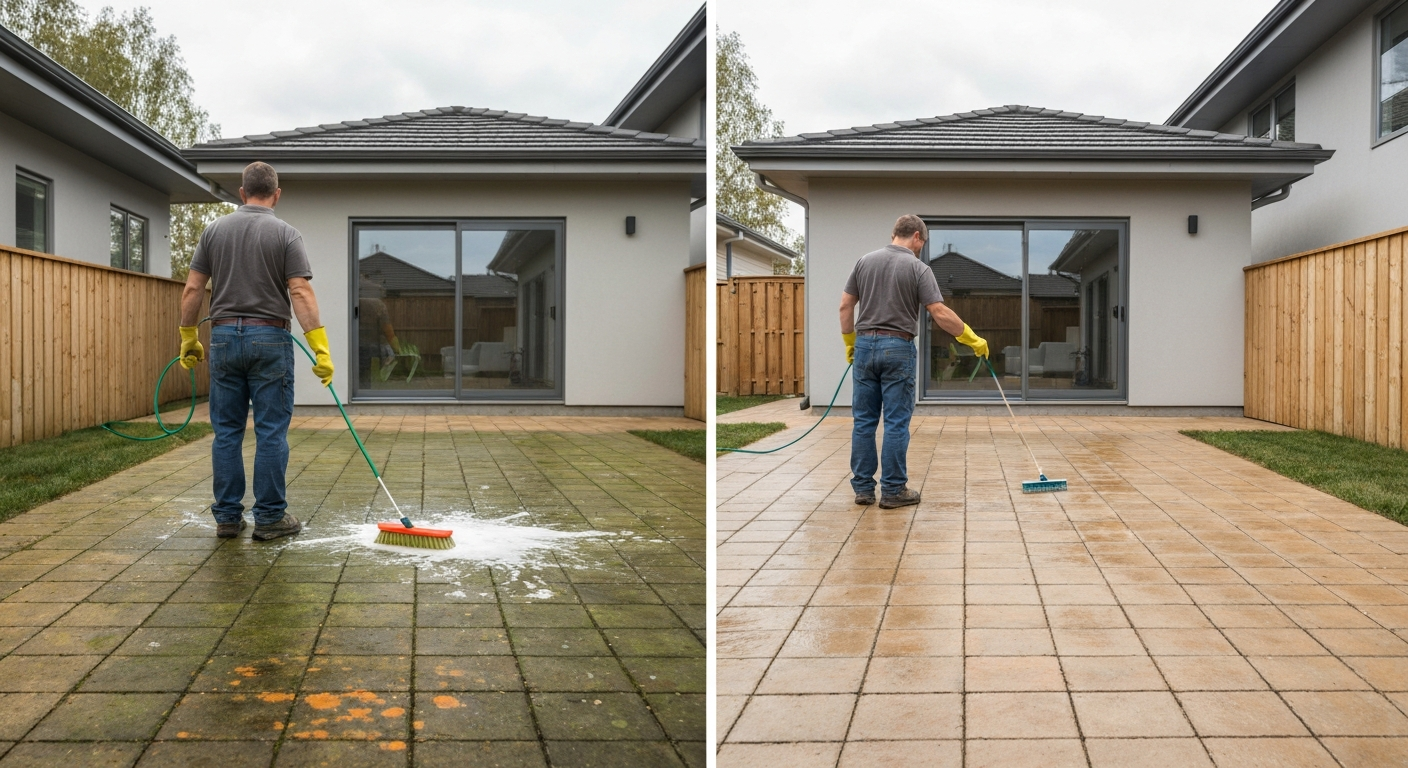
For most decks and patios dealing with general grime, mold, algae, or organic staining, an oxygen-bleach concentrate (sodium percarbonate) is the best all-around starting point. If you want a deeper comparison of maximum cleaning power by chemistry and use case, see our guide on what is the strongest patio cleaner. Products like Simple Green Oxy Solve, DEFY Wood Cleaner, and DeckBrite hit the sweet spot between cleaning power, surface safety, and environmental impact. For heavy grease, you need a dedicated alkaline degreaser. For slow-build organic growth you want gone without scrubbing, Wet & Forget is hard to beat. This guide walks you through all the major cleaner types, the top products in each category, surface-specific procedures, and the safety stuff that actually matters.
Best Deck and Patio Cleaner Guide: Top Picks & How-To Maintenance
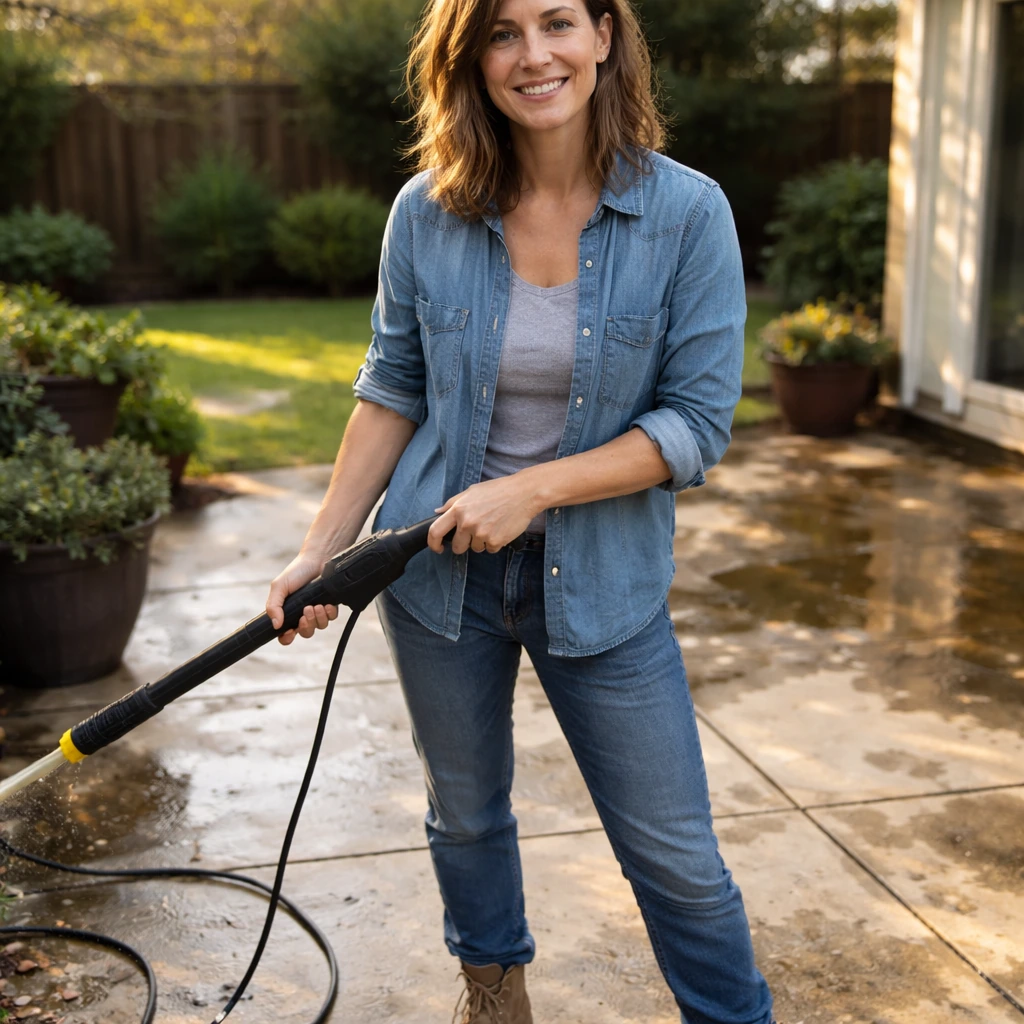
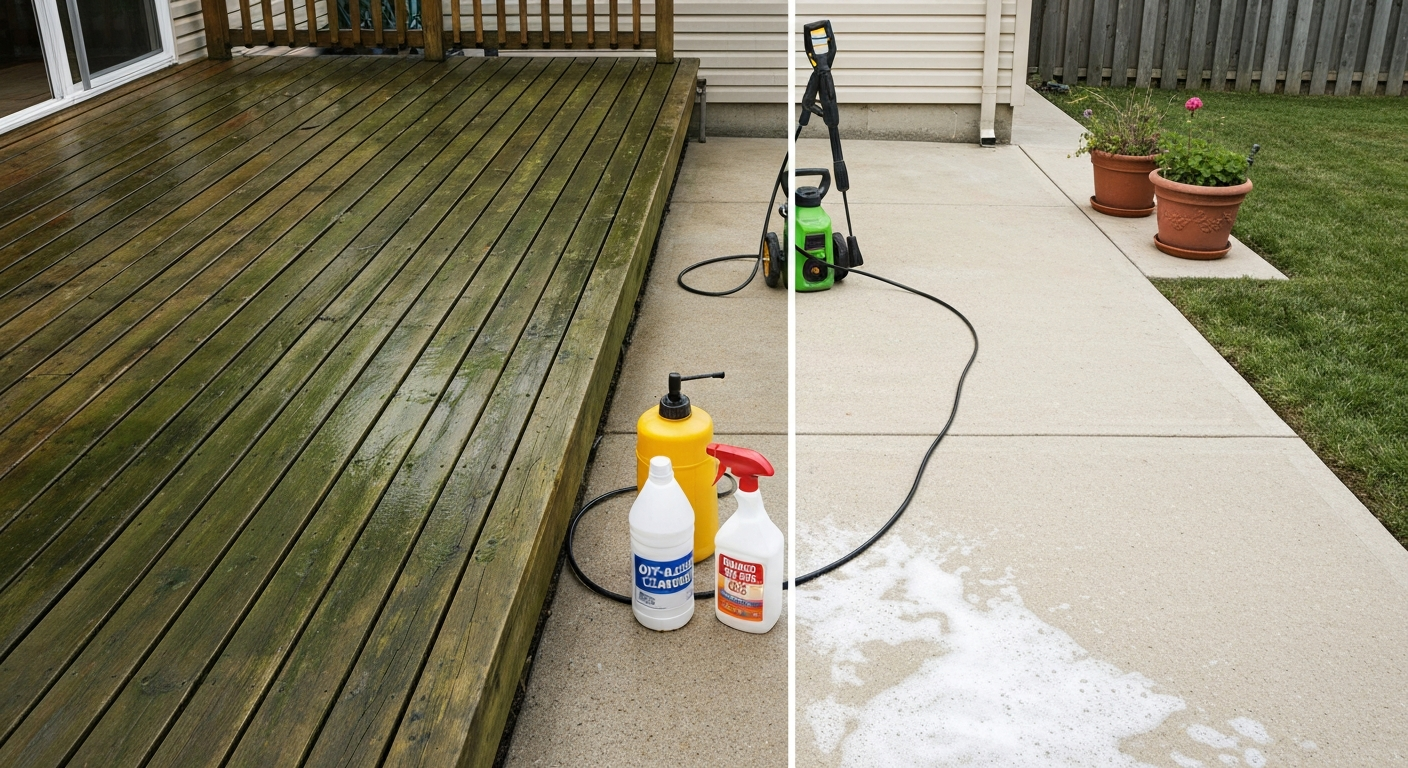
Who this guide is for and how to use it
If you've got a deck, patio, or any outdoor hard surface that needs cleaning and you're not sure which product or method to use, this is for you. The guide covers wood decks, composite decking, concrete, brick, stone, porcelain, and sandstone, plus outdoor cushions and fabrics. I've structured it so you can either read start to finish or jump straight to your surface type or stain problem. The quick picks section gives you a shortcut if you just need a recommendation now. The comparison table lets you see top products side by side. After that, each cleaner category gets its own section with honest pros, cons, and real usage notes. Toward the end, you'll find stain-specific troubleshooting, equipment guidance, and maintenance tips.
Quick picks by category
These are my top recommendations in each cleaner category based on chemistry, real-world performance, surface compatibility, and value. Full breakdowns follow in the sections below.
- Best liquid ready-to-use: 30 SECONDS Outdoor Cleaner (ready-to-use SKU) — grab-and-go convenience for algae, mold, and mildew on wood, concrete, and vinyl
- Best concentrated fluid: Wet & Forget Multi-Surface Outdoor Cleaner (1:5 dilution) — no-scrub, no-rinse formula that works over days for widespread organic growth
- Best concentrated powder: Simple Green Oxy Solve Total Outdoor Cleaner — EPA Safer Choice, peroxide-based, works beautifully through a pressure washer at 1:20 dilution
- Best for wood deck prep and brightening: Restore-A-Deck Cleaner & Brightener two-part kit — Step 1 sodium percarbonate cleaner plus Step 2 oxalic acid brightener for refinishing prep
- Best degreaser: A dedicated alkaline degreaser (concrete/patio-rated) — for oil stains, BBQ grease, and garage-adjacent surfaces where oxygen bleach alone won't cut it
- Best enzymatic/biological cleaner: Biokleen Bac-Out — live enzyme cultures for organic stains, pet messes, and mold on surfaces and cushions
- Best cushion and fabric cleaner: Biokleen Bac-Out (fabric-safe) or a mildew-specific outdoor fabric spray for spot treatment and full-cushion cleaning
Top products at a glance
| Product | Best Use Case | Active Chemistry / pH | Dilution | Surface Safety Notes | Pros | Cons |
|---|---|---|---|---|---|---|
| Simple Green Oxy Solve Total Outdoor Cleaner | General deck/patio, pressure-washer use | Sodium percarbonate / peroxide, alkaline (~10) | 1:20 manual; low-pressure PW application | Safe on wood, concrete, masonry; EPA Safer Choice | Biodegradable, no chlorine, strong cleaner | Needs 3–5 min dwell; powder/liquid handling |
| DEFY Wood Cleaner (powder concentrate) | Wood deck cleaning and prep | Sodium percarbonate, alkaline | 6 oz per gallon of water | Safe for wood and plants when used per label | Chlorine-free, plant-safe, economical | Powder form needs proper mixing; not for polished stone |
| Restore-A-Deck Cleaner & Brightener Kit | Pre-stain/refinish wood deck prep | Step 1: sodium percarbonate; Step 2: oxalic acid | Per label for each step | Follow Step 2 to neutralize pH before coating | Two-step system gives best refinishing prep | Two-step process adds time; acid step needs care |
| Wet & Forget Multi-Surface Outdoor Cleaner | Algae, mold, moss — no-scrub removal | Quaternary ammonium / surfactant blend, near neutral | 1:5 dilution | Works on most outdoor surfaces; avoid polished marble | No scrubbing or rinsing needed, long-lasting | Takes days to weeks for full effect; not instant |
| 30 SECONDS Outdoor Cleaner | Quick mold/mildew/algae kill on decks, concrete, vinyl | Sodium hypochlorite-based (bleach chemistry) | Ready-to-use and concentrate SKUs | Avoid on composite decking (Trex warns against bleach); test on colored surfaces | Fast-acting, widely available | Bleach chemistry: avoid plants, pets during application |
| OxiClean Outdoor Multipurpose Superconcentrate | General outdoor surfaces, broad-spectrum organic staining | Sodium percarbonate / oxygen bleach, alkaline | Per label (superconcentrate — use as directed) | Broad surface compatibility; check SDS for specific materials | Versatile, familiar brand, available everywhere | Can be over-diluted if not measured carefully |
| Wolman DeckBrite (Rust-Oleum) | Wood brightening and coating prep | Sodium percarbonate, alkaline | Per label; 10-min dwell recommended | Chlorine-free, biodegradable; good for pre-paint/stain prep | 10-min dwell gives thorough penetration | Powder form; needs thorough rinsing |
| Biokleen Bac-Out | Organic stains, pet messes, mold on cushions/fabric/decking | Live enzyme cultures / bio-enzymatic, near neutral | Ready-to-use spray; concentrate versions available | Fabric-safe, surface-safe, non-toxic | Genuinely bio-enzymatic, very safe, pet-friendly | Slower than chemical cleaners; needs dwell time for heavy staining |
Liquid ready-to-use cleaners
How they work and when to reach for one
Ready-to-use (RTU) cleaners come pre-diluted in a trigger spray or hose-end bottle. You apply them directly without measuring or mixing, which makes them the fastest option when you've got a small area, a quick job, or you simply don't want to think about dilution ratios. The trade-off is cost per square foot: you're paying for water weight in that bottle. For a small patio or a spot-clean job, they're great. For a full deck, concentrated products are almost always more economical.
30 SECONDS Outdoor Cleaner is the most widely available RTU option and it works fast on algae, mold, and mildew. The active chemistry is sodium hypochlorite (bleach-based), so it kills biological growth on contact rather than over days. That speed is useful. The caution is that bleach chemistry can lighten or discolor surfaces if you let it sit too long, and Trex explicitly warns against using bleach on composite decking because it can discolor the cap stock. On concrete, brick, and vinyl siding it performs well. Keep pets and plants out of the area during application and rinse thoroughly.
Wet & Forget also comes in a ready-to-spray version for smaller areas. It's the opposite end of the speed spectrum: you spray it on and walk away. No rinsing, no scrubbing. It uses a quaternary ammonium surfactant blend that breaks down organic growth over days and weeks through repeated rain contact. The first time I used it I genuinely didn't believe it would work that way. Three weeks later the moss on the north-facing section of my patio was gone. It's not the cleaner for when you need results before a party this weekend, but for maintenance cleaning and gradual build-up, it's outstanding.
- Best for: quick spot jobs, small patios, algae and mildew removal, no-mixing convenience
- Avoid on: composite decking (bleach-based RTU products), polished or sealed natural stone (check pH compatibility), areas where runoff will reach plants or waterways without rinsing
- Typical coverage: a 1-gallon RTU bottle covers roughly 150–300 sq ft depending on porosity of the surface
- Key limitation: cost per square foot is 3–5x higher than an equivalent concentrate
Concentrated cleaners
Dilution guidance and why it matters
Concentrated cleaners require you to mix them with water before applying. Get the ratio right and you save significant money while getting equal or better cleaning performance than RTU products. Get it wrong in the 'too strong' direction and you risk surface damage or residue. Get it too weak and you're wasting time. Always use the manufacturer's stated ratio as your starting point, especially on a test area.
Simple Green Oxy Solve is my go-to concentrated patio and deck cleaner. For manual application (pump sprayer, brush), the label calls for 1.5 cups per 2 gallons of water, which works out to roughly 1:20 dilution. For pressure washer use, you apply it at low pressure through the soap nozzle (the black tip on most machines), let it dwell for 3 to 5 minutes, then rinse with a higher-pressure fan tip. The sodium percarbonate chemistry releases active oxygen on contact with water, which is what does the cleaning work. Because it's EPA Safer Choice certified, there's no chlorine and the breakdown products are essentially water, oxygen, and soda ash. That matters if you have plants near your patio or you're cleaning near a drain.
DEFY Wood Cleaner is a powdered concentrate specifically designed for wood decks. You dissolve 6 oz of powder per gallon of water, apply with a brush or pump sprayer, let it dwell, scrub if needed, and rinse. It's particularly useful as a pre-treatment before applying a wood stain or sealer because sodium percarbonate opens the wood grain and lifts oxidized surface fibers, giving you a cleaner substrate for the coating to penetrate. DEFY rates it as safe for plants when used per label, which I've found to be accurate as long as you rinse the surrounding area with clean water after you're done.
Wolman DeckBrite (from Rust-Oleum) is another sodium percarbonate powder concentrate worth knowing about, particularly for coating prep. The 10-minute dwell time recommendation on the label is longer than some competitors, but it gives the oxygen-release reaction more time to work into weathered wood. The manufacturer markets it specifically as a coating-prep cleaner, and that positioning is accurate. If you're planning to paint or stain a deck, this is worth using as your cleaning step.
OxiClean Outdoor Multipurpose Superconcentrate rounds out the concentrated category. It uses similar oxygen-bleach chemistry and is available in large formats that push the cost per square foot down further. The 'superconcentrate' labeling means the dilution rate is higher than standard OxiClean products, so read the label for outdoor applications specifically rather than applying indoor laundry ratios.
Cost-effectiveness: concentrates vs. ready-to-use
At a 1:20 dilution ratio, one gallon of Simple Green Oxy Solve concentrate yields 21 gallons of working solution. A typical deck in the 300–400 sq ft range needs roughly 1–2 gallons of working solution for a thorough clean. That means a single gallon of concentrate can handle 10+ cleaning sessions. By contrast, a 1-gallon RTU bottle covers one session. The math is straightforward: concentrates win on economy for any surface larger than a doorstep.
Degreasers and solvent-based cleaners
When you actually need a degreaser
Oxygen bleach and enzyme cleaners are excellent at lifting organic growth and biological staining. They are not designed for petroleum-based grease, motor oil, cooking fat, or similar hydrophobic contamination. If you've got a BBQ pad with years of grease drip, a parking area with oil stains, or a concrete patio adjacent to a kitchen door where cooking grease accumulates, you need a dedicated degreaser. Oxygen bleach will do almost nothing on a fresh or cured oil stain. I learned this the hard way when I applied Oxy Solve to a BBQ corner of my patio and came back after rinsing to find the concrete basically unchanged.
Alkaline degreasers work by saponifying (emulsifying) grease so it can be rinsed away. The higher the pH (strong alkaline degreasers run pH 12–13), the more aggressive the saponification. For concrete and brick this is fine. For natural stone, particularly calcite-based stones like limestone, marble, or sandstone, high-alkaline cleaners can etch the surface over time. On those surfaces, use a pH-neutral degreaser or a degreaser specifically formulated for natural stone. The patio cleaner dedicated to grease removal is covered in more depth in our separate guide to the best patio cleaner for grease, but the short version here is: choose pH level based on your surface, pre-soak the stain with hot water first, apply the degreaser, let it dwell 5–15 minutes, then agitate with a stiff brush before rinsing.
Solvent-based cleaners: powerful but narrow in use
Solvent-based cleaners (those containing acetone, xylene, MEK, or similar solvents) are the nuclear option for tar, bitumen, paint, and heavily cured petroleum stains. They're effective but come with significant limitations: most are harmful to plant life and soil biology, many are flammable, they require full PPE (gloves, eye protection, respirator), and they can strip sealers, damage composite materials, and leach into groundwater if not properly contained. Unless you're dealing with a specific problem that nothing else touches, most homeowners should stay well clear of solvent cleaners for routine patio work. For problem-specific scenarios like tar stains or paint spills, use solvents only in small, contained quantities, neutralize the area with detergent and water afterward, and dispose of waste rags properly (sealed in a metal container for collection, not in household trash).
- Use alkaline degreasers for: cooking oil, motor oil, BBQ grease, food fat stains on concrete and brick
- Avoid alkaline degreasers on: limestone, marble, sandstone, and calcite-based natural stone
- Use solvent cleaners only for: tar, bitumen, heavily cured petroleum, paint
- Always wear: nitrile or neoprene gloves, safety glasses, and work in ventilated conditions when using solvents
- Disposal: used solvent rags must go into a sealed metal container for hazardous waste collection, never a bin liner
Enzymatic and biological cleaners
The chemistry behind bio-enzymatic action
Enzymatic cleaners contain live bacteria cultures or concentrated enzyme proteins that digest organic matter at a molecular level. Rather than oxidizing or emulsifying a stain from the outside, they break down the organic compounds that create the stain from within. This makes them genuinely effective for things that chemical cleaners only partially address: pet urine (the uric acid crystals that cause persistent odor), mold that's embedded in porous surfaces, algae that has penetrated grout lines, and accumulated organic debris in hard-to-brush areas. Commercial bio-enzymatic products specify their live culture counts (colony-forming units, or CFU) on technical data sheets. Biokleen Bac-Out is one of the more widely available products in this category and the manufacturer's SDS confirms the live enzyme culture chemistry.
The catch with enzymatic cleaners is time. Chemical cleaners work in minutes. Bio-enzymatic cleaners need dwell time measured in hours, or sometimes repeat applications, because the enzymatic digestion process is biochemical rather than purely chemical. For a heavily contaminated area, this might mean applying in the morning and rinsing in the evening, or applying before rain is forecast. Heat also affects performance: enzymatic activity slows significantly below about 50°F (10°C), so these products work best in warm weather. Applying Bac-Out in November is going to be a slow process compared to a summer application.
Where bio-enzymatic cleaners shine
For outdoor use, enzymatic cleaners are the best-in-class option for pet stains on decking and patio slabs. The enzymes break down uric acid compounds in a way that sodium percarbonate or bleach chemistry never fully achieves, which is why the odor comes back after a chemical clean but tends not to return after a thorough enzyme treatment. They're also excellent for mold that has penetrated porous concrete or natural stone, where surface oxidizing cleaners can kill what's visible but leave the organic matter that feeds regrowth. Bio-Clean enzymatic multipurpose concentrate and similar commercial products are used by professionals for exactly this reason.
- Best uses: pet urine stains and odors, embedded mold in porous surfaces, algae in grout lines, accumulated organic debris, general biological build-up in hard-to-clean areas
- Pros: very safe for people, pets, and plants; doesn't damage sealers or finishes; addresses root cause of odor rather than just surface appearance; EPA-friendly disposal profile
- Cons: slower than chemical cleaners; requires adequate dwell time and warmth; repeated applications needed for heavy build-up; higher cost per application than oxygen-bleach concentrates
- Top pick: Biokleen Bac-Out (widely available, confirmed live enzyme cultures, fabric-safe and surface-safe formulation)
Fabric and cushion cleaners
Wet-clean vs. dry-clean options for outdoor textiles
Outdoor cushions and fabrics are a different challenge from hard surfaces. Most outdoor fabrics (Sunbrella, olefin, polyester blends) are designed to resist moisture and UV degradation, but they still accumulate mold, mildew, bird droppings, pollen, and general grime. The worst mistake you can make is using a bleach-based cleaner on colored outdoor fabric: it will fade and degrade the fibers. The best approach is a pH-neutral fabric-safe cleaner with specific mildew-fighting properties, applied with a soft brush and rinsed thoroughly.
For wet cleaning, a solution of mild dish soap and warm water handles light soiling. For mildew and mold on Sunbrella and similar solution-dyed acrylic fabrics, the manufacturer actually recommends a dilute sodium hypochlorite solution (1 cup bleach per gallon of water) combined with a small amount of dish soap, because solution-dyed acrylics are bleach-tolerant. However, this only applies to solution-dyed fabrics. For other outdoor fabrics, stick to oxygen-bleach options or enzymatic cleaners. I always test a hidden area first, without exception.
Biokleen Bac-Out is a strong recommendation here because the live enzyme formula handles mildew odors and biological staining on fabric without the color-fade risk of bleach chemistry. Apply it to a damp cushion, work it in gently, let it dwell for at least 30 minutes (longer for mold that's really embedded), then rinse and allow to air dry completely in the sun. Sun exposure helps because UV light continues to kill any residual biological matter while the cushion dries. For deeper guidance on outdoor cushion and fabric cleaning, see the dedicated guide covering the best outdoor patio cushion cleaner.
Mildew-specific formulas
If mildew is your main problem on cushions and fabric, look for cleaners that specifically list anti-mildew or mold-kill claims on the label, not just general cleaning claims. Products formulated for marine upholstery and outdoor furniture fabric tend to be the most effective because they're designed for permanently humid environments where mildew is a constant challenge. 303 Fabric Guard and similar products are worth considering as a follow-up treatment after cleaning: applying a fabric guard spray after cleaning helps prevent regrowth and repels moisture, which is the environment mildew needs to establish itself.
Spot removers for specific fabric stains
For bird droppings, tree sap, food stains, or rust on outdoor fabric, spot treatment is usually more effective than full-cushion washing. Apply the cleaner directly to the stain, work it in with a soft cloth, and let it break down the stain before rinsing. For rust stains specifically, an oxalic-acid based spot remover will outperform all other chemistry types including bleach. For food and organic staining, enzyme cleaners applied directly are the most targeted option. Never rub aggressively on outdoor fabric: it can damage the weave and the DWR (durable water repellent) coating. Work the product in gently with a circular motion.
What to look for when buying a deck and patio cleaner
Before you buy anything, run through this checklist against your specific surface and staining problem. It will eliminate most poor choices before you spend money.
- Surface compatibility: check the label against your specific surface material (composite decking, natural stone, concrete, brick, wood). When in doubt, test on an inconspicuous area first.
- Active ingredient and pH: sodium percarbonate (oxygen bleach) is alkaline and works on organic stains and biological growth. Acidic cleaners (oxalic acid, phosphoric acid) are for rust and mineral deposits. pH-neutral options work on most surfaces. Strong acids or strong alkalis need to be matched to the right surface.
- Dilution rate: a higher dilution rate (e.g., 1:20 vs 1:5) means the concentrate goes further per dollar. Calculate cost per square foot, not cost per bottle.
- Biodegradability and environmental safety: EPA Safer Choice certified products (like Simple Green Oxy Solve) have been reviewed for environmental and health impact. This matters if you have plants, a garden nearby, or drainage that goes to a waterway.
- Dwell time requirements: some cleaners need only 3–5 minutes before rinsing; others (Wet & Forget) work over days without rinsing. Match the dwell time to your schedule.
- Pressure washer compatibility: not all cleaners can be fed through a pressure washer pump. Use downstream injection or the soap nozzle (low-pressure draw) for chemical application. Never force concentrated bleach through a pump.
- PPE requirements: check the SDS. Most oxygen-bleach products need eye protection and gloves. Solvent-based products need full PPE including respiratory protection. Know before you open the bottle.
Surface-by-surface cleaning guide
Wood decks
Wood decks need oxygen-bleach chemistry, not sodium hypochlorite (chlorine bleach). Chlorine bleach oxidizes wood lignin and leaves the surface looking grey and degraded over time. Sodium percarbonate (DEFY Wood Cleaner, DeckBrite, Simple Green Oxy Solve) lifts biological staining and grey oxidation without destroying the wood structure. For a deck you're planning to stain or seal, use the Restore-A-Deck two-part kit: Step 1 with sodium percarbonate cleanser, then Step 2 with the oxalic acid brightener to neutralize pH and open the wood grain. The pH neutralization step is not optional if you're applying a coating afterward. A high-alkaline surface inhibits proper adhesion of most stains and sealers.
Pressure washing wood: use 800–1,500 psi with a 25-degree fan tip, held 9–12 inches from the surface, spraying parallel to the grain. This Old House's guidance on this is consistent with what professional deck refinishers recommend. Going across the grain or getting too close splinters and raises the wood fiber, creating a rough surface that will be more susceptible to future staining. Start at the lower end of the pressure range, especially on softer woods like pine or cedar, and only increase if you're not getting adequate cleaning.
Composite decking
Composite decking (Trex and similar) has specific cleaning rules that the manufacturer documents in their care and cleaning guide. Bleach (sodium hypochlorite) and acid cleaners can discolor the cap stock layer that gives composite decking its color and durability. Stick to oxygen-bleach concentrates (sodium percarbonate) or pH-neutral cleaners. For pressure washing, Trex allows up to 3,100 psi but recommends maintaining appropriate distance and using fan tips rather than concentrated stream nozzles. In practice, most residential composite decks clean up beautifully at 1,200–1,500 psi with a 40-degree fan tip and an oxygen-bleach pre-treatment. Don't use a turbo/rotary nozzle on composite.
Concrete and brick
Concrete and brick are the most forgiving surfaces for cleaning chemistry. You can use oxygen bleach for general organic staining, alkaline degreasers for oil and grease, dilute muriatic acid (very carefully) for calcium deposits and efflorescence, and oxalic acid for rust stains. Always wet the surface before applying any acid-based cleaner to slow the reaction and give yourself time to work. Rinse thoroughly after cleaning, especially before resealing, and allow adequate drying time (48–72 hours minimum before applying a concrete sealer). For the best results cleaning embedded dirt from concrete, there's more detail in the guide on the best patio cleaner for dirt.
Natural stone (sandstone, slate, limestone, granite)
Natural stone is the surface where chemistry matters most. Calcite-based stones (limestone, marble, some sandstone) will etch and dull with acid exposure. Avoid any cleaner with a pH below about 6 on these surfaces. For biological cleaning (algae, moss, lichen), oxygen-bleach at moderate concentration works well. For general cleaning, pH-neutral stone cleaners are safest. Slate and granite are much more acid-tolerant but still benefit from pH-neutral routine maintenance products. Test any new cleaner on a hidden section first, allow it to dry fully, and check for any change in surface finish before committing to the full area.
Porcelain paving
Porcelain paving tiles are extremely dense and non-porous, which makes them easy to clean but prone to showing residue if the cleaner isn't fully rinsed. Most organic staining sits on the surface rather than penetrating. A pH-neutral cleaner with good surfactancy (soap-like action) handles routine cleaning. Avoid acidic cleaners on grouted porcelain because the grout (usually cementitious) will degrade with acid exposure. For stubborn calcium deposits or limescale on porcelain, a dilute acidic cleaner applied only to the tile surface (avoiding grout joints) and rinsed quickly can work. If the patio is sanded rather than grouted, acid exposure is less of a concern.
Stain-by-stain solutions
| Stain Type | Best Cleaner Chemistry | Application Method | Key Notes |
|---|---|---|---|
| Algae (green slippery film) | Oxygen bleach or quaternary ammonium (Wet & Forget) | Pump sprayer, 3–5 min dwell, rinse or no-rinse (Wet & Forget) | Treat in dry weather; prevent regrowth with annual Wet & Forget application |
| Mold and mildew (black/grey patches) | Oxygen bleach (sodium percarbonate) or enzymatic | Apply, agitate with stiff brush, dwell 10–15 min, rinse | Enzymatic cleaner better for porous surfaces where mold is embedded |
| Moss | Oxygen bleach or Wet & Forget; physical removal first | Remove bulk physically, then apply chemical treatment | Moss re-establishes quickly in shade; consider shade reduction or annual treatment |
| Rust stains | Oxalic acid (Restore-A-Deck Step 2, Bar Keepers Friend) | Apply directly, short dwell, scrub, rinse | Never use bleach on rust — it sets the stain; test on colored surfaces first |
| Grease and oil (BBQ, cooking, motor) | Alkaline degreaser (pH 11–13 for concrete/brick) | Pre-soak with hot water, apply degreaser, dwell 5–15 min, stiff brush, rinse | Old cured oil may need repeat applications; see best patio cleaner for grease guide |
| Pet urine stains and odor | Enzymatic cleaner (Biokleen Bac-Out) | Apply liberally, dwell 30–60 min, rinse (or air dry for odor control) | Chemical cleaners mask odor temporarily; enzymes break down uric acid compounds |
| Efflorescence (white mineral deposits) | Dilute phosphoric or muriatic acid | Pre-wet surface, apply dilute acid, brief dwell, rinse thoroughly | Always neutralize with baking soda solution after acid treatment; wear full PPE |
| Bird droppings / tree sap | Enzymatic or oxygen bleach; oxalic for tannin staining | Soak to soften, apply cleaner, gentle agitation | Do not dry-scrape; soaking first prevents surface scratching |
Equipment and application methods
Pressure washers
A pressure washer combined with a pre-treatment chemical cleaner is the most effective approach for most deck and patio cleaning jobs. Consumer Reports recommends 800–1,500 psi as the appropriate range for deck cleaning, starting low and increasing only if needed. Apply the cleaner first (low-pressure soap nozzle or pump sprayer), let it dwell, then rinse with a 25-degree fan tip. For large flat areas (patios, driveways), a surface cleaner attachment is a genuine upgrade. Karcher and other major brands make surface cleaner attachments that spin the water jets under a plastic hood, delivering even coverage without the striping lines you get from moving a wand back and forth. They also drastically reduce splashback onto you and surrounding surfaces.
Chemical injection and pump compatibility
For feeding chemicals through a pressure washer, use the machine's downstream injector or the low-pressure black soap nozzle. Many professionals recommend using a downstream injector or the low‑pressure soap nozzle to feed alkaline/oxygen cleaners and caution that pumping high‑concentration chlorine through pressure‑washer pumps can corrode seals and brass fittings use a downstream injector or the low-pressure soap nozzle to feed cleaners. This bypasses the pump and draws chemical into the water stream after it leaves the pump head. Feeding high-concentration sodium hypochlorite through a pressure washer pump will corrode brass fittings and damage seals quickly. Sodium percarbonate solutions are much gentler on pump components but still benefit from downstream injection for consistent dilution. Always flush the machine with clean water for several minutes after using any cleaning chemical.
Pump sprayers
For no-pressure manual application (particularly for Wet & Forget, enzymatic cleaners, and pre-treatment before rinsing), a pump sprayer is your best tool. If you're using bleach-based or oxidizing cleaners, use a sprayer with Viton or EPDM seals and a stainless-steel or plastic-lined wand. Standard rubber seals and brass components corrode rapidly with sodium hypochlorite, and a failed seal mid-job means chemical on your hands and potentially your eyes. The compatibility guidance from sprayer manufacturers on this point is explicit. For oxygen-bleach products, standard sprayer seals hold up better, but I always use dedicated sprayers for oxidizing solutions anyway to avoid cross-contamination issues.
Brushes and manual tools
For heavily contaminated areas, pre-treating with a cleaner and agitating with a stiff-bristle brush before rinsing consistently outperforms just pressure washing alone. Use a long-handled deck brush (polypropylene or nylon bristles) for wood and composite surfaces, and a harder wire-reinforced brush for concrete and brick. Avoid wire brushes on natural stone, as metal bristle fragments can embed in porous stone and cause rust staining later. That's the kind of mistake that's annoying to fix.
Safety, PPE, and environmental considerations
Most oxygen-bleach and enzymatic cleaners are relatively low-hazard products, but all cleaning chemicals merit basic precautions. At minimum, wear nitrile gloves and safety glasses for any wet chemical application. For bleach-based products (sodium hypochlorite), add a face shield if you're working in tight spaces or with a pressure washer. For solvents and strong acids (muriatic acid for efflorescence, for example), wear chemical-resistant gloves (not standard nitrile), eye protection with side shields, and work outdoors with good airflow.
Environmental precautions are worth taking seriously, particularly for bleach-based and acid-based cleaners. Before you start, water down any plant beds or lawns adjacent to the patio. After cleaning, rinse the surrounding area with clean water to dilute any runoff. Sodium percarbonate breaks down to water, oxygen, and sodium carbonate (washing soda), so it has a much lower environmental impact than chlorine bleach, which forms chlorinated byproducts in waterways. If your patio drains directly to a storm drain or waterway, EPA Safer Choice products are a meaningful choice, not just a marketing tick-box.
For disposal, follow local hazardous waste guidelines for any solvent-based cleaner or concentrated acid. Empty containers of oxygen-bleach and enzymatic products can typically go in household recycling (rinse thoroughly first). Never pour concentrated cleaning chemicals directly down a drain unless the product label specifically permits it and you have confirmed local sewage can handle it.
Maintenance tips to keep your patio cleaner for longer
The most effective cleaning strategy is one that reduces how often you need to do a major cleaning job. A once-a-year application of Wet & Forget at the start of the growing season (spring) prevents algae and moss from getting established in the first place, which is far less work than removing embedded growth. For wood decks, cleaning and resealing or restaining on a regular cycle (every 1–3 years depending on finish type and sun/rain exposure) keeps the surface from degrading to the point where you need aggressive chemistry or sanding to recover it.
Drainage is often overlooked but critical. If water pools on your patio or deck, biological growth will always come back faster than it should. Check that your drainage channels are clear, that the patio surface pitches away from the house, and that debris isn't blocking runoff. Similarly, if tree branches or structures are keeping your patio in near-permanent shade, no cleaner in the world will prevent algae and moss from returning quickly. Trimming back overhead growth to allow some drying sun exposure makes a bigger difference than product choice in persistently wet spots.
For specific fluid-based cleaner product comparisons and the strongest cleaner options when you're dealing with an exceptionally severe build-up situation, the guides on the best patio cleaner fluid and what is the strongest patio cleaner go into more depth on those scenarios. The aim here has been to give you a solid, evidence-based foundation for choosing the right product type for your surface and stain, then applying it in a way that actually works.
FAQ
What core product data and specs must be collected for each recommended deck and patio cleaner?
For every product include: brand/model/SKU, formulation type (liquid concentrate, powdered oxygen bleach, bleach, caustic, acid, enzymatic, degreaser, fabric cleaner), active ingredient(s) and concentrations (e.g., sodium percarbonate, hydrogen peroxide, sodium hypochlorite, oxalic acid, enzymes), manufacturer dilution ratios and application methods, recommended dwell times, typical coverage rates (ft² per gallon at recommended dilution), pH, storage/temperature limits, biodegradability or EPA Safer Choice/other certifications, and links to the manufacturer product page, SDS and TDS. Sources: manufacturer product pages and SDS/TDS (examples: Simple Green Oxy Solve product page and SDS, DEFY Wood Cleaner product page).
Which safety, regulatory and SDS details are required and where to find them?
Required safety/regulatory items: hazard classifications, PPE recommendations (gloves, eye protection, respirators if indicated), first‑aid measures, spill control and disposal instructions, environmental hazard statements (aquatic toxicity), neutralization/compatibilty notes, transport/regulatory codes if applicable. These come from each product’s Safety Data Sheet (SDS), manufacturer technical data sheets, and trustworthy retailer PDFs. Cite SDS files directly (examples: Simple Green SDS, DEFY SDS, Rust‑Oleum/Wolman DeckBrite SDS).
What chemistry and mechanism details must be explained for each cleaner type?
Explain the active chemistry and how it cleans: oxidizers/oxygen bleaches (sodium percarbonate → hydrogen peroxide + soda ash; bleaches oxidize pigments and organic stains), chlorine bleaches (sodium hypochlorite — fast oxidizer, disinfectant, corrosive, possible discoloration), caustics/alkalines (sodium hydroxide, sodium metasilicate — saponify grease, degrade some finishes), acids (oxalic acid — rust/tannin stain removal, brightening; muriatic acid — strong mineral removal but high risk), enzymatic/bio cleaners (live enzymes/bacteria digest organic material; need dwell time and suitable temperatures), surfactant/degreasers (emulsify oils). For each, include pros/cons, material compatibility, and environmental/toxicity notes. Support claims with manufacturer chemistry descriptions and SDS/TDS examples (Restore‑A‑Deck two‑step chemistry, Bio‑Clean/Americhem product data).
What surface compatibility and material‑specific guidance is required?
List compatibility for common surfaces (softwood/hardwood, composite, pressure‑treated, cedar, concrete, brick, natural stone, slate, sandstone, porcelain tile, cushions/fabrics). For each surface note: safe cleaner types, cleaners to avoid (e.g., Trex guidance: avoid bleach/acid on capped composite), recommended pressure‑washer PSI ranges and nozzle angles, need for brighteners/neutralizers before staining, and test‑patch recommendations. Source manufacturer care guides (Trex care guide), industry how‑tos (This Old House), and product labels/SDS for material warnings. Include exact PSI guidelines where available (Consumer Reports and manufacturer specs).
What pressure washer and equipment specs and settings must be documented?
Provide recommended PSI and GPM ranges by surface (approximate ranges from industry guidance): wood decks typically start low (800–1500 psi) to avoid damage; composite manufacturer limits (Trex up to ~3100 psi with caution); concrete/stone can tolerate higher pressures. Document nozzle tip angles (25° fan for wood, 9–12 in distance per This Old House), when to use surface‑cleaner attachments (Kärcher guidance), use of low‑pressure soap/nozzle or downstream injector for detergents, and warnings about feeding concentrated chlorine through pumps. Include sprayer compatibility for oxidizers (Viton/EPDM seals, stainless/plastic components) and recommend PPE. Cite Consumer Reports, This Old House, Kärcher, sprayer compatibility resources, and pressure washer manufacturer datasheets.
What stain‑ and surface‑specific step procedures and metrics are required for reproducible how‑tos?
For each surface/stain provide: pre‑clean prep (remove furniture, sweep, cover plants), test patch protocol (size, observation time), exact dilution ratios and volumes (manufacturer label examples: Simple Green 1:20, DEFY 6 oz/gal), application method (pump sprayer, low‑pressure soap nozzle, brush, surface cleaner), dwell time (e.g., 3–10 minutes for oxygen cleaners; minutes to days for no‑rinse products like Wet & Forget), agitation recommendations, rinsing pressure/nozzle/distance, neutralizer/brightener steps (e.g., Restore‑A‑Deck two‑step requiring acidic brightener), and post‑treatment actions (drying, refinishing timelines). Cite product directions and SDS/TDS for the exact figures. Give adjustment notes for heavy soiling (repeat or higher concentration per label). Use manufacturer examples listed in sources (Simple Green, DEFY, Restore‑A‑Deck, Wet & Forget).},{
What Is the Strongest Patio Cleaner: Choose by Surface & Stain
Discover which patio cleaner is strongest, how to choose by surface/stain, safe use steps, and top product picks.