The best eco-friendly patio cleaner for most homeowners is an oxygen bleach-based formula (sodium percarbonate) applied at the right dilution for your surface. It breaks down into water and oxygen, kills mold and algae effectively, and won't torch your garden plants if you rinse properly. That said, "best" really depends on your patio material and what you're cleaning off, and a lot of products wearing green labels aren't as clean as they look. Here's everything you need to pick the right one and use it without damaging your patio or harming anything around it.
Best Eco Friendly Patio Cleaner: How to Choose and Use
Rhea Lang
29 Apr 2026
How to choose the right eco-friendly cleaner for your surface and stain
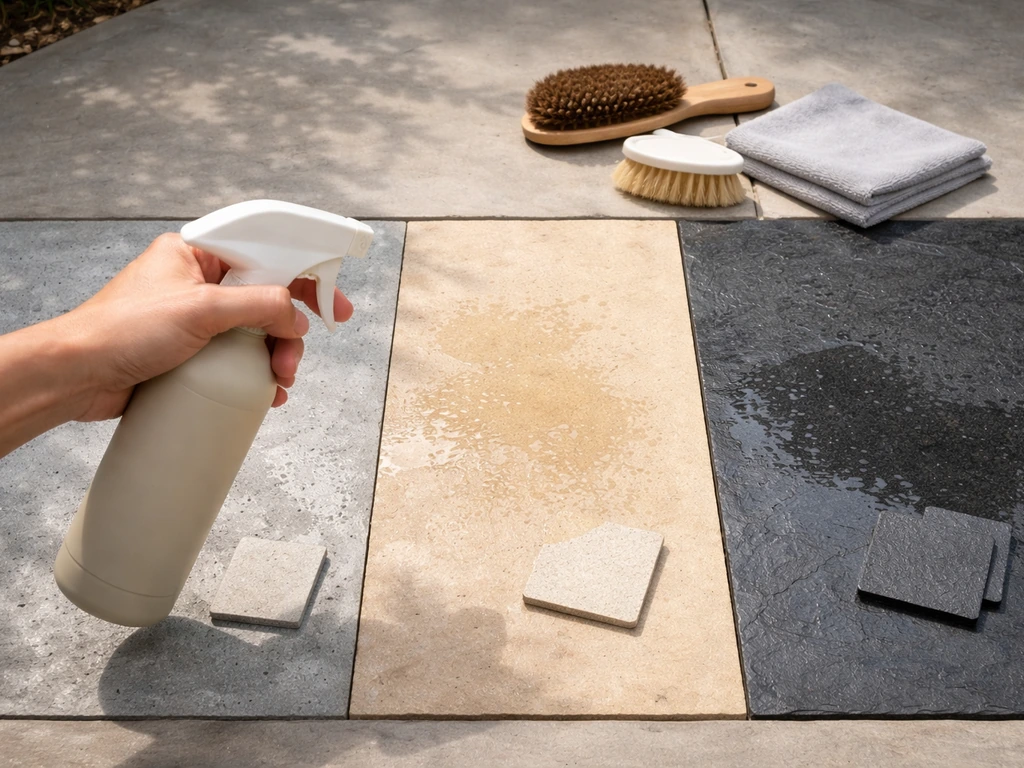
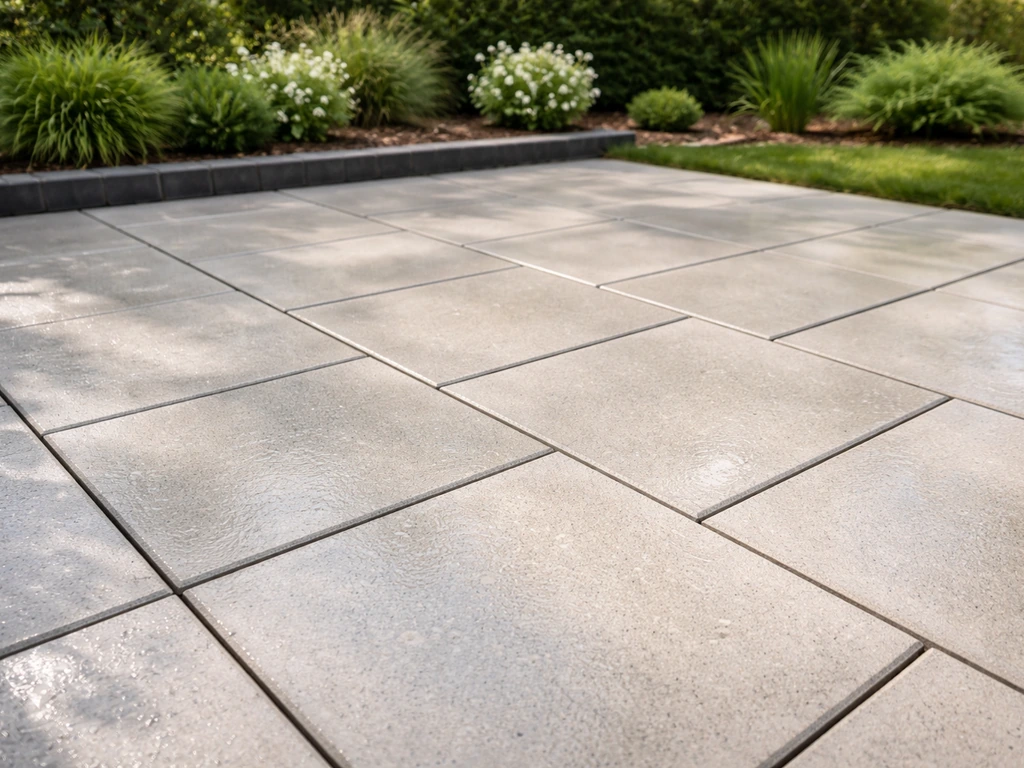
Start with your surface, not the stain. Some eco-friendly ingredients that work brilliantly on concrete will etch sandstone or discolor slate. Acid-based cleaners, even natural ones like citric acid or vinegar, are a genuine risk on calcareous stones (limestone, sandstone, marble-effect tiles) because acid reacts with the calcium carbonate in the stone and causes surface damage. On concrete, brick, and porcelain, you have a lot more flexibility.
| Surface | Safe eco ingredient types | Avoid |
|---|---|---|
| Concrete | Oxygen bleach, enzymes, citrus-based, hydrogen peroxide | Strong acid cleaners at high concentration |
| Brick | Oxygen bleach, enzymes, mild citrus | Neat vinegar, high-acid formulas |
| Natural stone (sandstone, limestone) | Enzyme cleaners, pH-neutral formulas | Any acid (vinegar, citric, acetic), high-alkaline bleach |
| Slate | Enzyme or pH-neutral cleaners, diluted oxygen bleach | Acid-based, neat bleach |
| Porcelain | Oxygen bleach, enzyme, citrus-based, hydrogen peroxide | Abrasive scrubs that scratch glaze |
| Block paving | Oxygen bleach, enzyme, citrus-based | High-pressure rinsing near jointing sand |
Once you've confirmed your surface is safe, match the formula to the problem. Mold, algae, and moss are biological growth, so you want a formula that kills and lifts organic matter (oxygen bleach and enzyme cleaners shine here). Grease and oil need surfactants and emulsifiers to break up the hydrophobic layer. Rust stains need a targeted treatment; most broad-spectrum eco cleaners won't touch them. Pet urine needs an enzyme formula that actually digests the uric acid crystals rather than just masking the smell.
Eco-friendly ingredient types and what each one actually does
Not all "green" ingredients are equal. Here's a straightforward breakdown of the main categories you'll see on labels and what they're genuinely good at.
Oxygen bleach (sodium percarbonate)
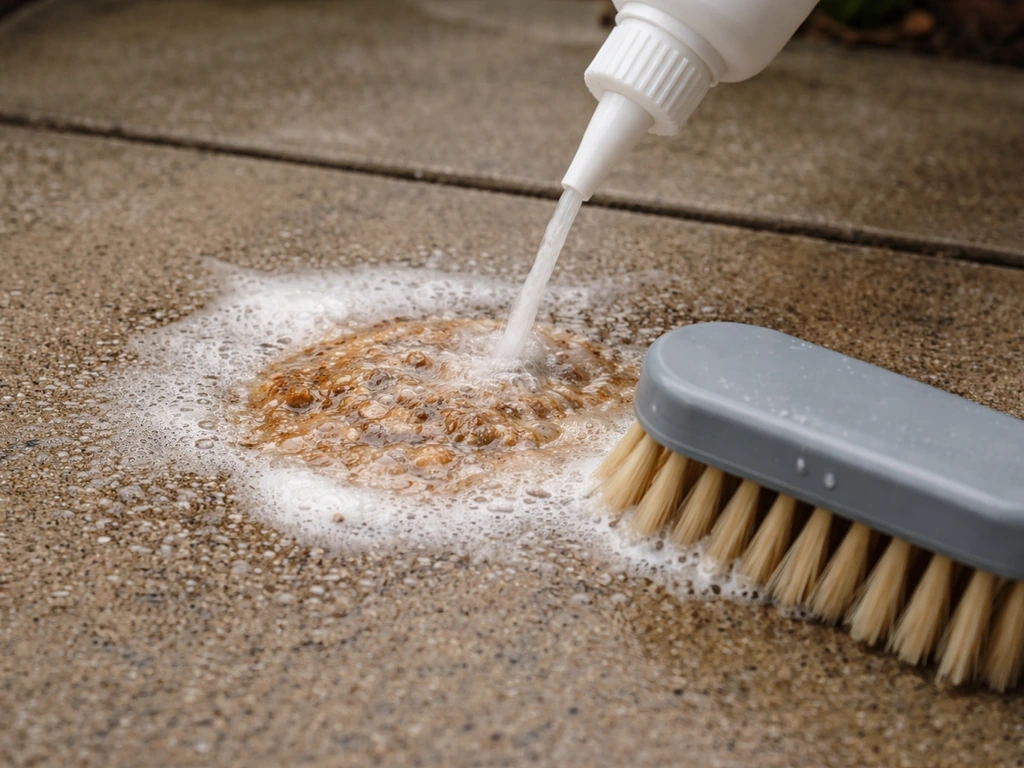
This is the workhorse of eco patio cleaning. Sodium percarbonate dissolves in water and releases hydrogen peroxide and soda ash. It bleaches organic stains, kills mold and algae spores, and lifts embedded grime. Crucially, it breaks down into water, oxygen, and sodium carbonate (washing soda), leaving no toxic residue. It's safe on most surfaces except sensitive natural stone where you should test first and keep dilution moderate. Most powdered patio cleaners sold as eco-friendly use this as their active ingredient.
Enzyme cleaners
Enzyme-based formulas use biological enzymes (protease, lipase, amylase) to digest organic matter at a molecular level. They're exceptionally good at pet urine stains, organic food grease, bird droppings, and leaf tannin staining. They're also genuinely surface-safe on sandstone and slate because they work at near-neutral pH. The trade-off is dwell time: enzymes need 10 to 30 minutes of contact to work, and they're less effective in cold weather below about 10 degrees Celsius (50 degrees Fahrenheit), so they're best used in spring and summer.
Citrus-based cleaners and plant-derived surfactants
d-Limonene (extracted from citrus peel) and plant-derived surfactants like coco-glucoside are the main players here. They're excellent at cutting through grease and oil because they emulsify hydrophobic compounds. They're biodegradable, generally low-toxicity, and smell good. However, concentrated citrus cleaners are still mildly acidic, so check pH before using on sandstone or limestone. At the dilutions recommended on most commercial products, they're usually fine on most surfaces, but I'd still do a patch test on softer stone.
Hydrogen peroxide
Some ready-to-use formulas contain hydrogen peroxide directly (usually at 3 to 5% concentration). It's a good oxidizing cleaner for mold, algae, and general surface discoloration. Like sodium percarbonate, it breaks down into water and oxygen. It's safe on most hard surfaces but can bleach colored grout or tinted sealers if left too long, so keep dwell times short and rinse thoroughly.
Vinegar and citric acid (DIY options)
White vinegar and citric acid come up constantly in DIY eco-cleaning guides. They do work on some stains (calcium deposits, light algae on concrete) but I'd caution against reaching for them as your first move. Both are acidic enough to damage sandstone, limestone, and grouted stone surfaces. They also don't kill mold spores reliably. On concrete and porcelain, a diluted citric acid solution is fine for mineral deposits. On anything calcareous, avoid them entirely. Vinegar also has a lingering smell that pets often dislike.
Dilution, dwell time, and rinsing: the rules that actually matter
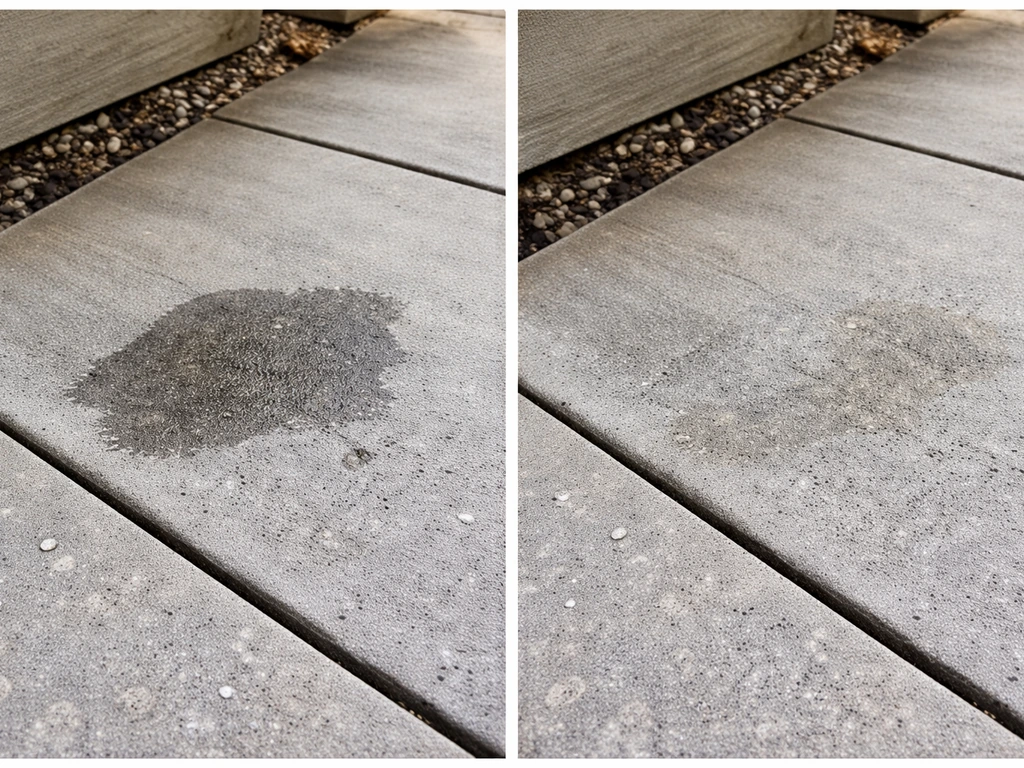
Using eco cleaners at the right concentration is probably the single biggest factor in whether they work. Too dilute and you're wasting time. Too concentrated and you risk residue, surface damage, or harming nearby plants. Always follow the manufacturer's dilution guide, but here are the general benchmarks I work from.
- Oxygen bleach powder (like sodium percarbonate): typically 100 to 200g per 10 litres of warm water for general cleaning, up to 300g for heavy mold or algae. Warmer water activates it faster.
- Ready-to-use enzyme sprays: apply neat, no dilution needed. Most require 15 to 30 minutes dwell time before rinsing.
- Concentrated citrus cleaners: usually dilute 1:10 to 1:20 with water for patio use. Check the label for the specific ratio.
- Hydrogen peroxide solutions: ready-to-use products at 3-5% are used neat; rinse after 10 to 15 minutes.
- Vinegar (if you must use it): minimum 1 part white vinegar to 1 part water, only on concrete or porcelain, rinse thoroughly.
Dwell time is where people go wrong most often. The temptation is to scrub immediately and rinse it all off, but most eco formulas need time to work. Oxygen bleach needs at least 15 to 20 minutes on a wet surface. If the surface dries out during dwell time, re-wet it with plain water so the cleaner keeps working. Enzyme formulas need even longer and should not be rinsed too early.
Rinsing properly protects both your patio and the surrounding garden. Before applying any cleaner, wet nearby plants and lawn thoroughly with plain water. This pre-soaking creates a barrier that dilutes any runoff. After the dwell time, rinse the patio generously with a hose, directing water away from planted beds or lawn edges where possible. With oxygen bleach at normal dilutions, the breakdown products (sodium carbonate and oxygen) aren't harmful to established plants at typical garden runoff levels, but I still pre-wet as a habit.
The best cleaning methods to pair with eco formulas
Scrubbing by hand
A stiff-bristle deck brush or patio brush is the safest method for delicate surfaces like sandstone and slate, and for jointed block paving where you don't want to blast out the jointing sand. Apply the cleaner with a watering can or pump sprayer, let it dwell, then scrub in circular or back-and-forth strokes. Rinse with a hose. It's more work but gives you full control over pressure and keeps joints intact.
Pump sprayer application
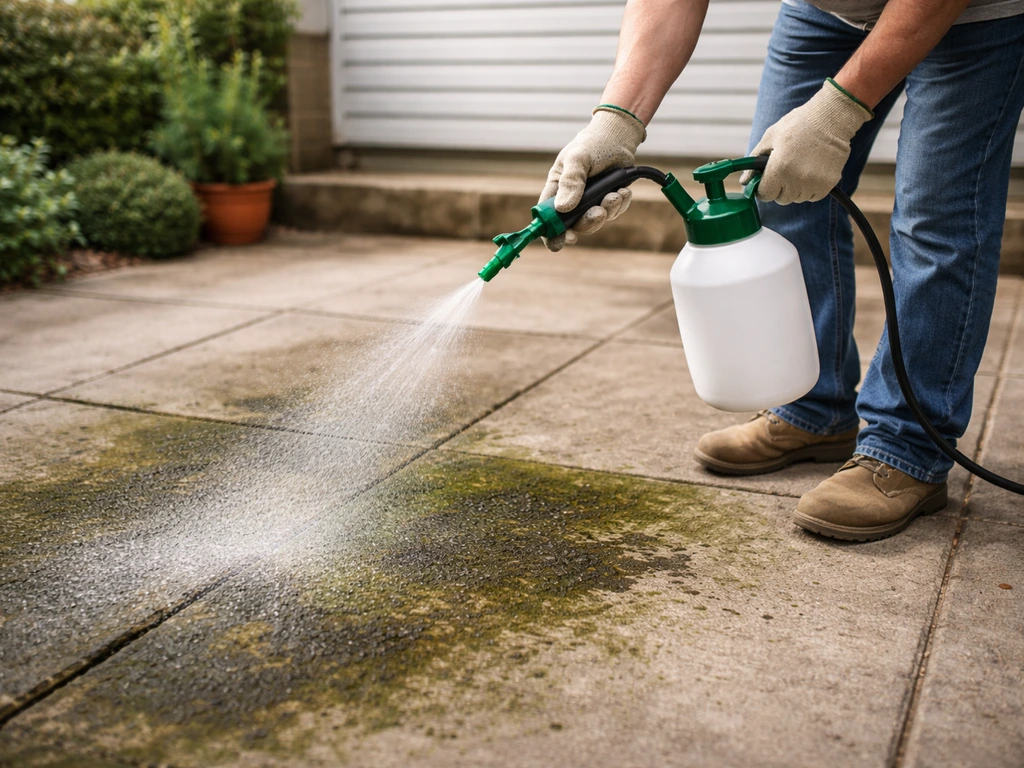
A garden pump sprayer is my preferred application method for most jobs. It gives even coverage, lets you reach awkward corners, and uses less product than pouring. For oxygen bleach solutions, make sure your sprayer is rinsed after use as the oxidizing agents can degrade rubber seals over time. Apply, wait the full dwell time, then rinse.
Soft washing
Soft washing means applying a chemical solution at low pressure and letting the chemistry do the work rather than mechanical force. It's ideal for eco cleaners because you're not relying on high-pressure water to compensate for a weaker formula. You apply with a low-pressure sprayer, wait the dwell time, and rinse at moderate pressure. It's particularly effective for mold and algae on concrete and brick, and it's far kinder to surfaces than pressure washing.
Pressure washing with eco cleaners
Pressure washing can absolutely be combined with eco-friendly cleaners, but the order and settings matter. Apply the eco cleaner first, let it dwell, then use the pressure washer to rinse at a low-to-medium setting (around 1000 to 1500 PSI for most patios, not the maximum setting on your machine). Use a fan tip or rotary surface cleaner rather than a pencil jet. Keep the nozzle at least 20 to 30cm from the surface and angle it at about 45 degrees rather than straight down. Straight-down high pressure on concrete can etch the surface; on natural stone it's even more destructive. On block paving, use a surface cleaner head and check jointing sand levels afterwards.
Spot treatments for the most common patio problems
Mold and algae
Oxygen bleach is your best tool here. Mix it at the higher end of the dilution range (around 200 to 250g per 10 litres of warm water), apply generously, and allow 20 to 30 minutes dwell. You'll often see the green or black growth turning brown as the oxidizing action kills it. Scrub if needed, then rinse. On natural stone, use a lower concentration and test first. For recurring algae in shaded spots, the real fix is improving drainage and air circulation, not just cleaning more frequently.
Moss
Moss has a deeper root structure than algae, so it needs a longer dwell time and often a second application. Apply oxygen bleach solution and let it sit for 30 to 45 minutes, or even overnight if the weather is damp (keep the surface wet). The moss will die and turn brown, then you can scrub or brush it away. Some eco patio products include ferrous sulfate for moss killing, which is naturally derived but can leave rust-colored staining if overused. I prefer sticking to oxygen bleach for moss and avoiding the ferrous sulfate risk.
Rust stains
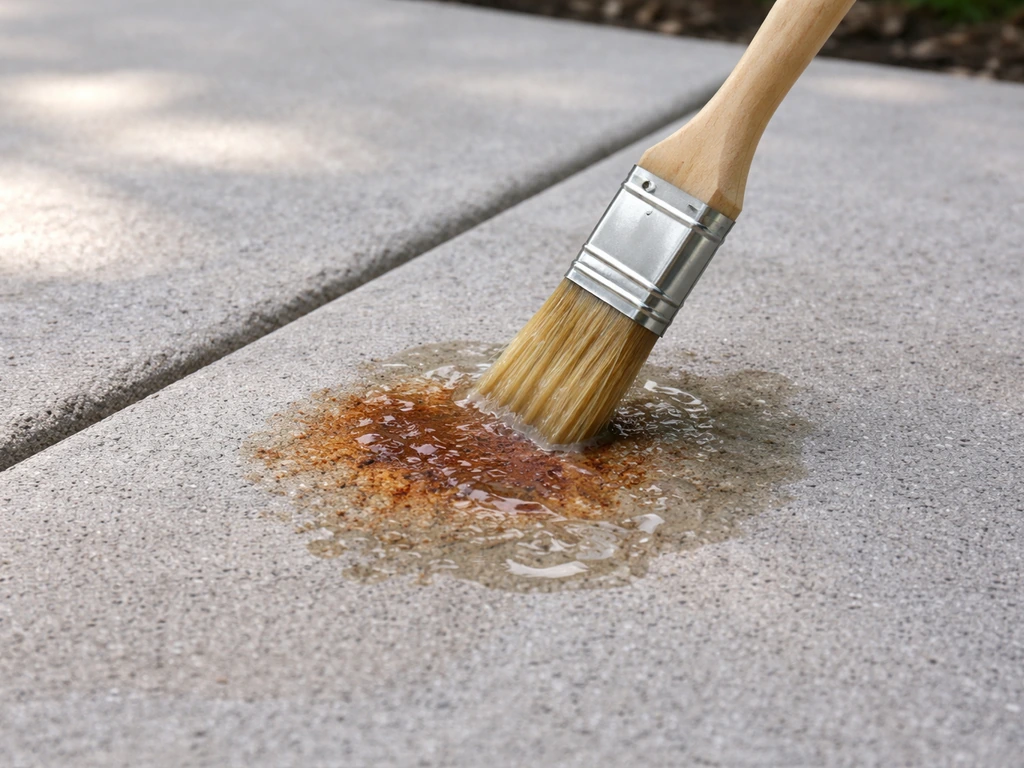
Most general eco patio cleaners won't touch rust stains, and this is one area where you need a specific product. Look for eco-friendly rust removers based on oxalic acid or citric acid. These are naturally derived acids that chelate (bind to) iron ions and lift them from the surface. Oxalic acid occurs naturally in many plants. Apply directly to the rust stain, let it sit for 10 to 15 minutes, and rinse. Don't use these acid-based treatments on sandstone or limestone: the acid will cause surface damage regardless of its natural origin. On concrete, brick, and porcelain, they work well.
Grease and oil
Citrus-based or plant-derived surfactant cleaners are the best eco option for grease and oil. For fresh spills, absorb as much as possible with cat litter or absorbent powder first, then apply the cleaner neat or at a concentrated dilution. Let it dwell for 15 to 20 minutes to emulsify the grease, then scrub and rinse. Old, set-in grease may need two or three treatments. Enzyme cleaners that include lipase (fat-digesting enzyme) can also work well on grease but take longer.
Pet stains and odors
Pet urine on patio surfaces is a specific problem because the uric acid crystals left behind keep reactivating the smell every time it rains. Standard cleaners mask the odor but don't eliminate it. Enzyme cleaners that contain urease or protease will actually break down the uric acid and remove the odor source. Apply generously to the stained area, cover loosely with plastic to prevent the area drying out (this keeps the enzymes active), and leave for at least 30 minutes, ideally longer for older stains. Rinse thoroughly. If you have pets using the patio, it's worth looking at pet-safe formulas specifically, as some patio cleaners that market themselves as eco-friendly still contain surfactants or fragrances that irritate dogs or cats. For overall pet safety, also check that the product is fully rinsed and avoid formulas that leave an irritating film pet-safe formulas specifically.
What to be skeptical of: green claims, residue, and hidden risks
"Eco-friendly," "natural," and "biodegradable" on a patio cleaner label can mean almost anything. Unlike food labeling, manufacturers of cleaning products are not legally required to fully disclose ingredients. That means a product can be called natural while containing synthetic surfactants, preservatives, or fragrances that are harmful to aquatic life or pets. The most reliable third-party signal to look for in the US is the EPA's Safer Choice label, which requires products to meet strict criteria for human health and environmental safety, including detailed screening of every ingredient including surfactants for aquatic toxicity. If a product carries this label, you know the formula has been independently reviewed, not just self-certified.
- "Plant-based" doesn't mean non-toxic: some plant-derived compounds are acutely toxic to aquatic life at low concentrations.
- "Biodegradable" without a timeframe is almost meaningless: most synthetic chemicals will eventually biodegrade, just not necessarily quickly or safely.
- "Streak-free" claims often mean the formula contains surfactant residues that can leave a film on the patio surface and attract dirt faster.
- Fragrances and colorants added to eco-branded products serve no cleaning function and some are allergenic or irritating to pets.
- High pH (very alkaline) formulas can still damage natural stone even if every ingredient is technically biodegradable.
- Products containing benzalkonium chloride (a common biocide) are sometimes marketed as eco alternatives to bleach but are highly toxic to aquatic organisms.
Also watch out for residue. Some concentrated cleaners, if not rinsed fully, leave a soapy or alkaline film that turns the patio surface slippery when wet. This is both a safety hazard and a dirt magnet. Always rinse more than you think you need to, and rinse again after that.
How to compare eco-friendly patio cleaner products and my top picks by situation
When you're looking at products, the label and ingredient list (where provided) will tell you a lot. Here's what to actually check before buying.
- Active ingredient disclosed: if the label just says "proprietary blend" with no active ingredient listed, move on.
- pH stated: for natural stone, you want pH 6 to 8 (near neutral); for concrete and brick, pH 7 to 11 is fine.
- Third-party certification: EPA Safer Choice (US), EU Ecolabel, or equivalent independent certification beats any self-applied green claim.
- Biodegradation timeframe: look for "readily biodegradable" rather than just "biodegradable."
- Surfactant type named: coco-glucoside, lauryl glucoside, and decyl glucoside are among the gentler plant-derived surfactants; avoid SLES and similar synthetic ethoxylates if you want a genuinely eco formula.
- Concentrate vs. ready-to-use: concentrates produce less plastic packaging waste per cleaning job and are more economical.
- Surface compatibility stated: a reputable eco cleaner will specify which surfaces it's safe for.
Best for general mold, algae, and grime on concrete or brick
An oxygen bleach concentrate (powdered sodium percarbonate sold as a patio cleaner or deck cleaner) is the most cost-effective and genuinely eco option. Brands sold as sodium percarbonate patio cleaner or oxygen bleach deck cleaner follow this formula. Mix per instructions, apply with a watering can or pump sprayer, dwell 20 minutes, scrub if needed, and rinse. You get a lot of product for the money and no questionable additives. This makes it a great match when you need the best natural patio cleaner for mold, algae, and embedded grime.
Best for natural stone (sandstone, slate, limestone)
A pH-neutral enzyme-based cleaner is the safest choice. Look for products specifically labeled safe for natural stone and pH-neutral (around 6 to 7). These clean without the acid or high-alkaline risk that damages stone surfaces. They take longer to work but they won't cost you an expensive sandstone reseal. Dwell time of 20 to 30 minutes and a gentle brush are the method here.
Best for pet stains and odors
An enzyme cleaner with urease or a specific pet-odor enzyme blend. If you need the best patio cleaner pet friendly for pet urine, prioritize an enzyme formula that digests the uric acid rather than masking the smell. Look for products that explicitly mention uric acid breakdown, not just odor neutralizing. These are also the most pet-safe formulas once dried and rinsed, which matters if your dog or cat is back on the patio quickly. This topic overlaps with the broader question of which patio cleaners are genuinely safe for pets and whether formulas used on artificial grass or near lawn areas pose risks. This topic overlaps with the broader question of which patio cleaners are genuinely safe for pets and whether formulas used on artificial grass or near lawn areas pose risks.
Best for grease and barbecue staining
A citrus-based degreaser or a plant-surfactant formula with lipase enzyme. The key is a cleaner that emulsifies oil rather than just floating it across the surface. Check the label for d-Limonene or citrus extract as an active, or for a stated grease-cutting claim with an enzyme ingredient listed.
Best for rust stains on concrete or porcelain
An oxalic acid-based rust remover or citric acid treatment. These are targeted spot treatments, not general patio cleaners. Use them specifically on the stain and rinse well. Not suitable for natural stone.
Maintenance habits that reduce how often you need to clean
The best eco-friendly patio cleaner is the one you need to use less frequently. A few consistent habits make a real difference to how fast biological growth and staining come back.
Seal your patio surface
A good patio sealer applied after a thorough clean dramatically reduces how quickly algae, mold, and staining return. Sealers create a surface barrier that makes it harder for organic matter and moisture to embed in the pores of the stone or concrete. On natural stone, use a penetrating impregnating sealer rather than a topcoat film sealer, as film sealers can trap moisture and cause spalling. On concrete and brick, either type works. Reapply sealers every one to three years depending on foot traffic and weather.
Improve drainage and reduce shade
Algae and moss thrive in damp, shaded conditions. If a section of your patio stays wet for extended periods after rain, improving drainage (clearing blocked outlets, improving the fall angle of the surface) will reduce biological growth faster than any cleaner. Trimming back overhanging trees or structures to increase sunlight and airflow also makes a meaningful difference.
A simple seasonal routine
I do a light oxygen bleach clean in early spring before the outdoor season starts, targeting any green growth that appeared over winter. A second clean in autumn before the patio gets covered or goes into low use removes leaf tannin staining and organic matter that would otherwise sit and embed over winter. Between those two cleans, a monthly brush down with a stiff broom and a hose rinse is usually enough to keep on top of things. This routine has cut down my heavy-cleaning sessions from three or four times a year to twice.
Deal with spills immediately
Oil, grease, wine, and pet urine are far easier to clean when fresh. Absorb what you can immediately, then apply an enzyme or citrus cleaner and rinse. Leaving spills to set means they bond with the surface and need much more aggressive treatment to remove. Keep a small bottle of your chosen eco spot cleaner to hand during the outdoor season so you can deal with spills before they become stains.
FAQ
What’s the best eco friendly patio cleaner when I do not know the stain type yet?
For most homeowners, start with sodium percarbonate (oxygen bleach) at the label dilution, then adjust based on what you see. If the stain is bio-growth (green/black specks, slippery film), oxygen bleach is usually the first pass. If you see rust-orange spotting, switch to an oxalic acid rust remover instead of repeating a general cleaner, since broad eco formulas often miss iron staining.
Can I use vinegar or citric acid patio cleaners on natural stone?
Do not rely on DIY acidity like vinegar or citric acid for calcareous materials (sandstone, limestone, marble-effect tile). If you are unsure, treat only a small hidden spot, let it dwell briefly, then rinse and check for lightening or roughness. If you notice surface “frosting” or color change, stop and switch to a pH-neutral enzyme cleaner for that material.
How can I tell if a patio cleaner marketed as eco friendly is actually safer?
Green label claims alone can be misleading, especially for aquatic safety and residue potential. Look for a clear active ingredient like sodium percarbonate for oxygen bleach, or pH-neutral wording plus stone-safe directions for enzymes. If the product carries an independent Safer Choice style credential, it is a stronger signal than “natural” or “biodegradable,” which do not guarantee non-irritating surfactants or low aquatic toxicity.
Is it okay to use pressure washing with eco patio cleaners?
Yes, but use a two-step approach: apply the eco cleaner first and allow its full dwell time, then rinse with the pressure washer on low-to-medium settings using a fan tip or surface cleaner head. Avoid straight down or maximum PSI, and keep the nozzle well off the surface to reduce etching and prevent jointing sand loss on block paving.
What should I do if the eco cleaner dries before the dwell time ends?
Most oxygen bleach blends require the surface to stay wet for the dwell window. If it dries early, re-wet with plain water and let it continue working, rather than scrubbing immediately. For enzymes, avoid rinsing too soon, since early rinse reduces digestion of the stain, especially for pet urine-related discoloration.
Where exactly should I patch test, and how do I know if it worked?
Patch testing matters most for (1) natural stone, (2) tinted or delicate sealers, and (3) colored grout. Pick a small area, apply at the same dilution you plan to use, wait the full dwell time, then rinse thoroughly and check color and texture after it dries. For oxygen bleach, use a lower concentration on sensitive stone and never “top up” with extra powder mid-clean.
How do I protect my garden when cleaning algae or mold?
If you want to protect plants and avoid runoff damage, pre-soak nearby beds and lawn thoroughly with plain water, then rinse the patio after dwell while directing water away from planting edges. Also rinse longer than you think you need to, because a soapy film from some concentrates can leave slipperiness even after the biological growth is gone.
Why does algae come back quickly even after using the best eco friendly patio cleaner?
Oxygen bleach can help with algae and light organic staining, but recurring growth often means the patio stays damp or shaded. Improve drainage (check fall angle, clear blocked outlets) and increase airflow by trimming back overhanging growth. If you clean in spring and autumn and still see return quickly, treat the moisture problem first, then use the cleaner as maintenance.
How do I remove pet urine odor without just masking it?
For pet urine, enzymes are usually the right choice, but timing and contact matter. Apply generously, loosely cover to prevent the area drying out, keep pets off until it has fully rinsed and dried, and rinse thoroughly to avoid lingering surfactant residue. If odor persists after a proper enzyme dwell and rinse, re-treat because urine crystals can be buried under grime and require repeated contact.
What’s the best eco friendly patio cleaner for grease and oil, and how do I handle old stains?
For grease and oil, focus on emulsification rather than “natural” ingredients. Use a citrus or plant-derived surfactant degreaser, or a lipase-containing enzyme, and let it dwell long enough for breakdown (often 15 to 20 minutes, sometimes longer for set-in oil). For old grease, expect multiple applications and avoid high-pressure rinsing that can spread the emulsified oil into joints.
Do oxygen bleach cleaners work on rust stains, or do I need something else?
If you see rust stains, switch from general oxygen bleach to a targeted oxalic acid-based or citric acid-based rust remover, applied only to the spot. Keep it away from sandstone, limestone, and other calcareous surfaces because acids can damage stone regardless of being naturally derived. After dwell, rinse thoroughly to prevent any lingering chemical.
How does sealing change how often I need to clean my patio with eco products?
Sealant choice affects future cleanability. On natural stone, choose a penetrating impregnating sealer, not a film-forming topcoat, because film types can trap moisture and contribute to surface damage. On concrete and brick, either style can work, but reapply based on wear and weather exposure (often every one to three years).
Next Article
How to Use Wet and Forget Patio Cleaner Step by Step
Step by step guide to apply Wet and Forget patio cleaner, prep and safety, dwell time, rinse or no rinse, and troublesho