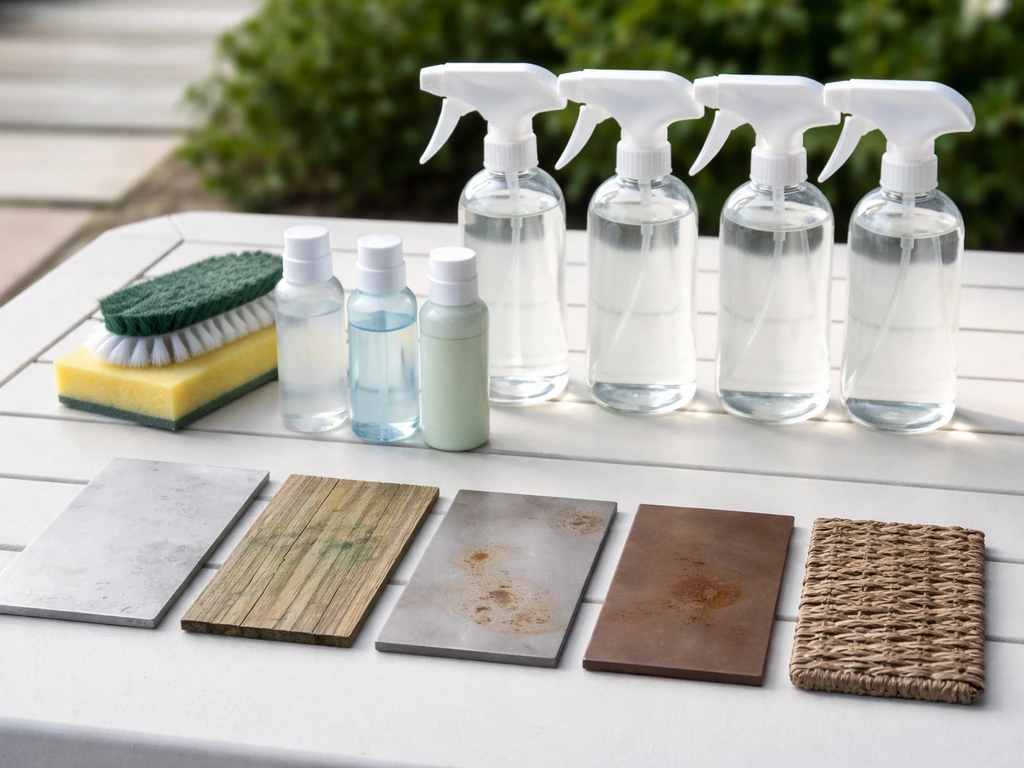
For most patios dealing with algae, mold, or general grime, a sodium hypochlorite-based outdoor cleaner like 30 SECONDS Outdoor Cleaner or a diluted bleach solution (1%–6% sodium hypochlorite with a surfactant) is the most effective and affordable option. For rust stains, go straight to an oxalic-acid cleaner. For stubborn moss and lichen on stone or brick, a slow-acting no-scrub product like Wet & Forget Concentrate is hard to beat. The right choice depends on two things: what your patio is made of and what you're trying to remove. Get those two factors right and you'll clean it safely in one session without damaging the surface or killing your plants.
Best Outdoor Patio Cleaner: Pick, Use, and Avoid Damage
Rhea Lang
19 May 2026
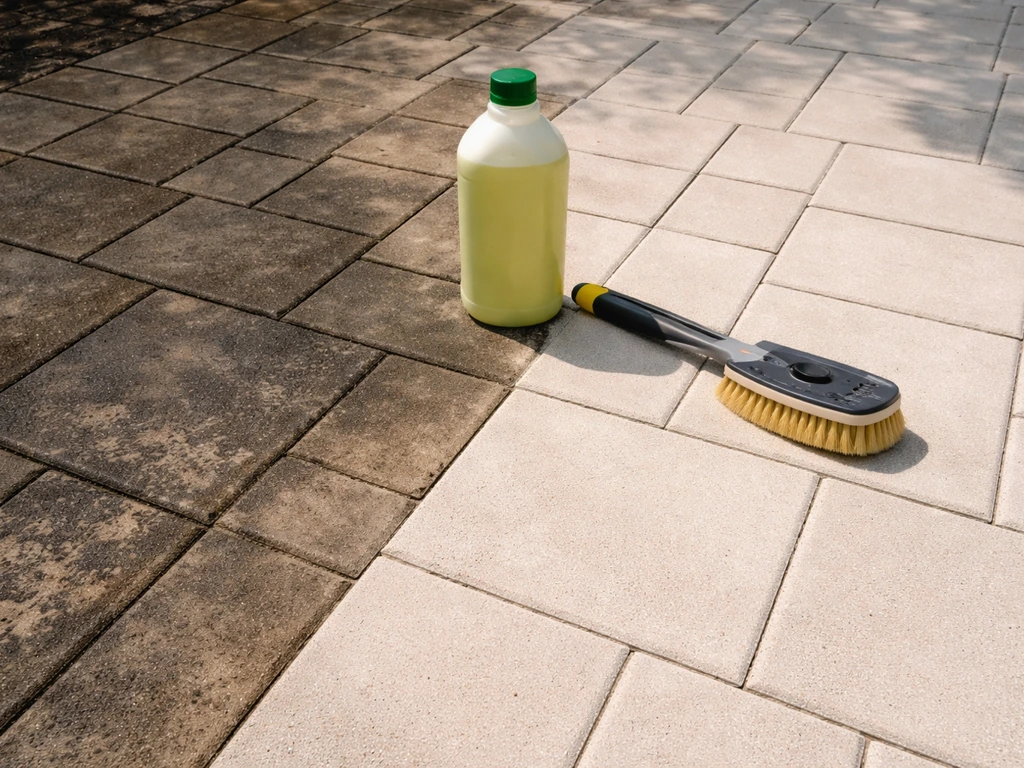
How to choose the best patio cleaner for your surface and grime
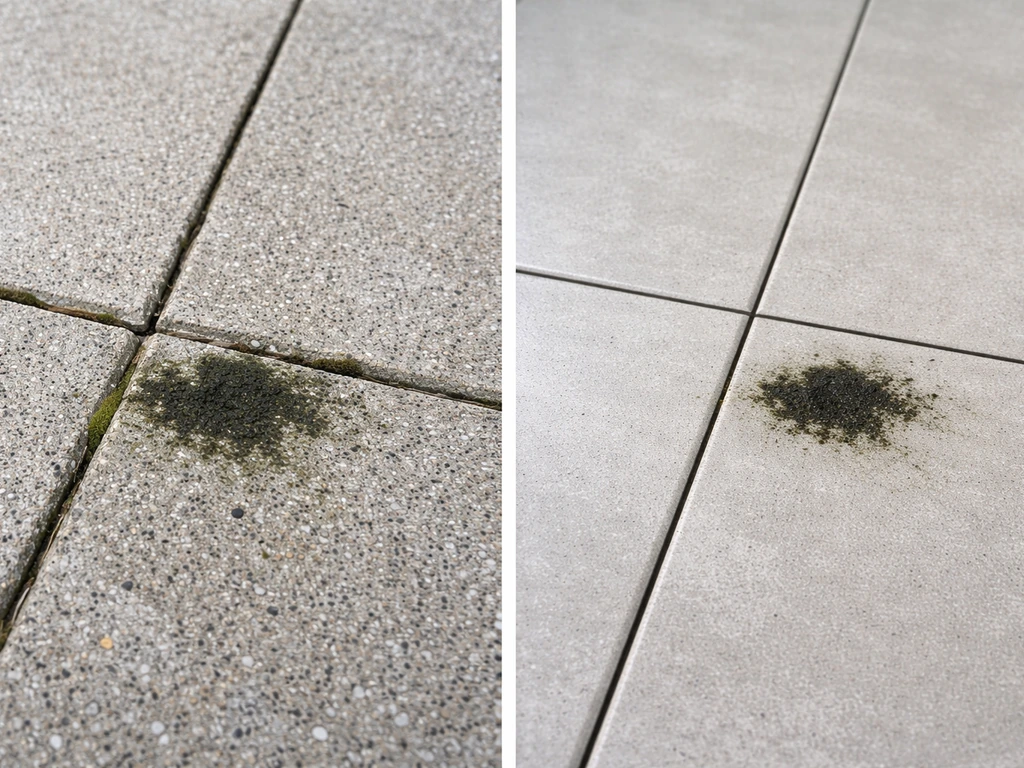
The single biggest mistake homeowners make is buying a powerful cleaner without checking whether it's safe for their surface. A bleach-based product that blasts algae off concrete can permanently discolor sandstone. An acidic rust remover that works brilliantly on a plain concrete slab can etch the surface of polished porcelain tiles. Before you buy anything, nail down two things: your patio material and your primary problem.
Surface porosity matters more than most people think. Porous surfaces like sandstone and natural limestone absorb chemicals quickly, which means harsh acids or high-concentration bleach can cause staining, bleaching, or surface damage before you even rinse. Dense, low-porosity surfaces like porcelain and slate can handle stronger solutions but still need the right chemistry. Concrete sits in the middle: it's tough enough for most cleaners but vulnerable to repeated acid treatment, which weakens the surface over time.
Once you know your surface, match it to your grime type. Biological growth (algae, moss, mold, mildew) responds to biocides and oxidising agents. Rust and mineral stains need acid-based chemistry. Grease and oil need a degreasers with alkaline chemistry or a surfactant-heavy formula. Pet stains have both an organic component (enzyme cleaners work well) and sometimes a crystallised uric acid deposit (which needs a mild acidic treatment). Don't try to use one product for all of these, it rarely works and often causes damage.
Quick decision checklist before you buy
- Identify your surface: concrete, natural stone (sandstone, limestone, slate), brick, porcelain, or composite
- Identify your primary stain or growth: algae/moss/mold, rust, grease/oil, pet stains, or general dirt
- Check whether the surface is sealed (sealed surfaces are more tolerant of chemicals but can be stripped by solvents)
- Note any nearby plants, lawns, ponds, pools, or pets that could be affected by runoff
- Decide whether you want a fast single-session clean or a slow no-scrub treatment you apply and leave
Top cleaner picks for common patio materials
Different materials need genuinely different approaches. Here's what actually works well on each common patio surface, and what to avoid.
Concrete
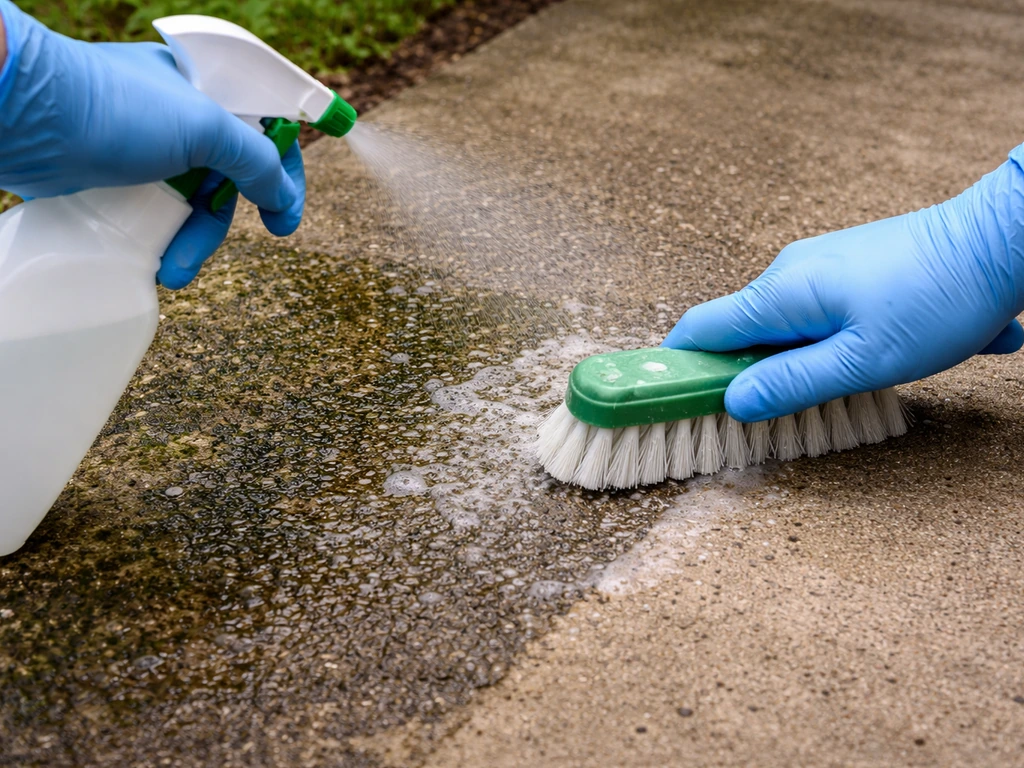
Concrete is the most forgiving patio surface to clean. A bleach-based cleaner (sodium hypochlorite at 1%–6% concentration with a surfactant) handles biological growth well. For rust stains, an oxalic-acid product applied for up to 10 minutes before scrubbing and rinsing is the most effective approach. For heavy grease from BBQs or vehicles, an alkaline degreaser works faster than bleach. 30 SECONDS Outdoor Cleaner is a solid ready-to-use option for most concrete cleaning jobs. Avoid repeated acid treatments on decorative or stamped concrete, as they can dull the finish over time.
Natural stone (sandstone, limestone, slate)
Natural stone, especially sandstone and limestone, is sensitive to acids because they're calcium-based minerals. Acid cleaners, including vinegar, citric acid, and most rust removers, will etch and pit the surface. Stick to pH-neutral or alkaline stone-specific cleaners for general cleaning. For biological growth on sandstone, a very dilute bleach solution (less than 1%) or a product like Wet & Forget (which uses benzalkonium chloride, not bleach) is a safer choice because you're not risking etching. Slate is denser and more acid-tolerant than sandstone, but I'd still keep acid products away from it unless you're confident the stone is not calcium-rich. Always test any new product on a hidden area first.
Brick
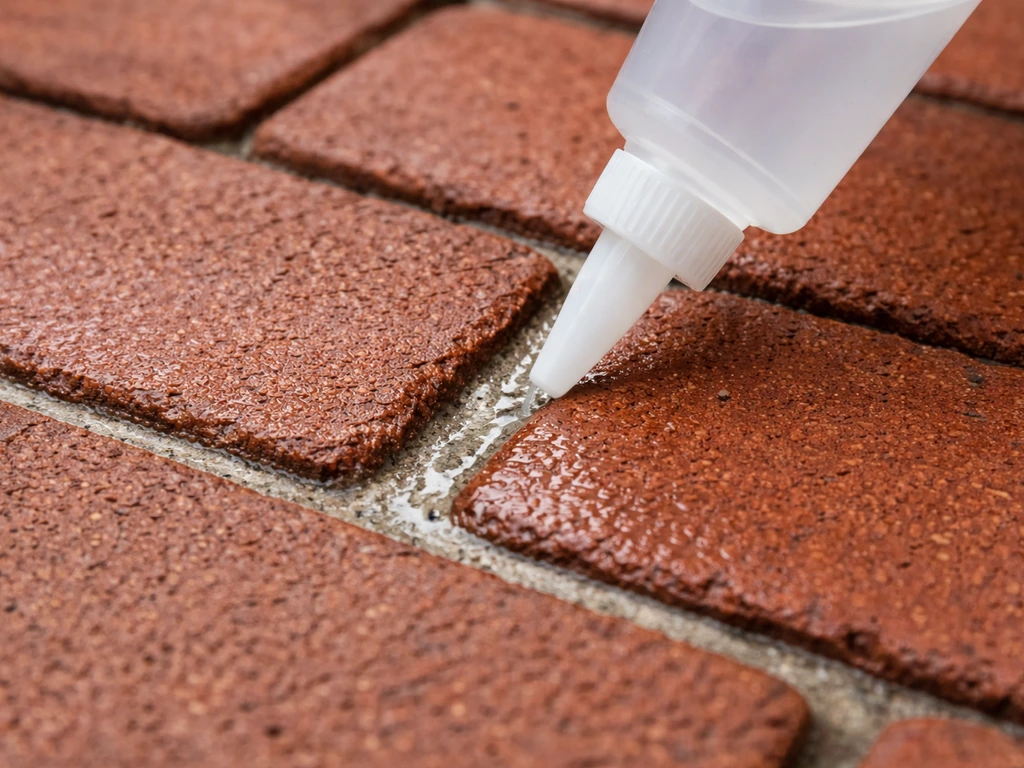
Brick is porous and can be cleaned with diluted bleach-based products for algae and moss. The mortar joints are the vulnerable point: avoid concentrated acid cleaners directly in the joints, as they can soften and crumble mortar over time. A stiff brush applied after a dwell time of 5–10 minutes is more effective on brick than blasting with a pressure washer at high PSI, which can dislodge mortar and erode the brick face. Wet & Forget is also excellent for brick because the no-scrub, low-pressure application protects the mortar.
Porcelain
Porcelain paving is dense and non-porous, which makes it resistant to most stains but also means products don't penetrate and dwell the same way. pH-neutral cleaners work for routine cleaning. For biological staining on porcelain, bleach-based products are effective and safe at normal dilutions. Avoid highly acidic or highly alkaline cleaners on porcelain with a polished finish because they can micro-etch the glaze. The grout lines between porcelain tiles are often the problem, they're more porous than the tiles themselves and hold mold. Use a grout-specific fungicidal cleaner on the joints.
Surface compatibility at a glance
| Surface | Safe cleaner types | Avoid |
|---|---|---|
| Concrete | Bleach-based, oxalic acid (rust), alkaline degreaser | Repeated acid treatments on decorative finishes |
| Sandstone / Limestone | pH-neutral stone cleaner, very dilute bleach, Wet & Forget | Any acid-based cleaner (vinegar, citric, oxalic) |
| Slate | pH-neutral, dilute bleach, mild alkaline | Concentrated acids |
| Brick | Dilute bleach, Wet & Forget, alkaline cleaners | Concentrated acids near mortar joints |
| Porcelain (unpolished) | pH-neutral, bleach-based, mild alkaline | Strong acids or alkalis on polished glaze |
| Porcelain grout lines | Fungicidal grout cleaner, dilute bleach | Leaving organic matter to build up long-term |
Best options by cleaning problem
Mold and mildew
Sodium hypochlorite is the gold standard for killing mold and mildew on outdoor surfaces. If you want the best patio mould cleaner, choose a bleach-based product with sodium hypochlorite and use the right dilution and contact time Sodium hypochlorite is the gold standard for killing mold and mildew on outdoor surfaces.. A solution of 1%–6% sodium hypochlorite with a surfactant (to help it cling and extend dwell time) applied via a low-pressure sprayer is the approach used by professional soft-wash contractors, and it's exactly what makes products like 30 SECONDS Outdoor Cleaner effective. The key is dwell time, let the product sit for the full recommended contact period (usually 5–15 minutes) before rinsing. Shortcutting dwell time means you're just washing the surface, not actually killing the mold spores.
Algae and green slime
Bleach-based outdoor cleaners handle algae quickly, you'll often see the green colour disappear within minutes of application. For a lower-effort approach, Wet & Forget Concentrate is genuinely excellent for algae. You dilute it, apply it to a dry surface on a dry day, and leave it. Rain gradually rinses the dead algae away over the following weeks. It's slower, but if you have a large area or a surface too delicate for scrubbing, it's the smart choice. Apply it when no rain is expected for at least 4–5 hours so it has time to penetrate.
Moss and lichen
Moss is thicker than algae and more resistant to surface-only treatment. You can scrape off the bulk mechanically first (a stiff brush or plastic scraper), then treat with a biocide to kill the remaining spores and prevent regrowth. Wet & Forget is particularly good for moss and lichen because the active ingredient works its way into the growth over time. For a faster result, a bleach-based product at the higher end of its dilution range, left on for 10–15 minutes and then scrubbed with a stiff deck brush, will clear most moss in a single session. The moss won't all rinse away instantly, loosened dead growth often needs a second brush after the rinse.
Rust stains
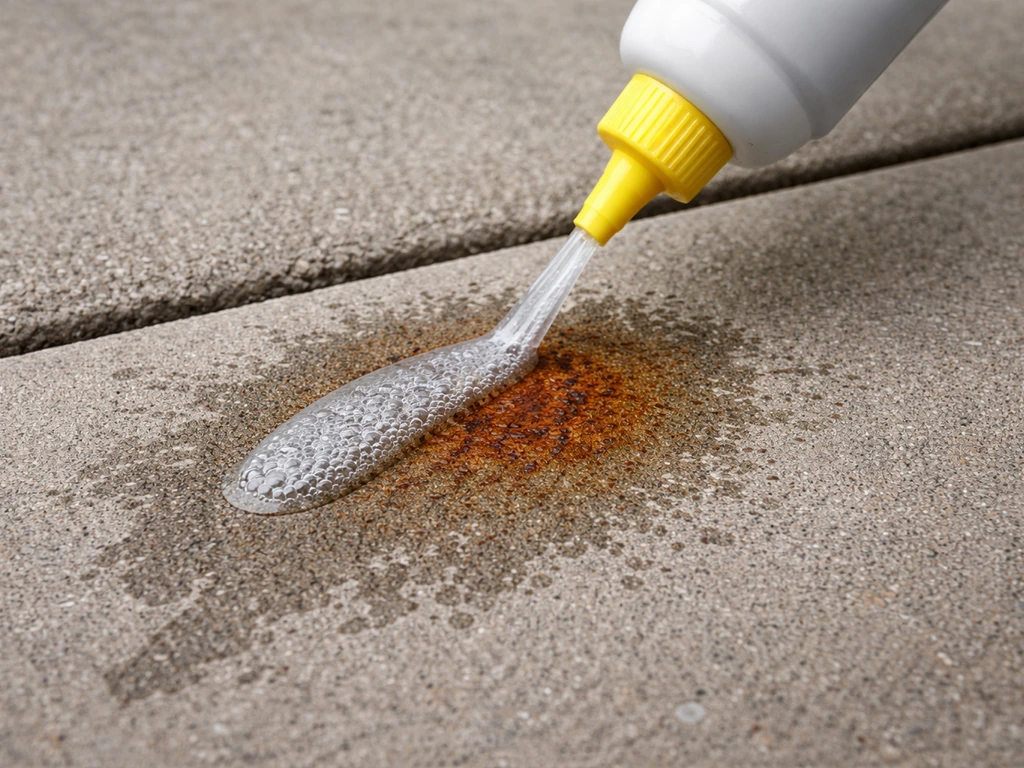
Rust needs acid, specifically oxalic acid. It's the active ingredient in most dedicated rust and stain cleaners sold for concrete and patio surfaces. Apply it to the stained area, let it dwell for up to 10 minutes, scrub with a stiff brush, and rinse thoroughly. Apply the oxalic-acid rust cleaner and let it dwell for up to about 10 minutes before scrubbing and rinsing let it dwell for up to 10 minutes. Don't use oxalic acid on sandstone or limestone, it'll etch the surface and you'll swap one problem for another. On concrete, multiple treatments may be needed for deep rust staining, but avoid making acid treatment a weekly habit as it gradually softens the surface.
Grease and oil (BBQ and cooking residue)
Alkaline degreasers or surfactant-heavy outdoor cleaners work best on grease. Standard bleach-based products are less effective because bleach doesn't cut through oil, it just bleaches it. Apply a degreaser, agitate with a stiff brush, and rinse with hot water if possible. For really heavy grease deposits from years of BBQ use, a short dwell time followed by pressure washing at moderate pressure is the most effective combination. If the grease has been there a long time, you may need two treatment rounds.
Pet stains
Fresh pet urine on concrete or paving responds well to enzymatic cleaners, which break down the organic compounds that cause the smell. Older, dried pet stains that have crystallised into the surface need a mild acidic cleaner to dissolve the uric acid deposits before an enzyme cleaner can fully do its job. Avoid strong bleach directly on areas where pets walk regularly, if pets walk through treated areas while still wet, rinse their paws with clean water as a precaution. This is actually mentioned in the Wet & Forget FAQ, and it's good general practice with any chemical cleaner.
Chemical vs pressure washing: which method and how to combine them safely
These two methods work best together, not as alternatives. Chemical cleaners kill and loosen biological growth and break down stains at a molecular level. Pressure washing physically removes the loosened material. Using pressure alone on moss or algae without a chemical pre-treatment often just spreads spores around the patio and leaves invisible residue that regrows faster than before. Using chemicals alone without rinsing leaves residues that can damage the surface or harm nearby plants.
The soft-wash approach used by professionals is instructive here: apply biocide at low pressure (40–100 PSI, essentially a garden sprayer) to get the chemical onto the surface without stripping or blasting. Let it dwell. Then rinse at moderate pressure. For concrete, that final rinse can go up to 3,000–3,500 PSI with a 25-degree nozzle if you need the mechanical scrubbing power. For natural stone or brick, keep the rinse pressure lower, 1,200–1,800 PSI at most, with a wider nozzle angle (40 degrees) and the wand kept 12 inches or more from the surface.
One hard rule: never mix bleach-based cleaners with any other chemical product. The CDC is explicit about this. Mixing bleach with acids (including many stone or rust cleaners) produces chlorine gas. Mixing with ammonia-based products creates toxic chloramine. Apply one product, rinse completely, and only then apply a second if needed. This is the number one safety rule I'd emphasise to anyone combining chemical cleaning with pressure washing on a patio.
Pressure settings by surface type
| Surface | Recommended PSI range | Nozzle angle | Notes |
|---|---|---|---|
| Concrete (plain) | 2,800–3,500 PSI | 25° | Keep wand moving continuously; stay 6–12 inches from surface |
| Concrete (decorative/stamped) | 1,500–2,000 PSI | 25°–40° | Lower pressure protects coatings and stained finishes |
| Brick | 1,200–1,800 PSI | 25°–40° | Avoid pointing directly at mortar joints |
| Natural stone (sandstone, slate) | 800–1,500 PSI | 40° | Keep wand at 12+ inches; test a small patch first |
| Porcelain paving | 1,500–2,500 PSI | 25°–40° | Avoid grout joints at high pressure |
| Chemical application (all) | 40–100 PSI | Any low-pressure tip or garden sprayer | Soft-wash method; no high pressure during chemical dwell |
Application steps and timing: how to actually do this
Good technique makes a bigger difference than expensive products. Here's the process that consistently gives the best results, whether you're using a ready-to-use spray or a concentrated chemical with a pressure washer.
- Clear the patio: remove furniture, pots, and any items that could be stained or damaged by the cleaner. This is also the point to check for any fragile pointing or loose slabs that need fixing before water is applied.
- Protect the surroundings: wet down any grass, border plants, or garden beds adjacent to the patio with plain water before applying cleaner. This dilutes any runoff. Cover ponds or pool edges if they're close. Move or cover pet food and water bowls.
- Pre-wet the surface (or don't, depending on product): for bleach-based cleaners, a slightly dampened surface helps even distribution. For Wet & Forget and similar products, the instructions specifically require a dry surface for the product to adhere correctly. Read the product label on this point — it varies.
- Apply the cleaner: use a pump garden sprayer for chemical application. Cover the surface evenly and don't rush. For large areas, work in sections so the product doesn't dry out before you can rinse.
- Dwell time: this is the step most people rush. For bleach-based products, 5–15 minutes is typical for biological growth. For oxalic-acid rust cleaners, up to 10 minutes. Don't let any chemical dry on the surface, especially acid products — dried acid continues to react and can etch or stain. If it's a hot sunny day, work in smaller sections or do the job in the early morning.
- Scrub if needed: a stiff-bristled deck brush breaks up loosened material and works the chemical deeper into textured surfaces. For moss, a scrub before rinsing removes the bulk of the dead material. Skip scrubbing on polished or delicate surfaces where bristle marks could show.
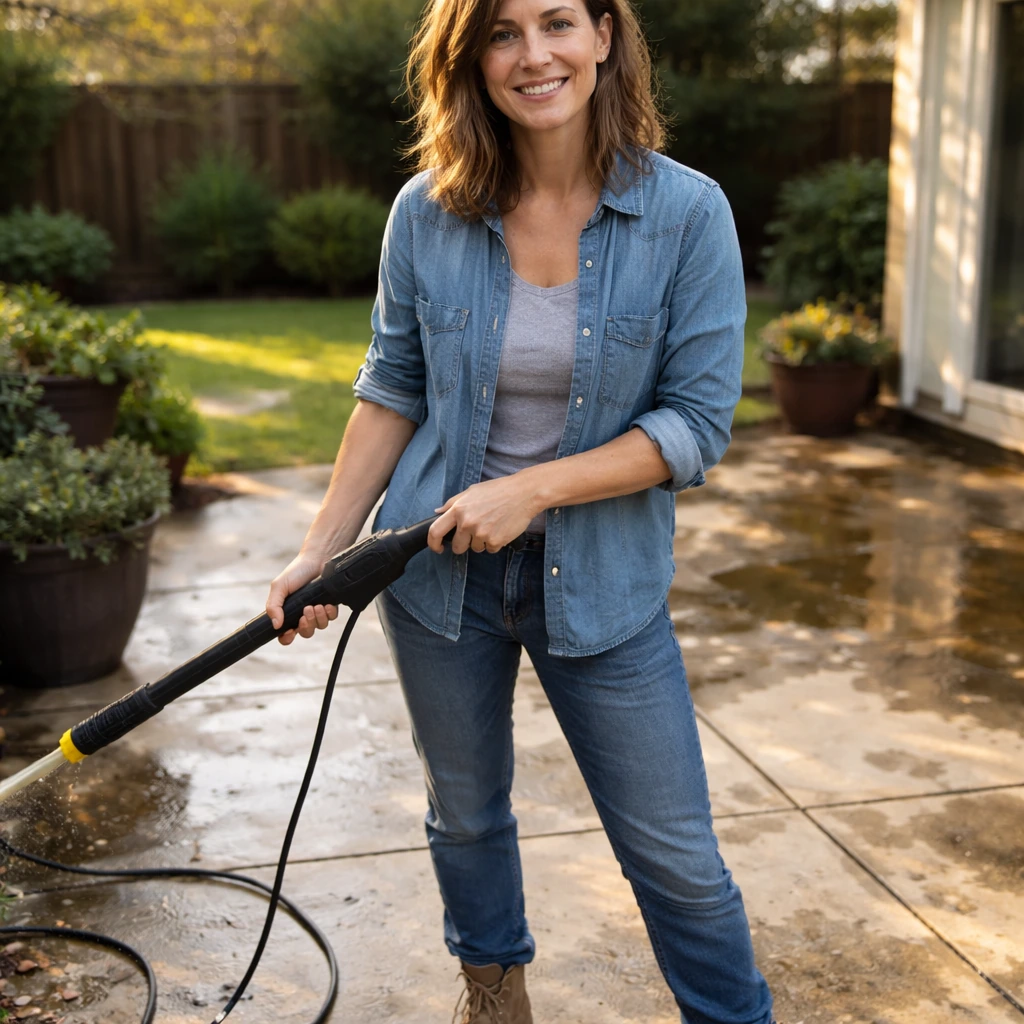
- Rinse thoroughly: rinse with clean water, working from one end of the patio to the other so you're pushing contaminated water off the surface rather than spreading it. For large areas, a pressure washer makes this faster and more thorough. Rinse adjacent plants and lawn again after you're done.
- Dry and assess: let the surface dry completely before assessing results. Wet paving always looks cleaner than it actually is — colours and stain remnants only show up clearly once the surface is fully dry, usually 2–4 hours in good weather.
Common mistakes to avoid
- Mixing bleach with any other cleaner — this is a chemical safety issue, not just a product compatibility one
- Using acid cleaners on sandstone, limestone, or marble — you will etch the surface permanently
- Applying chemicals on a windy day — overspray onto plants, furniture, or glass surfaces causes damage and wastes product
- Using a zero-degree (pencil-jet) pressure washer nozzle on any patio surface — it will gouge concrete and destroy stone
- Not rinsing well enough — residual cleaner left on the surface can cause white powdery deposits (efflorescence) or continue reacting with the material
- Sealing a surface before it's fully dry — moisture trapped under a sealer causes cloudiness and adhesion failure; a newly washed surface needs at least a full dry day before sealing
- Assuming one treatment is always enough — heavily stained surfaces or old established moss often need two rounds
Picking the right product strength and protecting your finish
Product concentration is where people either under-buy (too dilute to work) or over-buy (strong enough to damage the surface). For routine annual cleaning of a reasonably maintained patio, a ready-to-use cleaner at standard dilution is usually enough. For a patio that hasn't been cleaned in several years with heavy biological growth, you need either a concentrated product at the higher end of the recommended dilution range or a second treatment after the first. Always start at the lower concentration, especially on natural stone, and step up if the first treatment doesn't deliver.
After cleaning, sealing is worth considering, particularly on concrete and natural stone. A penetrating sealer (also called impregnating sealer) soaks into the surface rather than sitting on top of it. For driveways, paths, and patios exposed to heavy weather and foot traffic, penetrating sealers last longer and don't leave a film that can peel or go cloudy. They're the better choice for practical outdoor use. Film-forming sealers (acrylics, polyurethanes) do have a place, decorative and stamped concrete often benefits from a film-forming sealer that enhances colour and protects the pattern, but on a plain outdoor surface, a penetrating product is usually more durable.
One important constraint: don't apply any sealer to a surface that's still wet or recently washed. Newly pressure-washed concrete needs to dry completely, 24–48 hours in warm weather, longer in cool or damp conditions. Applying sealer to a damp surface traps moisture underneath and causes the sealer to fail, go milky, or peel within months. I've learned this the hard way on a sandstone patio that looked perfectly dry but still had moisture in the lower layers, the sealer delaminated within a season.
Dealing with efflorescence and grout issues
Efflorescence is the white powdery deposit that appears on concrete, brick, and mortar joints when soluble salts migrate to the surface with moisture. It's not a cleaning product problem per se, but incorrect rinsing (leaving chemical residues) or sealing too early can make it worse. The fix is a dilute acidic cleaner (phosphoric acid is commonly used for this) applied carefully, scrubbed, and rinsed thoroughly. On calcium-based stone, use an efflorescence remover specifically formulated as pH-neutral to mildly acidic, not a strong acid product. After removal, address the underlying moisture source if possible, or the efflorescence will return.
For grout lines on porcelain or ceramic-tiled patios, a fungicidal grout cleaner or diluted bleach solution with a narrow grout brush is more effective than spraying the whole patio, it concentrates the chemical where it's actually needed. Sealing grout lines after cleaning (using a penetrating grout sealer) makes future cleaning much easier and slows biological regrowth significantly.
Equipment and tools that actually make a difference
The right tools turn a three-hour frustrating job into a manageable afternoon. You don't need to spend a lot, but a few specific items make a noticeable difference in results.
Brushes
A stiff-bristled deck brush on a long handle is the single most useful tool for patio cleaning. A long-handled stiff deck brush is also ideal for scrubbing a patio mop, since you can keep pressure even without getting on your knees stiff-bristled deck brush. It lets you scrub without kneeling, covers a wide area quickly, and gets into textured surfaces. For grout lines, a stiff narrow grout brush is essential, a wide deck brush just skips over the joints. On polished or smooth surfaces like porcelain, switch to a medium-bristle brush to avoid fine scratch marks.
Sprayers
A 5-litre or larger pump-action garden sprayer is ideal for applying diluted chemical cleaners. It gives you the low pressure (well under 100 PSI) that the soft-wash approach requires, distributes product evenly, and lets you target specific areas without waste. Dedicated chemical-resistant sprayers are worth using for bleach products, standard plastic sprayers can degrade over time with sodium hypochlorite. Rinse your sprayer thoroughly after every bleach use to extend its life.
Pressure washers and nozzles
For a typical domestic patio, a pressure washer in the 1,600–2,800 PSI range is enough for most rinsing and post-treatment cleaning. For concrete specifically, you want at least 2,800 PSI to get real mechanical cleaning action. For concrete, pavers, and sidewalks, Harbor Freight notes that you typically need at least around 2,800 PSI and recommends a 25-degree nozzle or a surface cleaner attachment for more even pressure distribution at least 2,800 PSI. The nozzle tip matters as much as the PSI rating: a 25-degree (green) tip is the standard choice for hard surfaces, delivering a balance between cleaning power and spread. The 15-degree (yellow) tip is more aggressive and suitable for tough concrete staining but too harsh for stone or brick. Never use the 0-degree (red) tip on any patio surface.
A surface cleaner attachment is worth hiring or buying if you have a large concrete or porcelain patio. It uses two rotating nozzles inside a circular housing that sits close to the surface and cleans evenly without the striping pattern you get from a wand. The result is noticeably more uniform, especially on plain concrete. Most surface cleaner attachments need at least 2,000–2,500 PSI to spin properly, so check compatibility with your machine before buying.
What to do if the first attempt doesn't fully work
Let the surface dry completely first, some stains that look persistent when wet have actually lifted by the time the patio dries. If genuine staining remains after drying, assess whether you used the right product for the right problem (grease needs a degreaser, rust needs acid, biological growth needs a biocide, these don't cross over well). If the product was right but the stain persists, try a second treatment at a slightly higher concentration, extend the dwell time, and scrub more aggressively before rinsing. For deeply embedded rust on old concrete or persistent biological staining in textured surfaces, professional soft-washing with commercial-grade sodium hypochlorite concentrations may be the only route to a fully clean result. It's also worth noting that some staining, particularly old oil or grease that has been baked into concrete over many years, may never fully lift without mechanical grinding or resurfacing.
If you're also dealing with patio furniture on the same afternoon, the cleaning chemistry can differ from what you're using on the paving itself, most furniture materials need milder products than a concrete or stone surface can handle. This same surface-first approach is also the key to choosing the best patio furniture cleaner for your cushions, frames, and finishes. Similarly, if you have a driveway adjoining your patio, the heavier oil and tyre staining there often warrants a dedicated approach. If you’re also working on a driveway, use the best patio and driveway cleaner approach for the same grime and material so you get consistent results without damaging the surface driveway adjoining your patio. Getting the patio surface right first, then addressing surrounding areas with the appropriate product for each material, is always more efficient than trying to find one product that does everything.
FAQ
How do I know if my patio material will be damaged by the best outdoor patio cleaner I’m considering?
Do a quick material check before you buy. If the surface is acid-sensitive (sandstone, limestone, many “natural stone” finishes), avoid rust removers and vinegar, even if the label says “outdoor safe.” For uncertain stone, start with pH-neutral cleaner and confirm compatibility on a hidden spot, then move up only if needed.
Why isn’t my patio algae cleaner working even though I used a bleach-based product?
Yes. For bleach or sodium hypochlorite products, apply to clean, dry surfaces and respect the full contact window, typically 5–15 minutes. Then rinse thoroughly, especially before letting pets or kids access the area. If you skip dwell time, you may remove staining but not kill spores, which leads to regrowth.
What should I do if I still see stains after cleaning with what I thought was the best outdoor patio cleaner?
If the product still looks “effective” when wet but the spot comes back after drying, the issue is often wrong chemistry or insufficient mechanical removal. Grease needs a degreaser first, rust needs oxalic acid, biological growth needs biocide contact time. If you used the right category, repeat with slightly stronger dilution and a longer dwell period rather than switching to a different acid or bleach.
Can I use one cleaner for algae, rust, and greasy spots all at once?
Do not treat it as a one-size-fits-all problem. A common mistake is using bleach on rust, or acids on algae, because both can create residue and leave the underlying stain behind. Instead, identify the dominant stain type (green bio growth, orange/brown rust, oily dark patches, or white powder from salts) and match the chemical category to that.
What’s the best approach to get rid of thick moss rather than just bleaching the color off?
For moss and lichen, scraping first is often the difference between a clean patio and a never-ending return. Remove the thick top layer with a stiff brush or plastic scraper, then apply the biocide and let it dwell. After rinsing, do a second brush pass if loose dead material is still embedded.
Why do algae or mold keep coming back in porcelain or tile grout lines?
If your patio has grout joints, treat them separately. Spraying the whole surface can dilute the chemistry where it matters. Use a narrow brush plus a grout-specific fungicidal cleaner (or targeted disinfecting treatment) for joints, then consider a penetrating grout sealer after the area is fully dry.
Can I just use a pressure washer instead of the best outdoor patio cleaner chemical?
Pressure washing can help, but it often causes problems when used as the primary step on biological growth. Chemical pre-treatment loosens and kills growth, while pressure alone can spread spores and leave invisible residue. Use pressure for rinsing and mechanical removal after the dwell period, and keep pressure lower on stone and brick to avoid damage.
Is it safe to mix patio cleaners to speed up results?
Never mix bleach-based patio cleaners with any other cleaner. In particular, avoid combining with acids (many rust cleaners and some “stone safe” products) because it can generate chlorine gas, and avoid ammonia-based products because it can produce toxic chloramines. The safe workflow is, apply one product, rinse completely, then only apply a second if you truly need it.
When is it safe to seal after using the best outdoor patio cleaner, and how can I tell the surface is dry enough?
For sealers, the practical rule is timing and dryness. Don’t seal until the patio is completely dry, typically 24–48 hours in warm weather, and longer in cool or damp conditions. If you seal too early, moisture gets trapped, which can cause a cloudy film, peeling, or rapid failure.
How should I handle efflorescence that appears after cleaning my patio?
If you see white powdery deposits (efflorescence), that’s usually salts migrating with moisture, not just leftover cleaner. Leverage the right strategy: remove the deposit with a controlled efflorescence remover approach (often phosphoric-based for concrete, and a pH-neutral or mildly acidic option for calcium-based stone), then address the moisture source if possible so it does not return.
What’s the safe way to remove rust if my patio is not concrete?
Avoid using oxalic acid on calcium-rich stone like sandstone or limestone, it can etch and pit the surface. For rust on concrete, oxalic acid is effective, but don’t make it a frequent habit, repeated acid exposure can dull or weaken decorative finishes over time. If rust is on stone, switch to a stone-compatible rust strategy rather than “more acid.”
Why do algae cleaners fail on dark BBQ grease stains?
Yes, especially for older grease. If the stain is oily and appears dark or greasy rather than fuzzy or green, use an alkaline degreaser and plan for agitation with a stiff brush, then rinse. For heavy, long-set grease, you may need a repeat treatment or a combined approach (chemical dwell, then moderate-pressure rinse) rather than relying on bleach.
How do I protect pets and plants when using the best outdoor patio cleaner?
After cleaning biological growth, rinse and then wait before letting pets walk on the area. Also, if pets step into treated zones while still wet, rinse their paws with clean water as soon as you can. For ongoing safety, choose products with clear “pet/plant” handling instructions, and avoid broadcast spraying near feeding areas or water features.
When should I stop trying repeat treatments and switch to grinding or professional help?
If your surface is still stained after a correct product match, increase the dwell time and scrub more thoroughly before repeating at a higher concentration. When staining is baked-in oil or deep rust that won’t lift, expect you may need mechanical methods (grinding, resurfacing, or professional soft-wash at appropriate commercial concentration) instead of endless chemical repeats.
Next Article
Best Patio Furniture Cleaner: Match the Right Formula Fast
Match the best patio furniture cleaner to material and stains, with safe steps for mold, rust, grease, and grime.