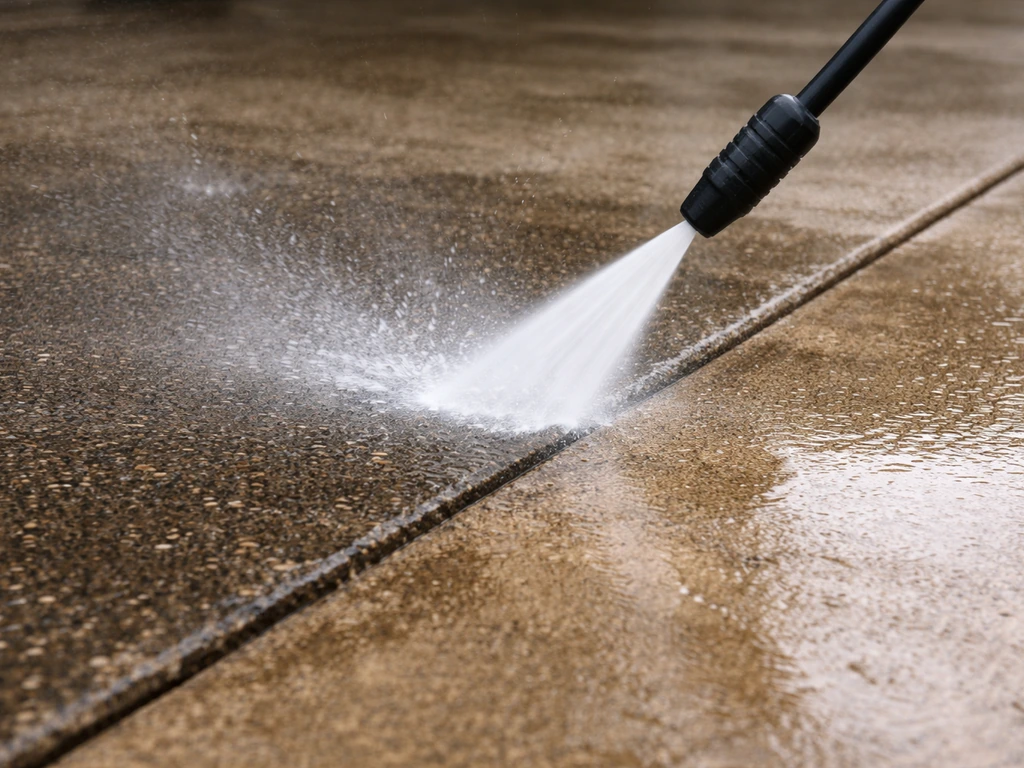
For most homeowners, the best patio cleaning pressure washer setup is a 1,500–2,000 PSI electric pressure washer paired with a rotary surface cleaner attachment, a dedicated patio cleaning chemical applied through the detergent siphon, and a 25° green nozzle for general cleaning. That combination handles concrete, brick, and most stone surfaces safely without renting a gas machine or risking surface damage. If you've got heavy staining, a larger driveway, or particularly stubborn moss and algae, you might need to push toward 2,300–2,500 PSI, but for a typical garden patio, electric is almost always enough.
Best Patio Cleaning Pressure Washer: Buy and Use Guide
Rhea Lang
17 May 2026
How to Choose the Right Pressure Washer for Patio Cleaning
PSI and GPM: What Actually Matters
PSI (pounds per square inch) tells you how hard the water hits the surface. GPM (gallons per minute) tells you how much water is being moved, which affects how quickly you rinse away loosened dirt and chemicals. For patio cleaning, you want both working together. A machine with 2,000 PSI but only 1.2 GPM will feel underpowered and slow. Aim for at least 1.4–1.6 GPM alongside your target PSI. A useful way to compare machines is the Cleaning Units formula (PSI x GPM): anything above 2,400 CU handles most residential patio jobs comfortably.
| Surface Type | Recommended PSI Range | Notes |
|---|---|---|
| Porcelain / Slate | 1,000–1,500 PSI | Very easy to damage; keep pressure low |
| Sandstone / Soft Stone | 1,200–1,600 PSI | Porous and fragile; avoid zero-degree nozzle entirely |
| Brick | 1,500–2,000 PSI | Watch grout lines; keep wand moving |
| Concrete | 2,000–2,500 PSI | Most forgiving surface; can handle higher pressure |
| Driveway-grade concrete | 2,500–3,000 PSI | Use surface cleaner to prevent streaking |
Electric vs Gas: Which One for a Patio?
Gas pressure washers produce more power (typically 2,500–4,000 PSI) and move more water, which makes them faster on large areas. But for a standard patio, that power is often overkill and can genuinely damage softer surfaces like sandstone or porcelain. Electric washers in the 1,800–2,300 PSI range are quieter, require no fuel mixing, are easier to store, and are much more forgiving on delicate materials. I use a 2,000 PSI electric machine for 90% of patio jobs and only reach for a gas unit when I'm doing a long driveway plus patio in the same session. Unless you have a very large area or extremely stubborn staining on hard concrete, electric is the smarter, safer choice for patio use.
Nozzles: The Color-Coded System You Need to Know
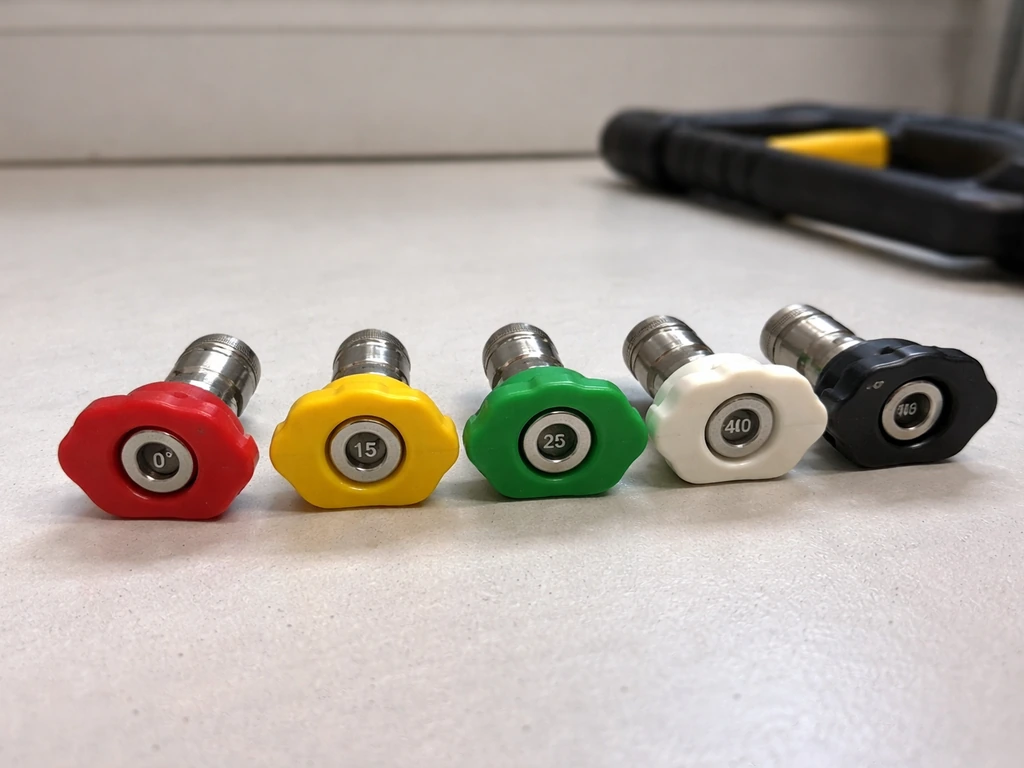
Most pressure washers come with a set of color-coded nozzle tips. The spray angle is everything when it comes to protecting your patio surface. A 0° red nozzle fires a pencil-thin jet that can etch concrete and destroy grout in seconds. A 25° green nozzle gives you strong, focused cleaning that works well on most outdoor hard surfaces. blank" rel="noopener noreferrer">A 40° white nozzle spreads the spray wider and is gentler, making it ideal for rinsing or for delicate surfaces like sandstone. In Alkota’s 2026 nozzle guide, common nozzle colors are mapped to specific spray angles, such as white for 40° and green for 25°, and each angle is described for cleaning strength versus gentleness 40° white nozzle. As a general rule: use 25° for cleaning, 40° for rinsing and delicate surfaces, and never use 0° on any patio material. The soap/black nozzle (65°) applies detergent at low pressure and should be your first step whenever you're using a chemical cleaner.
Matching Patio Cleaning Chemicals to Your Pressure Washer
When people search for a 'patio cleaner for pressure washer,' they usually mean one of two things: a chemical that gets diluted and applied through the machine's detergent system, or a separate pre-treatment product applied by hand before pressure washing. Both have their place. The best approach for most situations is to apply a dedicated patio cleaning solution (either through the machine's siphon or with a garden sprayer), let it dwell, then pressure wash it off. Skipping the chemical step and just blasting with water alone is less effective, uses more time, and often leaves a patchy result.
Types of Patio Cleaning Chemicals and When to Use Them
- Bleach-based or sodium hypochlorite cleaners: Highly effective against black algae, mold, and moss. Use diluted (typically 1:10 ratio). Avoid on coloured block paving or natural stone that can bleach or discolour. Always rinse plants and borders before and after use.
- Sodium percarbonate (oxygen bleach) cleaners: Safer for surrounding plants and coloured surfaces. Effective on green algae and general grime. Needs warm water to activate. Good choice for brick and stone.
- Alkaline degreasers: Best for grease, oil, and food stains. Look for products labelled 'traffic film remover' or 'degreaser.' Apply before pressure washing.
- Specialist patio treatments (e.g., Wet & Forget, Patio Magic): Designed to be applied and left without rinsing. These work slowly over weeks but require no pressure washing. Useful for maintenance between deep cleans rather than for a same-day result.
- Proprietary pressure washer detergents: Branded concentrates made to run through the machine's detergent siphon. Convenient but often less potent than dedicated patio cleaners applied separately.
The key rule with pressure washer detergent siphons: the machine pulls chemical through a low-pressure pickup tube, so you always apply detergent with the soap nozzle (low pressure) first, switch to your cleaning nozzle to agitate if needed, then switch again to rinse. Never try to push chemical through a high-pressure nozzle tip; it won't siphon correctly and can damage the pump. If your cleaner is thicker or needs a higher concentration, apply it separately with a garden pump sprayer instead.
Pressure Washer Patio Attachments Worth Having
The Surface Cleaner: The Single Best Patio Upgrade
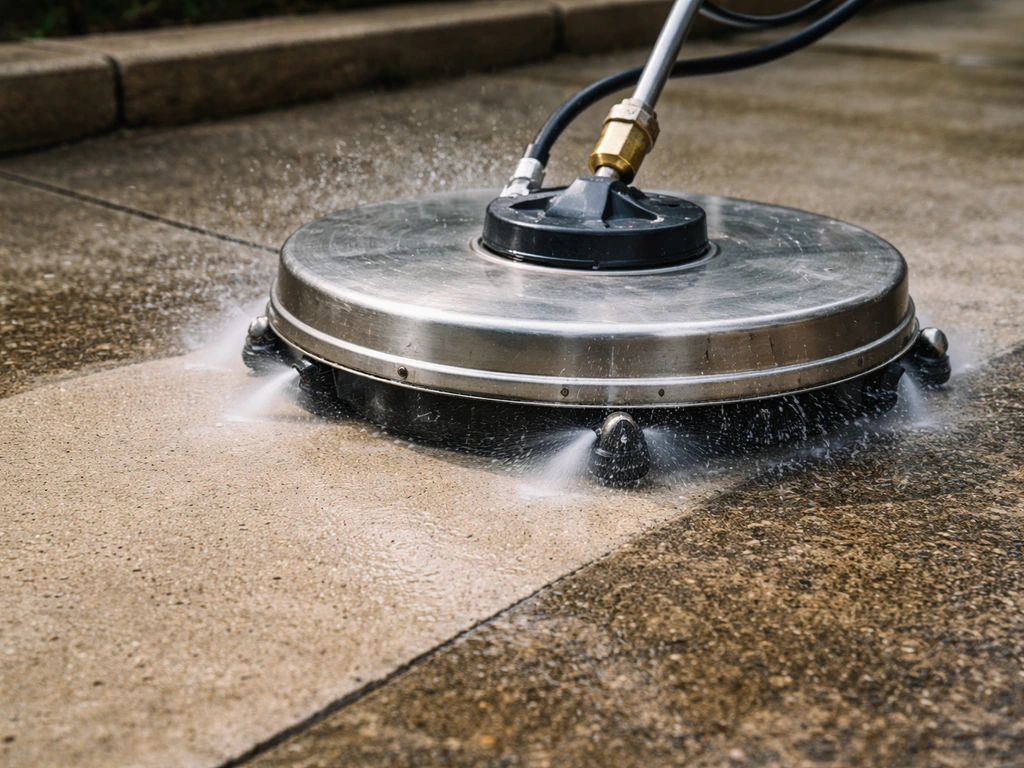
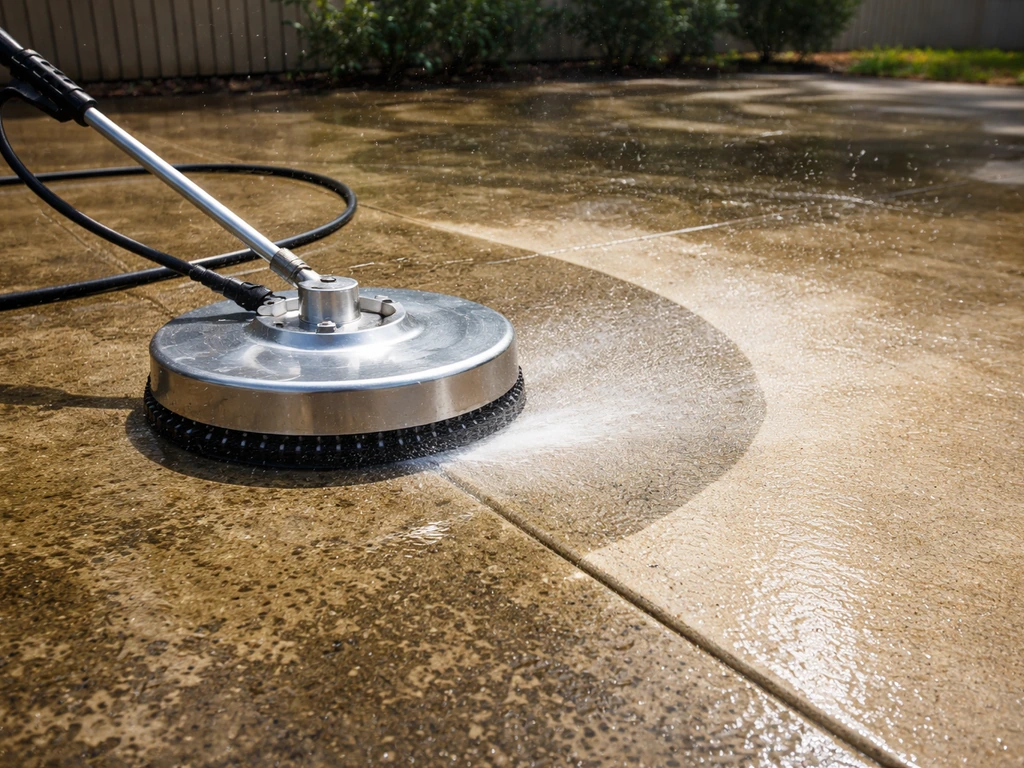
If you only buy one attachment, make it a rotary surface cleaner. It's a disc-shaped head (usually 12–16 inches wide) that attaches to your lance and houses two or more spinning jets inside a shroud. Instead of a single jet leaving streaky lines, the spinning nozzles clean in overlapping circles, giving you a much more even result. Surface cleaners also contain the spray, so you don't end up soaking your fences, walls, or yourself. They're faster on large areas too: a 12-inch disc covers ground about twice as quickly as a wand tip. Most surface cleaners work with pressure washers from 1,500 PSI upward, but check the compatibility rating before buying. Budget versions start around $25–$40; decent mid-range options from brands like Karcher, Sun Joe, or Simpson run $50–$90.
Other Useful Attachments
- Extension wand: Adds reach (typically 12–18 inches extra) so you can clean closer to walls and in corners without bending. Also useful for getting under furniture without moving it.
- Turbo or rotary nozzle: Spins a 0° jet in a circular pattern, giving you more aggressive cleaning than a 25° tip but without the damage risk of a static 0° nozzle. Good for stubborn ground-in dirt on hard concrete. Avoid on softer surfaces.
- Detergent tank or downstream injector: If your machine doesn't have a built-in detergent siphon, a downstream injector attaches inline and pulls chemical automatically. Useful if you're using a basic machine.
- Gutter cleaning attachment: Not directly for patios, but worth mentioning since blocked gutters often cause the dirty runoff staining patios below. Clean gutters first and you'll clean the patio less often.
Surface-Specific Cleaning Plans
Concrete Patios
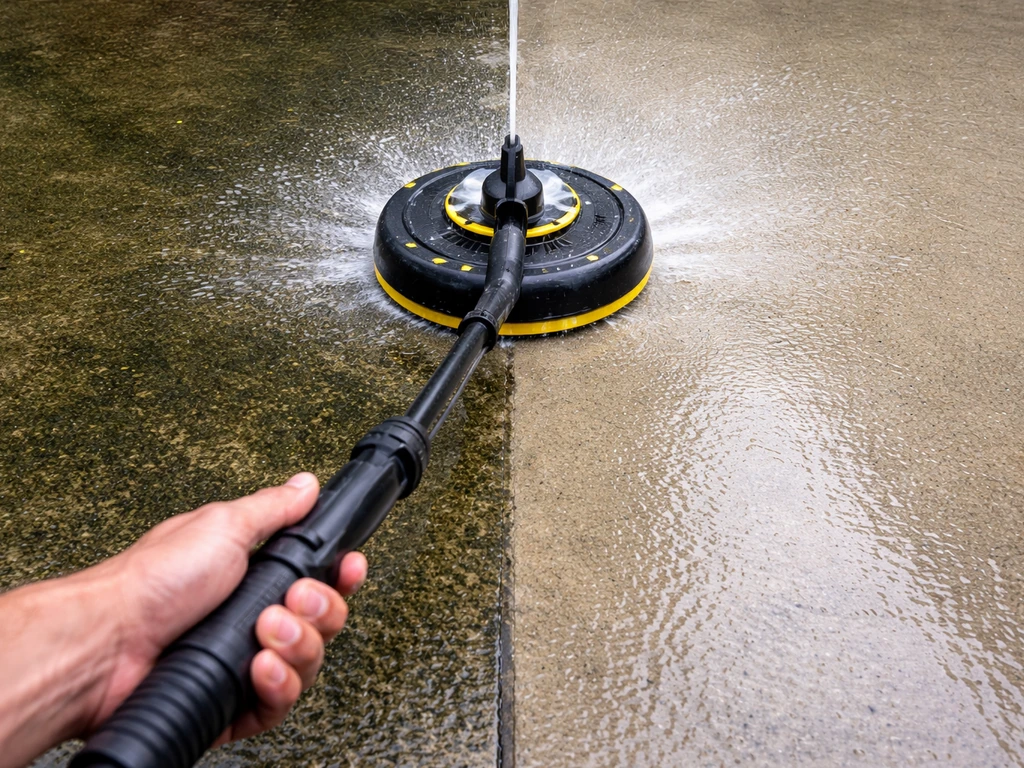
Concrete is the most forgiving patio surface for pressure washing. You can comfortably use 2,000–2,500 PSI with a 25° nozzle or a surface cleaner. For general grime and algae, pre-treat with a sodium hypochlorite-based cleaner diluted to about 1:10, let it sit for 10–15 minutes, then pressure wash. For stubborn staining or ground-in dirt, a turbo nozzle on 2,000+ PSI works well. Rinse thoroughly with the 40° nozzle. Concrete is porous, so if you skip sealing after cleaning, it will re-green faster than a sealed surface.
Brick and Block Paving
The main risk with brick and block paving is blasting out the sand or mortar from the joints. Keep your PSI at 1,500–2,000 and use a surface cleaner or 25° nozzle, maintaining at least a 12-inch distance from the surface. Hold the wand at a slight angle rather than directly perpendicular to the joint lines. After cleaning, you'll almost certainly need to re-sand the joints with kiln-dried sand and compact it back in. Factor that into your plan before you start.
Natural Stone (Sandstone, Limestone, Slate)
Natural stone is where I've seen the most DIY damage. Sandstone especially is soft, porous, and easy to pit or erode with too much pressure. Keep PSI at 1,200–1,600 maximum and use only the 40° white nozzle or a low-pressure surface cleaner. Avoid bleach-based cleaners on natural stone as they can cause long-term discolouration or weaken the surface. Stick to pH-neutral stone cleaners or oxygen bleach products. Apply with a garden sprayer, allow to dwell, then rinse gently. If the stone is sealed, check the sealant is intact before applying any chemical.
Porcelain Paving Tiles
Porcelain is much denser than natural stone and more resistant to staining, but the grout lines between tiles are vulnerable to high pressure. Use 1,200–1,500 PSI with a 40° nozzle or a surface cleaner set to low pressure. Avoid angling the jet directly into grout lines. For routine cleaning, porcelain responds well to a simple alkaline or pH-neutral cleaner and doesn't typically need anything aggressive. The surface itself can handle more pressure, but the grout cannot.
Slate
Slate is a layered stone that can delaminate (flake apart in layers) if subjected to high-pressure water forcing into its structure. Keep pressure below 1,500 PSI, use a 40° nozzle at low angle, and avoid hitting the edges of slate tiles directly. Use a pH-neutral cleaner only. Slate also looks significantly better with a topcoat of slate sealant or a light oil finish after cleaning, which both protects it and enhances the colour.
Targeting Common Patio Problems
Mold, Algae, and Moss
These are the most common patio problems and the main reason most people pull out a pressure washer. Green algae is surface-level and fairly easy to shift with a 25° nozzle and a basic cleaner. Black algae is more stubborn and has a waxy outer layer that repels water, so chemical pre-treatment is essential. Moss grows into grout lines and around paving edges and often needs physical removal first (use a stiff brush or a flat scraper) before you pressure wash. For all three, a sodium hypochlorite solution left to dwell for 15–20 minutes before washing makes a significant difference. For a longer-lasting result, follow up with a biocidal treatment or sealant that inhibits regrowth.
Rust Stains
Rust stains on patios typically come from metal furniture legs, planters, or garden tools left sitting on the surface. Pressure washing alone will not remove rust stains. You need a specialist rust remover containing oxalic acid or phosphoric acid. Apply directly to the stain, allow to react (usually 5–10 minutes), then rinse off with the pressure washer. Always test in an inconspicuous spot first, as acid-based products can lighten some stone surfaces. Repeat applications may be needed for deep staining.
Grease and Oil
Grease from BBQs, cooking areas, or engine oil (if you have a garage-adjacent patio) needs an alkaline degreaser, not just water pressure. Apply the degreaser undiluted to the stain, work it in with a stiff brush, and let it sit for 10–15 minutes. Then hit it with your highest safe PSI for that surface and a 25° nozzle. If the stain has been there a while and has soaked into porous concrete or stone, you may need two or three treatments. Specialist products like Oil Eater or Simple Green Oxy Solve work well for this.
Pet Stains and Odors
Pet urine soaks into porous surfaces and leaves both a stain and an odour that plain water pressure won't fix. Use an enzymatic cleaner specifically designed for pet waste: the enzymes break down the uric acid crystals that cause the smell. Apply generously, allow to sit for 15–20 minutes (longer for porous stone), then pressure wash at low to moderate pressure. Don't use bleach for pet urine on surfaces where pets will return; the combination of ammonia in urine and bleach can produce harmful fumes, and pets are also more sensitive to bleach residue on surfaces they walk on.
Step-by-Step Pressure Washing Workflow
- Clear the patio: Remove furniture, planters, doormats, and anything else sitting on the surface. Move potted plants away from the area or cover them with plastic sheeting. Brush off loose leaves and debris with a stiff broom.
- Wet down surrounding plants and borders: Before applying any chemical, soak the lawn edges and garden beds with plain water. This dilutes any chemical that lands on them and protects plant roots.
- Apply your cleaning chemical: Use the machine's soap nozzle (low pressure) to apply detergent, or apply separately with a garden pump sprayer for better control of concentration. Work in sections of about 4–6 square metres at a time so the chemical doesn't dry out before you wash it off.
- Allow dwell time: Give the chemical at least 10–15 minutes to work. For moss, algae, or black algae, 20 minutes is better. Don't let it dry on the surface, especially in direct sun.
- Do a test spot: Before cleaning the whole patio, test your chosen PSI and nozzle in a hidden corner. Hold the nozzle at the distance you plan to work from and check that it's cleaning effectively without pitting, etching, or disturbing grout.
- Pressure wash the surface: Work in overlapping passes, moving the wand steadily at about 6–12 inches from the surface (adjust based on your test). For large flat areas, use the surface cleaner. Keep the wand moving at all times; stopping in one place concentrates pressure and can damage the surface.
- Rinse thoroughly: Switch to the 40° nozzle and rinse the entire area completely, working from the highest point toward a drain or lawn edge. Rinse surrounding plants and borders again with plain water.
- Allow to dry: Let the surface dry fully before replacing furniture. Wet patio surfaces are extremely slippery, so keep the area clear until dry. In cooler, overcast conditions this can take several hours.
Safety, Damage Prevention, and What to Do After Cleaning
Avoiding the Most Common Damage Mistakes
The number one mistake is using too much pressure on the wrong surface. I've seen sandstone patios turned from smooth to sandpaper-rough by someone using a gas pressure washer with a 25° nozzle from too close. The second most common mistake is streaking, which happens when you make a single pass and don't overlap, or when you let chemical dry on the surface before rinsing. Always use a surface cleaner on large flat areas and rinse before the cleaner can dry. The third is forgetting about joint sand in block paving: once you've pressure washed it out, you must replace it or the blocks will start shifting.
Personal Safety While Pressure Washing
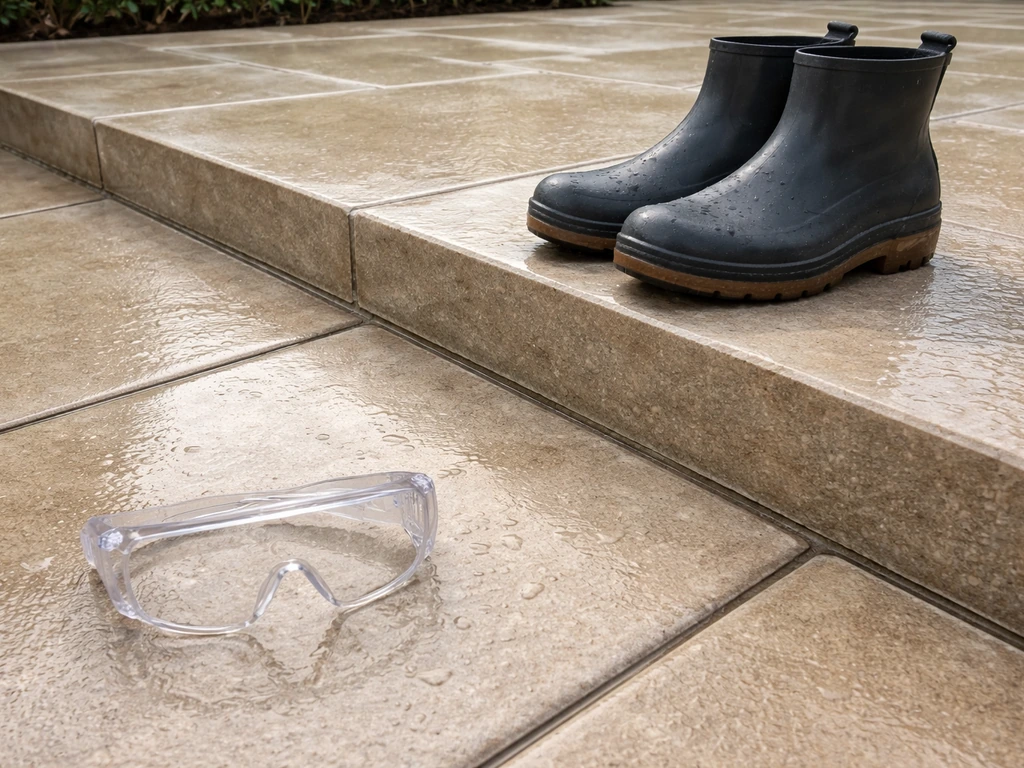
- Wear waterproof non-slip footwear. Wet patios are dangerous and spray-back is constant.
- Use safety glasses or goggles. High-pressure spray can kick up grit and debris at eye level.
- Wear waterproof gloves when handling chemical cleaners, especially bleach-based products.
- Never point the pressure washer at people, pets, or glass. Even a mid-range electric washer can cause serious skin injury at close range.
- Don't use electric pressure washers in standing water or rain without checking the machine is properly rated for outdoor use.
Sealing After Cleaning: Is It Worth It?
Sealing your patio after cleaning is one of the best things you can do to extend the time between washes. For concrete, a penetrating silicate sealer or a topical acrylic sealer slows water ingress and makes it harder for algae to take hold. For natural stone like sandstone or slate, a dedicated stone impregnating sealer protects the surface without changing its appearance significantly. Block paving benefits from a jointing stabiliser that locks the sand in place and deters weeds. Apply sealer only to a completely dry surface, typically 24–48 hours after pressure washing. In most UK climates, re-sealing every 2–3 years keeps the surface in good shape.
Ongoing Maintenance Tips
- Brush the patio regularly with a stiff yard broom to prevent organic material building up in joints and on the surface.
- Apply a preventative biocidal spray once a year (products like Wet & Forget work well for this) to slow algae and moss regrowth between deep cleans.
- Check gutter downpipes aren't directing water runoff across the patio surface, as this is a major contributor to algae and moss growth.
- Move furniture and planters periodically so water doesn't pool under legs or bases, which creates persistent damp spots that favour mold growth.
- Re-sand block paving joints annually if you notice sand loss, especially after any pressure washing.
Quick Buying Recommendations by Situation
If you're buying a setup from scratch today, here's what I'd actually recommend based on patio size and material. For a small to medium patio (up to about 30 square metres) with any soft stone or porcelain: a 1,800–2,000 PSI electric machine, a 12-inch surface cleaner attachment, and an oxygen bleach-based patio cleaner. If you want to narrow down which option is best for your specific patio, reading patio pressure washer reviews can quickly show real-world performance and durability. For a medium to large concrete or brick patio: a 2,300–2,500 PSI electric or entry-level gas machine, a 15-inch surface cleaner, a sodium hypochlorite-based cleaner, and a turbo nozzle for spot treatment. For maintenance between annual deep cleans: a lower-cost electric washer (1,500 PSI is fine) plus a preventative biocidal spray applied by garden pump sprayer with no pressure washing needed at all.
If you're weighing up whether a pressure washer is even the right tool, it's worth knowing there are very effective options for cleaning a patio without any pressure washer at all, particularly for delicate surfaces or smaller spaces. If you want the best patio cleaner without a pressure washer, look for products designed for gentle application and dwell time on your specific patio material cleaning a patio without any pressure washer at all. Similarly, if you're in the UK, the product ranges and pressure washer specifications differ from the US market, so it's worth looking at UK-specific recommendations when comparing machines and chemical brands. If you’re trying to buy the best power washer for patios in the UK, focus on the right PSI for your surface and pair it with the right nozzle or surface cleaner attachment UK-specific recommendations.
FAQ
Is a rotary surface cleaner always the best choice, or can it make some patios worse?
A surface cleaner helps with even results, but it can still damage softer or irregular patios if it’s kept too close or used at too high pressure. For natural stone (especially sandstone, slate, and older tumbled pavers), use low pressure and ensure the shroud glides flat over the surface rather than being forced downward.
How do I know whether my pressure washer’s detergent siphon will actually work with my cleaner?
Detergent siphons rely on low-pressure pickup, so very thick, waxy, or heavy-duty degreasers may not draw correctly. If the cleaner comes out watery or doesn’t flow at all, apply it separately with a garden sprayer and skip the siphon, then switch back to the pressure washer for agitation and rinsing.
Can I use a wider nozzle like 40° to clean faster instead of overlapping passes?
A wider nozzle cleans a larger area, but it reduces cleaning aggressiveness per square inch and can leave heavier staining behind if you don’t dwell or agitate properly. Overlap still matters on large areas, especially on brick, paving, and areas with algae where you need consistent chemical contact before rinsing.
What’s the safest way to clean without permanently darkening concrete or making it re-green quickly?
Concrete often darkens when it’s still porous and damp, and it can re-green faster if you don’t remove moisture access. The practical fix is to fully rinse, allow proper drying time, then apply the right sealer once the concrete is completely dry (often 24 to 48 hours depending on weather).
How far should I hold the wand from my patio, and what changes if I’m using a surface cleaner?
For brick and block paving, keep a minimum distance (often around 12 inches) and avoid aiming straight into joints. With a surface cleaner, you generally want the shroud to stay in contact with the surface lightly, moving at a steady speed so you don’t dwell in one spot and etch or lighten the concrete.
What should I do if my patio looks patchy after washing?
Patchiness usually comes from skipping thorough rinsing (chemical residue dries unevenly) or cleaning in one-direction passes without overlap. Revisit the area by applying cleaner again lightly, keeping dwell within the recommended window, then rinse immediately and uniformly. Also check that you’re not using too much pressure on one section while reducing pressure elsewhere.
Is it safe to pressure wash near plants, grass edges, and garden beds?
Chemicals and suspended dirt can harm plants and stain nearby features. Use physical barriers or plastic sheeting for beds, rinse runoff carefully, and consider switching to pH-neutral cleaners on sensitive planting areas. If you’re using sodium hypochlorite or oxygen bleach, avoid letting chemical sit on leaves, and rinse the surrounding area thoroughly.
Do I need to re-sand block paving every time I pressure wash it?
If you wash out the joint sand, you usually need to replace it to prevent movement and weed penetration. Only you can confirm this by checking whether joints are lower, hollow-sounding, or visibly depleted. For best results, re-sand with kiln-dried sand and compact, then rinse lightly to settle without washing it back out.
How do I remove moss safely when brushing first without damaging grout or stone?
Before pressure washing, brush or scrape only to lift loosened moss from grout and edges, using a stiff brush or a flat plastic scraper when stone is delicate. Don’t dig aggressively into soft grout, because your later wash can carry out what you’ve already weakened.
What’s the right approach for rust stains if I don’t know what type of stone I have?
Rust removers containing acids (like oxalic or phosphoric acid) can lighten some stones, so always test in an inconspicuous spot first and follow the dwell time closely. If the stone lightens, stop and switch to a gentler method or a product specifically labeled for that stone type.
Will pressure washing remove grease from BBQ areas, or do I need something else?
Water blasting usually only spreads oil unless the grease is already surface-dried and minor. For best results, use an alkaline degreaser, work it into the stain with a stiff brush, and let it dwell. Then pressure wash at the highest safe pressure for your surface, because repeated treatments may be needed for oil that’s soaked in.
Can I use bleach for all patio cleaning problems like algae and stains?
Bleach-based cleaners can be effective for algae, but they are risky on natural stone due to discoloration and long-term weakening. For sandstone, slate, and some other softer stones, avoid bleach and use pH-neutral or oxygen-based options applied via sprayer and rinsed gently.
How long should I wait after pressure washing before sealing?
Sealers require a fully dry surface, and sealing too early traps moisture which can lead to faster re-greening or peeling. In typical UK conditions, plan on 24 to 48 hours after washing, and if rain is expected or the patio stays cool and damp, extend the wait until moisture has cleared.
If I have a small patio, should I still buy a pressure washer instead of using a gentler method?
For small areas, delicate stone, or routine maintenance, non-pressure methods can be faster to set up and lower risk. Foam, pH-neutral cleaners, and oxygen-based dwell products applied with a sprayer can deliver good results without etching. Choose pressure washing when you need mechanical removal for heavy algae, moss, or joint buildup.
Next Article
Best Pressure Washer for Patio: Top Picks by Size and Surface
Compare the best pressure washers for patio cleaning by size, PSI/bar, and surface, with electric or gas picks.