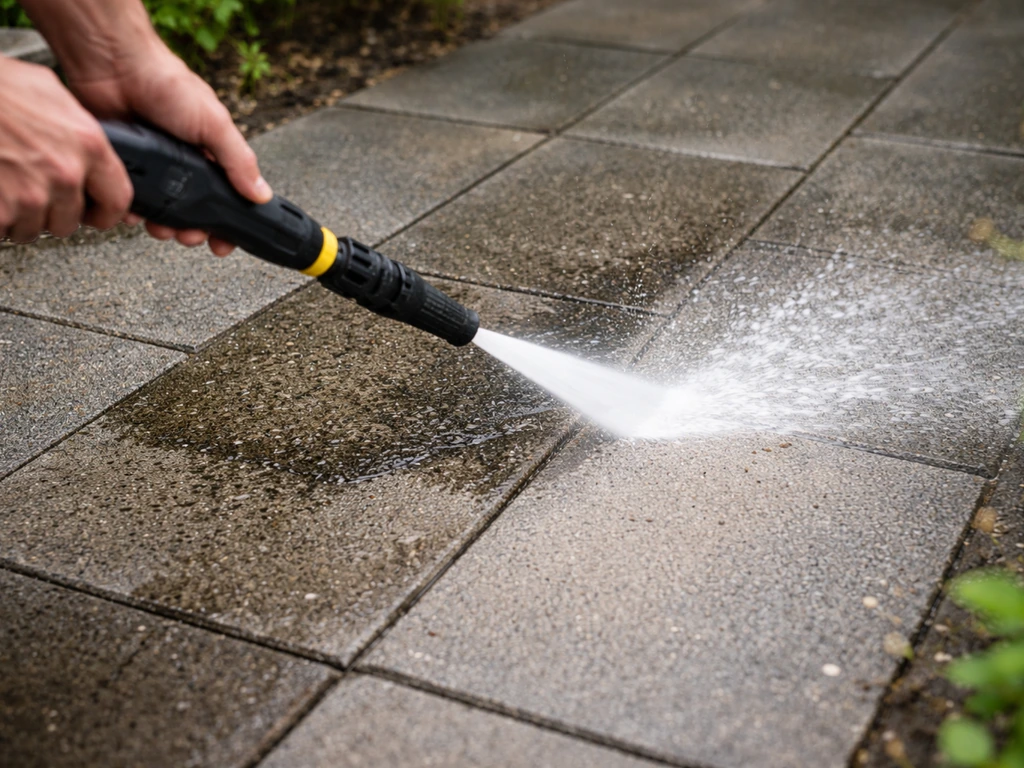
For most homeowners with a concrete, brick, or stone patio, a electric pressure washer rated between 1,800 and 2,300 PSI with at least 1.5 GPM flow is the sweet spot. It's powerful enough to blast out mold, algae, and ground-in grime without cracking mortar joints or etching softer stones. If you've got a large, heavily soiled concrete patio, step up to a gas model or a high-end electric (2,500+ PSI) and pair it with a surface cleaner attachment. That combination will get you professional results in half the time. That combination will get you professional results in half the time best patio washer.
Best Patio Power Washer: Buying Guide by Surface Type
Rhea Lang
15 May 2026
How to pick the right patio power washer
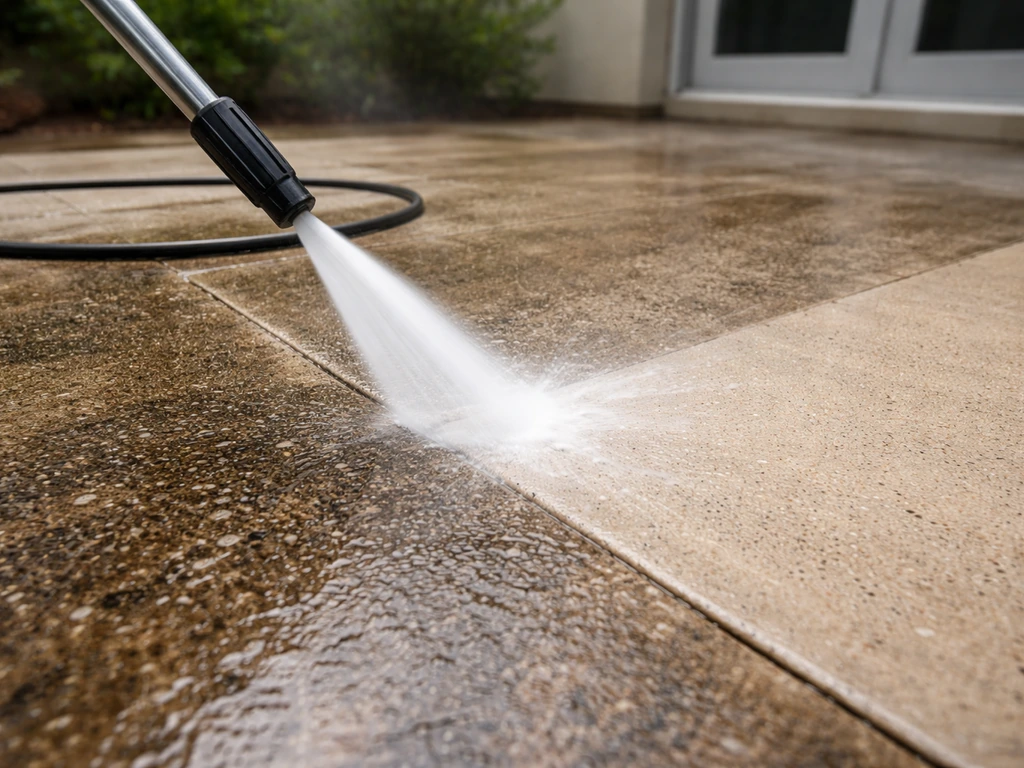
The specs that actually matter for patio work are PSI (pressure) and GPM (flow rate). PSI tells you how hard the water hits; GPM tells you how much water moves across the surface per minute. Both matter. A machine with high PSI but low GPM can etch a surface without actually rinsing the dirt away. A high-GPM, low-PSI machine moves water but lacks the punch to break up biofilm and stains. For patio cleaning, you want a balance: roughly 1,800 to 2,500 PSI and at least 1.5 GPM for most residential jobs.
There are three broad categories worth knowing: light-duty electrics (1,200 to 1,800 PSI), medium-duty electrics (1,800 to 2,500 PSI), and gas or heavy-duty electrics (2,500 PSI and up). Light-duty units are fine for rinsing garden furniture and light surface dust. They won't shift established moss or deep algae stains. Medium-duty electrics are the workhorse category for most patios. Heavy-duty gas machines can clean a grimy concrete patio roughly three times faster than the quickest electrics, but they come with the trade-off of engine noise, fumes, and more maintenance.
One attachment worth budgeting for from day one is a surface cleaner. Instead of a single lance jet, a surface cleaner spins two nozzles under a shroud, producing an even wash pattern. It dramatically reduces streaking and, because the rotating nozzles sit further from the surface, the cleaning action is gentler and more consistent. Simpson's 15-inch surface cleaner (the 80165) is a solid choice for most patio work; it requires a minimum of 2,200 PSI and 2.3 GPM, so keep that in mind when sizing your machine.
Which power washer works best for your patio surface
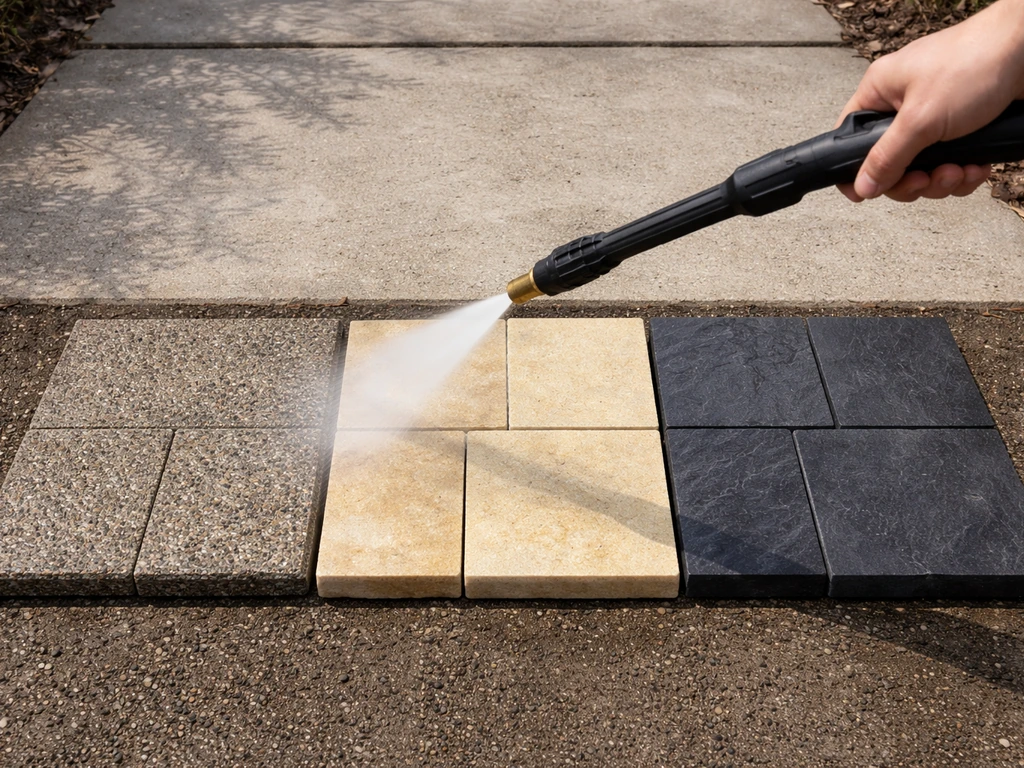
This is where a lot of people go wrong. They buy a machine powerful enough for concrete and then use the same settings on sandstone or slate, and they wonder why the surface looks worse than when they started. Each material has a different tolerance for pressure, and getting this right matters more than almost anything else.
| Surface | Max Recommended PSI | Best Nozzle / Attachment | Key Watch-Out |
|---|---|---|---|
| Concrete | 2,500–3,000 PSI | 25° green or surface cleaner | Keep wand moving to avoid track marks |
| Brick | 1,500–2,000 PSI | 25° green, 45° angle | Mortar joints erode quickly above 2,000 PSI |
| Natural stone (sandstone) | 1,000–1,500 PSI | 40° white nozzle or surface cleaner | Very porous; high pressure drives water deep and causes crumbling |
| Slate | 1,200–1,800 PSI | 25° green at wide angle | Layers can delaminate; never use a 0° yellow nozzle |
| Limestone / soft stone | 1,000–1,500 PSI | 40° white nozzle | Etches extremely easily; consider chemical pre-treatment instead |
| Porcelain / ceramic tile | 1,500–2,000 PSI | 25° green or surface cleaner | Grout lines are the weak point; avoid direct hits |
Concrete is the most forgiving material on this list. You can run a gas machine at 2,500 PSI with a surface cleaner and it will handle most cleaning jobs without issue. Brick is where I'd urge caution: the brick face itself is tough, but the mortar joints between bricks are not. Once you start stripping mortar, water gets in, frost expands it, and you're looking at a repointing job. Stay under 2,000 PSI on older brick and always use a 25° or wider nozzle at a 45° angle to the surface rather than aimed straight down.
Sandstone is the one that catches people out the most. It looks solid but it's genuinely soft and porous. I've seen people turn perfectly good sandstone flags into a rough, chalky mess with an overpowered machine. Stick to a maximum of 1,200 to 1,500 PSI with a 40° nozzle, and let a chemical pre-treatment do the heavy lifting on stains. Porcelain is much harder than natural stone but the grout lines are still vulnerable, so use a surface cleaner rather than a lance to spread the force evenly.
Tackling the most common patio stains
Mold, algae, and moss
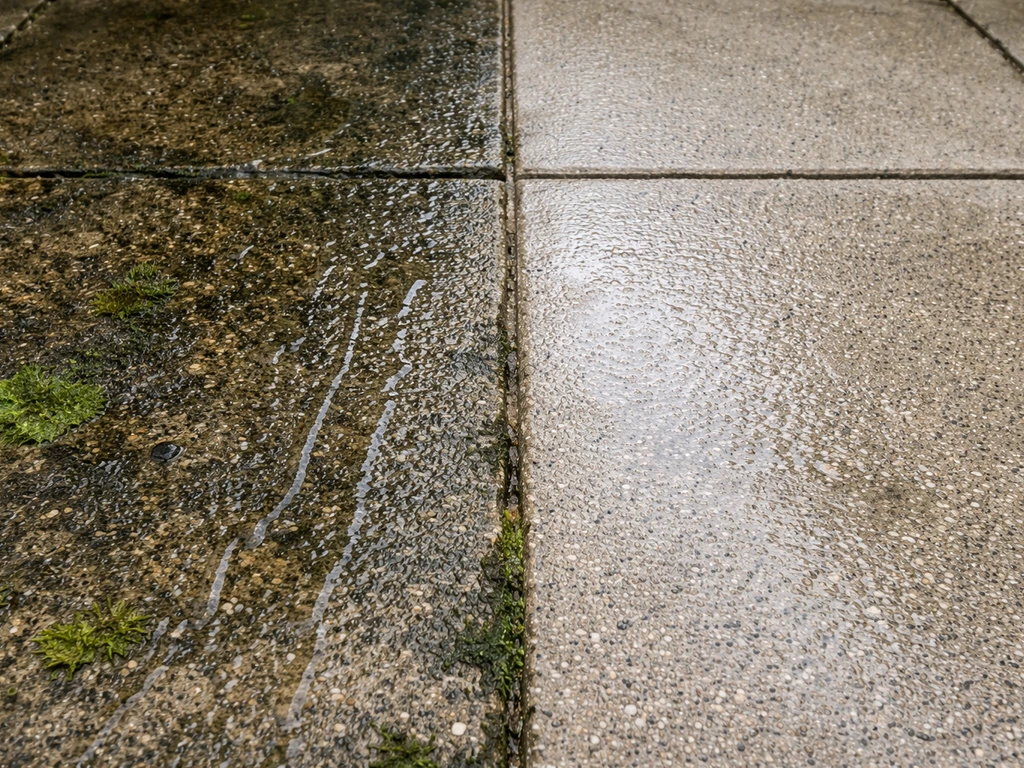
These are the most common patio problems and, honestly, pressure washing alone is not always the best answer. For heavy biological growth, the most effective approach is to apply a diluted bleach-based or dedicated patio biocide solution first, let it dwell (the surface needs to stay visibly wet for the full contact time listed on the product label, often 10 to 20 minutes), and then wash it off with the pressure washer. The chemical does the killing; the water does the rinsing. Trying to power-wash thick moss off dry without any pre-treatment just spreads spores around and leaves roots behind. For algae on concrete, a 25° nozzle or surface cleaner at 1,800 to 2,500 PSI will finish the job cleanly after pre-treatment. On sandstone or slate, keep the pressure low and let the chemistry work harder.
Rust stains
Rust stains come from metal garden furniture, planters, or iron minerals in water. Pressure washing alone will not shift rust. You need an oxalic acid-based rust remover applied directly to the stain, left to dwell, and then rinsed off. Once the stain is treated chemically, a quick pass with the power washer (any pressure appropriate for the surface) clears the residue. Don't make the mistake of blasting a rust stain repeatedly with high pressure: you'll just grind it deeper into porous materials.
Grease and oil
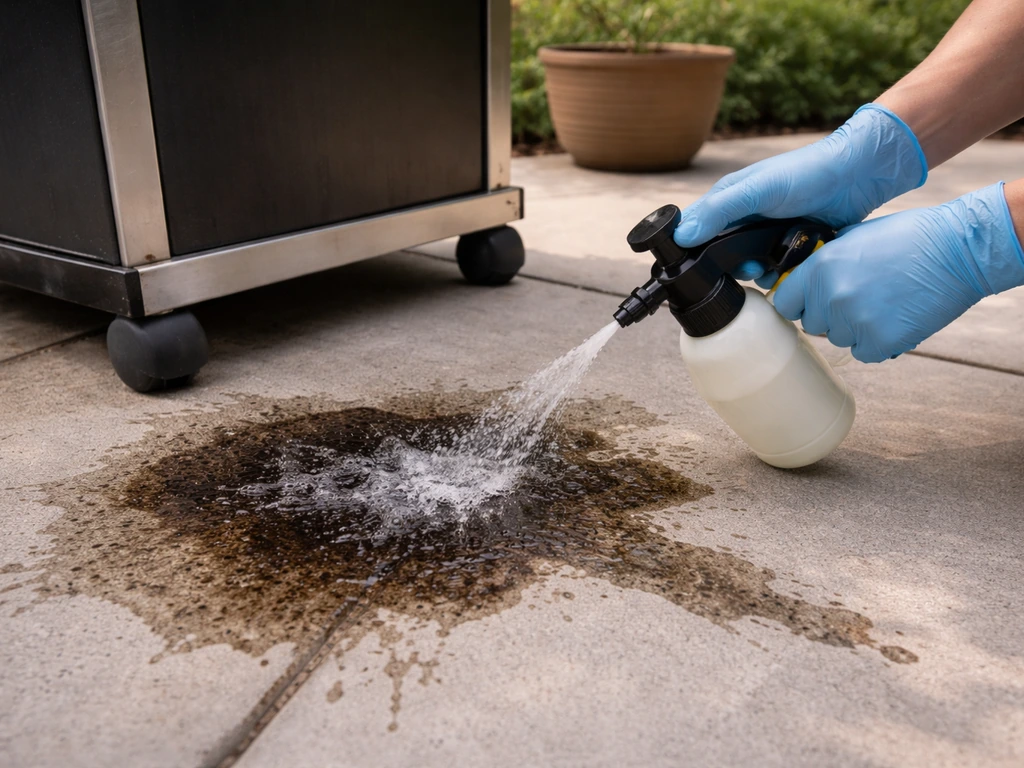
Barbecue drips and oil spills need a degreaser applied before you pressure wash. Hot water pressure washers work significantly better on grease than cold-water units, but most homeowner machines are cold-water only. If yours is cold-water, use a dedicated patio degreaser, agitate with a stiff brush to break the grease bond, then rinse with your pressure washer. A 25° nozzle at medium pressure (1,800 to 2,000 PSI) will clear the loosened grease cleanly.
Pet stains and urine
Pet urine soaks into porous surfaces and the odor stays even after it looks clean. Use an enzyme-based cleaner first: enzymes break down the urea compounds that cause the smell rather than just masking them. Apply the enzyme cleaner, let it work for at least 15 minutes, then rinse with your pressure washer at a surface-appropriate pressure. On concrete, you can go up to 2,000 PSI. On softer stone, keep it gentle and let the chemistry do the work.
Electric vs gas: pressure, flow, and nozzles explained
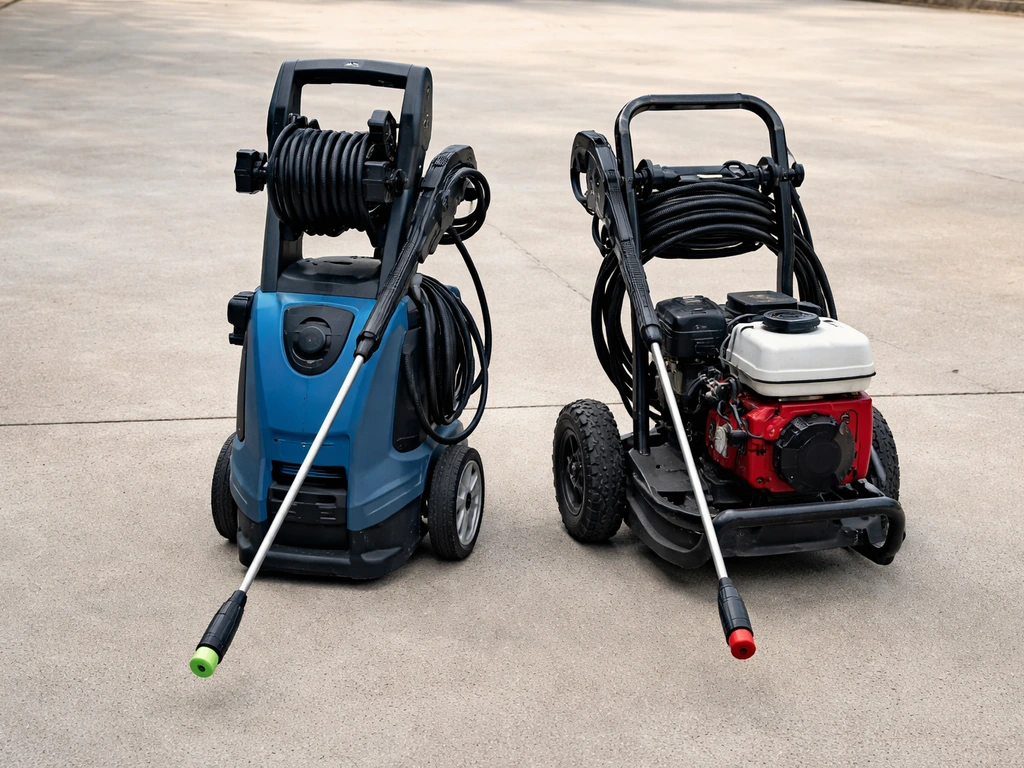
Electric pressure washers typically run from 1,200 to 4,000 PSI, while gas models range from 2,000 to 5,000 PSI. For the majority of residential patio jobs, the overlap zone (2,000 to 2,800 PSI) is where most of the work happens, and both electric and gas machines can operate there. Electric machines are quieter, emit no fumes, require almost no maintenance, and are ready to go the moment you plug them in. Gas machines start faster in terms of raw power delivery and are genuinely faster on large concrete areas, but they need oil checks, spark plugs, fuel storage, and winterization.
For a typical residential patio up to around 50 square metres, a good electric machine in the 1,800 to 2,300 PSI range is perfectly capable. If you want the best electric patio cleaner, start by choosing the right PSI range for your patio material and stain type good electric machine. If you have a large driveway plus a patio to clean regularly, or you're dealing with years of embedded dirt, that's when a gas model starts to justify itself. Some newer cordless battery-powered machines (like the Greenworks 80V 3000 PSI unit) are now genuinely competitive with corded electrics and blank" rel="noopener noreferrer">include features like Total Stop Systems that protect the pump when you're not pulling the trigger, which extends motor life significantly.
Nozzles: what color means what
Nozzles are color-coded by spray angle, and choosing the right one for patio work matters more than most people realise.
| Color | Angle | Best Use on Patios |
|---|---|---|
| Red | 0° | Avoid on patios — concentrated point can etch and crack most surfaces |
| Yellow | 15° | Unpainted concrete, very stubborn deposits on hard surfaces only |
| Green | 25° | General patio cleaning: concrete, brick, harder stone |
| White | 40° | Delicate surfaces: sandstone, painted areas, decking |
| Black | 65° | Soap/detergent application only, not for rinsing |
The 0° red nozzle has almost no practical use on patio surfaces. Even on concrete it can leave visible track marks and, on anything softer, it will cause damage. Start with the green 25° nozzle for most jobs and drop to white 40° for anything delicate. If you're using a surface cleaner attachment, it takes over from the nozzle and you get a much more even, safe clean across the whole area. Always hold the wand at roughly a 45° angle to the surface rather than pointing it straight down.
Step-by-step patio power washing from start to finish
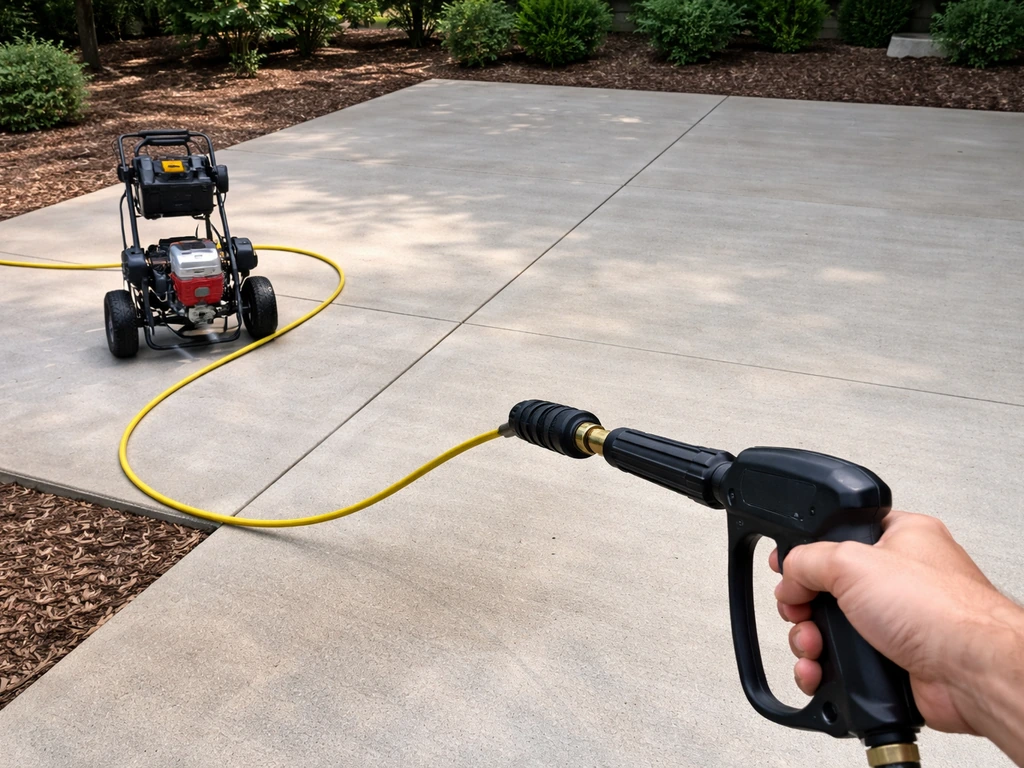
- Clear the patio completely. Move all furniture, pots, and decorations off the surface. This is not optional: anything left on the patio becomes a projectile hazard or gets damaged.
- Pre-treat biological growth and stains. Apply your biocide, rust remover, degreaser, or enzyme cleaner as appropriate for what you're dealing with. Let it dwell for the labeled contact time before you touch the pressure washer.
- Protect surrounding areas. Cover or move nearby plants, since detergent runoff and high-pressure misting can damage foliage. Wet down lawn edges adjacent to the patio with plain water so they dilute any chemical runoff before it soaks in.
- Connect and test your machine. Run the pressure washer briefly away from the patio surface to clear air from the line. Check that your chosen nozzle or surface cleaner attachment is firmly seated.
- Work methodically from the highest point to the lowest (or toward a drain if you have one). On a lance, hold the wand at 45° to the surface, 20 to 30 cm away, and use overlapping passes. On a surface cleaner, move slowly and steadily; rushing leaves bands of uneven cleaning.
- Pay extra attention to joints and edges. On brick and stone, direct the spray along, not into, the joints. Aiming directly into gaps strips mortar.
- Rinse the entire surface with a wide-angle nozzle (40° white) to clear all detergent residue. Residue left to dry can leave a film and attract grime faster.
- Allow the surface to dry fully before replacing furniture. Wet patio surfaces, especially natural stone, look different from dry ones, so wait before judging results. Let it dry at least 24 to 48 hours before applying any sealant.
Best picks by patio type and budget
Rather than ranking individual products (which change in availability and price constantly), here are honest category recommendations based on real patio cleaning scenarios. For quick comparisons, you can also check which model types tend to be the best patio cleaning machines for different patio materials and stain levels. If you want a top tech patio cleaner, look for even coverage, adjustable pressure, and the right surface attachment for your patio material. If you're specifically looking for the best patio jet wash, use these patio-cleaning scenarios to narrow down the right PSI and GPM range. These are the decision shortcuts that save you from buying the wrong thing.
| Scenario | What to Buy | Key Spec Target | Budget Range |
|---|---|---|---|
| Small patio, concrete or brick, light annual clean | Entry-level corded electric | 1,600–1,800 PSI, 1.4+ GPM | £80–£150 / $80–$150 |
| Medium patio, concrete/brick, moss and algae issues | Mid-range corded electric + surface cleaner | 1,800–2,300 PSI, 1.6+ GPM | £150–£300 / $150–$280 |
| Large concrete area or heavy soiling, all surfaces | High-end corded electric or entry gas | 2,300–2,800 PSI, 2.0+ GPM | £250–£450 / $250–$400 |
| Sandstone, slate, or soft stone patio | Mid-range electric — do NOT upsize | Max 1,500 PSI, wide nozzle | £120–£200 / $120–$200 |
| Porcelain tile patio | Mid-range electric + surface cleaner attachment | 1,500–2,000 PSI | £150–£280 / $150–$260 |
| Large estate / driveway + patio, frequent use | Gas-powered 2,500–3,000 PSI unit | 2,500 PSI, 2.3+ GPM | £350–£600 / $350–$550 |
If you're looking at related equipment options, patio jet washers, dedicated patio cleaning machines, and electric patio cleaners all overlap with this category and are worth comparing depending on your specific surface and frequency of use. The core specs to evaluate remain the same regardless of what the product is called.
Avoiding damage, staying safe, and keeping your machine running
Common ways people damage their patio (and how to avoid them)
- Using a 0° or 15° nozzle on anything other than the hardest concrete: the concentrated jet etches grooves that are permanent.
- Pointing the lance straight down at right angles to the surface rather than at 45°: this drives water into cracks and joints instead of washing across the surface.
- Running a gas machine or high-PSI electric on sandstone, soft limestone, or old slate: these surfaces require low pressure or chemical cleaning, not raw power.
- Stripping mortar joints by aiming directly into gaps between bricks or pavers: once the mortar is gone, water infiltration and frost damage follow quickly.
- Removing sealant accidentally: if your patio has been sealed, high pressure will strip the sealer. Test in a hidden corner first, and plan to re-seal after cleaning if needed.
- Not protecting plants and lawn edges from chemical runoff: even diluted biocide can damage grass and ornamental plants.
Re-sealing after cleaning
If you've given your patio a thorough clean, especially if it's natural stone, brick, or concrete with visible porosity, seriously consider sealing it afterward. Sealing closes the pores, makes future cleaning dramatically easier, inhibits moss and algae regrowth, and protects against frost damage. Wait a minimum of 48 hours after power washing for the surface to be fully dry before applying any sealant. Applying to a damp surface traps moisture and causes the sealer to fail or go cloudy.
Basic pressure washer maintenance
- Flush the detergent system with clean water after every use to prevent nozzle and pump blockages.
- Never run the pump dry: always have water flowing before pulling the trigger.
- On gas machines, change the oil after the first 5 hours and then every 50 hours of use; drain the fuel or use a fuel stabilizer before storing over winter.
- On electric machines, inspect the power cord and connections before each use; water and damaged cords are a serious hazard.
- Store the machine in a frost-free location over winter: residual water in the pump expands when frozen and cracks the pump housing.
- Check and clean nozzles regularly: a partially blocked nozzle changes the spray pattern and pressure, which leads to uneven cleaning and potential surface damage.
- If your machine has a Total Stop System (TSS), don't run the trigger in short rapid bursts; let the system cycle properly to protect the pump motor.
Personal safety while power washing
A pressure washer jet can cause a serious injection injury if it contacts skin, even briefly. Always wear waterproof boots (not trainers), eye protection, and keep bystanders and pets well clear of the work area. Never point the wand at anyone or any living thing. When changing nozzles, turn the machine off completely and release the trigger to depressurize the lance first. On sloped or wet surfaces, the spray reaction can push you backward: keep your footing solid before you pull the trigger.
FAQ
How do I know if my patio is too damaged to pressure wash safely?
If your patio has visible cracking or sandy, spalling surfaces, stop and reassess. Pressure washing can widen damage by forcing water into voids. Test a small inconspicuous area using the lowest effective pressure, and if you see aggregate lifting or more crumbling, switch to gentler cleaning plus targeted chemical treatments.
Do I need to let biocide or bleach cleaner sit before rinsing, or can I power wash right away?
Follow a simple rule: treat, then wash, never the other way around for bio growth. Let the biocide or bleach-based product stay wet for its labeled contact time (often 10 to 20 minutes), then rinse thoroughly. Skipping dwell time often leaves regrowth even if the surface looks cleaner right after rinsing.
Are the PSI numbers on pressure washer boxes always reliable for patio cleaning?
Pressure washer “ratings” can mislead. Many advertised PSI figures are maximum output, and actual cleaning depends on GPM, nozzle size/angle, and how evenly you move. Use the specified PSI and GPM range as targets, not as guarantees, and prioritize matching the nozzle angle to the surface.
Will a cold-water electric pressure washer struggle with oil and barbecue drips, and what should I do differently?
Yes, but it changes the workflow and can make grease stains harder to remove. If your unit is cold-water only, pre-treat with a dedicated degreaser, agitate with a stiff brush, and then rinse. Hot-water units clear some grease with less scrubbing, but they still benefit from pre-treatment for heavy, baked-on oil.
What should I check before I buy or use an electric pressure washer regarding cords and reach?
Cord length and hose routing matter more than people expect. Measure the distance from the outlet to the far edge of the patio, then add extra slack for safe maneuvering. Use a properly rated outdoor extension cord and avoid stretching it tight across walkways where it can pull the trigger wand awkwardly.
Can I use a surface cleaner attachment with any pressure washer, or does the washer need to match it?
A surface cleaner typically needs more minimum pressure and flow than a wand, and it is designed for steady, controlled passes. If you cannot reach its stated minimum PSI and GPM, you may get streaking or incomplete cleaning. Confirm your washer’s specs match the attachment requirements before assuming it will work “with any machine.”
How do I avoid etching, streaking, or strip damage when power washing patios?
For most residential patios, use a consistent pass pattern and keep the nozzle or surface cleaner moving. Stalling in one spot can etch or strip sealant. If you see whitening, roughening, or grout damage, reduce pressure, increase nozzle angle, and spread the cleaning over multiple lighter passes.
What is the right way to remove rust stains from a patio?
Not if your goal is to remove rust from concrete or porous stone. Rust generally needs a separate oxalic-acid-based remover applied directly to the stain, allowed to dwell, and then rinsed. Repeated high-pressure washing without treating the chemistry can grind rust deeper into pores.
Why does my patio still smell after pressure washing pet urine?
Yes. If urine has penetrated porous surfaces, you may need more than one treatment cycle. Enzyme cleaners work on urea compounds, apply and keep dwell time at least as long as the product label specifies, then rinse. If odor returns within days, repeat enzyme treatment rather than increasing pressure.
When is it safe to seal after pressure washing, and what can go wrong if I seal too soon?
It depends on material porosity and what you’re sealing. Wait until the surface is fully dry, at least 48 hours after washing, because sealing damp pores can cause cloudiness or premature failure. Also test the sealant on a small area first, since some sealers change the look of stone and can make algae regrowth harder to manage later.
What’s the safest spray angle to use on brick or natural stone patios?
Always use the correct spray angle and avoid pointing straight down, especially on brick and stone. Maintain roughly a 45° approach for a wand, and for delicate stone start with a wider nozzle angle and lower pressure. Straight-down blasting can create preferential channels that worsen mortar loss and surface erosion.
What cleaning order helps me get more even results and fewer missed spots on a patio?
You may get better results by removing dirt from the edges first, then working toward the center. Biofilm and grime often build up along walls, joints, and around patio furniture. Do a perimeter pass, then do broad sections in overlapping strokes, and finish with a full rinse so residue from pre-treatments does not dry on the surface.
Next Article
Best Jet Washer for Patio: Buyer Guide and Top Picks
Find the best jet washer for your patio size and material, with specs, accessories, and top picks for tough grime.