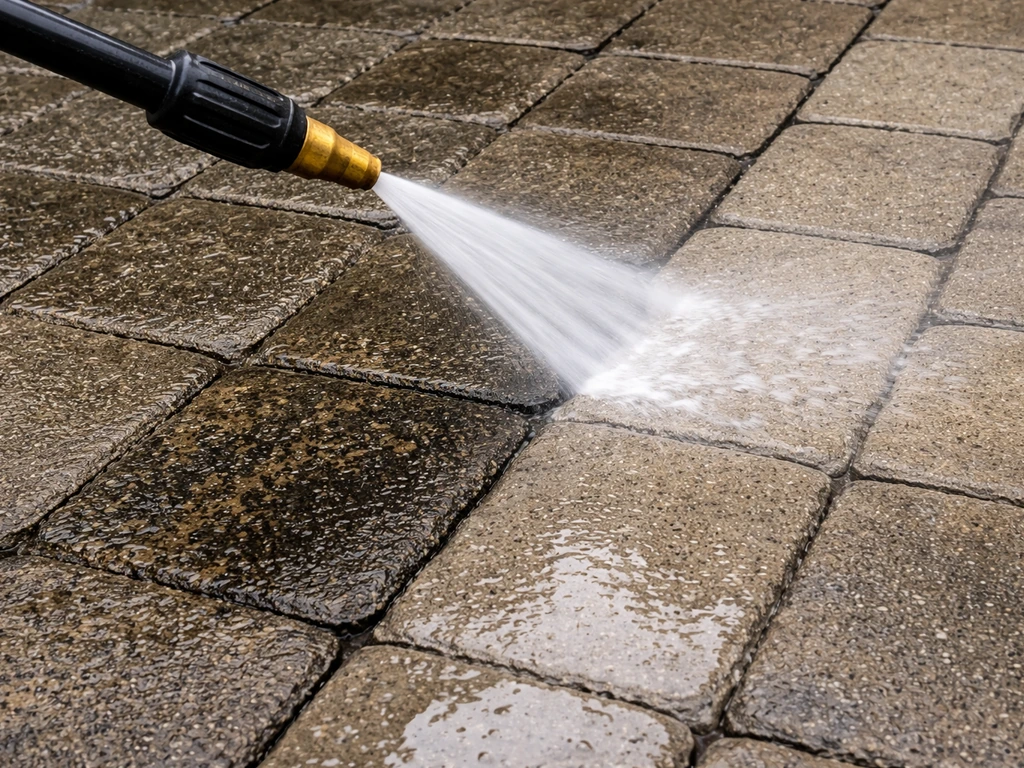
You can power wash or pressure wash some patio cushions, but for most standard cushions with foam cores, it's a bad idea and you'll likely regret it. High-pressure water drives deep into foam and forces its way through seams, leading to soggy interiors that take days to dry and invite mildew, plus it can tear stitching and strip waterproof coatings. The safer default is a bucket of mild soapy water and a soft brush. That said, certain rugged outdoor cushion covers can handle a very gentle rinse from a pressure washer at the right settings, and I'll walk you through exactly when that's acceptable and how to do it without causing damage. If you’re wondering whether you can pressure wash a patio umbrella, the safe answer is to treat it like any other fabric: check the care label and use the gentlest method first pressure washer.
Can You Power Wash Patio Cushions? Safe Steps by Material
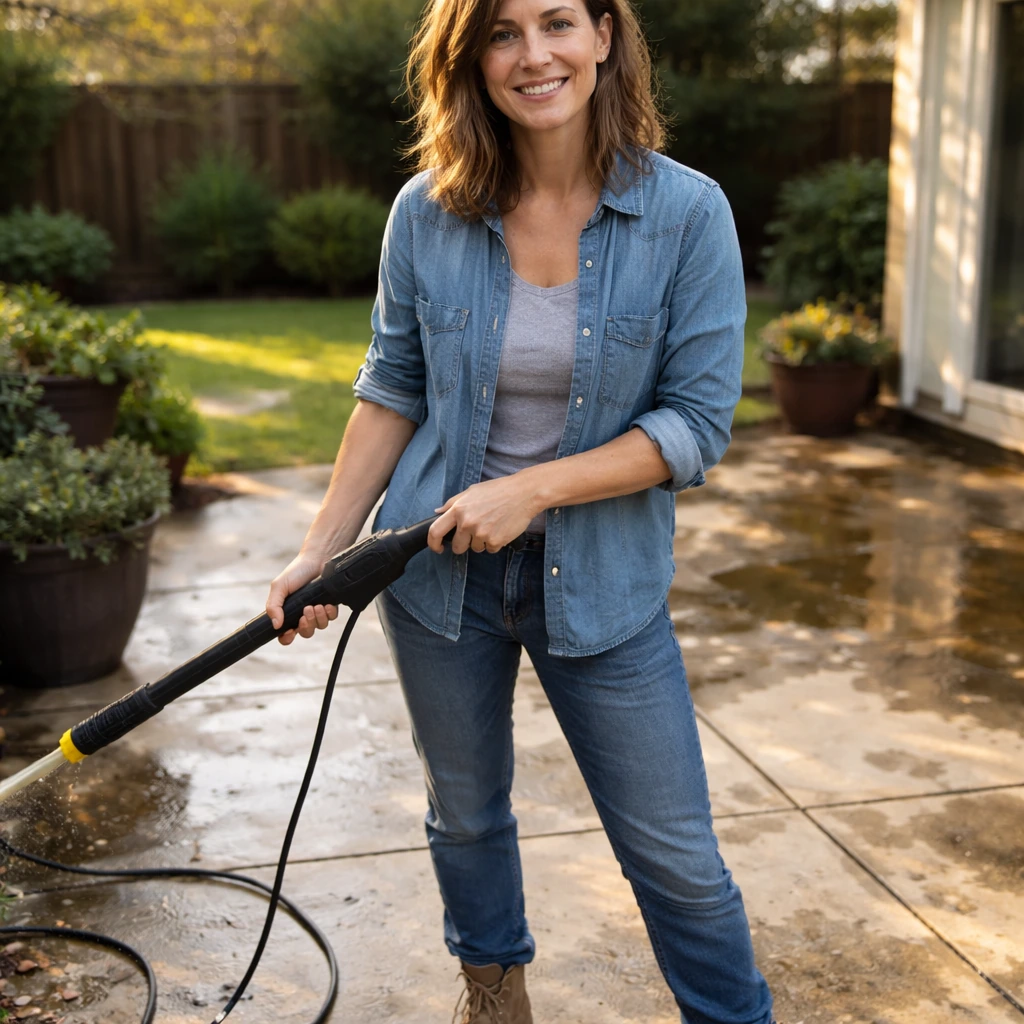
Power wash vs pressure wash for cushions (and when to skip both)
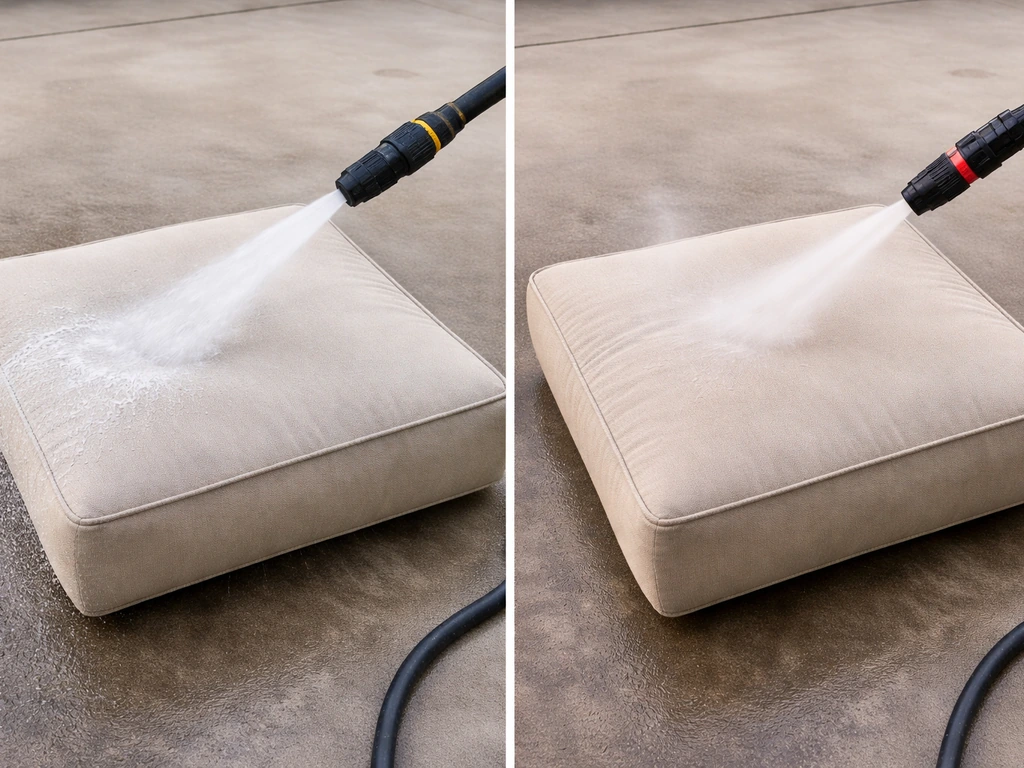
Power washers use heated water; pressure washers use cold water at high force. For cushions, that distinction matters less than the pressure itself. Heat can shrink or damage fabric fibers and degrade foam faster, so if you're choosing between the two, a cold-water pressure washer is the lesser risk. But the bigger question is whether to use any kind of pressurized spray at all.
The core problem is construction. Most patio cushions are fabric covers stuffed with foam or polyester fill. High-pressure water forces its way through the fabric, saturates the foam core, and has nowhere to go. That moisture sits inside for days, which is exactly how you get mildew forming from the inside out. There's also a real risk of seam separation, especially on zipped or sewn edges that weren't designed to handle directional water force. One outdoor furniture service guide puts it plainly: never pressure wash cushion material, use low pressure or a garden hose only.
When is pressure washing acceptable? Only for the fabric cover itself, removed from the cushion, laid flat on a hard surface, using the widest fan nozzle at the lowest possible pressure, kept at arm's length minimum. If the cover is not removable, don't use a pressure washer. If the cushion is solid foam with a non-removable fabric shell, don't use a pressure washer.
- Skip pressure washing entirely: cushions with non-removable covers, foam-filled cushions without a zip, cushions with visible wear or loose seams, any cushion whose care tag says dry clean only (Code S) or no water
- Pressure washing might be okay: removable fabric covers only, laid flat and off the foam insert, using a 40-degree wide fan nozzle at under 1,200 PSI, held at least 18 to 24 inches away
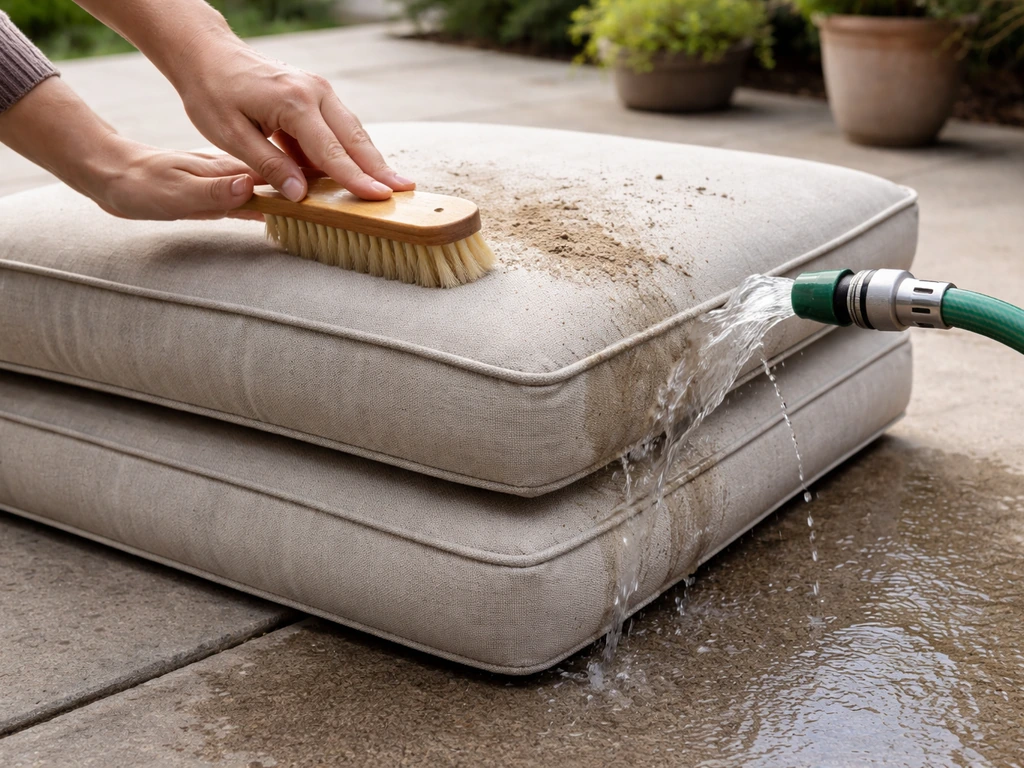
- Always prefer: a garden hose rinse, mild soapy water with a soft brush, and air drying in the sun
Check the material and care label before you do anything
Outdoor cushion fabrics vary a lot, and the cleaning method that's fine for one can wreck another. The main materials you'll encounter are solution-dyed acrylic (Sunbrella is the best-known brand), olefin/polypropylene, and polyester. Each has different tolerances for water, heat, and mechanical agitation.
Look for the care label, usually sewn inside the cover or underneath the cushion. The code on that label tells you exactly what cleaning approach is safe. Code W means water-based cleaning only, mild soap and water is your method. Code S means solvent only, no water at all. Code W/S means both water-based and solvent-based spot cleaning are acceptable. Code X means vacuum only, no wet cleaning. For outdoor cushions, you'll most often see W or W/S, but always check rather than assuming.
| Fabric Type | Water Tolerance | Machine Wash? | Pressure Wash? | Notes |
|---|---|---|---|---|
| Solution-dyed acrylic (Sunbrella) | High | Covers sometimes, check label | Not recommended; covers only at very low pressure | Mildew-resistant but dirt on fabric can still cause mildew; rinse well |
| Olefin/Polypropylene | High | Gentle cycle, cold water, some covers | Not recommended; covers only at very low pressure | Do not tumble dry; gently squeeze excess water; air dry only |
| Polyester | Medium | Covers sometimes | Not recommended | Can pill or stretch under pressure; check label carefully |
| Canvas/Cotton blend | Low-Medium | Rarely; check label | No | Shrinks with heat; mildew-prone if not dried fast |
| Faux leather/Vinyl | High (surface only) | No | Very low pressure only on surface | Do not saturate seams; wipe clean preferred |
If you can't find a care label, treat the cushion as Code W and use the gentlest method. It's not worth guessing wrong. Also check whether the cover is removable before you do anything else. Removable covers change everything because you can clean the cover and the foam separately, which is always the safer approach.
The safest cleaning method: gentle first, pressure washer later (maybe)
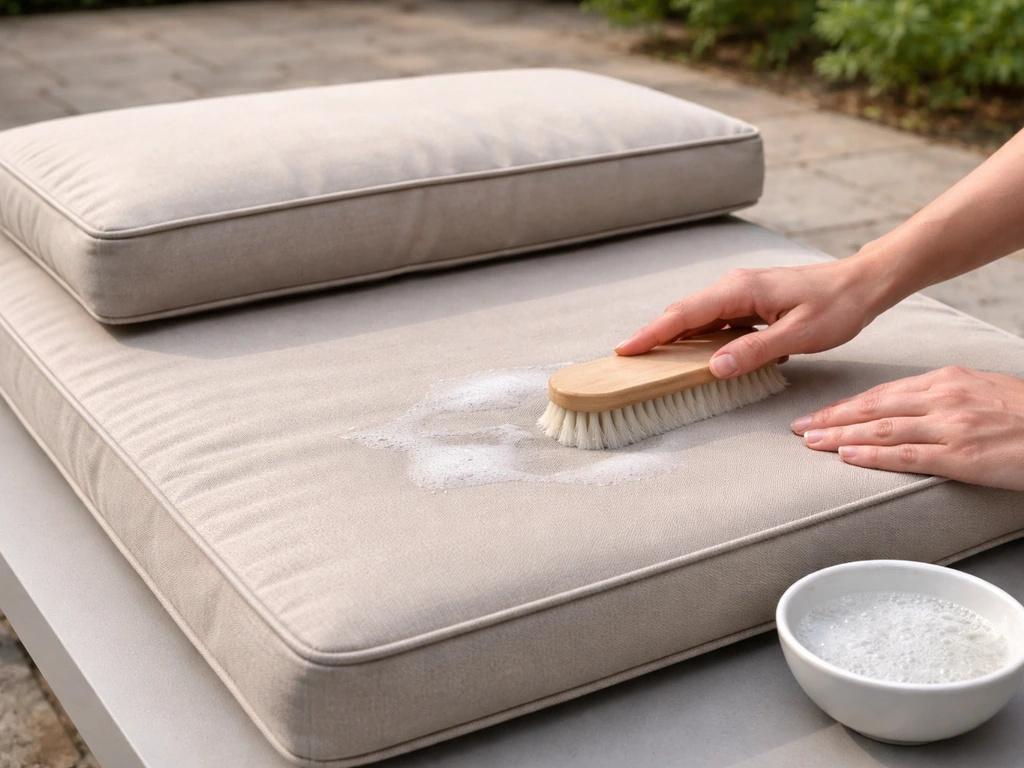
This approach works for almost every outdoor cushion type and is where I'd start every single time, regardless of how dirty they are. You'll be surprised how effective it is even on stubborn grime.
- Remove the covers if they're zippered or otherwise detachable. Set the foam inserts aside somewhere dry and shaded.
- Shake off loose dirt, debris, and any dry mildew before getting anything wet.
- Mix a solution of about one tablespoon of mild dish soap or a dedicated outdoor fabric cleaner per gallon of warm water. For Sunbrella or olefin covers, this is the recommended ratio.
- Apply the solution with a soft-bristle brush or sponge, working it gently into the fabric using circular motions. Don't scrub aggressively as this can damage fiber structure.
- Let the solution sit for five to ten minutes on stained areas before scrubbing again lightly.
- Rinse thoroughly with a garden hose on a gentle setting, making sure all soap is removed. Soap residue left in fabric attracts more dirt.
- For removable covers, you can also run them through a washing machine on a gentle, cold cycle with mild detergent, then air dry. Do not put them in the dryer.
- Never put foam inserts in a washing machine or expose them to a pressure washer directly.
One tip I've found really useful: for Sunbrella and similar performance fabrics, apply your cleaning solution using a misting spray bottle rather than pouring it on. This prevents over-saturating the fabric and means less drying time afterward, which directly reduces mildew risk.
If you do use a pressure washer: settings, nozzles, distance, and technique
If you've checked your labels, the cover is removable, the seams look solid, and you still want to use a pressure washer (maybe for rinsing after a cleaning solution or because you're doing the whole patio at the same time), here's how to do it without causing damage.
Nozzle choice
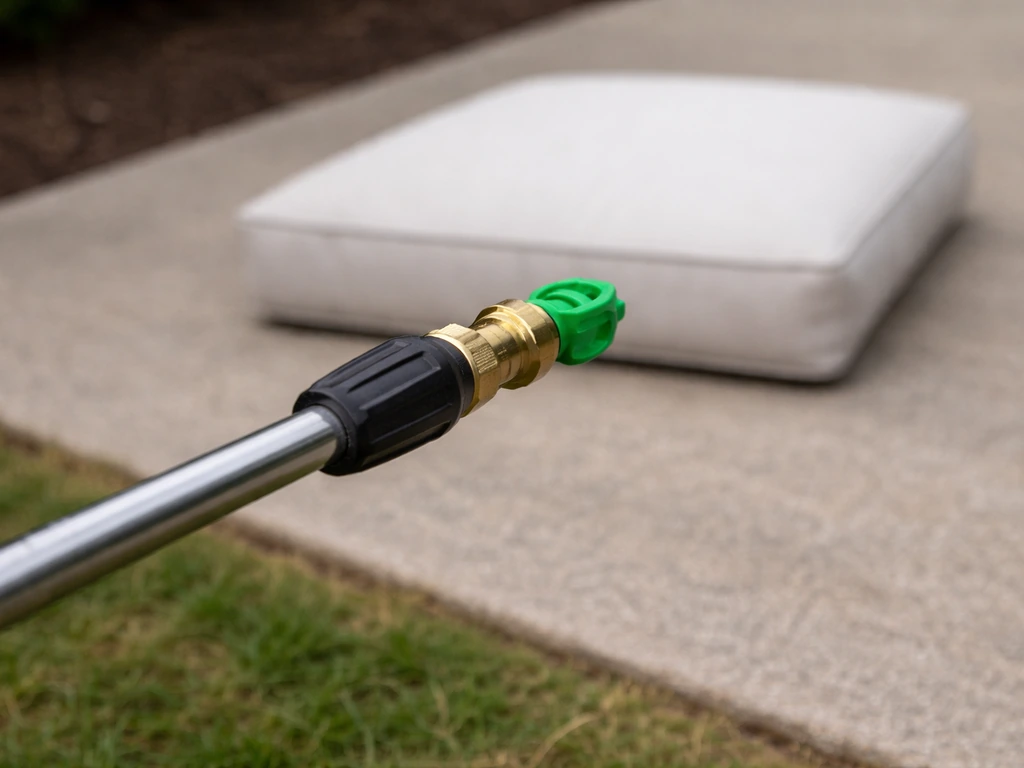
Use a 40-degree wide fan nozzle. This is the same tip used for washing cars, windows, and other easily damaged surfaces. It distributes the water pressure over a wide area, reducing the concentrated force at any single point. Never use a 0-degree (red), 15-degree (yellow), or even 25-degree (green) tip on fabric. The 25-degree tip is already used for stripping paint and blasting mud off concrete, so it has no business being near a cushion cover.
Pressure setting
Keep pressure under 1,200 PSI, ideally around 1,000 PSI or lower. If your machine only goes down to 1,500 PSI, compensate by increasing your distance from the surface and using the widest nozzle. Some sources suggest a maximum of 1,500 PSI for fabric seat covers, but for cushion fabric specifically, I'd stay lower than that.
Distance and technique
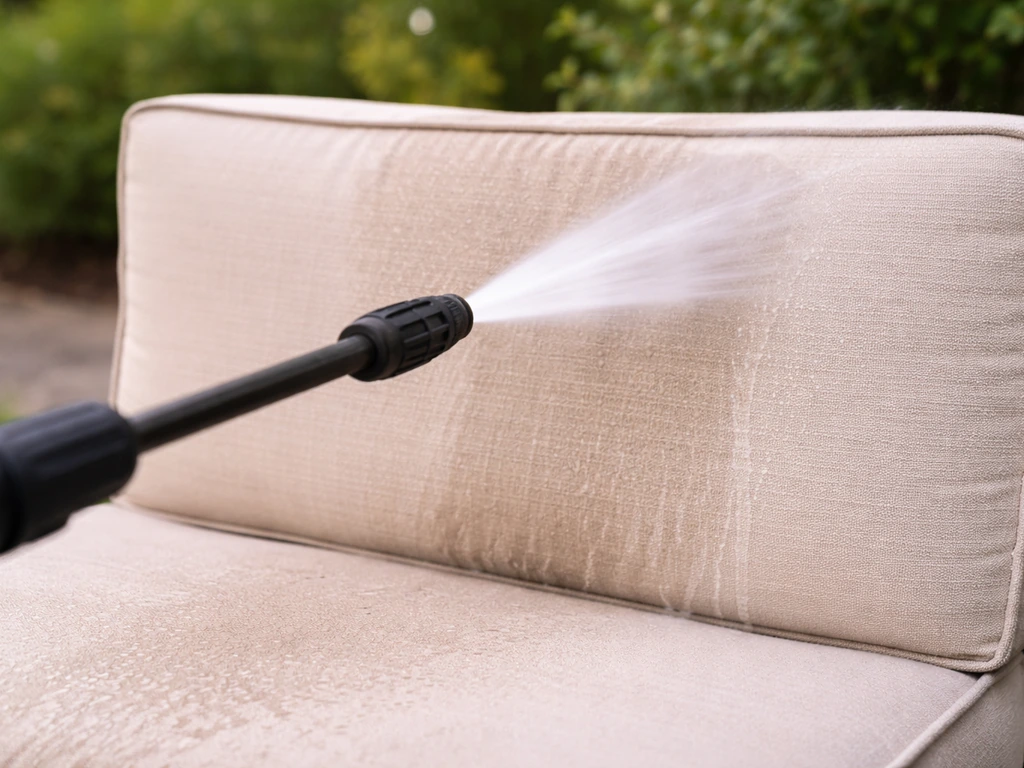
Hold the wand at least 18 to 24 inches from the fabric surface, which is roughly arm's length. Move the wand in smooth, sweeping passes rather than holding it in one spot. Don't aim directly at seams, zippers, or edges where stitching can catch the full force of the stream. Lay the cover flat on a clean hard surface (a patio slab or deck works well) so it doesn't billow and move around. Rinse in the direction of the weave, not against it.
If you're using a cleaning concentrate like Simple Green Oxy Solve through the pressure washer's detergent injector, apply it at low pressure (the detergent setting your machine already uses, which is typically very low), let it dwell for a few minutes, then rinse with your 40-degree tip. This is one case where a pressure washer is genuinely useful: applying and rinsing an oxygen-based cleaner from a safe distance, rather than blasting the fabric directly.
Pre-treating stains: mold, mildew, algae, pet stains, and general grime
Pre-treatment before any cleaning (whether hand washing or pressure washing) makes a big difference. Different stain types need slightly different approaches, and getting this right means you won't have to scrub as hard or repeat the process.
Mold and mildew
Mix one cup of bleach-free oxygen cleaner or white vinegar with a gallon of water, apply to the affected area, and let it sit for 15 to 20 minutes before scrubbing gently. For performance fabrics like Sunbrella or olefin, oxygen-based cleaners (such as Simple Green Oxy Solve) are effective and gentler than chlorine bleach on fabric dyes. Note that Sunbrella and similar solution-dyed acrylics are inherently mildew-resistant, but mildew can still grow on dirt that collects on the surface, so the target is removing that dirt, not treating the fabric itself as the problem.
Algae and green staining
Algae tends to sit on the surface rather than penetrating fabric fibers. An oxygen-based outdoor cleaner diluted per its label instructions, left to dwell for ten minutes, then scrubbed off with a soft brush handles this well. Rinse thoroughly because algae residue can re-establish itself quickly if any spores remain.
Pet stains
Enzyme-based pet stain cleaners work best here because they break down the proteins in urine rather than just masking the odor. Apply directly to the stained area, let it sit for the time stated on the product (usually 10 to 15 minutes), then blot rather than scrub to avoid spreading the stain. Follow with a gentle soap and water wash and a thorough rinse.
General dirt and grime
For everyday dirt buildup, mild dish soap in warm water is genuinely all you need. Apply with a sponge or soft brush, work in, let it sit for five minutes, then rinse. The key with outdoor cushions is cleaning promptly: dirt that sits wet on fabric is what leads to mildew, not the fabric itself being inherently vulnerable.
Rinsing and drying properly to stop mildew before it starts
Rinsing and drying are where most people go wrong, and it's also where mildew problems start. Inadequate rinsing leaves soap residue that attracts more dirt. Inadequate drying leaves moisture trapped in foam, which creates the perfect mildew environment even on mildew-resistant fabrics.
Rinse longer than you think is necessary. Run a garden hose over the fabric until the water runs completely clear and there are no more suds. For removable covers, hold them up and let water run through from multiple angles. For cushions that were cleaned in place, tip them on their side and rinse the underside too, because soapy water collects on the bottom face.
For drying, the method depends on construction. Removable covers can be hung on a clothesline or draped over a chair in full sun and wind. Foam inserts should be stood upright on their side in a well-ventilated area, never laid flat, because laying them flat traps moisture underneath. Gently squeeze (don't wring or twist) excess water from foam before setting it out to dry. Turn foam inserts over every hour or so to expose all sides to air.
For olefin covers specifically, do not put them in the dryer, no matter how tempting it is to speed up the process. Air dry only, and gently squeeze rather than wringing out excess water. This applies to most outdoor cushion fabrics.
If water gets trapped inside a cushion and you notice a musty smell a few days later, take the cover off if possible, prop the foam in direct sun and breeze, and sprinkle baking soda lightly over the foam surface to absorb odor. Leave it for several hours, then brush off and continue air drying. If the cushion still smells after two full days of drying in sun, the foam may have developed mildew internally, and at that point replacement is usually the better option.
What to use: equipment and cleaner recommendations
You don't need expensive equipment to clean patio cushions well. A garden hose with an adjustable nozzle, a soft-bristle scrubbing brush, a bucket, and a good cleaner will handle 90% of jobs. But if you already own a pressure washer for patio and deck cleaning (which many readers here do), here's how the tools stack up for this job specifically. If you’re also wondering about cleaning the paver patio itself, you can approach it differently than cushion fabric.
| Tool/Method | Best For | Risk Level | Notes |
|---|---|---|---|
| Garden hose with adjustable nozzle | All cushion types, foam cores, non-removable covers | Very low | Best default; no risk of seam damage or foam saturation |
| Soft-bristle brush + bucket | Scrubbing stains, applying cleaning solution | None | Essential for any cleaning method |
| Pressure washer (40-degree tip, under 1,200 PSI) | Rinsing removable covers only, laid flat on hard surface | Medium if used wrong | Keep 18-24 inches away; never on foam or non-removable covers |
| Machine washer (gentle/cold cycle) | Removable covers only, if care label allows | Low if label allows | Air dry only; no dryer |
| Spray bottle (misting) | Applying cleaning solution to performance fabrics | None | Prevents over-saturation; recommended for Sunbrella and olefin |
Cleaner recommendations
- Mild dish soap (Dawn or similar): the universal baseline, safe on almost all outdoor fabrics, one tablespoon per gallon of warm water
- Simple Green Oxy Solve Total Outdoor Cleaner: oxygen-based, works well on mold, mildew, and algae on outdoor fabrics, can be used through a pressure washer's detergent injector at low pressure
- White vinegar diluted 1: 1 with water: a natural option for light mildew and odor, rinse thoroughly afterward
- Enzyme-based pet stain remover: essential if you're dealing with pet accidents; look for outdoor-rated formulas
- Avoid: chlorine bleach on colored or performance fabrics (it can strip dye and degrade fibers), solvent-based cleaners on Code W fabrics, steam cleaners
One thing worth mentioning: if you're already planning to pressure wash your patio surface after cleaning the cushions, keep the tasks separate. Cushion cleaning first, surface cleaning second. Detergent and dirty runoff from the patio surface will re-soil cushions you've just cleaned, and the pressure you use on concrete or stone is way too high for any fabric. If you're waterproofing your cushion covers after cleaning to protect them going forward, that's a smart next step, especially for covers that have been washed a few times and are starting to lose their water-repellent finish. A good waterproofing spray for patio cushions helps restore water repellency so stains and mildew have less chance to set in waterproofing your cushion covers after cleaning.
FAQ
What happens if I accidentally pressure wash the cushions anyway?
If you already did, stop immediately, rinse thoroughly to remove trapped soap or cleaner, then dry the foam aggressively by standing it upright in sun and breeze. Check for a musty smell after 48 to 72 hours, because mildew often starts developing inside the foam even when the surface looks dry.
Can I pressure wash patio cushion covers while they’re still on the cushions?
In most cases, no. Directional spray forces moisture into the foam through seams and will slow or prevent drying. Only pressure wash the cover if it can come off completely, is laid flat, and the care label allows wet cleaning (typically Code W or W/S).
Are heat or hot water ever a good idea for patio cushion cleaning?
Generally avoid hot or heated washing. Heat can shrink or stress fibers and accelerate degradation of foam and finishes. Stick to cold water for any pressurized rinsing, even if the fabric seems tough.
How do I tell if my cushion has a foam core or solid foam before choosing a cleaning method?
Look for a visible zipper seam and feel the padding under the fabric. If the center feels like a structured block rather than a separate insert, assume moisture can still get trapped. When in doubt, treat it as foam-insert construction, use gentle hand cleaning, and avoid any pressurized spray.
Can I use a 0-degree or narrow tip if my goal is “just to rinse”?
No. Even for rinsing, narrow tips concentrate force and can tear fibers or pull seams. Use the widest fan tip available, keep the wand far enough (arm length), and sweep continuously rather than targeting one spot.
Will using oxygen cleaner in a pressure washer harm the cushion fabric?
It’s safer when applied at low detergent settings from a distance, with a short dwell time and a gentle fan-tip rinse. Don’t blast the concentrate directly into the fabric, and always follow the cleaner’s dilution instructions so you don’t leave a residue that can attract dirt.
What’s the safest way to pre-treat mold or mildew spots on outdoor cushions?
For mildew-like discoloration, use an oxygen-based cleaner (or vinegar solution) with the recommended dwell time, then gently scrub. Avoid chlorine bleach on solution-dyed outdoor fabrics, since it can damage dyes and may leave weakened spots that discolor again sooner.
Do I need to brush in a particular direction when rinsing or scrubbing?
Yes, when rinsing, flow water in the direction of the weave to reduce snagging and ensure residue carries away. When scrubbing, use light pressure and short strokes, especially along seams and piping, to prevent loosening stitching.
How long should patio cushions dry before putting them back on the furniture?
Dry time depends on weather, but don’t assume “dry to the touch” means the foam is dry. Aim for 24 to 48 hours of good sun and airflow, and only reassemble after there’s no musty odor and the foam feels dry through the insert.
What should I do if the cushion develops a musty smell after drying?
Remove the cover if possible, prop the foam upright in direct sun and breeze, then lightly dust the foam surface with baking soda and leave it several hours before brushing off. If the smell persists after two full days of sun drying, internal mildew may have formed and replacement is usually the practical option.
Can I put pressure-washed cushion covers in the dryer to speed things up?
For olefin covers, do not use the dryer. For other cover materials, drying heat can still damage fibers or warp shapes. Air drying is the safest default, and ensure the covers are fully dry before storing to prevent odor from returning.
Is waterproofing still worth it after washing, and when should I do it?
Yes, especially after multiple cleanings or when water stops beading on the fabric. Apply waterproofing only after the cushion is fully dry and clean, and follow the product instructions so you don’t seal in leftover soap residue.
Can I clean cushions the day after a patio pressure washing job?
Wait or separate the tasks. Detergent and dirty runoff from the patio can re-soil cushions quickly, making it look like your cleaning failed. Ideally clean cushions first, then pressure wash the patio, and let both dry fully before storing covers or using the seating again.
How to Pressure Wash a Patio Step by Step for Concrete and Pavers
Step-by-step guide to pressure wash a concrete or paver patio safely, choosing nozzles and patio cleaner for mold, grime