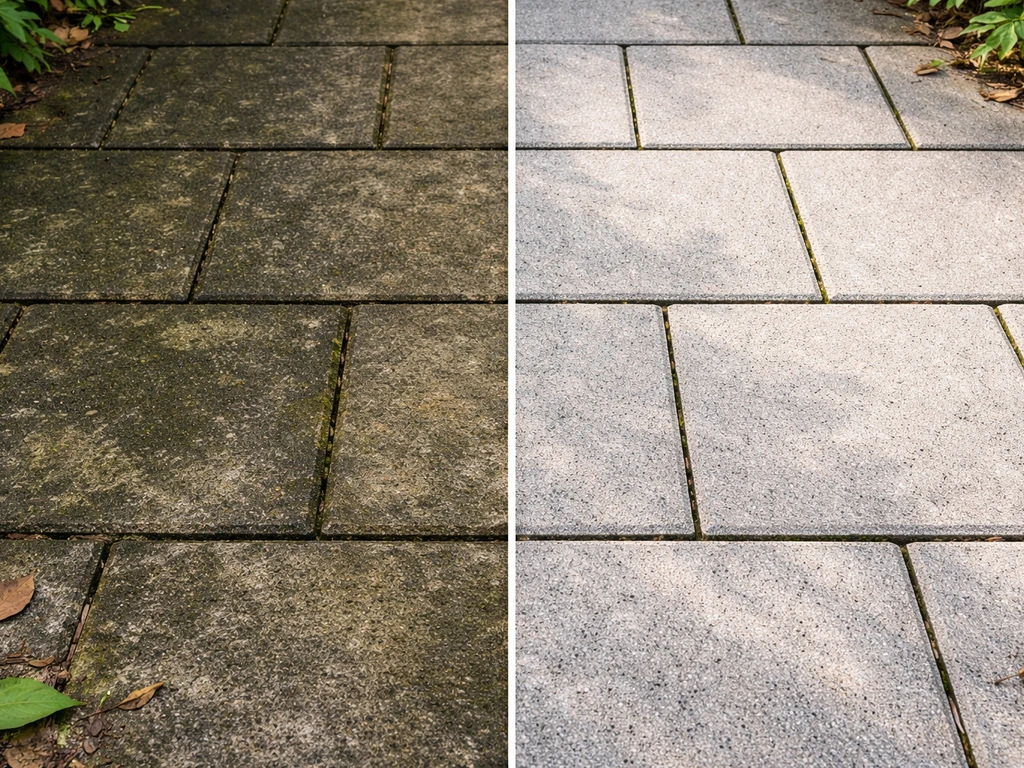
HG Patio-Tile Cleaner is worth buying for general surface grime, built-up dirt, and light organic staining on concrete, paving slabs, brick, and stone. HG’s patio-cleaning guidance also discusses using HG patio-tile cleaner as a practical option for grime and lightly stained patios, while noting alternatives like high-pressure cleaning with tradeoffs. At a 1:4 dilution covering around 25 m² per litre, it's good value and genuinely works on everyday muck. But it has real limits: it's a heavy-duty alkaline detergent, not a dedicated biological treatment, so for heavy moss, established algae, or lichen crust you'll get better long-term results pairing it with a proper algae and mould remover first. And for rust stains, you need something else entirely. If you go in with the right expectations and use it correctly, it does a solid job.
HG Patio Cleaner Review: How Well It Works + How to Use

What HG Patio-Tile Cleaner actually is
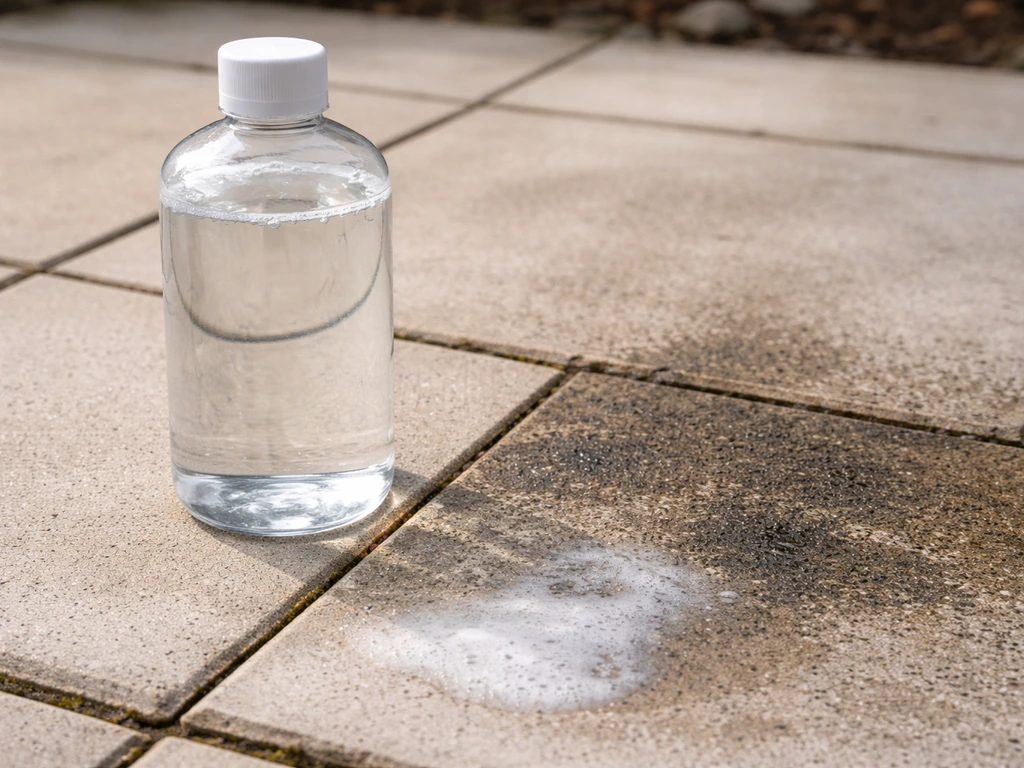
HG markets this as a very concentrated detergent developed specifically for cleaning dirty and stained concrete, slabs, and paving stones. The official product name is HG Patio-Tile Cleaner (article number 183100106), sold in a 1L bottle. HG positions it as a general heavy-duty cleaner for outdoor pavements, pathways, and stone surfaces rather than a specialist biological treatment. It's intended for the general public, meaning you don't need any trade knowledge to use it safely, though you do need to treat it with respect given what's in it.
How it works: the chemistry behind it
The active ingredients listed in the Safety Data Sheet are potassium hydroxide (caustic potash), isotridecanol ethoxylated (a non-ionic surfactant), and tetrapotassium pyrophosphate (a builder that helps break down and suspend dirt). The pH is above 14, which means this is a strongly alkaline product. That alkalinity is what makes it effective at cutting through grease, general grime, soiling, and lighter organic deposits. The surfactants help lift the loosened material off the surface so it can be scrubbed away and rinsed off.
One important note from the SDS: acids are chemically incompatible with this product. Don't mix it with acid-based cleaners or use it immediately after applying an acid wash. Also, being strongly alkaline means it can potentially affect acid-sensitive surfaces and natural stone that's sensitive to pH extremes, so surface compatibility matters more here than with gentler cleaners.
Which surfaces is it safe for?
The manufacturer lists it for concrete, paving slabs, and stone surfaces. From what I've seen and tested, here's how it plays out across the typical patio materials:
| Surface | Compatibility | Notes |
|---|---|---|
| Concrete | Good | Works well; the alkaline formula handles concrete grime and staining effectively |
| Brick paving | Good | Generally safe at the recommended 1:4 dilution; avoid prolonged contact with mortar joints |
| Sandstone/natural stone | Use with caution | Strongly alkaline; test a small hidden area first, especially on porous or sensitive stone |
| Slate | Use with caution | Slate varies; test first and don't let the solution dry on the surface |
| Porcelain tiles | Good | Porcelain is non-porous and handles alkaline cleaners well; rinse thoroughly |
| Limestone/calcareous stone | Avoid or test carefully | Strongly alkaline products can affect the surface finish of some calcareous stones over time |
For any natural stone you haven't used this on before, test a small, hidden area first. The 1:4 dilution makes it significantly safer than using it concentrated, but strongly alkaline products and sensitive stone can be a bad combination.
Real-world performance: what it handles and where it falls short
Mold and algae
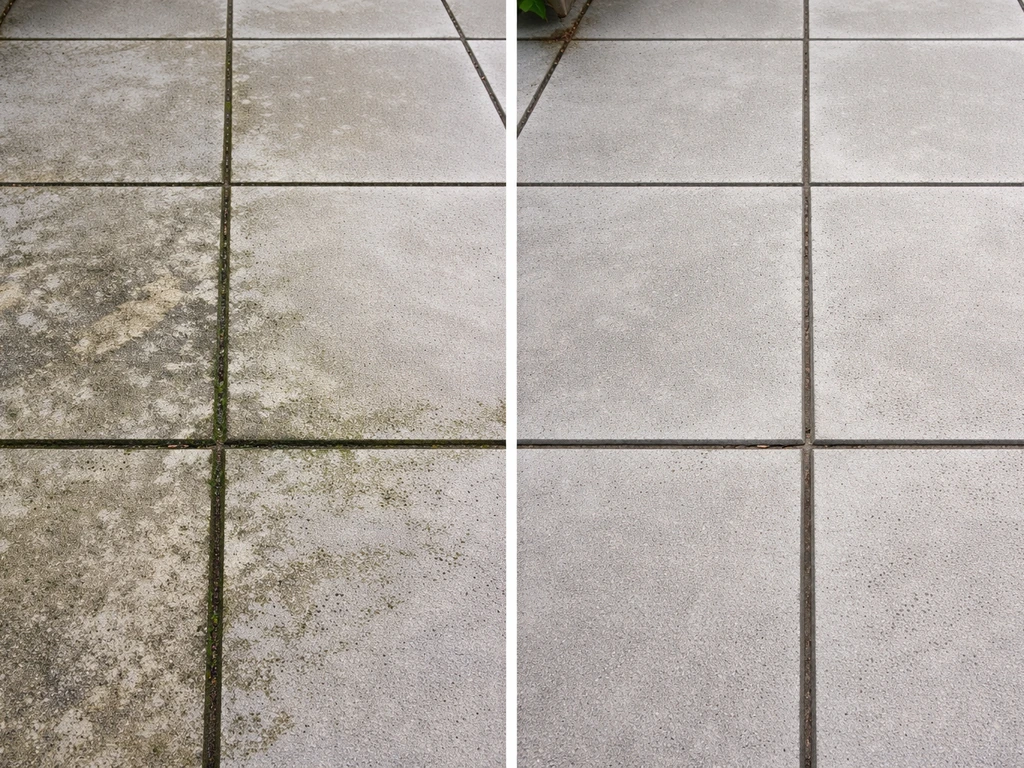
On light to moderate algae and surface mould, HG Patio-Tile Cleaner does a decent job when you scrub properly. You'll see visible improvement after one application on lightly affected areas. However, HG themselves are upfront that for established green deposits, algae, and lichen crust, their dedicated HG Algae and Mould Remover is the right first step, with patio-tile cleaner used afterwards for the broader clean. The reason is practical: the patio cleaner is a detergent that lifts and removes, but it doesn't have the biological kill action of a proper algae/mould treatment. If you just scrub off algae without treating it biologically, it tends to come back faster.
Moss
For thick moss or lichen crust, HG Patio-Tile Cleaner on its own isn't the right tool. You'd want to physically remove the bulk first (a stiff brush or scraper), treat any remaining biological growth with an algae/mould remover, and then use the patio cleaner for the final surface clean. Trying to scrub through a thick mat of moss with a detergent is hard work with limited results.
Rust stains
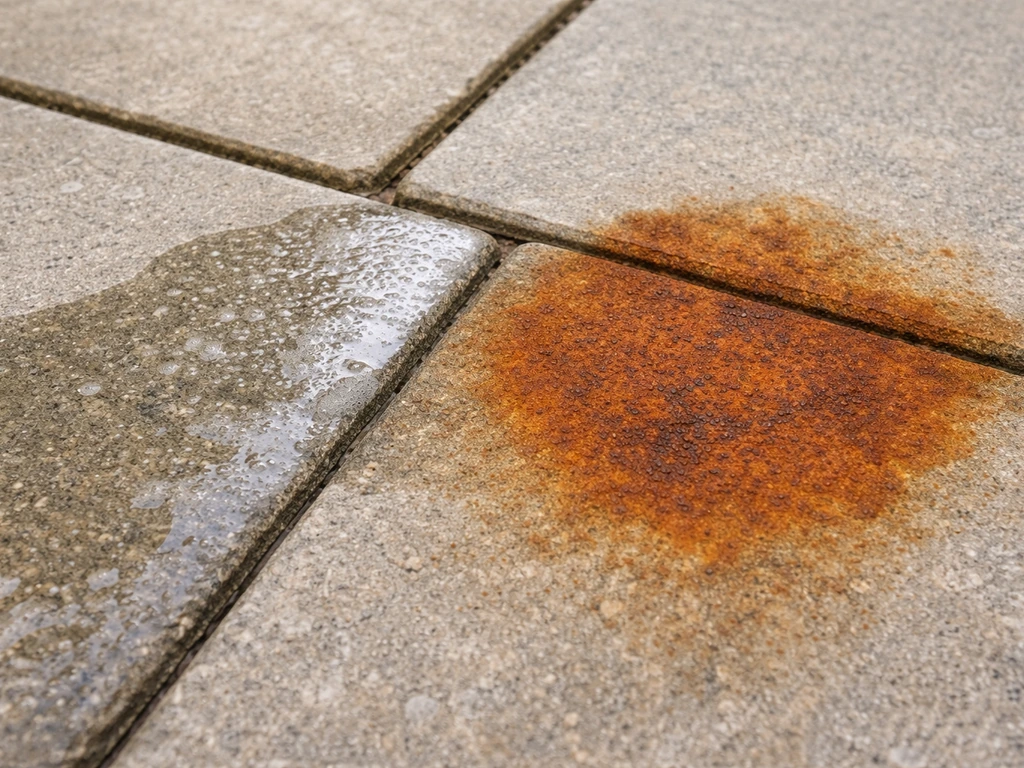
This is the clearest limitation. HG Patio-Tile Cleaner is alkaline, and rust stains need an acid-based treatment to dissolve the iron oxide. The two chemistries are incompatible. HG makes a dedicated Rust and Oxidation Stain Remover specifically for this purpose. Don't waste time trying to shift rust stains with this product; it won't work and could actually make removal harder if it leaves a residue before you apply an acid treatment.
Grease and oil
This is where the product earns its keep. Alkaline detergents are excellent at breaking down grease and oil, so BBQ drips, cooking oil spills, and general greasy marks respond well to HG Patio-Tile Cleaner. Scrub while the solution is still wet and rinse before it dries for the best outcome.
Pet stains
For pet urine staining and general pet-related mess, the alkaline detergent does reasonably well on the visible staining and surface soiling. It won't neutralise the odour chemistry the way an enzymatic cleaner would, but for surface appearance it's functional. If odour is the main concern, consider an enzyme-based pet cleaner alongside this.
General grime and built-up dirt
This is the sweet spot. Patio surfaces that have just accumulated seasons of grime, traffic dirt, and surface discolouration come up noticeably cleaner after one good application. With over 120 reviews on the HG official product page and a dedicated review section on Cleanstore, the recurring themes from users are that it works well on standard dirty surfaces with proper scrubbing, and the main disappointments come from expecting it to handle biological staining without additional treatment.
How to use HG Patio-Tile Cleaner: step by step
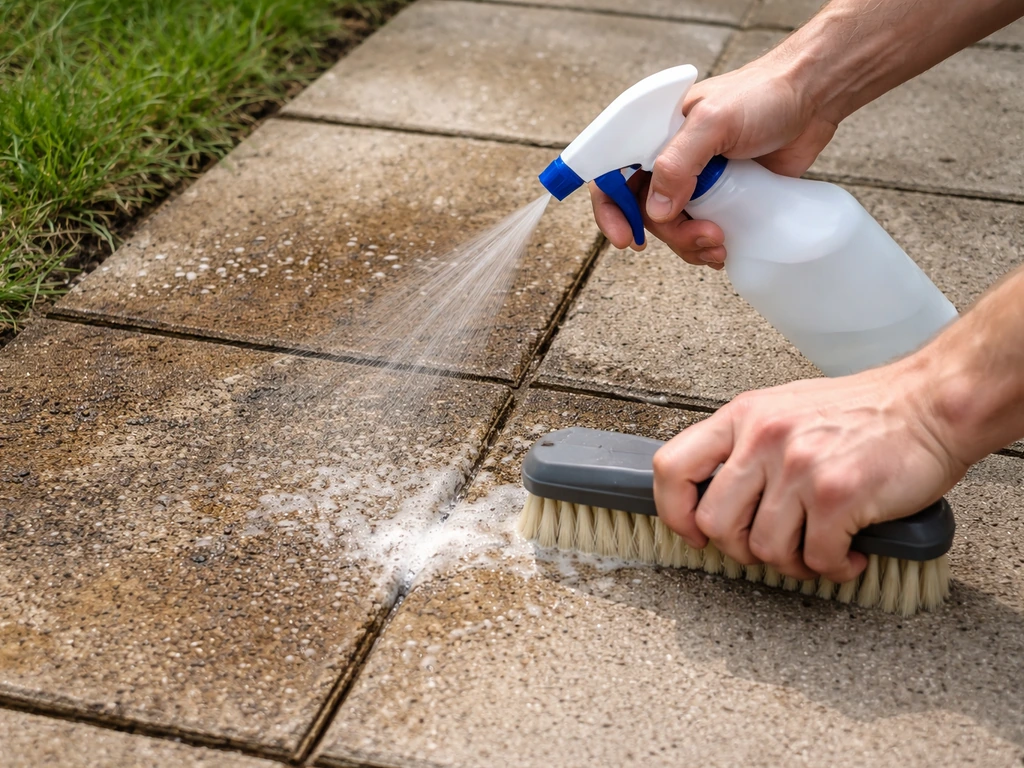
The manufacturer's method emphasises a scrub-and-rinse approach rather than a long chemical soak. Keep that in mind: this isn't a product you spray on, walk away, and come back to. You need to be actively working the solution.
- Prepare the area: remove loose debris, furniture, and any large organic material (dead moss, leaves) from the surface before you start.
- Wet the tiles and grout joints thoroughly with water first. This is a specific manufacturer instruction and it matters: pre-wetting the grout helps prevent the concentrated detergent from sitting in dry joints.
- Mix the solution: pour the 1L bottle into a bowl or bucket and add 4 litres of water. This gives you a 1:4 dilution, which is the recommended working concentration. Do not use it more concentrated than this.
- Apply the solution while scrubbing with a stiff-bristled deck scrubber or hard broom. Work in sections rather than trying to cover the whole patio at once.
- Leave the solution to work for a few minutes, but keep an eye on it. The instructions are clear: do not let the liquid dry out on the surface. In warm or windy conditions, this window shrinks fast.
- Scrub again before rinsing. A second pass with the broom while the solution is still wet helps lift stubborn soiling.
- Rinse thoroughly with plenty of clean water before the solution dries. A garden hose works, but a pressure washer makes this step faster and more thorough, especially in grout joints.
Coverage is approximately 25 m² per litre at the 1:4 dilution. For a typical small to medium patio that's enough for one good clean, but a large patio will need a second bottle. Work on a dry but overcast day if you can: bright sun and high temperatures speed up evaporation and make it harder to keep the solution from drying before you rinse.
Safety, compatibility, and avoiding damage
Your personal safety
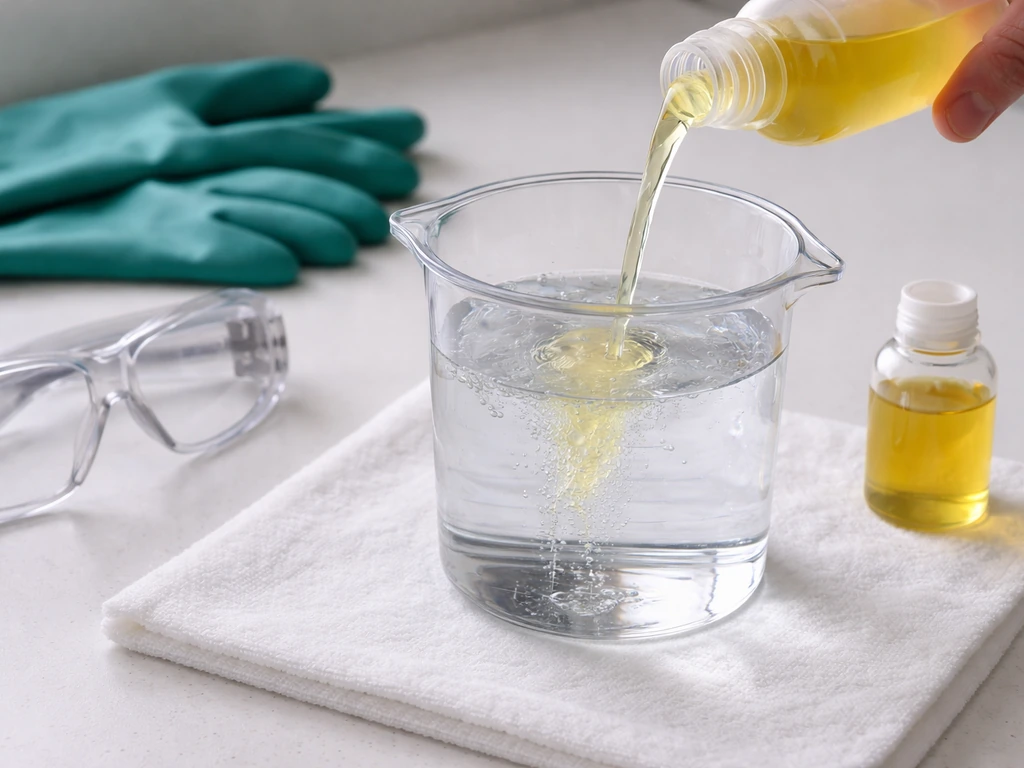
The SDS classifies this product with serious eye damage and eye irritation hazards. Wear chemical-resistant gloves and eye protection every time you use it. This isn't optional. I've seen people skip gloves with alkaline cleaners and regret it. Potassium hydroxide at high pH can cause skin irritation and chemical burns with prolonged contact. If it splashes in your eyes, flush immediately with water and seek medical advice.
Plants and nearby vegetation
The manufacturer explicitly states that at the 1:4 dilution, the product is not harmful to flowers and plants. That claim is tied directly to the dilution ratio, so using it more concentrated near planted beds is a risk. Rinse the surrounding borders and any nearby plants with clean water after you finish, and try to direct your rinse water away from planted areas where possible. The SDS also notes ecotoxicity concerns for aquatic organisms, so avoid letting large volumes of runoff drain directly into water features or drainage channels that lead to watercourses.
Sealers and grout
Strongly alkaline products can degrade certain sealers over time, particularly solvent-based sealers on natural stone. If your patio has been recently sealed, check what the sealer manufacturer recommends before using a high-pH cleaner. The pre-wetting step the manufacturer recommends for grout joints is worth taking seriously: it reduces the risk of the concentrated solution sitting in the joints and attacking the pointing material.
Pets
Keep pets off the treated area until you've thoroughly rinsed and the surface is dry. Alkaline residue on paws is irritating, and dogs especially have a habit of licking their feet. Once rinsed and dried, the surface is safe for pet traffic.
Disposal
The SDS notes that contents and packaging must be disposed of according to local regulations. Empty containers retain residue, so rinse them before disposal and check your local authority's guidance for disposal of containers that held products classified as containing dangerous substances.
What to realistically expect: results, timing, and tools
For a standard dirty patio with general grime and moderate surface soiling, one application with proper scrubbing produces a clearly visible result. You're looking at 30 to 60 minutes of active work for a medium-sized patio (around 20 to 25 m²), plus rinse time. Don't expect to spray it on and walk away: the scrubbing is part of how this product works.
Timing and weather matter. Avoid applying in direct sun or when temperatures are high, because the solution dries too quickly before you can complete the scrub-and-rinse cycle. A cool, dry, overcast day is ideal. Don't apply if rain is forecast within a couple of hours of application, as it can dilute the product before you've finished working.
In terms of tools, a stiff-bristled deck scrubber or hard yard brush is the minimum. A pressure washer for the rinse step makes a significant difference: it clears the loosened soiling from joints and surface texture far more effectively than a garden hose. If you're doing this regularly, a decent pressure washer pays for itself in time saved and better results.
On long-term results: HG's own guidance notes that cleaning without a proper biological treatment can actually encourage faster algae re-growth in some cases, because the disturbed organic layer and moist clean surface creates ideal conditions. If your main problem is recurring green growth, treat with an algae/mould remover first, then clean with patio-tile cleaner. That two-step approach gives you longer-lasting results.
When to choose something else
HG Patio-Tile Cleaner is a solid general-purpose patio detergent, but there are situations where a different approach is the right call:
- Heavy moss, algae, or lichen: use a dedicated algae and mould remover first, then follow up with patio-tile cleaner for the surface clean. HG themselves recommend this two-product sequence.
- Rust stains: use a rust-specific acid-based remover. HG makes one; other brands do too. Alkaline detergents won't touch rust and the chemical incompatibility means you can't use both on the same area without a thorough rinse in between.
- Deeply ingrained oil or tyre marks on concrete: a dedicated degreaser may be more effective than the general-purpose patio cleaner.
- Very large patios or heavily soiled surfaces: pressure washing is faster and often more effective for the main clean, with patio-tile cleaner used for spot treatment or final wash.
- Sensitive natural stone (limestone, soft sandstone): test carefully or consider a pH-neutral stone cleaner instead. The pH above 14 is aggressive, and you don't want to find out the hard way that your stone doesn't like it.
- Pet odour removal: pair with an enzyme-based cleaner for odour; the patio-tile cleaner handles appearance but not the odour chemistry.
If you're comparing HG Patio-Tile Cleaner to other popular patio cleaning products like Patio Magic or the options from Monty, the key difference is chemistry. If you're comparing options, you might also want to look at Patio Magic cleaner reviews to see how its leave-on approach performs versus HG. HG is an active-scrub alkaline detergent: you apply, scrub, and rinse. Products like Patio Magic work on a leave-on, no-scrub model with a different biocidal approach. Which is better depends on whether you're willing to scrub and how much physical effort you want to put in. For someone who wants to work through a dirty patio section by section with a brush, HG delivers reliable results. For someone who wants to apply and let the chemistry do the work over a few weeks, the no-scrub treatments are a better fit.
Bottom line: buy HG Patio-Tile Cleaner if your patio has general dirt, grease, or light organic staining and you're prepared to scrub. If you're also wondering where to buy it, you can usually find Monty Miracle Patio Cleaner at select retailers and online shops where to buy Monty Miracle Patio Cleaner. If you are wondering where to buy goo gone patio furniture cleaner, you can look for it at major home improvement retailers and online marketplaces that stock patio cleaning supplies buying HG Patio-Tile Cleaner. Go in with the right dilution, pre-wet the surface, don't let it dry before you rinse, wear your eye protection, and you'll get a noticeably cleaner patio. For anything with heavy biological growth, make it step two rather than the only product you reach for. If you are specifically looking for Monty patio cleaner reviews, it helps to compare what each product is designed to tackle, especially where biological growth and rust stains are concerned.
FAQ
Can I leave HG Patio-Tile Cleaner on the patio before rinsing?
If you accidentally leave HG Patio-Tile Cleaner on the surface too long or let it dry, re-wet the area with clean water and scrub again gently, then rinse thoroughly. Avoid applying it as a repeated leave-on treatment, since the high pH residue is more likely to cause spotting on stone or degrade some sealers.
Is it OK to use HG Patio-Tile Cleaner stronger than 1:4 to get faster results?
Yes, but do not use it at full strength. Stick to the 1:4 dilution and pre-wet the patio so the solution does not pool in grout joints. Stronger mixes increase the risk of residue, dulling on some natural stones, and faster damage to certain sealers.
What should I do if my patio has heavy algae or mould, can HG alone handle it?
For heavy growth, use it in a sequence: first an algae and mould remover to kill or break down the biological component, then HG for the final detergent clean. If you only scrub and rinse with HG, the organic film can be disturbed and green regrowth can reappear sooner.
Why doesn’t HG Patio-Tile Cleaner remove rust stains, and what is the right next product?
Don’t. Rust removal needs an acid-based rust or oxidation treatment because iron oxide requires a different chemistry. If you try to force rust out with this alkaline detergent, you may only clean around it and leave residue that makes the later acid step less effective.
How do I know if HG will damage my patio material (especially natural stone)?
On pH-sensitive materials, treat it like a risk until proven otherwise: test a small, hidden spot, check for dulling or texture changes after drying, and keep it away from any nearby treated natural stone. If the stone shows haze or colour change, switch to a lower-risk cleaner designed for that surface type.
Is HG Patio-Tile Cleaner safe to use near flowers, shrubs, or a lawn?
Avoid applying near planted borders unless you can control runoff. Even though the diluted mix is claimed not to harm plants, you should rinse surrounding areas with clean water after the job and keep rinse water directed away from watercourses or drainage that leads to them.
Can I use a pressure washer with HG Patio-Tile Cleaner, or is scrubbing enough?
Yes, but keep the goal in mind: you are scrubbing to lift loosened dirt, not using it as a coating. A pressure washer is mainly for the rinse step, it helps remove material from joints and surface texture, but using it too aggressively right after treatment can splash alkaline solution into areas you already cleaned.
What should I avoid mixing with HG Patio-Tile Cleaner, especially after an acid wash?
You generally should not mix it with any acid products. If you used an acid wash recently, wait until the surface is fully rinsed and dry, then test first in a small area. When in doubt, skip timing risks and use separate sessions for acid and alkaline products.
Do I really need to pre-wet grout or joints before using HG?
Yes, pre-wetting matters most where grout joints and porous textures trap liquid. If you skip pre-wetting, diluted solution can sit unevenly in joints and increase the chance of attacking pointing material or leaving uneven cleaning patterns.
Will HG Patio-Tile Cleaner remove the smell from pet urine, or only the stain?
If it’s odour from pet urine, this product may improve the look of staining but it does not replace enzymatic odour neutralisation. For best results, use an enzymatic pet cleaner for the odour source, then use HG only for the general surface grime clean-up after it has done its work.
I’ve sealed my patio, can I still use HG Patio-Tile Cleaner without damaging the seal?
If your patio is sealed, check the sealer instructions first. Some sealers, especially certain solvent-based types, can be degraded over time by strong alkalinity, so you might see early dulling or reduced performance even if the clean looks good initially.
What safety steps should I follow if it splashes on skin or in my eyes?
If you spill or splash it, rinse immediately with plenty of water. For skin, wash promptly and stop if irritation continues. For eye contact, flush with water straight away and seek medical advice, because the product is classified for serious eye hazard.
Monty Patio Cleaner Reviews: Results by Surface and Stain
Monty patio cleaner reviews by surface and stain, with verdict, steps, dilution tips, and limits to expect.