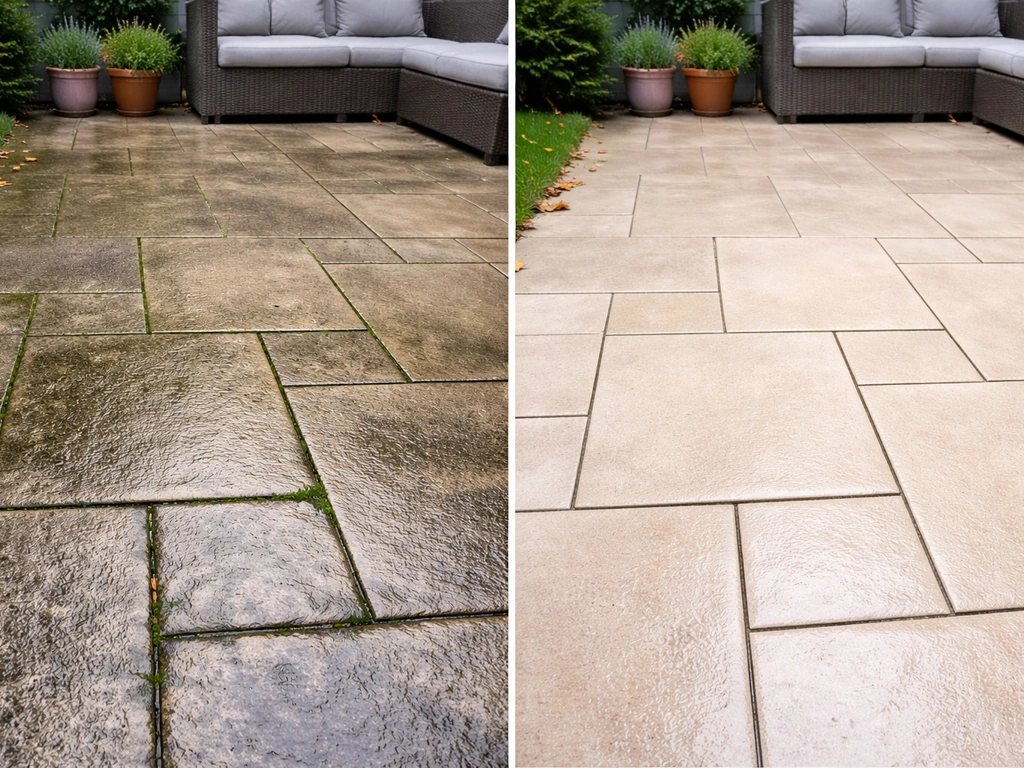
The best patio cleaner for most homeowners is an oxygen-based or peroxide-based cleaner like Simple Green Oxy Solve or Wet & Forget Outdoor. They're safe on the widest range of surfaces, won't bleach plants or pets, and genuinely work on mold, algae, moss, and general grime. If you've got grease or oil, you need a dedicated degreaser like ZEP Concentrated. For stubborn rust stains, oxalic acid is your go-to. And for instant mold stain removal on concrete, RMR-86 is hard to beat. Which one you pick comes down to two things: what surface you have and what you're trying to remove. This guide walks you through every combination.
Patio Cleaner Best Guide: Choose, Use, and Prevent Stains
Rhea Lang
14 May 2026
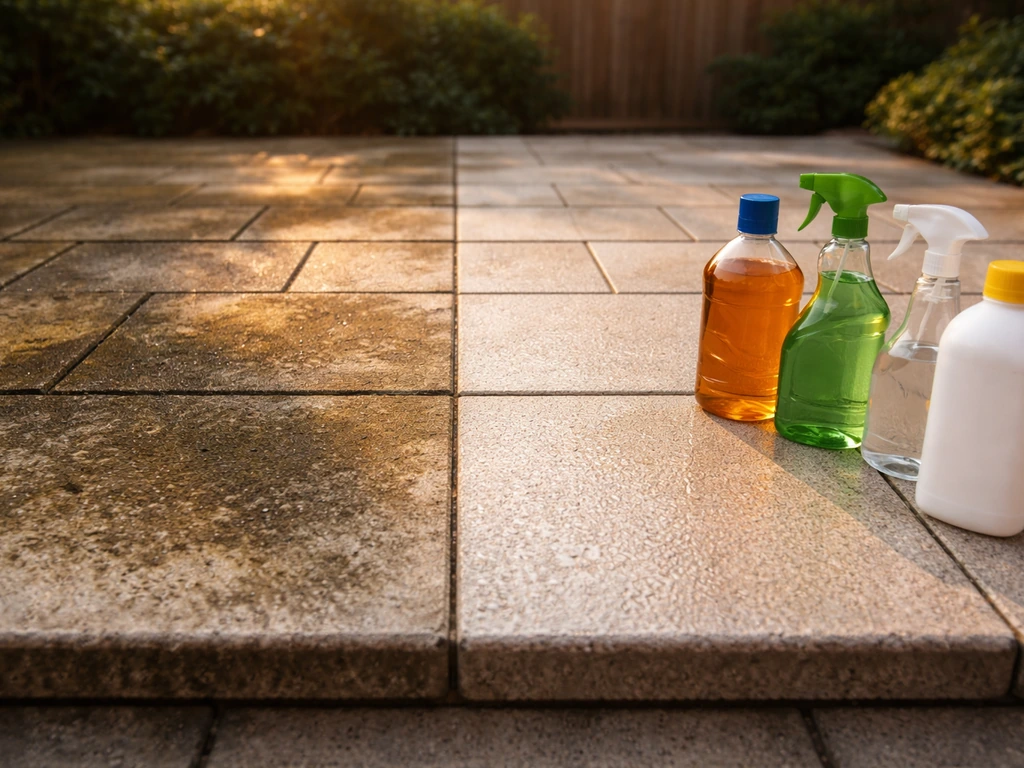
How to choose the best patio cleaner for your surface
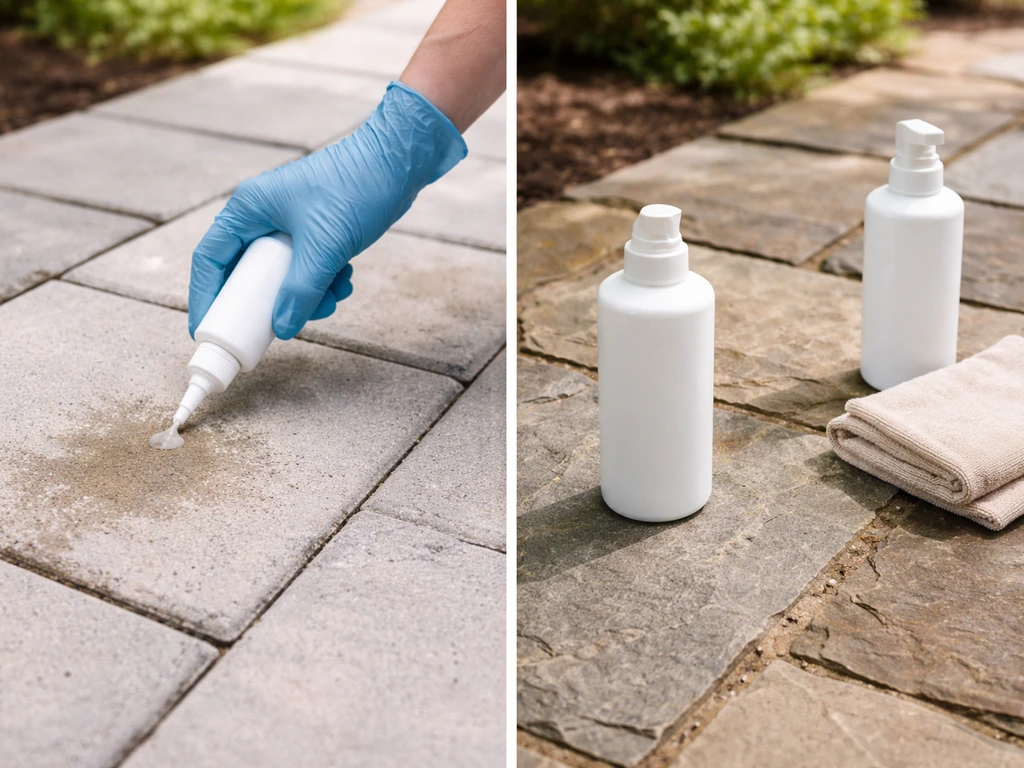
The single biggest mistake people make is buying a cleaner before thinking about their patio material. A product that works brilliantly on concrete can permanently etch or discolor sandstone, slate, or porcelain. Before you buy anything, identify your surface first.
| Surface | Safe Cleaner Types | Avoid |
|---|---|---|
| Concrete | Oxygen-based, degreasers, chlorine bleach (diluted), oxalic acid | Very high-acid products without neutralizing |
| Brick | Oxygen-based, diluted bleach, enzyme cleaners | Undiluted strong acids |
| Natural stone (sandstone, limestone) | Oxygen/peroxide-based, enzyme cleaners, pH-neutral | Acid-based cleaners (will etch) |
| Slate | pH-neutral or oxygen-based cleaners | Bleach at full strength, acid cleaners |
| Porcelain tiles | Oxygen-based, pH-neutral cleaners | Acidic or highly alkaline products |
| Block paving | Oxygen-based, degreasers, diluted bleach | Avoid high-pressure nozzles near jointing sand |
If you're not sure what your patio is made from, the safest default is always an oxygen or peroxide-based cleaner. These sit in a mid-range pH that won't attack stone or grout. I always do a test patch in a corner or hidden edge before applying anything to the full patio. This is not just a marketing suggestion: ZEP's own instructions explicitly say test surface compatibility in an inconspicuous area and allow it to dry before proceeding. Take that advice seriously, especially with any cleaner containing acids or strong alkaline agents.
Top patio cleaner types: chemical, oxygen bleach, enzyme, and degreasers
There are four main categories you'll encounter, and each has a specific job it does well. Understanding them makes shopping much easier.
Oxygen-based (peroxide/oxy) cleaners
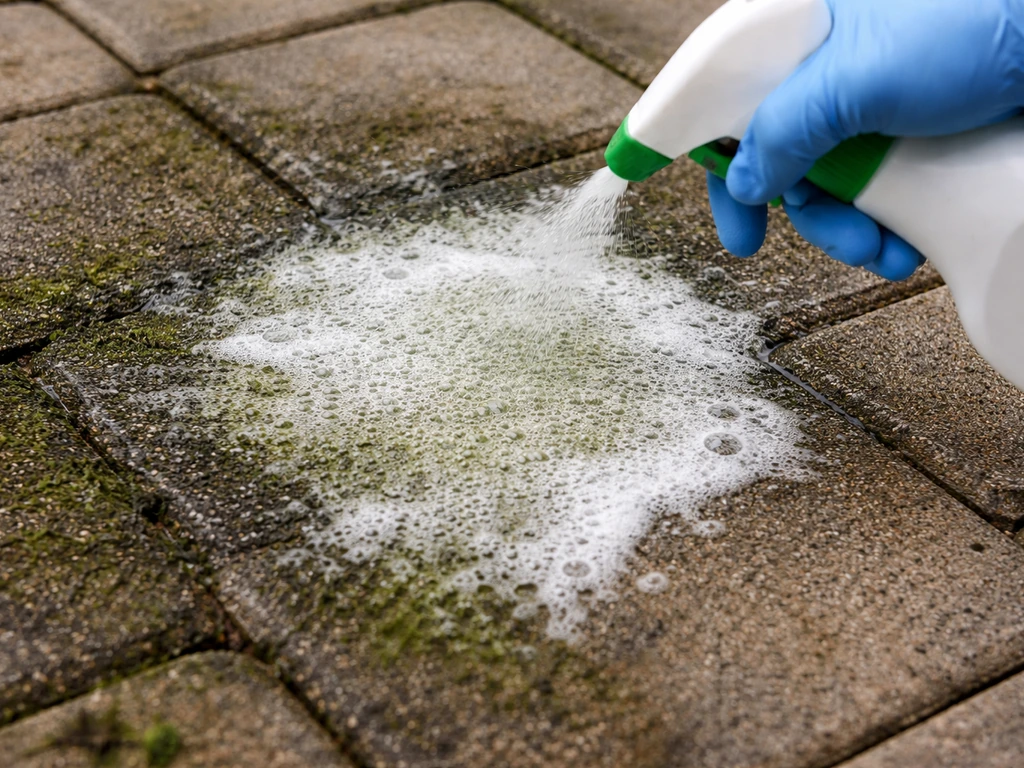
These are the all-rounders. Products like Simple Green Oxy Solve use the natural power of peroxide to break down organic stains: mold, algae, moss, mildew, and general grime. They're non-bleach, which means they won't bleach or discolor your patio surface or kill the surrounding plants if you're careful. Simple Green Oxy Solve is branded as safe around plants, pets, and wildlife.
The Simple Green Oxy Solve SDS emphasizes oxygen/peroxide-type cleaning and provides safety documentation, including PPE guidance, for use around humans and animals branded as safe around plants, pets, and wildlife.
They work on concrete, brick, block paving, and most sealed stone. If you're after a versatile cleaner that handles most common patio problems without a lot of risk, start here.
Chlorine bleach and sodium hypochlorite cleaners
Bleach-based cleaners are fast and highly effective on mold and algae, especially on concrete and brick. The trade-off is that they're aggressive. They can bleach or strip color from certain stones, kill grass and plants if they run off, and corrode metal furniture. Diluted household bleach (around 1 part bleach to 10 parts water) can work well on concrete, but I'd steer clear of it on sandstone, limestone, slate, or unsealed natural stone. Non-bleach alternatives like Rust-Oleum Moldex Non-Bleach Outdoor Wash exist specifically because bleach is too harsh for many outdoor surfaces and situations.
Enzyme and pet-stain cleaners
Enzyme cleaners use biological agents to break down the organic compounds in pet urine, feces, and similar stains. They're the correct tool for pet stains because they actually destroy the odor-causing molecules rather than just masking them. They're also generally very gentle, making them safe on almost any sealed patio surface. The downside is they're slower-acting than chemical cleaners and typically need a longer dwell time.
Degreasers
For grease, oil, cooking fat, and diesel stains, you need a proper degreaser. ZEP Concentrated Driveway & Concrete Cleaner + Degreaser is a solid example. These are alkaline-heavy formulas that break down hydrocarbon-based stains that oxygen or enzyme cleaners simply won't touch. Key rule with degreasers: don't leave them on too long. ZEP's directions are explicit that you should not allow contact time of more than 10 minutes to prevent surface damage. Set a timer.
Best for common stains and growths (mold, algae, moss, rust, grease, pet stains)
Different problems call for different products. Here's what actually works for each one.
Mold and mildew
For surface mold on concrete and patio stone, Concrobium is highly regarded. Their process for concrete and stone mold involves a thorough rinse at the end using a hose on the rinse setting. For more stubborn, embedded mold staining, Concrobium recommend a dedicated mold stain eraser product rather than expecting a standard treatment to handle it. RMR-86 is another strong choice for instant mold stain removal: you spray from 6 to 8 inches away, wait just 2 to 3 minutes, and rinse with clean water. It's fast and satisfying to use. On sensitive surfaces, Rust-Oleum Moldex Non-Bleach Outdoor Wash offers an oxygen-foaming approach that doesn't rely on bleach.
Algae and moss
Wet & Forget Outdoor is one of the most popular products for moss and algae for good reason. You blank" rel="noopener noreferrer">dilute 1 part product to 5 parts water, spray it on, and then leave it. There's no scrubbing, no rinsing, no pressure washing required. Wind and rain do the work over days to weeks.
This makes it ideal if you don't own a pressure washer or want a low-effort approach. It's worth noting this is a slow-burn solution: don't expect the patio to look clean the next morning. For faster results on algae and moss, Simple Green Oxy Solve with a pressure washer is more immediate.
If you specifically need deeper guidance on algae and moss problems, the dedicated articles on the best patio cleaner for moss and algae and the best patio algae cleaner cover those scenarios in more detail. If you want the fastest option, see the best patio cleaner for moss and algae recommendations for your specific surface.
Rust stains
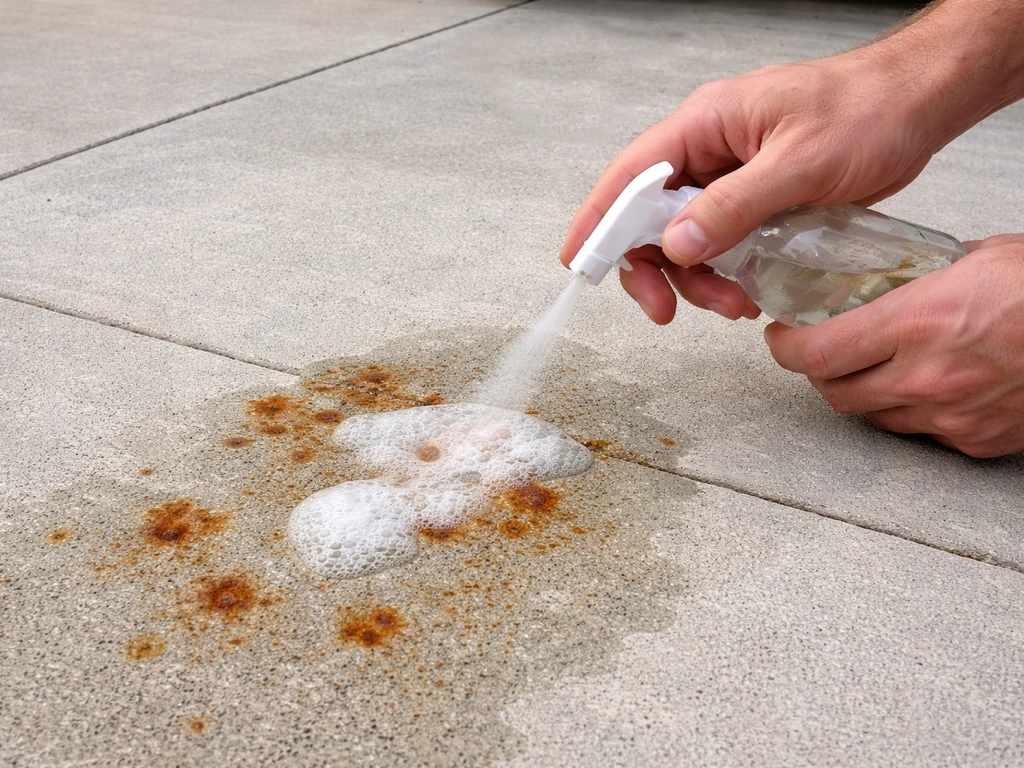
Rust stains need oxalic acid or a dedicated rust remover. Standard patio cleaners won't shift rust effectively. For acid-resistant stone and concrete, oxalic acid-based products can remove rust and rust stains reliably. The important follow-up step is neutralization: after treatment, neutralize the acid with a bicarbonate of soda (baking soda) solution, then rinse thoroughly with water. If you have natural stone that is not acid-resistant (like limestone, marble, or sandstone), choose a product specifically labeled for acid-sensitive stone, as the acid will etch the surface. Atlas Preservation positions their rust remover as suitable specifically for acid-resistant natural and artificial stone, which gives you a sense of why this distinction matters.
Grease and oil
Use a concentrated alkaline degreaser. ZEP Concentrated is a reliable option. Apply it, work it in with a stiff brush, and don't leave it sitting for more than 10 minutes. Rinse thoroughly. For older, set-in grease stains, you may need two applications. Hot water from a pressure washer helps enormously here if you have one.
Pet stains
Enzyme-based cleaners are the correct approach. They break down the urea and proteins that cause odor and staining. Wet & Forget's FAQ guidance notes that if a pet walks through a treated area while still wet, you should rinse their paws with water. That's a useful reminder to think about pet safety with all patio cleaners: keep animals off the surface until it's fully dry or rinsed. For heavily contaminated concrete (where urine has soaked into the pores), you may need to saturate the area and let an enzyme cleaner dwell for 15 to 30 minutes before rinsing.
Lichen
Lichen is one of the toughest things to shift from patio surfaces because it bonds chemically to the stone. Standard cleaners rarely work quickly. You typically need a specialist lichen remover or a high-dwell-time treatment, and often some physical scraping too. There's a dedicated article covering the best patio cleaner for lichen with more specific guidance on this. Using the right approach matters, so check our guide to find the best patio cleaner for lichen based on your surface.
When to use a pressure washer vs cleaner only (and how to avoid damage)
A pressure washer amplifies your cleaner significantly, but it also amplifies your mistakes. Used incorrectly, it erodes grout, strips sealant, damages soft stone, and blasts jointing sand out of block paving. Used correctly, it's the fastest and most satisfying way to clean a patio.
When a cleaner alone is enough
Light mold, fresh algae, pet stains, and general surface grime can usually be handled with a cleaner, a stiff brush, and a hose. Wet & Forget works entirely without pressure washing, which is one of its key selling points. Soft, porous, or delicate surfaces like sandstone, slate, and old limestone are often better served by a thorough chemical treatment and rinse than by a pressure washer that can physically abrade or chip the surface.
When a pressure washer makes sense
Heavy moss, thick algae, embedded grime, and grease stains on hard-wearing surfaces like concrete, brick, and porcelain tiles respond very well to a cleaner-plus-pressure-washer combination. Simple Green Oxy Solve is actually designed for use with a pressure washer: apply with a low-pressure nozzle, allow a 3 to 5 minute dwell time, then rinse using a nozzle kept at least 2 feet from the surface, held perpendicular to it. That distance and angle rule is important. Getting too close or angling the spray creates channels and surface damage.
Surface-specific pressure washing cautions
- Concrete: Generally handles pressure washing well. Use a surface cleaner attachment for even results and avoid a single jet that creates stripe marks.
- Brick: Use moderate pressure (around 1200 to 1500 PSI max) to avoid eroding the mortar joints.
- Sandstone and limestone: Stick to low pressure (under 1000 PSI) or avoid pressure washing altogether. These surfaces are soft and erode quickly.
- Slate: Low pressure only, never a turbo or rotary nozzle.
- Porcelain tiles: Handle pressure well, but check that the grout between tiles is in good condition first or you'll blast it out.
- Block paving: Keep the nozzle moving and don't target the jointing sand directly. Resand joints after washing if needed.
How to use patio cleaners safely and effectively (prep, dilution, dwell time, rinse)
Before you start
- Clear the patio: move furniture, plant pots, and anything else off the surface.
- Sweep or blow off loose debris, leaves, and dirt. Cleaners work better on surfaces that aren't covered in leaf litter.
- Wet surrounding plants and lawn before applying any chemical cleaner, especially bleach or acid-based products. This dilutes any accidental overspray.
- Put on gloves, eye protection, and closed-toe shoes. If using bleach or strong acid cleaners, a respirator is a good idea too.
- Do a test patch on a hidden corner. Allow it to dry fully before judging the result.
Dilution: follow the label, not your instincts
Dilution ratios exist for a reason. Wet & Forget Outdoor is 1 part product to 5 parts water. Using it neat won't make it work faster but it will waste product and increase surface and safety risk. ZEP Concentrated has its own dilution guidelines depending on soil level. Simple Green Oxy Solve is a pressure washer concentrate with its own mixing ratio. If you're not sure, a more diluted solution applied twice is always safer than a strong solution applied once on an unknown surface.
Dwell time: the step most people skip
Dwell time is how long you leave the cleaner on the surface before scrubbing or rinsing. This is where the chemistry actually happens. Simple Green Oxy Solve needs 3 to 5 minutes. RMR-86 needs only 2 to 3 minutes before rinsing. ZEP Concentrated degreaser should not exceed 10 minutes or it can damage the surface. Don't let cleaners dry on the surface during the dwell time: if it's sunny or windy, reapply to keep it wet. For slow-release products like Wet & Forget, the entire concept is the opposite: you apply and leave it for days, letting rain and wind do the work over time.
Scrubbing vs no-scrub
Most concentrated cleaners and degreasers benefit from scrubbing with a stiff deck brush or patio brush after the dwell time. This physically breaks up the stain or growth and lets the cleaner penetrate deeper. No-scrub products like Wet & Forget are genuinely designed to be left without any agitation, but for a faster result on heavy staining, even those products benefit from a light scrub.
Rinsing
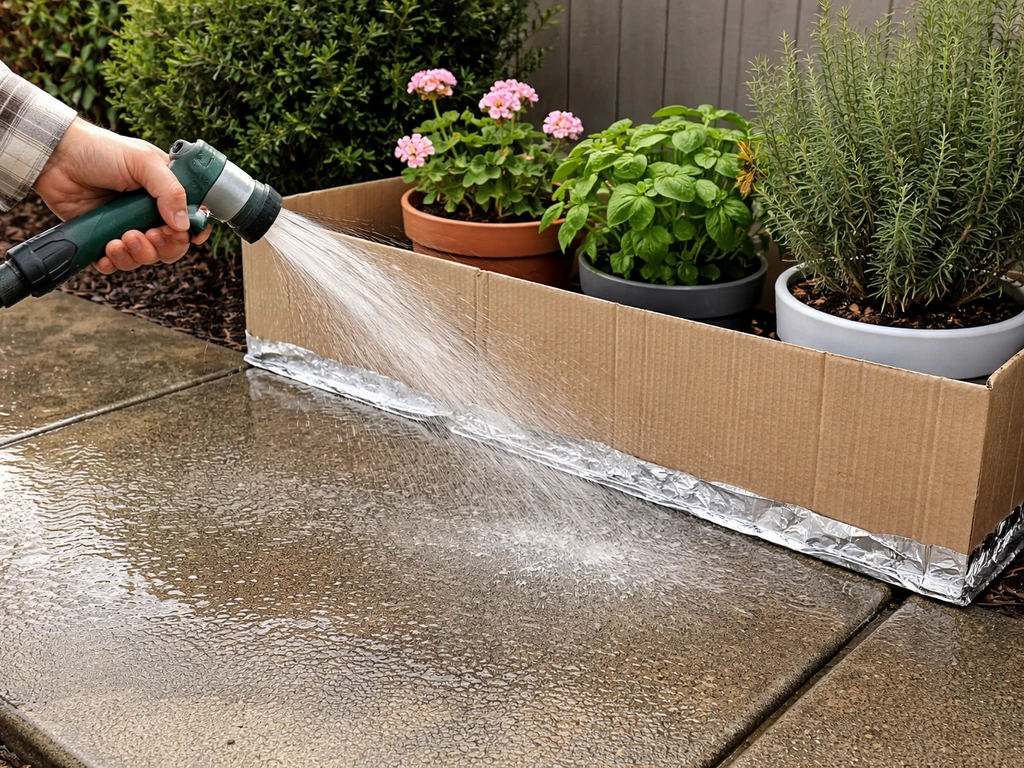
Rinse thoroughly with clean water from a hose. Rust-Oleum Moldex recommends rinsing using the sprayer valve in the RINSE position and rinsing any plants that received accidental overspray immediately with water. RMR-86 instructions specifically say always rinse off the surface when using it by itself. Concrobium's process for concrete and patio stone also calls for thorough rinsing with a hose on the rinse setting. The exception is Wet & Forget Outdoor, which is specifically designed as a no-rinse, leave-in product: you apply it and walk away.
Safety: what not to mix
Never mix bleach with an acid-based product (including vinegar, oxalic acid, or citric acid). The combination releases chlorine gas, which is genuinely dangerous. Don't mix bleach with ammonia either. If you're switching between products on the same patio session, rinse the surface thoroughly between applications. Store all cleaners in their original containers and away from children and pets.
Review-style buying guide: what to look for in a patio cleaner and how the main options compare
The checklist: what actually matters
- Surface compatibility: Is it confirmed safe for your patio material? Check the label for your surface type explicitly.
- Active ingredient: Oxygen/peroxide for organic growths, sodium hypochlorite for mold on concrete, oxalic acid for rust, alkaline/surfactant for grease, enzymes for pet stains.
- Dilution ratio and coverage: Concentrated products offer better value. Know how much area a bottle covers at the correct dilution.
- Dwell time constraints: Does it need to be rinsed within a set window? Products like ZEP degreaser require you to stay within a 10-minute limit.
- Rinse requirement: No-rinse products (Wet & Forget) work differently from standard cleaners and suit different situations.
- Pet and plant safety: Peroxide-based and enzyme products are generally the safest. Bleach-based products require more care around planting.
- Speed vs effort: Instant-acting products (RMR-86, bleach-based cleaners) require active rinsing. Slow-release products (Wet & Forget) require almost no effort but take longer.
How the main products compare
| Product | Best For | Surface Compatibility | Rinse Required | Key Constraint |
|---|---|---|---|---|
| Simple Green Oxy Solve | General grime, algae, moss, mold on concrete/brick/pavers | Concrete, brick, block paving, most sealed surfaces | Yes (after 3-5 min dwell) | Use low-pressure nozzle; keep 2 ft from surface |
| Wet & Forget Outdoor | Moss, algae, mold, mildew on any surface | Almost universal including stone, tile, wood | No (leave-in formula) | Slow results; dilute 1:5 with water |
| RMR-86 | Instant mold and mildew stain removal | Concrete, stone, grout | Yes (after 2-3 min dwell) | Spray from 6-8 inches; always rinse after use |
| Rust-Oleum Moldex Non-Bleach Outdoor Wash | Mold, mildew, algae without bleach | Wide range including painted surfaces | Yes (use RINSE setting) | Rinse plants immediately if oversprayed |
| ZEP Concentrated Degreaser | Grease, oil, fuel stains | Concrete, asphalt, hard pavers | Yes (thorough rinse needed) | Max 10 minutes contact time; test surface first |
| Concrobium Mold Control | Embedded mold on concrete and patio stone | Concrete, stone, masonry | Yes (thorough hose rinse) | Product must make direct contact with mold |
| Oxalic acid rust remover | Rust and iron stains | Acid-resistant stone and concrete only | Yes, plus bicarbonate neutralization | Do not use on acid-sensitive stone (limestone, sandstone) |
If I had to pick one product for a typical homeowner who just wants a clean patio with minimal fuss, it would be Simple Green Oxy Solve for immediate results or Wet & Forget Outdoor for a set-and-forget approach. For heavily mossy or algae-covered patios, the dedicated guides on the best patio cleaner for moss and algae and the best patio algae cleaner go deeper on what works fastest. And if you'd rather make your own solution, the best homemade patio cleaner options cover DIY alternatives worth considering. DIY mixes are a great way to save money, but it still matters to match the ingredients to your patio surface and the type of staining you’re targeting best homemade patio cleaner options.
Maintenance routine to prevent staining and regrowth
The easiest way to deal with patio grime is to not let it build up in the first place. A simple seasonal routine cuts your cleaning time dramatically and means you're never starting from scratch with a badly stained patio.
- Sweep or blow the patio weekly (or after every storm) to remove leaf debris and organic matter. Decomposing leaves are the primary food source for moss, algae, and mold.
- Apply a preventive slow-release treatment once or twice a year. Wet & Forget Outdoor works excellently as a preventive: a diluted spray in spring stops algae and moss from establishing before it becomes a visible problem.
- Seal concrete and natural stone every 1 to 3 years. A quality patio sealant dramatically reduces how much organic matter and moisture penetrates the surface, which slows staining and growth significantly.
- Address oil and grease spills immediately. A fresh grease stain is removed in minutes with a degreaser. A year-old grease stain can take multiple treatments.
- Check and re-sand jointing sand in block paving after any pressure washing. Sand-filled joints resist weed and moss growth far better than open joints.
- Give the patio a light clean each spring before growth season kicks in, even if it looks fine. A light oxygen-based spray and rinse in March or April prevents the heavy buildup you'd otherwise be fighting in August.
The biggest lesson from years of patio cleaning: prevention is massively cheaper and easier than cure. A 30-minute preventive treatment in spring saves hours of scrubbing later in the year. Pick the right cleaner for your surface and problem, follow the dwell time and rinse instructions, and you'll get results the first time rather than having to repeat the job.
FAQ
How long should I wait before walking on my patio after using a cleaner?
It depends on surface and product chemistry, but in most cases you should wait until the treated patio is fully dry (or fully rinsed, if the label requires rinsing) before walking on it. For enzyme cleaners, pay extra attention if pets or kids will be near the area, since animals can track moisture or residues. If the product was applied during a warm, sunny window, expect longer dry time, and re-check the label for any “keep off until dry” instruction.
Can I always use a pressure washer with the patio cleaner best for stains?
Pressure washing can work faster, but it can also worsen problems by eroding grout, stripping sealant, or blowing jointing sand out of pavers. As a rule of thumb, use a chemical first (oxygen/peroxide, enzyme, or targeted remover), then pressure wash only if the surface tolerates it and the product instructions support that method. Start with the lowest pressure setting and keep the nozzle farther back than you think, especially on tile edges and block paving.
Do oxygen or peroxide patio cleaners work differently in summer versus winter?
Yes, you can use the same “best patio cleaner” approach across seasons, but timing changes how fast it works. Oxygen and peroxide cleaners typically perform better when temperatures are moderate and the surface can stay wet for the full dwell time. In cold weather, dwell time often needs extension, while in hot sun, you must re-wet to prevent the solution from drying out. For leave-in products like Wet & Forget, rain and wind patterns matter more than the calendar month.
What happens if I use the wrong patio cleaner category for the stain I have?
Most patio cleaners are not interchangeable across stain types. Oxygen/peroxide products are aimed at organic growth and grime, enzyme cleaners target pet urine and related proteins, degreasers tackle hydrocarbons like grease and oil, and rust usually requires oxalic acid or a dedicated rust remover. If you try the wrong category, you can waste product and sometimes spread the stain by scrubbing without the right chemistry.
My patio cleaner dried before the recommended dwell time. Is it ruined, and what should I do?
If the product dries on the surface before the recommended dwell time, results often drop because the chemistry stops working and residue can be left behind. The fix is to reapply enough solution to keep the area wet for the full time, then follow with the correct rinse or leave-in method depending on the product. On sunny, windy days, work in smaller sections so you can control wet time.
How do I protect plants and grass while using a patio cleaner best for mold or grime?
Yes, overspray and runoff can damage plants and adjacent materials, even with “safe around plants” claims. Protect landscaping with barriers, apply on calm days to reduce drift, and rinse accidental overspray immediately with clean water. Also keep treated areas isolated from grass that will be exposed to runoff, since bleach-based products and degreasers are more likely to cause visible damage if they run off.
What’s the safest approach when I do not know what my patio surface is made of?
Start by finding the surface type, then match the cleaner category and confirm compatibility by using a small hidden test patch. If you’re cleaning unknown or mixed materials, err toward oxygen/peroxide cleaners first because they are generally less aggressive than acids and strong alkalis. Avoid acids on natural stones that are not acid-resistant (like limestone, marble, or sandstone), and avoid strong alkaline degreasers on delicate surfaces unless the label explicitly allows it.
How do I remove rust without damaging my patio surface?
For rust, you usually cannot rely on generic patio cleaners. If you use oxalic acid, you must neutralize afterward with a baking soda solution (per label guidance), then rinse thoroughly. Also, don’t use oxalic acid on stones that can etch unless the product is specifically rated for acid-sensitive surfaces.
My driveway or patio has old grease stains, what’s the best way to handle them?
For set-in grease, plan on a two-step strategy: apply a concentrated alkaline degreaser, keep dwell time under the label limit, scrub with a stiff brush, then rinse thoroughly. If the stain persists, repeat rather than increasing dwell time or concentration. Hot water can improve results, and on some hard surfaces a pressure washer afterward helps lift loosened oils.
How can I get rid of old pet urine odor that seems embedded in concrete?
Enzyme cleaners often need longer dwell time for deeply soaked pet stains, especially on porous concrete. If odor or discoloration remains, repeat treatment and increase dwell time within the label limits. Also ensure the area is fully saturated (not just the surface spot), then rinse only when directed, since premature rinsing can limit penetration and odor destruction.
Why does my patio cleaner not work well on lichen, and what should I do differently?
Lichen is the exception where standard cleaners often disappoint because it bonds to the stone. For faster removal, use a product designed specifically for lichen and allow a higher dwell time than you would for algae or general grime. Physical scraping is often necessary after treatment, and you may need more than one application depending on how thick the lichen layer is.
What chemicals should I never mix with patio cleaners?
Don’t mix incompatible chemicals, especially bleach with acids (including vinegar and oxalic acid) because it can release dangerous chlorine gas. Also avoid mixing bleach with ammonia. If you’re switching products in the same session, rinse thoroughly between applications and never combine concentrates in a bucket or sprayer.
Next Article
Best Patio Cleaner: Buyer Guide by Surface and Stain
Find the best patio cleaner by surface and stain, with top picks, tools, label checks, and safe step-by-step use.