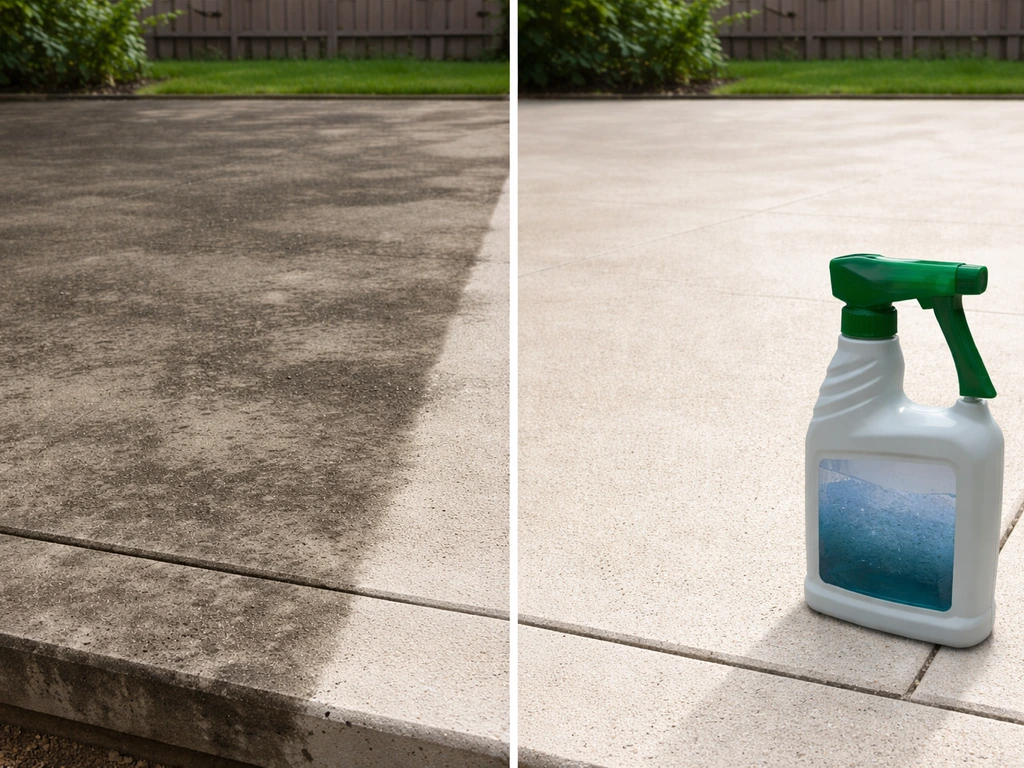
Scotts Patio and Deck Zero Scrub does work on algae, mold, and mildew stains, but you need to set realistic expectations before you buy. The 'zero scrub' claim is legitimate for light-to-moderate biological growth: spray it on, walk away, and the stains fade over 24 to 72 hours without you touching a brush. On heavily blackened or deeply stained surfaces, real users (including me) see partial results, not a magic transformation. You might end up at 70% clean after one application and need a second pass. If you're dealing with rust, grease, or pet stains, this isn't the right product at all.
Scotts Patio and Deck Zero Scrub Reviews: Results, Use, and Tips
Rhea Lang
29 Apr 2026
What Scotts Patio and Deck Zero Scrub actually is
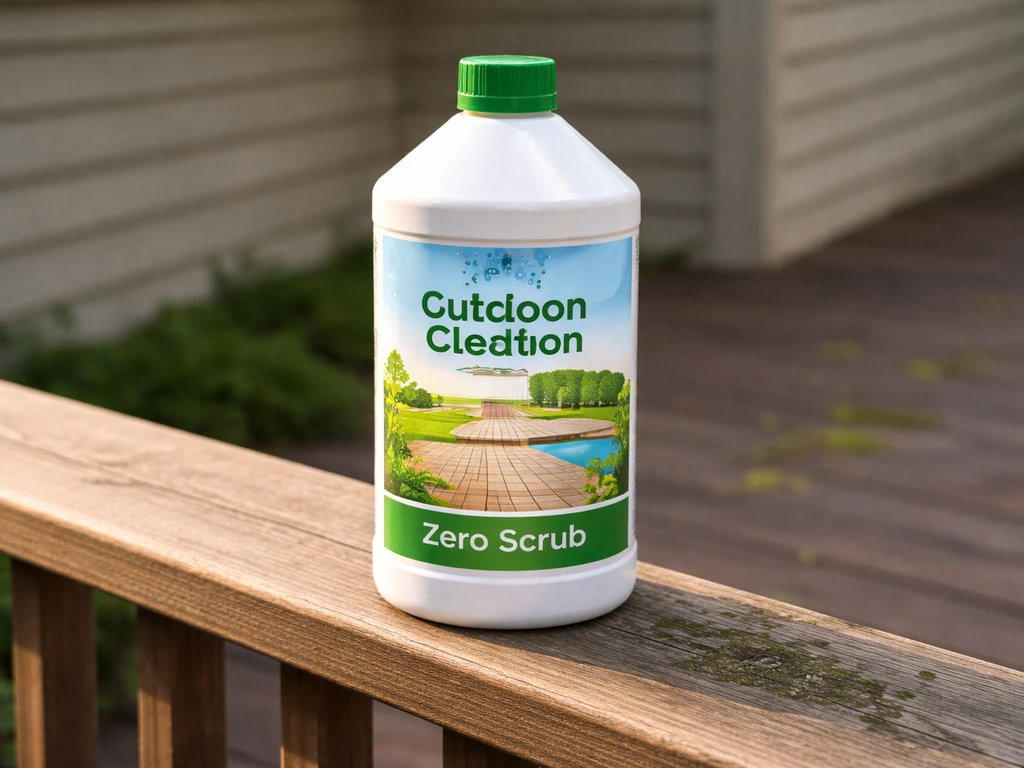
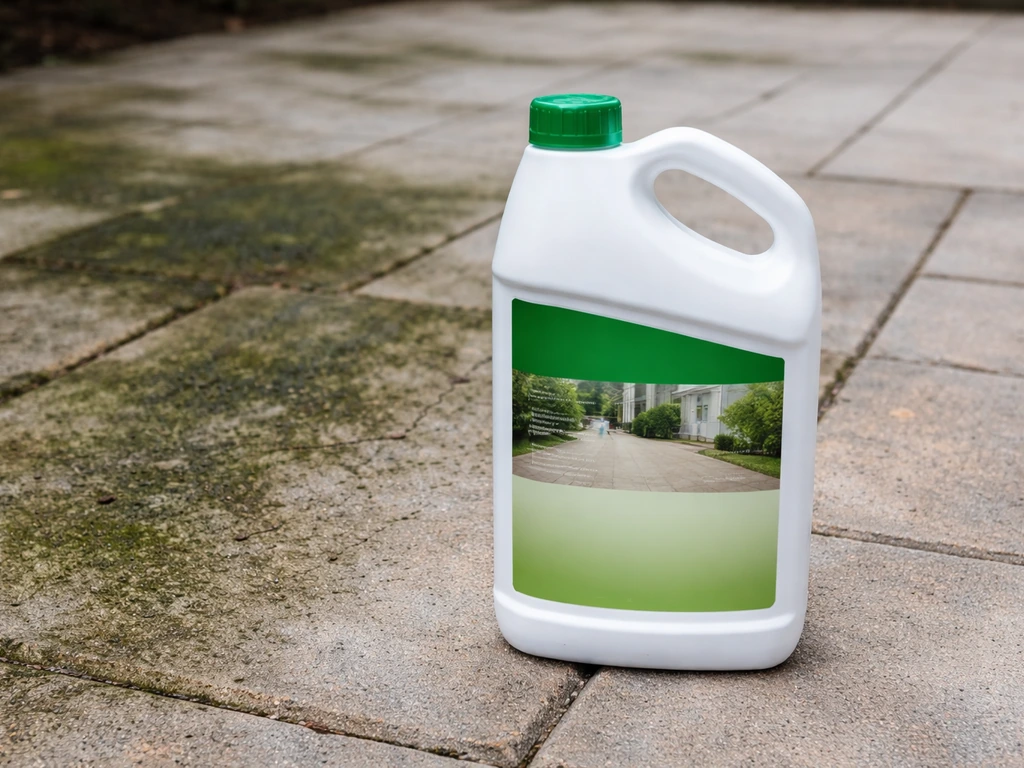
Scotts Outdoor Cleaner Patio and Deck with ZeroScrub Technology is a concentrated liquid cleaner designed specifically to kill and remove biological stains like moss, mold, mildew, and algae from outdoor hard surfaces and decking. The active ingredients are Benzyl Ammonium Chloride (a quaternary ammonium compound, or 'quat') at 10% to 25% concentration, combined with Pelargonic Acid (also called Nonanoic Acid, derived from pelargonium plants) at 1% to 3%, plus a small amount of Ethanol (1% to 3%). The quat is the antimicrobial workhorse that kills the biological growth at the root, while the Pelargonic Acid helps break down plant-based organic matter. Ethanol aids in surface penetration and product stability.
Scotts' marketing claim is straightforward: no power washing, no scrubbing required. You dilute it according to label directions, saturate the surface, and let it air dry. Results start appearing in as little as 24 hours, with continued improvement over 72 hours. The label explicitly covers wood and composite decking, concrete, and brick and stone surfaces. It's sold as a concentrate, which means coverage depends heavily on your dilution ratio and how porous your surface is.
Who it's best for (and when to skip it entirely)
This product is genuinely well-suited to homeowners who have a patio or deck that's gone green or black from seasonal biological buildup and who want a low-effort fix. If you've got a concrete patio, brick path, or composite deck covered in that slick green algae film, or grey-green mold patches spreading across the surface, this is exactly the kind of job ZeroScrub was made for. It also handles mildew well, which is common on shaded timber decks. For light-to-moderate growth, the spray-and-leave approach genuinely delivers.
Where it won't cut it: rust stains from metal furniture legs or fixings, oil and grease marks from a barbecue, or pet urine staining. The formula isn't designed for those problems, and you'd be wasting your time and money. Heavily ingrained black algae that's been sitting for years may need multiple applications or a follow-up with a pressure washer to actually lift. And if your deck is severely weathered or the wood grain is open and saturated with organic matter, expect partial results on a single application.
- Green or black algae on concrete, pavers, or decking: good match
- Mold and mildew patches on decking, stone, or brick: good match
- Light to moderate moss on hard surfaces: good match
- Rust stains from metal fittings or furniture: not suitable
- Grease and oil from cooking or machinery: not suitable
- Pet stains (urine, organic): not suitable
- Very thick, long-established moss colonies: expect partial results only
- Heavily blackened wood that hasn't been treated in years: expect 60-75% improvement per application
How to apply it step by step
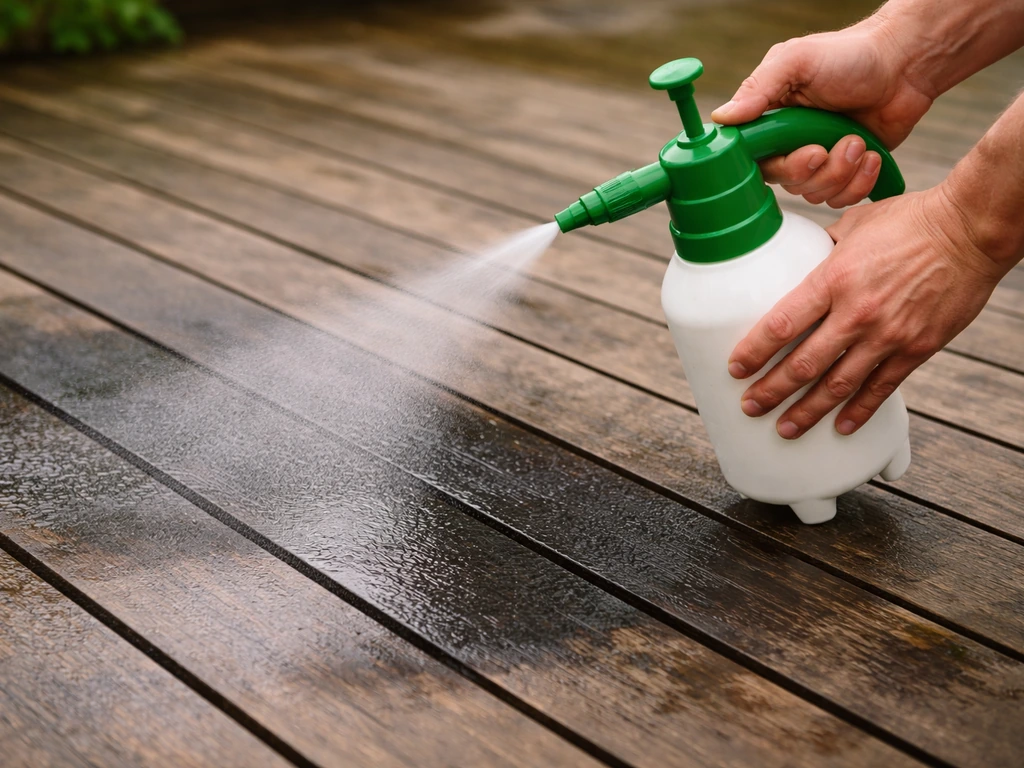
The application process is genuinely simple, but there are a few steps you should not skip if you want the product to actually work. Here's the full process from start to finish. Follow the Scotts Outdoor Cleaner Patio and Deck instructions for mixing, applying, and timing so the ZeroScrub treatment can lift algae and mildew effectively Here's the full process from start to finish..
- Check the weather forecast: you need at least 24 hours with no rain after application. Rain before the product has time to dry and work will wash it off before it can kill the biological growth.
- Clear the surface: remove furniture, pots, and any loose debris. You don't need to scrub the surface beforehand, but sweeping off loose leaves and dirt helps the product reach the stained surface directly.
- Dilute the concentrate: follow the label directions for your specific stain type and surface. Do not skip dilution. Using it undiluted doesn't speed up results and wastes product.
- Protect nearby plants and grass: wet the surrounding lawn and garden beds with plain water before you apply. This dilutes any overspray that lands on vegetation.
- Apply to a dry surface: spray the cleaner evenly across the affected area until it's fully saturated. You want the surface visibly wet, not just misted.
- Walk away: do not rinse, do not scrub. Leave it to air dry and work. This is the 'zero scrub' part, and it's legitimate. Rinsing immediately defeats the purpose.
- Check results at 24 hours: lighter stains will show clear improvement. Heavier growth may need 48 to 72 hours. For badly stained surfaces, a second application after 72 hours often pushes results from 70% clean to 90%+.
- Optional light rinse after 72 hours: once the product has done its job, you can rinse or lightly pressure wash to clear the dead organic debris if you want a faster visual result.
On tools: you can use a standard garden pump sprayer or a hose-end sprayer attachment for larger areas. For a deck or smaller patio, a hand-pump garden sprayer gives you the most control over coverage. For large driveways or extensive patio areas, a hose-end diluter is faster. You don't need a pressure washer to apply this product, and the whole point is that you shouldn't need one to get results either.
Surface-by-surface results and what to watch out for
Concrete
Concrete is one of the best surfaces to use this product on. It absorbs the solution well and the quat chemistry works effectively on the porous surface where algae and mold take hold. Expect solid results on standard concrete patios and driveways with algae or mold growth. One note: if your concrete is sealed, results may be slightly slower because the surface is less porous and the cleaner takes longer to reach the growth underneath. No damage risk to standard concrete.
Brick and natural stone
Works well on brick and most natural stone (limestone, sandstone-type pavers, granite). The concern with stone is the mortar joints, which are typically the first place moss and algae colonise. ZeroScrub penetrates and kills growth in the joints without the physical damage that scrubbing can cause to softer mortars. For sandstone specifically, the surface is more porous and absorbs the product quickly, which is actually beneficial for results. Test on an inconspicuous area first if your sandstone is light-coloured, as some formulas can leave a very faint residue.
Slate
Slate is generally fine, but because it's a layered stone it can be sensitive to acidic cleaners. Pelargonic Acid at 1-3% is relatively mild, but I'd still recommend a test patch on slate, especially if it's textured or has an existing sealant. Apply sparingly and don't let it pool in low points on uneven slate surfaces.
Porcelain and ceramic tiles
Porcelain is the least porous of the common patio surfaces, which means biological growth tends to sit on the surface rather than penetrate it. This makes the product less necessary here since algae on porcelain often lifts with a regular wash. That said, ZeroScrub will kill and remove surface growth without damaging glazed porcelain. The main issue is that the product will dry quickly on a non-porous surface and may leave a visible residue after the biological matter is killed. A rinse at 48-72 hours is more important on porcelain than on concrete.
Wood and composite decking
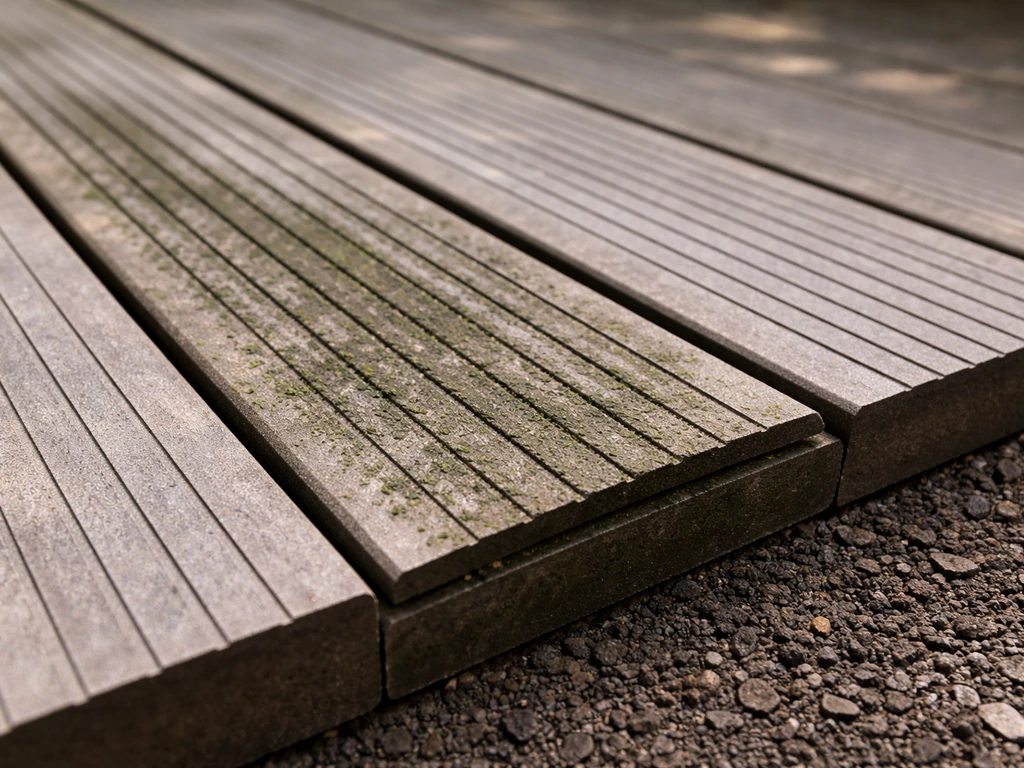
The product is explicitly labeled for wood and composite, and this is where real-world results get most variable. On composite decking with surface algae or mildew, it typically performs well within 48-72 hours. On natural timber, especially older or weathered decking with deep-set biological staining, results are partial on a first application. The user review of a blackened older deck reaching about 70% clean in roughly a week is an accurate reflection of what you should expect. Do not apply to freshly stained or sealed timber without checking compatibility, and avoid using it on painted wood surfaces unless you're prepared to repaint.
The honest verdict: pros, cons, coverage, and what you'll actually get
Having worked with a range of patio cleaners, I'd rate Scotts ZeroScrub as a solid mid-tier product with one genuinely useful feature: the zero-effort application. If you want the specifics on performance for this cleaner outdoors, check out these Windex outdoor glass and patio cleaner reviews for comparison. For someone who doesn't own a pressure washer and doesn't want to spend a Saturday scrubbing on their knees, it's a legitimate solution for biological staining. The 24-to-72-hour timeline is real for moderate growth. For heavy staining, plan on 5-7 days and potentially two applications.
| Factor | Reality Check |
|---|---|
| Zero scrub claim | True for light-moderate biological growth. Heavy staining needs more time or a second pass. |
| No power washing needed | True for most cases. For dead debris on a large area, a rinse at 72h looks cleaner. |
| Results in 24 hours | Visible improvement at 24h on lighter staining. Heavier growth takes 48-72h or more. |
| Coverage per bottle | Users report it empties faster than expected. One bottle is borderline for a medium patio. Buy extra. |
| Effectiveness on algae/mold/mildew | Good to very good. This is what it's designed for. |
| Effectiveness on rust/grease/oil | Not suitable. Wrong product entirely. |
| Safe on wood and composite | Yes, per label. Test on weathered or treated surfaces first. |
| Safe on stone and brick | Generally yes. Patch test on sandstone or slate. |
Coverage is the honest weak point. Multiple verified buyers have noted the bottle empties faster than they expected, and it was just enough for one small patio. If you have a large deck or an extensive paved area, buy two bottles. Don't get caught halfway through a job with an empty bottle.
How it compares to other patio and deck cleaners
The patio cleaner market has quite a few products with similar biological-growth claims, and it's worth knowing where Scotts ZeroScrub sits in the field. Products like Clorox Patio and Deck Cleaner and Mold Armor E-Z Deck Fence and Patio Wash work on similar biological growth chemistry, with most relying on bleach-based or quat-based formulations. If you are also comparing it to Mold Armor E-Z Deck Fence and Patio Wash reviews, this is where the differences in chemistry and wait time start to matter. The key differentiator for Scotts is the combination of a quat (antimicrobial kill) with Pelargonic Acid (organic matter breakdown), which in theory gives it slightly better performance on stubborn algae than a straight bleach product on certain surfaces. Bleach-based cleaners, however, tend to show visual results faster, especially on concrete. The trade-off is that bleach is harder on surrounding plants and some stone types.
Against pressure washing alone, ZeroScrub holds its own for maintenance cleaning but doesn't replace a pressure wash for ingrained staining. The smart approach for badly stained surfaces is to use a chemical cleaner first, let it kill the growth, then follow up with a pressure wash to remove the dead matter. Scotts ZeroScrub works well as the chemical first step in that two-stage process.
Natural alternatives like white vinegar or diluted oxygen bleach are cheaper and gentler on plants, but they require more physical scrubbing to get real results, which is the thing ZeroScrub is specifically designed to eliminate. If you have a small area and don't mind a bit of elbow grease, natural options can work well. For medium-to-large areas where scrubbing is impractical, a no-scrub formula like this makes more sense.
| Cleaner Type | Best For | Effort Required | Plant Safety | Speed of Results |
|---|---|---|---|---|
| Scotts ZeroScrub | Algae, mold, mildew on hard surfaces and decking | Spray and leave | Moderate caution (pre-wet plants) | 24-72 hours |
| Bleach-based (e.g. Clorox Patio & Deck) | Algae, mold on concrete and stone | Spray, optional rinse | High caution (bleach runoff) | Faster visible results, 1-24 hours |
| Oxygen bleach / natural | Light organic growth, regular maintenance | Spray and scrub | Lower risk | Slower, 24-48+ hours with scrubbing |
| Pressure washing alone | Debris, surface grime, loose algae | High physical effort or machine | None (water only) | Immediate but growth returns faster |
| Chemical + pressure wash (two-stage) | Heavy, long-established growth | Spray then pressure wash | Moderate caution | Best overall result, 24-72h then rinse |
Safety, surface compatibility, and what to do if it doesn't work well enough
Safety and protective gear
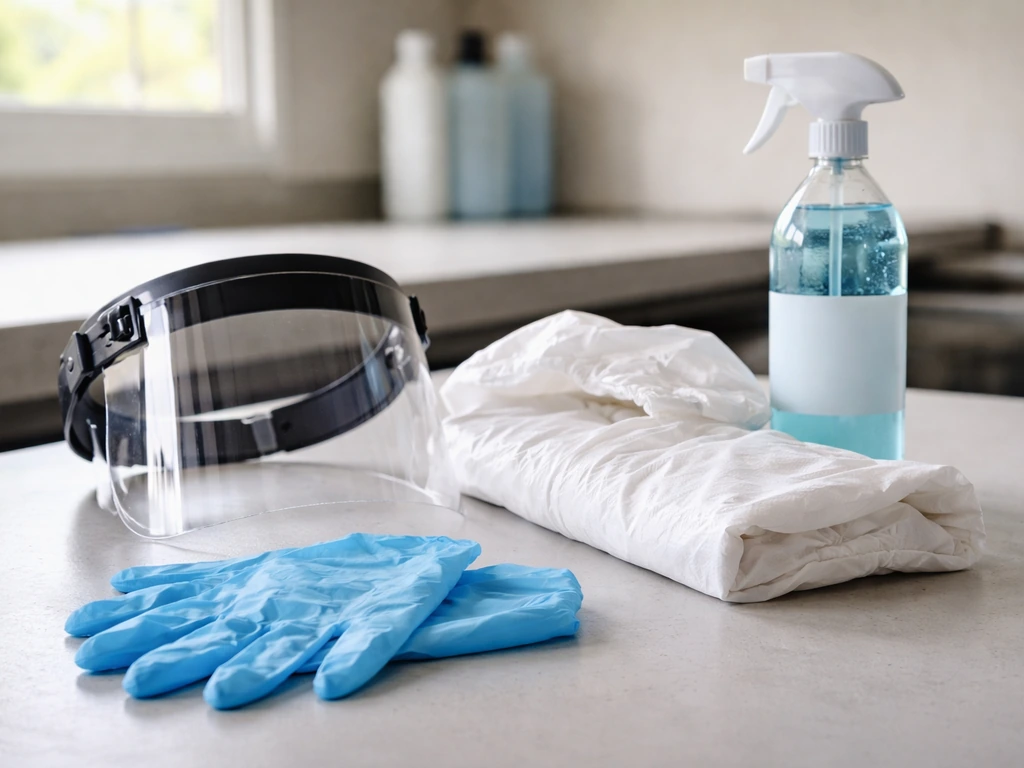
Don't skip the PPE. The SDS for this product lists the need for protective gloves and eye and face protection. Quaternary ammonium compounds are irritating to skin and eyes, and the instructions are clear: if you get it in your eyes, rinse continuously for at least 10 minutes. Wear safety glasses or goggles and chemical-resistant gloves when mixing and applying. This is especially important when you're using a pump sprayer at head height on a deck fence or lattice where overspray is likely.
Protecting plants, pets, and drainage
Pre-wet any lawn edges, garden beds, and plants that are close to the treatment area before you start. This dilutes runoff and reduces uptake by plant roots. The SDS specifically flags avoiding dispersal into soil, waterways, drains, and sewers, so be mindful of where the product runs off on sloped patios or driveways that drain directly to a street gutter or waterway. Keep pets and kids off the treated surface until it's fully dry. Because this is a no-rinse application, the product residue stays on the surface as it dries, so 'fully dry' means hours, not minutes. Clorox also advises letting the concrete or cement patio treatment fully dry before people or pets return to the area let the treated surface fully dry.
Sealers, finishes, and compatibility
If your patio or deck has a recent sealer or finish applied, check compatibility before you apply. The Pelargonic Acid in the formula, while mild, can affect some surface coatings over repeated use. A test patch in a corner or less visible area is always worth 10 minutes of caution. On freshly sealed concrete or newly stained timber, I'd hold off on any chemical cleaner and consult the sealer manufacturer's guidance first.
If it doesn't lift the stains after 72 hours
First, check whether the surface was dry when you applied and that it didn't rain during the dwell period. Both are common reasons for underwhelming results. If conditions were correct and results are still partial, apply a second coat and give it another 72 hours. For genuinely stubborn or thick biological growth, the most effective approach is a second application of ZeroScrub followed by a light pressure wash at 48-72 hours to physically remove the dead organic matter. This two-stage method consistently gives better results than repeated no-rinse applications alone on heavily stained surfaces. If after two applications you're still not satisfied, the staining may be beyond biological growth and into physical discolouration of the surface material itself, at which point you're looking at resurfacing or grinding rather than cleaning.
FAQ
How long should I leave scotts patio and deck zero scrub on before it starts working, and does rain ruin it?
Plan on a first visible change within about 24 hours, but the dwell period still matters. If it rains during the wait time or the surface is still damp when you apply, coverage can thin out and results often drop, so you may need a second application after conditions dry out fully.
Do I need to rinse scotts patio and deck zero scrub off afterward, or is it truly no-rinse?
The process is designed to be spray-and-leave, but a rinse can improve appearance on less porous surfaces. Porcelain especially benefits from a rinse after the treated window (around 48 to 72 hours) to reduce any lingering residue that can dry after the biological growth is killed.
What’s the best way to judge whether I should do a second application versus switching to pressure washing?
If you see partial lightening after the first 72 hours, a second coat is usually the right next step. If the area still looks heavily stained after two applications, the discoloration may be physical staining in the material, then a light pressure wash to remove dead organic matter, or a different treatment plan, is more effective than repeated no-scrub sprays.
Will scotts patio and deck zero scrub work on moss that’s thick or growing up seams and cracks?
It can kill moss and algae, but thick, long-established growth may require multiple passes. Treating seams and mortar joints is usually where you see the biggest payoff, and for very dense areas, consider the two-stage approach (cleaner first, then light pressure wash after the kill time) rather than expecting one-and-done.
Can I use scotts patio and deck zero scrub on a recently sealed concrete patio or on newly stained wood?
It’s not a safe assumption. The formula can interact with some coatings, and the article recommends checking compatibility. For freshly sealed concrete or newly stained or coated timber, do a small test patch or follow the coating manufacturer’s guidance before applying, because repeated exposure can affect finish performance.
What dilution mistakes most often cause weak results or emptying the bottle too fast?
Two common issues are using too strong a mix (which can waste product and still not lift deeply embedded staining) and under-diluting or over-applying without accounting for coverage on porous surfaces. If your patio is rough-textured or very porous, you should expect higher consumption and plan for extra bottles to avoid running out mid-job.
Is it safe to treat plants near the patio, and how do I prevent runoff into soil or drains?
Pre-wet adjacent lawn edges and beds before spraying to reduce how much product plants take up. Also protect drainage pathways, because the cleaner is not intended for dispersal into soil, waterways, drains, or sewers, especially on sloped areas that send runoff to gutters and street drainage.
What PPE should I use when applying scotts patio and deck zero scrub with a pump sprayer?
Use chemical-resistant gloves and eye protection (goggles or safety glasses), and wear a face shield if overspray risk is high, like when treating fences or lattice. Quats can irritate skin and eyes, and the safety guidance emphasizes continuous rinsing if it gets in your eyes.
Does scotts patio and deck zero scrub remove rust, grease, or pet urine stains?
No, and this is a frequent mismatch. The product targets biological growth, so rust from metal and oil/grease from grills usually won’t respond well. Pet urine typically requires an odor and residue-targeted approach, not a no-scrub algae and mildew cleaner.
Why did scotts patio and deck zero scrub leave a faint residue on my surface?
Residue is most likely when treating less porous or non-porous materials where the solution dries quickly, like porcelain or glazed surfaces. A rinse after the main dwell window (48 to 72 hours) helps, and the article also suggests being cautious about pooling on uneven stone.
Next Article
Scotts Outdoor Cleaner Patio and Deck Instructions Guide
Step-by-step Scotts outdoor cleaner patio and deck zero scrub use, prep, mix, dwell, rinse, and troubleshooting tips.