Ultima Plus XP does a solid job clearing green mould, algae, and moss from hard outdoor surfaces, but it will not touch grease, rust, or general dirt stains, and that is the single most important thing to understand before you buy it. If your patio is coated in green slime or fuzzy moss growth, this is a genuinely low-effort fix. If you have oil spots, rust marks, or compacted grime, you need a different product for those jobs.
Ultima Plus XP Patio Cleaner Reviews: Results, Use, Safety
Rhea Lang
16 Jun 2026
What Ultima Plus XP is designed for and what it claims
Ultima Plus XP markets itself as a moss killer, mould remover, and algae treatment for outdoor hard surfaces. The manufacturer positions it as a no-scrub, no-pressure-washer alternative where you simply dilute, apply, and walk away. Their headline claims include: safe on a wide range of surfaces, no acid or bleach in the formula, one 5-litre bottle makes up to 25 litres of solution at a 1:4 dilution, and coverage of up to 200 square metres per bottle.
The active ingredient doing the heavy lifting is benzyl C12-18 alkyldimethyl ammonium chloride, a quaternary ammonium biocide making up 10 to 20 percent of the concentrate by weight. The rest is primarily water, with small amounts of alcohol ethoxylate and dodecyl dipropylenetriamine as supporting agents. It is a biocidal approach, meaning it kills the biological growth rather than physically blasting it off. That distinction matters a lot for managing your expectations about how fast results appear.
The manufacturer is honest that the product targets moss, mould, and algae specifically. If you ask their support team whether it removes dirt, grime, or grease spots, the answer is no. That is worth repeating because the broad marketing language can make it sound like a catch-all patio cleaner when it is really a targeted biocide for biological growth.
How well it actually cleans common patio problems
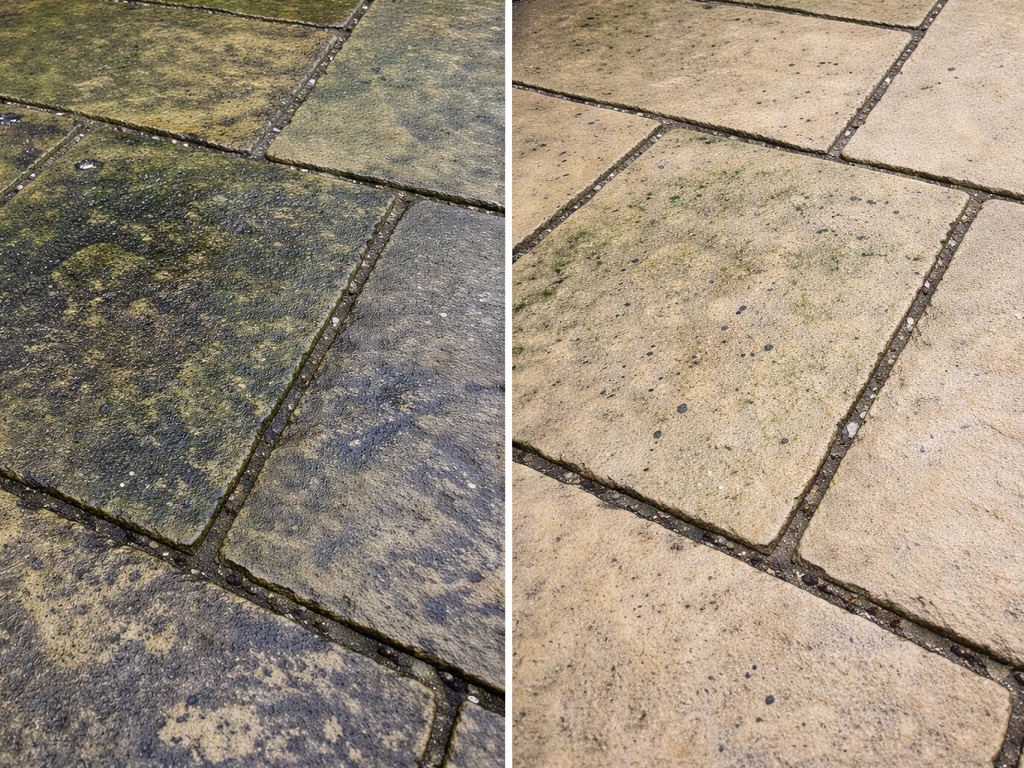
Green algae and mould
This is where Ultima Plus XP genuinely delivers. In real-world testing on Yorkstone, green algae and mould started dying off within five to seven days of application with no scrubbing or rinsing involved. The results were not instant, but by day seven to ten the surface was noticeably cleaner. Apply it, walk away, and let the chemistry do the work over the following week. That is exactly what the manufacturer promises, and in my experience it holds up.
Moss
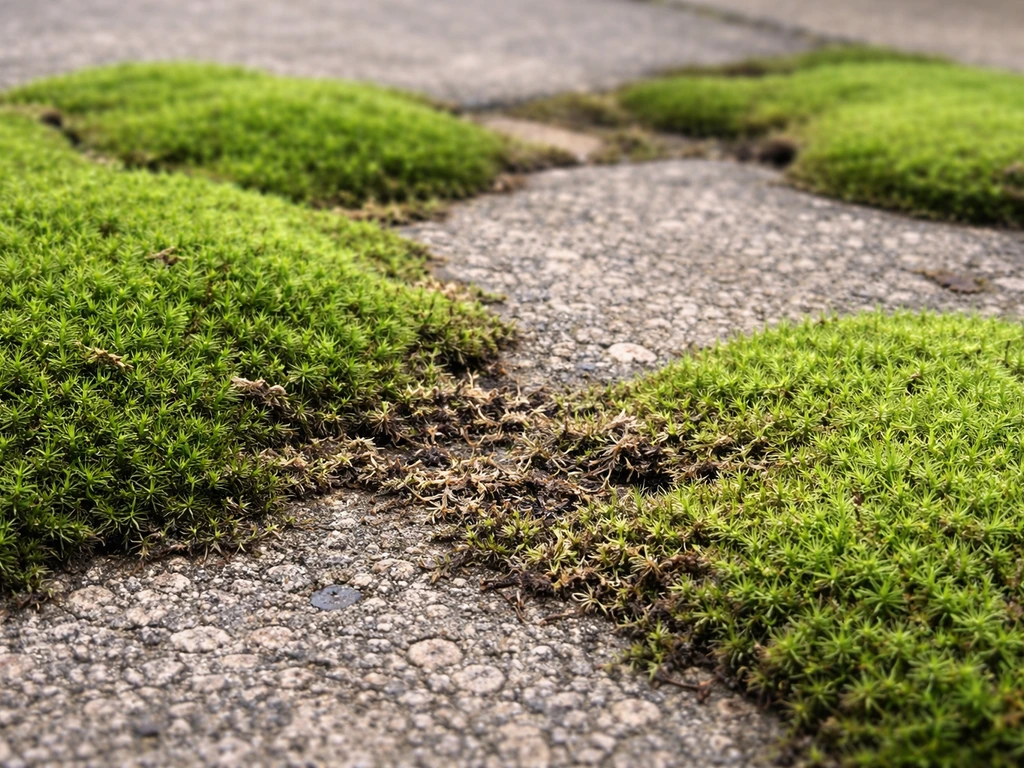
Moss responds well too, though thicker or more established clumps take longer. The biocide kills the root structure (rhizoids), which then causes the moss to dry out and eventually wash away with rain. If you have a really thick layer, you might want to brush off the worst of it first before applying, just to give the solution better contact with the surface underneath.
Black spot and lichen
This is where results get less consistent. Black spot and lichen are significantly harder to shift and require more contact time. In independent testing, black mould showed improvement by days seven to ten but was not fully gone after a single application. You may need a second treatment, and even then lichen in particular can be stubborn enough that you will want to follow up with mechanical removal or a dedicated lichen treatment.
Grease, rust, and general dirt
Ultima Plus XP will not remove these. The manufacturer confirms this directly. For grease spots from a BBQ or oil drips, you need a degreaser or a specialist patio cleaner formulated for oil. For rust stains, you need an oxalic acid-based cleaner. For general embedded dirt and grime, a pressure washer combined with a surface detergent will be far more effective. If you are deciding where to buy patio cleaner for grease, rust, or embedded dirt, look for a dedicated degreaser or surface detergent rather than this targeted biocide pressure washer combined with a surface detergent. Do not expect Ultima Plus XP to do anything about these problems.
Which surfaces it is safe on and which to be cautious about
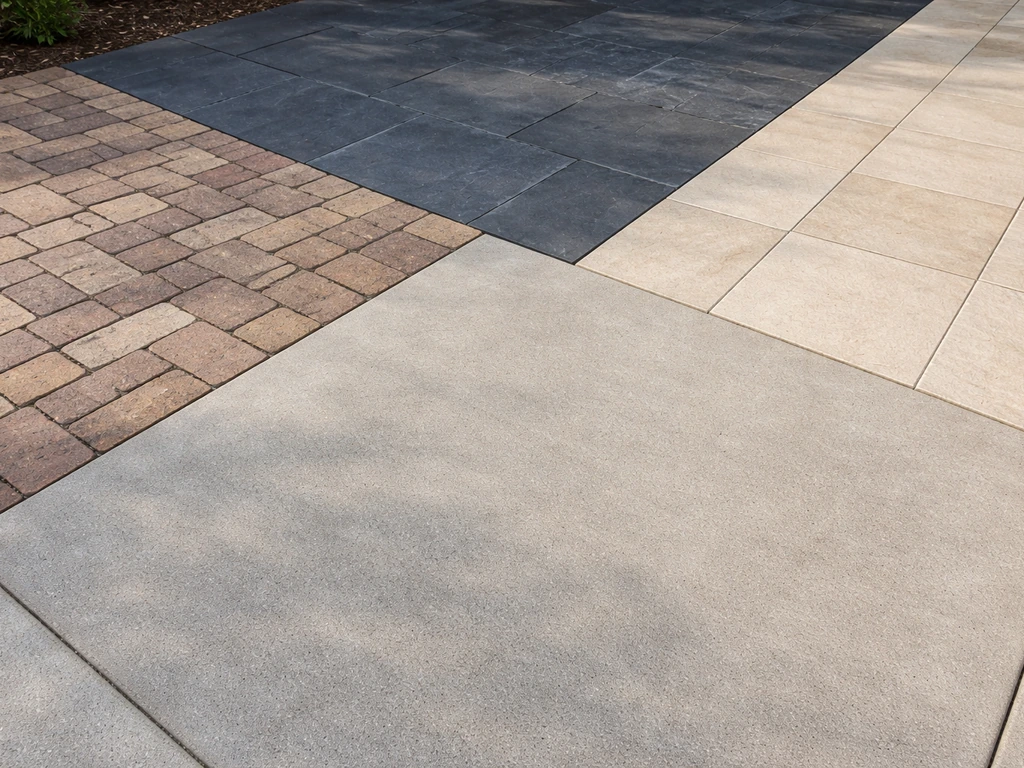
The manufacturer lists a fairly broad range of compatible surfaces, and because the formula contains no acid or bleach, the risk of surface etching is lower than with some aggressive patio cleaners. That said, not all surfaces behave the same way, and it is worth knowing where to be careful.
| Surface | Compatibility | Notes |
|---|---|---|
| Concrete | Good | Standard use, no concerns with diluted application |
| Brick and pavers | Good | Safe on most brick; avoid leaving solution pooled in joints for extended periods |
| Natural stone (Yorkstone, limestone) | Good | Tested with positive results; rinse joints well after dwell time |
| Sandstone | Use with care | Porous surface absorbs more solution; stick to recommended dilution and rinse thoroughly |
| Slate | Good | No acid means low risk of surface damage; tested with positive results |
| Porcelain | Good | Non-porous surface; solution sits on top, rinse cleanly after dwell time |
| Tarmac | Good | Listed as compatible by manufacturer |
| Terracotta | Good | Listed as compatible; rinse well given porosity |
| Decking (wood) | Listed as compatible | Manufacturer includes it; test a small area first as wood responds differently |
| Polished or sealed stone | Use with care | Check that the sealant is not degraded by quaternary ammonium compounds before full application |
The absence of acid and bleach is genuinely useful here. Products like some doff formulations use benzalkonium chloride (a closely related compound) and are similarly positioned as lower-risk for surfaces, but Ultima Plus XP's no-acid, no-bleach claim means it is broadly safer for coloured or textured stones where bleach could cause discolouration.
How to apply it properly: dilution, dwell time, and step-by-step
There is a discrepancy worth flagging upfront: the product page and retailer instructions say 1 part product to 4 parts water (1:4), while the manufacturer's own blog and at least one independent reviewer used a 1:9 dilution (1 part product to 9 parts water). The 1:4 ratio gives you stronger solution and the 200 square metre coverage claim. The 1:9 ratio stretches the product further and still produced good results in testing on Yorkstone. For heavy growth or first applications, I would stick to 1:4. For lighter maintenance treatments or if you want to extend the bottle further, 1:9 is worth trying.
- Check the weather forecast before you start. You need at least 8 hours with no rain after application. The product needs to sit on the surface and work; rain washing it off too early kills the effectiveness. Apply on a dry, overcast day if possible (full sun can cause the solution to evaporate too quickly).
- Clear the area of furniture, planters, and any loose debris. Sweep off the worst of the loose moss or leaf material so the solution reaches the actual surface.
- Mix your solution. For a standard treatment: 1 litre of Ultima Plus XP to 4 litres of water, giving you 5 litres of ready-to-use solution. For a lighter maintenance dose: 1 litre to 9 litres of water.
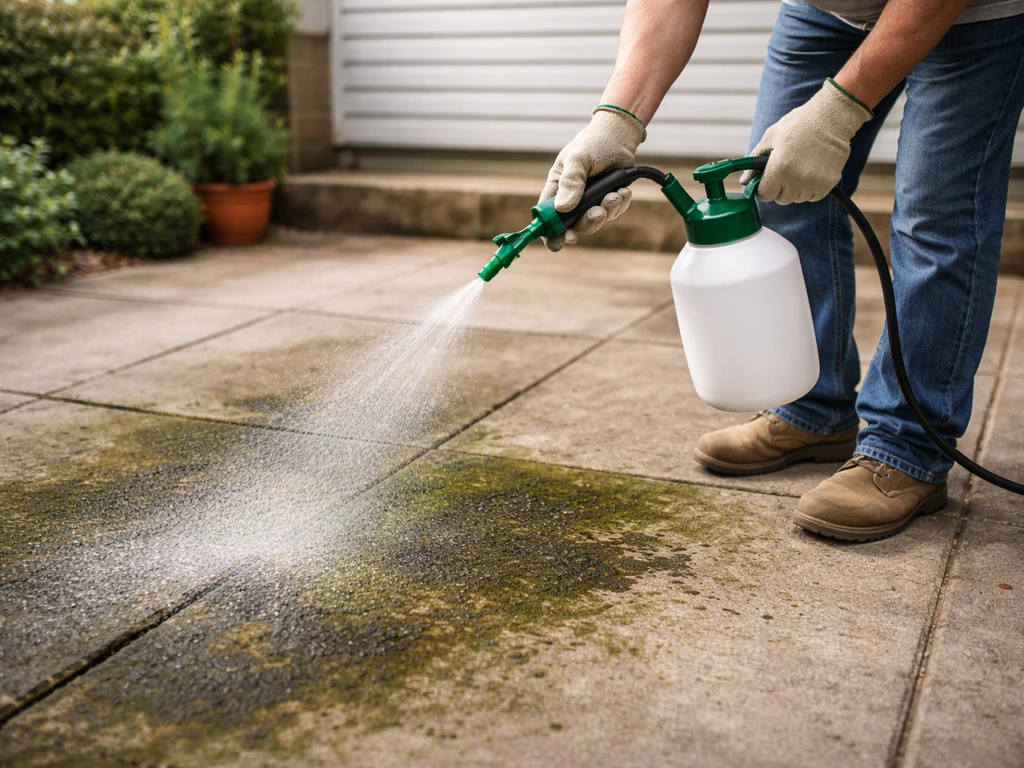
- Apply with a garden sprayer or watering can. A pump sprayer gives you more control and even coverage. Work in sections, saturating the surface without leaving standing puddles.
- Walk away. Do not scrub it in, do not rinse it off immediately. The solution needs to sit and penetrate the biological growth. Leave it to dwell.
- Wait 2 to 3 days for the first signs of green algae and mould dying. On heavier growth or black mould, allow 7 to 10 days.
- Rinse off with a hosepipe once you can see the growth has died back. Alternatively, the manufacturer notes that if heavy rainfall arrives within about 8 hours of the growth dying, that can do the rinsing job for you.
- For persistent areas or black spot that has not fully cleared, apply a second treatment after the first rinse, once the surface has dried.
One thing I appreciate about this product is that the no-scrub, no-pressure-washer approach is not just marketing. In testing, applying with a sprayer and walking away genuinely produced clean results on green algae and mould without any additional physical effort. If you are dealing with a large patio or have mobility issues that make scrubbing difficult, that is a real practical advantage.
Safety: protecting yourself, your plants, and your pets
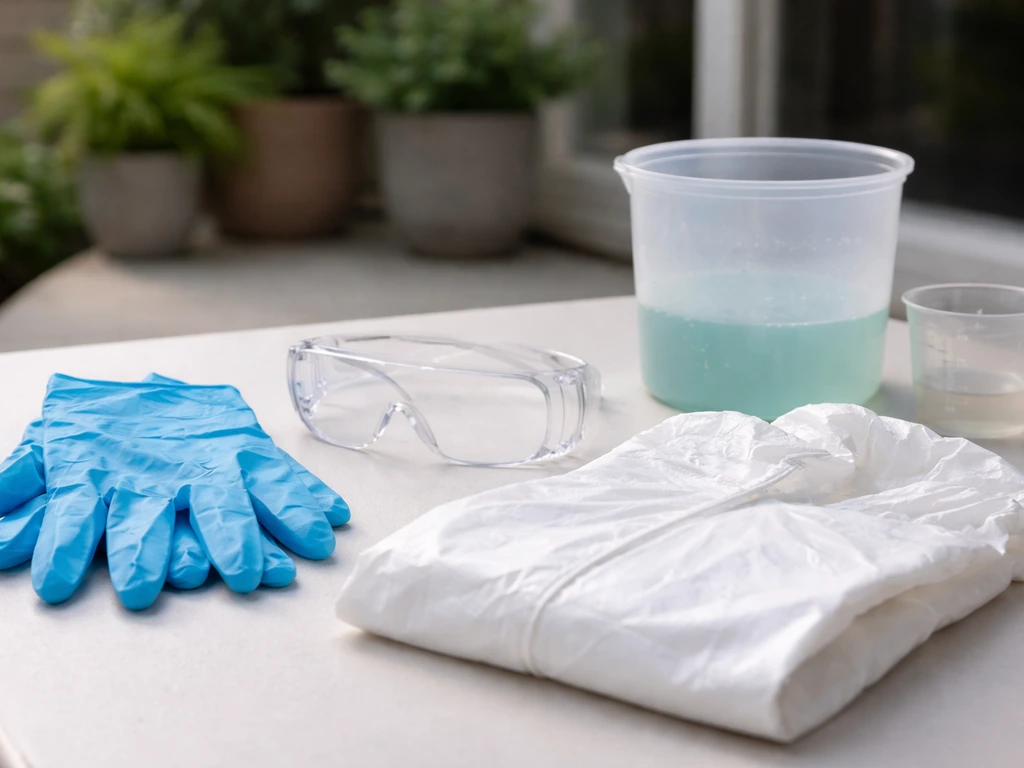
Do not let the 'no acid, no bleach' label lull you into thinking this product is gentle. The SDS is clear that it causes skin burns, can cause severe eye inflammation including potential corneal damage, and ingestion causes burns to the respiratory tract. This is a corrosive biocide and needs to be treated accordingly.
- Always wear chemical-resistant gloves and eye protection (safety goggles, not just glasses) when mixing and applying.
- Wear old clothing that covers your arms and legs. If any solution gets on skin, rinse with plenty of water immediately and seek medical advice if irritation persists.
- If it gets into eyes, flush with water for at least 15 minutes and get medical attention. Do not induce vomiting if swallowed; get medical help immediately.
- Work in a well-ventilated area. Avoid spraying in windy conditions that could cause drift onto you, nearby plants, or neighbouring surfaces.
- Keep pets off the treated area until the surface is completely dry. The manufacturer confirms animals can re-enter once dry, but do not let them walk through or lick the wet solution.
- Protect nearby grass and plants. The solution can cause yellowing and damage to plant tissue. Aim your sprayer carefully, and if any drifts onto grass or plant leaves, rinse thoroughly with clean water straight away.
- Be careful near drains and water features. Biocidal products can affect aquatic life if they enter waterways. Avoid spraying directly toward drains, and do not allow runoff to enter ponds or water features.
- Store the concentrate away from children and out of direct sunlight, in original packaging.
What results to expect and how it compares to other options
Realistic timeline
Green algae and surface mould: blank" rel="noopener noreferrer">visible die-back within 5 to 7 days, largely clear by day 10. Black mould and lichen: partial improvement in 7 to 10 days, possibly needing a second application. Moss: similar to algae in terms of timeline, though thicker growth may need mechanical removal of the dead material after treatment. One unofficial claim suggests the product prevents regrowth for up to 6 months by continuing to work through rain reactivation. One unofficial review blog claims there is no need to rinse off, and it also says the product blank" rel="noopener noreferrer">prevents regrowth for up to 6 months by continuing to work through rain reactivation. I would treat that claim with some caution, but there is logic to it since the biocide residue on the surface does continue to provide some protection after the initial treatment.
Ultima Plus XP vs a pressure washer
A pressure washer on its own physically blasts growth off the surface and produces instant visible results, but it does not kill the root structure of moss and algae. That means regrowth comes back faster, often within a season. Ultima Plus XP kills at the root level, which means results take longer to appear but regrowth is slower. The best of both worlds is to use Ultima Plus XP to kill the growth, let it work for a week, then use a pressure washer to rinse away the dead material and any remaining residue. The pressure washer then acts as a rinse rather than the primary cleaning method.
Ultima Plus XP vs other patio cleaners
Compared to products like Algon, which also uses a no-rinse biocidal approach, Ultima Plus XP is broadly similar in mechanism and target (algae, moss, mould) but tends to work slightly faster in direct testing. Algon is often recommended for ongoing maintenance and claims longer-term prevention, while Ultima Plus XP is positioned slightly more toward the initial knock-down treatment. Doff patio cleaner uses a similar active compound (benzalkonium chloride) and is another viable alternative in this category. Mosgo uses a different formulation and is worth considering for particularly stubborn moss on paths. If you specifically need to tackle grease, oil, or rust, none of these biocidal cleaners will help, and you need to look at specialist products for those stain types. If you are comparing Goo Gone patio furniture cleaner reviews, make sure you match the product to the specific type of stains or buildup you are dealing with.
So who should buy Ultima Plus XP?
Buy it if your main problem is green algae, surface mould, or moss on concrete, stone, brick, slate, or porcelain, and you want a low-effort treatment that does not require a pressure washer or scrubbing. The 1:4 dilution from a 5-litre bottle giving up to 200 square metres of coverage is genuinely good value for a medium to large patio. Do not buy it if your patio has significant grease, rust, or compacted dirt staining, or if you need results in 24 to 48 hours. For mixed problems (some green growth, some grease spots), use Ultima Plus XP for the biological growth and a separate degreaser for the oil stains. That combination covers most real-world patio situations effectively.
FAQ
How long do I need to leave Ultima Plus XP before rinsing or brushing anything off?
For most green algae and surface mould, give it about 7 to 10 days before you decide how much to remove. You do not need to scrub at application, but if you have heavy dead moss clumps, you can brush off loose material after the die-back starts so you get better contact and less mess as it dries.
Will Ultima Plus XP work if it is already raining or if rain is expected soon after application?
Because the product is biocidal and works over time, you want enough contact time for it to kill growth. If heavy rain is imminent, delay application if you can, or at least avoid spraying right before wash-off conditions. Rain helps later by carrying away the dead material, but too much early runoff can reduce effectiveness.
What dilution should I choose, 1:4 or 1:9, for my patio size and severity?
Use 1:4 for first treatments or thicker growth because it gives stronger solution and faster knock-down. Choose 1:9 for lighter maintenance or if you need to extend coverage, since it can still work on Yorkstone in testing but may take longer for fully visible results.
Can I spot-treat only the green areas, or should I apply across the whole patio?
Spot-treating is fine if the growth is localized. For best visual uniformity, many people apply to the surrounding area too, because nearby algae and moss can be at different stages under the surface, and treatment timing can make patches look uneven.
Is it safe to use on porous stones like limestone or sandstone, and what surface types should I avoid?
The no-acid, no-bleach approach generally lowers etching risk, but porous stone can still show staining if residues dry unevenly. Test on a small hidden patch first, especially on light-coloured or textured stone, and keep an eye on grout lines where runoff can concentrate.
What should I do if I still see dark black spots after one application?
Black mould and lichen often need more than a single pass, and even then may not disappear completely. Re-treat after the initial 7 to 10 day window, and plan for mechanical removal or a dedicated lichen treatment if dark staining persists, since lichen can be stubborn.
How do I handle mixed problems, like green algae plus BBQ grease or oil spots?
Do not expect biocide patio cleaners to remove grease or rust. Treat biological growth with Ultima Plus XP first, then deal with oil spots separately using a degreaser designed for fats and petroleum. This order matters so you are not trying to “clean” stains that are actually embedded grime.
Is it a good idea to use a pressure washer before applying Ultima Plus XP?
Avoid pressure washing first if your goal is to kill moss and algae at the root, because blasting can remove parts of the growth and change where reattachment happens. If you must pre-rinse, do it lightly, then apply Ultima Plus XP to remaining growth and let it work for the full reaction window.
What PPE and safety steps should I take beyond gloves, since it can burn skin and eyes?
Wear eye protection (goggles or a face shield), closed chemical-resistant gloves, and protective clothing that prevents splashes. Keep children and pets away during application and until the product has dried, and do not ingest it. If it contacts eyes, treat it as an emergency and seek urgent medical advice.
Can it harm plants or pets, and is there an easy way to protect nearby landscaping?
Even though it is positioned for hard outdoor surfaces, it is still a biocide, so you should minimize runoff toward garden beds. Water plants before treatment so they are less likely to absorb concentrated residue, cover sensitive plants if possible, and avoid treating right before irrigation or heavy runoff events.
Does Ultima Plus XP prevent regrowth for months, or does it just kill what is there?
It is primarily a knock-down biocide that kills existing growth, with logic that residues can slow reactivation through rain. However, treat long prevention claims as uncertain, and plan for maintenance if you get recurring algae or moss cycles.
Why do some people get faster results than others?
Timing depends on how established the growth is, surface texture, weather conditions, and dilution. Thick moss may require pre-brushing, heavy lichen can be slower, and improper dilution or poor contact time can make results look inconsistent even with correct application.
Next Article
How to Use Wet and Forget Patio Cleaner Step by Step
Step by step guide to apply Wet and Forget patio cleaner, prep and safety, dwell time, rinse or no rinse, and troublesho