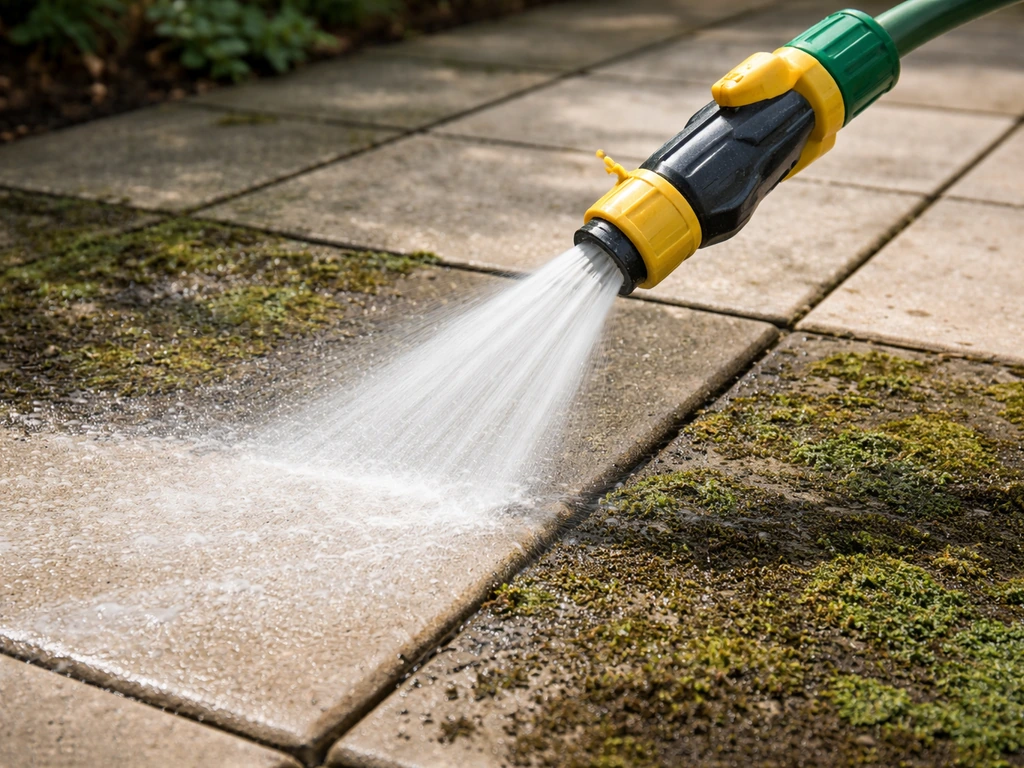
Mix one part Wet & Forget Outdoor Concentrate with five parts water in a garden sprayer, apply it on a cool, dry, windless day with no rain expected for at least four to five hours, saturate the surface thoroughly, and then walk away. But the same Wet & Forget spray-and-leave method can also work on patio umbrellas, as long as you prep and apply it carefully. No scrubbing, no rinsing. Wind and rain do the rest over the following weeks. That's the whole method in a sentence, but getting the details right is what separates results you'll see in days from results you're still waiting on three months later.
How to Use Wet and Forget Patio Cleaner Step by Step
Rhea Lang
29 Apr 2026
What Wet & Forget patio cleaner actually is and where it shines
Wet & Forget Outdoor Concentrate is a spray-and-leave antimicrobial cleaner built around an active ingredient called alkyl dimethylbenzyl ammonium chloride (ADBAC), a quaternary ammonium compound that kills biological growth at the cell level. It also contains ethanol and surfactants that help the solution penetrate and break down organic matter. The chemistry is genuinely effective against mold, mildew, algae, moss, and lichen, which covers the vast majority of what makes patios look grim and slippery.
Where it works best is on porous, irregular, or textured surfaces that are difficult or impractical to pressure wash without causing damage, and on patios with heavy biological growth where you want a low-effort solution. It's not designed for grease, oil, rust, or heavy mineral staining. Those stains need a different type of product entirely, and I'll come back to that later. If your patio is covered in green slime, black mold patches, or fuzzy moss, this is exactly what Wet & Forget was made for.
Prep before you spray
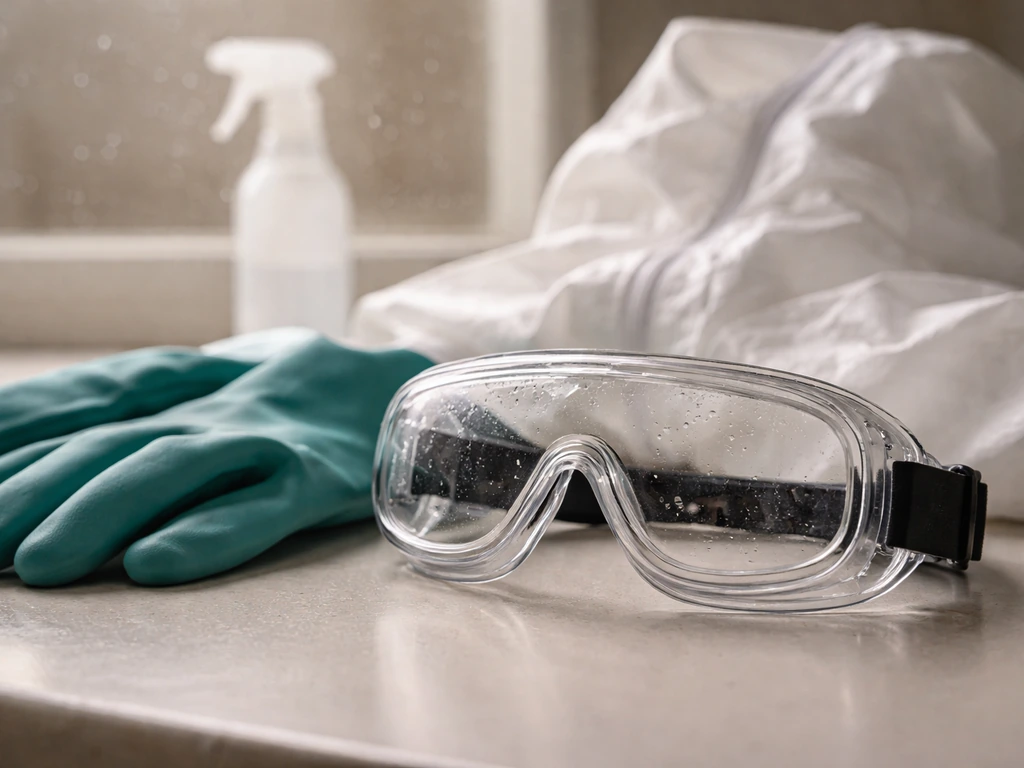
Safety gear and basic precautions
Wet & Forget is relatively low-hazard compared to acid-based cleaners, but it's still a surfactant-based biocide and should be treated with respect. Wear tightly fitting safety goggles to protect against mist, and use water-resistant gloves when mixing and applying. If you're working in an enclosed or poorly ventilated space like a covered pergola area with little airflow, a NIOSH-approved respirator is worth wearing to avoid inhaling spray mist. Keep the container sealed and upright when not in use.
Check the weather before you touch the sprayer
This is the most important prep step and the one most people skip. You need a cool, dry, windless day with no rain in the forecast for at least four to five hours after application. Avoid applying in full sun, especially in summer: bright sunlight causes the solution to evaporate too quickly before it can penetrate the growth. Overcast, mild mornings are ideal. Wind is a problem both because it spreads overspray onto plants and because it speeds up evaporation. I've tried applying on a breezy day and the results were noticeably patchy, which meant a second application and wasted product.
Clear the patio and protect your plants
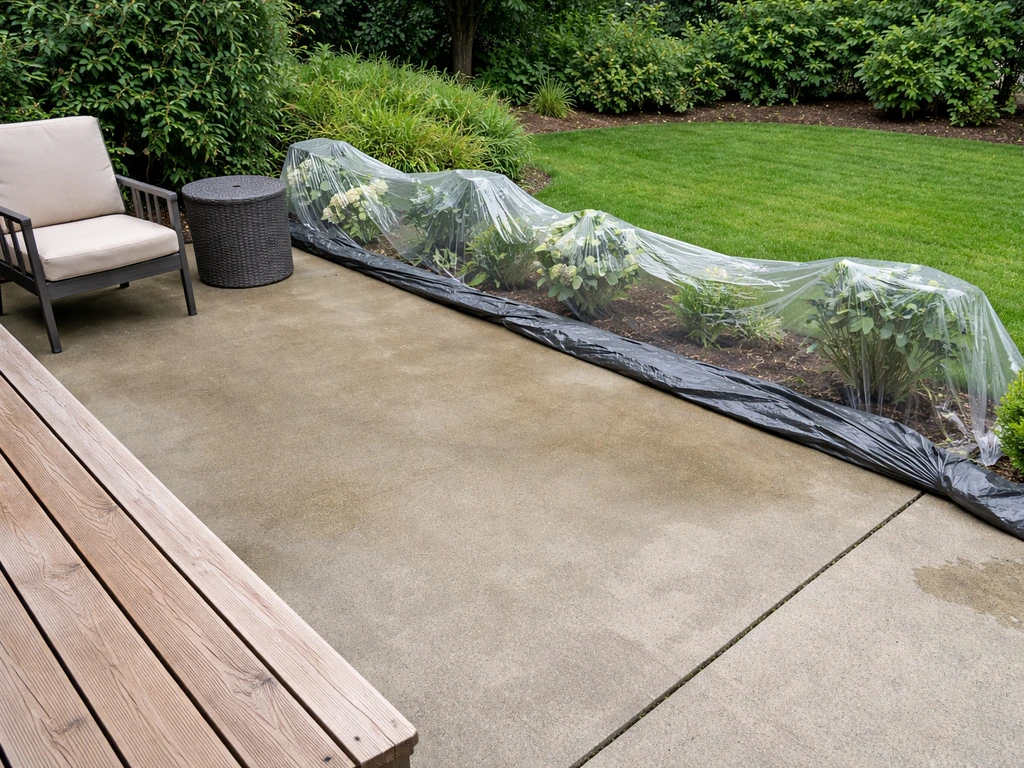
Move furniture, pots, and anything you don't want the solution contacting off the patio. Then deal with your plants and lawn borders. Wet & Forget recommends rinsing surrounding plants before applying, covering them during application if possible, and rinsing them again afterwards as a precaution. The product isn't acutely toxic to most established plants at typical dilution, but repeated overspray on grass edges or soft foliage isn't something you want. A quick brush-off of loose debris, leaves, and dirt from the patio surface is also worth doing because heavy debris reduces coverage and blocks the product from reaching the growth underneath.
Step-by-step application
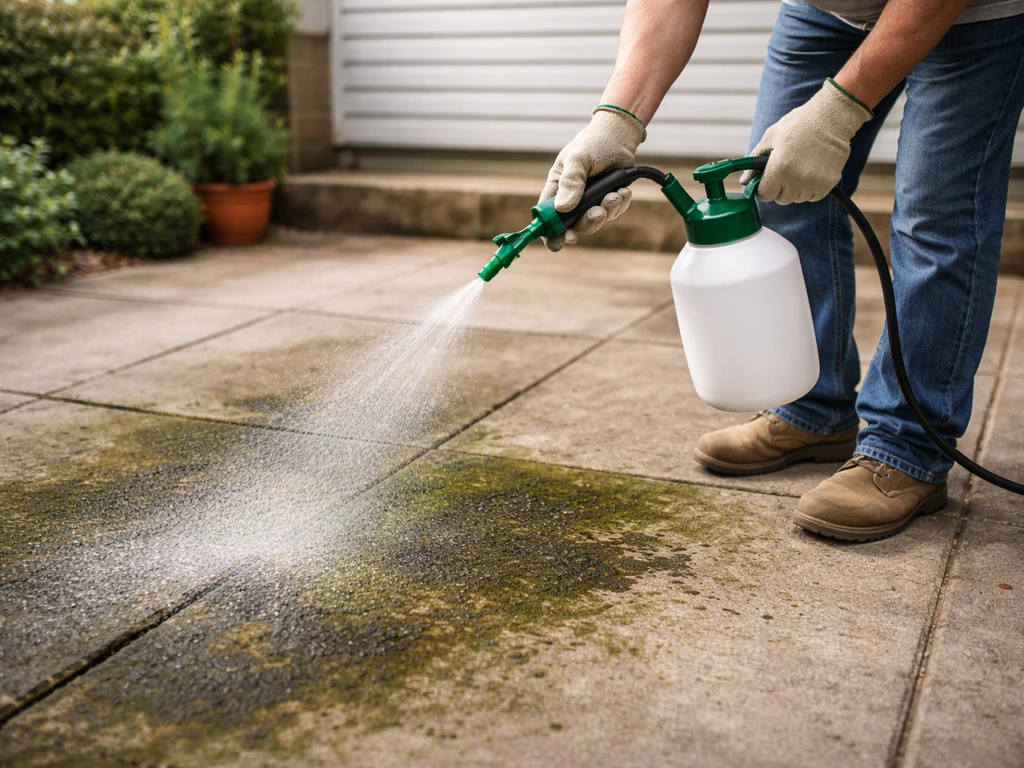
- Mix one part Wet & Forget Outdoor Concentrate with five parts clean water in a pump garden sprayer. For a standard 5-litre sprayer, that's roughly 830ml of concentrate topped up to 5 litres with water. Shake or stir gently to combine.
- Check the weather: cool, dry, no wind, and at least four to five hours until rain.
- Clear the patio of furniture and debris, and protect or pre-rinse nearby plants.
- Starting from the furthest point from your exit, apply the diluted solution evenly across the entire patio surface. You're aiming for thorough, wet coverage, not a mist. The surface should look visibly wet all over.
- For stubborn lichen (the crusty, flat circular growth that's hard to shift), saturate the patch, wait 15 minutes, then spray a second time. This second pass breaks through the outer layer and lets the product work deeper into the root structure.
- Leave the surface completely alone. Do not rinse, scrub, or walk on it more than necessary. The product continues working as it dries and then reactivates with subsequent rain and wind over the following weeks.
- Keep pets off the treated surface until it is fully dry. If a pet walks on it while still wet, rinse their paws with fresh water as a precaution.
- If you want to rinse the surface (for example on a patio near a water feature or where runoff is a concern), wait at least four hours after application before rinsing.
Which surfaces it works on and what to expect
Wet & Forget is listed as compatible with a wide range of outdoor patio surfaces. Here's what you actually need to know for each, because the results and expectations vary a little depending on what you're working with.
| Surface | Compatible? | Common issue | Notes |
|---|---|---|---|
| Concrete | Yes | Algae, mold, black mold patches | May turn orange-brown immediately after application on some concrete — this is a normal reaction and fades. Not permanent. |
| Brick and cement | Yes | Moss, algae, green slime | Works well on the textured face of brick; mortar joints may take longer due to depth of growth. |
| Natural stone (sandstone, slate, limestone) | Yes | Algae, moss, lichen | Great fit: safe for porous stone that pressure washing can erode. Allow extra dwell time for lichen. |
| Ceramic and porcelain tiles | Yes | Mold, algae, mildew | Compatible but smooth glazed surfaces hold less growth to begin with; works on grout lines where growth accumulates. |
| Composite decking | Yes | Black algae staining | Older, deeply set black staining may need a month's treatment, then a light brush with warm water, then a follow-up spray. |
| Travertine, limestone | Yes | Algae, mold | Falls under natural stone category; treated the same way as sandstone and slate. |
What about rust, grease, and non-biological stains?
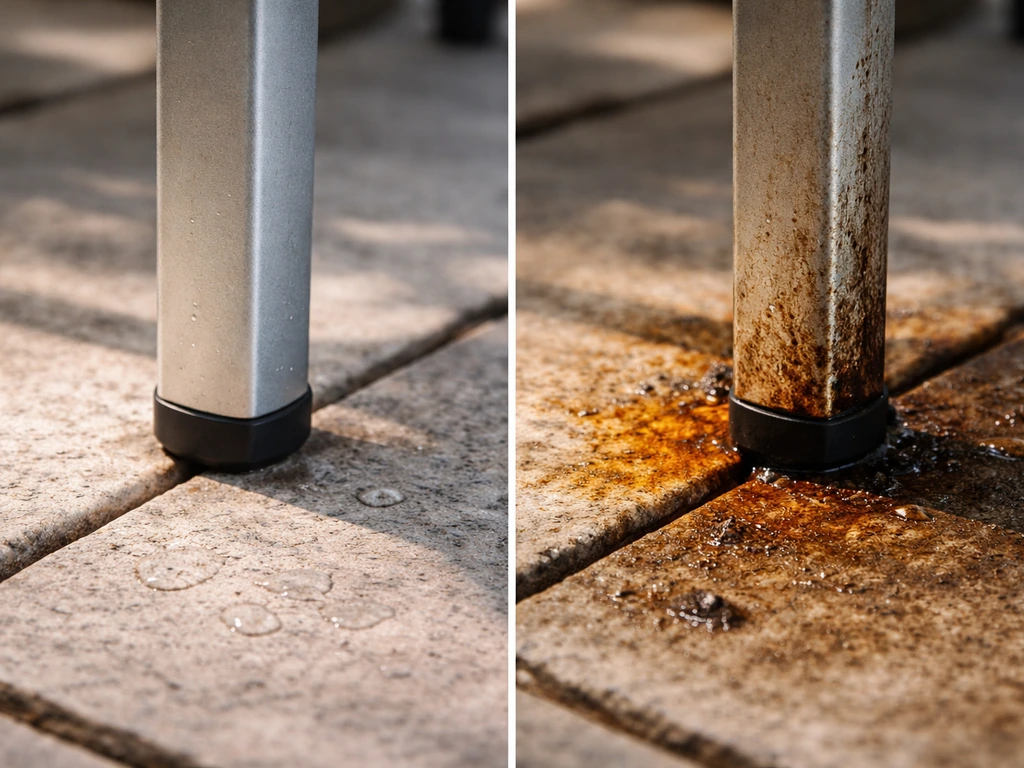
Wet & Forget is an antimicrobial cleaner, not a degreaser or rust remover. It will not shift rust stains from metal furniture legs sitting on your patio, oil or grease marks from a BBQ, or heavy mineral deposits. For rust, you need an oxalic acid-based cleaner. For grease and oil, you need an alkaline degreaser or a hot pressure wash with a suitable detergent. Knowing this upfront will save you waiting three months for a result that was never coming. If your patio has a mix of biological growth and non-biological staining, deal with the grease or rust first with the right product, then apply Wet & Forget for the organic growth.
Aftercare: rinsing, timing, and when to reapply
Do you need to rinse?
The manufacturer's default method is no-rinse. You spray it and leave it, and rain and weather do the rinsing work over time. This is what makes it genuinely low-effort compared to most patio cleaners. The first four to five hours are the critical window: once the product has dried, it won't reactivate the same way, so rain after that point is fine and actually helpful for washing away the dead growth. If you want to rinse for any reason (runoff near a pond, concerned about residue near children's play areas), wait at least four hours after application before hosing down.
How long until you see results?
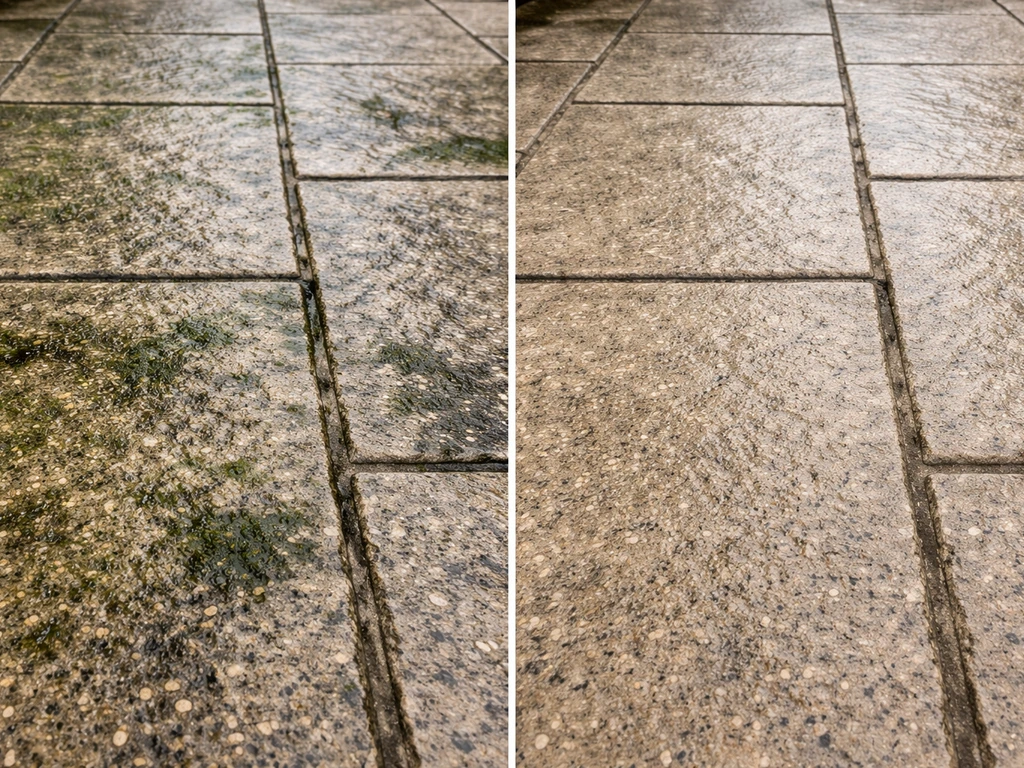
Light algae or mold contamination on a patio that hasn't been neglected for years can show visible improvement within days. Heavy, thick contamination, especially deep-rooted moss or established lichen, will take two to three months of wind and rain to fully clear. This isn't a failure of the product. It's just how the chemistry works: it kills the growth, and then weathering gradually removes the dead material. The patio may actually look darker or discolored before it looks better, because you're seeing dead organic matter before it washes away. On concrete specifically, the orange-brown tint immediately after application is a normal reaction and not a stain.
When to reapply
Once you've treated the patio and results have cleared, a single annual maintenance spray at the start of autumn (or whenever growth starts to reappear) keeps things clean without needing a full deep clean again. In a Reddit r/CleaningTips discussion on Wet & Forget timing, community members also shared expectations about how long it takes to work and how often to reapply based on the amount of growth a single annual maintenance spray.
Wet & Forget's own guidance notes that after the first treatment, subsequent seasonal cleanups happen much faster, often within weeks rather than months, because you're dealing with fresh, light contamination rather than years of buildup. For lichen or stubborn deep growth that needs more than one treatment in a single session, do the double-spray technique (spray, wait 15 minutes, spray again) on those specific patches.
Common mistakes and how to fix them
- Applying on a hot, sunny, or windy day: the solution evaporates before it can penetrate. Results will be patchy or non-existent. Wait for an overcast, calm morning and reapply.
- Not applying enough product: a light mist isn't enough. The surface needs to be visibly wet all over. Under-application is the most common reason people don't see results.
- Expecting results too fast: if you're checking the patio every two days after a single application on heavily contaminated concrete, you'll be disappointed. Heavy growth takes up to three months. Take a photo and compare monthly.
- Rinsing too soon: rinsing within the first four hours washes the active ingredient away before it has finished working. If you need to rinse, wait at least four hours.
- Confusing the orange-brown tint on concrete for damage: it isn't. It's a temporary reaction and will clear. Don't try to scrub it off immediately.
- Using it for rust or grease and wondering why nothing happened: Wet & Forget is not formulated for non-biological stains. You need a different product for those.
- Applying too close to rain: if it rains within four to five hours of application, the product gets washed away before it bonds. Check a forecast properly before starting.
- Not protecting nearby plants: light overspray on a single application is unlikely to cause major problems to established plants, but it's not worth the risk. Rinse borders before and after.
When to choose a different approach instead
Wet & Forget is genuinely excellent for biological growth and for people who want minimal effort, but it's not the right tool for every situation. If your patio is badly encrusted with years of thick moss and you want it clean this weekend rather than in two months, a pressure washer will get you there faster. A hot pressure wash at around 1500 to 2000 PSI is effective on concrete, brick, and most natural stone, and for very heavy moss and algae it's simply quicker. You can then apply Wet & Forget afterwards as an ongoing preventative treatment to stop regrowth.
If you're comparing Wet & Forget to similar spray-and-leave products like Patio Magic, the key differences come down to chemistry, dilution rates, and how each one handles different surface types and stain categories. Both follow a spray-and-leave concept, but they perform differently depending on what you're treating and the surface material involved.
For delicate surfaces like sandstone or riven slate where pressure washing could cause erosion or surface damage, Wet & Forget is often the safest and most practical choice. The same goes for intricate surfaces like decorative brickwork or textured porcelain tiles where a pressure washer would be awkward to use evenly.
If you want to explore Wet & Forget further before buying, including where to get the best price and what real-world results look like on different patio surfaces, it's worth checking dedicated product reviews before committing to a large quantity. Reading spray and leave patio cleaner reviews can help you gauge how well this no-rinse approach works for your specific patio material and level of buildup.
These wet and forget patio cleaner reviews can help you see real results on different surfaces before you buy. If you want to narrow down which product to buy, the next step is to check wet and forget patio cleaner where to buy so you can match the retailer to your surface needs and timeline.
If you want to narrow down which product to buy, the spray-and-leave patio cleaner reviews that mention performance, dilution, and real wait times can help you avoid disappointments. If you are still deciding which bottle to grab, you can check wet and forget patio cleaner where to buy and compare options before ordering.
FAQ
Can I apply wet and forget patio cleaner and then rinse immediately?
No, you should not. Wet and Forget is meant to be spray-applied and left to work as it dries, then be cleared by rain and weather over time. Repeated hosing the same day can wash the solution off before it penetrates growth, leading to patchy results that often require a second application.
What weather conditions are best, and what if it gets hot or stays damp longer than expected?
Use a cool, dry, windless day and keep the area dry for at least four to five hours after application. If temperatures are very hot, the solution can evaporate faster than it can do its job, so results tend to be weaker and uneven compared with mild morning conditions.
My patio looks patchy after using wet and forget, what should I do?
If you see patchiness, the most common causes are wind-driven overspray, drying too quickly, or insufficient coverage. Spot-treating works, but wait for the first application to run its course, and if the affected patches are still actively green, you can reapply to those sections once conditions are suitable rather than repeating across the whole patio.
Will wet and forget remove rust stains, BBQ grease, or mineral deposits?
Wet and Forget is primarily for biological growth like algae, mold, moss, and lichen. If the main problem is grease, oil, rust, or heavy mineral staining, it will not address those, and you may waste time waiting for results. Deal with grease or oil using a degreaser, rust with an oxalic acid product, then use Wet and Forget afterward if you still have organic growth.
Why does my concrete look darker or have an orange-brown tint after treatment?
It can leave a temporary darkened look or an orange-brown tint on concrete during the initial reaction. That’s normal and should fade as dead growth weathers and is rinsed by rain. If the discoloration looks like a permanent stain and not just a surface tint, first check that you didn’t confuse biological growth issues with something mineral-based like efflorescence.
How often should I use wet and forget patio cleaner after the first deep treatment?
In most cases, one thorough annual treatment is enough because it prevents regrowth rather than stripping years of buildup each time. If your patio is under heavy shade, near sprinklers, or surrounded by trees, you may need to reapply more often, but the first treatment typically gets you to a maintenance schedule.
When should I use the double-spray technique instead of a single application?
For deep stubborn patches, a double-spray technique can help. Spray the affected area, wait about 15 minutes, then spray again so the product re-wets those spots before it fully dries.
What if my patio has both biological growth and non-biological stains?
If the patio is mixed with organic growth and other issues, treat in order. Remove or treat grease and rust with the right dedicated product first, then apply Wet and Forget for the organic growth so you’re not waiting for a biocide to solve stains it was not designed to remove.
How do I protect plants, grass, and nearby surfaces when using wet and forget?
Yes, but do it carefully to avoid unwanted contact and runoff. Move planters and furniture, and for surrounding plants Wet and Forget recommends rinsing before application and again afterward as a precaution. The key goal is to prevent repeated overspray and reduce residue at grass edges and soft foliage.
Can I pressure wash first and then use wet and forget as a preventative?
Pressure washing can be used, but it changes the timeline and sometimes the surface texture. Wet and Forget is often the safer choice for porous or delicate materials, and you can apply it after a hot pressure wash to slow regrowth. If you pressure wash heavily mossy areas, let the surface dry fully before applying the cleaner so you can get consistent coverage.
Next Article
Wet and Forget Patio Cleaner Where to Buy and What to Get
Find Wet & Forget patio cleaner to buy, choose the right variant for your surface, and use safely with step-by-step inst