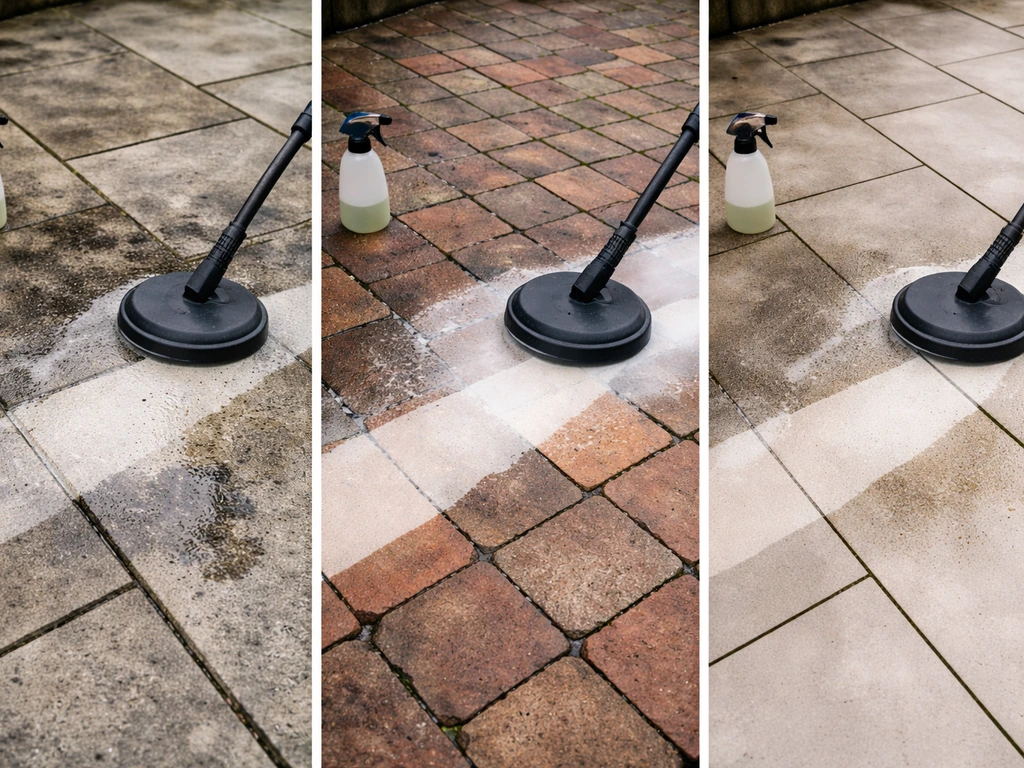
For most Irish patios dealing with green algae, moss and general grime, Wet & Forget Mould, Lichen & Algae Remover is the best all-round choice: spray it on, walk away, and rain does the rinsing over the following weeks. If you need something faster or heavier-duty, HG Patio Cleaner concentrate paired with a pressure washer will shift the worst stains in a single afternoon. Budget hunters should know that Mosgo Path & Patio Cleaner from Woodie's at €8.99 for 2.5 L gives you genuine performance for very little outlay. This guide cuts through the noise and tells you exactly what to buy, where to get it in Ireland, how to use it safely, and when it makes more sense to just call a professional.
Best Patio Cleaner Ireland: Top Picks, Tools & How-To Guide
Rhea Lang
22 Jul 2026
What this guide covers for Irish homeowners
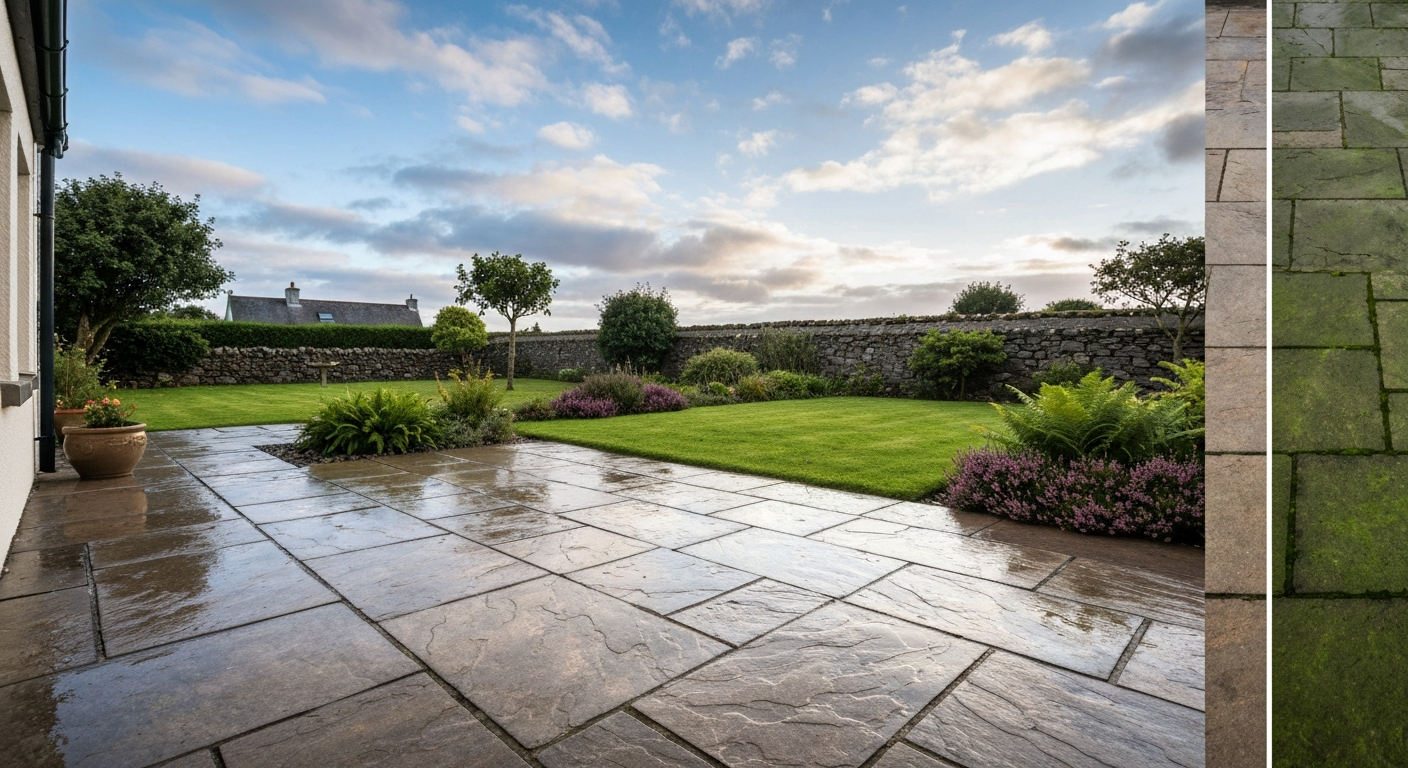
Ireland's wet climate is a gift for gardens and an absolute nightmare for patios. Between October and April, barely a week passes without enough moisture to keep a fresh coat of algae thriving on your paving. By the time spring arrives, even a relatively new patio can look like it belongs in a forest. This guide is written specifically for that situation. It covers the cleaners and equipment you can actually buy in Ireland right now, including what's on the shelves at Woodie's and Screwfix Ireland, and it gives you a clear method for each surface type and problem, from concrete and sandstone to porcelain and slate. You'll also find safety and environmental information that matters in an Irish context, because our water runoff ends up in streams and rivers faster than most homeowners realise.
Quick decision flow: which cleaning approach is right for you?
Before you spend money on anything, narrow down your approach with these four questions. They'll point you straight to the right section of this guide.
- Is your patio mainly green and slippery with algae or moss, but not deeply stained? Go with a spray-and-leave chemical like Wet & Forget. No pressure washer needed, almost no effort.
- Do you have heavy staining, oil, grease, rust or deeply embedded dirt on concrete, brick or paving slabs? Use a concentrated chemical cleaner like HG with a pressure washer or stiff brush for best results.
- Do you want to avoid harsh chemicals entirely, or do you have pets/children using the space regularly? Use a sodium percarbonate (oxygen bleach) mix or a plant-derived product, then rinse thoroughly.
- Is the patio very large, heavily neglected or made from a delicate material like sandstone or natural slate? Seriously consider a professional cleaning service. DIY pressure washing on the wrong stone can do expensive damage.
Top picks at a glance
These are the products I keep coming back to across different surfaces and budgets. For detailed side-by-side comparisons and buying advice, see our best patio cleaner reviews. Each one earns its place for a specific reason.
- Best overall: Wet & Forget Mould, Lichen & Algae Remover (5 L, ~€44.45 at Screwfix Ireland) — spray-and-leave formula covers up to 300 m², ideal for Irish weather where rain does the work for you.
- Best budget: Mosgo Path & Patio Cleaner (2.5 L, €8.99 at Woodie's) — low cost, widely available, effective against surface algae and moss on standard paving.
- Best eco/low-toxicity: Sodium percarbonate granular mix (available from online suppliers, ~€5–10 per 500 g) — oxygen-based, breaks down rapidly, safer around plants and aquatic drainage than persistent biocides.
- Best heavy-duty: HG Patio Cleaner concentrate (1 L, €12.49 at Woodie's) — highly concentrated detergent built for concrete, slabs and paving stones with deeply embedded dirt, used with a pressure washer for fastest results.
Short reviews of the top picks
Wet & Forget Mould, Lichen & Algae Remover
Wet & Forget is genuinely different from most patio cleaners because you apply it once and then do nothing. It uses a benzalkonium chloride-based biocide that kills the organic growth slowly over days and weeks, and rainfall gradually washes the residue away. I've used it on concrete, natural stone and brick, and on all three it does what it promises. The 5 L container at Screwfix Ireland covers up to 300 m² when diluted correctly (typically 1 part product to 5 parts water), which makes the €44.45 price reasonable for anything larger than a small yard. The main trade-off is time: don't expect instant results. You apply it in dry weather, leave it, and by the following month the surface looks markedly cleaner. It is classified as very toxic to aquatic life with long-lasting effects (H410/H411 under CLP), so take runoff seriously and avoid applying before heavy rain that could carry undiluted product into drains. The Wet & Forget Mould, Lichen and Algae Remover Safety Data Sheet (Wickes / manufacturer SDS, 26 July 2023 revision) lists classifications H315, H318 and H410/H411 and identifies the product as a surface biocide with specific toxicological and environmental precautions blank" rel="noopener noreferrer">Wet & Forget Mould, Lichen and Algae Remover — Safety Data Sheet (Wickes / manufacturer SDS copy). That said, for a low-effort, season-long treatment on a busy Irish patio, nothing beats it.
- Pros: No scrubbing or rinsing required, large coverage area, works on almost every hard surface, available at Screwfix Ireland with click & collect
- Cons: Takes weeks to show full results, harmful to aquatic life, not suitable as a fast pre-event clean, higher upfront cost than budget options
Mosgo Path & Patio Cleaner
Mosgo is the one I recommend when someone needs a patio clean and doesn't want to spend much. At €8.99 for 2.5 L from Woodie's, it delivers solid performance against surface algae and moss. It's a straightforward dilute-and-apply product: mix with water, apply to the surface, give it dwell time, then scrub and rinse or pressure wash. It works well on standard concrete slabs and paving stones. It's not the most concentrated or the most powerful thing on the market, but for a standard suburban Irish patio, it handles the regular seasonal buildup without drama. Woodie's click & collect makes it easy to pick up without waiting for delivery.
- Pros: Excellent value, widely available in Irish stores, easy to use, adequate for routine seasonal cleaning
- Cons: Not ideal for heavy grease or oil stains, less concentrated than HG, may need repeat treatment on thick moss growth
Sodium Percarbonate (oxygen bleach) mix
If you're trying to avoid persistent chemicals, especially if you have a pond, garden planting near the patio, or pets and kids on the surface regularly, sodium percarbonate is the answer I reach for. It releases hydrogen peroxide when dissolved in warm water, and hydrogen peroxide is genuinely effective against algae and organic staining. The science backs this up: peer-reviewed studies on biofilm removal from stone confirm peroxide-based treatments work well against photosynthetic organisms like algae and moss. See Evaluation of plant‑derived biocides for inhibition of photosynthetic organisms on heritage karst surfaces, npj Heritage Science (Nature) for experimental data showing peroxide‑based and some plant‑derived biocides are effective against photosynthetic biofilms and for cautions on material compatibility and environmental impacts Evaluation of plant‑derived biocides for inhibition of photosynthetic organisms on heritage karst surfaces — npj Heritage Science (Nature). The practical method is simple: dissolve 50 to 60 g per litre of warm water, apply generously to the surface, leave for 20 to 60 minutes depending on staining severity, then scrub and rinse. A 500 g pack (typically €5 to €10 from online suppliers) will treat a decent-sized patio. The big environmental advantage is that hydrogen peroxide degrades into water and oxygen with minimal persistence, which makes it significantly safer for garden drainage than quaternary ammonium or chlorine-based products.
- Pros: Low environmental persistence, safer around plants and drainage, effective against algae and organic staining, very low cost per treatment
- Cons: Needs warm water to activate properly, requires more physical work (scrubbing) than spray-and-leave options, less effective on oil or grease, availability in Irish physical stores is patchy (mostly online)
HG Patio Cleaner Concentrate
HG makes professional-grade cleaning products for domestic use and this one earns its reputation. It's a highly concentrated detergent formulated specifically for concrete, paving slabs and stone surfaces. The 1 L pack at €12.49 from Woodie's goes a long way because the dilution rate is high. I've used it on concrete patios with years of ingrained dirt and grease, and the results are consistently good when paired with a pressure washer. Apply diluted product, give it a few minutes to penetrate, then pressure wash at medium distance. On heavily stained areas I'll often apply it twice before the final rinse. It's not the product to reach for if you want a no-effort solution, but for a genuine deep clean of concrete or paving, it outperforms simpler cleaners by a clear margin.
- Pros: Excellent cleaning power on concrete and paving, very concentrated so good value per treatment, available at Woodie's with click & collect, purpose-built for the most common Irish patio material
- Cons: Requires active application and rinsing, best results need a pressure washer, not specifically formulated for natural stone or porcelain
Comparison table: top patio cleaners for Ireland
| Product | Type | Performance | Ideal Use | Main Strength | Irish Availability | Price Band |
|---|---|---|---|---|---|---|
| Wet & Forget (5 L) | Biocide spray-and-leave | Excellent for algae/moss/lichen over time | General patios, low-maintenance approach | No scrubbing or rinsing needed | Screwfix Ireland (click & collect/delivery) | ~€44.45 |
| Mosgo Path & Patio Cleaner (2.5 L) | Chemical patio cleaner | Good for surface algae/moss on standard paving | Routine seasonal cleans, budget-conscious use | Best price-to-performance ratio | Woodie's stores and online | €8.99 |
| HG Patio Cleaner Concentrate (1 L) | Concentrated detergent | Very good on grease, dirt, stained concrete/slabs | Deep clean of concrete, paving, hard stains | High concentration, effective on embedded dirt | Woodie's stores and online | €12.49 |
| Sodium Percarbonate mix | Oxygen bleach (granular) | Good on algae/organic staining on most surfaces | Eco-conscious use, homes with pets/children/ponds | Low persistence, safer for drainage | Online suppliers (limited in-store) | ~€5–10 per 500 g |
| Karcher T5 T-Racer + pressure washer | Equipment + accessory | Excellent for even surface cleaning on concrete | Large patios, heavy annual deep clean | Even coverage, no streaking from fan nozzle | Heavins and other Irish retailers, Screwfix Ireland | €30–€60+ for accessory |
Where to buy patio cleaners in Ireland
The Irish retail landscape for patio cleaners is broader than most people realise. You don't have to order from the UK or wait on specialist deliveries.
Screwfix Ireland
Screwfix Ireland stocks between 25 and 37 patio cleaning products depending on the season, including Wet & Forget, Jeyes Fluid, HG products and Karcher detergents in pack sizes from 1 L to 5 L. Prices range from under €25 for smaller packs up to €125 or more for larger concentrated formats. The website supports click & collect from Irish branches and delivery. It's particularly strong for Karcher accessories like the T-Racer surface cleaner and for pressure-washer models such as the K4 (130 bar, 1.8 kW) and K5 (145 bar, 2.1 kW). If you're buying a pressure washer and cleaner together, Screwfix is a one-stop option.
Woodie's
Woodie's is the go-to for everyday Irish homeowners. The Mosgo and HG ranges are both well-stocked, and the in-store experience means you can read labels and compare pack sizes before committing. Their click & collect is reliable and the stores are spread around the country, which makes them more accessible than Screwfix for many rural buyers. Prices are fair and competitive, and you'll often find seasonal promotions on patio products in spring.
Other Irish retailers and online options
Heavins stocks Karcher equipment and accessories across Irish branches and is worth checking for T-Racer and nozzle attachments. Atlantic HomeStore, Aldi (seasonally) and various local hardware shops carry Jeyes Fluid and Mosgo. For sodium percarbonate specifically, your best bet is ordering online from specialist cleaning supply companies that ship to Ireland. Amazon Ireland and Irish industrial cleaning suppliers carry it in 500 g to 5 kg bags at good prices. If availability at Screwfix is a specific concern for you, our separate guide covering best patio cleaner Screwfix options goes into that retailer's full range in more detail. For a UK-focused comparison of top products and prices, see our guide to the best patio cleaner UK. For a detailed look at Screwfix's current range and recommended picks, see our best patio cleaner Screwfix guide (f89a793e-cbd9-4da3-a2e6-d0366f7bcea1).
Choosing the right type of cleaner
The single biggest mistake I see is people buying the wrong type of cleaner for their actual problem. A biocide spray-and-leave is not the same as a detergent cleaner, and neither behaves like an oxygen bleach. Here is how to match the approach to the job.
Chemical biocides (Wet & Forget, Jeyes-type products)
Biocide products kill biological growth: algae, moss, lichen, mould. They don't clean dirt, oil or rust. Wet & Forget uses benzalkonium chloride (a quaternary ammonium compound) to kill the organisms over time. Jeyes Fluid uses phenolic compounds including chlorocresol. Both are effective at what they do, but both carry aquatic toxicity hazards and should not be rinsed directly into surface drains. Apply them before rain is due at least 24 to 48 hours away, and ideally in dry settled weather. These are the right choice when biological growth is your main problem and you want a low-effort seasonal treatment.
Concentrated detergent cleaners (HG and similar)
Detergent cleaners use surfactants and sometimes acidic or alkaline chemistry to break up and lift dirt, grease and embedded staining. They work on the physical dirt rather than the biology. HG Patio Cleaner is a good example: it's built for concrete and paving where the problem is years of traffic grime and organic residue that has been ground in. Use these when your patio is dirty rather than just green and slippery. They work best with agitation (a stiff brush or pressure washer) and always need thorough rinsing.
Natural and enzymatic options
Sodium percarbonate (oxygen bleach) sits in the eco-friendly tier. It releases hydrogen peroxide on contact with warm water and is effective against algal biofilms and organic staining. Research on heritage stone surfaces confirms hydrogen peroxide-based treatments perform well against photosynthetic organisms without the persistence issues of quaternary ammonium compounds. Enzymatic cleaners, sometimes marketed for pet stains, use biological enzymes to break down organic matter including urine and faeces. They're excellent for pet-specific problems but less effective on moss or algae at a large scale.
Pressure washing alone
Pressure washing without a chemical is effective for surface grime and loose biological growth, especially on robust surfaces like standard concrete or sandstone pavers. It becomes less suitable on softer natural stones (some sandstones, limestones) where high pressure can erode the surface, and it doesn't kill moss or algae roots, so regrowth comes back faster than when you combine washing with a biocide treatment. The Karcher T-Racer surface cleaner attachment is a genuinely useful investment for even cleaning without streaking on flat surfaces.
Understanding the chemistry: active ingredients, pH and what they actually do
A bit of background on active ingredients helps you read labels and make better buying decisions. You don't need a chemistry degree, but knowing what's doing the work saves you from buying the wrong thing.
Quaternary ammonium compounds (QACs)
These are the active ingredient in Wet & Forget and many other spray-and-leave biocides. They kill organisms by disrupting cell membranes. They're effective, relatively stable in diluted form and work across a wide pH range. The downside is environmental persistence: QACs don't break down quickly in aquatic environments, which is exactly why the H410/H411 aquatic toxicity classification applies. Use them carefully, keep them off bare soil where possible, and don't spray before forecast rain.
Phenolic compounds (Jeyes Fluid)
Older formulations of Jeyes Fluid contain chlorocresol and tar-acid-derived phenolics. These are disinfectant in action and effective against a broad range of organisms. The environmental hazard profile is significant (eye damage, skin irritation, aquatic toxicity), and the strong smell is a reasonable indicator of why PPE matters. Jeyes is still popular in Ireland for path and patio use, but it's one I'd only use in well-ventilated conditions, well away from pond or waterway drainage.
Hydrogen peroxide and sodium percarbonate
Sodium percarbonate (sodium carbonate peroxyhydrate) releases hydrogen peroxide in water. Hydrogen peroxide is an oxidising agent: it breaks up the pigments and cellular structures of algae and organic staining. It degrades into water and oxygen, giving it a much lower persistence profile compared to QACs. Effective concentration for patio cleaning is 50 to 60 g per litre of warm water. The warm water is important: cold water slows the release reaction significantly. Dwell time should be 20 to 60 minutes depending on the severity of staining, followed by scrubbing and thorough rinsing.
Acidic cleaners and pH considerations
Acidic cleaners (pH below 7) are effective against rust stains and efflorescence (the white mineral deposits that appear on brick and concrete). However, they should never be used on limestone, natural sandstone, marble or calcium-rich surfaces because acid reacts with calcium carbonate and etches the stone. Alkaline cleaners (pH above 7) are better for grease and organic contamination. Most patio detergents sit on the alkaline side. Always check the product label for surface compatibility before applying to natural stone.
Surface compatibility by stain and cleaner type
| Stain / Problem | Best Cleaner Type | Avoid on These Surfaces | Notes |
|---|---|---|---|
| Algae / moss / lichen | QAC biocide or sodium percarbonate | Polished marble (check label) | QAC for spray-and-leave; percarbonate for eco approach |
| Embedded dirt / traffic grime | Concentrated detergent (HG-type) + pressure wash | Soft sandstone at high pressure | Always check pressure setting on delicate stone |
| Grease / oil | Alkaline degreaser detergent | Untreated limestone (may stain) | May need repeat application on heavy deposits |
| Rust stains | Acidic cleaner (purpose-made) | Limestone, sandstone, marble | Acid etches calcium-rich stone — do a patch test |
| Efflorescence (white mineral deposits) | Acidic or specialist efflorescence cleaner | Natural stone with calcium content | Patch test essential |
| Pet stains / urine | Enzymatic cleaner | N/A | Enzymes neutralise odour at source; rinse well |
| Mould / black spots | Biocide or bleach-based product | Coloured grout (may bleach) | Use diluted product; test on small area first |
Pressure washing: equipment, technique and what not to do
A pressure washer is the single most time-saving tool for patio cleaning, but it is also the most commonly misused. I learned this the hard way when I used a Karcher K5 at close range on a riven sandstone patio and ended up feathering the surface in places that were impossible to fix without relaying the slabs. The machine itself wasn't the problem, the technique was.
Choosing the right machine
For a domestic Irish patio, a K4 (around 130 bar) or K5 (145 bar) from Karcher is more than adequate. Both are available at Screwfix Ireland. The Nilfisk C-series covers a similar range (70 to 125 bar across models, flow rates of 5.2 to 7.7 litres per minute) and is another reliable option. For a standard concrete or brick patio, a mid-range domestic machine does the job without overkill. Higher-pressure commercial machines are rarely necessary for home use and significantly increase the risk of surface damage on anything softer than concrete.
Nozzles and attachments
Never use a 0-degree (red, pencil-point) nozzle on any patio surface. It concentrates all the pressure into a single point and will cut lines into even hard concrete. Use a 25-degree or 40-degree fan nozzle for general washing, keeping a working distance of at least 25 to 30 cm from the surface on stone and paving. The Karcher T5 T-Racer surface cleaner attachment is genuinely the best investment for flat patio work: it distributes pressure evenly across a rotating disc, eliminates streaking and dramatically speeds up cleaning time on large areas. Keep the working distance above 10 cm on timber to avoid fibre raise.
Pressure washer safety checklist
- Always wear eye protection and waterproof gloves when pressure washing
- Wear hearing protection for petrol-powered or high-output machines
- Never direct the jet at people, animals or electrical fittings
- Keep children and pets indoors or well clear of the work area
- Check hose connections before starting — leaking couplings under pressure can whip
- Use a residual current device (RCD) on any mains-powered machine used outdoors
- Work in the direction of drainage so runoff flows away from you and from plant beds
Surface-specific cleaning methods
Concrete and standard paving slabs
Concrete is the most forgiving surface to clean. It handles pressure washing well, tolerates alkaline detergents and dries quickly. For routine cleaning, HG concentrate diluted and applied before pressure washing gives excellent results. For pure biological growth (algae and moss), Wet & Forget or Mosgo applied in dry weather does the job over time. Avoid acidic cleaners on coloured or stamped concrete as they can strip the colour.
Natural stone: sandstone, limestone and slate
Natural stone needs more care. Sandstone is porous and can be softened by aggressive pressure washing or acidic chemicals. Always use a wide fan nozzle at low-to-medium pressure (stay above 30 cm distance), and test any chemical on an out-of-the-way corner first. Limestone is highly reactive to acid: never use acid-based cleaners on it. Slate is harder but can be slippery and often has sealants that harsh alkaline cleaners can degrade. For all natural stone, sodium percarbonate (oxygen bleach) is the most surface-friendly cleaning option for biological growth.
Brick
Brick responds well to biocide treatments and medium-pressure washing. Watch for efflorescence (white salts): an efflorescence-specific cleaner works better here than a general detergent. Avoid soaking the mortar joints for extended periods, especially in older brickwork where lime mortar can be eroded.
Porcelain paving
Porcelain is the easiest surface to maintain: it's non-porous, stain-resistant and tolerates most cleaning chemicals without damage. A diluted detergent and a pressure wash is usually all you need. Avoid very high pressure directly at grout joints, as the grout (not the tile itself) can be damaged.
Environmental and safety considerations for Ireland
Ireland's water table is high and drainage systems are short. Runoff from your patio can reach a watercourse faster than you'd expect. The EU Biocidal Products Regulation (BPR) applies in Ireland, and products sold as biocides must be authorised for use in Ireland. Most mainstream products like Wet & Forget and Jeyes are compliant, but it's worth reading the label for disposal and environmental precautions.
Products classified as H410 (very toxic to aquatic life with long-lasting effects), including Wet & Forget, should not be applied immediately before heavy rain, should not be rinsed directly into surface water drains, and should be kept away from ponds, streams or soakaways. Direct runoff onto bare soil before dilution is also best avoided. The sodium percarbonate option is a practical alternative when you have a garden pond or a direct drainage route to a watercourse nearby.
DIY vs hiring a professional patio cleaning service
Most patio cleaning in Ireland can be done DIY with a reasonable result, but there are situations where hiring a professional makes real sense. A professional service has higher-capacity equipment, appropriate disposal procedures and insurance coverage. If your patio is over 50 m², made from expensive or delicate natural stone, hasn't been cleaned in five or more years, or has structural issues like sunken slabs that a jet wash alone won't fix, the cost of professional cleaning is worth considering. A professional clean typically runs from €150 to €400 or more in Ireland depending on size and surface type, which isn't cheap, but it's often cheaper than replacing a damaged slab. If you want to explore that route further, there's dedicated guidance on the best patio cleaning services available to Irish homeowners.
Patio maintenance tips to keep it clean longer
Cleaning is more straightforward when you're not starting from a state of total neglect every year. A few habits make a significant difference in Ireland's damp climate.
- Apply a spray-and-leave biocide treatment once in autumn and once in spring to keep algae and moss growth suppressed year-round
- Seal porous surfaces like sandstone or riven slate every two to three years to reduce moisture absorption and biological growth
- Sweep debris, leaves and soil off the patio regularly: decaying organic matter is the primary food source for algae
- Clear the joints between slabs of weeds and moss promptly: once rooted, they accelerate joint erosion and water infiltration
- Keep planters raised off the surface on feet or pot saucers: pooled moisture under pots is a reliable moss farm
- After a deep clean, consider a pressure-washing surface cleaner attachment for future maintenance cleans: it's faster and more even than a standard lance
Cost estimates for different cleaning approaches
| Approach | Typical Cost (DIY) | What's Included | Suitable For |
|---|---|---|---|
| Spray-and-leave biocide (Wet & Forget 5 L) | ~€44.45 | Product only; no equipment needed | Patios up to 300 m² with mainly biological growth |
| Budget chemical cleaner (Mosgo 2.5 L) | ~€8.99 | Product only; brush or hose required | Small/medium patios, routine seasonal clean |
| HG concentrate + pressure wash | €12.49 + machine hire or own | Product + pressure washer (hire ~€40–80/day) | Concrete/paving with heavy dirt and staining |
| Sodium percarbonate (500 g) | €5–€10 | Product; warm water, brush and hose required | Eco-conscious approach, small-to-medium patios |
| Pressure washer purchase (Karcher K4) | ~€150–€200 | Machine, lance, nozzle; reusable season after season | Regular use on medium-to-large patios |
| T-Racer surface cleaner attachment | ~€30–€60 | Attachment only; requires compatible machine | Flat patios, even coverage, large areas |
| Professional patio cleaning service | €150–€400+ | Labour, equipment, chemicals, disposal | Large, delicate, neglected or structural issues |
FAQ
What are the top patio cleaner product picks available to Irish homeowners and where to buy them?
Best overall: Wet & Forget Mould, Lichen & Algae Remover (5 L) — good for long‑term control; widely stocked at Screwfix Ireland. Budget: Mosgo Path & Patio Cleaner (2.5 L) — cheap and effective for light grime; available at Woodie’s. Eco/low‑persistence: sodium percarbonate (oxygen bleach) powder concentrates — sold as patio/deck cleaners at multiple retailers and garden stores. Heavy‑duty/fast action: HG Patio Cleaner (concentrated detergent) and Jeyes Professional products — sold at Woodie’s, Screwfix and other Irish retailers. Karcher Stone Cleaner and surface‑cleaner accessories (T‑Racer/T5) are available through Karcher dealers and Screwfix/Heavins for pressure‑washer users.
How do I choose between chemical, natural and pressure‑washing solutions?
Match the method to the surface and soil: • Light organic growth (algae, moss): oxygen bleach (sodium percarbonate) or Wet & Forget (spray‑and‑leave) for low effort. • Heavy staining, grease, rust, or deep moss: pressure washer with suitable detergent or specialist rust/grease remover. • Fragile stone (sandstone, slate, older brick): avoid high pressure — use low‑pressure washing, hydrogen peroxide or enzyme cleaners and gentle scrubbing. • Porcelain and smooth paving: pressure washer + surface cleaner accessory is effective. Consider environmental impact (choose peroxide/oxygen bleach for lower persistence) and material compatibility (check SDS/manufacturer guidance).
Which active chemistries should I consider and what are their pros/cons?
Sodium percarbonate (oxygen bleach): effective on organic stains, breaks down to water/oxygen, lower persistence — good eco choice. Hydrogen peroxide: effective oxidiser, short environmental persistence but can bleach surfaces. Sodium hypochlorite (bleach): fast and cheap but persistent, toxic to aquatic life and plants; use carefully. Quaternary ammonium/biocide mixes (Wet & Forget, some algicides): long‑lasting control but higher aquatic toxicity — follow precautions and legal runoff guidance. Detergent cleaners (HG, Jeyes variants): remove grease/dirt; read SDS for hazards. Always consult product SDS and label for dilution, PPE and runoff instructions.
What are simple step‑by‑step cleaning procedures for different patio surfaces?
Concrete/paving slabs: sweep, pre‑wet edges, apply detergent or sodium percarbonate solution, 20–30 min dwell, scrub with stiff broom or rotary brush, rinse or pressure wash at moderate pressure (surface cleaner recommended). Natural stone (sandstone/slate): dry sweep, test small inconspicuous area, use low‑pressure washer or hand‑scrub with peroxide solution, short dwell, rinse gently; avoid acidic cleaners. Brick: use detergent or oxygen bleach, scrub mortar gently, avoid high pressure close to mortar joints. Porcelain/ceramic tiles: sweep, apply detergent, allow brief dwell, use surface cleaner or fan nozzle from >25–30 cm, rinse. For all: start with least‑aggressive method, spot test, protect plants and drains.
How do I remove specific problems: moss, algae, mould, rust, grease and pet stains?
Moss/Algae/Mould: remove loose growth with brush, treat with sodium percarbonate or Wet & Forget; allow dwell (hours to days depending on product), then rinse or lightly pressure wash. Rust: use commercial rust removers for paving (follow label), or poultice with citric acid or proprietary rust remover; avoid oxidisers on delicate stone. Grease/oil: apply a degreasing detergent or heavy‑duty cleaner, agitate, allow dwell, hot water rinse or pressure wash. Pet stains: clean off solids, use enzyme cleaner for odour and organic residues, rinse thoroughly. Always follow product instructions and test first.
What pressure washer settings, accessories and nozzle choices are safe for common patio materials?
Recommended approach: use surface‑cleaner attachment (e.g., Karcher T‑Racer) for even results on flat patios. For pressure: domestic units (Karcher K2–K5) range ~100–145 bar; use lower pressures and wider fan nozzles for stone and brick. Keep nozzle distance >25–30 cm for stone, closer for porcelain if manufacturer permits. Avoid 0° (red) concentrated jets on masonry/soft stone. Consult your washer’s manual for compatible accessories and safe operating pressures.
Next Article
Best Patio Cleaner Reviews: Pick the Right Cleaner by Surface
Compare patio cleaner types by surface and stains, with usage tips, safety, and review criteria to choose the right form