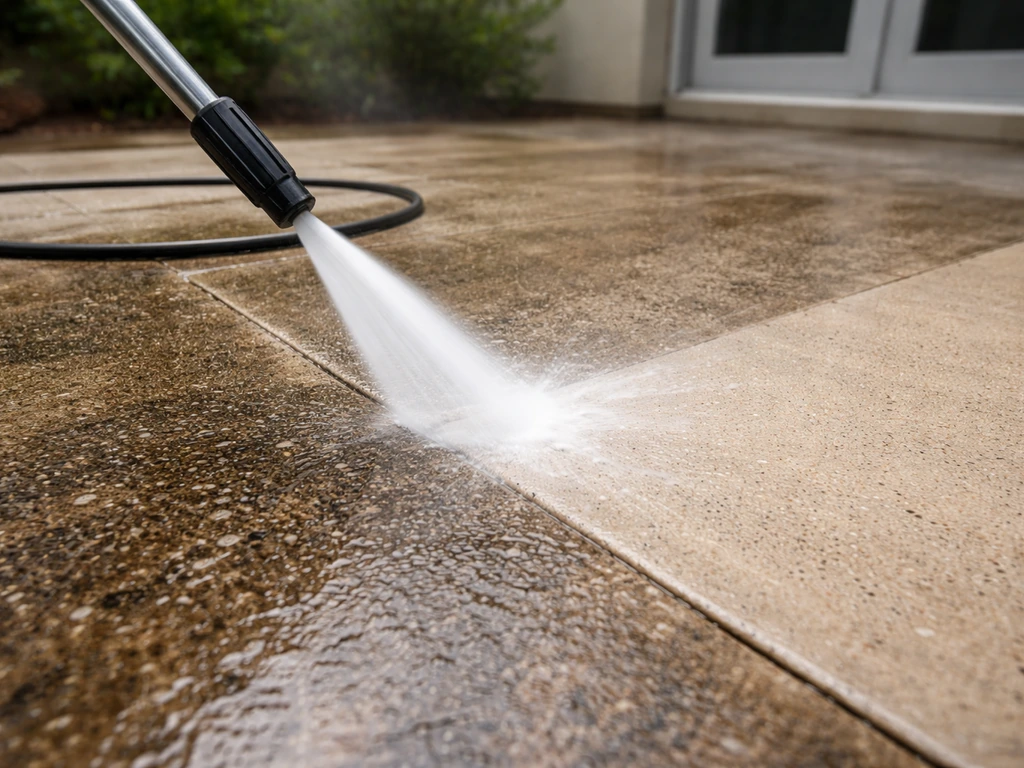
For most patios, the best jet wash setup is a 1,500–2,000 PSI electric pressure washer paired with a rotary patio cleaner attachment, a 25-degree or 40-degree nozzle for general use, and a dedicated patio detergent. That combination gets the job done on concrete, brick, and most natural stone without etching or streaking. If you have sandstone, slate, or porcelain, you need to drop the pressure further and swap to a 40-degree nozzle or a dedicated low-pressure surface cleaner. Kärcher’s guidance also distinguishes nozzle degrees, with a Turbo nozzle for hard surfaces and a 40-degree nozzle for more delicate surfaces. The machine itself matters less than getting the pressure, nozzle, and chemical right for your specific surface.
Best Patio Jet Wash: Choose the Right Cleaner for Your Patio
Rhea Lang
16 May 2026
What 'best patio jet wash' actually means
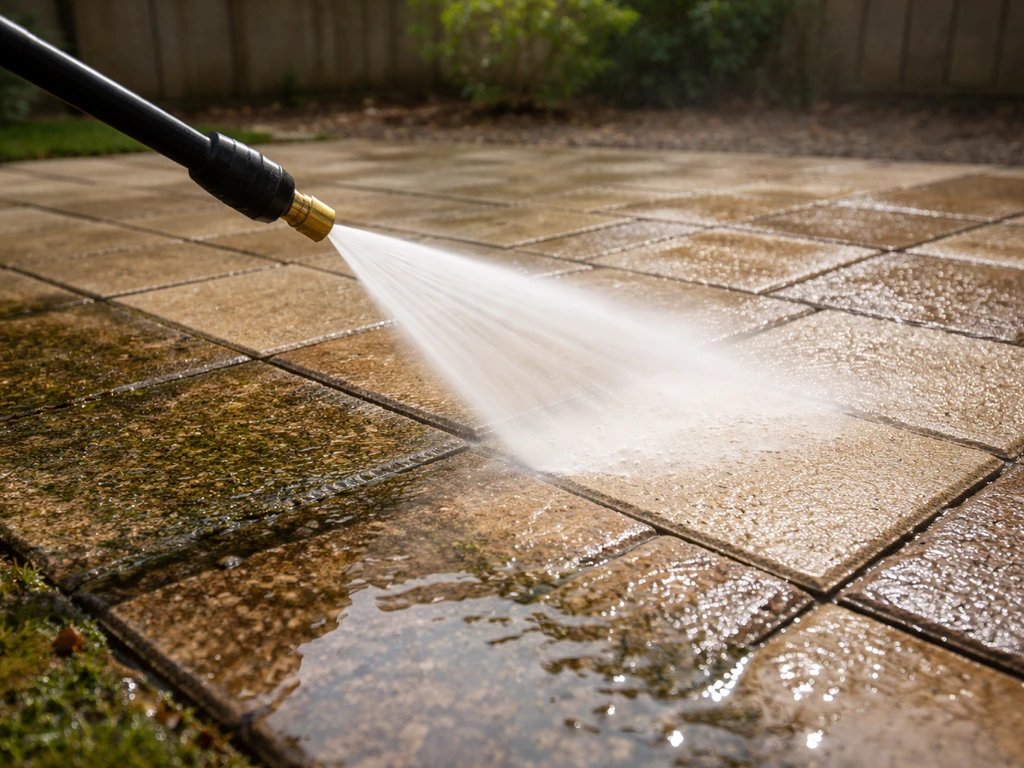
When people search for the best patio jet wash, they usually mean one of two things: the best machine to buy, or the best overall setup for their patio. The honest answer is that the machine is only part of the equation. A mid-range 1,600 PSI electric pressure washer with the wrong nozzle will streak your paving or eat into soft sandstone. The same machine with a patio cleaner attachment and the right detergent will leave your patio looking like it was professionally cleaned. So 'best patio jet wash' really means the right combination of pressure washer, nozzle or attachment, and cleaning chemicals for your surface and your specific grime problem.
There is also a distinction between a jet wash machine on its own and a full patio cleaning system. A lance and nozzle alone will work, but a rotary surface cleaner attachment (the spinning disc head that clips onto your lance) gives far more even cleaning on flat surfaces with no tiger-striping. For anyone doing a full patio clean rather than spot-cleaning a wall or step, the surface cleaner attachment is genuinely worth the extra cost. Keep that in mind whether you are buying a new machine today or configuring one you already own.
Match the jet wash to your patio material
This is the step most people skip, and it is the one that causes the most damage. Every patio surface has a different tolerance for pressure, and getting it wrong is not always obvious at first. Etching and surface erosion on soft stone can look fine when wet and only reveal themselves once the patio dries. Here is how to match your setup to your material.
| Surface | Max Recommended PSI | Best Nozzle / Attachment | Notes |
|---|---|---|---|
| Concrete | Up to 2,000–3,000 PSI | Turbo/rotary nozzle or surface cleaner | Hard-wearing; handles high pressure well |
| Brick (standard) | 1,200–1,600 PSI | 25-degree nozzle or surface cleaner | Avoid pointing directly at mortar joints |
| Natural stone (granite, limestone) | 1,000–1,500 PSI | 25- to 40-degree nozzle | Test in a hidden area first |
| Sandstone | 800–1,000 PSI | 40-degree nozzle, low-pressure surface cleaner | Very soft; etches easily at high pressure |
| Slate | 800–1,000 PSI | 40-degree nozzle | Flaky layers can lift; keep nozzle well back |
| Porcelain | 1,000–1,500 PSI | 25- to 40-degree nozzle or surface cleaner | Grout lines are the weak point; avoid turbo nozzle |
| Block paving | 1,200–1,600 PSI | Surface cleaner attachment | Can dislodge kiln-dried sand from joints; top up after cleaning |
As a rule, if you are unsure about your stone type, start at 800–1,000 PSI with a 40-degree nozzle and a generous nozzle-to-surface distance (at least 30 cm). You can always increase pressure; you cannot undo etching. I learned this the hard way on a sandstone patio years ago when I assumed it would handle the same pressure as the concrete driveway I had just done. It did not.
Best pressure, nozzles, and attachments for common stains
Different stains respond to different combinations of pressure, nozzle type, and dwell time. Pressure alone is rarely the full answer, especially for organic growth like algae and moss where chemistry does most of the heavy lifting. Here is how to approach the most common patio stains.
Algae and moss
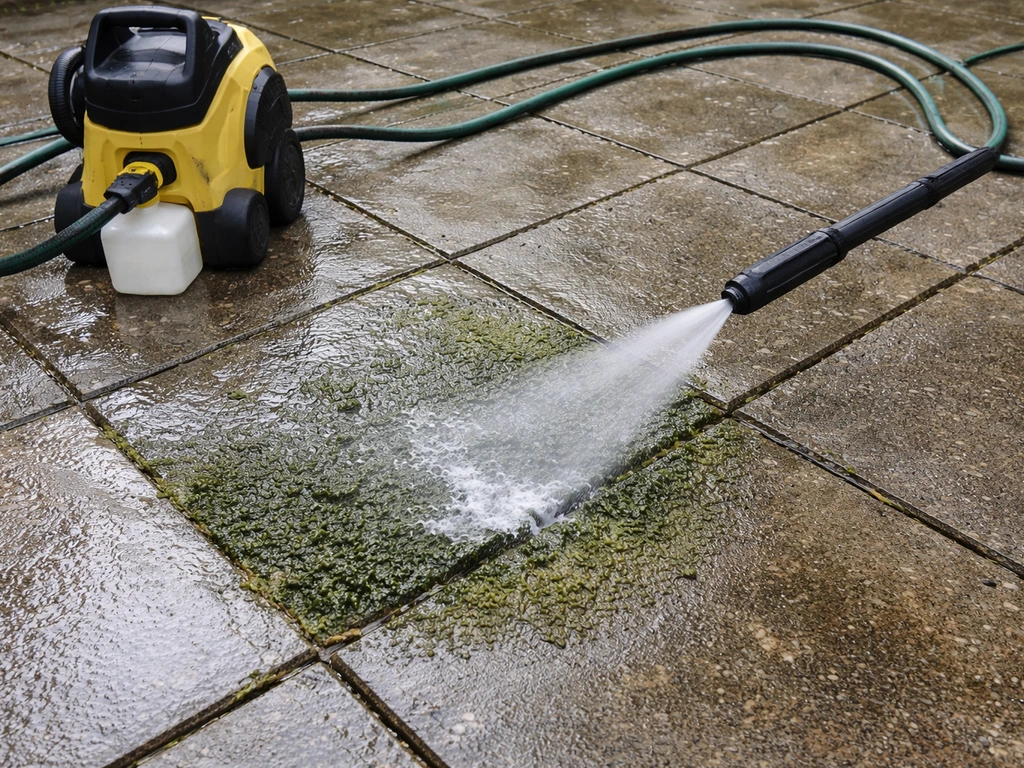
For algae and moss, the best approach is to apply a patio biocide or moss killer first and let it dwell for the time specified on the label. The chemical does the biological work; the jet wash just rinses it away. Use a 25-degree nozzle or a surface cleaner at moderate pressure (1,000–1,500 PSI on hard surfaces, 800–1,000 PSI on soft stone). Trying to blast off thick moss without pre-treatment at high pressure will physically strip the surface and still leave spores behind.
Grease and oil
Grease does not come off with water pressure alone. You need a degreasing detergent applied directly to the dry or barely damp surface, left to work for a few minutes, then agitated with a stiff brush and rinsed with a 15- to 25-degree nozzle at full working pressure. On concrete, a turbo/rotary nozzle works well for the rinse stage. On softer surfaces, stick to a 25-degree nozzle and let the detergent do more of the work.
Rust stains
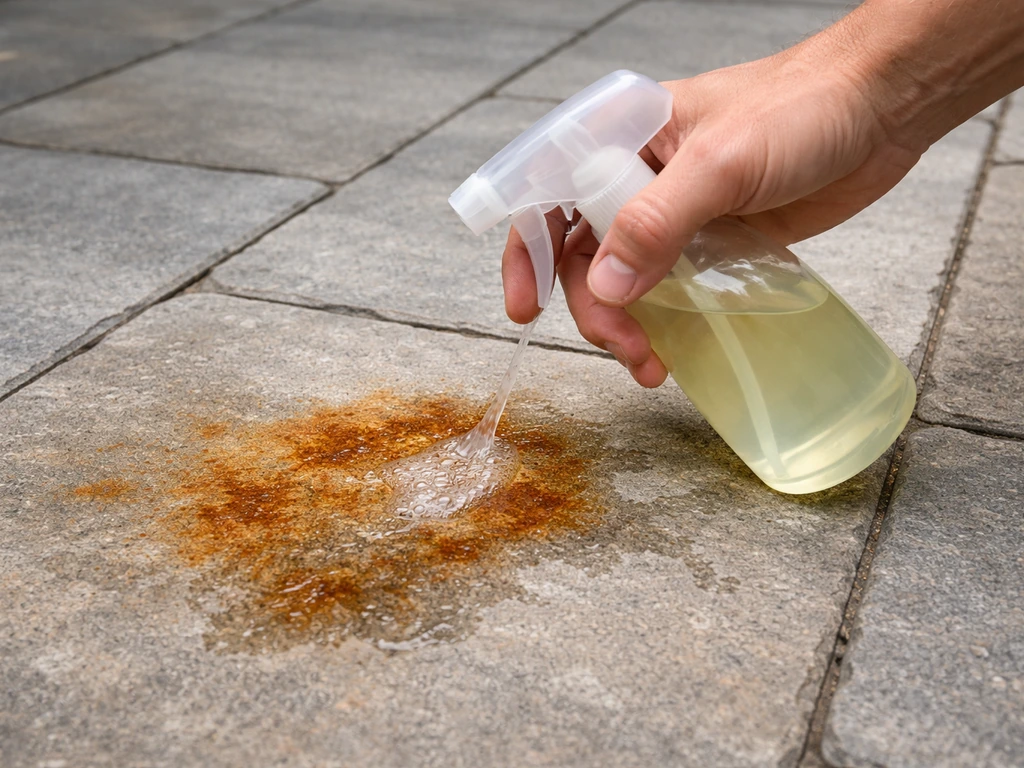
Rust stains come from metal furniture, plant pots, or iron minerals in the stone itself. High-pressure water will not shift them. Use a dedicated rust remover (oxalic acid-based products are effective) applied to the stain, leave it according to the label, then rinse at lower pressure with a 25- to 40-degree nozzle. Do not use a turbo nozzle on rust stains over soft stone as you risk abrading the surface while the rust itself stays put.
Pet stains and organic residues
Pet urine, bird droppings, and similar organic stains respond well to enzyme-based cleaners. Apply the cleaner first, allow it to break down the organic material, then rinse with a 25-degree nozzle. For pet urine, the concern is odour as much as staining, and enzymes are the only thing that actually eliminates the source rather than just masking it. Jet washing alone will spread the residue across a wider area.
Nozzle quick-reference
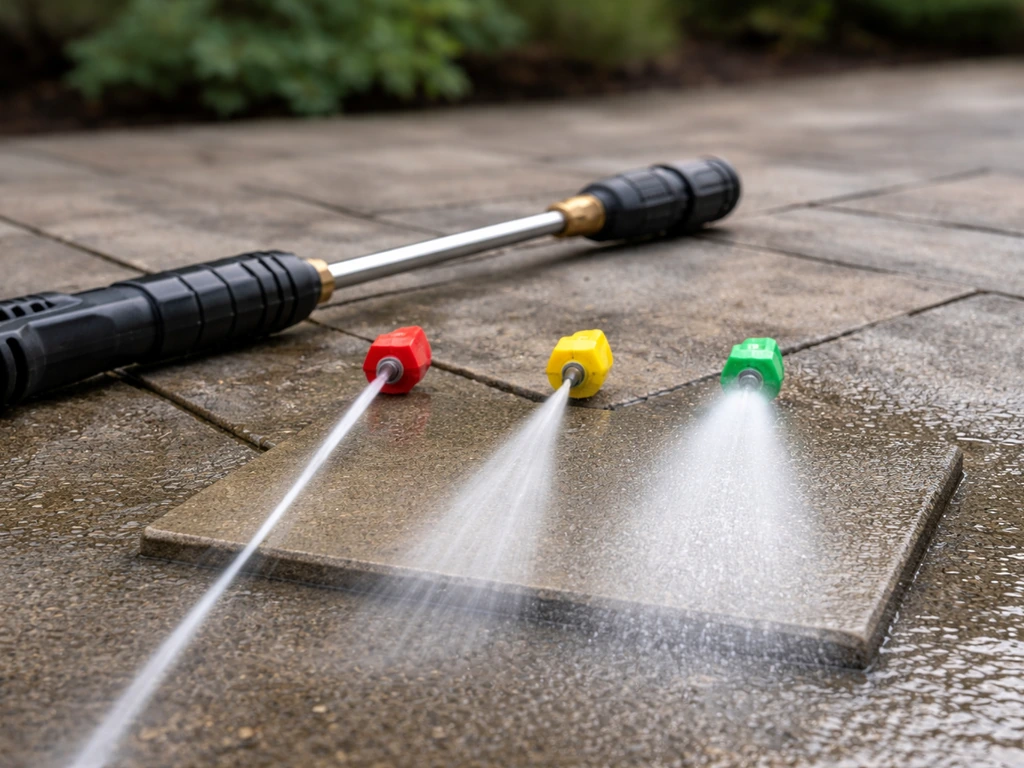
| Nozzle Type | Spray Angle | Best Used For | Avoid On |
|---|---|---|---|
| 0-degree (red) | Pencil jet | Avoid entirely for patio use — safety risk | Everything |
| 15-degree (yellow) | Narrow fan | Concrete spot cleaning, grease rinse | Soft stone, brick mortar, sandstone, slate |
| 25-degree (green) | Medium fan | General hard-surface cleaning, grease rinse | Sandstone, slate, aged soft brick |
| 40-degree (white) | Wide fan | Soft stone, porcelain, delicate surfaces | When you need extra cutting power |
| Turbo / rotary | Rotating pencil jet | Stubborn stains on hard surfaces (concrete) | Soft stone, sandstone, slate, porcelain |
| Surface cleaner attachment | N/A | Flat paving, block paving, concrete | Vertical surfaces, steps (use lance instead) |
How to jet wash your patio safely and effectively
Having the right machine and nozzle means nothing if the technique is wrong. This is the workflow I use and recommend for a full patio clean. It takes longer than just blasting everything at once, but it gets a better result with far less risk of damage.
- Clear the patio completely. Move furniture, pots, and anything else off the surface. Brush off loose debris with a stiff broom so you are not jet washing leaf litter into your joints or drains.
- Apply detergent or treatment first to a dry or barely damp surface. Do not pre-wet the surface if you are using a detergent, as wetting it first dilutes the cleaner and significantly reduces its effectiveness. Apply the correct chemical for your stain type and leave it to dwell.
- Start with your lowest effective pressure. Fit your chosen nozzle (40-degree for soft stone, 25-degree for most other surfaces, surface cleaner for large flat areas), set to the appropriate pressure, and test in an inconspicuous corner first.
- Work in overlapping passes. Hold the nozzle 20–40 cm from the surface (further for soft stone) at a consistent angle. Work methodically in rows or sections rather than randomly moving the wand around. Inconsistent distance causes uneven cleaning and streaking.
- Keep the wand moving at all times. Never let a high-pressure jet sit in one spot, even on concrete. Sustained contact causes etching or surface erosion.
- Rinse thoroughly in the same methodical pattern. Make sure all detergent and loosened grime runs off the surface and away from planted areas. If the detergent is not patio/plant-safe, direct runoff away from borders and lawn.
- Allow to dry and inspect. Some stains need a second pass once dry. Algae and moss sometimes look clean wet but reveal remaining growth when the surface dries, so plan to check the next day.
Which chemicals and detergents to use
Always use detergents specifically formulated for pressure washers. Regular household cleaners can foam excessively, clog your machine's detergent system, and in some cases damage pump seals. The right product depends on what you are cleaning.
- Algae and moss: Patio biocide or outdoor algaecide applied as a pre-treatment. Allow the recommended dwell time (often 15–30 minutes, sometimes longer for thick growth). Products containing quaternary ammonium compounds or benzalkonium chloride are effective. For ongoing prevention, a diluted application after cleaning helps stop regrowth.
- Grease and oil: Alkaline degreaser or patio degreaser detergent applied to the dry surface. Allow 3–5 minutes dwell, agitate with a brush for stubborn spots, then rinse.
- Rust stains: Oxalic acid-based rust remover applied directly to the stain. Follow the label precisely as these are acidic and can affect some stone finishes. Rinse thoroughly.
- Pet stains and odour: Enzyme-based outdoor cleaner. Apply, allow dwell time for the enzymes to break down organic material, rinse.
- General grime and dirt: A multi-purpose patio cleaner detergent applied before the jet wash, or used via the machine's onboard detergent tank if it has one. Most major pressure washer brands (Kärcher, Nilfisk, Sun Joe) offer compatible patio cleaning concentrates.
- Mould and black spot: Purpose-made mould and mildew remover or a bleach-based patio cleaner. Note that bleach-based products can discolour some natural stone and are harmful to plants, so manage runoff carefully.
One practical note on detergent application: many pressure washers can apply detergent through the machine at low pressure via a soap nozzle (usually black, 65 degrees). This is the correct way to apply chemicals through a pressure washer. Do not try to apply detergent through a high-pressure nozzle as it will not dispense properly and risks chemical contact injury. After applying detergent, switch back to your cleaning nozzle for the rinse and cleaning pass.
What to do and what to absolutely avoid
Do these
- Always test pressure and nozzle on a small, hidden area of your patio before doing the whole surface.
- Keep the wand moving constantly and maintain a consistent distance from the surface throughout.
- Use the widest nozzle angle that still cleans effectively — more angle means less risk of surface damage.
- Use a surface cleaner attachment for large flat areas. It gives a more even result and is gentler than a lance and nozzle at the same pressure.
- Top up the sand in block paving and brick joints after cleaning, as jet washing almost always dislodges some of the jointing material.
- Manage chemical runoff. Direct it away from lawns, borders, and drains where possible, especially with biocides and rust removers.
- Clean in sections so detergent does not dry on the surface before you rinse it.
Avoid these
- Never use a 0-degree (red) nozzle on a patio surface. It concentrates all the force into a pinpoint, which will etch or pit virtually any material and is a genuine safety hazard.
- Do not hold the nozzle too close to soft stone (sandstone, slate, aged limestone). Closer than 20–25 cm at working pressure and you risk lifting the surface.
- Do not angle the jet sharply into mortar joints or grout lines. Directing the spray along or into joints erodes the pointing rapidly.
- Do not use a turbo or rotary nozzle on soft stone, porcelain grout lines, or old brick. The rotating jet is aggressive and causes etching quickly.
- Do not pre-wet the surface before applying detergent unless the product specifically instructs you to. Diluting the cleaner reduces its effectiveness.
- Do not let high-pressure runoff pool near your house foundations, and do not wash chemical runoff into storm drains if you can redirect it.
- Do not rush. Overlapping passes too fast leaves uneven cleaning and streaking that becomes very obvious when the surface dries.
Your buying checklist for today
If you are buying or configuring a patio jet wash right now, run through this checklist before you spend anything. Lowe’s notes that higher PSI and GPM generally clean faster and better, but they also cost more. It covers the decisions that actually matter for getting a good result.
- PSI: For concrete and hard paving, 1,500–2,000 PSI is the practical sweet spot for patio use. For soft stone (sandstone, slate), choose a machine you can run at 800–1,000 PSI, which means either an adjustable-pressure model or a lower-rated machine. Higher PSI models (2,500 PSI+) are faster on concrete but less versatile across different patio materials.
- GPM (flow rate): Higher GPM means faster rinsing and better cleaning efficiency. Look for at least 1.4 GPM for patio use. A machine with decent GPM often cleans better than a higher-PSI machine with poor flow.
- Adjustable pressure: Strongly recommended if you have mixed patio surfaces or soft stone. Being able to dial pressure down without swapping nozzles is very convenient.
- Nozzle set: Make sure the machine comes with at least a 25-degree and 40-degree nozzle. If you have hard concrete or block paving, a turbo nozzle is worth having. Avoid machines that only come with one or two fixed nozzles.
- Surface cleaner attachment: If you are cleaning more than about 10 square metres of flat paving, a rotary surface cleaner attachment is worth the extra cost. Check compatibility with your machine before buying separately.
- Detergent tank or compatibility: If you want to apply detergent through the machine, check that it has an onboard detergent tank or accepts a downstream detergent injector. Not all machines have this.
- Power source: Electric pressure washers in the 1,500–2,000 PSI range are more than adequate for most patios and are quieter, lighter, and lower maintenance than petrol models. Petrol is only worth considering for very large areas or professional frequency of use.
- Matching chemicals: Budget for the right detergent or treatment alongside the machine. A patio biocide for algae and moss, a degreaser if you have grease staining, and a general patio cleaner concentrate will cover most situations.
To put it plainly: a 1,600–1,800 PSI electric pressure washer with adjustable pressure, a full nozzle set, and a surface cleaner attachment will handle the vast majority of domestic patios in concrete, brick, block paving, or natural stone. Pair it with the right detergent for your specific stain, follow the technique steps above, and you will get professional-level results without risking damage. If you want the best patio washer results, focus on matching pressure, the right nozzle, and the correct surface cleaner attachment to your patio material. If you want the top tech patio cleaner results, choose a surface cleaner attachment and the matching detergent for your patio material. If you are comparing machines and want more detail on specific models, there are dedicated guides on the best jet washer for patios and the best electric patio cleaners that go deeper on individual products. If you want to compare options, start with a dedicated guide to the best jet washer for patio cleaning so you can pick the right PSI and attachments for your surfaces. But for most homeowners searching today, this setup framework is the practical answer. If you want the easiest way to narrow it down, start with the best patio power washer specs for your surface, then match the nozzle and detergent to the grime.
FAQ
What PSI should I choose if I’m not sure what my patio is made of?
Start conservative, around 800–1,000 PSI, use a 40-degree nozzle, and keep the nozzle at least 30 cm away. Test a small hidden patch first, let it dry, then decide whether to increase pressure, because etching is harder to reverse than under-cleaning.
Should I buy a patio jet wash for the machine, or focus more on the attachments?
For most homes, attachments matter more than the brand of machine. A rotary patio cleaner head plus the correct nozzle and detergent produces more even results and reduces tiger-striping compared with using only a lance.
Can I use a turbo or rotary nozzle on my patio to save time?
Avoid turbo nozzles on anything soft or porous (like sandstone, slate, or some natural stones). Turbo tips can abrade the surface while leaving stains in place, especially for rust, and can cause long-term pitting that is only obvious once dry.
How do I prevent streaks or patchy cleaning with a pressure washer?
Use a surface cleaner for flat areas, keep passes overlapping slightly, and avoid holding the nozzle in one spot. Also rinse after detergent with the correct rinse nozzle, because leftover chemical or grime lifts unevenly as it dries.
What’s the safest way to apply detergent with a pressure washer?
Use the machine’s dedicated detergent system at low pressure with the correct soap nozzle (often black). Do not try to dispense detergent through a high-pressure nozzle, it can clog the system, waste chemical, and increase the chance of chemical splash contact injury.
How long should I let patio detergent or stain treatment sit before rinsing?
Follow the label dwell time for the product you’re using, since dwell time depends on the chemistry and the surface. A common mistake is rinsing too soon, which leaves stains behind and makes you repeat the wash with higher pressure.
Do I need to pre-treat algae and moss, or can I blast it off?
Pre-treat. For algae and moss, use a biocide or moss killer first and let it dwell as directed, then rinse. High-pressure blasting may strip the surface and still leave spores behind, so the growth returns sooner.
What’s the best approach for grease and oil stains on concrete?
Apply a degreasing detergent to dry or barely damp concrete, let it work for a few minutes, then agitate with a stiff brush. After that, rinse at full working pressure with a 15- to 25-degree nozzle, using a turbo or rotary nozzle only for the rinse stage.
How do I remove rust stains without spreading them?
Use a dedicated rust remover, commonly oxalic acid-based, applied directly to the stain and left for the label time. Then rinse with lower pressure using a 25- to 40-degree nozzle. Don’t rely on water pressure alone, and avoid turbo on soft stone.
Will jet washing remove pet urine completely?
Jet washing can spread residue and won’t always eliminate the odor source. Use an enzyme-based cleaner first, allow it to break down the organic matter, then rinse with a 25-degree nozzle. This is especially important for odor control.
Is it okay to pressure wash porous paving or block paving at high pressure?
It depends on the specific material and its condition. Even hard surfaces can degrade if you overdo pressure or stay too long in one area. Use moderate pressure for general cleaning, and spot-test in an out-of-sight area before scaling up.
What technique errors cause the most damage during patio jet washing?
The biggest issues are using too much pressure too soon, using the wrong nozzle angle for the surface, and repeatedly dwelling on one patch. Etching often looks fine while wet and becomes obvious after drying, so test first and adjust gradually.
How do I decide between using a lance and using a rotary surface cleaner head?
Use a rotary surface cleaner for broad flat areas to get more uniform cleaning and fewer striping marks. Use a lance for edges, steps, tight corners, and around furniture where the head cannot reach evenly.
Can I use regular household soap instead of pressure-washer detergent?
It’s not recommended. Regular cleaners can foam excessively, interfere with the detergent system, and in some cases harm pump seals. Use products formulated for pressure washers so they rinse clean and work properly through the chemical pickup system.
Next Article
Best Patio Power Washer: Buying Guide by Surface Type
Choose the best patio power washer by surface type and PSI/GPM, with tips, accessories, safety, and step-by-step use.