Clorox Patio & Deck Cleaner is a ready-to-use, bleach-based outdoor cleaner that works best on algae, mildew, and surface mold on sealed concrete, stone, and sealed wood decking. You apply it straight from the bottle, scrub if needed, and rinse. On the right surfaces with a decent amount of biological growth or mildew staining, it genuinely delivers. On deep-set rust, greasy stains, or very heavy moss, it struggles without extra effort. Here is everything you need to know to use it properly and get the results reviewers describe.
Clorox Patio and Deck Cleaner Reviews: What to Expect

Rhea Lang
29 Apr 2026
Quick take: what Clorox Patio & Deck Cleaner actually is
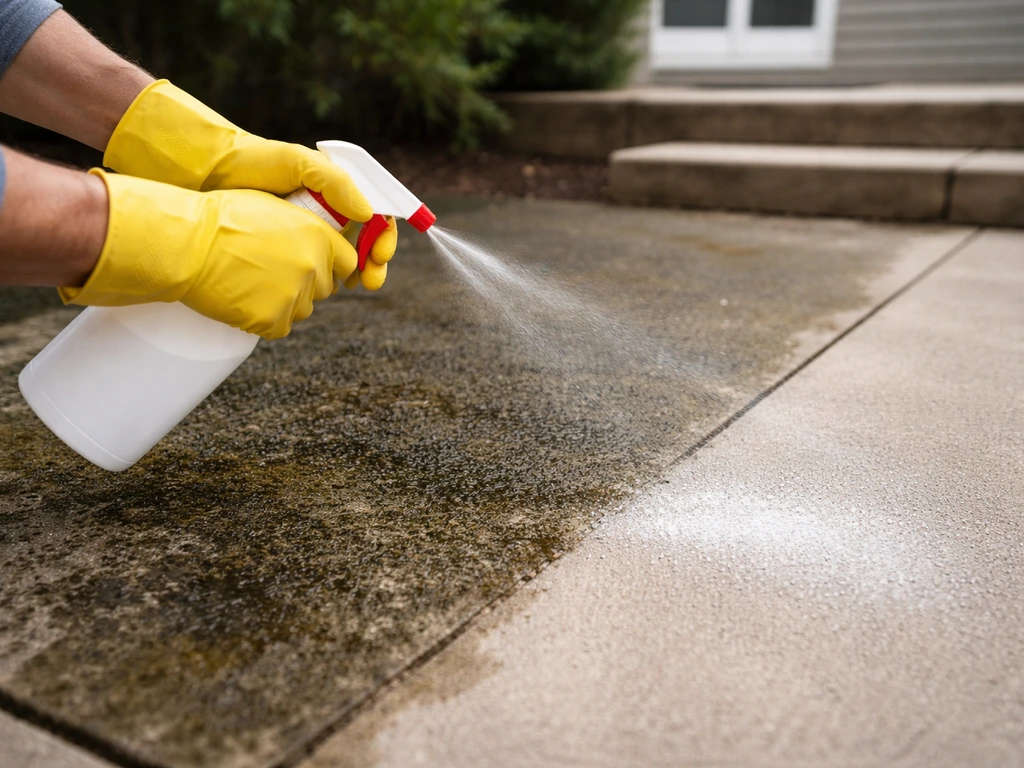
The active ingredients are sodium hypochlorite (1–5%) and sodium hydroxide (0.1–1%), plus lauramine oxide as a surfactant. In plain terms: it is a diluted bleach solution with a bit of alkaline cleaner and a detergent to help it spread and penetrate. The sodium hypochlorite does the heavy lifting against mold, mildew, algae, and mildew discoloration. The surfactant helps lift loose dirt and grime so the bleach can reach the surface underneath.
It comes as a clear, pale-yellow liquid in a 128 oz (one gallon) bottle. There is no mixing required, which is genuinely convenient compared to products that require you to measure and dilute. Clorox markets it as a quick-rinse formula, meaning you apply, scrub as needed, and rinse off. Coverage is roughly 250 to 500 square feet per gallon depending on how dirty the surface is, so a heavily mildewed deck will burn through it faster than a lightly stained patio.
Where it earns its price: slippery, mildew-covered decks and patios that need biological growth removed quickly. Where it falls short: it is not a degreaser, it will not dissolve heavy moss roots on its own, and it does nothing for rust. Keep those limits in mind and it becomes a genuinely useful tool.
What real reviewers actually say
What people like about it
- Convenience: no measuring, no mixing, no guessing at dilution ratios. Reviewers consistently mention this as a major plus.
- Effective against mildew and algae staining: one reviewer reported their deck "looks new" after using it on slippery, unsafe growth. Another noted it "definitely gets the stains up" on build-up grime, dirt, and mold.
- Scent: several reviewers describe it as smelling "fresh and clean" rather than a harsh chemical odor, which matters when you are working outdoors for a while.
- Easy application: pour or spray on, scrub with a brush, rinse. The simplicity matches what the label says.
Common complaints and honest weaknesses
- Does not work as well on thick, established moss: the bleach kills surface growth but does not always loosen packed-in roots without heavy scrubbing.
- Coverage runs out faster than expected on heavily soiled surfaces: 250 sq ft per gallon is a realistic expectation on a dirty deck, not the optimistic 500 sq ft.
- Needs a scrub brush for tougher spots: some buyers expect a no-scrub result and are disappointed when passive application alone does not remove heavy "black yuck."
- Does not touch rust stains, oil, or grease: reviewers looking for a multi-purpose cleaner are often let down here.
- Results vary by dwell time: people who rinse too quickly get mediocre results. Letting it sit a few minutes makes a noticeable difference.
The overall pattern in reviews is positive when the surface matches the product's strengths (biological growth on sealed hard surfaces or sealed wood) and negative when people use it on stain types it was never designed to tackle. Adjust your expectations accordingly and it performs reliably.
How to use it on patios vs. decks
Patios (concrete, stone, brick)
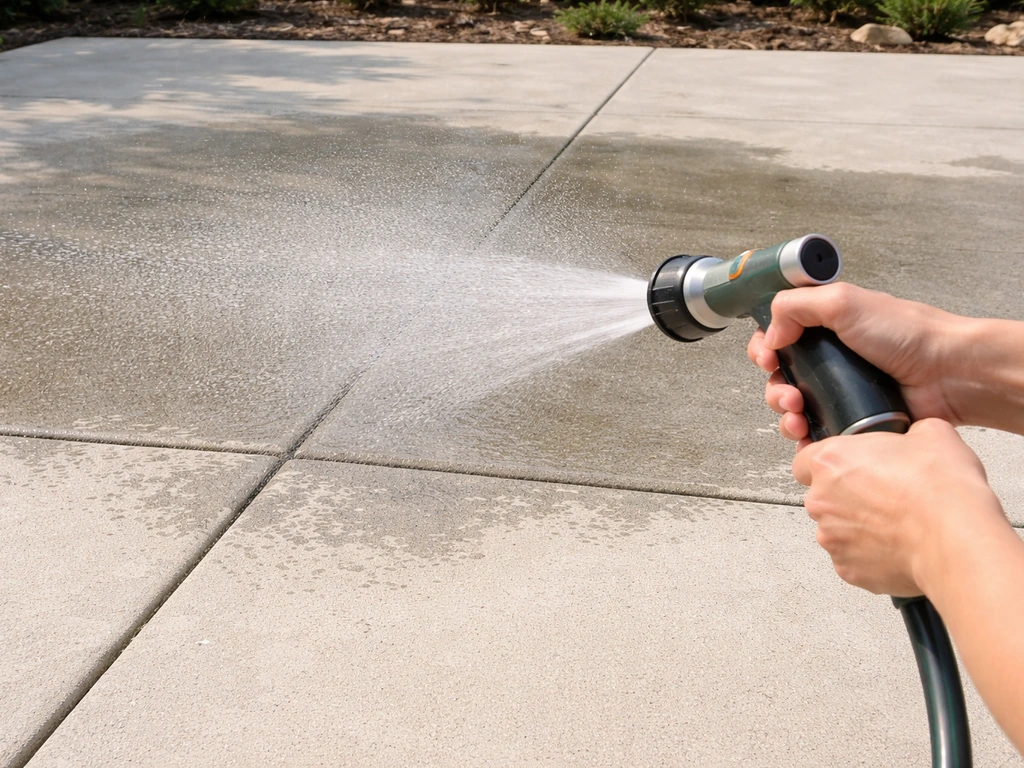
- Pre-wet the surface with plain water. This helps the cleaner spread evenly and prevents it from soaking into dry porous concrete unevenly, which causes streaking.
- Pre-wet or cover any nearby plants, grass, or shrubs you want to protect. More on this in the safety section.
- Apply the product directly to the surface. No diluting needed. Pour from the bottle or decant into a pump sprayer for better control on large areas.
- Let it dwell for 3 to 5 minutes on lightly stained surfaces, or up to 10 minutes on heavier algae or mildew growth. Do not let it dry on the surface.
- Scrub with a stiff-bristle deck brush for any stubborn patches. On light staining, you may be able to skip this step.
- Rinse thoroughly, including the surrounding areas, plants, and any grass that might have contacted runoff. The label is explicit: rinse treated and surrounding areas when complete.
Wood decks (sealed wood)
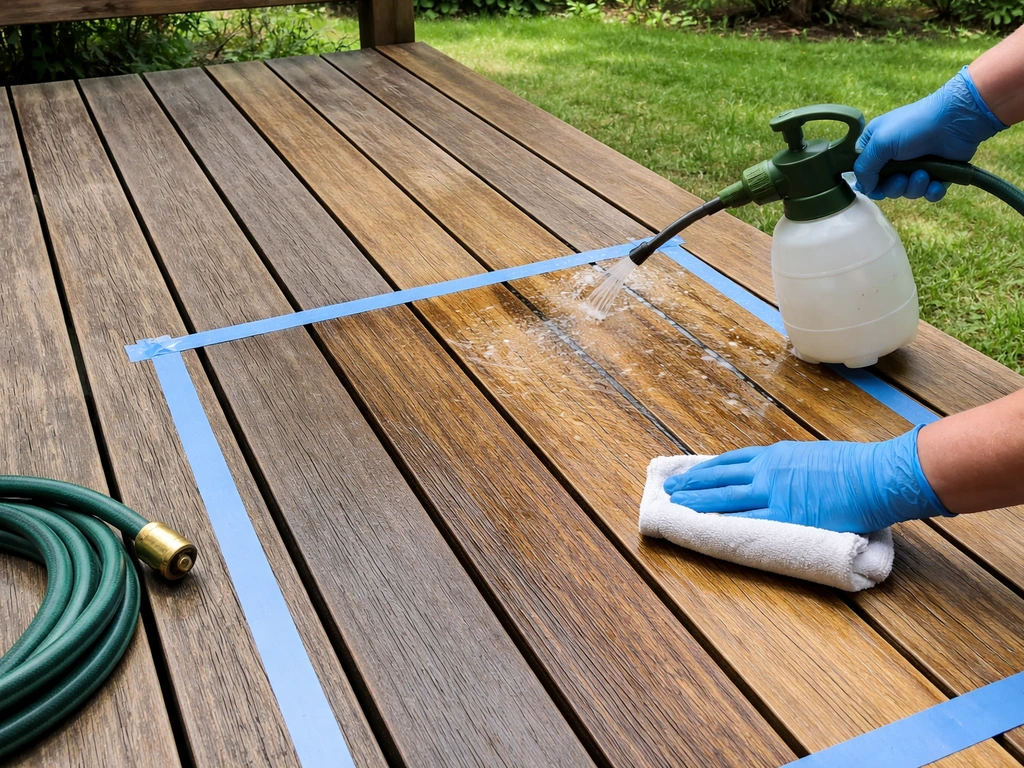
- Check that your deck is sealed. The manufacturer specifies "sealed wood" only. Applying bleach-based cleaner to bare, unfinished wood can raise the grain, dry it out, and strip any remaining natural oils.
- Pre-wet the boards with water before applying, especially on a warm day. This slows absorption and helps even coverage.
- Apply the cleaner and keep the dwell time shorter than on concrete: 3 to 5 minutes maximum. Bleach on wood does its job fast and prolonged contact can lighten the wood color.
- Use a soft-bristle brush rather than a stiff one to avoid scratching or raising the grain.
- Rinse thoroughly along the grain and let the deck dry completely before walking on it or replacing furniture.
One practical note: on decks, work in sections rather than treating the whole surface at once. This way you can control dwell time precisely and rinse before any section dries, which is where streaking happens.
Surface-by-surface guide: what to expect and what to avoid
| Surface | Performance | Key precautions |
|---|---|---|
| Sealed concrete | Excellent for algae, mildew, and mold staining. Good general cleaning. | Pre-wet to avoid streaking. Rinse runoff away from drains. |
| Brick | Good on mildew and surface algae. Less effective on deep mortar staining. | Avoid prolonged contact which can lighten mortar joints. |
| Natural stone (flagstone, slate) | Use with caution. Bleach can etch or dull some natural stone finishes over time. | Test a small hidden area first. Short dwell time, thorough rinse. |
| Sandstone | Higher risk. Sandstone is very porous and can absorb bleach unevenly, causing discoloration. | Avoid or test carefully. Consider a pH-neutral stone cleaner instead. |
| Porcelain pavers/tiles | Generally safe on glazed porcelain. Effective on surface algae and mildew. | Avoid unsealed grout lines where bleach can cause lightening. |
| Sealed wood decking | Good for mildew, algae, and surface grime on sealed boards. | Use only on sealed wood. Short dwell time, soft brush, thorough rinse. |
| Composite decking | Not recommended without checking your deck manufacturer's guidelines first. | Many composite manufacturers void warranties if bleach-based cleaners are used. |
The concrete and sealed wood results are where this product consistently earns good marks. Natural stone is where I would always patch-test before committing to the whole surface. Sandstone in particular absorbs liquids aggressively, and I have seen bleach-based cleaners leave permanent lighter patches on it. If you have sandstone or delicate natural stone, a pH-neutral patio cleaner is the safer call.
Stain-by-stain breakdown: what it handles and what it won't
Algae and mildew staining
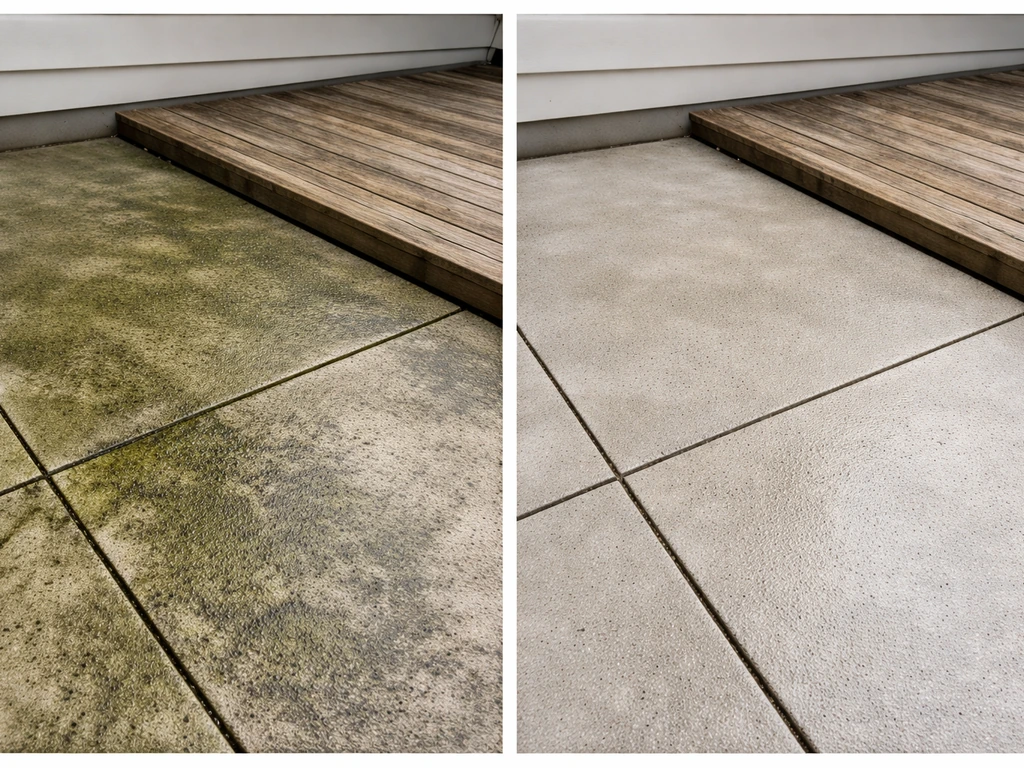
This is the product's core strength. Green or black algae discoloration on concrete, stone, or wood decks responds well to sodium hypochlorite at this concentration. Mildew staining (the grey-black streaks you see on weathered decks and patios) also clears up reliably, especially with a few minutes of dwell time before rinsing. Most positive reviews are in this category.
Mold and slippery biological growth
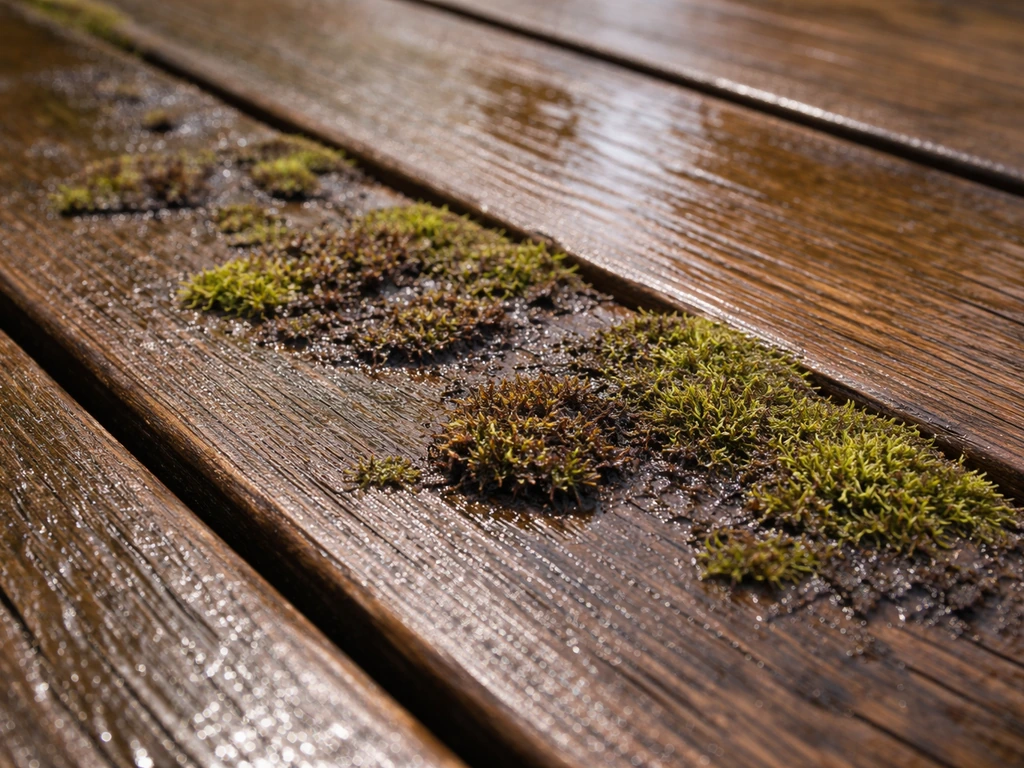
Works well. One reviewer specifically noted they treated their deck because it had become slippery and unsafe, and the cleaner restored it. For surface mold (the fuzzy or slimy growth you see after a wet season), this product kills and removes it effectively with scrubbing.
Moss
Partial results. The bleach kills moss, turning it from green to brown/black, but thick established moss with deep root structures does not just wash away. You will likely need to scrub hard and potentially do a second treatment. For heavy moss, a product with a longer dwell time and a penetrating formula (like a sodium percarbonate-based cleaner) often works better. Bleach is a fast kill, not always a deep clean in this case.
Grease and oil
Not effective. The chemistry here is wrong. Sodium hypochlorite does not break down oils or grease. For barbecue grease, cooking oil drips, or mechanical oil stains, you need a degreaser, a citrus-based cleaner, or a dedicated concrete degreaser. Using this product on a grease stain will clean the surrounding mildew and leave the grease stain looking even more obvious.
Rust stains
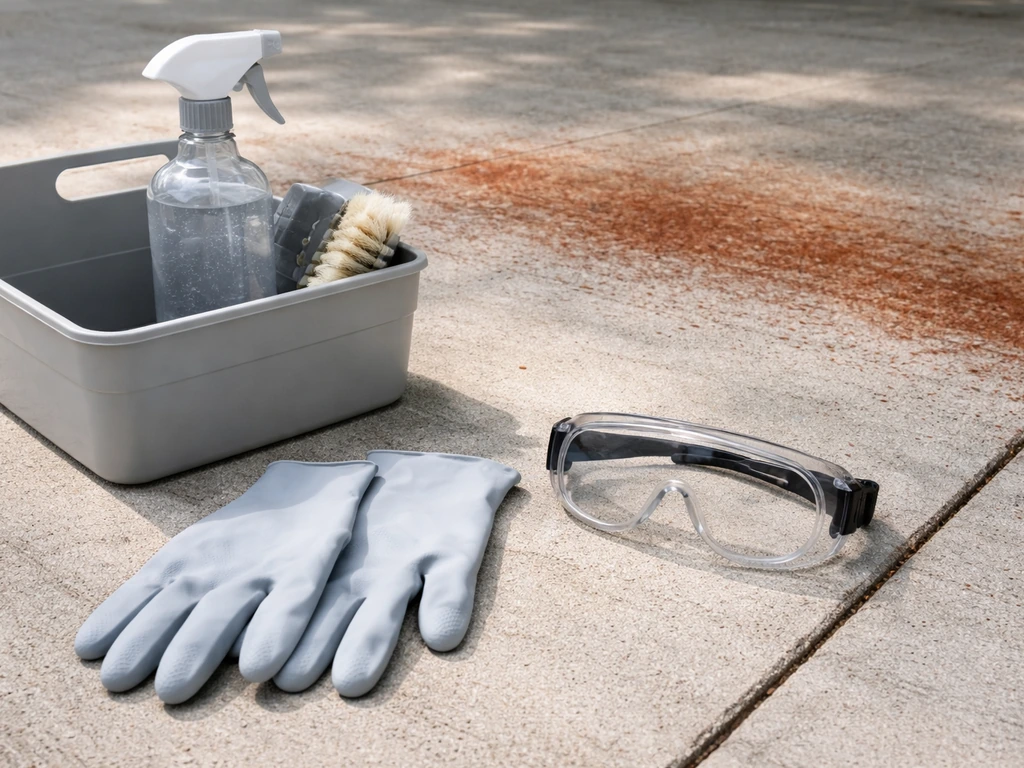
Does nothing. Rust requires an acid-based cleaner (oxalic acid is the most common for patios). Bleach can actually make rust stains look worse by oxidizing them further. If you have rust from metal furniture, planters, or fittings, skip this product entirely for those spots and use a dedicated rust remover.
Pet stains and organic odors
Bleach is effective at killing bacteria and neutralizing odors from pet urine on concrete. However, you need to keep pets off the surface until it is fully rinsed and dried. For urine odors embedded in porous concrete, an enzymatic cleaner followed by this product is a more complete solution. The bleach kills odor-causing bacteria but does not break down the uric acid crystals the way enzymes do.
Safety and environmental precautions
Protecting plants and grass
The product listing states it "will not harm plants or lawns" when used as directed and surrounding areas are rinsed. That caveat matters. Pre-wet any plants, grass, or shrubs bordering your work area before you start, and rinse them again after you are done. Direct application of the undiluted product to plant leaves or roots can cause damage. Runoff into planted beds is the main risk. The SDS is also explicit that the product is toxic to aquatic life, so keep it away from garden ponds, water features, and storm drains.
Pets and pools
Keep pets off the treated surface until it has been thoroughly rinsed and has dried completely. The sodium hypochlorite concentration is low compared to pool shock, but direct paw contact with wet product and then self-grooming is a risk. For pools: do not apply near the pool edge when wind could carry spray into the water. The chlorine content is negligible at this dilution, but pH-altering chemicals in a pool are not something you want to deal with. The label warning against letting product or rinse water enter water bodies is a real one.
PPE and mixing warnings
Wear rubber or nitrile gloves and eye protection. The SDS flags serious eye irritation as a hazard: if it contacts eyes, rinse for a full 15 minutes. Work in a well-ventilated outdoor space, which is not usually a problem since you are outside, but avoid using it in still, enclosed areas like covered patios with no airflow on a hot day. Most importantly: do not mix this product with anything else. The label specifically calls out ammonia-based cleaners, toilet bowl cleaners, rust removers, vinegar, and acids. Mixing bleach with ammonia or acids releases toxic gases. This is not a marketing disclaimer, it is genuine chemistry. Use it alone.
Nearby surfaces
Be careful around painted surfaces, stained wood fences, colored grout, and metal fixtures. The bleach content can lighten or strip paint, fade stained wood, and cause mild corrosion on uncoated metals if left in contact. Mask off or pre-wet adjacent surfaces, and rinse quickly if any product contacts them.
When results disappoint: troubleshooting guide
Stains are still there after rinsing
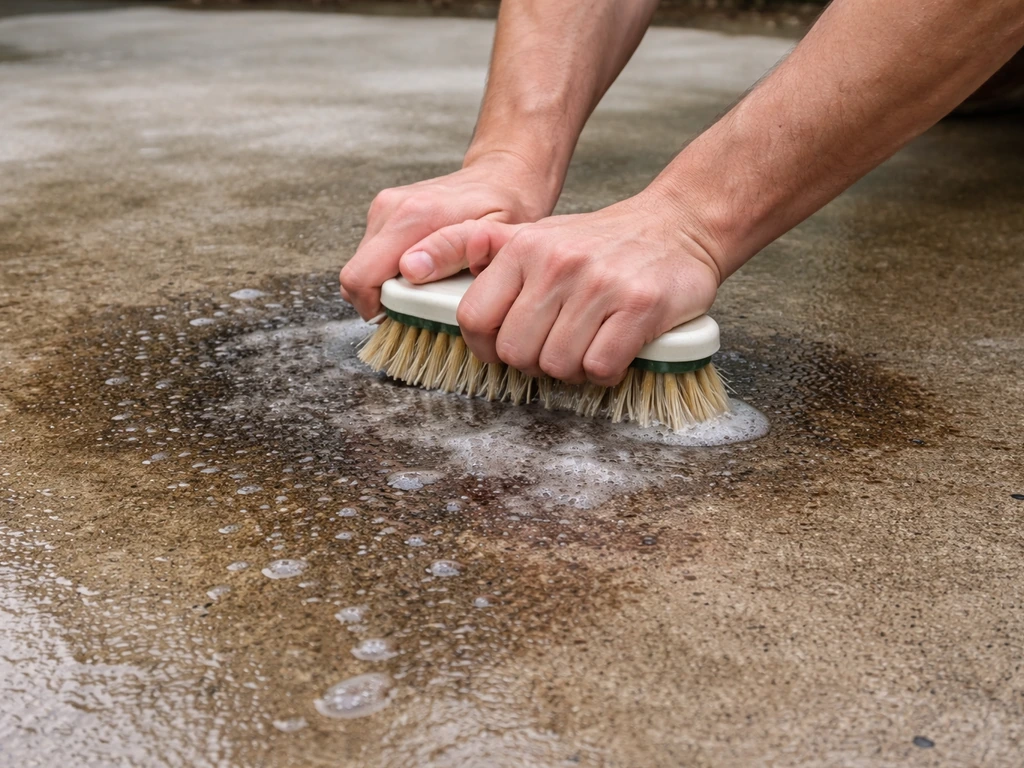
First check: was the dwell time long enough? Most application failures come from rinsing too soon. Reapply, let it sit for 8 to 10 minutes, and scrub actively with a stiff brush before rinsing. If it still does not shift, identify what the stain actually is: if it is rust or grease, you are using the wrong product and need to switch to a dedicated rust remover or degreaser.
Moss and algae came back quickly
Bleach-based cleaners kill growth on contact but do not leave a residual preventative layer. If your surface stays damp or shaded, regrowth can happen within weeks. After cleaning, consider applying a moss and algae preventer, or address the underlying drainage or shade issue. Some homeowners get better long-term results from no-rinse products like Wet & Forget Outdoor that leave a residual active ingredient on the surface, though the trade-off is that results take longer to appear (weeks rather than hours). If you are comparing windex outdoor glass and patio cleaner reviews, this no-rinse, longer-wait approach is a helpful benchmark for how different cleaners perform over time Wet & Forget Outdoor.
Streaking or uneven results
Almost always caused by applying to a dry surface or letting sections dry before rinsing. Pre-wet the surface next time, work in manageable sections, and rinse each section before moving to the next.
When to bring in a pressure washer
If after two treatments with proper dwell time and scrubbing you still have significant staining, a pressure washer is your next step. For biological growth (algae, mildew, moss), applying this cleaner, letting it dwell, and then using a pressure washer to rinse is a very effective combination. The chemical loosens the growth and the mechanical force removes it. Use a 25-degree tip on concrete and a 40-degree tip on wood or stone to avoid surface damage.
When to switch products entirely
If you have a surface that is incompatible with bleach (unsealed sandstone, bare untreated wood, or composite decking with a manufacturer restriction), switch to an oxygen bleach or sodium percarbonate-based cleaner, which is gentler and safer for a wider range of surfaces. For persistent deep-stain mold or severe moss, products like Mold Armor E-Z Deck, Fence and Patio Wash or Scotts Outdoor Cleaner are worth looking at as alternatives, each with slightly different chemistry and application methods. For Scotts Outdoor Cleaner, follow the patio and deck instructions on the label, including how long to let it dwell before rinsing. Scotts Patio and Deck Zero Scrub is also worth considering if you need something hands-off for large areas. If you need zero chlorine and are happy to wait days or weeks for results, Wet & Forget-style products are a valid no-effort alternative.
Your practical next steps before you buy or apply
- Confirm your surface type and whether it is sealed. Check your patio or deck material before buying. If you have sandstone, unsealed natural stone, composite decking, or bare wood, this is not the right product.
- Estimate your coverage. Measure your square footage. For a heavily mildewed surface, budget one gallon per 250 sq ft. For a lightly stained surface, you can push to 400–500 sq ft per gallon.
- Identify your stain type before you start. Biological growth (green, black, grey, slimy): this product works. Rust, oil, or grease: buy a different cleaner for those spots first.
- Pre-wet plants and nearby surfaces, put on gloves and eye protection, and have your garden hose set up before you open the bottle.
- If one treatment is not enough, do a second pass with a longer dwell time (up to 10 minutes) and a stiff brush before concluding the product is not working. Most failures are application failures, not product failures.
FAQ
Can I use clorox patio and deck cleaner on every type of stain, or only certain ones?
Yes, but only for the right stains. For algae and mildew discoloration on sealed concrete, stone, or sealed wood, it can work after a patch-test. For grease, rust, or embedded odors, it typically will not solve the core problem and can make results look worse (rust can darken).
Why do some sections come out clean while others stay stained when using clorox patio and deck cleaner?
Treat dwell time like the main control knob. If you scrub and rinse immediately, results often look “patchy” because the bleach did not have enough time to kill and lift growth. Reapply in that spot and aim for about 8 to 10 minutes before rinsing, then scrub while it is still wet.
Is it okay to mix clorox patio and deck cleaner with other patio cleaners or detergents to boost results?
Do not. Even though the product is ready-to-use, you can still create uneven strength by spraying some areas, letting other areas dry, or combining it with other cleaners on the same surface. Always use it alone, then rinse thoroughly before any follow-up cleaning step.
How do I protect lawn and plants when using this bleach-based cleaner?
For best safety and finish, pre-wet nearby plants and then keep runoff away from beds, ponds, and storm drains. After you finish, rinse the surrounding soil and vegetation lightly again. If you see product running into planters, stop and redirect with a hose stream.
Will clorox patio and deck cleaner damage painted railings, stained fences, or colored grout?
Yes, with patch testing and quick rinse. Painted surfaces and stained wood can lighten, especially if the cleaner stays in contact. Mask off edges, apply to a small hidden area first, and rinse as soon as the surface looks treated rather than letting it sit longer than needed.
Does this cleaner leave a protective residue to prevent algae and mildew from returning?
It depends on what you mean by “safe.” It can lighten grout discoloration and kill bacteria, but it will not provide long-term prevention. Expect regrowth on shaded or damp areas unless you address shade, drainage, or apply a dedicated algae or moss preventer after cleaning.
I already used it, but the deck still looks spotty. What should I try next?
Often you will not need a full saturation rewash. If the surface dries during work, you can usually fix it by reapplying to the missed spots, keeping them wet for the dwell time, scrubbing, and rinsing immediately. If staining is rust or grease, switch products instead of repeating bleach.
Will clorox patio and deck cleaner remove pet urine odor completely?
For pet-related odor on concrete, bleach can reduce odor sources by killing bacteria, but it does not break down uric acid crystals the way enzymes do. A more complete approach is an enzymatic cleaner first, then this product as a follow-up after you confirm the concrete is thoroughly treated and rinsed.
What application method helps prevent streaks and uneven lightening?
Use a brush and a section plan. Apply, scrub only where needed, and rinse each section before moving on. If you are seeing streaks, the most common cause is sections drying out, which leaves active residue and uneven bleaching.
Should I use a pressure washer after using this cleaner, and what nozzle angle should I choose?
Yes, pressure washing can help, especially after dwell time. Let the chemistry loosen the growth first, then rinse with controlled pressure. Use gentler tips (around 25 degrees for concrete, around 40 degrees for wood or stone) and keep the nozzle moving to avoid etching or raising grain.
Why does moss look darker or still present after using clorox patio and deck cleaner?
If you have heavily established moss with thick mats or deep roots, expect partial cleaning. Bleach can kill, but it may not remove all material, and you may need a second pass plus aggressive scrubbing. For deeply rooted moss, a longer dwell, penetrating oxygen-based cleaner is often a better match.
What should I do if rust stains appear or get worse after using the cleaner?
If you have rust, stop and switch immediately. Bleach-based chemistry can oxidize rust and worsen visibility. For rust from furniture or metal fittings, use an oxalic-acid rust remover and rinse well before returning to any algae or mildew treatment.
Next Article
Windex Outdoor Glass and Patio Cleaner Reviews: Results, How to Use
Windex Outdoor glass and patio cleaner reviews with dilution, application steps, real results, and surface safety tips.