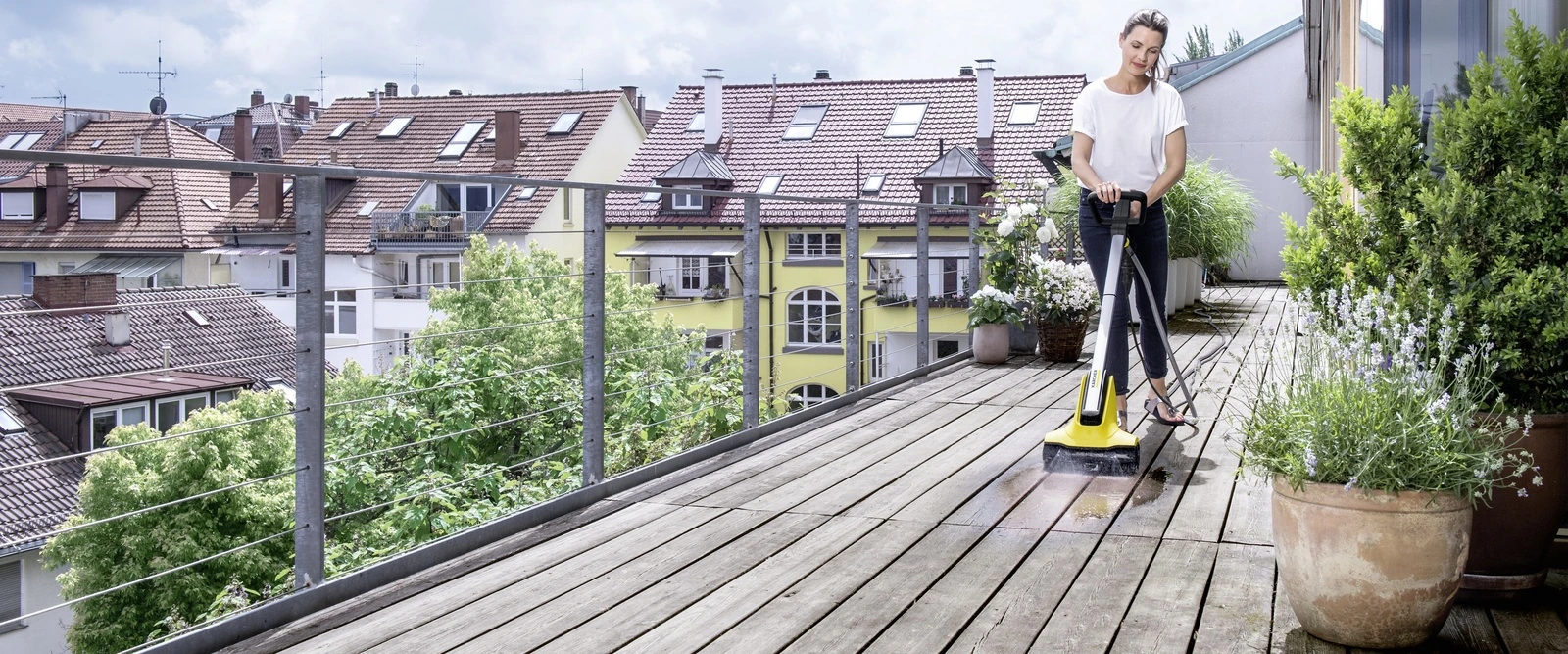
Mix Kärcher RM 564 concentrate at a 1:9 ratio (0.5 L concentrate to 4.5 L tap water), apply the diluted solution to a pre-wetted patio surface, let it dwell for around 10 to 15 minutes, agitate stubborn patches with a stiff brush, then rinse thoroughly with your pressure washer. That's the core process. The details below make the difference between a patchy result and a clean that actually lasts.
How to Use Karcher Patio Cleaner Fluid With a Pressure Washer
Rhea Lang
6 Jul 2026
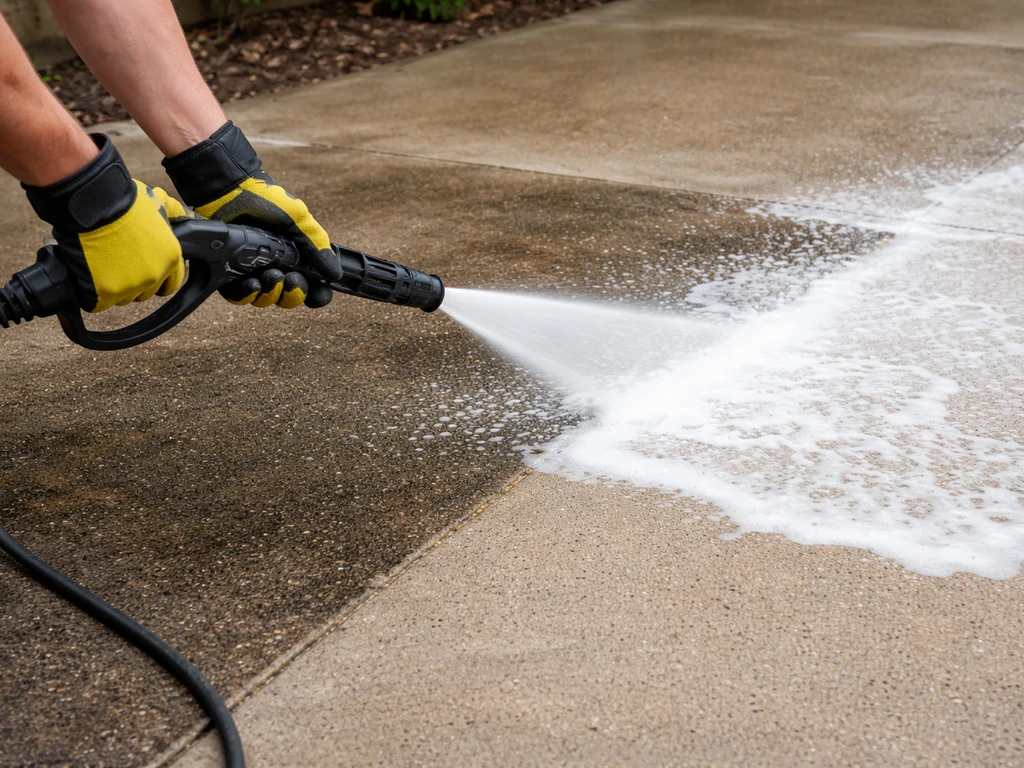
What Kärcher patio cleaner fluid is and when to use it
Kärcher's main patio cleaning fluid is the Patio and Deck Cleaner Concentrate RM 564 (part no. 6.295-842.0). It's a highly concentrated formula sold in a 500 ml bottle that's designed for what Kärcher calls 'material-friendly cleaning' of outdoor hard surfaces. One bottle makes 5 litres of ready-to-use solution, which is enough to cover a decent-sized patio in one go.
It's formulated to tackle the main things that make a patio look grim: green growth (algae, moss, and lichen), oil and grease stains, general pollution and soot deposits, and even rust marks. That's a solid range for a single product. Where it earns its keep is on patios that have been left for a season or two and have that grey-green tinge from algae or a slippery moss coating. Pressure washing alone moves the surface dirt, but it often just flattens growth rather than killing it. The fluid does the chemical work that water alone can't.
That said, it's not the right tool for every job. If your patio just has dust and light dirt, plain pressure washing is quicker and cheaper. And if you've got heavy rust staining or deep oil penetration into concrete, you'll likely need a more targeted product. RM 564 is best positioned as an all-round seasonal cleaner rather than a specialist stain remover.
Prepare the surface before you apply anything
Don't skip this step. Surface prep changes how well the cleaner works and prevents a few expensive mistakes, especially on sensitive materials.
General prep for all surfaces
- Clear the patio completely. Move furniture, plant pots, decorations, and anything else off the surface.
- Sweep off loose debris, leaves, and grit with a stiff broom. If you leave leaf litter sitting there, the cleaner soaks into that instead of the paving.
- Cover nearby plants, grass edges, and borders with plastic sheeting. RM 564's safety data sheet explicitly warns against allowing it to enter surface water or drains, and garden plants are vulnerable to chemical runoff.
- Block or cover any open drains in or around the patio for the same reason.
- Pre-wet the entire surface with your pressure washer or a hose before applying the fluid. This matters because dry paving absorbs the solution too fast and unevenly, which causes streaks.
Surface-specific cautions
| Surface | Risk level | Specific prep notes |
|---|---|---|
| Concrete | Low | Generally tolerates RM 564 well. Pre-wet thoroughly and avoid letting the solution dry out before rinsing. |
| Brick pavers | Low to medium | Check for efflorescence (white salt deposits) first. Clean those separately before applying fluid. |
| Natural stone (e.g. limestone, slate) | Medium | Test a small hidden area first. Acidic cleaners can etch some natural stones. RM 564 is not strongly acidic but stone varies. |
| Sandstone | Medium to high | Sandstone is porous and soft. Use a very dilute mix and shorter dwell time. Avoid high pressure settings. |
| Porcelain tiles | Low | Non-porous, so the fluid stays on the surface rather than soaking in. Works well, but rinse thoroughly to avoid residue on a glossy finish. |
| Composite or wood decking | Low (RM 564 listed for wood) | Use diluted solution only. Avoid letting it pool in low spots on decking boards. |
If you're unsure about your surface, test a 30 cm square patch in an inconspicuous spot first. Leave it for the full dwell time, rinse, and let it dry before you commit to the whole area. I learned this the hard way on a friend's Indian sandstone patio where a standard-strength application left lighter patches that took weeks to blend back in.
How to use Kärcher patio cleaner fluid with a pressure washer: step by step
What you'll need
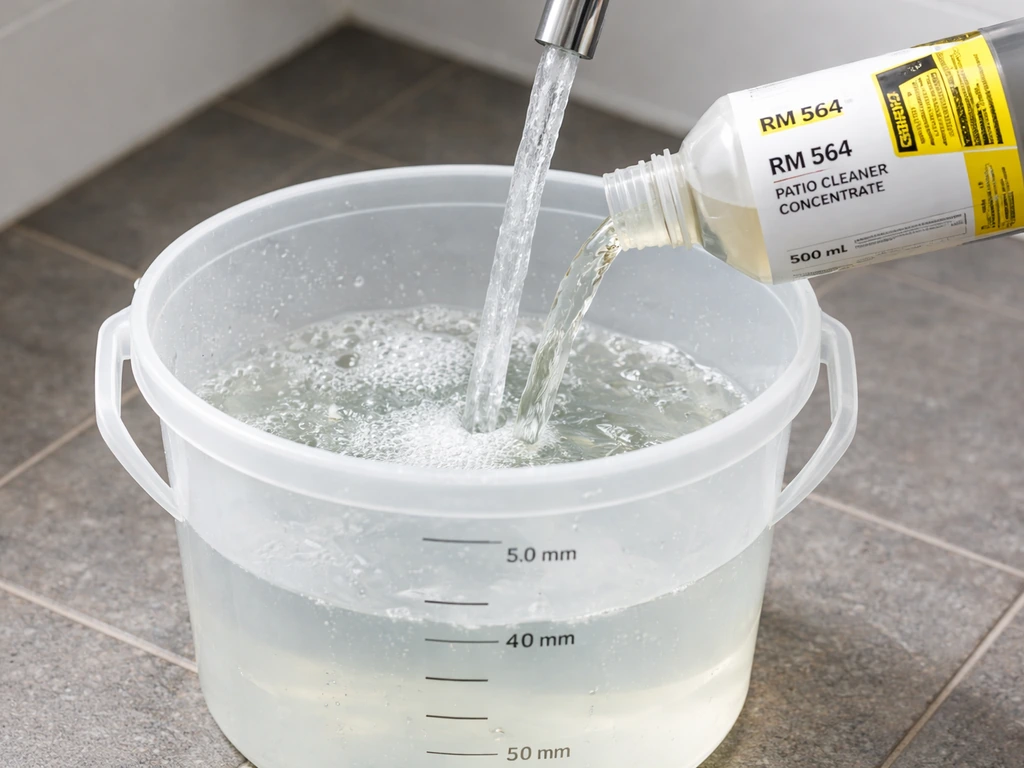
- Kärcher RM 564 concentrate (500 ml bottle)
- Tap water for dilution
- A clean 5-litre bucket or container with measurement markings
- Your Kärcher pressure washer (K2 through K5 all work; higher models give you more pressure for heavier build-up)
- Kärcher detergent applicator nozzle or the detergent suction hose fitted to your machine
- Kärcher patio cleaner rotary attachment (optional but strongly recommended for large even areas)
- Stiff deck brush for agitating stubborn spots
- PPE: chemical-resistant gloves, safety glasses, old clothes
Mixing the solution
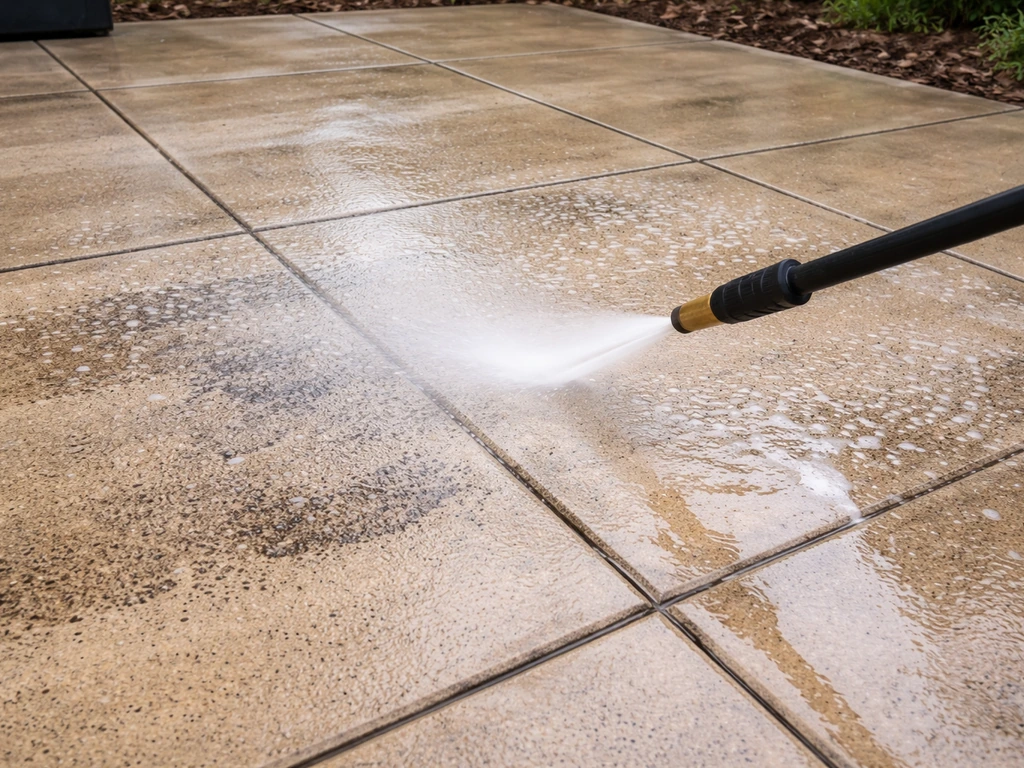
Pour 0.5 L of RM 564 concentrate into your bucket, then add 4.5 L of cold tap water. Stir gently. That gives you the standard 1:9 dilution Kärcher specifies, producing 5 litres of ready-to-use cleaner. Don't be tempted to go stronger thinking you'll get better results faster. Over-concentration is one of the main causes of streaking and residue problems, and it increases the risk of surface damage on sensitive materials. If anything, on sandstone or natural stone, I'd go slightly weaker (closer to 1:12) and compensate with a longer dwell time and a bit more brushing.
Applying through your Kärcher pressure washer
Most Kärcher machines have one of two ways to apply detergent. If you’re using a Kärcher K4, match the detergent settings to the low-pressure nozzle and keep to the same dilution and dwell time how to use patio cleaner with karcher k4. The first is an onboard detergent tank or a suction hose that draws from an external container. Fill the tank or place the suction hose into your diluted solution bucket. Fit the detergent (low-pressure) nozzle to your lance, which is usually the black nozzle in Kärcher's colour-coded system. Apply the solution to the pre-wetted patio at low pressure, working in sections of roughly 2 to 3 square metres at a time. Hold the lance about 30 to 40 cm from the surface for even coverage.
The second method is to apply the diluted solution manually with a watering can or garden pump sprayer, then use the pressure washer only for the final rinse. This gives you more control over coverage and dwell time, and it uses less water overall. Either approach works. If you're using a rotary patio cleaner attachment, note that most Kärcher rotary heads are not designed to apply detergent. You apply the fluid first, let it dwell, then switch to the rotary head for rinsing and scrubbing. How you attach and set up that accessory is a separate topic covered in guides specific to the K2, K3, and K4 models.
Dwell time, agitation, and getting consistent results
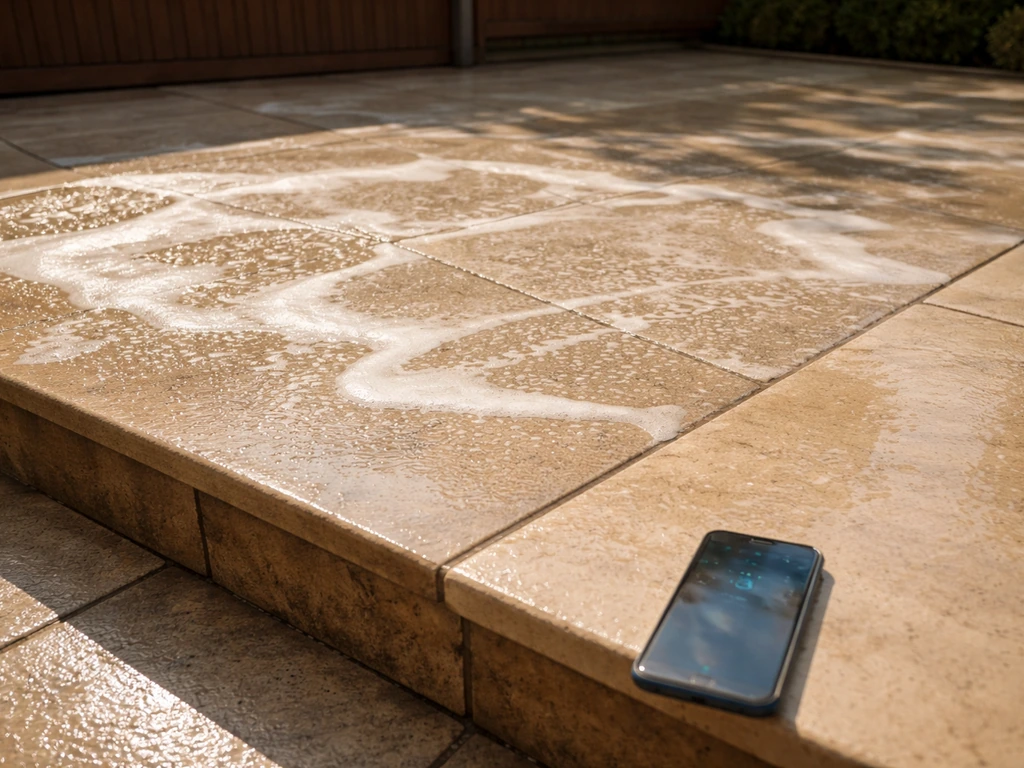
Once the solution is on the surface, leave it to work for 10 to 15 minutes. This is the dwell time, and it's where most of the actual cleaning happens. The chemistry is breaking down the algae cell walls and loosening the bond between grime and the paving. Don't rush it. But equally, don't walk away for an hour and let it dry out in the sun. If the solution dries before you rinse, it leaves residue that shows up as white streaky marks.
On a warm sunny day, work in smaller sections (1 to 2 square metres) and keep the applied area damp by misting lightly if needed. On a cooler overcast day, you can work larger sections. I generally aim for an overcast day or early morning to avoid direct sun on the surface.
After dwell, take a stiff outdoor brush to any patches that still show heavy green or black growth. A 30-second scrub on those spots makes a significant difference before rinsing. You're not trying to scrub the whole patio by hand, just agitate the areas where growth has been sitting for a long time.
For rinsing, switch from the low-pressure detergent nozzle to your standard fan or rotary jet. Rinse each section thoroughly, working from one end of the patio to the other so you're always pushing dirty water off the surface rather than back over clean areas. Overlap your rinse passes slightly to avoid leaving lines. If you're using the rotary patio cleaner head, use it in slow, overlapping passes at a consistent speed, which is the key to avoiding the circular marks that rotary heads can sometimes leave if you rush. If your Karcher patio cleaner head is not spinning, check for blockages, air leaks, and that the correct pressure nozzle is fitted before you continue why is my Karcher patio cleaner not spinning.
Safety, PPE, and looking after the environment
RM 564 is a chemical product and needs to be treated as one, even if it's marketed as a relatively gentle cleaner. The safety data sheet flags a few things every homeowner should know before they start.
- Wear chemical-resistant gloves (nitrile or rubber) throughout. The concentrate in particular is irritating to skin and eyes on contact.
- Wear safety glasses or goggles. Pressure washing throws back spray and you don't want any of this in your eyes.
- Wear old clothes or a waterproof apron. RM 564 can affect fabric.
- Work in a ventilated area. It's an outdoor product so this is usually fine, but don't use it in an enclosed covered patio without airflow.
- Keep children and pets off the patio during application and until the surface is fully rinsed and dry.
- Do not let runoff enter open drains, gutters, surface water channels, or nearby water features. The SDS is explicit about this. Divert or absorb runoff if your patio drains directly toward a water body.
- Cover ornamental plant borders, grass edges, and nearby shrubs before you apply. If solution does get on plants, rinse them immediately with fresh water.
- Read the product label before you start, every time, not just once. Formulations can change between batches.
Troubleshooting: when things don't go to plan
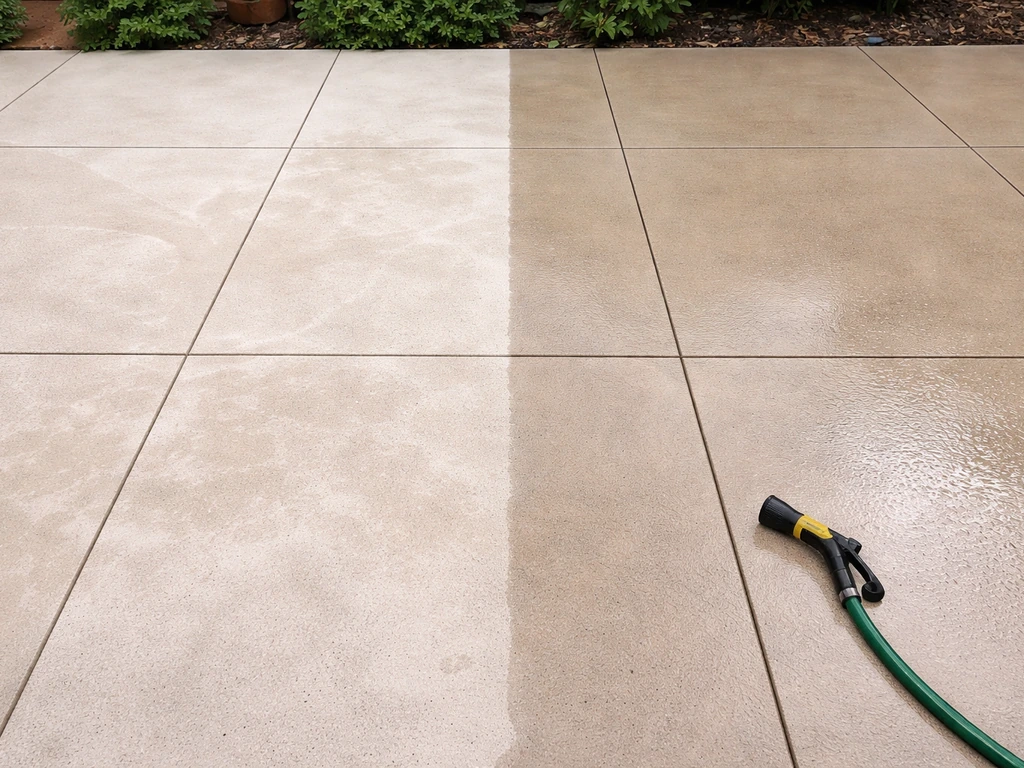
Streaks or white marks after rinsing
This is almost always caused by the solution drying on the surface before you rinse, or by not rinsing thoroughly enough. If you see streaks after the patio dries, re-wet the affected area, let it soften for a few minutes, then rinse again with the pressure washer. For stubborn dried residue, a second application of diluted solution followed by an immediate rinse usually clears it. Going forward, work in smaller sections and don't apply more fluid than you can rinse within 15 minutes.
No visible improvement, growth still there
If you rinse off and the patio looks barely different, the most likely reasons are insufficient dwell time, too-weak dilution, or particularly established growth. For heavy moss or lichen that's been building up for years, a single application sometimes isn't enough. Apply a second round, extend the dwell time to 20 minutes, and use a stiff brush more aggressively before rinsing. If it's still not shifting, the patio may need a dedicated biocidal pre-treatment (a separate product specifically for killing deeply embedded growth) left on overnight before your RM 564 clean.
Surface discoloration or damage
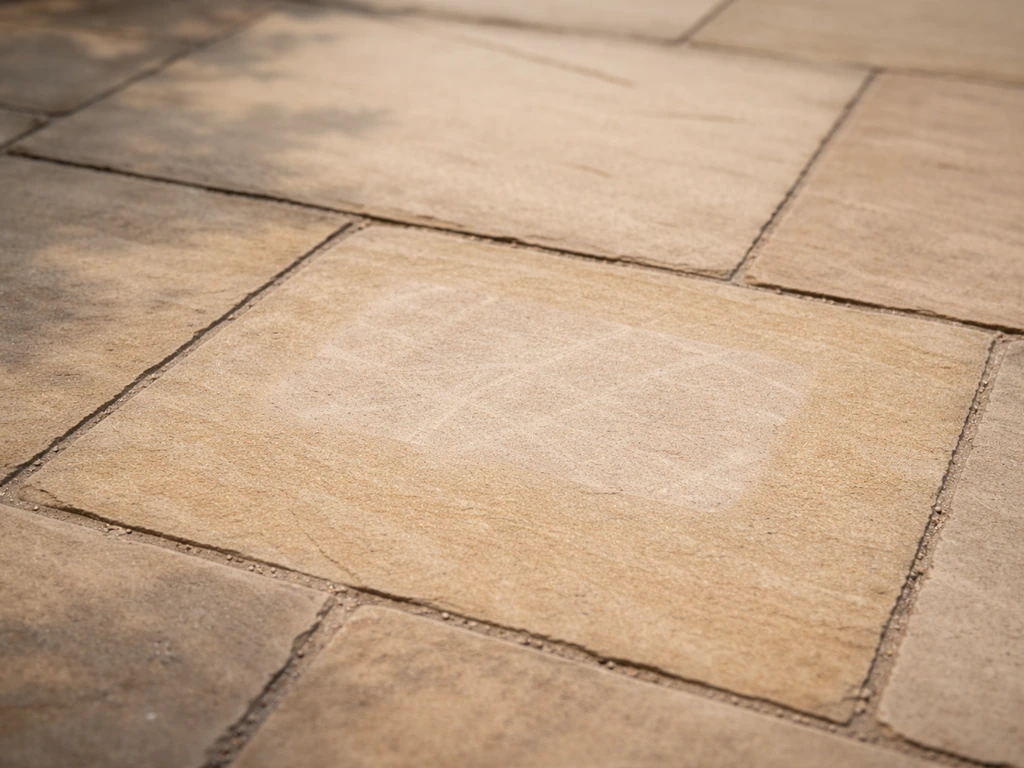
If you notice lightening, etching, or colour change after cleaning, the fluid has reacted with the surface material. This is most common on sandstone, certain limestones, and unsealed natural stone. Stop immediately, rinse the entire area with fresh water, and assess the damage once it's dry. Going forward, use a more diluted mix on that surface and test first. On porcelain and concrete you're unlikely to see this. On natural stone, always patch-test before the full job.
Nozzle clogging or uneven spray
If your detergent nozzle is blocking or the spray pattern is uneven, first check that your diluted solution doesn't have undissolved concentrate sitting at the bottom of the bucket. Always mix thoroughly before use. If the nozzle itself is partially blocked, rinse it under a tap and use a needle or pin to clear the aperture. Don't use the concentrate undiluted through the machine's detergent system as it can leave residue in the internal lines. If you're finding the rotary patio cleaner attachment isn't spinning properly or performing inconsistently, that's often a separate issue related to water pressure and is worth looking at in the context of the specific troubleshooting for patio cleaner attachment problems.
Patchy or uneven cleaning across the patio
Patchiness usually comes from uneven application or inconsistent rinsing speed. Apply the fluid in a deliberate, overlapping pattern rather than sweeping it on loosely. During rinsing, keep the lance or rotary head moving at a steady, consistent pace. Varying your speed leaves lines where the water pressure has dwelled longer in some spots.
After the clean: rinsing, drying, storage, and what comes next
Final rinse check
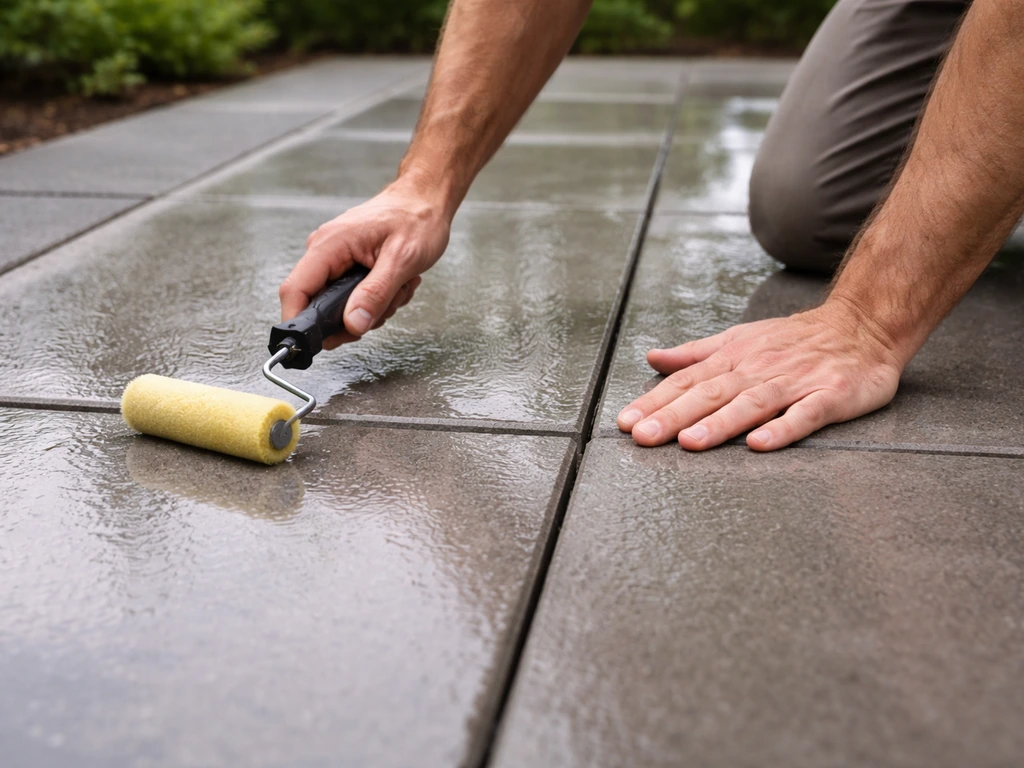
Once you've done your main rinse, do a slow walk-over of the whole patio while it's still wet. Look for any areas with a slight foam or slippery feel, which indicates residual detergent. Hit those spots again with a thorough rinse. It's quicker to deal with this now than to come back after the patio dries and find white patches. To attach a Kärcher patio cleaner to your pressure washer, fit the compatible patio-cleaner attachment to the lance/washer outlet and secure it so the water feed and spray head connect firmly.
Drying and sealing
Let the patio dry fully before putting furniture back, which typically takes 2 to 4 hours in dry conditions. If you're planning to apply a patio sealer (which is worth doing on natural stone and sandstone to make future cleaning much easier), wait at least 24 hours, ideally 48, for the surface to dry completely. Applying sealer to damp stone traps moisture and leads to whitening under the seal.
Storing leftover fluid
Any remaining diluted solution should ideally be used within the same day. The diluted mix doesn't store as reliably as the concentrate. Pour any excess down a foul water drain (not a surface water drain), never down a gutter or into a garden border. The original 500 ml concentrate bottle can be stored in a cool, dry place away from direct sunlight and out of reach of children. Keep it upright with the cap securely tightened. Most concentrated cleaning products like this remain effective for 12 to 24 months if stored correctly, but always check the label for a specific use-by date.
How often should you repeat this?
For most UK patios, a full fluid-and-pressure-wash clean once or twice a year is enough to stay on top of algae and general grime. Spring and early autumn are the best times, because you're catching growth before it thickens up through summer or heads into a wet winter. If your patio stays damp and shaded, you might need three sessions. If it's open and gets good sun, once a year often does it. In between, a plain pressure wash every few months removes loose debris before it becomes food for algae.
When to switch from pressure washing to brush-and-chemical
Not every patio needs a pressure washer. If you have very old or friable natural stone, an older grouted patio where the mortar joints are already crumbling, or a delicate surface where high pressure could dislodge aggregate, apply the diluted RM 564 with a garden sprayer instead, let it dwell, then scrub with a brush and rinse with a hose. You lose some speed but gain a lot of control. The chemistry is the same regardless of how you rinse. For anyone troubleshooting issues specifically related to the pressure washer attachment side of things, whether that's a K2, K3, or K4 setup, or problems with the rotary head not spinning, there are more detailed guides covering those specific machines and accessories. If you’re working with a K2, K3, or K4 setup, you’ll want to match the detergent application steps to your specific patio cleaner flow.
FAQ
Can I use Kärcher Patio and Deck Cleaner (RM 564) on sealed patio surfaces, like sealed concrete or sealed paving slabs?
You can usually use it, but only after a test patch and with a weaker mix (around 1:12). Sealed surfaces can be more sensitive to residue, so keep dwell within the recommended window and rinse thoroughly, then check for any dulling or sticky feel after drying.
What happens if I accidentally apply RM 564 concentrate undiluted through the pressure washer detergent system?
You increase the risk of heavy residue in the machine’s detergent lines and on the surface. If it happens, stop, run clean water through the system to flush the line, and re-rinse the patio with plenty of water before it dries to avoid white streaks.
Is cold tap water always required, and can I use hot water?
The standard mixing method uses cold tap water. Hot water can speed up chemistry but also increases evaporation, which makes it easier for the solution to dry before rinsing. If you want to optimize, focus on section size and timing rather than heating the water.
How do I know the product is working on algae, moss, or lichen before I rinse?
After the dwell, look for areas where the growth appears loosened, darker grime looks like it has lifted, and the surface feels less slippery. If you see no change at all, extend dwell up to about 20 minutes and use a brush on the stubborn patches before a second rinse.
Can I leave the solution to dwell longer than 15 minutes to get better results?
Sometimes, especially for heavy moss or lichen, you can extend dwell closer to 20 minutes. Avoid letting it fully dry, though. If the sun is strong or the patio heats up, smaller sections help you stay within the dwell window.
Why does my patio come out with white streaks even though I rinsed?
The most common causes are the solution drying on the surface, not rinsing long enough, or using a too-strong mix. Re-wet the affected areas, let the residue soften for a few minutes, then rinse again. For future passes, reduce concentration and work in 1 to 2 square metre sections.
Can I use RM 564 with a surface cleaner (rotary patio cleaner head) for both cleaning and rinsing?
It generally should not be applied through most rotary heads. Apply the diluted RM 564 first at low pressure, allow dwell, then switch to the rotary head for rinsing and scrubbing. This reduces the chance of uneven detergent delivery and circular marks from rushing.
How far should I keep the lance from the patio, and what nozzle should I use?
For even coverage, hold the lance roughly 30 to 40 cm above the surface. Use the low-pressure detergent nozzle for application, then switch to your normal fan or jet nozzle for the final rinse.
What if the detergent nozzle sprays unevenly or partially blocks during use?
First, check the bucket for undissolved concentrate at the bottom, remix thoroughly, and ensure you are using the correct dilution. If the nozzle is partially blocked, rinse it under a tap and clear the aperture with a fine needle or pin, then continue.
Should I pre-wet the patio every time, even if it rained recently?
If the surface is visibly wet and evenly damp, you can often proceed without additional pre-wetting. If it looks dry or patchy, pre-wet anyway, because uneven moisture increases streaking and patchiness. The goal is a uniformly wet surface before low-pressure detergent application.
Is it safe to apply RM 564 when temperatures are low or frost is possible?
Avoid jobs where the solution could freeze on the surface or in the machine. If freezing risk exists, postpone the clean, and do not leave diluted product sitting overnight. Plan the job so you can rinse before temperatures drop too far.
Can I use RM 564 on decking or soft surfaces?
RM 564 is intended for outdoor hard surfaces. For wood or other soft materials, the safest approach is to stop and use a dedicated cleaner for that material, because chemical cleaning and pressure can damage fibres or leave discoloration.
How long should I wait before sealing, and do I need the patio fully dry?
Yes, the surface should be fully dry before sealing. A common guideline is at least 24 hours, ideally 48, for natural stone and sandstone to prevent trapped moisture and whitening under the seal.
What should I do if the patio looks lighter or etched after cleaning?
Stop and rinse the entire area with fresh water, then reassess once dry. This is most likely on sandstone, certain limestones, and unsealed natural stone. Going forward, use a weaker mix, patch-test first, and ensure you rinse well to reduce surface reaction.
How should I dispose of leftover diluted solution?
Use it the same day where possible. If you must dispose of it, pour down a foul water drain, not a surface water drain, and never into a gutter or garden border. Concentrate bottles should be stored cool, dry, upright, and out of reach of children.
Next Article
How to Use Karcher K2 Patio Cleaner Step by Step
Step-by-step guide to use Karcher K2 patio cleaner on concrete, stone, brick and more, tackling mold, algae, moss and st