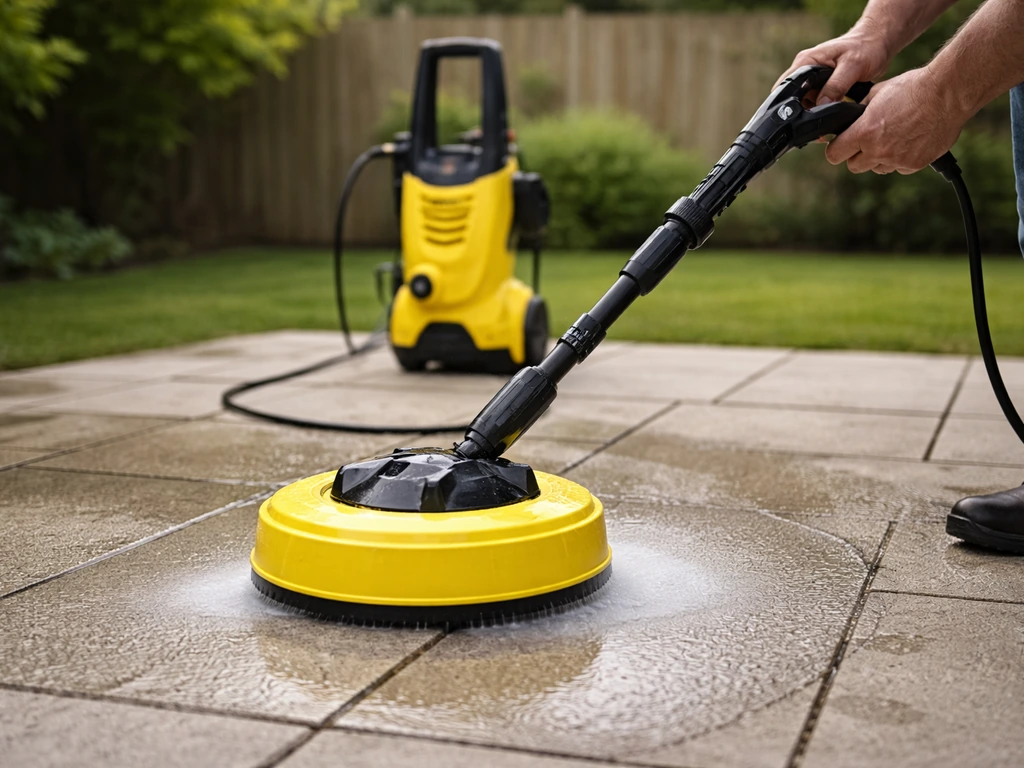
Connect the Kärcher T 5 T-Racer patio cleaner to your K2 by pressing the bayonet connector into the high-pressure gun connection and rotating it 90° until it latches, then tighten the union nut. Place the head flat on the surface before pulling the trigger, keep it moving at a steady walking pace with overlapping passes, and never let it sit still while the water is running. That's the core of it. Everything below fills in the detail that separates a clean, streak-free patio from one that looks patchy or ends up damaged.
How to Use Karcher K2 Patio Cleaner Step by Step
Rhea Lang
4 Jul 2026
What patio cleaner attachments work with the Karcher K2
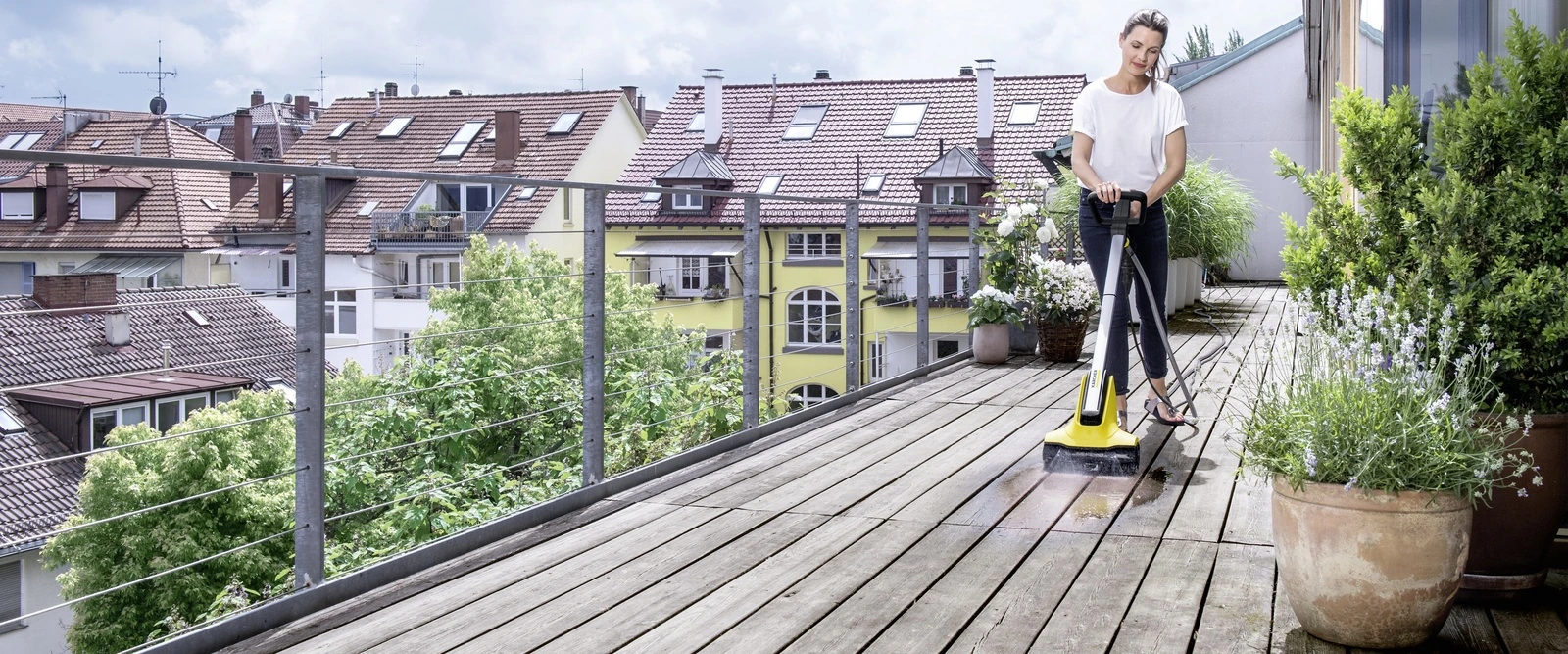
The attachment you want is Kärcher's T 5 T-Racer Surface Cleaner. It's Kärcher's most widely available patio cleaner attachment and is specified as compatible with K2 through K5 pressure washers, so it's the natural pairing for a K2. It works by spinning two high-pressure jets in a rotating arm underneath a plastic shroud, which keeps the water contained and prevents the splatter and streaking you get from using a lance directly on a flat surface.
The higher-end T 7 Plus T-Racer is only rated for K4 to K5, so skip that one if you have a K2. Kärcher also notes that the [T 7 Plus T-Racer surface cleaner is suitable for pressure washer ranges K 4 to K 5](https://www. kaercher. com/us/accessories/t-7-plus-t-racer-surface-cleaner-26440820.
html). The T 5 is the right tool. One thing worth knowing: the T 5 T-Racer instructions note that when it's used with a K2 (rather than a K4), the high-pressure nozzles may need to be adapted to suit the lower output of the machine. In practice this usually means the attachment comes ready to go, but check your packaging to confirm what's included and whether any nozzle swap is needed.
The box should list the scope of delivery clearly.
A separate but related point: the K2 doesn't have built-in detergent injection through the surface cleaner head the way some higher-spec machines do. If you want to use a cleaning fluid alongside the T-Racer, you'll need to apply it separately using a foam lance or spray bottle first, let it dwell, then switch to the surface cleaner. I'll cover that more in the stain-specific section below.
Quick setup before you start
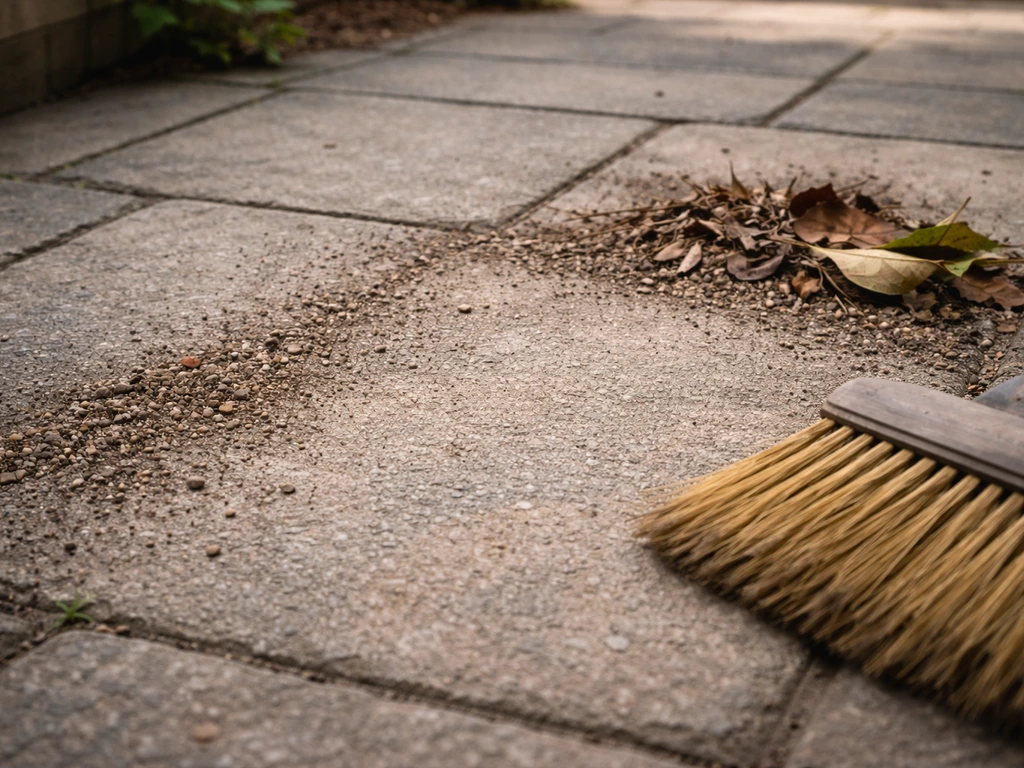
Don't skip this part. A few minutes of prep makes a real difference to the result and avoids avoidable damage, both to the patio and the equipment.
Clear the surface
Sweep or blow off any loose grit, leaves, or debris before you start. The T-Racer's rotor arm spins close to the surface, and hitting loose stones or debris can damage it. If your Kärcher patio cleaner rotor is not spinning, check for loose connections, damaged rotor parts, and whether debris is blocking the rotor arm. Kärcher specifically flags this in the instructions: coarse dirt should be removed first to avoid damage to the rotor arm. Move furniture, plant pots, and anything else off the area you're cleaning.
Protect plants and surrounding areas
Cover nearby plants, especially if you're pre-treating with any cleaning fluid. Even if you're cleaning with water only, the spray from the edges of the T-Racer can carry dirty water onto borders and flowerbeds. A quick water with a hose before you start also helps dilute any run-off from cleaning chemicals.
Check the surface condition
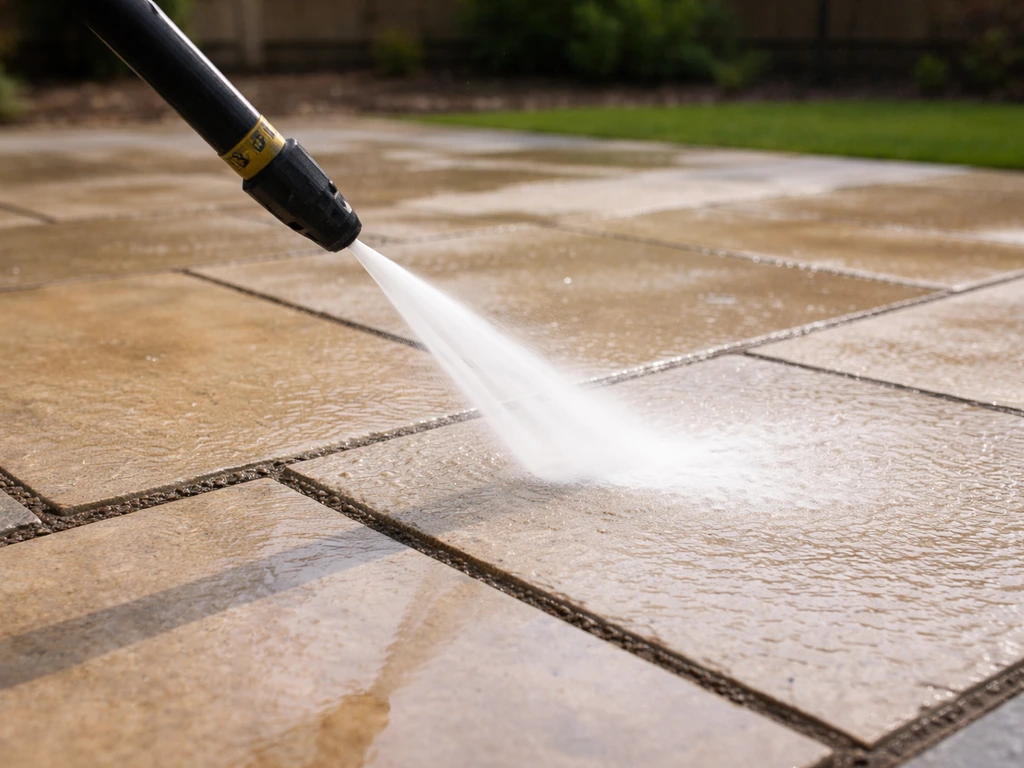
Look for loose, cracked, or crumbling grout or pointing between slabs or bricks. The T-Racer will pull sand and mortar out of weak joints. If your patio is freshly pointed or the joints are already degraded, clean carefully or consider re-pointing first. This matters especially for brick and block paving, where pressure washing can destabilize the bedding sand underneath. I'll flag this again in the surface-specific section.
Pre-rinse the area
Give the whole area a rinse with the K2 lance before attaching the patio cleaner. This loosens surface grime and wets the patio, which helps the T-Racer glide more smoothly. For natural stone in particular, pre-rinsing before applying any detergent is important: Kärcher's stone cleaning guidance specifically warns that if you don't pre-rinse, a cleaning fluid can penetrate the stone and cause damage.
Safety basics
- Keep other people, especially children, away from the area while operating the T-Racer
- Never reach under the edge of the T-Racer while it's running
- Don't trigger the pressure gun until the T-Racer head is flat on the surface
- Switch the K2 off and disconnect the T-Racer from the gun before inspecting or adjusting the attachment
- Wear closed-toe footwear and consider safety glasses, especially on first use
How to connect the patio cleaner to the Karcher K2
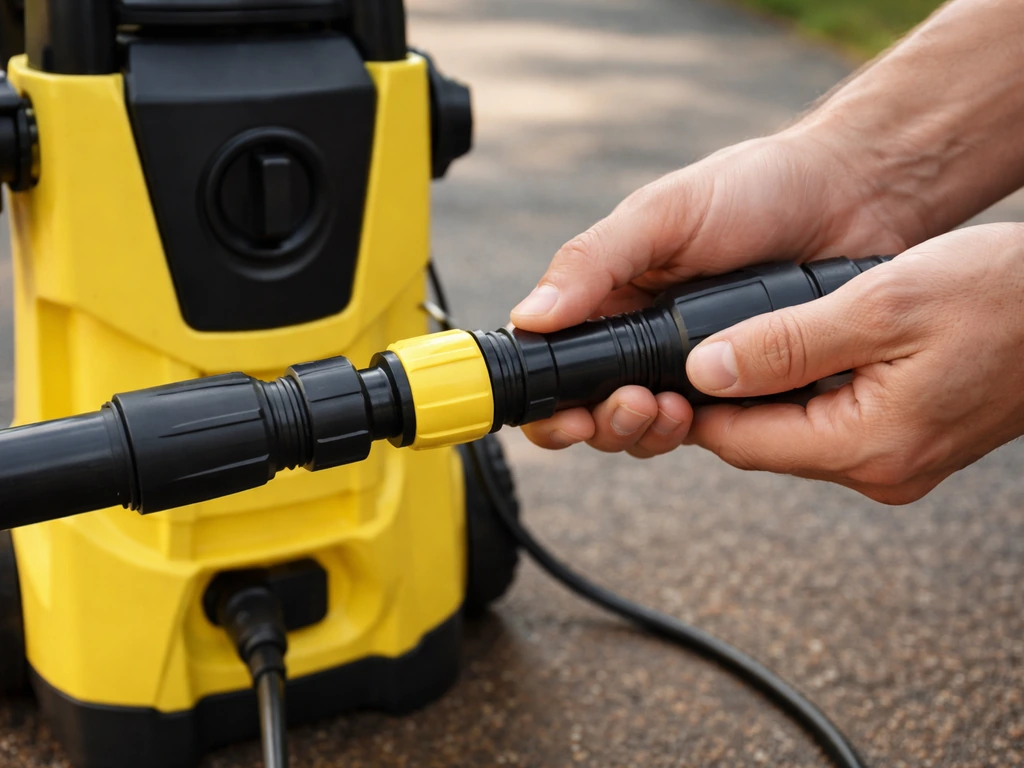
The T 5 T-Racer uses a bayonet-style quick-connect fitting, the same system Kärcher uses across its lance and nozzle range. It's straightforward once you've done it once.
- Make sure the K2 is switched off before connecting anything
- If you're attaching the extension tube first: completely unscrew the union nut on the tube end, press the bayonet into the mounting point, rotate the extension tube 90° until you feel and hear it latch into place, then tighten the union nut by hand
- For direct connection (no extension tube): press the bayonet connector on the T-Racer directly into the high-pressure gun connection, rotate 90° until it latches, and tighten the union nut if one is present
- Give it a gentle tug to confirm it's seated properly before switching the machine on
- Check the rotor arm height adjustment on the underside of the T-Racer: set it to HARD for tiles, concrete, and stone; set it to SOFT for more sensitive surfaces like wood
- Connect the high-pressure hose to the K2 as normal, turn on the water supply, then switch the K2 on
One practical note: don't run the K2 in Eco mode when using the T-Racer. To get the best results on a Karcher K4, pair the T-Racer with full pressure and follow the same step-by-step technique for moving slowly and keeping overlapping passes K2 in Eco mode. Kärcher's instructions explicitly state that for optimum cleaning results you should not operate the pressure washer in Eco mode when using this attachment. You need full pressure to spin the rotor arm properly.
Step-by-step cleaning technique
This is where most people go wrong. The T-Racer looks like it should just be pushed around like a mop, but technique genuinely matters for avoiding streaks and getting a consistent clean.
- Place the T-Racer flat on the surface before you do anything else. Don't pull the trigger while it's in the air
- Unlock the trigger on the gun, then pull it to start the flow. The rotor arm will begin spinning inside the shroud
- Start at one edge of the patio and work in overlapping strips, like mowing a lawn. Each pass should overlap the previous one by about 10 cm to avoid leaving unclean lines between strips
- Move at a steady, moderate walking pace. Too fast and you'll leave dirty patches; too slow and you risk over-cleaning or even etching softer surfaces
- Keep the T-Racer flat on the surface and let the machine do the work. Kärcher is clear on this: don't press down or apply extra force
- Never stop moving while the trigger is pulled. Kärcher's instructions are explicit: do not allow the T-Racer to remain in one area. Staying in one spot will etch or mark the surface
- Avoid running over free-standing edges, lips between slabs, or raised corners. The rotor arm can catch and be damaged. Work up to edges carefully and use the K2 lance separately to clean right along borders
- When you're done or need to stop: release the trigger first, then lift the T-Racer off the surface
For heavily soiled areas, a second pass often gets better results than slowing right down on the first pass. Go over the area once at normal speed, let any loosened dirt wash away, and then make a second overlapping pass. This is especially worth doing on patios that haven't been cleaned in a couple of years.
Which surfaces it works best on
The T 5 T-Racer is versatile, but it performs differently depending on what's underneath it. Here's what to expect from the surfaces most commonly found on UK patios.
| Surface | Rotor Arm Setting | Notes |
|---|---|---|
| Concrete | HARD | Handles it well. Ideal use case for the T-Racer. Can do multiple passes on stubborn staining without risk of surface damage on sound concrete. |
| Natural stone (e.g. limestone, granite) | HARD | Pre-rinse before any detergent. Avoid leaving the T-Racer stationary. Generally handles it well but test in a corner first on older or softer stone. |
| Brick | HARD | Effective but watch the jointing. Pressure can remove sand from between bricks if joints are worn or shallow. Work steadily and check joints after the first pass. |
| Sandstone | SOFT or HARD (test first) | Sandstone varies a lot in hardness and porosity. Start with SOFT setting and a test patch. Older or softer sandstone can be damaged by high pressure. |
| Slate | SOFT or HARD (test first) | Similar caution to sandstone. Slate can be brittle and layered. Test a small inconspicuous area first, especially if the slabs are older. |
| Porcelain | HARD | Porcelain is dense and durable. The T-Racer works very well on porcelain paving. No real risk of surface damage, though avoid catching grout lines at speed. |
A general rule for any surface you're unsure about: test a small, out-of-the-way area first and inspect it before cleaning the whole patio. Natural materials like sandstone and slate vary enormously in quality and age, and there's no universal safe setting. I learned this the hard way testing on a secondhand piece of Indian sandstone that turned out to be much softer than it looked.
Tackling common patio problems with the K2 patio cleaner
The T-Racer with plain water will handle most general grime effectively. But specific problems need a bit more thought.
Mold, algae, and moss
These are probably the most common reason people get a patio cleaner out. For light coverage, the T-Racer on its own often does the job. For heavier growth, apply a patio cleaner fluid or algaecide first using a pump sprayer or foam lance. If you’re asking how to use Kärcher patio cleaner fluid, the key is to apply it first and let it dwell before going back over the area with the T-Racer cleaning fluid.
Leave it to dwell for the time the product recommends (usually 10 to 20 minutes), then go over it with the T-Racer. Kärcher's own application guidance for mossy surfaces suggests [holding the jet at 20 to 30 cm from the surface and working slowly from one edge of the affected area to the other](https://www. kaercher. com/us/home-garden/application-tips/mossy-brick-and-stone.
html). The T-Racer's enclosed head gives you something similar automatically. One caution with moss on block paving: cleaning dislodges the moss but it can also disturb the sand between joints. Re-sand the joints after cleaning if needed.
Rust stains
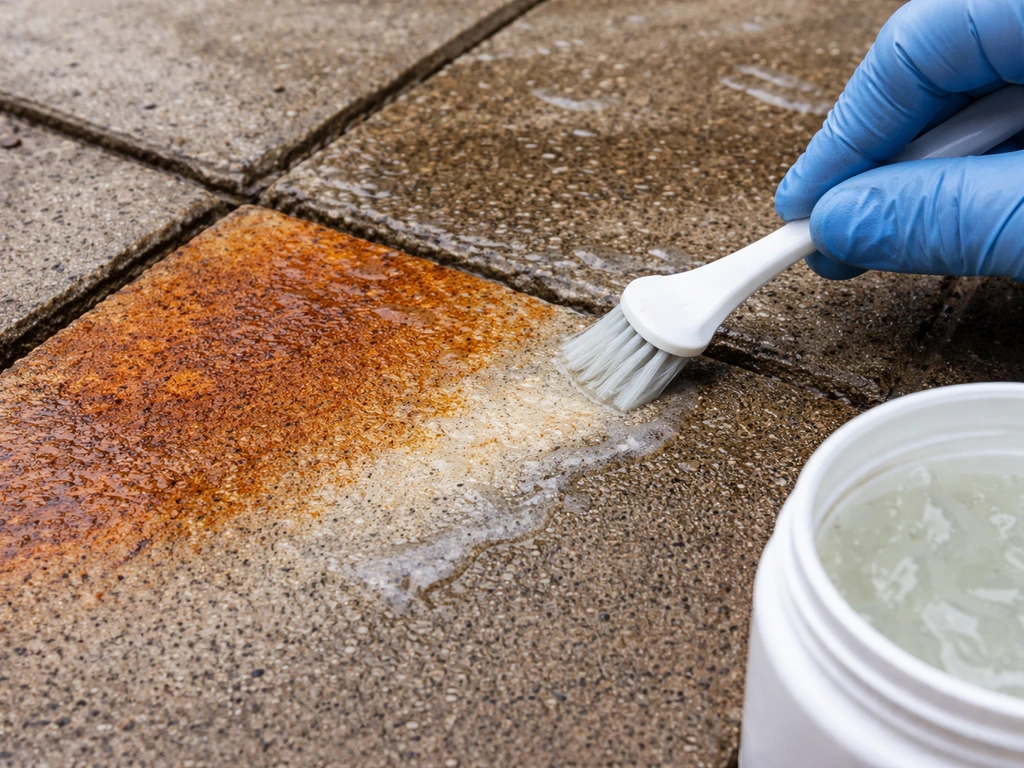
Rust stains on concrete or stone usually come from metal furniture or fittings left on the surface. The T-Racer won't shift these on its own. You'll need a dedicated rust remover or an oxalic acid-based stone cleaner applied as a pre-treatment. Apply, let it work, then go over with the T-Racer or rinse off with the lance. Don't use acidic rust removers on sandstone, limestone, or other calcium-based stones without checking compatibility first.
Grease and oil
BBQ grease, cooking oil, or vehicle drips need a degreaser pre-treatment before the T-Racer will make much difference. Apply a suitable degreaser (Kärcher's RM 69 or a similar patio degreaser works well), scrub it in briefly if the stain is old, let it dwell, then clean with the T-Racer. Water alone won't emulsify grease. Remember Kärcher's environmental caution: avoid letting detergent run into drains, soil, or flowerbeds. Contain the run-off where possible.
Pet stains and organic marks
Pet urine, bird droppings, and similar organic staining respond well to an enzyme-based outdoor cleaner or a patio-safe biological cleaner applied before pressure washing. These break down the organic matter rather than just lifting it. The T-Racer then clears everything away cleanly. For routine maintenance, regular cleaning with the T-Racer and water alone keeps these marks from building up in the first place.
Aftercare, maintenance, and when to stop and troubleshoot
After the clean
Once you've finished, do a final rinse of the whole patio with the K2 lance (without the T-Racer attached) to wash away loosened dirt and any detergent residue. Work from the edges of the patio inward toward a drainage point if possible. For natural stone especially, a thorough rinse off removes any cleaning fluid residue before it dries and leaves marks.
Cleaning and storing the T-Racer
Switch the K2 off and disconnect the T-Racer from the gun before doing anything with the attachment. Kärcher's instructions are specific here: always shut down and disconnect before handling the device. Rinse the T-Racer head with a gentle stream of water, detach any extension tubes, and give everything a wipe down with a damp cloth. Store it in a frost-protected place. If it gets left outside in a hard frost, moisture inside the rotor mechanism can cause damage.
Common problems and quick fixes
| Problem | Likely Cause | Fix |
|---|---|---|
| Streaking across the patio | Moving too fast, uneven overlap, or dirty water recontaminating cleaned areas | Slow down, increase overlap between passes, and rinse ahead of yourself as you go |
| Patchy or poor cleaning result | Wrong nozzle selection, Eco mode active, or surface needs pre-treatment | Switch off Eco mode, check nozzle is correctly seated, and pre-treat stubborn areas before cleaning |
| Splatter from under the edge | T-Racer not sitting flat, or being lifted slightly during use | Keep the head flat on the surface throughout; don't angle it |
| Machine pulses or doesn't build pressure | Blocked nozzle in the T-Racer head | Disconnect the attachment, remove and inspect the high-pressure nozzles, clear any blockage, and refit |
| T-Racer not spinning | Insufficient pressure from K2, Eco mode on, or nozzle blockage | Check Eco mode is off, confirm nozzle is clear, and ensure water supply is fully open |
If the T-Racer isn't spinning at all, that's the most common sign that pressure isn't reaching the rotor properly. The nozzle troubleshooting section in the T 5 instructions is the first place to look: wrong nozzle selection or a blocked nozzle are the two most likely culprits on a K2. If you run into Karcher patio cleaner attachment problems with the T-Racer, check nozzle selection and make sure the setup matches the K2's lower output nozzle troubleshooting section. The K2 is the lowest-output machine the T-Racer is designed to work with, so it doesn't have much headroom if anything is reducing flow.
If you're running into recurring connection or spinning issues, those topics are covered in more depth in the dedicated guides on attaching the Kärcher patio cleaner and troubleshooting why a Kärcher patio cleaner isn't spinning. And if you're thinking about upgrading to a K3 or K4 at some point, there are separate guides on using the patio cleaner with those machines too, where you get more pressure to play with and slightly better results on heavy moss and staining. If you are upgrading to a K3, follow the guide on how to use patio cleaner with a Karcher K3 for the right settings and technique how to use patio cleaner with karcher k3.
FAQ
Do I need to use detergent with a K2 patio cleaner head, or will plain water work?
Plain water is often enough for general grime, but you usually get better results on mossy or greasy areas by pre-treating first (apply, let it dwell as directed, then switch back to the surface cleaner). Also note the K2 cannot inject fluid through the T-Racer head, so any cleaner must be applied separately before you use the attachment.
How do I avoid streaks if the patio looks patchy after cleaning?
Use a consistent walking pace and overlap every pass slightly, then do not stop with the rotor over one spot while water is running. If streaks persist, try a second pass at normal pace instead of forcing slower movement on the first pass, then finish with a final rinse using the lance to remove remaining residue.
What should I do if the T-Racer is spinning but leaving dirty lines?
That usually means the head is not staying flat or your overlaps are inconsistent. Make sure the shroud rides fully on the surface, keep the path steady (no side-to-side darting), and pre-rinse to remove loose grit so the rotor jets can work evenly.
Can I clean block paving that has sand between the joints, and will it wash the sand out?
Yes, but be aware the enclosed head can still dislodge weakened bedding sand, especially where grout or pointing is already crumbling. If joints look disturbed after cleaning, re-sand and compact them before the area gets wet again, and consider repairing weak joints first.
Is Eco mode okay on the K2 when using the T-Racer?
No. For the T 5 T-Racer, you should run the K2 at full pressure rather than Eco mode because full output is needed for the rotor to spin properly and maintain consistent cleaning.
How far should I keep the patio cleaner from the surface (do I need to hold it above the ground)?
Typically you do not hold it up. Place the head flat on the patio and let the shroud guide the working height, then move steadily. Keeping it too elevated reduces contact cleaning, and letting it catch on uneven edges can create lines.
What if I’m cleaning natural stone like slate, sandstone, or limestone, and I’m worried about damage?
Always pre-rinse with the K2 lance before applying any cleaner, because some fluids can penetrate more than expected on porous stone. Then test in an out-of-the-way area first, since quality and age vary widely and there is no single universal setting that is safe for all natural stones.
How should I apply patio cleaner fluid for moss or algae before using the T-Racer?
Apply the fluid first with a pump sprayer or foam lance, allow the dwell time recommended on the product label, then go over the area with the T-Racer to flush it away. Keep the application contained so run-off does not land on plants, and consider using a quick hose pre-rinse around borders to reduce carryover.
Can I remove rust stains with the T-Racer alone?
Usually no. Rust typically needs a dedicated rust remover or an oxalic acid-based stone cleaner as a pre-treatment, applied and left to work before you pressure wash. Avoid acidic rust removers on calcium-based stones unless the product is confirmed compatible.
What’s the best way to deal with BBQ grease or oil stains before using the patio cleaner?
Pre-treat with a degreaser, let it dwell, and only then clean with the T-Racer. Water alone will not emulsify grease effectively, so the surface cleaner mainly removes what the degreaser has already broken down.
If I’m cleaning organic stains like pet urine or bird droppings, do I need a special product first?
Often yes. Enzyme-based or patio-safe biological cleaners work better than water-only cleaning because they break down organic material rather than just lifting surface dirt. Apply first, dwell as directed, then use the T-Racer to rinse it away thoroughly.
My rotor isn’t spinning at all, what should I check first on a K2 setup?
First confirm you have the correct nozzle selection and that the nozzle is not blocked, since those are the most common causes of no rotor motion on the K2. Also re-check the attachment connection and make sure the setup matches the T-Racer guidance for lower flow machines like the K2.
Do I need to rinse after cleaning, and should I rinse with or without the T-Racer attached?
Do a final rinse with the K2 lance without the surface cleaner attached to wash away loosened debris and any detergent residue. Work from the edges inward toward a drainage point if possible, which helps prevent residue from being redeposited on the area you already cleaned.
How should I store the T-Racer after use, especially if frost is possible?
Disconnect the attachment after shutting the K2 down, rinse the head with gentle water, wipe it dry, and store it in a frost-protected place. Leaving it outside in hard frost can allow moisture inside the rotor mechanism to cause damage.
Can I use an extension tube or adjust the setup height with the T-Racer?
You can use compatible extension tubes, but keep the nozzle and attachment aligned correctly so you maintain sufficient flow for rotor spinning on the K2. If performance drops, remove any unnecessary extensions first and confirm the connection is fully latched before troubleshooting deeper issues.
Next Article
How to Use a Patio Cleaner with a Karcher K3 Pressure Washer
Step-by-step guide to use a Kärcher K3 patio cleaner attachment, set pressure and detergent, tackle stains, avoid streak