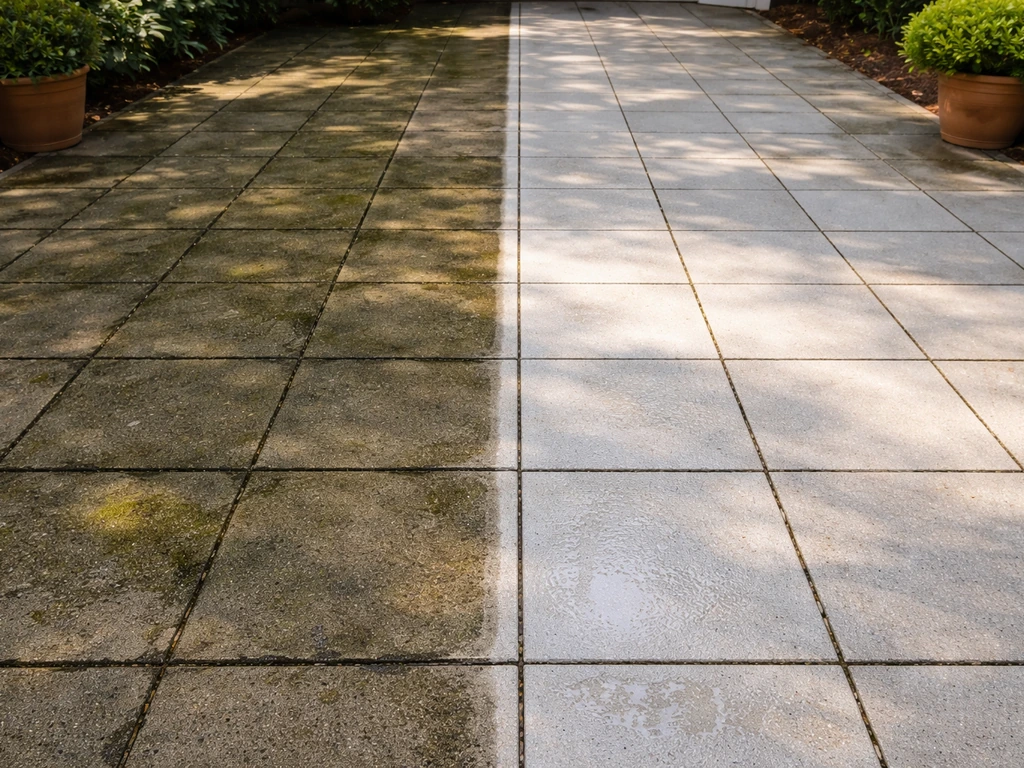
Most standard patio cleaners are NOT safe for pets as sold. Many contain bleach (sodium hypochlorite), quaternary ammonium compounds (quats), phenols, or harsh acids that can burn mucous membranes, cause vomiting, and in larger exposures lead to serious systemic harm in dogs and cats. That said, you absolutely can clean your patio safely with pets around, as long as you choose the right product, dilute and rinse correctly, and keep animals off the surface until it is fully dry. The safest categories are enzyme-based cleaners, oxygen bleach (sodium percarbonate), and diluted white vinegar or baking soda for light spot work. The rest of this guide tells you exactly what to look for, what to avoid, and how to clean every common patio surface without putting your dog or cat at risk.
Is Patio Cleaner Safe for Pets? Pet-Friendly Cleaning Guide
How cleaner safety actually depends on more than just the product
The same chemical can be relatively harmless at one dilution and genuinely dangerous at another. Sodium hypochlorite (bleach) is a good example: the CDC's household disinfection recipe calls for roughly 5 tablespoons per gallon of water, and at that dilution the acute oral LD50 for rats is in the gram-per-kilogram range, meaning a small lick from a rinsed surface is unlikely to cause serious harm. But the concentrated product straight from the bottle is a corrosive that causes oral and esophageal burns, vomiting, and at high exposures pulmonary edema in animals. Concentration is everything.
Beyond dilution, three other factors determine real-world risk: how long the product sits on the surface before rinsing, how well you rinse it, and how quickly pets re-access the area. A pet-unsafe product that is fully rinsed and dried before your dog walks on the patio is a very different risk profile from one that is left damp. Surface type matters too: porous concrete holds chemical residue far longer than smooth porcelain tiles. And mixing cleaners introduces an entirely separate hazard, bleach combined with ammonia-based products produces chloramine gas, and bleach mixed with acids produces chlorine gas, both of which cause immediate respiratory injury to people and pets. I learned this the hard way when a neighbour mixed a patio moss killer with a general-purpose cleaner and ended up with two wheezing dogs. Never mix products.
Ingredients to avoid when you have pets
Checking the ingredient list before you buy is the single most useful habit you can develop. Here are the main offenders to watch for.
- Sodium hypochlorite (bleach): corrosive at high concentrations, causes oral burns, GI upset, and respiratory irritation. Common in many budget patio cleaners and mould removers.
- Ammonia compounds: GI and respiratory irritant on their own, and catastrophically dangerous if mixed with bleach products (produces chloramine gas).
- Phenols and phenolic disinfectants (including chloroxylenol, the active in many household disinfectants): cats are especially sensitive because they lack the liver enzyme to metabolise phenols efficiently; even dilute exposure can cause serious toxicity.
- Quaternary ammonium compounds (QACs/quats, e.g., benzalkonium chloride): oral LD50 values for some benzalkonium chloride formulations are in the hundreds of mg/kg range, and they cause drooling, oral ulceration, vomiting, and at higher doses respiratory effects. Cats appear more sensitive than dogs. They are also toxic to aquatic invertebrates at very low concentrations (EC50 in the low mg/L or µg/L range), so runoff into ponds is a real concern.
- Strong mineral acids (hydrochloric/muriatic acid, phosphoric acid at high concentration): used in some concrete and brick cleaners for rust and mortar stains. Corrosive to skin, eyes, and mucous membranes in both people and animals.
- Strong alkalis (sodium hydroxide at high concentration): similarly corrosive; found in some heavy-duty degreasers.
- Formaldehyde or formaldehyde-releasing preservatives: occasionally present in commercial biocide blends, toxic to pets and humans.
Safer ingredients and product types worth using
Enzyme cleaners are my go-to for anything involving organic stains, including pet urine, faeces, food spills, and general biological grime. The enzymes (proteases, ureases, and sometimes uricase) literally digest the organic molecules rather than just masking them. Uricase specifically oxidises uric acid (the persistent crystal in dried urine that causes lingering odour) into allantoin, which is water-soluble and easy to rinse away. If a pet licks a treated surface, enzyme cleaners typically cause only mild GI upset at worst, and most are safe once the surface is dry. Look for brands like Nature's Miracle or Rocco and Roxie, but check the SDS or manufacturer Q&A to confirm uricase is present if you are dealing with cat urine specifically, as not every formulation includes it.
Oxygen bleach (sodium percarbonate, the active in most OxiClean-type products) is the next tier up. It dissolves in water to release hydrogen peroxide and sodium carbonate, both of which break down into water and oxygen with no persistent toxic residue. It tackles mould, algae, and general grime effectively. The SDS classifies it as an eye and skin irritant (so wear gloves and goggles), and it does have measurable aquatic toxicity when concentrated (fish LC50 around 71 mg/L), so avoid heavy runoff into garden ponds or streams. But compared to chlorine bleach or quats, it is substantially safer for both pets and the environment when used correctly.
Diluted white vinegar (roughly 1 part vinegar to 1 part water) and baking soda are genuinely useful for light spot cleaning and neutralising urine odour on sealed surfaces. They are not biocides and will not kill established mould or algae, but for maintenance cleaning between deeper treatments they work well and pose virtually no risk to pets once dry. Do not use undiluted vinegar repeatedly on natural stone like sandstone or limestone, as the acid will etch and degrade the surface over time.
What to look for on the label before you buy
Product marketing can be misleading. 'Natural', 'green', and 'plant-based' mean almost nothing without specifics. Here is a practical checklist to run through before any purchase.
- Check the active ingredients list for the red-flag chemicals above: sodium hypochlorite, phenols, benzalkonium chloride, and high-concentration acids.
- Look for third-party certifications: EPA Safer Choice (US), Green Seal, or ECOLOGO (North American). These programmes require ingredient disclosure and safety screening. In the UK, look for products complying with the UK Biocidal Products Regulation and check whether the supplier publishes a full SDS.
- Check the pH: neutral to mildly alkaline (pH 7–10) is generally safer for pets, surfaces, and the environment. Strongly acidic (pH below 3) or strongly alkaline (pH above 12) products require much more careful handling.
- Look for explicit 'pet-safe when dry' claims backed by ingredient transparency, not just marketing language. If the manufacturer does not publish a full Safety Data Sheet, treat that as a warning sign.
- Check biodegradability claims: OECD 301 ready biodegradability tests are the standard. A product that biodegrades readily is less likely to persist in soil or runoff.
- For enzyme cleaners specifically: confirm the product contains active enzymes (protease, urease, and ideally uricase for urine), not just a fragrance or bacterial culture with no listed enzymatic activity.
- Check re-entry time on the label: a product that requires a 10-minute contact time and then thorough rinsing needs to be fully dry before pets return, which in practice often means keeping animals away for at least a few hours on a porous surface.
Pet-friendly commercial cleaner categories and when to use each
Not every job needs the same product type. Using an enzyme cleaner on heavy green algae, for example, will disappoint you. Here is how the main pet-friendlier categories map to common patio problems.
| Product Category | Best For | Pet Safety Profile | Limitations |
|---|---|---|---|
| Enzyme cleaners (e.g., Nature's Miracle, Rocco & Roxie) | Dog/cat urine, faeces, food spills, general organic stains | Safe once dry; mild GI upset only if licked | Not effective against mould, algae, or inorganic stains |
| Oxygen bleach / sodium percarbonate (e.g., OxiClean, Patio Magic Oxi) | Mould, algae, moss, general grime on concrete and brick | Safer than chlorine bleach; rinse thoroughly; keep away until dry | Eye/skin irritant; avoid heavy runoff into ponds |
| Diluted white vinegar (1:1 with water) | Light urine odour, mineral deposits on sealed surfaces | Essentially safe once dry | Not a biocide; will etch unsealed natural stone over time |
| EPA Safer Choice / Green Seal certified multi-surface cleaners | General maintenance cleaning, patios, decks, hard surfaces | Ingredient-screened; generally safer but still rinse well | Efficacy varies by brand and soil type |
| Pressure washing with plain water | Loose dirt, algae, general surface refresh | Completely safe; no chemicals | Does not disinfect; may spread mould spores if not followed up |
| Baking soda paste | Spot stains, light grease, odour neutralising | Safe for pets | Mild abrasive; not suitable for polished or soft stone |
Quick safety cheat-sheet: safe vs. avoid at a glance
| Ingredient / Product Type | Verdict | Notes |
|---|---|---|
| Sodium hypochlorite (bleach) | AVOID or use with extreme care | Corrosive; rinse thoroughly; toxic to cats and dogs in concentrated form |
| Phenols / chloroxylenol | AVOID with pets | Cats especially vulnerable; poor liver metabolism of phenols |
| Quaternary ammonium compounds (quats) | AVOID or use cautiously | GI and mucous membrane irritant; highly toxic to aquatic life |
| Ammonia-based cleaners | AVOID | Respiratory irritant; toxic gases if mixed with bleach |
| Strong mineral acids (muriatic, high-conc. phosphoric) | AVOID for general use | Reserve for professional rust/mortar removal with full PPE |
| Sodium percarbonate (oxygen bleach) | SAFER — use with care | Rinse well; keep pets off until dry; avoid pond runoff |
| Enzyme cleaners (with uricase/urease) | SAFE for pet stains | Allow surface to dry before pet access |
| Diluted white vinegar (1:1) | SAFE for spot use | Do not use on unsealed limestone or sandstone |
| Baking soda | SAFE | Mild abrasive; not for polished or soft stone |
| EPA Safer Choice / Green Seal certified products | GENERALLY SAFER | Still check ingredients; rinse and dry before pet access |
| Plain water pressure washing | COMPLETELY SAFE | No chemical risk; ideal first step |
Before you start cleaning: the preparation steps that actually matter
Test a small area first
Always test any new cleaner on an inconspicuous 30 cm square patch and leave it for 24 hours before committing to the full area. This is especially important on natural stone (sandstone, slate, limestone) and coloured grout. I have seen oxygen bleach lift the colour from red sandstone flags on a customer's patio that the product manufacturer had listed as 'safe for stone'. Testing costs nothing and saves a lot of grief.
PPE, keeping pets away, and protecting plants
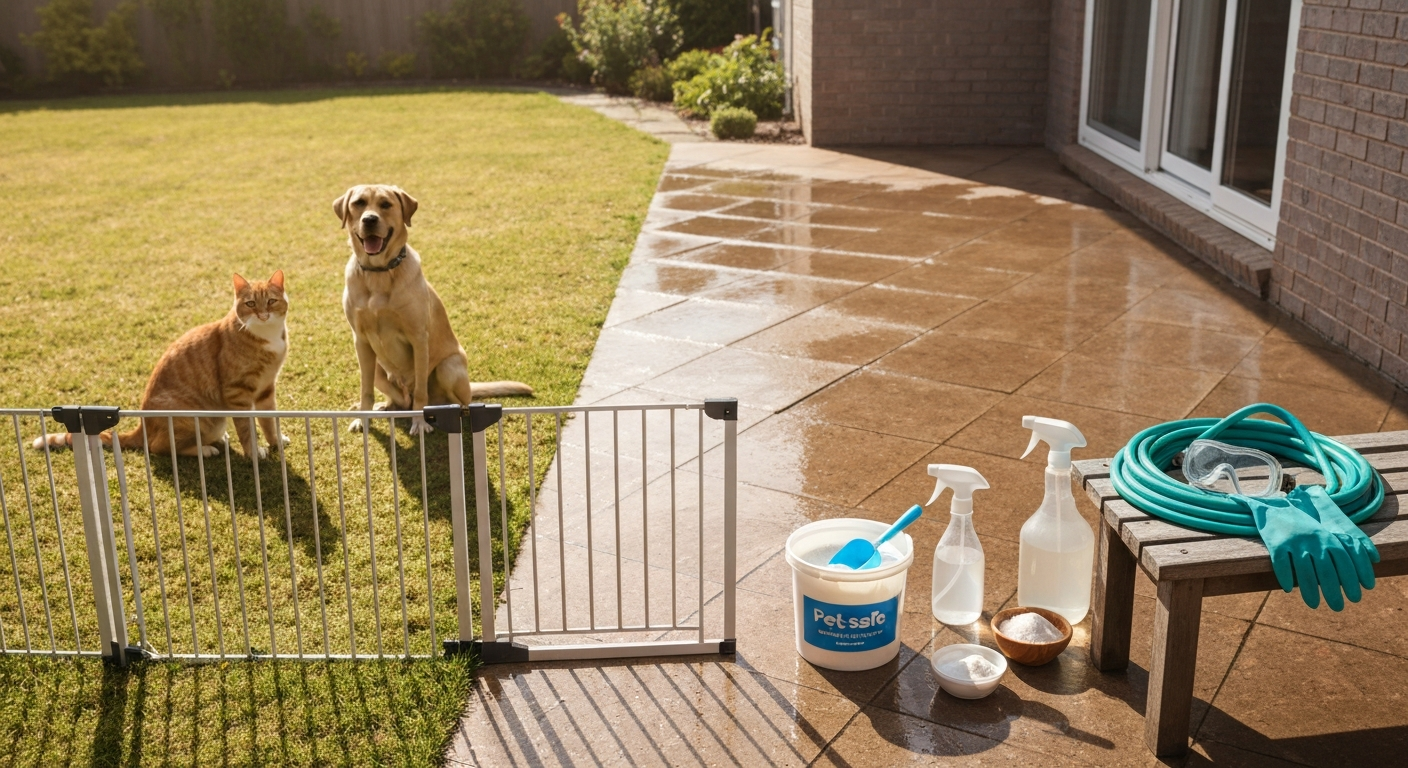
- Wear nitrile or rubber gloves for all chemical cleaning, including enzyme products and oxygen bleach. Add splash-proof safety goggles for anything stronger.
- Wear old clothes or a waterproof apron. Sodium percarbonate bleaches fabric on contact.
- Keep all pets (and children) indoors or in a separate area of the garden until the patio is rinsed and fully dry. On a sunny day that might be 2–4 hours; on a cold or cloudy day, allow longer.
- Wet down surrounding plants and lawn before applying any cleaner, and rinse them off thoroughly after. This dilutes any splashback or runoff before it can damage foliage or roots.
- Remove pet water bowls, toys, and feeding stations from the area before you start and do not return them until everything is completely dry.
- Make sure the area is well-ventilated. Even for relatively safe products, working in a confined or enclosed patio space with poor airflow is unpleasant and unnecessary.
Dilution, contact time, rinsing, and re-entry: following the label correctly
The label is a legal document, not a suggestion. EPA-registered products in the US carry required use instructions, and using a product at a different dilution or contact time than specified can both reduce effectiveness and create unnecessary risk. EPA's List N provides product-specific contact times and label instructions for EPA‑registered disinfectants EPA's List N provides product-specific contact times and label instructions for EPA‑registered disinfectants.. For disinfectants, the surface must remain visibly wet for the full contact time (which ranges from 30 seconds to 10 minutes depending on the product and pathogen) before you wipe or rinse. Many people rinse too quickly and wonder why the mould keeps coming back.
For patio cleaning specifically: mix chemicals in a bucket or pressure sprayer, never in their original containers and never by pouring one into another. Use the dilution ratio on the label, not what a forum post says. More concentrated does not mean more effective for most enzymatic and oxygen-bleach products, it just means more residue to rinse and more risk to pets and plants. After the contact time, rinse thoroughly with a hose or pressure washer until the water runs clear. For porous surfaces like concrete or rough brick, that means multiple rinse passes. Do not allow pets back on the patio until the surface is completely dry to the touch, not just visually rinsed. On a warm day that is typically 2 hours; on cool, damp days allow at least 4–6 hours.
Managing runoff: protecting drains, plants, and waterways
Most UK residential patios drain to a soakaway or surface water drain that connects directly to a watercourse, not to the foul sewer. That means anything you wash off your patio has a direct route to the local stream or pond. Quaternary ammonium compounds are acutely toxic to aquatic invertebrates and fish at very low concentrations, and even oxygen bleach has measurable aquatic toxicity (daphnia EC50 around 4.9 mg/L from released hydrogen peroxide). In practice, highly diluted runoff from a domestic patio is unlikely to cause visible ecological damage, but repeated use of the wrong products in areas with sensitive waterways nearby is a genuine concern.
Practical steps to reduce runoff risk: sweep or vacuum loose debris before applying any cleaner (less organic material means less chemical needed), apply cleaners to a damp rather than wet surface so they penetrate rather than run straight off, avoid cleaning before heavy rain is forecast, and direct wash-off water onto an area of lawn or soil where it can filter naturally rather than straight into a drain. If your patio drains directly to a surface water system, the safest choice is enzyme cleaners, oxygen bleach at low concentration, or simple hot water pressure washing.
Pressure-washing safety when pets are around
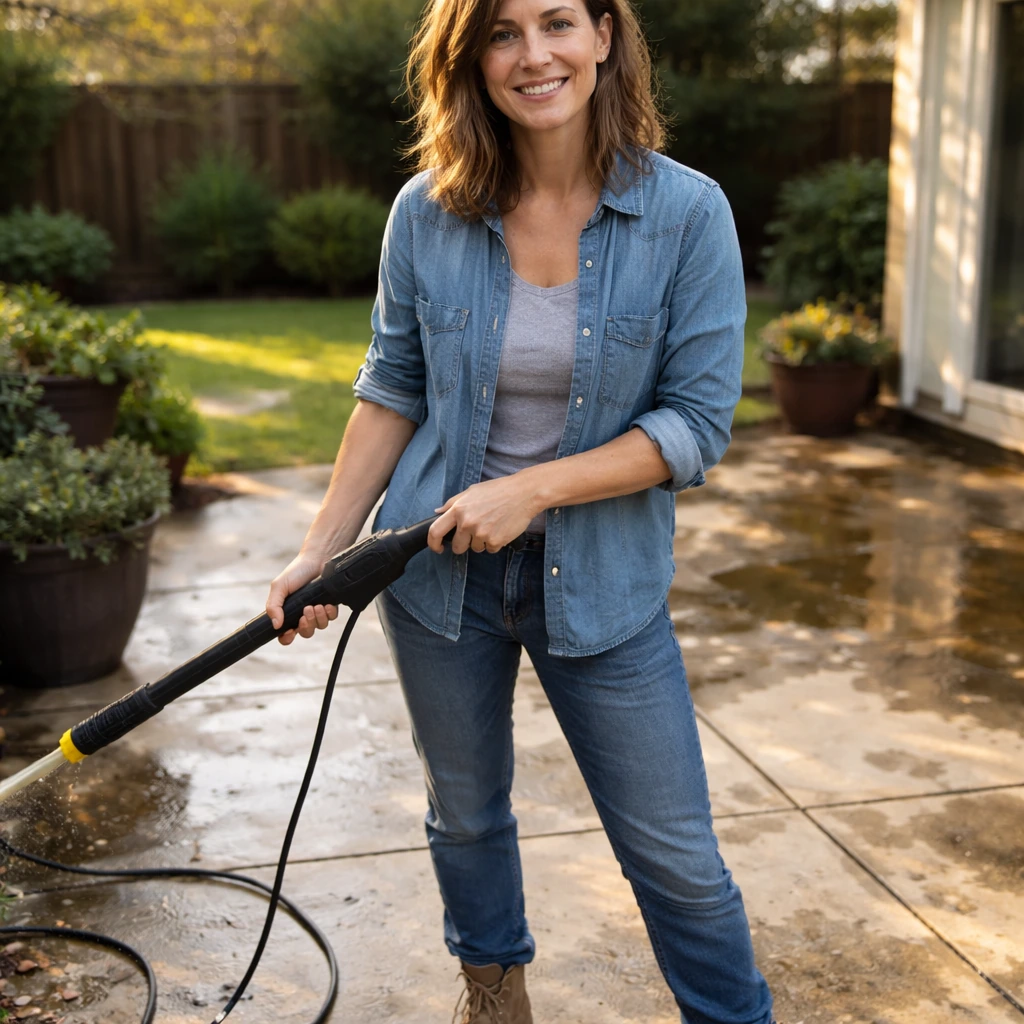
A pressure washer on its own, with plain water, is one of the most pet-safe cleaning tools you have. The physical risk is the main concern: most residential pressure washers operate at 100–180 bar (1,450–2,600 PSI), enough to cause serious skin lacerations or eye injuries. Keep pets well away from the working area, ideally inside and with a door or gate between them and the patio. Do not point a pressure washer at animals under any circumstances. Even the spray mist can startle a dog into bolting, which is a safety hazard in itself.
If you are using a chemical detergent in a pressure washer's detergent tank, the same rules apply as hand application: choose pet-friendly formulations, rinse thoroughly after the detergent pass with a plain water pass at the same or higher pressure, and keep pets away until dry. At a working distance of 20–30 cm on concrete, most pressure washers will blast off light algae and general grime without any chemical at all, which is always my preferred first pass. Add chemistry only when plain water leaves staining behind.
Cleaning dog urine and other organic pet stains: step-by-step
Pet urine is one of the trickiest stains on outdoor surfaces because it contains uric acid crystals that embed in porous materials and re-activate with moisture, which is why the patch always smells again after rain. Standard detergents and bleach do not break down uric acid, they just mask it temporarily. This is exactly where enzyme cleaners with uricase earn their place.
- Rinse the stained area with cold water first. Hot water can set protein-based components of urine into porous surfaces.
- Blot or absorb as much liquid as possible from fresh stains.
- Apply your enzyme cleaner generously, enough to saturate the surface and reach into the pores. On concrete, that means not just misting the surface.
- Allow the enzyme cleaner to dwell for the time specified on the label, typically 10–30 minutes. Do not let it dry out; cover with a damp cloth or mist with water if the weather is hot and sunny.
- Rinse thoroughly with clean water.
- Allow to dry completely before pets re-access the area. Repeat the treatment if the odour returns after the next rain event, as deeply embedded uric acid crystals sometimes need two or three treatments.
- For persistent stains on concrete or unsealed stone, a follow-up light treatment with diluted oxygen bleach after the enzyme step can help shift remaining discolouration.
For faeces, remove all solid material first (use gloves and a sealed bag), then follow the same enzyme-cleaner process above. If you are looking for dedicated product recommendations, the best patio cleaner for dog urine guide on this site reviews the top enzyme-based options tested on real outdoor surfaces. See the best patio cleaner for dog urine guide for tested enzyme-based options and safety notes when using them on outdoor surfaces. For tested enzyme-based options, see our roundup of the best patio cleaner pet friendly choices.
Removing mould and algae safely: non-toxic approaches first
Green algae on a patio is mostly a surface film and responds well to oxygen bleach or even plain pressure washing. Black spot algae and lichen are more stubborn and penetrate the surface, often needing a longer dwell time. Mould and mildew on shaded patios usually indicate a moisture management issue as much as a cleaning problem.
- Start with a dry brush or stiff broom to remove loose growth, then pre-wet the surface.
- Mix sodium percarbonate at the label-recommended dilution (typically 1–2 scoops per litre for concentrated products) and apply with a watering can or garden sprayer.
- Allow to dwell for 15–30 minutes. You should see the algae begin to lighten.
- Scrub with a stiff-bristled brush, then rinse thoroughly.
- For black spot or lichen, repeat the treatment or allow a higher-concentration sodium percarbonate mix to dwell for up to 60 minutes.
- Keep pets away throughout and until fully dry and rinsed. The by-products (water and oxygen) are harmless, but the active solution is an eye and skin irritant.
When oxygen bleach is not enough, the jump is usually to products containing a low concentration of benzalkonium chloride or sodium hypochlorite. Toxicology records on PubChem's benzalkonium chloride page (HSDB excerpts) report oral LD50s in the hundreds of mg/kg for some formulations and note mucous‑membrane and gastrointestinal irritation in animals Benzalkonium chloride – PubChem (HSDB/ toxicity excerpts). At this point the pet-safety trade-off becomes real: these products work well on stubborn mould and lichen, but they require thorough rinsing, a longer dry time, and careful management of runoff. If you have a heavily shaded patio with embedded lichen and you are not getting results with oxygen bleach, that is the point where a professional patio cleaning service with industrial steam cleaning equipment might be worth considering rather than escalating to harsher chemistry at home.
Tackling rust and grease: safer alternatives to harsh removers
Rust stains on concrete or stone typically come from metal furniture legs, tools left sitting on the patio, or mineral-rich water from a tap or hose. The traditional approach is muriatic (hydrochloric) acid, which works fast but is genuinely dangerous: it is corrosive to skin, eyes, and respiratory tissue, and the residue is harmful to pets and plants. For most domestic rust stains, there is a safer first option: a diluted oxalic acid product (found in some specialist stone cleaners and wood brighteners) or a citric acid-based rust remover. These are less aggressively corrosive than muriatic acid and easier to rinse fully. Apply, dwell for 10–15 minutes, scrub, and rinse thoroughly. Keep pets away until completely dry.
For grease stains from barbecues, cooking oil, or machinery, a concentrated enzyme degreaser or an oxygen bleach paste works well on concrete without introducing harsh solvents. Mix sodium percarbonate into a paste with a small amount of water, apply directly to the grease stain, cover with plastic film, and leave for 30–60 minutes before scrubbing and rinsing. I have used this method on a concrete BBQ area and it removed months-old grease without any chemical fumes and without worrying about the dog sniffing around later.
Step-by-step cleaning for each major patio surface
Concrete
- Sweep clear of debris and wet the surface with a hose.
- Apply a sodium percarbonate solution (or enzyme cleaner for organic stains) at the label dilution using a watering can or garden sprayer.
- Allow to dwell 15–30 minutes, keeping the surface damp.
- Scrub with a stiff deck brush, working in sections.
- Rinse thoroughly with a pressure washer or strong hose. Concrete is porous, so expect to do 2–3 rinse passes.
- Check for residual staining and repeat if needed.
- Keep pets off the area until fully dry (minimum 2 hours in warm weather, 4–6 hours in cool conditions).
Brick and pavers
- Brush out loose material from joints first. Damaged or missing jointing sand is a sign you need to re-sand after cleaning.
- Pre-wet the surface thoroughly.
- Apply oxygen bleach solution and allow to dwell for 20–30 minutes.
- Scrub with a stiff brush, paying attention to mortar joints where algae accumulates.
- Rinse thoroughly. A pressure washer at 100–120 bar at 20–30 cm works well without blasting out joint sand.
- Re-sand joints if needed with kiln-dried sand once fully dry.
- Seal with a breathable brick/block paving sealer once clean to extend the time before the next clean is needed. Keep pets off during application and curing of any sealer (check sealer label for cure time, typically 2–4 hours).
Natural stone: sandstone, slate, and sealed vs. unsealed
Natural stone is where things get tricky. Sandstone is soft, porous, and acid-sensitive. Slate is harder but can be chemically reactive depending on its mineralogy. The first rule: never use acidic cleaners (including undiluted vinegar or citric acid products) on limestone, sandstone, or any calcareous stone. It will etch and visibly damage the surface. Always check whether your stone is sealed before applying any cleaner. Water beading on the surface means it is sealed; water soaking in means it is unsealed and porous, requiring a more dilute solution and faster rinsing.
- Test a small inconspicuous area first, always.
- For sealed stone: a mild, pH-neutral enzyme cleaner or diluted oxygen bleach at half the standard concentration is safe for most sealed natural stone. Dwell time should be reduced to 10 minutes maximum.
- For unsealed stone: use the most dilute solution practical and rinse very quickly to prevent penetration. A light oxygen bleach mix (half strength) applied for 5–10 minutes then rinsed immediately is about as far as I would go without professional advice.
- Rinse thoroughly with clean water from a hose (avoid high-pressure washing on soft sandstone, as it erodes the surface).
- Once clean and dry, apply a penetrating stone sealer appropriate to the stone type. This makes future cleaning far easier and reduces the concentration of cleaner needed.
Porcelain tiles
Outdoor porcelain is the easiest surface to clean safely. It is non-porous, chemically resistant, and does not hold residue the way concrete or stone does. A thorough rinse after any cleaning product leaves virtually no residual risk for pets. Almost any pet-safe cleaner works effectively on porcelain. Stick to pH-neutral to mildly alkaline products, avoid highly acidic cleaners only because they can dull the glaze over time, and use a soft to medium-bristle brush. Pressure washing at up to 150 bar is fine at a 20–30 cm working distance. After rinsing, porcelain dries quickly and pets can typically access the area within an hour in normal weather.
Artificial grass and turf: will patio cleaner damage it?
This comes up constantly in the questions I receive. The short answer is: the wrong cleaner can absolutely damage artificial grass. Strong oxidising agents and bleach-based products degrade the polyethylene fibres over time, causing them to become brittle, fade, and split. The backing material can also be weakened by harsh alkalis and solvents. For routine cleaning of artificial turf, plain water rinsing and enzyme cleaners designed for turf or pet use are the safest bet. Avoid sodium percarbonate products directly on the turf surface at full strength, and absolutely avoid bleach, quat disinfectants, and solvent-based products.
For pet urine on artificial grass, enzyme cleaners are the correct tool: they break down uric acid in the infill material and remove odour without degrading the fibres. Diluted white vinegar (1:1 with water) is also used by many turf owners for a quick freshen-up. The question of whether patio cleaners specifically damage artificial grass is covered in much more detail in a dedicated guide on this site that is worth reading if you have turf and pets.
Troubleshooting common problems and when to call a professional
- Stains return after cleaning: for urine this usually means uric acid crystals remain in the pores (repeat enzyme treatment 2–3 times). For algae it often means the shaded, damp conditions are the root cause: consider improving drainage or trimming overhanging vegetation.
- Surface is discolouring or etching: you have likely used an acidic or high-concentration product on a sensitive surface. Stop immediately, rinse with lots of water, and seek advice from a stone restoration specialist before attempting further cleaning.
- Persistent black spot on Indian sandstone or limestone: lichen and black algae embedded in these stones often needs a specialist biocide treatment and multiple applications over several weeks. This is worth calling in a professional for, both because the chemistry involved is stronger and because the application technique matters.
- Grout or joint sand washing out: reduce pressure washer distance and pressure, or switch to hand scrubbing. Re-sand joints with kiln-dried polymeric sand once dry.
- Sealer peeling or turning white (blushing): usually caused by cleaning a sealed surface that was damp beneath the sealer. You will need a sealer stripper, which is a job for a professional on valuable stone.
- Pet continues to urinate in the same spot: even after cleaning, trace scent markers may remain in very porous concrete or sandstone. Multiple enzyme treatments and then sealing the surface is the most reliable solution.
PPE, first aid, and safe storage for pet owners
Personal protective equipment
- Nitrile or rubber gloves for all chemical use, including enzyme products.
- Splash-proof safety goggles for anything stronger than enzyme cleaners or vinegar.
- Old clothing or a waterproof apron. Sodium percarbonate bleaches fabric immediately.
- Respiratory protection (at minimum a dust/vapour mask) when working with concentrated dry powder chemicals like sodium percarbonate in enclosed or poorly ventilated spaces.
If your pet is exposed
If a pet walks through a freshly applied cleaning solution, rinse the paws and any affected skin thoroughly with clean water for at least 5 minutes. If a pet has ingested cleaner (licking a wet surface, for example), or if you notice symptoms such as drooling, pawing at the mouth, vomiting, difficulty breathing, or eye redness, contact a veterinary poison control service immediately. In the US, ASPCA Animal Poison Control is available 24 hours at 888-426-4435 and the Pet Poison Helpline at 855-764-7661. Have the product label or SDS ready when you call. If eyes are involved, flush with clean water for 10–15 minutes before calling.
Safe storage
- Store all cleaning products in their original containers with lids fully secured.
- Keep in a locked cupboard or high shelf inaccessible to pets and children.
- Never store bleach and ammonia-based products in the same cupboard: a leaking container of each creates chloramine gas risk.
- Check for leaking containers regularly and dispose of degraded products through your local household chemical waste collection, not down the drain or into garden waste.
Recommended reading on this site
If this guide has pointed you toward a particular cleaning challenge, there are several related articles on this site worth exploring. For dedicated product reviews of enzyme-based and plant-derived formulations, the best pet friendly patio cleaner roundup tests the leading options on real outdoor surfaces with dogs present. If you want to avoid synthetic chemicals altogether, the best natural patio cleaner guide covers vinegar, baking soda, and plant-derived surfactant products in detail. For urine-specific products tested and ranked by odour elimination and safety profile, the best patio cleaner for dog urine guide is the right next read. And if you are conscious of the environmental angle, the best eco friendly patio cleaner article covers certifications, biodegradability ratings, and runoff considerations in depth.
Final checklist: safe patio cleaning with pets
- Check the ingredient list before buying: avoid bleach, phenols, quats, ammonia, and strong mineral acids if you have pets.
- Choose enzyme cleaners for pet stains, oxygen bleach for mould and algae, and pH-neutral certified products for general cleaning.
- Test any new product on a small hidden area and wait 24 hours before full application.
- Remove all pet water bowls, toys, and food stations from the area.
- Keep all pets and children away from the cleaning area throughout the process.
- Wear gloves and goggles. Do not mix products.
- Follow the label dilution and contact time exactly.
- Rinse thoroughly with clean water: multiple passes on porous surfaces like concrete.
- Wet surrounding plants before cleaning and rinse them off afterward.
- Direct wash-off water away from storm drains and garden ponds where possible.
- Wait until the surface is completely dry before allowing pets back: minimum 2 hours in warm sunny conditions, 4–6 hours or more in cool or damp weather.
- Store all products securely, locked away from pets and children.
- If in doubt about any exposure, call ASPCA APCC (888-426-4435) or Pet Poison Helpline (855-764-7661) immediately.
FAQ
Is patio cleaner safe for pets (especially dogs)?
It depends on the product and how you use it. Many commercial patio cleaners contain irritants or toxins (bleach, ammonia, phenols, some quats) that can harm pets by skin/eye contact, inhalation, or ingestion. Safer options and proper procedures—correct dilution, rinsing, keeping pets away until surfaces are dry—let you clean effectively with minimal risk.
Which common patio‑cleaner ingredients are hazardous to pets?
Watch for sodium hypochlorite (bleach), ammonia, phenolic compounds, concentrated hydrogen peroxide, and some quaternary ammonium compounds (quats/benzalkonium chloride). These can irritate eyes/skin, cause GI upset if licked, and at high exposures cause severe respiratory or systemic effects. Never mix bleach with acids or ammonia—dangerous gases can form.
Which cleaners/ingredients are generally safer for pet areas?
Enzyme‑based cleaners designed for pet stains, oxygen bleach (sodium percarbonate/‘Oxi’ products) used per directions, and household vinegar or baking‑soda spot cleaning (diluted) are generally safer when used correctly. Note: ‘safer’ doesn’t mean risk‑free—always follow dilution, rinse, and re‑entry guidance.
How should I dilute and use bleach safely if I must?
Follow label or authoritative guidance: CDC recommends roughly 5 tablespoons (1/3 cup) bleach per gallon of water (or 4 teaspoons per quart) for general disinfection when no product label is given. Use PPE (gloves, eye protection), ventilate well, keep pets away during application and until thoroughly rinsed and dry, and never mix bleach with other cleaners.
How long should pets be kept off a patio after cleaning?
Follow the product label for re‑entry times. If no label guidance, keep pets off until the surface is thoroughly rinsed and completely dry—this can be a few hours in warm, sunny weather or longer in cooler/windy conditions. For bleach or strong disinfectants, rinse well and wait until odors and residues are gone.
What about enzyme cleaners for dog urine and other pet stains?
Enzyme cleaners (proteases, ureases, sometimes uricase) break down urine compounds and are usually the best option for pet stains and odors. They are generally low‑toxicity if licked in small amounts; let treated areas dry before allowing pets back. For persistent urine (especially cat uric acid), confirm the product contains uricase or a specialist enzyme formula.
Best Natural Patio Cleaner Guide for Mold, Mildew, Grime
Choose the best natural patio cleaner by surface and stain, with safe steps, dwell times, dilution, and mold prevention.