Jeyes Fluid Patio Cleaner genuinely works on algae, moss, mold, and general outdoor grime, and it's one of the most reliable DIY options for UK homeowners tackling green or black buildup on paving slabs and concrete. It won't always shift deep-set stains like rust or old oil in a single pass, but for the biological growth that makes most patios look tired and slippery, it does what it promises, as long as you give it enough dwell time and rinse it off properly.
Jeyes Patio Cleaner Reviews: Real Results, How to Use It

Rhea Lang
2 Jun 2026
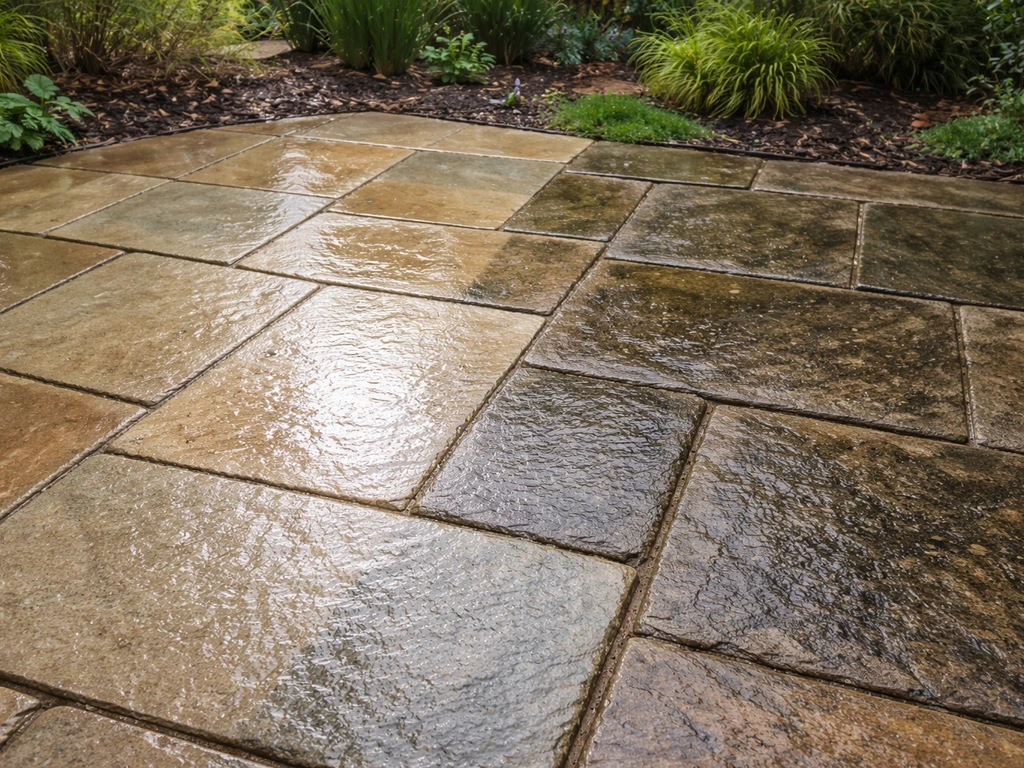
What Jeyes Fluid Patio Cleaner actually is (and who it's for)
Jeyes Fluid is a long-established UK disinfectant brand, and the patio-focused versions, including the Ready To Use Outdoor Cleaner and the 4-in-1 Patio and Decking Cleaner, are specifically formulated for outdoor hard surfaces. Jeyes Fluid is an external-use disinfectant fluid brand, noted for being predominantly used to remove bacteria and for cleaning outdoor hard surfaces such as paths and patios, especially for moss an external-use disinfectant brand.
The concentrate contains disodium metasilicate and a non-ionic surfactant at low percentages, and it's highly alkaline, running at a pH of around 12. 5 to 13. 5. That alkalinity is what breaks down biological growth.
The brand's core reputation comes from external disinfection, killing bacteria and neutralising the stuff that grows on damp, shaded outdoor surfaces.
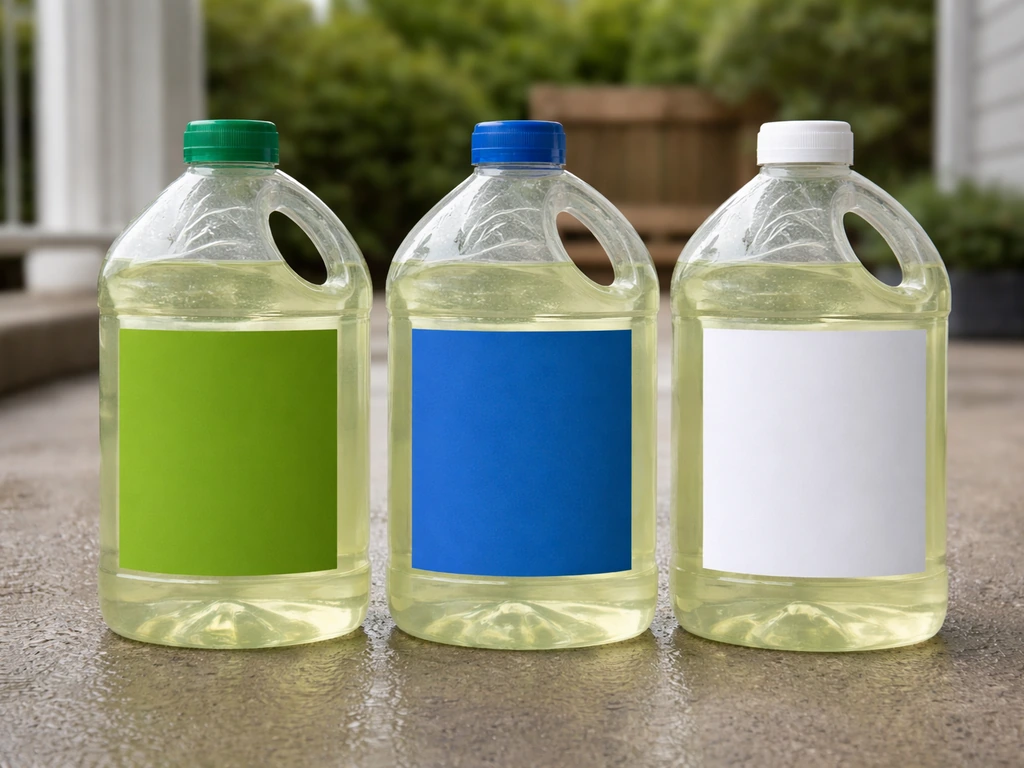
This product is squarely aimed at homeowners rather than professionals. If you've got a patio that's gone green over winter, or slabs that are covered in the black spotting that comes with mold and algae, Jeyes is the kind of thing you grab from your local hardware shop or order online and get stuck in on a weekend. It doesn't require any specialist equipment, though a pressure washer does help at the rinsing stage. There are two main formats worth knowing about: the Ready To Use 4L version (no mixing needed, covers around 30m²) and the 4-in-1 Patio and Decking Cleaner, which also comes in 4L and gives you a concentrate you dilute yourself.
What it targets: the stains and growth it's built for
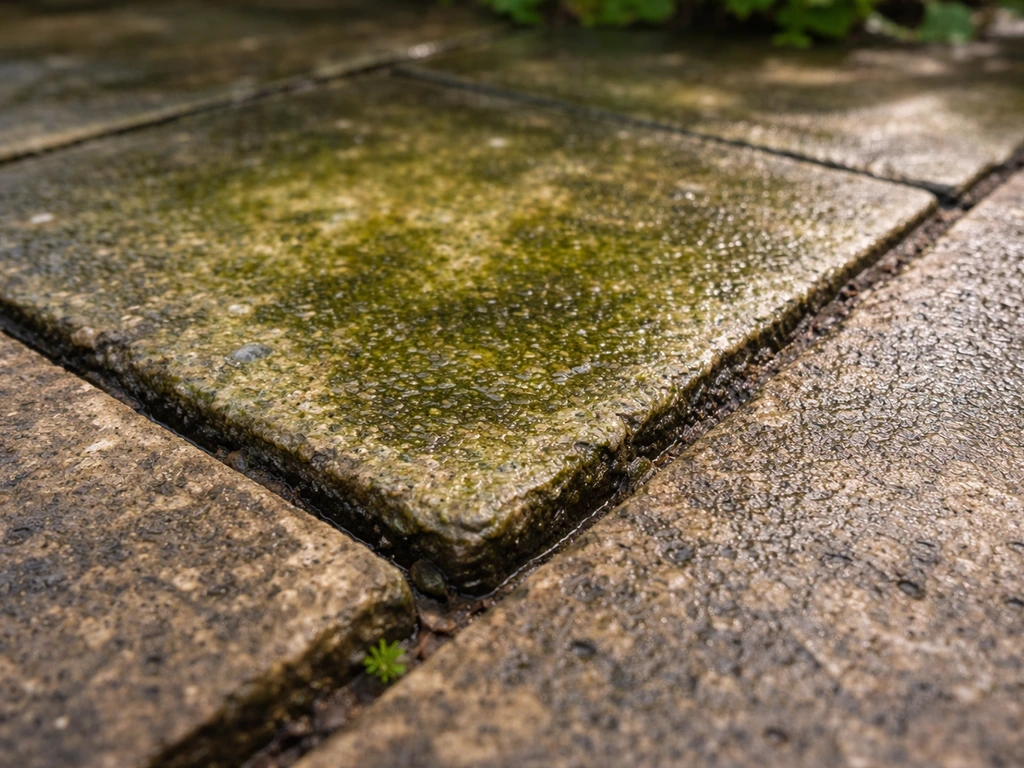
Jeyes patio cleaner is at its best against biological growth, and that covers the vast majority of what makes a UK patio look rough after a wet season. Here's where it reliably performs:
- Algae: the green, slippery film that builds up on shaded or north-facing slabs. Jeyes breaks this down well, especially with 30 minutes of contact time.
- Moss: the fluffy green growth between joints and across paving surfaces. For established moss, scraping first and then applying Jeyes gives much better results than applying directly over thick growth.
- Mold and mildew: the black and grey spotting that develops in damp conditions. This is where the disinfecting chemistry earns its keep, killing the growth rather than just covering it.
- General outdoor grime: accumulated dirt, dust, and environmental deposits that build up over time. Jeyes loosens this with the surfactant chemistry and makes rinsing much more effective.
- General bacterial contamination on paths, patios, and driveways: the brand's original purpose, and it still does this reliably.
What it won't reliably shift: oil and grease stains, rust marks, paint, and mineral deposits like limescale or efflorescence. These need specialist chemistry, not an alkaline disinfectant cleaner. If your patio has a mix of issues, treat biological growth with Jeyes first, then use a targeted product for any remaining staining.
Surface compatibility: what to expect on different patio materials
The alkaline pH is effective, but it also means you need to think about the surface before you start. Here's a practical breakdown:
| Surface | Compatibility | Notes |
|---|---|---|
| Concrete | Good | Handles it well. Safe to use at recommended dilution. Rinse thoroughly to avoid residue. |
| Standard paving slabs / stone | Good | The primary intended use case. Works well on most grey and buff-coloured slabs. |
| Brick | Generally fine | Test a small area first. Older or softer bricks may be affected by repeated strong alkaline treatment. |
| Sandstone | Caution needed | Porous and acid-sensitive stone. Jeyes' high pH is less likely to etch than acidic cleaners, but test first and don't leave it to dry on the surface. |
| Slate | Caution needed | Some slates can be sensitive to strong chemicals. Dilute properly and rinse promptly. |
| Porcelain | Generally fine | Non-porous, so less risk of absorption. Rinse thoroughly. Check if grout lines might be affected. |
| Decking (wood) | Check product label | The 4-in-1 variant is marketed for decking too. Avoid prolonged exposure on treated or painted wood. |
The honest answer on sandstone and slate is: always do a small patch test in a corner before you coat the whole area. I've seen people ruin the finish on natural stone by assuming a product marketed broadly as safe is safe everywhere. Jeyes is less aggressive than acid-based cleaners on these surfaces, but the high pH still warrants caution on delicate or sealed stone.
How to use Jeyes Patio Cleaner: step by step
Preparation
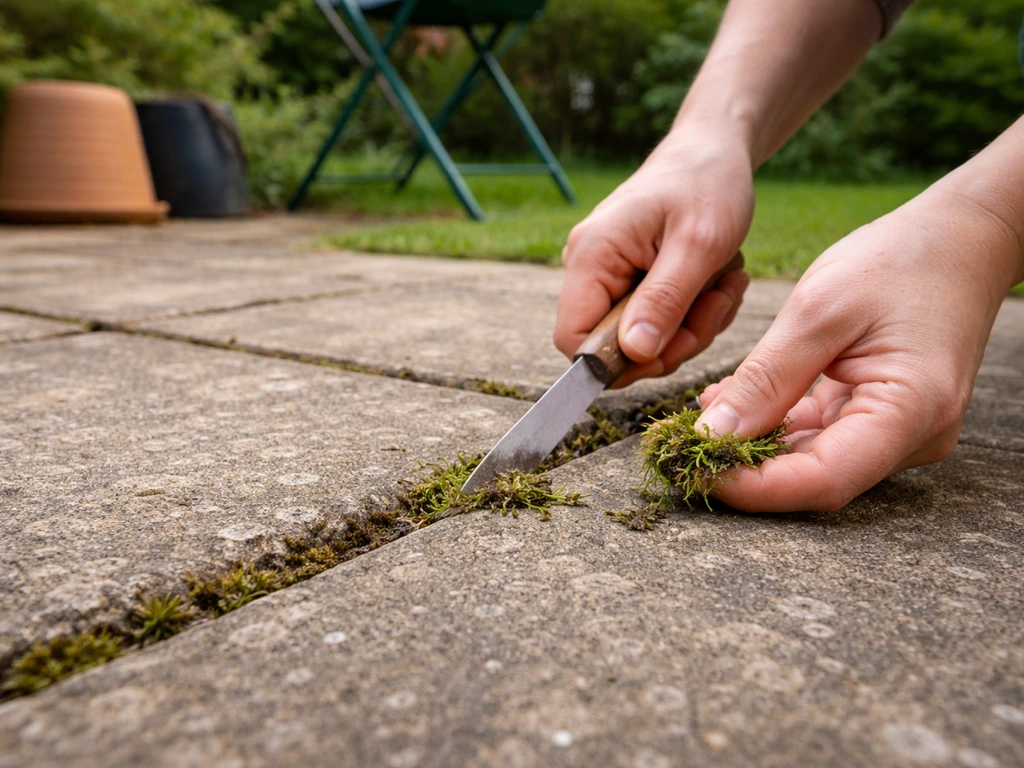
Don't skip this stage. Move all garden furniture, plant pots, and accessories off the patio first. If there's thick moss or weeds sitting in the joints, scrape or lift as much of it as you can with an edging tool or a stiff scraper before applying anything. Applying cleaner directly over thick biological growth just means the product sits on top rather than penetrating to the surface underneath. A quick sweep to remove loose debris also helps.
Dilution
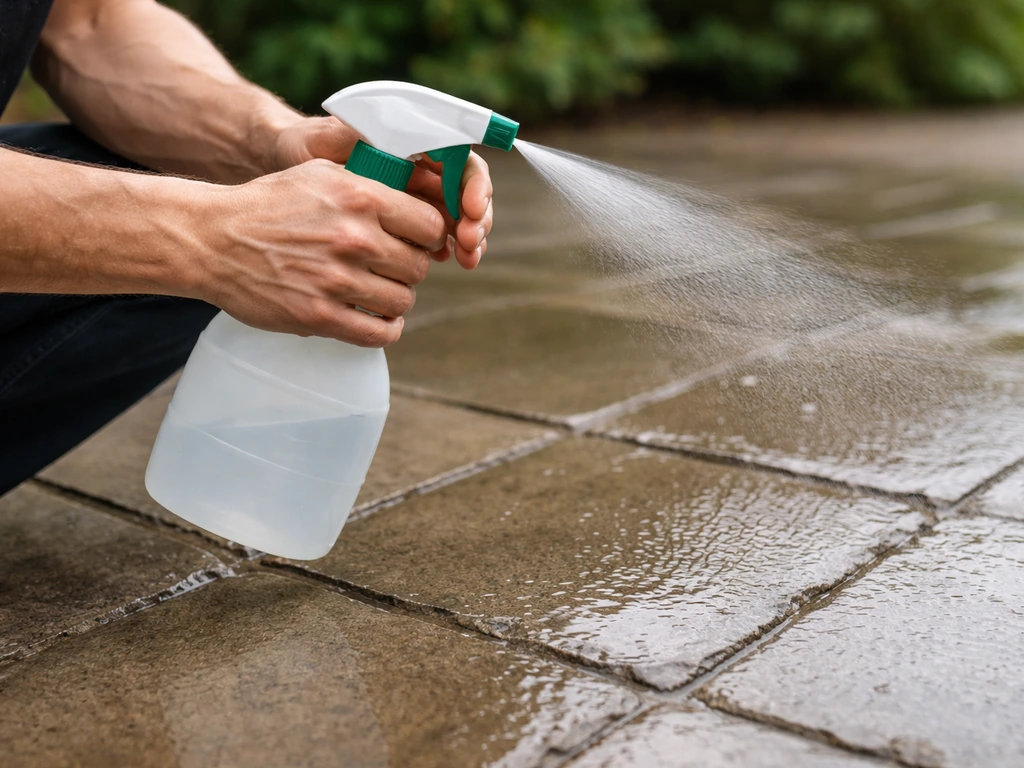
If you're using the Ready To Use version, there's nothing to mix, just apply straight from the bottle or trigger spray. If you're using the concentrate or the standard Jeyes Fluid diluted for patio use, the guidance for general outdoor disinfection of patios and paths is 1 part Jeyes Fluid to 20 parts water, applied and left for 30 minutes contact time. Always follow the label on whichever specific product you have, as formulations differ. If you want the exact [Jeyes Fluid patio cleaner instructions](/jeyes-fluid-patio-cleaner-instructions) for your specific product format, check the label for the right dilution and dwell time.
Application
Apply evenly across the surface using a watering can, garden sprayer, or, as one reviewer found useful, a pressure washer with a soap bottle attachment for larger areas. Make sure you saturate the surface properly rather than just dampening it. Work in sections if your patio is large, so the product doesn't dry before you get to rinse it. If you want step-by-step pro kleen patio cleaner instructions for the format you have, follow the label guidance for dilution, dwell time, and rinsing.
Dwell time
Leave it for 15 to 30 minutes. The 4-in-1 Patio and Decking Cleaner specifically states 15 to 30 minutes. Jeyes Fluid's 4-in-1 Patio and Decking Cleaner product page says to apply directly, leave it for 15 to 30 minutes, then scrub or jet wash and rinse 15 to 30 minutes then scrub or jet wash and rinse. The Ready To Use product guidance suggests around 30 minutes. Don't let it dry on the surface, especially on warm or sunny days. If conditions are dry and warm, dampen the surface lightly before you start or work in smaller sections.
Scrubbing and rinsing
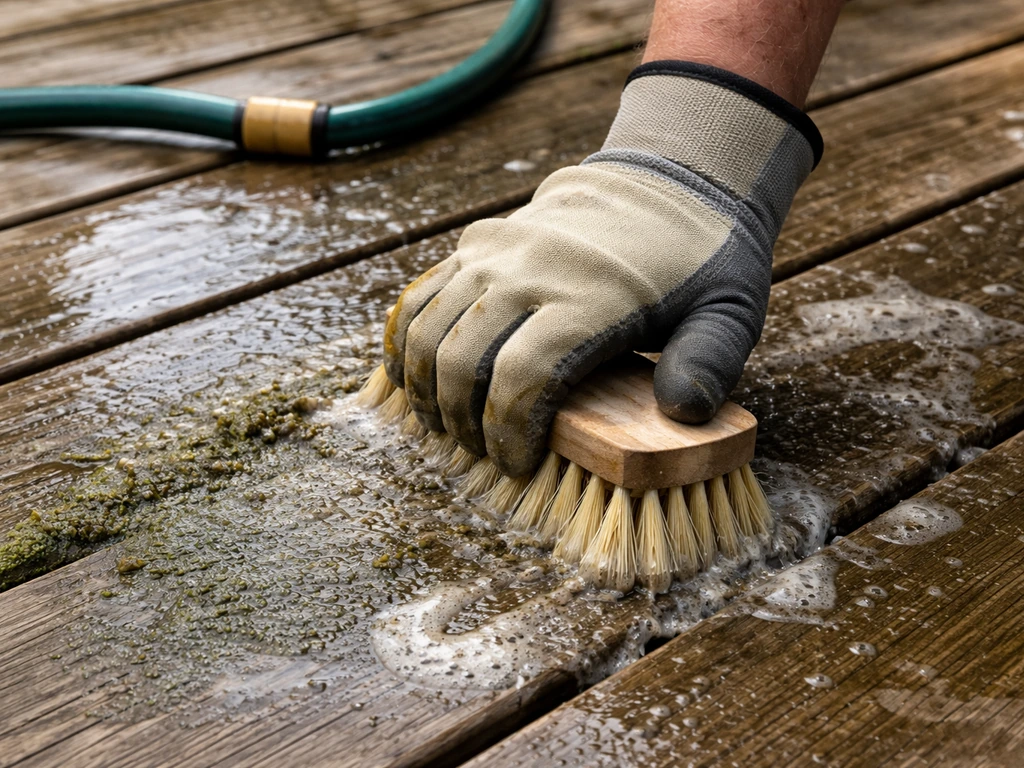
After the dwell time, scrub with a stiff brush (more on brush choice below) and then rinse thoroughly with a hose or pressure washer. A pressure washer will remove loosened growth much more effectively than a hose alone. Rinse until the water runs clear and there's no foamy residue left. The product has a distinctive strong smell during application, which clears once it's rinsed and dry.
What to expect: coverage, results, and honest limitations
The Ready To Use 4L bottle covers approximately 30m², which is a reasonable-sized patio in one go. For context, 500ml of the ready-to-use version covers around 3.8m², so it's the larger bottles that give you real economy. Results on moderate algae and moss buildup are typically visible quickly after rinsing. The Ideal Home roundup describes it as working almost instantly once rinsed away, which matches experience on light to moderate biological growth.
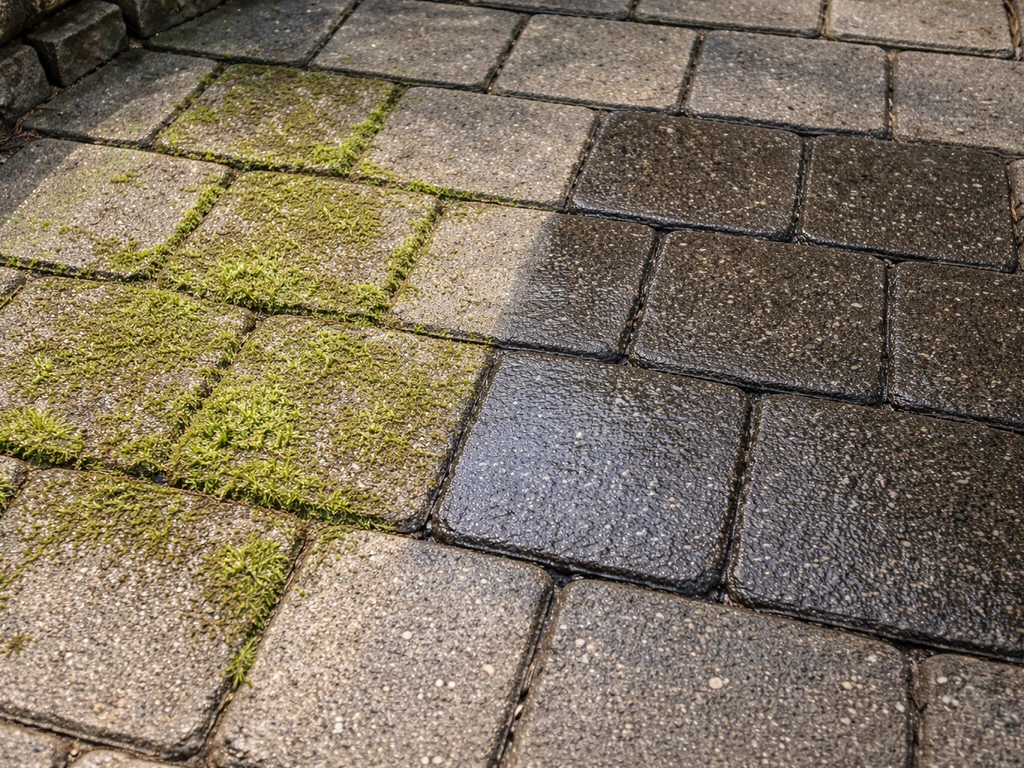
For heavier buildup that's been left for a full season or more, one application may not be enough to fully clear the surface. You'll see a significant improvement, but some staining and residual growth can persist. This is normal. A second application a week later, once the surface has dried, usually shifts what the first pass left behind. Don't expect a single treatment on a badly neglected patio to restore it to new in one go.
The smell is the main complaint in real-world feedback. Jeyes Fluid has a pungent, medicinal odour that clings during application. It dissipates once rinsed and dried, but it's noticeable while you're working. Worth knowing before you start on a warm afternoon when the windows are open.
Safety, dilution, and protecting what's around your patio
Jeyes patio cleaner is not plant-friendly. The high pH and disinfecting chemistry will damage or kill plants that are soaked in it or exposed to significant runoff. Before you start, water down any plants, grass edges, or borders immediately adjacent to the patio. If you have raised beds or plant pots very close to the edge, move them or cover them. Divert runoff away from planted areas if you can.
Keep pets and children off the treated area until it's fully rinsed and dry. The product is an irritant: the SDS (safety data sheet) guidance includes standard precautions for skin and eye contact, so gloves and eye protection are sensible when applying concentrate versions. Wash skin immediately if you get it on you. For the ready-to-use variant the risk is lower, but the same common sense applies.
On runoff more broadly: Jeyes is an aquatic environmental concern at higher concentrations. Don't let large volumes drain directly into ponds, streams, or water features. If your patio drains toward a pond, block the drainage path temporarily while you rinse, then allow clean water to flush the drain before reopening it.
- Wear gloves and eye protection when handling concentrate.
- Water adjacent plants before and after to dilute any runoff.
- Keep pets and children away until the area is fully rinsed and dry.
- Don't apply near ponds, streams, or water features without taking precautions.
- Don't let the product dry on the surface, especially on porous or decorative stone.
- Store concentrate out of reach of children and in original containers.
What to do if it doesn't fully work: troubleshooting stubborn results
If growth is still visible after the first treatment
Wait for the patio to dry fully, then repeat the application. Sometimes the first treatment kills the growth but leaves the dead residue staining the surface. A second treatment combined with more aggressive brushing tends to clear this. Give it at least a week between applications.
Brush choice matters more than most people think
A flimsy garden broom isn't going to cut it on textured or riven paving. Use a stiff-bristled outdoor scrubbing brush with a long handle, or a deck scrubber. For joint areas where moss has taken hold, a wire brush or a pointed scraper gets into places a flat brush can't reach. I learned this the hard way when I spent 20 minutes scrubbing a brush over riven slate and barely shifted anything, then switched to a hard-bristle deck scrub and cleared it in five minutes.
When to bring in a pressure washer
A pressure washer transforms the rinsing stage. After 30 minutes of dwell time, a pressure washer blasts away the loosened algae and moss rather than just moving it around with a hose. You don't need a high-end machine: a domestic electric pressure washer at 100 to 130 bar is more than enough for paving slabs and concrete. Use a rotary or patio cleaning head attachment if you have one, as it gives a more even result and avoids tiger-striping. A chemical-plus-pressure-washer combination is the most effective approach for anything beyond light surface growth.
When Jeyes isn't the right tool
If you're dealing with oil stains, rust, or heavy efflorescence, Jeyes won't solve the problem. You'd want a dedicated degreaser for oil, an oxalic acid-based treatment for rust, or a specialist efflorescence remover for mineral deposits. For black spot specifically (the stubborn dark spotting common on limestone and some block paving), look at dedicated black spot patio cleaners, as Jeyes may lighten but not fully clear that particular staining.
For more detail on how dedicated options perform, see black spot patio cleaner reviews before you choose your product black spot specifically. Similarly, if you're looking for a more targeted concentrate approach or want to compare performance, products like Pro-Kleen and Jennychem patio cleaners are also worth considering for heavy-duty scenarios. If you need alternatives, look up pro kleen patio cleaner instructions so you can compare the right approach for your surface Pro-Kleen and Jennychem patio cleaners.
If you want to compare, reading zep patio cleaner reviews can help you judge whether a different patio cleaner suits your specific staining and growth issues. If you want alternatives, it can help to compare different options in zep patio cleaner reviews before you buy.
Is Jeyes Fluid Patio Cleaner worth it?
For most homeowners with a standard concrete or paving slab patio that's gone green or mossy over winter, yes. It's widely available, reasonably priced, straightforward to use without any specialist knowledge, and it works well on the biological growth that causes the most common patio problems in the UK. The Ready To Use 4L format is the most convenient option if you want zero mixing hassle. If you're comparing the spear and jackson patio cleaner review, focus on whether you need something for biological growth or tougher residue like oil, rust, or limescale Ready To Use 4L format. The 4-in-1 concentrate is better value if you have a larger area or plan to do a couple of treatments.
Where it earns the most points is in ease of use and accessibility. If you're comparing options beyond Jeyes Fluid, it's worth checking Pro-Kleen patio cleaner reviews to see what people report for similar green and algae stains pro kleen patio cleaner reviews. You don't need a pressure washer (though it helps), you don't need to mix complicated solutions, and the application process is about as simple as it gets. For a beginner tackling their patio for the first time, that simplicity is genuinely useful. Just be realistic about what a single treatment can achieve on a heavily neglected surface, protect your plants and pets, rinse properly, and it'll do a solid job.
FAQ
Can I use Jeyes patio cleaner to remove rust, oil, or limescale too?
Yes, but only as a pretreatment step. Apply Jeyes to kill and break down the growth, then scrub and rinse thoroughly. For stubborn rust, oil, paint, and mineral scale, switch to a targeted chemistry afterward, because the high alkalinity is not the right tool for those stains.
What are the most common reasons Jeyes patio cleaner fails to produce an even result?
Do not treat it like a one-and-done bleach. If you leave the patio too long without rinsing, or let the product dry in patches, you increase the chance of residue and uneven results. Work in sections, keep dwell time within the label range, and rinse until the rinse water runs clear.
How can I protect grass and garden plants if my patio drains toward a border?
If plants are in pots or borders close to the edge, water them heavily first, then cover them with plastic sheeting while you work, and move any pots that sit right against the paving. After rinsing, allow runoff to clear before you remove covers so you do not pull dirty, high pH water back onto leaves or soil.
Is it okay if the cleaner dries before I rinse it off?
In general, it is safer to avoid letting it dry on the surface. If it starts drying early due to sun or wind, lightly dampen and keep working in smaller areas so contact time stays controlled. After scrubbing, always rinse thoroughly because dead algae can leave a residue that looks like the stain is still there.
What brush or scrub method works best for textured paving and moss in joints?
For riven, textured, or joint-heavy paving, use a stiff brush rather than a broom. Joints often hold moss and debris, so lift or scrape the thick growth first, then scrub across the face and work into the gaps (a wire brush can help on stubborn joint moss).
Is Jeyes patio cleaner safe on sealed or previously coated patio surfaces?
If your patio is sealed or was previously treated with an unknown sealer, do a patch test and expect the outcome to vary. High pH products can dull finishes or affect some coatings, so if patch test results look uneven or cloudy, stop and consider a lower-aggression option designed for sealed surfaces.
How do I avoid streaks or tiger-striping when using Jeyes patio cleaner with a sprayer?
To reduce streaking, saturate the whole area evenly and rinse the sections you treated in a similar order. Uneven wetting and letting treated areas dry at different times are the main causes of patchy “tiger stripe” effects.
When should I apply a second coat, and will it always fix the leftovers?
Do a second treatment only after the patio has dried, usually after about a week for neglected buildup. This targets what the first pass killed but left behind as a residue or remaining growth, and you should expect diminishing returns after the second round.
Can I use a pressure washer to apply or scrub, or should it only be for rinsing?
If you want to use a pressure washer, keep it for rinsing rather than scrubbing. Use a domestic unit (around 100 to 130 bar) and, if possible, a patio or rotary head to avoid gouging and uneven removal. Higher pressure without the right head can damage soft block edges and pull up jointing sand.
How long should I wait before putting furniture back on the treated patio?
You should wait until the surface is fully rinsed and dry before bringing furniture back. If you return items too soon, they can pick up residue that dries as a film, and you may also trap moisture that encourages fast re-growth of algae in shaded areas.
What should I do about runoff if my patio drains toward a pond or water feature?
Block off the drainage path if runoff heads toward ponds or water features, then rinse so clean water flushes the affected area. If you have a soakaway or drainage gully, avoid washing large volumes directly into it until you have completed rinsing with controlled runoff.
Next Article
Zep Patio Cleaner Reviews: Which Zep Works Best?
Zep patio cleaner reviews with usage tips, coverage, stain results, and which Zep product works best for mold, rust, gre