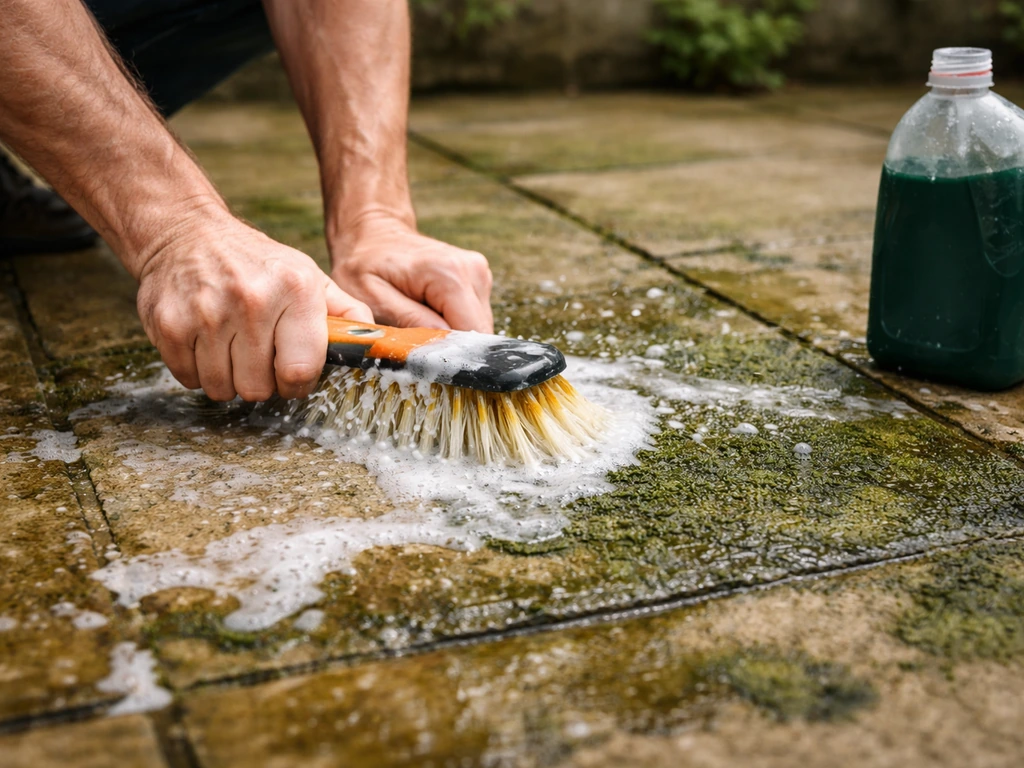
Spear & Jackson patio cleaner works reasonably well on algae, mould, and general green growth on concrete and hard paving, but results vary a lot depending on which product in their range you pick, the surface you're using it on, and whether you follow the dwell time properly. If you get the process right, it's a solid mid-range option for a UK homeowner who wants a no-fuss patio clean without hiring a professional. If you rush it or use the wrong variant on the wrong surface, you'll be disappointed.
Spear and Jackson Patio Cleaner Review and Instructions

Rhea Lang
6 Jul 2026
What the Spear & Jackson patio cleaner range is actually for
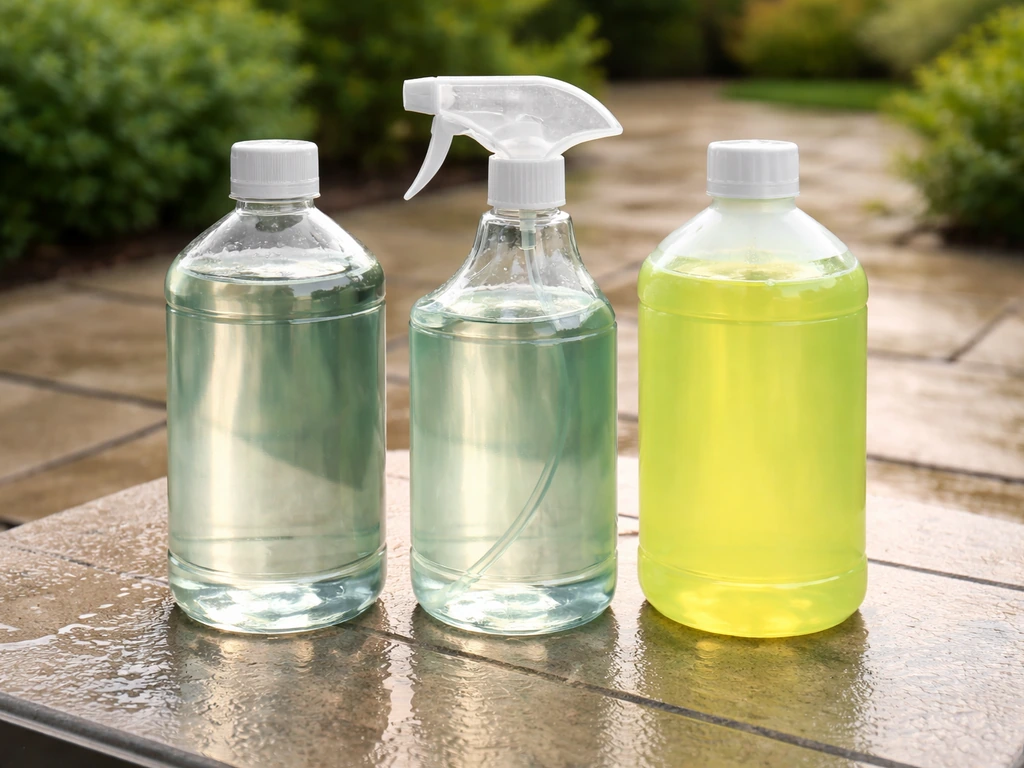
Spear & Jackson make a few different products under the patio cleaner umbrella, and it's worth knowing which one you're looking at before you buy. The main three you'll encounter in UK retailers like B&M, Tesco, Wilko, and Home Bargains are: the Path, Patio & Deck Cleaner (concentrate, usually 5L), the Spray & Leave concentrate (also 5L), and the Black Spot Remover (ready-to-use, 5L). They're not interchangeable. Each targets slightly different problems.
The Path, Patio & Deck Cleaner is the most general-purpose of the three. It targets mould, algae, and moss, and the marketing claim is that it kills spores and stops regrowth, not just masks the surface. The Spray & Leave is designed for lighter, ongoing maintenance where you apply it and don't need to rinse immediately. The Black Spot Remover (RTU) is specifically for the dark, embedded black spots you get on paving slabs, often caused by algae or lichen that have bonded deeply into the surface. If you have heavy black spotting, that's the one to reach for first.
The active ingredient across the range is a quaternary ammonium compound (a biocide, similar to what you'd find in other patio biocide cleaners like Jeyes or Pro-Kleen products). It works by disrupting the cell membranes of algae, moss, and mould rather than bleaching or burning them off. That means results aren't always instant, which trips a lot of people up.
Step-by-step instructions for using Spear & Jackson patio cleaner
Step 1: Prepare the surface
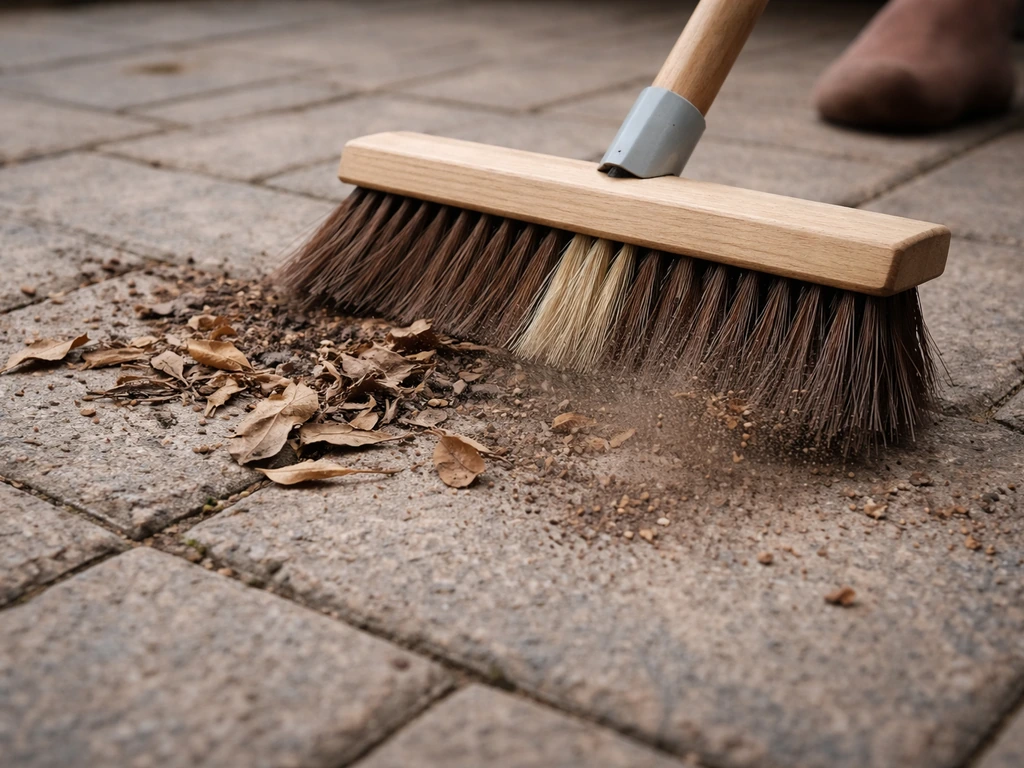
Before you apply anything, sweep or brush the patio clear of loose debris, leaves, and dirt. If you are using Jeyes Fluid instead of Spear & Jackson, follow the Jeyes Fluid patio cleaner instructions for the correct dilution, dwell time, and rinsing. If there's thick moss or heavy deposits, use a stiff patio brush or a flat scraper to lift as much as you can first. This matters more than people realise. The cleaner needs to reach the surface directly, not sit on top of a mat of dead organic matter. I've seen people apply cleaner to a mossy patio and wonder why half of it doesn't work, and almost always it's because they skipped the pre-brush.
Step 2: Mix and dilute (concentrate products)
For the Path, Patio & Deck Cleaner concentrate and the Spray & Leave concentrate, blank" rel="noopener noreferrer">the dilution ratio is 1 part cleaner to 4 parts water. If you're also using Pro-Kleen patio cleaner, follow the Pro-Kleen patio cleaner instructions for mixing, dwell time, and rinsing so the active ingredients work properly pro kleen patio cleaner instructions. So for a 5L bottle, you're making up 25 litres of solution, which covers approximately 250 square metres according to the product listing. That's a generous coverage for most domestic patios. Mix it in a watering can, garden sprayer, or bucket depending on how you plan to apply. The Black Spot Remover RTU requires no mixing at all, just apply straight from the bottle.
Step 3: Apply the solution
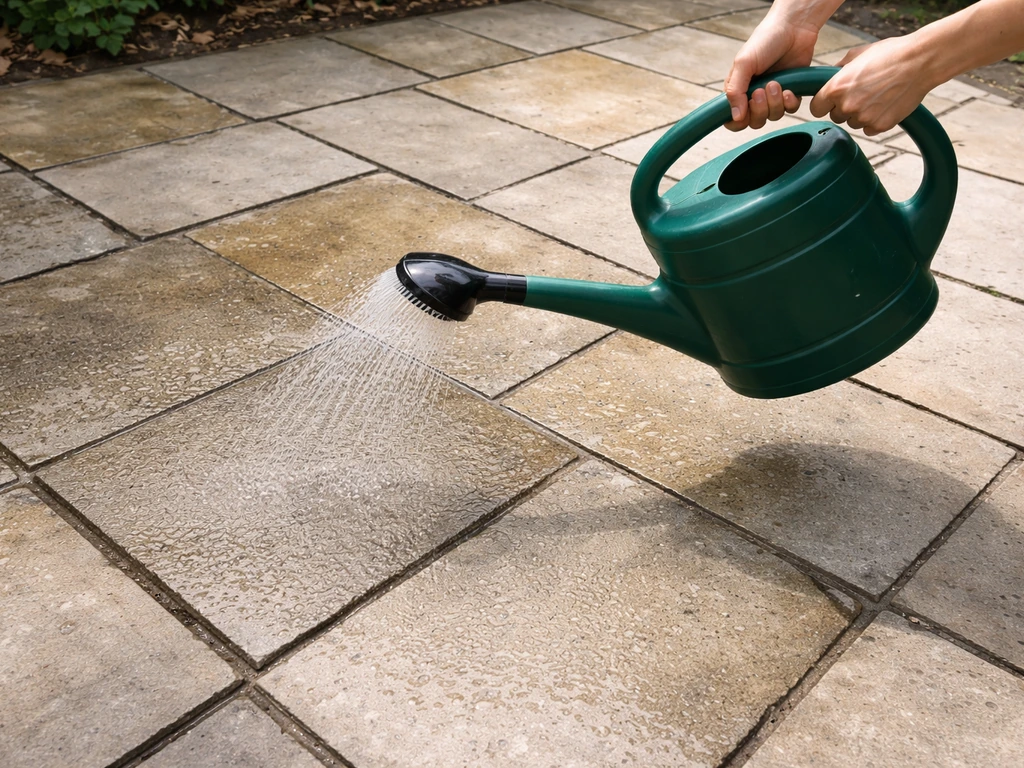
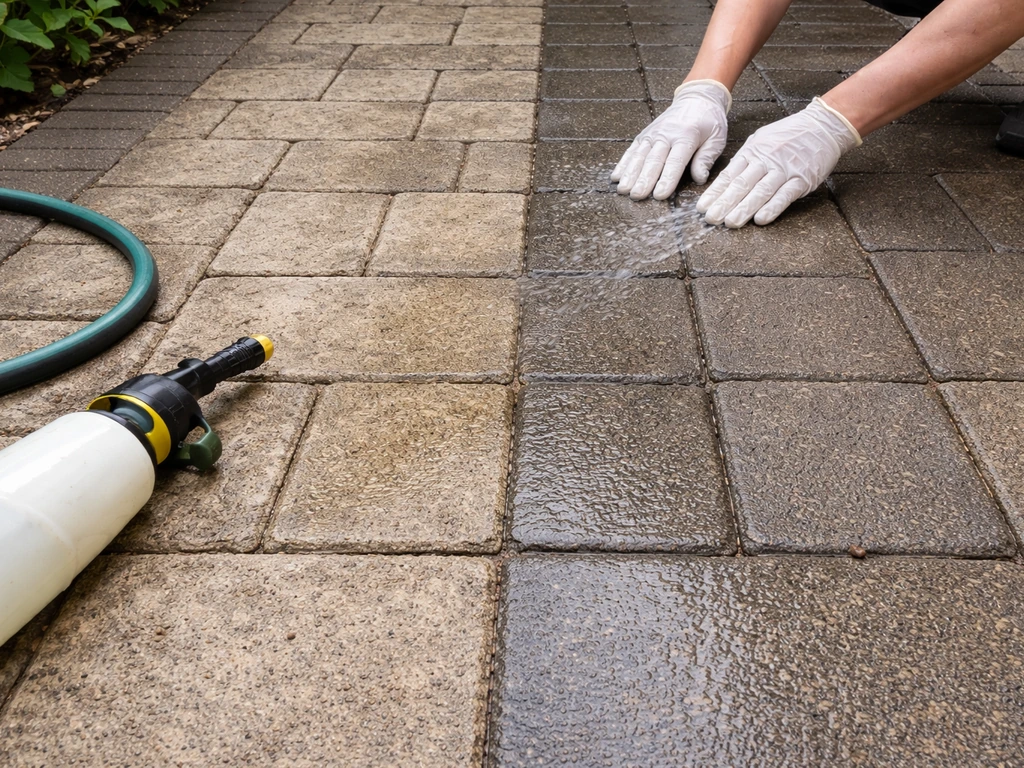
Apply the diluted solution evenly across the surface using a watering can, garden sprayer, or pressure washer with a low-pressure setting. You want the surface wet but not flooded. For the Spray & Leave variant, a trigger sprayer works fine on smaller areas. Make sure you get into the joints between slabs, as that's where algae and moss tend to root most deeply. Don't apply in direct strong sunlight or if rain is forecast within a few hours, as the solution needs time to work without being washed away.
Step 4: Dwell time
This is where the process splits by product type. For the Path, Patio & Deck Cleaner (the rinse-off concentrate), allow the product to sit and work on the surface before rinsing. For the Spray & Leave, the whole point is that you leave it: third-party application guides suggest visible results within 3 to 5 days as the biocide works through the growth and rain gradually rinses it away. For the Black Spot Remover RTU, the product listing states you should see results within 2 to 4 hours. If you're not seeing any change after 4 hours with the black spot remover, you may need a second application or some light agitation with a brush.
Step 5: Agitate if needed
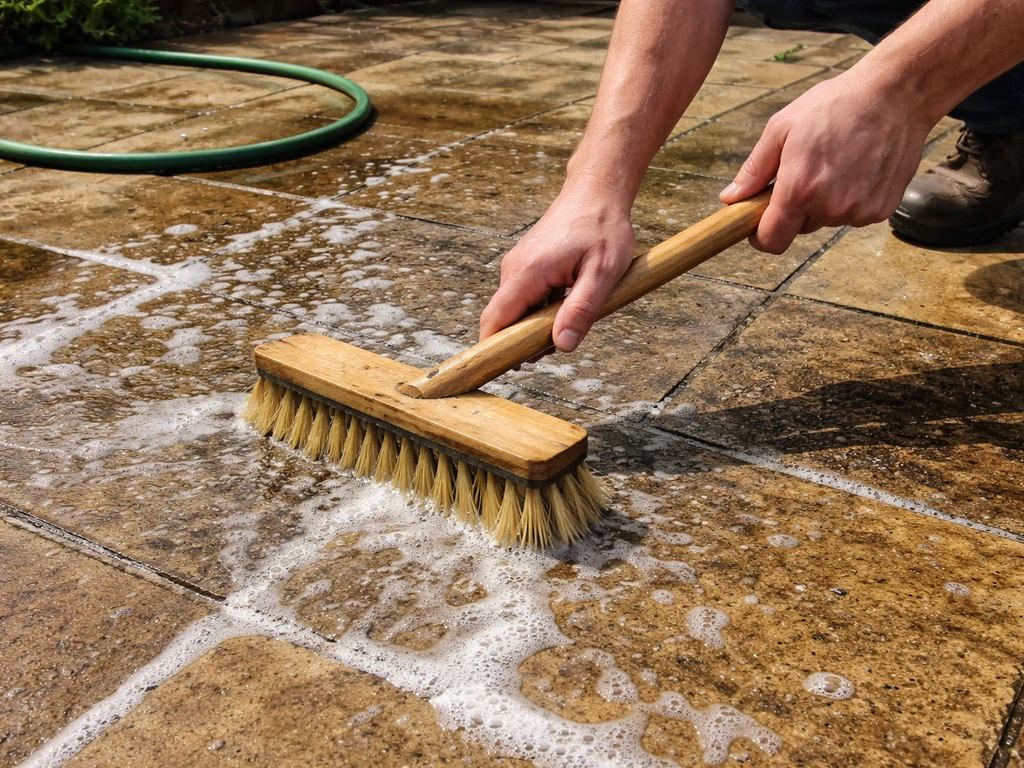
For the rinse-off concentrate on a heavily soiled surface, working the solution in with a stiff patio brush after applying gives much better results. You don't need to scrub aggressively, just enough to loosen the growth and work the biocide into the surface. Reddit users report good outcomes from leaving the product for a couple of hours after this and then following up with a pressure washer.
Step 6: Rinse
For the concentrate patio cleaner, rinse thoroughly with a garden hose or pressure washer after the dwell period. This washes away the loosened organic matter and residual product. For the Spray & Leave, rinsing is optional and typically handled by rainfall. Make sure runoff doesn't flow directly into drains, ponds, or planted borders.
Using Spear & Jackson patio cleaner on different surfaces
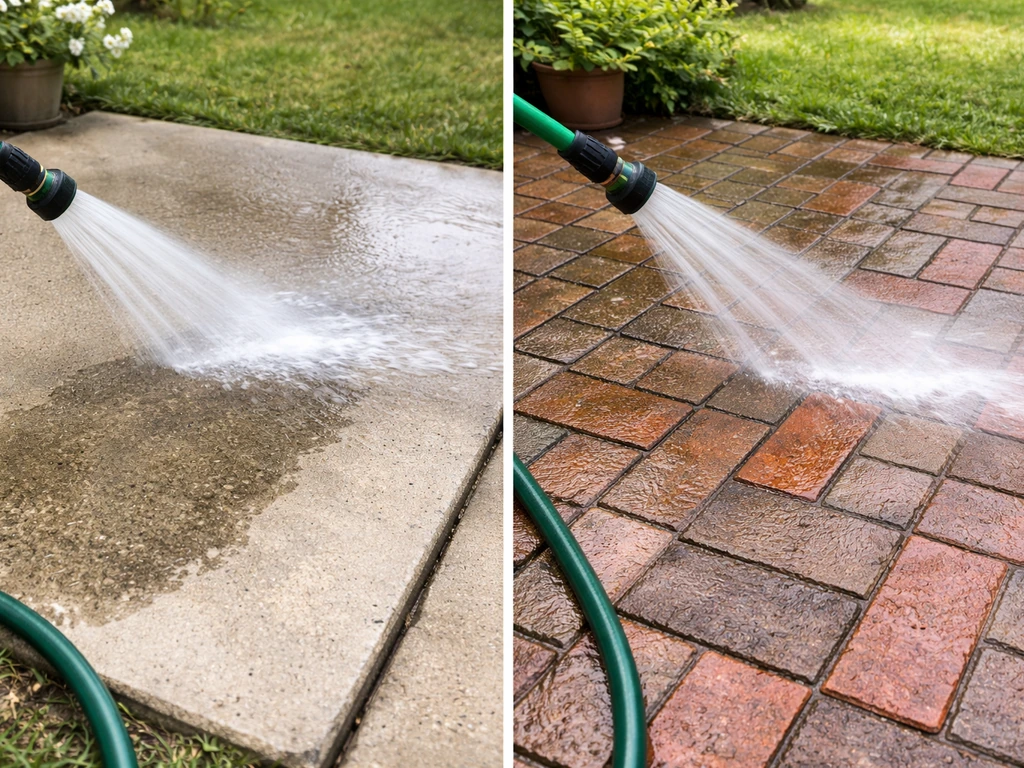
Not all patio materials respond the same way, and a couple of surfaces need real care. Here's what I'd recommend for each common surface type.
| Surface | Suitable? | Notes and precautions |
|---|---|---|
| Concrete slabs | Yes, works well | This is where it performs best. Standard dilution, brush agitation, and pressure washer rinse gives good results. |
| Brick | Yes, with care | Works on surface algae and mould but deep staining in porous brick may need a second pass. Some users report mixed outcomes on brick. |
| Natural stone (limestone, granite, slate) | Use with caution | Avoid acid-based cleaners entirely on natural stone. Spear & Jackson is biocide-based not acid, but always patch-test first. Natural stone is sensitive to strong chemicals. |
| Sandstone | Test first | Sandstone is porous and absorbent. Dilute as directed and patch-test. Don't let the product pool or dwell too long. |
| Slate | Test first | Slate can be sensitive to surface cleaners. Patch-test in an inconspicuous area before treating the whole surface. |
| Porcelain pavers | Generally safe | Porcelain is non-porous so the cleaner sits on the surface rather than soaking in. Works well for algae on porcelain but you may not need a full dwell time. |
| Decking (wood or composite) | Yes (product is labelled for decking) | The Path, Patio & Deck Cleaner is explicitly labelled for decking use. For composite decking, patch-test first. |
The general rule for natural stone (limestone, slate, sandstone) is that acid-based cleaners should never be used. Spear & Jackson's biocide-based formula is safer in that respect, but you should still patch-test any new surface and avoid leaving the product to pool in one area on porous materials. If you're dealing with concrete or porcelain, you can be more confident applying it without a patch test.
What results to expect and who should buy it
Be realistic with your expectations. Spear & Jackson patio cleaner is a solid choice for general green growth, surface algae, mould, and light moss on concrete and hard paving. If you want real-world feedback, you can also look up jennychem patio cleaner reviews to compare what different buyers experienced on their own patios. It's not a miracle product for deeply ingrained black spotting or heavy, years-old staining, and it won't remove rust, oil, or grease. For those problems you need a different product entirely.
The 5L concentrate gives excellent value if you have a large patio to maintain regularly. At a 4:1 dilution you're getting 25 litres of working solution, which covers a big area for a fairly modest outlay. It's available at B&M, Tesco, Home Bargains, and Wilko, which makes it easy to grab without ordering online.
It's a good buy if you have a concrete or hard paving patio with algae and green growth that comes back every year, and you want an easy annual maintenance treatment. It's less ideal if you have heavily stained natural stone, severe black spot problems, or rust and grease contamination, where you'd be better served by a specialist black spot remover or a degreaser.
Honest review roundup: what users actually say
User reviews for the Spear & Jackson Spray & Leave sit at both ends of the spectrum, and that split tells you something useful. If you want more detail beyond this guidance, browse Spear & Jackson patio cleaner reviews for real-world results on different patio types. The positive reviews consistently mention concrete slabs and patios where green algae was the main problem, with users reporting visible before-and-after results. The negative reviews tend to come from people who used it on brick walls, decking with heavy staining, or expected results within hours rather than days.
Main pros
- Good coverage for the price: 5L concentrate makes 25 litres of solution and covers up to 250 square metres
- Easy to apply with a watering can, sprayer, or pressure washer
- Targets algae, mould, and moss with a biocide that claims to prevent regrowth
- Available in major UK budget retailers so easy to find
- Spray & Leave variant requires minimal effort once applied
- Works well on concrete and porcelain where users follow the dwell time correctly
Main cons and common complaints
- Results on brick can be inconsistent: some users report no improvement even after two applications
- The Spray & Leave product can take 3 to 5 days to show visible results, which frustrates people expecting same-day outcomes
- Useless for grease, oil, rust, or deeply embedded black spots (wrong product for those problems)
- Some users report buying two bottles for decking and seeing no improvement even after 4 weeks
- Packaging and product variants (Spray & Leave, Path & Patio Cleaner, Black Spot Remover) cause confusion at point of purchase
- No brush agitation step highlighted clearly enough on packaging, leading to under-performance on heavier growth
The decking complaint is worth highlighting specifically. Multiple users have reported poor results on decking, and this makes sense: wood decking with heavy green staining often needs a purpose-formulated deck cleaner or a more aggressive treatment rather than a surface biocide alone. If decking is your main concern, don't rely on this product as your only tool. If you want to compare results across brands, pro Kleen patio cleaner reviews can be a useful next step after this Spear & Jackson walkthrough.
When it won't clean: troubleshooting by stain type
If you've followed the steps and aren't getting results, the fix depends on what you're actually trying to remove. Here's a quick breakdown.
Mould and algae not clearing
If you're using the Spray & Leave product, give it more time. Visible results genuinely do take 3 to 5 days in typical UK conditions. If you've waited that long and nothing has shifted, apply a second pass and this time agitate with a stiff brush before leaving to dwell. On concrete, following up with a pressure washer after agitation makes a significant difference. If results are still poor, consider switching to a more concentrated biocide product from another brand, some of which use higher active ingredient percentages.
Black spots not responding
The general-purpose Path & Patio Cleaner and Spray & Leave products aren't specifically formulated for deep black spotting. Switch to the Spear & Jackson Black Spot Remover RTU, which is a ready-to-use spray designed for this problem with a 2 to 4 hour results window. If you're comparing black spot patio cleaner reviews, this is the key type to look for when you have dark embedded spotting on paving slabs Black Spot Remover RTU. If even that doesn't shift it after two passes, the spotting may be deeply embedded lichen or ingrained staining that needs a specialist black spot product, of which there are several strong alternatives on the UK market. The dedicated black spot patio cleaner options available from other brands in this category can be worth comparing if you're dealing with severe cases.
Moss coming back quickly after treatment
Moss regrowth is usually a drainage and shade problem as much as a cleaning one. The biocide should suppress regrowth if applied properly, but if your patio sits in shade with poor drainage, moss will return faster. Annual re-treatment is realistic for most shaded patios. Some homeowners do a maintenance application every spring as a preventative measure, which is exactly what the Spray & Leave product is designed for.
Grease and oil stains
Spear & Jackson patio cleaner will not remove grease or oil. Jeyes Fluid is a different kind of cleaner, so check whether it’s suitable for your patio surface and stain type before you use it. These need a degreaser specifically. Apply a dedicated patio degreaser to the affected area, allow it to penetrate, scrub with a stiff brush, and rinse. Don't expect any biocide-based patio cleaner to tackle this class of staining.
Rust stains
Again, not what this product is for. Rust stains on paving require an oxalic acid-based remover or a dedicated rust remover for outdoor surfaces. Be careful using any acid-based product on natural stone. For concrete or porcelain, a rust remover applied directly to the stain with a brush works well.
White marks appearing after use
If white marks appear on concrete after cleaning, this is likely efflorescence (mineral salts rising to the surface), not damage from the cleaner. It's a known phenomenon on concrete and cement-based slabs, especially after thorough wet cleaning. It usually weathers away over time, but can be removed with a specific efflorescence remover if it's persistent.
Safety, dilution, and eco precautions
The active biocide in Spear & Jackson products (quaternary ammonium compounds at 1 to 5%) is effective precisely because it's toxic to biological organisms. That means it needs to be handled and disposed of carefully.
Personal protection
According to the product's Safety Data Sheet, you should wear protective gloves, eye protection, and face protection when handling and applying. This isn't just boilerplate. If you're using a pressure washer to apply or rinse, the fine spray mist can carry the solution a fair distance, so safety glasses are particularly important. Wash hands thoroughly after use and wash any contaminated clothing before you wear it again.
Environmental precautions
The SDS explicitly states to avoid release to the environment and to dispose of contents and containers in accordance with national regulations. In practice this means: don't apply before heavy rain is forecast (it'll wash into drains untreated), don't let runoff drain directly into ponds, streams, or planted borders, and don't pour leftover solution down the drain in large quantities. For disposal of leftover diluted solution, highly diluted residue rinsed off with plenty of water onto lawn areas away from water features is a common approach, but check your local disposal guidance.
Pets, children, and plants
Keep pets and children off the treated surface until it is completely dry. Border plants and lawn grass immediately adjacent to the patio can be affected by runoff, so wet down bordering plants with plain water before applying the cleaner if they're close to the edge of the patio. Once dry, the surface is generally safe for foot traffic.
Cleanup after use
Rinse your sprayer, watering can, or brush thoroughly with clean water after use. The SDS guidance says to clean equipment and the work area daily when in use. Store the concentrate in its original container, sealed, away from children, and don't mix it with other cleaning products. Quaternary ammonium compounds can react with anionic surfactants (found in some soaps and detergents), so keep them separate.
Overall, Spear & Jackson patio cleaner is a reliable, widely available option for maintaining a typical UK concrete or hard paving patio against algae, mould, and moss. If you want a comparison-style view, you may also like checking Jeyes patio cleaner reviews for how it performs on similar stains. Follow the dilution, give it proper dwell time, use a brush on heavier growth, and rinse thoroughly. For anything more specialised, including severe black spotting, natural stone sensitivity, or grease and rust problems, look at the dedicated products in those categories and don't expect a general-purpose patio cleaner to do a specialist job.
FAQ
How do I choose between the Path, Patio & Deck Cleaner, Spray & Leave, and Black Spot Remover if I am not sure what is on my patio?
Do a quick spot check first. If the growth looks green and spread across areas (algae, mould, moss) start with Path, Patio & Deck Cleaner. If it is mild, ongoing greening and you want a regular maintenance approach without immediate rinsing, choose Spray & Leave. If you have dark embedded dots or blotches on paving slabs that look ingrained rather than surface growth, start with Black Spot Remover RTU.
Can I use Spear & Jackson on painted surfaces, like painted concrete or decorative concrete coatings?
Be cautious. The biocide is designed for uncoated hard paving, and painted or coated finishes can be patchy or discoloured if the product sits or penetrates. Patch test in a small hidden area first, and avoid letting it pool on seams or texture that can trap solution.
What is the right way to apply if my patio has lots of joints, between slabs or block paving?
Focus on getting liquid into the joints, then keep the rest evenly wet. Overloading only the flat areas wastes product, because the main algae and moss often anchor in joint lines. A low-pressure pressure washer or a garden sprayer used slowly, moving in overlapping passes, usually reaches joints better than a quick watering can sweep.
Will it work faster if I increase the concentration or skip dilution?
In general, no. Using stronger-than-recommended mixes can increase risk to plants and surfaces without guaranteeing faster results, especially because the active works through contact time. Stick to the 1 to 4 water mix for the concentrate products, and if you need a stronger outcome, choose the correct product for the problem rather than dosing harder.
How long should I leave it if the weather is cool or damp?
Dwell time can stretch in cooler conditions, since the biocide needs time to disrupt growth. If the forecast keeps temperatures low or humidity is high, plan for the upper end of the suggested window (for Spray & Leave, closer to 5 days). If you are using the rinse-off concentrate, extend within reason and ensure it stays wet long enough before rinsing.
Can I clean after using it the same day, or do I need to wait?
Wait until the product has completed its dwell period, and avoid rinsing or scrubbing early for Spray & Leave since it is designed to be left. For rinse-off concentrates, rinse thoroughly after the dwell period. If you need a brush agitation step, do it during the window before rinsing, not the next day.
What should I do if the surface looks cleaner but the green returns quickly?
That pattern usually means regrowth pressure from shade or poor drainage, not that the biocide failed. Improve airflow and water shedding where possible, clear debris that blocks runoff, and consider an annual preventative application in spring. If you have persistent growth in the same corners, inspect drainage points and water collection, then treat those areas specifically.
Is it safe for surrounding plants and grass?
It can affect nearby plants via contaminated runoff. Before applying, wet adjacent border plants and lawn areas with plain water if they are close to the edge, then apply carefully to reduce splashing. Keep children and pets off until the treated area is fully dry.
Can I use a pressure washer to apply the product, or only to rinse?
It can be used, but keep it low-pressure if you are using it for application to prevent creating mist that spreads the biocide. Wear eye protection because fine spray can travel further than you expect. For rinsing after dwell time, a pressure washer is effective, but still avoid blasting so hard that you damage joint sand or lift block paving.
What is the best way to deal with heavy moss that is thick and matted?
Do pre-lifting first. Use a stiff patio brush or flat scraper to remove as much loose moss as you can before applying the cleaner. If you skip this, the biocide can be blocked by dead organic matter sitting on top, leading to patchy results.
If I see white chalky marks on concrete after cleaning, is the patio damaged?
Often, those white marks are efflorescence, mineral salts that come to the surface after wet cleaning. It is typically cosmetic and weathers away, but if it persists, use an efflorescence-specific remover instead of repeating the patio biocide treatment.
What should I do with leftover solution and cleaning equipment?
Do not mix it with other cleaning chemicals, and rinse equipment thoroughly with clean water after use. For disposal, avoid pouring leftovers into drains in concentrated form, and follow local guidance. If you must dispose of dilute residue, use highly diluted runoff on lawn away from water features, but check your area’s rules first.
Can I use it to remove grease, oil, rust, or tyre marks?
No, it is not designed for those stains. Grease and oil need a dedicated degreaser, rust requires an outdoor rust remover or oxalic-acid-type approach for compatible surfaces, and tyre or deep ingrained marks may need a different specialist product and sometimes mechanical scrubbing. Using the biocide on these stains often leads to wasted time and unchanged results.
If it does not work, how do I diagnose whether I used the wrong product?
Match the product to the symptom. If you targeted general greening and the main issue is dark embedded black spotting, switch to Black Spot Remover RTU. If everything is green but you waited only a few hours, switch your expectation for contact time (especially Spray & Leave, typically 3 to 5 days). If it worked initially but returned rapidly, it is likely a drainage or shade problem, not just application error.
Is it okay to mix Spear & Jackson with other patio cleaners or detergents to boost results?
No. Quaternary ammonium compounds can react with some ingredients in soaps and detergents, and mixtures can reduce effectiveness or create unpredictable residue. Use only one product at a time, rinse between treatments if you are switching products, and keep to label dilution and timing.
Do I need to do a patch test on concrete?
Concrete and hard paving are generally more forgiving, but patch testing still helps if you have any uncertainty about the finish, especially on porous or textured concrete, or if the patio is older and more variable. Apply in a small inconspicuous section, then check for uneven lightening, streaking, or surface tackiness after it dries.
Next Article
Jeyes Fluid Patio Cleaner Instructions: Step by Step Guide
Step-by-step jeyes fluid patio cleaner instructions for safe mixing, applying, dwell time, rinsing, and stubborn algae r