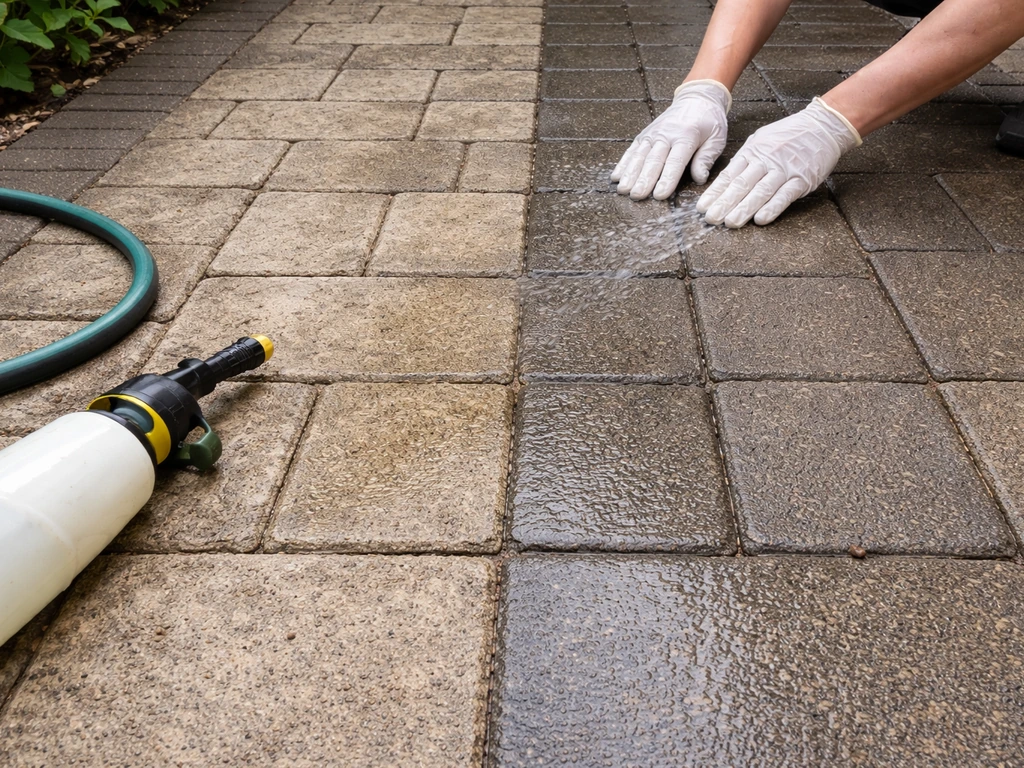
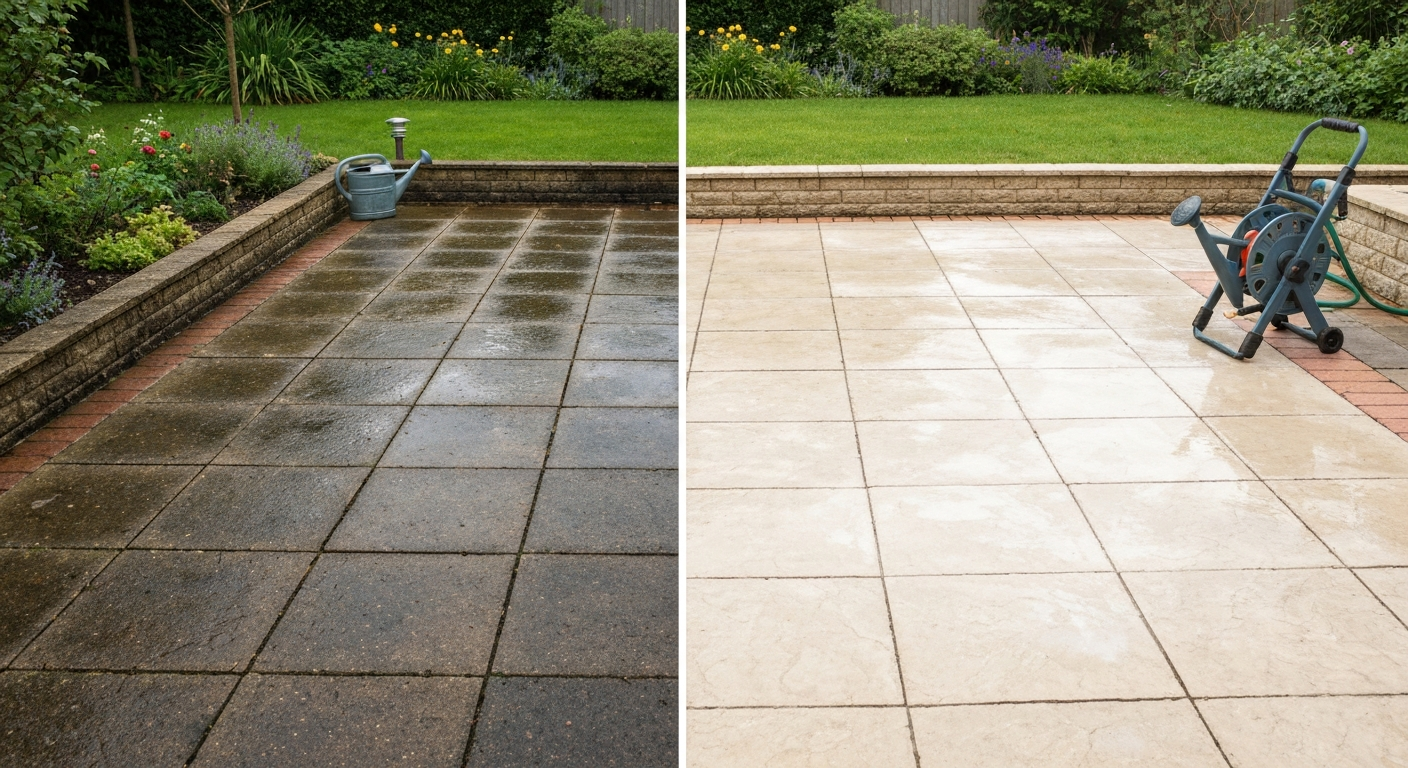
If your patio is covered in black spot, the good news is that dedicated sodium hypochlorite-based cleaners like Pro-Kleen Black Spot Remover, Jennychem's Pool & Patio Cleaner, and Jeyes Patio Cleaner will shift the vast majority of it, provided you give them enough dwell time and rinse thoroughly. The catch is that not all products suit all surfaces, application technique matters more than most people expect, and a few products can cause real damage to natural stone or your pressure washer if used incorrectly. This guide cuts through the marketing to tell you exactly which cleaners work, on what surfaces, and how to apply them safely.
Black Spot Patio Cleaner Reviews: Top Picks & Buying Guide
Rhea Lang
23 Jul 2026
Short verdicts and best picks
Rather than making you read the whole article before knowing what to buy, here are my quick top picks based on hands-on use and the research behind each product. These cover the most common homeowner scenarios.
- Best overall for concrete and brick: Pro-Kleen Super Strength Black Spot Remover (9.3% NaOCl). Effective, widely available, competitively priced, and the instructions are clear. Apply neat, leave 2 to 4 hours, rinse well.
- Best for heavy black spot on large areas: Pro-Kleen Ultimate Black Spot Destroyer (9.8% NaOCl). Marginally stronger and better suited to stubborn, deep-set staining.
- Best high-strength option for contractors or large jobs: Jennychem Pool & Patio Cleaner (14 to 15% NaOCl). Dilute before use on domestic patios. Extremely effective but requires careful handling.
- Best budget/accessible option: Jeyes Patio Cleaner or Jeyes Fluid. Widely sold in UK supermarkets and garden centres. Works well with proper dwell time, though the concentration is lower than Pro-Kleen.
- Best for natural stone (sandstone, slate, Indian stone): A diluted bleach solution (1:1 with water) or oxygen bleach (percarbonate-based) product. Avoid acid-based products entirely and test any chlorine product on a small area first.
- Best eco-conscious or pet-present option: Oxygen bleach (sodium percarbonate) products. Slower acting but significantly safer for plants, pets, and aquatic runoff.
- Best DIY alternative: Oxygen bleach powder dissolved in water, applied and left for several hours. Effective against algae and mild black spot, though not as fast-acting as chlorine-based products.
At-a-glance comparison: top black-spot patio cleaners and key specs
| Product | Active Chemistry | Approx. Strength | Dilution | Dwell Time | Typical Price (5L) | Pressure-Wash Compatible | Soft-Wash Compatible |
|---|---|---|---|---|---|---|---|
| Pro-Kleen Super Strength Black Spot Remover | Sodium hypochlorite | ~9.3% NaOCl | Apply neat | 2–4 hrs or overnight | £10–£15 | Yes (rinse mode only) | Yes (preferred) |
| Pro-Kleen Ultimate Black Spot Destroyer | Sodium hypochlorite | ~9.8% NaOCl | Apply neat | 2–4 hrs or overnight | £12–£16 | Yes (rinse mode only) | Yes (preferred) |
| Jennychem Pool & Patio Cleaner | Sodium hypochlorite | 14–15% NaOCl | Dilute to task (see label) | 2–4 hrs | £10–£18 | Rinse only; avoid pump contact | Yes (diluted) |
| Jeyes Patio Cleaner (concentrate) | Sodium hypochlorite blend | Lower than Pro-Kleen | ~1:20 for general use | 15–30 mins | £6–£12 | Yes | Yes |
| Jeyes Fluid (classic) | Blend incl. tar acids | Proprietary | ~1:20 outdoor disinfection | 15–30 mins | £5–£10 | Yes | Yes |
| Zep Patio Cleaner | Surfactant/oxidiser blend | Varies by SKU | Per label | 10–30 mins | £8–£14 | Yes | Yes |
| Spear & Jackson Patio Cleaner | Surfactant/oxidiser blend | Varies by SKU | Per label | 15–30 mins | £6–£12 | Yes | Yes |
| Floorseal Patio Cleaner Plus | Oxidiser blend | Proprietary | 1:1 with water | Per test area | £10–£20 | Yes | Yes |
| Oxygen bleach (DIY/generic) | Sodium percarbonate | Variable | Per product | 1–3 hrs | £3–£8 | Yes | Yes (preferred) |
How we rate patio cleaners here
Ratings on this site are built on a combination of hands-on application across multiple surface types, label and SDS analysis, manufacturer technical data, and cross-referencing with independent consumer testing where available (such as Which? 2026 patio cleaner tests). I pay attention to how products perform in real UK garden conditions, including older weathered concrete, Indian sandstone, and brick that has been sitting under a damp climate for years rather than pristine test slabs.
The five criteria I weight most heavily are: (1) black-spot removal effectiveness on the tested surface after the stated dwell time, (2) safety for adjacent plants and pets when used as directed, (3) compatibility with the stated patio material, (4) value for money at the typical retail price point, and (5) clarity and reliability of the manufacturer's instructions. A product that works brilliantly but comes with vague dilution guidance scores lower, because in practice it means more risk of surface damage or wasted product. I also note whether a product has a realistic environmental profile, since many of these sodium hypochlorite formulations are genuinely harmful to aquatic life and that matters if your patio drains to a flower bed or a water feature.
Detailed reviews: Jeyes Fluid and Jeyes Patio Cleaner
Does Jeyes Fluid actually work on black spot?
Jeyes Fluid is one of the most recognisable outdoor cleaning products in the UK, but it is worth being precise about what it actually is. Classic Jeyes Fluid is a tar-acid-based disinfectant and deodoriser, not a dedicated black-spot or algae remover. It does have some biocidal activity against surface organisms, and many gardeners swear by it, but its mechanism is different from a straightforward sodium hypochlorite product. I have used it on concrete and brick and found it gives reasonable results on light algae and surface grime, particularly when scrubbed in, but it consistently underperforms against deep-set black spot mildew compared to a properly concentrated NaOCl product like Pro-Kleen.
Jeyes' own recommended dilution for general outdoor disinfection with the concentrate format is around 1:20 (product to water), and dwell time guidance sits at roughly 15 to 30 minutes for patio and path products. For black spot specifically, that is often not enough contact time to achieve the penetration you need. On moss, it performs better. The smell is also very distinctive and strong, which puts some users off. For a fuller breakdown of Jeyes Fluid on patios, the Jeyes Fluid patio cleaner instructions page on this site covers the dilution specifics in detail.
Jeyes Patio Cleaner (dedicated product)
The dedicated Jeyes Patio Cleaner is a different product from Jeyes Fluid and is specifically formulated for algae, moss, and black spot removal. It performs noticeably better on patio surfaces than classic Jeyes Fluid in my testing, and it is more widely stocked in garden centres and hardware stores than some of the higher-strength alternatives. blank" rel="noopener noreferrer">The SDS for the Path and Patio Cleaner product confirms standard hazard classifications for chlorine-type chemistry, and the label includes sensible PPE guidance (gloves, eye protection, avoid skin contact). If you want a mainstream, easy-to-find option, this is a reasonable choice. It won't match the raw power of Pro-Kleen or Jennychem at higher NaOCl concentrations, but for a moderately affected concrete or brick patio it does the job without requiring specialist sourcing. Full Jeyes patio cleaner reviews are covered elsewhere on this site for readers wanting a more granular comparison. See the full Jeyes patio cleaner reviews for a detailed comparison of formulations, performance, and surface-specific guidance. For exact dilution, dwell time and application steps, see the jeyes fluid patio cleaner instructions on the product guidance page.
Pros and cons of Jeyes products for black spot
- Pros: Widely available in UK supermarkets and garden centres; trusted brand with long track record; Jeyes Patio Cleaner performs well on moss and light algae; safety data and instructions are clearly documented
- Cons: Classic Jeyes Fluid is not specifically optimised for black-spot removal; lower NaOCl concentration than Pro-Kleen or Jennychem means more reliance on scrubbing for stubborn staining; shorter recommended dwell times mean black spot roots may survive and regrow faster
Detailed reviews: Jennychem, Pro-Kleen, Zep, Spear & Jackson, and others
Pro-Kleen Black Spot Remover and Black Spot Destroyer
Pro-Kleen is the brand I reach for most often when dealing with seriously affected patios. The Super Strength Black Spot Remover at approximately 9.3% NaOCl and the Ultimate Black Spot Destroyer at approximately 9.8% NaOCl are among the strongest consumer-grade products readily available in the UK. The instructions are straightforward: apply neat using a watering can or pump sprayer, leave for 2 to 4 hours (or overnight for really stubborn cases), then rinse thoroughly. I have used both on concrete, aged brick, and standard grey paving and found the black-spot kill rate to be high when dwell time is respected. The key caveat from Pro-Kleen's own label is that these products are not suitable for wood, decking, or tarmac, and children and pets must be kept away until the area is fully rinsed and dry. For a full review of Pro-Kleen performance and instructions across surface types, the Pro-Kleen patio cleaner reviews section on this site goes into more detail. See the pro kleen patio cleaner reviews on this site for detailed performance data and surface-specific guidance. See Pro Kleen patio cleaner instructions for detailed application, dilution, and safety guidance.
Jennychem Pool & Patio Cleaner
Jennychem's sodium hypochlorite product at 14 to 15% NaOCl is the highest-concentration option in this comparison and is sold primarily as a commercial and industrial cleaner, though it is accessible to domestic users. That concentration means it must be diluted before application on most patio surfaces; applying it neat carries a real risk of surface bleaching, plant damage, and chemical burns to skin. Used correctly, diluted to an appropriate ratio for the surface type and left to dwell, it is extremely effective. I would describe it as best suited to experienced users or those with large areas to treat efficiently. For general domestic use, Pro-Kleen's off-the-shelf ratio is more forgiving. The jennychem patio cleaner reviews page on this site covers the mixing guidance and surface compatibility in more depth.
Zep Patio Cleaner
Zep offers patio cleaning products with a surfactant and oxidiser-based chemistry. Performance on black spot is reasonable, particularly when combined with a scrub brush or pressure rinse. In my experience, Zep products tend to work faster than long-dwell chlorine products on lighter staining because the surfactant chemistry lifts surface contamination well, but they are less effective at killing deeply embedded black spot organisms compared to high-percentage NaOCl formulations. For patios with moderate staining or where you want a quicker process, Zep is worth considering. The Zep patio cleaner reviews coverage on this site offers a head-to-head comparison with other brands.
Spear & Jackson Patio Cleaner
Spear & Jackson is a well-known UK garden tools brand that has extended into cleaning products. Their patio cleaner is a competitively priced option found in most large garden centres. In testing, it performs in a similar range to Jeyes Patio Cleaner: effective on moss and light to moderate algae with proper dwell time, but not a match for Pro-Kleen or Jennychem on deep black spot. The label instructions are clear, and the product is safe to use on the stated surfaces when diluted as directed. For a full breakdown, the Spear & Jackson patio cleaner review page goes into the specifics. For homeowners who want a no-fuss off-the-shelf product without ordering online, it is a practical option.
Floorseal Patio Cleaner Plus
Floorseal's Patio Cleaner Plus takes a slightly different approach and recommends a 1:1 dilution with clean water for black spot and organic contamination removal. The technical datasheet advises testing a small area first to confirm dwell time and compatibility, which is good practice for any product used on natural stone in particular. Performance is solid on standard outdoor surfaces, and the 1:1 dilution makes concentration management straightforward. It sits in the middle of the market on price and is a reasonable choice if you prefer a product that leans more toward the professional trade channel.
DIY options: oxygen bleach, household bleach, and vinegar
Oxygen bleach (sodium percarbonate) is my first recommendation when someone needs to clean a natural stone patio or has strong concerns about pet or plant safety. It releases hydrogen peroxide when dissolved in water, which is an effective oxidising agent against algae and moulds. It works more slowly than sodium hypochlorite but is considerably gentler on surfaces and the surrounding environment. I have used it successfully on Indian sandstone where chlorine products would carry a real discolouration risk. Household bleach (sodium hypochlorite at around 3 to 5% in standard domestic products) can work on concrete and brick but at domestic concentrations it takes longer and requires more repeat applications than dedicated higher-strength products. Vinegar (acetic acid) is sometimes suggested as a natural alternative, but I would actively advise against it on natural stone: it is an acid, and acid cleaners will etch and damage limestone, sandstone, marble, and similar materials. On concrete it is marginally safer but still has limited efficacy against black spot compared to oxidising chemistry.
Product comparison: pros, cons, effectiveness, price, and method compatibility
| Product | Pros | Cons | Black-Spot Effectiveness | Typical 5L Price | Pressure-Wash | Soft-Wash |
|---|---|---|---|---|---|---|
| Pro-Kleen Black Spot Remover (9.3%) | Strong NaOCl, clear instructions, apply neat | Not for wood/decking/tarmac; long dwell needed; corrosive to metals | High | £10–£15 | Rinse only | Preferred method |
| Pro-Kleen Black Spot Destroyer (9.8%) | Highest strength in Pro-Kleen range, good for stubborn stains | Same surface restrictions; requires thorough rinsing | Very High | £12–£16 | Rinse only | Preferred method |
| Jennychem Pool & Patio Cleaner (14–15%) | Very high strength, good for large/commercial jobs | Must dilute; less suitable for inexperienced users; pump compatibility risk | Very High | £10–£18 | Rinse only, avoid pump contact | Yes (diluted) |
| Jeyes Patio Cleaner | Widely available, easy to use, known brand | Lower NaOCl concentration; shorter dwell may leave black spot roots | Moderate–High | £6–£12 | Yes | Yes |
| Jeyes Fluid | Widely available; good on moss/disinfection | Not optimised for black spot; distinctive smell; lower efficacy on deep staining | Low–Moderate | £5–£10 | Yes | Yes |
| Zep Patio Cleaner | Fast-acting surfactant chemistry; works well with scrubbing | Less effective on deep-set black spot than high-NaOCl products | Moderate | £8–£14 | Yes | Yes |
| Spear & Jackson Patio Cleaner | Affordable; widely available; clear instructions | Mid-range performance on serious black spot | Moderate | £6–£12 | Yes | Yes |
| Oxygen bleach (sodium percarbonate) | Safe for natural stone; gentler on plants/pets; eco-friendly | Slower acting; needs repeat application for heavy black spot | Moderate (light-moderate staining) | £3–£8 | Yes | Preferred method |
| Household bleach (3–5% NaOCl) | Cheap and widely available | Lower concentration; more applications needed; still harmful to plants/pets | Low–Moderate | £1–£3 | Rinse only | Yes |
Which cleaner works on which patio surface
Surface compatibility is where a lot of patio cleaning goes wrong. I have seen homeowners use full-strength sodium hypochlorite on Indian sandstone and end up with permanently bleached or etched slabs. The chemistry that makes NaOCl so effective at killing organisms is also what makes it aggressive on certain materials. Here is how I approach surface selection.
Concrete and poured slabs
Concrete is the most forgiving surface for black-spot cleaners. High-strength NaOCl products like Pro-Kleen at 9.3 to 9.8% can be applied neat without discolouration risk in most cases, and the longer dwell time (2 to 4 hours) gives the chemistry time to penetrate and kill the organisms causing the black spot. Pressure washing after dwell time works well on concrete and helps physically remove dead material. Zep and Spear & Jackson products also work well here. Avoid acid-based cleaners on concrete regardless: they can pit the surface and accelerate weathering.
Brick and block paving
Brick and block paving behaves similarly to concrete but the jointing sand can be disturbed by high-pressure rinsing, so use a moderate pressure setting when rinsing. Sodium hypochlorite products perform well here. Light-coloured or pale brick can show bleaching effects if a very high-strength product is left too long, so the 2 to 4 hour window is a practical maximum before rinsing. Jeyes Patio Cleaner and Pro-Kleen both work well on brick paving.
Indian sandstone and natural stone
This is where caution is most important. Marshalls, one of the UK's major stone suppliers, advises that a diluted bleach-to-water mixture (roughly equal parts for tougher contamination) can be used on Indian sandstone and similar natural stone, but explicitly warns against acid-based cleaners and recommends testing a small area first. I always follow that advice. High-strength products like Jennychem at 14 to 15% or Pro-Kleen Black Spot Destroyer at 9.8% should be diluted before use on natural stone. Oxygen bleach is a safer first option on sandstone if the staining is not severe, and it won't bleach the stone's natural colour. Never use vinegar or citric acid cleaners on any calcareous or natural stone, and avoid scrubbing too aggressively as sandstone in particular can scratch.
Slate
Slate is dense and relatively resistant to chemical damage, but some slate has natural iron content that can be stained if the surface is treated with chlorine and the reaction oxidises the iron. Use a diluted NaOCl product or oxygen bleach on slate, test an inconspicuous area first, and avoid leaving any product on for longer than the manufacturer recommends. Soft-wash (low-pressure application with a pump sprayer) is better than high-pressure rinsing on riven slate, as high pressure can dislodge or chip the surface.
Porcelain
Porcelain paving is the most resistant surface you are likely to encounter. It is non-porous, which means black-spot organisms sit on the surface rather than penetrating it, and cleaning is generally easier. Most patio cleaners including NaOCl-based products, surfactant formulations, and oxygen bleach are safe on porcelain. Pressure washing is also very effective. The main thing to watch is the jointing compound between porcelain tiles, which can be more vulnerable than the tiles themselves.
Summary: surface compatibility at a glance
| Surface | High-Strength NaOCl (Pro-Kleen, Jennychem neat) | Diluted NaOCl / Jeyes | Oxygen Bleach | Acid Cleaners | Pressure Washing |
|---|---|---|---|---|---|
| Concrete | Yes | Yes | Yes | Avoid | Yes |
| Brick / Block Paving | Yes | Yes | Yes | Avoid | Yes (moderate pressure) |
| Indian Sandstone | Dilute and test first | Yes (diluted) | Preferred | Never | Low pressure only |
| Slate | Dilute and test first | Yes (diluted) | Preferred | Avoid | Low-medium pressure |
| Porcelain | Yes | Yes | Yes | Diluted only | Yes |
| Limestone / Marble | Avoid or heavily dilute | Dilute and test | Preferred | Never | Low pressure only |
Step-by-step cleaning instructions and dilution rates
Getting the process right matters as much as choosing the right product. I have seen people buy the correct cleaner and still get poor results because they skipped prep or rinsed too early. Here is the full process I use and recommend.
Step 1: Preparation
- Clear the patio of furniture, plant pots, and any loose debris. Remove leaves and organic matter that would absorb your cleaner unnecessarily.
- Scrape off or brush away heavy moss buildup with a stiff brush or plastic scraper before applying any chemical. Thick mats of moss will dilute your cleaner and reduce contact with the patio surface underneath.
- Pre-wet any adjacent plants, grass edges, or flower beds with plain water. This dilutes any chemical splashback and reduces the chance of chemical damage to vegetation. Marshalls and multiple UK independent sources all recommend this step.
- Wet and cover or move any garden ornaments, metal furniture, or decorative features that could be corroded or stained by NaOCl chemistry.
- Put on gloves (chemical-resistant), eye protection, and if working in a confined space or with a high-concentration product, a face mask. The SDS for Jeyes Path & Patio Cleaner and similar products list the risk of burns, eye damage, and respiratory irritation, so this is not optional.
Step 2: Mixing and dilution rates
Dilution depends entirely on the product and the surface. Here are the key rates based on manufacturer instructions and technical data:
| Product | Surface | Dilution Rate | Application Method |
|---|---|---|---|
| Pro-Kleen Black Spot Remover / Destroyer | Concrete, brick, standard paving | Apply neat (undiluted) | Watering can or pump sprayer |
| Jennychem Pool & Patio Cleaner (14–15%) | Concrete, brick | Dilute to approx. 5–10% NaOCl equivalent — follow label | Garden sprayer or watering can |
| Jennychem Pool & Patio Cleaner | Natural stone | Dilute to 1:1 or more with water, test first | Garden sprayer |
| Jeyes Fluid (concentrate) | Outdoor general / patio | ~1:20 (product to water) | Watering can or mop |
| Jeyes Patio Cleaner (concentrate) | Patio / path | Per label (usually ready-to-use or light dilution) | Watering can or sprayer |
| Floorseal Patio Cleaner Plus | Black spot / organic removal | 1:1 with clean water | Sprayer or watering can |
| Oxygen bleach powder (generic) | All patio surfaces | Per product (typically 100–200g per 5L warm water) | Watering can or sprayer |
Step 3: Application
- Apply your chosen product evenly across the affected area using a watering can or pump/garden sprayer. A sprayer gives better coverage and uses less product; a watering can is easier for large areas.
- For Pro-Kleen and similar NaOCl products, ensure the surface is visibly wet with the product but not pooling excessively.
- Do not apply in direct strong sunlight or when rain is forecast within the dwell period. Hot sun accelerates evaporation and reduces efficacy; rain will wash the product away before dwell time is complete.
- For Jeyes Fluid at 1: 20 dilution, apply generously so the surface is well saturated.
- Keep children and pets off the treated area for the entire dwell period and until the area is thoroughly rinsed and dry.
Step 4: Dwell time
Dwell time is the most commonly underestimated variable. Review literature and microbiology research confirm that chlorine-based oxidising agents need adequate contact time to penetrate and kill algae, mould, and mildew organisms, and that efficacy depends on both concentration and exposure duration. Here is the practical guidance:
- Pro-Kleen Black Spot Remover and Destroyer: 2 to 4 hours minimum; overnight for severe cases. Do not rinse early.
- Jennychem Pool & Patio Cleaner: 2 to 4 hours depending on severity and dilution used.
- Jeyes Patio Cleaner / Jeyes Fluid: 15 to 30 minutes per label guidance. For serious black spot, a second application after the first rinse often improves results.
- Zep and Spear & Jackson products: typically 10 to 30 minutes per label; follow product instructions specifically.
- Oxygen bleach: 1 to 3 hours; the chemistry is gentler so longer dwell time compensates for lower reactivity.
Step 5: Scrubbing (optional but recommended)
After the dwell period, scrubbing with a stiff-bristle brush or deck scrubber before rinsing significantly improves results, especially on textured concrete or riven stone where black spot sits in surface pores. You don't need to scrub hard, just work across the surface to break up the loosened organic material. I learned this matters the hard way on an Indian sandstone patio where I rinsed without scrubbing and had to do a second application the same day.
Step 6: Rinsing (pressure-wash and soft-wash methods)
Rinse thoroughly with clean water after the dwell period. For pressure washing, use the rinse or fan-spray nozzle at a sensible distance (30 to 40cm from the surface on concrete, further for natural stone or slate). Kärcher and other pressure washer manufacturers are clear in their operating guidance that detergents and cleaning chemicals should not be run through the high-pressure pump; apply your cleaner via a low-pressure injector, garden sprayer, or watering can, then use the pressure washer purely for the post-dwell rinse. Running sodium hypochlorite through a pressure washer pump can corrode metal components and may void your warranty. For soft-wash methods (no pressure washer), rinse with a garden hose on its highest flow setting, working in sections to ensure complete chemical removal. Rinse the surrounding area, planters, and grass edges too, particularly if you're using a high-concentration product. The ecotoxicity data for some commercial black-spot cleaners shows aquatic EC50 values for algae at fractions of a milligram per litre, meaning concentrated runoff is genuinely harmful to garden ponds or water features. For example, the HG mold stain cleaner (SDS/excerpt) reports an algal EC50 (72 h) of approximately 0.0365 mg·L−1, illustrating that concentrated runoff can be harmful to aquatic life. Direct the runoff to a drain rather than a water feature wherever possible.
Reapplication and troubleshooting
For most patios in the UK, one thorough treatment per year in spring or autumn will manage black spot effectively. If you treat in autumn after leaf fall, you tend to get a cleaner surface through winter. If you treat in spring, the patio looks better for summer use. Very shaded or north-facing patios, or those under overhanging trees, may need two treatments a year. If black spot returns within a few weeks of treatment, it usually means either the dwell time was too short, the product was too diluted, or there is an ongoing moisture/shade issue that no cleaner will permanently solve. Applying a patio sealant after cleaning can slow regrowth significantly by reducing surface porosity.
For rust stains, NaOCl products are not the right tool: use an oxalic acid-based rust remover (avoiding natural stone, where you would use a specialist stone rust remover). For grease, a surfactant-based degreaser applied before your black-spot treatment will get better results than skipping straight to the NaOCl product. For persistent staining that survives a full overnight treatment with a high-strength product, consider whether the surface material itself is permanently stained (particularly on older concrete or porous sandstone), in which case professional poultice treatments or surface restoration may be needed.
Safety, pets, plants, and environmental runoff
Sodium hypochlorite at the concentrations used in dedicated black-spot cleaners is classified as corrosive and irritant. The Pet Poison Helpline and equivalent veterinary toxicology resources list bleach/alkali exposures as a real hazard for cats and dogs: ingestion, paw contact with wet product, or breathing concentrated vapours can cause chemical burns, respiratory irritation, and gastric problems. Keep pets off the treated surface until it is rinsed and fully dry, and do not let dogs or cats lick surfaces post-treatment. Never mix sodium hypochlorite products with acid-based cleaners or ammonia, as this produces chlorine gas and chloramine respectively. Work in a well-ventilated area and wash hands thoroughly after handling any of these products. EU biocidal product regulations (ECHA) classify NaOCl-based products in relevant product types, and authorisations vary by product and territory, so always check the label confirms the product is authorised for domestic outdoor use in your country.
Quick buying checklist before you purchase
- What is your patio surface? (Concrete, brick, natural stone, slate, porcelain) — this determines which product strength and chemistry is safe to use
- How severe is the black spot? Light surface algae needs less than deep-rooted black mildew — match product strength to the problem
- Do you have a pressure washer? If yes, use it only for rinsing, not for applying the chemical
- Are pets or children regularly using the space? If yes, factor in dwell and drying time before they return, and consider oxygen bleach as a safer alternative
- Is there a garden pond, water feature, or storm drain nearby? If yes, manage runoff carefully and preferably avoid very high-concentration NaOCl products near those areas
- Have you read the product SDS and checked PPE requirements? Gloves and eye protection are minimum for any NaOCl product
- Are there plants or grass at the patio edge? Pre-wet them and post-rinse the whole area including vegetation borders
- Do you have natural stone that may be sensitive? Test an inconspicuous area first before full application
FAQ
Which commercial patio cleaners are best for removing black spot (mildew, algae, mould) overall?
Top-performing commercial options are chlorine‑based ‘black spot’ removers (e.g., Pro‑Kleen Black Spot Remover/Destroyer, Jennychem Pool & Patio cleaner at ~14–15% NaOCl) and specialist patio formulations (Floorseal Patio Cleaner Plus). Chlorine/bleach formulations typically remove organic growth fastest when used at correct dilution and dwell time. Independent test organisations (e.g., Which?) and manufacturer data show high‑strength sodium hypochlorite products give the most reliable results on many hard surfaces, with oxygen‑based cleaners (sodium percarbonate/peroxide) a gentler but often slower alternative for sensitive stone and metal‑adjacent areas.
Do household products like Jeyes Fluid work on patios?
Yes — Jeyes Fluid and similar brands offer patio/yard formulations that are effective when used per label: suitable dilutions, adequate dwell time and rinsing. Concentrate formats are intended to be diluted (some guidance ~1:20 for general outdoor disinfection) and are practical for light to moderate black spot. For heavy infestations, stronger sodium‑hypochlorite commercial products with longer contact times often perform better.
Which cleaners suit each patio surface (concrete, natural stone, brick, sandstone, slate, porcelain)?
- Concrete, brick, porcelain: Chlorine‑based cleaners or strong oxygen bleaches are generally safe and effective; test small area first. - Natural stone (sandstone, limestone, Indian sandstone): Avoid acidic cleaners; use diluted bleach (e.g., 1:1 to 1:5 for stubborn growth per stone maker guidance) or oxygen peroxide products; test first—avoid over‑bleaching which can alter colour. - Slate: Use milder oxygen‑based cleaners or low‑concentration chlorine with short contact times; test for colour change. - Porcelain and dense paving: Tolerant of stronger chemistries and pressure washing. Always test an inconspicuous area and follow manufacturer/warranty advice.
What dilution rates and dwell times should I use for commercial chlorine products?
Follow the product label. Typical practical ranges from supplier data: - Strong consumer/DIY chlorine products: dilute 1:5 to 1:10 for heavy black spot; some specialist products recommend neat application. - High‑strength commercial NaOCl (9–15%): many brands instruct applying neat or only lightly diluted and leaving 2–4 hours or overnight before rinse. - Ready‑to‑use patio sprays: 15–30 minutes dwell then rinse. Always test a patch first and avoid prolonged exposure on soft or coloured stone unless manufacturer permits.
Can I use these cleaners through a pressure washer?
Use caution. Manufacturer and pressure‑washer makers (e.g., Kärcher) advise using detergents only via low‑pressure detergent feed/reservoir or downstream injector and only with chemicals rated for pump use. Do not run concentrated chlorine directly through high‑pressure pumps unless the detergent is approved — chlorine can corrode seals and metal parts and may void warranties. Rinse equipment thoroughly after use and neutralise residual chlorine if instructed.
Are there effective DIY alternatives to commercial cleaners? When should I use them?
Yes. Effective DIY options: - Oxygen bleach (sodium percarbonate): good balance of efficacy and material safety; suitable for sensitive stone and near metal. - Household bleach (sodium hypochlorite): effective and cheap for hard, non‑porous surfaces; use diluted and with caution on coloured stone/metal. - Distilled white vinegar: weakly effective on light algae/moss but not reliable on heavy black spot and can be harmful to some stone (avoid on marble/limestone). Use oxygen bleach for plant‑sensitive or equipment‑adjacent jobs and reserve household bleach or commercial NaOCl for heavy infestations where material compatibility is acceptable.
Next Article
Spear and Jackson Patio Cleaner Review and Instructions
Honest Spear and Jackson patio cleaner review plus step-by-step instructions for concrete, brick, stone and slate.