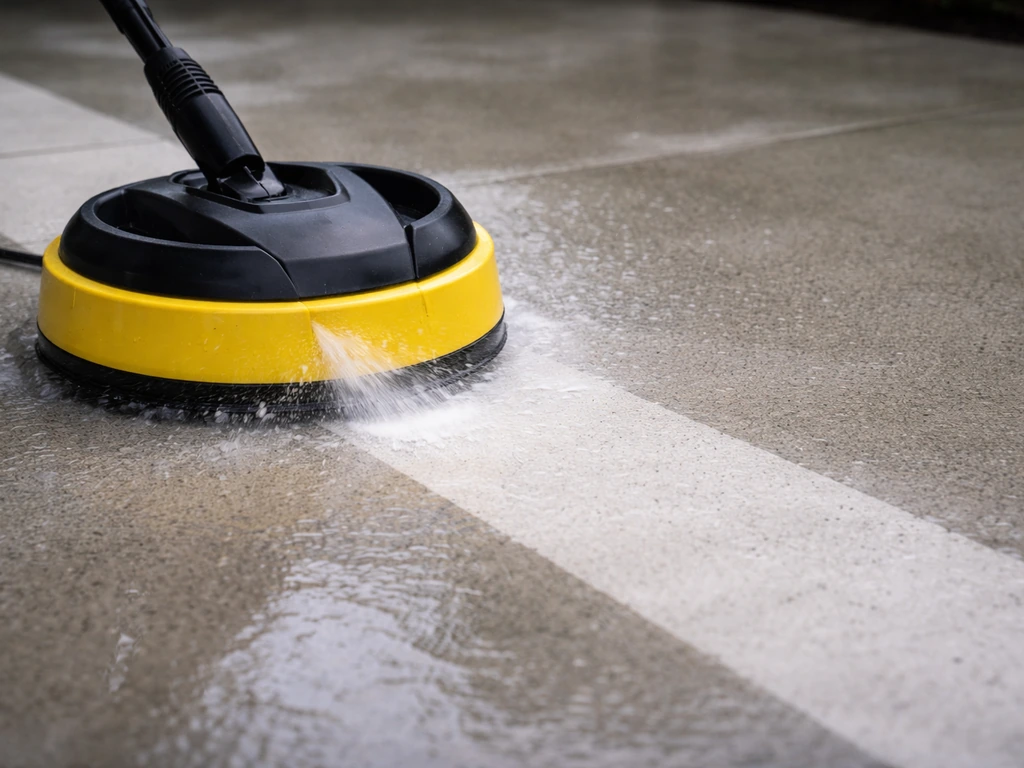
For most patios, the Kärcher K 4 or K 5 paired with a T-Racer surface cleaner attachment is the sweet spot. The K 4 handles everyday concrete, brick, and stone patios without drama, while the K 5 gives you the extra flow rate (up to 500 L/h) you need if your patio is large, heavily stained, or you want to run a bigger surface cleaner like the T 450 properly.
Which Kärcher for Patio Cleaning Choose the Best Model
Rhea Lang
30 Jun 2026
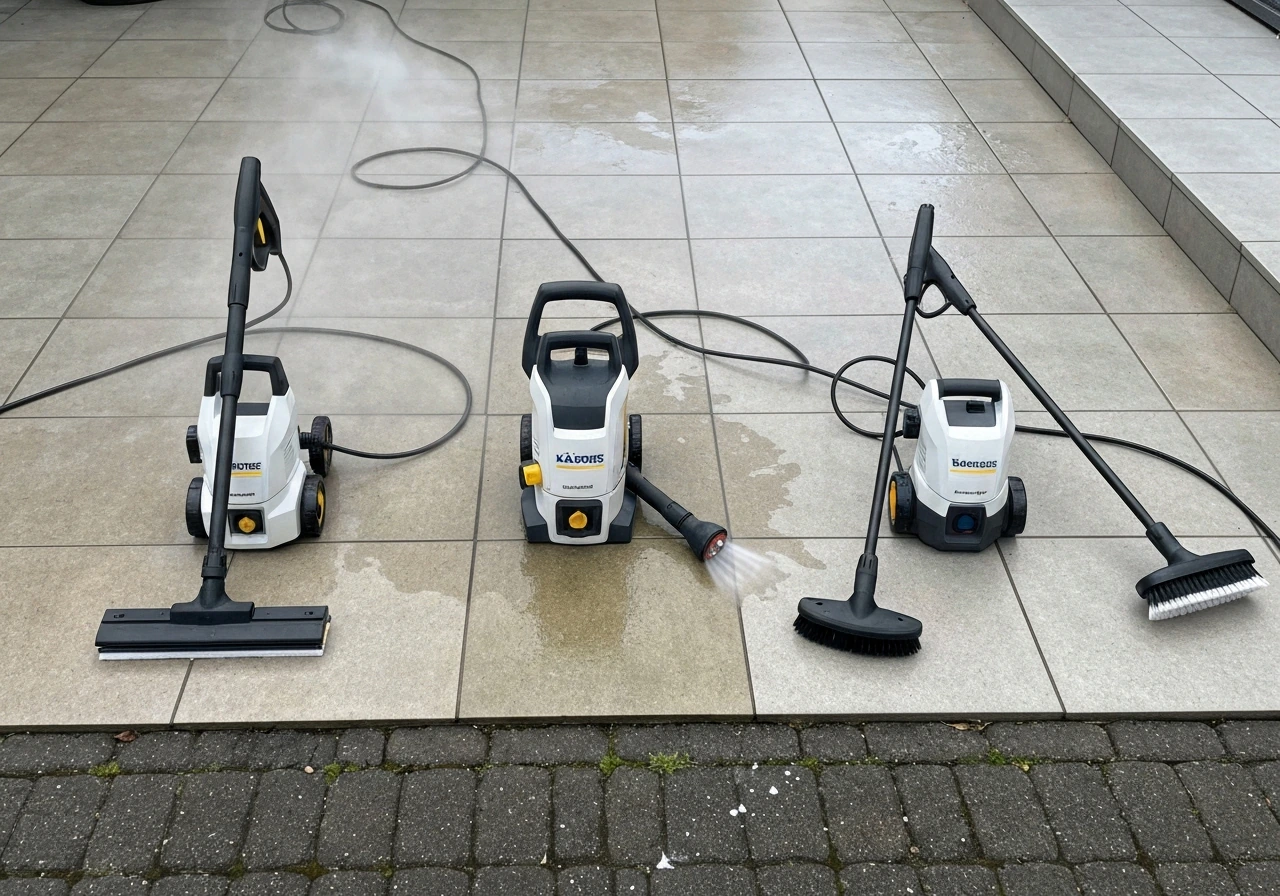
On Kärcher’s K 5 Classic Car & Home product page, the same core spec pattern is listed as 20 to max 145 bar and max 500 L/h up to 500 L/h.
If budget is tight or your patio is small and lightly soiled, the K 3 will do the job. Go lower than that and you're fighting the machine.
How to choose the right Kärcher for your patio surface
The biggest mistake people make is buying a Kärcher based on PSI/bar alone. Pressure matters, but for patio cleaning it's really the combination of pressure and flow rate that determines how well a surface cleaner attachment spins and how quickly you shift grime. A high-pressure but low-flow machine will leave your surface cleaner barely rotating and your patio looking patchy.
Your patio surface should also steer your decision. Harder, more porous surfaces like concrete and rough brick can handle higher pressure and benefit from it. Softer or more delicate surfaces like sandstone, slate, and porcelain need a gentler touch, which means lower pressure settings, wider-angle nozzles, and keeping the wand or surface cleaner at a greater distance from the surface. Here's how I'd match surface type to machine class:
| Patio Surface | Minimum Kärcher Class | Notes |
|---|---|---|
| Concrete / tarmac | K 4 | Can take higher pressure; benefits from good flow for surface cleaners |
| Brick and rough stone | K 4 | Mortar joints need care; avoid high pressure directly on grouting |
| Porcelain tiles | K 3 to K 4 | Smooth sealed surfaces clean easily; avoid blasting grout lines |
| Sandstone / limestone | K 3 (max) | Very pressure-sensitive; low bar, wide nozzle, keep distance |
| Slate | K 3 to K 4 | Can split if pressure is too high or nozzle is too close |
| Wooden decking | K 3 to K 4 | Use fan nozzle along the grain; surface cleaners with adjustable height work well |
| Block paving | K 4 to K 5 | Porous and often mossy; good flow helps but mind the sand in joints |
If you have sandstone, limestone, or any natural stone that hasn't been sealed, treat this as a red flag for high pressure. I've seen people destroy the surface texture of sandstone flags in minutes with a K 5 and a pencil-jet nozzle. Drop down to a fan/wide nozzle, reduce pressure, and consider pre-treating with a chemical cleaner instead of relying on brute force.
Kärcher model quick picks: which series for which job
Kärcher's consumer electric range runs from K 2 through K 7, with each step up giving you more bar and more flow. Here's a quick breakdown of what each class actually delivers for patio work:
| Model Series | Max Pressure | Max Flow Rate | Best For |
|---|---|---|---|
| K 2 | ~110 bar | ~360 L/h | Small balconies, garden furniture, light patio maintenance |
| K 3 | ~120 bar | ~380 L/h | Small to medium patios, lightly soiled surfaces, delicate stone |
| K 4 | ~130 bar | ~420 L/h | Medium patios, concrete, brick, block paving, most domestic jobs |
| K 5 | ~145 bar | ~500 L/h | Large patios, heavy moss/algae buildup, better surface cleaner performance |
| K 6 / K 7 | 150+ bar | 500+ L/h | Professional-level domestic use, very large areas, heavy-duty staining |
My honest quick picks: get the K 4 if your patio is a standard garden size and you're dealing with typical algae, moss, and general grime. It's the most popular choice for good reason and hits the sweet spot of price, power, and compatibility with the best surface cleaner attachments. Step up to the K 5 if your patio is over 30 square metres, if you have stubborn staining across a large area, or if you're planning to run a T 450 surface cleaner (which needs K 4 through K 7 compatibility). The K 4 FC variant is worth a look if you want a built-in foam cannon for pre-treating with detergent before you wash, which is genuinely useful for greasy or heavily soiled patios.
The K 2 and K 3 are not wrong choices for smaller, more delicate surfaces, and for sandstone or slate they're actually preferable because you're less likely to accidentally damage the surface. If you're specifically buying for a sensitive patio material, don't be tempted to overbuy on power.
Key specs that actually matter for patios
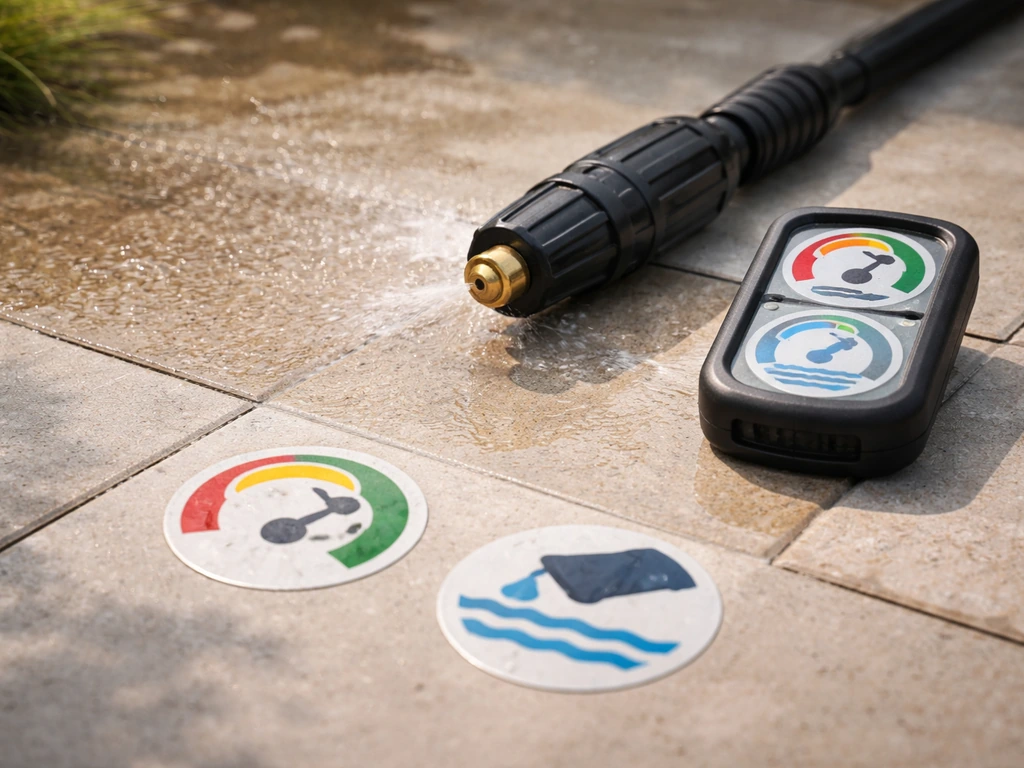
Here's what to look at on the spec sheet and what each number means in practice:
- Pressure (bar/PSI): Higher pressure shifts stubborn staining but also increases the risk of surface damage. For most patios, 120 to 145 bar is the useful range. You rarely need to run at max pressure; most machines let you dial it down.
- Flow rate (L/h or GPH): This is the real patio-cleaning secret. Surface cleaner attachments need enough flow to keep the rotating heads spinning at full speed. The T 450, for example, is rated for K 4 through K 7 partly because lower-flow machines can't feed it properly. More flow also means faster rinsing.
- Hose length: The K 5 comes with an 8 m high-pressure hose. This matters more than people realise. A short hose means you're dragging the machine around the patio constantly. 8 m gives you decent reach on a mid-size patio without moving the unit.
- Weight and mobility: If you're cleaning a patio on a slope or have to manoeuvre around furniture, a wheeled model with a stable base saves a lot of frustration. Check whether the model has a cart-style chassis or is a compact upright unit.
- Detergent capability: Some models have an integrated detergent tank or detergent suction system. This is useful for patio cleaning because applying cleaner through the machine (especially at low pressure or via foam lance) before the main wash makes a real difference to results.
- Nozzle change system: Quick-connect nozzle systems let you swap between fan angles and pencil jets without tools. This is worth having because you'll genuinely use different nozzles on different areas of the same patio.
Attachments and accessories: what to add to your Kärcher
Surface cleaner attachments (T-Racer series)
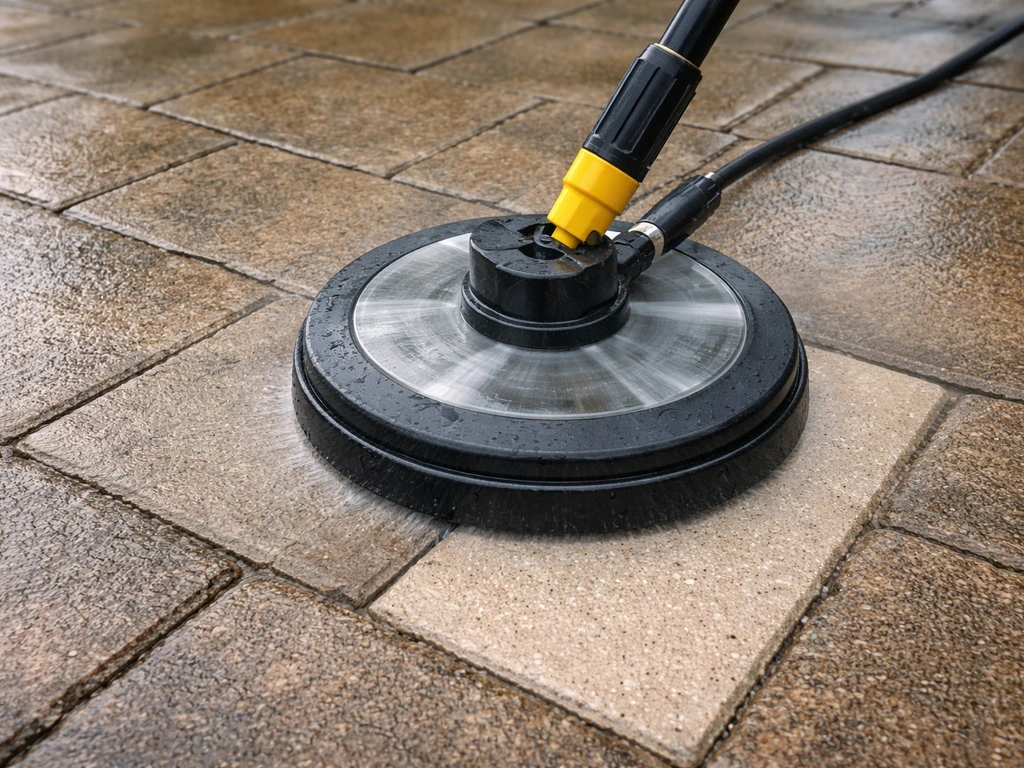
This is the single most useful upgrade for patio cleaning. A surface cleaner fits onto the end of your high-pressure hose, houses two rotating nozzles under a shroud, and cleans in consistent overlapping passes without the streaking you get from a single jet. Kärcher claims the T 450 is up to 50% faster than cleaning with a spray wand, and in my experience that's not far off for flat surfaces. The shroud also stops the spray going everywhere, which matters if you're cleaning near a wall or window.
Kärcher makes several T-Racer models with different compatibility ranges. The T 5 and T 300 are rated for K 2 through K 5, while the T 350 fits the full K 2 through K 7 range and includes a pressure adjustment feature for adapting to the cleaning task. The T 450 is the highest-spec domestic surface cleaner and is rated for K 4 through K 7 only, because it needs the higher flow rates those machines provide.
If you're buying a K 4 or K 5, the T 350 or T 450 are worth the extra investment. The T 350 in particular is a popular choice and we've covered it in more detail separately if you want a deeper look at how it performs in real use.
Nozzles
Kärcher colour-codes nozzles by spray angle, and you'll typically get a few with the machine. For patios, the 25-degree fan nozzle is your workhorse for general washing. The wide 40-degree fan is better for delicate surfaces and rinsing. Avoid the pencil jet (0-degree rotary) on any natural stone or jointed surface. The vario-power wand, which lets you twist between angles on the fly, is convenient for switching between rinsing and cleaning without stopping.
Detergents
For patios, Kärcher's RM 564 Patio and Deck Cleaner concentrate is a solid all-round choice. It's described as material-friendly for both wood and stone, and it tackles oil, grease, soot, green growth, and rust. The dilution is straightforward: mix 500 ml of concentrate with 4. 5 litres of tap water at a 1:9 ratio, giving you 5 litres of working solution.
You can apply it at low pressure through the machine, via a foam nozzle, or manually and let it dwell before washing. For concrete and brick specifically, Kärcher's Concrete and Driveway Cleaner is designed for those surfaces and handles oils and grime well. For really heavy grease or carbon deposits on concrete, the commercial-grade Concrete Cleaner is more aggressive and handles tar, asphalt, and baked-on carbon.
Brush and roller attachments
The Kärcher PCL 4 patio cleaner uses rotating roller brushes rather than high-pressure jets, which makes it a genuinely different tool. If you're wondering whether an older Kärcher patio cleaner like the PCL 4 is any good, it can be a great option for sealed surfaces thanks to its rotating brush action Kärcher PCL 4 patio cleaner. It's designed for blank" rel="noopener noreferrer">smooth sealed stone tiles and wooden decking where you want mechanical scrubbing action without the pressure risk. If your patio is predominantly sealed porcelain or composite decking, this is worth knowing about as an alternative or complement to a standard pressure washer setup.
Tackling stubborn stains: mold, algae, moss, rust, grease, and pet stains
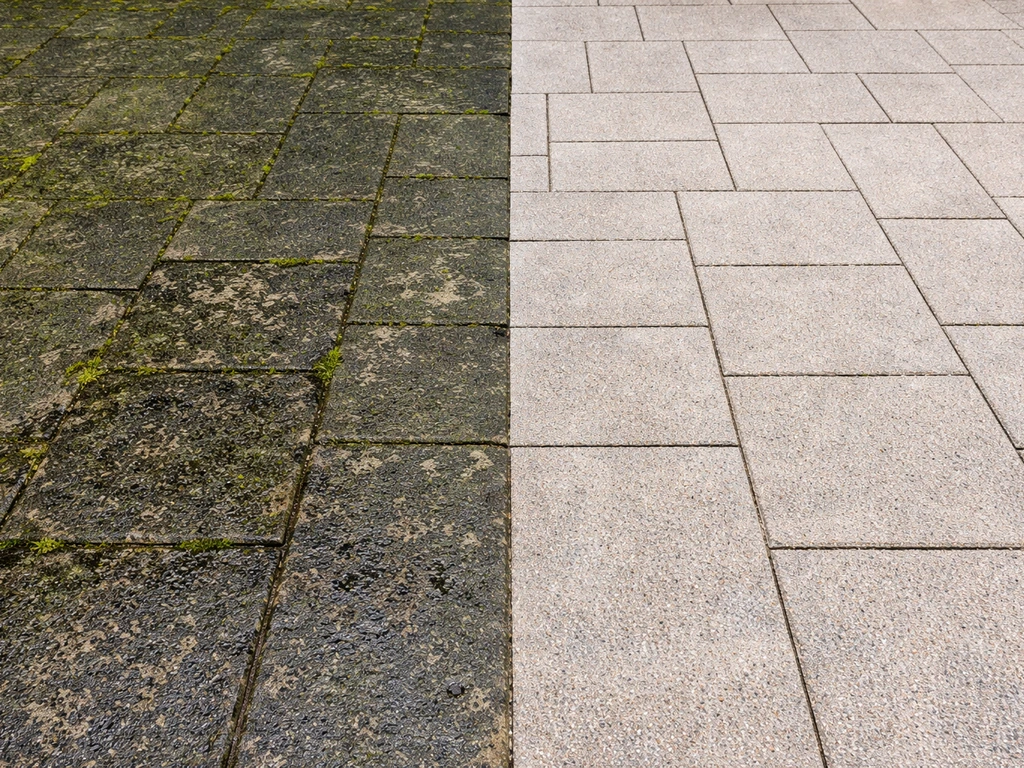
Pressure alone won't always solve a staining problem, and in some cases it makes it worse by spreading spores or embedding particles deeper. Here's how to approach the most common patio stains with a Kärcher:
| Stain Type | Pre-treatment | Machine Approach | Notes |
|---|---|---|---|
| Green algae / slime | RM 564 or dedicated algae killer, dwell 15-20 mins | K 4 or K 5 with surface cleaner | Pre-treatment does most of the work; pressure washer removes the loosened growth |
| Black mold | Diluted bleach-based patio cleaner, dwell 20-30 mins | K 4 or K 5, fan nozzle or surface cleaner | Rinse thoroughly; mold often returns without a biocidal treatment |
| Moss | Moss killer (apply days in advance ideally), let moss die off | K 4 or K 5 with surface cleaner | Dead moss is much easier to remove; live moss just compresses under pressure |
| Rust stains | Specialist rust remover or oxalic acid solution, dwell 10-15 mins | K 3 or K 4, fan nozzle, lower pressure | Don't use high pressure on rust on sandstone or slate; it can spread the staining |
| Grease / oil | RM 564 or Kärcher Concrete Cleaner, dwell time needed | K 4 or K 5 with foam lance then wash through | Multiple passes often needed; hot water machines (HD/HDS range) are significantly better for grease |
| Pet stains / urine odour | Enzyme-based pet cleaner, let it work before washing | K 3 or K 4, fan nozzle | Pressure washing alone won't remove odour; you need the enzyme treatment first |
| Baked-on carbon / soot (BBQ area) | Kärcher commercial concrete cleaner or degreaser | K 4 or K 5, lower to medium pressure | Often needs repeat treatment; sealed surfaces respond better than porous concrete |
One thing I'd stress: for biological growth like moss, algae, and mold, applying a treatment product and letting it work before you pressure wash will give dramatically better results than just blasting with high pressure. The pressure washer is the finishing step, not the whole job. This is especially true on textured or porous surfaces where growth is embedded in the material.
Step-by-step patio cleaning workflow
- Clear the patio: Move furniture, pots, and anything else off the surface. You'll be working with pressurised water and chemical treatments, and you don't want overspray damaging plants or furniture finishes.
- Pre-treat with detergent: Apply your chosen cleaner (RM 564 for general use, a dedicated moss or algae killer for biological growth, a degreaser for oily patches) either manually, via a watering can, or at low pressure through your Kärcher's detergent system. Follow the dwell time on the product, typically 10 to 30 minutes. Don't let it dry out.
- Attach the right accessory: For flat patio surfaces, fit your T-Racer surface cleaner. For edges, steps, or awkward corners, use a 25-degree fan nozzle. For delicate surfaces, switch to a 40-degree wide fan.
- Start pressure washing: Begin at a low to medium pressure setting and work in overlapping passes. Keep the surface cleaner moving at a consistent speed to avoid uneven cleaning marks. For wand nozzles, maintain around 20 cm from the surface as a starting point and adjust from there based on how the surface is responding.
- Rinse thoroughly: After cleaning, rinse the entire surface with clean water at low pressure to remove loosened grime, detergent residue, and any chemical treatment. Work from one end to the other so you're always pushing dirty water off the patio rather than back across cleaned areas.
- Treat and protect: Once dry (ideally 24 to 48 hours), consider applying a patio sealer or a biocidal surface treatment to slow regrowth of algae and moss. On sandstone or limestone, a sealer will also make future cleaning much easier and reduce the risk of pressure damage next time.
Safety, damage prevention, and when pressure washing isn't the answer
Pressure washing is not always the right first move, and there are situations where it will make things worse. Here's what to watch out for:
- Unsealed sandstone, limestone, and soft natural stone: High pressure strips the surface layer and can permanently roughen or pit the stone. Use a K 3 maximum, wide nozzle, keep your distance, and lean heavily on chemical pre-treatment instead.
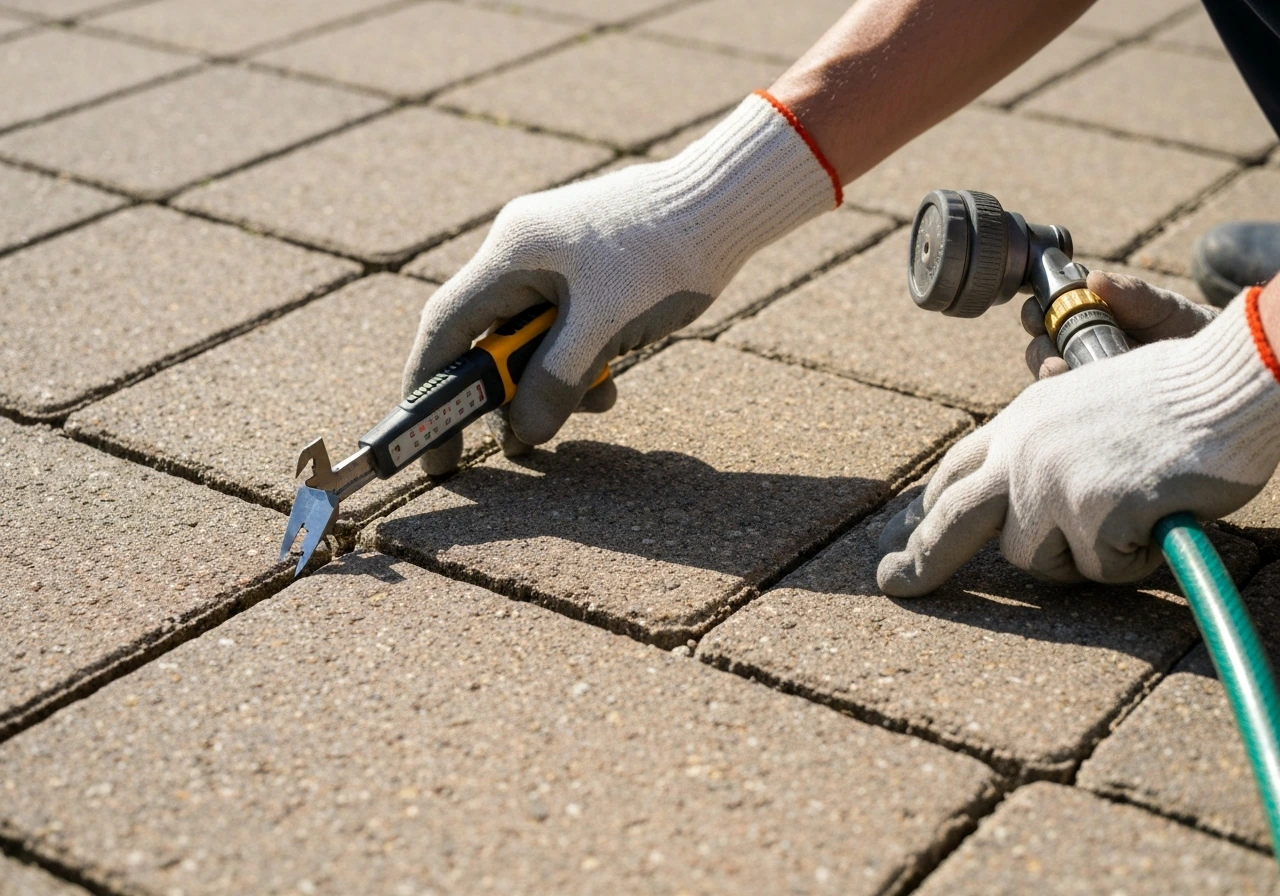
- Block paving with fresh or loose jointing sand: Pressure washing will blast the sand out of the joints. Re-sand and re-seal after cleaning, or use a low-pressure rinse only and rely more on chemical cleaning.
- Cracked or damaged surfaces: If there are existing cracks in concrete or broken mortar joints in brick, high pressure water will force its way in and can cause frost damage in cold weather or accelerate deterioration. Repair before you clean.
- Painted surfaces: Pressure washing can strip paint, especially older water-based coatings on concrete or timber. Test a small inconspicuous area at low pressure first.
- Nozzle distance matters more than you think: At 20 cm with a pencil jet on a K 5, you can etch concrete. The same machine at 40 cm with a wide fan nozzle is much gentler. Use the Kärcher manuals for your specific model to check the recommended working distances for different surfaces.
- Always wear eye protection and closed shoes when pressure washing. The water bouncing back from hard surfaces contains grit and debris and it travels fast.
There are also surfaces and situations where chemical cleaning without any pressure washing is genuinely the better call. Old grouted natural stone, heavily weathered slate, and any antique or heritage paving material are examples where I'd skip the pressure washer entirely and use a hand-applied stone cleaner with a stiff brush instead. The risk-to-reward ratio just doesn't work in favour of a machine on those surfaces.
If you're on the fence about whether the T-Racer surface cleaner attachment is worth it, or you want a deep dive on specific models like the T 350 or T 150, those are worth reading through separately before you buy. If you want a step-by-step look at what to expect, this karcher t5 patio cleaner review goes through performance, setup, and results on real patios. Similarly, if you already own a Kärcher and are trying to work out whether it's capable enough for patio work, there's more detail on what to realistically expect from the patio cleaner attachments in the context of real-world performance.
FAQ
Which Kärcher should I choose if I already own a K3 or K4 and want to add a T-Racer later?
Check the exact compatibility range printed on the T-Racer box or spec sheet. A T 450 typically needs K 4 through K 7, so a K 3 may not deliver enough flow to spin the nozzles properly. If you want flexibility, a T 350 is the safer mid upgrade because it covers a wider range of K models and includes a pressure adaptation feature.
Do I need a surface cleaner (T-Racer) if my patio is small?
You can get good results with a fan nozzle on smaller patios, but a surface cleaner still reduces streaking and makes the cleaning path more consistent, especially on flat concrete or slabs. If you regularly get patchy results with a wand, the T-Racer usually fixes the pattern problem more than switching to a higher pressure model.
What happens if I use the wrong nozzle angle for patio cleaning?
Using a pencil-jet type nozzle on natural stone or heavily jointed paving can erode edges and widen joints. For most patios, start with a 25-degree fan for general cleaning, and use a wider 40-degree fan for rinsing or more delicate surfaces to reduce the risk of surface texture damage.
How can I tell whether my patio is sealed, so I do not over-clean it?
Do a simple water test: splash water onto the surface and watch how it behaves for a few minutes. If it beads and stays glossy, it is likely sealed, and a mechanical approach like the PCL 4 roller brush cleaner (or lower pressure settings) can be appropriate. If it soaks in quickly, treat it as porous and keep pressure and dwell time conservative while using a suitable patio cleaner chemical.
I see black spots after cleaning, is that mold returning or something else?
Often it is not a brand-new problem, it is leftover growth that was not fully killed or was spread during blasting. For moss, algae, and mold, apply a dedicated treatment product first and let it dwell before pressure washing, then rinse. If you blast first, you can smear spores or embedded material and make the spots appear sooner.
Can pressure washing make stains worse, even if the surface looks cleaner at first?
Yes. High pressure can push oil, organic matter, or fine particles deeper into porous concrete or aged grout, and it can spread biological growth sideways on textured surfaces. When stains are oil-based or deeply embedded, use the right concentrate and dwell, then finish with pressure at a controlled setting instead of relying on brute force.
Which Kärcher is best for a large patio if I also want fast coverage and fewer passes?
For larger areas, prioritize flow rate and surface cleaner compatibility, not only bar or PSI. The K 5 is commonly chosen for patios over roughly 30 square metres when you are running a bigger surface cleaner like the T 450, because the nozzle heads need higher flow to maintain consistent rotation across the cleaning width.
Should I run the K 2 or K 3 with a surface cleaner for patio slabs?
In many cases you can, but performance depends on the specific T-Racer compatibility range and the level of grime. Lower-end machines can work for lightly soiled patios, but if you expect heavy staining or greasy deposits, you may get slower results and more repeated passes. For tough patios, the K 4 usually feels like the practical minimum for consistent surface cleaner performance.
What is the biggest mistake when cleaning patios near walls or windows?
Letting spray escape beyond the cleaning area. The shroud on a T-Racer contains overspray and helps you avoid wetting walls, windows, and nearby plantings. If you use a wand close to boundaries, increase your distance, use a wider fan nozzle, and work in controlled passes rather than trying to “reach” with the tip.
When should I skip a pressure washer entirely and use chemical cleaning with brushing?
If the patio is heritage paving, very weathered slate, or old grouted natural stone, pressure can be too risky for joints and texture, and it may not be worth it. In those cases, hand-apply a stone-safe cleaner, scrub with a stiff brush, and rinse gently (or wipe) rather than attempting to “power through” with a high-pressure jet.
Next Article
Karcher T350 Patio Cleaner Best Price Guide Today
Find the best price for the Kärcher T350 patio cleaner, compare bundles, and verify pressure-washer compatibility.