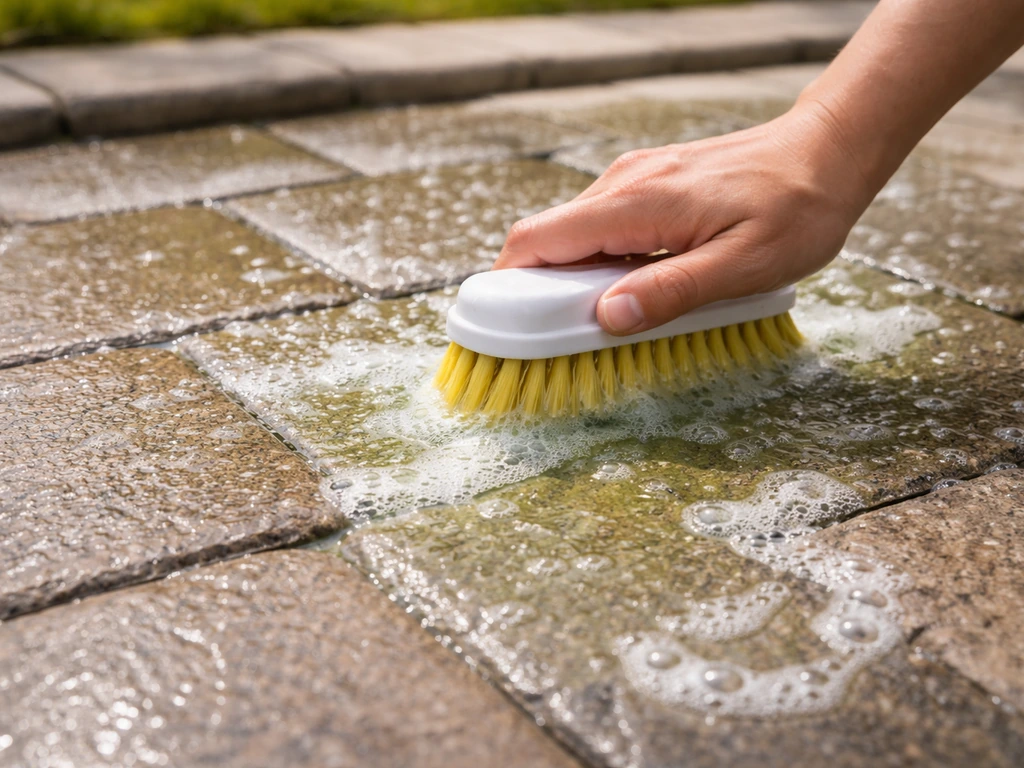
Yes, patio cleaners work, but how well depends entirely on matching the right product to the right problem and surface. A bleach-based cleaner like Zep Mold Stain Remover can genuinely wipe out mold and mildew stains in about a minute. An oxygen-based cleaner like Simple Green Oxy Solve lifts algae, moss, and general grime from multiple outdoor surfaces without the harshness of bleach.
Does Patio Cleaner Work? Results, Timing, and Tips
Rhea Lang
29 Apr 2026
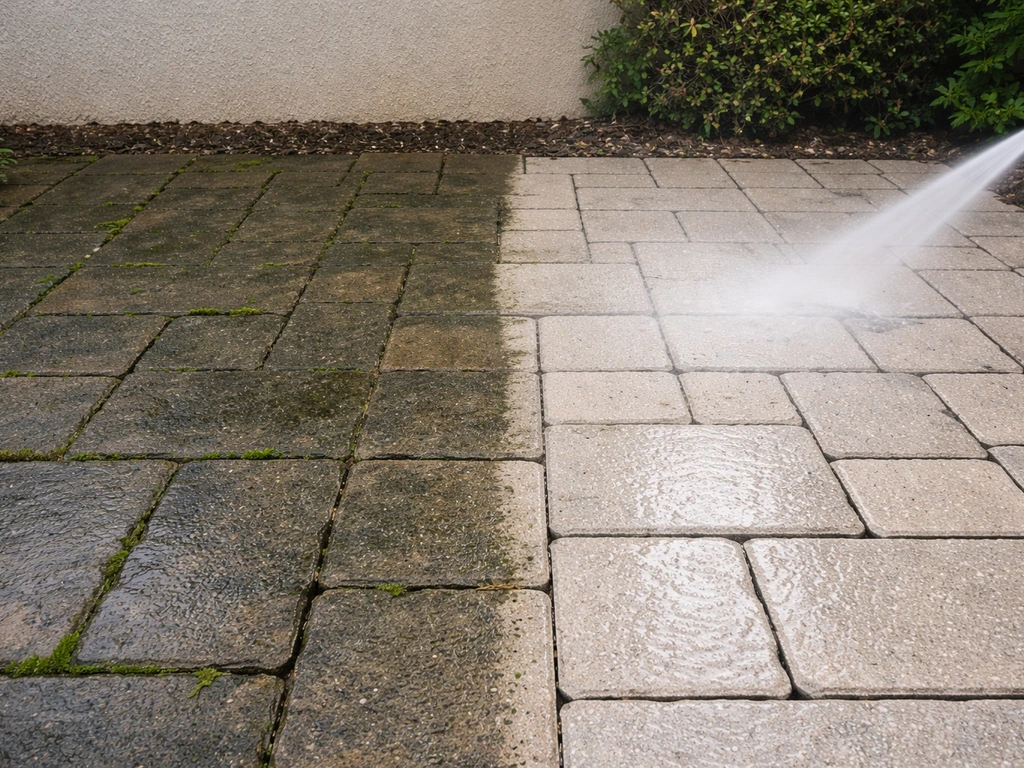
But grab the wrong product for your surface or problem, and you'll either see no result at all or, worse, damage what you're trying to clean. Here's what actually works, what doesn't, and how to use these products correctly so you're not wasting time or money. If you need a simple starting point, review our patio cleaner how to use guide for the right steps, timing, and rinsing method.
If you want step-by-step guidance, this article also covers exactly how to make patio cleaner choices and use them correctly for your specific surface.
What results should you realistically expect?
Good patio cleaners deliver visible, sometimes dramatic results on biological growth (mold, algae, moss, lichen) and moderate surface staining. A bleach-based formula applied to a mold-covered concrete slab can clear the staining in as little as one minute with no scrubbing required.
blank" rel="noopener noreferrer">An EPA-hosted label PDF for a bleach-type cleaning formulation includes language indicating it can clean away mold, mildew, algae, dirt and stains on appropriate outdoor surfaces, supporting use in patio-cleaning contexts mold-covered concrete slab can clear the staining in as little as one minute.
Oxygen-based products take a bit longer but are gentler and effective across a wider range of surfaces and stain types. Products like Wet & Forget work on a completely different timeline, they're designed as a slow-burn, leave-on treatment that degrades algae and moss over several weeks rather than delivering an immediate transformation.
What patio cleaners are less effective on: deeply embedded grime that has been sitting for years, heavy grease from a BBQ, old rust that has fully penetrated into porous stone, or any surface that hasn't been properly prepped first. If you pour cleaner onto a heavily soiled, dry surface and leave it for five minutes, you're going to be disappointed. The chemistry needs contact time, the right conditions, and sometimes a bit of mechanical help (scrubbing or pressure washing) to do its job fully. Knowing the correct dwell time is key, and our guide on how long to leave patio cleaner breaks down timings by product type and surface.
Match the cleaner to your patio surface
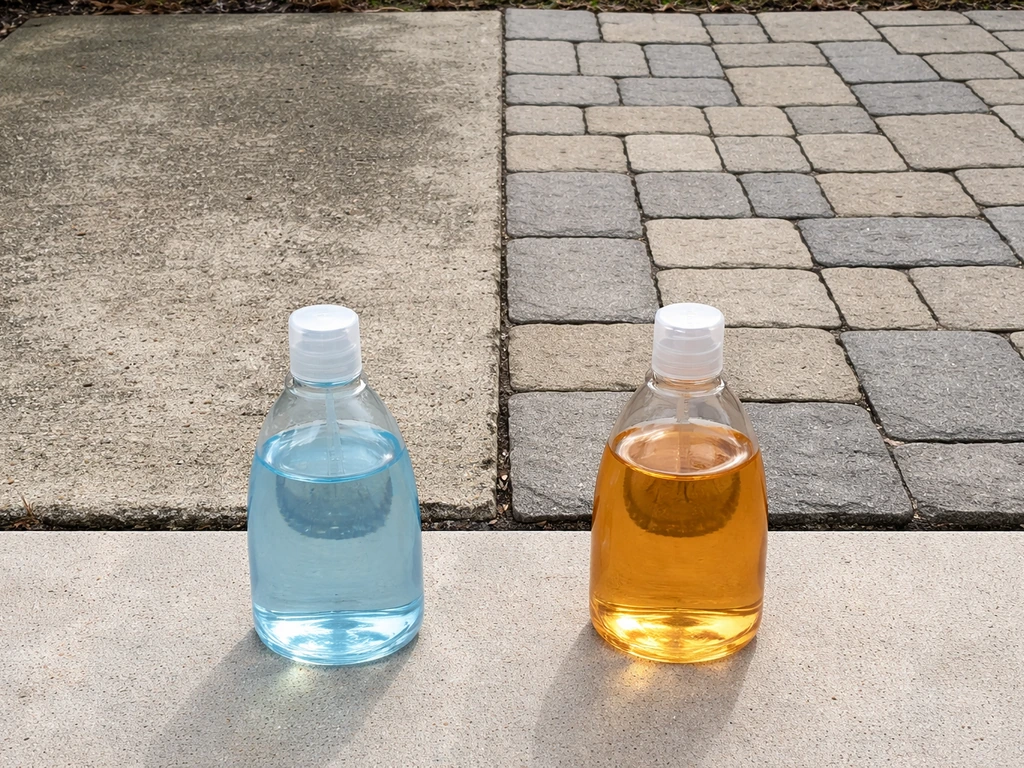
This is the step most people skip, and it's where things go wrong. Different surfaces react very differently to different cleaning chemistries, and getting this wrong can cause permanent damage.
| Surface | Best Cleaner Type | Avoid | Notes |
|---|---|---|---|
| Concrete | Bleach-based, oxygen-based, alkaline degreasers | Bar Keepers Friend (not recommended for concrete) | Pre-wet before applying. Highly porous — needs thorough rinse. |
| Brick | Oxygen-based, diluted bleach-based, mild acid for efflorescence | Strong muriatic acid (use buffered phosphoric or organic salt alternatives) | Dampen first. Repeat treatments often needed for rust stains. |
| Natural stone (granite, limestone, sandstone) | Neutral pH or oxygen-based cleaners | Acid-based cleaners, bleach at full strength | Acids etch natural stone — the damage looks like a dull mark and is often mistaken for a stain. |
| Slate | Neutral pH cleaners, diluted oxygen-based | Strong bleach, acid-based | Slate can lose surface finish with aggressive chemistry. |
| Porcelain | Oxygen-based, diluted bleach-based | Prolonged contact with bleach or acid | Rinse vinyl or rubber trim nearby within 15 minutes — prolonged contact can cause damage. |
| Sandstone | Neutral pH, mild oxygen-based at low dilution | Any acid-based cleaner, undiluted bleach | Very porous and acid-sensitive. Test a hidden area first every time. |
The acid-etching risk on natural stone is real and something I've seen catch people out repeatedly. The etching shows up as a dull, cloudy mark that looks exactly like a stain, so they apply more cleaner, making it worse. If you're on sandstone, limestone, or slate, reach for a neutral pH or oxygen-based product, not anything labelled as an acid cleaner or rust remover. For efflorescence (the white mineral bloom you sometimes get on brick and concrete), traditional cleaners use muriatic acid, but milder organic-salt alternatives like RadonSeal Efflorescence Cleaner are far safer for the surface and still effective. If you do use an acid-based cleaner, a neutralizing rinse is mandatory, especially before sealing.
What patio cleaners are actually targeting
Mold, algae, and moss
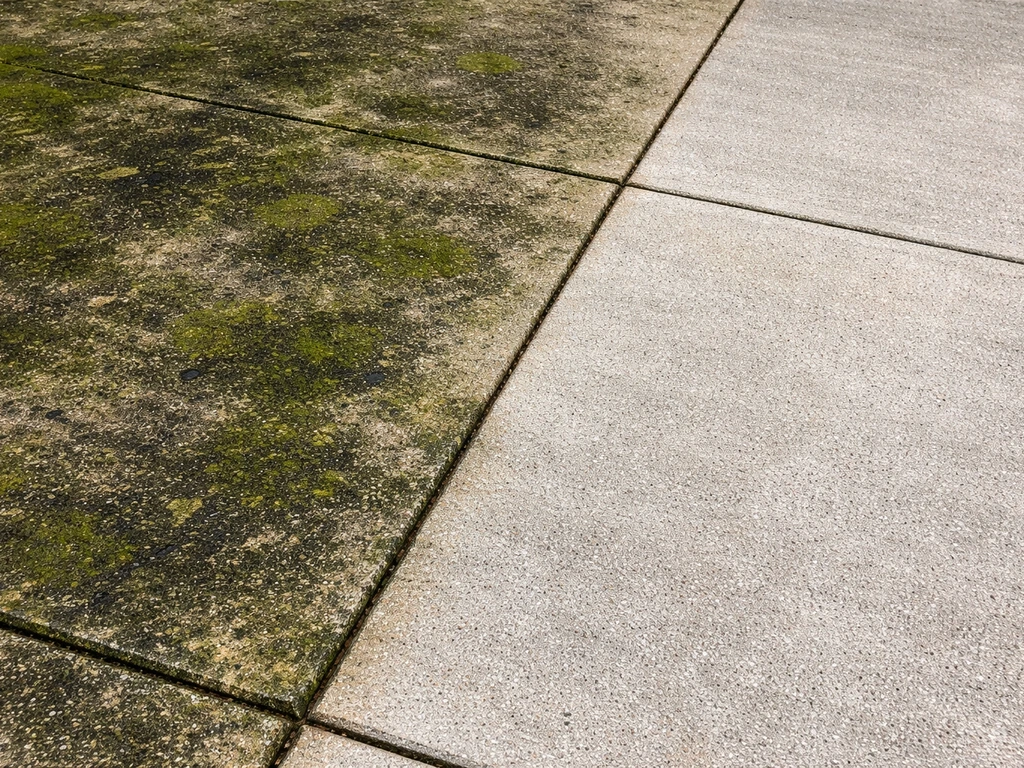
This is where chemical patio cleaners genuinely shine. Bleach-based products kill mold and mildew spores fast. For Zep Mold Stain Remover, the label directions specify leaving the surface wet for 1 minute (60 seconds) for mold and mildew use [Leave surface wet for 1 minute (60 seconds)](https://images. zep.
com/zepcorporate/els/121524_Label%20Copy. pdf). Oxygen-based formulas like Simple Green Oxy Solve lift and remove mold, mildew, moss, and algae from multiple outdoor surfaces and can be applied and then rinsed off with a garden hose at full pressure. Wet & Forget takes the opposite approach, spray it on and walk away, no rinsing required, but the results come gradually over weeks as rain and time do the work.
After you've cleaned mold or mildew, applying a mold inhibitor (like Zep's Clear Shell Mold & Mildew Inhibitor) gives you a real chance of slowing regrowth rather than just repeating the cleaning cycle every season.
Rust stains
Rust needs its own dedicated chemistry, a standard patio cleaner won't touch it. Rust removers designed for pavers (like Techniseal's, which notably does not contain muriatic acid) work well on paved surfaces but come with critical compatibility warnings: do not use on non-acid-resistant natural stone, wet-cast pavers, or poured concrete. For concrete and brick, products like Whink Rust-Oxy work, dampen the stained area first, apply the product, and rinse thoroughly. Bar Keepers Friend is useful for surface-level rust stains on some hard surfaces, but it's explicitly not recommended for marble or concrete, so check the label. Whatever rust remover you use, work fast, some instruct rinsing within one minute of application.
Grease
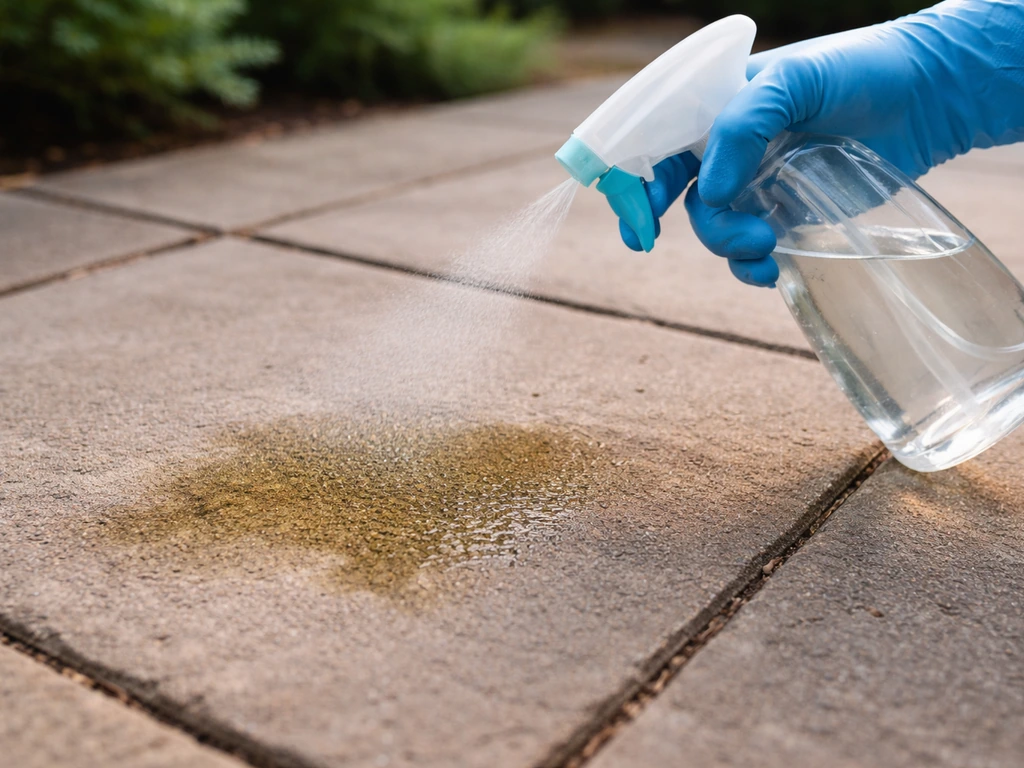
Grease from BBQs and outdoor cooking needs an alkaline or degreasing cleaner, not a biological growth killer. OxiClean handles light grease and general soiling well on patios. For heavier grease on concrete, a dedicated alkaline concrete cleaner (like Brickform Neutra Clean for lighter soils) or a purpose-made concrete degreaser is a better call. Pre-wet the surface, apply the degreaser, give it time to penetrate, then scrub and rinse thoroughly with cool water.
Pet stains
For pet urine and related staining on patio surfaces, an enzymatic or oxygen-based cleaner works better than a bleach product, bleach can neutralize the odor compounds temporarily but doesn't break them down. OxiClean-type oxygen-based cleaners are a practical choice here. On porous surfaces like concrete or sandstone, pet stains can penetrate deeply, so you may need to repeat treatment and allow longer dwell time for the cleaner to work into the pores before rinsing.
How to use patio cleaner properly
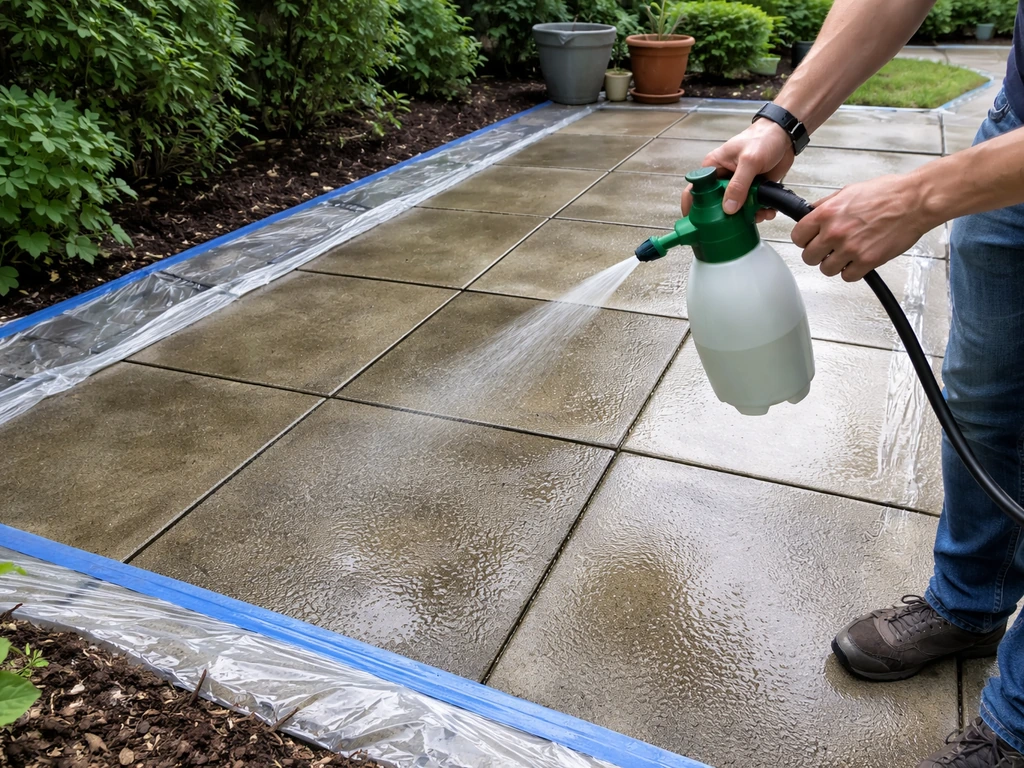
The method matters as much as the product. A lot of "this cleaner doesn't work" complaints come down to poor application rather than a bad product. Here's the process that actually gets results. If you want the full, step-by-step rundown, our guide on how to apply patio cleaner covers the exact process from prep to rinsing. Using the right timing and application method is a big part of how patio cleaner work in real life, so follow the steps in the process that actually gets results.
- Clear the area: Remove furniture, plant pots, and anything you don't want exposed to the cleaner. Move children and pets well away from the area.
- Protect nearby plants: Wet down surrounding grass, borders, and plants with plain water before you start. This dilutes any cleaner that drifts or runs off. Cover especially sensitive plants with a sheet or tarp.
- Pre-rinse the surface: Wet the patio thoroughly before applying the cleaner. This is especially important on brick, concrete, and stone — it stops the dry surface from absorbing the product unevenly and helps the chemistry spread properly.
- Gear up: Wear eye protection (glasses or goggles) and rubber gloves at minimum. If you're working with a bleach-based formula in an enclosed or covered patio area, add a mask. The label language is clear on this — first-aid instructions include a 15-20 minute eye-flush if splashed, which tells you exactly how seriously to take it.
- Apply the product: Most liquid patio cleaners apply via a plastic garden sprayer or direct pour. Apply evenly across the surface. Some products like Mold Armor E-Z Deck are applied full strength with a garden sprayer. Don't skip the application step for stubborn areas — give them extra coverage.
- Allow the correct dwell time: This varies by product and how bad the problem is. Bleach-based products can work in as little as one minute on mold stains. Oxygen-based cleaners typically need a few minutes to penetrate. For Wet & Forget, there's no rinse — you leave it on and rain does the rest over days and weeks. Key rule: don't let the surface dry out before you rinse on rinse-off products. On a hot day, you may need to work in smaller sections.
- Scrub if needed: Most products say "scrub as needed" — for light mold or algae, you often won't need to. For heavier grime, a stiff brush on concrete or brick makes a real difference. Don't use a wire brush on stone or porcelain.
- Rinse thoroughly: This step is non-negotiable. Rinse the entire treated surface and the surrounding area with clean water. A garden hose at full pressure is the minimum. For products with acid chemistry, neutralizing rinse steps are mandatory. If you're on vinyl or rubber surfaces, rinse within 15 minutes to prevent damage from prolonged chemical contact.
One more thing on timing: if you're using a spray-and-leave product like Wet & Forget, avoid applying it when rain is forecast within the next four to five hours. The product needs time to dry and bond to the surface before rain hits, or you're just washing it away.
When patio cleaner won't cut it
There are situations where even a well-applied, correctly matched cleaner isn't going to give you the result you want. Knowing this saves you time, money, and frustration.
- Heavy embedded grime and years of built-up dirt: Chemical cleaners work on surface and near-surface contamination. If you have a decade of ingrained dirt compressed into porous concrete, chemistry alone won't shift it. You need pressure washing as well — ideally a surface cleaner attachment on a pressure washer for even, controlled cleaning on patio slabs.
- Wrong chemistry for the surface: As covered above, using an acid cleaner on sandstone or limestone just etches the surface. Using Bar Keepers Friend on concrete won't work (it's not formulated for it). If you've tried a cleaner and seen no result, check whether the product is actually rated for your surface.
- Sealed surfaces: If your patio has been recently sealed, a lot of surface cleaners won't penetrate the sealant layer to reach the contamination underneath. You may need to strip the sealant first, clean, then re-seal.
- Mold and algae regrowth from underlying moisture: If you clean green algae off a shaded, damp patio and it's back in a few weeks, the chemistry isn't failing — the conditions are re-seeding it. Cleaning removes what's there; it doesn't fix drainage, shade, or moisture issues. A mold inhibitor applied after cleaning helps slow this cycle, but fixing the underlying cause is the real answer.
- Rust that has deeply penetrated porous stone: Surface rust stains respond to dedicated rust removers. But if rust has fully penetrated several millimetres into porous stone or concrete, the top layer may clean while the stain keeps bleeding back to the surface. Repeat treatments help, but the result may never be perfect.
- Very heavy grease: A single application of any consumer patio cleaner won't dissolve years of BBQ grease residue. You'll need a purpose-made alkaline degreaser, possibly multiple applications, and a pressure washer for rinsing.
For the situations where chemistry alone isn't enough, the right move is usually to combine it with pressure washing. A pressure washer used with a surface cleaner attachment and increasing the nozzle distance for more delicate surfaces gives you mechanical cleaning power that no spray-on product can replicate on its own. The Kärcher approach of using a surface cleaner attachment on patio slabs is a good model, it's more controlled than a bare lance and avoids the streaking you get from uneven pressure.
Choosing the right patio cleaner or pressure-wash setup
Standing in front of a shelf of patio cleaners (or scrolling through them online) is genuinely confusing because the marketing language is all very similar. Here's what to actually look at.
What to check on the label before you buy
- Surface compatibility: Does it explicitly list your surface type — concrete, natural stone, porcelain, brick? If your surface isn't listed, don't assume it's safe.
- Stain type claims: Is it targeting mold/mildew, algae/moss, rust, or grease? A cleaner marketed for mold won't do much for rust. Match the claim to your actual problem.
- Bleach-based vs. oxygen-based vs. neutral pH: Bleach-based is fastest on biological growth but not suitable for many stone surfaces. Oxygen-based is more versatile and surface-safe. Neutral pH is the right choice for delicate natural stone.
- Dilution instructions and contact time: Products with clear, specific directions (dilution ratios, dwell time guidance) are generally more reliable than vague "spray and wait" instructions with no specifics.
- Rinse requirements: Some products require rinsing (oxygen-based, bleach-based). Others are designed to be left on (Wet & Forget). Using a rinse-required product without rinsing, or using a leave-on product then pressure-washing it off immediately, defeats the point entirely.
- Pet and plant safety claims: If you have pets or garden borders adjacent to your patio, check whether the product is marketed as safe once dry, or whether it requires you to keep people and animals away for a specific period.
Chemical cleaning vs. pressure washing: which do you need?
For most homeowners, the answer is both, used together. Chemical cleaners loosen, kill, and lift contamination. Pressure washing physically removes it. Using a cleaner first, giving it dwell time, and then rinsing with a pressure washer at the right distance consistently gives better results than either approach alone. The one exception is delicate surfaces like sandstone and some slate, where high-pressure washing can cause surface damage, here, a gentle chemical clean followed by a thorough garden-hose rinse is safer.
If you're going the pressure-washer route, a surface cleaner attachment (a circular spinning bar head) is far better than a lance for patio slabs, it cleans evenly, doesn't leave stripe marks, and covers large areas faster. For gentler results on more delicate surfaces, increase the nozzle distance and drop the pressure rather than switching to a lower-spec machine. Some patio cleaners, including Wet & Forget concentrate, have specific pressure-washer guidance: only use pressure washers that can draw from a separate container with a pre-mixed 5:1 solution, otherwise, the company doesn't recommend using a pressure washer with the product at all.
If you're building out a full outdoor cleaning kit, it's worth reading detailed reviews that break down how specific cleaners and pressure washers perform on your exact surface type and problem. How you apply the product, dwell times, dilution, whether you scrub or just rinse, affects results significantly, so pairing good product selection with correct application technique is the combination that actually gets a patio looking clean again.
FAQ
Does patio cleaner work on old black stains, or does it only work on fresh growth?
It can work, but performance drops when stains are deeply embedded. For long-set biological growth or years of grime, you usually need longer dwell time and sometimes mechanical removal (light scrubbing or pressure washing after the cleaner loosens the contamination). If the stain stays after one full treatment, repeat rather than adding a stronger chemical immediately.
How long should I wait to see results from a patio cleaner?
Bleach-based and many oxygen-based cleaners often show noticeable change within minutes to an hour, especially on mold and mildew. Leave-on products like slow-bond treatments typically take weeks because the cleaner continues working as it dries and bonds. If nothing changes after the time window recommended for that product, it may be the wrong chemistry or poor surface prep.
Why does my patio cleaner seem to work for a day, then the stains come back?
That usually means regrowth from remaining spores or algae, not that the cleaner failed. After mold or mildew cleaning, using a dedicated inhibitor helps slow return. Also check that you improved conditions that caused recurring growth, like persistent shade, poor drainage, or sprinklers rinsing water onto the slab.
Can patio cleaner be used on all outdoor surfaces, like pavers, concrete, brick, and natural stone?
Not all cleaners transfer safely across surfaces. Natural stone (such as sandstone, limestone, or slate) is more vulnerable to etching, so choose neutral pH or oxygen-based formulas and avoid acid or rust remover products unless the label explicitly approves your stone type.
Does patio cleaner work on rust stains on concrete or brick?
Yes, but only with rust-specific chemistry. A standard biological patio cleaner usually will not remove rust that is already penetrated into porous material. Use a product intended for pavers or concrete, dampen first if the label instructs it, apply, then rinse thoroughly and promptly.
Will patio cleaner work on grease from a BBQ?
Usually not if the cleaner is designed for mold and algae. Grease typically needs an alkaline or degreasing product. Pre-wet, allow penetration time, then scrub and rinse with cool water, and repeat if the stains were heavy or left to cure.
Does patio cleaner work for pet urine stains and odors?
Oxygen-based or enzymatic cleaners work better because they help break down the compounds rather than just masking odor. On porous surfaces, expect repeat applications and longer contact time before rinsing because the issue can sit below the surface.
What’s the biggest reason patio cleaner fails, even when I bought the right product?
Most failures are application issues, especially skipping proper surface prep and using too little dwell time. Another common mistake is applying to a heavily soiled dry surface and rinsing too soon, before the chemistry has contact time to loosen and lift contamination.
Do I need to scrub after applying patio cleaner?
Sometimes. Many mold and algae removers can work with minimal scrubbing because they kill and lift growth, but deeply embedded grime often needs agitation to bring up the loosened residue. If you pressure wash right after dwell time, you may be able to reduce scrubbing, but test on a small area first.
Does patio cleaner need to be rinsed off?
It depends on the product. Some products are designed to be rinsed after dwell time, especially bleach or oxygen cleaners. Leave-on products that bond to the surface are not meant to be rinsed, and rinsing them can reduce performance.
Can I use a pressure washer after applying patio cleaner?
Often, yes, and the combination can be more effective than either method alone. Use a surface cleaner attachment when possible for even results on slabs, keep distance on delicate surfaces, and follow any product-specific warnings about pressure washer compatibility and dilution requirements.
Is it safe to pressure wash sandstone or slate after using patio cleaner?
Be cautious. High pressure can damage or erode some natural stone surfaces and may worsen appearance even if the chemical cleaned successfully. For delicate stone, a gentle chemical clean followed by a thorough garden-hose rinse is typically safer than aggressive pressure washing.
How do I avoid acid-etching damage when using patio cleaner on natural stone?
Avoid products labeled as acid cleaners, rust removers for stone types, or anything not explicitly approved for your rock. If you already used an acid-based product, a neutralizing rinse is critical before any further treatment or sealing. If you see dull cloudiness, stop adding more cleaner and reassess with the correct safer chemistry.
Can I use patio cleaner before sealing my patio?
Yes, but you must fully remove residues and allow the surface to dry appropriately. If you use acid-based products or anything that requires neutralization, you need the correct rinse step before sealing, otherwise you can trap chemicals and cause problems later.
Should I apply patio cleaner when rain is coming?
Avoid applying spray-and-leave or leave-on treatments right before rain. If rain is forecast within about 4 to 5 hours, you risk washing away the product before it bonds to the surface, which reduces results.
What should I do if my patio cleaner creates streaks or patches?
Streaks usually come from uneven application, inconsistent dwell, or running cleaner off before it can work. Apply uniformly, keep the surface wet for the product’s required contact time if instructed, and rinse methodically. Using an even-pressure method (like a surface cleaner attachment) can also help prevent patchy runoff patterns.
Next Article
How Long Do You Leave Patio Cleaner on Surfaces
Dwell time for patio cleaner by surface and stain, plus when to scrub, rinse, and what happens if it sits too long.