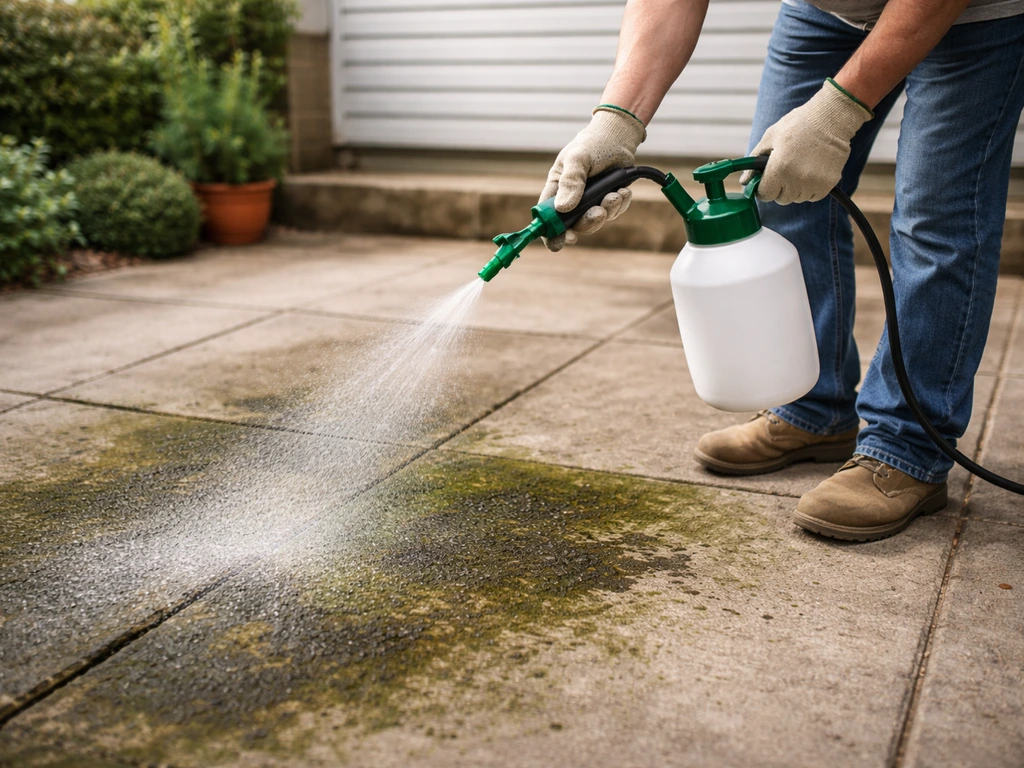
<a data-article-id="46ADA206-F956-4DD2-932D-47E2E39F5956">Applying patio cleaner correctly</a> comes down to four things: picking the right product for your surface and stain type, prepping the area properly, giving the cleaner enough dwell time to actually work, and rinsing it off thoroughly without leaving residue. Skip any of those steps and you'll either get patchy results or, worse, damage your paving. This guide walks you through the whole process from start to finish. If you want the quick answer to <a data-article-id="46BCE14A-3E3A-4D86-8883-861DD58CFEEC">how patio cleaner works</a>, it mainly works by chemically breaking down grime and organic growth so you can lift it away or let it be washed off later.
How to Apply Patio Cleaner: Step-by-Step by Surface
Pick the right patio cleaner for your surface and stain type
This is where most people go wrong before they've even opened a bottle. Using an acid-based cleaner on sandstone or slate, for example, can etch the surface permanently. Using a weak general-purpose cleaner on black spot lichen is just a waste of time. Match the product to your specific situation first.
| Surface | Stain / Problem | Cleaner Type to Use | What to Avoid |
|---|---|---|---|
| Concrete / brick | Mold, algae, general grime | Alkaline or bleach-based cleaner, oxygen bleach | Avoid strong acids unless removing rust or efflorescence |
| Concrete / brick | Rust, efflorescence | Acid-based cleaner (e.g., safer-acid formulas, heavy duty rust removers) | Avoid bleach-based products — won't touch rust |
| Concrete / brick | Grease, oil | Degreaser or alkaline cleaner (e.g., Simple Green Outdoor) | Avoid weak dilutions — heavy grease needs full-strength contact |
| Sandstone / limestone | Mold, algae, moss | pH-neutral or oxygen bleach-based cleaner | Avoid acids, bleach, and ammonia — all can damage stone |
| Slate | Mold, algae, general dirt | pH-neutral cleaner or specialist stone cleaner | Avoid acids, highly alkaline products, and abrasive formulas |
| Porcelain / ceramic | Mold, algae, general grime | pH-neutral or mild alkaline cleaner | Avoid acids and bleach on glazed surfaces |
| Any surface | Pet stains / organic odours | Enzyme-based or oxygen bleach cleaner | Avoid chlorine bleach if pets access the area after cleaning |
| Any surface | Lichen / black spot | Specialist lichen remover or concentrated biocide (e.g., Wet & Forget, HR Total Power Clean) | Avoid rushing — lichen needs long dwell time or repeat treatment |
A quick note on sensitive surfaces: StoneTech's maintenance guidance specifically warns against highly alkaline, acidic, ammonia-based, or abrasive cleaners on natural stone and tile. If you're cleaning sandstone, slate, or limestone, always check the label says it's safe for natural stone before you buy.
Prep the patio before you apply anything
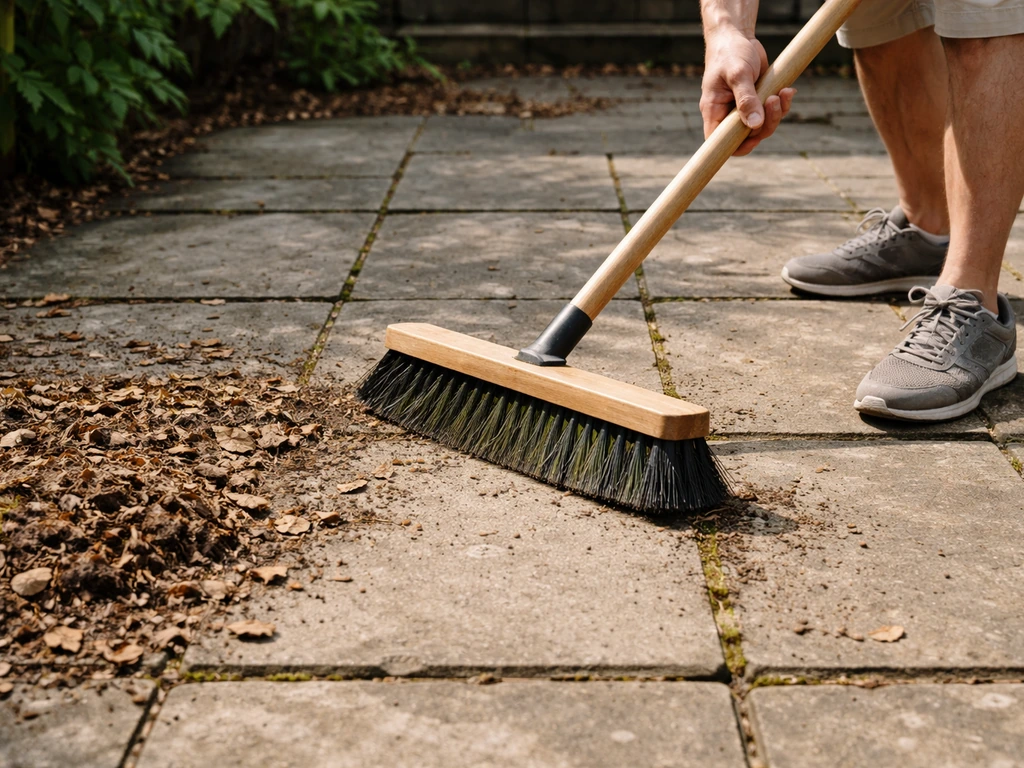
Prep takes maybe 15 minutes but it makes a real difference to how well the cleaner works. Here's what to do before you open the bottle.
- Sweep or blow off loose debris: leaves, dirt, and dry moss should come off first. Cleaner sitting on top of debris doesn't reach the surface.
- Move furniture, plant pots, and anything else off the patio. You don't want overspray or runoff contaminating them.
- Protect nearby plants, grass, and borders. Wet them down thoroughly with plain water before you start — this dilutes any cleaner that splashes onto them. Keep a hose nearby to rinse them off immediately if you get any overspray.
- Check the weather forecast. Avoid applying on a hot, sunny day. Cleaners dry out too fast in direct sun and that causes patchy results and potential surface damage. Early morning or an overcast day is ideal — Simple Green specifically recommends cleaning earlier in the day or on overcast days so moisture evaporates slowly.
- Pre-wet the surface (for most cleaners): dampening the patio before applying an alkaline or oxygen bleach cleaner stops it from being absorbed too aggressively into porous surfaces like concrete and sandstone. It also helps the product spread more evenly. Exception: do not pre-wet before applying acid-based rust removers — they need direct contact with the dry surface to react with iron deposits.
If you're working near a pool, cover it or close it off. Chlorine-based cleaners and acid-based rust removers both cause serious problems if they get into pool water. And keep pets and children off the patio until it's fully rinsed and dry.
How to apply patio cleaner: dilution, coverage, and dwell time
This is the section most people skip straight past on the label, and it's why so many patio cleaning jobs come out disappointing. Dilution ratio, how much product you use, how you apply it, and how long you leave it, all of these directly affect your results.
Dilution ratios: get these right
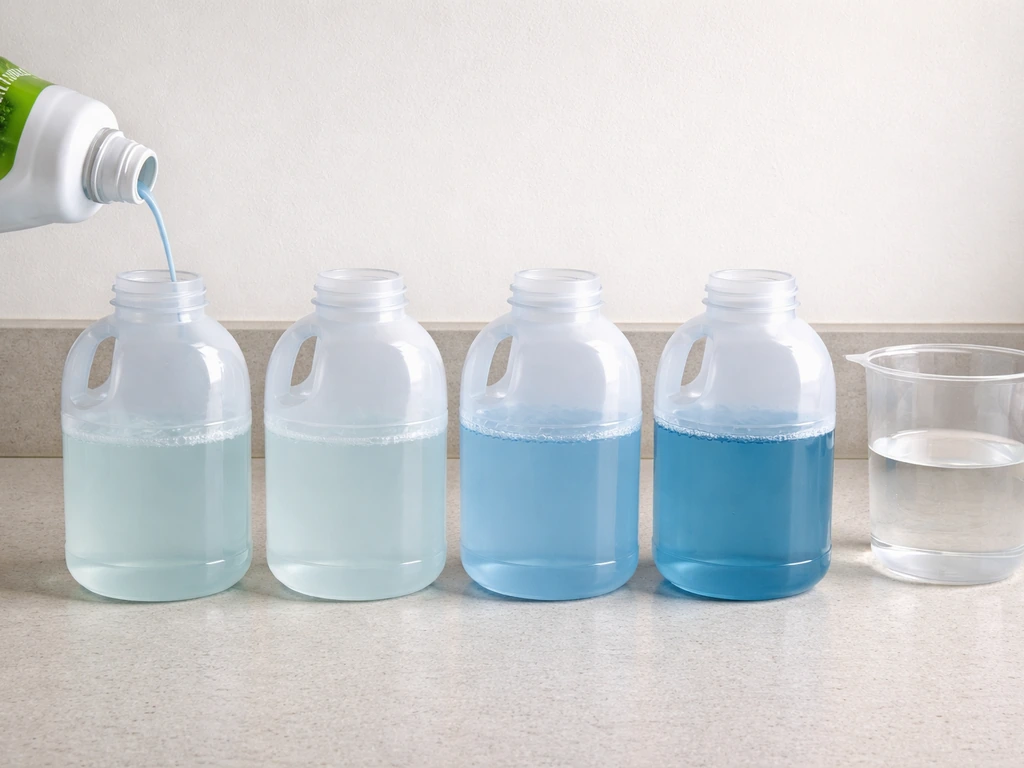
Different products and different stain levels need different dilution. Here are some real-world examples from product data that give you a feel for the range involved:
- Wet & Forget Outdoor concentrate: dilute 1 part product to 5 parts water. Apply and leave — no rinsing required with this type.
- HR Total Power Clean (for black spot or lichen): dilute 1:5 to 1:10 depending on severity. Heavier growth needs the stronger end.
- Simple Green Outdoor (for pavers with grease or heavy soils): approximately 1 oz Simple Green to 1 cup water for standard use. For very light soils using the pressure washer version, a 50/50 dilution with water is sufficient.
- Acid Magic (acid-based cleaner for concrete): 1 part cleaner to 6 parts water as a starting dilution.
- Zep Mold and Mildew Stain Remover: ready-to-use, no dilution required. Use straight from the bottle.
- RMR-86 Instant Mold and Mildew Stain Remover: also ready-to-use, applies directly.
The general rule: the tougher the stain, the stronger the dilution (i.e., less water, more product). But always start at the manufacturer's recommended ratio and only go stronger if needed. Over-concentrating a cleaner on sensitive stone is a fast way to cause damage you can't reverse.
How to apply: spray, pour, or brush
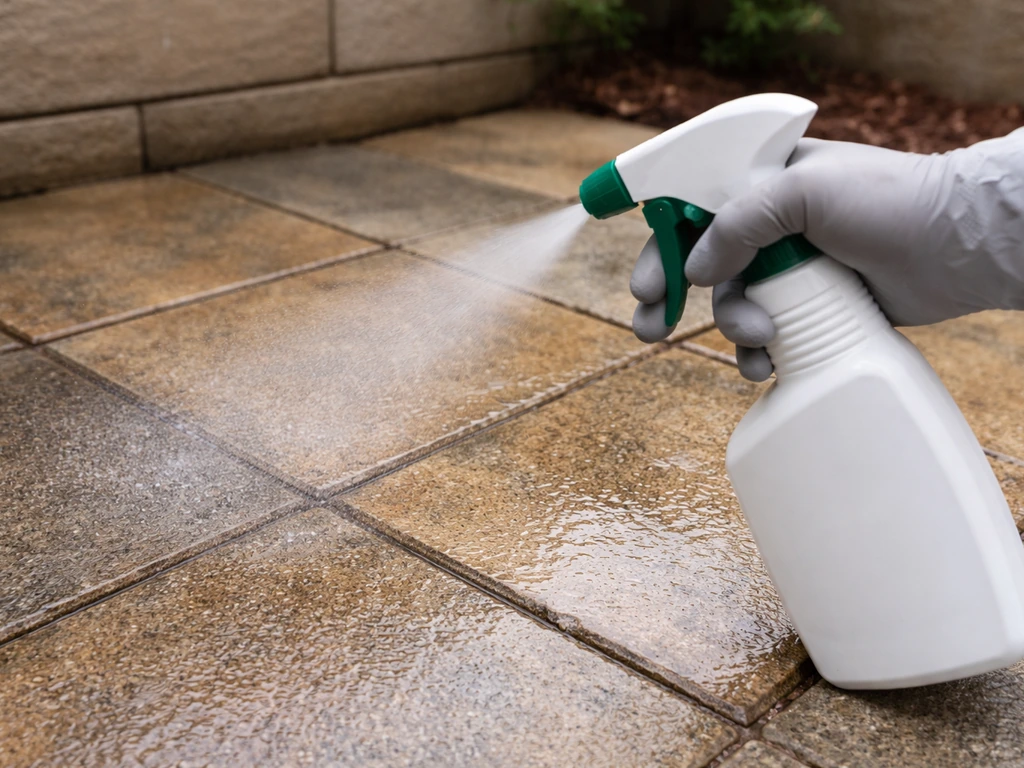
For large areas, a garden sprayer (pump sprayer) is the most efficient method. It gives you even coverage without wasting product, and keeps you off the wet surface while you work. Mutual Materials' guidelines for paver cleaning back this up, noting that a sprayer helps apply cleaner evenly across larger areas while reducing risk to joint sand. For smaller patches or targeted stains, a watering can with a rose attachment works fine, or apply directly with a stiff brush. For ready-to-use products like Zep or RMR-86, the trigger spray bottle they come in is all you need.
Apply the cleaner generously enough to keep the surface visibly wet throughout the dwell time. If it dries out before you rinse, you'll get uneven results. Work in sections if your patio is large so you can manage dwell time properly without the first section drying out before you get to rinse it.
Dwell time: this is where most jobs go wrong
Dwell time is the single biggest variable in how well patio cleaner works. Applying and rinsing too soon is one of the most common reasons people get patchy results. Here's a breakdown by product type:
| Cleaner Type / Product | Typical Dwell Time | Notes |
|---|---|---|
| Spray-and-leave biocides (e.g., Wet & Forget) | Weeks to months | Designed to work gradually — don't rinse. Weather does the work. |
| HR Total Power Clean (black spot/lichen) | Full dwell before rinse, up to 60 min | Allow full contact time before rinsing or scrubbing |
| Heavy-duty concrete cleaner (e.g., Diedrich 960) | 2–3 minutes | Do NOT let it dry on the surface — work quickly and rinse on time |
| Oxygen bleach (algae/mold) | At least 10 minutes, keep wet | Prevent evaporation — reapply if surface starts to dry |
| Acid-based rust removers (e.g., Lancaster Lime Works) | 5–30 minutes depending on stain depth | Watch the surface and rinse before it fully dries |
| Acid Magic | 5 minutes | Time carefully, then rinse thoroughly |
| Simple Green Outdoor (grease/heavy soils) | 1 minute soak for heavy soils | Don't let dry — rinse while surface is still wet |
| Zep / RMR-86 (bleach-based, fast-acting) | Around 1 minute | Fast action — rinse promptly after stain lifts |
For spray-and-leave products specifically, the dwell time is measured in weeks, not minutes. For spray-and-leave products specifically, the dwell time is measured in weeks, not minutes, which ties into patio cleaner how to use and the label expectations for leave-on use. You apply them and walk away. The product stays in contact with the surface over time and gradually breaks down organic growth. Trying to rinse these off after an hour defeats the point entirely. This is genuinely different to how most people expect a cleaner to behave, so check whether your product is a rinse-off or leave-on type before you start. Knowing how long you leave patio cleaner is also about checking whether your product is a rinse-off or leave-on type how long do you leave patio cleaner.
Scrub or pressure wash: when to use each
Not every patio cleaning job needs scrubbing or a pressure washer. Choosing the wrong method for your surface or cleaner type can do more harm than good.
When to scrub by hand
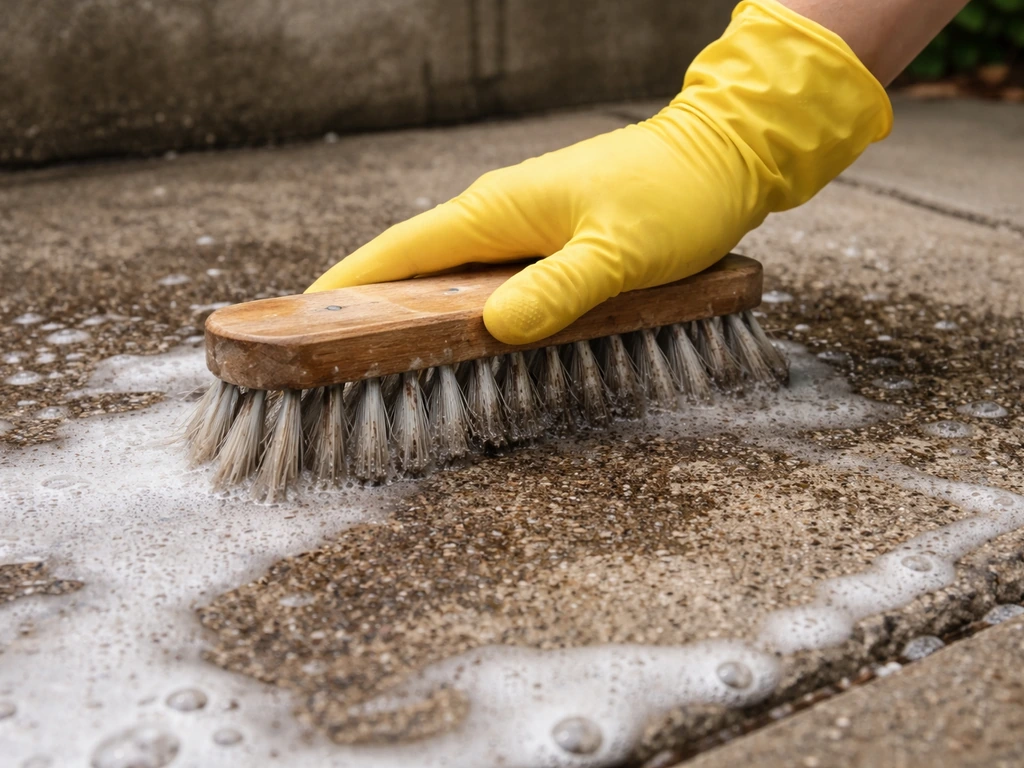
Use a stiff-bristled deck brush or scrubbing brush after the dwell time is up if you're dealing with embedded grime, grease, or stubborn algae on concrete or brick. Scrubbing works the cleaner into the surface texture and loosens material that rinsing alone won't shift. For delicate surfaces like sandstone or slate, use a softer brush, stiff bristles can scratch. Never scrub acid-based cleaners on sensitive stone.
When to use a pressure washer
A pressure washer is great for rinsing off cleaners on concrete and brick after the dwell time, and it speeds up the removal of loosened grime significantly. But there are real risks if you overdo it. Homes and Gardens cautions that pressure washers can damage delicate pavers and their pointing. Going above 2,500 PSI risks eroding the surface layer of concrete and stripping sealers, so keep the pressure moderate (1,200 to 1,800 PSI for most domestic patios) and use a wide fan nozzle rather than a pinpoint jet. Keep the nozzle moving and maintain at least 30 cm distance from the surface.
For sandstone, slate, and other natural stone, I'd avoid a pressure washer altogether if you can. A garden hose with good volume pressure is safer. Mutual Materials makes an important point here: a large volume of water is more important to effective rinsing than high pressure. Also, if you have block paving with sand-filled joints, high-pressure rinsing will blast the joint sand out. Use a low-pressure wide fan pattern and work with the joint lines, not across them.
Spray-and-leave products: no scrubbing or rinsing needed
Products like Wet & Forget are designed to be applied with a sprayer and left completely alone. No scrubbing, no rinsing. The product breaks down algae, moss, and lichen over the following weeks through exposure to rain and dew. Avoid hosing or pressure washing the area for at least 7 days after applying so the product stays in contact with the surface long enough to work.
Rinse, neutralize, and finish safely
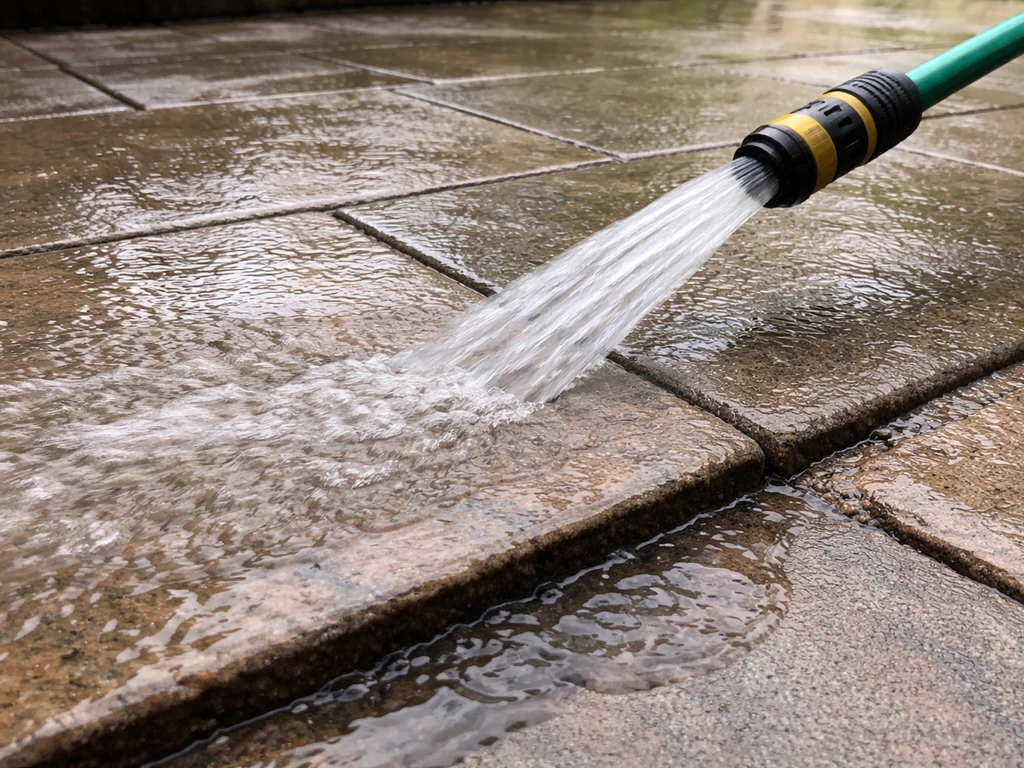
Rinsing is not just a final step, it's critical to the result. Residue left on the surface causes streaking, white film, and in some cases ongoing chemical damage to the paving or nearby planting.
- Rinse thoroughly with clean water while the surface is still wet from the cleaner. Don't let the cleaner dry on the surface — especially with acid-based products and fast-acting cleaners like Diedrich 960 and Simple Green, which both explicitly warn against letting them dry before rinsing.
- Use plenty of water. Volume matters more than pressure here. Flood the surface and let the runoff carry the cleaner away from the patio edges.
- Direct runoff away from plants, grass, and drains where possible. If cleaner does get onto planting, rinse immediately with plain water.
- For acid-based cleaners, neutralize after rinsing by applying a dilute solution of baking soda in water (roughly 1 tablespoon per litre) to the surface, then rinse again. This stops any remaining acid from continuing to react.
- Keep pets and children off the patio until it's completely dry and there's no residual odour. Bleach-based products can irritate paws and skin if the surface is still wet.
- If you're near a pool, don't let runoff enter the water. Cordon off drainage paths before you start and flush them with plain water after.
If there's a lingering chemical smell after rinsing, it usually means there's still residue present. Give the area another thorough flush with water and let it air dry fully before anyone uses it. In most cases this resolves the issue within a few hours.
Aftercare and stopping mold, algae, and grease from coming back
Cleaning the patio is satisfying. Having to do it again three months later is not. A few aftercare steps will dramatically extend how long your patio stays clean.
- Seal the surface after cleaning. A good quality patio sealer creates a barrier that makes it far harder for algae and mold spores to get a foothold. It also makes grease and oil stains easier to clean next time. Apply sealer once the patio is completely dry — usually 24 to 48 hours after cleaning.
- Apply a preventative biocide treatment once a year, ideally in early spring before algae season starts. Spray-and-leave products work well for this — apply before you see significant growth and it won't get the chance to establish.
- Improve drainage and airflow if possible. Patios that stay damp for extended periods after rain are far more prone to algae and moss. Trimming overhanging trees and shrubs, and checking that the patio slopes away from the house at around 1:80, helps enormously.
- Sweep regularly, especially in autumn. Leaf and organic debris sitting on the patio holds moisture and feeds algae. Clearing it off every week or two prevents it from decomposing into a growth medium.
- Tackle grease spills immediately. Fresh grease is infinitely easier to remove than grease that's soaked in and dried. Keep a small bottle of degreaser nearby and deal with barbecue drips and cooking spills the same day.
Troubleshooting: patchy results, streaking, fast drying, and damage
Patchy or uneven results
The most common cause of patchy results is insufficient dwell time, applying the cleaner and rinsing it off before it has had a chance to work properly. If this is what happened, reapply and this time wait the full recommended time. The second most common cause is uneven application: if parts of the patio dried out during the dwell period, those sections won't have had equal contact time. On hot days, you may need to split the job into smaller sections to keep each area wet for the full dwell period.
Cleaner drying too fast
This is a warm-weather problem. If the sun is directly on the patio or there's a drying wind, liquid cleaners evaporate much faster than the dwell time requires. The fix: work on an overcast day or in the early morning, work in smaller sections, and for oxygen bleach products specifically, keep a second diluted batch ready to reapply if the surface starts to dry out before the dwell time is up. Pre-wetting the surface also slows the absorption rate, which buys you more working time.
Streaking or white film left on the surface
Streaking almost always means the cleaner wasn't rinsed off thoroughly enough, or it dried on the surface before rinsing. For white film (common with alkaline cleaners on concrete), a second rinse with plenty of water usually sorts it. If the film persists, a dilute acid rinse (white vinegar diluted 1:5 with water) can neutralize and lift alkaline residue, but don't use this on natural stone. For acid-based cleaners that have left a residue, a baking soda neutralizing rinse followed by a thorough water flush is the solution.
Damage to sensitive surfaces like sandstone and slate
If you've used an acid or strongly alkaline cleaner on natural stone and noticed surface etching, colour change, or a roughened texture, you've caused chemical damage. There's no quick fix for this, the stone's surface has been altered. Going forward, stick strictly to pH-neutral or specialist natural stone cleaners for these surfaces. If the damage is significant, you may need a professional stone restoration company to re-hone or re-polish the surface. I learned this the hard way with a bottle of brick cleaner on a sandstone step years ago, it's a mistake you only make once.
Product doesn't seem to be working at all
If you followed the instructions, used the right dilution, and waited the full dwell time and still see no improvement, there are a few possibilities. If you followed the instructions, used the right dilution, and waited the full dwell time and it still doesn't seem to answer does patio cleaner work for your stain, there are a few possibilities. First: the stain type doesn't match the product. Bleach-based cleaners won't touch rust. Degreasers won't remove lichen. Check you have the right product for your specific problem. Second: with spray-and-leave biocides, results genuinely take weeks to become visible, the growth dies off gradually and is washed away by rain over time. Don't judge these products after a few days. Third: some deep-set staining really does require professional treatment or mechanical removal. There are limits to what consumer products can achieve on stains that have been building up for years.
When to switch methods entirely
If chemical cleaning has failed twice on the same stain using the correct product, consider switching approach. For black spot and lichen, a long-dwell specialist biocide (applied and left for the season, then re-treated) often works where shorter-contact products fail. For heavy rust or efflorescence on concrete, you may need a stronger acid formulation or a professional-grade treatment. For organic growth on very delicate stone, a soft wash system (low-pressure application of a biocide, no mechanical scrubbing) may be a better fit than any conventional scrub-and-rinse approach.
FAQ
Do I always rinse patio cleaner off right after scrubbing, or can I leave it?
Read the label for whether it is “rinse-off” or “spray-and-leave.” Rinse-off products must be flushed away at the end of the dwell time, otherwise you can get streaking or residue. Spray-and-leave biocides are designed to stay on the surface and should not be hosed off, except if the label explicitly says so.
What should I do if I see a white film or streaks after rinsing?
Yes, but only for neutralizing the correct chemical type. For alkaline residue on concrete, a dilute vinegar rinse (about 1:5) can help, while baking soda neutralization is an option for acid-based residue. Do not use vinegar or other neutralizers on natural stone if the product label warns against it.
Can I mix patio cleaner chemicals or use a second cleaner right after the first?
Avoid mixing different cleaner types in the same day or on the same surface without a full rinse between steps. Acid and alkaline products can react and increase etching risk, especially on stone and pavers. If you must switch products, rinse thoroughly, let it dry, then apply the new product according to its own instructions.
Should I pre-wet my patio before applying patio cleaner?
Pre-wet helps, especially in hot, windy conditions, because it slows absorption and reduces the risk of uneven contact time. However, the surface should still be damp, not dripping. Also, keep pre-wetting within the area you will treat next so it does not dry out while you work.
What’s the best way to prevent uneven results on hot or windy days?
Never apply to a dry surface that will sit in direct sun for the full dwell period, unless the label is specific about that. Work early morning or on an overcast day, treat smaller sections, and re-wet lightly if the surface starts drying before the minimum dwell time.
Why is my lichen or black spot still there after I waited a day or two?
For black spot or lichen biocide products, visible changes can lag behind the application. Plan on waiting the label’s recommended time, then reassess after the growth has had time to die back and be washed away by natural weather. If you still see active growth after the full window, switch to a longer-contact specialist biocide or a different method.
How much patio cleaner should I apply, and how do I avoid dry patches?
Use the product concentration as directed, but also use enough volume to keep the surface visibly wet for the entire dwell time. A sprayer is good for even coverage, while patch application with a watering can can leave “dry stripes” that clean unevenly. If the label says to reapply to maintain wetness, do it rather than increasing concentration permanently.
My sandstone/slate looks etched, what can I do to fix it?
If you used the wrong product and the surface is already etched or roughened, there is no quick DIY fix. You can only prevent further damage by switching to pH-neutral or specialist natural stone products, and in severe cases you may need professional re-honing or re-polishing to restore the surface.
Is it safe to rinse patio cleaner off with a pressure washer, especially on block paving?
For block paving with sand-filled joints, high-pressure rinsing can eject joint sand and cause long-term discoloration and movement. Use a low-pressure, wide fan rinse and rinse along the joint lines, or use a garden hose with good volume flow while keeping the nozzle at a safe distance.
When is it safe to walk on the patio and when should I water plants nearby?
Many “spray-and-leave” products should not be disturbed by hosing for at least a week, since rain and dew are part of how they work. If the label requires a longer wait, follow that. For rinse-off cleaners, rinse when dwell time is reached, then let the area dry fully before foot traffic or plants are exposed.
I followed the steps, but the stain never changed, how do I troubleshoot the cause?
If the stain type does not match the product, you may see little or no improvement even after correct dwell time. For example, rust typically needs rust-specific chemistry, degreasers are for oil and grease, and lichen requires a biocide. Confirm the stain category on the label, then repeat with the correct product instead of just increasing strength.
How to Use Wet and Forget Patio Cleaner Step by Step
Step by step guide to apply Wet and Forget patio cleaner, prep and safety, dwell time, rinse or no rinse, and troublesho