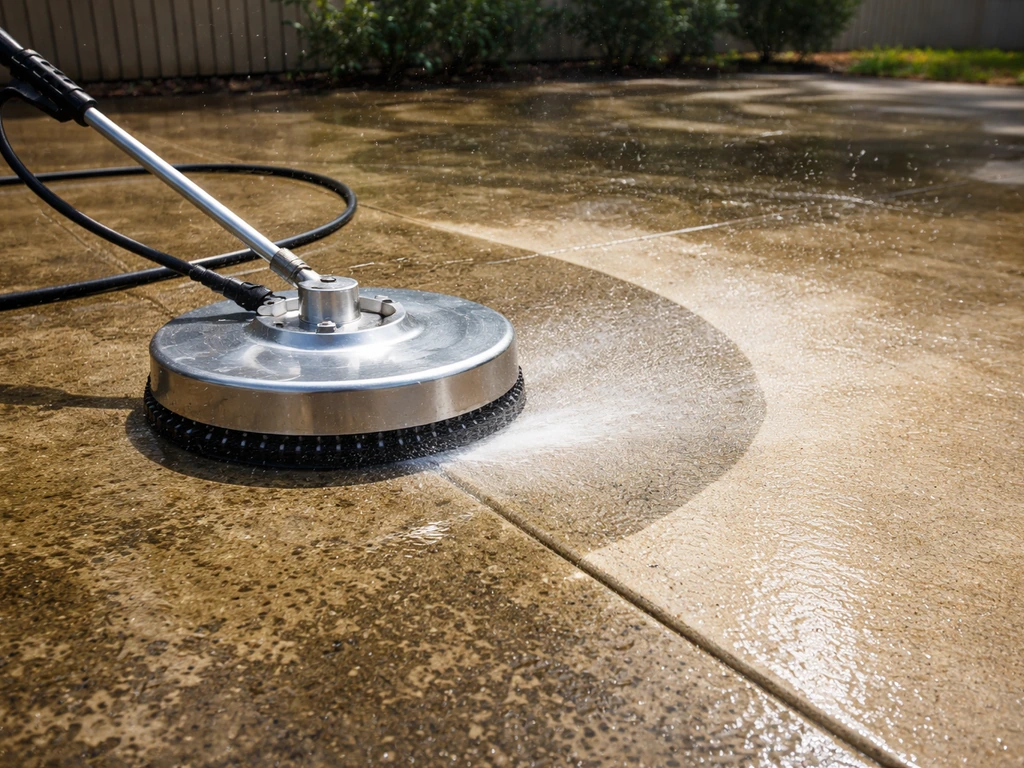
For most homeowners cleaning concrete, brick, or stone patios, a 1600–2300 PSI electric pressure washer paired with a 25-degree nozzle and a surface cleaner attachment is the sweet spot. It's enough muscle to blast out mold, algae, and ground-in grime without etching the surface or blowing out grout. If you're dealing with a large driveway-style slab or heavy oil stains, step up to 3000 PSI. Gas is only worth it if you're covering serious square footage regularly or working away from power outlets. Everything else comes down to matching the machine to your specific surface and mess, which is exactly what this guide covers.
Patio Pressure Washer Reviews: Best Picks and Buying Guide
Rhea Lang
19 May 2026
What to check before reading patio pressure washer reviews
Before you trust any review, including the ones in this article, you need to pin down three things about your own situation. Get these wrong and you'll either buy more machine than you need or end up with something too weak to actually clean your patio properly.
- What surface are you cleaning? Concrete and brick tolerate higher pressures. Sandstone, slate, and porcelain are far more delicate and need gentler settings and wider nozzle angles.
- What's the mess? Everyday grime and light algae needs far less power than years of embedded mold, rust staining, or motor oil.
- How big is the area and how often will you use it? A small urban patio cleaned once a year is a completely different job from a 100-square-metre paved area you want to maintain seasonally.
- Do you have a water supply close by? Pressure washers need a steady flow, typically at least 1.5–2 GPM from your tap, or the pump will cavitate and wear out fast.
- Electric or gas? Your access to outdoor power outlets, storage space, and noise tolerance all factor in here.
One more thing worth checking before buying: does the model you're looking at have a GFCI-protected plug? For any electric pressure washer used outdoors around wet surfaces, this is non-negotiable for safety. A built-in GFCI and a 35-foot power cord are baseline specs I'd insist on. It's also worth noting upfront that PSI (pressure) and GPM (flow rate) work together. A machine rated at 2000 PSI with 1.76 GPM, like the Sun Joe SPX3000, cleans differently from a 3000 PSI unit at 2.0 GPM, like the Greenworks Gen 2. Higher flow rinses debris away faster and genuinely matters on large flat areas.
Electric vs gas patio power washer: which fits your patio cleaning
The electric vs gas debate gets overcomplicated in most reviews. Here's the practical version: for patio cleaning specifically, electric wins in the majority of situations. Gas machines are louder, heavier, require more maintenance (including winterizing the fuel system), and produce exhaust fumes you definitely don't want in an enclosed courtyard. The trade-off is raw power and freedom from power outlets.
| Feature | Electric | Gas |
|---|---|---|
| Typical PSI range | 1200–3000 PSI | 2500–4000+ PSI |
| GPM range | 1.2–2.0 GPM | 2.0–4.0 GPM |
| Noise level | Low to moderate | Loud |
| Maintenance | Minimal | Regular (oil, fuel, winterizing) |
| Best for | Small to medium patios, enclosed spaces | Large areas, heavy commercial grime, no power outlet |
| Weight/portability | Light (typically 15–30 lbs) | Heavy (60–90 lbs+) |
| Running cost | Low (electricity) | Higher (fuel + oil) |
| Safety (indoor/enclosed use) | Safe | Not suitable (fumes) |
My honest take: unless you're cleaning a long driveway as well as your patio, or you genuinely have no outdoor socket, a good electric machine rated 1800–2500 PSI is all you need. The Kärcher K5 Comfort Premium, updated in 2026, is a strong mid-range electric option advertised at up to 145 bar (around 2100 PSI) and genuinely handles deep patio cleaning well. For heavier work, the Greenworks 3000 PSI Gen 2 at 2.0 GPM bridges the gap between typical electric and gas territory without the noise or fuel hassle.
Surface-by-surface guidance: concrete, stone, brick, sandstone, slate, and porcelain
This is where most people go wrong. They use the same pressure setting and nozzle on everything. That's how you end up with etched concrete or chipped sandstone. Each surface has a different tolerance and needs a different approach.
Concrete
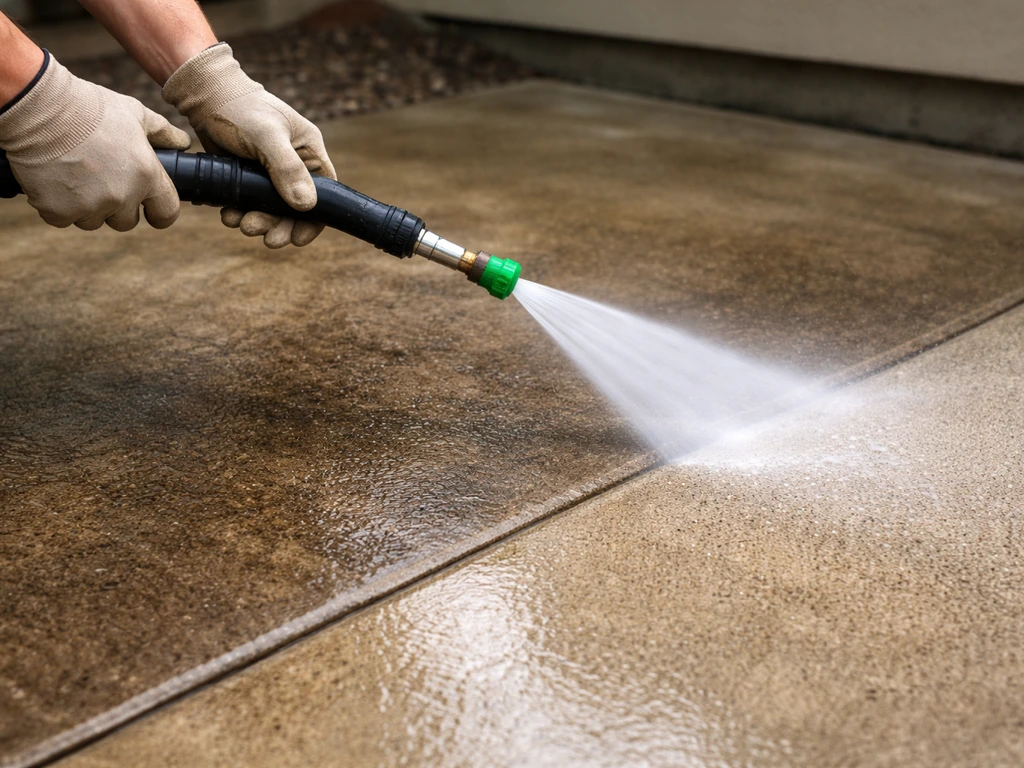
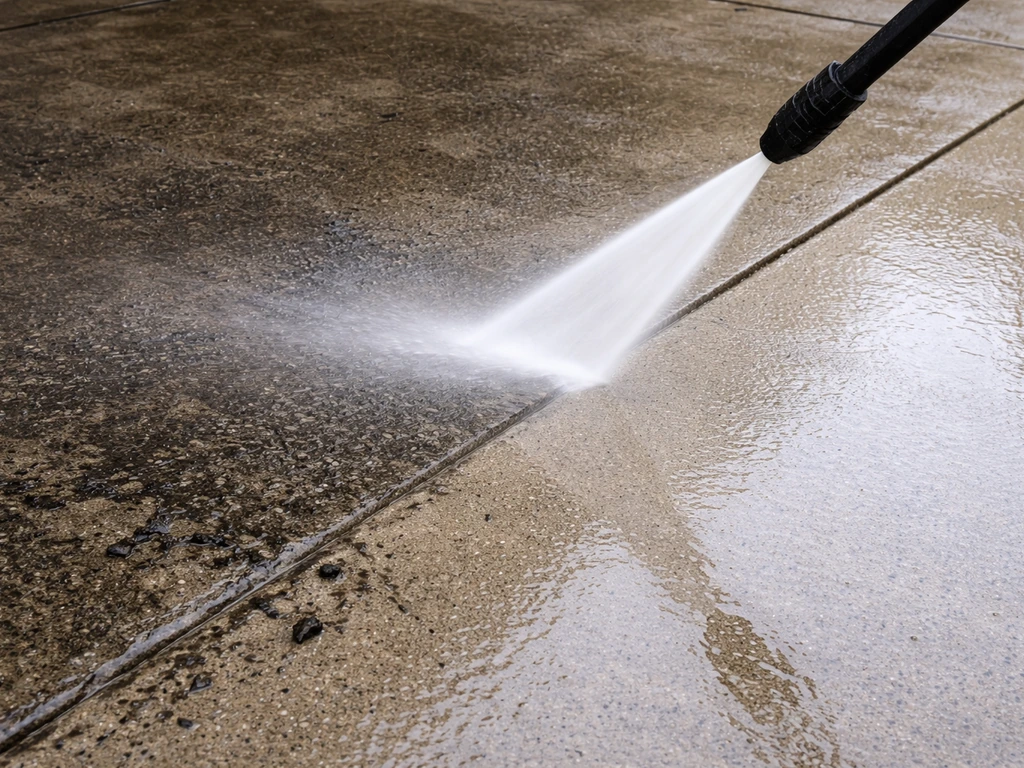
Concrete is the most forgiving surface but still has limits. For residential patio slabs, stay in the 2500–3000 PSI range maximum. Use a 25-degree (green) nozzle and keep the wand moving in a consistent sweeping arc. Stopping in one spot even briefly will leave a visible mark. A surface cleaner attachment (more on that below) makes a huge difference on flat concrete, giving you even coverage without the stripe effect you get from a wand alone. Maintain a distance of at least 12 inches from the surface. Older or spalling concrete needs to go down to 1500–2000 PSI to avoid accelerating the damage.
Brick
Brick can handle 2000–2500 PSI with a 25-degree nozzle, but the mortar joints are the weak point. Aim the spray parallel to the joints rather than directly into them, especially on older pointing. High pressure blasted straight into soft mortar will hollow it out and leave you with a re-pointing job on top of your cleaning project. Paver-style brick used in patios is generally denser and can handle more pressure than traditional house brick, but the joint caution still applies. For paver restoration specifically, some manufacturers like Techniseal recommend dropping to around 1500 PSI to prevent damage during cleaning.
Natural stone (sandstone and slate)
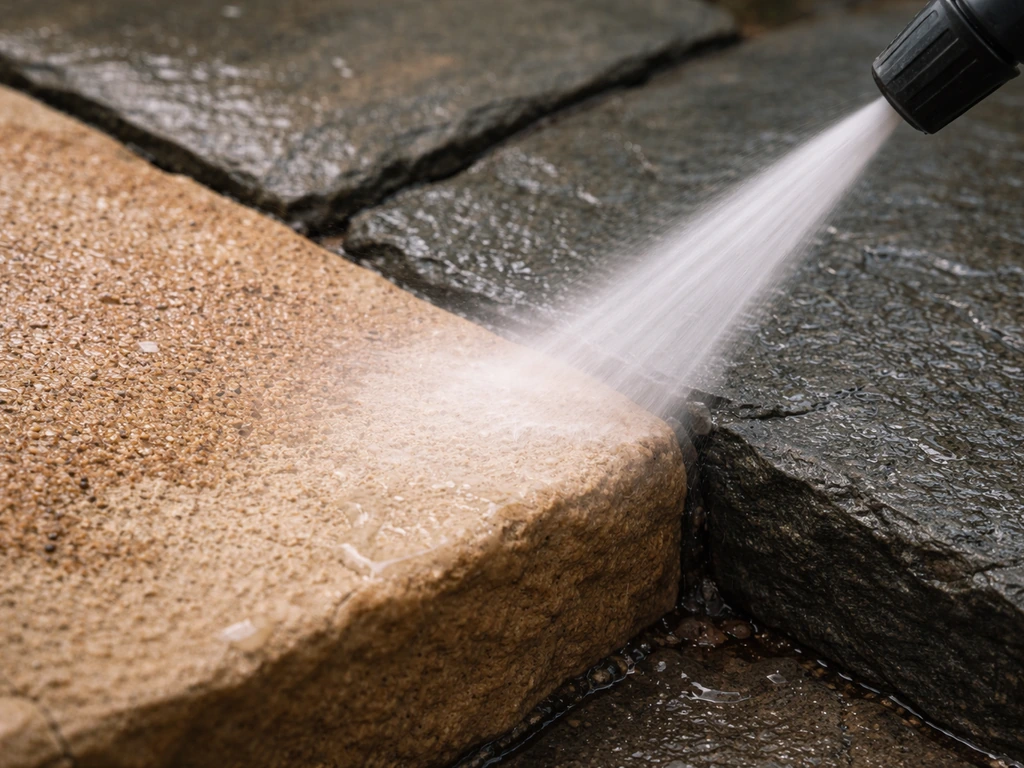
Sandstone is soft and porous. I learned this the hard way the first time I used a turbo nozzle on it. Never use a turbo or rotary nozzle on sandstone. Keep pressure at 1200–1500 PSI maximum, use a 40-degree nozzle, and work from a greater distance of at least 18–24 inches. The same caution applies to slate, which can delaminate if hit with concentrated pressure. Wide-fan, low-pressure passes are the only safe approach. For both surfaces, a low-pressure detergent application followed by gentle rinsing often does more than raw pressure alone.
Porcelain tiles
Porcelain patio tiles are hard and dense, so the tile face can handle moderate pressure. The grout lines are the problem. Use 1500–2000 PSI with a 40-degree nozzle, keep the spray moving, and never hold the wand nozzle closer than 12 inches to the surface. Avoid directing concentrated pressure along the grout lines. Many porcelain tile manufacturers explicitly void warranties if high-pressure washing damages the pointing, so check your tile spec before you start.
Cleaning power for common problems: mold, algae, moss, rust, grease, and pet stains
The mess type changes your approach as much as the surface type. Here's what actually works for each common patio problem.
Mold and algae
Pressure alone won't kill mold or algae spores. You need a pre-treatment with a suitable patio cleaner or diluted bleach solution, left to dwell for 10–15 minutes, before you pressure wash. This is the single biggest mistake I see people make: they skip the chemical step and just blast with high pressure, spreading the spores further. Apply your treatment, let it work, then use a 25-degree nozzle at moderate pressure to rinse. A bleach-based cleaner is effective but must not be mixed with ammonia-containing products or acidic cleaners like vinegar. On hard surfaces, a diluted sodium hypochlorite solution followed by a thorough rinse works very well.
Moss
Thick moss needs to be physically disrupted before treatment. A stiff brush or a purpose-made scraper loosens the bulk of it first. Then apply a moss killer and allow the dwell time specified on the product, usually 15–30 minutes. A 25-degree nozzle at 1500–2000 PSI will clear the residue. On porous surfaces like sandstone, use the 40-degree nozzle and lower pressure to avoid driving moisture deeper into the stone.
Rust stains
Pressure washers do not remove rust stains effectively on their own. Rust is a chemical stain embedded into the surface, and no amount of water pressure will shift it. You need an oxalic acid-based rust remover applied directly to the stain, left to dwell, and then rinsed off. Pressure washing helps with the final rinse but is not the primary tool here. Never mix a rust remover (often acidic) with a bleach-based cleaner.
Grease and oil
Degreasers are essential for cooking grease or oil spills on patio concrete. Apply a degreaser, scrub it in with a stiff brush to break up the oil, let it dwell for 5–10 minutes, and then pressure wash with a 25-degree nozzle at 2000–3000 PSI. Hot-water pressure washers cut through grease significantly faster than cold-water models, which is one scenario where gas-powered hot-water units earn their price premium. For most homeowners, though, a cold-water machine with a good degreaser gets the job done.
Pet stains and organic odors
Enzyme-based cleaners are the right tool for pet urine stains. Pressure washing alone spreads the urea into the porous surface rather than removing it. Apply an enzyme cleaner, allow it to break down the organic matter (follow label dwell times, often 10–20 minutes), and then rinse with a moderate 25-degree spray. Avoid bleach-based products for pet odor unless you rinse very thoroughly, as residue can irritate paws.
Accessory checklist: nozzles, surface cleaners, detergents, and brushes
The machine itself is only part of the story. The right accessories genuinely change results, and a lot of budget machines come with just a basic nozzle set that leaves you doing twice the work.
Nozzles
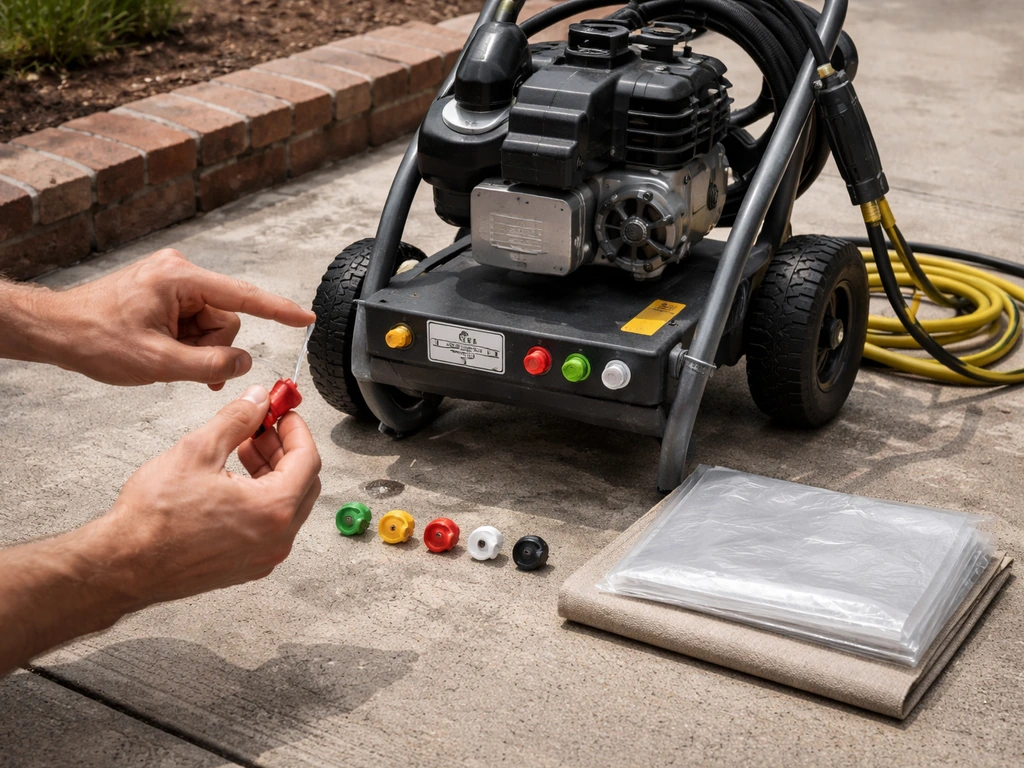
Nozzles are color-coded by spray angle. For patio work you'll primarily use three: the 25-degree green nozzle (the standard cleaning nozzle for concrete, brick, and most hard surfaces), the 40-degree white nozzle (for delicate or painted surfaces), and the black low-pressure soap nozzle for applying detergents. The 15-degree yellow nozzle is aggressive and useful for stripping stubborn paint or very tough concrete staining, but should be used with extreme care on patios. Never use a 0-degree red nozzle on any patio surface. The smaller the angle, the more concentrated and damaging the spray. Avoid turbo (rotary) nozzles on anything softer than dense concrete or engineering brick.
Surface cleaner attachment
A surface cleaner is the single best upgrade for patio washing. It works using a rotating spray bar inside a shrouded disc that spins under water pressure, giving you even, streak-free coverage and massively cutting down overspray. The Simpson 80165 Universal 15-inch surface cleaner is a well-regarded option compatible with pressure washers rated between 2200 and 3700 PSI at 2.3 GPM minimum. Kärcher makes equivalent attachments with continuous pressure adjustment, including the T350 which suits their K-series machines. On a large flat patio, using a surface cleaner instead of a wand alone cuts cleaning time significantly and gives a far more consistent result.
Detergents and chemicals
Use a dedicated patio cleaning detergent via the machine's soap tank or a downstream injector. This lets you apply product at low pressure (using the black nozzle) before switching to your cleaning nozzle for the rinse. Key rule: never mix bleach with ammonia or with acidic cleaners. This is not just a performance issue. OSHA and health authorities explicitly warn against it because the combination produces toxic gases. Read labels, use products separately with full rinsing between applications, and store chemicals safely.
Brushes and scrubbers
A rotary brush attachment that connects to your pressure washer lance is useful for moss removal and scrubbing detergent into porous surfaces before rinsing. A long-handled stiff brush (used manually before you pressure wash) is also worth keeping handy for thick moss or debris that would just get blasted sideways. Don't skip the manual pre-clean step on heavily soiled surfaces. It makes the pressure washing more effective and faster overall.
Best picks by category: budget, heavy-duty, and easiest to use
These picks reflect what actually works for patio cleaning specifically, not general-purpose pressure washing. There are dedicated guides covering the best pressure washer for patio use across a wider range of models, and also options compared for combined patio and driveway work if you need to cover both surfaces. If you're still comparing options, our best pressure washer for patio guide can help you narrow down the right model for your space, surface, and mess.
If you want the quickest shortcut, check the best pressure washer for patios and driveways so you can match PSI and GPM to your concrete size and grime type best pressure washer for patio use. If you want the best power washer for patios in the UK, focus on patio-specific PSI, the right nozzles, and safety features like a GFCI-protected plug best power washer for patios uk. Here's a focused category view.
Best budget pick: Sun Joe SPX3000
The Sun Joe SPX3000 runs at 2030 PSI and 1.76 GPM and is one of the most widely used entry-level machines on the market. It's light, easy to set up, and comes with five quick-connect nozzles including the 25-degree and 40-degree options you'll use most on patios. The GPM is on the lower end, which means rinsing takes a little longer on large areas, but for a small to medium patio with typical grime, algae, or mold, it handles the job well. Good value if you're not dealing with serious oil staining or very large areas.
Best heavy-duty electric pick: Greenworks 3000 PSI Gen 2
The Greenworks 3000 PSI Gen 2 at 2.0 GPM is a solid step up from budget electric models. The higher PSI makes it genuinely useful on tough staining, large concrete patios, and for running a surface cleaner attachment. It sits right at the sweet spot for residential patio use and is compatible with surface cleaners requiring a minimum of 2200 PSI. For anything bigger or dirtier than a standard backyard patio, this is the machine I'd pick over spending more on gas.
Best for ease of use: Kärcher K5 Comfort Premium
The Kärcher K5 Comfort Premium (updated 2026) is designed for user-friendliness without sacrificing performance. It runs up to 145 bar (around 2100 PSI) and integrates well with Kärcher's own T-Racer and T350 patio cleaner attachments for consistent, low-fuss flat surface cleaning. The build quality is notably better than cheaper brands, the hose management is tidier, and the pressure adjustment is smooth. If you want something that just works reliably year after year without fiddling, this is my top choice for most homeowners.
Quick decision framework
| Your situation | Recommended pick |
|---|---|
| Small patio, light grime/algae, first pressure washer | Sun Joe SPX3000 + 25-degree nozzle |
| Medium-large concrete or brick patio, regular maintenance | Greenworks 3000 PSI Gen 2 + surface cleaner |
| Mixed surfaces including sandstone, slate, or porcelain | Kärcher K5 Comfort Premium + T350 patio cleaner |
| Heavy oil stains, large driveway and patio | Gas 3000 PSI+ unit or Greenworks 3000 PSI + degreaser |
| Paver patio, want to preserve joint sand/pointing | Any electric 1500–2000 PSI + 40-degree nozzle, go slow |
How to use it safely and get pro-level results on day one
Technique matters as much as equipment. Here's the step-by-step process I use every time, which avoids the common damage patterns and gives even, professional-looking results.
- Clear the patio first. Move furniture, planters, and anything breakable. Cover any drains you don't want blocked with debris.
- Pre-wet the surface with a standard garden hose. This softens surface grime and prevents cleaning chemicals from drying too quickly.
- Apply your chosen detergent using the black low-pressure soap nozzle. Let it dwell for the time specified on the product, typically 5–15 minutes. Don't let it dry on the surface.
- Switch to your cleaning nozzle. For most patios, start with the 25-degree green nozzle. If you're on sandstone, slate, or porcelain, go straight to 40-degree.
- Hold the wand at a consistent distance of 12–18 inches from the surface. Start at the far end and work backward toward a drain or exit point so you're not walking through dirty water.
- Use a smooth, overlapping pendulum sweep. Move continuously. Stopping even for a second creates visible marks, especially on concrete.
- If using a surface cleaner attachment, overlap each pass by about 20% to avoid striping. Work in rows.
- Rinse with clean water after cleaning. A final low-pressure rinse removes detergent residue that can leave a film or attract new dirt.
- Allow the surface to dry fully before replacing furniture or applying any sealer.
Safety basics that are easy to skip but really matter: always wear eye protection and closed-toe shoes. The jet from even a 1500 PSI machine can cut skin at close range. Never point the wand at people or animals. Make sure your electric machine's GFCI plug is not sitting in standing water. The Generac 3000 PSI pressure washer owner’s manual includes safety and usage instructions for the model family on proper GFCI protection Generac 3000 PSI pressure washer owner’s manual includes safety and usage instructions for proper GFCI protection. If you need to use an extension cord, use a heavy-duty one rated for outdoor and wet locations with the plug connection kept off the ground and out of puddles.
Quick maintenance tips and common mistakes to avoid
A pressure washer that's properly looked after will last 10 years or more. One that's stored badly or run dry will fail within a season. These are the maintenance basics and the mistakes I see people make repeatedly.
Maintenance essentials
- Flush detergent from the system after every use by running clean water through before switching off. Leaving detergent in the pump corrodes internal seals.
- For gas models: check pump oil daily during use if your model has a separate pump oil reservoir. Change it according to the manual schedule, typically every 50 hours.
- Winterizing is critical for gas machines and electric models stored in freezing conditions. Drain all water from the pump and hose. Add pump antifreeze to the pump head by running it through briefly. Drain or stabilize fuel in gas models before storage.
- Inspect O-rings and quick-connect fittings before each season. These are the most common source of leaks and are cheap to replace.
- Store the hose loosely coiled without sharp kinks. Kinking weakens the hose over time and causes pressure loss.
Common mistakes that cause damage or poor results
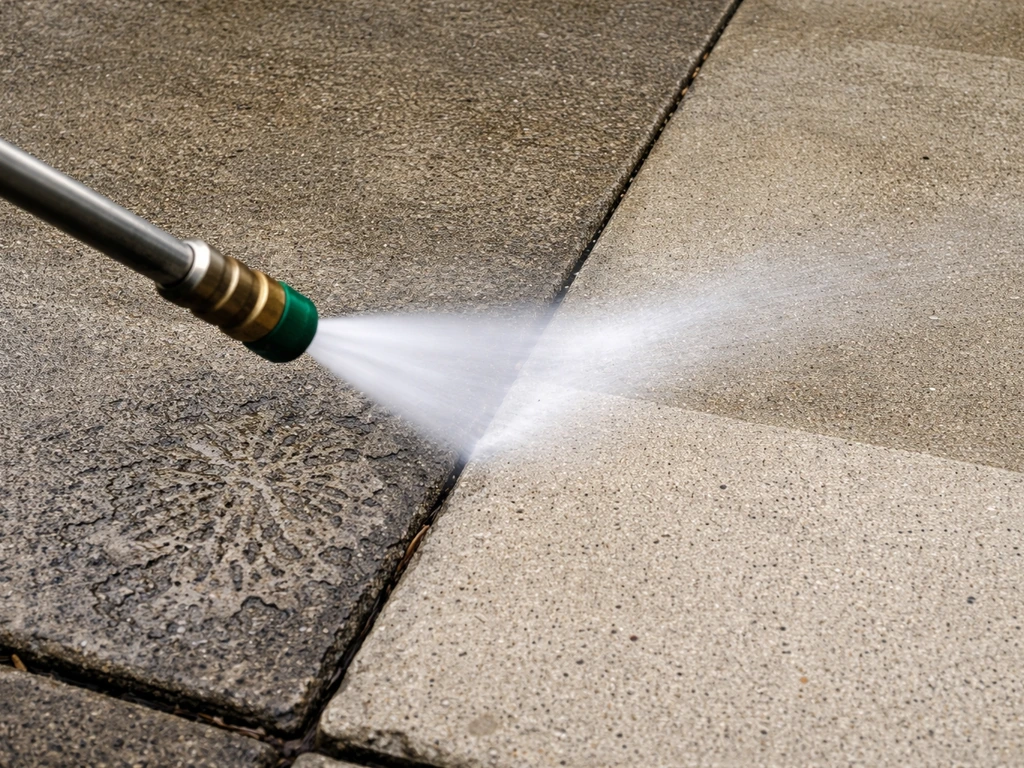
- Using a 15-degree or turbo nozzle on patios: this is the fastest way to etch concrete or scar softer stone. The 25-degree nozzle handles almost every patio job.
- Holding the wand too close or stopping mid-sweep: both leave permanent marks. Keep moving, keep distance.
- Skipping the pre-treatment chemical step on mold or algae: pressure alone spreads spores, it doesn't kill them.
- Mixing bleach with ammonia-based cleaners or acidic products like vinegar: this produces toxic gases and is genuinely dangerous.
- Running the machine without water connected (dry firing): this destroys the pump in seconds. Always connect and turn on the water supply before pulling the trigger.
- Using too much pressure on pavers with sand-filled joints: it blows out the jointing sand, leaving you with unstable pavers.
- Ignoring the water supply flow rate: if your tap can't deliver the machine's minimum GPM requirement, the pump will cavitate and wear out prematurely.
- Not winterizing: water left in the pump freezes, expands, and cracks the pump housing. One cold night can write off a machine.
If you're weighing up whether a pressure washer is even the right tool for your patio, it's worth knowing there are effective patio cleaning methods that don't require a pressure washer at all, particularly useful for very delicate surfaces or smaller areas where a machine would be overkill. And if you're in the UK specifically, the range of available machines and local product recommendations are somewhat different from the US market, so checking region-specific guides is worth doing. For most homeowners though, the combination of the right electric machine, a surface cleaner attachment, and the surface-specific technique guidance above will get you genuinely pro-level results the first time you use it.
FAQ
Can I clean a patio without striping or visible lines if I only use a wand and no surface cleaner?
Yes, but only with the right setup. If you use a surface cleaner, you still need to keep a steady walking pace and avoid lingering at corners where the disc cannot fully cover. Also, wet the area first, start with a low-pressure detergent pass (black soap nozzle), then switch to your cleaning nozzle for the rinse so you do not drive cleaner residue deeper into grout or pores.
What’s the correct order when I have multiple stains (mold plus oil, or rust plus dirt) on the same patio?
Do not start with chemicals or detergents. If you have mold, algae, or mildew, pre-treat first, then rinse thoroughly before switching to any second product like a rust remover or degreaser. The key is to fully rinse between different chemical types so you do not create unwanted reactions on the surface.
How long should I leave detergent or a patio cleaner on before rinsing, and how do I know I rinsed enough?
For most residential patio work, aim to use enough cleaner to make the surface look evenly wet, then let it dwell for the label time. After the dwell, rinse until runoff runs clear. If you still see slippery residue, you are likely under-rinsing, which can also make the patio look darker and feel slick even after it “dries.”
Is it okay to pressure wash if rain or freezing temperatures are coming soon?
Yes, for safety and results. Pressure washing can push water into cracks, under pavers, and into mortar joints, so if weather is cold or rain is expected soon, the water can freeze or become trapped. If you can, clean on a dry day and allow full drying time before sealing, because sealing over damp surfaces causes peeling or bubbling.
Can I seal my patio right after pressure washing, or do I need to wait?
For many patios, you can, but not right away. Do a complete clean, including any degreasing or organic stain treatment, then wait until the surface is fully dry. Sealing too soon traps moisture and can lock in algae or soap residue. If you are not sure, do a simple splash test with water, if it soaks in rather than beads you are usually ready.
Why does my patio look cleaner but still blotchy or darker after drying?
It can be a normal sign of trapped dirt, detergent residue, or uneven rinsing, especially on porous concrete or textured pavers. Re-check your nozzle angle and rinse technique, then do a dedicated rinse pass from a slightly farther distance. If the area only looks different after it dries, it often indicates residue rather than damage.
What are the most common reasons a pressure washer damages a patio surface even when I choose the “right PSI”?
Avoid 0-degree nozzles, turbo/rotary tips, and aggressive settings on anything that is not dense concrete or engineering brick. Even on concrete, do not exceed your surface tolerance and do not stop the nozzle in one place. Blanching or pitted spots usually mean you overpowered a localized area, which is why sweeping arcs and correct stand-off distance matter.
If reviews say a patio pressure washer is strong, why does mine still feel weak on algae or grime?
If the washer is not delivering expected results, the most common culprits are low flow (GPM), an undersized or kinked garden hose (for gas models), a partially clogged nozzle or filter, and using the wrong nozzle angle for the surface. Confirm both PSI and GPM, then test with the correct nozzle at the right distance before increasing pressure.
What else should I do besides having a GFCI plug when using an electric patio pressure washer outdoors?
GFCI protection matters, especially outdoors near wet ground, but it is not the only safety requirement. Keep connections off the ground, use a heavy-duty outdoor-rated extension cord, and inspect the plug and cord for damage before each use. Also, never run cords through puddles or under rugs or doormats where water can pool.
Will pressure washing and the cleaners I use damage my plants or grass?
You generally can, but you need to use a safe distance, low pressure, and the correct nozzle, and the cleaner choice matters. For delicate plants near the wash zone, cover them or hose them down first to reduce chemical and splash contact. Never let bleach-based runoff linger, and rinse the surrounding landscaping after washing.
Next Article
Best Patio Cleaning Pressure Washer: Buy and Use Guide
Choose the best patio cleaning pressure washer, match PSI and surface cleaner, and use attachments safely for concrete t