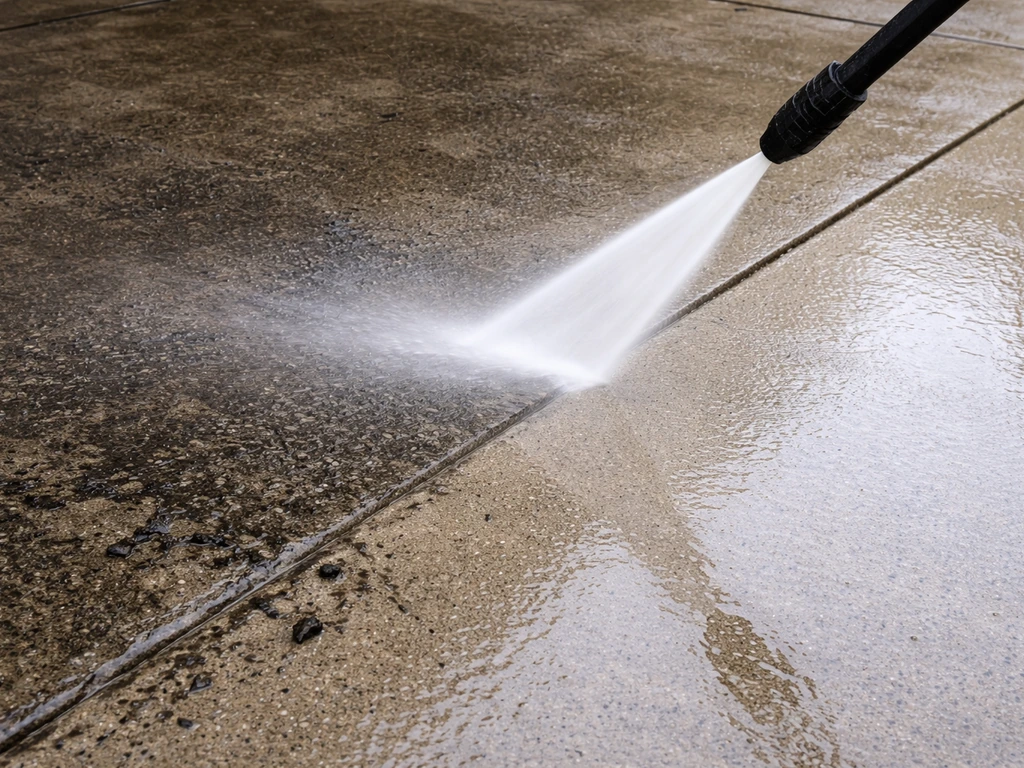
For most patios, a spray-and-scrub approach with an oxygen bleach cleaner (like Simple Green Oxy Solve or a sodium percarbonate powder) or a spray-and-leave product (like Wet & Forget) will get you genuinely clean results without touching a pressure washer. If you eventually decide you want more aggressive cleaning on stubborn concrete and driveway grime, compare this approach against the best pressure washer for patios and driveways. The right pick depends on two things: what your patio is made of and what you're actually trying to remove. Get those two details right and you'll see a real difference after one application.
Best Patio Cleaner Without Pressure Washer: Pick, Use, Results
Rhea Lang
19 May 2026
How to choose the right cleaner when you're skipping the pressure washer
The no-pressure-washer market splits into three broad chemistry types, and understanding them saves you a lot of wasted effort.
- Oxygen bleach (sodium percarbonate/sodium carbonate peroxyhydrate): releases hydrogen peroxide when mixed with water. Effective on mold, algae, moss, and general greying. Safe on most surfaces including color-sensitive brick and natural stone. Breaks down into water and oxygen, so residue isn't a persistent concern.
- Chlorine bleach (sodium hypochlorite): fast-acting, kills mold and black algae quickly with a 10-minute dwell. Works best on concrete and hard pavers. Harsher on plants and colored surfaces, needs thorough rinsing.
- Quaternary ammonium (quat) biocides: the active chemistry in products like Wet & Forget. These are spray-and-leave products that work over days or weeks with the help of rain and wind, rather than being rinsed off immediately. Gentler and very low effort, but you need patience.
When choosing between them, think about urgency first. If you need the patio presentable this weekend, go with an oxygen bleach or chlorine bleach product with a short active dwell time. If you're happy to treat it now and let nature do the rinsing over a few weeks, a spray-and-leave quat product like Wet & Forget is genuinely brilliant for low-effort maintenance. I've used both approaches and each has its place, but most people searching today want results today, which is why oxygen bleach products are usually the better starting point.
One more thing before picking a product: always match the cleaner to the surface sensitivity. Acid-based cleaners (some rust removers, certain commercial degreasers) will etch limestone, sandstone, and most natural stones. Chlorine bleach can bleach out mortar and colored pointing. When in doubt, oxygen bleach is the safest all-rounder across surface types.
Best cleaners by patio surface type
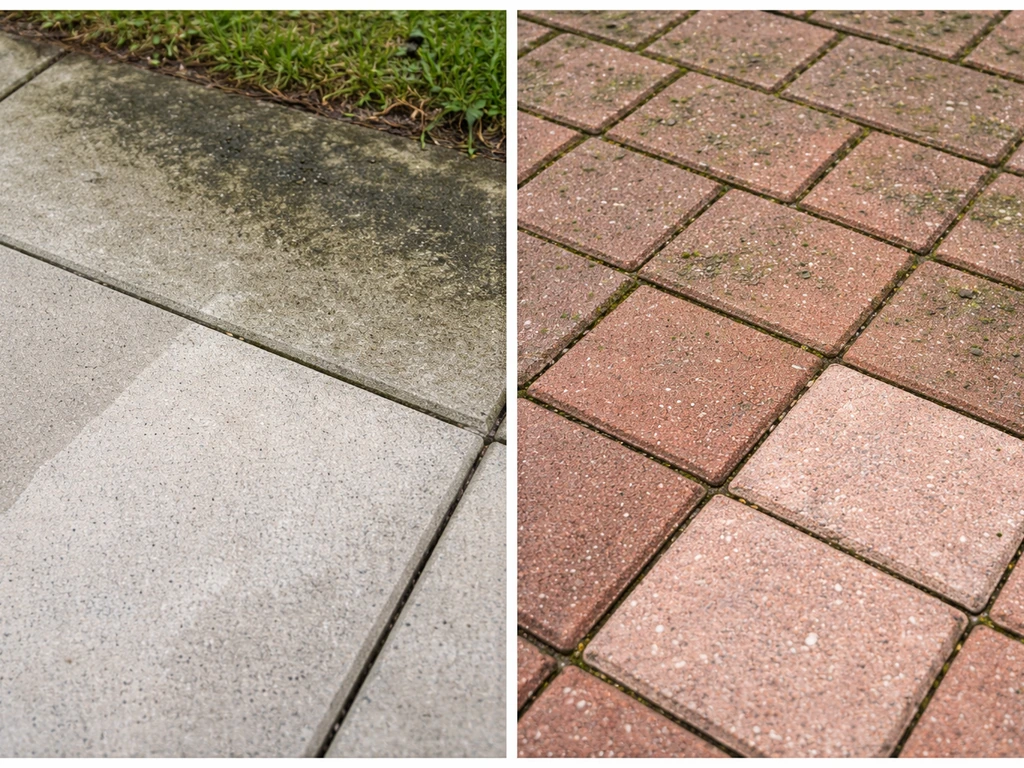
Surface material is the single biggest factor in whether a cleaner works or causes damage. Here's what actually performs well on each common patio surface.
Concrete
Concrete is the most forgiving surface you'll clean. It can handle chlorine bleach, oxygen bleach, and most heavy-duty commercial patio cleaners. For general greying and algae, Simple Green Oxy Solve mixed at roughly 1. 5 cups per 2 gallons of water, applied with a garden pump sprayer, left for 3 to 5 minutes, then scrubbed and hosed off works very well.
For manual use, Simple Green Oxy Solve Total Outdoor Cleaner is mixed at 1 measure product to 20 measures water and should dwell on the surface for 3 to 5 minutes before rinsing left for 3 to 5 minutes. For stubborn black mold or heavy biological growth, [30 SECONDS Outdoor Cleaner (diluted 1:1 with water, sprayed onto a dry surface, left up to 10 minutes, then rinsed thoroughly with a garden hose)](https://www. homedepot.
com/catalog/pdfImages/a6/a6db627e-137e-435f-9259-c5a4e61cf2f2. pdf) cuts through it fast. Both have given me clean, noticeably brightened concrete without a pressure washer.
Brick
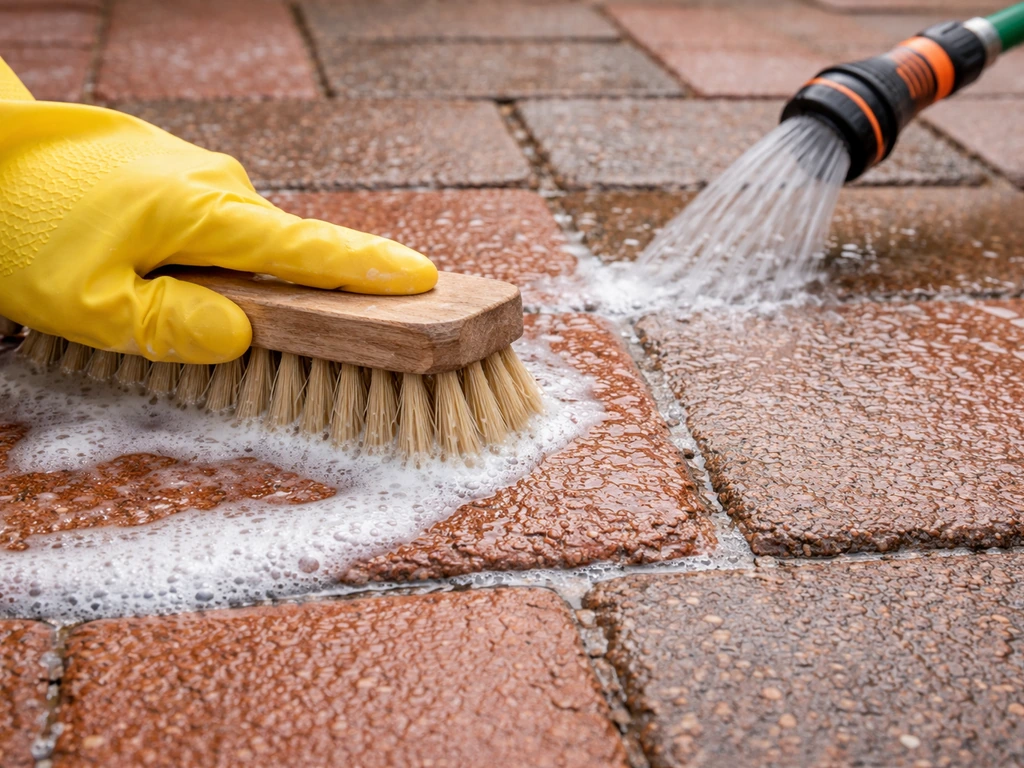
Brick is porous and often has softer mortar joints, so strong chlorine bleach concentrations or acid cleaners can damage the pointing over time. Oxygen bleach is the go-to here. Mix it fresh (sodium percarbonate powder or a ready-mixed product like Oxy Solve), apply generously, let it dwell for 5 to 10 minutes, then scrub with a stiff bristle brush and rinse. Wet & Forget also works beautifully on brick for ongoing maintenance since it won't bleach the mortar color.
Natural stone and flagstone
Limestone, slate, and most flagstones are acid-sensitive. Never use anything with hydrochloric acid or strong acidic rust removers on these surfaces. Oxygen bleach at a moderate dilution is the safest, most effective cleaner for algae, mold, and greying on natural stone. Apply, leave for 5 to 10 minutes, gentle brush agitation, rinse well. Wet & Forget is also a solid choice for natural stone, particularly for repeat treatment maintenance.
Pavers (concrete or clay)
Pavers respond well to both oxygen bleach and quat-based cleaners. The main complication is the jointing sand or polymeric sand between pavers, which you don't want to wash out aggressively. With the hose-rinse method (rather than a pressure washer), this is much less of a problem. Use a stiff brush rather than a broom attachment and work the cleaner into the surface before rinsing at low pressure. If your pavers are sealed, check the cleaner's label first since some detergents can degrade sealant over time.
Sandstone
Sandstone is soft, porous, and easily etched or discolored. This is the surface where I'd be most cautious. Avoid bleach-heavy products and anything acidic. Stick to pH-neutral or mildly alkaline oxygen bleach solutions at lower concentrations, or use Wet & Forget's no-bleach, no-acid formula as the most surface-safe option. Scrub gently with a soft brush, not a stiff wire bristle. Rinse gently with a low-flow hose rather than a jet nozzle.
Porcelain and ceramic tiles
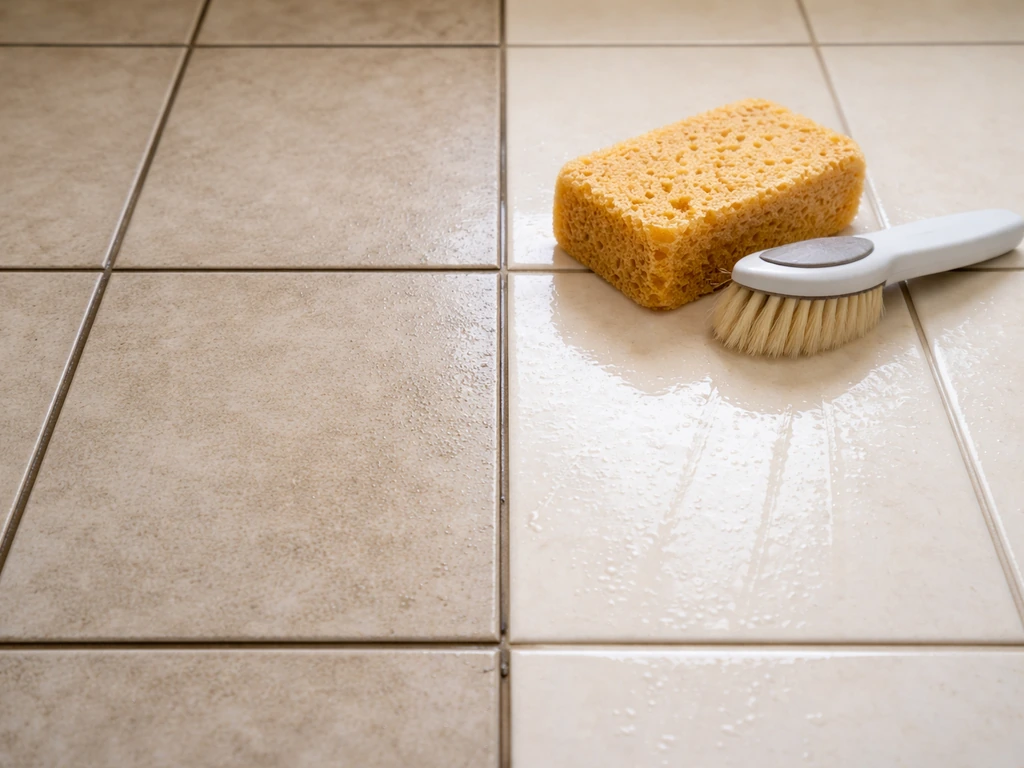
Porcelain is non-porous and very resistant to staining and chemical damage, which makes it one of the easier surfaces to clean. Most oxygen bleach or general outdoor cleaners will work fine. The only watch-out is the grouting between tiles, which can be more porous and bleach-sensitive. For routine cleaning, a diluted Oxy Solve or similar product applied and scrubbed works well. Rinse thoroughly, as soap residue on porcelain leaves a visible film once it dries.
| Surface | Recommended Chemistry | Avoid | Application Method |
|---|---|---|---|
| Concrete | Oxygen bleach, chlorine bleach (diluted) | Heavy acid (for decorative concrete) | Spray, 3–10 min dwell, scrub, hose rinse |
| Brick | Oxygen bleach, quat spray-and-leave | Strong acids, undiluted chlorine bleach | Spray, 5–10 min dwell, brush, hose rinse |
| Natural stone / flagstone | Oxygen bleach, quat spray-and-leave | Any acid-based cleaner | Spray, 5–10 min dwell, gentle brush, rinse |
| Pavers | Oxygen bleach, chlorine bleach (diluted) | Aggressive acids | Spray, brush joints gently, hose rinse low flow |
| Sandstone | Mild oxygen bleach, quat spray-and-leave | Bleach-heavy, any acid | Spray, soft brush, very gentle hose rinse |
| Porcelain / ceramic | Oxygen bleach, most outdoor cleaners | Avoid letting soap dry on surface | Spray, scrub, thorough rinse to avoid residue |
Matching your cleaner to the specific problem
The stain or growth type matters almost as much as the surface. Here's how to match your approach.
Mold and black mold
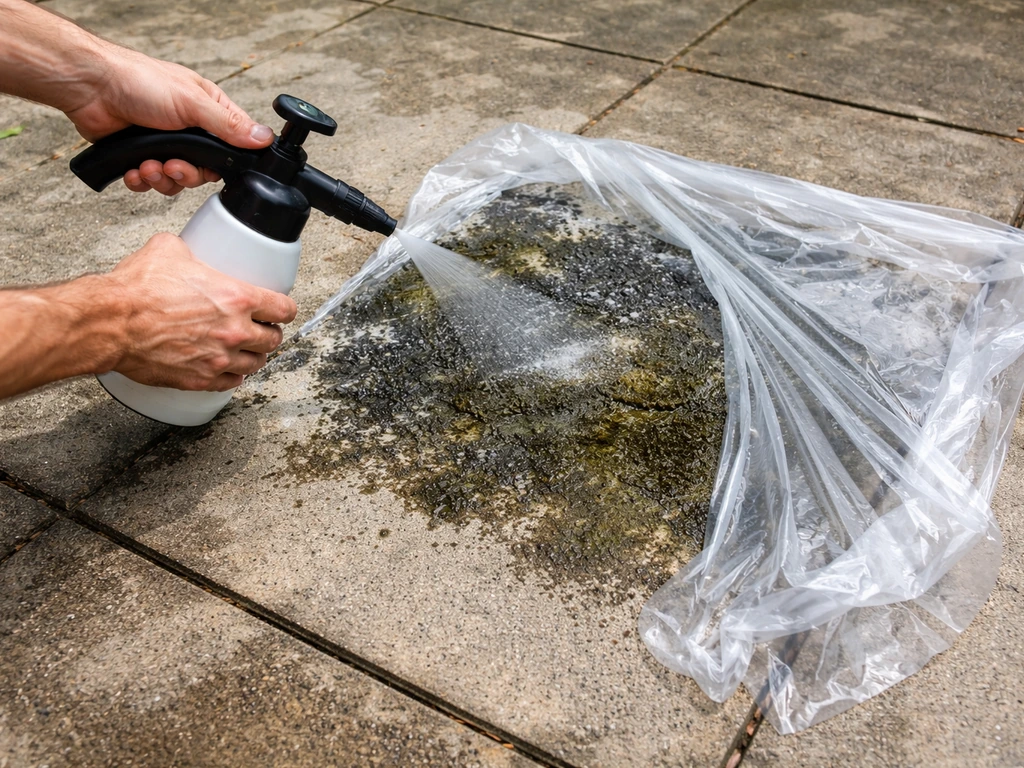
Black mold on patios is almost always surface-level biological growth rather than structural mold. Chlorine bleach products like 30 SECONDS (with its sodium hypochlorite base) kill it fast with a 10-minute contact time. Oxygen bleach also works, particularly for lighter infestations, but may need a second application on really stubborn dark patches. The key with mold is dwell time: applying a cleaner and rinsing within 2 minutes is one of the most common reasons people feel like the product didn't work.
Algae (green slippery film)
Green algae is the most common patio problem and also the easiest to treat. Oxygen bleach at standard dilution with a 5 to 10 minute dwell time kills it effectively, and a garden brush plus hose rinse removes it. Wet & Forget also handles algae well over time, particularly for regular treatment to stop it coming back. If your patio is in heavy shade and algae keeps returning every season, a post-cleaning sealant is worth considering to reduce the moisture retention that algae thrives on.
Moss and lichen
Moss is physically thicker and more deeply embedded than algae, and lichen is even more stubborn since it attaches with root-like holdfasts. For moss, an oxygen bleach or chlorine bleach application followed by a good stiff brush once the growth has been killed (ideally left to dry out for a day or two after chemical treatment) is the most effective no-pressure approach. Lichen genuinely needs longer dwell times and often multiple treatments. Wet & Forget is actually a reasonable choice for lichen because the weeks-long contact time works in your favor, killing the organism at the root. I've had stubborn lichen disappear over 4 to 6 weeks using Wet & Forget without any scrubbing.
Rust stains
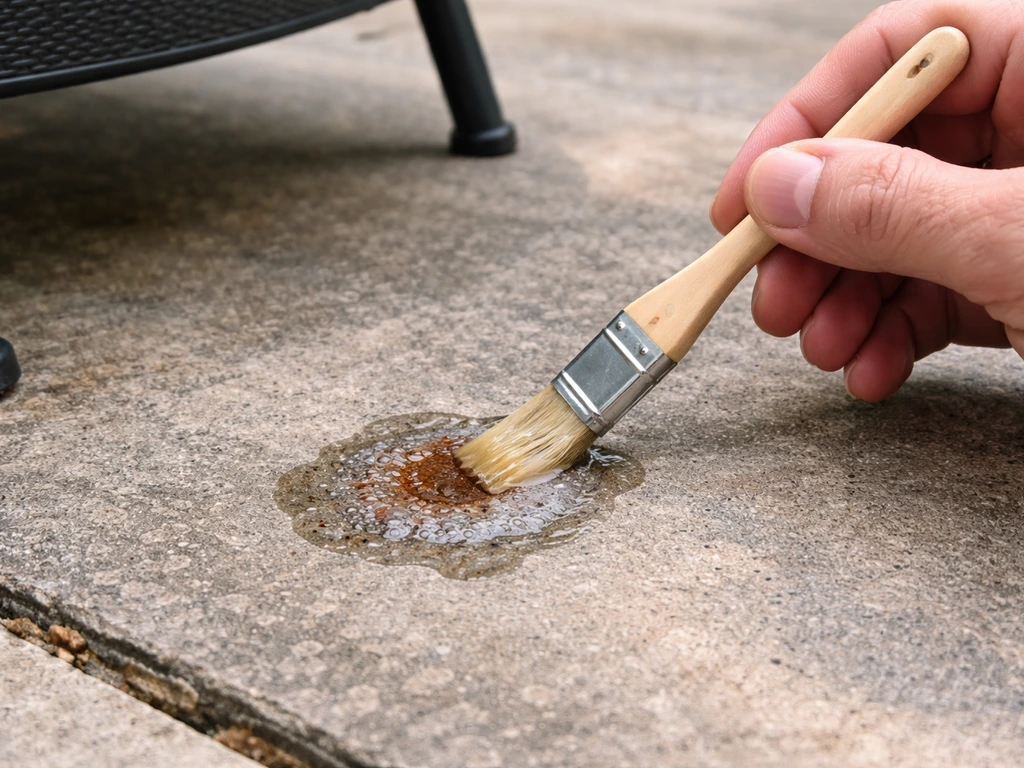
Rust stains (usually from iron garden furniture, planters, or fixings) need a specific rust remover with an oxalic acid or citric acid base, not a general patio cleaner. On acid-sensitive surfaces like sandstone or limestone, use a citric acid product and test a small hidden area first. Apply the rust remover, let it dwell (follow the product label, usually 5 to 15 minutes), agitate gently, and rinse thoroughly. General patio cleaners won't shift rust, so this is one case where you need the right specialist product.
Grease and oil
BBQ grease and cooking oil penetrate porous surfaces quickly. Alkaline degreasers or concentrated dish soap applied directly to the dry stain, left for 10 to 15 minutes, then scrubbed vigorously with a stiff brush works for fresh stains. Old, set-in grease often needs an alkaline degreaser specifically formulated for exterior surfaces. Oxygen bleach alone doesn't effectively break down oils, so for greasy patios, make sure your cleaner is actually a degreaser or has surfactant chemistry rather than just peroxide or biocide action.
Pet stains and urine odor
Pet urine leaves both a visible stain and a persistent odor that can soak into porous concrete or stone. Enzyme-based outdoor pet cleaners are the most effective because they break down the uric acid crystals that hold the odor rather than just masking it. Apply generously, keep the area moist during a 10 to 20 minute dwell, scrub, and rinse. Oxygen bleach will clean the surface visually, but won't fully neutralize embedded urine odor as effectively as an enzyme product.
General embedded dirt and greying
Concrete and pavers often go grey or dark simply from years of oxidized dirt, pollution, and biological buildup rather than a specific stain. This is exactly what oxygen bleach products like Simple Green Oxy Solve are designed for. A good soak at the recommended dilution (around 1.5 cups per 2 gallons of water), a 5-minute dwell, and a thorough scrub followed by a hose rinse can restore surprising brightness to a dull, greyed patio. Expect to be genuinely impressed by the before/after on concrete that hasn't been cleaned in years.
How to actually apply these cleaners without a pressure washer
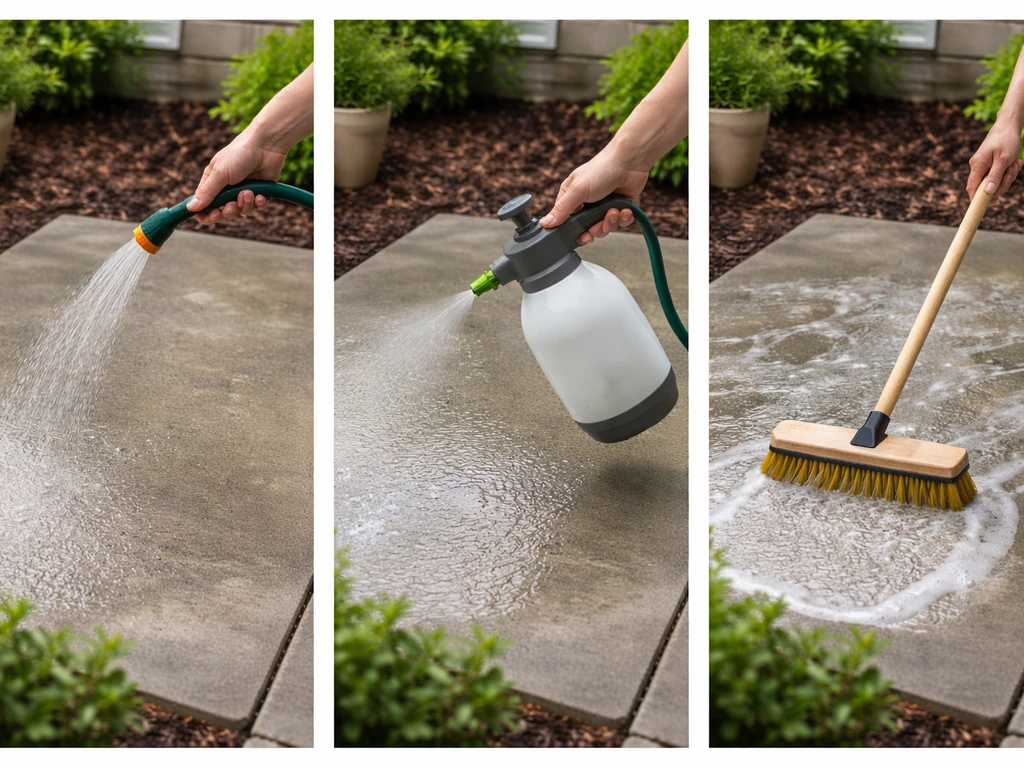
The application method is where a lot of people go wrong. Here's a straightforward process that works for most cleaner types.
- Pre-rinse the patio (except for products like 30 SECONDS that require a dry surface). A quick hose-down removes loose debris and ensures the cleaner contacts the surface rather than a layer of loose dirt.
- Mix or prepare your cleaner. For concentrate products, get the dilution right. Too strong doesn't mean faster results and can cause surface damage. Too weak and you won't get through biological growth.
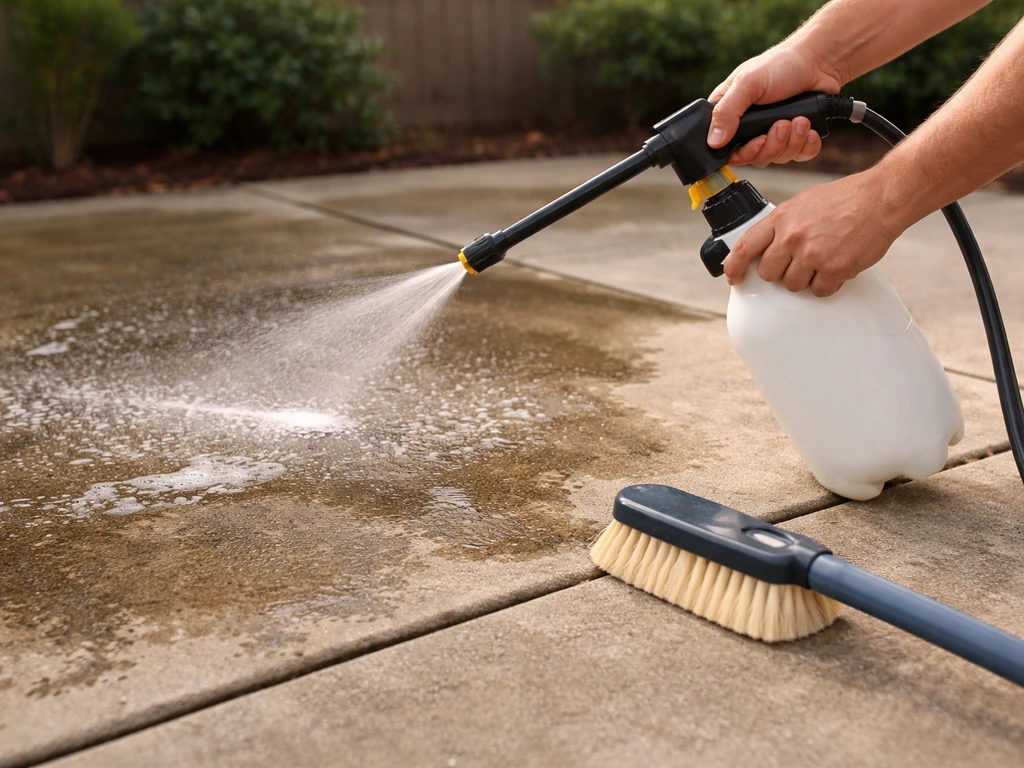
- Apply generously using a garden pump sprayer or watering can for large areas. Make sure the entire surface is visibly wet with the solution. Dry patches won't get cleaned.
- Wait the full dwell time. This is the single most important step. For oxygen bleach and chlorine bleach products, minimum 5 minutes, ideally 10 for heavy buildup. Don't let the product dry out on the surface in hot sun; reapply if it starts drying.
- Agitate with a stiff-bristled deck brush or floor scrubber. Circular motions on stained areas, straight strokes for general coverage. You'll often see the cleaning action visually as the brush loosens the growth.
- Rinse thoroughly with a garden hose on a strong (but not jet) setting. Work from one end of the patio to the other to avoid spreading dirty water back over cleaned areas.
- For spray-and-leave products like Wet & Forget: apply at a 1:5 dilution (1 part product to 5 parts water), spray, and walk away. Do not rinse. Let wind and rain do the work over the following weeks.
One thing worth repeating: dwell time is the step people consistently rush. The most common reason a patio cleaner appears not to work is that it was rinsed off before it had time to do anything. If you apply, wait 90 seconds, and hose off, you're essentially just washing the surface with water. Five to ten minutes matters enormously.
Safety, protecting plants and pets, and sealing afterward
Personal safety
Even products marketed as environmentally friendly need basic PPE. At minimum: wear nitrile or rubber gloves and eye protection. Wet & Forget's own safety data sheet (SDS) calls for protective gloves and chemical goggles, and lists precautions against inhalation during spraying. Chlorine bleach products (like 30 SECONDS) need the same plus ideally old clothes you don't care about and good ventilation if you're working in an enclosed area. Don't mix different cleaner types together, particularly bleach and anything ammonia-based.
Protecting plants, grass, and garden beds
Most patio cleaners are harmful to plants in direct contact. Before you start, soak plants and grass bordering the patio with plain water (this dilutes any run-off that reaches them). Cover sensitive plants with a tarp or plastic sheeting if they're immediately adjacent. After cleaning, rinse nearby plant areas with a generous amount of plain water to dilute any cleaner that ran off. Wet & Forget's no-bleach, no-acid, no-phosphate formula is probably the most plant-friendly option of the main products, but it's still a biocide and direct contact with plants isn't recommended.
Pets and children
Keep pets and children off the patio while you're applying and during the dwell period. After rinsing, most oxygen bleach and quat-based cleaners are safe once dry and rinsed, but read the specific product label for re-entry guidance. With chlorine bleach products, a thorough rinse and drying period before letting dogs or kids back on the surface is sensible.
Should you seal after cleaning?
Sealing after a deep clean is genuinely worth it for porous surfaces like concrete, natural stone, and brick. Sealing reduces moisture absorption, which is what allows algae and moss to recolonize in the first place. Wait until the patio is completely dry (at least 24 hours, ideally 48 in damp weather) before applying any sealant. For porcelain and dense pavers, sealing is optional since the surface is already low-porosity. If your patio is in deep shade and biological growth is a persistent annual problem, sealing plus a maintenance spray of Wet & Forget each season is one of the most effective long-term combinations I've found.
DIY and natural cleaners: when they work and when they don't
Natural DIY options do genuinely work in some situations. White vinegar (acetic acid) kills moss and some algae on concrete and hard pavers, and it's safe and cheap. Mix undiluted or at a 50/50 ratio with water, apply, leave 30 to 60 minutes, and scrub. However, as noted above, never use vinegar on acid-sensitive surfaces: limestone, sandstone, slate, and most natural stones will be visibly damaged. Baking soda used as a paste is useful for mild surface staining and is safe on almost everything but won't kill heavy biological growth. Washing soda (sodium carbonate) dissolved in hot water is an effective general patio cleaner for greying and light mold, essentially a DIY oxygen bleach precursor that's inexpensive and widely available.
Where natural options consistently fail: heavy, thick moss or lichen, embedded black mold, deep rust staining, and old set-in grease. I've tried vinegar on established lichen and it rarely does more than bleach the surface color slightly while the lichen hangs on. For these problems, commercial formulations with a proper biocide or peroxide chemistry are simply much more effective and will save you a lot of wasted effort. The rule of thumb I use: if the growth is more than a year old or if the surface looks genuinely embedded rather than surface-level, reach for a commercial cleaner rather than a kitchen ingredient.
| DIY / Natural Option | Works Well For | Won't Cut It For | Surface Safe On |
|---|---|---|---|
| White vinegar | Light moss, surface algae on concrete/pavers | Natural stone, heavy lichen, rust | Concrete, hard pavers only |
| Baking soda paste | Mild surface staining, gentle scrub | Biological growth, rust, grease | Almost all surfaces |
| Washing soda (sodium carbonate) | General greying, light mold on concrete | Heavy moss, lichen, deep rust | Concrete, brick, most hard surfaces |
| Commercial oxygen bleach (e.g., Oxy Solve) | Mold, algae, moss, greying on most surfaces | Deep rust, set-in oil/grease | Most surfaces including natural stone |
| Chlorine bleach product (e.g., 30 SECONDS) | Black mold, heavy algae, concrete brightening | Acid-sensitive stone, near plants | Concrete, hard pavers (rinse well) |
| Quat spray-and-leave (e.g., Wet & Forget) | Ongoing maintenance, lichen over time, low-effort treatment | Instant same-day results | Most surfaces including sandstone |
One final note: if you're consistently finding that your patio needs heavy cleaning every season, it's worth looking at whether a pressure washer might be a better long-term tool for the really stubborn annual clean, with the no-pressure methods used for maintenance in between. If you decide you want a power option, choosing the best pressure washer for patio surfaces and mess type will help you avoid damage and get faster results.
There are excellent options covering everything from budget consumer models to more powerful machines designed specifically for patio use, and they make deep annual cleaning significantly faster. If you do decide to use a pressure washer, the best power washer for patios UK should be one that matches your patio material and lets you control pressure and dwell-free cleaning.
If you are still comparing tools, these patio pressure washer reviews can help you weigh power, surface safety, and real-world results. But for regular upkeep and targeted stain removal, the spray-and-scrub or spray-and-leave approach covered here will handle the vast majority of what your patio throws at you.
FAQ
Can I use a patio cleaner without a pressure washer on just a few stubborn spots, or do I need to treat the whole patio?
Yes, but only in a controlled way. For most oxygen-bleach and quat cleaners, you can spot-treat by spraying onto the exact stained area, keeping the rest dry, then working it with a brush and rinsing those spots only. Avoid letting concentrated cleaner pool on porous joints, especially on brick mortar, and do a small hidden-area test first if you are not sure whether your patio is limestone, sandstone, or sealed.
What should I do if one application doesn’t fully clean my patio?
If you have to use multiple rounds, do it by changing dwell time before you change product. A second pass with the same oxygen bleach often works better than switching to harsher chemicals immediately. Also make sure the surface is fully pre-wetted if the cleaner’s label recommends it, since dry surfaces can reduce dwell performance for some formulations.
How can I tell whether my patio is sealed or porous so I choose the right cleaner strength?
Do a quick water-test. Sprinkle a few drops of water on the patio, if it soaks in quickly your surface is more porous and you should use a more conservative dilution plus brush agitation, then plan on sealing later. If water beads up, the patio is likely sealed or glazed, so you may need shorter dwell time and extra rinsing to prevent a whitish residue.
Does weather or temperature affect results when using a spray-and-scrub or spray-and-leave patio cleaner?
For algae and greying on most patios, timing matters more than temperature. Midday heat can cause the cleaner to dry before dwell time, leaving streaks, so aim for morning or late afternoon. If it is very hot or windy, shorten the working time and reapply before it dries, then rinse thoroughly when dwell is complete.
Why does my patio look streaky or chalky after cleaning without a pressure washer?
Yes, and it often comes from residue or premature rinsing. Oxygen bleach that is rinsed too early, or detergents left behind, can leave a film that dries chalky. Rinse until runoff runs clear, and if streaking persists on concrete or porcelain, do a plain-water rinse after the first rinse to flush remaining soap chemistry.
If I use a spray-and-leave cleaner, should I rinse it later or leave it alone?
Not always. Some products keep working while wet for weeks, but their effectiveness depends on not being washed off too soon. If you choose a spray-and-leave option, avoid immediately hosing it down, instead keep foot traffic and sprinklers off until the product’s instructions say it is safe. For oxygen bleach, rinse on schedule, short dwell follow-rinsing is usually the mistake.
Is it safe to mix different patio cleaners to speed things up?
Mixing is a common cause of poor results and surface damage. Never combine chlorine bleach with ammonia cleaners, and do not layer acids or rust removers over recently oxygen-bleached or bleach-treated areas until everything is fully rinsed and dry. If you switch products, wait for complete rinse, then wait for dry, and only then apply the next cleaner.
What’s the best approach for pet urine stains and odor without a pressure washer?
For pet urine, first remove organic material and odor, then treat the surface chemically if needed. Enzyme products work best when the area stays moist for the dwell window, then you rinse or blot as directed, do not just soak and rinse quickly. After that, you can use oxygen bleach for visual staining, but expect it to be less effective on odor than enzymes for deeply porous concrete or stone.
Which brush should I use, and can scrubbing damage the patio?
Use the right agitation tool. A stiff bristle brush works for most concrete and pavers, but use a softer brush on sandstone and some natural stone to prevent surface scratching or discoloration. Avoid wire brushes on soft porous materials, and for pavers focus on scrubbing the units while keeping joint sand in place.
Should I seal my patio after cleaning, and when does sealing not make sense?
Yes, in two situations. First, if algae or mold is coming back seasonally, sealing after a full dry period can slow recolonization. Second, if you cleaned to remove oils, sealants may not bond well if you have not degreased thoroughly, so wipe and rinse well before sealing. Always check that the sealant is compatible with the cleaner you used.
Next Article
Patio Pressure Washer Reviews: Best Picks and Buying Guide
Best patio pressure washer reviews with buying guide, surface-specific tips, PSI/GPM guidance, and safe cleaning steps.