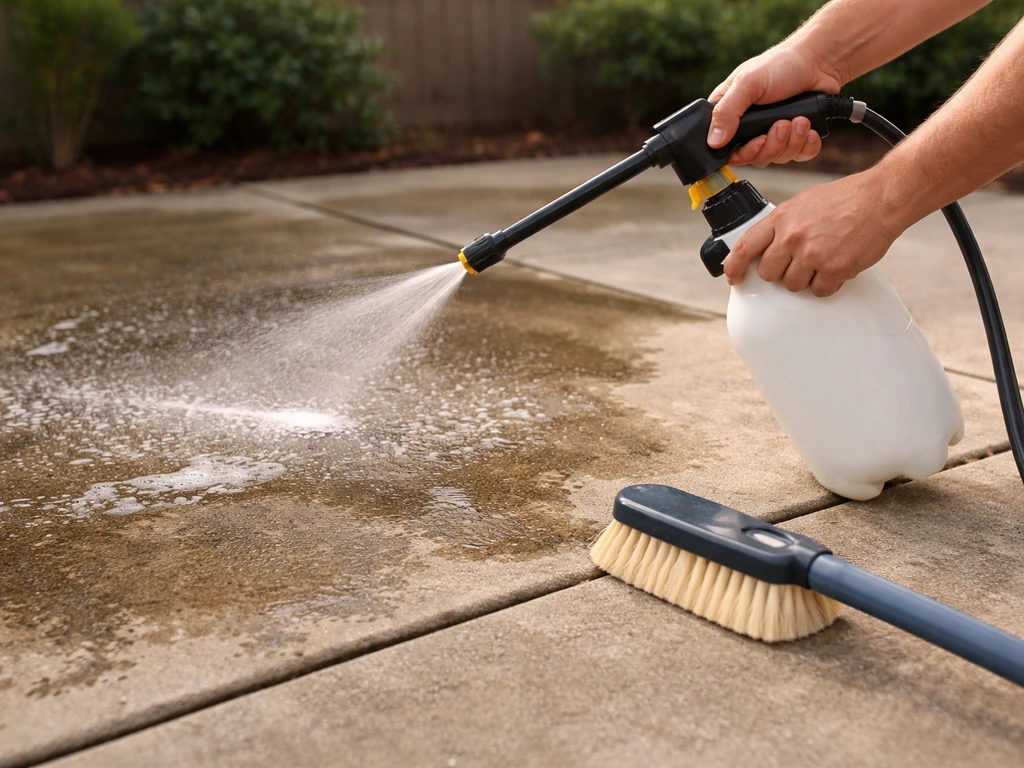
For most UK patios, you want a mains-powered electric pressure washer in the 120 to 145 bar range with a flow rate of at least 400 to 500 litres per hour, paired with a surface cleaner attachment and the right nozzle for your specific surface. The Kärcher K5 Premium Power Control sits at the sweet spot for serious patio work, while the Nilfisk C 120. Examples in a 2025 UK patio pressure washer guide include models such as the blank" rel="noopener noreferrer">Kärcher K5 Compact for deep-cleaning tasks like moss and black spot. 7-6 is a solid, slightly gentler option for natural stone and older surfaces. If you mostly deal with light grime on a small patio, even a 100 bar machine will do the job cleanly. What matters far more than buying the most powerful machine you can find is matching the pressure to your surface and using the right technique. If you want the best patio cleaning pressure washer for a first purchase, focus on matching the bar range to your surface before you worry about brand-specific extras. Once you have that basics nailed, the best pressure washer for a patio is the one that matches your surface and grime level rather than the highest bar rating best pressure washer for patio.
Best Power Washer for Patios UK: Choose the Right One
How to choose the best power washer for a UK patio
The single biggest mistake UK homeowners make when buying a patio pressure washer is buying the biggest machine they can afford, assuming more power equals better results. It does not. Too much pressure on the wrong surface strips mortar, blows out joint sand, erodes sandstone, and leaves permanent track marks on slate and porcelain. The right pressure for the job is what matters, and for domestic patio cleaning that usually sits between 100 and 145 bar for mains-powered electric machines.
For a standard medium-sized patio with a mix of concrete or block paving, a machine in the 120 to 145 bar range with a flow rate around 400 to 500 L/h is the practical sweet spot. Flow rate matters almost as much as pressure: it determines how well the machine actually shifts loosened dirt away from the surface rather than just blasting it around. A higher flow rate at moderate pressure often outperforms a high-pressure/low-flow machine for real-world patio results.
Cordless models (typically around 22 bar, 370 L/h) are genuinely useful for quick rinses and light touch-up jobs, but they are underpowered for deep cleaning of stained or moss-covered patios. Think of them as a supplement, not a replacement. For a full annual clean of a real UK patio with moss, algae, black spot, or built-up grime, you need a mains-powered unit.
Petrol models exist, but for a home patio they are overkill, expensive to maintain, and require more storage space than most households have. Unless you are also regularly cleaning a large driveway, commercial yard, or farm track, a good electric machine covers everything you need.
Surface-specific guidance: what works and what wrecks it
This is where a lot of pressure washing goes wrong. Each patio material has a different tolerance for pressure, and treating them all the same is how you end up with etched stone and hollowed-out mortar joints. Here is what actually works per surface.
Concrete and concrete slabs
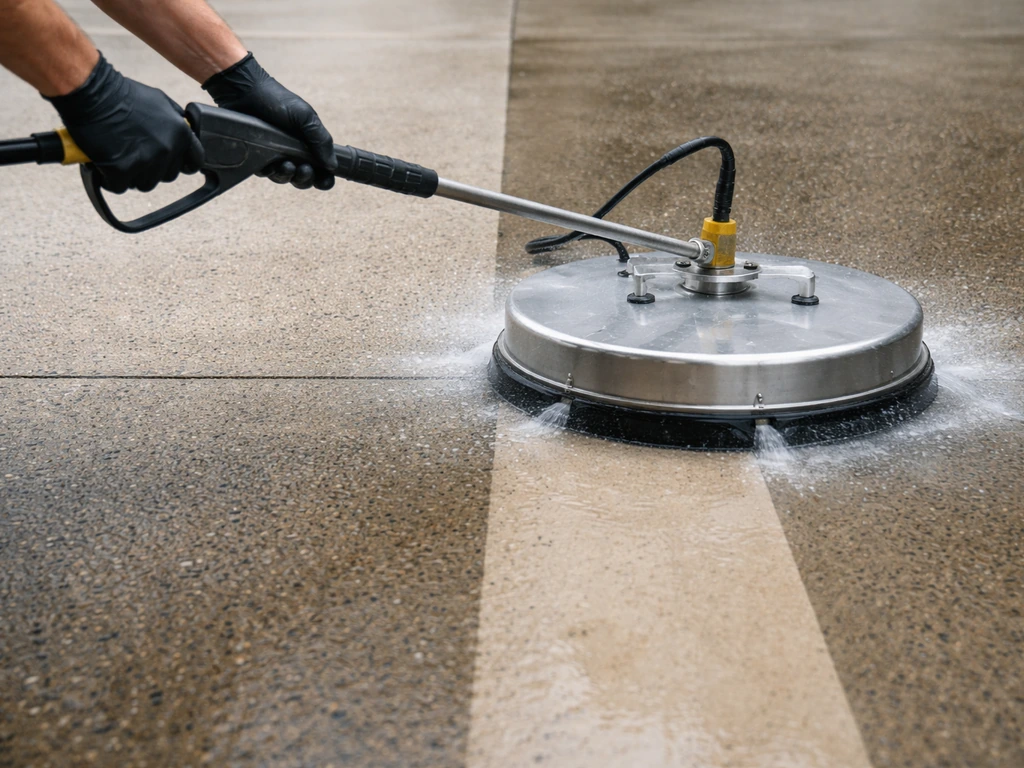
Concrete is the most forgiving surface for pressure washing. You can run a 130 to 145 bar machine with a 25-degree fan nozzle or a surface cleaner attachment confidently. Work in overlapping passes, keep the nozzle 20 to 30 cm from the surface, and use a sweeping motion rather than hovering in one spot. For black spot and deep-set algae on concrete, apply a patio cleaner solution 15 to 20 minutes before washing, then rinse with the pressure washer. You will get much better results than pressure alone.
Block paving
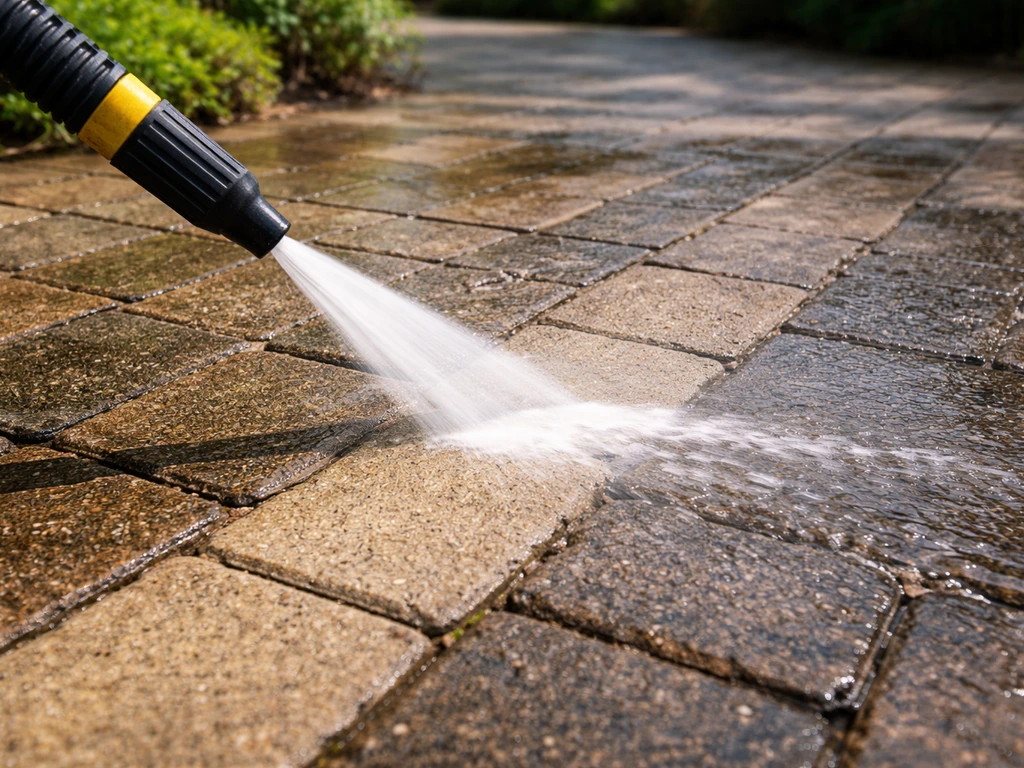
Block paving needs careful handling because the joint sand between blocks is easily disturbed by a direct overhead jet. Forticrete's technical guidance explicitly warns against using high-pressure washers on certain blockwork because of the risk to pointing and joints. The key technique here: angle the nozzle at roughly 30 degrees to the surface rather than straight down, keep the pressure at 120 bar or below, and never direct the jet into the joints themselves. After washing, you will almost certainly need to top up the kiln-dried sand in the joints. Keep a bag on hand. A surface cleaner attachment also helps because it distributes the water more evenly and reduces the direct-impact force on joints.
Brick
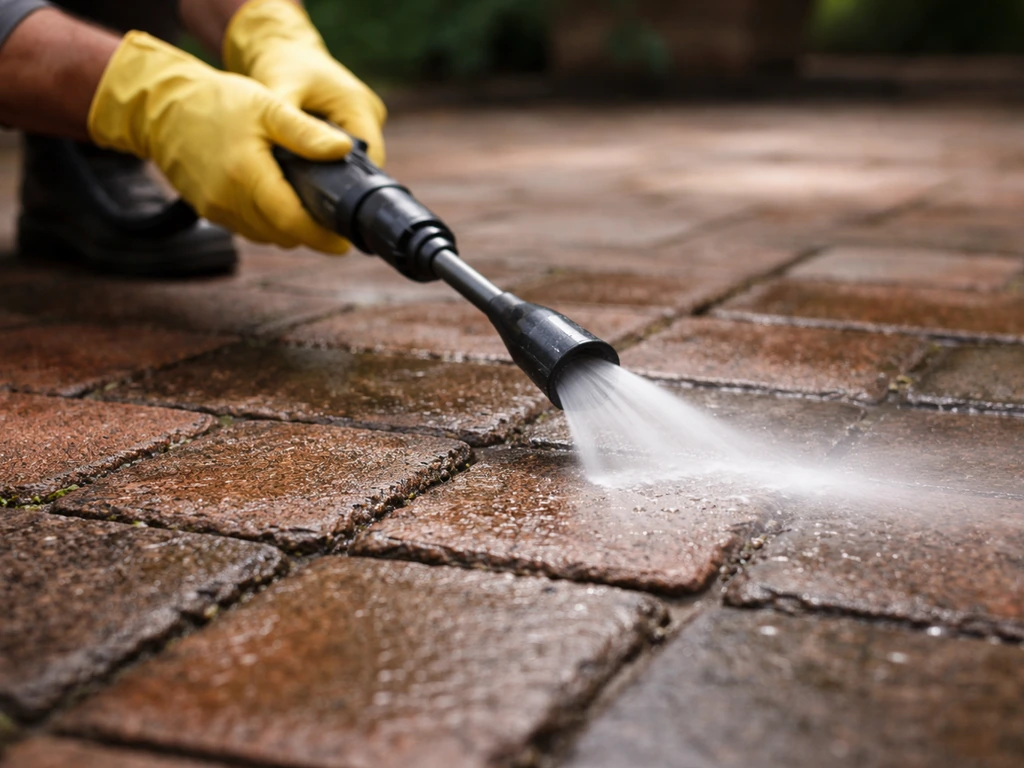
Older brick and mortar combinations are vulnerable to pressure washing if the mortar is already softened or weathered. For brick paths and edging, keep pressure at 100 to 120 bar maximum and use a wide-angle (40-degree) fan nozzle. Check the mortar condition first: if it is crumbling or recessed, skip the pressure washer entirely and use a chemical patio cleaner with a stiff brush instead.
Natural stone (including limestone and granite)
Harder natural stones like granite can handle moderate pressure (up to around 130 bar), but softer or more porous stones like limestone need a gentler approach. Use a 25 to 40-degree nozzle, increase your working distance to around 30 to 40 cm, and avoid turbo/rotary nozzles entirely. A chemical pre-soak genuinely earns its keep on natural stone: let a purpose-formulated stone cleaner or diluted patio cleaner dwell for 15 to 20 minutes and you reduce how much pressure you actually need.
Sandstone
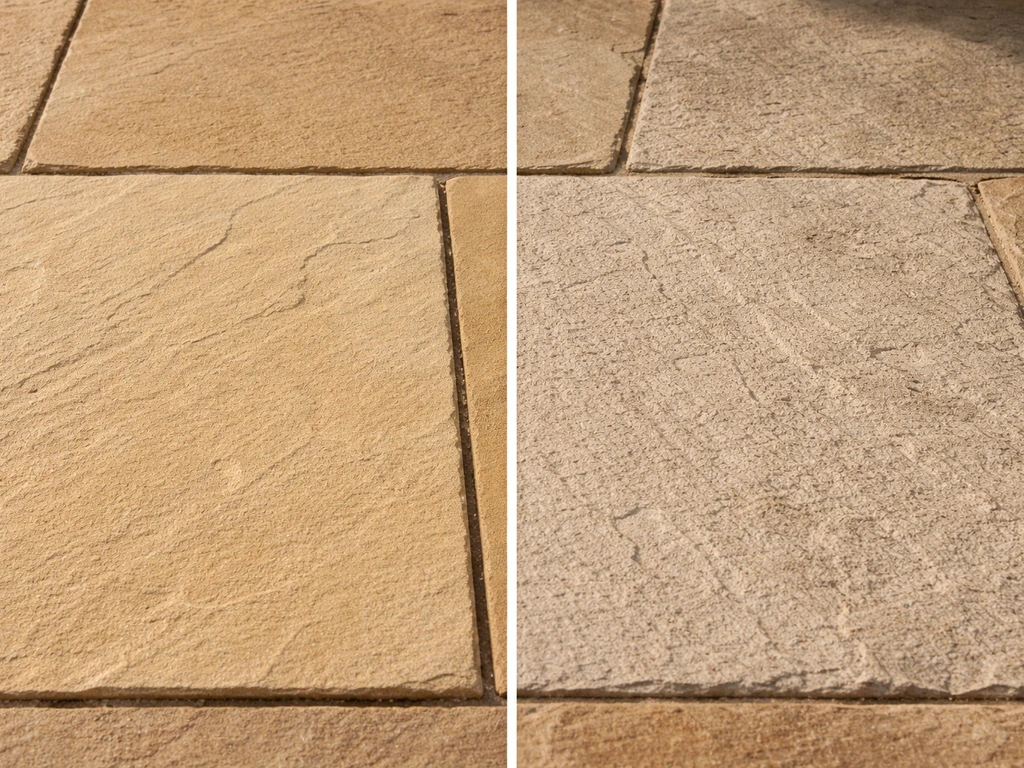
Sandstone is the surface I would be most cautious with. It is relatively soft and porous, and aggressive pressure washing visibly erodes the surface texture, making it rougher and actually more prone to future moss and algae growth because the surface opens up. Stick to 80 to 100 bar maximum, use only a wide fan nozzle (40-degree), hold the lance at least 30 to 40 cm away, and rely more heavily on a specialist sandstone-safe chemical cleaner doing the actual work. The pressure washer is essentially just doing the rinsing here. I learned this the hard way after watching a newly laid sandstone patio get noticeably etched by an overeager pass with a rotary nozzle.
Slate
Slate can split or delaminate under aggressive pressure because of its layered structure. Use a low-to-medium pressure setting (100 to 120 bar), a wide fan nozzle, and work with the grain of the stone where possible. Keep the nozzle moving constantly and at a slight angle. Like sandstone, a gentle chemical pre-treatment does most of the heavy lifting so the pressure washer only needs to rinse.
Porcelain
Porcelain tiles themselves are actually quite tough and non-porous, so pressure washing is generally safe up to 130 to 140 bar. The weak points are the grout lines between tiles. Use a 25-degree fan nozzle and keep it parallel to the grout lines rather than targeting them directly. A surface cleaner attachment is ideal here because it keeps the cleaning uniform and avoids accidental targeting of joints. Porcelain responds very well to pressure alone for everyday grime, though a pre-soak helps shift biofilm and algae.
The features that actually matter when buying
Manufacturers list a lot of specifications. Here is what you actually need to pay attention to for patio cleaning.
| Feature | What to look for | Why it matters for patios |
|---|---|---|
| Pressure (bar) | 100–145 bar for domestic use | Sets how aggressively the water impacts the surface; too high damages stone and joints |
| Flow rate (L/h) | 400–500 L/h minimum | Determines how well dirt is actually flushed away; low flow = dirt stays on surface |
| Nozzle set | Includes 25° and 40° fan nozzles at minimum | Different angles suit different surfaces; turbo/rotary nozzles should be avoided on most patios |
| Surface cleaner attachment | Compatible with machine; 28–34 cm disc recommended | Even cleaning, reduces marks, gentler on joints, much faster on large areas |
| Hose length | 7–9 m minimum | Shorter hoses limit reach across a medium patio; extension hoses add convenience |
| Onboard detergent tank | Useful but not essential | Allows you to apply patio cleaner before rinsing without a separate applicator |
| Power cable length | 5 m minimum | Most patios need at least this; consider an outdoor extension lead otherwise |
| Pressure control | Variable or at least two settings | Lets you drop pressure for sandstone/slate without changing nozzles constantly |
A note on variable pressure: machines like the Kärcher K5 Premium Power Control have an in-handle pressure adjustment that lets you dial pressure down without swapping nozzles. This is genuinely useful if your patio has mixed surfaces or if you switch between cleaning the patio and washing garden furniture or a car. It is worth the slight price premium over fixed-pressure models.
Recommendations for common budgets and jobs
These are the machines and setups I would point people towards in 2026, based on real-world performance for UK patio cleaning rather than spec-sheet comparisons alone.
| Budget / Use Case | Recommended Machine | Key Specs | Best For |
|---|---|---|---|
| Under £100 (light duty) | Kärcher K2 Power Control or similar entry-level | ~110 bar, ~360 L/h | Small patios, light moss, annual rinse of porcelain or concrete |
| £100–£200 (mid-range) | Nilfisk C 120.7-6 Compact | 120 bar, ~400 L/h | Concrete, block paving, brick; regular seasonal cleaning |
| £200–£350 (best all-rounder) | Kärcher K5 Premium Power Control | Up to 145 bar, up to 500 L/h | All surface types, variable pressure, heavy moss/algae, large patios and driveways |
| Delicate surfaces (any budget) | Any 100–120 bar machine + surface cleaner | 100–120 bar, wide fan nozzle | Sandstone, slate, older brick with soft mortar |
| Cordless (convenience/top-up) | 20V cordless (e.g., Powerbase or similar) | ~22 bar, ~370 L/h | Quick rinses, furniture, small areas; not suitable for deep patio cleaning |
If you are only buying one machine and your patio has mixed surfaces or you want flexibility for driveways as well, buy the K5 Premium Power Control and pair it with a surface cleaner attachment. That combination handles the vast majority of UK patio cleaning jobs, including for patios and driveways, and is the setup most professional cleaners would recognise as sensible for domestic use. The surface cleaner disc is not optional: cleaning a full patio with just a lance nozzle takes roughly three times as long and leaves uneven stripes.
Chemicals vs pressure: getting the results right
When pressure alone is enough
For light surface dirt, dust, and loose debris on concrete and porcelain, pressure alone works fine. If the patio was cleaned within the last year and has not had a heavy algae or moss season, a good pass with a surface cleaner at 120 to 130 bar and decent flow rate will get it looking clean without any chemical aid.
When you need chemicals too
For anything beyond light grime, combining a chemical pre-soak with pressure washing consistently outperforms pressure alone, and usually means you can get away with lower pressure (which is safer for the surface). If you want the best patio cleaner without a pressure washer, look for a chemical patio cleaner that can lift stains and lift grime with brushing and dwell time instead pressure washing. Apply a patio cleaner or biocide to the surface, allow it to dwell for 15 to 20 minutes before pressure washing, then rinse thoroughly. For deeply embedded black spot, a targeted application and longer dwell of 30 minutes can be necessary before washing gives a clean result.
Moss and algae
Moss and algae are the most common patio problems in the UK, especially on north-facing or shaded patios. A pressure washer removes the visible growth, but it does not kill the spores in the surface. Without a biocide or algaecide applied either before or after washing, regrowth typically happens within a few months. Apply a purpose-made patio biocide after cleaning, following dwell-time instructions on the label, and you will significantly extend the time before it returns.
Rust stains
Pressure washing will not remove rust stains. These are chemical stains from iron in metal furniture or fixtures, and they need a dedicated rust remover product (usually an oxalic or phosphoric acid-based cleaner). Apply the rust remover, allow it to work, then rinse with the pressure washer. Pressure alone, even at 145 bar, will not shift an established rust mark.
Grease and oil
BBQ grease and oil stains are hydrophobic, so water-only pressure washing pushes them around rather than removing them. Use a degreaser or alkaline patio cleaner, apply it directly to the stain, scrub lightly with a stiff brush to work it in, wait 10 minutes, then pressure wash. For older set-in grease on concrete, you may need two applications.
Pet stains and organic marks
For pet urine and organic staining, an enzymatic cleaner applied before pressure washing breaks down the organic compounds responsible for both the mark and the odour. Pressure washing alone removes the visible stain from concrete but leaves odour-causing residue. The enzymatic pre-soak step is essential if the area is used by pets regularly.
Staying safe and not wrecking your patio
Electrical safety outdoors
Always plug your pressure washer into an RCD-protected socket (most modern outdoor UK sockets have this, but check). If you are using an extension lead to reach the patio, it must be a heavy-duty outdoor-rated lead, fully unrolled, and the connection between the extension lead and the washer should be kept out of standing water. Kärcher's own guidance discourages the use of extension cords in some circumstances: if you do use one, make sure it is rated appropriately and that it is not running under a doorway or in a puddle. Never use a standard indoor extension reel outside.
Nozzle choice and technique
Do not use a turbo or rotary nozzle on patio surfaces. Homes and Gardens testing confirms it can badly scar surfaces, and in my experience it leaves visible striping even on hard concrete. For patio work, stick to a 25-degree fan nozzle for hard surfaces or a 40-degree fan nozzle for anything more delicate. Use a pendulum sweeping motion continuously: stopping the jet in one place for even a second leaves a mark on many surfaces. Work from one end of the patio to the other in overlapping passes, rinsing debris forward rather than back over cleaned areas.
Protecting block paving joints
Never direct the pressure washer jet straight down into block paving joints from above. The downward force drives water under the blocks and disturbs joint sand rapidly. Angle the lance (about 30 degrees to the surface), keep the nozzle moving, and if you are using a surface cleaner, accept that some sand loss is still likely and plan to re-sand the joints afterwards. Keep a bag of kiln-dried jointing sand ready.
Sealing after washing
Pressure washing strips any previous sealer from most surfaces. Once the patio has dried fully (allow at least 24 to 48 hours in dry weather), it is worth applying a suitable sealer for the surface type. Sealing sandstone, slate, and natural stone after washing dramatically reduces future moss and algae growth by reducing surface porosity. Block paving benefits from a drying and re-sanding before sealer application. Do not seal a wet or damp surface: it traps moisture and can cause whitening or flaking.
Buying tips, maintenance, and what to avoid
Warranty and UK servicing
Kärcher and Nilfisk both have solid UK repair and service networks, which is a genuine advantage over lesser-known brands. Kärcher machines typically come with a 2-year warranty for domestic use, and service centres are widely available across the UK. With cheaper unbranded models, spare parts and warranty claims can become frustrating quickly. If the machine fails mid-season and the brand does not have local service support, you are simply buying a new one. For a tool you plan to use repeatedly, the brand support matters.
Essential accessories to buy with the machine
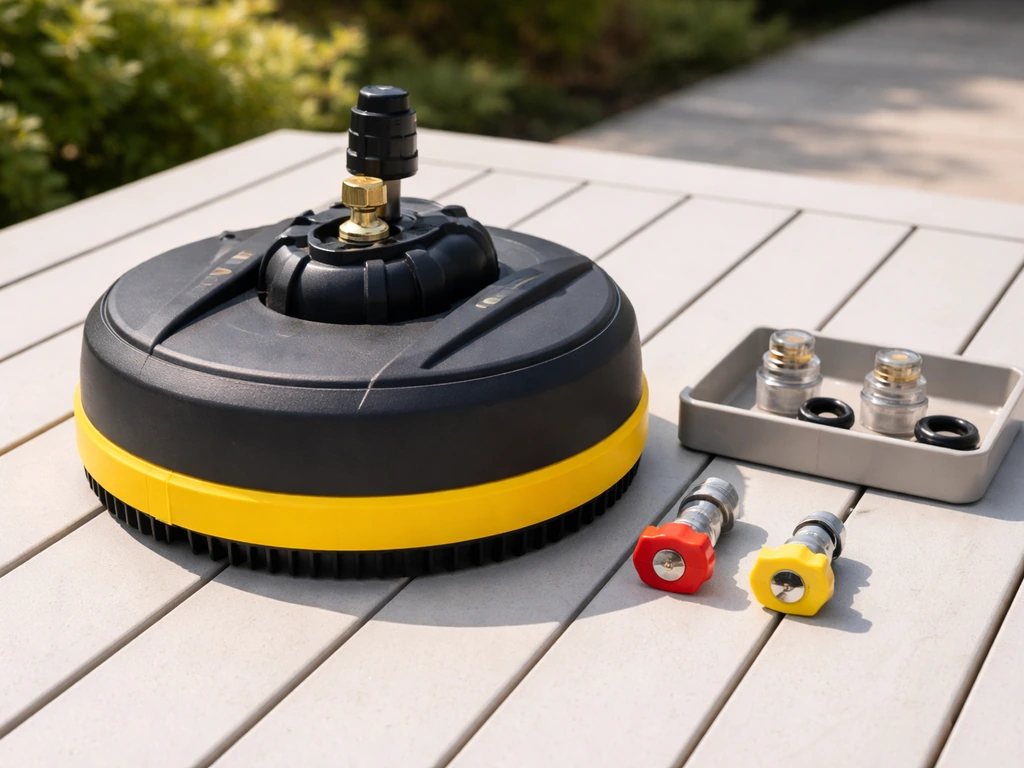
- Surface cleaner attachment (compatible with your machine's quick-connect fitting): essential for efficient, even patio cleaning
- Spare nozzle set including 25-degree and 40-degree fan nozzles if not included
- Extension lance or long trigger gun if your patio requires reaching under low structures
- Patio cleaning detergent or biocide for chemical pre-soak
- Bag of kiln-dried jointing sand if you have block paving
Storage and winter maintenance
UK winters can damage pressure washers left outside or stored without proper care. After the last use of the season, run clean water through the machine to flush out any detergent residue, then disconnect the hose and allow any remaining water to drain from the pump. Store the machine in a frost-free location. Water freezing inside the pump is one of the most common causes of pressure washer failure, and it is almost always preventable. Hoses should be coiled loosely (not kinked) and stored away from direct UV if possible to prevent cracking.
What to avoid when buying
- Buying purely on maximum bar pressure: flow rate and build quality matter just as much
- Very cheap unbranded machines with no UK service network or clear warranty terms
- Petrol-powered washers for domestic patio use: unnecessary power, harder to maintain, needs more storage
- Machines without variable pressure if you have multiple surface types on your patio
- Assuming the included nozzle set will cover patio work: check the surface cleaner attachment is compatible before buying
One final point worth making: if your patio only needs a light annual clean and is a relatively small area, do not feel pressured into buying a top-spec machine. If you want to narrow down models fast, patio pressure washer reviews can help you compare real-world cleaning power and usability for UK patios. A 100 bar machine with a surface cleaner and a good patio biocide pre-soak will deliver perfectly clean results on concrete and porcelain without the cost or storage footprint of a heavier unit. Match the machine to the actual job, not to the maximum job you can imagine. That thinking applies whether you are comparing options for a patio and driveway combined or focusing purely on a smaller paved garden area.
FAQ
Can I use a pressure washer on a UK patio with an extension lead, and is it safe?
No, not for typical patio cleaning. If you have a modern RCD-protected outdoor socket, you can plug the washer in directly and keep the connection dry. Use an extension lead only if you must, choose a heavy-duty outdoor-rated cable that stays fully off wet ground, and never run a lead across a doorway threshold where water can pool or the insulation can get damaged.
Should I use chemical patio cleaner or biocide before or after pressure washing?
Yes, but only after you’ve done a proper test pass and matched the chemical to the surface. Many patio cleaners and biocides require a dwell time and must not be allowed to dry on the paving. If you are cleaning around plants or pets, rinse thoroughly after washing and keep treated runoff away from drains where possible (or follow the chemical label guidance exactly).
Will a power washer kill moss and algae permanently?
In most cases, no. Pressure washing alone removes growth but often does not kill regrowth spores, so you usually need a targeted biocide algaecide step. A practical approach is to wash first to remove the bulk of algae and dirt, then apply an approved biocide afterwards, letting it dwell for the stated time before the next rinse.
How long should I wait after pressure washing before sealing my patio?
For concrete and block paving, it usually takes a full dry period before sealing, not just an hour or two of drying. Plan on at least 24 to 48 hours in dry weather. If the surface is still cool or damp, sealing can trap moisture and lead to whitening, flaking, or faster re-growth.
Why won’t rust stains come off, even with a strong power washer?
It depends on what the stain is. Pressure washing will not lift rust marks from iron contamination because the stain is chemical, not surface dirt. For rust, use a dedicated rust remover (commonly oxalic or phosphoric acid based), apply, allow it to work, then rinse thoroughly.
What should I do if my patio still looks dirty after washing?
If the goal is to lift embedded grime, a chemical pre-soak often works better than simply turning up the pressure. For example, black spot and deep algae on concrete typically respond better to a patio cleaner or biocide dwell of around 15 to 20 minutes, then rinse. This usually lets you use safer, lower pressure.
What nozzle mistakes cause streaks or etched marks on patios?
Using the “wrong” nozzle is a common cause of permanent marks. Avoid turbo and rotary nozzles on patio surfaces, and choose a wide fan angle, typically 25 degrees for harder surfaces and 40 degrees for more delicate materials. Also keep the lance moving, pausing for even a second can create striping.
Will pressure washing ruin block paving joints, and how do I fix it afterward?
Yes, but you should expect some sand movement and plan to correct it. With block paving, avoid blasting straight into the joints, angle the lance (around 30 degrees) and use moderate pressure (about 120 bar or below). After washing, you will likely need to re-top up joints with kiln-dried jointing sand, and let it settle before any further treatment.
Is variable pressure worth it for mixed patios?
If your patio includes multiple materials, a fixed-pressure machine can feel limiting. A variable pressure model is useful because you can dial down for more delicate areas like slate or sandstone, and dial up for concrete without changing parts. Still, you should match the nozzle angle and technique to the surface, not just the bar rating.
When is water-only pressure washing not enough for stains?
Not usually, unless you’re specifically dealing with rust, grease, or pet urine residues. Water-only washing is fine for everyday grime on non-porous or forgiving surfaces, but hydrophobic oils and many organic stains need a compatible chemistry step. If you keep getting the same stain back, identify the stain type and use the correct cleaner rather than increasing pressure.
Best Patio Cleaner Without Pressure Washer: Pick, Use, Results
Choose the best pressure-free patio cleaner by material and stain, with safe steps for mold, rust, grease, algae and mor