Rob Parker's Best is a UK patio cleaning product range, and when people search for 'Rob Parkers best patio cleaner' they're usually looking for either a specific product from that range (most commonly the Algae Remover & Patio Reviver or the Patio Cleaner for Natural Stone & Concrete) or a recommendation on which one to buy. The short version: use the Algae Remover & Patio Reviver (diluted 250 ml in 8 litres of water) for green growth on most surfaces, the straight Patio Cleaner (used neat, never diluted) for general grime on stone and concrete, and the Rust Stain Remover for iron and rust marks on non-limestone surfaces. Which one you need depends entirely on your patio material and what you're actually trying to clean off. If you want a quick answer, the best patio mould cleaner is usually one designed to tackle black spots and mildew without damaging your paving material patio material.
Rob Parkers Best Patio Cleaner: How to Clean Any Surface
What 'Rob Parkers best patio cleaner' actually means
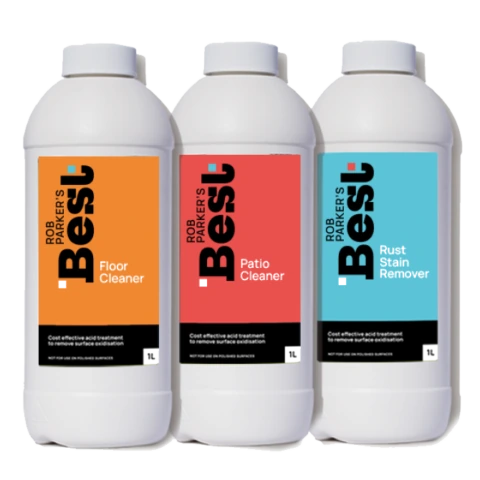
Rob Parker's Best (often abbreviated RPB) is a specialist patio and masonry cleaning brand sold through stone suppliers like Stoneworld in the UK. It's not a single product. The range includes an Algae Remover & Patio Reviver, a Patio Cleaner for Natural Stone & Concrete, a Rust Stain Remover, a Salt Neutraliser for efflorescence, and a Heavy Duty Surface Cleaner.
So when someone searches for 'Rob Parkers best patio cleaner,' they might mean the brand in general, or they might have seen a specific product recommended somewhere and want to know how to use it. This guide covers all the key products in the range, which one to reach for based on your surface and stain, and exactly how to apply it.
For the Algae Remover & Patio Reviver, the standard dilution is 250 ml of product in 8 litres of water, which works out to roughly 1:32 best patio and driveway cleaner.
Start here: identify your surface and your stain
Getting the right result with any patio cleaner starts with correctly identifying two things: what your patio is made of, and what you're actually trying to remove. Using the wrong product on the wrong surface can cause etching, discoloration, or permanent damage. Here's how to quickly categorise both.
Common patio surface types
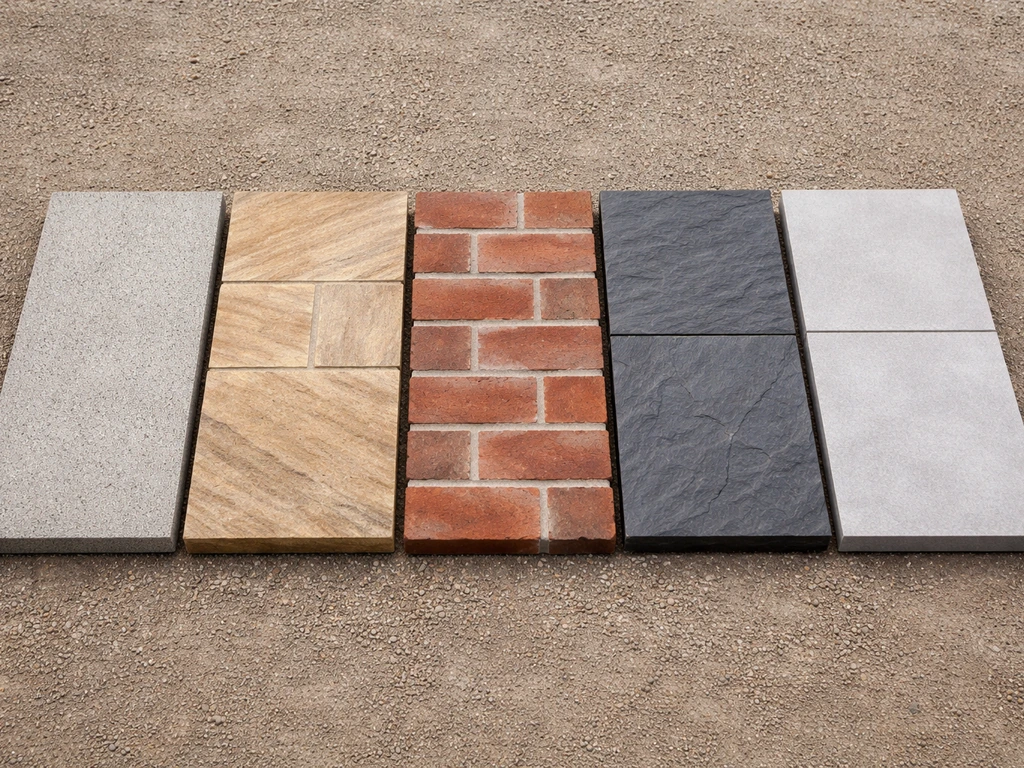
- Concrete (plain, brushed, or imprinted): durable and tolerates alkaline-based cleaners well; generally fine with RPB Patio Cleaner and Algae Remover
- Natural stone (sandstone, limestone, slate): more porous and acid-sensitive; avoid anything acidic on limestone especially; pH-neutral or specially formulated cleaners are safer
- Granite: dense and less porous; handles RPB Rust Remover and Algae Remover well
- Porcelain: very dense, low porosity; tolerates most RPB products including the Rust Stain Remover
- Brick: similar rules to concrete; avoid strong acids near mortar joints
- Sandstone: highly porous and soft; avoid bleach, acids, or high-pressure washing; RPB Algae Remover at lower dilution works well here
Common stain and contamination types
- Green algae and slippery film: the most common issue on UK patios, especially north-facing or shaded areas
- Moss and lichen: thicker organic growth, usually needs more dwell time or a second pass
- Black mould and mildew: often appears in grout lines and on textured surfaces
- Rust stains: orange or brown marks, usually from metal furniture, fixings, or iron-rich water
- Efflorescence (white powdery deposits): salt crystals migrating to the surface, common on new concrete and brick
- Grease and oil: barbecue drips, cooking oil, bike chain lube
- Pet stains and organic marks: urine, bird droppings, leaf tannin staining
Match the right RPB product to your specific problem
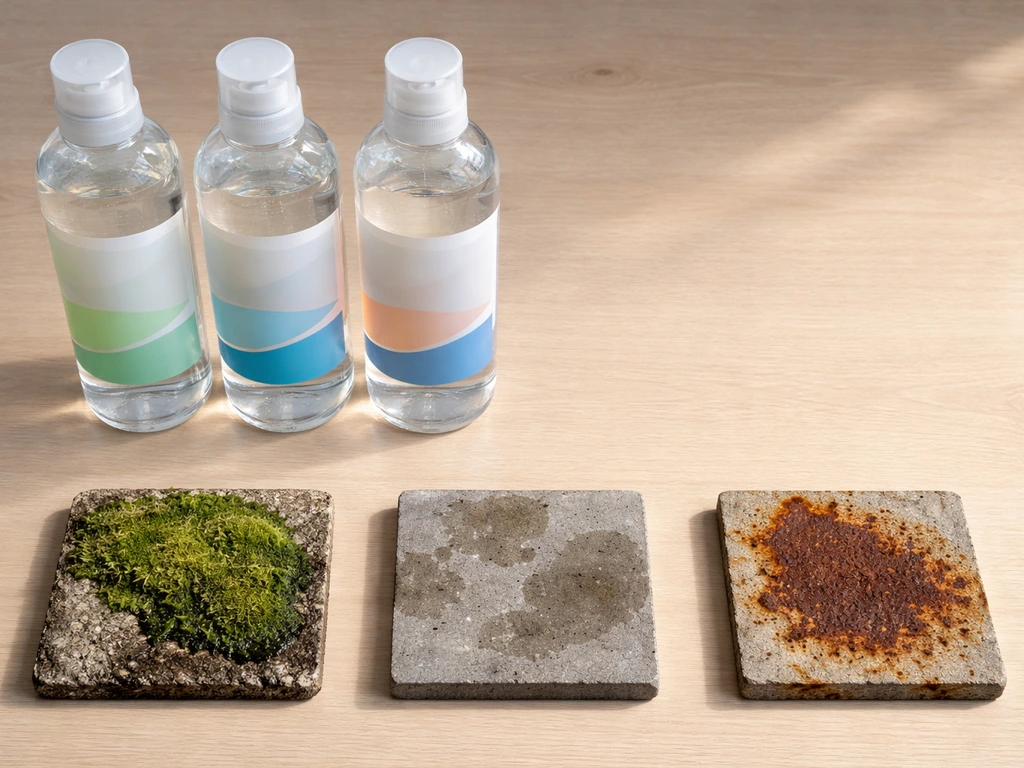
Here's a straight comparison of the main Rob Parker's Best products against surface type and stain. Use this as your decision guide before you buy or before you open the bottle you've already got.
| Problem | Best RPB Product | Suitable Surfaces | Not Suitable For |
|---|---|---|---|
| Algae, moss, green growth, mould | Algae Remover & Patio Reviver | Concrete, natural stone, granite, porcelain, brick, sandstone | Check label if in doubt on polished stone |
| General grime, dirt buildup | Patio Cleaner for Natural Stone & Concrete | Natural stone, concrete | Use neat only, do not mix or dilute |
| Rust and iron stains | Rust Stain Remover | Natural stone (unpolished), granite, porcelain | Limestone (acid-sensitive), polished stone |
| White efflorescence / salt deposits | Salt Neutraliser | Concrete, brick, natural stone | Avoid on acid-sensitive stone at strong concentrations |
| Heavy contamination, follow-up after rust treatment | Heavy Duty Surface Cleaner | Concrete, stone, general hard surfaces | Follow dilution guidance; medium strength for post-rust neutralising |
A few things worth flagging here. The Rust Stain Remover is an acid-based product. That means it works brilliantly on granite and porcelain but will damage limestone, which is also acid-sensitive. If you're not sure whether your stone is limestone, test on a hidden corner with a drop of the product before committing to the full area. If it fizzes, it's limestone and you need a different approach. Similarly, the Patio Cleaner is one product in the range that must be used neat. The label specifically says do not dilute and do not mix with anything else. This catches people out if they're used to diluting everything.
How to apply Rob Parker's Best products correctly
The method varies slightly depending on which product you're using, but the general workflow is the same: prep the surface, apply the product correctly, let it dwell, then agitate and rinse. Skipping any of these steps is how you end up with patchy results or a stain that comes back within a few weeks.
Step 1: Prep the surface
Before applying any cleaner, sweep the patio clear of loose debris, leaves, and soil. This matters more than it sounds. If you apply algae remover over a layer of dead leaves and dirt, the product is spending its active time working on the debris, not the surface. Remove any pots, furniture, and mats. If the patio is very dry, a light pre-wet with a hose can help open the surface and improve penetration on porous stone. For oily or greasy areas, tackle those separately first before applying the algae or general cleaner.
Step 2: Dilute (or don't) and apply
For the Algae Remover & Patio Reviver, the standard dilution is 250 ml of product in 8 litres of water, which works out to roughly 1:32. The technical data sheet also quotes a 1:10 dilution as the standard for normal use, with the ratio adjustable depending on how bad the growth is. For heavy moss or thick algae, go stronger. Apply with a low pressure garden sprayer and cover the surface evenly. Don't use a high-pressure spray at this stage as it just blows the product off before it can work.
For the Rust Stain Remover, apply it directly to the stain using a paintbrush. This is the right tool for the job because it keeps the acid exactly where you need it and off surrounding areas. Don't pour it over the whole patio. Leave it for up to 15 minutes.
Coverage is roughly 1 litre per 5 to 10 square metres depending on severity. For the Salt Neutraliser (efflorescence), you can use it neat on heavy deposits, diluted 1:5 for medium deposits, or 1:10 for light ones. Nitterhouse Masonry recommends that efflorescence-specific cleaner systems be used after treating any associated oil or grease with an oil-and-grease cleaner for best results [For the Salt Neutraliser (efflorescence)](https://www. nitterhousemasonry.
com/our-products/efflorescence-cleaner/). Coverage is around 4 to 10 square metres per litre. The Patio Cleaner for Natural Stone and Concrete goes on neat, no dilution.
Step 3: Dwell time
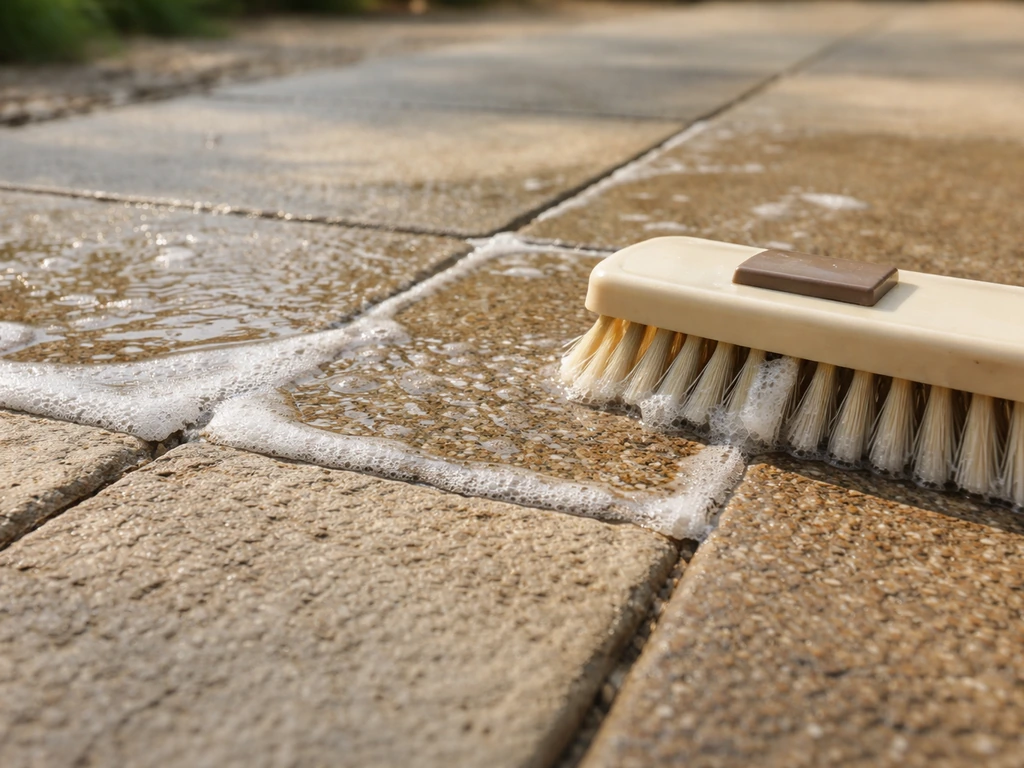
Dwell time is where the work actually happens, and it's the step most people rush. For the Algae Remover, let the solution sit on the surface long enough to penetrate the growth. On a warm dry day this might be 20 to 30 minutes. On a cool or damp day, give it longer.
The surface should visibly change colour as the algae starts dying. For the Rust Remover, up to 15 minutes is the guidance, and you'll often see the stain lift and shift colour as it works. For the Salt Neutraliser, allow 5 to 30 minutes depending on how thick the deposits are. Don't let any of these products dry out on the surface during dwell time.
If it's a hot sunny day, mist the surface lightly to keep it damp.
Step 4: Agitate and rinse
For the Patio Cleaner and Algae Remover, agitate with a stiff bristle brush after the dwell period, working the product into grout lines and textured areas. Then rinse thoroughly with water. You can use a hose or a pressure washer for the rinse. For the Rust Stain Remover, after the 15-minute dwell, the RPB guidance recommends following up by washing the treated area with RPB Heavy Duty Surface Cleaner at medium strength, leaving that for another 5 to 10 minutes, then rinsing. This neutralises any acid residue and is especially important if the stone noticeably darkens in the treated area. Don't skip this follow-up step when using the rust remover.
Pressure washing: when it helps and when it causes damage
Pressure washing and chemical cleaning aren't an either/or choice on most patios. If you want the best patio furniture cleaner for the job, follow the same logic: match the cleaner to your material and the grime type before applying it. The better approach is to blank" rel="noopener noreferrer">let the chemical cleaner do the heavy lifting on stains and organic growth first, then use a pressure washer to rinse and remove the loosened contamination. Going straight in with a pressure washer on thick moss or embedded algae often just blasts the surface without actually removing the biology underneath, and it can push contamination into cracks.
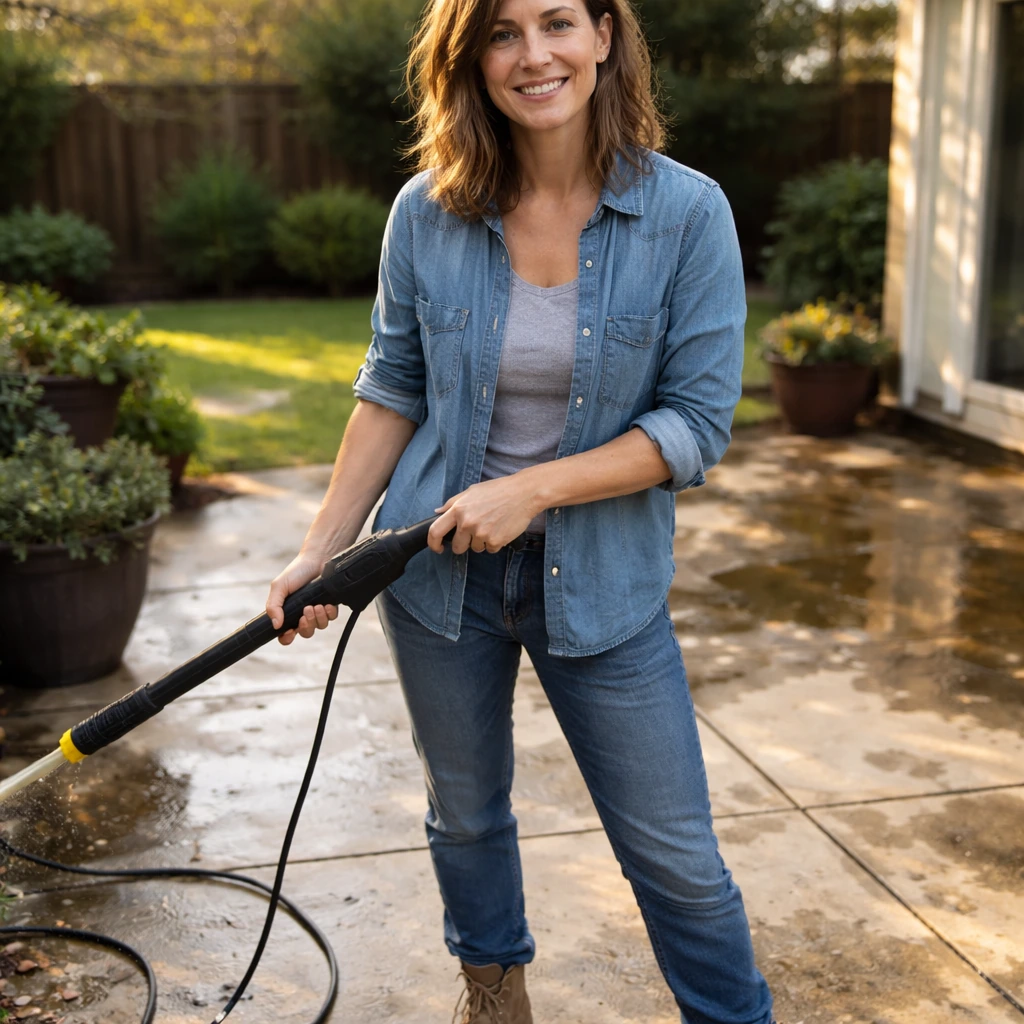
That said, pressure washing done wrong causes real damage. Too much pressure or a nozzle that's too narrow can etch cement paste on concrete, leave wand marks or zebra striping, and roughen the surface so it traps moisture and encourages algae to come back faster. I've seen patios that looked worse after pressure washing than before, specifically because someone used a zero-degree tip six inches from the surface. Here are the practical safe guidelines by surface type:
| Surface | Recommended Max Pressure | Nozzle | Notes |
|---|---|---|---|
| Concrete | Up to 2500-3000 psi | 25-40 degree fan | Keep wand moving; avoid lingering in one spot |
| Natural stone (sandstone, slate) | 800-1200 psi max | 40 degree fan | Sandstone is soft; high pressure damages surface texture |
| Porcelain | Up to 2000 psi | 25-40 degree fan | Dense material; check grout/mortar joint condition first |
| Brick | 1200-1500 psi | 25-40 degree fan | Protect mortar joints; avoid direct pressure on edges |
| Limestone | 800-1000 psi max | 40 degree fan | Very acid and pressure sensitive; chemical clean only if possible |
A rotary surface cleaner attachment is worth using on larger flat areas. It distributes pressure evenly and eliminates the striping you get from a wand. Keep the washer moving at a consistent pace and overlap passes by about 50 percent. For patios where the algae or moss is already dead from the RPB treatment, you'll find the pressure needed for a clean rinse is much lower than if you'd gone in with the washer first.
What 'done' looks like: rinsing, drying, and finishing
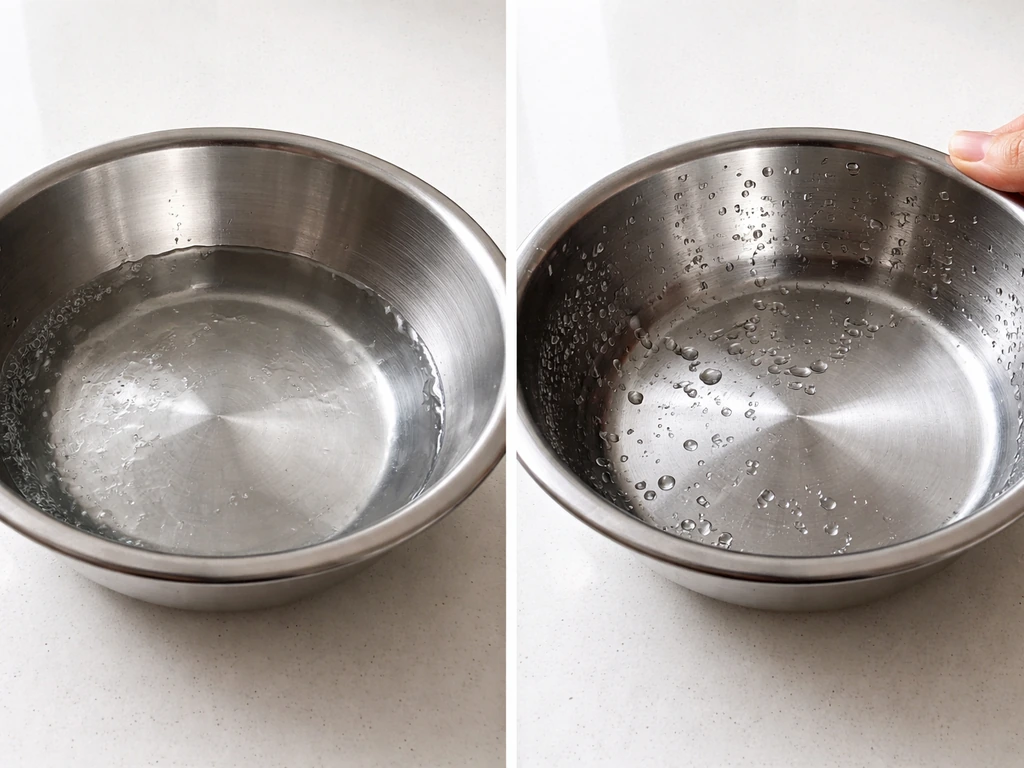
After rinsing, the surface should be visibly clean with no residue, foam, or cloudy film. Run your hand over a small area when it's wet. It shouldn't feel slippery (which would indicate algae residue still present) or gritty (which could mean incompletely rinsed product). Rinse until the runoff water runs completely clear. If you're using the Algae Remover, some products in this category continue working for a few days after rinsing as remaining spores die off, so the surface may look slightly different again after a day or two of weather exposure. That's normal.
Drying time depends on the surface and the weather. Porous surfaces like sandstone absorb water and can take 24 to 48 hours to fully dry in cool UK conditions. Porcelain dries much faster. Don't assess the final result when the patio is still wet. Wet stone often looks darker and hides remaining stains that become obvious once dry. Check the surface properly once it's had a full dry day.
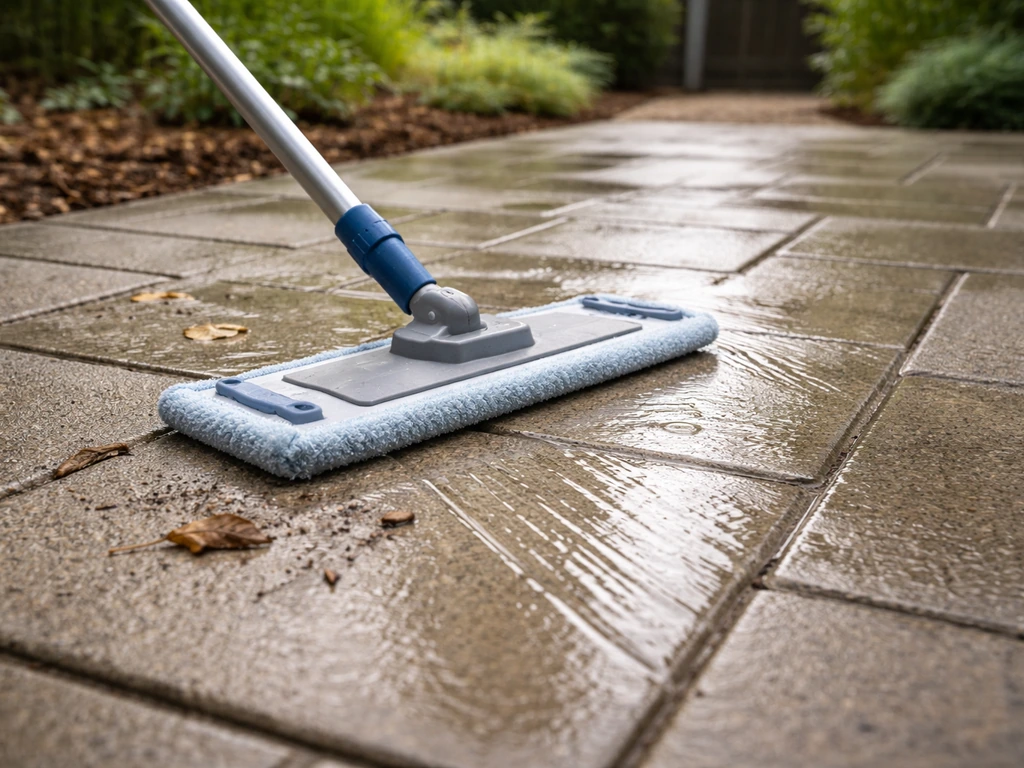
Once the patio is clean and dry, this is the right moment to apply a sealant if you want longer-term protection. If you also want the best outdoor patio mop for day-to-day upkeep, the right mop type and routine can help keep algae and grime from building up again. A good breathable impregnating sealer on natural stone or concrete significantly slows the return of algae and makes future cleaning much easier. It's optional but genuinely extends the time between deep cleans, especially on north-facing or shaded patios where biological growth is a recurring problem. The RPB range includes sealants designed for use after their cleaning products, which makes compatibility straightforward.
Safety, protecting plants and pets, and fixing problems
Protecting plants, pets, and nearby surfaces
Most algae removers and patio cleaners are harmful to plants, especially at stronger dilutions. Before applying any RPB product near borders or planted areas, wet down surrounding soil and plants with plain water first. This dilutes any overspray or runoff before it reaches roots. Cover sensitive plants with plastic sheeting if they're immediately adjacent to the patio edge. Keep pets and children off the treated surface until it's been fully rinsed and has dried. With the Rust Stain Remover specifically (which is acid-based), be extra careful about runoff reaching metal fittings, painted surfaces, or adjacent stone that could be affected.
Handling runoff responsibly
Patio cleaning runoff can enter drains that connect to watercourses, which is environmentally problematic especially with acid-based or biocidal products. Where possible, direct rinse water onto a grassed area rather than straight into a drain. Most RPB products are used in small enough quantities that the diluted rinse water is low-risk, but using a drain guard or simply being aware of where the water flows is good practice.
Troubleshooting common problems
- Streaking after cleaning: usually caused by incomplete rinsing or letting the product dry on the surface; re-wet the area and scrub with a stiff brush, then rinse thoroughly again
- Stains that don't lift on first pass: allow a second application with a slightly stronger dilution and longer dwell time; for rust stains that persist, a second focused paintbrush application up to the 15-minute limit usually shifts them
- Surface darkening after rust treatment: this is an acid reaction and RPB specifically advises treating with Heavy Duty Surface Cleaner as a neutraliser, then rinsing; don't leave it
- Etching or texture change on stone: this is usually caused by using the wrong product (acid on limestone, excessive pressure washer use) or leaving a product on too long; there's no quick fix for etching but a sealant can help mask minor surface roughness
- Algae returns quickly: this usually means the surface is perpetually damp or shaded; apply a sealant after cleaning and consider whether drainage or shade can be improved; a preventive re-treatment in spring and autumn will keep growth from re-establishing
- White powder reappears (efflorescence): this is normal on new masonry and can take a season to fully stop; repeat treatment with Salt Neutraliser as needed and ensure the patio has adequate drainage beneath it
One thing to check before you start
Always do a patch test on an inconspicuous area before treating the whole patio, especially with the Rust Stain Remover or any acid-containing product. Apply a small amount, leave for the recommended time, rinse, and let it dry completely before judging the result. This takes maybe 30 minutes but it can save you from a very expensive mistake on expensive stone. I'd consider it non-negotiable on natural stone you haven't cleaned with RPB products before.
If one pass isn't enough
Heavy moss and thick biological growth that's been building up for years rarely lifts completely in a single treatment. If the first application of Algae Remover improves but doesn't fully clear the surface, repeat the treatment after 24 to 48 hours. The biology that survived the first pass is weakened and a second application usually finishes it.
For grease and oil stains that aren't shifting with the standard patio cleaner, a specialist degreaser applied before the general clean is a better approach than repeatedly applying a product that isn't formulated for oil. Similarly, if you're dealing with mould specifically concentrated in grout lines, a stiff grout brush and a slightly stronger product application makes a bigger difference than more overall coverage.
The Rob Parker's Best range covers most of what a UK homeowner will encounter, but knowing which product to reach for matters more than applying more of the wrong one. If you want the best outdoor patio cleaner for your specific patio, start by matching the cleaner to your surface and the type of grime or staining you're dealing with.
FAQ
Can I dilute everything if my patio is small or the stain is light?
Use the “neat only” product when the label requires it, and only dilute the ones the range instructs. In this range, the Rust Stain Remover is applied to the stain, and the Patio Cleaner for Natural Stone and Concrete is used neat, do not dilute and do not mix with other products. If you already diluted something that should be neat, it will usually underperform and you should not try to “fix” it by adding other cleaners, instead follow the correct product and application on the remaining area.
How do I know if I have rinsed the cleaner off properly?
Because wet stone can look uniformly darker, you can misjudge results mid-process. Wait until the patio has had a full dry day, then re-check in daylight. Also check by feel: if it still feels slightly slippery when wet, treat again for algae, and if it feels gritty, you likely haven’t rinsed enough or you left product residues in grout lines.
What should I do if the first Algae Remover treatment doesn’t fully clear the patio?
For best results after heavy growth, do a second application after 24 to 48 hours rather than immediately, especially with algae and moss. Rerun the Algae Remover & Patio Reviver method, but re-sweep and pre-wet only if the surface is very dry, then dwell and agitate again. Immediate repeated scrubbing before the biology has died can leave patchiness.
Should I pressure wash before or after using Rob Parker’s Best products?
Yes, but only for the right stage. Chemical cleaning should be done first to break down growth and stains, then rinsed with pressure at the lowest practical setting to remove loosened contamination. If you pressure wash first on thick moss or embedded algae, you can blast the surface and push biological material deeper into cracks, which often makes regrowth worse.
My stone might be limestone, what’s the safest way to avoid damage with Rust Stain Remover?
Do not use the Rust Stain Remover on limestone, and don’t rely on color alone. If you are unsure, do the hidden corner test and watch for fizzing, that indicates limestone and the product can damage it. If it fizzes, switch to an approach designed for your stone type, then avoid any acid-based products on that area.
Why does my patio look streaky after pressure washing?
If you see a “zebra” or striping pattern after rinsing, it usually comes from inconsistent wand angle or too much pressure. Use a rotary surface cleaner attachment on larger flat areas, keep the nozzle moving at a steady pace, overlap passes by about half, and avoid staying in one spot long enough to roughen the surface.
What’s the best way to deal with mould concentrated in grout lines?
For grout-focused mould or green lines, overall saturation is less important than reaching inside the grout. After the dwell period, scrub grout lines with a stiff grout brush, then rinse thoroughly. If mould remains concentrated in grout, a slightly stronger application and a second treatment after 24 to 48 hours is usually more effective than adding extra product over the whole patio.
When can I seal after cleaning, and what mistakes cause blotchy sealing?
If you want to preserve the cleaned look and slow algae return, seal only after the patio is fully dry and there is no chemical residue. Sealant compatibility matters, because sealing over residues can lead to blotching or peeling. Apply the sealer after you have finished rinsing and drying, then follow up with maintenance mopping routines to prevent re-growth buildup.
How should I protect plants, pets, and garden borders during treatment?
Yes. If plants are adjacent, wet down soil and vegetation first so any overspray or runoff is diluted before it reaches roots. For immediate adjacency, cover sensitive plants with plastic sheeting. Keep children and pets off the treated area until the surface has been fully rinsed and dried, and avoid reusing runoff pathways that might hit borders.
I think I used too much product in one section, will it ruin the patio?
On larger patios, keep track of coverage area and don’t “chase” missed spots by piling on more product. Use the recommended dosage ranges, then re-treat the missed areas with the same product and correct dwell and agitation. Over-application can leave residues that look like cloudy film and require extra rinsing.
Can I use the same Rob Parker’s Best cleaner on every patio material, including slabs and painted surfaces?
Rubber or plastic patio materials and some glazed or coated surfaces can react differently to masonry cleaners. The safer approach is to test on an inconspicuous area first and, if the cleaner is acid-based or designed for stone pores, keep it off coatings and painted surfaces. When in doubt, treat only the masonry joints and stone areas, and mask nearby non-target surfaces.
After using Rust Stain Remover, the area looks darker. Is that normal and what do I do?
Rust stains often need two phases: targeted acid treatment on the stain, then a neutralisation follow-up to prevent lingering residue. If a rust mark looks darker after the rust step, do the Heavy Duty Surface Cleaner follow-up at the stated medium strength window, then rinse well. Skipping this step is one of the most common reasons rust-related staining “comes back.”
Best Outdoor Patio Mop: Choose, Use, and Clean Any Mess
Pick the best outdoor patio mop by surface and stains, with step-by-step use, safe cleaners, and maintenance tips.