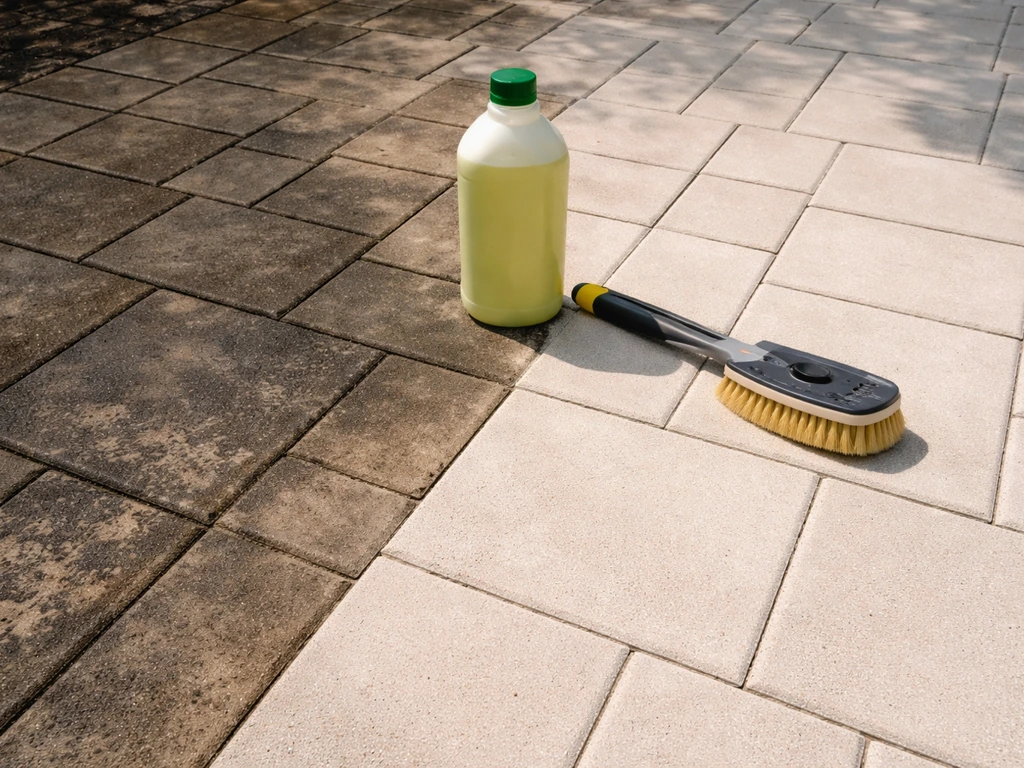
For most outdoor patios, a microfiber flat mop with a long telescoping handle and replaceable pads is the best all-around choice. It works across concrete, porcelain, and most stone surfaces, rinses clean between passes so you're not smearing grime around, and pairs well with pH-neutral cleaners that won't etch or dull your surface. That said, which mop actually works best depends on what your patio is made of and what kind of mess you're dealing with, so let's get specific. For grime beyond the patio, choosing the best patio and driveway cleaner for your surface can make the rest of the cleaning faster and safer.
Best Outdoor Patio Mop: Choose, Use, and Clean Any Mess
Rhea Lang
20 Jun 2026
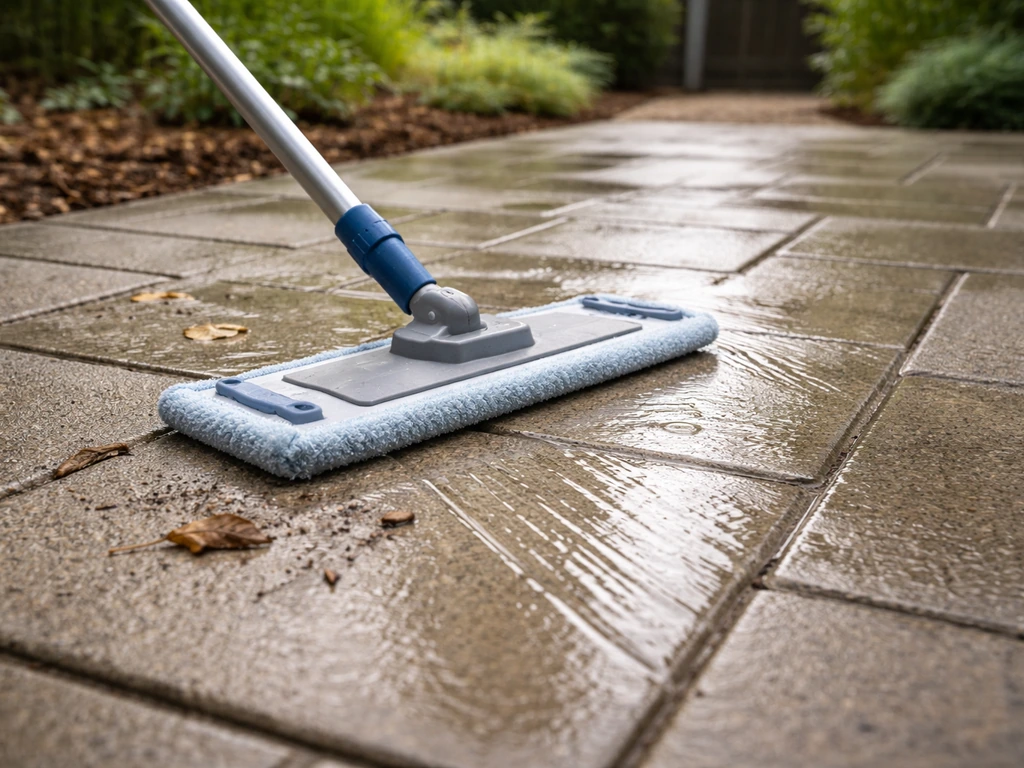
Choosing the right mop for your patio surface
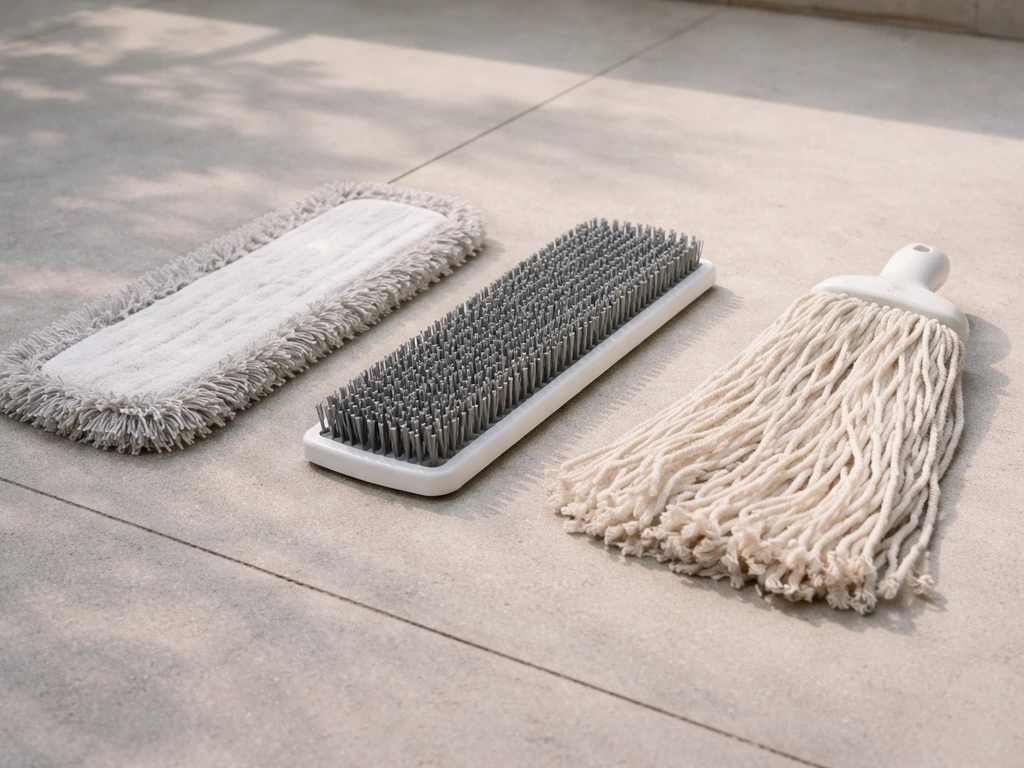
Patio surfaces have very different tolerances, and the wrong mop or cleaning approach can cause real damage. Here's how to think about each one before you buy anything.
Concrete (sealed and unsealed)
Sealed concrete is probably the most forgiving patio surface for mopping. A microfiber flat mop works brilliantly here because it won't scratch the sealer and picks up fine grit that would otherwise dull the finish. For sealed concrete, aim for a pH of around 6.5 to 7.0 in your cleaning solution, which is basically neutral. Go too alkaline or too acidic and you can cloud or strip the sealer over time. Unsealed concrete is a little tougher and can handle a stiffer scrub head for ground-in dirt, but even here, bleach and ammonia can cause surface damage, so stick to pH-neutral products.
Natural stone (sandstone, slate, limestone, travertine, marble)
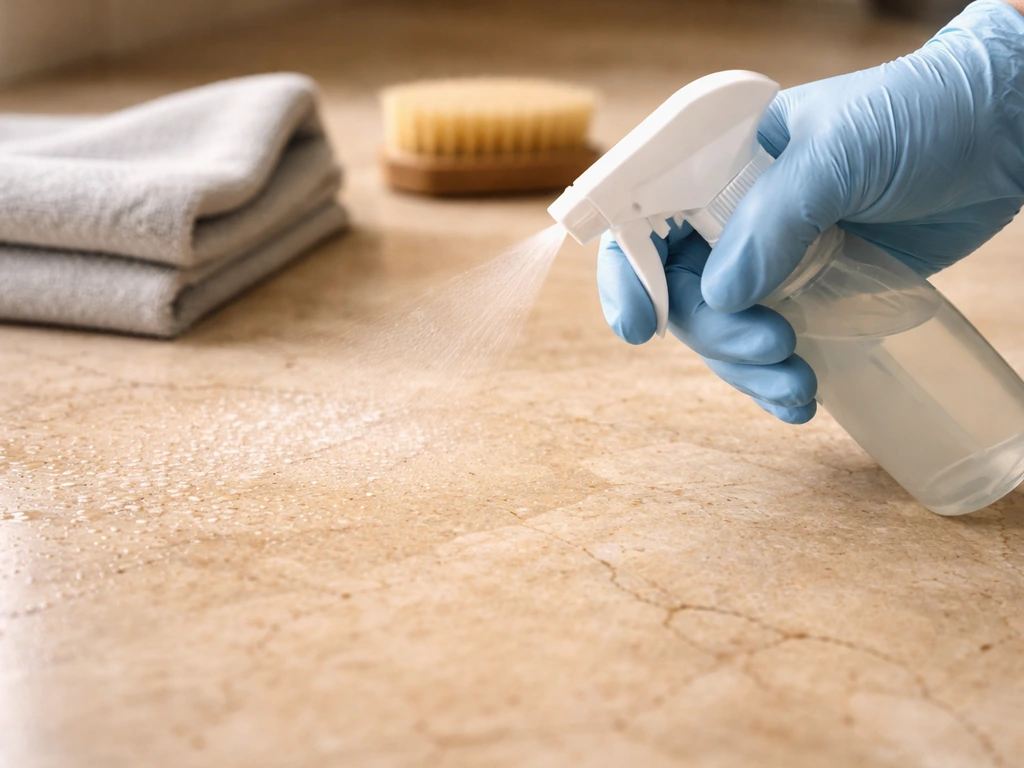
This is where you have to be careful. Natural stone is chemically reactive, and acids will etch it. That includes vinegar, lemon juice, and anything labeled as a rust or lime remover (CLR, for example, explicitly states it should not be used on natural stone). Even some all-purpose cleaners can leave a dull residue on stone surfaces.
Use a soft microfiber mop, never a stiff scrub head with an abrasive pad, and always use a pH-neutral stone-specific cleaner. For routine care, damp mopping is enough. Slate can handle a slightly firmer monthly scrub with a slate-appropriate product, but avoid anything with steel or metal abrasive components. IRG Stone Stone Care Guide similarly advises avoiding steel scouring pads and other metal abrasives when caring for natural stone [avoid anything with steel or metal abrasive components](https://www.
irgstone. com/stone-care/).
Brick and pavers
Brick is porous and textured, which means flat mop pads tend to miss the low spots between surface ridges. A string mop or a scrub-head mop gets into the texture better. Avoid strong acids like muriatic acid on brick, even for stubborn efflorescence (those white salt deposits). Strong acids can drive salts deeper or damage the face of the brick. A pH-neutral cleaner applied with a scrub mop and a bit of dwell time will handle most routine cleaning.
Porcelain
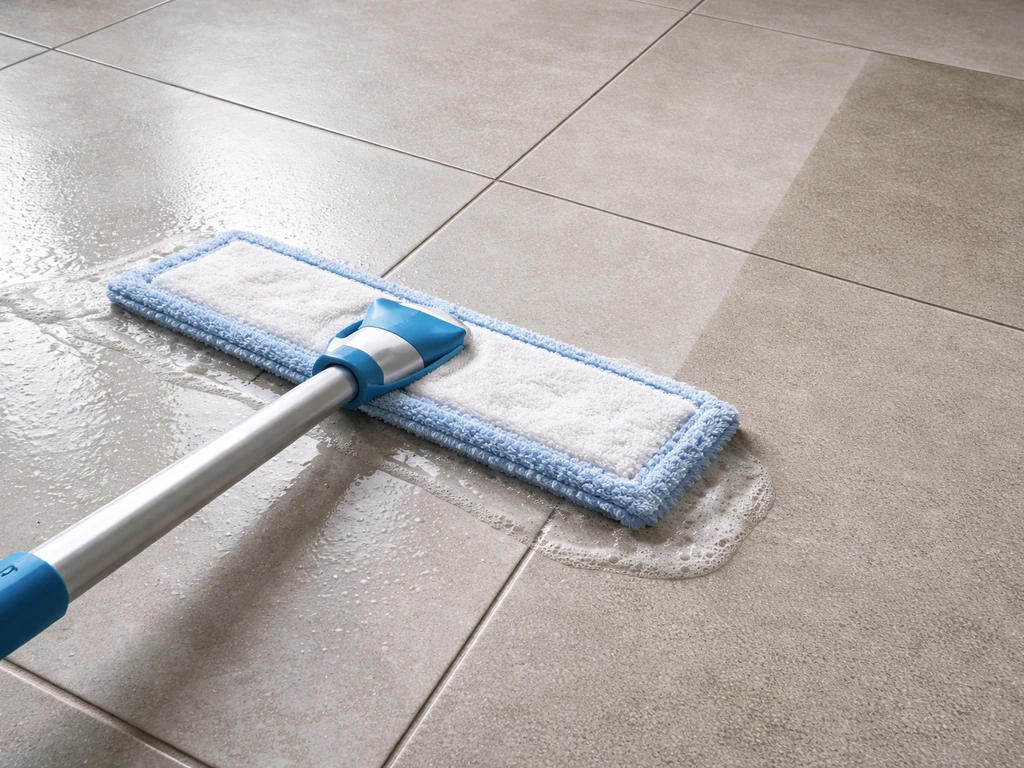
Porcelain paving is the easiest surface to mop. It's dense, non-porous, and resistant to most cleaners. A microfiber flat mop is perfect, and you have a bit more flexibility with cleaning chemistry, though pH-neutral is still the safest default. Avoid anything highly abrasive because porcelain can scratch.
Mop types that actually work outdoors
Indoor mops aren't always up to outdoor work. Patios deal with heavier grime, more textured surfaces, and larger areas than most kitchen floors. These are the types worth considering.
| Mop Type | Best For | Avoid On | Notes |
|---|---|---|---|
| Microfiber flat mop | Sealed concrete, porcelain, slate, smooth stone | Deep-textured brick | Best all-rounder; rinses easily; replaceable pads are key |
| String/cotton mop | Brick, uneven pavers, large areas | Polished or sensitive stone | Gets into texture; harder to wring cleanly; needs thorough rinsing |
| Sponge mop | Small patios, smooth surfaces | Rough concrete, brick | Holds too much dirty water; smearing risk on large areas |
| Scrub head mop | Unsealed concrete, grout lines, ingrained dirt | Natural stone, sealed surfaces | Great for heavy scrubbing; check pad is non-abrasive on delicate surfaces |
| Squeegee/flip-head mop | Post-rinse drying, porcelain, smooth patios | Rough or textured surfaces | Useful for pushing rinse water off and preventing puddles |
If you can only buy one, get a microfiber flat mop with a telescoping handle and at least two or three spare pads. The ability to swap a dirty pad mid-job is what prevents you from smearing algae or grime back across a surface you've just cleaned. I learned this the hard way after mopping half a patio with a single pad that had already picked up a load of green algae from the shaded end.
Features that separate a good outdoor mop from a frustrating one
Handle length and reach
Patios are big. A mop with a fixed handle around 120 cm (about 4 feet) will have you hunching and shuffling constantly. Look for a telescoping handle that extends to at least 140 cm, ideally 150 cm or longer, so you can cover ground without wrecking your back. The locking mechanism matters too. A twist-lock that slips under pressure makes scrubbing nearly impossible.
Pad material and refillability
Microfiber pads pick up more grime per pass than cotton or sponge and rinse out more cleanly in a bucket. Look for pads with a Velcro or clip attachment so you can swap them quickly. OXO, for instance, sells refill microfiber pads for its spray mop system, which is the right approach as it keeps cleaning chemistry consistent and prevents you from working with a pad that's already saturated with dirty water. Avoid proprietary heads where pads are only available from one supplier at a premium.
Grip and build quality
Outdoor mopping involves more muscle than indoor work. Scrubbing at moss or compacted algae takes real pressure. A rubberized or ergonomic grip makes a noticeable difference over an hour of cleaning. Plastic handles with smooth grips get slippery when wet, which is basically always outdoors. Look for handles with textured or rubberized sections.
Rinsability
This is the feature most people overlook. A mop that doesn't wring or rinse properly smears grime rather than removing it. Flat microfiber mops are easier to rinse in a bucket than string mops, but you still need a wringer bucket or a second clean bucket for final rinsing. If you're using a spray-style mop outdoors, make sure the reservoir can be filled with your chosen cleaning solution and that the head is easy to remove for pad swaps.
How to use a patio mop on common outdoor messes
The technique matters as much as the mop. Here's how to approach the most common outdoor stains and growths without spreading them or damaging the surface.
Mold and algae
- Brush off any loose surface growth with a stiff outdoor broom first.
- Apply a patio-appropriate algaecide or diluted outdoor bleach solution to concrete or porcelain (not natural stone) and leave it for 10 to 15 minutes.
- Scrub with a microfiber or scrub-head mop using firm, overlapping strokes.
- Rinse thoroughly with clean water, working toward a drain or the edge of the patio.
- Swap to a clean pad before rinsing or you'll just redistribute the dead algae.
Moss
Moss is thicker and more stubborn than algae. Start by physically scraping as much as possible with a stiff brush or garden scraper before the mop touches it. Mopping over thick moss just moves it around. Once you've removed the bulk, apply a moss killer, give it dwell time according to the product label, then scrub and rinse with the mop.
CLR PRO’s technical data sheet also instructs doing a spot test and following label guidance on dilution, dwell time, and usage and safety notes spot testing and following label guidance on dilution, dwell time, and usage and safety notes.
On natural stone, use a moss killer labeled safe for stone, as many contain chemicals that can discolor limestone or sandstone.
Rust stains
Rust is tricky because removing it requires an acidic product, but acid damages natural stone. On concrete or porcelain, you can use a targeted rust remover, apply it to the stain only, let it dwell for the time specified, then mop it off and rinse thoroughly. Never use a strong rust remover like CLR on marble, limestone, travertine, sandstone, or slate. For rust on natural stone, the safest option is a poultice or a professional stone-safe rust treatment. General-purpose rust removers will etch the stone.
Grease
Grease from barbecues or outdoor cooking needs a degreasing cleaner. A pH-neutral degreaser works on most surfaces, but on natural stone stick to a stone-safe degreaser specifically. Apply, allow a short dwell time, then scrub with a microfiber mop using a circular motion, rinse thoroughly, and check you haven't pushed the grease into a porous surface. If it's an old set-in grease stain on unsealed concrete, you may need a second application and a scrub-head mop with a firmer pad.
Pet stains
Urine on patio surfaces is both a staining and an odor problem. An enzyme-based outdoor cleaner breaks down the urine compounds that cause the smell rather than just masking it. Apply to the affected area, let the enzymes work for at least five to ten minutes, then mop up and rinse. Most enzyme cleaners are pH-neutral and safe across all patio surfaces. Avoid ammonia-based cleaners for pet stains as ammonia mimics the smell of urine and can encourage repeat marking in the same spot.
Best cleaning solutions to pair with a patio mop
The cleaner you choose matters as much as the mop itself. The wrong chemistry causes etching, dulling, or discoloration that no amount of mopping can fix. For removing organic growth and grime, using the best patio mould cleaner with the right pH for your surface can make a big difference.
| Surface | Safe Cleaner Options | What to Avoid |
|---|---|---|
| Sealed concrete | pH-neutral all-purpose cleaner (pH 6.5–7.0), mild dish soap diluted in water | Bleach repeatedly, strong acids, ammonia |
| Unsealed concrete | pH-neutral cleaner, diluted bleach for algae/mold | Bleach routinely, strong ammonia, muriatic acid on surrounding stone |
| Natural stone (all types) | pH-neutral stone-specific cleaner, stone soap | Vinegar, lemon juice, CLR, bleach, any acid, high-alkalinity cleaners (pH above 10) |
| Slate | pH-neutral slate cleaner or stone soap, monthly scrub with slate-appropriate product | Acids, bleach, abrasive pads |
| Porcelain | pH-neutral cleaner, diluted outdoor detergent | Highly abrasive cleaners, strong acids long-term |
| Brick/pavers | pH-neutral paving cleaner, diluted dish soap, mild paving detergent | Muriatic acid, strong alkalis, anything that drives salts deeper |
For natural options, warm water with a small amount of pH-neutral dish soap (the plain, non-citrus, non-bleach variety) works well for routine mopping across most surfaces. It's not going to kill algae or lift rust, but for regular maintenance it keeps surfaces looking clean without any chemical risk. Checkatrade recommends exactly this approach for paving slabs: pH-neutral washing-up liquid and warm water, applied and then rinsed off.
For tougher jobs, move to a surface-appropriate specialist cleaner rather than reaching for vinegar or bleach as a shortcut. If you're comparing the best outdoor patio cleaner options for tough spots, choose a surface-appropriate specialist cleaner instead of relying on vinegar or bleach shortcuts. The damage from repeated acid or bleach use on natural stone or sealed concrete is cumulative and often irreversible.
If you're dealing with biological growth like mold or algae regularly, it might be worth looking at dedicated outdoor patio cleaners that include a residual biocide. These are covered in more detail in guides focused specifically on the best outdoor patio cleaner and best patio mould cleaner, which go deeper into chemical options for persistent growth problems.
Keeping your mop in good shape between uses
A mop that sits wet in a shed for two weeks turns into a source of mildew and bad smells, and a mildewy mop will leave an unpleasant odor on your patio next time you use it. Proper maintenance takes five minutes and saves you from having to replace pads constantly.
- Rinse the mop head thoroughly in clean water immediately after use until the water runs clear, not just slightly less dirty.
- If you've been mopping up biological grime like algae or moss, soak the pad in a dilute sanitizing solution (a capful of bleach in a bucket of water works for synthetic pads, but check the pad manufacturer's guidance) for ten minutes before rinsing again.
- Wring or squeeze out as much water as possible, then hang the mop head down or lay the pad flat in a ventilated spot. Never leave it balled up in a bucket.
- If the pad is detachable, remove it completely and let it air dry separately from the handle.
- Machine-wash microfiber pads every few uses if they're designed for it. Most are, usually at 40 to 60 degrees Celsius, without fabric softener (which clogs the microfiber and kills its cleaning ability).
- Store mops and dried pads somewhere with airflow, not in a sealed bin or bag, and keep them away from direct sunlight which can degrade certain pad materials over time.
Pads that smell off even after washing have usually been left wet too long and the mildew is embedded. At that point, replace the pad rather than trying to clean it out. This is exactly why buying a mop with widely available pad refills matters: you shouldn't have to replace the whole mop just because a pad has gone musty.
What to buy based on your specific situation
Here are direct scenario-based recommendations. Find your situation, buy accordingly, and you'll be set up correctly from the start.
| Your Patio Situation | Best Mop Type | Cleaner to Pair | Key Feature to Look For |
|---|---|---|---|
| Sealed concrete, general cleaning and algae | Microfiber flat mop | pH-neutral all-purpose or diluted bleach for algae | Telescoping handle 140 cm+, easy pad swap |
| Natural stone (sandstone, slate, limestone), routine care | Soft microfiber flat mop | pH-neutral stone soap only | Extra-soft pad, no abrasive backing |
| Porcelain paving, all-around use | Microfiber flat mop or squeegee/flip-head | pH-neutral cleaner | Squeegee side useful for drying after rinse |
| Brick or textured pavers, ingrained dirt | String mop or scrub-head mop | pH-neutral paving cleaner | Sturdy scrub capability, easy wringer bucket |
| Heavy moss or algae on concrete | Scrub-head mop (after physical removal first) | Biocidal patio cleaner or diluted bleach | Firm scrub pad, multiple spare pads |
| Grease stains from BBQ on concrete/porcelain | Microfiber flat mop with scrub pad option | pH-neutral degreaser | Pad that can be replaced mid-job |
| Pet stain odor on any surface | Microfiber flat mop | Enzyme-based outdoor cleaner (pH-neutral) | Multiple pads to avoid re-contamination |
| Large patio, tired of bending over | Telescoping microfiber flat mop | Your surface-appropriate choice above | Handle that extends to at least 150 cm |
To summarize what to look for when you're standing in the cleaning aisle or browsing online: telescoping handle of at least 140 cm, replaceable microfiber pads available separately, a secure locking mechanism on the head, and a wringer bucket if you're getting a string or sponge style. Spend a little more on a mop that has widely available replacement pads rather than a cheap one with proprietary parts that disappear from shelves.
One final thing: the mop is only part of the equation. For serious patio grime, algae, or persistent mold, the cleaning solution does most of the heavy lifting. For many homeowners, a targeted patio cleaner like the Rob Parker’s best patio cleaner option is the quickest way to tackle algae, grime, and stubborn stains Rob Parkers best patio cleaner. A great mop with the wrong cleaner won't get the result you want, and neither will a great cleaner applied with a mop that smears more than it removes. Get both right and maintaining your patio becomes a simple, regular job rather than an annual battle.
FAQ
Can I use the same mop for my patio and indoor floors?
You can, but rinse and dry it fully between jobs, especially if the patio had algae, rust remover, or degreasers. If you used anything acidic for rust on concrete, keep that mop head dedicated to concrete or porcelain so you don't risk residue transferring indoors.
What’s the right way to rinse a microfiber patio mop so it doesn’t smear grime?
Use a two-bucket or bucket plus wringer setup: one bucket for dirty rinse water and one for final rinse or the wringing station. After each section, rinse the pad until water runs clear, then continue, instead of waiting until the end of the job.
Do I need to remove furniture or coverings before mopping outside?
For best results, yes, but at minimum move planters and tighten covers so the mop can reach edges. Patio growth often starts under chair legs and along drainage lines, so leaving items in place usually forces re-cleaning later.
How often should I replace microfiber pads for an outdoor patio mop?
Replace when pads stay musty even after thorough washing and drying, or when they stop picking up grit (they start spreading films instead). If you can, keep spares so you can rotate pads and avoid reusing a pad that has absorbed algae or grease.
Is it safe to use pressure washers instead of mopping for patios?
They can be useful for heavy buildup, but they often push grime deeper into porous surfaces like unsealed concrete and can loosen joint sand on some pavers. If you already mop to maintain, use the mop for regular cleaning and save pressure washing for periodic deep cleans with surface-specific nozzles.
What if my patio has multiple materials, like porcelain tiles on brick borders?
Treat each zone based on the most sensitive surface. For example, use microfiber pads and pH-neutral chemistry on stone and brick-adjacent areas, and only use targeted rust or degreaser products on the specific stain location, preventing runoff into the neighboring material.
How do I clean algae or moss without spreading it during mopping?
Scrape first, then work in small sections with clean pads and frequent rinsing. Avoid mopping when surfaces are dry and powdery, since that can spread spores, and stop to rinse the pad whenever water starts turning green or gray.
Can I use bleach or ammonia on outdoor patios?
Avoid them for most mopping tasks, even though bleach is sometimes suggested online. The article notes risk on concrete sealer, unsealed surfaces, and especially natural stone, and ammonia is particularly problematic for pet-related urine because it can drive repeat marking.
What’s the biggest mistake people make when cleaning rust spots?
Using a general-purpose rust remover on stone or letting it dwell beyond the stain. If the rust is on natural stone, the safest approach is a stone-safe poultice or professional treatment, and for concrete or porcelain use the product only on the stain and rinse thoroughly.
Should I mop urine stains the same way as regular dirt?
No, use an enzyme-based cleaner and give it dwell time before mopping up. Also focus on rinsing after the enzyme step, since leftover residue can keep the area slightly damp and contribute to recurring odor.
Is vinegar ever acceptable on patios?
It’s not recommended for natural stone, because acids can etch. If your patio includes limestone, slate, marble, or travertine, stick to pH-neutral or stone-specific cleaners and avoid vinegar on any stone-adjacent runoff paths.
Next Article
Best Outdoor Patio Cleaner: Pick, Use, and Avoid Damage
Choose the best outdoor patio cleaner for your surface and stains, with safe steps and avoid-damage tips.