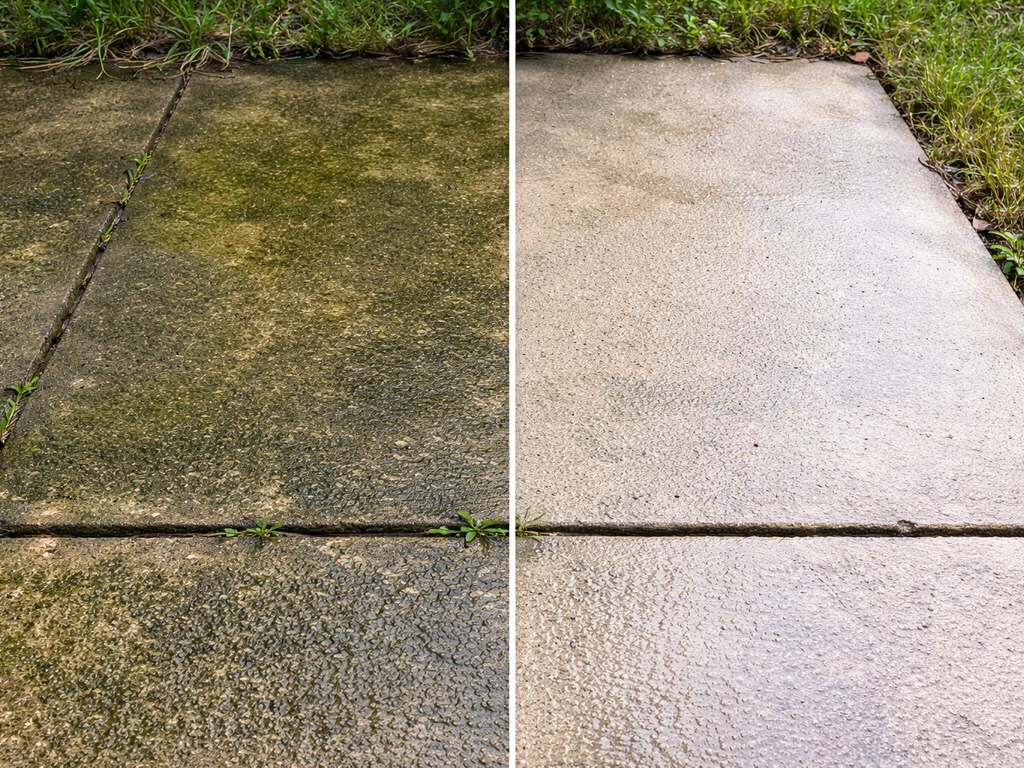
Wet & Forget Outdoor is a spray-and-leave patio cleaner that genuinely works, but it works slowly. If your patio is covered in algae, moss, mildew, or general green slime, it will clear it, typically within a few days to a few weeks for lighter growth, and up to 6 to 12 months for severe or heavily built-up cases.
Wet and Forget Patio Cleaner Reviews: Results, Use, Safety
Rhea Lang
29 Apr 2026
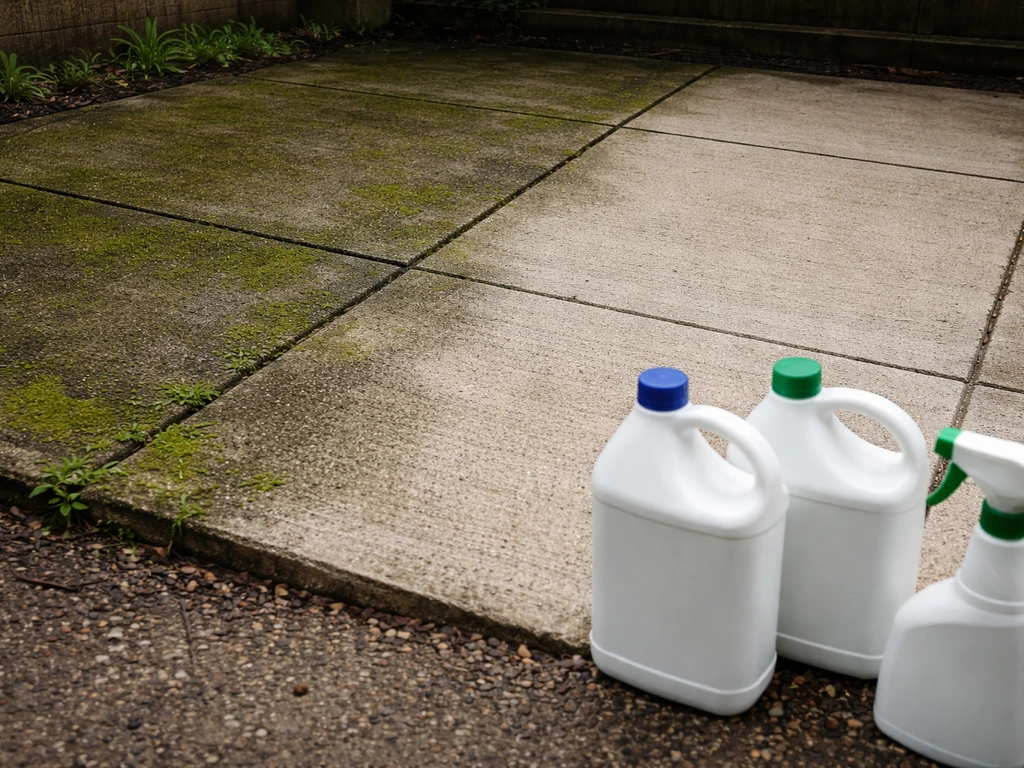
It is bleach-free, requires no scrubbing, and is safe on a wide range of surfaces including concrete, brick, natural stone, slate, and tile. The catch: it depends on rain and moisture to activate, it is not an instant fix, and it will do nothing for rust, oil, grease, or deeply embedded staining. If that matches your situation, it is one of the most low-effort patio cleaners available. If you need results this weekend, it is the wrong tool.
What Wet & Forget actually is and what problems it solves
Wet & Forget Outdoor is a biocidal cleaner built around a single active ingredient: alkyl dimethyl benzyl ammonium chloride (at 9. US EPA’s Pesticides Product Label System lists Wet & Forget Outdoor as EPA Registration Number 84115-1 and shows its active ingredient as alkyl dimethyl benzyl ammonium chloride at 9.9% alkyl dimethyl benzyl ammonium chloride (at 9.. 9% in the concentrate). That compound kills biological growth, which is why Wet & Forget is genuinely effective against algae, moss, mildew, lichen, and general green or black organic growth, but completely useless against inorganic stains like rust, grease, oil, paint, or mineral deposits. It is a targeted biological cleaner, not a general-purpose patio cleaner.
The product comes in several formats: a Ready-to-Use spray bottle (no mixing needed), an Outdoor Concentrate (mix 1 part product to 5 parts water in a garden sprayer), and an Extreme Reach Rapid hose-end version that attaches directly to your garden hose. There is also an Outdoor MAX variant that the manufacturer markets with higher coverage per bottle. Each has a separate safety data sheet and slightly different application notes, so pay attention to which one you are buying.
The product positions itself as a maintenance cleaner rather than a heavy-duty one-off treatment. The first application does the hard work of killing and breaking down existing growth. Subsequent applications then become much easier and faster because there is less biological buildup to deal with. That framing matters when you are reading reviews, because people who expect an immediate scrub-like result almost always come away disappointed, while people who treat it as a slow-release maintenance product tend to be happy with it long term. This also helps explain why many spray-and-leave patio cleaner reviews focus on long-term results rather than instant cleaning.
How well it works and how long results actually take
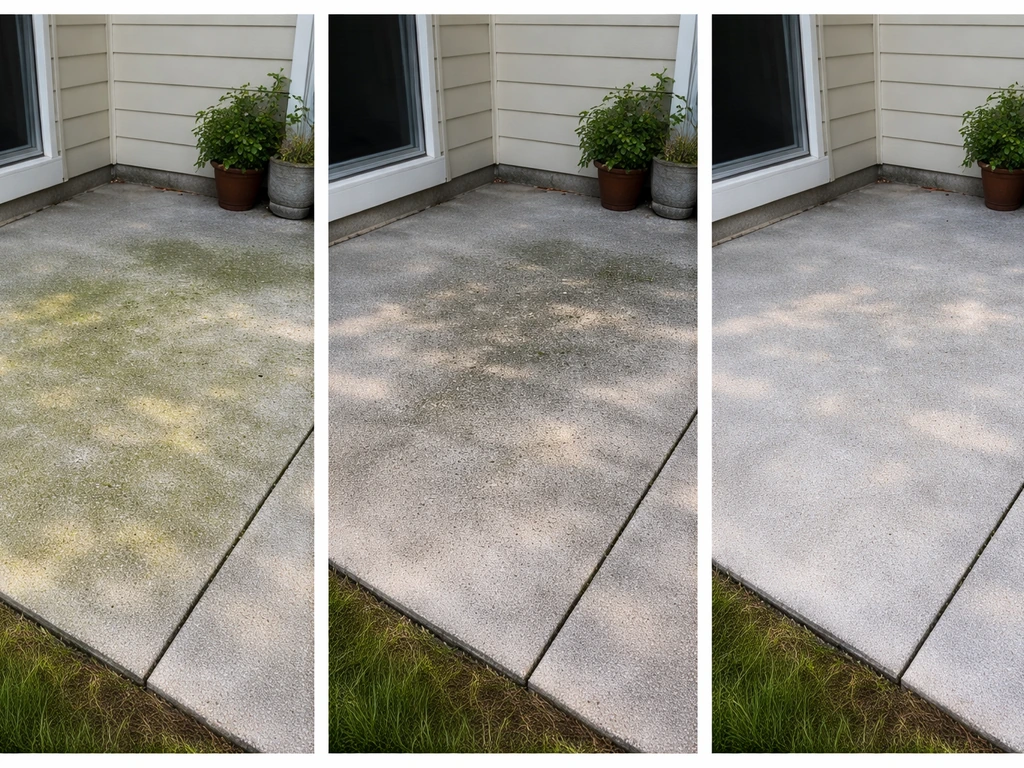
For light-to-moderate algae and mildew, you can expect to see visible improvement within a few days to a few weeks. The manufacturer states most green growths will clean up within a few days or weeks under normal conditions. In hands-on testing by reviewers at patio-cleaning roundups, some algae was noticeably reduced after around one week. Reddit users who have bought it in bulk (often from Costco) report it taking a few weeks to fully work, which aligns with that timeline. For heavy, thick moss or lichen that has been building up for years, a realistic timeframe is 3 to 6 months, sometimes closer to 12 months for very severe cases.
One thing that catches people off guard: the dying process. When moss or algae starts to die, it turns brown or black before it breaks down and washes away. If you apply Wet & Forget and come back a week later to find dark brown patches where green growth used to be, that is the product working, not making things worse. Rain and wind gradually remove the dead material over time. I have seen homeowners pull the product off the shelf and start scrubbing at this point, which just defeats the purpose and introduces unnecessary abrasion.
Weather plays a big role in how fast you see results. The product needs moisture, specifically rain or dew, to activate and rinse away dead biological material over time. In wet climates (or during autumn and winter in the UK and northern US), results tend to come faster because there is regular rainfall doing the rinsing work. In dry climates or during dry spells, the process slows down noticeably. This is not a flaw exactly, but it is something to plan around when you are deciding when to apply.
Surface compatibility: what it works on (and a few cautions)
Wet & Forget Outdoor is genuinely broad in its surface compatibility, which is one of its real strengths. You can often use Wet & Forget on patio umbrellas, but you’ll want to confirm the fabric or coating type first and test a small area before treating everything use wet and forget on patio umbrellas. The manufacturer explicitly lists a wide range of hardscaping materials as safe to use on.
| Surface Type | Compatibility | Notes |
|---|---|---|
| Concrete (patio/walkway/driveway) | Yes | Works well; porous surfaces absorb more product so coverage is lower |
| Brick | Yes | Safe on both smooth and textured brick; mortar joints fine |
| Natural stone / flagstone | Yes | Works across most natural stone categories |
| Limestone / travertine / bluestone | Yes | Manufacturer provides specific guidance for these stone types |
| Sandstone | Yes | Porous; use full saturation and expect lower per-bottle coverage |
| Slate | Yes | Compatible; gradual results typical on dense slate |
| Marble | Yes | Listed as compatible; test a small area first given sealing variation |
| Ceramic / porcelain tile (outdoor) | Yes | Listed as safe; grout lines may need more product |
| Painted or sealed surfaces | Caution | Not designed for painted surfaces; may affect some sealants over time |
| Decking (wood/composite) | Outdoor Spaces product recommended | Use the specific Outdoor Spaces formula rather than the standard Outdoor |
For most standard patio surfaces, you do not need to worry about compatibility. The main exceptions are painted surfaces, which the standard Outdoor product is not formulated for, and surfaces with specialty sealants. If your patio has a recently applied impregnating sealer, test a small inconspicuous area first and leave it for a week before treating the whole surface. I would also be cautious on polished or honed marble where surface finish matters, even though the manufacturer lists marble as compatible.
How to apply it correctly (this is where most people go wrong)
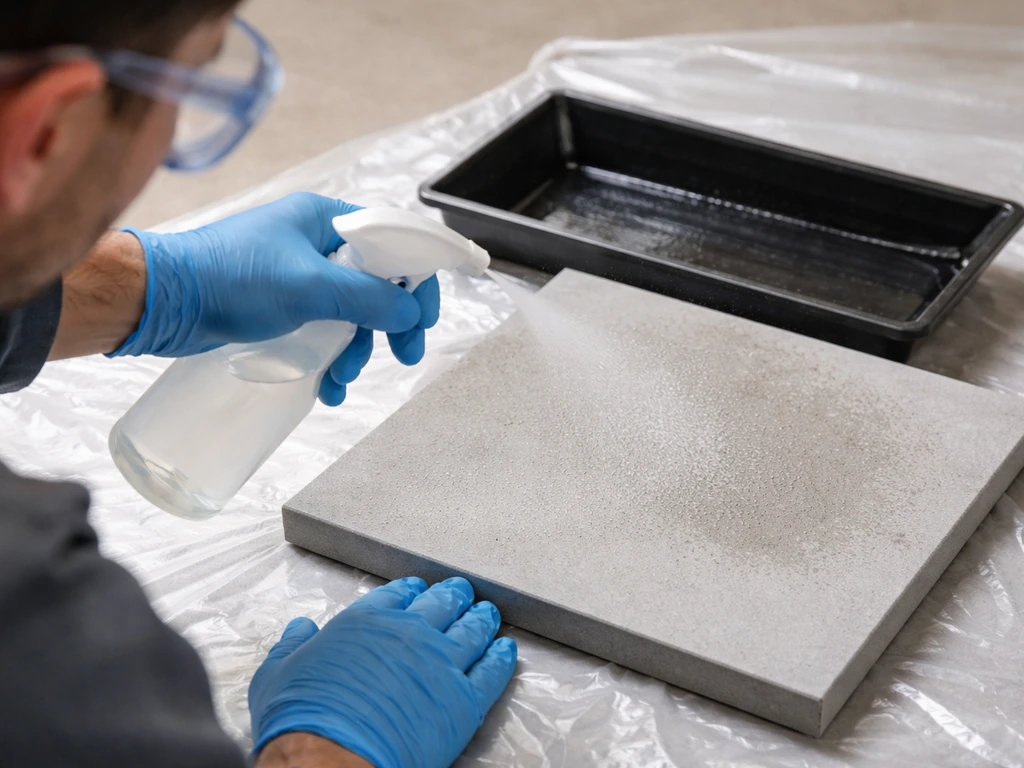
The application process is simple, but the details matter more than people expect. Getting these steps right is the difference between results in two weeks and results that never seem to come. If you want the step-by-step, the basics are to apply it evenly, let it sit, and rinse away the dead growth after it has activated with moisture Getting these steps right.
- Apply to a DRY surface. This is the single most important instruction and the one most commonly ignored. Wet & Forget is not a rinse-down cleaner. Applying it to a wet or recently rained-on surface dilutes the product before it can penetrate and adhere to the biological growth.
- Mix the concentrate correctly. The ratio is 1 part Wet & Forget Outdoor Concentrate to 5 parts water. Use a garden pump sprayer. Do not try to eyeball it: under-diluting wastes product and does not improve results; over-diluting reduces effectiveness.
- Saturate thoroughly. Spray until the surface is visibly wet and thoroughly saturated. This is not a light misting. Porous surfaces like sandstone or rough concrete will absorb more, so go over them a second time if the product disappears quickly.
- Choose a calm, overcast day. Applying on a hot sunny day causes rapid evaporation before the product has time to penetrate. An overcast, mild day (above about 50°F / 10°C) with no rain forecast for at least 4 to 5 hours is ideal.
- Leave it completely alone. No rinsing, no scrubbing, no follow-up. Rain does the rinsing for you over the following weeks.
- Reapply as needed. For heavy growth, a second application after 3 to 4 months often speeds up the final clearance. Once the initial growth is gone, an annual maintenance spray keeps it from returning.
Coverage varies quite a bit depending on surface porosity and how much biological growth is present. A 64 oz Ready-to-Use bottle covers roughly 60 to 180 square feet per bottle, with porous or heavily overgrown surfaces at the low end. A standard mixed batch of concentrate (1:5) will go further, which is why the concentrate is better value for anything larger than a small patio. The Outdoor MAX variant is marketed with roughly double the coverage of the standard Ready-to-Use, so it is worth looking at if you have a large area to treat.
What reviewers actually say: the honest pros and cons
What people love about it
- Genuinely no-scrub and no-rinse for most applications, which is a real time saver for large or awkward surfaces
- Bleach-free formula means no bleaching of surrounding plants, no discoloration risk on most surfaces, and no harsh fumes
- Works on a huge variety of surfaces without separate products
- Long-term maintenance becomes significantly easier after the first treatment clears the initial growth
- Safe for pets and family once the surface has dried (typically within a few hours)
- Concentrate format offers good value per square foot compared to many ready-to-use competitors
Common complaints and failure modes
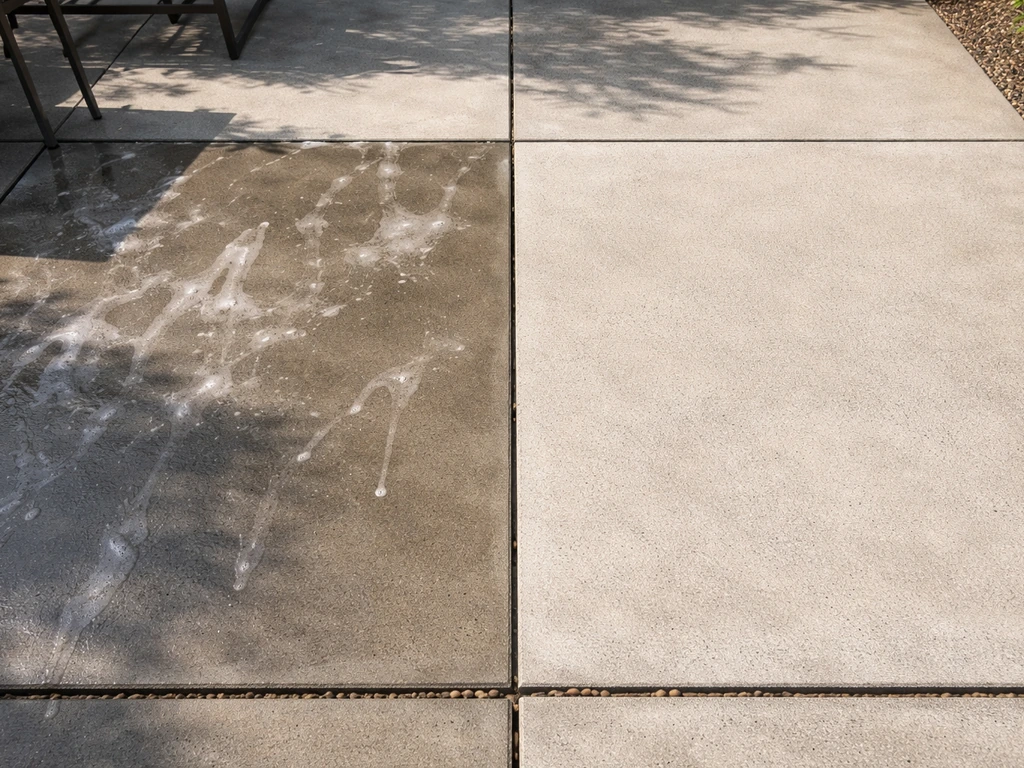
- Slow results frustrate people who expect immediate clearing, especially if they have seen instant results from pressure washing or bleach-based cleaners
- Does not work at all on rust, grease, oil stains, paint, or any non-biological staining. This is a frequent negative review and a genuine product limitation, not a product failure
- Applied to a wet surface or in direct sun, results are noticeably weaker and people report 'it did nothing'
- In very dry climates or during prolonged dry spells, the product can stall because there is not enough rain to activate and rinse the dead material
- The brown/black die-off phase confuses some users into thinking the product made things worse
- Under-application (too light a spray, especially on porous stone) produces patchy or incomplete results
- Wrong product for the job: some reviewers use the standard Outdoor formula on decking or indoor surfaces where it is not designed to be used
The most consistent pattern in negative reviews is a mismatch between expectations and how the product actually works. People who read the instructions carefully, understand the gradual mechanism, and apply it correctly are overwhelmingly satisfied. People who spray it on a wet surface on a sunny afternoon and check back two days later expecting a clean patio are not. That is not spin, it is just how biocidal cleaners work.
Safety, pets, plants, and runoff
The active ingredient is a quaternary ammonium compound (benzalkonium chloride type), which is effective against biological organisms and requires some care around living plants and animals. The safety data sheets for both the Ready-to-Use and the hose-end Rapid format recommend wearing gloves during application and avoiding skin and eye contact. Standard precautions: spray on a calm day to minimise drift, wear gloves, and keep children away while you are applying.
For pets, the guidance is straightforward: keep them off the treated surface until it is completely dry, usually a few hours under normal conditions. Once dry, the surface is safe. The concern is ingestion of the wet product, not long-term residue.
Plants and garden beds need a bit more attention. The manufacturer is clear on this: do not spray directly onto plants, and actively protect nearby landscaping from overspray. The recommended approach is to rinse plants with plain water both before and after applying Wet & Forget, which dilutes any residue that lands on leaves. Alternatively, cover nearby beds with a tarp during application. If you have a patio surrounded by planted borders, this step is worth taking seriously. I have seen established plants brown off at the edges when overspray was not managed properly, so I always wet down anything within about three feet of the spraying area before I start.
The SDS documentation also includes environmental precaution language about avoiding release into waterways. If your patio drains into a pond, stream, or open water feature, be aware that runoff after rain can carry residue into those systems. In that situation, apply carefully and consider whether the Outdoor Spaces or Ready-to-Use format (lower concentration in use) might be the more conservative choice.
Troubleshooting and when to use something else instead
If you have tried it and seen no results
First, check the basics: was the surface dry when you applied it? Was the concentration correct? Did you apply enough to fully saturate the surface, not just dampen it? Has there been any rain since application? If the answer to any of those is no, re-apply under better conditions before writing the product off. A single under-applied coat on a wet surface in dry weather tells you nothing useful about the product.
If you applied correctly and still see no change after 4 to 6 weeks, consider whether your problem is actually biological. A brownish stain that does not change at all is likely mineral, rust, or tannin-based, none of which Wet & Forget touches. In that case, you need a different product entirely: an oxalic acid treatment for rust, a dedicated degreaser for oil, or an efflorescence remover for mineral deposits.
When pressure washing or scrubbing makes more sense
Wet & Forget is a slow, passive cleaner. There are situations where that trade-off does not make sense. If you need the patio clean for an event in the next few days, pressure washing or a fast-acting patio cleaner is the right choice. If you have thick, compacted moss that is more than a centimetre deep, you will get faster results by removing the bulk mechanically first (brush or pressure wash) and then using Wet & Forget as a follow-up treatment to kill the roots and prevent regrowth. Using Wet & Forget alone on a heavily overgrown surface is not wrong, it just takes much longer.
Pressure washing alone is fast and satisfying but does not kill the biological growth, so regrowth comes back within a season on most UK and northern US patios. The combination of mechanical cleaning followed by a Wet & Forget maintenance treatment is arguably the most effective long-term approach: you get the immediate clean, and the chemical treatment prevents rapid regrowth. If you are comparing Wet & Forget specifically against products like Patio Magic or other spray-and-leave cleaners, the formulas and timing can differ meaningfully, which is worth looking at separately. If you are using Patio Magic, make sure to follow its directions so you know whether you have to wash it off and when.
When to test a small area first
Always test first on: recently sealed surfaces (within the last 12 months), polished or honed natural stone where the finish is important, any surface you are genuinely uncertain about, and coloured or stained concrete. Apply to a 30 cm square area, leave for one week, and check for any change in colour, texture, or surface finish before treating the whole patio. This adds a week to your timeline but protects against an expensive mistake.
Which Wet & Forget product to buy for your situation
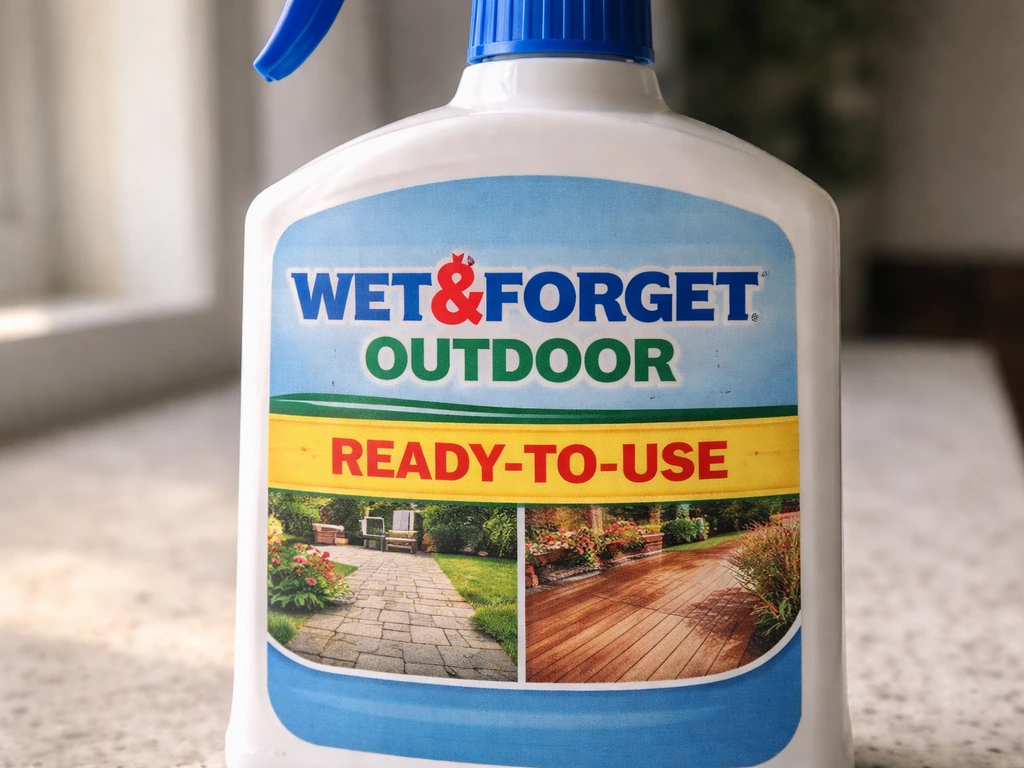
For most homeowners treating a standard patio up to around 200 square feet, the Ready-to-Use spray bottle is the most convenient starting point, no mixing required and easy to apply accurately. For anything larger, or if you want better value per square foot, the Outdoor Concentrate in a garden sprayer is the smarter buy. The 1:5 dilution goes a long way, and the cost per treated square foot is noticeably lower than the RTU. The hose-end Rapid format is convenient for large driveways or paths where coverage speed matters, but gives you less control over concentration and application accuracy. The Outdoor MAX is worth considering if coverage is your primary concern for a large area.
Wet & Forget is widely available through home improvement retailers, garden centres, and online. If you are looking specifically for where to buy Wet & Forget patio cleaner, check home improvement retailers, garden centers, and major online stores. If cost per application is a factor, buying the concentrate in bulk (often available at Costco in the US) brings the per-treatment cost down significantly. Beyond what format to buy, the most important next step is simply to pick a dry, overcast day in the forecast and get the application right the first time. That single variable, applying to a dry surface in appropriate weather, determines whether this product works well for you or becomes another negative review.
FAQ
Wet and Forget works slowly, but how often should I reapply during the first few weeks?
Don’t reapply on a rigid schedule. Use reapplication only when you have moisture doing the rinse and the growth has visibly started dying and breaking down (often after the first clear-off window of a few days to a few weeks). If the surface is still actively green and you haven’t had any rain or dew, wait for better conditions rather than stacking another coat immediately.
Can I use Wet and Forget right after pressure washing?
Yes, but wait until the surface is fully dry and you have removed loose bio material. Pressure washing can leave the patio wet or drive debris into pores, and Wet and Forget needs moisture later to activate and rinse away dead growth. A practical rule is apply 24 hours after washing (longer if the patio stays damp).
What should I do if it’s cloudy and humid but not raining, will it still work?
It can, if dew forms. Wet and Forget activation is tied to moisture, so cloudy weather helps only when you get nightly dew or intermittent rainfall. If you haven’t had any meaningful moisture for several days, plan on slower results and consider waiting to reapply until precipitation is expected.
Will Wet and Forget stain or discolor my patio while it’s working?
It can look worse before it looks better, because dying growth often turns brown or black before it washes away. However, if you see patchy discoloration that does not lighten after the dead material breaks down, that is often a sign you are dealing with mineral staining, rust, tannin, or efflorescence rather than biological growth.
How can I tell the difference between algae/mold versus rust, oil, or mineral deposits?
Biological growth typically appears green, black, or furry and spreads across joints and shaded areas, and it improves after a few moisture cycles with the product. Rust and oil usually appear as darker fixed stains that do not fade or change texture even after weeks, and mineral deposits often look chalky or gritty. In those cases Wet and Forget is the wrong chemistry.
Is it safe to use on a patio with sealed pavers or recently sealed concrete?
Test first if the seal was applied within the last 12 months, because some sealers can be sensitive to biocidal chemistry or can change the surface finish. If the test area stays unchanged after a week, proceed. If you notice hazing, tackiness, or color shifts, stop and use a cleaner matched to sealed surfaces.
Can I apply Wet and Forget when the patio is already wet from sprinklers or morning dew?
It’s usually better to apply when the surface is dry, because an already-wet surface can dilute how evenly the product is laid down and can make it harder to judge coverage. If you applied while damp and then had no rain afterward, your application may be underperforming, and reapplication under drier conditions and better weather is often the fix.
Should I rinse Wet and Forget off after it has worked?
The intended result is that rain and moisture gradually rinse away the dead growth over time, you usually do not need to scrub. If you need to move pets or traffic back sooner, or if you used it near sensitive areas, you can rinse with clean water once the treated surface is dry, but avoid power rinsing immediately after application because it can wash away active chemistry before it does the job.
Is it safe for pets and for grass near the patio after application?
Keep pets off the treated area until it is fully dry (usually a few hours). For grass and garden edging, the main risk is overspray on leaves and how residue can burn or brown them, so protect nearby plants (tarp or careful aiming) and rinse nearby leaves with plain water both before and after treatment if overspray occurs.
What if my patio drains into a pond, stream, or water feature, can I still use it?
Use extra caution to prevent runoff carrying biocidal residue into waterways. Avoid treating right before heavy rain, apply with control to minimize overspray, and consider using a lower-concentration format if available. If your drainage is direct and unavoidable, you may need an alternative approach that does not rely on rain rinsing.
I see no improvement after 4 to 6 weeks, does that mean Wet and Forget failed?
Not automatically. Recheck that you used the correct concentration for the format, applied enough to fully saturate the growth (not just dampen the surface), and had actual moisture to activate and rinse. If those are correct and nothing changed, the stain is likely non-biological, and switching to the right category cleaner (degreaaser, oxalic acid for rust-like staining, or efflorescence/mineral removers) is the faster path.
Can Wet and Forget be used on patio umbrellas or outdoor fabrics, and how should I test?
Yes, but compatibility depends on the fabric and coating, so always do a small spot test first. Apply to a 30 cm square area (or smaller if the material is delicate), wait about a week, and check color change and texture. If the fabric is coated or dyed, avoid full soaking and focus on controlled coverage.
What’s the biggest common mistake people make when leaving reviews?
Applying expecting instant results, then evaluating too early. The second most common mistake is applying to the wrong problem (rust, grease, paint, mineral deposits) or under-applying so the bio growth is not fully treated. If you correct those two variables, reviews tend to look dramatically different.
Next Article
Do You Have to Wash Off Patio Magic? Rinse Timing Guide
Know if you must wash off Patio Magic and exact rinse timing by surface, plus what to do if it sat too long.