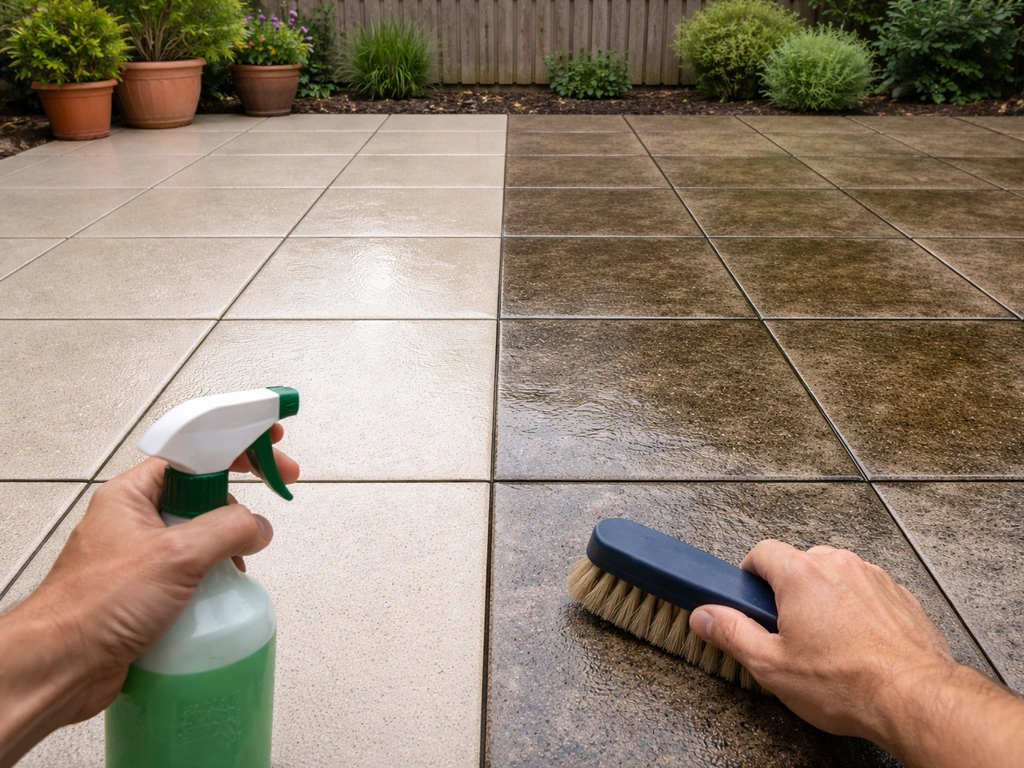
For most slate patio problems, a pH-neutral stone cleaner is your safest and most effective starting point. For granite patios, the best granite patio cleaner is usually a pH-neutral, stone-safe product chosen for the specific stain you are dealing with pH-neutral stone cleaner. For heavy algae, moss, or mold, step up to an oxygenated (peroxide-based) cleaner or a quaternary ammonium biocide formulated for outdoor stone. For grease or oil stains, use an alkaline degreaser designed for natural stone.
Best Slate Patio Cleaner: How to Choose and Use Safely
Rhea Lang
30 Jun 2026
For pet stains and odors, reach for an enzyme cleaner. What you should never use on slate, regardless of the stain, is bleach, vinegar, ammonia, or anything acidic. Those will etch the surface, strip a sealer, and in some cases permanently damage the stone. The rest of this guide walks you through exactly how to choose, apply, and follow up for each situation.
Why slate patio cleaning is different from other surfaces
Slate is a metamorphic rock with a layered, slightly porous structure. That texture is part of what makes it look great on a patio, but it also means it absorbs liquids, harbors organic growth in its surface grooves, and reacts badly to the wrong chemistry. It is softer and more reactive than granite, and it does not have the same alkaline mineral composition as concrete or sandstone, so what works fine on those surfaces can genuinely wreck slate.
The biggest risks are acid damage and abrasion. Acidic cleaners, including anything containing hydrochloric acid, citric acid, or even household vinegar, can chemically etch the surface and dissolve the stone. Bleach and sodium hypochlorite-based cleaners can leave soluble salts deep in the pores as they dry out, which leads to spalling and surface decay over time. Ammonia-based products and abrasive scrubbing pads can discolor or scratch the surface. And if your slate is sealed, harsh cleaners will strip or cloud the sealer, leaving the stone exposed and requiring a full re-seal job.
Slate is also different from porcelain or concrete in that it is genuinely affected by pressure washing if you get the settings wrong. If you are cleaning porcelain tiles instead of slate, check the product label and follow the directions for porcelain to avoid haze or surface damage porcelain or concrete. The same pressure that cleans concrete perfectly can fracture the surface layers of slate or blast off a sealer that took you an afternoon to apply. I will cover pressure washing in detail later, but the short version is: go gentler than you think you need to.
This makes slate more demanding than, say, concrete, which can handle much stronger chemistry and higher pressure. If you have been reading about the best concrete patio cleaners and thinking the same products will transfer across to slate, they probably will not, and some of them will cause real damage.
Match the cleaner to the stain
Not every stain needs the same approach, and buying the wrong type of cleaner wastes money and time. Here is how to read what you are looking at and pick the right product category.
Algae, mold, and moss
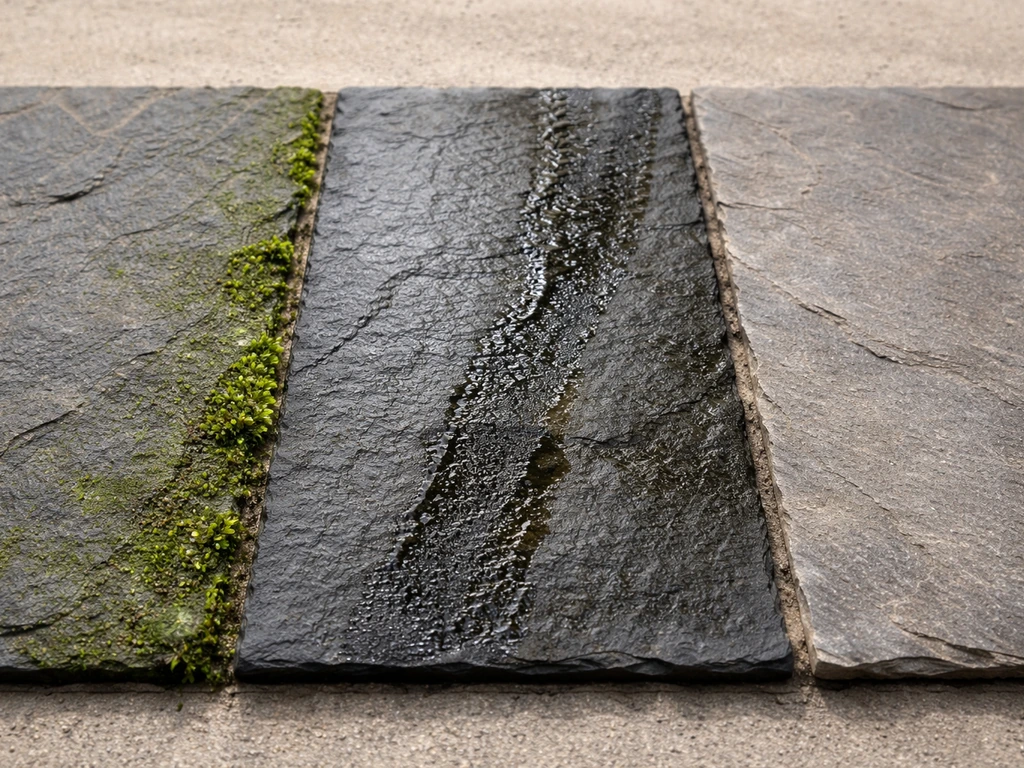
These are the most common slate patio problems, especially in shaded or damp areas. A light green film is usually algae. Dark black or grey patches that feel slimy are typically mold or mildew. Raised, textured growth that you can physically pull away is moss, and it often roots into the slate's surface pores.
For all of these, you want either an oxygenated cleaner (hydrogen peroxide based, pH-neutral) or a quaternary ammonium biocide formulated for outdoor stone. For quaternary ammonium biocides on hard, non-porous surfaces, the Government of Canada monograph specifies a 10-minute contact time when surfaces are rinsed or wiped off [quaternary ammonium biocide formulated for outdoor stone](https://www. canada. ca/content/dam/hc-sc/migration/hc-sc/alt_formats/pdf/prodpharma/applic-demande/guide-ld/disinfect-desinfect/hard-surface-monograph-surfaces-dures-eng.
pdf). Products like Guard Cleaner Algae use quaternary ammonium compounds specifically rated for slate and other porous outdoor surfaces. Apply, dwell, scrub, and rinse. For heavy moss, a stiff brush before applying the cleaner makes a real difference.
Grease and oil
Barbecue grease, cooking oil splashes, or any petroleum-based stain needs a dedicated degreaser, but it has to be one formulated for natural stone. A standard kitchen degreaser or anything with a very high alkaline pH (above about 11) used at full strength can still damage slate. STONETECH KlenzAll, for example, is an alkaline cleaner rated at around pH 10.7 to 11.3 depending on dilution, and it is designed specifically to be diluted back to a safe range for stone surfaces. Always follow dilution guidance for alkaline stone degreasers. Apply to the stain, let it sit for five to ten minutes, agitate gently, and rinse thoroughly.
Pet stains and urine odors
Pet urine is a dual problem: there is a visible stain and an embedded odor that standard cleaners do not fully address. Enzyme cleaners are purpose-built for this. They use biological enzymes to break down the uric acid and organic compounds in urine at a molecular level, which is why they eliminate the smell rather than just masking it. Products like Uricide use a two-stage enzyme system and work on outdoor surfaces including stone. Apply generously, let it fully soak into the affected area, and allow it to dry naturally rather than rinsing immediately. The enzymes need dwell time to work through the stone's pores.
General grime and everyday dirt
For routine cleaning or general surface dirt, a pH-neutral stone and tile cleaner is all you need. STONETECH Stone and Tile Cleaner and similar pH-neutral formulations designed for natural stone will clean without any risk of surface damage. These are also ideal for regular maintenance cleaning between deeper treatments. If your slate just looks dull and grimy rather than stained, this category of product should be your first purchase.
What to look for when choosing a slate patio cleaner
The label on a patio cleaner is not always trustworthy. Here are the specific criteria I use when evaluating whether a product is actually safe for slate.
- pH range: For routine cleaning, look for pH 6 to 8 (neutral). Alkaline degreasers can go up to pH 11 when diluted correctly for stone. Avoid anything acidic (below pH 6) and anything strongly alkaline that is not explicitly rated for natural stone.
- No bleach or sodium hypochlorite: Bleach-based outdoor cleaners are common and very effective on concrete, but they leave soluble salts in slate's pores that cause long-term surface decay. Check the active ingredients list.
- No ammonia: Ammonia can discolor slate and strip sealers. It appears in some multi-surface cleaners, so check even if the label looks benign.
- No acids: This includes hydrochloric acid (common in patio descalers), citric acid, and acetic acid (vinegar). If you see 'removes lime scale' or 'descales' on the label, it is almost certainly acidic and not safe for slate.
- No abrasives: Some powder or paste cleaners contain micro-abrasives. These will scratch and dull a slate surface over time.
- Explicitly listed as safe for natural stone or slate: A product that lists slate specifically on its datasheet is preferable to one that just says 'stone surfaces'.
- Compatibility with sealers: If your slate is sealed, check that the cleaner is rated for use on sealed stone. Harsh cleaners strip penetrating sealers and cloud surface sealers.
- Rinse requirements: Good stone cleaners rinse cleanly without leaving residue. Products with surfactants that leave a film can make slate slippery and attract more dirt.
The main cleaner types and how to use them
There are four practical categories of slate patio cleaner, each with a different use case and application method. Understanding which format suits your situation saves you from buying a concentrate when a ready-to-use spray would have done the job, or vice versa.
| Cleaner Type | Best For | pH Range | Ready-to-Use or Dilute | Key Watch-Out |
|---|---|---|---|---|
| pH-Neutral Stone Cleaner | Routine grime, general maintenance | 6–8 | Both formats available | Does not kill moss/algae by itself |
| Oxygenated / Peroxide-Based | Algae, mold, mildew, organic stains | Typically neutral | Ready-to-use spray common | Needs proper dwell time to work |
| Alkaline Stone Degreaser (Concentrate) | Grease, oil, heavy organic build-up | 10–11 concentrated, lower when diluted | Always dilute before use on stone | Over-concentration can damage slate |
| Quaternary Ammonium Biocide | Algae, moss, mold; outdoor use | Varies | Ready-to-use or concentrate | Allow correct contact time (around 10 mins) |
| Enzyme Cleaner | Pet urine, organic odors, biological stains | Neutral | Ready-to-use spray typical | Do not rinse immediately; needs dwell/dry time |
Spray-on ready-to-use cleaners
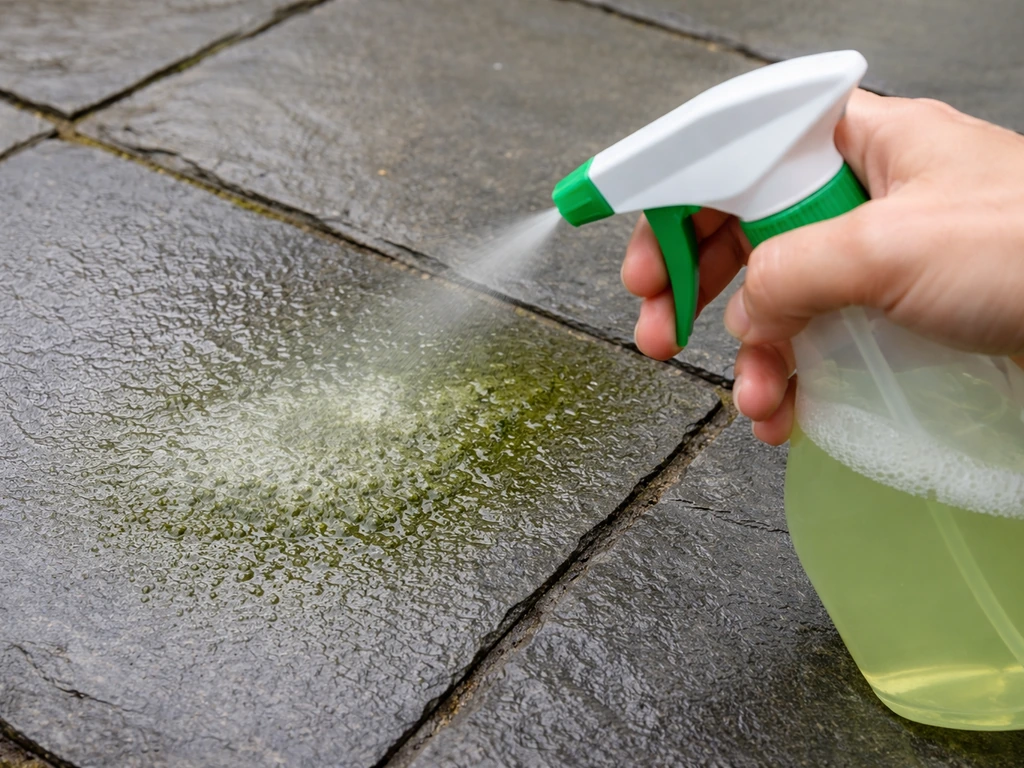
These are the most beginner-friendly format. You spray directly onto the slate, wait the recommended dwell time (usually five to fifteen minutes), scrub if needed, and rinse. They are ideal for spot treatments and smaller patios. The trade-off is cost per square meter, which is higher than concentrates. For a large patio with a heavy algae problem, buying concentrate and diluting it yourself will be significantly cheaper.
Concentrates
Concentrates give you more flexibility and better value on larger areas. The critical thing with alkaline stone concentrates is to follow the dilution ratio exactly. As noted above, products like STONETECH KlenzAll are formulated so that dilution brings the pH down to a stone-safe range. Using them at full concentration is not the same product that went through stone-safety testing. Mix in a bucket, apply with a mop, roller, or pump sprayer, and rinse well.
Oxygenated cleaners
Products like Beyond Stone Solutions Easy Oxy use hydrogen peroxide to lift and oxidize organic stains. They are pH-neutral, ammonia-free, and non-abrasive, which makes them genuinely safe for slate. Apply, let them sit for at least ten minutes (longer for heavy staining), and rinse. For deeply ingrained algae or mold, a second application often works better than scrubbing harder on the first one.
Enzyme cleaners for pet and organic stains
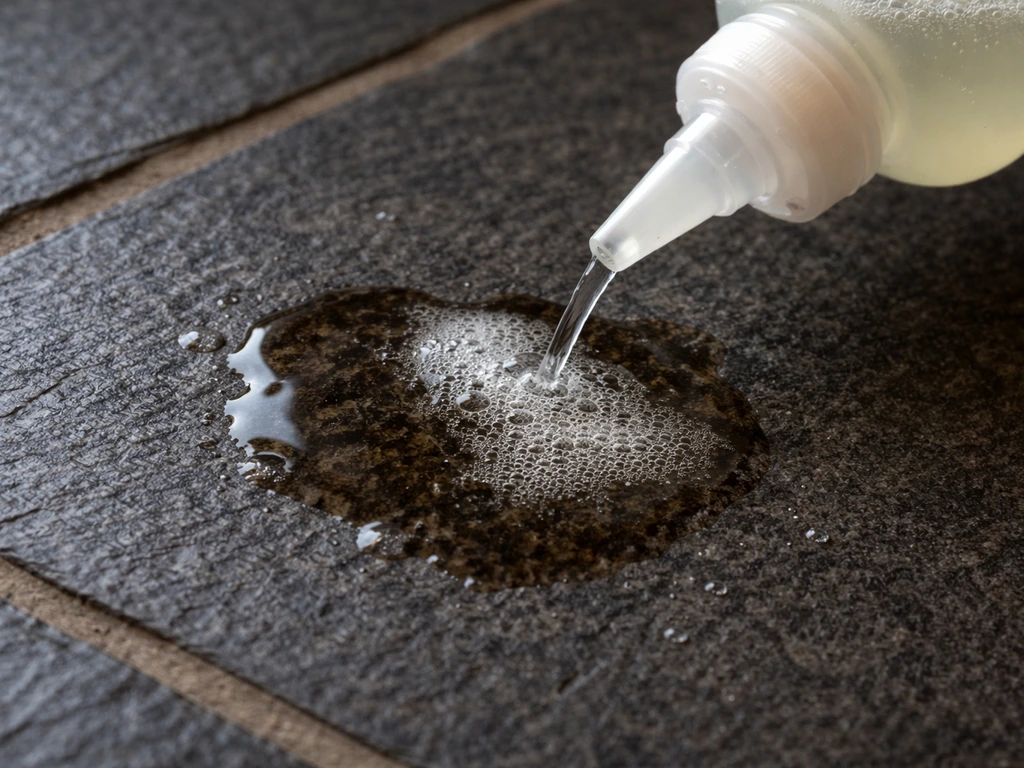
The key with enzyme cleaners is patience. Spray or pour generously onto the stained area so it saturates the stone. Then leave it. The enzymes need time and moisture to break down the compounds in pet urine, so resist the urge to rinse after a few minutes. Let it air-dry naturally and reapply if you can still detect odor. On porous unsealed slate this may take two or three applications to fully neutralize deep staining.
When to scrub vs when to pressure wash
This is where a lot of people either under-clean or do accidental damage. The decision depends on the type of stain, the condition of the slate, and whether it is sealed.
Hand scrubbing
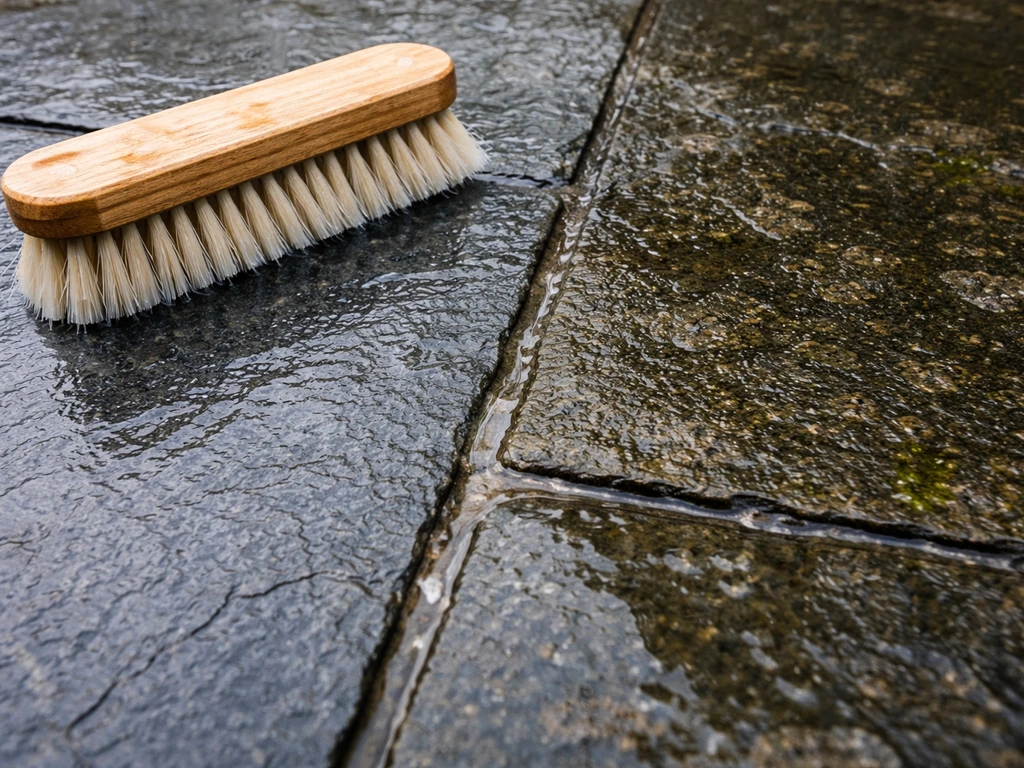
A stiff-bristled brush (not a wire brush) is the right tool for most slate cleaning jobs. Scrubbing agitates the cleaner into the surface pores, which is exactly what you want. Use a long-handled deck brush for large areas to save your back. For corners and grout lines, a smaller hand brush works better. Circular scrubbing motions work well for lifting stains; avoid scrubbing back and forth aggressively as this can work grit into the surface. Always scrub after the cleaner has had its full dwell time, not immediately after application.
Pressure washing slate: what the research actually says
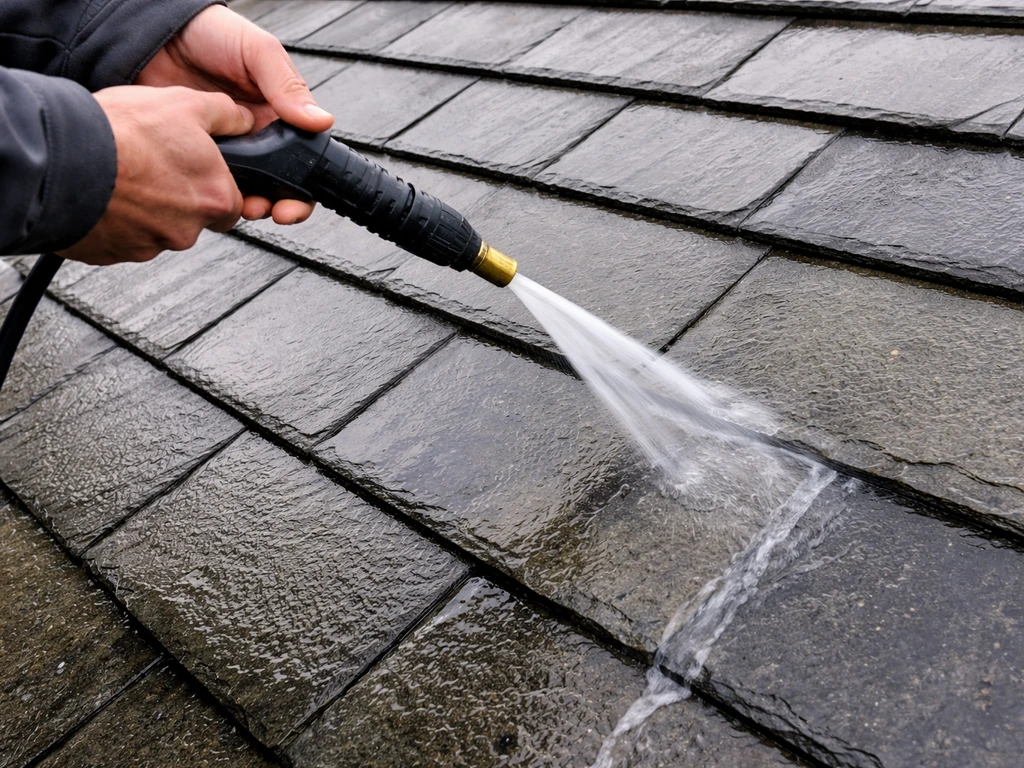
You can pressure wash slate, but you need to be more careful than you would be with concrete or brick. The practical guidance I trust most comes down to this: keep pressure below 1500 PSI, and start lower than that. I would begin at around 1000 PSI and only go up if results are insufficient. At high pressure, you risk fracturing the surface layers of slate, which is a layered stone, and you can strip a sealer entirely.
Technique matters as much as pressure. Hold the nozzle at about a 45-degree angle to the surface rather than pointing straight down at 90 degrees. Use a sweeping pendulum motion rather than stopping and directing the jet at one spot, which causes surface marks. Avoid turbo or rotary nozzles on slate. A wide-angle fan tip (25 or 40 degree) is safer. Always do a test patch in an inconspicuous area first. If your slate is sealed and you notice the sealer turning white or milky, stop immediately. That means the sealer has likely already been compromised and the pressure is accelerating the problem.
For heavy moss, it is worth doing a rough mechanical removal with a brush before applying any cleaner or using the pressure washer. Blasting thick moss with a pressure washer tends to spread spores rather than kill them, so the moss comes back faster. Pre-treat with a biocide or oxygenated cleaner first, let it dwell and kill the growth, then use the pressure washer to rinse it away.
Step-by-step slate cleaning workflow
- Clear the area: Remove furniture, pots, and anything else from the patio. Sweep off loose debris with a stiff broom.
- Spot test first: Apply your chosen cleaner to a small, hidden area of the slate. Wait the dwell time, rinse, and let it dry fully before proceeding to the whole patio. This step takes thirty minutes and can save you from a costly mistake.
- Pre-treat heavy growth: If you have thick moss or established algae, apply your biocide or oxygenated cleaner to those areas first. Let it dwell for fifteen to thirty minutes. For very heavy moss, brush off the bulk of it manually before applying the cleaner.
- Apply the cleaner: Working in sections, apply your chosen product at the correct dilution. Use a pump garden sprayer or mop for large areas, or spray directly from the bottle for smaller spots.
- Allow full dwell time: Do not rush this. Most cleaners need at least five to fifteen minutes of contact time to work. On a warm day, keep the surface slightly damp so the product does not dry out before it has done its job.
- Scrub: Use a stiff-bristled deck brush in circular motions to agitate the cleaner into the surface. Pay extra attention to grout lines and any textured areas where grime accumulates.
- Rinse thoroughly: Rinse with clean water, either from a hose or a low-pressure rinse cycle on the pressure washer. Work from high points downhill so dirty water does not run back over clean areas. Multiple rinse passes are better than one heavy rinse.
- Let it dry completely: Before assessing results or applying any sealer, allow the slate to dry fully. This typically takes 24 to 72 hours depending on temperature, shade, and how porous the stone is.
- Assess and repeat if needed: Once dry, evaluate in good light. Some staining may need a second application, especially old algae stains or deep grease marks. Repeat the process on problem areas before moving on to sealing.
If stains come back: troubleshooting persistent problems
Algae, moss, and mold coming back within a few weeks is the most common complaint after slate patio cleaning, and it usually points to one of three causes: the cleaner did not kill the growth (just removed visible signs of it), the slate is not sealed so spores re-establish quickly, or the underlying moisture and shade conditions are not being addressed.
Re-growth of algae and moss
If green or black patches return within four to six weeks of cleaning, you need a biocidal cleaner rather than a general cleaner, and you may need to apply a post-clean biocide treatment and leave it on the surface without rinsing (some products are designed for this). The second thing to do is seal the slate. An unsealed, porous surface is an open invitation for algae and moss spores to root in. A penetrating sealer closes those micro-pores and makes re-growth much harder. Products using water-based siliconate or silane-siloxane formulations work well on porous natural stone like slate.
Sealing after cleaning
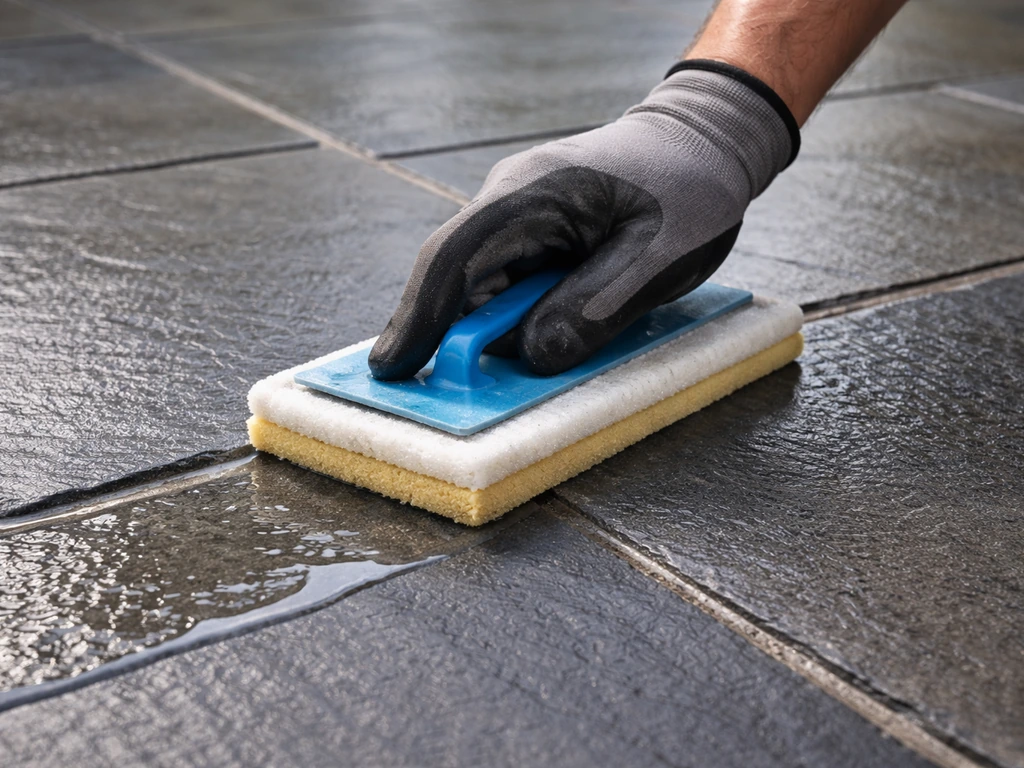
Sealing is genuinely one of the best things you can do for a slate patio, but timing is everything. The slate must be completely dry before you apply any sealer. STONETECH's own guidance specifies 24 to 72 hours of drying time after cleaning before sealing, and other manufacturers echo that 24-hour minimum. Sealing damp slate traps moisture beneath the sealer, which leads to whitening, bubbling, and sealer failure. After sealing, allow at least 24 hours before walking on the surface or exposing it to heavy rain. Stone Savior’s sealing guidance also recommends waiting about 24 hours for best results before or around walking on the surface allow at least 24 hours before walking on the surface.
Stains that will not shift at all
If a stain does not respond to the appropriate cleaner after two applications, check a few things. Is the slate sealed, and is the stain beneath the sealer layer? If so, you may need to strip and re-apply the sealer after cleaning. Is the stain actually a mineral efflorescence (white, powdery deposits) rather than organic growth? Efflorescence needs a different treatment: a specific efflorescence remover formulated for stone, not an organic cleaner. Is the discoloration actually etching from a previous acidic cleaner use? If the surface looks dull, pitted, or lighter in color, that may be surface damage rather than a stain, and no cleaner will reverse it.
Maintenance schedule to prevent problems recurring
The best way to avoid a big annual cleaning job is a light regular routine. If you want the simplest path to results, start with the best patio tile cleaner that is specifically safe for slate. A quick sweep and rinse every couple of weeks keeps organic matter from building up. A light clean with a pH-neutral stone cleaner every one to two months keeps the surface fresh.
A full biocidal clean once or twice a year (spring and autumn in the UK, or spring and fall in the US) handles any growth that has established over winter or summer. Reseal every one to three years depending on traffic and sealer type, always after a thorough clean and with the full dry time observed.
If you notice the water no longer beading on your slate, that is a sign the sealer is wearing and it is time to reapply.
Quick-reference checklist for choosing and using a slate patio cleaner
- Identify your stain type first: algae/moss/mold, grease/oil, pet urine, or general grime.
- Choose the right cleaner category: pH-neutral for general cleaning, oxygenated or quaternary ammonium biocide for organic growth, alkaline stone degreaser (correctly diluted) for grease, enzyme cleaner for pet stains.
- Check the label: No bleach, no ammonia, no acids, no abrasives, pH 6–8 for routine cleaning or a stone-rated alkaline product when diluted for grease.
- Spot test in a hidden area and let it dry before treating the full patio.
- Apply at the correct dilution, allow full dwell time, scrub with a stiff brush, rinse thoroughly.
- For pressure washing: stay below 1500 PSI, use a wide-angle fan nozzle at 45 degrees, use a sweeping motion, and avoid turbo tips.
- Allow 24 to 72 hours drying time before applying any sealer.
- Seal after cleaning to protect the surface and prevent re-growth.
- Schedule light maintenance cleaning every one to two months and a full deep clean once or twice a year.
FAQ
How can I tell if a “stone patio cleaner” is actually safe for slate?
Not always. A product that says “stone safe” may still be intended for limestone, sandstone, or engineered surfaces. For slate, prioritize labels that explicitly mention slate or natural outdoor stone, and verify the chemistry: avoid anything acidic (including vinegar-like formulas) and avoid chlorine/bleach blends.
What’s the best slate patio cleaner if the black or green patches come back within a month?
For algae and mold that keep returning, don’t treat it like routine grime. Use an oxygenated (peroxide-based) cleaner or a biocide rated for outdoor porous stone, and plan on a second application if staining is deep. If you are sealed, also consider whether the sealer has worn thin, since regrowth often comes back faster through compromised protection.
Can I use a pressure washer after applying an enzyme cleaner for pet urine?
Yes, if you choose the right category and use it carefully. However, most enzyme products need full dwell time and moisture, and pressure washing can rinse them off before they work. If the stain is from pet urine, apply the enzyme cleaner, allow it to soak and air-dry naturally, and only use rinsing later if the product instructions require it.
My slate is sealed, how do I know whether the haze I see is sealer damage or just leftover cleaner?
If the slate is sealed, first check whether the sealer is failing. Look for whitening or a milky haze right after cleaning, that is a warning sign. Also confirm you are matching the stain type, because grease and organic growth often look similar until you test-clean a small area with the correct chemistry.
What should I check first before buying the best slate patio cleaner for my stain?
A simple way to avoid wasted money is to classify the stain before you buy. If it is slimy green or black, choose a biocidal or oxygenated product. If it is greasy or oily, choose a natural-stone degreaser formulated for slate and diluted to the specified pH-safe range. If it is an odor or persistent spot from pets, choose an enzyme cleaner designed to neutralize uric compounds.
What tools should I use (and avoid) when scrubbing slate with a patio cleaner?
Even with correct chemistry, abrasive tools can ruin the surface. Avoid wire brushes and scouring pads, and use stiff-bristled deck brushes only after the cleaner has fully had its dwell time. For corners and edges, use a smaller hand brush, and scrub with gentle circular motions to lift material from pores without grinding grit in.
Is it okay to use alkaline slate patio cleaner concentrates stronger than the label says for faster results?
Yes, but test it like you would with any slate cleaner. Concentrates must be mixed at the exact ratio so the diluted pH falls within the slate-safe range. Using full strength can leave residues or increase risk of damage, so always mix in a bucket and rinse thoroughly after dwell.
What should I do if my test patch shows sealer whitening during cleaning?
Do a test patch first, but also watch the rinse water. If you see rapid bubbling, milky runoff, or visible sealer whitening, stop and switch to a gentler approach. For overall recovery, deeper cleaning may be required, then re-seal after the full dry period, but you should not keep escalating pressure or chemistry.
Should I rinse immediately or let cleaners dwell longer on slate?
Generally, yes for many outdoor slate scenarios, but timing matters. After oxygenated or biocide treatments, thorough rinsing is usually expected, while enzyme cleaners may require air-drying and full dwell before you rinse or repeat. Follow the product’s instructions on dwell and rinsing, because skipping dwell time is a common reason stains return.
How can I tell if my white spots are efflorescence, not a need for the best slate patio cleaner for mold or algae?
For mineral efflorescence, the fix is usually not an algae or degreaser product. Efflorescence is typically white and powdery, and it requires a dedicated stone efflorescence remover, often with specific dwell and rinsing expectations. If the issue is etching from an acid spill or prior acidic cleaner, no patio cleaner will “erase” pitting, so you may need professional surface assessment before resealing.
When is the safest time to seal slate after cleaning so it won’t turn white or fail early?
Sealing is most effective when the slate is fully dry and the surface is clean. If you reseal too soon after washing, you can trap moisture under the coating and get whitening or failure. As a practical rule, plan for a full dry period after cleaning (often at least 24 hours), and don’t seal if rain is imminent within your curing window.
What routine prevents algae buildup without needing heavy cleaning every time?
A good maintenance schedule is lighter and more frequent: quick sweeping and rinsing often, a pH-neutral stone cleaner for routine grime, and a biocidal clean timed to seasons when growth is likely to build. If water stops beading, treat that as a sealer-wear signal rather than trying to “clean harder.”
Next Article
Best Patio Tile Cleaner: Match Products to Tile and Stains
Match the best patio tile cleaner to your tile type and stain, with safe steps, dwell times, and rinse guidance.