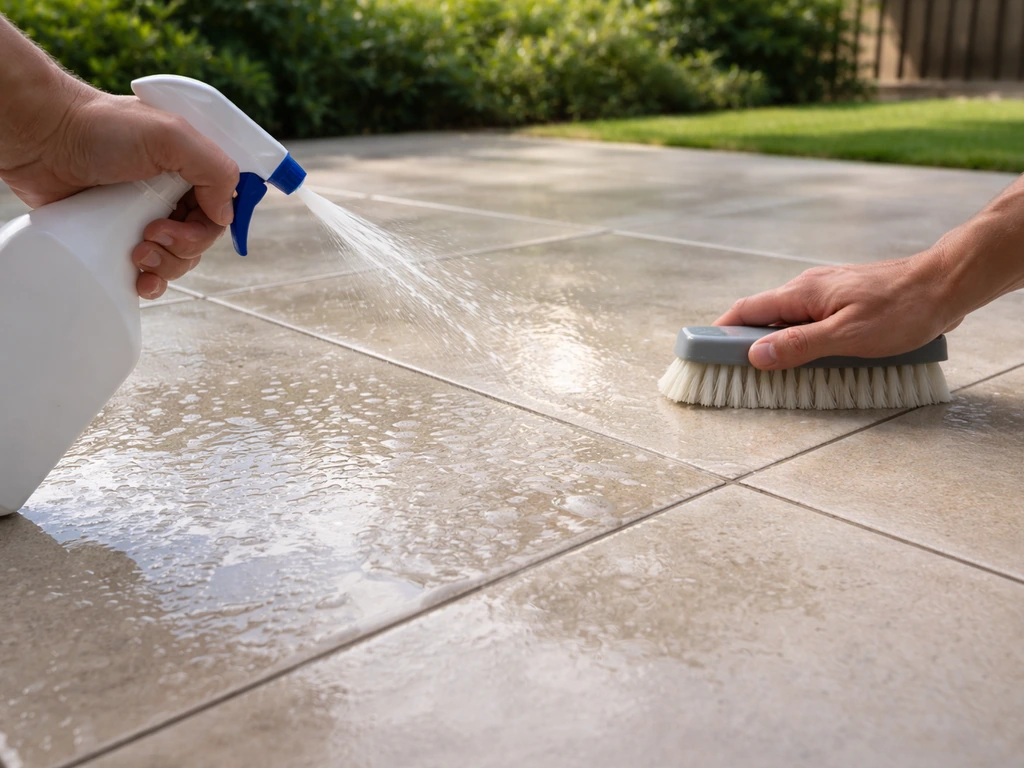
The best patio tile cleaner for your situation depends on two things: what your tiles are made of and what you're actually trying to remove. Use a pH-neutral stone cleaner on natural stone like slate, sandstone, or marble. Use an oxygen-based or bleach-alternative formula on concrete, porcelain, or ceramic tiles when you're dealing with algae, mold, or moss. For grease, you need a dedicated degreaser. For rust, you need a rust-specific product that's safe for your tile type. Get those two variables right first, and you'll cut through the problem in one session instead of three.
Best Patio Tile Cleaner: Match Products to Tile and Stains
Rhea Lang
22 Jun 2026
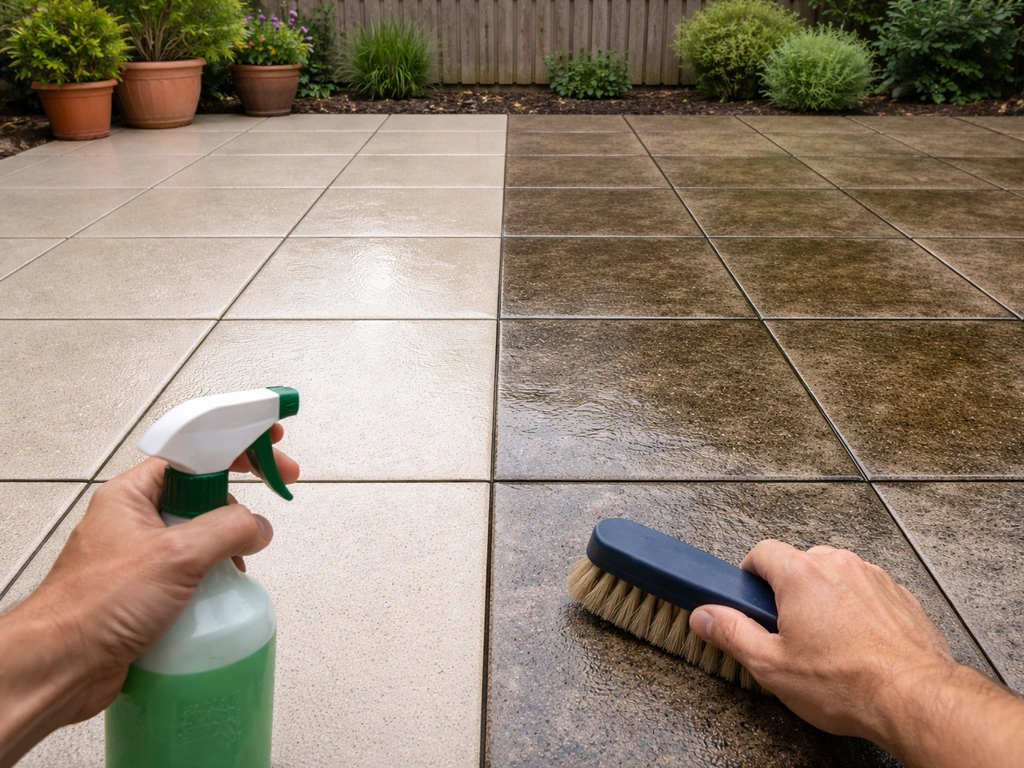
How to choose the right cleaner for your tile surface
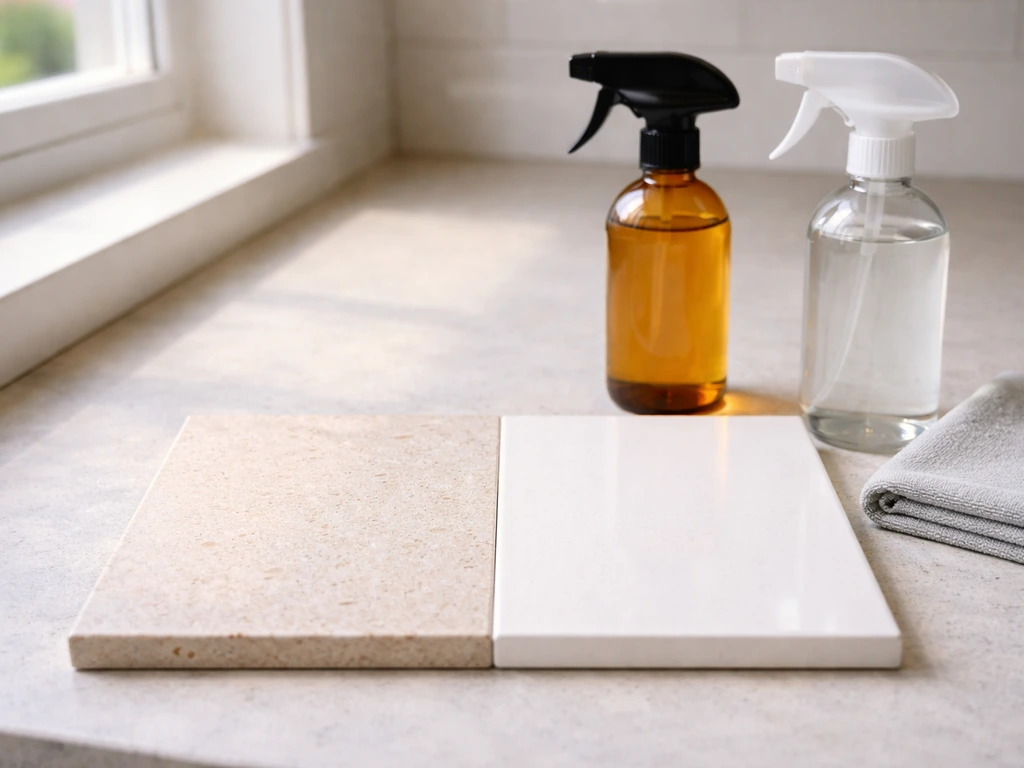
The single biggest mistake people make is grabbing whatever's under the sink or at the front of the hardware store shelf without checking whether it's actually safe for their tile. Natural stone is pH-sensitive. Acid-based cleaners, bleach, ammonia, and even everyday things like vinegar and lemon juice can etch the surface, strip protective layers, and make grout far more susceptible to staining. The Natural Stone Institute and LATICRETE (who make the STONETECH range) are very clear on this: wrong pH means permanent damage, not just a failed clean.
The broad rule is this: the more porous and calcium-based the stone, the more cautious you need to be. Marble, travertine, and limestone sit at the sensitive end. Granite, slate, and sandstone are more forgiving but still benefit from pH-neutral products for routine cleaning. Porcelain and ceramic tiles are the most resilient of the lot and can handle stronger formulas without etching, which gives you more options when the staining is heavy.
| Tile Type | Safe Cleaner Chemistry | Avoid |
|---|---|---|
| Porcelain / Ceramic | Oxygen-based, mild bleach alternatives, degreasers, pH-neutral | Abrasives, strong acids on grout |
| Concrete | Degreasers, alkaline cleaners, oxygen-based, diluted bleach | Wax-based products, strong solvents |
| Slate | pH-neutral stone cleaner, enzymatic for organics | Acid-based (even diluted), bleach, ammonia |
| Sandstone | pH-neutral stone cleaner, gentle enzymatic | Acid, bleach, ammonia, vinegar |
| Granite | pH-neutral cleaner, mild enzymatic | Acidic products (less risky than marble but still worth avoiding) |
| Marble / Limestone / Travertine | pH-neutral only, stone soap, mild dish detergent in warm water | Acid, vinegar, bleach, ammonia, any citrus-based product |
If you're not sure what you have, run a quick test: drop a tiny amount of water on the surface. If it soaks in within a few seconds, the tile is porous and unsealed, which means it needs gentler chemistry and will benefit from sealing after you clean it. If the water beads, the tile has a protective layer and can handle slightly more aggressive products.
Fast diagnosis: what are you actually cleaning?
Identifying the problem before you buy a product saves real money and effort. Here's how to tell the difference between the most common patio tile stains.
Algae vs mold vs moss
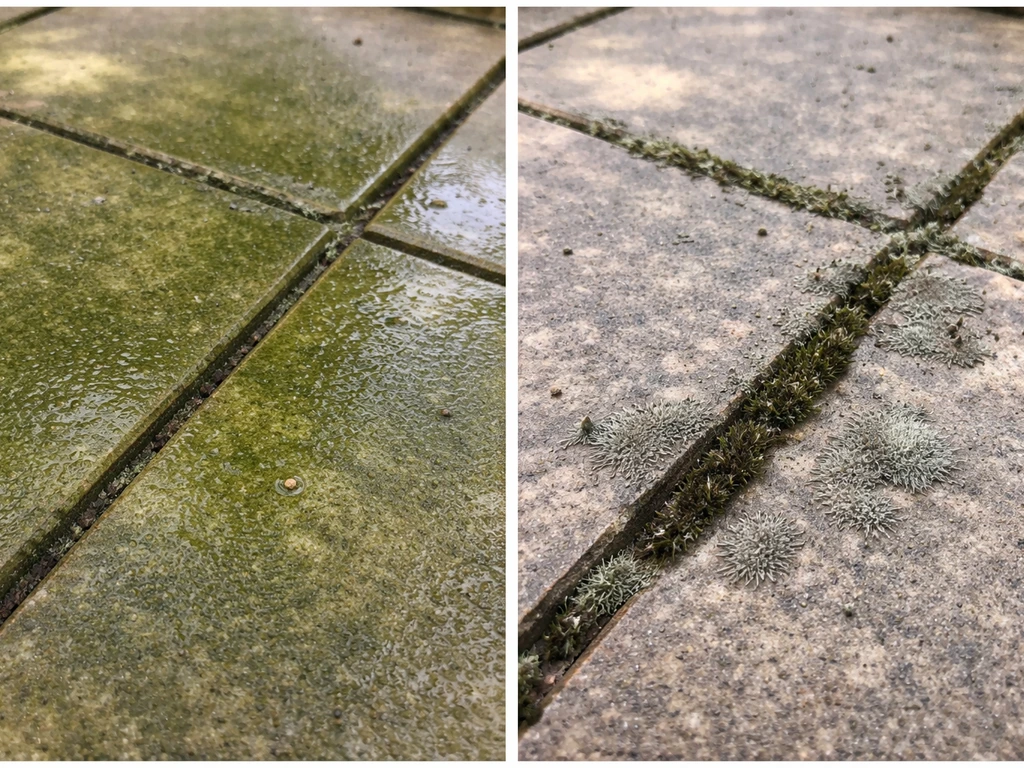
Algae is the green, slimy, or powdery film you see on surfaces that get sun and moisture. It's photosynthetic and sits on the surface rather than penetrating it. Mold tends to look fuzzier, is often black or dark green, and can penetrate porous materials more deeply. Mildew is flatter and lighter than mold, usually appearing as a white or grey surface deposit. Moss is the thicker, cushion-like green growth that roots into grout lines and cracks. All four respond to oxygen-based or bleach-alternative cleaners, but moss usually needs a stiff brush and more dwell time to fully lift.
Rust stains
Rust shows up as orange-brown streaks or spots, often near metal furniture legs, drainage points, or old fixing screws. You need a specialist rust remover here. The important warning: most over-the-counter lime and rust removers are acid-based, which makes them completely off-limits for sensitive natural stone and grout. For stone surfaces, look specifically for a rust remover labeled as safe for natural stone.
Grease and oil stains
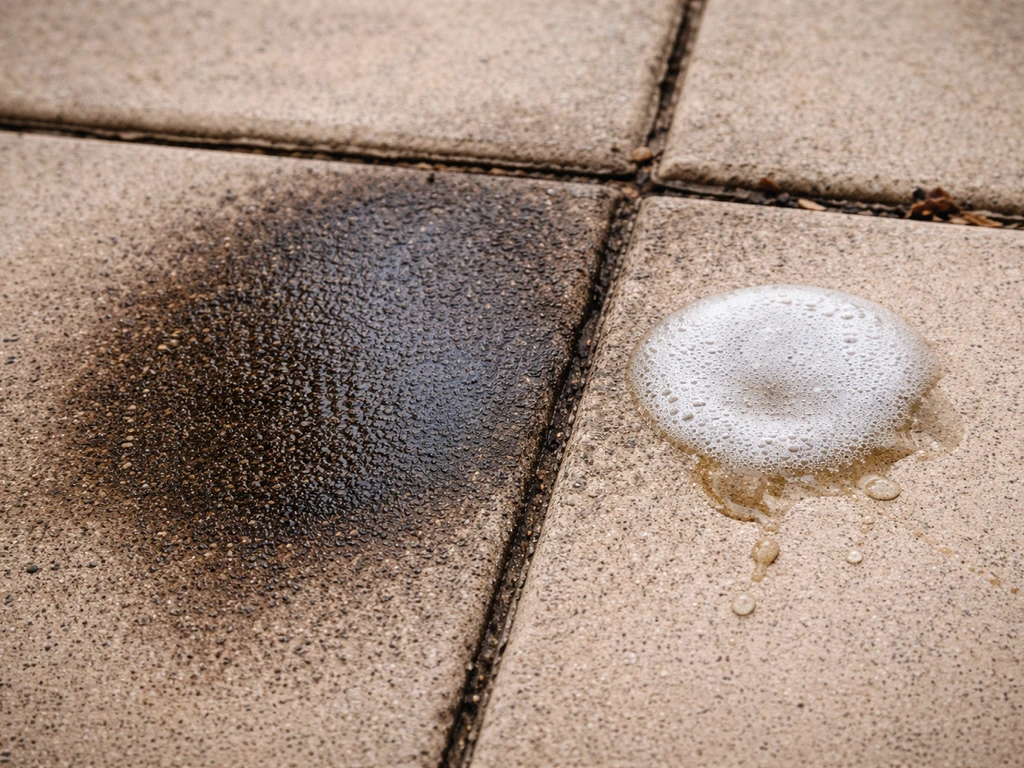
BBQ drips, cooking oil splashes, and oily footprints all need an alkaline degreaser. These stains often look darker than the surrounding tile and may have a slightly shiny edge. Don't try to shift these with an organic-growth cleaner or a general purpose product. A proper degreaser with surfactants is the only thing that will lift the oils out of porous tile surfaces.
General dirt, traffic film, and pet stains
General ground-in dirt and foot traffic build-up responds well to a pH-neutral cleaner with some agitation. Pet stains (urine especially) need an enzymatic cleaner. Enzymatic formulas break down the organic compounds that cause both the stain and the smell, rather than just bleaching over the surface. They're also the gentlest option, making them a good choice for stone tiles where you want to avoid anything reactive.
Cleaner types and when to use each one
- pH-neutral stone cleaner: The default for any natural stone tile. Use for routine cleaning and general dirt. Brands like STONETECH Revitalizer are formulated to clean and leave a mild protective layer against mold and bacteria. Safe on sealed and unsealed stone.
- Enzymatic / bio cleaner: Best for organic stains including pet urine, bird droppings, and food residue. Works by breaking down organic matter at a biological level. Gentle enough for sensitive stone and safe around grout. Takes longer to work than chemical formulas but less risk of damage.
- Oxygen-based / bleach alternatives: The go-to for algae, moss, mold, and mildew on concrete, porcelain, and sealed stone. Products like 30 SECONDS Outdoor Cleaner (mix 1 part product to 1 part water) and ZEP Outdoor Foaming Cleaner use this chemistry effectively. More surface-safe than chlorine bleach but still require rinsing plants and surrounding surfaces.
- Dedicated degreasers: Alkaline formulas for grease, oil, and BBQ residue. Use on concrete and porcelain. Avoid on unsealed porous stone unless the product is specifically labeled stone-safe.
- Rust removers: Specific products for iron oxide stains. Check the label carefully. Acid-based rust removers will damage natural stone and grout. If your tiles are anything other than glazed ceramic or porcelain, spend the extra few minutes finding a stone-safe rust treatment.
- Mild bleach solutions (targeted use only): Lone Star Marble's stone care guidance acknowledges that a mild bleach solution can be used on outdoor natural stone for algae and moss in pool/patio areas, but this should be diluted, rinsed quickly, and used sparingly. Not for regular cleaning, not for polished finishes, and not as a substitute for a proper stone cleaner.
Step-by-step cleaning process
- Prep the area: Move furniture and planters off the tiles. Cover any nearby plants, grass edges, or garden beds with plastic sheeting or give them a thorough pre-soak with clean water. Wet plants dilute any chemical runoff and reduce absorption. Block drains if you're using a chemical that shouldn't go into waterways unchecked.
- Pre-rinse the surface: A quick rinse with a hose removes loose debris, dust, and surface dirt so the cleaner can work on the actual stain rather than the top layer of grime. This step makes a noticeable difference to the final result.
- Mix and apply: Follow the manufacturer's dilution exactly. For 30 SECONDS Outdoor Cleaner, that's a 1:1 ratio with water. For concentrate-format stone cleaners, dilution is usually stated in millilitres per litre. Apply with a garden sprayer, watering can, or direct pour depending on the product format. Cover the full area evenly.
- Dwell time: Give the cleaner time to work. For Concrobium House & Deck Wash, that's 3 to 5 minutes. For 30 SECONDS Outdoor Cleaner, keep the surface wet and rinse within 10 minutes. Don't let any cleaner dry on the surface. On hot days, work in sections so you can rinse before it dries.
- Agitate: For light dirt and algae on smooth tiles, a stiff bristle brush or deck scrubbing brush is usually enough. For moss in grout lines, use a grout brush or an old stiff-bristled brush to work into the joints. For heavy mold on concrete, a long-handled stiff brush gives you the leverage you need without getting on your knees.
- Rinse thoroughly: Rinse with a hose or pressure washer (settings below). Rinse off any plants that got any overspray on them too. You want zero cleaner residue left on the tiles or in the grout.
- Assess and repeat if needed: If the stain hasn't fully lifted, let the surface dry completely before deciding whether to repeat with the same product or switch to something stronger. Sometimes a second application of the same cleaner is more effective than jumping to a harsher product.
Safety and protection: things worth getting right first
Personal protective equipment
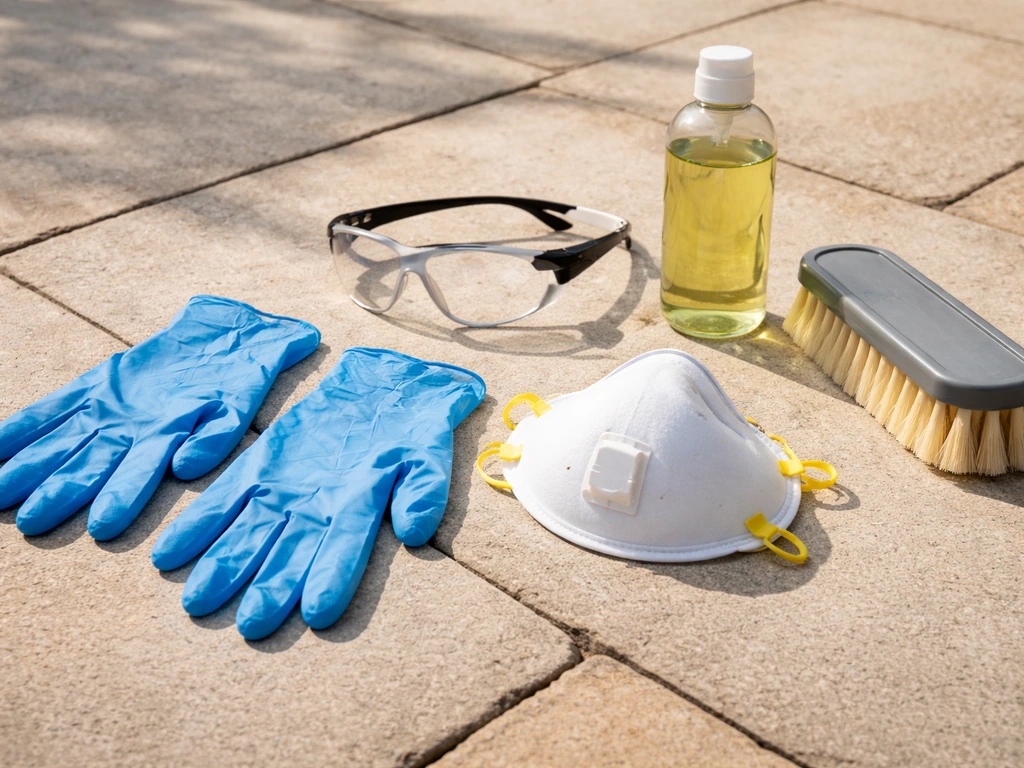
For most patio cleaners, nitrile gloves and eye protection are the minimum. If you're dealing with mold, Rust-Oleum (who make the Concrobium range) specifically recommend an N-95 respirator, gloves, and goggles to avoid spore exposure. For anything bleach-based or in a foaming formula, add old clothes you don't mind splashing. Concentrate-format products are more corrosive in their undiluted state, so measure carefully and keep them away from skin.
Protecting plants, pets, and drains
Pre-soak surrounding plants before you start and rinse them again after you're done. Keep pets and children off the patio during cleaning and until it's fully rinsed and dried. If your patio drains into a soakaway or directly to a waterway, be especially careful with bleach-based products and check whether there are any local restrictions on their use.
Grout and glaze protection
Grout is often the first thing to suffer from harsh cleaning. Acid-based products, bleach, and ammonia can strip grout's protective surface over time, making it more absorbent and more likely to stain in the future. LATICRETE makes this point clearly: even products that don't visibly damage tiles can progressively weaken grout with repeated use. Stick to pH-neutral or specifically formulated tile cleaners for regular maintenance.
When and whether to reseal
If your patio tiles are porous (natural stone, concrete, unglazed ceramic), sealing after a deep clean is genuinely worth doing. A good sealant makes future cleaning dramatically easier, reduces how quickly algae and moss re-establish, and protects the grout lines. Clean the surface fully, let it dry for at least 24 to 48 hours, and apply the sealant according to the manufacturer's guidance. Porcelain tiles don't need sealing, but their grout lines often benefit from a grout sealant.
Best product recommendations by tile type
Porcelain and ceramic tiles
These are the easiest tiles to clean because they're non-porous and resistant to most chemistry. ZEP Outdoor Foaming Cleaner & Brightener works well for algae, mold, and mildew on porcelain. 30 SECONDS Outdoor Cleaner (diluted 1:1) is a solid choice for green growth and general biological staining. For grease from a BBQ area, a dedicated alkaline degreaser is the right call. If you're wondering more about safe cleaner options specifically for porcelain outdoor tiles, that's a topic worth looking at in more depth given how common porcelain patio tiles have become. If you're wondering can you use patio cleaner on porcelain tiles, stick with the porcelain-friendly guidance above and still match the formula to the stain type for best results.
Concrete tiles and pavers
Concrete is porous and picks up staining easily. For organic growth (algae, moss, mold), Concrobium House & Deck Wash or 30 SECONDS Outdoor Cleaner both work effectively. For oil and grease, an alkaline degreaser applied neat or lightly diluted and left to dwell before scrubbing is the approach I'd go to first. After cleaning, concrete tiles benefit more than most from sealing to reduce re-soiling. More detailed guidance on concrete-specific products is worth seeking out if your whole patio is concrete rather than a mixed surface.
Slate tiles
Slate is more acid-resistant than marble or limestone but is still best treated with a pH-neutral stone cleaner for regular use. STONETECH Revitalizer Cleaner & Protector is a strong pick here because it cleans while leaving a mild protective barrier. For heavier organic growth on outdoor slate, a very diluted, carefully rinsed bleach solution can be used per Lone Star Marble's guidance, but pH-neutral cleaners should always be your first attempt. Slate has its own specific maintenance quirks that go beyond just the cleaner choice, which is worth exploring if you're maintaining a full slate patio.
Natural stone (sandstone, granite, marble, travertine)
pH-neutral is non-negotiable for marble, travertine, and limestone. A stone soap or mild dish detergent in warm water works for light cleaning. STONETECH Revitalizer or equivalent pH-neutral stone cleaners from reputable brands are the best regular-use option. For organic stains (bird mess, pet urine), an enzymatic cleaner is safer than anything bleach-based. For rust stains on stone, source a stone-safe rust treatment specifically, because standard rust removers are acid-based and will cause etching. Sandstone and granite have more tolerance for occasional use of slightly stronger products, but the default should still be pH-neutral. For granite patio cleaning, look for cleaners that are pH-neutral and safe for natural stone. Dedicated guides on outdoor stone patio cleaners and granite-specific cleaners cover these surfaces in much more detail if you're working with a large natural stone installation. For outdoor travertine and marble areas like pools, patios, and hot tubs, algae and moss can be removed with a mild bleach solution used in a targeted way, according to Lone Star Marble’s stone care guidance blank" rel="noopener noreferrer">outdoor stone patio areas.
Scrub brush, hose, or pressure washer?
When a scrub brush is enough
For routine cleaning, spot treatments, and anywhere you're working with sensitive natural stone or older grout, a stiff-bristled scrub brush and a bucket is genuinely the safest option. There's no risk of etching the surface or blasting sand out of joints. It takes longer but gives you control. Use a long-handled deck brush for large areas so you're not on your hands and knees for an hour.
Hose rinsing
A garden hose with a jet setting is enough to rinse most cleaners off and shift light surface dirt. It won't remove embedded stains or heavy moss growth on its own, but paired with a cleaner and a brush it handles most jobs. It's the right choice for finishing a scrubbed surface and for rinsing overspray off plants.
Pressure washing: when to use it and safe settings
A pressure washer speeds up the job significantly on concrete and porcelain, but it comes with real risks if you get the settings wrong. Using too much pressure or the wrong nozzle can etch the tile surface, remove the joint sand that stabilizes a paved patio, and permanently damage grout lines. Techniseal's paver restoration guidance recommends a maximum of 1500 PSI, keeping the wand about 12 inches from the surface, and working at a 45-degree angle rather than straight down. Homes & Gardens' pressure-washing guidance echoes this: start at the lowest effective pressure, never stop the wand directly over one spot (it creates marks), and avoid turbo nozzles on anything other than very hard, unglazed surfaces.
For slate, sandstone, marble, and any natural stone with a honed or polished finish, I'd avoid pressure washing entirely or stick to a very low PSI with a wide fan nozzle. The risk of surface damage is too high compared to a manual scrub and rinse. For concrete and porcelain, 1000 to 1500 PSI with a 25 or 40-degree fan nozzle is a reasonable working range for most domestic pressure washers. Keep moving, don't linger, and always do a test patch on a hidden area first if you're working on an expensive or irreplaceable surface.
| Method | Best For | Risk Level | PSI / Notes |
|---|---|---|---|
| Scrub brush + cleaner | All tile types, grout lines, sensitive stone | Very low | No pressure risk, best for targeted stains |
| Garden hose (jet) | Rinsing after cleaning, light surface dirt | Very low | Useful but not enough for embedded staining on its own |
| Pressure washer (low) | Concrete, porcelain, ceramic | Low to medium | 1000–1500 PSI, 25–40 degree nozzle, 12 inches from surface |
| Pressure washer (high) | Nothing on a patio | High | Over 1500 PSI risks etching tiles, blasting grout sand, permanent damage |
If you take one thing away from this guide: match the cleaner to the tile material first, then match the formula to the stain type. Get those two decisions right and the cleaning process is straightforward. Get them wrong and you risk damage that costs far more to fix than the cleaner itself. Start gentle, dwell the product properly, rinse completely, and seal afterward if you've got a porous surface. That combination keeps a patio looking clean far longer than any single product choice will on its own.
FAQ
Can I use one patio tile cleaner for everything, or do I need different products?
It depends on what you’re trying to remove. For routine grime on most tiles, use pH-neutral first. If you see algae or mildew, oxygen-based cleaners usually work without the etching risk of acids. If the stain looks oily or leaves a darker, slightly shiny ring, skip biological cleaners and use an alkaline degreaser instead, because oils can repel water and won’t lift well with oxygen formulas.
Is it safe to mix patio cleaner products or combine treatments?
Yes, but only if you’re matching the chemistry. Treat it like a two-step process: pre-rinse, then apply the right cleaner for the stain type, agitate with a brush, and finish with a thorough rinse. Avoid mixing products, especially anything acid, bleach, or ammonia-based, since combinations can create harmful fumes and may also damage grout or sealants.
If I only clean a small stained area, will it look mismatched later?
Do not treat it as “spot clean only” on outdoor grout. If you’re cleaning porous tiles or you suspect grout has been weakened, plan to clean a slightly larger border than the stain so color differences do not become visible. Also, consider re-sealing grout after a deep clean on porous surfaces, since aged grout absorbs more over time.
What if the water beading test suggests sealed tile, but the spot still won’t clean?
A quick water test tells you about porosity, not chemistry sensitivity. You can have a sealed porous-looking surface that still reacts badly to the wrong pH. If the tile is natural stone and you’re unsure, start with pH-neutral and keep contact time short, then increase only if results are inadequate and the surface shows no change.
How long should I let patio tile cleaner sit before scrubbing and rinsing?
For mold or heavy organic growth, apply cleaner and allow “dwell time” per the label, then scrub and rinse. Reapply if needed rather than increasing dilution strength. If moss returns quickly after cleaning, it often means roots are in grout lines or cracks, and you may need longer dwell time plus more mechanical agitation than you used the first time.
How do I prevent streaks or residue after cleaning?
For nontoxic handling, use a stiff brush and do not rely on dwell time alone for embedded grime. For stone, keep tools and rinse water controlled so you do not blast sand out of joints. If you’re using a foaming or bleach-alternative product, make sure the foam is fully rinsed, since residues can interfere with future sealing or lead to streaking.
What are warning signs the cleaner is damaging my patio tile?
Watch for chemical “failure signs” like immediate fizzing, color darkening, dulling, or a rough, tacky feel after drying, which can indicate residue or surface reaction. If you see those, stop and rinse repeatedly with clean water, then switch to the correct pH-neutral product for sensitive natural stone.
Is oxygen-based cleaner always safer than bleach for outdoor patios?
Yes, but “bleach” is not the same as “oxygen bleach alternative.” Oxygen-based cleaners are typically the safer default for organic growth on many outdoor surfaces, while bleach-based products can be more corrosive and require extra rinsing and environmental caution. If your patio drains to a waterway, choose oxygen-based products first whenever practical.
What’s the best way to remove pet urine odor from porous patio tile and grout?
Enzymatic cleaners help for urine odors and staining, but you still need to saturate the affected area adequately, keep pets away until it’s fully rinsed, and allow proper drying. If the odor persists, the organic material may be deeper in porous grout, and a second enzymatic treatment plus thorough rinse is usually required rather than switching to bleach.
How often should I seal patio tiles after using a cleaner?
Routine scheduling matters. For sealed porous tile, you can clean with pH-neutral as needed and re-check sealer performance annually or after long wet seasons. For unsealed porous surfaces, plan a deeper clean and sealing after heavy organic growth removal, because sealing too soon over residue can trap dirt.
Can I use a pressure washer on my patio tile, and what should I avoid?
Yes for many patios, but choose a pressure washer setting based on tile type and finish. For concrete and porcelain you can often use a moderate PSI with a fan nozzle and a wide standoff distance, while natural stone with honed or polished finishes can be damaged even at lower pressures. Always do a test patch in a hidden area first.
My patio has mixed tiles and grout, what cleaner should I choose first?
If your tile is mixed, prioritize the most sensitive surface and use the gentlest effective cleaner. That usually means pH-neutral for natural stone, then spot-treat stubborn algae or rust only on the appropriate material. For rust on natural stone, use a rust product specifically labeled safe for natural stone to avoid hidden etching.
What PPE and ventilation steps should I follow when cleaning patio tiles?
Use a compatible safety and protection setup, especially for biological or bleach-related cleaners. Nitrile gloves and eye protection are the minimum, and for heavy mold, a respirator rated for particulates is often appropriate due to spores. Keep kids and pets off the surface until rinsed and fully dry, and wear footwear with grip to prevent slipping during scrubbing.
Next Article
Can You Use Patio Cleaner on Porcelain Tiles Safely?
Learn if patio cleaner is safe for porcelain, label checks, test steps, risks, and stain-specific methods.