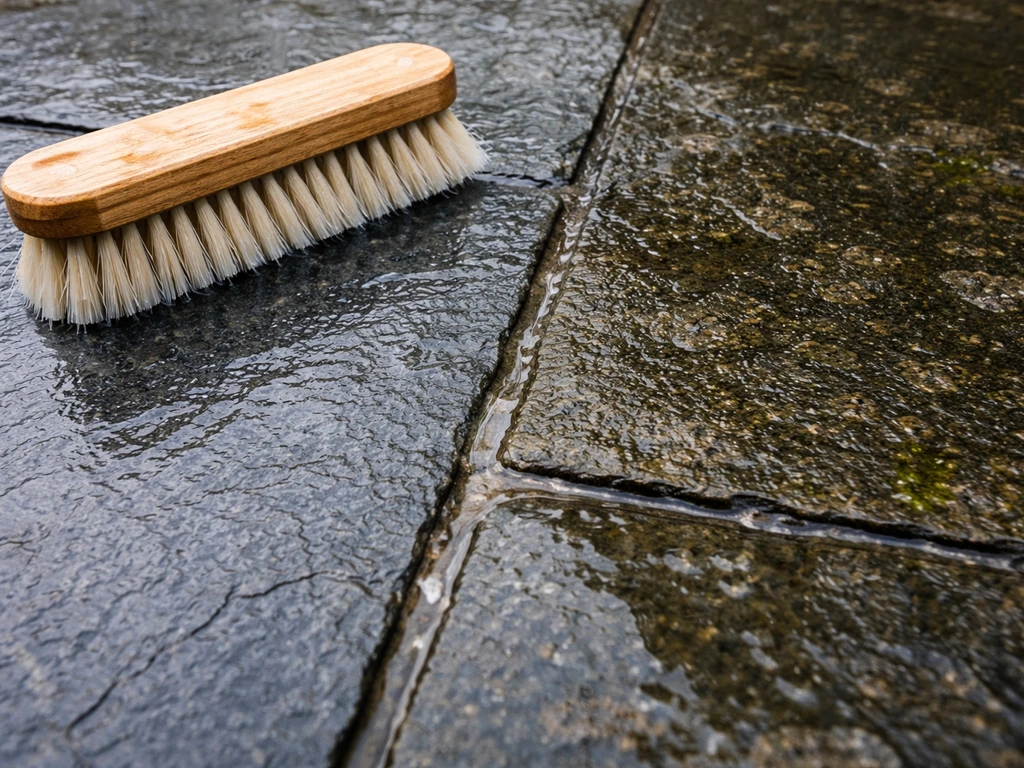
The best granite patio cleaner for most homeowners is Granite Gold Outdoor Stone Cleaner for general maintenance, and Aqua Mix Concentrated Stone & Tile Cleaner for a more versatile, concentrated option that handles both everyday grime and moderate soiling. Both are pH-balanced, sealer-safe, and formulated specifically for natural stone. If you're dealing with serious neglect, heavy organic growth, or old sealer buildup, Aqua Mix Stone Deep Clean is the heavy-duty step up you need. For an eco-conscious pick, an oxygen bleach solution (sodium percarbonate-based) applied correctly is effective, low-toxicity, and genuinely safe on granite finishes.
Best Granite Patio Cleaner: Top Picks, How to Clean & Maintain

Rhea Lang
13 Jul 2026
Why granite patios need special cleaners
Granite is a siliceous igneous rock composed mainly of quartz, feldspar, and mica. That high silicate content makes it more resistant to mild acids than calcareous stones like marble or limestone, which dissolve noticeably when you use the wrong cleaner. That said, 'more resistant' doesn't mean 'immune.' Trace acid-sensitive minerals, polished or honed finishes, and the sealers protecting your slab can all take damage from cleaners at the wrong pH.
The Natural Stone Institute classifies cleaners broadly as neutral, alkaline, or acidic, and recommends neutral-pH products for everyday natural stone care. Strong alkaline cleaners (think heavy-duty degreasers or high-pH strippers used repeatedly) gradually strip the impregnating sealer that keeps your granite stain-resistant. Acidic cleaners, including vinegar, citric acid sprays, and many patio treatments marketed for moss and algae, etch finishes and corrode the feldspar minerals over time. I've seen patios where a homeowner used a citric acid deck cleaner twice a year for three years, and the once-polished surface had turned dull and grainy in patches. The fix was expensive.
The sealer angle matters more than most people realise. Most outdoor granite patios are treated with a penetrating (impregnating) silane/siloxane sealer that sits below the surface and repels water and oil. This sealer is not a magic shield, it just buys you time before stains set. Using a high-alkaline or solvent-heavy cleaner wears it away faster, meaning you'll need to reseal more frequently and your stone will be vulnerable in the gaps between applications. Stick to pH-neutral or mildly alkaline products, and your sealer will last two to five years between applications rather than needing a top-up every season.
How to choose the best granite patio cleaner
When I evaluate a granite patio cleaner, I'm looking at a fairly tight set of criteria. Marketing language like 'stone-safe' or 'natural formula' on a label means almost nothing without checking the actual pH and ingredient list. Here's what genuinely matters.
- pH range: Aim for neutral (pH 6–8) for regular cleaning. Mildly alkaline (up to pH 10) is acceptable for occasional deep cleans, but check it won't strip your sealer. Anything below pH 5 should not touch granite.
- Sealer compatibility: The product should explicitly state it is safe for use over impregnating sealers. If the label only mentions topical/acrylic coatings, check with the manufacturer.
- Concentration and dilution flexibility: A concentrated formula gives you control. You can mix lightly for weekly maintenance and stronger for seasonal deep cleans, which is far more economical than pre-mixed sprays.
- Biodegradability and runoff: Outdoor cleaners drain into lawns, flowerbeds, and storm systems. Biodegradable, surfactant-based formulas (especially those on the EPA Safer Choice list) are the responsible default.
- Dwell time and ease of use: For patios, you want a cleaner that works in 3–10 minutes without needing you to scrub aggressively. Longer dwell times raise the risk of the product drying on the surface, which can leave residue.
- Surface compatibility breadth: A cleaner that's also safe on slate, sandstone, or porcelain tiles is useful if your patio mixes materials. This is worth checking if you have a mixed-stone or tiled border.
For testing, I apply each product on a shaded section of representative stone (polished and unpolished), check for discolouration or finish change after rinsing, then assess cleaning performance against a standardised set of stains: green algae, dried cooking oil, clay mud, and iron rust marks. I also check how the surface looks after three uses to evaluate cumulative effects on finish and sealer.
Top picks for granite patio cleaning
Best overall: Granite Gold Outdoor Stone Cleaner
Granite Gold Outdoor Stone Cleaner is a hose-end spray bottle that attaches directly to your garden hose, making it one of the simplest options on the market. It's pH-balanced, formulated for outdoor natural stone (granite, marble, travertine, limestone, slate, and concrete), and the ready-to-use hose attachment removes the guesswork from dilution. Spray on, let it dwell for a few minutes, scrub lightly if needed, and rinse. That's genuinely it for regular maintenance. For a broader comparison of options and formats, see our guide to the best outdoor patio stone cleaner.
- Pros: pH-balanced, hose-attach format is quick and easy, safe on multiple natural stone types, widely available in hardware stores and online
- Pros: Works well on general grime, light algae, and dust-based soiling without any sealer stripping
- Cons: Pre-diluted format is less economical per square metre than concentrated alternatives
- Cons: Not strong enough for heavy biological growth or deeply embedded stains on neglected patios
- Usage tip: Use in the morning or on an overcast day to prevent the product from drying on the surface before you rinse. Always wet the stone first if it's very dry or hot.
Best concentrated pick: Aqua Mix Concentrated Stone & Tile Cleaner
Aqua Mix Concentrated Stone & Tile Cleaner (TDS-163) is a neutral-pH, biodegradable formula that you dilute yourself. For outdoor granite maintenance, I use 2–3 oz per gallon of water, which gives good cleaning performance without being aggressive on the sealer. For polished or honed granite, the manufacturer recommends going as low as 1 oz per gallon. One bottle covers a large patio multiple times over, making this far more cost-effective than pre-mixed sprays.
- Pros: Concentrated and economical, biodegradable, neutral pH is very sealer-friendly, flexible dilution for different soil levels
- Pros: Consistent performance on both polished and textured granite finishes
- Cons: Requires measuring and mixing, no spray trigger included
- Cons: Takes more effort to set up versus a hose-end bottle
- Usage tip: Don't exceed the recommended dilution thinking it'll clean better. Heavy solutions of even neutral cleaners used repeatedly can affect sealer life according to the manufacturer's TDS.
Best heavy-duty pick: Aqua Mix Stone Deep Clean
Aqua Mix Stone Deep Clean (TDS-165) is a stripper and heavy-duty cleaner for neglected stone, old sealer residue, and serious organic buildup. It uses staged dilutions: light soil at 1:4 with water, moderate soiling at 1:3, heavy buildup at 1:1, and full strength for stripping old sealer before resealing. Dwell time should be kept short, 3–10 minutes maximum, and you must rinse thoroughly. This is not your regular maintenance product. Use it once a year at most, or as a pre-sealing prep step.
- Pros: Genuinely effective on heavy soil, old sealer layers, and embedded organic staining
- Pros: Staged dilution system means you're not over-applying for the job at hand
- Cons: Chemical-resistant gloves are non-negotiable with this product (manufacturer instruction)
- Cons: Can reduce sealer life if used too frequently or at too high a concentration
- Usage tip: Always follow with a thorough rinse and allow the surface to dry fully before applying any new sealer. I'd recommend spot-testing at your intended working dilution first.
Best eco pick: oxygen bleach (sodium percarbonate) solution
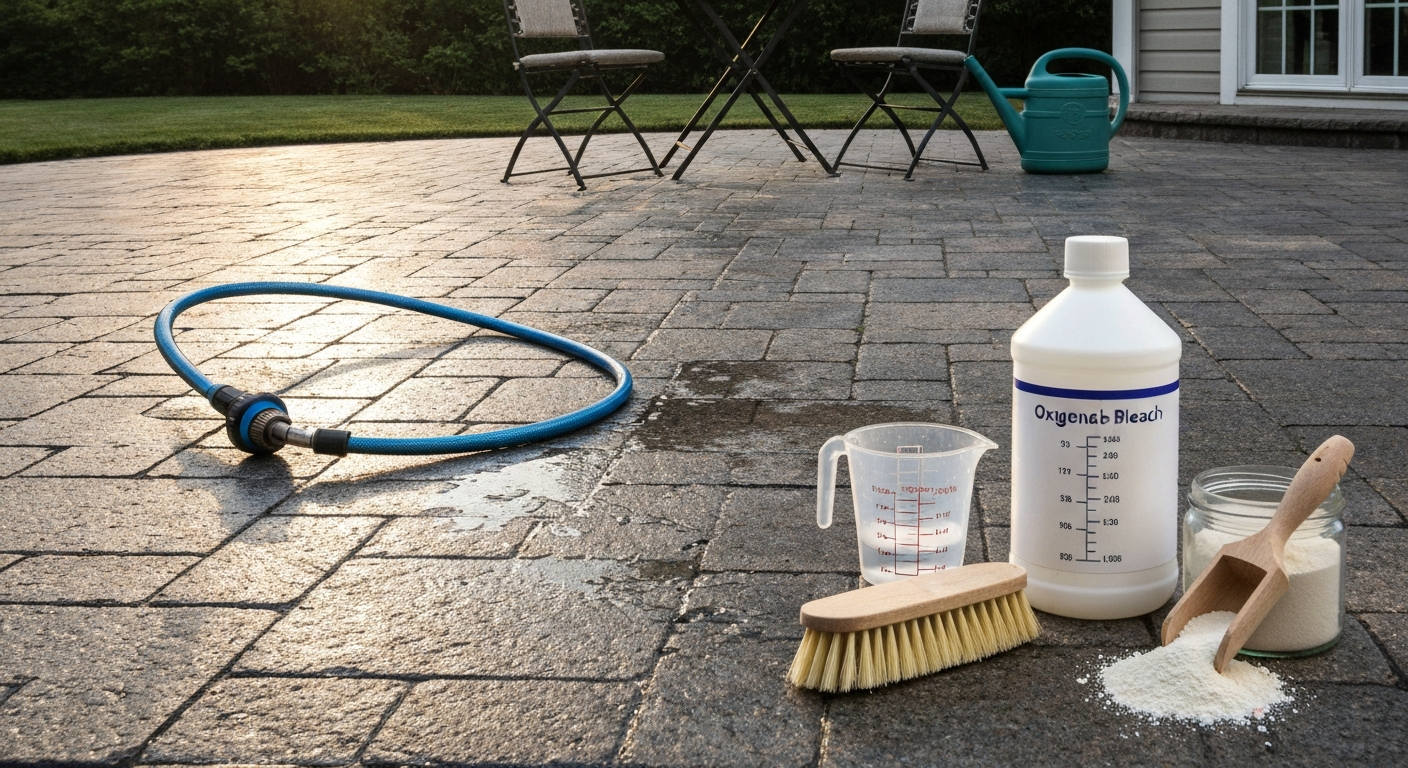
Sodium percarbonate-based oxygen bleach powders (the active ingredient in OxiClean and many similar brands) are an effective, lower-toxicity option for biological growth on granite. In solution, sodium percarbonate releases hydrogen peroxide and soda ash, which break down organic material without harsh acids or chlorine. See Sodium percarbonate, PubChem (chemical summary) for its description as an oxidizing salt that releases hydrogen peroxide and carbonate in solution and notes on its environmental breakdown to water, oxygen, and carbonate Sodium percarbonate — PubChem (chemical summary). It biodegrades to water, oxygen, and carbonate, making it a sensible choice around planted borders. Mix at roughly 1–2 tablespoons per litre of warm water, apply, let dwell 5–10 minutes, scrub gently, and rinse well. Products certified under the EPA Safer Choice programme are the easiest way to verify a lower-toxicity formulation.
- Pros: Low toxicity, biodegrades cleanly, safe around most plants when properly diluted and rinsed
- Pros: Effective on algae, mold, and moss at low cost
- Cons: Less effective on grease, oil, or mineral staining
- Cons: Powders must be fully dissolved before application to avoid granule marks on polished stone
- Usage tip: Use warm water to dissolve the powder fully. Don't let it dry on the surface. This is best used on a cloudy day or in the early morning.
Product comparison at a glance
| Product | Type | pH | Best For | Sealer-Safe | Eco Notes |
|---|---|---|---|---|---|
| Granite Gold Outdoor Stone Cleaner | Ready-to-use hose-end spray | Neutral (balanced) | Regular maintenance, light grime | Yes | Biodegradable surfactants |
| Aqua Mix Concentrated Stone & Tile Cleaner | Concentrated liquid | Neutral | Versatile maintenance and moderate soiling | Yes (per TDS) | Biodegradable formula |
| Aqua Mix Stone Deep Clean | Heavy-duty concentrate/stripper | Alkaline | Neglected stone, pre-sealing prep, heavy buildup | Use sparingly — strips sealer at high concentration | Rinse to drain per label |
| Sodium percarbonate (oxygen bleach) | Powder (mix yourself) | Mildly alkaline | Biological growth (algae, mold, moss) | Yes at low dilution | Breaks down to water/oxygen/carbonate |
Spot-testing, PPE, and safer alternatives
Always spot-test before using any cleaner across a full patio surface. This isn't just cautious advice, it's what the Natural Stone Institute specifically recommends, and it's saved me from expensive mistakes. Choose an inconspicuous area (under a planter, in a corner behind furniture) and apply your intended product at your intended dilution. Let it dwell for the full dwell time, rinse, and let it dry completely, then inspect in daylight. You're looking for any change in colour, finish (dullness, etching, haziness), or texture. If anything looks different, don't use that product or drop to a weaker dilution and test again.
For PPE, the Granite Gold Clean & Shine SDS (H315, H319 hazard ratings) lists skin and serious eye irritation hazards, meaning chemical-resistant gloves and eye protection (splash goggles, not just safety glasses) are mandatory. Aqua Mix Stone Deep Clean similarly requires chemical-resistant gloves per its manufacturer instructions. For any chlorine bleach-based products, NIOSH and NOAA guidance is clear: use splash goggles, gloves, and ensure good ventilation because sodium hypochlorite decomposes to chlorine gas when it contacts acids. Never mix bleach with any acidic cleaner, vinegar, or ammonia-based product.
- Wear nitrile or chemical-resistant gloves for any stone cleaner, and upgrade to heavy-duty gloves for strippers or bleach-based products.
- Use splash goggles (not standard sunglasses) when applying sprays or working overhead.
- Work in a well-ventilated outdoor space and keep children and pets away from the area until the surface is rinsed and dry.
- Never mix chlorine bleach with any acid, vinegar, citrus-based cleaner, or ammonia-based product.
- Check the SDS for your chosen product before using it for the first time. It tells you exactly what PPE is required and how to handle disposal.
If you want to minimise chemical use altogether, oxygen bleach (sodium percarbonate) and plain hot water with a stiff bristle brush handles a surprising amount of maintenance grime on granite. For those who prefer to avoid synthetic surfactants, the EPA Safer Choice database is the most reliable way to find independently vetted lower-toxicity formulations for outdoor stone cleaning.
Step-by-step granite patio cleaning guide
Preparation
Clear the patio of furniture, pots, and any loose debris. Sweep or blow off dry grit and leaves first, because scrubbing dry debris into wet stone can scratch finishes. Wet the entire surface with plain water before applying any cleaner. This dilutes the first contact concentration, prevents the cleaner from soaking in too fast on hot or porous stone, and helps the product spread more evenly. If it's a hot sunny day, consider working in sections and keeping a hose running nearby.
Mixing and application
Mix your chosen cleaner to the appropriate dilution for the soil level (refer to the TDS or product label). Apply with a plastic watering can, garden sprayer, or hose-end bottle depending on your product format. Work in manageable sections of roughly 2–4 square metres rather than treating the whole patio at once, especially in warm weather. Apply evenly and ensure no dry patches form. For textured or brushed granite, use a soft-to-medium bristle brush (nylon or natural fibre, not metal wire) to work the product into the surface texture.
Dwell time, agitation, and rinsing
Allow the cleaner to dwell for the manufacturer's recommended time, typically 3–10 minutes. Don't let it dry on the surface. If it starts to dry in patches, mist with water. After agitating lightly with a brush, rinse thoroughly with a garden hose or pressure washer on a wide fan setting. Rinse more than you think you need to, running clean water over the surface until there's no foam or cloudiness. Detergent residue left on granite can attract more dirt and may cause a slight film over time.
Drying and frequency
Allow the surface to air dry fully (at least 24 hours for a shaded patio, less in full sun) before replacing furniture or applying sealer. For maintenance cleaning, once or twice a year is usually sufficient for a well-sealed, regularly swept granite patio. If you're in a damp climate with high biological growth or your patio is shaded by trees, quarterly cleaning may be needed. Heavy-duty stripping should only happen as part of a resealing cycle, roughly every two to five years depending on foot traffic and your sealer type.
Stain-specific treatments
Mold and algae
Green or black biological film on granite is almost always algae or mold. An oxygen bleach solution (sodium percarbonate at 1–2 tablespoons per litre of warm water) works well for both. Apply, let dwell 5–10 minutes, scrub with a stiff nylon brush, and rinse thoroughly. For more stubborn coverage, Granite Gold Outdoor Stone Cleaner or Aqua Mix Concentrated Stone & Tile Cleaner at a slightly higher dilution handles most cases. Avoid chlorine bleach on finished granite as a first resort; it can discolour some granite types and the NOAA hazard profile makes it worth reserving for serious cases. If you do use it, work at low concentration (no more than 1 part bleach to 10 parts water), rinse immediately and thoroughly, never mix with acid, and wear goggles and gloves.
Moss
Moss establishes in grout lines and textured stone surfaces where moisture sits. Remove as much as possible physically first with a stiff brush or plastic scraper. Then apply oxygen bleach solution or a pH-neutral stone cleaner, agitate into the root structure, and rinse. Moss tends to come back quickly if the drainage or shade problem isn't addressed. After cleaning and resealing, consider improving drainage or trimming overhanging branches to reduce moisture retention.
Rust stains
Rust on granite usually comes from metal furniture legs, irrigation fittings, or iron-bearing water. This is where you need to be careful: most rust removers are phosphoric acid or oxalic acid-based, and while granite's siliceous composition gives it more acid tolerance than marble, I've still seen etching on polished granite from aggressive rust removers used without dilution. Use a rust remover specifically formulated for natural stone (not a general tile or concrete rust product), apply to the stain only (not the surrounding stone), keep dwell time short, and rinse immediately. Spot-test first, always. Prevent recurrence by fitting rubber or plastic feet on metal furniture and using stainless steel fixings.
Grease and oil
BBQ grease, cooking oil, and food fat soak into unsealed granite surprisingly fast. Blot fresh spills immediately, don't wipe them in. For set-in grease, a slightly higher dilution of Aqua Mix Concentrated Stone & Tile Cleaner (3–4 oz per gallon) with agitation works well. For old, deeply embedded oil staining, a poultice (an absorbent paste of clean kaolin clay or baking soda mixed with a degreasing cleaner, applied thickly, covered with plastic film, and left 12–24 hours to draw the oil out) is the professional approach. Lift the dried poultice, rinse, and repeat if needed. This is slow but it works when surface cleaning doesn't.
Pet stains
Pet urine is acidic (pH roughly 5–6) and can etch granite finishes and break down sealers if left to sit. Rinse as soon as possible with plain water. For lingering odour and staining, an enzyme-based cleaner formulated for hard outdoor surfaces works well and is far safer on stone than bleach or disinfectant sprays. Avoid ammonia-based cleaning products entirely around pets: ammonia smells similar to urine and can encourage resoiling in the same spot. Check the enzyme cleaner's pH (aim for neutral) and spot-test before broad application on a polished finish.
Pressure-washing granite patios
Pressure washing is effective for rinsing granite patios after cleaning, removing embedded grit from textured surfaces, and tackling heavy biological growth across large areas. The key is using the right PSI, the right nozzle, and keeping the lance moving. I learned this the hard way when I held a 15-degree nozzle too close to a brushed granite surface and etched a visible stripe into it. It wasn't catastrophic, but it was a very obvious reminder.
Stone restoration professionals typically start at around 1,200 PSI for finished stone surfaces, which is lower than you might expect. Consumer pressure washers typically range from 1,200 to 2,800 PSI, so using a lower-pressure setting or running the machine at partial throttle is often the right approach for granite. Use a 25-degree (green) nozzle for general cleaning and a 40-degree (white) nozzle for rinsing. Never use the 0-degree (red) or 15-degree (yellow) nozzle on finished granite; the concentrated pressure cuts into the surface. Kärcher guidance recommends keeping the lance 8–30 cm from the surface depending on the nozzle and task, and always working in sweeping passes from top to bottom, not holding still in one spot.
| Nozzle Colour | Angle | Use on Granite | Notes |
|---|---|---|---|
| Red | 0° | Never | Can penetrate and damage any stone surface |
| Yellow | 15° | Avoid | Too concentrated for finished or polished granite |
| Green | 25° | Yes (cleaning passes) | Good general cleaning nozzle at appropriate distance |
| White | 40° | Yes (rinsing) | Best for rinsing and light maintenance passes |
| Black | 65° soap | For detergent application only | Low pressure, use with stone-safe detergent |
For large patios, a rotary surface cleaner attachment (sometimes called a turbo nozzle or surface washer) produces even, consistent results because it eliminates the striping pattern you can get from a hand-held lance. Keep the surface cleaner moving at a consistent pace and maintain even overlap. Apply any cleaning solution at low pressure using the soap nozzle or a garden sprayer first, let it dwell, then pressure rinse rather than relying on pressure alone to do the cleaning work. After pressure washing, allow the surface to dry fully before inspecting for any residual staining or areas that need spot treatment.
Sealing granite patios: what actually works
Cleaning and sealing go hand in hand. Sealing a dirty or damp surface is a wasted effort, so always clean and dry the patio completely before applying sealer. For outdoor granite, a penetrating silane/siloxane impregnating sealer is the right choice. Products like Miracle Sealants 511 Impregnator and Foundation Armor's silane/siloxane range chemically penetrate below the surface to create a water-repellent barrier without forming a film. This matters outdoors because film-forming (topical) acrylics can peel, trap moisture under freeze-thaw cycles, and require more frequent recoating. Impregnating sealers breathe, last longer (2–5 years depending on traffic and weather), and don't change the stone's appearance.
Apply sealer in thin, even coats following the manufacturer's TDS for recoat windows and cure times. Do a water bead test before resealing: drop a few tablespoons of water on the surface. If it beads up and sits on top, the sealer is still working. If it soaks in within 3–5 minutes, it's time to reseal. Don't wait until staining occurs to figure this out.
Cross-surface compatibility: when your granite cleaner works elsewhere
Many homeowners have mixed patio surfaces, granite slabs with a slate border, porcelain insets, or a concrete pathway running alongside the stone. Here's how the main granite cleaners translate to other surfaces. If you also have concrete areas, see our guide to the best concrete patio cleaners for compatible products and techniques.
| Surface | Granite Gold Outdoor Stone Cleaner | Aqua Mix Concentrated Stone & Tile Cleaner | Aqua Mix Stone Deep Clean | Oxygen Bleach (sodium percarbonate) |
|---|---|---|---|---|
| Granite | Yes (primary use) | Yes | Yes (heavy-duty/prep) | Yes (biological growth) |
| Slate | Yes (listed on label) | Yes (neutral pH) | Use cautiously, spot-test | Yes |
| Marble/Travertine/Limestone | Yes (listed on label) | Yes (neutral pH essential) | Not recommended — alkaline at high concentration | Yes at low dilution, rinse fast |
| Sandstone | Spot-test first | Yes at low dilution | Not recommended | Yes |
| Porcelain tiles | Generally compatible | Yes (used in tile cleaning) | Check grout type first | Yes |
| Concrete | Yes (listed on label) | Yes | Yes | Yes |
If your patio includes slate, porcelain tiles, or other natural stone types alongside granite, the cleaning approach is broadly similar but the surface-specific quirks do matter. Slate, for example, has its own layered structure and finish considerations, and if you're dealing primarily with a slate-heavy patio there are dedicated guidance resources worth checking. For slate-specific advice and product recommendations, see our guide to the best slate patio cleaner. Similarly, if you have a mainly porcelain-tiled patio with a granite border, the grout and tile-specific considerations are worth reading separately before applying a stone stripper across the whole area. For guidance specific to porcelain, see can you use patio cleaner on porcelain tiles for safe cleaner choices and grout considerations. For detailed guidance on cleaning porcelain and other tile surfaces, see our guide to the best patio tile cleaner.
Maintenance and prevention: keeping granite looking good longer
The best way to reduce cleaning frequency and effort is keeping the patio surface protected and clear of the conditions that cause staining. Sweep regularly to prevent organic debris from sitting and feeding algae and mold growth. Rinse off spills, especially food, oil, and bird droppings, as quickly as possible rather than leaving them to sit and penetrate. Fit rubber or plastic feet to all metal furniture to prevent rust marks. Maintain your sealer on a regular cycle using the water bead test as your guide rather than a fixed calendar. In shaded or damp areas, applying a quality penetrating sealer annually instead of every two to three years is a practical preventive measure that pays for itself by reducing heavy-duty cleaning needs.
In climates with hard frost, check that your sealer is rated for freeze-thaw conditions. Water trapped in surface micro-pores that freezes and expands can crack or spall granite, particularly on older or lower-density material. An impregnating sealer that properly repels water reduces freeze-thaw damage significantly. This is one of the underappreciated benefits of consistent sealing maintenance beyond just stain resistance.
FAQ
What is the best granite patio cleaner overall?
For most homeowners, a neutral‑pH, stone‑specific cleaner such as Granite Gold Outdoor Stone Cleaner or Aqua Mix Concentrated Stone & Tile Cleaner is the best overall choice. These are formulated for natural stone (pH‑balanced, sealer‑safe when used per directions), are widely available, and have published TDS/SDS with dilution and PPE guidance.
Why must I use a pH‑appropriate, sealer‑safe cleaner on granite?
Granite is largely siliceous and more acid‑tolerant than marble, but finishes, trace minerals and sealers can be damaged by acidic or highly alkaline products. Neutral, stone‑specific cleaners clean without stripping impregnating sealers or etching finishes; heavy alkaline/acidic cleaners also shorten sealer life. Always spot‑test first.
How do I spot‑test a cleaner on my granite patio?
Choose an inconspicuous area, apply the diluted cleaner per label, wait the recommended dwell time, rinse thoroughly, and inspect for color change, etching, film or grout damage after it dries. If no adverse change occurs within 24 hours, the product is likely safe for that surface and finish.
What step‑by‑step method should I use to clean a granite patio?
1) Sweep debris and loose dirt. 2) Spot‑test cleaner. 3) Mix neutral stone cleaner per label (e.g., 1–4 oz/gal for daily use). 4) Wet the area lightly. 5) Apply cleaner with a pump sprayer or mop and let dwell per instructions (do not let dry). 6) Agitate with a soft‑bristle brush or rotary patio cleaner. 7) Rinse thoroughly with a hose or pressure washer on low settings (see pressure‑wash guidance). 8) Let dry and inspect. 9) Reapply sealer if recommended after cleaning and drying.
How do I treat specific stains like mold/algae, moss, rust, grease/oil, and pet stains?
- Mold/algae/moss: Use an oxygen‑bleach (sodium percarbonate) solution or stone‑safe algaecide per label; scrub, rinse and repeat. Avoid concentrated bleach in shaded or planted areas. - Rust: Use a commercial rust remover formulated for stone (follow spot‑test) or a poultice recommended by stone pros; avoid acid on unknown finishes. - Grease/oil: Apply an absorbent (cat litter or commercial oil absorbent), then a degreasing stone cleaner or poultice; scrub and rinse. - Pet stains: Clean with neutral stone cleaner; for protein odors use enzyme cleaners safe for stone and spot‑test. For all stains, start with mild treatments and escalate to poultices/strippers only if necessary.
When should I use a heavy‑duty stone stripper vs. regular cleaner?
Use a heavy‑duty stripper (e.g., Aqua Mix Stone Deep Clean) only for heavily soiled/neglected patios, old sealer removal or persistent staining after milder methods. Follow manufacturer dilutions, short dwell times, protective PPE and thorough rinsing; remember strippers can shorten future sealer life and require re‑sealing after use.
Next Article
Best Slate Patio Cleaner: How to Choose and Use Safely
Choose the best slate patio cleaner and use it safely to remove moss, algae, lichen, grime and stains without damaging s