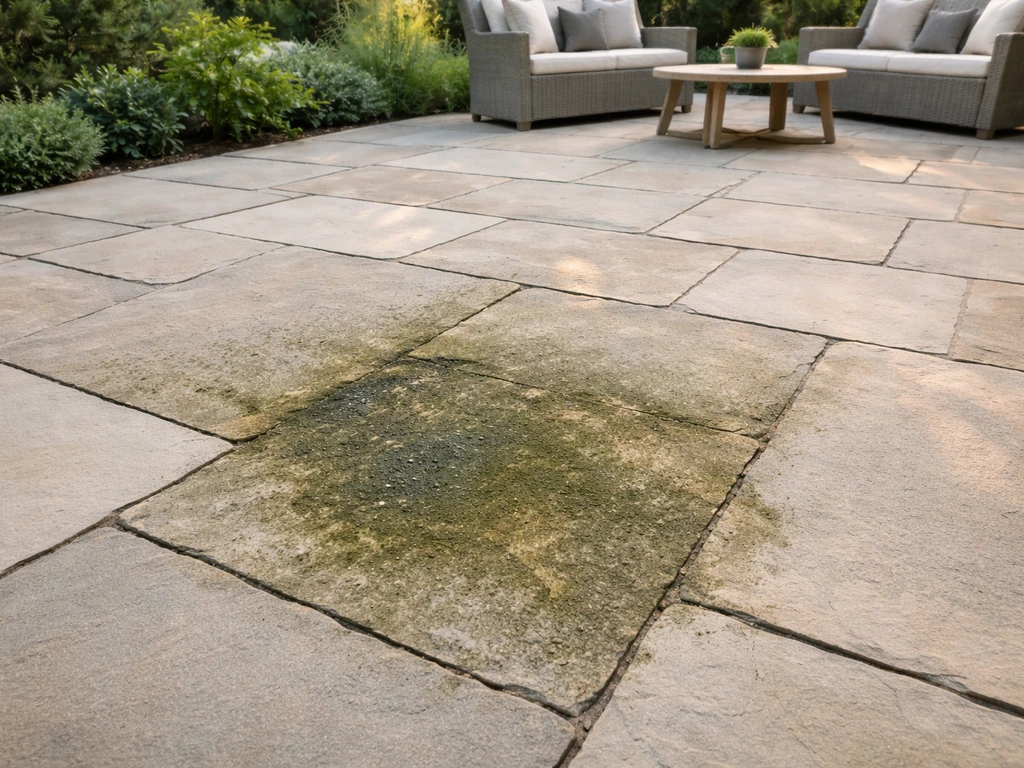
Yes, you can use a patio cleaner on porcelain tiles, but it depends entirely on what's in the bottle. Some patio cleaners are fine. Others will etch the glaze, bleach the grout, or leave a dull residue that's genuinely hard to fix. The key is checking whether the product is acid-based, strongly alkaline, or sodium hypochlorite heavy, because porcelain tile manufacturers are pretty clear that those three things can cause real damage, especially to glazed or polished finishes. Get the chemistry right and use it properly, and patio cleaner works well on porcelain. Skip that step and you risk a patio that looks worse after cleaning than before.
Can You Use Patio Cleaner on Porcelain Tiles Safely?

Rhea Lang
18 Jun 2026
What 'patio cleaner' actually means and why it matters for porcelain
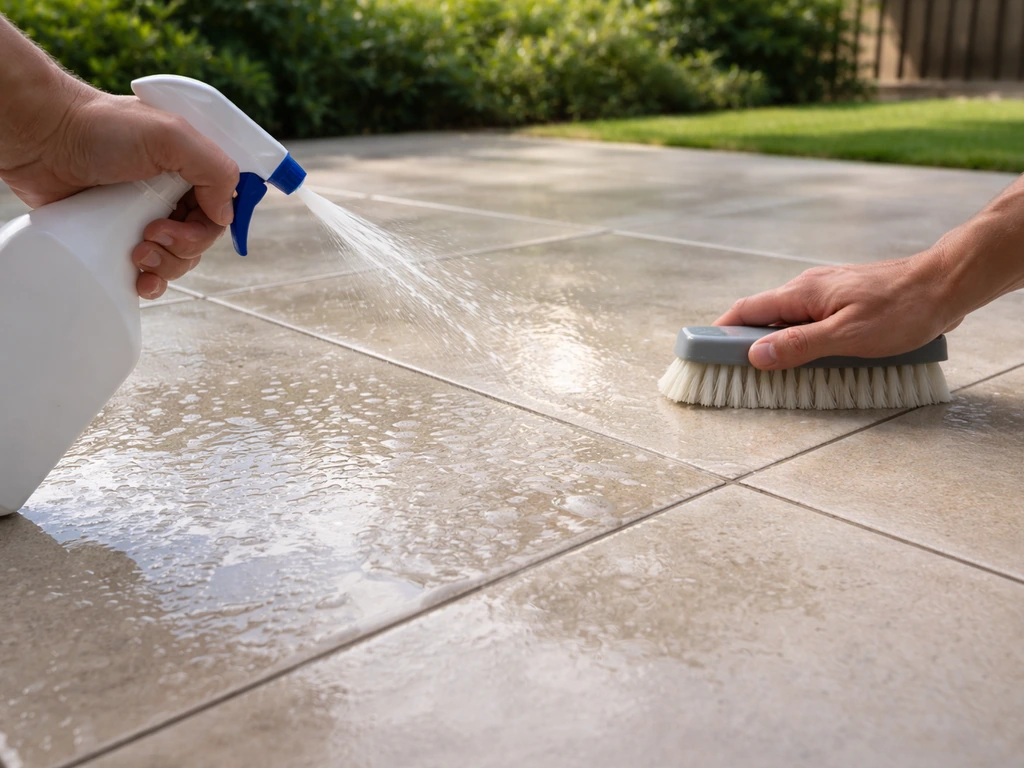
The term 'patio cleaner' covers a surprisingly wide range of products. You've got alkaline degreasers, hypochlorite-based biocidal washes designed to kill algae and mold, acid-based effloresence removers, and general-purpose surfactant blends meant to be diluted and used with a pressure washer. Products like Rust-Oleum's RockSolid Deck and Patio Cleaner, for example, run at a pH of 10 to 12, contain alkaline detergents, and include sodium hypochlorite. That's quite a potent mix compared to what most porcelain tile manufacturers actually recommend.
Porcelain is technically dense and low-porosity, which makes it more forgiving than sandstone or slate. But the glaze on glazed porcelain tiles is essentially a glass-like layer, and strong acids or repeated use of high-alkaline cleaners can dull or etch that surface over time. Unglazed porcelain is more robust chemically, but it's slightly more porous on the surface and can trap residue. The grout between tiles is the real weak point regardless of which porcelain type you have, because grout is genuinely susceptible to acid damage and bleaching from hypochlorite products.
So when someone asks whether they can use patio cleaner on porcelain, what they're really asking is whether the specific chemistry in their specific patio cleaner is compatible with glazed or unglazed porcelain and with the grout type they have. That's why compatibility matters more than the category label on the front of the bottle.
Check the label before you open the lid
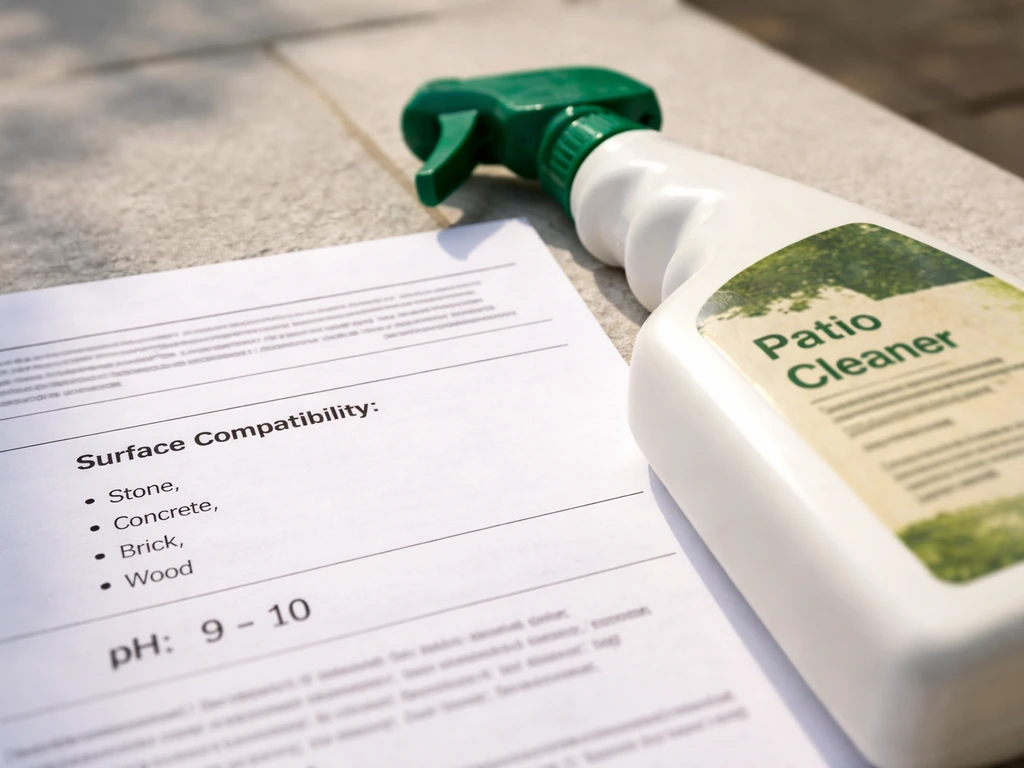
Before applying anything to your porcelain patio, spend two minutes reading the product label and, if it's available, the SDS (safety data sheet). Here's what you're actually looking for:
- Surface compatibility: Does it list tile, ceramic, or porcelain as a compatible surface? If it only mentions wood, composite decking, or concrete, treat that as a warning sign.
- pH level: Aim for pH-neutral or near-neutral (pH 6 to 8) for regular cleaning. Strongly alkaline (pH 10+) or acidic (pH below 5) products are risky on glazed porcelain and especially damaging to cementitious grout.
- Acid content: Look for hydrochloric acid, phosphoric acid, citric acid, or sulfamic acid in the ingredients. Acids are sometimes used for specific jobs like rust or grout haze removal, but they are not safe for routine cleaning of glazed porcelain.
- Ammonia: Products containing ammonia should not be used on porcelain tile finishes. Multiple tile manufacturers, including Daltile and Emser, explicitly call this out in their care guides.
- Sodium hypochlorite (bleach): Present in many deck and patio washes. It kills biological growth effectively, but it can bleach colored grout and degrade grout over time if used repeatedly or left to dwell too long.
- Dilution ratio: A product that says 'apply undiluted' is generally harsher than one designed to be mixed at 1:10 with water. Know what concentration you're actually putting on the tile.
If the label says nothing about tiles or porcelain, search for the product's SDS online. Rust-Oleum's RockSolid Deck and Patio Cleaner, for instance, lists its pH range and active chemistry clearly in its SDS. A five-minute search can save you a costly mistake. If you genuinely cannot verify the pH or ingredient list, do not use it on porcelain until you do a patch test.
The real risks to porcelain tiles (glazed vs unglazed)
Let me be specific about what can actually go wrong, because vague warnings about 'damage' aren't that useful.
| Risk | Glazed Porcelain | Unglazed Porcelain |
|---|---|---|
| Etching / dulling of surface | High risk with acids and strong alkalis | Low to moderate risk (no glaze layer) |
| Discoloration / bleaching | Moderate risk with hypochlorite products | Moderate risk, more visible on dark tiles |
| Grout damage | High risk with acids, hypochlorite | High risk with acids, hypochlorite |
| Residue / streaking | Common if not rinsed thoroughly | Common, especially in surface texture |
| Increased resoiling | Yes, if residue left on surface | Yes, texture traps sticky residue |
| Subsurface water intrusion | Low (dense tile, but grout joint risk) | Moderate (slightly more porous surface) |
The most common real-world outcome I've seen with people who've used the wrong patio cleaner on porcelain is a streaky, slightly dull finish on glazed tiles and bleached or crumbling grout lines. The tile itself rarely cracks or breaks, but the grout damage can be surprisingly fast. Sodium hypochlorite at high concentrations, or acid-based cleaners applied without proper dilution, can visibly degrade cementitious grout after even one application if the dwell time is too long.
Glossy, polished, or rectified porcelain tiles are the most vulnerable. Matte or textured unglazed porcelain is generally tougher chemically, but its surface texture makes it easier to trap residue, which then attracts more dirt. Always rinse thoroughly regardless of which type you have.
How to clean porcelain tiles with patio cleaner: step by step
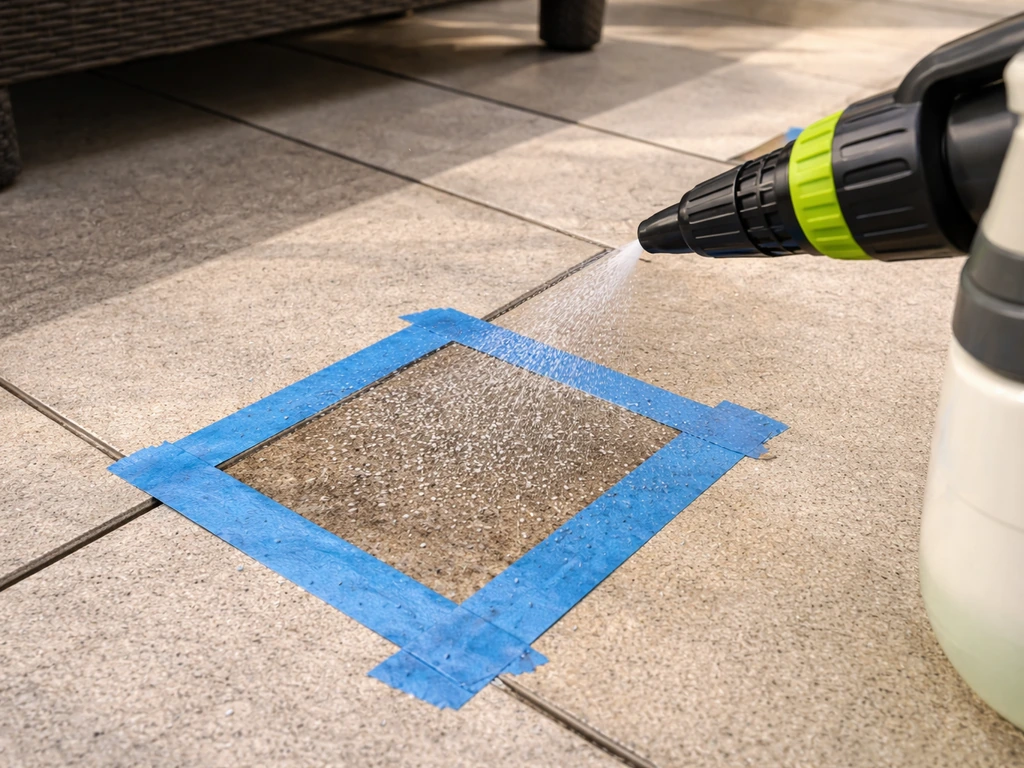
This process works whether you're using a pH-neutral porcelain-safe patio cleaner or a mild alkaline deck wash that you've verified is compatible. Do not skip the patch test. Daltile, Crossville, and most other major tile manufacturers all specifically say to test any cleaning product on a small area before full application, and I back that completely.
- Pick a hidden test spot: Choose a corner or area behind outdoor furniture. Apply the diluted product exactly as you plan to use it on the full patio.
- Check after drying: Let it dry completely, then inspect under good light. Look for any change in sheen, color shift, residue, or surface texture. Check the grout lines specifically.
- Mix to the right dilution: Unless the label specifically says to apply undiluted, dilute to the recommended ratio. If no ratio is given and you're unsure, start at 1:10 (product to water) for your first application.
- Pre-wet the surface: Rinse the porcelain tiles with clean water before applying cleaner. This prevents the cleaner from being absorbed too aggressively and makes rinsing easier afterward.
- Apply evenly: Use a garden sprayer, watering can, or mop. Work in manageable sections, roughly 2 to 3 square metres at a time, so the product doesn't dry on the surface before you rinse.
- Dwell time: For most patio cleaners, 5 to 10 minutes is the typical dwell window. Do not let the product dry on the tile. If it starts drying, mist lightly with water or move to rinsing.
- Scrub if needed: Use a stiff-bristle brush (not a wire brush, which can scratch glazed surfaces or deposit metal particles that cause rust stains). Scrub grout lines gently.
- Rinse thoroughly: This is where most people go wrong. Rinse with plenty of clean water, working from the top of the patio down. Multiple rinse passes are better than one. Residue left on the surface will leave the tiles looking dull and will attract more dirt faster.
- Check for streaks while wet: Look across the surface at a low angle while it's still wet. Streaks show up clearly at this stage and are much easier to remove with another rinse now than after drying.
Matching the cleaner to the stain: algae, mold, rust, grease, and grout haze
Not every problem on a porcelain patio needs the same solution. Using the right product for the specific stain is more effective and less risky than defaulting to the strongest patio cleaner you have.
Algae, mold, mildew, and green film
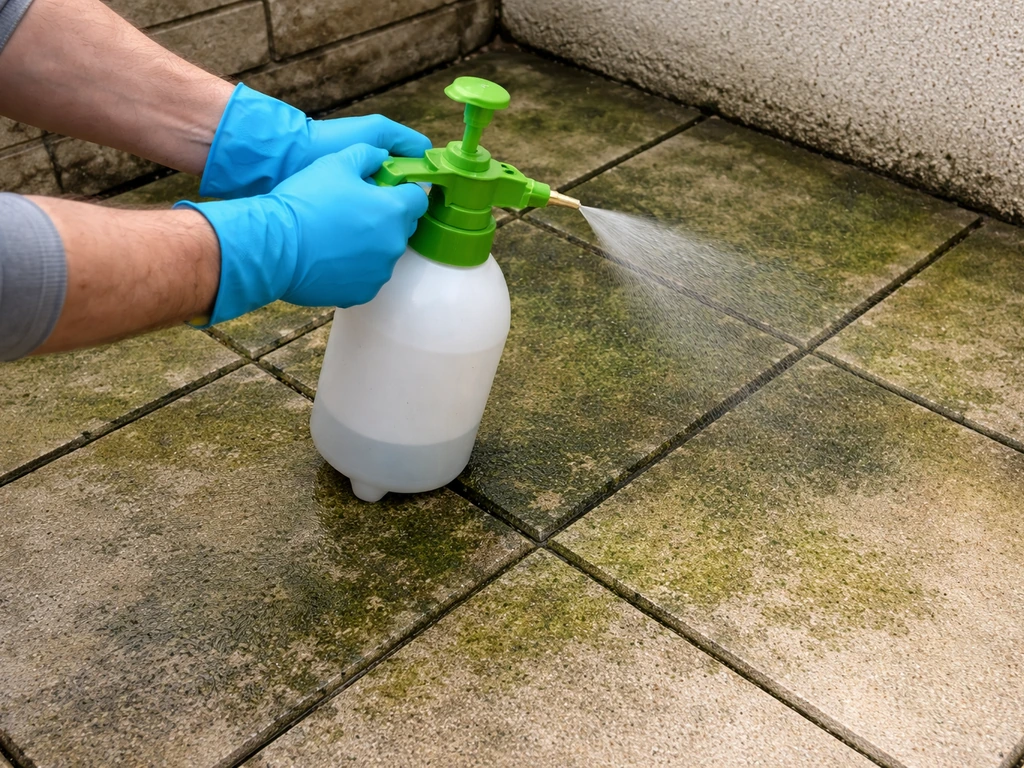
This is exactly what most biocidal patio cleaners are formulated for. Sodium hypochlorite-based products work well here because hypochlorite kills the biological organisms at root level. The risk on porcelain is mainly to the grout, so dilute the product properly and limit dwell time to 10 minutes maximum. A practical Reddit discussion about deck cleaning also emphasizes DIY patch testing and using lower pressure and shorter dwell times when working with sodium hypochlorite-based “deck cleaner” to avoid uneven staining dilute properly and limit dwell time. Rinse very thoroughly. For light green film or early-stage algae, a pH-neutral cleaner with a brush and a good rinse is often enough and safer for the grout long-term.
Moss
Moss in grout joints is common on shaded patios. Physically remove the bulk of it first with a stiff brush before applying any chemical, otherwise you're just treating the surface of the moss rather than the tile underneath. A diluted hypochlorite-based patio cleaner applied after mechanical removal is effective. Let it dwell, rinse well, and repeat in two weeks if needed. Persistent moss usually means a drainage or shade issue worth addressing.
Rust spots from nearby metal
Rust spots on porcelain often come from metal garden furniture legs, screws, or plant containers with metal bases. These respond to oxalic acid-based rust removers, but you have to be careful: acids can etch glazed porcelain and damage grout. Apply a small amount directly to the rust spot only (use a cotton bud or small brush to keep it off the grout), leave for the minimum recommended time, and rinse immediately and thoroughly. This is not a job for a general patio cleaner, which won't effectively remove iron oxide staining anyway.
Grease and footwear grime
Greasy residue from barbecues, sunscreen, or footwear responds well to mildly alkaline degreasers. A pH-neutral to slightly alkaline (pH 7 to 9) porcelain-safe tile cleaner applied with a brush works well here. Let it dwell for 5 minutes to cut through the grease before scrubbing. This is actually one area where some patio cleaners with surfactant chemistry are genuinely useful on porcelain, because the degreasing ability is exactly what's needed.
Grout haze
If you've recently laid or re-grouted porcelain tiles, you may have a grout haze problem. This is different from dirt and requires a specific approach. For cementitious grout haze, a sulfamic acid-based grout haze cleaner is the recommended product. For epoxy grout haze, you need an epoxy-specific haze remover. Standard patio cleaners will not effectively remove grout haze and could make the situation worse by leaving their own residue. Daltile specifically advises waiting 12 to 24 hours after grouting before attempting haze removal.
Pressure washer vs chemical cleaner: what's safer and what settings to use
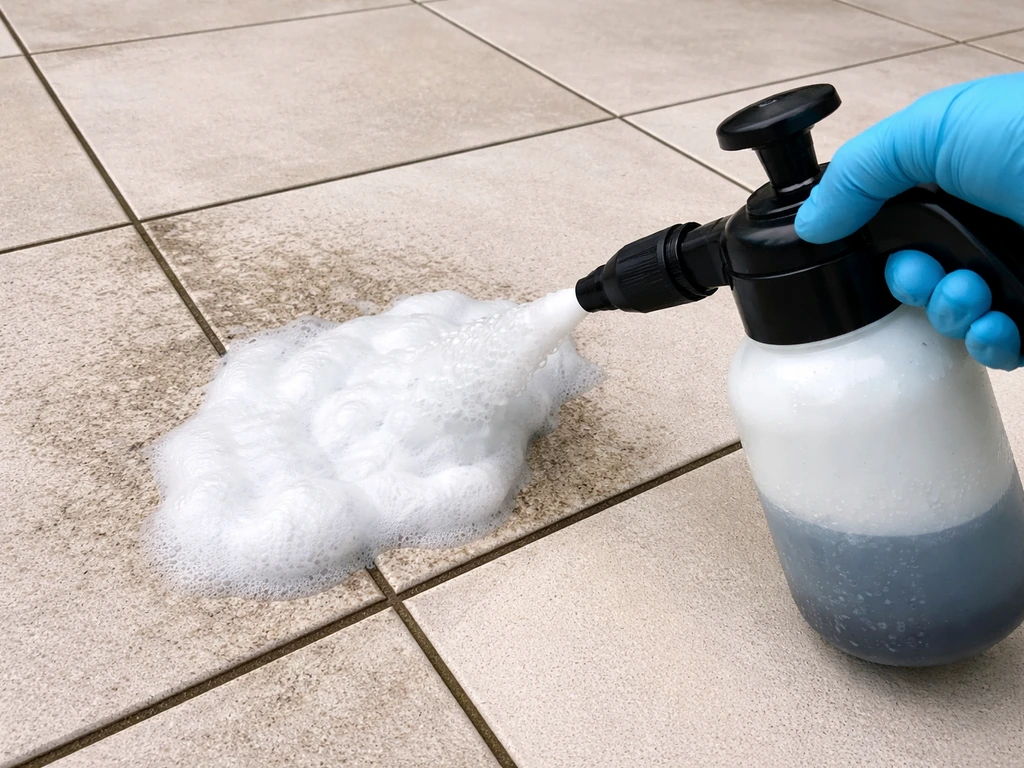
Pressure washing and chemical cleaning are different jobs and don't always need to happen together. On porcelain patio tiles specifically, the combination of high pressure and aggressive chemistry is where things go wrong most often.
Using a pressure washer alone
Pressure washing is highly effective for removing loose dirt, surface algae, and general grime from porcelain. The risk is the grout, not the tile itself. High-pressure jets can erode grout material, open up grout joints, and allow water to get under the tiles. For porcelain patio tiles, keep pressure between 500 and 800 PSI. Stay well above the surface, at least 12 inches (30 cm) away, and use a fan nozzle (25 or 40 degree). Avoid turbo or zero-degree nozzles entirely. GSA guidance for masonry puts the safe high-pressure range at 800 to 1200 PSI held 18 to 30 inches away, but for tile and grout I'd stay at the lower end of that scale.
Using foam or surfactant cleaners with a pressure washer
Many patio cleaners are designed to be used via a foam cannon or downstream injector on a pressure washer. Applied this way, the pressure stays low during application (foam cannons typically work at reduced pressure) and you're relying on the chemical dwell time to do most of the work, with the pressure washer used mainly for rinsing. This is actually a safer approach for porcelain than trying to mechanically blast stains off with high pressure. Use a properly diluted product, apply with foam, wait the recommended dwell time, then rinse at 500 to 800 PSI with a fan nozzle.
Chemical cleaning without a pressure washer
For most homeowners with a standard porcelain patio, hand application with a garden sprayer or watering can, followed by scrubbing and a thorough garden hose rinse, gives results that are just as good as pressure washing and is considerably safer for the grout. I'd recommend this approach for anyone who isn't confident with pressure washer settings or who has older or re-grouted tile sections.
Already applied patio cleaner and not sure it was safe? Here's what to do
If you've already applied a patio cleaner to your porcelain tiles and you're now questioning whether it was the right product, here's how to handle it depending on where you are in the process.
Product is still wet on the tiles
Rinse immediately with large amounts of clean water. Don't wait. The longer an acidic or high-alkaline product sits on glazed porcelain or grout, the more potential damage it causes. Flood the area with water and keep rinsing until you're confident the product is fully diluted and washed away. This is particularly urgent if the product contains acids or if you can see it foaming on the grout (a sign of a chemical reaction between acid and cementitious grout).
Product has dried on and left residue
Dried residue from alkaline patio cleaners on porcelain usually looks like a white haze or streaking. Try rinsing first with hot water and a mop. If that doesn't shift it, a pH-neutral tile cleaner applied with a brush and a thorough rinse will often remove alkaline residue. Do not attempt to remove the residue with another acidic product without understanding what the original cleaner was, because mixing residues from incompatible chemistries can create hazardous reactions.
You can see etching or damage to the glaze
Stop using the product immediately. Rinse thoroughly. If the glaze on glazed porcelain is visibly etched or dulled, that's permanent surface damage and cannot be reversed by further cleaning. In severe cases, professional tile restoration (grinding and repolishing) is an option, but it's expensive and not always practical for outdoor tiles. Damaged grout can be raked out and regrouted, which is a more affordable fix.
Protecting plants, nearby surfaces, and yourself
Always wear gloves and eye protection when working with concentrated patio cleaners. Work in a ventilated outdoor space, which you obviously will be. Before you start, pre-rinse any plants, lawn edges, or garden beds near the patio with water, and do the same after rinsing the patio off. Some products like Home Armor's Deck and Patio Wash claim to be plant-safe when used as directed, but pre-rinsing plants is a standard precaution regardless of what the label says. Consider where the runoff is going, because alkaline or hypochlorite-heavy runoff into planted areas or a pond is not ideal.
When to skip patio cleaner and use a proper porcelain tile cleaner instead
There are situations where a standard patio cleaner is simply the wrong tool and a dedicated porcelain-safe tile cleaner is the better choice. Use a pH-neutral, porcelain-specific cleaner rather than a general patio cleaner if you have polished or high-gloss porcelain tiles, if your patio has colored or decorative grout that you don't want to bleach, if you're cleaning regularly (routine maintenance calls for milder products), or if you have no way to verify what's in the patio cleaner you have available. Products like Pavestone's Porcelain Cleaner are specifically formulated as pH-neutral and marketed for regular porcelain paving maintenance, and that category of product is simply safer for routine use.
If you're also looking at cleaning other surfaces on or near your patio, the product choices shift. Porcelain is quite different from natural stone like slate or granite, which are far more sensitive to acidic products. If you are cleaning granite instead, choose the best granite patio cleaner rated for stone so you avoid etching or dulling the surface. Concrete is more forgiving of alkaline cleaners than porcelain. Getting the right product for the specific surface is always the starting point, whether you're dealing with porcelain, stone, concrete, or tile.
Choosing a patio cleaner that's actually compatible with porcelain
When you're shopping for a product to use on a porcelain tile patio, these are the practical criteria to filter by: If you're also cleaning slate surfaces, you will usually want a best slate patio cleaner made for slate's chemistry and texture rather than a porcelain-focused product.
- pH range of 6 to 9 for routine cleaning. Some biocidal products go slightly above this, which is acceptable for occasional use if properly diluted and thoroughly rinsed.
- No acids listed in the ingredients for regular cleaning. Sulfamic acid-based products are acceptable for occasional grout haze removal only.
- No ammonia.
- Explicitly listed as safe for ceramic, tile, or porcelain on the label or product description.
- Clear dilution instructions so you're not guessing at concentration.
- Biodegradable or low-runoff formulation if you have gardens adjacent to the patio.
The bottom line: a patio cleaner can absolutely be used on porcelain tiles safely, but it has to be the right one, used at the right dilution, for the right amount of time, and rinsed off completely. Read the label, do a patch test in a hidden area, and keep the dwell time short. Use the label on Rust-Oleum RockSolid Deck & Patio Cleaner, which notes it contains alkaline detergents and instructs you to rinse the surface after use and wash thoroughly after handling blank" rel="noopener noreferrer">Read the label, do a patch test in a hidden area, and keep the dwell time short.. Do that, and patio cleaner is a genuinely effective tool for keeping porcelain looking clean. Skip those steps, and you're rolling the dice on a surface that's expensive to replace.
FAQ
Can I apply patio cleaner with a pressure washer without damaging the grout?
Yes, but only if it is fully compatible with porcelain and grout and you can control dwell time. For most patio cleaners, you should apply with foam or low-pressure application, keep dwell time to what the label allows (and 10 minutes maximum if you cannot verify), then rinse thoroughly. Avoid using high-pressure to “make up” for too-strong chemistry, because that primarily damages grout and can open grout joints.
Do I really need a patch test, and what should I look for afterward?
You need a patch test if you cannot confirm the product chemistry (especially pH) or ingredient list. Pick a hidden or low-visibility area, apply exactly as directed, include the full dwell time, and rinse. Recheck after it dries, because some issues like alkaline haze or slight etching look worse once the surface is dry.
Is glossy or polished porcelain more likely to be damaged by patio cleaner?
If the tiles are glossy, polished, or rectified, prioritize grout protection and choose the mildest chemistry you can get away with. Glazed porcelain can dull or lose gloss if exposed to strong alkaline cleaners or acids repeatedly. For routine cleaning, a pH-neutral porcelain-specific cleaner is usually safer than an all-purpose “deck and patio wash.”
What should I do if I used the wrong patio cleaner and see a white haze or streaks?
Start by confirming whether the cleaner was acidic, highly alkaline, or hypochlorite-based, since the fix depends on that. Rinse extensively first. If you see white haze from alkaline residue, use hot water and then a pH-neutral tile cleaner. Do not counter it with an acid if you do not know what chemistry you started with, because mixing residues can create dangerous reactions.
Will patio cleaner discolor or weaken my grout even if the porcelain looks fine?
Yes, but don’t assume “porcelain-safe” claims mean it is safe for your grout color or grout type. Colored grout can bleach with hypochlorite, and cementitious grout can be degraded by acids if dwell time is too long. Always check whether the product is intended for masonry and grout, and consider using a grout-protecting approach like careful application only to the affected areas.
How fast do I need to rinse if I think the patio cleaner was too strong?
For most cases, rinse first with large amounts of clean water as quickly as possible. If it foams on grout or you suspect acid reaction, keep flooding and rinsing until it is fully diluted. After that, if damage is only surface residue, pH-neutral cleaning can help. If the glaze looks etched or permanently dulled, further cleaning won’t restore it and professional resurfacing may be the only option.
Is it safe for plants if I use a hypochlorite-based patio cleaner on porcelain?
Bleach is often part of many biocidal patio cleaners, so you should be cautious around plants. Pre-rinse nearby plants and garden beds, and rinse again after you clean, to dilute runoff. Even “plant-safe” products can still stress some plants if runoff concentrates or if you leave residue before rinsing.
What’s the best approach for moss in grout joints on a porcelain patio?
Remove moss mechanically first, then apply the chemical only after the bulk is gone. This reduces how long chemicals sit on grout and tile. Use the product at the correct dilution, keep dwell time controlled, and rinse well. If moss keeps returning, treat the cause, like shade, blocked drainage, or excess organic buildup.
Can I remove rust spots on porcelain using patio cleaner?
Rust stains typically require an iron-specific remover, often oxalic-acid based, and you must prevent it from contacting grout and surrounding areas. Apply only to the rust spot using a cotton bud or small brush, keep contact time minimal, then rinse immediately and thoroughly. General patio cleaners usually will not remove iron oxide effectively.
Will patio cleaner work on BBQ grease and sunscreen film on porcelain?
Yes for light grease, but use the mildest compatible chemistry and avoid letting it sit too long on grout. Many grease problems respond better to a slightly alkaline, porcelain-safe degreaser with a short dwell time and brushing, then thorough rinsing. If grease is heavy or embedded, you may need a targeted product rather than repeating a strong patio cleaner.
What if I used patio cleaner on new tiles and grout, and now there’s grout haze?
Yes, but treat it as a different problem. Grout haze after installation usually needs a specific grout haze remover, cementitious haze removers for cement grout and epoxy-specific removers for epoxy grout. Using a general patio cleaner often leaves residue or fails to remove the haze.
What are the most common mistakes people make when using patio cleaner on porcelain?
If the cleaner contains strong alkalinity or hypochlorite, increased dwell time is a common mistake that leads to grout bleaching or weakening. Another common issue is using undiluted product, especially with “concentrate” deck cleaners. Follow the dilution rate, and if you foam apply, still keep the contact time controlled and rinse completely.
Next Article
Best Outdoor Patio Stone Cleaner: Choose and Use Today
Pick the best outdoor patio stone cleaner for natural stone, then clean algae, grime, and stains safely with step-by-ste