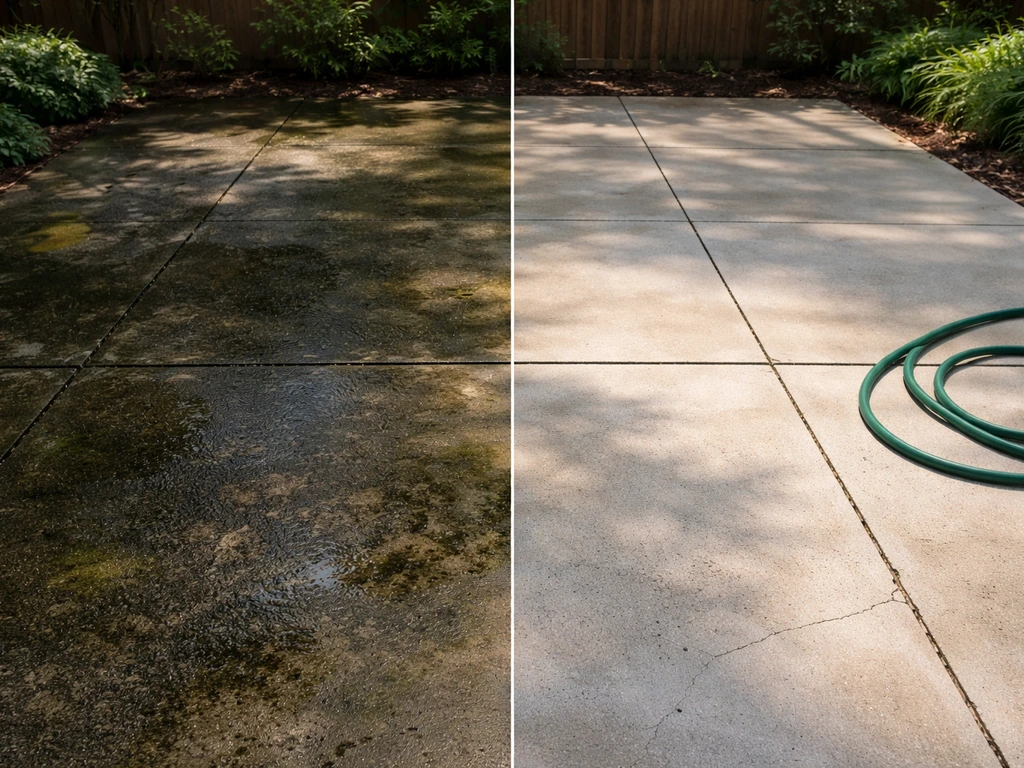
The best outdoor patio stone cleaner for most situations is a pH-neutral stone-specific cleaner used with warm water and a stiff brush. If you’re considering patio cleaner for porcelain tiles, stick to a product that’s specifically safe for porcelain and avoid acidic formulas that can damage the finish can you use patio cleaner on porcelain tiles.
Best Outdoor Patio Stone Cleaner: Choose and Use Today

Rhea Lang
8 Jun 2026
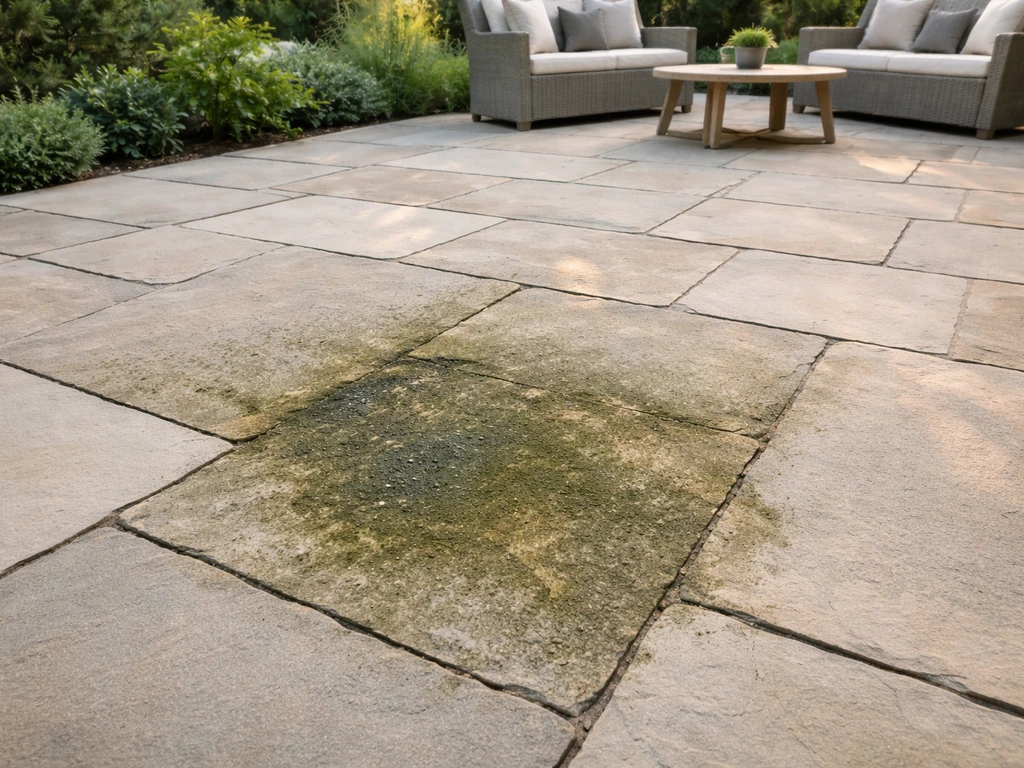
Products like STONETECH Stone & Tile Cleaner or Aqua Mix Stone Deep Clean are formulated to clean without etching, stripping sealers, or reacting badly with calcium-carbonate-based stones like sandstone and limestone. For biological growth (mold, algae, moss), D/2 Biological Solution is a standout: it's gentle enough for natural stone, effective without scrubbing hard, and used by professional stone conservators. The wrong move, and one that causes the most damage, is reaching for bleach or anything acidic as a first step.
Those products will etch limestone, sandstone, and marble, and strip sealers from just about any stone.
How to pick the best stone patio cleaner for your surface
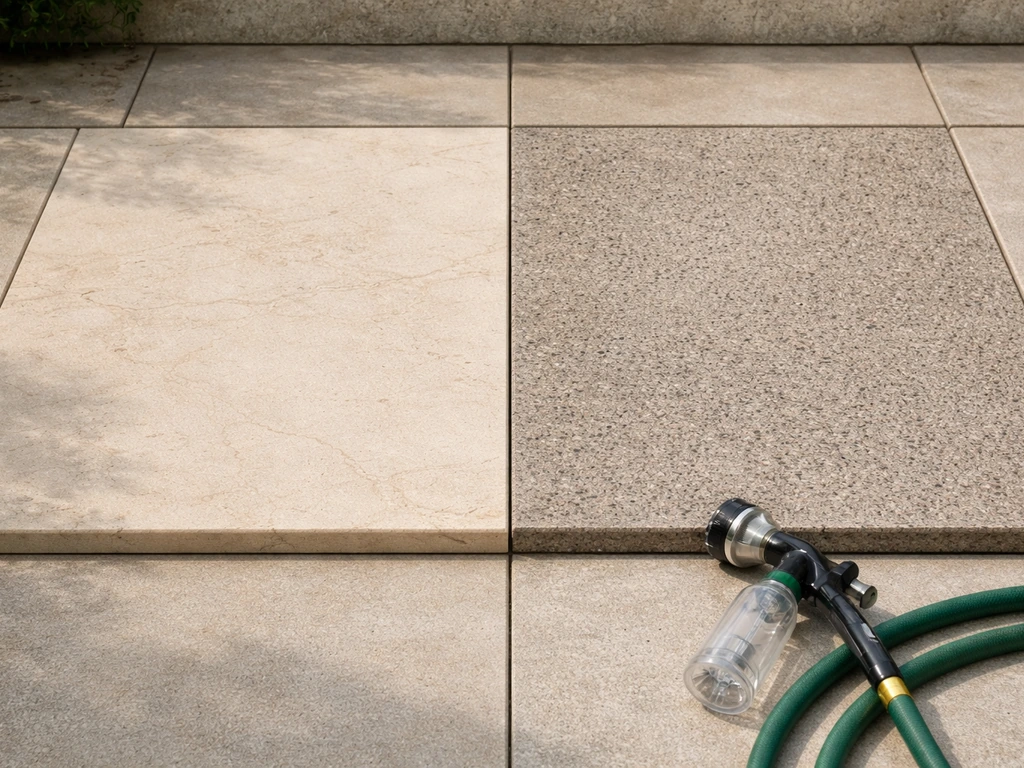
Stone patios aren't all the same, and that matters a lot when you're choosing a cleaner. The biggest split is between calcareous stones and siliceous stones. Calcareous stones include limestone, sandstone, travertine, and marble. These are calcium-carbonate based, which means they react badly to acid. Pour something acidic on them and you'll get etching, dull spots, or permanent surface damage. Siliceous stones like slate, granite, and quartzite are more acid-resistant, though 'more resistant' doesn't mean you should use harsh acids on them routinely. For granite patios, many people start by comparing options like the best granite patio cleaner that match a neutral pH.
The Natural Stone Institute recommends sticking with neutral pH cleaners or stone soaps for routine cleaning, and that guidance holds whether your patio is slate, sandstone, or anything in between. Choosing the best slate patio cleaner means sticking to pH-neutral or stone-safe options that won't damage the surface over time. A product labelled 'stone safe' or 'pH neutral' is a good starting signal, but check that the pH is actually in the 7 range (or manufacturer-specified neutral range).
For example, LATICRETE positions its blank" rel="noopener noreferrer">STONETECH Stone & Tile Cleaner as pH neutral and gentle on natural stone while strong enough for daily messes pH neutral and gentle on natural stone while still strong enough for daily messes. Some products marketed as 'natural' or 'gentle' are still acidic enough to cause problems over time.
There's one other factor people overlook: whether the stone is sealed. If you've sealed your patio in the last few years and water still beads on the surface, you have active sealer protection. Harsh alkaline or solvent-based cleaners can strip that sealer layer. Stick with pH-neutral products and you protect both the stone and the investment you made sealing it. If you're unsure whether yours is sealed, drip some water on it. Beading means sealed; absorption means either unsealed or the sealer has worn off.
Identify your stain or problem first
Getting the chemistry right depends on what you're actually dealing with. General grime and organic debris respond differently than rust, and biological growth needs a different approach again. Misidentifying the problem is how people end up scrubbing for an hour and getting nowhere, or using the wrong product and making things worse.
| Problem | What it looks like | Best cleaner type |
|---|---|---|
| General dirt and grime | Grey or brown discolouration, surface dust, accumulated debris | pH-neutral stone cleaner |
| Algae | Green or greenish-black slippery film, often in shaded areas | Biological/quaternary ammonium cleaner (e.g. D/2, 30 SECONDS) |
| Moss | Thick green growth, often in joints and edges | Biological cleaner or sodium hypochlorite-free moss remover |
| Mould/mildew | Black or dark spots, often in damp corners | Biological cleaner or diluted hydrogen peroxide on acid-resistant stones |
| Rust stains | Orange or brown streaking, often near metal furniture or fixtures | Rust remover formulated for stone (check acid-resistance of your stone first) |
| Grease or oil | Dark, spreading stain that resists water | Alkaline degreaser or poultice treatment |
| Efflorescence | White chalky deposits, usually near joints | pH-neutral cleaner first; light acidic wash only on acid-resistant stone |
Rust stains deserve a specific note. Products like Akemi Rust Remover are formulated for acid-resistant natural stones such as granite and slate. You should not use a rust remover on sandstone, limestone, or other calcareous stones without checking the product label explicitly. The acid that dissolves rust will also dissolve the stone if it's not acid-resistant. Grease stains can be stubborn on porous stones because the oil soaks in. A poultice (a paste of absorbent powder mixed with a solvent) applied overnight draws the oil back out far better than scrubbing does.
Cleaner types that work on natural stone (and what to avoid)
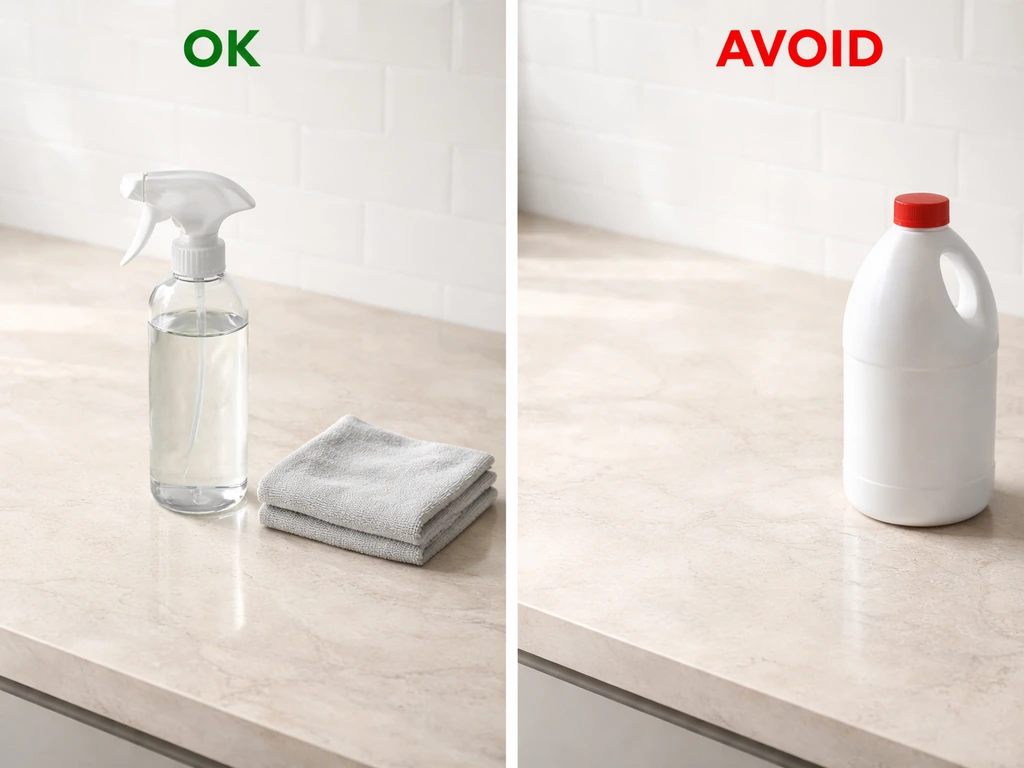
What works
- pH-neutral stone cleaners: The baseline recommendation from both the Natural Stone Institute and Daltile. Safe for all stone types, sealers, and grout. Use these for routine cleaning and general grime.
- Enzyme and biological cleaners: Products like D/2 Biological Solution use active biocides that break down organic growth at the cellular level. They're particularly effective on algae, moss, and mould and are safe for natural stone because they don't rely on acid or bleach chemistry.
- Mild dish soap or stone soap in warm water: A genuinely useful option for light cleaning. A few drops of mild dish soap in a bucket of warm water is the Natural Stone Institute's basic routine care recommendation. It won't tackle heavy biological growth but works well for regular maintenance washes.
- Sodium percarbonate-based cleaners: These are the active ingredient in many 'outdoor' and 'patio' cleaners. When mixed with water they release oxygen, which lifts organic staining without acidic chemistry. Check that any product you choose is confirmed safe for natural stone on the label.
- Specialty stone degreasers (alkaline): For oil and grease, a mild alkaline degreaser designed for stone works better than a neutral cleaner. Keep pH below around 10 and avoid anything highly caustic.
What to avoid
- Bleach (sodium hypochlorite): Will discolour many natural stones, strip sealers, and damage mortar joints. Daltile is explicit about this: do not use bleach on natural stone.
- Vinegar and citric acid solutions: Popular DIY recommendations, but a serious risk for calcareous stones. Even diluted vinegar is acidic enough to etch limestone and sandstone over repeated use.
- Muriatic acid or brick acid: Only appropriate for specific restoration tasks on proven acid-resistant surfaces, done by people who know exactly what they're doing. Never a first resort on a natural stone patio.
- Generic multi-purpose bathroom or kitchen cleaners: Many contain acid, bleach derivatives, or surfactant concentrations that are too high for porous stone.
- Wire brushes or abrasive scrub pads: These are a mechanical rather than chemical risk, but worth mentioning here. They'll scratch stone surfaces and remove sealers.
Top picks by scenario
Rather than a single 'best' product for all situations, here's how I'd approach each common scenario. These are the products and categories I'd reach for first based on what actually works, not what sounds good on a label.
| Scenario | Recommended product/approach | Why it works |
|---|---|---|
| Routine maintenance cleaning (all stone types) | STONETECH Stone & Tile Cleaner or Aqua Mix Stone Deep Clean | pH-neutral, sealer-safe, formulated specifically for stone surfaces |
| Algae, moss, and mould on sandstone or slate | D/2 Biological Solution | Biocide-based, no acid or bleach, endorsed by conservators, effective with minimal scrubbing |
| Algae or green slime on granite or harder stone | 30 SECONDS Outdoor Cleaner | Fast-acting, works on hard surfaces, rinse within 10 minutes per directions |
| Light green algae or general outdoor grime (set and forget) | Wet & Forget Outdoor | No scrubbing required, applied to dry surface and rain does the work over days/weeks |
| Rust stains on slate or granite | Akemi Rust Remover or similar stone-rated rust remover | Formulated for acid-resistant stone; allow 2–10 min dwell per Aqua Mix guidance, rinse immediately |
| Oil or grease stains on porous stone | Poultice with stone-safe solvent, or alkaline stone degreaser | Draws oil out rather than pushing it deeper; chemical degreaser alone won't fully remove set grease |
| Heavy organic buildup before resealing | Aqua Mix Stone Deep Clean at higher concentration | 5–10 min dwell when stripping old wax or finish; rinse thoroughly |
When you're reading product labels and trying to decide, look for these things: confirmation that the product is pH neutral or stone safe, a listed dwell time (shows it's formulated with a specific action in mind), instructions to rinse with clean water (products that skip the rinse step are generally lower-actives), and ideally specific mention of the stone type your patio is made from. Vague claims like 'safe for all surfaces' with no specifics are a yellow flag.
If you have granite or slate specifically, the guidance differs somewhat from sandstone or limestone, and the dedicated guides on those surfaces go deeper into surface-specific products and methods. Similarly, if your patio is concrete rather than natural stone, a different cleaner category applies entirely. For concrete patios, the best concrete patio cleaners are designed to lift grime without damaging the surface finish.
Step-by-step: how to clean your stone patio safely today
This is the sequence I use and recommend. It works for most stone types and most problems. Adjust the cleaner product for your specific situation using the scenario table above, but the process stays largely the same.
- Clear the patio completely. Move furniture, planters, and anything that could block access or be damaged by overspray. Wet nearby plants and cover them if you're using any active cleaner (even stone-safe products aren't meant for plant foliage).
- Sweep or blow off loose debris. Dry sweeping removes grit that would otherwise become an abrasive paste once wet. Takes two minutes but makes scrubbing more effective.
- Pre-rinse the entire surface with plain water. This does two things: it removes surface dust and it starts wetting the stone, which helps the cleaner penetrate rather than dry out on the surface. Exception: Wet & Forget must go onto a dry surface, so skip the pre-rinse if you're using that product.
- Mix or prepare your cleaner according to label directions. Don't guess at concentration. Aqua Mix Stone Deep Clean specifies a dwell time of 3–5 minutes for general cleaning. D/2 Biological Solution goes on undiluted and needs 10–15 minutes minimum contact time. 30 SECONDS Outdoor Cleaner gives you a 10-minute window between application and rinsing. These dwell times matter.
- Apply the cleaner evenly across the surface. Work in sections if the patio is large so the product doesn't dry out before you can rinse it. A garden sprayer, watering can with a rose head, or a sponge all work depending on the product.
- Scrub with a stiff-bristled nylon brush or natural bristle brush. Avoid wire or metal bristles. Work in a circular motion on general grime or along the direction of the stone's surface texture. For biological growth, D/2 recommends a soft nylon or natural bristle brush to avoid scratching.
- Rinse thoroughly with clean water. This step is non-negotiable. Residual cleaner left on stone can cause discolouration or leave a sticky film that attracts dirt faster. Use a garden hose at decent pressure or a low-setting pressure washer. Rinse until the water runs completely clear.
- Inspect once dry. Some stains look gone when wet and reappear as the stone dries. If you're dealing with rust or deep organic staining, a second application may be needed. Allow the stone to dry fully (usually 24–48 hours) before resealing.
Pressure washer or scrubbing: which one and how to avoid damage
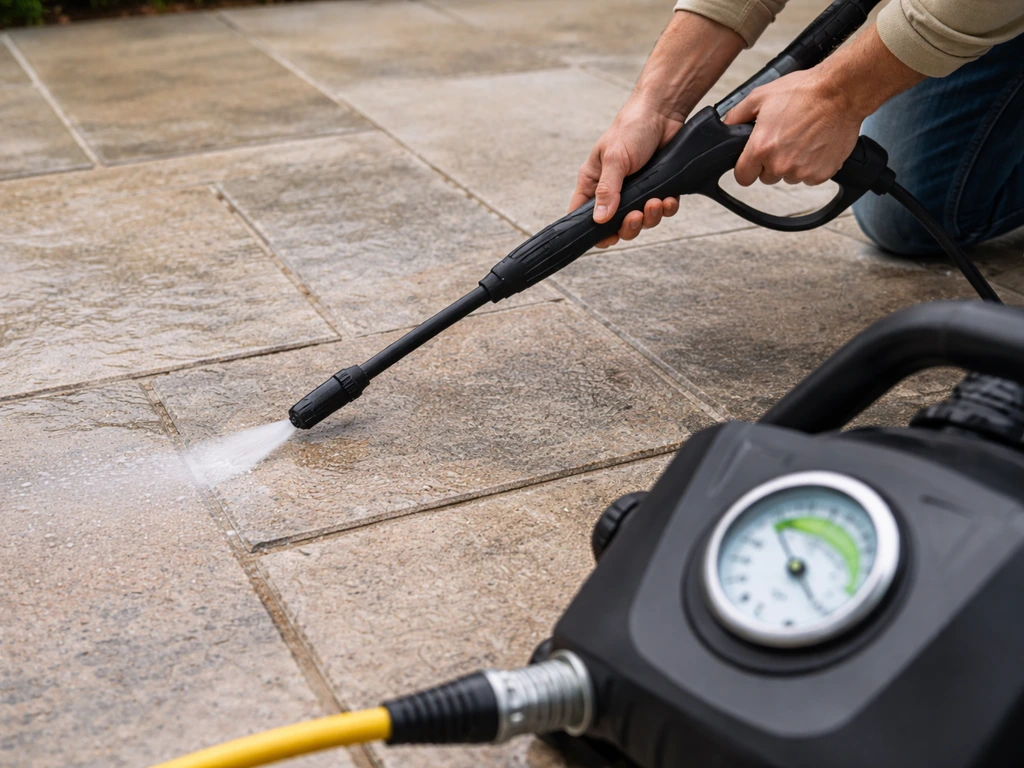
Pressure washing is faster and genuinely effective for large stone patios, but it's the method most likely to cause damage when people get it wrong. The two most common mistakes are using too much pressure and holding the nozzle too close to the surface. Both cause the same problem: scarring, pitting, or blasting out mortar from joints.
For natural stone patios, keep pressure in the 500 to 1,500 psi range. GSA historic preservation guidelines for masonry put the safe range at 500 to 1,000 psi with the nozzle held 18 to 30 inches from the surface. blank" rel="noopener noreferrer">Techniseal's guidance for paver restoration caps recommended pressure at 1,500 psi to prevent irreversible scarring, with the wand 12 to 18 inches from the surface. Softer stones like sandstone sit at the lower end of that pressure range. Harder stones like granite or slate can handle closer to the 1,500 psi ceiling, but I'd still start low and test a small inconspicuous area first.
Use a wide fan nozzle (25 or 40 degree) rather than a zero-degree or rotary nozzle. A surface cleaner attachment is even better for large flat areas: it distributes the water pressure evenly, eliminates the streaking pattern you get from a single wand, and reduces the risk of blasting joint sand out from between the stones. Genstar recommends this approach specifically for patio pavers and it applies equally to natural stone flags.
When to scrub instead: for smaller patios, delicate or porous stones like sandstone or limestone, and any situation where a biological cleaner with a dwell time is doing the heavy work, manual scrubbing is the better call. The cleaner does most of the job; the brush just helps lift what's been loosened. If you're using D/2 or a similar soak-and-work product, aggressive pressure washing after can actually rinse the product away before it's finished working. Apply, wait, scrub gently, then rinse. Wet & Forget’s application guidance follows this approach by instructing you to apply to a dry outdoor surface until thoroughly saturated apply it to a dry outdoor surface until thoroughly saturated.
Troubleshooting and keeping your patio clean longer
If the stain won't shift
A stubborn stain usually means one of three things: you need a longer dwell time, a higher concentration, or a different product chemistry. Try extending the contact time first. If rust or mineral staining isn't lifting, you may need a product specifically designed for that stain type rather than a general-purpose stone cleaner. For deeply embedded organic staining (black mould that's been there for years), a second application of D/2 left overnight has worked for me when a single treatment didn't fully clear it.
Preventing buildup from coming back
Biological growth (algae, moss, mould) keeps coming back because the underlying conditions haven't changed: shade, moisture, and a surface the spores can grip. You can address all three to varying degrees. Trim back overhanging branches or shrubs to increase sunlight and airflow. Improve drainage where water sits after rain. And seal the stone properly after cleaning.
A good impregnating sealer creates a hydrophobic barrier that makes the surface far less hospitable to biological growth and much easier to clean when grime does appear. Once sealed, water beading on the surface is your visual confirmation the sealer is active. When the beading stops, it's time to reseal. On a typical outdoor stone patio, that's roughly every 1 to 3 years depending on traffic, weather exposure, and the sealer product.
Maintenance routine that actually works
- Sweep the patio weekly during autumn and spring when leaf and organic debris accumulates fastest. Wet debris sitting on stone is the starting point for most staining.
- Do a light clean with a pH-neutral stone cleaner and warm water two to four times a year, even when the patio looks mostly clean. Staying on top of light buildup is far easier than tackling a year's worth of grime.
- Apply a biological preventative like diluted Wet & Forget once or twice a year in early spring and autumn. It won't kill established growth as quickly as a direct application, but it suppresses regrowth.
- Inspect the sealer annually. A quick water test (a few drops on the surface) tells you immediately whether you're still protected.
- Deal with spills promptly. Oil and grease that sit on porous stone penetrate deeper every day. Blot first, then clean with a stone-safe degreaser as soon as possible.
The maintenance routine sounds like extra work, but it genuinely halves the effort needed at the big seasonal clean. A patio that's been maintained all year takes 20 minutes to refresh in spring. One that's been ignored takes a full afternoon plus sometimes a second pass.
FAQ
What pH should I look for to find the best outdoor patio stone cleaner, and how do I confirm it’s truly neutral?
Look for a label that states pH neutrality or a manufacturer-specified neutral range, often around pH 7. If the product only says “gentle” or “stone safe” without a pH number or range, treat it as a risk and test on a small hidden spot first.
Can I use the same cleaner on outdoor natural stone and my nearby pavers or concrete edges?
Usually not. Natural-stone cleaners are formulated for specific chemistry, while concrete cleaners can use different active ingredients that may dull or haze certain stones. If you’re cleaning a mixed patio, tape off areas and apply products separately, then rinse thoroughly between sections.
How long should I let the cleaner sit before scrubbing or rinsing?
Follow the stated dwell time on the label, because dwell time is part of the chemistry. If the label doesn’t specify a dwell time for your stone type, start shorter (for example 5 to 10 minutes), then reassess rather than leaving acidic or alkaline products to sit longer than intended.
Is it safe to use a pressure washer with a “stone-safe” cleaner?
Cleaner compatibility does not remove the risk from the water pressure itself. Even with pH-neutral products, too much psi or a close nozzle can pit stone or blow out jointing material. Use the lowest effective pressure, keep the nozzle at a safe distance, and consider a wide fan or surface cleaner attachment for large areas.
What’s the best way to test a cleaner before I apply it to the whole patio?
Pick a discreet area and test in two steps: apply the cleaner, then rinse and let the area dry fully. Some problems show up only after drying, like dulling or residue. Also check grout or jointing sand nearby, since edges can be more vulnerable to etching or blasting.
I cleaned for algae and moss, but it came back quickly. What should I change?
If growth returns fast, the underlying causes usually remain, shade and moisture are the big two. Also confirm you used a biological product with an appropriate dwell time, then rinse as instructed. After it’s fully dry, sealing can reduce recurrence by limiting how well spores can cling to the surface.
Should I use bleach for patio mold if other cleaners aren’t working?
Avoid bleach as a first step, especially on limestone, sandstone, marble, or other calcareous stones. Bleach and other harsh oxidizers can damage stone finishes and strip sealers. If you must consider an oxidizer, verify the product is explicitly safe for your stone type and do a spot test.
How do I tell whether my patio is sealed beyond the water-beading test?
Water beading indicates active hydrophobic protection, but you can also look for darkening that soaks in slowly. After spraying a small section with water, observe whether it beads, stays beaded, or gradually darkens and absorbs. If it absorbs quickly or leaves a wet-looking patch, you may need to avoid sealer-stripping products.
Can I remove rust with any stain remover, or is the stone type critical?
Stone type is critical. Rust-removing chemistry that works on acid-resistant stones like granite or slate can etch calcareous stones like limestone or sandstone. Only use a rust remover if the label explicitly approves your specific stone, and spot test since iron staining can also be under a sealer.
What’s the safest approach for grease or oil stains on porous stone?
Scrubbing alone often fails because oil penetrates deeper. Use a poultice approach with an oil-absorbing powder mixed with a suitable solvent, then leave it overnight and rinse per the product instructions. Expect to repeat if the stain is old, especially on unsealed or worn-sealer stone.
Why does my patio look streaky after cleaning, even when I rinsed?
Streaking is often due to incomplete rinse, residue from cleaner concentrate, or uneven water distribution from a narrow pressure-wash pattern. Switch to a wide fan nozzle or a surface cleaner attachment for even coverage, and make sure you rinse with clean water until runoff looks clear.
When should I avoid pressure washing and switch to scrubbing instead?
Avoid pressure washing when dealing with delicate or porous stones (like sandstone or limestone), loose or degrading jointing sand, or when a biological cleaner requires a soak phase. In those cases, apply and dwell the cleaner, then scrub gently and rinse, rather than blasting before the product finishes working.
Next Article
Best Concrete Patio Cleaners: Choose and Use the Right One
Best concrete patio cleaners by stain type, with dilution, dwell time, and pressure-wash tips plus prevention and sealin