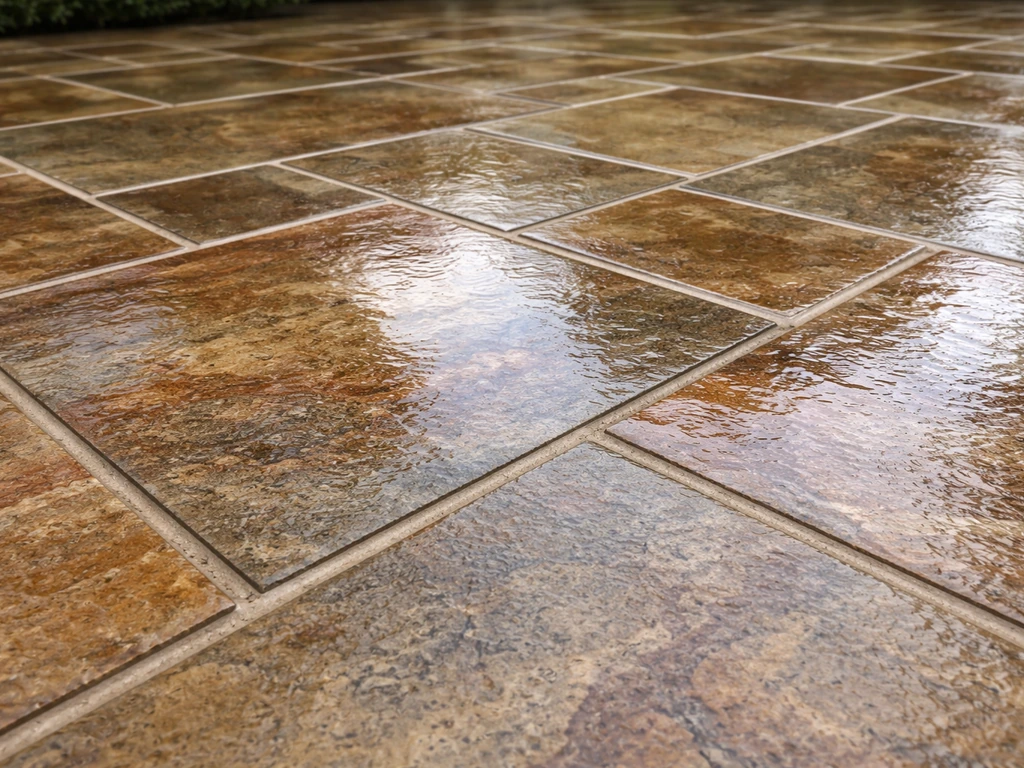
For most UK patios, Sikagard Patio or Everbuild 405 are the go-to wet-look sealers: both are water-based, cover around 8 m² per litre per coat, work on concrete, brick and natural stone, and cost roughly £20–30 for a 5-litre tub that will seal a typical 30–40 m² patio with two coats. If you have porcelain tiles, skip both and use a specialist micro-coating like Floorseal's porcelain sealer instead. If you want a high-gloss finish on slate or dense stone, a solvent-based film-former like Lithofin MN Slate-Seal gives a deeper, glossier result but comes with extra prep requirements and a slip-risk warning.
Best Wet-Look Patio Sealer UK: Top Picks & Buying Guide
Rhea Lang
12 Jul 2026
Who this guide is for, and what 'wet look' actually means
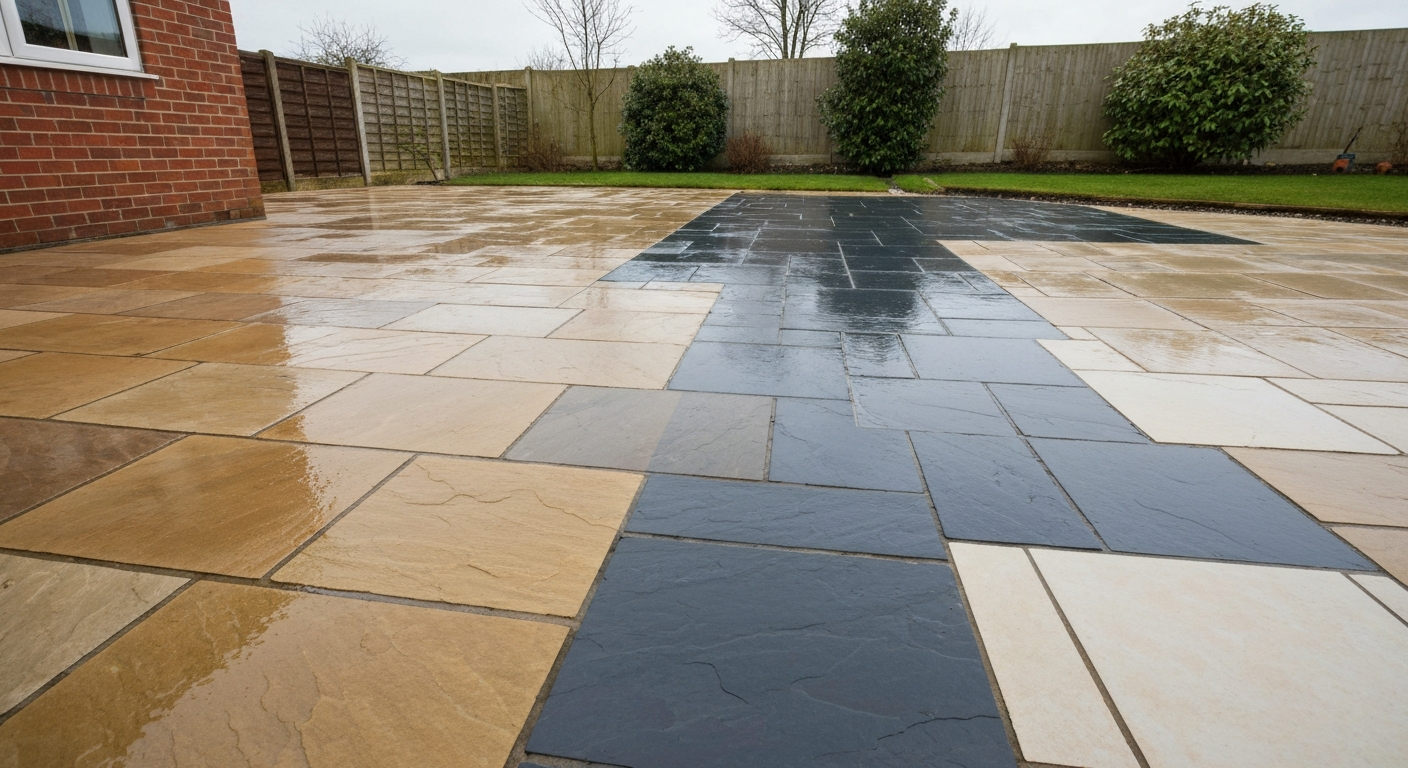
This guide is for UK homeowners and DIYers who want to seal a patio, driveway or paved garden area and end up with a finish that makes the surface look like it has just been rained on: colours deepened and intensified, joints defined, and the whole area looking fresh rather than washed-out. That is what 'wet look' means in practice. It is not a mirror gloss like a varnished floor, though some products push further toward high gloss than others. The wet-look effect comes from an acrylic or resin film sitting on or just inside the pore structure of the surface, bending light slightly so the substrate appears darker and more saturated.
This guide covers concrete, natural stone, brick, sandstone, slate and porcelain surfaces. It compares specific products available in the UK, explains what the labels actually mean, walks through surface prep and application, and flags the slip-risk issue that nobody mentions on the product packaging but everyone discovers on the first wet morning after applying a gloss sealer.
Top wet-look patio sealers available in the UK right now
Here is a shortlist of products I have used or tested, covering the main surface types and budgets you will encounter in the UK market. Coverage figures and drying times are taken from manufacturer TDS documents, not marketing copy, because those two numbers are the most important ones when you are planning how much to buy and when to apply.
| Product | Type | Coverage per coat | Coats needed | Dry to walk | Best for | Pros | Cons |
|---|---|---|---|---|---|---|---|
| Sikagard Patio | Water-based acrylic film | ~8 m²/L | 2 | ~4 hrs at 20°C | Concrete, brick, block paving | Low odour, fungicide included, widely available | Not suitable for porcelain; do not apply below 5°C |
| Everbuild 405 Path & Patio Seal | Solvent-free acrylic | ~8 m²/L | 2 | ~4 hrs at 20°C | Concrete, block paving, light natural stone | Can be applied to damp (not wet) surfaces, low VOC | Low sheen rather than high gloss; sensitiser H317 — wear gloves |
| Thompson's One Coat Patio & Block Paving Seal | Acrylic film | ~6 m²/L | 1 | Touch dry ~1 hr | Block paving, concrete | Single coat, fast dry | VOC level rated 'Very high' by Wickes; lower coverage than rivals |
| Lithofin MN Slate-Seal | Solvent-based acrylate film | ~10–20 m²/L (surface dependent) | 1–2 | Walk ~45 min; full dry ~24 hrs | Slate, dense natural stone, honed concrete | Deep gloss, long durability on hard stone | Solvent-based; moisture in substrate causes whitening; slip risk increases |
| Floorseal Porcelain Tile Sealer | Water-based micro-coating | ~30 m²/L | 1 thin coat | Light traffic ~2 hrs; full cure 24–48 hrs | Porcelain patio tiles | Breathable, low odour, excellent for impervious surfaces | Apply by microfibre cloth only; not for rough porous stone |
| Summit Coatings Wet Look Anti-Slip Sealer | Solvent-based acrylic resin | Varies (trade supply) | 1–2 | Consult TDS | Block paving, concrete, stone (commercial/trade use) | Anti-slip aggregate included, professional grade | Trade supply only; solvent-based; higher VOC |
Quick recommendation: for a typical garden patio in concrete or natural stone, start with Sikagard Patio or Everbuild 405. For detailed comparisons and buying advice, see our guide to the best patio sealer wet look. They are easy to find, straightforward to apply, and the water-based formula means you can wash tools under a tap. If you specifically want more gloss on dense slate or a premium limestone, Lithofin MN Slate-Seal is worth the extra effort. For porcelain, Floorseal is the only product in this list genuinely designed for it.
How to read product labels and wet-look sealer reviews
Product labels and online listings throw around terms that sound technical but are often used loosely. Here is what the key ones actually mean, and how to read wet-look sealer reviews without being misled.
Terms you will see on labels
- Film-forming vs impregnator/penetrating: film-forming sealers sit on the surface and create a visible coating — this is what produces the wet look. Impregnators soak in and repel water without changing the appearance significantly. Most wet-look products are film-forming.
- Water-based vs solvent-based: water-based products (acrylic dispersions) have lower VOC, less odour and easier clean-up. Solvent-based products often give deeper penetration and higher gloss but require solvent clean-up and have stricter ventilation requirements.
- Breathable: a breathable sealer allows water vapour to pass through from below. Important on older or damp substrates. A non-breathable film on a damp substrate can trap moisture, causing the film to whiten or peel.
- Coverage rate: always check the TDS figure in m²/L, not the tin size. A 5L tin at 8 m²/L gives 40 m² per coat. If you need two coats, that is 20 m² total from one tin.
- VOC content: Directive 2004/42/EC sets limit values for VOC in g/L by product subcategory. Products labelled 'Very high VOC' (as some retailers flag Thompson's) are worth noting if you are applying in a confined space or have sensitivities.
- EUH208 / H317: these are EU/UK hazard statements. EUH208 (contains sensitiser) appears on Sikagard Patio's SDS for isothiazolinone preservative. H317 (may cause skin sensitisation) appears on Everbuild 405. Neither makes the product dangerous to use if you wear nitrile gloves.
- Fungicide included: some sealers (Sikagard Patio) contain a built-in biocide to inhibit mould and algae re-growth under the film. Useful for shaded or north-facing patios.
Reading reviews without being misled
Most one-star reviews for wet-look sealers come down to three things: the surface was not clean enough before application, the product was applied in cold or damp conditions, or the wrong product was used on the wrong surface. Before trusting a negative review, check whether the reviewer mentions surface prep or temperature. I have seen perfectly good products get destroyed in reviews because someone applied them over a damp slab in October. Conversely, a product that gets five stars on block paving may perform very differently on porous sandstone. Always filter reviews by surface type if the platform allows it, and cross-reference with the manufacturer's surface compatibility list on the TDS.
How to choose: the decision criteria that actually matter
There are eight things worth checking before you buy. Here they are in rough order of importance.
- Surface compatibility: the single most important factor. Not every sealer works on every surface. Porcelain needs a specialist product. Solvent-based film-formers can darken or stain certain soft limestones unpredictably. Always check the TDS compatibility list.
- Breathability: if your surface is laid on a sand or mortar bed that can hold moisture, or if you live somewhere with high ground moisture (common in many parts of the UK), a breathable or semi-breathable sealer is far safer than a fully impervious film.
- Slip risk: film-forming wet-look sealers reduce surface friction when wet. This is a real safety issue. Check whether the product has an anti-slip variant or whether you should add an anti-slip grit additive.
- UV and frost durability: UK winters bring hard frosts, and summers (when they appear) bring UV. Look for products with UV-stable acrylic chemistry and frost resistance down to at least -10°C. Both Sikagard Patio and Lithofin MN Slate-Seal are rated for frost resistance in their TDS.
- Coverage rate and cost per m²: divide the price by the coverage rate times the number of coats to get a true cost per m². A cheaper tin is often false economy if coverage is lower.
- Application method: most products specify a long-pile roller (15–18 mm pile) or low-pressure spray. Some, like Floorseal's porcelain sealer, require a microfibre cloth. Using the wrong tool causes uneven application.
- VOC content: relevant if you are applying near open windows, in a conservatory with a stone floor, or if you are sensitive to solvent fumes. Water-based products are almost always the lower-VOC choice.
- Temperature window: do not apply any of these products below +5°C (Sikagard Patio, Everbuild 405) or outside the manufacturer's stated range. In the UK, this effectively rules out application from late October through to March in most regions.
Surface-by-surface compatibility guide
Different surfaces have very different pore structures, densities and sensitivities. What works brilliantly on block paving can look blotchy or cause adhesion failure on porous sandstone. Here is what to use on each common patio surface in the UK.
Concrete and concrete block paving
Concrete is the most forgiving surface for wet-look sealers. Most acrylic film-forming products work well here. Sikagard Patio, Everbuild 405 and Thompson's One Coat are all suitable. Concrete is dense enough to give a clean, even finish without excessive product absorption, and the wet-look effect is pronounced. Prep requirement: clean off any oil stains, algae or cement haze before sealing. Efflorescence (white salt deposits) must be removed first or it will bleed through the sealer.
Natural stone (limestone, granite, quartzite)
Natural stone varies enormously in porosity. Granite and quartzite are dense and relatively non-porous: they take a film-forming wet-look sealer well, though they absorb less product per m² so coverage goes further. Soft limestones are highly porous and can absorb solvent-based products unevenly, causing patchy darkening. For soft limestone, a water-based product like Sikagard Patio is lower risk. Always test on an offcut or a hidden edge before committing to a full application.
Brick
Engineering brick and fired clay brick can both be sealed with a water-based acrylic film. The key issue is that brick has more variation in surface texture than concrete or stone, so roller application can miss recessed areas. Apply slowly with a well-loaded roller and back-roll to ensure full coverage. Expect slightly lower coverage rates than on concrete due to absorption.
Sandstone (Indian sandstone and buff sandstone)
Indian sandstone is one of the most popular patio surfaces in the UK and one of the trickiest to seal. It is highly porous, absorbs product quickly, and the surface is often uneven from riven cleft faces. A wet-look sealer on Indian sandstone will deepen the colour considerably, which most people like, but the film can look patchy if application is rushed. Use a water-based sealer, apply in two thin coats rather than one heavy coat, and work in sections to avoid lap marks. Never apply to damp sandstone: the surface must be thoroughly dry, which in UK conditions can mean waiting several dry days after rainfall.
Slate
Slate is where Lithofin MN Slate-Seal earns its name. Slate has a fine, relatively smooth cleavage surface that takes a film-forming sealer very well and produces a deep, high-gloss wet look. The critical warning here is moisture: if slate is even slightly damp when you apply a solvent-based film-former, the film will turn milky white as it dries. Surface must be bone dry. The Lithofin TDS notes that moisture from the substrate will cause whitening of the film. If in doubt, wait an extra day, or apply in the middle of a dry, sunny day.
Porcelain
Porcelain patio tiles are vitrified at very high temperatures, which makes them extremely dense and essentially non-porous. Standard film-forming acrylic sealers do not bond well to porcelain because there is nothing for them to grip. The correct product is a specialist micro-coating like Floorseal's Porcelain Tile Sealer, applied with a microfibre cloth in a single thin coat. Coverage is far higher here (around 30 m²/L) precisely because the surface is not absorbing the product. Do not attempt to use a roller on porcelain: you will end up with a streaky, peeling mess within a few months.
Penetrating vs film-forming sealers: breathability, damp risk and where each works best
This is the choice most homeowners do not realise they need to make. Both types can produce a degree of wet-look effect, but they work very differently.
Film-forming sealers (the majority of products marketed as 'wet look') build a continuous acrylic or resin film on the surface. This film is what creates the gloss and colour-deepening effect. Because the film is a barrier, it is not breathable: water vapour cannot pass through it from below. If your substrate has residual moisture, or if moisture from below reaches the film, it has nowhere to go and the film blisters, whitens or peels. Film-forming sealers are ideal for sound, dry, well-drained surfaces in relatively sheltered positions.
Penetrating impregnator sealers (also called impregnating sealers) soak into the pore structure of the stone or concrete and chemically bond to the pore walls. Water and oil are repelled from within the material, but the surface itself remains open and breathable. These typically give a more subtle colour enhancement rather than a full wet look, though some products marketed as 'colour-enhancing impregnators' can produce a pronounced deepening of colour without the glossy film. Breathable sealers are the right choice for older patios, surfaces laid on solid mortar beds with limited drainage, or anywhere in the UK where ground moisture is a known issue.
The Lithofin product range is a good example of how this split works in practice: their MN Slate-Seal is a film-former for high-gloss results on dry, dense surfaces, while their Multi-Seal is a breathable impregnator for porous stone that needs protection without the gloss. Reading wet-look patio sealer reviews without understanding this distinction explains why the same brand gets contradictory ratings: one reviewer is applying a film-former to a well-drained new concrete patio and loves it; another is applying it to an old sandstone patio with poor drainage and watching it peel by spring.
Slip risk and anti-slip options
Wet-look film-forming sealers make surfaces slippery when wet. This is not a minor caveat buried in small print: it is a real safety risk, particularly on ramps, steps, or patios used by children or elderly family members. Lithofin's technical notes specifically flag that slip resistance may be affected by film-forming wet-look coatings. On a flat, level patio used by healthy adults, the risk is manageable but still worth addressing.
Here are your main options for reducing slipperiness on a wet-look sealed surface:
- Anti-slip additive grit: fine aluminium oxide or silica grit is mixed into the sealer before application (or broadcast onto the wet second coat) to restore surface texture. This is the most effective method and is what products like Summit Coatings' anti-slip sealer use as standard. The grit slightly reduces the gloss level but maintains the colour-enhancing effect.
- Anti-slip variant products: some manufacturers produce a specific anti-slip version of their wet-look sealer. Always check whether an anti-slip version exists before you buy the standard product.
- Apply one coat instead of two: a single thinner coat maintains more surface texture than a full two-coat build, reducing slipperiness. This is a compromise: protection is lower, but so is slip risk.
- Topcoat with a dedicated anti-slip coating: a clear, flat anti-slip topcoat can be applied over a cured wet-look sealer. This is rarely necessary for domestic patios but is worth considering for commercial or heavily trafficked areas.
I will be blunt: if your patio has a slope of any kind, or if steps are involved, use the anti-slip additive. I have seen otherwise beautiful sealing jobs turn into a liability on the first rainy day. The grit additive costs almost nothing and the trade-off in gloss level is barely noticeable in practice.
Durability, weathering and cost per m² in UK conditions
UK weather is harder on exterior sealers than most product marketing acknowledges. You get UV in summer, freeze-thaw cycles from November through March, and near-constant damp for large parts of the year. Here is what to realistically expect.
UV and frost performance
Acrylic-based sealers are generally UV-stable, but prolonged UV exposure does cause gradual yellowing in cheaper formulations, particularly over white or pale stone. Premium products like Sikagard Patio and Lithofin MN Slate-Seal use UV-stabilised acrylic chemistry. Frost resistance is the bigger UK concern: a film that is applied to a damp surface, or that traps moisture from below, will be mechanically damaged by freeze-thaw cycling as water expands under the film. A properly applied sealer on a dry, sound substrate should survive UK frost without issue. Expect to recoat every 2–4 years on a domestic patio, with the lower end of that range applying to high-traffic areas or surfaces exposed to full frost.
Coverage rates and cost per m² explained
Coverage varies significantly between products and surfaces. Do not plan your purchase on the tin size alone. Here is how to calculate what you actually need:
| Product | Coverage per coat (m²/L) | Coats needed | Effective m² per litre | Approx. price per 5L | Cost per m² |
|---|---|---|---|---|---|
| Sikagard Patio | 8 | 2 | 4 | ~£25 | ~£1.25 |
| Everbuild 405 | 8 | 2 | 4 | ~£22 | ~£1.10 |
| Thompson's One Coat | 6 | 1 | 6 | ~£20 | ~£0.67 |
| Lithofin MN Slate-Seal | 10–20 (surface dependent) | 1–2 | 5–20 | ~£35 | ~£0.35–£1.40 |
| Floorseal Porcelain Sealer | 30 | 1 | 30 | ~£18 per 500ml | ~£1.20 |
A few things to note from those figures. Thompson's One Coat looks cheapest per m², but its VOC level is rated 'Very high' at UK retail, and the lower coverage rate per litre means it is less economical on larger or more porous areas than the numbers suggest. Directive 2004/42/EC, Limitation of VOC emissions from paints and varnishes (consolidated), Annex II sets VOC limit values (g/L) per paint/coating subcategory, which manufacturers and technical data sheets use to declare VOC content and compliance Directive 2004/42/EC — Limitation of VOC emissions from paints and varnishes (consolidated). Lithofin MN Slate-Seal's variable coverage reflects the wide range of stone types it covers: on a dense honed granite, 20 m²/L is achievable; on rough limestone, plan for closer to 10 m²/L. Always buy 10% extra to account for edges, re-do areas and variations in surface absorption.
Getting the surface right before you open the tin
Surface preparation is where most sealing projects succeed or fail. No sealer performs well over a dirty, oily, or damp substrate. If you've used lubricants like WD-40 on the surface, see does WD-40 stain a patio for advice on identifying and removing oil-based residues before sealing. If you have stubborn oil or food stains, consider the guide to the best patio stain remover for effective cleaning before sealing. The British Standard BS 8221-1:2012 covers cleaning of natural stone, brick and concrete and is the UK's authoritative reference for pre-seal surface preparation. For stubborn rust stains that must be removed before sealing, consult a recommended best patio rust remover to ensure a clean, stain-free surface. The practical steps are these:
- Remove all moss, algae and lichen first. Use a purpose-made biocidal patio cleaner and allow the dwell time specified on the label. Dead organic matter must then be physically removed: a stiff brush or pressure washer. Do not seal over dead moss.
- Pressure-wash the surface. For porous natural stone like Indian sandstone, use a conservative pressure: around 80–130 bar (1,200–1,900 psi), a wide fan nozzle (25–40 degrees), and keep the nozzle around 300 mm from the surface. Use a surface cleaner attachment (like a Kärcher T-Racer) on flat areas for even cleaning without streaks. Higher pressures erode soft sandstone rapidly.
- Degrease any oil or grease stains. Standard pressure washing does not remove oil: you need a degreaser or alkaline cleaner applied directly to the stain. This includes WD-40 residue, which can leave an oily film that prevents sealer adhesion. Clean the stain, rinse thoroughly, and confirm it has lifted before proceeding.
- Remove rust stains. Iron-based rust stains from furniture, railings or ferrous inclusions in the stone itself must be treated with a specialist patio rust remover before sealing, otherwise the sealer locks the stain in permanently. Acid-based rust removers work well on concrete and most stone but must be neutralised and rinsed off completely before any sealer is applied.
- Deal with efflorescence. White salt deposits on the surface must be removed with an efflorescence remover or a dilute acid wash (on appropriate surfaces) and rinsed away. If you seal over efflorescence, the salts continue to migrate and will push the sealer film off from below.
- If there is an old sealer on the surface, assess its condition. Peeling, cracking or flaking old sealer must be stripped before recoating. Applying a new sealer over failing old sealer is the single biggest cause of poor results. A patio sealer remover (typically a solvent-based stripper or a dedicated remover product) breaks down the old film. Allow full drying time after stripping before re-applying.
- Wait for the surface to dry. This is non-negotiable. Concrete and block paving should be dry for at least 24–48 hours after cleaning before sealing. Porous natural stone often needs 48–72 hours of dry weather. In UK conditions, plan your project window carefully. Neither Sikagard Patio nor Everbuild 405 should be applied below 5°C.
How to apply a wet-look patio sealer: step by step
These steps cover the majority of water-based acrylic wet-look sealers (Sikagard Patio, Everbuild 405 and similar). Adjust for product-specific instructions where the TDS differs, and always read the SDS before you start.
- Check the weather forecast. You need at minimum 4 hours of dry weather above 5°C after each coat, and ideally no rain for 24 hours after the final coat. In practice in the UK, aim for a dry, mild day in late spring or early autumn.
- Put on nitrile gloves and eye protection. Some products (Everbuild 405) carry H317 skin sensitiser classification. Isothiazolinone preservatives in Sikagard Patio require the same precaution. Do not take chances with skin contact.
- Stir the product gently rather than shaking. Shaking introduces bubbles into a film-forming sealer that can transfer to the surface.
- Load a long-pile roller (15–18 mm pile) and apply the first coat evenly, working in manageable sections of roughly 2 m² at a time. Work from the furthest point back toward your exit. Do not overload the roller: thin, even coats outperform thick, pooled coats every time.
- Allow the first coat to dry for the time specified in the TDS (typically 4 hours at 20°C for Sikagard Patio and Everbuild 405). In cooler UK temperatures (10–15°C) allow longer, up to 6–8 hours.
- Apply the second coat in the same direction as the first, or at 90 degrees to it, ensuring full coverage. Two thin coats give better adhesion and durability than one thick coat.
- Allow full cure before heavy use. Walk-on time is typically 4 hours, but full mechanical cure takes 24–48 hours. Avoid dragging furniture or heavy loads across the surface until fully cured.
- Dispose of any runoff correctly. Do not allow wash-off from pressure washing or sealer application to enter surface water drains. This is a legal requirement in the UK under Environment Agency guidance. Collect contaminated rinse water for authorised disposal where possible.
Sika-style application notes
Sikagard Patio's TDS (March 2023) specifies application by long-pile roller or low-pressure spray, two coats at approximately 8 m²/L per coat, with a 4-hour drying window between coats at 20°C. The SDS flags an isothiazolinone preservative under EUH208 but the product carries no hazard classification in its latest UK edition. Consult the SDS directly before preparing a COSHH assessment for professional use. Everbuild 405 has a similar specification but carries the H317 skin sensitiser classification on its UK SDS (updated November 2025), so gloves are not optional there.
Maintenance, recoating and troubleshooting
Maintenance and recoat schedule
A wet-look sealer on a domestic patio will typically last 2–4 years before it needs recoating. Signs that recoating is due include: water no longer beading on the surface, the colour-enhancing effect has faded, or the surface is beginning to look powdery or dull. Annual maintenance is simple: sweep the patio, remove any algae or moss with a biocidal cleaner, and rinse. A light jet-wash once a year keeps the surface clean without stripping the sealer. Kärcher UK, Pressure washer product and application guidance (manufacturer) recommends using patio/stone surface cleaners (T‑Racer/surface cleaners), variable nozzles and the lowest effective pressure (typical home washers range from 20–145 bar) and keeping a safe distance to avoid damage blank" rel="noopener noreferrer">Kärcher UK — Pressure washer product and application guidance (manufacturer). When it is time to recoat, light sanding or a degreaser wash is usually sufficient if the existing sealer is in good condition. If it is peeling or cracking, strip it fully first.
Troubleshooting common problems
| Problem | Likely cause | Fix |
|---|---|---|
| Blotchy or patchy finish | Uneven surface preparation, or surface was damp in patches when sealed | Strip the affected areas, re-prep, and recoat. On porous stone, a second coat often evens out first-coat patchiness. |
| White or milky haze in the film | Moisture trapped under or in the sealer film during application | Allow to dry fully — mild haziness sometimes clears in warm weather. If it does not, strip and reapply on a drier day. This is most common with solvent-based products on damp substrates. |
| Sealer peeling or flaking | Applied over old failing sealer, or over a damp or dirty substrate | Strip entirely using a patio sealer remover, re-prep the surface, and reapply. |
| Surface is very slippery when wet | Film-forming sealer has significantly reduced surface friction | Add anti-slip grit to the next recoat, or apply a dedicated anti-slip topcoat over the existing sealer. |
| Efflorescence appearing through sealer | Salts not removed before sealing, or ongoing salt migration from substrate | Strip sealer, treat efflorescence thoroughly, ensure drainage below the slab is adequate, then re-seal. |
| Sealer not darkening the stone | Product not compatible with the surface type (e.g., standard acrylic on porcelain) | Switch to the correct product for the surface — for porcelain, a specialist micro-coating is required. |
Safety, PPE and environmental considerations
Always read the Safety Data Sheet for the specific product you are using before you start. The SDS is the authoritative document for hazard phrases, recommended PPE and emergency procedures. For Sikagard Patio and Everbuild 405, the UK SDS documents are hosted on the Sika website and are easy to find. For a domestic user the main precautions are: nitrile gloves, eye protection, and good ventilation (work outdoors, which you presumably are). Keep products away from children and pets during application and until fully cured.
On the environmental side: water-based sealers are significantly lower in VOC than solvent-based alternatives, which matters both for your own exposure during application and for environmental impact. Under UK Environment Agency guidance, contaminated wash-off from patio cleaning (including products containing detergents, biocides or sealers) should not be allowed to drain directly into surface water drains or watercourses. On a domestic patio where the run-off soaks into soil or a drainage system, the practical risk is low, but it is worth being mindful of where rinse water ends up, especially if you are using strong biocidal cleaners or degreasers before sealing.
Simple decision checklist: picking the right product for your patio
Run through this list before you buy. It takes two minutes and will save you from the most common mistakes.
- What surface am I sealing? (Concrete or block paving = most acrylic products suitable. Sandstone or natural stone = water-based only, test first. Slate = Lithofin MN Slate-Seal if fully dry. Porcelain = specialist micro-coating only.)
- Is the surface fully dry, clean and free of old failing sealer, oil, rust stains and efflorescence? (If no, complete all prep steps before buying sealer.)
- Is the surface on a slope, or are there steps? (If yes, use an anti-slip variant or add grit additive.)
- Is there any reason to expect ongoing moisture from below the slab, or poor drainage? (If yes, use a breathable impregnator rather than a film-former.)
- What is the weather forecast for the next 48 hours? (Must be above 5°C and dry throughout. If not, postpone.)
- Have I calculated how much product I actually need? (Patio area in m² divided by coverage rate per coat, multiplied by number of coats, plus 10% spare.)
- Have I read the SDS for the product I am using, and do I have the right PPE? (Nitrile gloves as a minimum for all products in this guide.)
FAQ
What is the single most important type of source to collect when comparing wet‑look patio sealers for the UK market?
Manufacturer technical data sheets (TDS) and up‑to‑date UK Safety Data Sheets (SDS). TDS provide surface compatibility, recommended application method, coverage (m²/L), coats, dry times, temperature limits and cure notes. SDS give hazards, preservative ingredients (isothiazolinones etc.), PPE and disposal/COSHH inputs. Use the manufacturer PDF on their UK site (e.g., Sika, Lithofin, Floorseal) rather than third‑party reseller summaries.
What regulatory and standards documents should be checked and why?
Check: (1) VOC limits and subcategory mapping under Directive 2004/42/EC (applies to product VOC declarations/labels); (2) Relevant British Standards such as BS 8221‑1:2012 for cleaning and surface preparation to avoid substrate damage; (3) Slip resistance test standards (e.g., pendulum test/BS EN 13036 series or HSE/WRc guidance) if assessing slipperiness and anti‑slip claims. These confirm legal VOC compliance, give accepted cleaning/prep methods, and provide objective slip‑resistance benchmarks.
Which practical manufacturer facts are essential to record for each sealer in a comparison table?
Record: product type (water‑based impregnator vs solvent/acrylic film former), recommended surfaces, breathable vs film‑forming (important for natural stone), recommended application method (roller/brush/low‑pressure spray/microfibre wipe), coverage m²/L per coat, number of coats, dry and recoat times, min ambient/substrate temperature, UV/frost durability claims, presence of fungicide/preservative, VOC (g/L) and SDS hazard statements, and whether an anti‑slip variant exists.
What surface‑compatibility evidence should be gathered and/or tested before recommending a product for concrete, natural stone, brick, sandstone, slate or porcelain?
Collect manufacturer statements on each substrate from the TDS and independent distributor notes. For porous natural stones, prioritise breathable impregnators or confirm manufacturer warns against moisture whitening for film formers. Perform a 1m² test patch on the actual patio surface to confirm colour change, sheen and adhesion, and inspect after 24–72 hours and after a couple of rain events if possible.
How should slip risk and anti‑slip performance be evaluated and evidenced?
Use manufacturer anti‑slip product variants or add anti‑slip aggregate when advised. Rely on pendulum test data (BS EN 13036‑4) if supplied. If no lab data, do an on‑site test on a cured patch using a slip simulator or simple practical checks (wet test with water) and note that glossy/wet‑look film formers increase slip risk on level paving — recommend anti‑slip additive or textured/anti‑slip product for high‑traffic/wet areas.
What cleaning and preparation guidance sources should the article reference and why?
Reference BS 8221‑1:2012 for conservative cleaning methods and substrate protection; manufacturer TDS for product‑specific prep (some permit application to damp not wet surfaces). Also cite industry pressure‑washer guidance (e.g., Kärcher and UK paving suppliers) for safe pressure ranges (low pressure, wide fan nozzle, distance ~300 mm) and surface cleaners. Include GOV.UK/Environment Agency guidance about preventing contaminated run‑off entering drains when using detergents/degreasers.
Next Article
Wet Look Patio Sealer Reviews: How to Choose and Apply
Wet look patio sealer reviews guide: pick the right gloss, prep correctly, apply without streaks, fix haze and tackiness