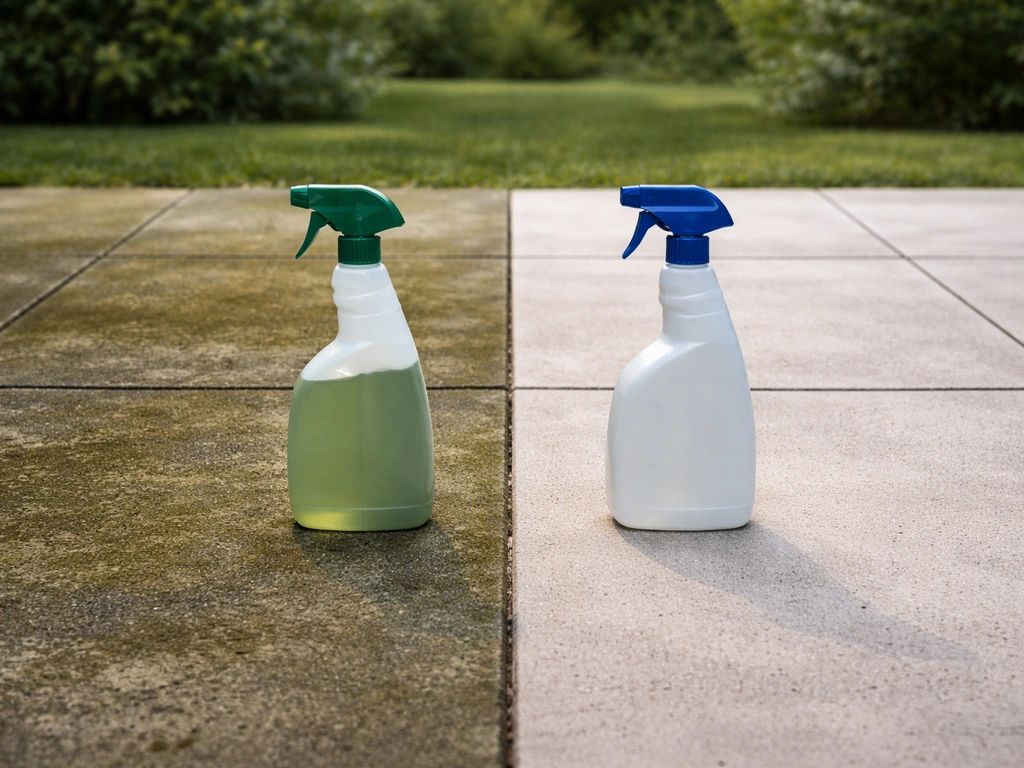
For most patios dealing with green algae, black mold, or general organic grime, Wet & Forget Outdoor Concentrate is the best spray-and-leave patio cleaner to buy in 2026. If you’re trying to figure out where to buy Wet & Forget patio cleaner, check major retailers and garden supply stores, or look for the product through online marketplaces. You spray it on dry, walk away, and let rain and time do the work over several weeks. For faster visible results (same day or next day), 30 SECONDS Outdoor Cleaner or Simple Green Oxy Solve are better picks, though both require a rinse. If you want true zero-effort, no-rinse cleaning for decks and timber, Spray & Forget House & Deck is worth a look. Which one you should buy depends on your patio surface, what you're trying to remove, and how quickly you need results.
Spray and Leave Patio Cleaner Reviews by Material and Stain
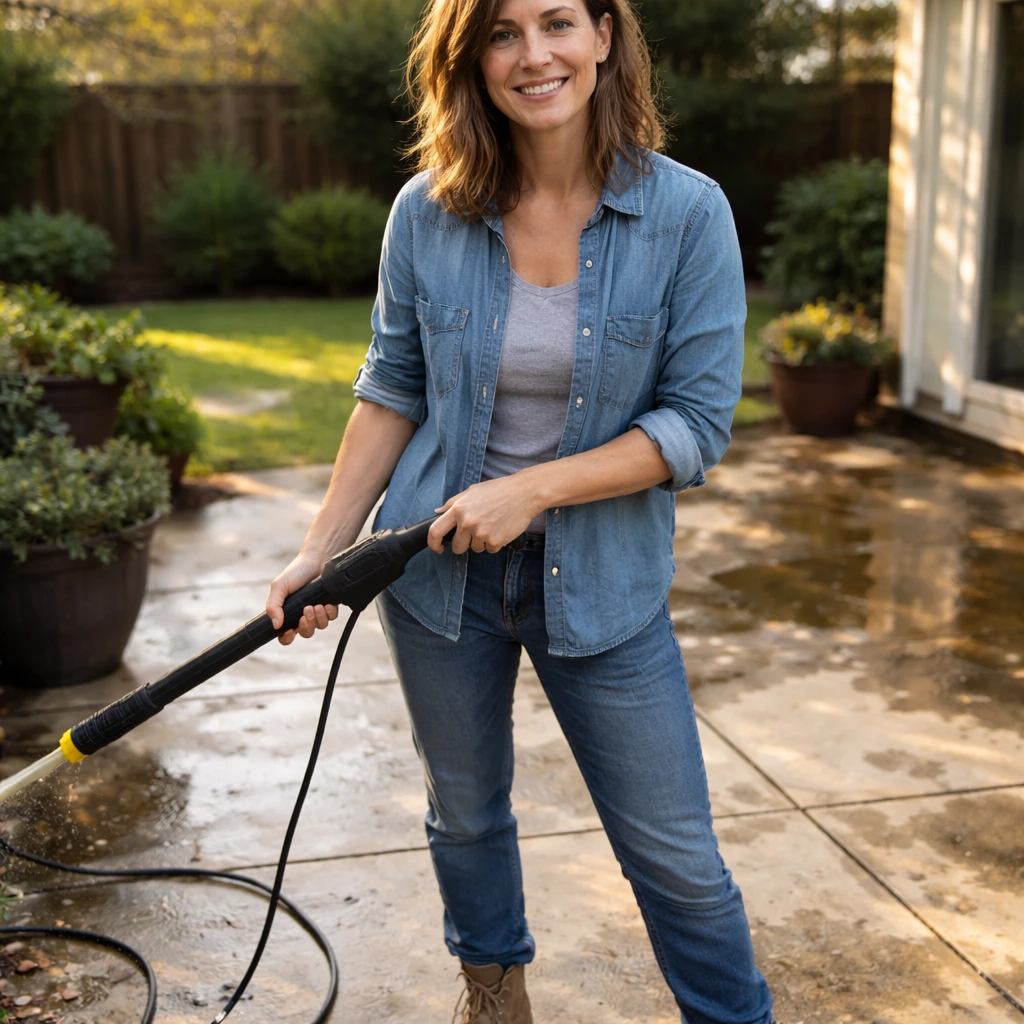
What spray-and-leave patio cleaner actually does
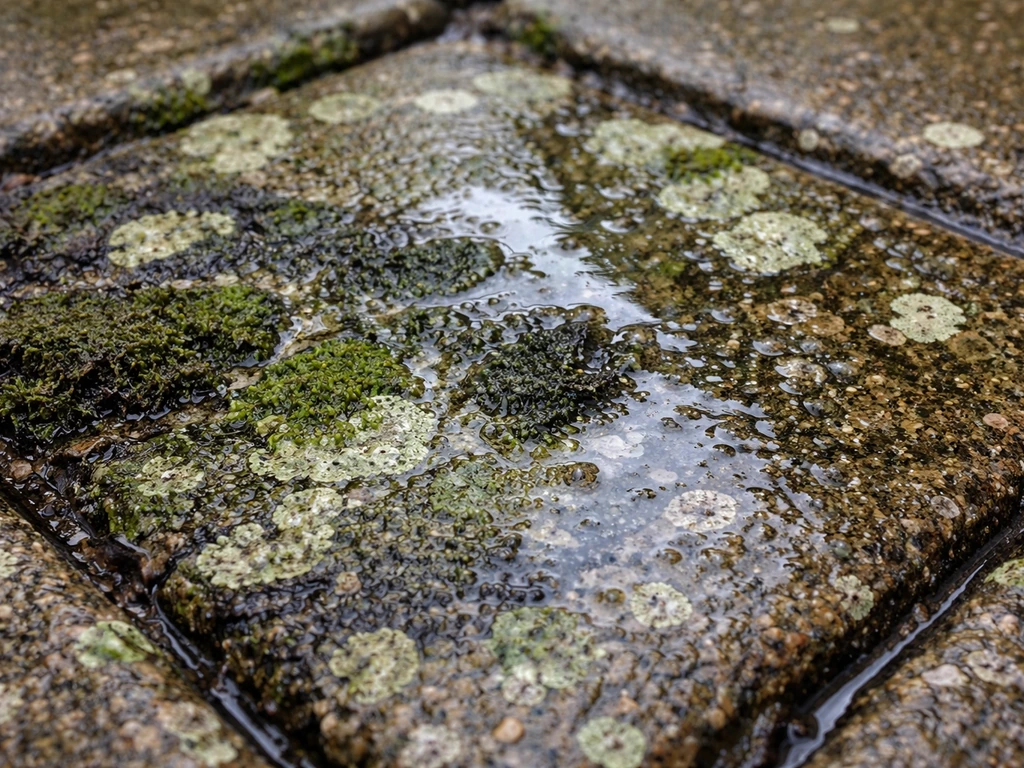
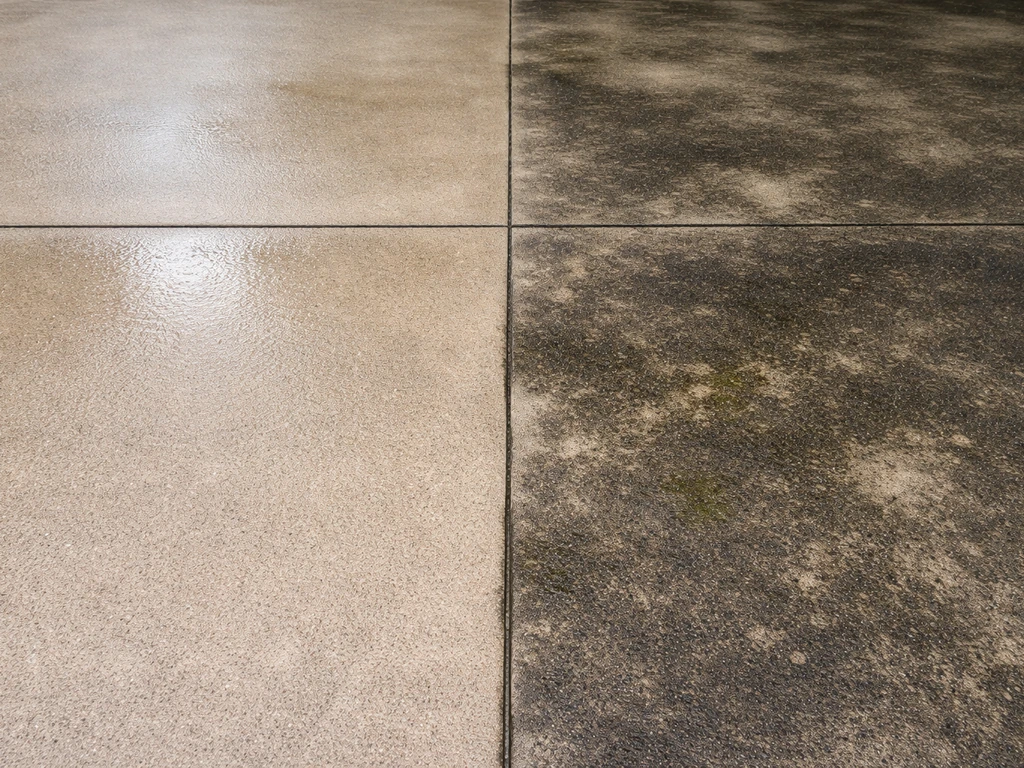
Spray-and-leave cleaners work by applying a chemical solution that sits on the surface long enough to break down biological growth (algae, moss, lichen, mold) and loosen organic staining. Unlike traditional patio cleaners where you scrub and rinse straight away, the whole point is the dwell time. You spray, leave, and either let rain rinse the residue naturally or give it a light hose-down later. The surface doesn't get scrubbed at all, or only lightly.
These products work best on biological growth. If your patio is green, black, or covered in fuzzy moss patches, spray-and-leave is genuinely effective and far less work than pressure washing. Where they struggle is with non-biological stains: grease, oil, rust, pet urine deposits, and deeply embedded mineral stains. Those stains need a different approach, either a dedicated degreaser, a rust remover, or mechanical action like a stiff brush or pressure washer. Keep that distinction in mind when picking a product.
There are also two sub-categories worth separating. True no-rinse products (Wet & Forget, Spray & Forget) rely entirely on rainfall to wash the treated growth away over weeks. Spray-and-dwell products (30 SECONDS, Simple Green Oxy Solve) require you to hose or pressure-wash the surface after a short dwell period, but they deliver faster visible results. Neither category replaces a pressure washer for heavy-duty cleaning, but they're a genuinely useful maintenance tool, especially for patios you want to keep clean with minimal effort.
Best spray-and-leave cleaners by surface and stain type
Here's a practical breakdown of which products suit which surface and problem. I've organised this by what you're actually trying to clean rather than by brand, because that's how most people actually think about it.
| Surface / Problem | Best Pick | Runner-Up | Notes |
|---|---|---|---|
| Concrete (algae, moss, mold) | 30 SECONDS Outdoor Cleaner | Wet & Forget Concentrate | Concrete is durable; bleach-based options handle tough growth well |
| Block paving / brick (green algae) | Wet & Forget Concentrate | Spray & Forget House & Deck | No-rinse works well here; avoid chlorine bleach on coloured block paving |
| Natural stone (sandstone, limestone) | Wet & Forget Concentrate | Simple Green Oxy Solve | Avoid chlorine bleach; pH-neutral or quat-based formulas are safer |
| Slate / hard stone | Wet & Forget Concentrate | 30 SECONDS (diluted) | Test on a hidden area first; slate is generally durable but some varieties stain |
| Porcelain tiles | Simple Green Oxy Solve | Wet & Forget RTU | Porcelain is non-porous; most formulas are safe but avoid leaving pooled solution |
| Timber decking (mold/algae) | Spray & Forget House & Deck | Wet & Forget Concentrate | Spray & Forget is specifically formulated for decks; rinse-free suits timber well |
| Heavy moss or lichen (any surface) | 30 SECONDS Outdoor Cleaner | Wet & Forget (multiple applications) | Heavy growth may need brushing after treatment regardless of product |
| Grease / oil stains | Simple Green Oxy Solve | None in this category | Spray-and-leave products generally don't tackle grease well; use a degreaser |
| Rust stains | None in this category | None in this category | Rust needs a dedicated rust remover; spray-and-leave products won't touch it |
| Pet urine stains / odour | Simple Green Oxy Solve | None in this category | Peroxide-based formula helps with organic odour compounds; still needs a rinse |
Review breakdown: ingredients, dwell time, effectiveness, and safety
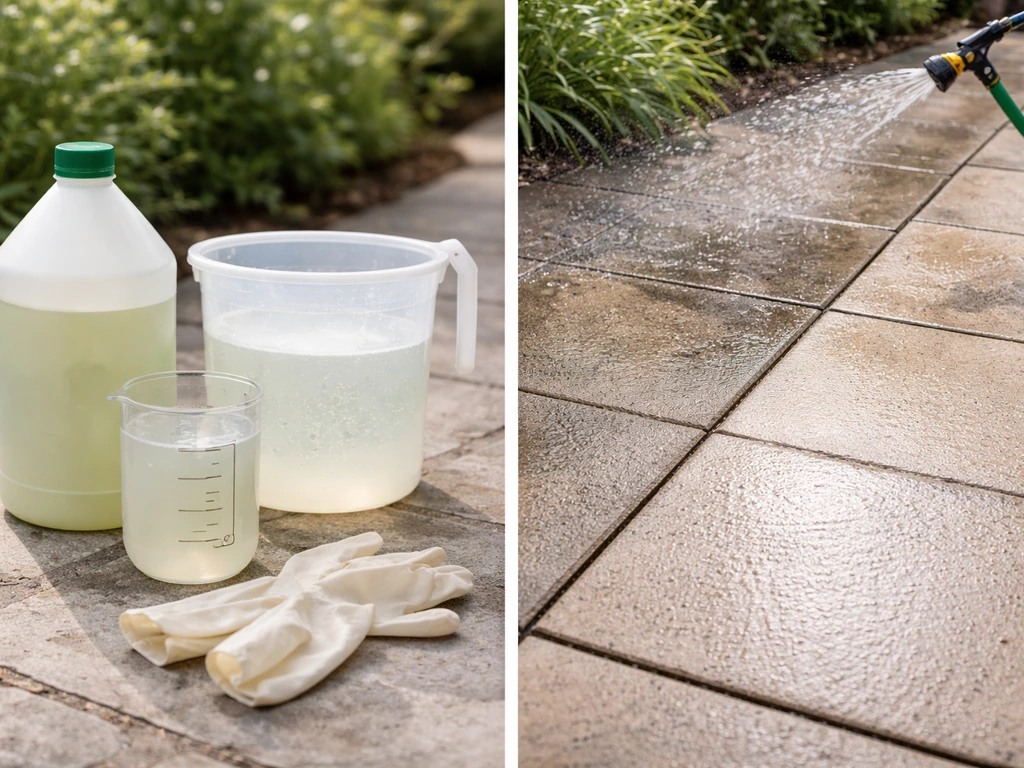
Wet & Forget Outdoor Concentrate
Wet & Forget uses quaternary ammonium compounds (specifically alkyl dimethyl benzyl ammonium chloride) as its active ingredient. This is a bleach-free, non-acidic formula, which is why it's safe on a wide range of surfaces including natural stone and coloured pavers. The chemistry works by disrupting the cell membranes of algae, mold, and moss at a molecular level rather than bleaching them white. The visible result takes longer, often two to eight weeks depending on rainfall and growth thickness, but the surface cleans progressively as rain washes the dead growth away.
Wet & Forget claims results last a year or more on most surfaces, and in my experience that's fairly accurate for moderate growth if you apply at the right concentration. You dilute the concentrate (typically five parts water to one part product), apply to a dry surface until thoroughly saturated, and then leave it. No rinsing, no scrubbing. The company recommends applying on a cool, dry, windless day with no rain forecast for four to five hours, which gives it time to bond before the first wash-off cycle. Before and after applying, rinse nearby plants and grass with clean water to prevent spotting.
- Active ingredient: alkyl dimethyl benzyl ammonium chloride (quat-based, bleach-free)
- Dwell time: weeks to months (no-rinse, rain-activated)
- Application: dry surface, saturate thoroughly, leave completely
- Safe for: natural stone, brick, concrete, tile, timber, slate
- Not suitable for: fast results, grease, oil, rust
- Plant/pet safety: rinse nearby plants before and after; rinse pet paws if contact occurs
- Odour: low, mild chemical smell that dissipates quickly
30 SECONDS Outdoor Cleaner
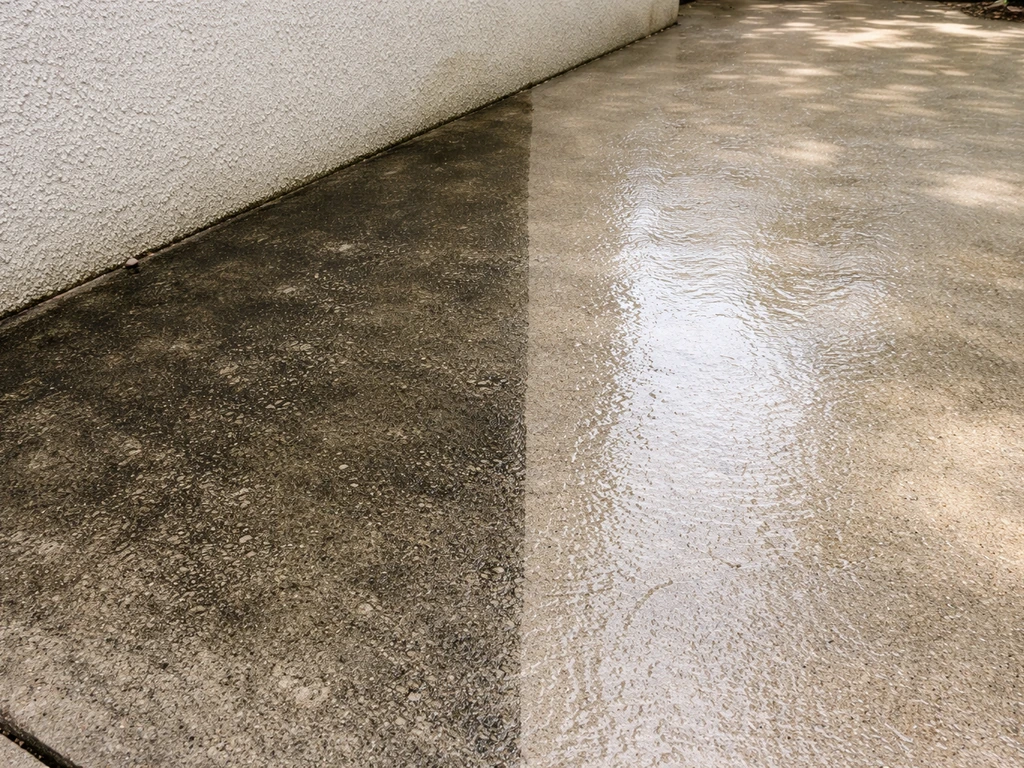
30 SECONDS is the fastest-acting product in this group. Apply it to a dry surface, keep the surface visibly wet for at least 30 seconds (up to three minutes for heavier growth), then rinse within 10 minutes. For stubborn patches, a light brush before rinsing improves results significantly. It's chlorine-bleach-based, which is why it works so quickly and why you need to be careful. Rinse any plants, grass, and metal fixtures within 10 minutes of application. Don't use it on natural stone, unsealed sandstone, or coloured pavers, as the chlorine can bleach or discolour the surface.
For concrete and hard, dark-coloured surfaces, 30 SECONDS is genuinely impressive. I've seen patio slabs go from black-green to clean grey in a single application. The trade-off is that it needs rinsing, so it's not truly zero-effort, and results on heavy lichen or thick moss are less reliable without some mechanical action. It's also worth noting the safety requirements: wear gloves and eye protection, and keep children and pets off the surface until fully rinsed and dry.
- Active ingredient: sodium hypochlorite (chlorine bleach-based)
- Dwell time: 30 seconds to 3 minutes on surface, rinse within 10 minutes
- Application: dry surface, keep wet, then rinse with hose or pressure washer
- Safe for: concrete, hard paving, coloured surfaces with caution (test first)
- Avoid on: natural stone, sandstone, marble, coloured block paving, timber
- Plant/pet safety: rinse foliage and grass within 10 minutes; keep pets off until dry
- Odour: strong chlorine smell; ensure ventilation and avoid confined spaces
Simple Green Oxy Solve Total Outdoor Cleaner
Simple Green Oxy Solve uses hydrogen peroxide as its key active ingredient, making it a peroxide-based, bleach-free option. It holds a Safer Choice designation, which means EPA-reviewed ingredient safety. The dwell time is short: three to five minutes on the surface, followed by a thorough rinse. For pressure-washer rinsing, Simple Green's guidance specifies keeping the nozzle at least two feet from the surface with the spray perpendicular to avoid streaking or surface damage. It's safe for most surfaces including natural stone, and it handles organic staining, light mold, and pet-related odour compounds better than the quat-based formulas.
The main limitation is that it needs rinsing after the dwell, so it doesn't fit the pure no-rinse category. But for porcelain tile patios, natural stone, or any situation where you want a bleach-free cleaner that still gives same-day results, it's the most versatile option. It also works as a useful companion step: treat with Oxy Solve first, rinse, and then follow up with Wet & Forget for ongoing biological growth prevention.
- Active ingredient: hydrogen peroxide (peroxide-based, bleach-free, Safer Choice rated)
- Dwell time: 3 to 5 minutes, then rinse (high-pressure rinse recommended)
- Application: apply to surface, dwell, rinse thoroughly
- Safe for: most outdoor surfaces including natural stone, porcelain, concrete, timber
- Particularly good for: pet stain odour, organic deposits, porcelain tiles
- Plant/pet safety: less aggressive than chlorine options; still rinse nearby plants
- Odour: mild, no harsh chemical smell
Spray & Forget House & Deck Outdoor Cleaner
Spray & Forget is a true no-rinse product, specifically marketed at decks and house exteriors alongside patios. The hose-end version makes application easy: you attach it to your garden hose and spray a thorough coat over the surface, keeping it wet for as long as possible. Then you leave it. No rinsing, ever. Like Wet & Forget, results come gradually over several weeks as rain cycles wash away the treated growth. The formula is a no-rinse design, but the product label does flag an important environmental note: keep product and runoff away from ponds, streams, and water features.
In practice, Spray & Forget works well on timber decking, composite surfaces, and fence panels where the Wet & Forget concentrate might feel like overkill. The hose-end applicator is genuinely more convenient for large deck areas than mixing a concentrate. For patio slabs and block paving, Wet & Forget is still my preference because of its longer-proven track record on those materials, but Spray & Forget is a legitimate alternative and worth considering if you're treating both a deck and a patio in the same session.
- Active ingredient: proprietary quat-based formula (no-rinse design)
- Dwell time: weeks (rain-activated, no rinsing required)
- Application: hose-end spray, keep surface wet as long as possible, leave completely
- Safe for: decking, house exteriors, patios, fences
- Avoid near: ponds, streams, water features (runoff risk)
- Plant/pet safety: apply carefully; avoid runoff onto garden beds
- Odour: mild
How to use spray-and-leave cleaners step by step
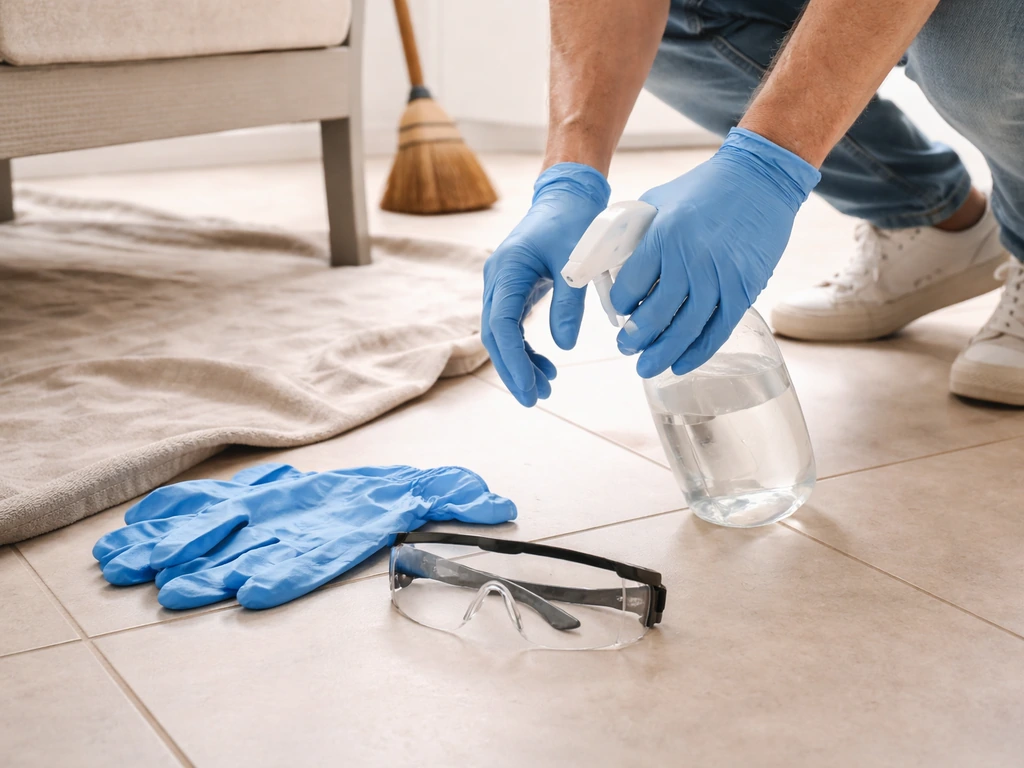
The method varies depending on whether you're using a true no-rinse product like Wet & Forget or a spray-and-dwell product like 30 SECONDS. You can use wet and forget on patio umbrellas too, but you still need to confirm surface compatibility and let the formula dwell before any natural wash-off no-rinse product like Wet & Forget. Here's how to handle both correctly.
For no-rinse products (Wet & Forget, Spray & Forget)
- Check the weather forecast. You need a dry window of at least four to five hours after application, with no rain predicted. A cool, dry, windless day is ideal. Applying before light rain arrives is one of the most common mistakes I see, and it means the product washes off before it bonds to the surface.
- Clear loose debris. Sweep or blow leaves, dirt, and loose material off the patio. You don't need to scrub or pre-wet the surface — in fact, for Wet & Forget you need the surface to be dry at application.
- Protect plants and furniture. Move or cover nearby planters. Rinse surrounding plants and grass with plain water before you start. Move garden furniture, rugs, and anything you don't want the solution landing on.
- Mix the concentrate if needed. Wet & Forget Concentrate is typically diluted five parts water to one part product. Mix in a garden sprayer and agitate gently.
- Apply thoroughly until saturated. Work methodically across the surface, overlapping slightly to avoid missed strips. The surface should look visibly wet and stay wet for a moment. Don't rush this step — thin, patchy coverage is why people say these products don't work.
- Leave it. Completely. Don't rinse, don't brush, don't walk on it unnecessarily while wet. Let the formula dry into the surface.
- Wait for rain cycles. Over the following weeks, each rain event washes a layer of dead growth away. Most surfaces show clear improvement within four to eight weeks. For heavy lichen, a second application two to three weeks after the first helps significantly.
- Rinse nearby plants again after the product dries if you're concerned about any drift.
For spray-and-dwell products (30 SECONDS, Simple Green Oxy Solve)
- Put on gloves and eye protection before mixing or spraying. Chlorine-based products in particular are irritating on contact.
- Clear the surface of debris and furniture. You'll be rinsing the area afterwards, so anything you don't want wet needs to move.
- Pre-rinse nearby plants and grass with water. This is especially important with 30 SECONDS, where the rinse window is only 10 minutes.
- Apply the product to a dry surface. Use a garden sprayer or the diluted solution from a hose. Keep the surface visibly wet throughout the dwell time.
- Time the dwell period. For 30 SECONDS, hold the wet surface for 30 seconds to three minutes. For Simple Green Oxy Solve, three to five minutes. Watch the clock — leaving chlorine-based products on too long increases the risk of surface damage or discolouration.
- For stubborn patches, use a stiff brush during the dwell period rather than after. The product does most of the work, but light agitation on thick moss or lichen makes a visible difference.
- Rinse thoroughly. For Simple Green, use a pressure washer if you have one, keeping the nozzle at least two feet from the surface with the spray perpendicular to avoid etching or streaking. For 30 SECONDS on concrete, a standard hose is usually enough.
- Rinse foliage and grass again within 10 minutes of the initial application. Don't skip this if you're using 30 SECONDS near plant beds.
Avoiding surface damage: what to watch out for
Spray-and-leave products are generally gentler than pressure washing, but they can still cause damage if you use the wrong formula on the wrong surface, leave a product on too long, or apply to a surface that hasn't cured properly. Here's where people run into problems.
Curing time for new surfaces
Newly laid concrete, mortar, or repointed jointing compound needs time to cure fully before you apply any chemical cleaner. As a general rule, wait at least 28 days for new concrete and mortar, and check with the product manufacturer for newer proprietary jointing sands. Applying a cleaner too early can interfere with the curing process and weaken the surface.
Surface compatibility and the test patch rule
Always test on a small, hidden area first, especially with natural stone, coloured pavers, and any surface you're not certain about. Chlorine-based products like 30 SECONDS can bleach or lighten the colour of some sandstone, limestone, and coloured concrete. Quat-based and peroxide-based formulas are considerably safer across a wider range of materials, but testing still matters. Apply a small amount to an inconspicuous corner, leave it for the intended dwell time, rinse if required, and check for discolouration or texture change after 24 hours before treating the whole patio.
Rinsing decisions and residue
For no-rinse products, resist the urge to rinse after application. The whole mechanism depends on the formula staying on the surface. Rinsing it off immediately just wastes the product. For dwell-and-rinse products, rinsing too late can leave a residue film, particularly on porous surfaces, that looks patchy when dry. Set a timer and stick to it. If you're using a pressure washer to rinse, keep the nozzle moving and maintain the recommended distance, parking the lance close to the surface while stationary is how you etch concrete or damage pointing.
Material-specific risks
| Surface Material | Main Risk | What to Avoid | Safe Options |
|---|---|---|---|
| Sandstone / limestone | Bleaching, surface etching | Chlorine bleach products (30 SECONDS) | Wet & Forget, Simple Green Oxy Solve |
| Coloured concrete / block paving | Colour fading or lightening | High-concentration chlorine bleach | Wet & Forget, Spray & Forget, Oxy Solve |
| Porcelain / ceramic tile | Grout discolouration, sealant damage | Leaving pooled solution on grout | Oxy Solve (short dwell, rinse well) |
| Natural slate | Surface staining from residue | Products with high surfactant residue | Wet & Forget (dilute correctly) |
| Timber decking | Surface darkening, grain damage | High-concentration bleach directly on wood | Spray & Forget, Wet & Forget Concentrate |
| Brick / concrete with painted finish | Paint stripping | Any high-strength formula | Test first; Wet & Forget is least aggressive |
Cost, value, and what to do if results aren't strong enough
In terms of value, Wet & Forget Concentrate is the most cost-effective option for ongoing maintenance because the dilution ratio is high (5:1 water to product) and a single treatment covers a large area. A 2-litre bottle typically covers 40 to 60 square metres of patio at the correct dilution. The hose-end versions of Wet & Forget and Spray & Forget are more expensive per square metre but more convenient for large or awkward areas. Simple Green Oxy Solve and 30 SECONDS are mid-range in price but are consumed in one session without the residual prevention benefit of the no-rinse products.
If you've applied a spray-and-leave product and aren't seeing results after four to six weeks, run through this checklist before switching products. Did you apply to a dry surface? Did you apply enough product (surfaces should be visibly saturated, not lightly misted)? Was there rain shortly after application that washed the product off before it bonded? For thick, established growth, a second application at full strength two weeks after the first often works where the first application didn't. Many apparent product failures are actually under-application or poor weather timing.
If a second application at the correct method still doesn't shift heavy lichen or thick growth, the next step is to combine chemistry with mechanical action. Apply the spray-and-leave product, wait two weeks for the growth to start dying back, then use a stiff deck brush or a patio brush attachment on a pressure washer to scrub the surface. The dead growth comes away much more easily at that point. You're not defeating the purpose of the product, you're using it correctly as a pre-treatment.
For stains that genuinely don't respond to any biological cleaner (rust, deep oil, or grease), stop applying spray-and-leave products and switch categories entirely. A rust-specific treatment containing oxalic acid or similar chelating agents is what you need for rust. For grease and oil, a concentrated alkaline degreaser applied with agitation is the right tool. Spray-and-leave products are genuinely excellent at what they do, but they aren't a universal patio fix.
For readers comparing specific products in more detail, the broader comparison between Wet & Forget and Patio Magic is worth reading if you're deciding between the two most popular no-scrub brands in the UK market specifically. If you’re deciding between Wet & Forget and Patio Magic, it helps to compare how each one handles dwell time, rinsing needs, and common surface compatibility issues. If you're already using Wet & Forget and want to get the most from it, the dedicated usage guide covers dilution ratios, timing, and repeat application schedules in more depth than a general comparison article can.
FAQ
Are spray-and-leave patio cleaners safe to use near pets and children while the product is on the surface?
For no-rinse products, keep kids and pets off the patio until the product has fully dried and any treated growth has started to die back, typically at least several hours. For 30 SECONDS and other dwell-and-rinse options, keep them away until you complete the rinse and the surface is dry, since you need to remove active chemistry from the area.
How soon after applying should I water the patio if it does not rain?
For true no-rinse formulas, avoid adding water right away because the dwell time matters, but if your weather stays dry you can usually continue to wait for natural wash-off rather than forcing a rinse. If the brand instructions allow, a light hose-down only after the recommended dwell window helps start the wash-off cycle, especially on porous surfaces where residues can cling.
Why do I see patchy white or grey spots after using a spray-and-dwell cleaner?
Patchiness usually comes from rinsing too late, rinsing with a weak or uneven spray, or applying too much product to porous areas where residue dries before it is fully washed away. To prevent it, rinse within the stated time window and keep the rinse pattern consistent, with perpendicular spray and adequate surface coverage.
Can I use spray-and-leave cleaners on painted or sealed surfaces?
Compatibility depends on the formula and the coating. Treat it as sealed, not porous, and test first. Chlorine-based products can lighten or strip some coatings, and aggressive rinsing can also lift dirt that stains are attached to, so start with a small hidden test area and wait 24 hours before full application.
What happens if I apply to the patio when it is hot or direct sunlight is strong?
High heat can cause faster drying, which reduces dwell time effectiveness and increases the chance of uneven residue, especially for products that require rinsing. Plan for cool conditions, apply when surfaces are dry, and give the dwell period exactly as directed.
Should I sweep or pressure-wash the patio first before using spray-and-leave products?
Usually no, the cleaner is designed to chemically break down biological growth without scrubbing. However, remove loose debris like leaves first, because trapped organic matter can shield algae and moss from contact. If there is heavy caked soil, a preliminary light rinse is better than mixing categories.
Will spray-and-leave products remove rust stains or oil and grease?
Not reliably. These products are mainly built for organic and biological staining and growth, rust and deep oil usually need targeted treatments (rust removers with chelating acids for rust, and alkaline degreasers plus agitation for grease and oil). If your stain is clearly non-biological, switching sooner saves time.
How do I choose between quat-based and peroxide-based options for different surfaces?
Quat-based cleaners like Wet & Forget are designed around algae and moss control and are often broadly compatible, with longer visible results. Peroxide-based options like Oxy Solve can be a good choice when you want fast, bleach-free results and better handling of some pet odor-related compounds, but they still require a thorough rinse.
Can I combine two spray-and-leave products in the same day?
Yes in some sequences, but only if each product’s dwell and rinse steps are followed. A common approach is peroxide-based treatment first, rinse, then follow with a no-rinse product for longer biological prevention. Do not mix chemicals in the same container, and keep to one chemistry cycle at a time.
How do I know if my patio issue is algae growth versus something else like mildew or dirt buildup?
Algae often looks green and slimy, moss is fuzzy and rooted, and lichen can be patchy and textured. Mildew tends to be more grey to black and may smear when dampened. If wiping with water reveals only surface dirt rather than growth that returns, you likely need a different category, like degreasing or targeted stain treatment.
What should I do if results are not visible after a month?
Run a method checklist first: was the surface dry at application, was it saturated rather than lightly misted, did rain wash it off before it bonded, and did you respect dwell and rinse timing (if required). For thick growth, a second full-strength application after about two weeks often works. If there is still no change, add mechanical agitation after the initial chemical dwell, or switch to a rust or grease-specific product category.
Are there any environmental precautions beyond runoff near water features?
Yes. Rinse nearby plants and grass before and after application to reduce spotting and leaf stress, and avoid letting runoff pool in low spots. For large areas, consider timing on a day without heavy wind to prevent drift onto vegetation or into beds where you would not want chemical contact.
Wet and Forget vs Patio Magic: Which Works Best Today?
Side-by-side Wet & Forget vs Patio Magic for patio mold, algae, and stains. Choose by surface and grime level.