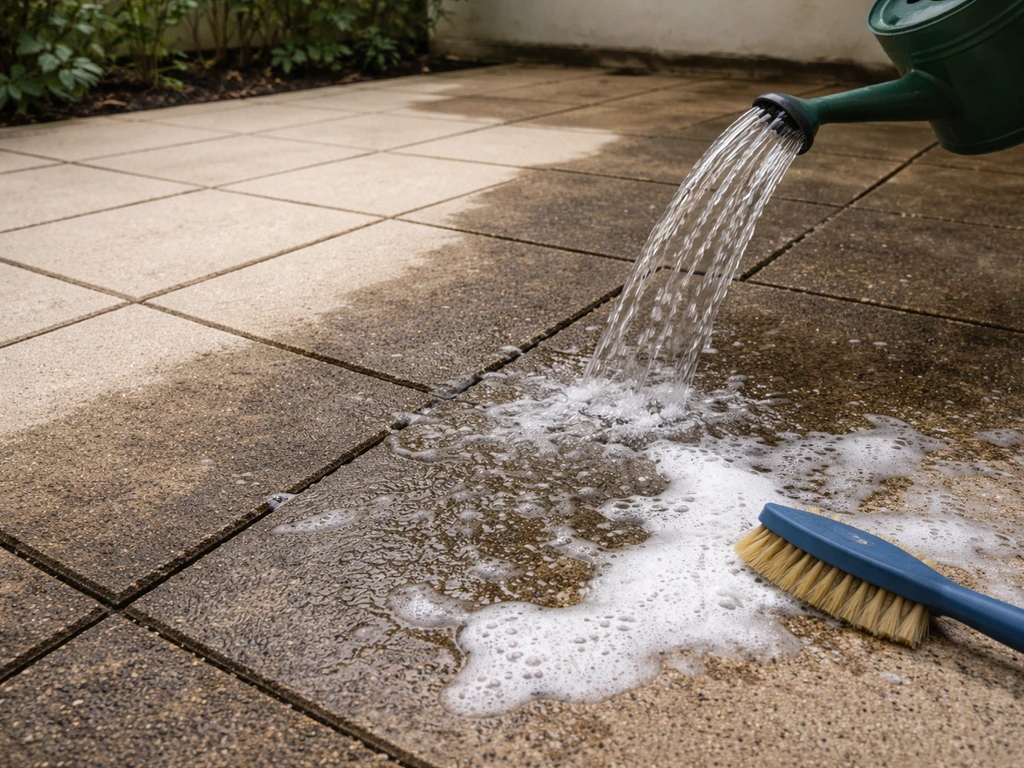
For most patio cleaning jobs, you want a sodium hypochlorite solution of around 0.5% to 1% for general mold, algae, and mildew, and up to 2% for stubborn growths on tough surfaces like concrete. In practical terms, that means diluting a standard 5%–6% household bleach (which is what most store-bought bottles contain) at roughly 1 part bleach to 5–10 parts water. A good starting point for concrete or brick is 1 cup of bleach per gallon of water, which gets you close to a 0.5%–0.6% working solution. For lighter jobs on more delicate materials like sandstone or slate, go even weaker, around 1:20 dilution or skip sodium hypochlorite entirely.
What Strength Sodium Hypochlorite for Patio Cleaning

Rhea Lang
24 Jun 2026
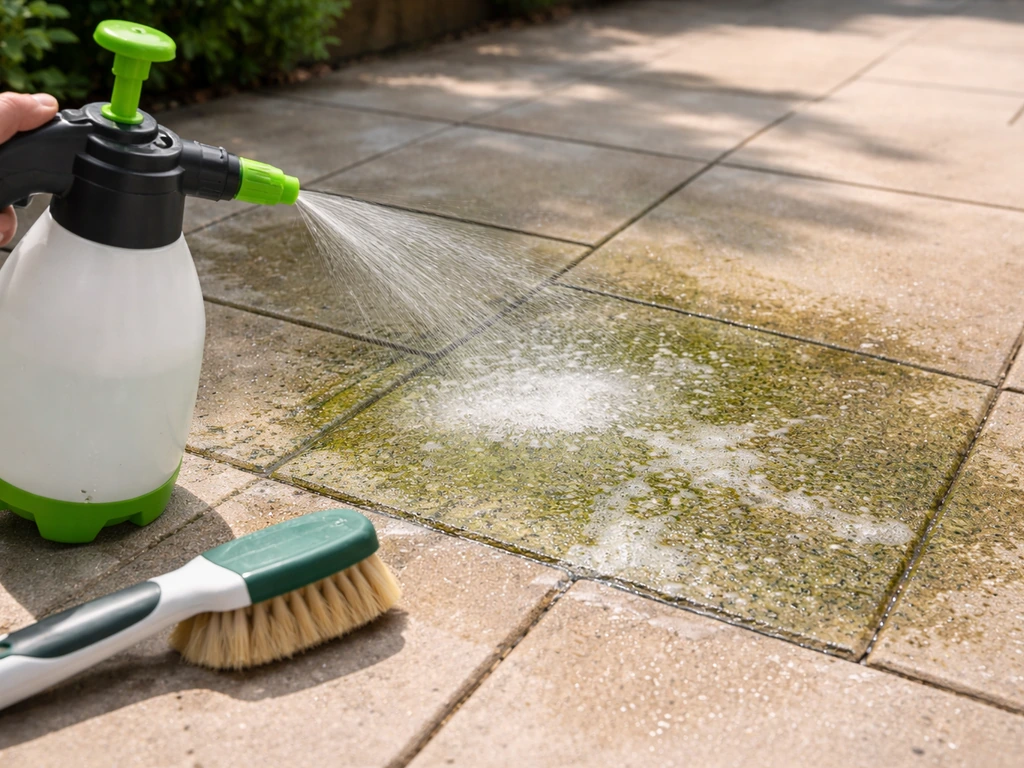
What's actually in the bottle and why it matters
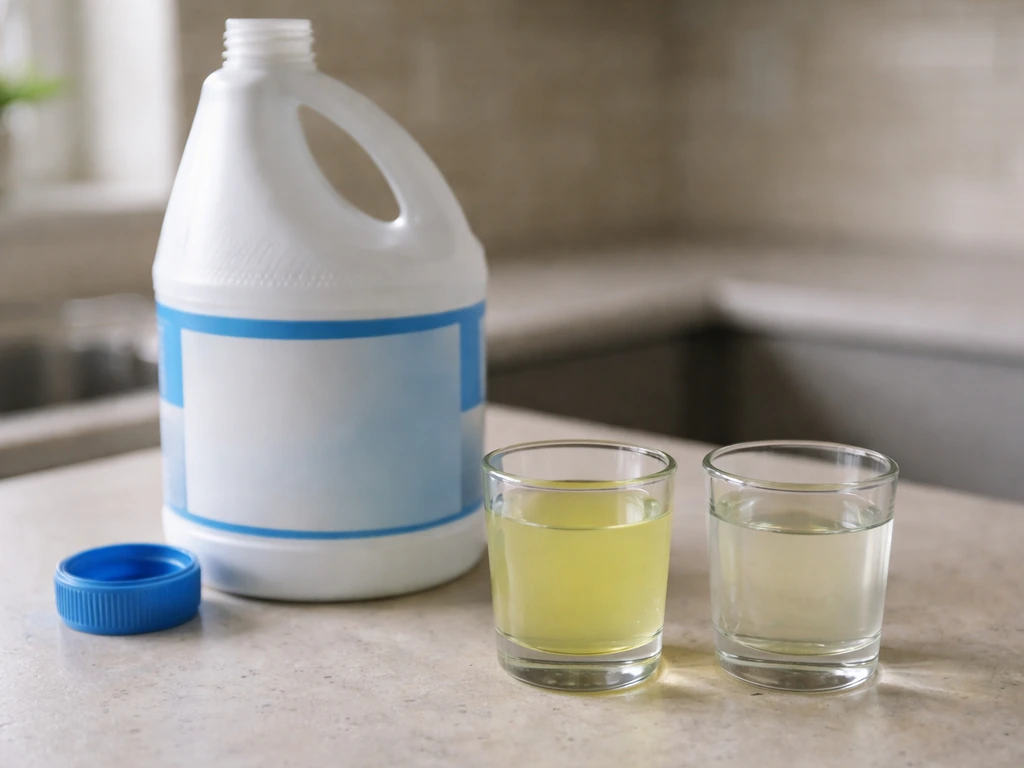
Sodium hypochlorite is just the active ingredient in bleach. Most household bleach you pick up from a supermarket sits at 5%–6.15% sodium hypochlorite, while some trade-grade or horticultural concentrates run at 10%–15%. When people talk about 'sodium hypochlorite for patio cleaning,' they're usually either diluting standard household bleach or buying a higher-strength concentrate to mix down. If you want the best option for your situation, start by choosing the right bleach strength and dilution for your patio material best bleach for cleaning patio. Knowing your starting concentration matters because a 10% product needs double the dilution of a 5% product to hit the same working strength. Always check the label.
Matching strength to your patio material
This is where most people go wrong. They grab the bleach and use the same strength on everything. If you are wondering does pink stuff clean patios, the biggest tip is to never treat all patio materials the same use the same strength on everything. The surface you're treating should completely change how strong a solution you mix. Here's how I break it down by material:
| Patio Material | Recommended Working Strength | Dilution (from 5%–6% bleach) | Notes |
|---|---|---|---|
| Sealed concrete / cement | 0.5%–1% | 1 cup bleach per gallon of water | Generally safe; rinse thoroughly and don't let it pool |
| Brick (sealed) | 0.5%–1% | 1 cup bleach per gallon of water | Test a small patch first; old mortar can be sensitive |
| Concrete pavers (sealed) | 0.5%–1% | 1 cup bleach per gallon of water | OK for algae and mold on sealed surfaces |
| Porcelain / glazed tiles | 0.25%–0.5% | 1/3 cup bleach per gallon of water | Porcelain is durable but grout lines can bleach out or weaken |
| Natural stone (limestone, slate) | 0.1%–0.25% max | Heavily diluted or avoid entirely | Bleach can cause discoloration and mineral reactions; use with extreme caution |
| Sandstone | Avoid if possible | N/A | Sodium hypochlorite can leave brownish-yellow staining; use oxygen bleach instead |
| Exposed aggregate / unsealed concrete | 0.5% | 1 cup bleach per gallon of water | Porous surfaces absorb more; rinse very thoroughly |
The reason sandstone and natural limestone get special treatment is that blank" rel="noopener noreferrer">chemical cleaners can react with minerals in the stone, leaving disfiguring discoloration that's very hard to reverse. I've seen homeowners ruin sandstone patios by assuming 'it's just stone, it can handle bleach.' It can't. Stick to the lower end of the scale on anything porous or natural, and always do a small test patch in an inconspicuous corner first.
When bleach actually works (and when it doesn't)
Where sodium hypochlorite shines
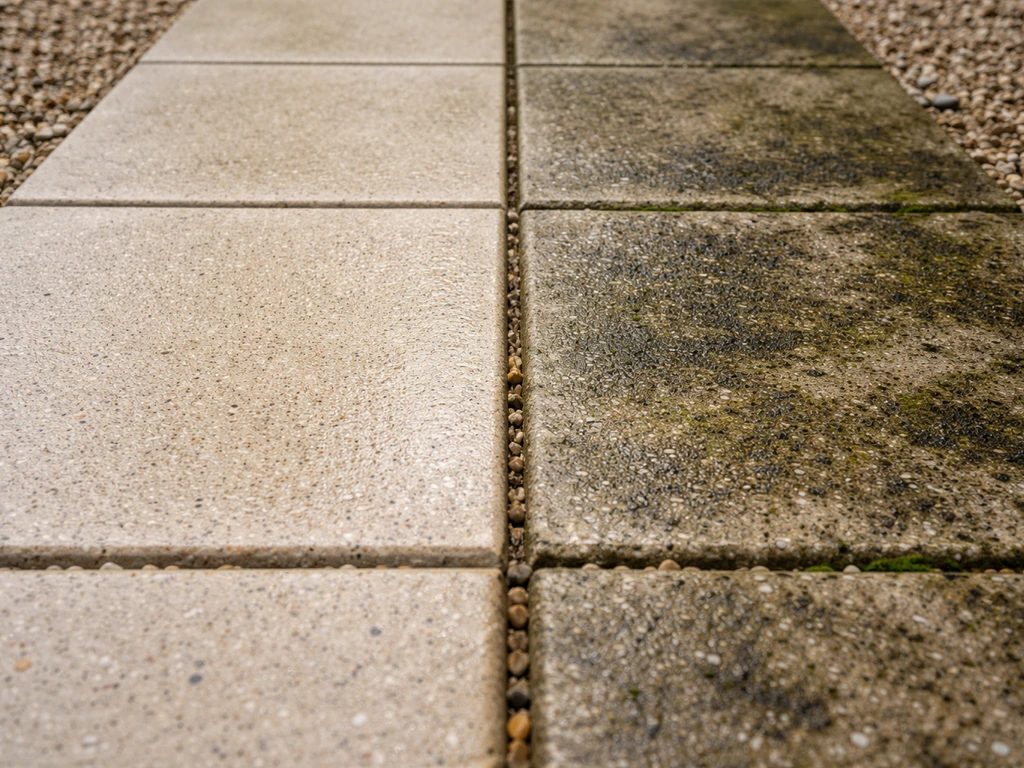
Sodium hypochlorite is genuinely excellent at killing biological growth. Washing powder can be helpful for lighter dirt and general scrubbing, but it is not as effective as sodium hypochlorite for killing algae and mildew. Algae, green slime, black spot, mildew, and mold all respond well to it because bleach breaks down the cell walls of the organisms rather than just washing them away. On a sealed concrete or brick patio covered in green algae, a proper bleach solution will kill and lift it far more effectively than scrubbing alone. It's also cheap, widely available, and fast-acting.
Where bleach falls short or causes damage
- General dirt, mud, and grease: bleach doesn't lift oil or particulate dirt well. You need a detergent or degreaser for that.
- Unsealed natural stone: the risk of staining and mineral damage is high enough that bleach is rarely worth it.
- Pet stains and odors: bleach kills bacteria but doesn't fully break down the urine compounds that cause lingering smell.
- Rust stains: bleach can actually make rust stains darker. Use an oxalic-acid-based rust remover instead.
- Anywhere runoff reaches planted beds, ponds, or grass that you care about: chlorine is toxic to plants in anything but heavily diluted amounts.
Step-by-step: how to apply sodium hypochlorite to a patio
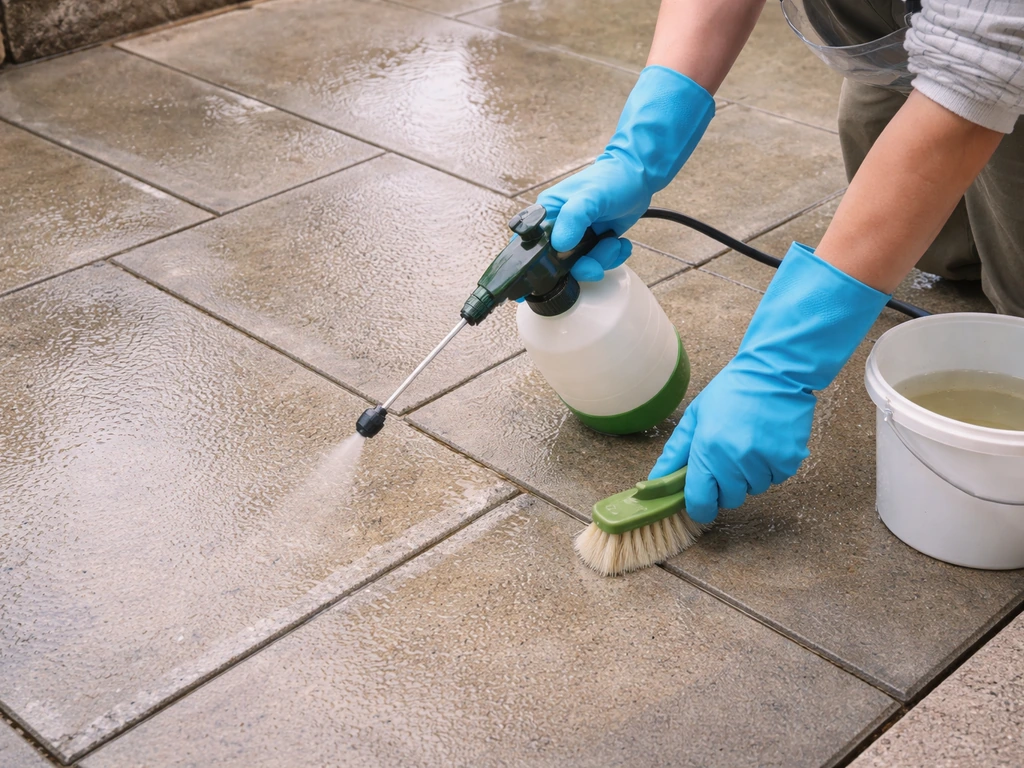
- Gear up first. Put on chemical-resistant gloves, eye protection, and old clothes you don't mind bleaching. If you're working in an enclosed or sheltered area, wear a mask too.
- Pre-wet the patio. Rinse the surface with a garden hose before you apply bleach. This stops the solution soaking in too fast on porous surfaces and protects nearby plants by diluting any splashback.
- Mix your solution. For concrete or sealed brick, add 1 cup (about 80ml) of 5%–6% bleach to 1 gallon (4.5 litres) of clean water. For more delicate surfaces, halve that. Mix in a plastic watering can or pump sprayer, never a metal container.
- Apply evenly. Pour or spray the solution across the surface, working in manageable sections of about 2–3 square metres at a time. Don't let it pool.
- Dwell time. Let the solution sit for 6–10 minutes. For stubborn mold or heavy algae, you can push to 10 minutes, but don't walk away and forget about it. Work in sections so you can keep moving.
- Scrub if needed. For thick biological growth, scrub with a stiff-bristle brush while the solution is still wet. On smoother surfaces like porcelain, a softer brush is fine.
- Rinse thoroughly. Rinse the treated area and all surrounding surfaces, including any plants or lawn nearby, with plenty of clean water from a garden hose. Don't just rinse the patio tiles; flush the edges and any drainage channels too.
- Repeat for badly affected areas. If growth is still visible after drying, a second application is usually more effective than a much stronger first application.
Keeping people, pets, and plants safe
Personal protection
Always wear gloves and eye protection. Even diluted bleach is irritating to skin over extended contact and genuinely dangerous to eyes. Work upwind if you can, and if you're using a pressure washer to rinse, be aware that spray carries bleach droplets further than you'd expect. Take your shoes off before going back indoors to avoid tracking solution through the house.
Never mix bleach with these
- Ammonia-based cleaners: the combination produces toxic chloramine gases.
- Acids (including vinegar, citric acid, or acid-based patio cleaners): mixing bleach with acids releases chlorine gas, which is genuinely dangerous.
- Other household cleaners: unless the label specifically says it's safe to mix, don't risk it.
Protecting plants, lawns, and ponds
Pre-wetting plants and grass around the patio before you start gives some protection, and rinsing them again after you're done helps a lot. For anything you're particularly worried about (a prized border, a garden pond, a vegetable bed right next to the patio), physically cover it with plastic sheeting before you apply bleach. Chlorine from runoff is toxic to aquatic life, so blank" rel="noopener noreferrer">never let bleach solution drain directly into a water feature or natural waterway. If you're wondering does chlorine clean patios, the key is using the right diluted bleach strength and keeping runoff away from plants and water Chlorine from runoff.
Grout, metal, and other vulnerable spots
Prolonged contact with bleach can lighten or degrade grout, especially older or unsealed grout. Apply carefully and rinse quickly. Metal furniture legs, fixings, or drain grilles can corrode with repeated bleach exposure, so rinse those areas especially well. If you have galvanised metal drains or aluminium edging, consider protecting them with petroleum jelly before you start.
Kids and pets
Keep children and pets off the patio until it's fully rinsed and dry. Even at working dilutions, bleach residue on paws or hands that then ends up in a mouth is a problem you don't want. Once it's properly rinsed and dry, the surface is safe.
Alternatives worth knowing about
Oxygen bleach (sodium percarbonate)
Oxygen bleach is my go-to recommendation for sandstone, slate, and any natural stone where sodium hypochlorite is too risky. If you want a simple answer, the best detergent to clean a patio is the one that matches your surface and target growth, like sodium hypochlorite for algae on concrete or oxygen bleach for natural stone my go-to recommendation. Products like sodium percarbonate release hydrogen peroxide when dissolved in water, which lifts organic staining without the harshness of chlorine. It's safer around plants, gentler on surfaces, and still genuinely effective on algae and mildew. It takes longer to work (20–30 minutes dwell time versus 6–10 for bleach) but the trade-off is worth it on delicate surfaces.
Specialist patio cleaners and algae removers
There are purpose-built patio cleaners and biological growth removers that are worth considering, especially if you're dealing with a specific problem like thick moss or persistent black spot. Many of these use quaternary ammonium compounds or benzalkonium chloride as active ingredients, which are effective biocides without the bleaching side effects. Some also contain surfactants to help with general grime in the same application, which bleach alone doesn't do well. If you're also weighing up detergent-based or multi-purpose patio cleaners, the approach differs quite a bit from using sodium hypochlorite.
Pressure washing
Pressure washing without chemicals removes surface dirt and a lot of biological growth through mechanical force alone, which avoids the chemical risks entirely. For regular maintenance cleaning, a good pressure wash every season often negates the need for bleach. If you're combining pressure washing with sodium hypochlorite, apply the bleach solution first, let it dwell, then use a lower pressure setting (around 1500–2000 PSI for concrete, lower for stone) to rinse and lift the loosened growth. Avoid high pressure on sandstone or slate, as it can erode the surface.
Ready-to-use products vs. DIY dilution
Ready-to-use patio spray products based on sodium hypochlorite are convenient and typically pre-diluted to safe working strengths, which removes the guesswork around concentration. The trade-off is cost: mixing your own from household bleach concentrate is significantly cheaper, especially for large patios. If you have a small patio or want simplicity, RTU products are fine. If you're covering a large area or doing this regularly, diluting yourself from a 5%–6% bleach bottle is more economical and gives you more control over concentration.
FAQ
How do I adjust the dilution if my sodium hypochlorite bleach bottle is 10% instead of 5%?
Aim for a working solution strength, not the label on the bottle. If your bleach says 5% to 6%, the 1 cup per gallon method lands near the 0.5% to 0.6% range, which is a good general starting point for algae and mildew on concrete. If you are using a 10% product, use about half that volume (for example, around 1/2 cup per gallon) to stay near the same working strength.
How long should I leave the sodium hypochlorite on the patio before rinsing?
Yes, but timing matters. Let the solution dwell long enough to kill and loosen growth, then rinse thoroughly. If you rinse too soon, algae may not fully lift, and if you let it sit too long on grout or unsealed stone you can cause fading or surface damage. A practical approach is shorter dwell for sealed concrete (closer to 6 to 10 minutes) and longer dwell for oxygen bleach options on delicate stone (about 20 to 30 minutes).
Can I mix sodium hypochlorite with other patio cleaners like vinegar or ammonia?
Avoid mixing sodium hypochlorite with acid-based cleaners (vinegar, descalers, rust removers) or ammonia products. Doing so can release dangerous gases and also reduces effectiveness. If you need to switch products, rinse completely first, let the surface dry, then apply the next cleaner.
What should I do if I used too strong a sodium hypochlorite solution and the patio or grout looks bleached?
Do not assume pressure washing alone will “fix” a too-strong bleach job, because bleach can still discolor grout and some stones. First, rinse aggressively with clean water to remove residual chlorine, then allow a full dry period before assessing. If grout looks lightened, future cleaning should use the lower end of the dilution range and faster rinsing.
The patio still has green or black spots after cleaning, should I reapply bleach or switch products?
If the surface stays dark or slippery after rinsing, it may be organic residue that still needs dwell time, or you may have algae embedded in pores. Try a second application at the same working strength after the first rinse and dry. For natural stone like sandstone or limestone, switch to oxygen bleach or a purpose-built biological remover rather than repeating stronger chlorine.
Is it safe to use the same bleach strength on sealed concrete versus unsealed concrete?
Use sodium hypochlorite based on material safety, not just how bad the growth looks. Sealed concrete and brick generally tolerate the 0.5% to 1% range better, while porous natural stone can discolor and unsealed joints can fade. If you are unsure, start with a lower end dilution and do a test patch.
Can I use a pressure washer after sodium hypochlorite, and what PSI should I use?
Yes, but choose the method carefully. Apply bleach solution first, let it dwell, then rinse with lower pressure, around 1500 to 2000 PSI for concrete and lower for stone. High pressure on sandstone or slate can erode the surface even if the bleach concentration was correct.
Why does my patio look hazy or chalky after bleach cleaning, and how do I fix it?
If you see white haze on masonry or lightened grout, it usually indicates residue or prolonged contact. Rinse again with clean water and ensure good runoff control. For future cleaning, shorten dwell time, pre-wet, and protect nearby metal and delicate joints.
What’s the safest way to protect plants and water features during patio bleach treatment?
Pre-wet plants and cover sensitive areas with plastic sheeting are the key steps, but also protect edges and drains. Keep runoff away from ponds, wells, and natural waterways, and rinse the surrounding area after application so lingering droplets do not burn foliage later.
What if the bleach solution keeps pooling in low spots on my patio?
If there is pooling, consider that the concentration may be higher where it sits and dwell is longer. Improve application with a pump sprayer or brush so the coverage is even, avoid puddles, and rinse from top to bottom so diluted runoff exits the area you control.
Should I use a ready-to-use sodium hypochlorite patio spray or mix from household bleach?
RTU sodium hypochlorite sprays are designed so you do not have to calculate dilution, but strengths can still vary by brand. Follow the label for coverage and dwell time, and do a test patch on natural stone. For large, recurring cleanups, home mixing from a known 5% to 6% bleach bottle is usually cheaper and gives tighter control of working strength.
What should I do if the mold and algae come back quickly after using sodium hypochlorite?
If you have thick moss, persistent black spot, or repeated re-growth, consider a purpose-built biological product rather than only bleach. Some specialty cleaners contain biocides that are effective without the surface-bleaching side effects, and they may include surfactants that lift grime along with killing organisms.
Next Article
Best Detergent to Clean Patio: Concrete, Stone, Porcelain
Choose the best detergent by patio material and stain type, with dilution, dwell, brushing, and rinsing tips.