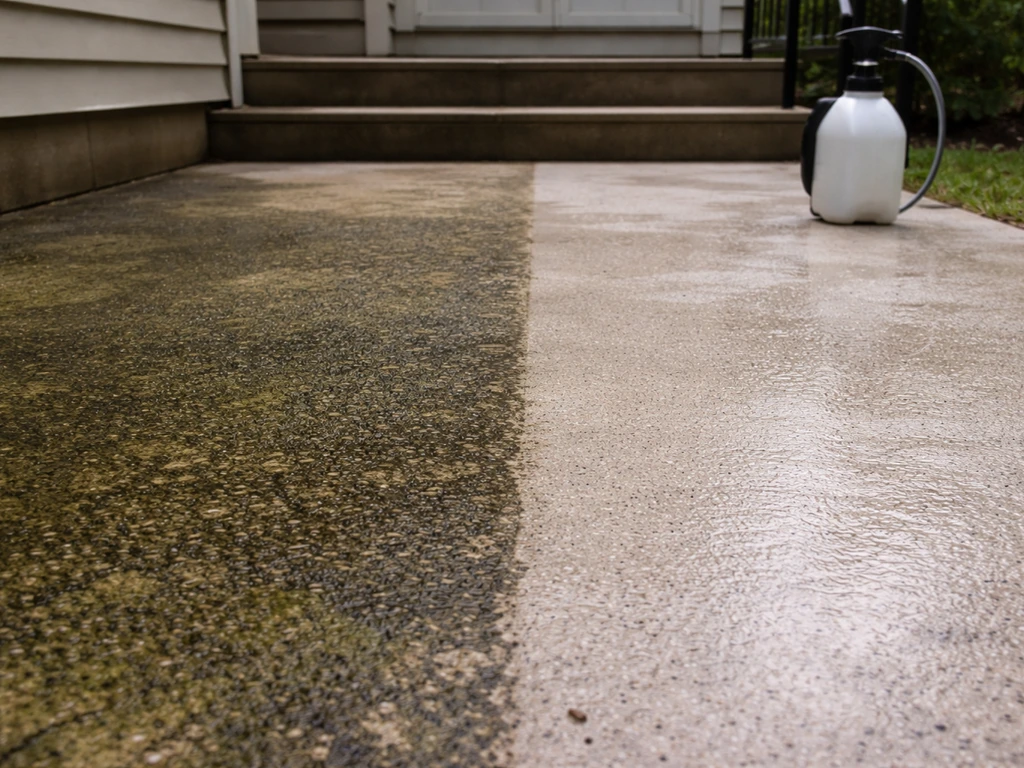
The best all-round detergent for cleaning a patio is an oxygen bleach formula (like OxiClean or a sodium percarbonate-based cleaner) for most surfaces, or a purpose-made mold and algae remover like Wet & Forget for heavy bio-growth. For concrete, you can go stronger and use diluted chlorine bleach if needed. For natural stone, brick, sandstone, or slate, stick to pH-neutral cleaners and avoid bleach, acids, or anything strongly alkaline. Your surface material and the type of mess you're dealing with are the two things that should drive every decision here.
Best Detergent to Clean Patio: Concrete, Stone, Porcelain
Rhea Lang
4 Jun 2026
Match your detergent to your patio surface first
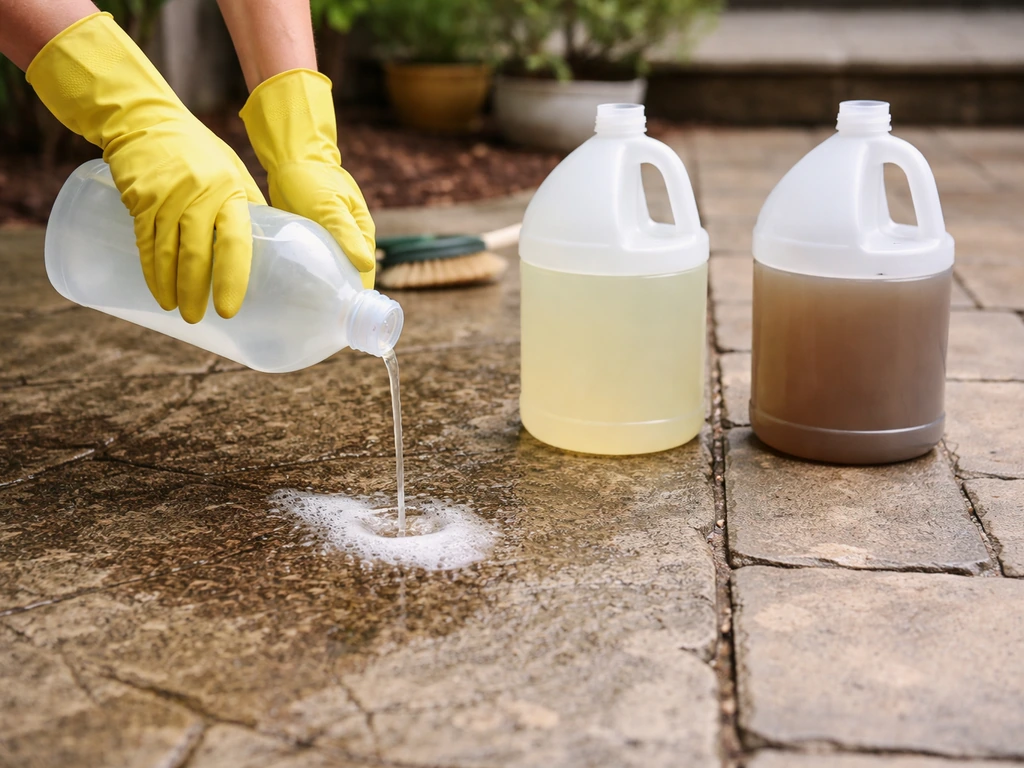
This is where most people go wrong. They grab whatever's under the sink and slosh it on the patio without thinking about what the surface can actually handle. Some cleaners that work brilliantly on concrete will strip, etch, or discolour natural stone within minutes. Get this part right and everything else falls into place.
| Surface | Safe detergent types | What to avoid |
|---|---|---|
| Concrete / cement | Diluted chlorine bleach, oxygen bleach, alkaline degreasers, pH-neutral cleaners | Strong acids (muriatic acid) |
| Brick | pH-neutral cleaners, oxygen bleach, mild alkaline solutions, warm water rinse always | Acids (including vinegar), never mix TSP with acid |
| Natural stone (sandstone, limestone, slate) | pH-neutral stone cleaners only | Bleach, chlorine, acids, high-alkaline products |
| Porcelain / ceramic paving | pH-neutral cleaners, mild degreasers, oxygen bleach at low concentration | Strong acids, wire brushes |
| Granite / hard stone | pH-neutral cleaners, very dilute oxygen bleach | Bleach, oxidising cleaners, strong acids |
| Block paving / concrete pavers | Oxygen bleach, diluted chlorine bleach, dedicated paver cleaners, degreasers | Neat bleach, muriatic acid |
The natural stone rule is simple: pH-neutral only, always. Stone is chemically reactive. Bleach, acids, and strongly alkaline cleaners can react with the mineral content, cause soluble salt formation under the surface, and accelerate deterioration you won't see until the damage is done. If you're specifically hunting for the best bleach for cleaning patio algae or mildew on concrete, start with a sodium hypochlorite dilution instead of trying to use bleach on natural stone. I learned this the hard way on a sandstone patio that came up beautifully clean but started flaking within a year because I'd used the wrong product. Porcelain is far more forgiving but still benefits from a gentler approach. Concrete is the toughest surface in this group and can handle stronger chemistry.
Figure out what you're actually cleaning before you buy anything
Patio stains look similar but behave very differently, and the wrong cleaner either won't touch the problem or will make it worse. Washing powder can help with light general grime, but it's not the best choice for bio-growth like algae or mould washing powder for cleaning patios. Spend 60 seconds identifying what you're dealing with before picking up a bottle.
Green, black, or grey biological growth
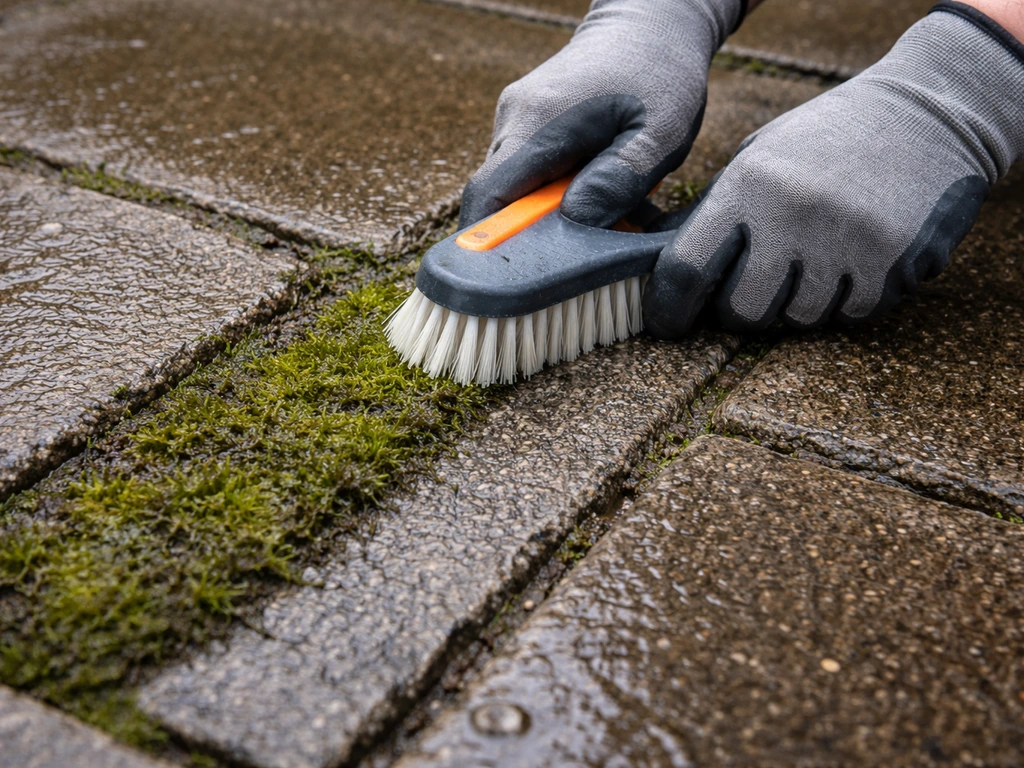
Green slippery patches are algae. They appear on shaded or damp surfaces and feel slimy underfoot. Black or dark grey patches, especially in textured areas or grout lines, are usually mould or mildew. Moss grows in thicker clumps, often bright green, and tends to take hold in cracks and between paving joints. Lichen looks like flat, crusty grey or orange growths bonded tightly to the surface and is the hardest to shift. All of these need a biocidal or oxidising cleaner, not just a general detergent.
Rust, grease, and hard stains
Rust shows up as orange or brown streaks, usually trailing from a metal planter, furniture leg, or drain fitting. It needs a dedicated rust remover, not bleach. Grease and oil stains (from barbecues, bike chains, or cooking) look dark and often have a sheen. They need a degreaser, not an oxidising cleaner. General grey-brown grime is usually just dirt, pollen, and general outdoor muck, and responds well to almost any decent cleaner.
Pet stains and odours
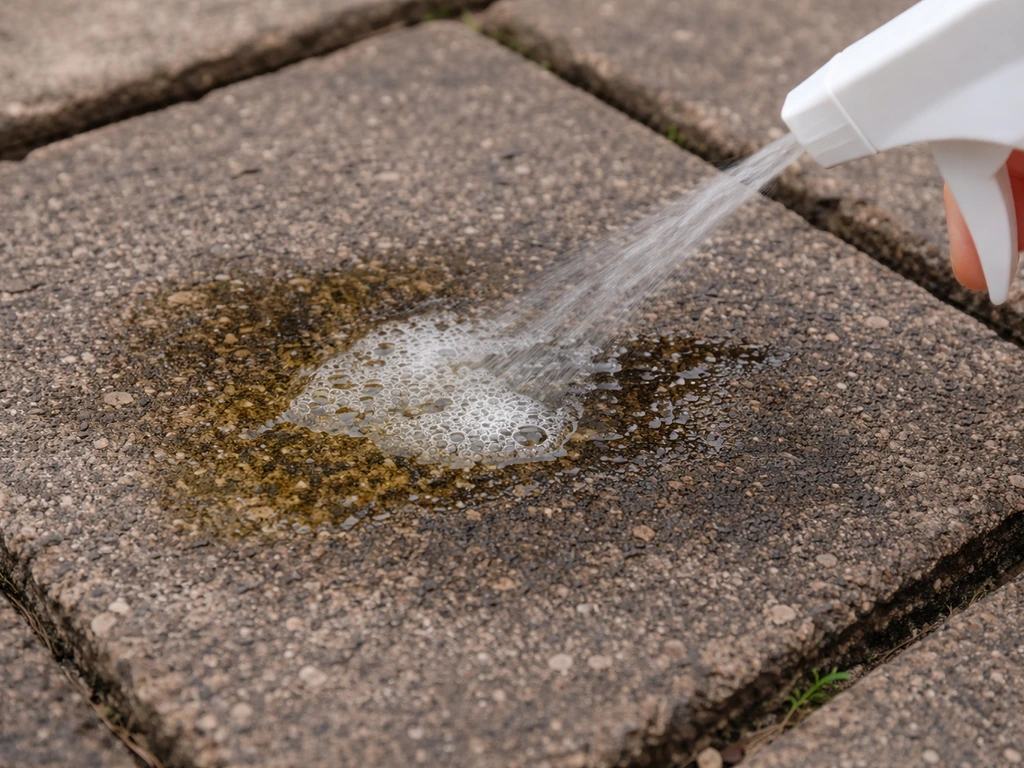
Pet urine soaks into porous surfaces and keeps smelling even after the visible stain is gone. Standard bleach will mask the odour temporarily but won't break down the uric acid compounds causing it. Enzyme-based cleaners are specifically designed for this and are the only type that actually neutralises the problem at the source.
Best detergent type for each cleaning problem
Now you know what you're dealing with, here's which cleaner chemistry actually works for each problem.
Mould, mildew, and algae
For concrete and block paving, diluted sodium hypochlorite (chlorine bleach) is highly effective. For patio cleaning, sodium hypochlorite is typically used as a diluted chlorine bleach solution for algae and mould on suitable hard surfaces. A dilution of roughly 1 part bleach to 6 to 8 parts water is a reasonable starting point, though you can go up to a 1:1 ratio for very severe black mould on concrete only. For natural stone, limestone, or anywhere you need a gentler approach, Wet & Forget Outdoor is worth using instead. It's a diluted benzalkonium chloride-based formula without chlorine bleach, and you apply it and walk away. It works more slowly (green stains clear in 1 to 2 weeks, black stains can take several months) but it's genuinely low-risk for surfaces that bleach would damage. Oxygen bleach (like OxiClean or sodium percarbonate powder) sits in the middle: more powerful than Wet & Forget for an immediate result, gentler than chlorine bleach, and safer for a wider range of surfaces. It's my go-to for most patios because it handles bio-growth without the aggressive chemistry.
Moss and lichen
Moss can usually be physically removed first with a stiff brush, then treated with an algae and moss killer to prevent regrowth. Lichen is stubborn and needs a product that can penetrate its structure. Wet & Forget works on lichen but requires patience. Apply on a day without strong sun (so it doesn't evaporate before it can work) and allow the product at least 4 to 5 hours before any rain. For a faster result on concrete, sodium hypochlorite solution left to dwell for 30 to 45 minutes before scrubbing and rinsing is more aggressive and effective.
Grease and oil
You need a degreaser here. Simple Green All-Purpose Cleaner is a solid, widely available option that's less aggressive than many commercial degreasers. For block paving or concrete with heavy oil staining, a concentrate degreaser diluted 1 part product to 5 parts water in a pump sprayer works well and is acid-free, making it safe for use near plants. Simple Green’s dilution chart provides label-based guidance for appropriate dilutions of its all-purpose cleaner/degreaser, including cautions such as spot-testing and avoiding certain surfaces like leather or non-washable materials acid-free. Apply, agitate with a stiff brush, and don't let it dry on the surface before rinsing.
Rust stains
Rust needs a dedicated rust remover, full stop. Products like Techniseal Rust Remover for Pavers are formulated specifically for paving and block paving surfaces. Be very careful with any rust remover on natural stone: some contain trace amounts of hydrofluoric acid, which will damage stone permanently. Always check the label for stone compatibility before applying. On concrete, most paver rust removers are fine to use following the manufacturer's dwell and rinse instructions.
Pet stains and urine odour
Enzyme cleaners are the right call here. They contain biological agents that break down uric acid compounds rather than just bleaching them. Apply generously, allow a longer dwell time (30 minutes or more), and rinse thoroughly. They're also one of the more eco-friendly options on this list and safe around pets once rinsed.
General grime, dirt, and pollen
For general surface grime with no biological growth or specific staining, an oxygen bleach powder dissolved in warm water does a great job. OxiClean releases oxygen when mixed with water and lifts dirt from textured surfaces without the risks associated with chlorine bleach. It's genuinely versatile and suitable for most patio materials.
How to apply detergent properly (and actually get results)
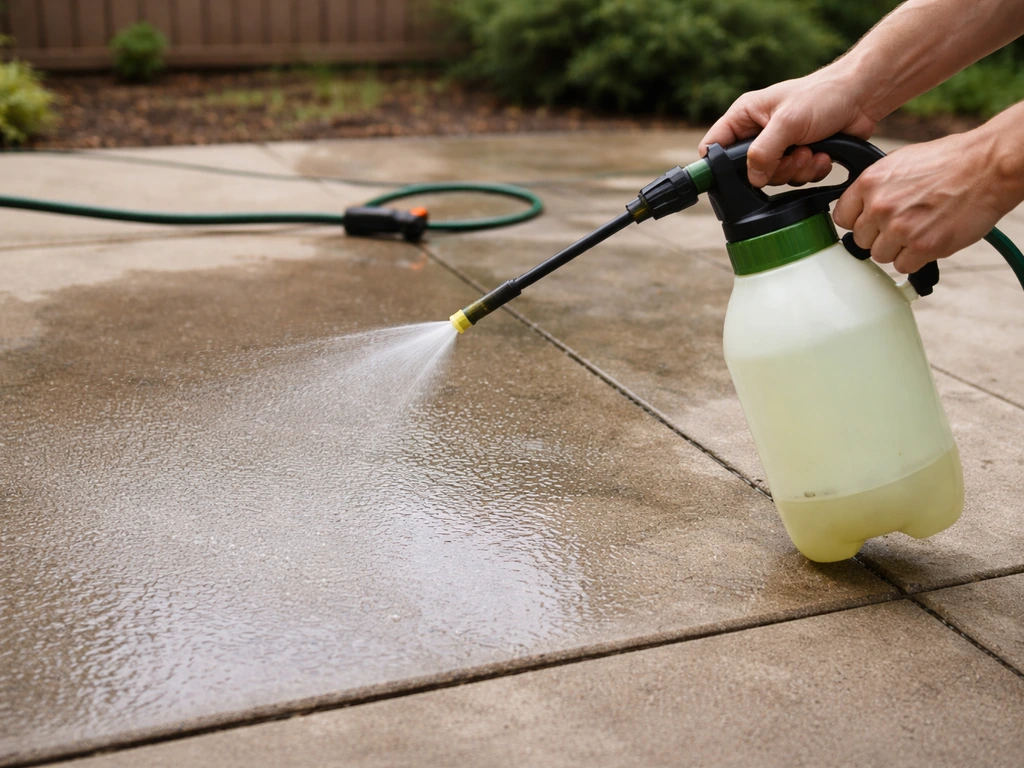
The product is only half the job. How you apply it makes an enormous difference to the outcome. Here's a step-by-step that works for most patio cleaning situations.
- Clear the surface: Remove furniture, pots, and debris. Sweep or blow off loose dirt. Any large debris left on the surface will dilute your cleaner and reduce contact with the actual patio.
- Pre-wet the surface: For most cleaners (except Wet & Forget, which requires a dry surface), dampen the patio with a garden hose first. This prevents the detergent from being immediately absorbed into porous surfaces before it can do its job.
- Mix your detergent correctly: Follow the label dilution. For oxygen bleach like OxiClean, around a quarter scoop per 16 ounces of water is a starting point; always check the specific product instructions. For Wet & Forget, it's 1 part product to 5 parts water. Don't assume stronger is better: over-concentrating can damage surfaces and doesn't clean better.
- Apply and allow dwell time: Apply your solution evenly across the surface. Dwell time matters more than people realise. Oxygen bleach needs 1 to 6 hours to work fully on stubborn stains. Chlorine bleach on algae needs 30 to 45 minutes minimum. Wet & Forget requires no rinsing but needs hours of contact time to start working. Don't let any product dry on the surface before rinsing (except Wet & Forget).
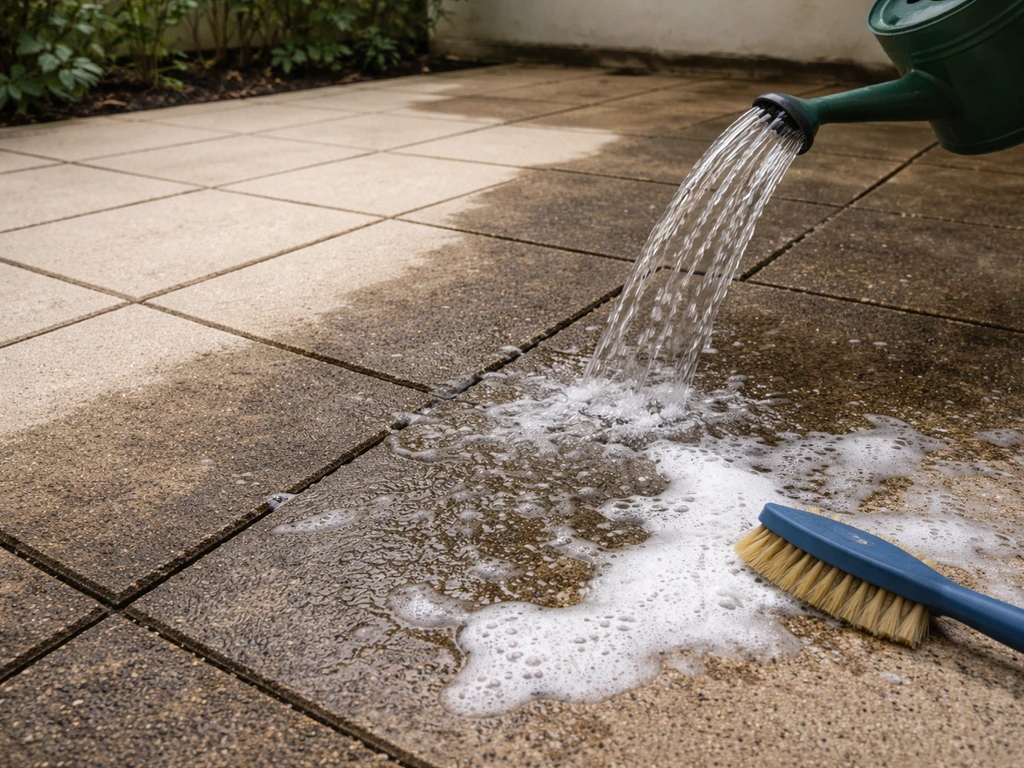
- Agitate with a brush: Use a stiff-bristled deck brush or patio scrubber. This physically breaks down the stain and works the cleaner into textured surfaces. Don't skip this step; it significantly improves results.
- Rinse thoroughly: Rinse with a garden hose and a strong spray nozzle. After rinsing, water any nearby plants and lawn that may have been exposed to run-off. Keep rinsing until the water runs clear.
Detergent-only cleaning vs pressure washing: when to use which
Pressure washing gets a lot of love online, but it's not always the right move. On natural stone, limestone, and some textured paving slabs, high-pressure water can remove protective surface patina, drive chemicals deep into the material causing etching, and physically damage the surface. Natural Stone Care also warns that high-pressure washing can strip protective patina from stone and drive chemicals deeper into the material, potentially causing etching and other damage high-pressure water can remove protective surface patina. For these materials, the softwashing approach (applying a detergent, leaving it to dwell for around 10 minutes or longer, then rinsing with a regular hose) is genuinely better and still gets excellent results.
Pressure washing works well on concrete, brick, and block paving where the surface is dense and robust. But even on these surfaces, always apply detergent first, let it dwell, then use the pressure washer to rinse and lift the loosened material. Using a pressure washer without detergent on a heavily algae-covered surface mostly just redistributes the problem. Using it with detergent means the washer is doing finishing work, not heavy lifting.
| Surface | Detergent only | Detergent + pressure washer | Pressure washer only |
|---|---|---|---|
| Concrete / block paving | Good for light grime | Best for heavy staining | Spreads bio-growth, less effective |
| Natural stone (sandstone, limestone, slate) | Recommended approach | Low pressure only, risky | Not recommended |
| Porcelain paving | Good with correct cleaner | Low pressure fine | Can be okay but check manufacturer |
| Brick | Good | Moderate pressure fine | Risk of joint damage at high pressure |
| Granite / hard stone | Recommended | Low pressure only | Not recommended for regular use |
If you're unsure about your surface, always start with detergent-only cleaning and a scrub brush. You can always follow up with a pressure washer on a low setting if needed. Going straight in with high pressure is a one-way door: surface damage is hard or impossible to reverse.
Product recommendations and what to look for on the label
There are dozens of patio cleaners on the market. If you’re wondering whether patio cleaners are any good, the short answer is yes, but only when you match the chemistry to your surface and the specific kind of stain or growth are patio cleaners any good. Most fall into a handful of categories. Here are the ones consistently worth your money, plus what to look for when comparing products.
Products worth considering
- OxiClean Versatile Stain Remover: Oxygen-based, water-activated, safe for most surfaces including stone at proper dilution, great for general grime and light bio-growth. Available widely in the US and online in the UK.
- Wet & Forget Outdoor Concentrate: Bleach-free, dilutes 1:5 with water, spray and leave (no scrubbing or rinsing). Best for ongoing moss, algae, and mould control. Works slowly but with minimal effort and low surface risk. Annual maintenance applications keep surfaces clear long-term.
- Simple Green All-Purpose Cleaner/Degreaser: Versatile, pH-balanced, widely available, good for grease and general grime. Comes with a proper dilution chart on the label so you know exactly what ratio to use for patios.
- Techniseal Rust Remover for Pavers: Purpose-built for rust stains on concrete and block paving. Follow label instructions for dwell and rinse times. Check stone compatibility before using on natural stone.
- Sodium percarbonate powder (own-brand or HD Chemicals in the UK): A budget-friendly oxygen bleach option. Mix with warm water, apply, scrub, and rinse. Very effective on algae and general organic staining on concrete and brick.
- Enzyme-based pet stain cleaners (various brands): For urine and pet mess on porous patio surfaces. Choose a product that specifically states it breaks down uric acid compounds, not just masks odour.
What to look for on the label
When you're standing in a shop or browsing online, the label tells you everything you need to know if you know what to look for. First, check the active ingredient: sodium hypochlorite means chlorine bleach (effective but surface-limited), sodium percarbonate or hydrogen peroxide means oxygen bleach (gentler and more versatile), benzalkonium chloride means a biocidal cleaner like Wet & Forget. Look for explicit surface compatibility statements, especially if you're using it on stone. The Safety Data Sheet (SDS), which should be available from any reputable manufacturer, tells you the pH, active chemistry, and safety precautions. Anything with a pH above 12 or below 4 should only be used on concrete or brick, never stone. If the label doesn't list your surface type, assume it's not compatible and choose something else.
Safety, eco-friendliness, and stopping the growth from coming back
Staying safe while you clean
Wear rubber gloves and eye protection with any chemical cleaner, including oxygen bleach. Bleach fumes build up quickly in still, enclosed spaces, so if you're working in a courtyard or narrow alley, make sure there's good airflow. Never mix bleach with any acid-based product including vinegar: it produces chlorine gas. Check the SDS before you use any product you haven't used before. If the product stings your skin or eyes, rinse with water for at least 15 minutes and get fresh air.
Managing run-off and protecting plants
Chemical run-off is a real concern, especially with chlorine bleach. Before you apply anything, wet down any lawn, flower beds, or shrubs bordering the patio. After rinsing, water the plants again to dilute any run-off. For any cleaner going into a drain, check whether your local authority has restrictions on bleach or biocidal products entering surface water drains, as opposed to foul drains. Oxygen bleach and enzyme cleaners break down into water and oxygen in the environment and are significantly less harmful than chlorine-based products.
Timing your clean for best results
Clean on an overcast day when rain isn't forecast for at least 4 to 5 hours. Direct sun dries out your cleaner before it's had time to work, and rain washes it off before it can. For Wet & Forget and similar slow-acting products, avoid very sunny days especially when treating lichen. Early spring and autumn are typically the best times for a main patio clean in the UK and northern US, when bio-growth is active but temperatures are mild.
Preventing the mess from coming back
The biggest mistake after cleaning is doing nothing to prevent regrowth. Algae, moss, and mould always return to damp, shaded surfaces unless you address the conditions. Annual maintenance applications of a product like Wet & Forget (one treatment per year) keep bio-growth from re-establishing. For concrete and block paving, applying a patio sealer after a thorough clean closes the porous surface and makes future cleaning much easier. Improve drainage where possible, cut back overhanging plants, and make sure the patio gets as much light as you can give it. These small changes make a bigger long-term difference than any cleaner.
FAQ
Can I mix detergents or cleaners to get a faster result on my patio?
Yes, but only in the cases that match the right chemistry. Oxygen bleach (sodium percarbonate) and chlorine bleach are not the same, and mixing bleach types or combining bleach with other household products increases risk and can reduce effectiveness. If you need a two-step approach, use one product type, rinse thoroughly, let the surface dry, then apply the second product after you are sure no residue remains.
How long should I leave the detergent on the patio before scrubbing and rinsing?
For oxygen bleach and chlorine bleach, the key is dwell time and thorough rinsing. Apply enough solution to keep the surface wet for the recommended dwell, then scrub and rinse until runoff runs clear. If you leave residue behind, you can get white speckling (especially on porous concrete) or uneven discoloration.
What’s the safest way to test a detergent before cleaning the whole patio?
Do a spot test in an inconspicuous area, and use a 1:10 test dilution first. Wait for any reaction to show, then rinse fully and reassess after the surface dries. This is especially important for natural stone and older paving, since mineral content and prior sealers can change how a cleaner behaves.
How can I tell whether my patio is sealed or porous before choosing the best detergent?
A simple water check helps: if water soaks in within minutes, the patio is porous and cleaners can penetrate deeper, which makes dwell time and rinsing more critical. If water beads, it is likely sealed or less absorbent, where gentle products (and shorter contact time) often perform better without leaving residue.
What safety precautions should I take when using oxygen bleach or chlorine bleach on a patio?
Rubber gloves and eye protection are a must, and you should also protect nearby surfaces by wetting vegetation first. Never use an acid product like vinegar or descaler anywhere near bleach-based cleaning, it can create dangerous chlorine gas. If you are unsure about a product you have not used before, review its Safety Data Sheet pH and handling notes.
What should I do if rain or wind washes off the cleaner before it finished working?
If rain or wind interrupts the process, reapply only after the surface is fully rinsed and dry. For slow biocide treatments, partial wash-off can mean you need a longer period to complete the job. With chlorine bleach, interrupted dwell often leads to patchy results, so spot-rework the affected area with the correct dwell time after rinsing.
Is pressure washing ever the best choice, or should I always start with detergent?
Avoid using high-pressure washing as the first step on natural stone, textured slabs, and surfaces with loose patina. A safer approach is detergent-first softwashing, then optional low-pressure rinsing only to lift what the detergent loosened. Going straight to high pressure can drive residue into pores or cause surface etching that looks worse over time.
Can washing powder alone clean algae or mould off a patio?
It can be, but it depends on what you mean by “clean.” For general grime, an oxygen bleach solution is often enough, but for algae, mould, moss, and lichen you need chemistry designed to kill and prevent regrowth. Washing powder may improve light dirt, but it usually does not target bio-growth the way oxidizers or biocides do.
Why does my patio still smell after I cleaned pet urine with bleach, and what’s the fix?
Enzyme cleaners work best when the urine source is still active in the porous material. Apply generously, keep the area damp during the dwell window, then rinse thoroughly. If the odor is stubborn, repeat treatment, and do not rely on bleach, it may mask the smell while leaving uric compounds behind.
What’s the safest way to remove rust stains from concrete versus natural stone?
For rust, use a product labeled for pavers or the exact surface type, and follow dwell and rinse instructions carefully. Avoid random rust removers on stone because some formulations contain strong acids or trace chemicals that can permanently damage. If your label does not explicitly confirm stone compatibility, treat it as not safe and choose a safer alternative.
My patio looks cleaner, but the stains or slime came back quickly, why?
If your patio looks clean but stays slimy or dark, it usually means living growth is still present or you did not reach the right dwell time. Re-check your type of growth (algae versus mould versus lichen), then switch to the correct chemistry and improve conditions such as light exposure and drainage so it does not return immediately.
Next Article
Are Patio Cleaners Any Good? Honest Results Guide
Honest guide on whether patio cleaners work by surface and stain, plus how to apply safely for best results.