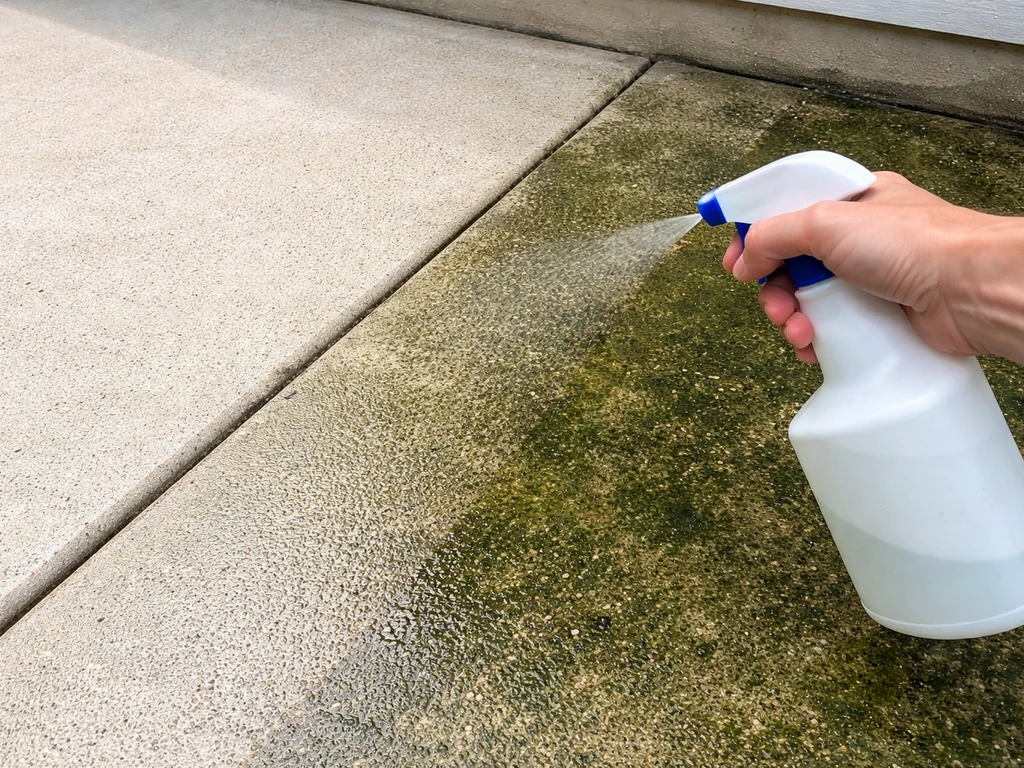
Yes, chlorine (sodium hypochlorite, the active ingredient in household bleach) does clean patios, but only for certain problems. It kills and lifts organic growth like mold, mildew, algae, and lichen staining really well. What it won't do is touch grease, rust, mineral deposits, or paint overspray. If your patio is covered in green or black biological growth, diluted bleach is one of the cheapest and most effective tools you have. If the grime is something else, you're better off reaching for a different product from the start.
Does Chlorine Clean Patios? Safe Use, Results, and Alternatives

Rhea Lang
27 May 2026
What chlorine actually fixes (and what it doesn't)
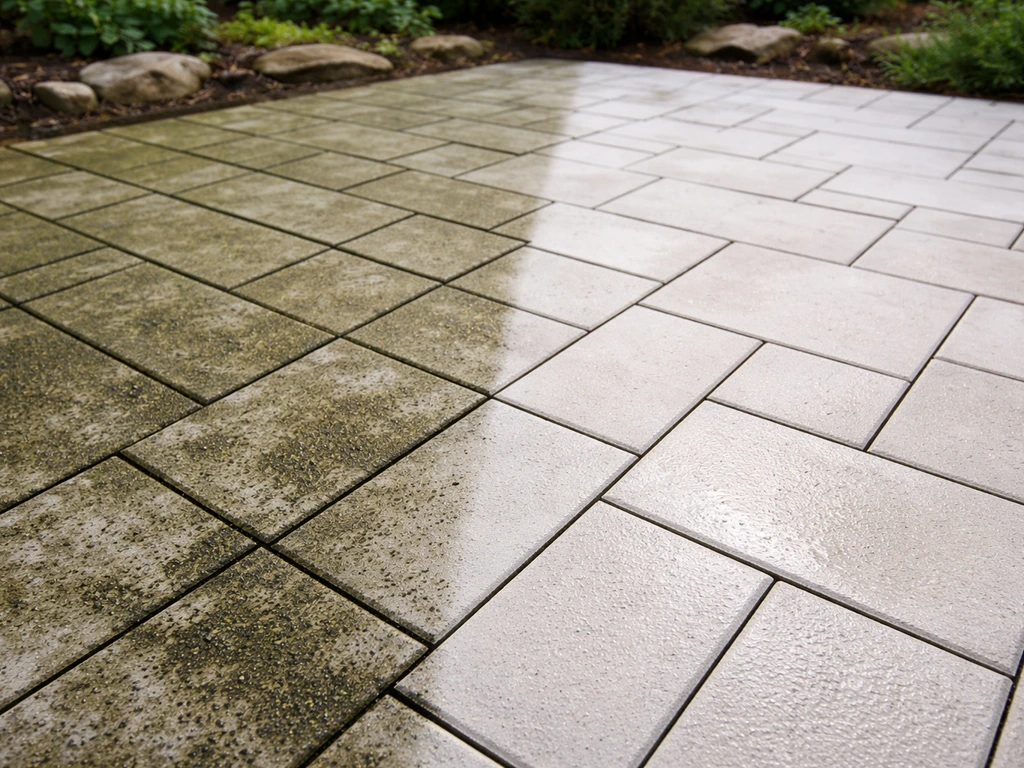
Chlorine works by oxidizing organic matter. That means anything living or once-living is a fair target: algae, mold, mildew, moss, lichen, and the dark staining they leave behind. Apply a diluted bleach solution, let it sit, and those green or black patches will lighten and die off within minutes. That's the genuine win.
Where chlorine falls flat is on anything inorganic. Rust stains, oil or grease marks, calcium/limescale deposits, efflorescence (that white powdery salt bloom on concrete or brick), and paint need completely different chemistry. Pouring bleach on a rust stain won't shift it and may actually set it further into porous stone. I've seen homeowners douse a patio in bleach hoping for a full reset and end up with a surface that looks patchy because the organic stains vanished but the rust rings stayed put.
| Stain / Problem | Does Chlorine Work? | Better Alternative If Not |
|---|---|---|
| Algae / green slime | Yes, very effective | Oxygen bleach if surface is sensitive |
| Black mold / mildew | Yes, effective | Dedicated patio cleaner for stubborn cases |
| Moss staining | Partially (kills moss, staining may remain) | Oxygen bleach or patio cleaner |
| Lichen | Slow, may need repeat applications | Specialist lichen remover |
| Rust stains | No | Oxalic acid or rust remover |
| Grease / oil | No | Degreaser or hot wash with detergent |
| Efflorescence (salt bloom) | No | Dilute hydrochloric acid or specialist cleaner |
| Mineral deposits / limescale | No | Acid-based descaler |
| Paint overspray | No | Paint stripper or mechanical removal |
Surface-by-surface guide: where chlorine is safe and where to be careful
Concrete
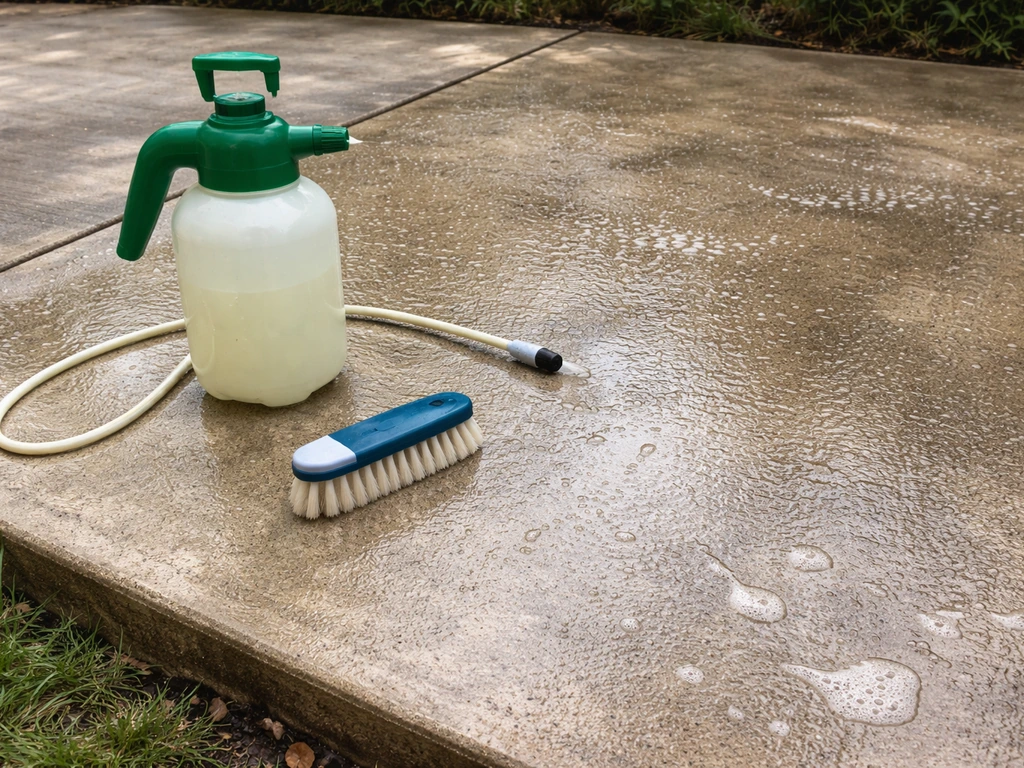
Concrete is the most forgiving surface for chlorine. It's alkaline, dense, and can handle a properly diluted bleach solution without any real risk of etching or discoloration. A working solution of around 1. 5 cups of standard household bleach (5-6% sodium hypochlorite) in roughly 14-15 cups of water (close to a 1:10 dilution) works well.
You can get good results for patio cleaning with about 5 to 6% sodium hypochlorite diluted to the right strength for your surface what strength sodium hypochlorite for patio cleaning. Apply, let it dwell for 10-15 minutes, scrub with a stiff brush if needed, then rinse thoroughly. For heavy algae, you can go slightly stronger, but there's rarely a need to go above a 1:5 dilution on concrete.
Brick
Brick handles chlorine reasonably well, but the mortar joints are where you need to be careful. Repeated or concentrated bleach applications will gradually erode mortar over time. Stick to a 1:10 dilution, keep dwell time under 15 minutes, and rinse promptly. Also watch out for efflorescence on brick: bleach can temporarily mask it but the salts will come back, often worse. If your brick has heavy efflorescence alongside algae, deal with the efflorescence separately.
Natural stone (sandstone, limestone, marble)
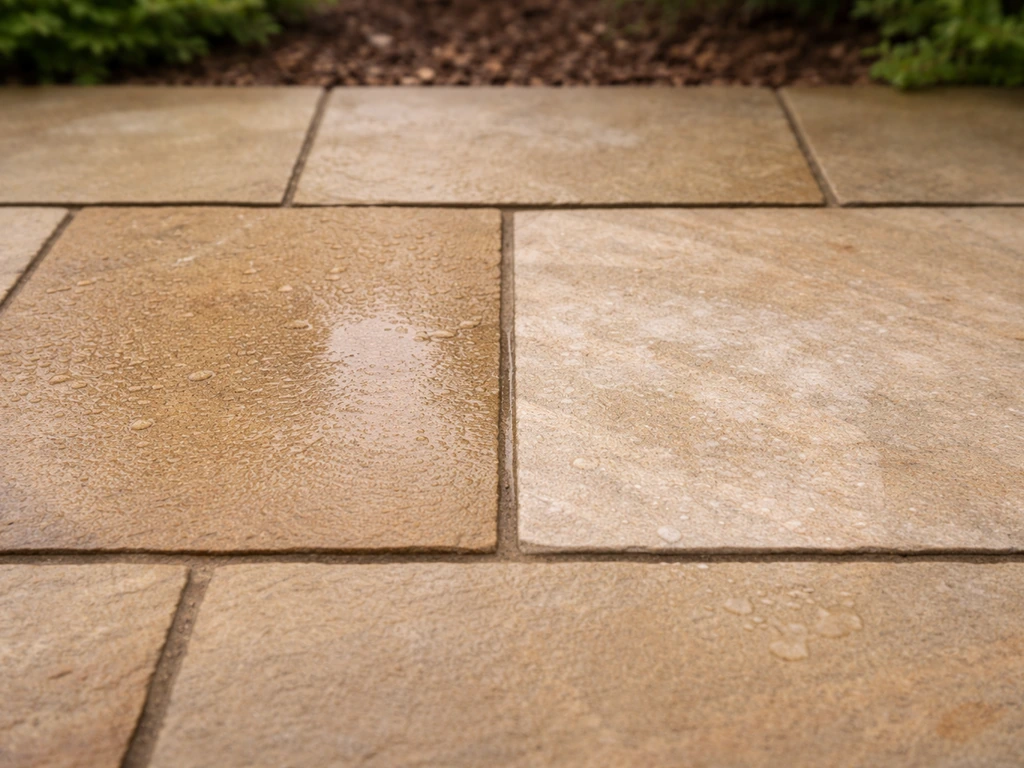
This is where caution is essential. Sandstone and limestone are calcium-based and can be chemically sensitive. Bleach at household concentrations can lighten or discolor the surface, especially pale sandstone. If you want to use it, go very dilute (1:20 or weaker), test a hidden corner first, keep dwell time short (5 minutes max), and rinse immediately. Honestly, for most natural stone I'd skip chlorine entirely and go with an oxygen bleach product instead. The risk isn't worth it when better alternatives exist.
Slate
Slate is denser and less reactive than sandstone or limestone, so it tolerates a diluted bleach solution better. That said, slate often has a natural sheen that can dull with repeated bleach use. Use a weaker solution (1:15 to 1:20), keep it brief, and rinse well. Avoid scrubbing slate aggressively as it can scratch. One application is usually enough if the growth isn't too embedded.
Porcelain
Porcelain paving is non-porous and chemically resistant, so the tile surface itself handles bleach fine. The weak spot is the grout. Standard sand or cement grout can be bleached white or weakened by repeated chlorine exposure. If your porcelain has joint compound (the flexible polymer grout many porcelain installers use), it's generally more resistant, but still worth being careful. Apply bleach to the tile surface, avoid soaking grout lines unnecessarily, and rinse well. For purely cosmetic algae on porcelain, a pressure washer alone often does the job without any chemistry at all.
Getting the dilution, dwell time, and safety right
Dilution ratios
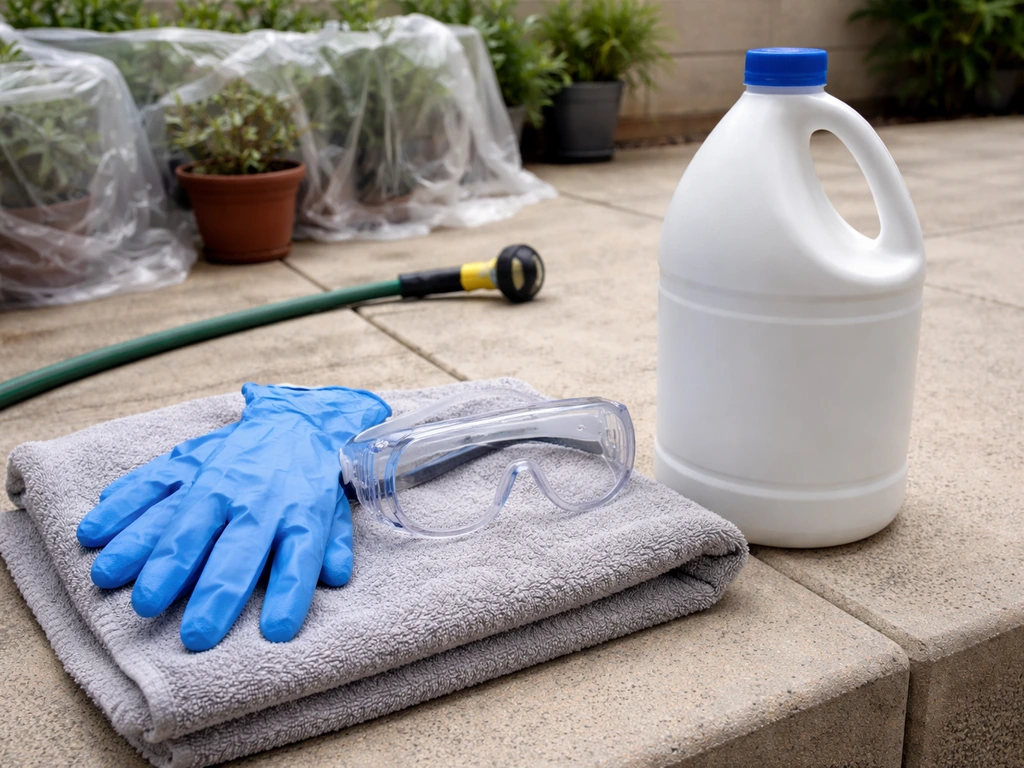
For patio cleaning, you're working with standard household bleach at around 5-6% sodium hypochlorite.
A practical starting point is 1:10 (1 part bleach to 9 parts water), which gives you a working solution of roughly 0. 5-0. 6%. For stubborn algae on concrete, go up to 1:5.
For sensitive surfaces, come down to 1:20. Don't use undiluted bleach directly on a patio surface: you'll risk discoloration, and you'll burn nearby plants almost immediately. The Clorox guidance for their outdoor bleach product uses roughly 1. 5 cups in 14.
5 cups of water as a standard deck/patio ratio, which is a solid reference point. Clorox’s deck-cleaning instructions specify a bleach solution made by adding 1 ½ cups of Clorox Outdoor Bleach into 14 ½ cups of water to make 1 gallon, followed by thorough rinsing with a garden hose spray nozzle.
Dwell time
10 to 15 minutes is the sweet spot for most surfaces. You want the bleach solution to stay visibly wet on the surface during this time, so on a warm or windy day you may need to apply more. Don't let it dry on the surface: dried bleach leaves a white powdery residue and can be harder to rinse out. For heavy mold or algae, 15-20 minutes is fine on robust surfaces like concrete, but I wouldn't push past that.
Safety: you, your garden, and your pets
Bleach is genuinely hazardous if you treat it carelessly. Sodium hypochlorite can cause skin burns, eye damage, and respiratory irritation. Wear nitrile gloves (not thin latex ones that can degrade quickly in bleach), safety glasses or goggles, and old clothing you don't mind ruining. Work in good ventilation: if you're in a sheltered enclosed courtyard, make sure there's air movement. Never mix bleach with other cleaners, especially anything acidic like vinegar or any ammonia-based product. Mixing bleach with acid releases chlorine gas; mixing it with ammonia produces chloramine vapors. Both are toxic and can happen surprisingly fast.
For your garden: bleach at any realistic patio-cleaning concentration will damage or kill plants it lands on. Before you start, soak any nearby grass, flower beds, or shrubs with plain water to dilute any splash. Wet them again after you're done rinsing. For large patios surrounded by planting, I cover the nearest plants with plastic sheeting during application. Keep pets and children off the treated area until it's been thoroughly rinsed and has dried.
Rinsing properly: don't skip this step
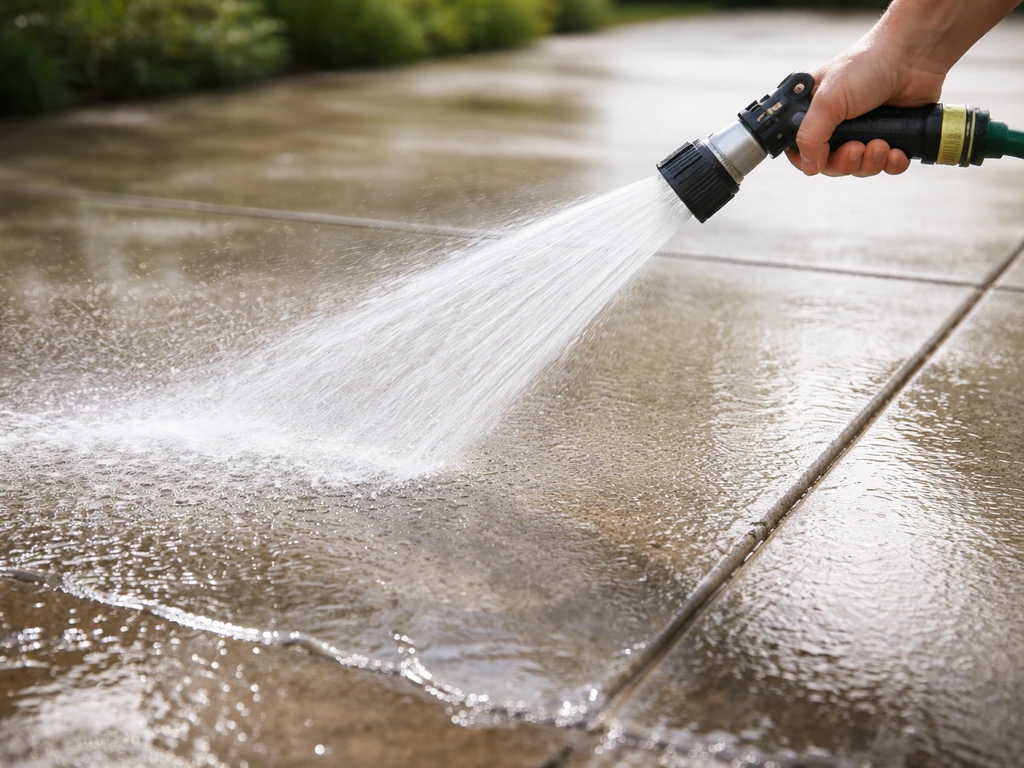
A full, thorough rinse with a garden hose (with a spray nozzle to get proper pressure) is non-negotiable. Residual bleach left on a surface continues to act: it can whiten or etch porous stone, keep harming plant roots via runoff, and leave a patchy white film as it dries. If you are wondering whether washing powder can work instead of bleach for patios, it is usually not the same effective oxidizing treatment.
Rinse the entire treated area, not just where you applied the solution directly. Pay attention to drainage: bleach running into a pond or water feature will kill fish and aquatic plants. If your patio drains toward a garden pond, block the drain during cleaning and direct rinse water elsewhere.
Some guides recommend a neutralizing rinse with a weak baking soda solution (about a tablespoon per litre of water) to raise the pH of any remaining bleach before the final water rinse. This isn't strictly necessary on a robust concrete patio, but it's a good precaution on sensitive natural stone or when you're close to planting. After rinsing, wet down all nearby grass and plants once more.
When you should not use chlorine
There are clear situations where chlorine is the wrong tool entirely:
- Sealed patios: If your patio has been treated with a sealant or impregnating sealer, bleach can degrade the sealer, cause uneven lifting, and leave blotchy patches. Use a dedicated sealed-surface cleaner or a gentle oxygen bleach product instead.
- Metal elements: Any metal fixtures on or near the patio, such as iron furniture legs, steel edging, drainage grates, or aluminium door thresholds, are vulnerable to bleach-accelerated corrosion. Rinse metals immediately if they get splashed and avoid direct application.
- Rust stains: Bleach can oxidize iron particles in the stone or concrete further, potentially darkening or setting the stain rather than lifting it.
- Painted or coated surfaces: Bleach will strip paint and affect coatings. Don't use it on painted concrete, stained decking, or any decoratively coated surface.
- Pale or cream-coloured natural stone: The risk of uneven bleaching or whitening on light sandstone, limestone, or cream-toned marble is too high. Oxygen bleach is a far safer option.
- Areas with heavy planting right to the edge: If the patio is surrounded by dense planting with no room to protect plants during application, the risk to your garden isn't worth it.
- Coloured grout: Chlorine bleach will almost certainly fade coloured grout over time and can cause irreversible patchy discolouration.
Better alternatives when chlorine isn't the right call
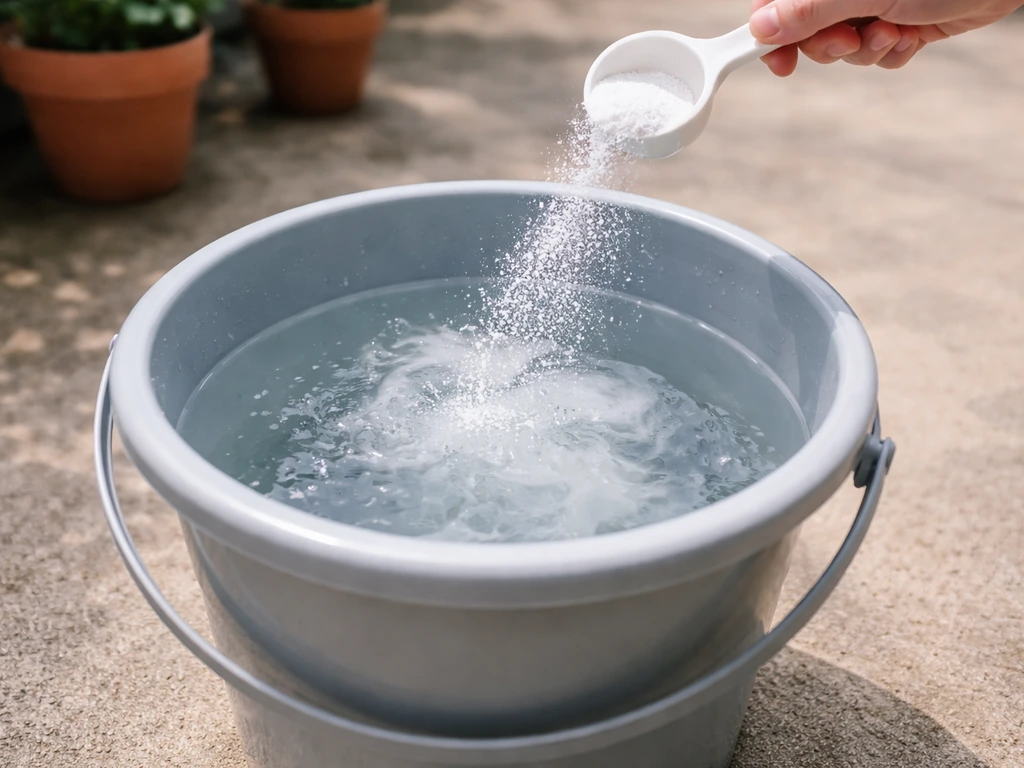
Oxygen bleach (sodium percarbonate) is my first recommendation when chlorine feels like too much of a risk. It releases hydrogen peroxide when dissolved in water, which is a gentler oxidizer. It still kills mold, algae, and mildew effectively, it's much kinder to surrounding plants, safer for sensitive stone surfaces, and less harsh on grout and sealers. For most natural stone patios I'll reach for an oxygen bleach product before I'd ever consider sodium hypochlorite.
Dedicated patio cleaners (both concentrate and ready-to-use formats) are worth considering when you want something formulated specifically for outdoor surfaces. If you want to know, “are patio cleaners any good,” the key is picking one that targets outdoor growth and staining rather than relying on plain bleach alone. The better products combine algaecidal chemistry with surfactants that help lift and rinse away the dead organic matter in one step. Some of the biocidal formulations also leave a residual effect that slows regrowth. If you're comparing products, a good patio cleaner will often outperform plain bleach on complex staining because it's designed for the job.
For grease, oil, or food stains, a heavy-duty detergent or degreaser used with hot water (and a stiff brush or a pressure washer) will do what bleach cannot. Does pink stuff clean patios? It can help with general grime and some stains, but results depend on the type of patio material and the kind of stain you have.
If you want the best bleach for cleaning patio areas, choose a properly diluted sodium hypochlorite solution and match it to the kind of staining you’re targeting. Washing powder can work in a pinch on certain surfaces for general grime, though it's not targeted enough for serious biological growth. Washing powder can be useful for routine patio grime, but it usually isn't strong enough for serious mold, mildew, or algae Washing powder can work in a pinch.
Pressure washing alone, without any chemicals, removes algae and moss effectively from robust surfaces like concrete, brick, and porcelain. For other patio cleaning jobs, a pressure washer can help loosen grime and growth before you use any cleaner pressure washer alone. If your patio has greasy grime, a heavy-duty detergent can be a more effective option than relying on bleach alone detergent to clean patio. The mechanical action clears the growth before it gets a chance to leave deep staining. If you're dealing with a lightly affected patio, a pressure wash is often faster and less involved than a chemical treatment. For heavily embedded staining, combining a patio cleaner with pressure washing gets the best results.
Troubleshooting: when things don't go as planned
Uneven whitening or patchy bleaching
This usually happens because the bleach wasn't diluted enough, was applied unevenly, or dried on the surface before rinsing. On concrete, this often self-corrects over time with rain and UV exposure. On natural stone, it's more problematic. If the whitening is just a residue from dried bleach salts, a thorough rinse with water (and a scrub) can reduce it. If the stone itself has been chemically lightened, there's no easy fix: you'd need to let weathering do its work gradually or consult a stone specialist about treatments.
Stains still visible after treatment
If the biological growth is gone but you can still see discolouration, the stain may have penetrated deeper into the surface than one treatment can reach. A second application (after fully rinsing the first) sometimes helps on concrete and brick. If the staining persists after two rounds, it's usually a different type of stain entirely, like rust, a mineral deposit, or a tannin stain from leaves. Identify the stain type and treat it with the appropriate targeted product rather than hitting it with more bleach.
Growth coming back quickly
Chlorine doesn't leave any lasting protective barrier once it's rinsed away. If algae or moss regrows within a few weeks, the conditions are ideal for it: shade, moisture, and an untreated surface. The fix has two parts. First, consider applying a dedicated patio biocide or algae inhibitor after your bleach clean, which gives residual protection. Second, address the underlying conditions where possible: trim back overhanging plants to increase light and airflow, improve drainage, or apply a patio sealer after the surface is fully clean and dry. Sealing won't stop all growth but it slows it significantly and makes future cleaning easier.
Strong smell and fumes during application
A sharp chlorine smell is normal, but if it's overwhelming or you notice a different acrid or sweet smell, stop immediately. That could mean the bleach is reacting with another chemical already on the surface (a previous cleaner, a fertilizer, or an acidic runoff from algae decomposition). Rinse the area immediately with water, move away, and ventilate. Let the area air out fully before reassessing. This is exactly why you should never mix bleach with other cleaners and why I always rinse the surface with plain water before applying bleach to an area that's had other products on it.
FAQ
Can I use chlorine bleach to clean patios if I’m not sure what’s causing the stain or discoloration?
If you cannot identify whether the spots are organic (mold, algae, lichen) or inorganic (rust, minerals, efflorescence), start with a low-concentration test patch. Clean 1 small area, dwell briefly, then rinse fully. If the discoloration does not lighten and only organic growth vanishes, you are likely dealing with a non-organic stain, and chlorine is usually the wrong chemistry.
Is it better to apply chlorine to a dry patio or a wet one?
Apply to visibly wet or pre-wetted surfaces so the solution stays uniform and dwell time is controlled. If you spray onto a dry surface, the bleach can “hot spot,” dry unevenly, and leave patchy white residue that needs extra rinsing and brushing.
What’s the safest way to avoid damaging nearby plants if the patio drains toward a flower bed?
Block or redirect runoff before you start. Put down plastic sheeting or a temporary tarp, and hose the rinse water into a safer area (or soak the area first so you minimize concentrated runoff). Afterward, water nearby plants with plain water again to dilute any splash or drift.
How can I tell if I’ve used the right strength of bleach for my patio surface?
After the dwell period, the organic patches should look lighter and the growth should appear to die back, usually within minutes. If there’s no change at all on likely algae or mold, it may be too weak, but if you see fast whitening or surface lightening, it may be too strong for that material. Use the next run at a lower strength if you detect material discoloration during your test patch.
Can I use chlorine on a sealed patio or driveway?
Avoid chlorine on unknown sealers. Bleach can strip or dull some sealants and leave a mottled look because the solution penetrates differently across the surface. If you know it’s sealed and you still want to try, test a small corner and keep dwell time short, then rinse thoroughly.
Why does my concrete look whiter after cleaning with chlorine, and how do I fix it?
Often it’s dried bleach residue or lifted salts. The fix is a more thorough whole-area rinse plus a stiff brush, do not spot treat only the stained area. If the concrete is actually chemically lightened (not just residue), weathering will take time, and heavy correction may require a concrete restoration specialist.
If algae is gone, should I reapply chlorine to remove the remaining dark staining?
Not always. Dark marks can be stained organic material that needs time to fully bleach out, but if discoloration persists after two properly done rounds (with full rinsing between), it is usually rust, tannins, minerals, or efflorescence. Switching to the targeted remover prevents you from repeatedly stressing the surface.
How soon can I use the patio again after chlorine cleaning?
Wait until the surface is completely rinsed, dried, and the smell has dissipated. If you have pets or children, keep them away until there is no visible wetness and no residue. If any runoff could reach plants, make sure nearby areas have been watered and you see no remaining drift.
Can I use chlorine to clean moss, or will it come back faster?
Chlorine can kill moss, but regrowth happens when shade, moisture, and poor drying conditions remain. For faster prevention, after the moss is dead and the surface is fully rinsed and dry, consider an outdoor algaecide with residual inhibition and improve airflow and drainage where possible.
Is it okay to mix chlorine with other cleaners if they’re “natural” or mild?
No. Even mild or “natural” products can contain acids (like vinegar-based cleaners) or ammonia, and combining them can release toxic gases. Also never combine with descalers or any product that may be acidic, and always rinse well before using bleach after any prior cleaning.
What’s the best alternative if chlorine won’t work for my stain type?
If the issue is organic growth but you need a safer approach for stone, use oxygen bleach products instead, they generally reduce risk to plants and sensitive surfaces. If the stain is grease, use a degreaser and hot water with mechanical scrubbing or pressure washing, because chlorine does not remove oils well.
Next Article
Best Bleach for Cleaning Patio: Pick and Use Safely
Choose the best bleach for cleaning your patio, with safe steps by surface and stain, plus non-bleach alternatives.